ilcastellomenu.com is reader-supported. When you buy through links on our site, we may earn an affiliate commission.
Where to Buy When the Plan Is Exactly One Camera
A quick word about the search phrase itself, because honesty here saves money later: “best digital cameras for 1” is a cut-off query — the missing word after the number is the whole question. It might once have been “for 1,000 dollars”, “for 16-year-olds” or “for 1-inch sensors”. We are interpreting it openly, in the open, as the version we hear most often from readers who write to us: the best digital cameras for 1 single purchase — one camera, bought once, that has to cover everything its owner photographs for years. If your missing word was a budget figure, treat the six cameras below as the shortlist readers narrow down from, and read the sections on running costs before spending anything.
The one-camera discipline changes what “best” means. A collector can forgive a body that only sings at weddings or only travels well; a one-camera owner cannot. The single camera must shoot the child’s recital from the back row on Friday, the misty ridge at dawn on Saturday, the flat-pack furniture listing photographs on Sunday, and the passport portrait against the hallway wall — without a second body waiting in a cupboard to rescue the jobs it dislikes. Versatility stops being a bullet point and becomes the entire brief.
That is why this guide weighs some unfashionable things heavily: how a camera behaves at high sensitivity in a village hall, whether its kit lens is genuinely useful or merely bundled, how long its battery lasts on a day when recharging is impossible, and whether the manufacturer still sells the lenses and accessories its owner will want in year four. A camera bought as the only camera is a small infrastructure decision, closer to choosing a car than choosing a gadget, and it deserves to be shopped with that seriousness.
Key Takeaways
- One camera means one mount: the lens family matters more than the launch-day body.
- Judge low-light behaviour first; birthdays and halls are where single cameras earn their keep.
- A genuinely useful kit zoom beats a cheap bundle you replace within a season.
- Full-frame and APS-C both work — the difference is weight, lens cost and headroom.
- Buy the spare battery and the second card with the body, not after the first failure.
- Repairability and local service quietly decide how long “one camera” stays true.
In this guide
Quick Picks
| Camera | Badge | Why it earns its place |
|---|---|---|
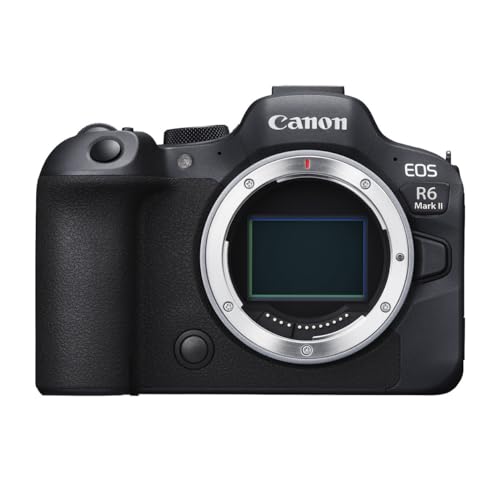
| Canon EOS R6 Mark II | The one-camera answer for almost everyone | Full-frame confidence in poor light, fast tracking for family action, and video strong enough to retire a second device. |
| Sony Alpha 7 IV | The lens-library choice | The deepest lens catalogue in its class means the one body never runs out of affordable next steps. |
| Fujifilm X-T5 | The one camera you will actually carry | High-resolution APS-C files, physical dials and a size that attends ordinary days, not just occasions. |
| Panasonic LUMIX S5II | The hybrid shooter’s single body | Serious video tools and dependable stills in one full-frame body, with alliance lenses keeping costs sane. |
| Canon EOS R10 | The one camera on a careful budget | Speed, subject detection and Canon’s friendly handling in a smaller, lighter, less expensive commitment. |
| Fujifilm X100VI | The radical one-lens answer | No lens decisions ever again: a fixed wide prime, beautiful colour, and a camera that simplifies by subtraction. |
How Did We Choose Cameras for People Who Will Only Own One?
Every candidate faced the same examination, built from the actual diary of a household rather than a laboratory chart. Could it handle a school play lit like a cave? A dog arriving at speed across wet grass? A product photograph for an online listing, a grandparent’s portrait by window light, a holiday landscape that deserves a large print, and a two-minute video of a first bicycle ride? Bodies that aced three categories and failed three were cut; the one-camera brief has no use for brilliant specialists with embarrassing gaps.
Ownership arithmetic came next. We added up what the camera asks for across five years: the kit lens it starts with, the fast prime or telephoto most owners add, batteries, cards, a bag that fits it, and the repair it might need once. Some glamorous bodies became noticeably less glamorous under that arithmetic, while quieter systems — especially those sharing lens mounts across brands — climbed the list. A single camera should get cheaper to own as the years pass, not more surprising.
Finally, we judged the exit that never happens. One-camera owners keep their bodies long past the upgrade cycle, so we favoured cameras whose controls remain learnable at year five, whose manufacturers publish firmware improvements for older models, and whose second-hand markets stay liquid enough that a repair-or-replace decision is a choice rather than a trap. Longevity is a specification; it is simply printed in the ownership record instead of the brochure.
There is a final, quieter test worth applying before any of the six is bought: picture the camera at the worst moment of your photographic year — the rainy touchline, the dim hall, the toddler moving at the speed of rumour — and ask which body you would trust a stranger to hand you. One-camera ownership is, in the end, a trust exercise. The specifications above are how that trust is earned on paper; the sections that follow are how each candidate earns it in the hand, the bag and the budget across the years it will be asked to serve.
Why Does the Lens Mount Outlive the Body in a One-Camera Life?
Photographers say “you date the body and marry the lens system”, and nowhere is the saying truer than in a one-camera household. Bodies are replaced by technology every few years whether we participate or not; lenses, mounts and handling habits are the assets that compound. Choosing a camera for keeps therefore means choosing the family of lenses it can borrow from — their prices, their weights, their second-hand availability in your country, and whether third-party makers are allowed to enrich the catalogue.
There is a subtler inheritance too: muscle memory. The owner of one camera for a decade develops reflexes — which dial the thumb finds in the dark, how the menus phrase a setting — that transfer to the eventual replacement body from the same maker and evaporate with a brand switch. Staying inside one system is not brand loyalty; it is protecting an investment in your own hands. The six picks below were partly ranked on how gracefully their makers treat long-term owners who refuse to churn.
None of this argues for buying the most expensive mount. It argues for buying a mount with a future you can inspect: lenses at several prices, a roadmap the maker still talks about, and enough fellow owners nearby that advice, rentals and repairs are easy to find. The loneliest camera is the orphaned one, however fine its sensor.
What Jobs Must a Single Camera Actually Cover?
List them honestly and the specification sheet writes itself. Family life contributes most frames: faces in mixed indoor light, children and animals in unpredictable motion, group photographs where the person at the edge must stay sharp. Travel adds landscapes at dawn, street scenes at night, architecture that punishes distortion, and long days when the battery and the photographer’s shoulders are both finite. Work adds the modern extras — listing photographs, video calls, short clips for social channels — and hobbies add whatever the owner loves: birds, football, steam trains, the garden in macro.
Two capabilities cover a startling share of that diary. The first is autofocus that recognises subjects — eyes above all — because the one-camera owner’s subjects rarely pose and never repeat the moment. The second is clean high-sensitivity performance, because ordinary life is lit by ceiling bulbs and November afternoons, not by studio strobes. A camera strong in those two areas will feel competent at nearly everything; a camera weak in either will feel like a compromise machine no matter how impressive its other numbers look.
Video belongs on the list without apology. The one-camera household has no camcorder, so the stills body inherits birthdays, school concerts and the dog’s first swim. All six picks record video their owners can be proud of, though they differ in how far down the filmmaking road they will walk beside a growing enthusiast — a difference the individual sections take seriously rather than hiding behind a shared tick-box.
Which Are the Best Digital Cameras for 1 Single Purchase?
Six bodies, six philosophies of permanence: two full-frame all-rounders from Canon and Sony, a Panasonic built for people whose stills and video ambitions are equal, a Fujifilm pair arguing that smaller or fixed can be a feature, and Canon’s compact enthusiast body for buyers whose one camera must also respect a budget. Read for the life the camera will live, not the brochure it arrived with.

Canon EOS R6 Mark II — The one-camera answer for almost everyone
If a reader forced us to name a single body and end the conversation, this Canon is where the argument would stop most often. It is a full-frame camera whose talents are distributed with unusual evenness: autofocus that finds eyes in crowds and keeps them through movement, low-light files that stay clean and pliable, burst shooting fast enough for sport and wildlife beginnings, and video that satisfies everyone short of a working filmmaker. Evenness sounds dull until you live with one camera; then it becomes the whole point.
The handling deepens the case. Canon’s menus remain the industry reference for learnability, the grip suits long days, and the control layout rewards the decade of muscle memory a one-camera owner will invest. In-body stabilisation steadies the kit zooms and older adapted lenses alike, which quietly widens the affordable lens pool — a one-camera virtue that never appears in launch headlines. Weather sealing shrugs off the drizzle at the school match and the dust at the beach car park, the two weathers real life actually supplies.
- Format: full-frame mirrorless, Canon RF mount
- Focus: deep-learning subject and eye detection
- Stabilisation: in-body, cooperating with lens stabilisation
- Video: high-quality oversampled recording for family and creator use
- Role: the default single body for a mixed diary
Strengths
- No photographic subject in a normal life embarrasses it
- Low-light files forgive the lighting real rooms provide
- Controls and menus stay friendly across a decade of ownership
Trade-offs
- Full-frame lenses cost and weigh more than APS-C equivalents
- Resolution is ample, not class-leading, for huge crops
- Third-party autofocus lens choice for the mount is narrower than Sony’s
Think about the R6 Mark II as insurance against your own future interests. The one-camera buyer cannot know which hobby arrives in year three — the allotment, the grandchild, the restored motorcycle, the night-sky phase — and this body holds a credible answer to each without demanding a trade-in. Its competence is a hedge: whatever the diary becomes, the camera already speaks that language, and the only purchase the new interest requires is a lens, bought once, from evidence.
Choose it when the budget stretches to full-frame and the diary is genuinely mixed. Pass it by only if carry weight dominates every other consideration, or if video production is the main job rather than a valued extra — the Panasonic below argues that case.
Best for: households wanting one full-frame body that never needs an excuse. Not suited for: ultralight travellers or dedicated video producers

Sony Alpha 7 IV — The lens-library choice
The Alpha 7 IV’s argument begins outside the camera, in the catalogue behind it. Sony’s E mount is the most populated lens ecosystem in modern photography: Sony’s own glass at every price, plus long-established third-party makers selling sharp autofocus lenses for noticeably less than the badge brands charge. For the one-camera owner, that catalogue is a pension plan — whatever lens the future demands probably exists, probably has a budget version, and probably circulates second-hand in quantity.
The body itself is a deliberate all-rounder in the same mould as the Canon: a high-resolution full-frame sensor with more cropping room than the R6 Mark II offers, autofocus with a deserved reputation for tenacity, and video specifications that keep creators equipped for years. Sony’s colour handling, once the family’s weak joke, is thoroughly modern here, and the customisation depth lets a long-term owner bend the controls around their own habits until the camera feels personally machined.
- Format: full-frame mirrorless, Sony E mount
- Sensor: high-resolution, generous cropping headroom
- Focus: real-time eye tracking across people and animals
- Lenses: the widest native and third-party choice available
- Role: the one body backed by the biggest library
Strengths
- Every future lens need has several price points waiting
- Resolution surplus forgives imperfect framing while learning
- Custom buttons repay a long owner’s investment in setup
Trade-offs
- Menus reward study; the first month is denser than Canon’s
- Rolling shutter shows in fast electronic-shutter pans
- The body feels more instrument than companion to some hands
The distinctive angle for the single-purchase reader is second-hand gravity. Because so many photographers own E-mount glass, the used market in most cities is deep and competitively priced: the one-camera owner can add a portrait prime or a travel telephoto years later without paying launch prices or hunting rarities. A camera is only as versatile as the lenses its owner can actually obtain, and by that measure this Sony may be the most versatile object on the page.
Buy it if you enjoy configuring tools to your hand and expect your lens shelf to grow slowly and shrewdly. The Canon is kinder on day one; the Sony arguably rewards year five more.
Best for: methodical owners who will build a lens set over years. Not suited for: anyone who wants the camera to disappear without setup effort

Fujifilm X-T5 — The one camera you will actually carry
Every one-camera plan contains a hidden assumption: that the camera will be present. The X-T5 is the pick that defends that assumption. It is an APS-C body — smaller lenses, smaller bag, smaller presence at the family table — built around a high-resolution sensor and Fujifilm’s beloved physical dials, and it produces stills whose colour, rendered through the maker’s film-inspired profiles, frequently needs no editing at all. For owners whose editing time is zero, that last trait is not nostalgia; it is the difference between photographs that get shared and files that get archived.
Do not let the retro silhouette file it as a toy. The autofocus is modern, the resolution exceeds several full-frame rivals, in-body stabilisation is fitted, and the weather-resistant body tolerates the same drizzle as the bigger machines. What it concedes is ultimate low-light cleanliness and the shallowest depth of field — the physics of a smaller sensor — in exchange for a kit that fits a small sling and attends school runs, commutes and city breaks without negotiation.
- Format: APS-C mirrorless, Fujifilm X mount
- Controls: dedicated dials for shutter, sensitivity and compensation
- Colour: film-inspired profiles finished in camera
- Sensor: high-resolution with in-body stabilisation
- Role: the carry-everywhere single camera
Strengths
- Size and weight keep the one-camera promise on ordinary days
- Files look finished straight from the camera
- Dials teach exposure physically and stay satisfying for years
Trade-offs
- APS-C low-light ceiling sits below the full-frame picks
- Video is capable rather than a headline talent
- Continuous tracking trails the Canon and Sony for erratic sport
Its particular gift to the one-camera household is tonal: this is the camera other people ask about, the one teenagers will borrow without embarrassment and partners will pick up without a tutorial. A single camera often serves a whole household informally, whatever the receipt says, and the X-T5’s dials-and-colour approach makes it the most lendable body here — the household’s photographs improve even on days the owner never touches it.
Choose it when presence beats ultimate specifications in your real diary, and when you suspect — correctly, for most people — that editing software will not feature in your evenings.
Best for: everyday carriers who want finished colour and a compact kit. Not suited for: low-light specialists or video-first creators
Panasonic LUMIX S5II — The hybrid shooter’s single body
Some one-camera households are really one-production-studio households: the same device must photograph the products, film the tutorial, record the podcast video and shoot the family. The S5II is Panasonic’s answer, a full-frame body whose video engineering — phase-detect autofocus at last, active cooling for long recordings, and stabilisation tuned for walking shots — matches its stills rather than apologising for them. If your diary splits evenly between photographs and footage, this is the most honest single purchase on the page.
The stills side deserves its paragraph, because Panasonic’s video fame sometimes buries it. The sensor delivers rich, flexible files; the autofocus, transformed in this generation, tracks subjects with the confidence the brief demands; and the body is built and sealed like equipment rather than electronics. It also belongs to the L-Mount alliance, sharing lenses with Leica and Sigma — Sigma’s contemporary lenses in particular give the one-camera owner sharp, sensibly priced glass without an adapter in sight.
- Format: full-frame mirrorless, L mount
- Focus: phase-detect hybrid autofocus for stills and video
- Video: long-recording design with active cooling
- Stabilisation: strong in-body system tuned for movement
- Role: the single body for equal stills-and-video lives
Strengths
- Video tools the other all-rounders treat as extras
- Alliance lenses keep the five-year lens bill reasonable
- Stabilisation flatters handheld footage and slow stills alike
Trade-offs
- Subject-detection breadth still trails Canon and Sony
- The alliance catalogue is smaller than E mount’s ocean
- Heavier in the hand than its dimensions suggest
Considered purely as a one-camera decision, the S5II protects against the most common regret of the hybrid age: buying a stills camera, discovering video income or video joy in year two, and facing a second body purchase to do it properly. Readers whose channel, shop or band already exists — even as a plan with a name — should weight that protection heavily. It is cheaper to buy the video competence once, inside the only body, than to bolt it on later.
Stills-only readers can admire it and move on; its talents are priced into the body whether or not the record button ever gets pressed.
Best for: creators whose photographs and videos carry equal weight. Not suited for: stills purists or the very fastest action subjects

Canon EOS R10 — The one camera on a careful budget
The one-camera promise does not require a full-frame receipt. The R10 is Canon’s compact enthusiast body: APS-C sensor, rapid bursts, subject detection that recognises people, animals and vehicles, and handling — joystick included — borrowed from bodies far above its station. For the buyer whose single purchase must also leave money for the lens, the bag and the life the camera will photograph, it is the most responsible recommendation in this guide.
What the smaller budget actually surrenders is narrower than folklore suggests. In-body stabilisation is absent, so stabilised lenses do that work; the sensor’s low-light ceiling sits a step below the full-frame pair; the body is less lavishly sealed. What it keeps is the thing one-camera owners feel daily: speed and certainty. The autofocus does not behave like a compromise, the controls do not feel rationed, and Canon’s colour and menus welcome the household members who will inevitably borrow it.
- Format: APS-C mirrorless, Canon RF mount
- Controls: joystick and enthusiast layout in a small body
- Detection: people, animals and vehicles
- Speed: fast continuous shooting for action beginnings
- Role: the attainable single camera with a real ceiling
Strengths
- Performance per unit of money is the best on this page
- Small kit leaves budget for the second lens sooner
- Shares the RF mount with the full-frame Canon above
Trade-offs
- No in-body stabilisation; lens choice must compensate
- Low-light files are good, not full-frame good
- Single card slot, where the bigger bodies offer two
The R10’s hidden one-camera virtue is its position inside the RF family: it is the only budget pick here whose owner can later add full-frame Canon lenses — bought for their quality or found second-hand — and use them immediately, then carry those same lenses onto an eventual full-frame body without waste. The one-camera plan can therefore grow in stages without ever restarting, which is exactly how careful budgets prefer their infrastructure to behave.
Buy it when the honest alternative is no dedicated camera at all, or when the diary leans toward daylight, travel and action rather than candlelit interiors.
Best for: careful budgets that still want a system with a future. Not suited for: professionals needing dual slots or ultimate low light

Fujifilm X100VI — The radical one-lens answer
Every other pick interprets “one camera” as one body with interchangeable lenses. The X100VI interprets it literally: one camera, one fixed wide lens, nothing to choose, nothing to carry, nothing to upgrade. That sounds like a limitation until you watch its owners, who photograph more than lens-swapping friends precisely because every decision except the photograph itself has been abolished. The wide prime matches how phones taught a generation to see, the leaf shutter is nearly silent, and the built-in flash and film-inspired colour make evening snapshots look like memories rather than evidence.
The craft inside is serious. A high-resolution APS-C sensor, in-body stabilisation, a hybrid viewfinder that can show the world optically with digital guidance overlaid, and weather resistance when fitted with its adapter ring — this is not a fashion accessory with a sensor attached. It is a photographer’s instrument that happens to be beautiful, and its scarcity at retailers is the market’s verdict on how many people, offered everything, choose instead to be given one thing done completely.
- Format: APS-C fixed-lens compact, wide prime
- Finder: hybrid optical and electronic
- Shutter: near-silent leaf shutter with flash sync freedom
- Colour: film-inspired profiles, finished in camera
- Role: the one camera that is also the only lens
Strengths
- Zero kit decisions: the camera is always the whole kit
- Carries in a coat, so the one-camera promise survives daily life
- Files carry a finished, filmic character immediately
Trade-offs
- No zoom and no lens changes — distance subjects stay distant
- Popularity keeps it scarce and priced accordingly
- Not a sports, wildlife or events camera in any honest sense
For the one-camera reader its deepest argument is psychological: lens systems invite the low-grade, permanent dissatisfaction of the almost-right lens, while a fixed camera converts that energy into seeing. Owners learn their single field of view the way musicians learn an instrument, pre-visualising frames before raising the camera. If your diary is people, streets, tables and travels — the documentary texture of a life — that mastery may serve you longer than versatility would.
It is equally, unambiguously wrong for the reader whose one camera must reach a stage, a pitch or a bird. Honour the philosophy only where the diary supports it.
Best for: documentary-minded owners who value simplicity over reach. Not suited for: sport, wildlife or staged events
How Do the Six Single-Camera Candidates Compare?
| Camera | Format | Mount logic | Temperament |
|---|---|---|---|
| Canon EOS R6 Mark II | Full-frame | RF, one system for decades | The all-rounder |
| Sony Alpha 7 IV | Full-frame | E, the deepest catalogue | The librarian |
| Fujifilm X-T5 | APS-C | X, compact and characterful | The daily companion |
| Panasonic LUMIX S5II | Full-frame | L alliance, shared glass | The production studio |
| Canon EOS R10 | APS-C | RF, grows toward full-frame | The careful budget |
| Fujifilm X100VI | APS-C fixed | None — decision abolished | The minimalist |
Read the mount-logic column twice. Bodies will be reviewed and replaced; the logic you buy into is the part of this purchase still operating in ten years.
How Should a One-Camera Owner Spend the First Year?
Resist the lens catalogue for a season. The kit lens — or the fixed lens — is a diagnostic instrument: it records which focal lengths your life actually requests, which subjects recur, and where the ceiling genuinely is. Photographers who shoot a full year before adding glass buy their second lens from evidence and keep it forever; photographers who buy in month one buy from imagination and sell at a loss in month nine. The one-camera discipline is mostly this patience, repeated.
Spend the small money early instead. A second battery, a second card, a strap that spreads weight, a bag the camera truly fits, and a blower for dust: together these cost less than any lens and prevent nearly every disaster that interrupts a one-camera life. Add a simple backup ritual — files copied to two places on the evening they are taken — because a single camera concentrates a family’s visual memory into a single card, and concentration demands redundancy.
One more first-year habit deserves emphasis because it costs nothing and pays for years: learn where your camera’s limits actually are by deliberately visiting them. Shoot the evening scene a stop beyond comfortable, print the largest file the year produced, film the whole school concert rather than the highlights. A one-camera owner who has mapped the edges of their tool stops fearing them; the diary expands to fill the true capability of the body instead of the cautious fraction of it that most owners ever use. The cameras in this guide all have more range than their first-year owners suspect, and discovering that range is the cheapest upgrade in photography — it is already paid for.
Use the year to learn the body’s depths in order of need. Eye autofocus and exposure compensation first, because they serve every frame; then the video basics, before the concert rather than during it; then the custom buttons, once your hands have opinions. A camera mastered in layers stays mastered. A camera explored randomly stays a menu system with a lens attached.
What Does One Camera Cost Across Five Years?
Draw the honest table before choosing. The body and kit lens are the entry fee. Year one usually adds the battery, cards, bag and strap described above. Somewhere in years one to three comes the second lens — a fast prime for portraits and evenings, or a telephoto for the subjects that stay far away — and this is where mount economics bite: the same lens can differ strikingly in price between systems, and third-party availability changes the total again. Year four or five may add a service, a sensor clean, a worn grip replaced.
Two conclusions survive every version of that table. First, the body price is often barely half the five-year cost, so agonising over small body-price differences while ignoring lens prices is budgeting upside down. Second, the cheapest system to own is usually the one bought once and kept: every brand switch burns a third of the kit’s value in resale losses. The one-camera reader is therefore not a deprived reader. They are running the only strategy under which photography reliably gets cheaper with time.
How Do You Keep One Camera Alive for a Decade?
Mechanical sympathy, mostly. Keep the firmware current, because makers quietly improve autofocus and battery behaviour for years after launch. Store the camera dry, with the battery partly charged if it will rest for months, and never in a car boot through a summer. Clean the sensor only when spots appear in skies and only with tools made for the task; more sensors are harmed by enthusiasm than by dust.
Protect the two fragile interfaces: the lens mount, by supporting heavy lenses rather than letting them hang from the body, and the card door and ports, by never forcing a cable at an angle in the dark. Learn the sound and feel of your own camera when healthy — a long-term owner notices a new rattle or a lazy dial the way a driver notices a new engine note, and early noticing is the difference between a service and a write-off.
Finally, keep the paperwork of a keeper: the receipt, the serial number recorded somewhere separate, and a note of the insurer or household policy that covers it. A decade is long enough for one theft attempt, one flood or one airline incident, and the one-camera household that has rehearsed the paperwork replaces its camera in a week instead of a season.
How Much Does Sensor Size Really Matter When There Is Only One Camera?
Sensor size is the argument one-camera buyers have with themselves at midnight, so it deserves plain treatment. A full-frame sensor gathers more light per photograph and separates subjects from backgrounds more easily; an APS-C sensor asks its lenses to be smaller and cheaper for the same reach. In daylight the difference between the formats in this guide is modest enough that composition decides the better photograph. At a candlelit dinner or in a sports hall, the full-frame bodies hold their files together a stop or two longer, and that margin is exactly where family history tends to happen.
Reach runs the other way. The smaller sensor crops the view, which wildlife and sports photographers experience as free telephoto: the same lens frames tighter, and the lenses built for the smaller format are lighter to carry all day. A one-camera household whose diary leans toward birds, boats and touchlines may honestly be better served by APS-C, while a household of interiors, evenings and portraits leans full-frame. Neither format is the grown-up one; they are different answers to the question of which compromises your diary can spare.
What should not decide the matter is megapixel arithmetic. Every body here resolves more detail than a family print or a social feed can display, and the practical value of extra resolution is cropping room while learning — valuable, as the Sony section notes, but a convenience rather than a destiny. Buy the format whose lenses you can afford to finish, in the size your shoulders will carry. The sensor debate ends, for one-camera owners, at the bag and the budget, and both are honourable places for it to end.
Why Does Stabilisation Quietly Decide What One Camera Can Attempt?
In-body stabilisation rarely headlines a launch, yet for a single-camera household it rewrites the map of possible photographs. It steadies every lens mounted — including the cheap primes and adapted classics that lack stabilisation of their own — which means the one-camera owner can buy older, simpler, less expensive glass and still shoot it handheld at dusk. Slow shutter speeds stop being tripod-only territory: interiors, museums, blue-hour streets and waterfalls all enter the handheld diary.
The video dividend matters just as much. Stabilised bodies smooth the walking shot and the handheld concert clip to a degree that makes the difference between footage families rewatch and footage they endure. Combined with the strong video stabilisation in the Panasonic and the lens-based systems on the Canon APS-C body, every pick here can film respectably without a gimbal — one more separate device the one-camera strategy exists to avoid owning.
Honesty requires the limits. Stabilisation steadies the camera, not the subject: a running child blurs at slow speeds however gifted the system, and the cure there is shutter speed and light, not electronics. Treat stabilisation as permission to work calmly in poor light with still subjects, and as a comfort blanket for video, and it will earn its place in the five-year diary without ever being asked to perform miracles.
Should a One-Camera Buyer Consider Buying Used Instead?
The question deserves a fair hearing, because the one-camera strategy is fundamentally about value over time. A previous-generation body from the same mounts as our picks — bought from a reputable dealer with a warranty and a shutter count disclosed — can free a third of the budget for the lens the new-body buyer must postpone. For careful households that trade is often the smartest money in the whole purchase, and the mounts represented here all have deep, liquid used markets precisely because so many owners stay within them.
The cautions are specific rather than frightening. Buy bodies from sellers who grade honestly and accept returns; inspect the sensor for spots, the mount for looseness, and the battery contacts for corrosion; and favour cameras sold with their original battery and charger, since replacements quietly erode the saving. Avoid any body whose history involves professional video work at unknown hours unless the price truly reflects it. And keep the receipt: a warranted used body is an asset, an unwarranted bargain is a lottery ticket.
What used buying should never do is change the mount decision. The discipline of this guide — choose the system, then the body — applies doubly second-hand, where a tempting price on the wrong system is the most expensive bargain in photography. Decide the family first, from the diary and the lens catalogue, and then let new-versus-used be a mere financing detail inside that decision.
What Does the One Camera Need for Travel, Specifically?
Travel is where the single camera is audited hardest: no backup body, no cupboard of lenses, and days that begin with a cathedral and end with a night market. The kit that survives the audit is boring on purpose — the body, one versatile zoom, one fast prime for evenings, two batteries, three cards, a charger that accepts whatever the destination’s sockets offer, and a bag that qualifies as a personal item rather than a negotiation. Every pick in this guide can anchor that kit; they differ mainly in how much the bag weighs when the prime is the Fujifilm’s fixed lens or the zoom is a full-frame Canon’s.
Two travel habits matter more than any accessory. The first is the nightly offload, already urged for backup reasons, which on the road doubles as a review ritual: ten minutes with the day’s frames teaches you what tomorrow’s city deserves. The second is restraint at the lens window. Travel tempts owners to buy the ultra-wide or the long telephoto “for the trip”, and those lenses, bought for a fortnight, spend the decade at home. Rent the exotic lens for the safari year if it ever comes; let the one camera travel as the one camera.
Insurance and documentation close the section, because a stolen single camera abroad is a strategy failure, not just a theft. Photograph the serial numbers before departure, keep them in cloud storage, and confirm the household policy’s away-from-home terms. The one-camera household that has done this replaces its witness within days and keeps travelling; the one that has not spends the holiday mourning and the year re-buying.
How Should a Household Share One Camera Without Wearing It Out?
A single camera in a family home is rarely a single-user device, whatever the plan said at purchase. Partners borrow it for their own projects, teenagers discover it before school trips, and grandparents get handed it at gatherings because they are somehow always the ones out of the frame. Sharing is a virtue — the camera earns its keep on more diaries than one — but it works best with a few ground rules agreed while everyone is still friends. The card is offloaded by whoever shot last, the battery returns to the charger rather than the bag, and the lens cap lives on the strap so it is never the thing being searched for.
Settings deserve a treaty of their own. Long-term owners customise deeply: buttons remapped, menus reordered, a personal colour profile saved. Borrowers, quite reasonably, change things back toward sense as they understand it. The peaceful solution is the custom-mode dial position or user preset most of these bodies provide — the owner’s configuration saved in one place, the household’s plain automatic in another — so sharing never becomes an archaeology expedition through someone else’s preferences. Five minutes spent setting that up saves a year of low-grade domestic friction.
There is a genuine photographic dividend hiding in the sharing, too. A camera that several people use produces a family archive with several eyes in it, and the resulting record — the same holiday seen by the parent, the teenager and the grandparent — is richer than any single photographer’s version. The one-camera household often discovers, a few years in, that the constraint they budgeted around became the reason their archive feels like a chorus instead of a monologue.
Why Do Printing and Archiving Belong in a One-Camera Decision?
Because a camera bought for a decade will produce a decade’s worth of a family’s evidence, and the value of that archive depends on habits set in the first month. The bodies in this guide all record RAW files alongside JPEGs; the one-camera owner should treat RAW as the negative — kept even when today’s JPEG pleases — because the editing skill and software of year six will find photographs in year one’s files that year one could not see. Storage is the cheapest component in the entire system; regret is the most expensive.
Printing is the archive’s public face, and it feeds back into buying decisions more than beginners expect. Files from every sensor here print handsomely at the sizes households actually hang, and the first large print usually ends the household debate about whether the camera was worth it. It also disciplines shooting: a photographer who prints learns to level horizons, watch edges and wait for expressions, because a wall forgives nothing that a feed scrolls past. If the one-camera plan has a finishing school, the printer is it.
Keep the system simple enough to survive busy years: one folder tree by year and month, one backup at home, one copy elsewhere, and an annual hour spent deleting the true failures and printing the true successes. A single camera concentrates memory; a simple archive keeps that concentration safe. The camera choice starts the story, but these habits are how the story is still readable when the camera itself is a veteran.
What Mistakes Do One-Camera Buyers Keep Making?
Buying for the photographer they intend to become rather than the diary they actually live. The studio portraitist fantasy fades by February; the school run, the dog and the holiday remain. Match the camera to the recurring week, and let the exceptional weekend rent its heroics if it ever truly needs them.
Starving the purchase. A one-camera plan that spends everything on the body and nothing on battery, cards, bag and backup has not bought a system; it has bought a fragile ornament. The accessories are not upsells in this strategy — they are the difference between a camera that is always ready and one that is always almost ready.
And the subtlest error: treating the single camera as a life sentence rather than a discipline. The point of owning one is focus, not martyrdom. If the diary changes fundamentally — a business starts, a sport takes over a child’s life — the honest move is to trade the one camera for the right one camera, inside the same mount where possible, and continue. Loyalty belongs to the practice, never to the object.
Final Recommendation
Most one-camera households should buy the Canon EOS R6 Mark II: it is the body with the fewest honest weaknesses across the widest diary, and its mount, menus and resale strength all respect a decade of ownership. Choose the Sony Alpha 7 IV if the lens library and second-hand market matter most, the Panasonic S5II if video carries half your life, the Fujifilm X-T5 if carry decides whether the camera attends at all, the Canon EOS R10 if the budget must leave room for lenses and living, and the X100VI if you are certain your photography is people, places and the space between them.
The closing thought belongs to the strategy rather than the shopping. A single camera, chosen well and kept long, stops being equipment and becomes a witness: it learns your family’s faces, your streets, your light. The photographs accumulate into something no upgrade cycle can buy — one consistent way of seeing, deepening year after year. Buy the camera that will still be in your hand when that depth arrives.
Frequently Asked Questions
Is full-frame necessary for a one-camera household?
No. Full-frame buys low-light cleanliness and depth-of-field control; APS-C buys size, weight and lens value. Households shooting mostly daylight, travel and family life are superbly served by the smaller format, as the X-T5 and R10 here demonstrate. Choose full-frame when evenings, halls and large prints dominate the diary.
Should the one camera have two card slots?
Two slots are insurance for irreplaceable paid work — weddings above all. For family and travel life, a disciplined evening backup achieves nearly the same protection at no cost. If your one camera will ever shoot a paying wedding, weight the dual-slot bodies heavily; otherwise treat it as a comfort, not a requirement.
Which second lens do one-camera owners actually buy?
Most often a fast prime in a portrait-friendly length, because it transforms the indoor and evening photography that dominates real diaries, and it is small enough to preserve the one-bag life. Telephotos come second, bought by the minority whose diary genuinely includes distant subjects. Let a year of kit-lens photographs vote before your money does.
Can one camera really replace a phone for everyday snapshots?
For planned photography, yes; for the unplanned ten seconds of life, the phone remains undefeated and that is fine. The one-camera strategy does not banish the phone — it relieves it of the jobs it does badly: evenings, motion, distance, prints. Most owners settle into exactly that treaty within a month.
How long should a one-camera purchase last?
Five years is a reasonable plan; ten is achievable with care, as the longevity section describes. Sensors and autofocus in this class age slowly, and the usual reason for replacement is a changed diary rather than a failed body. Buy the camera whose limitations you will meet last.
What if the cut-off keyword meant a budget, not one camera?
Then read this guide as a versatility ranking and apply your figure as a filter: the R10 anchors the careful end, the X-T5 and S5II the middle, and the full-frame pair the top. The ownership advice — mount first, accessories budgeted, second lens from evidence — holds at every figure, which is why we chose this interpretation openly rather than guessing silently.
Related Guides
Readers who know they will only ever own one body often ask what to pair with it, so continue with the second lens every one-camera owner eventually buys, keep the body alive with a ten-year camera care routine that prevents most repairs, or start smaller with our guide to the best digital cameras for beginning photographers if this single purchase is also your very first camera.


