ilcastellomenu.com is reader-supported. When you buy through links on our site, we may earn an affiliate commission.
Where to Buy a Camera for the Land Itself
The best digital cameras for landscapes answer a different question from every other guide in this series. Not how far the subject is, not how fast it moves, but how much of the land’s light a single frame can hold: the sunlit ridge and the valley still in blue shadow, the sky grading from fire to indigo without banding, the foreground stones as sharp as the far summit and the middle distance — that neglected country between them — holding its texture like a held breath. Landscape photography is the discipline of dynamic range, wide lenses and patience, conducted from a tripod at the cold ends of the day, in the company of thermoses, headtorches and a particular silence that city photographers never quite believe exists. Its cameras are judged accordingly — by the width and honesty of their files, by the glass available to fill them edge to edge, and by how gracefully they work slowly, deliberately and outdoors in weather.
A note on direction, because our own catalogue invites the confusion: this guide is not about reach. A companion guide covers cameras for distance pictures — telephotos, far subjects, compression. Landscapes run the other way, toward wide angles and near foregrounds, toward the photograph you compose by walking into the scene rather than zooming across it, boots wet, breath visible, tripod over one shoulder like a plough. A landscape camera’s virtues are a sensor that forgives a contrasty dawn and forgives it gracefully, with highlights that surrender in a roll rather than a cliff and shadows that open like a door rather than a trap, a lens line rich in quality wide glass, a screen that tilts for ground-level compositions, and controls that work with gloves on at five in the morning. The six picks below were ranked on exactly those terms, and their order reflects a decade of dawns more than a day of laboratory charts.
Buy landscape gear from dealers who understand it is a system purchase: body, wide lens, tripod and filters arrive as one decision wearing four price tags. Wherever you shop, test the combination at dawn before the return window closes — landscape quality reveals itself in the first hard backlight, and a body whose files band in a graded sky will annoy you for a decade, while one whose files hold will feel cheaper every year you own it. Landscape photographers keep bodies for a long time by the standards of this industry, precisely because the genre’s demands were met years ago and its rewards come from returning to places rather than from replacing equipment.
Key Takeaways
- Dynamic range is the landscape specification: it decides whether dawn’s sky and shadowed valley survive in one frame.
- Wide lenses define the discipline — judge every body by the quality wide glass its system offers.
- A tripod is part of the camera for landscape purposes; budget for it in the same purchase.
- Resolution matters here more than anywhere else, because landscape prints go large and viewers walk up close.
- Weather sealing is not a luxury for a camera that works at dawn, on coasts and in mountains.
- Filters still earn their place: a polariser and neutral-density glass do things software cannot fully repeat.
In this guide
Quick Picks
| Pick | Badge | Why it earns its place |
|---|---|---|
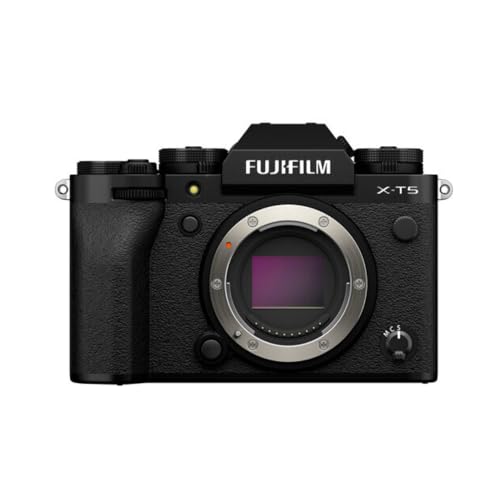
| Fujifilm X-T5 | The resolution traveller | Forty megapixels, beloved colour and a compact system built for walking to viewpoints. |
| Sony Alpha 7 IV | The dynamic-range all-rounder | Full-frame files that hold impossible dawns, behind the deepest wide-lens catalogue here. |
| Panasonic LUMIX S5II | The handheld landscape value | Stabilisation that frees dawn work from the tripod, at a full-frame price that leaves lens money. |
| Canon EOS R6 Mark II | The low-light dawn specialist | Clean files in the blue hour’s gloom and Canon colour for the light that follows. |
| Nikon Z50 II | The beginner’s landscape door | Nikon’s rendering and Z-mount wide glass at a price that leaves room for the tripod. |
| OM SYSTEM OM-5 Mark II | The mountain lightweight | Computational tricks — live ND and composite modes — in the smallest serious weather-sealed system here. |
How Did We Rank Cameras for a Subject That Stands Still?
Stillness is deceptive: the land does not move, or moves on a geological schedule indifferent to your shutter, but its light moves constantly and its contrast exceeds every other genre’s. Our first test was the dawn file — a single exposure spanning a bright sky and a shadowed foreground, graded hard in editing to see whether the sky banded, the shadows blocked and the colours survived the pushing. Second came the lens audit: each system’s wide and ultra-wide options were weighed, because a landscape body is only ever as good as the widest quality glass it can wear, and several otherwise admirable bodies failed this audit outright. Third, field handling: tilting screens for ground-level work, sealing for coastal spray, battery behaviour in cold dawns, and weight — because landscape cameras earn their files at the end of walks, and a kit too heavy to carry is a kit whose specifications are theoretical.
Weight received a veto rather than a score. Landscape photography is walking with intent, often in the dark, often uphill, and a system that punishes the walk reduces the number of dawns its owner attends — the one statistic that predicts a landscape portfolio better than any sensor measurement ever published. That is why two of the six picks are deliberately not full-frame flagships, and why the full-frame picks were required to justify every gram with file quality.
We also valued the quiet features landscape photographers actually use: focus peaking and magnification for precise manual focus, live histogram and highlight warnings honest enough to expose by, interval timers for time-lapse, and — on two picks here — computational modes that simulate long exposures and graduated filtration in-camera. Burst rates and video headlines were ignored with a clear conscience. The land is patient; its cameras are allowed to be deliberate, and their owners are required to be punctual.
Which Are the Best Digital Cameras for Landscapes, From Traveller to Mountaineer?

Fujifilm X-T5 — The resolution traveller
The X-T5 has become the thinking traveller’s landscape camera by resolving the genre’s central tension: landscape prints want resolution, and landscape photographers want to walk. Its forty-megapixel APS-C sensor delivers the first without surrendering the second — files that print large with detail to spare, from a body-and-lens kit that disappears into a daypack. Fujifilm’s colour science, the most film-literate in digital photography, handles the landscape palette with particular grace: dawn pinks that stay delicate, greens that separate into species instead of merging into salad, and black-and-white conversions with genuine tonal depth for the days when colour is a distraction.
Field craft seals the case. The tilting screen serves the low, foreground-led compositions landscape work is built on; the physical dials set exposure deliberately in gloves-at-dawn conditions; and the X system’s wide lenses are excellent and comparatively small, so the classic two-lens landscape kit — ultra-wide plus short telephoto for compressing ridges — stays walkable. In-body stabilisation covers the handheld scouting frame and the tripod-forgotten evening. What the X-T5 concedes to full-frame is a measure of shadow latitude at high ISO, a tax landscape photographers rarely pay, since their native habitat is base ISO on a tripod. In its habitat, this camera is close to unbeatable.
- Sensor: APS-C, forty-megapixel class for large prints
- Colour: Fujifilm film-derived rendering, superb greens and dawns
- Screen: tilting, for ground-level compositions
- System: compact, high-quality wide lenses
- Role: maximum landscape resolution per carried gram
Strengths
- Resolution that supports serious print sizes
- Whole kit stays light enough for long approaches
- Dials and screen suit deliberate tripod craft
Trade-offs
- Shadow recovery at high ISO trails full-frame picks
- Large files demand storage and fast cards
- APS-C ultra-wide choices, while good, are fewer than full-frame’s
Landscape photographers migrating from heavier systems describe a conversion experience with this body: the same viewpoints, reached fresher; the same dawns, printed as large; a back that files a formal complaint less often. Resolution per gram is not a specification anyone prints on a box, and it is the specification that decides how many landscapes a travelling photographer actually makes. The X-T5 wins that ratio outright, and its files are good enough that the victory is not a compromise.
Best for: travelling landscape photographers who print large and walk far. Not suited for: photographers who grade extreme-contrast files at high ISO as a habit

Sony Alpha 7 IV — The dynamic-range all-rounder
If the landscape question is which single frame can hold the most of a difficult dawn, the Alpha 7 IV is the safest answer in this guide. Its full-frame sensor pairs high resolution with the editing latitude landscape work actually consumes: highlights that roll off gently instead of clipping to paper-white, shadows that lift two stops and stay textured, colours that survive being graded toward the memory of the morning. Photographers who shoot coasts and mountains — where the sky is routinely five stops brighter than the foreground interest — learn to trust this file the way sailors trust a hull.
The system around the sensor completes the landscape case. Sony’s E-mount holds the deepest catalogue of wide and ultra-wide lenses in this guide, from compact primes for walking kits to flagship zooms that stay sharp into the corners where landscape detail lives. The body’s customisation lets a landscape shooter build a dawn configuration — focus magnification on one button, histogram and zebras configured for raw stills, bracketing a dial-turn away — and its battery endurance respects long cold mornings. It is not the lightest route up the mountain, and the guide says so; it is the route whose files most rarely come home with an apology attached.
- Sensor: full-frame with wide dynamic range and high resolution
- Files: exceptional highlight roll-off and shadow recovery
- System: the deepest wide-lens catalogue in this guide
- Handling: deep customisation for a landscape setup
- Role: the safest single-frame landscape instrument
Strengths
- Files survive the hardest dawn contrast here
- Wide-lens choice is unmatched
- Resolution and range together support big, graded prints
Trade-offs
- Full-frame wide glass makes the kit heavier and pricier
- Menus take real setup time to tame
- Screen articulation favours video angles over some stills ones
Choose the Sony when your landscapes are ambitious in the specific way that punishes sensors: sunrise over water, canyon light, snowfields under storm skies — scenes where the photograph is the contrast. Photographers whose work is gentler, in forests and soft northern light, may never spend the latitude this body banks. But latitude is insurance you buy once and claim on the best morning of the year, and landscape careers are defined by best mornings.
Best for: serious landscape photographers facing high-contrast scenes and big prints. Not suited for: minimalists who want the lightest possible walking kit

Panasonic LUMIX S5II — The handheld landscape value
The S5II smuggles a heresy into landscape photography: for a growing share of real outings, the tripod can stay home. Its in-body stabilisation is strong enough to handhold dawn exposures at shutter speeds that keep ISO at base and files at their cleanest — on ridgelines where tripods are misery, in old towns where they are banned, on the opportunistic evening walk that was never meant to be a photo expedition at all. Landscape orthodoxy says the genre begins with a tripod; the Panasonic replies that it begins with being present, steady and ready when the light breaks, and backs the argument with full-frame files of genuine quality.
When the tripod does come, the body remains a fine landscape instrument: a mature full-frame sensor with generous range, honest colour, weather sealing for coastal work, and the L-mount’s multi-maker lens shelf, which includes wide glass at prices that leave budget for the filters and tripod this genre consumes. Its value is the strategic point — full-frame landscape files for markedly less than flagship money means the savings fund the wide lens, and in landscape economics the lens is where quality compounds. The S5II buyer is not settling. They are allocating.
- Sensor: full-frame, generous dynamic range
- Stabilisation: class-leading, enables handheld dawn work
- Mount: L-mount alliance, wide glass at several prices
- Build: weather-sealed for coast and mountain
- Role: full-frame landscape quality with money left for lenses
Strengths
- Stabilisation converts to cleaner files without a tripod
- Price leaves real budget for the wide lens that matters
- Sealed, honest, unfussy field tool
Trade-offs
- Resolution sits in the middle of this guide’s range
- Handheld freedom still loses to a tripod for the longest exposures
- Autofocus trails leaders — a minor tax in a manual-focus genre
The honest summary is that the S5II makes landscape photography more frequent. Photographers shoot more dawns when the kit is lighter to decide on, more evenings when a walk can become a session, more coasts when the body shrugs at spray. Frequency is a quality multiplier no laboratory measures: the best landscape portfolio belongs to the photographer who was out there, and this Panasonic is engineered, deliberately or not, to maximise out-thereness per pound spent.
Best for: landscape shooters who mix tripod and handheld work and value lens budget. Not suited for: resolution maximalists printing at the largest sizes

Canon EOS R6 Mark II — The low-light dawn specialist
Landscape’s decisive minutes are its darkest: the blue hour before sunrise when the land is a rumour, and the afterglow when colour outlives light. The R6 Mark II owns those minutes in this guide. Its full-frame sensor is tuned for sensitivity over raw pixel count, producing dawn files of unusual cleanliness — smooth skies without noise’s grit, shadowed foregrounds that grade without falling apart — and Canon’s colour renders the blue hour’s strange palette, all indigo and ember, with a fidelity photographers describe as memory-like. If your landscape heart belongs to the edges of the day, this is your body.
The trade is stated without varnish: its resolution is the lowest among this guide’s full-frame picks, and landscape is the genre that prints largest. For most walls that trade is invisible; for the photographer whose ambition is the two-metre print examined at nose distance, the higher-resolution picks argue back. Canon’s RF wide lenses are superb and priced like it, which shapes the system budget. But within its chosen balance — sensitivity, colour, dependability — the R6 Mark II is a landscape camera of real character, and its files from the year’s darkest dawns will hang beside anyone’s.
- Sensor: full-frame, sensitivity-tuned
- Files: cleanest blue-hour and afterglow output here
- Colour: Canon rendering, exceptional in mixed dawn light
- System: superb RF wide lenses
- Role: landscapes at the dark edges of the day
Strengths
- Low-light landscape files stay smooth and gradable
- Colour at dawn and dusk is a genuine signature
- Dependable, weather-sealed field body
Trade-offs
- Resolution limits the very largest prints
- Top RF wide glass is expensive
- Cropping into scenes eats its advantage quickly
There is a portfolio logic to this pick that deserves naming: most landscape photographers’ favourite frames cluster at the day’s edges, because that is where the light performs. A camera optimised for exactly those minutes is not a compromise body — it is a specialist aligned with where the genre’s best work actually happens. Buy the resolution champions for the midday architecture of detail; buy the Canon for the theatre of dawn.
Best for: dawn, dusk and blue-hour landscape devotees. Not suited for: photographers printing at extreme sizes from single frames

Nikon Z50 II — The beginner’s landscape door
Every landscape master started with a camera that was not the best, and the Z50 II is the finest current version of that honourable role. Nikon’s APS-C sensor renders the landscape palette — its greens, its sky gradations — with the company’s long-standing landscape credibility, and the Z mount places the beginner immediately inside a system whose wide lenses and future bodies need never be abandoned. Files are sharp, honest and gradable well beyond the body’s price, and the controls teach real landscape craft: aperture, shutter and ISO where a learning hand can find them, with a screen that tilts for the ground-level compositions the genre is built from.
Its limitations are the tuition kind rather than the fatal kind. There is no in-body stabilisation, which in landscape terms simply enforces the tripod discipline the genre demands anyway — arguably a feature in a teacher. The APS-C sensor’s dynamic range asks for bracketing on the hardest dawns, which is, again, the classic technique the beginner should learn regardless. What the Z50 II never does is waste the beginner’s money on a dead end: every lens bought for it remains useful, every skill transfers, and the upgrade path is a body swap years later rather than a system divorce.
- Sensor: APS-C with Nikon’s landscape colour
- Files: sharp and gradable beyond the price
- Mount: Z system from day one — no dead ends
- Handling: teaches tripod and exposure discipline
- Role: the affordable, honest landscape apprenticeship
Strengths
- Landscape colour and sharpness at an entry price
- System grows with the photographer for a decade
- Price leaves budget for tripod and first wide lens
Trade-offs
- No in-body stabilisation — tripod discipline required
- Hardest dawns will want exposure bracketing
- Single card slot; back up with care on trips
Parents and partners buying for a landscape-struck beginner could not do better than this pick plus a sturdy tripod and one good wide lens — a complete, honest apprenticeship for less than many flagship bodies alone. And self-taught beginners should hear the guide’s reassurance plainly: the limiting factor in your first two years of landscapes is dawn attendance and composition, not sensor size, and this Nikon removes equipment from the list of excuses entirely.
Best for: beginners and budget-conscious landscape learners. Not suited for: established shooters needing flagship range and resolution

OM SYSTEM OM-5 Mark II — The mountain lightweight
The OM-5 Mark II is the landscape camera for people whose viewpoints are earned vertically. The Micro Four Thirds system it anchors is dramatically smaller and lighter than everything else in this guide — body and a full landscape lens set can weigh less than a rival’s body alone — and the camera wraps that advantage in serious weather sealing and a bag of computational tricks aimed squarely at landscape problems. Live ND simulates neutral-density filtration in-camera, blurring waterfalls and seas without carrying glass; composite modes build star trails and lighten blends from multiple frames; a high-resolution tripod mode multiplies detail when the scene allows. For mountain and travel landscape work, it is less a smaller camera than a different philosophy.
Honesty about the sensor is required: the smaller format concedes dynamic range and resolution to the full-frame picks, and on the single hardest dawn of the year the Sony’s file will grade further. The OM-5’s reply is arithmetic — the viewpoints it reaches, in weather it shrugs off, with energy left to compose carefully, produce more good landscapes per trip than a heavier system’s theoretical best. Its lenses are a landscape delight: tiny, sharp, weather-sealed wide angles that make a full filter kit feel like a rounding error in the pack. Photographers who measure their genre in summits per season have already done this maths.
- Sensor: Micro Four Thirds, computational modes for landscape
- Features: Live ND simulation, composite and high-res modes
- Build: strong weather sealing, very light system
- Lenses: small, sharp, sealed wide angles
- Role: landscape for high places and long trails
Strengths
- Weight savings change which viewpoints are realistic
- Live ND and composites replace carried accessories
- Sealing suits genuinely foul mountain weather
Trade-offs
- Dynamic range trails the full-frame picks
- Small-sensor files print smaller at the extreme end
- Computational modes reward learning time
Judge this camera by trips, not by frames. On the trip where the forecast is uncertain and the ridge is long, the OM-5 is the body still on your shoulder at the summit cairn when the light breaks — while the theoretically superior system is in the car, being superior. Landscape photography’s oldest law is that you cannot photograph a place you did not reach. No pick in this guide obeys that law more faithfully.
Best for: hikers, climbers and travel landscape photographers who count grams. Not suited for: studio-bound shooters printing at maximum size
How Do the Six Landscape Picks Compare Side by Side?
| Camera | Sensor class | Landscape signature | Watch out for |
|---|---|---|---|
| Fujifilm X-T5 | APS-C, 40MP class | Resolution per gram; film-like colour | High-ISO shadow latitude |
| Sony Alpha 7 IV | Full-frame | Widest dynamic range; deepest wide-lens shelf | Heaviest quality glass |
| Panasonic LUMIX S5II | Full-frame | Handheld dawns via stabilisation; value | Mid-range resolution |
| Canon EOS R6 Mark II | Full-frame | Blue-hour cleanliness; dawn colour | Lowest full-frame resolution here |
| Nikon Z50 II | APS-C | Honest apprenticeship in the Z system | No stabilisation |
| OM SYSTEM OM-5 Mark II | Micro Four Thirds | Featherweight system; Live ND tricks | Range and resolution trail full-frame |
Why Do Wide Lenses, Not Telephotos, Define This Genre?
The landscape photograph is built from the foreground backwards. A stone, a pool, a crack in the mud fills the bottom of the frame; the land unfolds behind it; the sky takes what is left. Only a wide lens works at the distances that composition requires — close enough to the foreground that it looms, wide enough that the horizon still fits. This is why the genre’s bags hold glass in the teens and twenties of millimetres, why corner sharpness matters so much (the foreground interest lives in the corners), and why this guide is the mirror image of our distance-pictures guide, where the subject is far and the lens must fetch it. Here, the photographer is the zoom: you walk the composition into existence, one step changing the relationship between stone and summit more than any focal length could.
Practical wide craft follows. Get lower than feels natural — the foreground grows and the middle distance compresses into meaning. Watch the edges of the frame, where wide lenses smuggle in feet, tripod legs and distracting intrusions. Use the wide lens’s deep focus as the gift it is: at landscape apertures, a well-chosen focus point renders stone and summit in one continuous sharpness, which is the genre’s signature look and the reason small apertures and tripods remain its sacraments. A short telephoto still earns a bag slot for compressing layered ridges, but it is the supporting actor. The wide lens is the lead, and the picks above were chosen partly on the strength of their wide supporting casts.
How Should a Landscape Tripod Workflow Actually Run?
Arrive before the light, because the workflow’s first step is scouting without it. Walk the location in the flat pre-dawn, find the foreground, decide the composition, and set the tripod while your hands are warm and your judgement is calm. Level the head, compose low, focus on the point that puts the depth of field where the scene needs it — a third into the frame is the old rule and still a good servant — then set exposure from the sky’s brightest important tone and let the sensor’s range carry the shadows. Cable release or timer, mirrorless silence, and then the discipline the genre is famous for: wait. The light will do something in the next twenty minutes that it is not doing now, and the tripod workflow exists to make sure you are composed, focused and ready when it does.
Small rituals protect the file. Turn stabilisation off on a locked tripod unless the maker advises otherwise. Shield the lens from stray light with a hand or hood when shooting toward the sun. Check the histogram’s highlight end rather than the screen’s cheer. And after the shutter, review at magnification for the two silent killers — micro-blur from a kicked tripod leg and focus a metre short of intention. Landscape reshoots are measured in days and seasons, not minutes; the thirty seconds of checking is the cheapest insurance in photography.
Which Filters Still Belong in a Landscape Bag?
Two, unconditionally. The circular polariser is first, because it does physics software cannot: it removes reflections from water, wet rock and foliage, deepening colour saturation at the source, and it darkens blue sky unevenly in a way that must be judged live — at wide angles, watch for uneven sky darkening across the frame and rotate with restraint. Neutral-density filters are second, because long exposures are a creative decision, not an effect: silked waterfalls, streaked clouds and emptied beaches all require time, and ND glass buys time in bright conditions. The OM-5’s Live ND simulates this convincingly for many scenes; for the rest, glass remains glass.
Graduated neutral-density filters, once the genre’s priesthood, have genuinely lost ground to exposure bracketing and blending, which do the same job with more control and less colour cast — this guide’s honest position is that a beginner should learn bracketing first and buy grads only if their style demands single-frame purity. Whatever you buy, buy it at your largest lens’s thread and adapt down with rings; filter systems bought per-lens are a tax on the genre’s favourite habit, which is changing lenses at dawn with cold fingers.
How Do You Expose a Dawn That Exceeds Every Sensor Here?
Sometimes the land wins: the sun itself is in the frame, the foreground is in night shadow, and no single exposure in this guide spans the gap. The craft answer is bracketing — a sequence of exposures from one tripod position, holding the shadows in one frame and the sky in another, blended later with masks that follow the horizon’s actual shape. Every pick here automates the sequence; the photographer’s jobs are the tripod’s stillness, an aperture held constant so depth of field matches across frames, and the restraint to blend toward the morning as it felt rather than as software permits. HDR excess is the genre’s most recognisable failure — skies like bruises, shadows like noon — and it is always a failure of taste, not of tools.
The alternative discipline is to let the photograph be partial. Expose for the sky and let the foreground fall to silhouette; expose for the land and let the sky go white and graphic. Some of the strongest landscapes ever printed are single-exposure surrenders of exactly this kind. A camera with wide range, like the Sony above, widens the territory where neither surrender is forced — but the willingness to choose remains the photographer’s, and choosing is the art.
How Do Seasons Rewrite the Same Viewpoint?
The viewpoint you scout in June is a rumour about January. Landscape photographers who work a home territory learn to keep a seasonal ledger: the valley that floods silver in February, the hillside that ignites for one week of October, the waterfall that is a January torrent and an August thread. Each pick in this guide serves that ledger differently — the OM-5’s sealing for the winter revisit, the Canon’s blue-hour cleanliness for the short days, the Fujifilm’s resolution for the autumn print — but the ledger itself is the real equipment. A camera bought for landscapes is bought for a decade of returns to the same loved places, and its value compounds with every season it witnesses.
Practically, this argues for buying the body your hands and budget can sustain for years rather than the body that wins a single specification duel. It also argues for the unglamorous accessories of return visits: the notebook of viewpoints and grid references, the tide table for the coast you favour, the sunrise calculator that tells you which week the light enters the gorge. None of these photograph anything. All of them decide whether you and whichever pick you chose are standing in the right field when the year performs.
Why Does Composition Outrank Equipment Faster in Landscapes Than Anywhere Else?
Because the subject does not perform. A portrait subject gives expression; a bird gives behaviour; the land gives geometry and light, and the geometry is the photographer’s entire contribution. Two photographers on the same dawn with cameras from opposite ends of this guide will produce files whose technical gap is real — and utterly dwarfed by the gap between the one who found the foreground and the one who stood at the car park fence. This is liberating news at every budget in the list: the Z50 II beginner who walks two hundred metres further into the scene beats the flagship owner at the fence, on the same morning, every time.
So let the camera decision be made cleanly and then closed. Choose the body whose files, weight and lens shelf fit your terrain; learn its exposure behaviour until the histogram reads like a sentence; and spend the creative budget the decision frees on the walkable, learnable craft — foregrounds, edges, patience, return visits. The land rewards the attentive with a reliability that borders on kindness. Equipment merely decides how much of the reward your files can hold, and every body above holds enough to be getting on with.
How Should You Plan a Landscape Trip Around Light Rather Than Landmarks?
Reverse the tourist’s itinerary. Landmarks are fixed; light is scheduled, and the schedule — sunrise direction, tide, season, weather front — should choose which landmark gets which morning. Build the trip as a list of scenes each with its required conditions, then let each evening’s forecast assign the next dawn. The camera kit for such a trip is the one in this guide that matches your walking: everything charged the night before, filters cleaned, cards formatted, the tripod by the door. Photographers who plan this way return with portfolios; photographers who plan by landmark return with the same photographs as the coach party, taken on better equipment.
Weather deserves a final reframe: the forecast’s worst words — front, clearance, storm light — are the landscape photographer’s best ones. Flat overcast serves forests and waterfalls; clear dawns serve coasts and high ridges; the dramatic broken skies that empty viewpoints of tourists are precisely the skies dynamic range exists for. A sealed body from this list, a forecast read like scripture and a willingness to be briefly uncomfortable: that is the complete recipe, and it has not changed in fifty years.
How Do You Focus a Landscape When Everything Must Be Sharp?
Depth of field is the genre’s arithmetic, and the tripod makes it solvable. The working method: choose the aperture the lens performs best at — for most wide lenses a middle setting where sharpness peaks and diffraction has not yet begun its tax — then place focus where the sharpness budget balances, classically a third into the scene, or precisely on the foreground if the far distance can soften gracefully. Focus magnification on the live view, a feature every pick here provides, replaces guesswork with evidence: zoom the display into the foreground stone, focus until its texture snaps, then check the distance. Two minutes of this care at dawn is worth more than a resolution tier.
Focus stacking is the modern extension for impossible scenes — a foreground at thirty centimetres and a summit at infinity, on a still morning. Several picks automate the bracket; the blend happens at the desk. Use it when the scene demands it, and recognise its limits in wind, water and moving cloud, where the frames disagree. The classic single frame, focused with judgement, remains the genre’s backbone; stacking is the specialist tool for the mornings when arithmetic alone cannot save you.
What Should a Beginner’s First Landscape Year Look Like?
One location, four seasons, is worth ten locations once. Choose a place within an hour of home — a valley, a stretch of coast, a reservoir shore — and commit to it monthly. The beginner’s portfolio from that discipline teaches everything: how light direction rotates with the year, how the same foreground composes at three tide heights, how a camera’s files behave in every weather the sky owns. By the second year the photographer owns something no purchase provides — a place they can read — and the camera chosen from this guide will have become an instrument they play rather than a device they operate.
Print from the first year, too, and print the failures large enough to interrogate. Landscape craft advances by autopsy: the banded sky, the soft foreground, the composition whose edge leaked attention. A wall of honest prints is a curriculum. The cameras above differ in how much they forgive during that curriculum, but all of them graduate a photographer who attends the dawns. Attendance, as this guide has perhaps mentioned, is the whole secret.
How Does Night Landscape Work Change the Calculation?
The Milky Way over a dark ridge is landscape photography’s night shift, and it reorders some of this guide’s priorities. Sensitivity and clean high-ISO files — the Canon’s home ground — matter more; resolution matters at the frame’s centre where the core burns; and fast wide glass, the expensive kind, becomes the system’s real star, since the exposure is a negotiation between gathering starlight and keeping the stars as points. Every pick here can produce a respectable night sky with the right lens and a dark location, but the beginner should hear the hierarchy plainly: dark skies first, fast lens second, body third. A modest body under a genuinely dark sky defeats a flagship under light pollution by a distance no specification closes.
Technique carries the rest: focus on a bright star through the magnified live view, expose by the rule that keeps stars round for your focal length, and take a separate, longer foreground exposure in the blue hour to blend — the night version of the dawn bracketing this guide has already taught. The OM-5’s composite modes even build star trails in-camera for the patient. Night work is the genre’s frontier for many photographers, and it is a frontier every pick here can visit; the visa requirements are darkness and sleep sacrificed, not equipment replaced.
How Do You Protect Files and Gear in the Field?
Landscape locations are beautiful partly because they are unkind: salt spray, river crossings, scree, frost. The sealed bodies in this guide forgive much of it, but the discipline is still the photographer’s — lens changes made with the body facing down and the wind at your back, a cloth that lives in a pocket rather than the bag’s bottom, cards carried on your person rather than in the pack that could, in the worst paragraph of the trip report, go into the river. Dual-slot bodies earn a landscape mention here for mirroring every frame; single-slot shooters should swap cards daily and keep the exposed ones separately, so one accident cannot take the whole trip.
At the desk, the field’s discipline continues: ingest and back up the same evening, because landscape files are unrepeatable in the specific way weather is. A dawn is a collaboration between a place and a sky that will not recur, and the photographer who treats its files casually has misunderstood what they were given. Two copies, one off-site, before the memory of the morning fades — the genre’s final ritual, and the one that makes all the others permanent.
Why Do Some Landscape Photographers Still Shoot Film Habits on Digital Bodies?
Watch a master work a dawn and you will see film-era manners everywhere: few frames, each considered; exposure decided before the shutter; no reviewing until the composition is set. Digital’s abundance tempts the opposite — spray the dawn, sort it at home — and the files suffer quietly, because a photographer composing at the desk was absent at the scene. The bodies in this guide all support the deliberate manner beautifully: manual dials on the Fujifilm, custom dawn configurations on the Sony, live ND patience on the OM. Use their speed for readiness, not for volume. A landscape morning that yields three frames and one keeper is a success by the genre’s ancient accounting, and the keeper will be better for the two that were thought about and not taken.
How Should You Read a Landscape Histogram Like a Weather Report?
The histogram is the dawn’s truth-teller, and landscape photographers read its right edge the way sailors read a barometer. A spike hard against the right wall means highlights are dying — sky detail, snow texture, waterfall whites — and no editor resurrects them. A gentle slope that ends before the wall means the exposure holds, with the shadows’ fate recorded at the left for you to judge against the sensor’s known forgiveness. Learn your own pick’s personality here: the Sony’s files lift shadows with a generosity that permits bold underexposure of the sky’s sake; smaller sensors ask for a fairer split. Two dawns of deliberate histogram experiments teach more than a manual, and they teach it in the only currency that matters — your camera, your valley, your sky.
What Role Does the Short Telephoto Play in a Wide-Lens Genre?
A supporting one, and on layered mountain mornings it steals the show. When ridges stack into fog — each paler than the last — a short telephoto isolates the stack and excludes the unhelpful foreground entirely, producing the genre’s other signature image: compression, minimalism, tone doing all the talking. Every system in this guide offers fine glass for this role, and the landscape kit that emerges after a year of honest work is usually a pair — the wide for the foreground-led epic, the short tele for the layered abstract. Buy the wide first; the land will tell you, within a season, whether your eye also lives in the layers.
How Do You Keep Landscape Photography Honest in the Age of the Composite?
Blending, stacking and sky replacement have redrawn the genre’s ethics, and a buyer choosing a landscape camera today deserves the map. Exposure blending of one scene from one tripod position is the digital darkroom’s direct heir — nobody serious objects. Focus stacking likewise records one real scene more completely. Sky replacement crosses into illustration: the photograph depicts a morning that never occurred, and competitions, publications and honest portfolios increasingly require its disclosure. The cameras in this guide enable the honest techniques natively and beautifully; what you do beyond them is a question of what you want the work to be. Decide your line before the software makes deciding unnecessary, and label your blends when you share them. The land’s credibility is the genre’s capital; spend it knowingly or not at all.
What Mistakes Do Landscape Buyers Keep Making?
- Buying the body and postponing the tripod. Landscape sharpness is a tripod product. A modest body on a real tripod out-shoots a flagship handheld at dawn.
- Judging a landscape camera by its telephoto needs. This genre lives at wide angles; audit the wide lens shelf before the body’s other virtues.
- Trusting the rear screen for exposure. Screens flatter. Histograms and highlight warnings tell the dawn’s truth.
- Over-processing the rescue. Blended exposures graded past memory become cartoons; the land was dramatic enough.
- Shooting only at postcard hours from postcard viewpoints. The tripod workflow’s real product is readiness for the unrepeatable light between the postcards.
- Ignoring the weight audit. A landscape kit too heavy for the walk produces no landscapes, however fine its files would have been.
Final Recommendation
A closing thought on value, because landscape kits assemble slowly and expensively: the body is the component you will replace first and the lens is the one you will keep longest, so if a season’s budget forces a choice, let the body be the sensible one and the wide lens be the excellent one. Every ranking in this guide was built with that asymmetry in mind, which is why the value picks — the Panasonic with its lens money left over, the Nikon with its decade-long system — stand in it without apology.
For the single safest landscape file, buy the Sony Alpha 7 IV and the best wide lens you can carry — its range rescues more dawns than any pick here. For the photographer who walks far and prints large, the Fujifilm X-T5 is the genre’s sweet spot of resolution, colour and carry. The Panasonic LUMIX S5II suits the tripod-optional realist, the Canon EOS R6 Mark II the blue-hour devotee, the Nikon Z50 II the beginner who deserves an honest system, and the OM SYSTEM OM-5 Mark II the mountaineer counting grams. Whichever body you choose, spend the next money in this order: tripod, wide lens, polariser — then stop buying and start arriving before dawn, which is where landscapes actually come from.
Frequently Asked Questions
Is full-frame essential for serious landscapes?
No. It leads in dynamic range, but the X-T5’s resolution and colour and the OM-5’s portability produce serious, printable landscapes daily. Sensor size is one variable; dawn attendance is the larger one.
What is the one lens a landscape beginner should buy first?
A quality wide zoom covering the classic landscape range for your system. It frames foreground-led compositions, teaches the genre’s geometry, and only later reveals whether your style also wants an ultra-wide or a short telephoto.
Do I still need filters if I can bracket exposures?
Bracketing replaces graduated filters for most photographers. It does not replace the polariser’s reflection control or the ND filter’s long exposures — those two remain physical tools for physical effects.
Why does this guide differ from your distance-pictures guide?
Because the disciplines are opposites. Distance photography fetches far subjects with telephoto reach; landscape photography builds scenes from a near foreground with wide lenses, range and patience. Several bodies serve both, but they are ranked here on landscape terms alone.
What tripod should a beginner pair with these bodies?
One that reaches your eye level without its centre column raised, supports the kit’s weight with a third to spare, and has legs that lock positively with gloves on. Height and stability outrank carbon-fibre glamour; a steady aluminium tripod used at every dawn beats a wobbling prestige model left at home.
How large can I print from these cameras?
Every pick prints beautifully at the sizes homes and most exhibitions use. The high-resolution picks — X-T5 and Alpha 7 IV — extend that to the largest wall sizes, especially from tripod files at base ISO.
Related Guides
Landscape craft touches several neighbouring disciplines. Readers are invited to compare the best digital cameras for distance pictures for the telephoto counterpoint to this guide, the best digital cameras for high quality photographs for the file-quality foundations both genres share, and the best digital cameras for infrared photography — where the same dawns render in a spectrum of white foliage and black skies.


