ilcastellomenu.com is reader-supported. When you buy through links on our site, we may earn an affiliate commission.
Where to Buy
The best digital cameras under 1500 stop being individual gadgets and become decisions about systems, because at this altitude a buyer is not really purchasing a body — they are purchasing a body, a first lens, and membership of a lens mount they may inhabit for a decade. This guide therefore judges every candidate as a complete working outfit: body plus glass plus the essentials, totalled honestly against the ceiling in the keyword.
Five picks below are current mirrorless bodies from this site’s verified pool, and they divide naturally. Four can anchor a complete outfit inside the frame when bought as kits or paired with sensible first lenses. One — a beloved enthusiast body — is labelled a step-up in every place it appears, because its body price alone consumes so much of the ceiling that adding any lens pushes the working total beyond it, and a guide that hid that arithmetic would be selling a paperweight with ambitions.
The sixth pick is written in prose: the used full-frame route, where previous-generation professional-grade bodies and their lenses assemble into outfits that embarrass new kits on image quality while demanding inspection skills instead of warranty comfort. Between the new kits, the labelled step-up and the used route, a serious upgrader can find an honest system at this ceiling — provided the lens is budgeted first and the body second, which is the discipline this whole page exists to teach.
Key Takeaways
- Judge every candidate as body plus lens plus essentials, never as a body alone.
- Four linked bodies can anchor a complete outfit inside this ceiling as kits.
- One enthusiast favourite is flagged step-up wherever it appears — lens money decides.
- The used full-frame route trades warranty comfort for remarkable image quality.
- Your mount choice will outlive your body choice by years, so choose the shelf first.
- Reserve part of the ceiling for a second battery, honest cards and a bag.
In this guide
Quick Picks
| Camera or route | Badge | Why it earns its place |
|---|---|---|
| Canon EOS R50 | The welcoming system | A kit-friendly APS-C body that leaves real money for lenses inside the ceiling. |
| Canon EOS R10 | The enthusiast system | Viewfinder, controls and headroom, still outfit-able within the frame as a kit. |
| Nikon Z50 II | The photographer’s system | Nikon’s refined APS-C body for stills-led upgraders entering the Z mount. |
| Sony ZV-E10 II | The creator system | Video-first body standing before the deepest lens shelf in the business. |
| Fujifilm X-T5 | Step-up — the dial-lover’s body | A classic-handling stills body whose lens pushes any outfit past the ceiling. |
| Used Full-Frame System, Previous Generation | The connoisseur’s route, in prose | Yesterday’s professional bodies and glass, assembled by inspection rather than warranty. |
How Did We Assemble Outfits Instead of Admiring Bodies?
Every candidate was priced in our notes the way a buyer experiences it: as an outfit. A body earned its place only if a sensible first lens — the kit zoom it ships with, or an affordable prime where that suits the system’s character — plus a card and a second battery could stand beside it under the ceiling, or, failing that, if its step beyond the line was honest enough to label and interesting enough to justify the label.
Linked bodies come exclusively from the verified pool for this site, matched model for model. The used route stays in prose because no single listing can represent a market, and inventing one would mislead more than it helped. Where a body’s reputation rests on video, stills or handling, the pick’s section says so plainly, because at this ceiling a mismatch between camera and photographer wastes more money than any specification gap.
Growth paths were scored as seriously as first-day performance. A system bought at this level should accept a second lens next year and a better body in five years without orphaning anything, so each pick is read partly as a doorway: what does its mount’s shelf look like at the prices this buyer will actually pay, new and used, over the coming seasons?
Comfort features were deliberately demoted. Touchscreen tricks and scene modes age quickly in a reviewer’s notes and in an owner’s affections; sensors, autofocus, lens shelves and control layouts are what an owner lives with in year three. The ordering below reflects that colder, longer view.
Why Does the Lens Deserve the First Claim on This Budget?
Because photographs are made of light gathered through glass, and the body merely records what the lens delivers. Two outfits at this ceiling can share a sensor class yet produce visibly different work because one paired its body with the lens its subjects needed — a bright prime for dim rooms and portraits, a longer zoom for fields and stages — while the other spent everything on body features and photographed the year through a compromise.
Kit zooms complicate the sermon, usefully. A modern kit lens is a fine teacher: it reveals which focal lengths a photographer actually inhabits, and that evidence should govern the second purchase. The error is not starting with a kit zoom; the error is spending so completely on the body that no second purchase exists, leaving the teacher as a life sentence.
Hence this guide’s recurring arithmetic. Hold back a deliberate slice of the ceiling — enough for one meaningful lens beyond the kit, or for the prime that replaces it — and every system below becomes stronger. The body is the outfit’s most replaceable component. The lenses are its memory.
Which Are the Best Digital Cameras Under 1500 When Bought as Systems?
Four new outfits stand inside the frame, each with a distinct temperament: Canon’s welcoming starter and its enthusiast sibling, Nikon’s stills-led refinement, and Sony’s creator machine facing the largest lens library in the field. Beyond them stands one labelled step-up for lovers of classic handling, and one prose route for buyers willing to trade a warranty for full-frame glass. Choose by temperament first; the specifications will follow.

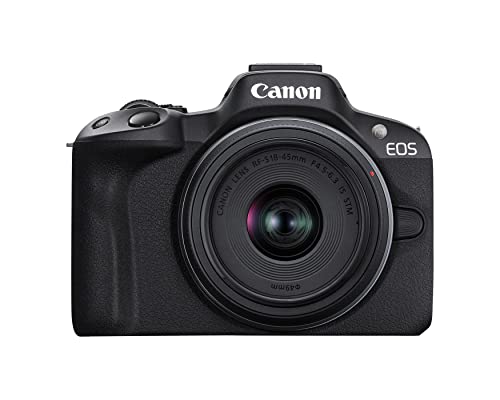
Canon EOS R50 — The welcoming system
Bought as a kit, the EOS R50 is the outfit that leaves this ceiling’s healthiest remainder, and that remainder is its superpower. This is Canon’s friendly APS-C mirrorless body — guided menus that explain exposure while teaching it, autofocus that tracks faces and eyes with a confidence beginners find almost unfair, and video strong enough that the family videographer and the family photographer can share one camera without either feeling like the compromise.
The RF mount underneath is the grown-up part of the proposition. The same mount serves Canon’s professional bodies, and its affordable end has filled in steadily: compact primes, travel zooms and a used shelf that deepens every season. An R50 outfit bought this year is not a cul-de-sac; it is the first room of a house with many rooms, and the money the kit leaves behind buys the second lens while the first is still being learned.
- Format: APS-C mirrorless, Canon RF mount
- Outfit logic: kit leaves the frame’s best lens remainder
- Character: guided, forgiving, quietly capable
- Video: a genuine strength for hybrid households
- Role: the first system for upgraders from phones
Strengths
- Learning curve gentled without dumbing down
- Autofocus that makes early success routine
- Kit arithmetic funds a prime within the ceiling
Trade-offs
- Keen growers may test its ceiling within years
- Body is compact; large hands should handle one first
- Advanced video ambitions will look up the range
The buyer’s portrait is clear: a phone photographer whose pictures have started asking questions a phone cannot answer — real background blur, honest low-light reach, lenses chosen for subjects. For that buyer the R50 kit plus a fast prime, assembled inside this ceiling, is not the budget version of a system. It is a system, complete, with its growth already funded.
Sequence the spending across the first season. Shoot the kit zoom for a month and let its focal-length evidence accumulate; then buy the prime your subjects requested — portrait distance for family photographers, wider for interiors and travel — rather than the prime a forum celebrates. Evidence-based second lenses are how modest outfits become beloved ones.
Best for: first-system buyers who want guidance, video strength and money left for glass. Not suited for: photographers who already know they need enthusiast controls and a viewfinder-first layout

Canon EOS R10 — The enthusiast system
Where its sibling welcomes, the EOS R10 respects. This is the APS-C body for the upgrader who has already served an apprenticeship — on a phone, an old DSLR, a borrowed camera — and wants the photographer’s full layout: an electronic viewfinder for composing in hard light, direct controls that keep exposure decisions under the fingers, and subject-detecting autofocus quick enough for running children, animals and amateur sport.
As an outfit it still respects this ceiling when bought as a kit, though the remainder for extra glass slims compared with the R50 — the honest trade at the heart of the Canon fork. What the extra body money buys is time: years of headroom before the camera, rather than the photographer, becomes the limiting factor. Shooters who upgrade bodies every two seasons spend more than shooters who buy one rung higher and stay.
- Format: APS-C mirrorless, Canon RF mount
- Outfit logic: kit fits the frame; lens remainder slimmer
- Character: viewfinder-first, direct, ambitious
- Focus: people, animals and vehicles detected readily
- Role: buy-once body for committed learners
Strengths
- Controls and finder serve serious stills craft
- Headroom measured in years of growth
- Shares the R50’s mount, so family kits can mix
Trade-offs
- Less of the ceiling remains for a second lens
- Guidance is thinner; it assumes intent
- Video creators may prefer the Sony below
Consider the household mathematics of the Canon pair. One partner starts on the R50, the other on the R10, lenses circulate between them, and the family’s shelf compounds instead of duplicating. Mount loyalty, chosen once, pays this quiet dividend for a decade — a consideration worth more than the small specification gaps reviewers argue about.
Buy the kit rather than the bare body unless a specific lens already waits. The frame’s discipline punishes body-only enthusiasm at every level, and the R10’s talents deserve glass that lets them show from the first weekend rather than after a second savings campaign.
Best for: committed upgraders wanting a viewfinder, direct controls and years of headroom. Not suited for: beginners wanting maximum hand-holding, or budgets needing a large lens remainder

Nikon Z50 II — The photographer’s system
Nikon’s second-generation APS-C body is the stills photographer’s argument in this line-up: a refined, viewfinder-equipped camera whose handling feels inherited from Nikon’s long DSLR lineage, with subject-detection autofocus that now recognises people, animals and vehicles, and a sensor whose files reward photographers who shoot deliberately and edit with intent.
The Z mount is this pick’s long bet. Nikon’s modern lens line has matured into a shelf with strong compact primes and zooms at the prices an upgrader actually pays, and the same mount scales to Nikon’s full-frame bodies when ambition eventually demands it — lenses bought for the Z50 II remain citizens of that future. As a kit the outfit stands inside this ceiling with a modest remainder, correctly sized for the second battery and the fast card its owner will want immediately.
- Format: APS-C mirrorless, Nikon Z mount
- Outfit logic: kit inside the frame, sensible remainder
- Character: stills-led, tactile, refined
- Focus: subject detection across people and animals
- Role: the photographer’s entry into Nikon’s system
Strengths
- Handling that rewards deliberate photography
- Files with depth for editors and printers
- Z mount scales from starter to professional
Trade-offs
- Video is capable rather than class-defining
- Lens shelf is strong but smaller than Sony’s
- Creator-first buyers should weigh the ZV-E10 II
Who is this photographer? The upgrader whose gallery is ninety percent stills, who prints, who walks for landscapes at dawn, who finds the craft in dials rather than in effects. That buyer has been underserved by creator-shaped cameras for years, and the Z50 II reads like an apology written in magnesium and good decisions.
Pair it thoughtfully. The kit zoom teaches distances; Nikon’s compact primes then give this sensor the bright glass its files deserve, and the used Z shelf — growing as early adopters upgrade — supplies both at prices that keep the outfit’s total honest across its first two years.
Best for: stills-led photographers entering a mount with a professional future. Not suited for: video-first creators or buyers wanting the largest possible lens catalogue today

Sony ZV-E10 II — The creator system
Sony built this body backwards from a filming session: the screen that flips for self-framing, the autofocus that holds an eye while its owner moves, the picture profiles that let footage look graded straight from the card. The ZV-E10 II is an APS-C mirrorless camera whose stills are entirely respectable and whose video is the point — the system for the upgrader whose ambitions involve an audience.
Its decisive asset stands behind it: the E mount, the deepest lens shelf in mirrorless, fed by Sony and by independent makers at every tier from first prime to cinema glass. A creator outfit assembled inside this ceiling can begin with the kit zoom, add the bright prime that low-light filming craves, and still see a decade of upgrades — lenses, bodies, accessories — without ever changing mounts or relearning a system.
- Format: APS-C mirrorless, Sony E mount
- Outfit logic: kit inside the frame; primes affordable next
- Character: video-led, autofocus-rich, customisable
- Lens shelf: the deepest available, new and used
- Role: the creator’s system with professional horizons
Strengths
- Autofocus that serves solo filming superbly
- Lens choice unmatched at every future budget
- Video tools arranged by people who film
Trade-offs
- No viewfinder; stills purists should look above
- Menus reward study more than rivals here
- Stills-only buyers fund craft they may skip
The creator’s budget has a second front this guide refuses to hide: sound. A microphone belongs in this outfit’s first-season plan the way a prime lens belongs in a portraitist’s, because audiences abandon poor audio long before they abandon soft footage. The ceiling can hold body, kit and the promise of both upgrades — order them by which weakness your first month of filming exposes.
Hybrid shooters, finally, should not overlook this body’s stills in their hurry to film. Families filmed on weekends are also photographed at birthdays, and a creator body that handles both keeps the household to one system, one shelf of lenses, one set of habits — an economy that compounds quietly for years.
Best for: video-first and hybrid creators who value autofocus and the E-mount library. Not suited for: viewfinder traditionalists or stills-only photographers on a strict lens budget

Fujifilm X-T5 — Step-up: the dial-lover’s body
Step-up, stated before anything else: the X-T5’s body price claims so much of this ceiling that any lens worthy of it carries the working outfit beyond the frame, and this section will not pretend otherwise. It earns its labelled place because a certain kind of upgrader — the one who thinks in dials, who wants aperture on the lens and shutter speed under a knurled wheel — will ask about it in every conversation at this level, and deserves an honest answer rather than an omission.
The answer is that the camera is magnificent at its own game. A high-resolution APS-C sensor, classic exposure dials, Fujifilm’s celebrated colour science and film simulations, and a stills-first design philosophy produce files with a character owners describe the way musicians describe an instrument. As a body it may be the most loved object in this guide. As an outfit under this ceiling, it does not fit — and the distance matters less than the honesty.
- Format: APS-C mirrorless, Fujifilm X mount
- Budget status: STEP-UP — body plus lens exceeds the frame
- Character: dial-driven, stills-first, colour-rich
- Files: film simulations with a devoted following
- Role: the step beyond for classic-handling devotees
Strengths
- Tactile controls that teach exposure physically
- Colour and film looks owners treasure
- Resolution that rewards careful technique
Trade-offs
- It steps past the ceiling as any real outfit
- Video is present, not the design’s passion
- Its lenses deserve budgets of their own
Who should step? The photographer who has handled one and felt the click of recognition, whose budget has genuine give, and who understands they are buying a body now and building its lens shelf across the following year. That is a defensible, even classic, way to assemble a system — provided it is chosen as a step-up and never smuggled into the accounts as an under-ceiling purchase.
Everyone else should treat this section as a signpost. Fujifilm’s mount and philosophy delight thousands of photographers, and the appetite this body creates can be fed at other altitudes and seasons. A ceiling respected today is a shelf built honestly tomorrow.
Best for: dial-loving stills photographers with real budget give who plan lenses across a year. Not suited for: any outfit that must total beneath this ceiling, or video-led buyers
Used Full-Frame System, Previous Generation — The connoisseur’s route, in prose
Written in prose because it describes a market rather than a model, this route assembles the outfit money cannot buy new at this ceiling: a previous-generation full-frame body — the class that professionals earned livings with a few seasons ago — paired with one or two of its era’s fine lenses, bought used with a dealer’s eye. The sensor is larger, the glass is serious, and the total can stand inside the frame that excludes every new full-frame outfit ever catalogued.
The craft is inspection, and it is learnable. Buy bodies from graded dealers where possible; read shutter counts against rated lives measured in the hundreds of thousands; examine sensors at small apertures for marks that cleaning cannot forgive; work every dial, port and hinge; and test lenses for fungus, haze and decentering by photographing flat, detailed subjects and reading the corners. A weekend of testing inside a returns window is this route’s warranty, self-issued.
- Source: graded used dealers and careful marketplaces
- Checks: shutter count, sensor, dials, lens glass and corners
- Sensor: full-frame, a class above the new kits here
- Lenses: professional glass of a prior era, kindly priced
- Role: maximum image quality per unit of ceiling
Strengths
- Full-frame files no new outfit here can match
- Professional lenses at enthusiast totals
- Build quality from an era of flagship ambition
Trade-offs
- Warranty comfort replaced by inspection duty
- Bodies are larger and heavier to carry daily
- Video features trail the current creator bodies
Choose the generation by evidence, not nostalgia. The sweet spot is the body that was the working professional’s default two cycles ago: modern enough for strong autofocus and connectivity, old enough for the upgrade wave to have priced it generously. Pair it first with the era’s standard zoom or a fast standard prime, and let the second lens wait for the subjects to request it by name.
Carry the weight honestly in your planning. Full-frame outfits ask more of shoulders and camera bags, and a system left at home for its bulk produces no photographs at all. Photographers who walk cities all day sometimes serve their work better with the APS-C kits above — a truth this route’s admirers should repeat to themselves before the money moves.
Best for: experienced buyers who inspect confidently and prize full-frame image quality. Not suited for: beginners wanting warranties, light packs or the newest video tools
How Do the Six Systems Compare as Complete Outfits?
| Pick | Outfit status | Mount horizon | Temperament |
|---|---|---|---|
| Canon EOS R50 | Inside, healthiest remainder | RF, starter to professional | Welcoming all-rounder |
| Canon EOS R10 | Inside, slimmer remainder | RF, starter to professional | Enthusiast stills and action |
| Nikon Z50 II | Inside, sensible remainder | Z, starter to professional | Deliberate photographer |
| Sony ZV-E10 II | Inside, lens shelf deepest | E, the largest catalogue | Creator and hybrid |
| Fujifilm X-T5 | Step-up beyond the frame | X, characterful and complete | Classic dial devotee |
| Used Full-Frame System, Previous Generation | Inside, by inspection | Prior mounts, deep used shelves | Connoisseur on a budget |
Read the remainder column as the guide’s thesis in miniature: the outfit that leaves money for glass usually out-photographs the outfit that spent everything on its body.
How Should the Ceiling Be Divided Between Body, Lens and Essentials?
A workable division for most upgraders gives the body and its kit roughly two-thirds of the ceiling, reserves a fifth to a quarter for the meaningful second lens, and protects the remainder for the unglamorous essentials — a second battery, cards fast enough for the body’s ambitions, a bag that will actually be carried. Outfits assembled to that rhythm rarely feel starved in any direction during their first year.
The essentials deserve their defence. Mirrorless bodies sip batteries faster than the DSLRs many upgraders remember, and a system that dies at the school concert’s second act has failed at its only job. Cards are the archive’s foundation; buy speed honestly rated and provenance you trust. The bag is a behavioural device: the outfit that travels comfortably gets photographed with, and the outfit that punishes its owner stays home learning nothing.
Deviate from the division only with a named reason. A portraitist may rightly push the lens share upward for one superb prime; a sports parent may fund reach instead; a creator may divert the second-lens money into sound for a season. Named reasons are strategy. Drifting past the division because a body was shiny is how ceilings dissolve.
Which Sensor Size Serves an Upgrader Best at This Level?
APS-C is the ceiling’s natural citizen: sensors large enough for beautiful files and shallow depth with bright lenses, bodies small enough to carry daily, and lens shelves priced for mortals. Every new outfit in this guide stands on it, and the format’s maturity means its weaknesses are known, small and mostly about extremes of darkness and depth that bright glass answers directly.
Full-frame’s case is real but conditional. Its files hold cleaner shadows and its depth control is more dramatic, yet its lenses cost and weigh more across the whole shelf, forever. New, it cannot assemble honestly under this ceiling at all; used, it becomes the connoisseur’s route above, trading warranty and lightness for those files. Neither format is a rank — they are different treaties between image, weight and money.
Choose by the photographs you actually take. Travel, family, street and most professional-adjacent work flourish on APS-C with good glass. Dedicated low-light, large-print landscape and portrait practices may justify the used full-frame treaty. The sensor should be the last decision, made after subjects and lenses, because it is the one the photographs will mention least.
How Do You Plan a Lens Shelf Across the First Two Years?
Year one belongs to evidence. The kit zoom maps your distances; the first prime — bought when the map shows where you live — delivers the low-light and portrait leap that makes a system feel magical; and a second battery plus honest cards quietly professionalise the whole outfit. Resist the third lens until the first two have argued about your subjects for a season.
Year two belongs to specialisation. The sports parent buys reach, the traveller buys compactness, the portraitist buys the longer prime, the creator buys the wide bright lens their room demands. Each purchase should be traceable to photographs attempted and missed, not to reviews read and envied. A shelf built from evidence fits its photographer the way a tailored coat fits — obviously, and only them.
Throughout both years, the used shelf is the budget’s ally. Lenses hold condition gracefully, grade honestly at good dealers, and circulate plentifully for every mount in this guide. A photographer willing to buy glass used can hold a shelf a full tier above their nominal budget, which is why the inspection craft taught in the prose pick pays dividends long after the body is chosen.
What Does Video Ask of a System at This Ceiling?
More than a specification line suggests. Serious filming wants autofocus that tracks without hunting, a screen that faces the subject when the subject is you, audio inputs that respect the audience’s ears, and heat manners that survive a long recording session. The creator pick in this guide was designed around exactly that list; the stills-led bodies film capably for family and occasional work, and the honest buyer matches the body to the proportion of filming in their real life.
Stabilisation deserves a sober paragraph. Bodies and lenses share the work of steadiness, and no combination at this level turns a walking shot into a dolly shot. Creators should budget a small gimbal or a disciplined tripod habit into their second season, and stills photographers should value the in-body or lens stabilisation that stretches handheld shutter speeds at dusk — different tools, both cheaper than disappointment.
Finally, files have appetites. Video at this level’s quality settings consumes cards and drives at a pace stills photographers find theatrical, and the outfit’s true cost includes the storage it will fill across a year. Count it in the ceiling’s division and the system stays a pleasure; discover it in month three and it becomes a tax.
How Do You Judge Autofocus Without a Laboratory?
By subjects, not by acronyms. Photograph or film the things you actually chase — a toddler crossing a kitchen, a dog changing direction, a speaker pacing a stage — and watch whether focus arrives before the moment or apologises after it. Every body in this guide detects eyes and faces; they differ in how tenaciously they hold a subject through clutter, poor light and sudden movement, and those differences appear within one honest afternoon of testing.
Lenses share the credit. A bright prime focuses faster and surer in dim rooms than a slow zoom on the same body, which is another reason the lens-first discipline keeps reappearing in this guide: autofocus is a system property, purchased partly with glass. Upgraders disappointed by a body’s tracking often discover the lens was the missing half of the sentence.
Settings matter more than pride admits. Subject-detection modes, tracking sensitivities and focus-area choices transform the same hardware’s behaviour, and an hour spent learning them returns more sharp photographs than any body upgrade at this ceiling. Buy the system, then study it like an instrument — the autofocus you master beats the autofocus you merely own.
What Mistakes Do Serious Upgraders Keep Making?
The aristocrat’s error leads: spending the whole ceiling on a body and kit, leaving nothing for the lens that would have defined the outfit, then blaming the sensor for ordinary pictures. Its mirror image is lens greed — three lenses bought in the first month, two of them duplicating the kit’s range, while the battery dies unbacked-up at every event that matters.
Mount drift is the expensive third. Switching systems inside two years because a rival launched a shinier body converts the first shelf into used listings and the second into a fresh mortgage; the mounts in this guide are all living, deep and defensible, so the correct number of mount changes in a decade, for most photographers, is zero. Fourth comes ignoring weight until the outfit’s second holiday, when it stays in the hotel room teaching its lesson.
The last mistake is treating the step-up label as a challenge. The X-T5 section is labelled because the arithmetic is real, and buyers who respect labels — stretching knowingly or not at all — keep both their systems and their budgets intact. Honesty about totals is not the enemy of ambition; it is ambition’s accountant.
How Should You Time Body and Lens Purchases Across a Season?
Sequence by revelation. The body and kit arrive together and start the evidence-gathering; the prime follows when the kit’s map is drawn, usually inside the first two months; the specialist lens waits for its season — the sports term, the trip, the portrait commissions — so its cost lands beside its purpose. Staggered this way, the ceiling assembles a system across a season while feeling, at each step, like a complete purchase.
Sales calendars reward the staggered buyer. Kit promotions cluster around launch seasons and holidays, primes discount on their own rhythm, and used shelves swell whenever a new generation ships and upgraders trade forward. A buyer with a written plan — mount chosen, lenses named, ceiling divided — harvests each of those moments calmly instead of researching in a panic while a countdown runs.
Set the plan an outer date, as with any honest budget: the wedding, the season, the journey the system exists to serve. An outfit completed after its purpose has passed is a bargain that missed its own point, and the photographs it was bought for remain unmade at any price.
How Does It Feel to Live With Each System Day to Day?
Ownership is a texture, not a table. Canon’s pair feel like appliances in the best sense — quick to wake, kind to beginners, with menus that stay out of the way while a household learns. Nikon’s body feels like an instrument inherited from a serious lineage, its grip and dials rewarding the photographer who shoots deliberately and prints proudly.
Sony’s creator body feels like a broadcast tool that happens to take photographs, its customisation depth rewarding owners who configure it once, properly, and then film for years inside their own setup. Fujifilm’s step-up feels like a classic camera that time-travelled — every exposure decision a small physical pleasure — while the used full-frame route feels like adopting a retired professional: heavier, moodier, capable of astonishing work when handled with respect.
None of these textures is a ranking. They are matches waiting to be made between temperaments and tools, which is why handling a body — in a shop, from a friend, at a rental counter — remains the most underrated research at this ceiling. The right system feels like it was waiting for your hands specifically.
How Do You Test a New System During Its First Weekend?
Treat the returns window as a laboratory with a deadline. Photograph the household’s real subjects in the household’s real light: the kitchen at breakfast, the garden at dusk, the pet mid-chaos, the partner mid-laugh. Film one continuous ten-minute piece and listen to it on headphones, because audio faults hide from specification sheets and announce themselves immediately to ears.
Deliberately hunt the weaknesses reviews mentioned. If low-light focus was questioned, shoot the dim hallway; if the grip divided opinion, carry the outfit for an hour’s walk; if menus confused a reviewer, time yourself changing the settings you will change daily. A system whose flaws you have met and accepted becomes a tool; a system whose flaws surprise you in month two becomes a listing.
End the weekend with the files, not the feelings. Print one photograph at a size the wall would notice and watch one film on the largest screen in the house. Outfits at this ceiling should pass that double test with room to spare — and if yours stumbles, the window is still open, which is precisely what it is for.
What Role Do Firmware, Apps and Ecosystems Play Over Years?
A modern system is partly software, and software has a temperament. Makers differ in how generously they update older bodies, how gracefully their phone apps transfer images, and how painlessly their files enter the editing tools a photographer already uses. None of this appears in a first weekend, yet all of it compounds across the decade a mount is meant to serve.
Ask owners, not brochures. The photographer three years into a system can tell you whether updates arrived like gifts or like silence, whether the app is a bridge or a toll booth, whether the colour profiles in their editor flatter the files or fight them. Every system in this guide has a living community fluent in these answers, and an evening in their company is research no laboratory replicates.
None of it should overturn a handling match or a lens shelf that fits, but between two otherwise equal systems, choose the ecosystem whose daily friction is lowest. Cameras are used in the small minutes — the transfer before dinner, the quick edit on a train — and systems that respect small minutes get used, which remains the only specification that finally matters.
How Should a Photographer Coming From Film or DSLR Read This Guide?
With translation rather than suspicion. The mirrorless bodies here replace the optical finder with an electronic one that previews exposure honestly — a change most DSLR veterans resist for a weekend and then refuse to surrender. Focus systems have moved from points to subject recognition, and the craft has shifted from placing a point precisely to choosing what the camera should understand.
Your old lenses may have a second life worth pricing. Adapters carry many DSLR lenses onto modern mounts with autofocus intact or nearly so, which can transform the outfit arithmetic: a beloved prime already owned is a lens remainder that needs no funding. Check your specific lenses’ adapted behaviour before assuming either way, because the answer varies by lens family and generation.
Film photographers will find Fujifilm’s dials philosophically familiar and every system’s film-like colour modes a conversation worth having. Whoever you were before this purchase, the discipline survives translation: subjects first, glass second, body third, and the ceiling — always — totalled as an outfit rather than admired as a body.
What Does a Second Body Add, and When Does It Make Sense?
Not yet — and that answer is part of this guide’s honesty. A second body is the professional’s insurance and the event photographer’s two-lens solution, but for an upgrader inside this ceiling it is a luxury that starves the lens shelf. The money a second body costs is, almost always, the prime and the telephoto the single body was waiting for.
The exceptions announce themselves specifically: the wedding shooter who cannot miss a card failure, the traveller crossing somewhere a repair shop is a rumour, the parent filming and photographing the same recital. Named risks justify redundancy; vague appetite does not. Even then, the household’s retired first body — kept when the upgrade eventually comes — is the second body most photographers actually need.
File the idea under year three. Systems mature in stages, and the stage this ceiling funds is one body, honestly lensed, thoroughly learned. Photographers who master a single body completely will know, when the day comes, exactly what their second body is for — and everyone else will know it was never needed.
How Do You Protect an Outfit Worth Protecting?
Record serial numbers and photograph the kit on its first day; note it on the household insurance or price a specialist policy if the outfit travels hard. These are unglamorous sentences that become the most valuable in this guide on exactly one bad afternoon, and they cost an hour once. A strap you trust, a bag that closes properly and a habit of never leaving the outfit visible in a parked car complete the physical side of the doctrine.
Data deserves the same seriousness. Cards are transport, not storage: copy files the day they are shot, keep two copies in different places for anything irreplaceable, and let the cloud be the third copy rather than the only one. The system bought at this ceiling will record weddings, childhoods and journeys; its archive deserves a redundancy plan as deliberate as its lens plan.
Finally, insure the photographer’s attention. A padded bag by the door, batteries charged on a rhythm, cards formatted only after verified copies exist — rituals like these are what separate an outfit that serves a decade from one that serves until its first accident. The ceiling bought the hardware; habits protect the investment.
How Do You Learn a New System Fast Enough to Love It?
Give the first month a curriculum. Week one belongs to the autofocus: subjects, detection modes and focus areas, practised on the household’s fastest movers. Week two belongs to exposure — one mode at a time, aperture for portraits, shutter for motion — until the dials stop being vocabulary and start being reflexes. Week three belongs to colour: the maker’s profiles and simulations, shot side by side on the same scene, so the files arrive wearing a look you chose rather than inherited.
Week four belongs to output. Edit a dozen frames properly, print the best two at real size, and watch one film all the way through on the big screen. Photographers who complete that month own their systems; photographers who skim it spend a year vaguely dissatisfied with equipment that was never actually introduced to them. The ceiling bought capability — the curriculum converts capability into photographs.
Bring one project to the month, because exercises without stakes evaporate. A family album chapter, a short film of a hobby, a street series from one neighbourhood: any finite, finishable work that forces the system through its paces and ends with something on a wall or a screen. Finished work teaches faster than any tutorial, and it is also, not coincidentally, the entire point.
What Should an Upgrader Ignore Completely at This Ceiling?
Ignore the resolution arms race between rival bodies whose sensors differ by margins no wall print will reveal. Ignore frame-rate duels fought over sports you do not shoot, codec debates about productions you do not crew, and the launch-day fever that declares last season’s excellent body obsolete while its owners are out making the season’s best photographs with it.
Ignore, above all, the opinion that your mount must be the mount a stranger’s channel crowned this quarter. Every system in this guide is deep, living and capable of a decade’s work; the differences that will actually shape your photographs are handling, lens evidence and how often the camera leaves the house. Those are knowable, personal and unglamorous — which is exactly why the loudest voices skip them.
Keep the ceiling’s own counsel instead: an outfit, honestly totalled, honestly lensed, honestly learned. Everything this guide has recommended follows from those three adverbs, and everything it has warned against violates one of them.
Final Recommendation
Build the outfit in the order this guide teaches: mount first, kit second, prime third, essentials always. Beginners and hybrid households should take the Canon EOS R50 kit and spend its healthy remainder on the prime their subjects request. Committed stills upgraders split by temperament — the Canon EOS R10 for action and all-round enthusiasm, the Nikon Z50 II for deliberate, print-minded photography. Creators should stand before Sony’s lens shelf with the ZV-E10 II and reserve a season’s budget for sound.
Step knowingly or not at all: the Fujifilm X-T5 awaits the dial-lover whose budget genuinely stretches, labelled as a step-up because its lens carries it past this ceiling. And the experienced inspector should not overlook the used full-frame route, where the finest files at this money hide behind shutter counts and sensor checks. Whichever system you choose, keep the lens remainder sacred — it is where the photographs live.
A last word for the upgrader hesitating between two good systems: both are good. The decade will be shaped less by which mount you chose than by whether you carried the camera, learned its focus, and bought its lenses with evidence. Choose this week, shoot this weekend, and let the system start becoming yours.
Frequently Asked Questions
Should the body or the lens get more of this budget?
The lens, in spirit, even when the body takes more in cash. A mid-priced body behind the right lens out-photographs a flagship body behind the wrong one for most real subjects, so divide the ceiling to guarantee one meaningful lens beyond the kit, and let the body’s tier flex to make that possible.
Is APS-C a compromise I will regret?
For most upgraders, no. Modern APS-C sensors with bright lenses deliver files that print large, blur backgrounds beautifully and travel light, and every new outfit in this guide is built on the format deliberately. Regret usually traces to lenses never bought, not to sensor size — which is why this guide keeps funding glass first.
Why is one pick labelled step-up in a guide about this ceiling?
Because buyers at this level ask about the Fujifilm X-T5 constantly, and it deserves an honest answer: a superb body whose lens pushes any complete outfit beyond the frame. Labelling it protects the budget; including it respects the question. What this guide will not do is file it quietly among the in-frame outfits.
How risky is the used full-frame route, really?
As risky as your inspection is lazy. Graded dealers, shutter counts, sensor checks and a testing weekend inside a returns window reduce the gamble to a managed craft, and the reward is image quality no new outfit here matches. Buyers unwilling to inspect should take the warranty and the new kits without a flicker of shame.
Which system is best if I film as much as I photograph?
The Sony ZV-E10 II outfit, for its autofocus, creator-shaped design and the E mount’s video lens depth — with the Canon R50 as the friendlier alternative for households where filming is joyful rather than professional. Either way, reserve money for a microphone; hybrid systems are judged by audiences on sound first.
When should I buy the second lens?
After the kit zoom has testified. A month or two of shooting reveals the focal lengths you inhabit and the light you starve in, and the prime or specialist bought on that evidence becomes the outfit’s defining lens. Buying it on day one, by contrast, usually funds a forum’s favourite rather than your photography’s need.
Related Guides
Continue with choosing a first prime lens from your kit zoom’s evidence, compare strategies in buying used full-frame bodies without the gamble, or read the second-battery and card kit every mirrorless owner needs before the outfit’s first big day out. Each follows one decision from this page — glass, inspection, essentials — to the depth a serious upgrader deserves, because a system assembled patiently, piece by evidenced piece, will still be teaching its owner photography long after this season’s body announcements have been forgotten by everyone except the people who sold their perfectly good cameras to chase them.
One more consideration belongs in this closing section, because upgraders ask it in the shop more often than in print: bring a short list of your actual subjects, written down, when you go to handle these bodies, and let the list — not the display lighting, not the salesperson’s favourite, not the launch poster — arbitrate between systems that specifications cannot separate. A camera chosen against a written list of subjects ages into a tool; a camera chosen against a mood ages into a listing, and the difference between those two futures is decided in the ten minutes before the money moves, which is why this guide has spent so many of its words on evidence, remainders and labels rather than on the comparatively easy business of admiring sensors.


