ilcastellomenu.com is reader-supported. When you buy through links on our site, we may earn an affiliate commission.
Where to Buy
First, an act of public interpretation: the best digital cameras under 200s means, in the way real shoppers use the phrase, cameras in the $200s — roughly two hundred dollars, give or take the small change of a card and a case. This guide adopts that reading openly rather than pretending the keyword describes some exotic currency, and it judges every route against a working total hovering around that figure.
At that altitude the honest map has a clear centre: yesterday’s proper cameras. A used starter DSLR or mirrorless kit, or a refurbished compact from a maker’s own outlet, delivers a real lens, a real sensor and real photographs for money the current catalogue laughs at. Two prose-only picks below teach those routes in detail, because no single link can stand for a secondhand shelf.
Around that centre orbit the new alternatives. One linked action camera genuinely lives in the $200s and films bravely. Three linked favourites — a creator compact, a waterproof adventurer and a premium pocket camera — are labelled step-ups wherever they appear, because their new prices sit clearly above the two-hundreds and a guide that blurred that fact would spend your trust to fill its table. Read the labels, choose the route, and the $200s become one of photography’s best-value neighbourhoods.
Key Takeaways
- “Under 200s” is read here, openly, as roughly two hundred dollars all-in.
- Used starter kits are the centre of this budget: real systems, real lenses.
- Refurbished compacts and kits add maker inspection to secondhand prices.
- One linked action camera truly lives in the $200s; three favourites step above.
- Every step-up is labelled at every mention — no blurred arithmetic.
- Condition, shutter counts and returns windows matter more than model years.
In this guide
Quick Picks
| Camera or route | Badge | Why it earns its place |
|---|---|---|
| Used Starter DSLR or Mirrorless Kit | The in-frame champion, in prose | A complete system with a kit lens, bought by inspection, inside the $200s. |
| Manufacturer-Refurbished Compact or Kit | The warrantied value, in prose | Maker-checked cameras that surface irregularly and reward decided buyers. |
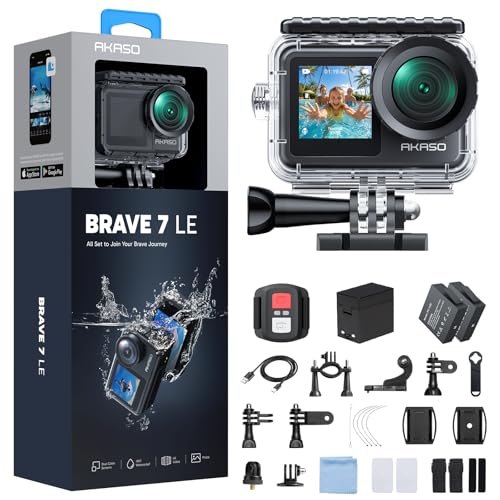
| AKASO Brave 7 LE | The new in-frame action pick | Weather-sealed filming for adventures, honestly priced within the two-hundreds. |
| Sony ZV-1F | Step-up — the creator compact | A fixed-lens vlogging camera stepping above the frame for its simplicity. |
| OM SYSTEM Tough TG-7 | Step-up — the waterproof adventurer | A rugged compact that swims and survives drops, priced beyond the $200s. |
| Canon PowerShot G7 X Mark III | Step-up — the premium pocket camera | The enthusiast compact creators love, the tallest step in this guide. |
How Did We Read a Vague Keyword and Judge Its Routes?
The interpretation came first and stays visible: $200s means the two-hundreds, and totals were judged as working outfits — camera, plus the card it needs, plus the battery reality it lives with. A route that only fits by ignoring its essentials was marked down in our notes, however attractive its headline figure looked in a search result.
Linked products come only from this site’s verified pool. The two routes that define this budget — used kits and refurbished stock — cannot be linked honestly, because their inventory changes hourly and their quality is per-item, so they are written in prose with the buying craft spelled out. That is a deliberate editorial choice: a link to a random listing would be a worse service than a checklist.
Step-ups were admitted under one rule: the label travels with the name. Each of the three step-up bodies is flagged in its quick-pick row, its detailed heading, its specification list and the comparison table, so no reader skimming at speed can mistake one for an in-frame bargain. A guide earns the right to show expensive cameras only by refusing to disguise them.
Condition literacy shaped the prose routes. At this level the difference between a bargain and a bonfire is inspection — shutter counts, lens glass, sensor marks, return windows — so those skills are taught as first-class content rather than footnotes. A reader who finishes this page should be able to shop the used shelf without us.
Why Do Used Kits Own This Price Neighbourhood?
Because depreciation is the photographer’s friend. Starter DSLRs and early mirrorless bodies were built in enormous numbers for a market that has since moved upmarket, and their owners’ upgrades pour capable, lightly used kits onto the secondhand shelf continuously. A body that taught someone photography for three gentle years, plus the kit lens it learned on, is not worn out — it is broken in, and its price reflects fashion rather than remaining life.
The photographic gap between those kits and anything new at this money is not subtle. Real optical zooms, sensors many times a budget compact’s size, interchangeable lenses on the mirrorless examples, proper controls: the used kit is not the cheap version of a camera, it is a camera whose cheapness is an accident of timing. Buyers who understand that accident shop this shelf for decades.
Risk is the honest counterweight, and it is manageable rather than mysterious. Wear concentrates in knowable places — batteries, shutters, lens mounts, card doors — and the inspection sections below walk through each. Priced against a new device with a warranty, the used kit asks for an afternoon of diligence and returns a system. Most photographers who try the trade once become permanent citizens of the used shelf.
Which Are the Best Digital Cameras Under 200s, Route by Route?
Start with the two prose routes if still photography is the goal; they are the budget’s centre of gravity. Take the action camera if the goal moves and gets wet. Consider the three labelled step-ups only with a budget that has genuine stretch, each for a distinct reason — creation, ruggedness, or pocketable quality — and never under the illusion that they live in the two-hundreds.
Used Starter DSLR or Mirrorless Kit — The in-frame champion, in prose
Here is the route this entire keyword was born to describe, written in prose because its inventory is a river rather than a product. Somewhere in the graded used market at this moment sits a starter kit — a DSLR with its standard zoom, or an early mirrorless body with its compact kit lens — that was somebody’s careful first camera, and it can be yours, complete and photographing, inside the $200s. No new device in this guide’s frame tells a story half as capable.
Shop by condition grades and questions, not by model worship. Ask the shutter count and set it against rated lives that run to six figures on enthusiast-leaning bodies. Examine lens glass under a bright light for the haze and fungus that cleaning cannot cure. Fire the zoom, work every dial, format a card in the body and shoot a plain wall at a small aperture to interrogate the sensor. Then use the returns window like a professional’s trial period, shooting your real subjects for a weekend.
- Source: graded dealers first; marketplaces with questions asked
- Checks: shutter count, lens glass, sensor wall-test, dials
- Included ideally: kit lens, charger, one healthy battery
- Photographic class: a genuine system, not a substitute
- Role: the budget’s centre of gravity for stills
Strengths
- Complete system photography inside the two-hundreds
- Interchangeable lenses on mirrorless examples
- Controls that teach exposure as a physical craft
Trade-offs
- Inspection diligence is the admission price
- Batteries may be tired; budget one replacement
- Video and connectivity trail current models
Which generations deserve the hunt? The starter lines that reviewers recommended unanimously in their day, one or two cycles back — old enough for the upgrade wave to price them kindly, new enough for autofocus and screens that still feel modern. Learn two or three candidate models deeply, know their fair prices, and let condition, not novelty, cast the deciding vote when a listing appears.
Protect the remainder of the frame after the kit lands. A fresh battery, a trustworthy card and a simple bag consume the small change of the $200s and convert a bargain body into a dependable outfit. Owners who skip that step own a camera; owners who take it own a system, and the difference shows at the first family event that runs past one battery’s patience.
Best for: stills photographers happy to inspect, wanting a complete real system in the $200s. Not suited for: buyers needing a warranty’s certainty or same-day delivery
Manufacturer-Refurbished Compact or Kit — The warrantied value, in prose
The refurbished shelf is the used route with the guesswork professionally removed, also written in prose because its stock cannot be linked in advance. Makers and authorised programmes take returned, ex-display and overstock cameras, inspect and restore them, and sell them with a warranty standing behind the work. When a good compact or a starter kit surfaces there, its price often lands in the $200s wearing near-new confidence — the finest arithmetic in this entire guide when the timing cooperates.
Timing is the catch, and it is structural rather than personal. Refurbished inventory arrives in unpredictable waves, the desirable models leave within days, and the buyer who has already decided — model named, ceiling written, payment ready — harvests the shelf while the undecided are still comparing reviews. Treat the makers’ outlets as bookmarks to check weekly, the way anglers check a river they intend to fish all season.
- Source: manufacturer outlets and authorised programmes only
- Condition: inspected, restored, graded by the maker
- Warranty: included — read its exact length and terms
- Availability: irregular waves; decided buyers move first
- Role: near-new confidence at secondhand altitude
Strengths
- Maker inspection removes the used route’s gamble
- A warranty restores the safety net entirely
- Compacts and kits surface at $200s prices
Trade-offs
- Stock cannot be summoned to your schedule
- Popular models vanish within days of listing
- Savings vary; some listings hug new prices
Verify the programme before the product tempts you. Genuine manufacturer refurbishment carries the maker’s warranty and grading standards; third-party uses of the word range from excellent workshops to a wiped lens and a hopeful sticker. The seller’s identity is the specification that matters here, and anonymous refurbishment should compete for somebody else’s money.
Run this route in parallel with the used hunt, with a deadline governing both. Give the refurbished shelves until the trip, the term or the birthday that motivates the purchase; if the right box has not surfaced by then, buy the inspected used kit and start making photographs. A camera in hand for the event outranks a perfect bargain caught the week after it.
Best for: patient buyers who want warranty-backed value in the two-hundreds. Not suited for: anyone shopping against a near deadline, or unwilling to watch stock

AKASO Brave 7 LE — The new in-frame action pick
Amid the routes and the step-ups, one linked camera simply lives here: a weather-sealed action camera whose natural price sits in the $200s and whose job is filming the parts of life that happen at speed, outdoors, near water. Helmet, handlebar, chest strap or a child’s bicycle — the Brave 7 LE rides inside the action and returns stabilised footage that a phone, held at arm’s length by a nervous owner, rarely matches.
Sealing is the trait to savour. Rain on a trail ride, spray on a boat, dust on a worksite — conditions that send delicate cameras into bags are this device’s ordinary Tuesday, and that fearlessness changes what a family bothers to film. Twin screens frame shots from either side, and the accessory bundles common with this model quietly matter, because mounts are where action-camera budgets traditionally leak.
- Format: action camera with fixed ultra-wide lens
- Budget status: inside the $200s, new with warranty
- Build: weather-sealed for outdoor punishment
- Screens: front and rear for flexible framing
- Role: sport, travel and water filming
Strengths
- Films where phones and compacts cannot risk going
- Stabilisation keeps real movement watchable
- New purchase with a warranty, inside the frame
Trade-offs
- Still photographs are souvenirs, not showcases
- Ultra-wide perspective bends close faces
- Cards and spare batteries join the total
Notice the division of labour this pick enables. A household can run the used kit for stills and this camera for motion, covering both halves of family memory inside roughly two of these budgets combined — a pairing this guide recommends openly, because specialisation at low prices beats imitation at any price.
Feed it honestly: a fast, genuine memory card from a seller you trust, formatted in the camera, and a spare battery for long days. Those two companions are the difference between a bargain that performs on the mountain and a bargain that becomes a story about the footage that got away.
Best for: riders, paddlers, skiers and travelling families filming action in the $200s. Not suited for: stills-first photographers or anyone needing optical zoom

Sony ZV-1F — Step-up: the creator compact
Step-up, flagged before the praise begins: the ZV-1F’s new price sits above the $200s, and it is included because creators researching this neighbourhood ask about it constantly. Sony designed it as the simplest possible vlogging camera — a fixed wide lens that keeps a presenter and their surroundings in frame, autofocus that clings to eyes, and a design that assumes its owner would rather film than study menus.
That simplicity is a philosophy worth respecting. There is no lens to change, no zoom to fumble, no mode dial archaeology; the camera wakes, frames wide, tracks a face and records, which is precisely the workflow of a person filming a kitchen renovation diary, a campus tour channel or a small business’s weekly update. Its wide lens flatters rooms and keeps gestures in frame, and its microphone arrangements were considered by people who understand that audiences leave bad audio first.
- Format: fixed-lens creator compact
- Budget status: STEP-UP — new price above the $200s
- Lens: wide and fixed, chosen for presenters
- Focus: eye-tracking tuned for self-filming
- Role: the simplest route into regular vlogging
Strengths
- Almost nothing to learn before filming well
- Wide framing suits rooms and presenters
- Compact enough to live in a daily bag
Trade-offs
- The step past the frame must be funded honestly
- Fixed lens means feet do the zooming
- Stills photographers pay for video priorities
The step-up question for this pick is unusually concrete: will filming actually happen weekly? A creator with a real cadence — episodes, updates, lessons — will extract the premium from this camera within a season, while a hopeful occasional filmer will extract it never. Buy the cadence, not the aspiration, and the label on this section becomes a tool rather than a warning.
Creators on the strictest reading of the frame have an alternative this guide respects: the used kit route above, filmed through with patience, or the action camera’s wide bravery. Neither matches this Sony’s presenter-shaped polish, and neither pretends to. The step-up exists because polish has a price, and prices deserve labels.
Best for: committed vloggers and presenters who can stretch past the $200s knowingly. Not suited for: firm two-hundred budgets, zoom photographers or stills-first buyers

OM SYSTEM Tough TG-7 — Step-up: the waterproof adventurer
Another honest label: the Tough TG-7 steps above the $200s, and it does so carrying credentials no other pick here can photocopy. This is a genuinely waterproof, shockproof, freeze-resistant compact from a line that has served snorkellers, builders, skiers and accident-prone travellers for years — a camera designed to be dropped, drowned and frozen as a matter of routine, and to keep photographing afterwards.
Its party pieces are practical rather than theatrical. It swims without a housing to depths a holiday snorkeller will never exceed, focuses astonishingly close for macro worlds in tide pools and gardens, and records where it has been with the cheerful diligence of a field instrument. For families whose holidays involve reefs, rivers and weather, the TG-7 is not an indulgence; it is the camera that comes back from trips that retire other cameras.
- Format: rugged waterproof compact
- Budget status: STEP-UP — priced beyond the $200s
- Protection: waterproof, shockproof, freeze-resistant
- Close focus: macro ability unusual in any class
- Role: adventure travel, worksites, water sports
Strengths
- Survives the accidents that end other cameras
- Underwater photography without extra housing
- Macro mode reveals a second hobby free
Trade-offs
- A clear step beyond this guide’s frame
- Sensor is compact-class; darkness is not its friend
- Paying for armour you may never test
Set this pick beside the action camera and the fork is philosophical. The Brave films motion from inside the sport; the TG-7 photographs places and creatures, above and below waterlines, with a still photographer’s intent. Households that mostly film choose one way, households that mostly photograph choose the other, and households that do both have discovered why camera bags have two compartments.
The step-up arithmetic has a hidden column: replacement risk. A delicate camera carried into surf and building sites carries an expected cost of accidents across its life, while the Tough’s premium is paid once, in advance, against exactly those accidents. Travellers with adventurous itineraries sometimes find the labelled step-up is the cheaper decade — a calculation worth doing with your own itinerary open on the table.
Best for: snorkellers, hikers, builders and travelling families who can fund the step knowingly. Not suited for: strict $200s budgets or low-light stills specialists

Canon PowerShot G7 X Mark III — Step-up: the premium pocket camera
The tallest step in this guide, labelled accordingly at every mention: the G7 X Mark III is the premium compact that creators and enthusiasts carried for years as the pocketable alternative to a system camera — a bright zoom lens, a sensor far larger than budget compacts offer, and video credentials that made it a default recommendation for people who film their lives seriously. Its new price lives well above the $200s, and nothing in this section will suggest otherwise.
What the height buys is the pocket photographer’s complete argument. The lens gathers light like a much larger camera, so cafés, concerts and evening streets stay photographable; the zoom range covers the walk-around distances most travel actually uses; and the whole instrument vanishes into a jacket pocket, which means it attends the moments a system camera gets left behind for. Owners describe it the way musicians describe a trusted instrument — by the years, not the specifications.
- Format: premium compact, bright zoom lens
- Budget status: STEP-UP — the furthest beyond the frame here
- Sensor: large for its pocketable class
- Video: creator-grade, with streaming heritage
- Role: the pocket camera for serious image quality
Strengths
- Low-light quality no in-frame rival approaches
- Pocket size guarantees daily attendance
- Stills and video both served seriously
Trade-offs
- The step is the largest in this guide
- Lens is fixed; systems grow, this does not
- Premium pricing invites premium expectations
There is a legitimate strategy hiding in this step-up: buy once, at the level of the camera you actually dream about, instead of climbing through two in-frame purchases that never quite satisfy. Households that know their pattern — a compact carried daily for years — sometimes spend less across a decade by stepping up immediately. The strategy only works with the label honoured: eyes open, total counted, stretch funded.
Everyone else should let this section do its other job, which is calibration. The G7 X defines what the money above this frame buys, and by that light the used kit route’s value becomes vivid: yesterday’s route to serious files, at a fraction of this step-up’s altitude, for buyers willing to inspect. Desire is information; let it point you to the route that fits the season you are in.
Best for: pocket-camera devotees and creators with genuine stretch who buy once for years. Not suited for: any budget that must stay in the $200s, or photographers wanting interchangeable lenses
How Do the Six Routes Compare at a Glance?
| Pick | Budget status | Warranty | Photographic ambition |
|---|---|---|---|
| Used Starter DSLR or Mirrorless Kit | Inside the $200s | Seller-dependent | A complete learning system |
| Manufacturer-Refurbished Compact or Kit | Inside, when stock lands | Maker-backed | Near-new confidence |
| AKASO Brave 7 LE | Inside the $200s | New, full | Action filming |
| Sony ZV-1F | Step-up above the frame | New, full | Presenter video |
| OM SYSTEM Tough TG-7 | Step-up above the frame | New, full | Rugged adventure stills |
| Canon PowerShot G7 X Mark III | Step-up, furthest | New, full | Premium pocket quality |
Three routes inside, three steps above, and every label in its place: that is the whole ethics of this guide compressed into one table.
How Do You Inspect a Used Kit Like Someone Who Sells Them?
Begin where failure hides: the sensor. Photograph a plain, bright surface at the smallest aperture and study the enlarged result — dust is a cleaning job, scratches and fungus are a refusal. Move to the mount, where a lens should seat with one clean, certain motion, then to the shutter, fired in bursts, listening for the uneven tiredness that precedes expensive silence.
Lenses get their own tribunal. Shine a phone light through the glass and look for haze blooming inside, for fungus tracing its small ferns, for coating scars at the edges. Zoom and focus rings should travel smoothly without grit or wobble, and a flat, detailed test scene — a bookshelf across a room — reveals decentering when one corner refuses to sharpen with its siblings.
Finish with the unglamorous inventory: battery health across an hour rather than a menu’s optimism, card door and port covers intact, screen hinges honest, charger present. Then spend the returns window shooting your actual life. A seller who welcomes that weekend is the used market at its finest, and there is more of that finest available than pessimists suppose.
Which Kit Lens Should a Used Buyer Hope to Find in the Box?
The standard zoom the kit was born with is the correct first answer, whatever forums say about primes. Its range teaches a new owner which distances their photography inhabits — wide for rooms and landscapes, standard for people, short telephoto for details — and that map, drawn from real frames, is worth more than any lens bought blind. Kits that include it complete the system on day one, which is the entire proposition of this budget.
Treat bundled extras with a bookkeeper’s calm. A second lens in the listing — often a longer zoom the first owner added — is genuine value if its glass passes inspection. Filters of unknown pedigree, novelty bags and unbranded cards are packing material with ambitions, and a listing priced on their supposed worth should be compared, body plus lens, against plainer rivals.
After a season, the evidence will name the second lens properly: the fast prime for the portraitist the kit revealed, the telephoto for the sports parent it exposed, the wide zoom for the traveller it created. Used shelves serve all three at this budget’s altitude, which is why starting used is not a compromise position but a compounding one.
How Far Can a $200s System Grow Before It Needs Replacing?
Surprisingly far, because growth in photography is mostly lenses and learning, both of which a used mirrorless kit accepts indefinitely. The same body that arrives with a kit zoom can wear a bright prime in spring, a telephoto by the sports season, and a macro by the following year, each purchase used, each expanding what the outfit can say. DSLR kits grow similarly within their mount’s deep secondhand shelves.
The ceiling, when it finally announces itself, speaks in specifics: autofocus that loses a sprinting child in poor light, video that lacks what a growing channel needs, a viewfinder that tires an eye across long days. Those are upgrade reasons with names, and a photographer who can name theirs buys the next body once and correctly. The photographer who upgrades on restlessness buys three bodies in the time the first photographer buys one.
Notice the economics hiding in that patience. A kit bought in the $200s and grown with used lenses can serve five years of serious photography for less than one season of chronic body-swapping — and its photographs, judged blind, will usually win the comparison that actually matters.
What Should a Buyer Know About Batteries, Cards and Chargers Here?
That they are the used market’s small print, and small print is where budgets leak. A kit’s original battery may hold a fraction of its birth charge; price one fresh, maker-trusted replacement into the total from the start rather than discovering the truth at a wedding. Chargers go missing between owners with metronomic regularity, and a missing proprietary charger is a cost, not a detail.
Cards deserve provenance. Counterfeit and exhausted cards cluster exactly at this budget’s altitude, and they fail mid-event with irreplaceable files aboard. Buy new cards from reputable sellers, format them in the camera, and retire any card that ever corrupts a frame. The saving from a suspicious card is the most expensive money in photography.
Build the kit’s support shelf in the first week: spare battery charged on rotation, two honest cards, a strap that does not slip, a bag that closes against weather. That modest ceremony converts a secondhand bargain into a dependable instrument, and it is the step that separates owners who praise the used route from owners who curse it.
How Does This Budget Serve a Student Photographer?
Beautifully, because courses teach principles that old hardware demonstrates perfectly. Aperture, shutter and sensitivity behave identically on a decade-old body and a flagship; composition does not check model years; and a student whose camera cost little can take it everywhere — protests, night buses, rain — without the anxiety that keeps expensive equipment home during education’s most photographic years.
The used mirrorless route suits students who will keep growing, since its lenses remain useful when a later body arrives. The refurbished route suits students whose courses demand reliability on fixed dates. Either way, the money not spent on the body funds the things lecturers actually grade: printing, travel to subjects, and the second lens that a portfolio suddenly requires in the final term.
One caution travels with the compliment: check course requirements before buying, because a few programmes specify video features or tethering that older bodies lack. An evening reading the syllabus is cheaper than a semester of workarounds, and it turns this guide from a shopping list into a plan.
What Mistakes Do $200s Buyers Keep Making?
Chasing the newest model year inside a used budget leads the list — paying a condition premium for a badge while a cleaner, older kit photographs rings around it. Its sibling is the reverse snobbery: buying the oldest, cheapest body on the shelf and discovering that some vintages are archaeology rather than value, with batteries unobtainable and autofocus from a slower civilisation.
Skipping the sensor test is the classic unforced error, usually dressed as politeness toward the seller. Ignoring the step-up labels is the second: arriving home with a camera priced beyond the frame while believing it lived inside it, because a headline somewhere blurred the distinction this guide refused to blur. Third comes starving the support shelf — the bargain kit with a dying battery and a counterfeit card, assembled like a rumour instead of a tool.
The final mistake is impatience with the refurbished shelf. Buyers who check it twice and surrender miss the wave that arrives in week three; buyers who watch it with a deadline and a decision ready harvest the best arithmetic in this guide. Patience, here, is not a virtue. It is a discount mechanism.
How Should You Choose Between the Used Kit and the Refurbished Box?
By temperament and deadline, in that order. The used kit rewards the buyer who enjoys the hunt, trusts their inspection and wants the widest choice today; the refurbished box rewards the buyer who values a warranty’s sleep quality and can let the calendar breathe. Neither temperament is superior, and misdiagnosing your own is the surest route to dissatisfaction with either.
Run both clocks simultaneously with one rule: whichever route produces a verified, complete outfit first — inspected kit in hand, or refurbished box at the right total — wins the purchase, and the other search closes without regret. Parallel hunting with a finish line converts waiting from a cost into a strategy.
Keep the step-ups out of this particular duel unless the stretch is genuinely funded. They answer different questions — creation, armour, pocket luxury — and a buyer torn between two in-frame routes will not be rescued by a third that breaks the frame. Decide the frame’s meaning first; the camera follows.
How Do You Negotiate and Verify on Marketplaces Without Regret?
Ask questions whose answers create a record: shutter count, reason for selling, battery count, any faults the seller already knows. A careful seller answers precisely and photographs what you ask to see; an evasive one has told you the camera’s biography in advance. Keep the conversation on the platform, pay through channels with protection, and treat any pressure to hurry as a specification — of the seller, not the camera.
Meet like a professional when buying in person. Bring a card, a laptop or phone for enlarging test frames, and a lens if the body is sold bare. Run the wall test, the burst test and the dial tour on the spot, politely and completely. Sellers of honest cameras expect this ceremony; it is the buyers who skip it, out of embarrassment, who fund the market’s small tragedies.
Price the whole transaction before offering. Postage, a replacement battery, a charger if absent, a card if none is included — the offer that ignores them is not an offer on the same camera. Buyers who total first negotiate calmly, because they know the exact figure at which the bargain stops being one.
What Photographs Will a $200s Kit Actually Be Asked to Take?
Birthdays in dining rooms, where a kit zoom and a bounced flash or a bright window carry the evening. School sports from a fence line, where the standard zoom reaches far enough for pride if not for posters. Holidays in rented cottages, street markets, grandparents’ gardens — the ordinary geography of a family’s decade, photographed with a richness phones of the kit’s era could not approach and budget newcomers still cannot.
Portraits deserve a technique note: use the long end of the kit zoom, step back, open the aperture as far as the lens allows, and put distance between your subject and the background. That recipe, free with any kit, produces the separation beginners assume requires expensive glass, and it teaches the geometry that a later prime purchase will refine rather than introduce.
Landscapes ask even less: small apertures, steady hands or a wall for a tripod, and the patience to wait for light. A used kit on a hillside at dawn is not a compromise camera; it is a camera, full stop, in the situation where cameras matter most. The $200s buy far more photography than their reputation suggests — they merely refuse to buy it new.
How Should a Parent Choose for a Teenager’s First Real Camera?
Start with the teenager’s evidence, not the parent’s nostalgia. A teen already filming everything needs the creator conversation and perhaps the action camera’s courage; a teen filling notebooks with observed detail needs the used kit and its deliberate controls. Either way, a camera at this altitude has a hidden virtue for the young: it is precious enough to teach care and cheap enough to actually be carried, lent and used hard.
Involve the buyer in the inspection. A teenager who has checked a shutter count, tested a sensor and negotiated a returns window has learned consumer craft alongside photography, and will treat the resulting camera as an achievement rather than an appliance. The refurbished route, with its warranty, suits families who want the lesson without the risk premium.
Set the growth path as part of the gift: this kit now, a prime lens for the birthday after the portfolio exists, a better body when the work — not the wanting — demands it. Teenagers who watch equipment follow evidence learn the deepest lesson this guide teaches, and they learn it at an age when it compounds for a lifetime.
Why Does the Kit Lens Get Despised, and Why Is That Wrong Here?
Kit lenses acquired their reputation in an era when they were built down to a price and it showed. Modern standard zooms — including the ones bundled with the used kits on this shelf — are optically respectable instruments whose sins are slowness in dark rooms and a certain lack of drama, not softness or failure. Reviewers comparing them with lenses costing five times more are performing a different sport from photography.
At this budget the kit lens has a second, decisive virtue: it is already paid for. A used kit with its zoom included is a complete photographic system on day one, while a body bought bare to afford a fashionable prime is a sensor waiting for permission. Completeness is a photographic quality, because photographs are taken by systems that exist.
Let the kit lens earn its replacement honestly. When its owner can name the frames it could not make — the dim hall, the distant wicket, the portrait that wanted more separation — the successor lens has been specified by evidence, and money spent on evidence is never the money regretted in this guide’s postbag.
How Do You Keep a Secondhand Camera Reliable for Years?
Feed it rituals. Charge batteries before they are desperate, store the body with a lens or a cap on its mount, keep it from the twin climates of bathroom steam and parked-car summers, and clean its sensor only with tools and courage appropriate to the task — or pay a shop the small fee that certainty costs. Secondhand cameras fail from neglect far more often than from age.
Watch the small consumables that age in public: straps fray, eye cups wander off, card doors loosen, rubber grips grow tacky in heat. Each is cheap to renew and miserable to lose mid-trip, so a five-minute inspection each season is the cheapest insurance in this guide. A camera maintained like an instrument behaves like one, whatever its birth year.
Finally, use it. Mechanisms that move stay honest; cameras entombed in cupboards develop the faults of disuse and then get blamed for their mileage. The used kit’s best longevity plan is a calendar full of reasons to leave the house — which is, after all, what it was bought for in the $200s.
When Should a $200s Buyer Skip This Shelf Entirely?
When the photograph they keep describing lives elsewhere. If every imagined frame involves interchangeable-lens growth starting now, professional video obligations, or low-light work as a weekly duty, then this shelf is a layover rather than a destination, and its money is better saved toward the system guides at higher ceilings. A layover bought knowingly is fine; a layover mistaken for the destination breeds the resentment that gives budgets a bad name.
When a dated event rules the calendar, the logic reverses completely. The wedding next month, the term starting in September, the reef trip already paid for — these cannot be photographed by a future, better camera, and the used kit bought this week will outperform the dream body bought next year by the only margin that counts: existing. Match the purchase to the calendar before matching it to the catalogue.
Either way, decide with the labels visible. This guide has priced its honesty carefully — the interpretation declared, the step-ups flagged, the inspection craft taught — so that whichever shelf you finally choose, you choose it as an adult with a map, not as a headline’s audience.
How Does Video Fit a Budget Built Around Stills?
Modestly, and honestly. Used kits of the right vintage film perfectly serviceable footage for family archives, school projects and a young creator’s first uploads, especially on a tripod in decent light where their larger sensors flatter them. What they will not do is match a current creator camera’s autofocus ballet or low-light polish, and buyers whose ambitions are primarily cinematic should weight the labelled step-ups — or the action camera’s different bravery — accordingly.
The hybrid household has a workable treaty available: stills from the used kit, motion from the action camera or a household phone, edited together without apology. Most family films were always collages; the $200s merely make the collage’s budget visible. Spend the frame where your archive is weakest, not where a specification table is loudest.
Audio, again, is the quiet decider. Any of these routes filming an interview, a lesson or a performance deserves a cheap external recorder or a phone recording sound near the subject while the camera keeps its distance. That small habit elevates $200s footage further than any in-frame camera upgrade could, and it costs less than a memory card.
What Is the Resale Logic of Buying at This Altitude?
Buying used near the bottom of a camera’s depreciation curve is the closest photography comes to free rental. A kit bought carefully in the $200s and sold two years later, when the upgrade it taught you to want finally arrives, commonly returns most of its cost to fund that upgrade — provided it was kept clean, complete and honestly described, the same virtues this guide taught you to buy by.
Keep the box, the spare caps, the charger and the paperwork. Completeness is resale value in physical form, and the discipline costs one shelf corner. Photograph the kit’s condition when it arrives, too; that small archive protects you as a seller exactly as it protected you as a buyer, which is the used market’s golden rule operating in both directions.
Viewed this way, the $200s are not a compromise tier but an apprenticeship with a refundable deposit. The photographers who pass through it thoughtfully — inspecting, learning, growing by evidence — carry its habits to every higher shelf, and usually out-photograph the buyers who started expensive and stayed hurried.
Final Recommendation
For still photography, walk the in-frame routes in parallel: hunt the graded used shelf for a starter DSLR or mirrorless kit with its lens included, watch the manufacturers’ refurbished outlets with a deadline set, and buy whichever produces a complete, verified outfit first — then spend the frame’s small change on a fresh battery and an honest card. For motion and weather, the AKASO Brave 7 LE is this budget’s one new camera that needs no apology and no label beyond its own name.
Step above the $200s only with eyes open and the label honoured: the Sony ZV-1F for the presenter with a real filming cadence, the OM SYSTEM Tough TG-7 for the traveller whose itineraries destroy delicate things, and the Canon PowerShot G7 X Mark III for the pocket devotee buying once for years. Each is a fine camera. None of them lives in the two-hundreds, and after this page, nobody can say they were not told.
There is a deep satisfaction in this neighbourhood when it is shopped honestly — the kit that cost little and photographs like a inheritance, the refurbished box that arrived like weather you were dressed for. The $200s reward the patient and the literate, and they punish only the hurried. Be the former, and this modest frame will feel, in retrospect, like one of the best photographic bargains of your life.
Frequently Asked Questions
What does “under 200s” actually mean in this guide?
Roughly two hundred dollars, as shoppers use the phrase — the $200s as a neighbourhood rather than a razor edge. Totals are judged as working outfits, so a camera slightly under the line that needs a card and battery immediately is read honestly alongside one slightly over it that arrives complete.
Is a used DSLR still worth buying, or only mirrorless?
Both earn their place. DSLR kits are often the cheapest complete systems on the shelf, with vast used lens libraries and optical viewfinders many photographers still prefer; mirrorless kits are smaller, film better and grow into current mounts. Choose by the lenses available and the subjects you shoot, not by which technology fashion currently blesses.
How much shutter count should worry me on a used body?
Compare the count with the model’s rated life, which on enthusiast-leaning bodies commonly runs well into six figures. A count in the low tens of thousands describes a young camera; a count approaching the rating deserves a price that admits the mileage. Treat the number as one chapter of the inspection, alongside sensor, mount and dials.
Why are three picks labelled step-up instead of simply excluded?
Because readers ask about them constantly, and an honest label teaches more than an omission. Each step-up is flagged in its table row, heading, specification list and comparison entry, so the stretch is always a decision and never a surprise. Excluding them would leave the questions unanswered; disguising them would be a betrayal.
Can the action camera replace a stills camera at this budget?
Only for households whose memories are mostly motion. Its stills are wide, small-sensored souvenirs — fine for sharing a summit, weak for printing a portrait. The pairing this guide recommends is the used kit for photographs and the action camera for adventures, each excellent at the job the other cannot do.
How long should I watch the refurbished shelves before buying used?
Until the date the photography must begin — a trip, a term, a celebration — and not a day longer. Set that deadline when the search starts, check the outlets on a rhythm, and let the used route close the purchase if the wave has not arrived. A camera in hand for the event beats a perfect bargain photographed afterward in your imagination.
Related Guides
Continue with the used camera inspection checklist dealers actually use, explore manufacturer refurbished outlets and how their stock waves work, or read first lenses to grow a starter kit beyond its zoom once the kit has taught you its distances. Each takes one craft from this page — inspecting, waiting, growing — and walks it to the depth the two-hundreds deserve.
A closing word on temperament, since this budget rewards it more than any other: the two-hundreds belong to buyers who can enjoy a hunt. If the search itself — the listings read at midnight, the shutter counts compared, the refurbished shelf checked with morning coffee — sounds like pleasure rather than tax, this neighbourhood will feel like a gift that keeps discounting. If it sounds like a chore you would pay to skip, that is also information, and the step-ups in this guide, honestly labelled and bought with a warranty, exist precisely for you; the only failure available at this altitude is pretending to be the other kind of buyer while the calendar quietly spends your season.


