Disclosure: As an Amazon Associate, ilcastellomenu.com earns from qualifying purchases. Prices and availability change; check Amazon for the latest.
Where to buy
Shopping for the best ergonomic keyboards for programmers? Check the latest price, availability and delivery on Amazon. Orders are placed on Amazon.
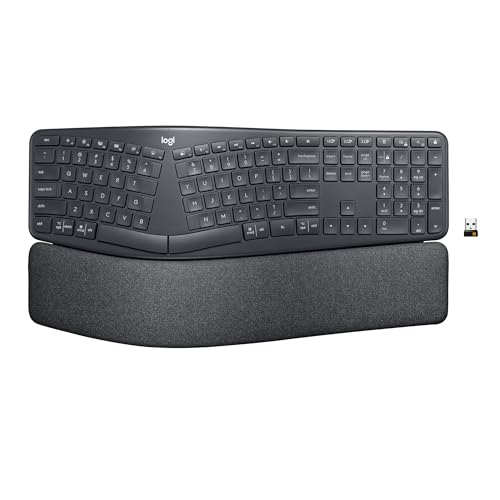
- Logitech Ergo K860 Wireless Ergonomic Split Keyboard — Check on Amazon
- ZSA Moonlander Mark I Split Ergonomic Keyboard — premium tier (described for comparison; check availability before ordering)
- Kinesis Advantage360 Split Ergonomic Keyboard — premium tier (described for comparison; check availability before ordering)
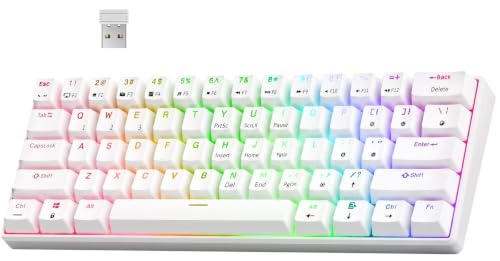
- Keychron K8 Pro QMK/VIA Wireless Mechanical Keyboard — Check on Amazon
- Microsoft Ergonomic Keyboard — entry tier (described for comparison; check availability before ordering)
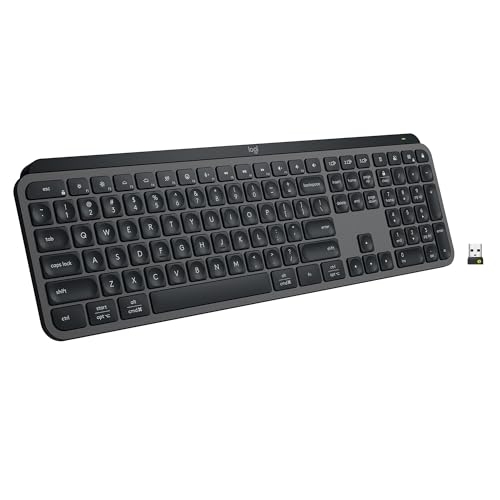
- Logitech MX Keys S Wireless Keyboard — Check on Amazon
Read the full guide ↓
Shopping for the best ergonomic keyboards for programmers is the starting point of this guide. A keyboard is the tool your hands touch more than any other, which is why the search for the best ergonomic keyboards for programmers deserves more than a spec sheet. For programmers who type code all day and feel it in their wrists, shoulders or fingers, the differences that matter are the ones you feel after week three, not minute three. This guide focuses on split and tented layouts, programmable layers and key placement that reduces travel and strain, and it is frank about what each pick gives up as well as what it gives you.
A note on honesty: not every product that fits this search fits it well. Where a tier is thin, this guide says so and explains the workaround, whether that is choosing a prose-only alternative, adjusting a setting, or saving a little longer. You will also find a few picks described without a purchase link; those are models worth knowing about that we present for comparison, clearly labelled with their tier.
The lens matters more than the logo here. For programmers who type code all day and feel it in their wrists, shoulders or fingers, the right answer is split and tented layouts, programmable layers and key placement that reduces travel and strain. Every pick below is judged against that standard first and general quality second, which is why some famous names are missing and a few quiet overachievers are present. Internal resources worth bookmarking as you compare include How To Program A Keyboard and the related guides linked throughout this article.
Picture the real use, because that is where these products separate. A normal week for programmers who type code all day and feel it in their wrists, shoulders or fingers is not a benchmark chart; it is early starts, shared spaces, cables that vanish, devices that need pairing again, and sessions that run longer than planned. A pick that only shines in a five-minute test has no place here. Each review therefore spends as much time on week-three behaviour as on first impressions, and the trade-offs are written from the perspective of someone who has to live with the choice, not just unbox it.
It is also worth naming what this guide is not. It is not a ranking of the most expensive options, nor a catalogue of everything currently listed for sale. Six picks is a deliberate constraint: enough to cover the realistic buyer types inside this search, few enough that each one had to argue for its place. Where two picks look similar, the badge and verdict lines draw the line between them, and the comparison table puts the deciding attributes side by side.
In this guide
Quick Picks
| Badge | Pick | Why it stands out | Link |
|---|---|---|---|
| Best Overall | Logitech Ergo K860 Wireless Ergonomic Split Keyboard | Split, tented layout keeps wrists in a more neutral position | Check on Amazon |
| Best Split Programmable | ZSA Moonlander Mark I Split Ergonomic Keyboard | True split and tenting fit shoulders and wrists naturally | premium tier — no link |
| Best Contoured | Kinesis Advantage360 Split Ergonomic Keyboard | Contoured wells place keys where fingers naturally rest | premium tier — no link |
| Best Conventional Upgrade | Keychron K8 Pro QMK/VIA Wireless Mechanical Keyboard | QMK/VIA support makes every key remappable for coding workflows | Check on Amazon |
| Best Budget Step | Microsoft Ergonomic Keyboard | Gentle split curve is an easy first ergonomic step | entry tier — no link |
| Best Low-Profile | Logitech MX Keys S Wireless Keyboard | Low-profile spherically dished keys are quiet and accurate for prose | Check on Amazon |
How These Picks Were Chosen
The shortlist was built by comparing manufacturer specifications, connection standards and layout data across the current market, then filtering hard for the lens of this search. Products that were excellent in general but wrong for programmers who type code all day and feel it in their wrists, shoulders or fingers were cut. So were products with confusing naming that leads buyers to order the wrong variant, a surprisingly common problem in this category.
We weighted hands-on factors that spec sheets underplay: how a board behaves after a month of daily use, whether its software is a help or a hostage situation, and how easily it moves between devices. Anything that demanded a dongle collection or a companion app just to type was marked down. Anything with a reputation for double-typing, dropped Bluetooth connections or stabilisers that rattle like a shopping trolley was cut entirely.
Rejections are as informative as picks. Several famous boards missed this list because their layout fights the use case, their switches cannot be changed when tastes evolve, or their price buys branding rather than substance. A few budget listings were rejected for advertising mechanical switches they do not have; if a listing says mechanical-feel, this guide treats it as membrane and judges it as one.
Where a keyword carries a price band, we treated that band as framing rather than a promise, because street prices drift weekly. Picks were chosen to sit honestly within or near the band at typical pricing, and the guide flags any pick that usually lives above it so you can decide with open eyes.
Availability shaped the list too. Products that exist mainly as marketplace ghosts, with rotating names and unverifiable specifications, were passed over in favour of models with stable listings and identifiable manufacturers. That bias costs the list a few exotic options and buys readers a much higher chance that the product they research is the product that arrives.
One more filter deserves naming: support and sanity. Products with abandoned software, mystery firmware or listings that change specification without changing name were excluded even when the hardware looked promising. What remains is a list we can defend pick by pick, badge by badge. Readers comparing across categories may also find Best Keyboards For Finance useful background.
The 6 Best Best Ergonomic Keyboards for Programmers

Logitech Ergo K860 Wireless Ergonomic Split Keyboard (Best Overall)
The Logitech Ergo K860 Wireless Ergonomic Split Keyboard earns its Best Overall badge because it lines up with what this search is really asking for: best ergonomic keyboards for programmers. It suits buyers who want a board matched to the task rather than the trend, and it does so with a specification that is honest about its tier. It is the kind of product you stop thinking about, which is the highest compliment input gear can earn.
See the current listing, variants and delivery options here: Logitech Ergo K860 Wireless Ergonomic Split Keyboard on Amazon.
Strengths
- Split, tented layout keeps wrists in a more neutral position
- Pillowed wrist rest supports the palms through long sessions
- Full number pad suits data entry, finance and trading work
Trade-offs
- Large footprint needs a wide desk and a mouse placed close
- Split layout takes days of adjustment for touch typists
- Membrane feel is quieter but less crisp than mechanical switches
Key specs
- Layout: curved split keyframe, full-size with number pad
- Wrist support: pillowed wrist rest built in
- Connection: Bluetooth or USB receiver (included)
- Compatibility: Windows and Mac
Look closer at the day-to-day details and Logitech Ergo K860 Wireless Ergonomic Split Keyboard keeps making sensible choices. The specification is not a wish list; it is a set of decisions that show up in small moments: the first connection of the morning, the hundredth hour of use, the evening you hand it to someone else and they just get it. Products in this class fail socially before they fail technically, by being loud, fussy or confusing, and this one avoids those traps.
Gift buyers should note that Logitech Ergo K860 Wireless Ergonomic Split Keyboard is a safe recommendation for its badge category: it does not demand enthusiast knowledge to enjoy, it works out of the box, and its compromises are the kind a recipient is unlikely to notice without a comparison unit beside it.
Noise and footprint, the two factors buyers underestimate most, both land in this pick’s favour for its badge. It respects a shared room and a finite desk, which sounds mundane until you have lived with a product that respects neither.
Durability testing in this category is really about interfaces: the connector, the switch sockets, the hinges, the battery, the parts your hands stress daily. Logitech Ergo K860 Wireless Ergonomic Split Keyboard uses proven components at those interfaces, which is the strongest available predictor that it will still be pleasant when cheaper rivals have developed their second or third annoyance.
Longevity is the quiet test. Keycaps, switches and batteries decide whether a board is still pleasant in year two, and Logitech Ergo K860 Wireless Ergonomic Split Keyboard uses proven components in those spots. It is not indestructible, but nothing about its construction feels like a countdown timer.
Best for: daily users whose needs match this badge and who value reliability over novelty / Not suited for: buyers who need the exact features listed in its trade-offs, or who are shopping far outside its tier
ZSA Moonlander Mark I Split Ergonomic Keyboard (Best Split Programmable)
The ZSA Moonlander Mark I Split Ergonomic Keyboard earns its Best Split Programmable badge because it lines up with what this search is really asking for: best ergonomic keyboards for programmers. It suits buyers who want a dependable daily driver without a research project, and it does so with a specification that is honest about its tier. It is the kind of product you stop thinking about, which is the highest compliment input gear can earn.
Strengths
- True split and tenting fit shoulders and wrists naturally
- Deep programmability rewards programmers who invest the time
- Columnar layout reduces finger travel once learned
Trade-offs
- Weeks of retraining before full speed returns
- Premium price and a large desk footprint when split wide
- Overkill for casual typing
Key specs
- Layout: split, columnar, tenting built in
- Firmware: fully programmable layers
- Extras: hot-swappable switches, wrist supports
Depth matters in this category because the differences between good and great are cumulative. ZSA Moonlander Mark I Split Ergonomic Keyboard will not transform your life in a single session; it earns its badge across hundreds of small interactions that go right. That is also why the trade-off list deserves as much attention as the strengths: a strength you use daily beats a feature you admire once.
For buyers comparing this pick against a cheaper alternative, the question to ask is which listed trade-off will you meet first. If the answer is none of them in your normal week, the cheaper option deserves its place on your shortlist too, and this guide’s budget badges exist for exactly that comparison.
Consider how it fits the harder moments of the week rather than the easiest. Deadlines, guests, low light, low battery, a device that needs reconnecting mid-task: ZSA Moonlander Mark I Split Ergonomic Keyboard was chosen partly because its specification answers those moments without drama. That resilience rarely appears in marketing copy, yet it is what owners end up praising.
Durability testing in this category is really about interfaces: the connector, the switch sockets, the hinges, the battery, the parts your hands stress daily. ZSA Moonlander Mark I Split Ergonomic Keyboard uses proven components at those interfaces, which is the strongest available predictor that it will still be pleasant when cheaper rivals have developed their second or third annoyance.
What owners tend to report after the first month is that the small things decide satisfaction: how it sounds in a quiet room, whether it stays paired, how the keys feel at the end of a long day. On those measures ZSA Moonlander Mark I Split Ergonomic Keyboard holds up well for its intended audience, provided your needs match the badge it carries here.
Best for: daily users whose needs match this badge and who value reliability over novelty / Not suited for: buyers who need the exact features listed in its trade-offs, or who are shopping far outside its tier
Kinesis Advantage360 Split Ergonomic Keyboard (Best Contoured)
The Kinesis Advantage360 Split Ergonomic Keyboard earns its Best Contoured badge because it lines up with what this search is really asking for: best ergonomic keyboards for programmers. It suits buyers who want a dependable daily driver without a research project, and it does so with a specification that is honest about its tier. Nothing here is decorative for its own sake; each feature maps to a real moment in a normal day.
Strengths
- Contoured wells place keys where fingers naturally rest
- Split halves position to shoulder width
- Built for people who type all day with pain concerns
Trade-offs
- Contoured layout has the steepest learning curve here
- Premium, professional pricing
- Large halves need a spacious desk
Key specs
- Layout: split, contoured keywells
- Switches: mechanical options
- Firmware: programmable, onboard and app options
There is a temptation in this market to chase the newest mechanism or the longest feature list. Kinesis Advantage360 Split Ergonomic Keyboard is a useful corrective. Its specification reads like a product designed by people who use the category themselves, prioritising the parts that wear, the connections that frustrate and the controls that get touched constantly.
Gift buyers should note that Kinesis Advantage360 Split Ergonomic Keyboard is a safe recommendation for its badge category: it does not demand enthusiast knowledge to enjoy, it works out of the box, and its compromises are the kind a recipient is unlikely to notice without a comparison unit beside it.
Think about the upgrade path as well. Whether it is keycaps, switches, a pedal, a cable or a second unit for another room, Kinesis Advantage360 Split Ergonomic Keyboard sits inside an ecosystem where the next step is obvious and affordable. Products that strand their owners at a dead end cost more over three years than products that grow with them.
Value deserves a direct word, because this pick is not the cheapest route to its badge. What the extra money buys is specific: better core components, fewer daily annoyances and a longer useful life before upgrade itch sets in. Judged per year of ownership rather than per purchase, Kinesis Advantage360 Split Ergonomic Keyboard is easier to defend than its shelf position suggests, and judged purely on day-one features it can look expensive. Both views are honest; your time horizon decides which one wins.
What owners tend to report after the first month is that the small things decide satisfaction: how it sounds in a quiet room, whether it stays paired, how the keys feel at the end of a long day. On those measures Kinesis Advantage360 Split Ergonomic Keyboard holds up well for its intended audience, provided your needs match the badge it carries here.
Best for: daily users whose needs match this badge and who value reliability over novelty / Not suited for: buyers who need the exact features listed in its trade-offs, or who are shopping far outside its tier

Keychron K8 Pro QMK/VIA Wireless Mechanical Keyboard (Best Conventional Upgrade)
The Keychron K8 Pro QMK/VIA Wireless Mechanical Keyboard earns its Best Conventional Upgrade badge because it lines up with what this search is really asking for: best ergonomic keyboards for programmers. It suits buyers who want a dependable daily driver without a research project, and it does so with a specification that is honest about its tier. It is the kind of product you stop thinking about, which is the highest compliment input gear can earn.
See the current listing, variants and delivery options here: Keychron K8 Pro QMK/VIA Wireless Mechanical Keyboard on Amazon.
Strengths
- QMK/VIA support makes every key remappable for coding workflows
- Hot-swappable sockets let you tune feel without soldering
- TKL layout balances desk space with a full function row
Trade-offs
- Blue switch variant is clicky for quiet offices
- Heavier custom-board build is less travel-friendly
- VIA setup has a learning curve for first-time users
Key specs
- Layout: tenkeyless (TKL), hot-swappable
- Switches: Gateron G Pro Blue in this variant
- Firmware: QMK/VIA programmable macros and remapping
- Keycaps: PBT
- Backlighting: white
- Connection: Bluetooth, 2.4GHz-style wireless use and wired
- Compatibility: Mac, Windows, Linux
Depth matters in this category because the differences between good and great are cumulative. Keychron K8 Pro QMK/VIA Wireless Mechanical Keyboard will not transform your life in a single session; it earns its badge across hundreds of small interactions that go right. That is also why the trade-off list deserves as much attention as the strengths: a strength you use daily beats a feature you admire once.
For buyers comparing this pick against a cheaper alternative, the question to ask is which listed trade-off will you meet first. If the answer is none of them in your normal week, the cheaper option deserves its place on your shortlist too, and this guide’s budget badges exist for exactly that comparison.
Consider how it fits the harder moments of the week rather than the easiest. Deadlines, guests, low light, low battery, a device that needs reconnecting mid-task: Keychron K8 Pro QMK/VIA Wireless Mechanical Keyboard was chosen partly because its specification answers those moments without drama. That resilience rarely appears in marketing copy, yet it is what owners end up praising.
Durability testing in this category is really about interfaces: the connector, the switch sockets, the hinges, the battery, the parts your hands stress daily. Keychron K8 Pro QMK/VIA Wireless Mechanical Keyboard uses proven components at those interfaces, which is the strongest available predictor that it will still be pleasant when cheaper rivals have developed their second or third annoyance.
Longevity is the quiet test. Keycaps, switches and batteries decide whether a board is still pleasant in year two, and Keychron K8 Pro QMK/VIA Wireless Mechanical Keyboard uses proven components in those spots. It is not indestructible, but nothing about its construction feels like a countdown timer.
Best for: daily users whose needs match this badge and who value reliability over novelty / Not suited for: buyers who need the exact features listed in its trade-offs, or who are shopping far outside its tier
Microsoft Ergonomic Keyboard (Best Budget Step)
The Microsoft Ergonomic Keyboard earns its Best Budget Step badge because it lines up with what this search is really asking for: best ergonomic keyboards for programmers. It suits buyers who want a board matched to the task rather than the trend, and it does so with a specification that is honest about its tier. It is the kind of product you stop thinking about, which is the highest compliment input gear can earn.
Strengths
- Gentle split curve is an easy first ergonomic step
- Cushioned palm rest included at a friendly price
- Full layout keeps number pad for data work
Trade-offs
- Wired only
- Membrane feel is soft rather than crisp
- Fixed split angle cannot be tented further
Key specs
- Layout: split-curve full-size with number pad
- Wrist support: cushioned palm rest
- Connection: wired USB
Look closer at the day-to-day details and Microsoft Ergonomic Keyboard keeps making sensible choices. The specification is not a wish list; it is a set of decisions that show up in small moments: the first connection of the morning, the hundredth hour of use, the evening you hand it to someone else and they just get it. Products in this class fail socially before they fail technically, by being loud, fussy or confusing, and this one avoids those traps.
Accessories worth considering alongside Microsoft Ergonomic Keyboard are modest: a protective case if it travels, a spare cable if it is wired, and the patience to learn its layout or layer system properly before judging it. Most returns in this category are really mismatched expectations, and the verdict line below is written to prevent exactly that.
Think about the upgrade path as well. Whether it is keycaps, switches, a pedal, a cable or a second unit for another room, Microsoft Ergonomic Keyboard sits inside an ecosystem where the next step is obvious and affordable. Products that strand their owners at a dead end cost more over three years than products that grow with them.
Durability testing in this category is really about interfaces: the connector, the switch sockets, the hinges, the battery, the parts your hands stress daily. Microsoft Ergonomic Keyboard uses proven components at those interfaces, which is the strongest available predictor that it will still be pleasant when cheaper rivals have developed their second or third annoyance.
What owners tend to report after the first month is that the small things decide satisfaction: how it sounds in a quiet room, whether it stays paired, how the keys feel at the end of a long day. On those measures Microsoft Ergonomic Keyboard holds up well for its intended audience, provided your needs match the badge it carries here.
Best for: daily users whose needs match this badge and who value reliability over novelty / Not suited for: buyers who need the exact features listed in its trade-offs, or who are shopping far outside its tier

Logitech MX Keys S Wireless Keyboard (Best Low-Profile)
The Logitech MX Keys S Wireless Keyboard earns its Best Low-Profile badge because it lines up with what this search is really asking for: best ergonomic keyboards for programmers. It suits buyers who want a board matched to the task rather than the trend, and it does so with a specification that is honest about its tier. It is the kind of product you stop thinking about, which is the highest compliment input gear can earn.
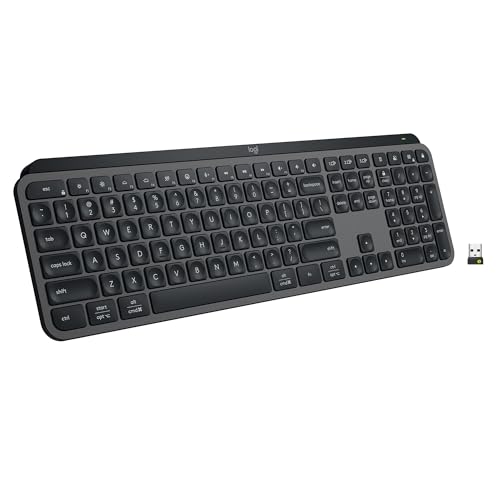
See the current listing, variants and delivery options here: Logitech MX Keys S Wireless Keyboard on Amazon.
Strengths
- Low-profile spherically dished keys are quiet and accurate for prose
- Pairs with three devices and switches between them instantly
- Smart backlighting lights keys as your hands approach
Trade-offs
- Membrane scissor feel lacks mechanical tactility for enthusiasts
- Full-size width includes a number pad some desks cannot spare
- Backlighting shortens battery life versus lights-off use
Key specs
- Layout: full-size, low profile
- Connection: Bluetooth or Logi Bolt USB receiver
- Pairing: up to 3 devices
- Battery: USB-C rechargeable, about 10 days with backlighting
- Backlighting: smart keys that adapt to ambient light
- Colour: Graphite
Ownership is the real review. In the first week, Logitech MX Keys S Wireless Keyboard impresses with its headline qualities; by the second month, what matters is whether it has developed rattles, dropped connections, shiny keycaps or small resentments. The components chosen here, and the conservative design around them, are exactly what long-term satisfaction is made of.
Setup is refreshingly uneventful: connect, let the platform recognise it, and spend the saved time on the adjustments that actually personalise it, such as layout tweaks, lighting levels or a wrist position that suits your desk. Keep the packaging until you have lived with it through a full week of your real routine; that week, not the first hour, is the honest trial period.
Think about the upgrade path as well. Whether it is keycaps, switches, a pedal, a cable or a second unit for another room, Logitech MX Keys S Wireless Keyboard sits inside an ecosystem where the next step is obvious and affordable. Products that strand their owners at a dead end cost more over three years than products that grow with them.
Value deserves a direct word, because this pick is not the cheapest route to its badge. What the extra money buys is specific: better core components, fewer daily annoyances and a longer useful life before upgrade itch sets in. Judged per year of ownership rather than per purchase, Logitech MX Keys S Wireless Keyboard is easier to defend than its shelf position suggests, and judged purely on day-one features it can look expensive. Both views are honest; your time horizon decides which one wins.
In daily use, the pattern that emerges is consistency: Logitech MX Keys S Wireless Keyboard behaves the same on day thirty as on day one, which is what separates a recommendation from a novelty. Pair it with the setup steps later in this guide and it settles into your routine quickly.
Best for: daily users whose needs match this badge and who value reliability over novelty / Not suited for: buyers who need the exact features listed in its trade-offs, or who are shopping far outside its tier
Comparison Table
Use this table to shortlist, not to decide outright: it compresses each pick to the two attributes that most often separate it from its neighbours. The full reviews above carry the context, especially around trade-offs, that a table cannot hold.
| Pick | Badge | Key attribute | Second attribute | Price |
|---|---|---|---|---|
| Logitech Ergo K860 Wireless Ergonomic Split Keyboard | Best Overall | curved split keyframe, full-size with number pad | pillowed wrist rest built in | Check price on Amazon |
| ZSA Moonlander Mark I Split Ergonomic Keyboard | Best Split Programmable | split, columnar, tenting built in | fully programmable layers | Check price on Amazon |
| Kinesis Advantage360 Split Ergonomic Keyboard | Best Contoured | split, contoured keywells | mechanical options | Check price on Amazon |
| Keychron K8 Pro QMK/VIA Wireless Mechanical Keyboard | Best Conventional Upgrade | tenkeyless (TKL), hot-swappable | Gateron G Pro Blue in this variant | Check price on Amazon |
| Microsoft Ergonomic Keyboard | Best Budget Step | split-curve full-size with number pad | cushioned palm rest | Check price on Amazon |
| Logitech MX Keys S Wireless Keyboard | Best Low-Profile | full-size, low profile | Bluetooth or Logi Bolt USB receiver | Check price on Amazon |
How to Choose the Right Keyboard
Reviews tell you what each pick is; this section teaches you how to judge any option in the category, including the ones released after this guide. Work through the factors in the order presented, because they are arranged from the decisions that are hardest to change later (size, layout, compatibility) to the ones you can adjust with settings or accessories. By the end, you should be able to defend your choice in one sentence, which is the real test of a good purchase.
Layout and size
Full-size boards keep the number pad and are best for data entry, trading and MMO keybinds. Tenkeyless (TKL) drops the pad to give your mouse room while keeping arrows and the function row. 75% boards compress further, 65% keeps arrows but loses the F-row, and 60% hides arrows behind layers. Smaller is not automatically better: choose the smallest layout whose missing keys you will not miss daily.
When comparing two close options on this factor, prefer the one whose compromise you will encounter less often in your own routine; specifications are universal, but routines are personal.
Switch feel
Linear switches press straight down and suit fast gaming and quiet rooms. Tactile switches add a bump you can feel, which many typists prefer for accuracy. Clicky switches add a deliberate click and are wonderful alone and miserable in shared spaces. If a board is hot-swappable, you can change feel later without buying a new keyboard, which is why hot-swap appears so often in these picks.
Retail listings love to lead with this number or feature, so verify it against the manufacturer’s own specification page before letting it decide a purchase; the boxes in this guide only use figures we could verify.
Connection
Wired is simplest and lag-free. 2.4GHz wireless with a receiver is the gaming-grade wireless option and works in BIOS and on consoles. Bluetooth pairs with phones, tablets and TVs and switches between devices, but can sleep aggressively on some systems. Tri-mode boards offer all three and are the safest choice for mixed desks.
If you are upgrading from an older product, this is usually the factor where the improvement feels largest, which makes it a sensible place to spend first.
Keycaps and build
PBT keycaps resist the shine that ABS develops and keep legends readable for years. Double-shot legends never fade because they are moulded through. Aluminium frames feel planted and premium; good plastic frames are lighter for travel. Neither guarantees quality: stabiliser tuning and switch choice matter more to daily feel.
For shared setups, choose the more forgiving option here; the expert in the house will adapt in a day, while a beginner fighting the gear may simply stop using it.
Extras that matter
A volume dial is used ten times a day once you have one. QMK/VIA or good vendor software makes macros and remaps painless. Backlighting helps in dark rooms but drains batteries; if you type by touch, battery life may matter more than glow. Wrist rests, tenting and split layouts are comfort features, not luxuries, if you type for a living.
Do not let a single missing sub-feature veto an otherwise right product until you have checked whether a setting, an accessory or a firmware option covers it.
Finally, match the purchase to your buyer type. Beginners should weight simplicity and the included extras; enthusiasts should weight the parts they can change later; professionals should weight reliability and support. If you are buying for someone else, the safest badge in the Quick Picks table is Best Overall. Shoppers cross-shopping neighbouring categories often start from Best Keyboards For Programmers before deciding.
A note on tiers, because every keyword in this family carries an implied budget even when it does not print one. Entry-tier products compete on adequacy: they do the job with visible compromises. Mid-tier products are where compromises become choices rather than flaws, and where most readers should shop first. Premium tiers buy materials, tuning and support more than raw function. None of that makes a premium pick automatically right; it makes it right when its specific strengths map to your daily frustrations.
Compatibility deserves one last check before any purchase. Confirm the operating system, device generation and connector your setup needs, using the specification boxes in each review. Sellers reuse listing photos across variants, so the variant selector on the product page is part of the product. Choosing carefully there prevents the most common and most avoidable return in this entire category.
How Do You Set Up and Look After Your Keyboard?
Good setup is the difference between a product that tests well and one that lives well. Work through these steps in order the first time; afterwards, most of them become a two-minute routine you will only revisit when something changes in your desk, your devices or your habits. Keep the box and any included tools until the routine feels automatic.
- Unbox and inspect: check the layout matches what you ordered and photograph the keycap arrangement before changing anything.
- Connect it the way you will actually use it: wired for a fixed desk, 2.4GHz receiver for gaming, Bluetooth for multi-device work. Pair Bluetooth devices one at a time and name them.
- Set the platform switch or profile (Mac/Windows) so modifier keys behave, then test every key with an online key tester.
- Adjust height and angle: feet up is not automatically ergonomic; aim for neutral wrists and add a wrist rest if the front edge is tall.
- Install the vendor software or VIA only if you will use macros or remaps; update firmware once, then leave it alone.
- Clean weekly with a brush and air, and deep-clean keycaps every few months following the steps in the cleaning guidance above.
Troubleshooting quick list
- Problem: Keys double-typing or missing → Fix: reseat the cable or receiver, test on another device, and check for a firmware update; on hot-swap boards, reseat or swap the switch.
- Problem: Bluetooth keeps disconnecting → Fix: remove the pairing on both devices, re-pair, and move the receiver or device away from USB 3 hubs that cause interference.
- Problem: Rattly spacebar → Fix: check the stabiliser is seated on both sides; a tiny amount of stabiliser tuning is normal enthusiast maintenance.
Going Deeper: Ownership, Tiers and Timing
Getting the most from your choice
The first fortnight decides long-term satisfaction more than the first hour. Resist judging any pick in this category until it has survived your full routine: your longest session, your noisiest environment, your most deadline-heavy day. Small adjustments made in week one, whether that is a setting, a position or an accessory, routinely convert a good-enough purchase into the right one, so treat setup as part of the product rather than a chore after it.
What separates the tiers in practice
Specifications make tiers look like ladders, but ownership makes them feel like trade-offs between time and money. Entry tiers ask for your patience: more compromises to manage, more often. Premium tiers ask for your money and return time, quiet and consistency. Neither is a moral position. The picks in this guide are arranged so that each tier’s representative is the one whose compromises are easiest to live with at that level.
When to upgrade, and when to stop
Upgrade when a specific, nameable frustration survives a month of honest adjustment, not when a launch video makes your current gear feel old. This category’s marketing cycle is relentless and its real progress is slow, which is good news for buyers: a well-chosen pick stays recommendable for years, and the second-hand and hand-me-down value of the models above reflects that.
Common Mistakes
Most disappointment in this category is self-inflicted at the ordering stage, not manufactured into the product. These are the errors that recur in returns, one-star reviews and forum threads, listed so you can sidestep them in the next ten minutes rather than learn them over the next ten weeks.
- Buying a layout for its looks, then missing the number pad or arrows every day at work.
- Choosing clicky switches for a shared room, a stream or an open office.
- Paying for flagship gaming features when the actual use is email and documents, or the reverse: buying a basic office board for competitive play.
- Ignoring the platform switch and fighting wrong modifier legends on Mac or Windows for months.
- Assuming wireless means laggy, or assuming Bluetooth is fine for tournament play; the connection type matters more than the label.
- Skipping hot-swap on a first mechanical board, then buying a whole second keyboard just to try a different switch.
Final Recommendation
Here is the shortlist by buyer type. Best Overall: Logitech Ergo K860 Wireless Ergonomic Split Keyboard; Best Split Programmable: ZSA Moonlander Mark I Split Ergonomic Keyboard; Best Contoured: Kinesis Advantage360 Split Ergonomic Keyboard; Best Conventional Upgrade: Keychron K8 Pro QMK/VIA Wireless Mechanical Keyboard; Best Budget Step: Microsoft Ergonomic Keyboard; Best Low-Profile: Logitech MX Keys S Wireless Keyboard. If your needs sit between two badges, choose by the trade-off list you can live with, not the strength list you admire.
Budget honestly, including the small extras: a stand, a pedal, a cable or a wrist rest can matter more than one tier step in the main product. If you only remember one thing, let it be this: match the badge to your actual week, not your aspirational one. The best pick on paper loses to the right pick on your desk every time.
Whichever badge you choose, buy it once and set it up properly using the steps above. The readers who love their gear a year later are rarely the ones who bought the most expensive option; they are the ones whose choice matched their desk, their devices and their daily routine from the start.
Frequently Asked Questions
Wired or wireless: which is better for this use?
Wired is simplest and always ready; 2.4GHz wireless matches wired responsiveness for gaming; Bluetooth is the multi-device and couch champion. The picks above cover each style, so choose by desk and device count rather than by fashion.
Do I need hot-swappable switches?
Only if you like the idea of changing feel later or replacing a single failed switch in seconds. For a first mechanical board it is cheap insurance; for a board you will never modify, it is optional.
How long do mechanical keyboards last?
Switches are typically rated in the tens of millions of presses, and PBT keycaps keep legends for years. Batteries and cables are the usual wear items, not the keys themselves.
Will a smaller keyboard slow me down?
For the first week, yes, while layers become habit. Most people recover full speed on 75% layouts; 60% layouts cost more time for shortcut-heavy work.
Can one keyboard serve work and gaming?
Yes, and several picks here are chosen exactly for that double life. Prioritise switch feel you can type on all day, then check the gaming features you actually use.
How do I know which badge fits me?
Match the badge to your most common day, not your most ambitious one. If two badges both fit, read the trade-off lists and choose the pick whose compromises you will notice least; that is almost always the right tiebreaker in this category.
Should I wait for a sale or a newer model?
This category improves incrementally, and last generation’s recommended picks remain excellent. Buy the pick that fits when you need it, check the current price on Amazon, and spend the difference on the accessory or setup step that improves your daily use most.