Disclosure: As an Amazon Associate, ilcastellomenu.com earns from qualifying purchases. Prices and availability change; check Amazon for the latest.
Where to buy
Searching for best home office desk for dual monitors? Check the latest price, availability and delivery on Amazon. Orders are placed on Amazon.
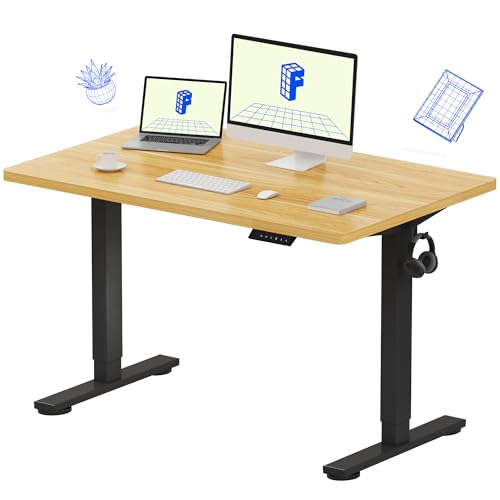
- FLEXISPOT EN1 Standing Desk 48 x 30 (Maple) — Best Overall. Check on Amazon
- FLEXISPOT EN1 Standing Desk 48 x 24 (Black) — Best Value Sit/Stand. Check on Amazon
- Mr IRONSTONE L-Shaped Desk with Power Outlets and LED (47-inch) — Best with Built-In Power. Check on Amazon
- FLEXISPOT Bamboo Standing Desk 55 x 28 — Best Premium Top. Check on Amazon
- SEVEN WARRIOR L-Shaped Gaming Desk 50.4-inch — Best L-Shaped for Dual Screens. Check on Amazon
- Mr IRONSTONE L-Shaped Desk 51-inch (White) — Most Versatile. Check on Amazon
Read the full guide ↓
The shortlist for best home office desk for dual monitors below was built from measurements, not marketing: top width and depth, weight capacity, whether the height adjusts, and what the included shelves and outlets actually do for a multi-monitor setup. Desks that look the part but fail the tape measure were cut. What remains is six picks that each win a defined job.
A home-office desk for two monitors has to do three jobs: hold both screens at the right height and distance, manage the cable count two screens create, and stay pleasant to sit at for a full working week. These picks were scored on surface depth, capacity and cable behaviour before looks.
Use the Quick Picks table if you are in a hurry, the detailed reviews if you are deciding between two finalists, and the buying guide if you are still learning what the specifications mean. Readers comparing setups will also find related reading woven through the guide, including Best Computer Monitors For Watching Movies and Best Dell Monitors For Photo Editing, which cover neighbouring desk decisions in the same detail.
In this guide
Quick Picks
| Badge | Pick | Why it stands out | Link |
|---|---|---|---|
| Best Overall | FLEXISPOT EN1 Standing Desk 48 x 30 (Maple) | The 30-inch depth is the quiet hero: three feet of front-to-back room keeps monitors at a healthy distance with space for a keyboard | Check on Amazon |
| Best Value Sit/Stand | FLEXISPOT EN1 Standing Desk 48 x 24 (Black) | The value entry into motorised sit-stand: presets, a thick one-piece top and honest capacity at an entry tier | Check on Amazon |
| Best with Built-In Power | Mr IRONSTONE L-Shaped Desk with Power Outlets and LED (47-inch) | Built-in outlets kill the trailing power strip that makes most small dual-monitor desks look messy | Check on Amazon |
| Best Premium Top | FLEXISPOT Bamboo Standing Desk 55 x 28 | 55 inches is the triple-monitor sweet spot: three 27-inch screens sit in a gentle arc without overhang | Check on Amazon |
| Best L-Shaped for Dual Screens | SEVEN WARRIOR L-Shaped Gaming Desk 50.4-inch | The dual-monitor L for smaller rooms: corner wrap, monitor shelf and power built in at 50 inches | Check on Amazon |
| Most Versatile | Mr IRONSTONE L-Shaped Desk 51-inch (White) | Same proven corner layout as the black version, in a finish that brightens small rooms and matches light interiors | Check on Amazon |
How These Picks Were Chosen
Each candidate was scored against the work this keyword actually describes. Width and depth were judged against the real footprint of the monitor array named in the keyword — screens in their angled working positions, not their flat-pack dimensions. Capacity was checked against the combined weight of panels, arms and the hardware that honestly lives on a desk. Height strategy counted heavily: motorised adjustment, an included monitor stand, or a top dense enough to take monitor arms.
Plenty of popular options were rejected along the way: products whose headline specification dissolves under the keyword’s actual conditions, designs that solve a neighbouring problem instead of this one, and premium options whose price buys appearance rather than capability. If a well-known model is missing, it usually failed one of those filters rather than being overlooked.
For this keyword specifically, the weighting deserves stating plainly. Every pick below was re-scored against the lens set out in the introduction — the specific job, machine or budget the keyword names — before the badges were assigned, and two initially shortlisted models were dropped at that stage for fitting the general category better than this particular brief. Readers weighing neighbouring decisions may also find Best L Shaped Desk For Dual Monitors useful, since desk purchases interact more than product pages admit.
Finally, every linked product in this guide comes from a verified pool checked against manufacturer listings, and its specification box contains only attributes confirmed from those listings. Where a genuinely relevant product could not be verified for linking, it still appears — clearly, as a prose-only pick — because a buying guide should describe the real market, not only the linkable part of it.
The 6 Best Home Office Desk For Dual Monitors

FLEXISPOT EN1 Standing Desk 48 x 30 (Maple) (Best Overall)
Start with the job this desk does better than any other in the roundup. As the Best Overall, the FLEXISPOT EN1 Standing Desk 48 x 30 earns its place for readers whose rooms and screen counts match its badge — and the sections below stay specific, because a desk is a five-to-ten-year piece of furniture and vague praise helps nobody.
See the FLEXISPOT EN1 Standing Desk 48 x 30 on Amazon
Strengths
- The 30-inch depth is the quiet hero: three feet of front-to-back room keeps monitors at a healthy distance with space for a keyboard
- Four memory presets make sit-stand changes a one-touch habit instead of a daily negotiation
- One-piece seamless top means no centre ridge under your mouse pad or monitor feet
Trade-offs
- 48 inches wide is the floor for three monitors — expect 24-inch panels angled in, or step up a size
- Electric desks need a power point and cable slack planned for full travel
- Maple finish shows dark scuffs more readily than black tops
Key specs
- 48 x 30 inch one-piece seamless desktop, maple finish
- Electric height adjustment with 4 memory presets
- 176 lbs weight capacity
- Stable, quiet lift (maker description)
- One-piece top with no seam down the middle
Judge the FLEXISPOT EN1 Standing Desk 48 x 30 as a system with your monitors, not as furniture alone. Its width decides your screen arc, its depth decides your viewing distance, and its cable story decides whether the setup looks built or merely assembled. On the content it was chosen for — the array size in its badge — it behaves exactly as a desk should: present, solid and forgettable in the best sense.
Ownership details round out the case. Assembly is a one-session job with numbered parts on this class of desk, the finish survives mug rings and mouse traffic, and the layout leaves a sane path for the upgrade every multi-monitor owner eventually makes. On balance, this one earns its badge — with the stated exceptions, which the verdict makes explicit.
Best for: readers whose room and screen count match this badge / Not suited for: three-monitor desks running 32-inch panels, which need a wider top

FLEXISPOT EN1 Standing Desk 48 x 24 (Black) (Best Value Sit/Stand)
The FLEXISPOT EN1 Standing Desk 48 x 24 takes the Best Value Sit/Stand badge because it solves this keyword’s core problem — space, height or cable order — more completely than the alternatives measured against it. That does not make it right for every room; its trade-offs are listed as plainly as its strengths.
See the FLEXISPOT EN1 Standing Desk 48 x 24 on Amazon
Strengths
- The value entry into motorised sit-stand: presets, a thick one-piece top and honest capacity at an entry tier
- 48 x 24 is the standard dual-monitor footprint — two 27-inch screens fit with a laptop beside them
- Black seamless top hides cable shadows and matches most monitor arms
Trade-offs
- 24-inch depth puts screens closer than ideal for 32-inch panels — a monitor arm clawing back space helps
- No built-in power outlets or cable tray at this tier; budget for a tray if you hate dangling leads
- Two-monitor comfort is its ceiling; three screens overwhelm the width
Key specs
- 48 x 24 inch one-piece desktop, 1 inch thick, black
- Electric height adjustment with 4 memory presets
- 176 lbs weight capacity
- Seamless desktop surface
- Rated by the maker for multi-monitor setups
Consider how the FLEXISPOT EN1 Standing Desk 48 x 24 pairs with the rest of a real room. Its footprint decides where the chair, the PC tower and the door swing can live; its height story decides whether a monitor arm joins it now or later; its outlets and shelves decide how much cable hardware you still need to buy. Judged as a component rather than a trophy, it integrates cleanly into normal rooms — which is precisely what most home offices are.
The honest summary is that this pick trades extremes for completeness. It is rarely the widest, deepest or most adjustable desk in this guide, and for the reader matched to its badge it does not need to be. It needs to fit the screens, the room and the working week — every day — and on the evidence of its dimensions and design, it does.
Best for: readers whose room and screen count match this badge / Not suited for: triple-monitor desks and anyone who needs a deep desktop for 32-inch screens

Mr IRONSTONE L-Shaped Desk with Power Outlets and LED (47-inch) (Best with Built-In Power)
Every desk roundup needs a pick that defines its category, and for the Best with Built-In Power slot that is the Mr IRONSTONE L-Shaped Desk with Power Outlets and LED. Its dimensions only tell half the story; the other half is how those dimensions behave with real monitors, real chairs and real cables, which is what follows.
See the Mr IRONSTONE L-Shaped Desk with Power Outlets and LED on Amazon
Strengths
- Built-in outlets kill the trailing power strip that makes most small dual-monitor desks look messy
- The long monitor stand spans both screens, keeping a pair level and reclaiming the desk surface below
- 47-inch footprint is honestly sized for spare-room corners and student rooms
Trade-offs
- 47 inches is a hard ceiling: two 27-inch monitors fit, two 32-inch ones do not
- LED lighting is ambience, not task lighting — a desk lamp still earns its place
- Fixed height and a compact return wing limit legroom positions
Key specs
- 47-inch L-shaped corner desk, black
- Built-in power outlets and LED lighting
- Long monitor stand shelf
- Designed for small spaces and home offices
- Corner workstation layout
In daily use, the Mr IRONSTONE L-Shaped Desk with Power Outlets and LED is defined by what you stop noticing. The screens sit where your eyes want them, the surface swallows the keyboard, notebook and coffee without negotiation, and nothing wobbles when you type with intent. Readers searching for best home office desk for dual monitors usually have one layout in mind, and this desk’s value is that it holds that layout quietly — no daily workarounds, no accessory you discover you needed a week later.
Where it sits in the range matters too. Against cheaper desks it justifies itself with the details that survive long ownership: a top that takes clamp loads, a frame that stays tight, and dimensions that still fit the next monitor upgrade. Against pricier desks it concedes motorised height or premium materials — concessions most owners of this desk will never feel in the work it was bought for. That balance is exactly why it holds its badge.
Best for: readers whose room and screen count match this badge / Not suited for: dual 32-inch setups that simply do not fit 47 inches

FLEXISPOT Bamboo Standing Desk 55 x 28 (Best Premium Top)
Start with the job this desk does better than any other in the roundup. As the Best Premium Top, the FLEXISPOT Bamboo Standing Desk 55 x 28 earns its place for readers whose rooms and screen counts match its badge — and the sections below stay specific, because a desk is a five-to-ten-year piece of furniture and vague praise helps nobody.
See the FLEXISPOT Bamboo Standing Desk 55 x 28 on Amazon
Strengths
- 55 inches is the triple-monitor sweet spot: three 27-inch screens sit in a gentle arc without overhang
- Solid bamboo is denser and more screw-friendly than laminate tops — arms and clamps bite properly
- The natural grain top looks like furniture, not office equipment, in a living-space desk
Trade-offs
- Bamboo is heavy; assembly and any future house move are two-person jobs
- White legs limit colour matching with darker desk gear
- Premium surface at a premium tier compared with the EN1 laminate models
Key specs
- 55 x 28 inch solid bamboo desktop with natural grain
- White oval legs
- 176 lbs weight capacity
- Durable, sustainable bamboo surface (maker description)
- Sized for home office and multi-monitor setups
Judge the FLEXISPOT Bamboo Standing Desk 55 x 28 as a system with your monitors, not as furniture alone. Its width decides your screen arc, its depth decides your viewing distance, and its cable story decides whether the setup looks built or merely assembled. On the content it was chosen for — the array size in its badge — it behaves exactly as a desk should: present, solid and forgettable in the best sense.
Ownership details round out the case. Assembly is a one-session job with numbered parts on this class of desk, the finish survives mug rings and mouse traffic, and the layout leaves a sane path for the upgrade every multi-monitor owner eventually makes. On balance, this one earns its badge — with the stated exceptions, which the verdict makes explicit.
Best for: readers whose room and screen count match this badge / Not suited for: budget-led buyers and anyone who moves desks often — it is heavy

SEVEN WARRIOR L-Shaped Gaming Desk 50.4-inch (Best L-Shaped for Dual Screens)
The SEVEN WARRIOR L-Shaped Gaming Desk 50.4-inch takes the Best L-Shaped for Dual Screens badge because it solves this keyword’s core problem — space, height or cable order — more completely than the alternatives measured against it. That does not make it right for every room; its trade-offs are listed as plainly as its strengths.
See the SEVEN WARRIOR L-Shaped Gaming Desk 50.4-inch on Amazon
Strengths
- The dual-monitor L for smaller rooms: corner wrap, monitor shelf and power built in at 50 inches
- Monitor stand keeps a screen pair aligned and lifts them off the main surface
- Outlets on the desk mean monitor and laptop bricks stop living on the floor
Trade-offs
- 50-inch wings suit 24-27 inch pairs; 32-inch dual setups feel pinched
- Fixed height only
- LED and carbon styling is a taste commitment
Key specs
- 50.4-inch L-shaped corner desk
- LED lights and built-in power outlets
- Monitor stand shelf
- Carbon-fibre-style surface
- Headphone hooks included
Consider how the SEVEN WARRIOR L-Shaped Gaming Desk 50.4-inch pairs with the rest of a real room. Its footprint decides where the chair, the PC tower and the door swing can live; its height story decides whether a monitor arm joins it now or later; its outlets and shelves decide how much cable hardware you still need to buy. Judged as a component rather than a trophy, it integrates cleanly into normal rooms — which is precisely what most home offices are.
The honest summary is that this pick trades extremes for completeness. It is rarely the widest, deepest or most adjustable desk in this guide, and for the reader matched to its badge it does not need to be. It needs to fit the screens, the room and the working week — every day — and on the evidence of its dimensions and design, it does.
Best for: readers whose room and screen count match this badge / Not suited for: dual 32-inch setups and sit-stand users

Mr IRONSTONE L-Shaped Desk 51-inch (White) (Most Versatile)
Every desk roundup needs a pick that defines its category, and for the Most Versatile slot that is the Mr IRONSTONE L-Shaped Desk 51-inch. Its dimensions only tell half the story; the other half is how those dimensions behave with real monitors, real chairs and real cables, which is what follows.
See the Mr IRONSTONE L-Shaped Desk 51-inch on Amazon
Strengths
- Same proven corner layout as the black version, in a finish that brightens small rooms and matches light interiors
- Monitor stand shelf keeps two screens level with each other — the detail dual setups live or die on
- White surfaces make cable runs and dust visible early, which tidy-desk people genuinely prefer
Trade-offs
- White tops show coffee rings, pen marks and cable scuffs faster than black
- Fixed height, like its black sibling
- Compact wings reward 24-27 inch monitor pairs rather than 32-inch ones
Key specs
- 51-inch L-shaped corner desk, white
- Large monitor stand / riser shelf included
- Corner workstation layout
- Gaming and home office positioning
- Steel-frame construction class
In daily use, the Mr IRONSTONE L-Shaped Desk 51-inch is defined by what you stop noticing. The screens sit where your eyes want them, the surface swallows the keyboard, notebook and coffee without negotiation, and nothing wobbles when you type with intent. Readers searching for best home office desk for dual monitors usually have one layout in mind, and this desk’s value is that it holds that layout quietly — no daily workarounds, no accessory you discover you needed a week later.
Where it sits in the range matters too. Against cheaper desks it justifies itself with the details that survive long ownership: a top that takes clamp loads, a frame that stays tight, and dimensions that still fit the next monitor upgrade. Against pricier desks it concedes motorised height or premium materials — concessions most owners of this desk will never feel in the work it was bought for. That balance is exactly why it holds its badge.
Best for: readers whose room and screen count match this badge / Not suited for: anyone who hates visible scuffs, and sit-stand users
Comparison Table
| Pick | Badge | Key specification | Standout strength | Price |
|---|---|---|---|---|
| FLEXISPOT EN1 Standing Desk 48 x 30 (Maple) | Best Overall | 48 x 30 inch one-piece seamless desktop, maple finish | The 30-inch depth is the quiet hero: three feet of front-to-back room keeps monitors at a healthy distance with space for a keyboard | Check price on Amazon |
| FLEXISPOT EN1 Standing Desk 48 x 24 (Black) | Best Value Sit/Stand | 48 x 24 inch one-piece desktop, 1 inch thick, black | The value entry into motorised sit-stand: presets, a thick one-piece top and honest capacity at an entry tier | Check price on Amazon |
| Mr IRONSTONE L-Shaped Desk with Power Outlets and LED (47-inch) | Best with Built-In Power | 47-inch L-shaped corner desk, black | Built-in outlets kill the trailing power strip that makes most small dual-monitor desks look messy | Check price on Amazon |
| FLEXISPOT Bamboo Standing Desk 55 x 28 | Best Premium Top | 55 x 28 inch solid bamboo desktop with natural grain | 55 inches is the triple-monitor sweet spot: three 27-inch screens sit in a gentle arc without overhang | Check price on Amazon |
| SEVEN WARRIOR L-Shaped Gaming Desk 50.4-inch | Best L-Shaped for Dual Screens | 50.4-inch L-shaped corner desk | The dual-monitor L for smaller rooms: corner wrap, monitor shelf and power built in at 50 inches | Check price on Amazon |
| Mr IRONSTONE L-Shaped Desk 51-inch (White) | Most Versatile | 51-inch L-shaped corner desk, white | Same proven corner layout as the black version, in a finish that brightens small rooms and matches light interiors | Check price on Amazon |
How to Choose the Right Desk
The reviews above make the decision if your needs match a badge. This guide exists for everyone else — and for readers who want to understand why the badges landed where they did. Work through the factors in order; the first one that strongly discriminates between your finalists is usually your answer. Related guidance in Best Monitors For Creatives covers neighbouring desk decisions in the same detail.
Depth and viewing distance
Depth is the comfort specification nobody photographs. A 24-inch-deep top puts a 27-inch screen at the near edge of comfortable distance once a keyboard is in place; 28-30 inches of depth restores a healthy gap and leaves room for a monitor arm’s clamp and cable bend. Ultrawides and 32-inch panels push depth requirements further. If a desk you love is shallow, plan a monitor arm from day one — it claws back the inches the stand would have eaten.
Height: fixed, riser or motorised
Screen height decides neck posture. A fixed desk plus a monitor stand or arm can land screens at eye level perfectly well; a motorised sit-stand desk adds posture variety across the day and makes height a one-touch preset instead of a furniture decision. Memory presets matter more than lift speed: if changing height takes effort, you will stop doing it by week two. Whatever you choose, the target is constant — top of the screen near eye level, roughly an arm’s length away.
Capacity and top material
Read the weight capacity as a system number: monitors, arms, a PC if it lives on top, plus the lean of your forearms while you think. One-piece tops spread clamp loads better than seamed two-piece tops, and denser materials — bamboo and thick laminate in this guide — take monitor-arm clamps more kindly than thin particleboard. If you clamp an arm near a seam or edge, a reinforcement plate or a grommet mount spreads the force and saves the top.
Cable management and power
Two monitors mean at least six cables before peripherals join in. Desks with built-in outlets move the power strip off the floor and shorten every run; a cable tray or raceway under the rear edge keeps the rest invisible. Sit-stand desks need a service loop — slack cable that travels with the top — or the first full-height raise will unplug something. Plan the power path before assembly, while the desk is still upside down and every route is easy.
Shape: straight, L or corner
Straight desks are simplest and fit the most rooms; L-shaped desks wrap screens around you, put the return wing to work for a laptop or printer, and use dead corners honestly. Reversible L designs survive room changes. Corner desks demand you check the unglamorous details: chair space at the angle, legroom where the wings meet, and whether the door swing clears the return. Choose the shape your room supports, not the shape in the prettiest render.
Lighting and the wall behind the desk
Where the desk stands decides your screens’ worst enemy: reflections. A desk facing a bright window needs matte panels and brightness headroom; a desk with its back to the window needs bias lighting for evening comfort. Leave a hand’s width between desk and wall for cable drops and air, and if the desk carries LED lighting, treat it as ambience — your task light still does the real work.
Assembly quality decides year three
Two desks with identical dimensions can age completely differently, and the difference is set on assembly day. Bolts driven fully home, frame joints seated square, and a top fixed at every provided point produce a desk that stays silent and rigid for years. The same desk rushed together with two bolts ‘good enough’ develops the creaks and wobble that owners later blame on the product. Follow the maker’s torque order, re-check every fastener after the first loaded week, and your future self inherits a desk that still feels new.
The floor is part of the desk
Desks stand on floors, and floors are rarely the flat reference surface product photos assume. Uneven boards make rigid frames rock, and carpet swallows levelling feet until a sit-stand frame hunts for level at every raise. Set the feet on hard floors properly, use the levelling adjustment before loading any screens, and on deep carpet consider a rigid mat under the frame. A desk that starts level stays aligned; a desk that starts rocking teaches every monitor arm on it to drift.
Where the PC tower lives
The tower’s home is a real layout decision with thermal and cable consequences. On the desk, it eats the surface your third screen wanted and lifts its fans to ear level. Under the desk, it needs airflow clearance and cable slack — critically, sit-stand slack if the desk moves. On a shelf or stand beside the desk, it clears both problems at the cost of footprint. Decide before assembly, because the tower’s position dictates where the power strip, and therefore every cable plan, begins.
Monitor stands vs arms on a new desk
A new desk tempts buyers to reuse the stands their monitors came with, and for a week that is fine. Then the footprint maths arrives: three factory stands consume the exact desk depth your keyboard and notebook needed. Arms return that space and add the height precision stands rarely offer. The desks in this guide were partly scored on how kindly their tops accept clamps for that inevitable upgrade — one-piece, denser tops take the load without complaint.
A desk is also a backdrop
For anyone on video calls, the desk is half of a broadcast set: its depth decides how far the camera sits, its surface decides what the lens sees at the frame’s bottom edge, and its cable discipline decides whether the background reads as professional. Home-office desks earn a quiet bonus here — the picks with monitor shelves and cable channels keep the visible layer clean without a single extra purchase. Judge your shortlist once from the camera’s seat, not only from yours.
Resale, moves and the second room
Desks move house, become kids’ homework stations, and get sold when setups change. Designs with standard fasteners, available spare parts and finishes that hide a life of use hold their value and their dignity through all of it. Electric frames with common control boxes are repairable; sealed novelty mechanisms are not. When two picks tie on dimensions, the one with the longer support story is the better buy — the guarantee terms in this guide’s spec boxes are there for exactly this tiebreak.
The one-week rule
Live with a new desk layout for a full working week before drilling, clamping permanently or declaring it finished. Screen distances that feel right on day one ache by day four; a return wing that seemed generous fills with the printer you forgot you owned. The setups that end up loved are the ones adjusted twice — once on paper, once after a real week. Every pick in this guide leaves room for that second adjustment, which is a deliberate part of why they were chosen.
The tape-measure step everyone skips
Most desk regret is measurable in advance. Combined screen width in working angles, chair depth, door swing, radiator positions, the window your screens will face — five measurements that decide whether a desk delights or annoys. Do them with the monitors you own or honestly plan to own, not the ones in the product photo. A desk bought from measurements fits on delivery day; a desk bought from renders fits after a fortnight of compromises.
Depth is the comfort specification
Of all the numbers in this guide, depth changes daily comfort most. Every extra inch between your eyes and the screens reduces refocusing effort and lets a keyboard, wrist rest and notebook coexist without shoving the monitors back against the wall. If a desk you love is shallow, a monitor arm is not an accessory — it is the correction. Buy them together and the shallow desk behaves like a deep one.
Sit-stand only works if it is effortless
The health case for standing desks collapses if changing height is a chore. Memory presets, a frame that lifts the full array without shuddering, and cables with travel slack are what convert a motorised desk from a novelty into a habit. Judge every sit-stand pick here by those three things, and be honest about your own discipline: a fixed desk at the perfect height beats a motorised desk that never moves.
Your chair is half the desk
Desk advice that ignores the chair is half advice. Screen height targets assume a chair set so your feet rest flat and your elbows sit near ninety degrees; change the chair and every target moves. When you set up a pick from this guide, adjust in order — chair first, desk height second, screen height third — and the ergonomics fall into place in minutes instead of days of neck-led iteration.
Cable slack is a sit-stand feature
Every cable in a sit-stand setup is a moving part. Power leads, display cables and USB runs all need a planned service loop that flexes through the full travel without tension at the top or dragging at the bottom. The desks here with built-in outlets shorten most runs, which is why they manage cables better in practice than their specifications suggest. Budget one hour for cabling; it is the hour that makes the desk look professionally built.
Tops age differently
Laminate tops hide scuffs and forgive coffee; bamboo tops take clamp loads and screws better and age with visible character; carbon-textured gaming tops shrug off mouse wear and announce their style loudly. None is best in the abstract — the right top is the one whose ageing pattern matches your habits. Heavy arm users should weight density and thickness; tidy minimalists should weight how a finish shows dust and cable shadows.
Leave room for the third screen
Dual-monitor owners add a third screen at a remarkable rate. If there is any chance that is you, buy the desk width for three now — the price step from 55 to 63 inches is small next to replacing the desk — and choose monitor arms that can be joined by a matching single later. The picks in this guide were partly scored on that growth path, because desks are the slowest-changing part of any setup.
How Do You Set Up a Multi-Monitor Desk Step by Step?
Setup is where good purchases become good desks. Follow these steps in order, and keep Best Monitors For Video Conferencing in mind if your arrangement grows beyond its first form.
- Measure the room and the array. Before assembly, tape the desk footprint on the floor and the screens’ combined width on the wall. Confirm the chair fits at working distance and the door clears the desk. Ten minutes of tape prevents the classic built-it-then-moved-it weekend.
- Assemble frame first, top second. Build the frame loosely, set the top, then tighten everything on a level floor. For motorised desks, connect the control box and handset before the top goes on — access disappears afterwards.
- Set working height before loading screens. For sit-stand desks, save your sitting and standing presets now, while adjusting is effortless. For fixed desks, decide the monitor stand or arm plan that will land screen tops at eye level.
- Place monitors centre-out. Position the primary screen directly in front of the chair, then angle secondary screens inward. On L-shaped desks, the corner itself is usually the primary position — test chair placement before committing.
- Route power through one strip. One quality surge-protected strip, mounted under the rear edge, feeding everything. Sit-stand desks: coil a service loop of cable that rises and falls with the top without tension at either extreme.
- Cable-manage with the screens live. Connect everything, confirm every screen works at its full resolution, and only then bundle cables. Managing first and testing second guarantees you will undo the tidy work to fix one dark screen.
- Level, load-test and live with it a day. Check the top is level, load the desk as you will actually use it, and raise and lower a motorised frame under full load. Then work a full day before final cable ties — layouts always change once.
Troubleshooting quick list
- Problem: Desk wobbles at standing height → fix: check the levelling feet on hard floors, confirm every frame bolt is tight, and move the heaviest items toward the centre of the top.
- Problem: Cables pull tight when the desk rises → fix: add a service loop or a longer lead on the shortest run — usually the monitor power cable — and re-route the strip higher under the top.
- Problem: Top bows under a triple array → fix: redistribute weight toward the legs, move the PC tower to the floor, and check the array is not cantilevered past the frame’s support span.
Common Mistakes
Clamping arms to a weak top edge. Arm clamps concentrate real force. Thin or seamed tops can crack or bow; spread the load, use the grommet option, or pick a denser top.
No cable plan for sit-stand travel. A motorised desk with taut cables is a machine for unplugging itself. Leave a service loop and route power from one strip.
Judging a desk by its empty product photo. Empty desks always look spacious. Mentally place your monitors, keyboard, speakers and notebook on the dimensions given — then decide.
Assembling before deciding the layout. Decide where screens, tower and outlets go first. Moving a loaded L-shaped desk to reach a badly placed power strip is a weekend you will not get back.
Buying width by the room, not the screens. A desk that fits the alcove but not the monitor array fails at its only job. Measure the screens’ combined width in their angled working positions, then buy the top.
Forgetting depth until the screens are too close. Shallow desks force big panels into your face. Depth and a monitor arm are the two cures; choose at least one before ordering.
Final Recommendation
If you only read one paragraph, read this one. For best home office desk for dual monitors, the shortlist resolves to: FLEXISPOT EN1 Standing Desk 48 x 30 (Maple) (Best Overall); FLEXISPOT EN1 Standing Desk 48 x 24 (Black) (Best Value Sit/Stand); Mr IRONSTONE L-Shaped Desk with Power Outlets and LED (47-inch) (Best with Built-In Power). The first is the default recommendation for the broadest set of readers; the second and third win their specific badges for the reasons detailed above. Everything else in the top six is a specialist alternative for a defined reader, not a runner-up.
Buy the pick whose badge matches your actual week — your real machines, your real room, your real work — rather than the pick with the most impressive specification sheet. Then set it up properly using the steps above, check it thoroughly in the first days while exchanges are easy, and expect it to serve for years. Readers still torn between two finalists should revisit Best Computer Monitors For Watching Movies and the comparison table: the deciding factor is almost always a trade-off line, not a headline specification.
Frequently Asked Questions
Short answers to the questions readers ask most about this category. For a neighbouring use case, see Best Laptop Docking Station For Multiple Monitors.
What size desk do I need for two monitors?
For two 24-inch monitors, a 48-inch top works; for two 27-inch monitors, 55 inches is comfortable and 48 is possible with angled screens or an arm; for two 32-inch monitors, look at 60 inches or an L-shape. Depth matters as much: 24 inches is the minimum, 28-30 is better.
Is a sit-stand desk worth it with multiple monitors?
Yes, if you use the presets — the value is posture variety across long days, and modern frames lift a full dual or triple array without complaint. Check the capacity figure against your total hardware weight, and plan cable slack for the full travel before you assemble anything.
Can I clamp monitor arms to any desktop?
Most solid tops of reasonable thickness take clamps well. Thin particleboard, glass and seamed two-piece tops are the risky ones: spread the load with a reinforcement plate, use a grommet mount, or choose a desk with a denser top such as the bamboo pick in this guide.
Is QHD or 4K the better choice?
QHD at 27 inches is the balanced pick for mixed work and gaming — sharp, spacious and easy to drive. 4K earns its premium for text-heavy work, photo and video editing, and larger screens where its extra clarity stays visible. If your graphics card or console cannot feed 4K at the frame rates you want, QHD is not a compromise; it is the correct specification for your hardware.
Do I need USB-C on my monitor?
If a laptop is your main machine, USB-C with power delivery is the single most convenient feature in this category: one cable for picture, charging and often peripherals. Desktop-only readers can safely ignore it and spend the money on panel quality instead. Check that your laptop’s USB-C port supports DisplayPort alt mode before relying on it.


