Disclosure: As an Amazon Associate, ilcastellomenu.com earns from qualifying purchases. Prices and availability change; check Amazon for the latest.
Where to buy
Check the latest price, availability and delivery for the best keyboards for custom keycaps on Amazon. Orders are placed on Amazon.
- RK Royal Kludge RK61 (Best Overall) — Check on Amazon
- Keychron K8 Pro (Best TKL Platform) — Check on Amazon
- Keychron K2 Version 2 (Best 75% Platform) — Check on Amazon
- HyperX Alloy Origins 60 (Best Premium Base) — Check on Amazon
- Keychron V1 (Best Budget Platform) — prose-only recommendation, widely available from major retailers
- Ducky One 3 (Best Enthusiast Base) — prose-only recommendation, widely available from major retailers
Read the full guide ↓
The search for the best keyboards for custom keycaps usually starts with a spec sheet and ends with a compromise nobody warned you about. This guide is built around a platform for custom keycaps — standard layouts, MX stems and hot-swappable sockets, so every pick below was judged on the things that matter for that job first, and on headline features second.
Finally, a note on variants, because it decides more purchases than any other detail in this category: the same product name often covers several switch types, layouts, sizes or model generations that feel completely different. Every review below names the variant being recommended, and the linked listing is that variant — check it matches before you order.
Below you will find six picks, each with a clear badge for the buyer it suits best. Linked picks go to Amazon so you can check the current price and availability — prices move too often for any guide to print them honestly, so this guide never does. Where no linked product honestly fits part of the brief, a prose-only pick is included instead and flagged as such, because a truthful ‘this is the gap’ beats a padded list. Readers weighing neighbouring briefs may also want Best Keyboards For Work And Gaming for a closely related shortlist.
In this guide
Quick Picks
| Badge | Pick | Why it stands out | Link |
|---|---|---|---|
| Best Overall | RK Royal Kludge RK61 | Three connection modes cover PC, console and tablet without extra dongles | Check on Amazon |
| Best TKL Platform | Keychron K8 Pro | Hot-swappable sockets let you change switch feel without soldering | Check on Amazon |
| Best 75% Platform | Keychron K2 Version 2 | Dedicated Mac/Windows switch and spare keycaps suit mixed households | Check on Amazon |
| Best Premium Base | HyperX Alloy Origins 60 | Aluminium body feels far more premium than most boards at this size | Check on Amazon |
| Best Budget Platform | Keychron V1 | Recommended on merit for this brief: a favourite budget platform for custom keycaps thanks to standard switches and keycap sizing | Prose-only |
| Best Enthusiast Base | Ducky One 3 | Recommended on merit for this brief: sold in several sizes with hot-swappable switches and PBT keycaps | Prose-only |
How These Picks Were Chosen
Compact boards live or die on what they remove and how gracefully they replace it. We compared layouts key by key: which boards keep dedicated arrows, which bury them sensibly on a layer, and how painful the missing function row is in daily use.
We also weighted connectivity and portability heavily, because compact boards are the ones that travel between desks, consoles, tablets and project benches. Boards that only made sense wired to one PC scored lower unless their price justified it.
Specs were verified per linked variant, and every review is honest about the layer tax: a 60% board is a deliberate trade, and this guide treats it as one.
Availability and variant discipline mattered too. Every linked pick points to a specific, currently sold variant — not a discontinued predecessor trading on the same name — and where a product line spans several generations, the review states which generation is being recommended and why.
We also weighed the ownership layer that spec sheets hide: warranty reputation, whether settings survive without vendor software running, and how replaceable the wear parts are. A keyboard is a five-year purchase pretending to be a one-year one, and the rankings reflect that.
We also cross-checked the shortlist against adjacent briefs readers commonly compare, including Best Keyboards Under $30, so the picks here do not duplicate a neighbouring guide’s winners without a reason.
The 6 Best Best Keyboards For Custom Keycaps

RK Royal Kludge RK61 (Best Overall)
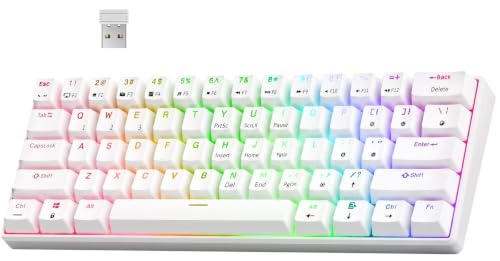
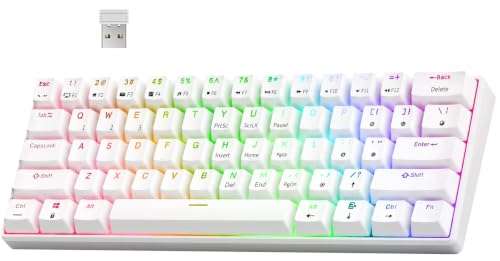
If we could only recommend one board to a reader matching this brief exactly, this would be in the final conversation every time. It is a tri-mode 60% board with hot-swappable switches and a standard bottom row that welcomes custom keycaps, and it is built for a platform for custom keycaps — standard layouts, MX stems and hot-swappable sockets rather than adapted to it. See the current listing for the RK Royal Kludge RK61 to confirm the exact variant before ordering.
Strengths
- Three connection modes cover PC, console and tablet without extra dongles
- Hot-swappable sockets and standard layout make it a cheap customisation platform
- Compact footprint leaves maximum room for a mouse or a MIDI controller
Trade-offs
- No dedicated arrow or function row — everything lives on Fn layers
- Stock stabilisers can rattle on the spacebar out of the box
- Battery is small compared with larger wireless boards
Key specs
- Layout: 60%, 61 keys
- Switches: Hot-swappable (this variant: Tactile Brown)
- Connectivity: Bluetooth + 2.4GHz wireless + wired USB-C
- Keycaps: Standard bottom row for easy keycap swaps
- Extras: Coiled cable included (this bundle)
- Compatibility: Windows and Mac modes
Where it fits into a real setup: pair it with a monitor at eye level and a mouse that suits your grip, and it anchors the desk without dominating it. Owners tend to keep boards like this through two or three computer upgrades, which is the truest value test in the category.
On the RK Royal Kludge RK61 specifically — durability is the quiet argument for this pick. The parts that fail on keyboards are predictable: cables at the strain relief, legends wearing smooth, a single switch going scratchy, a battery swelling in year three. This design addresses more of that list than most rivals — standard parts where standard parts exist, and nothing exotic where a failure would orphan the whole board.
A note on pairing the RK Royal Kludge RK61 with the rest of your life: because it connects via Bluetooth, 2.4GHz dongle or wired USB-C, this 60% mechanical board plays well with the way most people actually work — one main machine, occasional second device, occasional travel. If your reality is more extreme than that (three machines daily, constant venue changes), weigh the trade-offs list above accordingly, because connection juggling is where this pick’s limits will show first.
One more consideration on the RK Royal Kludge RK61: look closer at the detail that owners mention most: the windows and mac modes. It sounds like a spec-sheet line, but in practice it shapes every session — how the board feels at minute one and at hour six, and how well it survives the spills, dust and travel that real desks involve. Boards that cut this corner feel fine in a showroom and tired within a season.
Best for: readers who need a platform for custom keycaps — standard layouts, MX stems and hot-swappable sockets and value this badge brief — best overall — above all else / Not suited for: buyers whose priorities run against the trade-offs listed above

Keychron K8 Pro (Best TKL Platform)
Start with who this is for: anyone whose day centres on a platform for custom keycaps — standard layouts, MX stems and hot-swappable sockets and who is tired of keyboards that were designed for somebody else’s desk. It is a solid TKL mechanical board with hot-swappable Gateron switches and full QMK/VIA remapping. See the current listing for the Keychron K8 Pro to confirm the exact variant before ordering.
Strengths
- Hot-swappable sockets let you change switch feel without soldering
- QMK/VIA support remaps any key and records macros for repetitive work
- PBT keycaps resist shine and keep legends legible for years
Trade-offs
- Heavier than plastic TKL boards, so it is a desk board, not a travel board
- White-only backlight on this variant, no per-key RGB
- Bluetooth latency is fine for work but competitive gamers should use the cable
Key specs
- Layout: Tenkeyless (TKL), 87 keys
- Switches: Gateron G Pro, hot-swappable sockets
- Keycaps: OSA PBT double-shot
- Connectivity: Bluetooth + wired USB-C
- Customisation: QMK/VIA remapping and macros
- Backlight: White backlight (this variant)
In daily use, what sets this board apart is consistency: the fourth hour feels like the first, and the board never becomes the thing you are thinking about when you should be thinking about the work. For a platform for custom keycaps — standard layouts, MX stems and hot-swappable sockets, that invisibility is the highest compliment a keyboard can earn.
On the Keychron K8 Pro specifically — one more practical point: learning curve. Some boards demand a fortnight of retraining before they feel natural, and some feel right in an afternoon. This one falls toward the easy end for its type, which matters if the board has to earn its place during a busy month rather than a quiet one.
Desk reality check: a tenkeyless mechanical board claims a specific footprint and cable geometry, and it is worth ten seconds with a tape measure before ordering. Readers routinely discover that the board they love leaves their mouse, notebook, controller or coffee in a worse place than the board it replaced. This pick’s dimensions are mainstream for its class, so if your current setup works, this one will slot in without a desk rethink.
One more consideration on the Keychron K8 Pro: there is also the question of fit with the rest of your setup. This is a tenkeyless mechanical board that connects via Bluetooth for up to three devices or wired USB-C, so it drops into most desks without adapters or dongles beyond what is in the box. That boring reliability matters more than any single headline feature once the novelty wears off.
Best for: readers who need a platform for custom keycaps — standard layouts, MX stems and hot-swappable sockets and value this badge brief — best tkl platform — above all else / Not suited for: buyers whose priorities run against the trade-offs listed above

Keychron K2 Version 2 (Best 75% Platform)
Start with who this is for: anyone whose day centres on a platform for custom keycaps — standard layouts, MX stems and hot-swappable sockets and who is tired of keyboards that were designed for somebody else’s desk. It is a compact 75% mechanical board with a Mac/Windows toggle and both operating systems’ keycaps in the box. See the current listing for the Keychron K2 Version 2 to confirm the exact variant before ordering.
Strengths
- Dedicated Mac/Windows switch and spare keycaps suit mixed households
- Compact footprint frees mouse room while keeping function keys and arrows
- Bluetooth pairing for three devices covers laptop, desktop and tablet
Trade-offs
- The tall front height makes a wrist rest advisable for all-day typing
- This variant’s clicky Blue switches are loud for shared spaces
- Battery life drops quickly with RGB brightness turned up
Key specs
- Layout: 75% compact, 84 keys
- Switches: Gateron G Pro (this variant: Blue, clicky)
- Frame: Aluminium frame version
- Connectivity: Bluetooth + wired USB-C
- Backlight: RGB LED
- Compatibility: macOS and Windows keycaps included
Where it fits into a real setup: pair it with a monitor at eye level and a mouse that suits your grip, and it anchors the desk without dominating it. Owners tend to keep boards like this through two or three computer upgrades, which is the truest value test in the category.
On the Keychron K2 Version 2 specifically — look closer at the detail that owners mention most: the 75% compact, 84 keys. It sounds like a spec-sheet line, but in practice it shapes every session — how the board feels at minute one and at hour six, and how well it survives the spills, dust and travel that real desks involve. Boards that cut this corner feel fine in a showroom and tired within a season.
Long-term, the ownership story with the Keychron K2 Version 2 is about parts and standards. Where this design uses standard, replaceable components, a failure in year three is a five-minute fix; where it uses something proprietary, the same failure is a replacement purchase. That asymmetry — invisible in the first month — is priced into the ranking this pick received, and it is one of the reasons it sits where it does in the table.
One more consideration on the Keychron K2 Version 2: sound deserves its own sentence, because it is the thing reviews capture worst. In a real room — not a studio recording — this board’s character comes from its construction and switch choice working together, and it sits at the civilised end of its class. If your room is shared, that is not a footnote; it is the feature.
Best for: readers who need a platform for custom keycaps — standard layouts, MX stems and hot-swappable sockets and value this badge brief — best 75% platform — above all else / Not suited for: buyers whose priorities run against the trade-offs listed above

HyperX Alloy Origins 60 (Best Premium Base)
The case for this board is simple. For a platform for custom keycaps — standard layouts, MX stems and hot-swappable sockets, the market splits into boards that compromise quietly and boards that do not — and this one is firmly in the second group. It is a dense aluminium 60% board with fast linear switches and PBT keycaps. See the current listing for the HyperX Alloy Origins 60 to confirm the exact variant before ordering.
Strengths
- Aluminium body feels far more premium than most boards at this size
- Linear switches and NKRO suit fast, repeated key presses in games
- Double-shot PBT keycaps will not shine smooth like ABS caps
Trade-offs
- Wired only — no Bluetooth or 2.4GHz option
- 60% layout forces arrows and F-keys onto a function layer
- NGENUITY software is Windows-focused; Mac users get basic function only
Key specs
- Layout: 60%, 61 keys
- Switches: HyperX Red linear mechanical
- Keycaps: Double-shot PBT
- Body: Full aluminium alloy body
- Connectivity: Wired USB-C (detachable)
- Software: HyperX NGENUITY for RGB and macros
Where it fits into a real setup: pair it with a monitor at eye level and a mouse that suits your grip, and it anchors the desk without dominating it. Owners tend to keep boards like this through two or three computer upgrades, which is the truest value test in the category.
On the HyperX Alloy Origins 60 specifically — there is also the question of fit with the rest of your setup. This is a 60% gaming board that connects via wired USB-C with a detachable cable, so it drops into most desks without adapters or dongles beyond what is in the box. That boring reliability matters more than any single headline feature once the novelty wears off.
Setup, practically speaking: this is a 60% gaming board that connects via wired USB-C with a detachable cable. Expect the unbox-to-working time to be measured in minutes, and expect the first week to be about muscle memory rather than configuration — the board’s job is to disappear, and this one mostly does. Keep the box and any spare parts (cables, receivers, spare keycaps or pedals) together in one drawer; the day you need them is never the day you feel like hunting.
One more consideration on the HyperX Alloy Origins 60: durability is the quiet argument for this pick. The parts that fail on keyboards are predictable: cables at the strain relief, legends wearing smooth, a single switch going scratchy, a battery swelling in year three. This design addresses more of that list than most rivals — standard parts where standard parts exist, and nothing exotic where a failure would orphan the whole board.
Best for: readers who need a platform for custom keycaps — standard layouts, MX stems and hot-swappable sockets and value this badge brief — best premium base — above all else / Not suited for: buyers whose priorities run against the trade-offs listed above
Keychron V1 (Best Budget Platform)
The case for this board is simple. For a platform for custom keycaps — standard layouts, MX stems and hot-swappable sockets, the market splits into boards that compromise quietly and boards that do not — and this one is firmly in the second group. It is a 75% wired mechanical keyboard with hot-swappable switches. A note on sourcing: the Keychron V1 is recommended prose-only here — a favourite budget platform for custom keycaps thanks to standard switches and keycap sizing; wired only in the base version.
Strengths
- Recommended on merit for this brief: a favourite budget platform for custom keycaps thanks to standard switches and keycap sizing
- A proven, widely stocked model that is easy to find and easy to return if it does not suit
- Fills a gap in this shortlist that no verified-pool product honestly covers
Trade-offs
- Prose-only in this guide, so there is no verified Amazon link to check here
- Specifications and pricing vary by retailer and region — confirm before buying
- Wired only in the base version
Key specs
- Type: a 75% wired mechanical keyboard with hot-swappable switches
- Best use: a platform for custom keycaps — standard layouts, MX stems and hot-swappable sockets
- Availability: sold through major retailers (prose-only in this guide)
The honest summary is that this pick trades breadth for depth — it does the core job of a platform for custom keycaps — standard layouts, MX stems and hot-swappable sockets properly, with quality you can feel in every keystroke, and asks you to forgive a short, clearly listed set of compromises in return.
On the Keychron V1 specifically — sound deserves its own sentence, because it is the thing reviews capture worst. In a real room — not a studio recording — this board’s character comes from its construction and switch choice working together, and it sits at the civilised end of its class. If your room is shared, that is not a footnote; it is the feature.
What ownership actually looks like: the board settles into a routine fast. The connection — its standard connection options — is the part you will interact with most after the keys themselves, and it behaves predictably, which is the whole requirement. Budget a small amount of attention for the boring layer (firmware or app updates, a cable check, an occasional clean) and this class of board reliably gives years of uneventful service in return.
One more consideration on the Keychron V1: one more practical point: learning curve. Some boards demand a fortnight of retraining before they feel natural, and some feel right in an afternoon. This one falls toward the easy end for its type, which matters if the board has to earn its place during a busy month rather than a quiet one.
Best for: readers who need a platform for custom keycaps — standard layouts, MX stems and hot-swappable sockets and value this badge brief — best budget platform — above all else / Not suited for: buyers whose priorities run against the trade-offs listed above
Prose-only pick — no Amazon link in this guide; check major retailers for current availability.
Ducky One 3 (Best Enthusiast Base)
The case for this board is simple. For a platform for custom keycaps — standard layouts, MX stems and hot-swappable sockets, the market splits into boards that compromise quietly and boards that do not — and this one is firmly in the second group. It is a enthusiast mechanical keyboard known for its stabilisers and keycaps. A note on sourcing: the Ducky One 3 is recommended prose-only here — sold in several sizes with hot-swappable switches and PBT keycaps; availability and pricing vary a lot by region.
Strengths
- Recommended on merit for this brief: sold in several sizes with hot-swappable switches and PBT keycaps
- A proven, widely stocked model that is easy to find and easy to return if it does not suit
- Fills a gap in this shortlist that no verified-pool product honestly covers
Trade-offs
- Prose-only in this guide, so there is no verified Amazon link to check here
- Specifications and pricing vary by retailer and region — confirm before buying
- Availability and pricing vary a lot by region
Key specs
- Type: a enthusiast mechanical keyboard known for its stabilisers and keycaps
- Best use: a platform for custom keycaps — standard layouts, MX stems and hot-swappable sockets
- Availability: sold through major retailers (prose-only in this guide)
Where it fits into a real setup: pair it with a monitor at eye level and a mouse that suits your grip, and it anchors the desk without dominating it. Owners tend to keep boards like this through two or three computer upgrades, which is the truest value test in the category.
On the Ducky One 3 specifically — durability is the quiet argument for this pick. The parts that fail on keyboards are predictable: cables at the strain relief, legends wearing smooth, a single switch going scratchy, a battery swelling in year three. This design addresses more of that list than most rivals — standard parts where standard parts exist, and nothing exotic where a failure would orphan the whole board.
A note on pairing the Ducky One 3 with the rest of your life: because it connects via its standard connection options, this board plays well with the way most people actually work — one main machine, occasional second device, occasional travel. If your reality is more extreme than that (three machines daily, constant venue changes), weigh the trade-offs list above accordingly, because connection juggling is where this pick’s limits will show first.
One more consideration on the Ducky One 3: look closer at the detail that owners mention most: the sold through major retailers (prose-only in this guide). It sounds like a spec-sheet line, but in practice it shapes every session — how the board feels at minute one and at hour six, and how well it survives the spills, dust and travel that real desks involve. Boards that cut this corner feel fine in a showroom and tired within a season.
Best for: readers who need a platform for custom keycaps — standard layouts, MX stems and hot-swappable sockets and value this badge brief — best enthusiast base — above all else / Not suited for: buyers whose priorities run against the trade-offs listed above
Prose-only pick — no Amazon link in this guide; check major retailers for current availability.
Comparison Table
| Pick | Badge | Form | Connectivity | Price |
|---|---|---|---|---|
| RK Royal Kludge RK61 | Best Overall | 60% mechanical board | Bluetooth, 2.4GHz dongle or wired USB-C | Check price on Amazon |
| Keychron K8 Pro | Best TKL Platform | tenkeyless mechanical board | Bluetooth for up to three devices or wired USB-C | Check price on Amazon |
| Keychron K2 Version 2 | Best 75% Platform | compact 75% mechanical board | Bluetooth for up to three devices or wired USB-C | Check price on Amazon |
| HyperX Alloy Origins 60 | Best Premium Base | 60% gaming board | wired USB-C with a detachable cable | Check price on Amazon |
| Keychron V1 | Best Budget Platform | board | its standard connection options | Check price on Amazon |
| Ducky One 3 | Best Enthusiast Base | board | its standard connection options | Check price on Amazon |
How to Choose the Right Keyboard
Layout and size decide your desk
Full-size boards keep the number pad and a complete function row; tenkeyless (TKL) boards drop the numpad to pull your mouse closer; 75% and 65% layouts compress further; 60% boards keep only the core block and move everything else to a function layer. Choose by the keys your software uses daily, not by the photo. Data entry, CAD schedules and financial models argue for a numpad. Mouse-heavy work — gaming, design, video — argues for TKL or smaller so your shoulders stay square.
Switch type is the keyboard
On a mechanical board the switch is the typing experience. Linear switches press straight down with no bump — fast and quiet-ish, favoured for gaming. Tactile switches add a small bump you can feel — the all-round choice for typing accuracy. Clicky switches add a deliberate click — satisfying alone, antisocial in shared rooms. Scissor switches (laptop-style) are shallow and quiet; membrane boards are the soft, cheap default. If a listing offers several switches, the variant matters more than the brand name above it.
Connectivity: wired, 2.4GHz or Bluetooth
Wired is simplest and fastest, with zero battery management. 2.4GHz dongles give near-wired latency and work in BIOS menus and on consoles that reject Bluetooth. Bluetooth pairs with tablets and phones and switches between devices cleanly, but can sleep, lag or be blocked entirely by some consoles and locked-down work machines. Multi-device Easy-Switch style pairing is the feature hybrid desks actually use every day.
Keycaps and build decide year three
PBT keycaps resist the shine and wear that make ABS caps look greasy within a year; double-shot legends never rub off. An aluminium top plate or frame kills flex and adds the solid sound people describe as ‘premium’. Hot-swappable switch sockets let you replace a failed switch — or change the board’s feel — in minutes, and standard layouts let you fit the enormous world of custom keycap sets.
Backlighting, software and the extras
Backlighting is a working feature in dim rooms and a battery cost everywhere else. Per-key RGB is for gaming desks; single-colour or white backlights suit offices. Software suites (for macros and remapping) range from excellent to account-demanding bloat — QMK/VIA boards are the gold standard because they store everything on the board itself. Wrist rests, media dials and USB passthrough are worth real money only if your day actually uses them.
Software, macros and remapping
If your work repeats keystrokes — CAD commands, code snippets, spreadsheet shortcuts, Photoshop actions — remapping is worth real money. Onboard macro memory beats app-only macros because it follows the board to any machine. QMK/VIA boards offer the deepest, account-free customisation; vendor suites from the big gaming brands are close behind; basic office boards often offer a handful of reassignable keys through a lightweight app, which is enough for most people.
Noise: the spec nobody prints
There is no standard noise rating for keyboards, so reason from construction instead. Clicky switches are loud by design. Tactile switches are moderate. Linear switches are quieter, and factory-lubed linear switches with dampening layers — now common on newer gaming boards — are quieter still. Scissor boards are the quietest of all. Desk material, keycap profile and your own typing force move the result as much as the switch does.
How Do You Get Used to a Compact Keyboard?
- Give the function layer a week. Print or save the layer map and keep it visible until reaching for Fn-combinations is automatic.
- Remap the layer sensibly: put arrows on the keys your fingers expect (often WASD or IJKL) and Delete/Home where your old board had them. QMK/VIA and most vendor suites allow this.
- Decide your number strategy: a layer, a separate numpad later, or the row you already have. Spreadsheet-heavy users should admit defeat early and add the numpad.
- For travel and project use, pair the board to every device at home first — pairing at a venue, console or workbench is where compact setups waste their time advantage.
Troubleshooting quick list
- Problem: Wireless keeps disconnecting → Fix: Move the dongle to a front port or a short USB extension away from USB 3.0 hubs, which are notorious 2.4GHz interferers, and replace or recharge batteries before deeper diagnosis.
- Problem: The wrong characters appear → Fix: Your device’s software layout does not match the key legends. Change the input language/layout in the operating system settings — the keyboard is sending the right codes to the wrong map.
- Problem: Backlight or features died after an update → Fix: Vendor software updates occasionally reset onboard profiles. Re-apply your profile in the software and, where offered, save it to onboard memory again.
- Problem: Notes stick or drop on a piano → Fix: Check polyphony first — dense pedalled passages exceed small note counts — then test the sustain pedal, which causes more ‘sticking note’ reports than any key fault.
Maintenance is minimal but not zero: shake out and blow through the board monthly, wipe keycaps with a barely damp cloth, and keep the cable strain reliefs unstressed. Mechanical boards reward an annual deep clean — pull the caps (with a puller, not a knife), wash them in warm soapy water, and let them dry fully before refitting.
For a deeper repair walk-through on a related problem, see Best Pc Keyboards For Typing.
One underrated test separates good boards from great ones: type the same paragraph at full speed ten times and count your errors. Keyboards reveal themselves in error rates, not in spec sheets, and the boards above were chosen because their layouts and switch behaviour keep those rates low across very different hand sizes and typing styles.
Desk ergonomics deserve a paragraph of their own, because no keyboard fixes a bad setup. Your screen top should sit near eye level, your elbows near ninety degrees, and the keyboard close enough that reaching the far keys never lifts your shoulder. Readers comparing options for related setups often also weigh up Best Keyboards For Wrist Pain, which covers the medical end of the same problem.
If you share the desk, factor in the other people’s verdict early. A board that delights you and irritates a partner, a roommate or an open-plan team will be replaced within the year, and the replacement will cost more than choosing the considerate option now. Noise ratings in reviews are unreliable; switch type is the honest predictor — clicky is loud, tactile is middling, linear and scissor are quiet.
Think about the second year of ownership, not the first week. Keycaps shine, cables fray at the connector, wireless batteries age and software suites get abandoned. The picks above lean toward standard keycap sizes, detachable cables, replaceable switches and onboard settings storage precisely because those are the features that decide whether a board is still in service in year three.
Budget framing helps at every tier: spend first on the switch and layout you will touch ten thousand times a day, second on build quality, third on connectivity, and last on lighting. Buyers routinely invert that order because lighting photographs better, and then wonder why a beautiful board feels ordinary.
Consider also how the board behaves at the edges of your day: the first groggy email, the call where you type notes while talking, the deadline hour when accuracy matters more than speed. Keyboards are one of the few tools judged honestly only across that whole range, and the shortlist above was built by weighting the deadline hour highest.
If two picks still tie, decide by ecosystem. The software you already run, the receiver already in your laptop bag, the keycap sets you already own — these small lock-ins are real value, and there is no prize for fighting them. Equally, if a pick’s ecosystem is the thing you are trying to escape, that is your answer too.
Returns policies are part of the research in this category, because feel cannot be fully judged from a page. Buy from a listing with a sane returns window, keep the packaging for the first fortnight, and make the keep-or-return decision on a real workload, not on unboxing impressions.
Setup time is part of the real price. A board that pairs in a minute, stores its settings onboard and needs no account will be configured once and forgotten; a board that demands software, registration and a firmware update before the first keystroke starts its life in debit. The shortlist above was filtered with that in mind, which is why so many survivors are boards that work fully the moment they are plugged in.
There is a temptation, reading any round-up, to treat the ranking as a league table and simply buy number one. Resist it. These six picks are ranked by how completely they serve the brief in the keyword, but your brief has footnotes — a smaller desk, a louder household, a second computer, a hand size at either extreme. The badge system exists precisely so you can pick by footnote rather than by rank.
Think about what you will plug this board into over its life, not just today. Keyboards outlast computers, tablets and sometimes consoles. Standard connections, standard keycap sizes and standard layouts are what let a board follow you from device to device; proprietary shapes and orphaned software are how good boards become e-waste early.
Grip, posture and key feel interact in ways no single review can fully predict for your hands. What can be predicted is the direction of travel: most people adapt to a new board within two weeks, mild discomfort in week one is normal, and sharp pain is not — pain is information, and it means the setup, not your tolerance, needs to change.
Common Mistakes
- Buying a 60% board for spreadsheet work and discovering the layer tax in the middle of a deadline.
- Forgetting to check whether the bottom row is standard before ordering custom keycaps.
- Assuming compact means portable — some aluminium 60% boards weigh more than full-size plastic ones.
Final Recommendation
If you only read one paragraph, read this one. For most readers searching for the best keyboards for custom keycaps, the shortlist that matters is: RK Royal Kludge RK61 (Best Overall); Keychron K8 Pro (Best TKL Platform); Keychron K2 Version 2 (Best 75% Platform). Pick the first if you want the safest all-round answer, the second if its badge matches your specific situation, and the third if value leads your decision.
Every pick above earned its place against the same test — a platform for custom keycaps — standard layouts, MX stems and hot-swappable sockets — and any of the six will serve you better than a generic best-seller list pick. Before ordering, use the Amazon links to confirm the exact variant (switch type, layout or model generation), because in this category the variant is the product. Readers still torn between neighbouring briefs should compare Best Keyboards For Minecraft Pvp and Best Keyboards For Music Production before deciding.
A last piece of framing before you order: in this category, the difference between the first and sixth pick is smaller than the difference between the right pick for your situation and the wrong one. Read the badge first, the strengths second, and the trade-offs last — if a pick’s trade-offs do not touch your actual week, it is your pick, whatever its position in the table.
Frequently Asked Questions
Do I need a wrist rest?
If your wrists bend upward or rest on the desk edge while typing, a rest used during pauses (not while actively typing) helps. Tall mechanical boards benefit most. Ergonomic split boards with built-in rests solve the problem differently.
Do mechanical keyboards really type better than membrane ones?
For most people, yes — a defined actuation point and consistent key feel reduce bottoming-out force and typos over long sessions. But a good scissor board like the MX Keys S beats a bad mechanical board, and preference dominates: the honest answer is that switch type matters more than the mechanical label.
Wired, Bluetooth or 2.4GHz — which should I choose?
Wired for a fixed gaming or workstation desk, 2.4GHz for low-latency wireless that also works on consoles and in setup menus, and Bluetooth for multi-device and tablet use. Many boards offer two or three modes; buy the modes your devices actually accept.
What does hot-swappable actually get me?
Two things: repairs (a failed switch swaps in minutes with no soldering) and customisation (changing the board’s feel by changing switches). If you never plan to do either, it is a nice-to-have rather than a reason to pay more.
How long do mechanical switches last?
Quality mechanical switches are rated in the tens of millions of presses — far beyond the life of the keycaps and usually the board. In practice, boards die from spills, cables and electronics long before switches wear out.
Can one keyboard serve a Mac and a Windows PC?
Yes — look for a Mac/Windows mode switch or dual-legend keycaps and multi-device pairing. Keychron and Logitech boards handle this best; gaming boards usually work on Mac as basic keyboards but their software is Windows-only.
One more comparison readers ask about often is covered in Best Swype Keyboards For Android.