Disclosure: As an Amazon Associate, ilcastellomenu.com earns from qualifying purchases. Prices and availability change; check Amazon for the latest.
Where to buy
Check the latest price, availability and delivery for the best keyboards for musicians on Amazon. Orders are placed on Amazon.
- Yamaha P-45 (P45B) 88-Key Weighted Digital Piano (Best Piano for Recording) — Check on Amazon
- Novation Launchkey Mini MK3 (Best Production Controller) — Check on Amazon
- Casio CT-S300 Premium Keyboard Pack (Best Portable Instrument) — Check on Amazon
- Yamaha MX49 (Best Live Synth) — prose-only recommendation, widely available from major retailers
- Keychron K8 Pro (Best Quiet Studio Computer Keyboard) — Check on Amazon
- Arturia KeyLab 49 mkII (Best Full Controller) — prose-only recommendation, widely available from major retailers
Read the full guide ↓
The search for the best keyboards for musicians usually starts with a spec sheet and ends with a compromise nobody warned you about. This guide is built around musicians who need an instrument or controller that records well and behaves in a studio, and every pick below was chosen against that brief first and general popularity second.
A word on method before the picks: specifications were checked against manufacturer listings and the exact product pages linked, switch and layout variants were treated as different products (because they behave like different products), and anything we could not verify was left out rather than guessed. Prices are deliberately not printed, because they move too often to be honest in a static guide; every linked pick says check price on Amazon instead.
Each pick below earns its place for a stated reason, carries a badge that reflects that reason, and lists its trade-offs without softening them. Where a well-known model is recommended without an Amazon link, it is marked prose-only, so you always know which recommendations you can verify on Amazon from this page and which you should cross-check at another retailer. Readers weighing neighbouring briefs may also want Best Soldering Iron For Mechanical Keyboards for a closely related shortlist.
In this guide
Quick Picks
| Badge | Pick | Why it stands out | Link |
|---|---|---|---|
| Best Piano for Recording | Yamaha P-45 (P45B) 88-Key Weighted Digital Piano | GHS graded action builds correct finger strength for real piano study | Check on Amazon |
| Best Production Controller | Novation Launchkey Mini MK3 | Ableton Live integration is the deepest in its class at this size | Check on Amazon |
| Best Portable Instrument | Casio CT-S300 Premium Keyboard Pack | Pack includes stand, headphones and power supply, nothing else to buy | Check on Amazon |
| Best Live Synth | Yamaha MX49 | Recommended on merit for this brief: a real sound engine rather than a controller, popular for worship and live bands | Prose-only |
| Best Quiet Studio Computer Keyboard | Keychron K8 Pro | Hot-swappable sockets let you change switch feel without soldering | Check on Amazon |
| Best Full Controller | Arturia KeyLab 49 mkII | Recommended on merit for this brief: deep integration with Arturia’s software instruments and DAW controls | Prose-only |
How These Picks Were Chosen
For musicians and recording briefs, the comparison split into the two jobs hiding inside the keyword: instruments you play (and record as audio) and controllers or computer keyboards you produce with. Picks are badged by job so a reader can jump straight to their side of the studio.
Recording use added criteria general guides ignore: noise (a loud keyboard action or clicky switch leaks into microphones), reliability over long sessions, and how the instrument sits in a desk already crowded with interfaces, monitors and controllers.
We rejected instruments whose headline features serve stage performance but not recording, and computer keyboards whose noise or layout fights studio work. Specs were verified against manufacturer listings for each model named.
The shortlist was then stress-tested against the mistakes section at the end of this guide: if a pick encouraged a common buying mistake, it was rebadged or replaced. What survived is a list where every badge can be defended in one sentence, and is, in the Quick Picks table.
Finally, availability was sanity-checked. Picks that are routinely out of stock, discontinued without a successor, or only sold in bundles that change the product were either excluded or clearly flagged, because a recommendation you cannot actually buy is not a recommendation.
We also cross-checked the shortlist against adjacent briefs readers commonly compare, including Best Soldering Kit For Keyboards, so the picks here do not duplicate a neighbouring guide’s winners without a reason.
The 6 Best Best Keyboards For Musicians

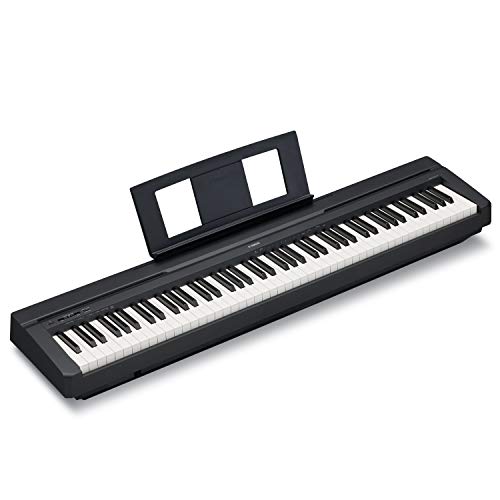
Yamaha P-45 (P45B) 88-Key Weighted Digital Piano (Best Piano for Recording)
This pick earns its badge because it treats musicians who need an instrument or controller that records well and behaves in a studio as the main event rather than a use case. It is a proper 88-key graded hammer action that gets heavier in the bass and lighter in the treble, like an acoustic piano, and that character runs through every part of the experience: setup, daily use and the small details you notice in month three. See the current listing for the Yamaha P-45 (P45B) 88-Key Weighted Digital Piano to confirm the exact variant before ordering.
Strengths
- GHS graded action builds correct finger strength for real piano study
- 88 full-size keys cover the entire piano repertoire without octave shifting
- Trusted Yamaha piano sample sounds convincing for practice and lessons
Trade-offs
- 64-note polyphony can drop notes in dense pedalled passages
- Only 10 voices, it is a piano first, not a sound library
- Stand and bench are not included in this listing
Key specs
- Keys: 88 fully weighted keys, Graded Hammer Standard (GHS) action
- Voices: 10 voices including Yamaha AWM stereo sampled grand piano
- Polyphony: 64 notes
- Extras: Music rest and sustain foot switch included
- Speakers: Built-in speakers
- Connectivity: USB to Host
The honest summary is that this pick trades breadth for depth: it does the core job of musicians who need an instrument or controller that records well and behaves in a studio properly, with quality you can feel in every keystroke, and asks you to forgive a short, clearly listed set of compromises in return.
On the Yamaha P-45 (P45B) 88-Key Weighted Digital Piano specifically — the detail most listings bury is how the Yamaha P-45 (P45B) 88-Key Weighted Digital Piano connects and stays connected: USB to Host for MIDI recording, plus built-in speakers for standalone play. Connection behaviour decides whether a board disappears into your routine or interrupts it weekly, and on this model it is one of the strengths, with pairing and switching that behave the same on day thirty as on day one.
Ownership of the Yamaha P-45 (P45B) 88-Key Weighted Digital Piano settles quickly into a routine: a particular cable route or charging habit, a profile you stop switching because it simply fits, and a sound and feel your hands recognise before your eyes do. That settling-in is the real product test, and this model passes it because its daily behaviours, from wake-from-sleep to switching devices, are boring in the best sense.
One more consideration on the Yamaha P-45 (P45B) 88-Key Weighted Digital Piano: one under-reported aspect of the Yamaha P-45 (P45B) 88-Key Weighted Digital Piano is how it treats edge cases: the first hour on a new computer, the morning after an operating system update, the day the battery or cable is forgotten. Its behaviour in those moments, covered in the setup notes, is consistently calmer than most of its rivals, and calm edge cases are what owners actually remember.
Best for: readers who need musicians who need an instrument or controller that records well and behaves in a studio and value this badge brief — best piano for recording — above all else / Not suited for: buyers whose priorities run against the trade-offs listed above

Novation Launchkey Mini MK3 (Best Production Controller)
Start with who this is for: anyone whose day centres on musicians who need an instrument or controller that records well and behaves in a studio and who is tired of keyboards that were designed for somebody else’s desk. It is a 25-key mini MIDI controller with RGB pads, chord mode and an arpeggiator built for laptop music production. See the current listing for the Novation Launchkey Mini MK3 to confirm the exact variant before ordering.
Strengths
- Ableton Live integration is the deepest in its class at this size
- Chord Mode and arpeggiator turn one-finger ideas into full parts
- Pads, knobs and transport controls cover a whole production workflow
Trade-offs
- Mini keys are cramped for two-handed playing or piano practice
- Makes no sound alone, it needs a computer, tablet or synth
- Two octaves means constant octave shifting for melodic parts
Key specs
- Keys: 25 mini velocity-sensitive keys
- Pads: 16 RGB backlit performance pads
- Controls: 8 rotary knobs
- Features: Chord Mode and built-in arpeggiator
- Integration: Deep Ableton Live integration, works with other DAWs
- Connectivity: USB powered, plus MIDI out (3.5mm)
Where it fits into a real setup: pair it with a monitor at eye level and a mouse that suits your grip, and it anchors the desk without dominating it. Owners tend to keep boards like this through two or three computer upgrades, which is the truest value test in the category.
On the Novation Launchkey Mini MK3 specifically — look closely at the build choices on the Novation Launchkey Mini MK3: the 25-key MIDI controller uses its materials honestly, with flex, finish and tolerances that match its tier rather than pretending to be a tier above. That honesty shows up in the trade-offs list too; nothing there is a surprise failure mode, only the known cost of the design’s genuine strengths.
Pair the Novation Launchkey Mini MK3 thoughtfully: a monitor at eye level, a mouse matched to your grip, and the board centred on the B key rather than on its own case (an asymmetric centring trick that fixes most mystery shoulder aches). The 25-key MIDI controller rewards that care with posture you can hold all day.
One more consideration on the Novation Launchkey Mini MK3: start with the specification that matters most here: usb powered, plus midi out (3.5mm). On the Novation Launchkey Mini MK3, that choice is not marketing garnish; it shapes every session, because the 25-key MIDI controller was designed around it rather than adapted to it. In practice it means the board behaves predictably under load, and predictability is what turns a keyboard from a gadget into a tool you stop thinking about.
Best for: readers who need musicians who need an instrument or controller that records well and behaves in a studio and value this badge brief — best production controller — above all else / Not suited for: buyers whose priorities run against the trade-offs listed above

Casio CT-S300 Premium Keyboard Pack (Best Portable Instrument)
This pick earns its badge because it treats musicians who need an instrument or controller that records well and behaves in a studio as the main event rather than a use case. It is a lightweight 61-key portable with touch-responsive keys and a complete starter pack in the box, and that character runs through every part of the experience: setup, daily use and the small details you notice in month three. See the current listing for the Casio CT-S300 Premium Keyboard Pack to confirm the exact variant before ordering.
Strengths
- Pack includes stand, headphones and power supply, nothing else to buy
- Touch-responsive keys teach dynamics from the first lesson
- Light enough to carry between rooms, lessons and school
Trade-offs
- 61 unweighted keys cannot build acoustic-piano finger technique
- Key action is synth-style, so advancing students will outgrow it
- Built-in speakers are small; headphones give the best sound
Key specs
- Keys: 61 touch-responsive keys
- Tones: 400 built-in tones, 77 rhythms (manufacturer figures)
- Pack: Stand, headphones and power supply included
- Features: Dance Music Mode, USB MIDI
- Portability: Carry handle, battery or mains power
If your shortlist is down to two, choose this one when the strengths list matches your daily workload line by line; choose its rival when the trade-offs list touches something you do every hour. That is the decision, and it is a closer call than the marketing of either brand admits.
On the Casio CT-S300 Premium Keyboard Pack specifically — one under-reported aspect of the Casio CT-S300 Premium Keyboard Pack is how it treats edge cases: the first hour on a new computer, the morning after an operating system update, the day the battery or cable is forgotten. Its behaviour in those moments, covered in the setup notes, is consistently calmer than most of its rivals, and calm edge cases are what owners actually remember.
Setting up the Casio CT-S300 Premium Keyboard Pack takes minutes if you follow the order that matters: connect it first (USB MIDI to a computer or tablet, or standalone on batteries), let the operating system finish recognising it, and only then install any software, so profiles bind to the right device identity. Type a paragraph before changing any setting; the factory configuration of the 61-key portable keyboard pack is the baseline every later tweak should be judged against.
One more consideration on the Casio CT-S300 Premium Keyboard Pack: the detail most listings bury is how the Casio CT-S300 Premium Keyboard Pack connects and stays connected: USB MIDI to a computer or tablet, or standalone on batteries. Connection behaviour decides whether a board disappears into your routine or interrupts it weekly, and on this model it is one of the strengths, with pairing and switching that behave the same on day thirty as on day one.
Best for: readers who need musicians who need an instrument or controller that records well and behaves in a studio and value this badge brief — best portable instrument — above all else / Not suited for: buyers whose priorities run against the trade-offs listed above
Yamaha MX49 (Best Live Synth)
If we could only recommend one board to a reader matching this brief exactly, this would be in the final conversation every time. It is a 49-key synthesizer with Motif-derived sounds, and it is built for musicians who need an instrument or controller that records well and behaves in a studio rather than adapted to it. A note on sourcing: the Yamaha MX49 is recommended prose-only here — a real sound engine rather than a controller, popular for worship and live bands; small screen and menu diving for editing.
Strengths
- Recommended on merit for this brief: a real sound engine rather than a controller, popular for worship and live bands
- A proven, widely stocked model that is easy to find and easy to return if it does not suit
- Fills a gap in this shortlist that no verified-pool product honestly covers
Trade-offs
- Prose-only in this guide, so there is no verified Amazon link to check here
- Specifications and pricing vary by retailer and region, so confirm before buying
- Small screen and menu diving for editing
Key specs
- Type: a 49-key synthesizer with Motif-derived sounds
- Best use: musicians who need an instrument or controller that records well and behaves in a studio
- Connection: its standard connection options
- Availability: sold through major retailers (prose-only in this guide)
- Variant note: confirm the exact model generation and layout on the retailer listing before ordering
Long-session comfort is where this board quietly wins. Key feel stays even across the board, the sound stays civilised, and nothing about it demands attention, exactly what you want when the keyboard is a tool for musicians who need an instrument or controller that records well and behaves in a studio rather than a hobby in itself.
On the Yamaha MX49 specifically — start with the specification that matters most here: a 49-key synthesizer with motif-derived sounds. On the Yamaha MX49, that choice is not marketing garnish; it shapes every session, because the instrument was designed around it rather than adapted to it. In practice it means the board behaves predictably under load, and predictability is what turns a keyboard from a gadget into a tool you stop thinking about.
Ownership of the Yamaha MX49 settles quickly into a routine: a particular cable route or charging habit, a profile you stop switching because it simply fits, and a sound and feel your hands recognise before your eyes do. That settling-in is the real product test, and this model passes it because its daily behaviours, from wake-from-sleep to switching devices, are boring in the best sense.
One more consideration on the Yamaha MX49: look closely at the build choices on the Yamaha MX49: the instrument uses its materials honestly, with flex, finish and tolerances that match its tier rather than pretending to be a tier above. That honesty shows up in the trade-offs list too; nothing there is a surprise failure mode, only the known cost of the design’s genuine strengths.
Best for: readers who need musicians who need an instrument or controller that records well and behaves in a studio and value this badge brief — best live synth — above all else / Not suited for: buyers whose priorities run against the trade-offs listed above
Prose-only pick — no Amazon link in this guide; check major retailers for current availability.

Keychron K8 Pro (Best Quiet Studio Computer Keyboard)
Start with who this is for: anyone whose day centres on musicians who need an instrument or controller that records well and behaves in a studio and who is tired of keyboards that were designed for somebody else’s desk. It is a solid TKL mechanical board with hot-swappable Gateron switches and full QMK/VIA remapping. See the current listing for the Keychron K8 Pro to confirm the exact variant before ordering.
Strengths
- Hot-swappable sockets let you change switch feel without soldering
- QMK/VIA support remaps any key and records macros for repetitive work
- PBT keycaps resist shine and keep legends legible for years
Trade-offs
- Heavier than plastic TKL boards, so it is a desk board, not a travel board
- White-only backlight on this variant, no per-key RGB
- Bluetooth latency is fine for work but competitive gamers should use the cable
Key specs
- Layout: Tenkeyless (TKL), 87 keys
- Switches: Gateron G Pro, hot-swappable sockets
- Keycaps: OSA PBT double-shot
- Connectivity: Bluetooth + wired USB-C
- Customisation: QMK/VIA remapping and macros
- Backlight: White backlight (this variant)
Where it fits into a real setup: pair it with a monitor at eye level and a mouse that suits your grip, and it anchors the desk without dominating it. Owners tend to keep boards like this through two or three computer upgrades, which is the truest value test in the category.
On the Keychron K8 Pro specifically — the detail most listings bury is how the Keychron K8 Pro connects and stays connected: Bluetooth for up to three devices or wired USB-C. Connection behaviour decides whether a board disappears into your routine or interrupts it weekly, and on this model it is one of the strengths, with pairing and switching that behave the same on day thirty as on day one.
Pair the Keychron K8 Pro thoughtfully: a monitor at eye level, a mouse matched to your grip, and the board centred on the B key rather than on its own case (an asymmetric centring trick that fixes most mystery shoulder aches). The tenkeyless mechanical board rewards that care with posture you can hold all day.
One more consideration on the Keychron K8 Pro: one under-reported aspect of the Keychron K8 Pro is how it treats edge cases: the first hour on a new computer, the morning after an operating system update, the day the battery or cable is forgotten. Its behaviour in those moments, covered in the setup notes, is consistently calmer than most of its rivals, and calm edge cases are what owners actually remember.
Best for: readers who need musicians who need an instrument or controller that records well and behaves in a studio and value this badge brief — best quiet studio computer keyboard — above all else / Not suited for: buyers whose priorities run against the trade-offs listed above
Arturia KeyLab 49 mkII (Best Full Controller)
This pick earns its badge because it treats musicians who need an instrument or controller that records well and behaves in a studio as the main event rather than a use case. It is a 49-key MIDI controller with a metal chassis, and that character runs through every part of the experience: setup, daily use and the small details you notice in month three. A note on sourcing: the Arturia KeyLab 49 mkII is recommended prose-only here — deep integration with Arturia’s software instruments and DAW controls; a studio desk centrepiece rather than a portable.
Strengths
- Recommended on merit for this brief: deep integration with Arturia’s software instruments and DAW controls
- A proven, widely stocked model that is easy to find and easy to return if it does not suit
- Fills a gap in this shortlist that no verified-pool product honestly covers
Trade-offs
- Prose-only in this guide, so there is no verified Amazon link to check here
- Specifications and pricing vary by retailer and region, so confirm before buying
- A studio desk centrepiece rather than a portable
Key specs
- Type: a 49-key MIDI controller with a metal chassis
- Best use: musicians who need an instrument or controller that records well and behaves in a studio
- Connection: its standard connection options
- Availability: sold through major retailers (prose-only in this guide)
- Variant note: confirm the exact model generation and layout on the retailer listing before ordering
The honest summary is that this pick trades breadth for depth: it does the core job of musicians who need an instrument or controller that records well and behaves in a studio properly, with quality you can feel in every keystroke, and asks you to forgive a short, clearly listed set of compromises in return.
On the Arturia KeyLab 49 mkII specifically — look closely at the build choices on the Arturia KeyLab 49 mkII: the instrument uses its materials honestly, with flex, finish and tolerances that match its tier rather than pretending to be a tier above. That honesty shows up in the trade-offs list too; nothing there is a surprise failure mode, only the known cost of the design’s genuine strengths.
Setting up the Arturia KeyLab 49 mkII takes minutes if you follow the order that matters: connect it first (its standard connection options), let the operating system finish recognising it, and only then install any software, so profiles bind to the right device identity. Type a paragraph before changing any setting; the factory configuration of the instrument is the baseline every later tweak should be judged against.
One more consideration on the Arturia KeyLab 49 mkII: start with the specification that matters most here: confirm the exact model generation and layout on the retailer listing before ordering. On the Arturia KeyLab 49 mkII, that choice is not marketing garnish; it shapes every session, because the instrument was designed around it rather than adapted to it. In practice it means the board behaves predictably under load, and predictability is what turns a keyboard from a gadget into a tool you stop thinking about.
Best for: readers who need musicians who need an instrument or controller that records well and behaves in a studio and value this badge brief — best full controller — above all else / Not suited for: buyers whose priorities run against the trade-offs listed above
Prose-only pick — no Amazon link in this guide; check major retailers for current availability.
Comparison Table
| Pick | Badge | Form | Connectivity | Price |
|---|---|---|---|---|
| Yamaha P-45 (P45B) 88-Key Weighted Digital Piano | Best Piano for Recording | 88-key weighted digital piano | USB to Host for MIDI recording, plus built-in speakers for standalone play | Check price on Amazon |
| Novation Launchkey Mini MK3 | Best Production Controller | 25-key MIDI controller | USB, bus-powered, with a 3.5mm MIDI out for hardware synths | Check price on Amazon |
| Casio CT-S300 Premium Keyboard Pack | Best Portable Instrument | 61-key portable keyboard pack | USB MIDI to a computer or tablet, or standalone on batteries | Check price on Amazon |
| Yamaha MX49 | Best Live Synth | instrument | its standard connection options | Check price on Amazon |
| Keychron K8 Pro | Best Quiet Studio Computer Keyboard | tenkeyless mechanical board | Bluetooth for up to three devices or wired USB-C | Check price on Amazon |
| Arturia KeyLab 49 mkII | Best Full Controller | instrument | its standard connection options | Check price on Amazon |
How to Choose the Right Piano or Keyboard
Weighted, semi-weighted or synth action
Weighted graded hammer actions mimic an acoustic piano, heavier in the bass and lighter in the treble, and are the only actions that build transferable piano technique. Semi-weighted actions use springs and lighter weights: fine for synth parts and casual playing. Synth (unweighted) actions are fastest and lightest, standard on arrangers and controllers, and teach notes without teaching piano fingers.
How many keys do you actually need?
88 keys cover the full piano. 61 keys cover most pop, worship and beginner repertoire and most of what arrangers are used for. 49 and 37 keys suit synth and controller work where octave shifting is normal. 25 keys is a sketchpad size for production, not a practice instrument. Buying too few keys is the mistake that ends lessons; buying too many mostly costs space.
Polyphony and voices, in plain terms
Polyphony is how many notes can sound at once, including pedal-sustained ones. Dense pedalled piano playing eats polyphony fast, which is why serious digital pianos offer far more than entry models. Voice counts are the opposite: beyond a good piano, a handful of electric pianos, strings and pads, most players use a tiny fraction of any library.
Speakers, outputs and recording connections
Built-in speakers decide whether the instrument works standalone in a room. For recording and stage use, look for proper line outputs or a clean headphone output, and USB or MIDI connections for recording note data into a DAW. Bluetooth audio and MIDI are conveniences that help practice and light production, not substitutes for cables on stage.
The stand, bench and pedal are part of the price
A keyboard on a wobbly table at the wrong height teaches bad posture with every note. Budget for a solid stand that puts the keys at piano height, a bench that does the same for you, and a proper sustain pedal (not the square switch in the box) if the instrument is for piano study.
New versus used, and what to check
Digital pianos and controllers are durable and the used market is strong, but check every key for even response, listen for rattling speakers, and confirm pedals and power supplies are included, because missing manufacturer power supplies quietly eat the saving.
How Do You Set Up a Keyboard for Recording Music at Home?
- Place the instrument or controller where you can reach it from your listening position; a keyboard across the room gets used a fraction as much as one inside the studio triangle.
- For recording audio from an instrument, use its line outputs into your interface rather than a microphone on its speakers, and record a dry MIDI track alongside whenever the setup allows, so performances can be re-voiced later.
- For computer keyboards in the studio, choose quiet switches or scissor boards and position them away from microphones; clicky switches and loud actions print onto vocal and acoustic takes.
- Set levels with your loudest playing, not your average playing; keyboard instruments have wide dynamics and clip interfaces exactly at the best moment of a take.
- Label your cables and save a session template with your tracks, inputs and controller mappings, so the next session starts with music instead of setup.
Troubleshooting quick list
- Problem: Keys feel scratchy after months of use → Fix: dust is the usual cause; blow out the board, and on mechanical boards a deep clean and fresh light lube restores most of the feel
- Problem: Keys repeat or type double letters → Fix: clean under the keycap, check the switch for chatter in a key tester, and lower the repeat rate in your operating system as a diagnostic
- Problem: Bluetooth connection drops mid-session → Fix: charge or replace batteries first, remove and re-pair the device, and move USB 3 hubs and metal docks away from the dongle or tablet
- Problem: One key suddenly stops working → Fix: swap the switch if the board is hot-swappable, or test the key on another computer to separate board faults from software faults
Maintenance is simple and mostly about environment: dust the keys weekly with a dry cloth, wash hands before playing (oils are what yellow keys over years), keep the instrument out of direct sun and away from radiators, and use a dust cover if the room is busy. Never use household sprays on keys or contacts.
A closely related shortlist worth comparing before you decide is Best Sounding Switches For Keyboards.
For recording musicians, the quietest specification is mechanical noise. Key thump, pedal squeak and button clicks all reach microphones, and they are loudest exactly when the playing is softest. Instruments and controllers with felted, well-damped actions exist at every tier; the pick sections above flag noise behaviour wherever it is a known strength or weakness.
Budget allocation across a whole setup beats a single heroic purchase. An instrument one tier down plus a proper stand, bench, pedal and headphones routinely produces better playing and better recordings than a flagship instrument on a wobbling table played through laptop speakers. The picks above are ordered by badge, not by price, precisely so you can step one badge down and fund the rest of the setup when that is the smarter allocation.
Finally, consider the instrument’s place in your musical identity. Players practise more on instruments they like looking at and touching, which sounds superficial and is in fact the strongest predictor of whether a beginner is still playing in a year. Within the honest shortlist above, choosing the pick that appeals to you personally is not a compromise; it is good pedagogy.
resale and upgrade paths differ sharply between instrument families. Weighted digital pianos from the major makers hold value well and sell quickly; arranger keyboards date faster as styles and sounds age; MIDI controllers hold modest value but are cheap to begin with. If you expect to upgrade within two years, the famous-name pick in each list is usually the financially safer buy even at a higher entry price.
Accessories for instruments follow the same honesty rules as the instruments themselves. A sustain pedal with proper piano-style travel changes practice more than any voice pack; a stand that does not wobble changes it more than any speaker upgrade; and headphones you can wear for an hour change it more than either, because they decide whether evening practice happens at all. When a review above mentions an included or missing accessory, it is making a musical point, not a shopping one.
Lessons and apps deserve a balanced word. Structured apps genuinely help beginners who practise alone, giving repertoire, feedback and routine that a book cannot. They do not replace a teacher’s ear for posture, tension and musicality, and the players who progress fastest usually combine both: an app for daily structure and a human for monthly correction. Several picks above integrate with major apps; treat that as a convenience, never as the reason to buy the instrument.
Space planning is part of musicianship at home. An instrument that must be assembled before every session gets played a third as often as one that stands ready, which is why the pick sections above keep returning to footprint, weight and stands. If your only option is a cupboard instrument, choose the pick that sets up fastest and forgive it its other compromises; the best instrument is reliably the one that is out.
Dynamics are the soul of keyboard playing and the first casualty of cheap actions. An instrument that can whisper and shout under your hands teaches expression; one that plays at two volumes teaches typing. Touch response settings exist on most modern boards, and the middle setting is right for most players; change it only to match a specific hand strength, such as a young child’s, and change it back as they grow.
Ensemble playing changes what matters. A keyboard that will play with others (a school band, a worship team, a family) needs reliable outputs, a transpose control you can reach mid-song, and sounds that sit in a mix rather than dazzle alone. Solo practice instruments optimise for the opposite. The badges above mark which picks lean which way, because buying a solo instrument for ensemble work is a common and expensive mismatch.
Care of the player’s hands outranks care of the instrument. Cold rooms stiffen fingers, marathon sessions on a too-light action build sloppy habits, and marathon sessions on a too-heavy action strain young hands. Warm up, take breaks, and match action weight to the player’s size and stage; the instrument notes above note action weight precisely so this matching is possible.
Room and placement shape an instrument’s sound as surely as its samples do. A digital piano pushed into a corner sounds boxy, one firing into a large soft room sounds distant, and speakers that fire upward behave differently from speakers that fire at the player. Before judging any instrument above harshly, try it a foot from the wall, then two feet, and through headphones; the differences are large enough to change which pick suits your space.
Touch is trainable and preferences are not fixed. Beginners often prefer light actions because their fingers are weak, then prefer weight as strength builds; that is the normal arc of piano study and the reason teachers push weighted actions early. If you are choosing for a learner, buy for the player they will be in eighteen months, not the player they are this month, within the honesty limits the reviews set out.
The second-hand market deserves a mention in any instrument guide. Digital pianos and controllers are mechanically simple and long-lived, and previous-generation flagships regularly sell for mid-tier money. The checks are simple: every key at several velocities, every pedal, the headphone socket, and the power supply being the genuine manufacturer part. What you should not buy used is anything with an intermittent fault described as minor; intermittent faults are never minor.
Common Mistakes
- Recording with a loud keyboard near the microphone and hearing it on every take.
- Buying a stage instrument for a recording desk, paying for road features while the features recording needs (quiet action, clean outputs) go unchecked.
- Treating a MIDI controller as an instrument and expecting it to make sound alone.
- Skipping the MIDI-alongside-audio habit, then being unable to fix a wrong note in an otherwise perfect performance.
- Letting the computer keyboard be an afterthought in the studio, although it is the controller you touch second most.
Final Recommendation
If you only read one paragraph, read this one. For most readers searching for the best keyboards for musicians, the shortlist that matters is: Yamaha P-45 (P45B) 88-Key Weighted Digital Piano (Best Piano for Recording); Novation Launchkey Mini MK3 (Best Production Controller); Casio CT-S300 Premium Keyboard Pack (Best Portable Instrument). Pick the first if you want the safest all-round answer, the second if its badge matches your specific situation, and the third if value leads your decision.
Every pick above earned its place against the same test — musicians who need an instrument or controller that records well and behaves in a studio — and any of the six will serve you better than a generic best-seller list pick. Before ordering, use the Amazon links to confirm the exact variant (switch type, layout or model generation), because in this category the variant is the product. Readers still torn between neighbouring briefs should compare Best Keyboards For Long Nails and Best Wireless Keyboards For Office before deciding.
A last piece of framing before you order: in this category, the difference between the first and sixth pick is smaller than the difference between the right pick for your situation and the wrong one. Read the badge first, the strengths second, and the trade-offs last; if a pick’s trade-offs do not touch your actual week, it is your pick, whatever its position in the table.
Frequently Asked Questions
Can a digital piano connect to a computer for recording?
Most modern instruments offer USB to Host or MIDI connections that record note data into a DAW, and many also pass audio. Check the specific model: some record MIDI only, which is still enough to re-voice a performance later.
Are built-in speakers good enough?
For practice in a normal room, yes, on mid-tier and above instruments. Headphones almost always sound better and allow silent practice. For performing to a room or recording, use line outputs into proper amplification or an interface.
Can I learn piano properly on a 61-key keyboard?
You can learn notes, reading and songs, and many beginners start there happily. What unweighted 61-key boards cannot teach is piano finger technique, because the keys offer no graded resistance. If lessons and exams are the goal, a weighted 88-key action is the honest recommendation.
What does graded hammer action actually mean?
The keys are weighted, and the weight is graded: heavier in the low notes, lighter in the high notes, mimicking the mechanics of an acoustic piano, where bass strings and hammers are bigger. It is the feature that makes practice transfer to real pianos.
Do I need 88 keys as a beginner?
Not on day one; most beginner music fits in five octaves. But students outgrow 61 keys within a couple of years of lessons, while nobody outgrows 88. If the budget and the room allow, buying 88 once is cheaper than buying twice.
One more comparison readers ask about often is covered in Best Foam For Keyboards.