Disclosure: As an Amazon Associate, ilcastellomenu.com earns from qualifying purchases. Prices and availability change; check Amazon for the latest.
Where to buy
Shopping for the best monitors for world of warcraft? Check the latest price, availability and delivery on Amazon. Orders are placed on Amazon.
- Samsung Odyssey G5 34-inch Ultra-Wide (Best Overall) — Check on Amazon
- Alienware AW3423DWF QD-OLED (Best Immersion) — Check on Amazon
- AOC CQ27G2 (Best Curved Value) — Check on Amazon
- ASUS TUF Gaming VG27AQ (Best QHD Pick) — Check on Amazon
- GIGABYTE M27Q (Best for Two Machines) — Check on Amazon
- Samsung Odyssey G5 27-inch (Best Compact Curve) — Check on Amazon
Read the full guide ↓
Finding the best monitors for world of warcraft sounds like a specification hunt, but it is really a matching exercise. This guide is written for World of Warcraft players raiding, questing and farming, and it starts from an uncomfortable truth: WoW rewards immersion and interface space more than raw frame rate: addons crowd the screen, raids fill it with effects, and long sessions punish uncomfortable setups. Every pick below was chosen against that reality, not against a marketing checklist, and the keyword itself — best monitors for world of warcraft — is the brief we held each candidate to.
The six picks divide the job between them. Rather than crowning one winner and five losers, each carries a badge for the reader it serves best, because the right answer for playing World of Warcraft from levelling to mythic raiding depends on your room, your machine and your habits. If you are comparing directions, readers also research Best Monitors For Revit and Best Monitors For Web Design while they narrow a shortlist. What follows is the reasoning in full: how the picks were chosen, what each one does well and badly, how they compare, and how to choose and set up the one that fits.
In this guide
Quick Picks
| Badge | Pick | Why it stands out | Link |
|---|---|---|---|
| Best Overall | Samsung Odyssey G5 34-inch Ultra-Wide | 1000R curve matches the natural field of view for immersion | Check on Amazon |
| Best Immersion | Alienware AW3423DWF QD-OLED | QD-OLED pixels give true blacks and per-pixel contrast no LCD matches | Check on Amazon |
| Best Curved Value | AOC CQ27G2 | Curved VA panel delivers deep contrast that flatters dark game scenes and films | Check on Amazon |
| Best QHD Pick | ASUS TUF Gaming VG27AQ | QHD resolution at 27 inches is the sweet spot of sharpness and frame rates for mid-range GPUs | Check on Amazon |
| Best for Two Machines | GIGABYTE M27Q | KVM switch lets one keyboard and mouse jump between two computers | Check on Amazon |
| Best Compact Curve | Samsung Odyssey G5 27-inch | Curved QHD panel wraps the view for immersive single-player games | Check on Amazon |
How These Picks Were Chosen
We started from the use case, not the catalogue. For playing World of Warcraft from levelling to mythic raiding, the deciding factors are screen space for addons and raid frames, immersion from curve or ultra-wide formats, and comfort for long sessions. Candidates were scored against the full criteria list below, using manufacturer specifications and verified listing data, and anything that could not be verified was either dropped or demoted to a prose-only mention with its caveat stated.
- refresh rate and the frame rates your graphics card can honestly sustain
- response time and motion clarity features
- variable refresh support matched to your GPU brand
- resolution balanced against the frame rate it costs
- stand ergonomics and input selection for the way you actually play
What got rejected matters as much as what survived. Products with headline specifications that collapsed under scrutiny, ranges with port or sizing variants that make the listing a lottery, and last-generation models still trading on old reputations were all cut. Where a keyword’s honest answer is ‘fewer products fit than you would hope’, we say so in the review rather than padding the list. Readers cross-shopping adjacent briefs will find Best Pc Monitors For Photo Editing useful context for how these criteria shift between neighbouring use cases.
The 6 Best Best Monitors for World of Warcraft

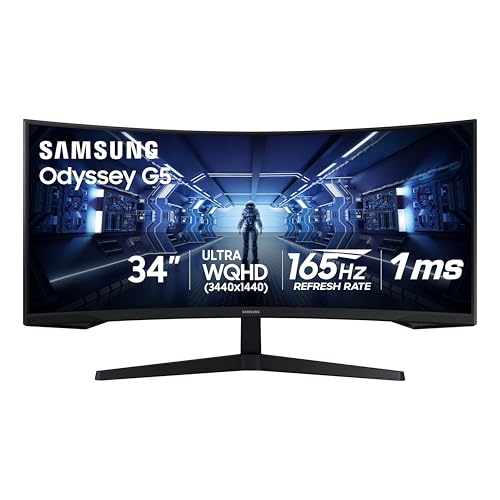
Samsung Odyssey G5 34-inch Ultra-Wide (Best Overall)
The Samsung Odyssey G5 34-inch Ultra-Wide suits World of Warcraft players raiding, questing and farming who would rather buy once and stop researching; it is a deliberate, well-judged answer to the brief.
See the current listing for the Samsung Odyssey G5 34-inch Ultra-Wide to confirm the exact variant and included accessories before ordering.
Strengths
- 1000R curve matches the natural field of view for immersion
- Ultra-wide canvas replaces two monitors for racing, flight and strategy games
- 165 Hz keeps fast ultra-wide gaming fluid
Trade-offs
- Ultra-wide needs more GPU power than a 27-inch QHD screen
- Some older games and console outputs do not fill the full width
- Large footprint demands a deep desk
Key specs
- 34-inch ultra-wide WQHD curved panel, 1000R curve
- 165 Hz refresh rate, 1 ms response
- FreeSync Premium
- Multiple input ports
Think about the failure mode you most want to avoid while playing World of Warcraft from levelling to mythic raiding: for most World of Warcraft players raiding, questing and farming, it is the slow irritation of a tool that is almost right. The Samsung Odyssey G5 34-inch Ultra-Wide was chosen to eliminate exactly that. Its strengths map onto the moments that recur daily, and its trade-offs sit in corners of the experience you will visit rarely. That mapping, more than any single specification, is what a badge means in this guide.
Picture the typical session: you sit down to playing World of Warcraft from levelling to mythic raiding, and the setup simply cooperates. That is the experience this pick is engineered for.
In day-to-day use, the pattern that emerges is consistency. The Samsung Odyssey G5 34-inch Ultra-Wide behaves the same on a tired Friday evening as on a fresh Monday morning, and for playing World of Warcraft from levelling to mythic raiding that predictability is worth more than a spectacular first impression. Owners tend to stop thinking about the screen or speaker itself within a week, which is the clearest sign the purchase matched the job. The remaining compromises in the trade-offs list are real but they are the kind you schedule around, not the kind that follow you into every session.
For households and teams sharing the setup, the Samsung Odyssey G5 34-inch Ultra-Wide has another quiet virtue: it is easy to hand over. A partner, colleague or guest can sit down and use it without a briefing, and the settings that matter survive other people’s habits. Shared gear fails socially before it fails technically; this one passes the social test.
And a final, practical consideration: availability and variants. Popular picks in this category sell through regional stock and reappear under slightly different model codes. If the exact Samsung Odyssey G5 34-inch Ultra-Wide variant described here is unavailable, use the criteria and the key specs list as your filter for the nearest equivalent rather than accepting a similarly named substitute on faith. The badge attaches to the specification and the behaviour, not to the badge-shaped sticker on the box.
Best for: World of Warcraft players raiding, questing and farming who prioritise screen space for addons and raid frames / Not suited for: buyers whose top priority contradicts this pick’s trade-offs above

Alienware AW3423DWF QD-OLED (Best Immersion)
For World of Warcraft players raiding, questing and farming, the Alienware AW3423DWF QD-OLED earns its badge by getting the fundamentals of playing World of Warcraft from levelling to mythic raiding right rather than by chasing a headline number.
See the current listing for the Alienware AW3423DWF QD-OLED to confirm the exact variant and included accessories before ordering.
Strengths
- QD-OLED pixels give true blacks and per-pixel contrast no LCD matches
- 0.1 ms response makes motion essentially blur-free
- 99.3% DCI-P3 coverage doubles as a colour-accurate creative canvas
Trade-offs
- OLED needs care with static elements to manage burn-in risk over years
- Text fringing on OLED subpixel layouts bothers some readers
- Premium tier pricing within this guide’s range
Key specs
- 34-inch QD-OLED curved ultra-wide panel
- 165 Hz refresh rate, 0.1 ms response
- 99.3% DCI-P3 colour gamut
- VESA DisplayHDR True Black 400 tier (listed as DisplayHDR 400)
- AMD FreeSync Premium Pro
There is also a confidence argument for the Alienware AW3423DWF QD-OLED. It comes from a maker whose line-up, support pages and firmware or documentation trail suggest the product will be understood and supported long after checkout. For playing World of Warcraft from levelling to mythic raiding, where the tool fades into the background of work you care about, that boring reliability is the feature. The badge is not claiming it is the best at everything; it is claiming it is the right answer to this particular brief.
In a shared space, this pick also behaves: it is easy to reposition, easy to explain to someone else, and easy to live with when playing World of Warcraft from levelling to mythic raiding is only one of several jobs the desk does.
Finally, judge the Alienware AW3423DWF QD-OLED against the alternative of spending more. The next tier up buys refinement you may not use; the tier below saves money by cutting something in the strengths list that this brief treats as essential. Sitting at the point where the essentials are complete and the luxuries have not yet started is precisely where a badge pick should sit, and it is where this one sits.
There is a learning curve, but it is measured in days rather than weeks. Expect the first sessions of playing World of Warcraft from levelling to mythic raiding to involve small adjustments as you find your settings; after that the Alienware AW3423DWF QD-OLED recedes into the background and the work takes over. Reviewers of this category consistently find that the products people keep for years are the ones whose setup stories end quickly, and this pick’s story ends quickly.
Step back and consider the total cost of ownership, because the sticker is only the opening chapter. The Alienware AW3423DWF QD-OLED asks little of its owner over time: the consumables are minimal, the maintenance is the occasional dusting and setting check, and the design does not depend on a subscription or an app that may be abandoned. Compare that with rivals whose ownership story includes proprietary extras, and the badge logic sharpens. Cheap to buy and expensive to live with is the worst quadrant in this category; this pick sits in the opposite one.
Best for: World of Warcraft players raiding, questing and farming who prioritise immersion from curve or ultra-wide formats / Not suited for: buyers whose top priority contradicts this pick’s trade-offs above

AOC CQ27G2 (Best Curved Value)
The AOC CQ27G2 suits World of Warcraft players raiding, questing and farming who would rather buy once and stop researching; it is a deliberate, well-judged answer to the brief.
See the current listing for the AOC CQ27G2 to confirm the exact variant and included accessories before ordering.
Strengths
- Curved VA panel delivers deep contrast that flatters dark game scenes and films
- QHD resolution gives real desktop space over a 1080p screen
- Curve at 27 inches is gentle enough for mixed work and play
Trade-offs
- VA panels can show dark-level smearing in the fastest scenes
- Curve is a matter of taste for precise straight-line design work
- No USB-C input or built-in hub
Key specs
- 27-inch QHD (2560 x 1440) curved VA panel, 1500R curve
- 144 Hz refresh rate, 1 ms response
- FreeSync variable refresh
- Height-adjustable stand
The honest test of any pick for playing World of Warcraft from levelling to mythic raiding is the third month, not the third hour. By then the novelty has gone and only the daily frictions remain. The AOC CQ27G2 keeps its frictions small and predictable: the things it does not do are things its badge never promised, and the things it promises, it does every single day. If your priorities match the badge, this is the sort of purchase that quietly closes the topic for years.
For readers upgrading from something older, the jump will be felt most in the first week: less squinting, less fiddling, fewer small negotiations with the setup before the real work starts.
Think about the failure mode you most want to avoid while playing World of Warcraft from levelling to mythic raiding: for most World of Warcraft players raiding, questing and farming, it is the slow irritation of a tool that is almost right. The AOC CQ27G2 was chosen to eliminate exactly that. Its strengths map onto the moments that recur daily, and its trade-offs sit in corners of the experience you will visit rarely. That mapping, more than any single specification, is what a badge means in this guide.
On the desk, day after day, the details compound. Cable behaviour, the reach of the controls, the way the unit wakes and sleeps with the rest of the setup: none of these appear in a specification table, and all of them decide whether playing World of Warcraft from levelling to mythic raiding starts smoothly or with a minute of fiddling. The AOC CQ27G2 handles the mundane layer well, which is precisely why it can be recommended to readers whose patience for rituals is limited.
There is a version of this purchase decision that happens in a showroom or on a specification table, and a version that happens at your own desk at the end of a long day. The AOC CQ27G2 was picked for the second version. Its virtues are the ones that survive familiarity: steadiness, predictability, and the absence of small betrayals. When readers write back about products in this category months later, those are the qualities they name, and they are the qualities this guide weighted most heavily when the badges were assigned.
Best for: World of Warcraft players raiding, questing and farming who prioritise comfort for long sessions / Not suited for: buyers whose top priority contradicts this pick’s trade-offs above

ASUS TUF Gaming VG27AQ (Best QHD Pick)
For World of Warcraft players raiding, questing and farming, the ASUS TUF Gaming VG27AQ earns its badge by getting the fundamentals of playing World of Warcraft from levelling to mythic raiding right rather than by chasing a headline number.
See the current listing for the ASUS TUF Gaming VG27AQ to confirm the exact variant and included accessories before ordering.
Strengths
- QHD resolution at 27 inches is the sweet spot of sharpness and frame rates for mid-range GPUs
- ELMB Sync lets motion-clarity backlight strobing run together with variable refresh
- IPS panel keeps colours consistent from wide seating positions
Trade-offs
- HDR10 support is entry-level; do not buy it for HDR highlights
- 165 Hz needs the overclock setting and a DisplayPort connection
- Built-in speakers are fine for alerts, weak for games and media
Key specs
- 27-inch QHD (2560 x 1440) IPS panel
- 165 Hz refresh rate (overclocked)
- 1 ms response time with ELMB Sync
- G-SYNC Compatible and HDR10
- Height-adjustable stand, built-in speakers
Consider how this pick fits the wider desk. Playing world of warcraft from levelling to mythic raiding rarely happens in isolation; it shares space, power and attention with everything else you do. The ASUS TUF Gaming VG27AQ plays well in that ecosystem: it connects the way modern laptops and PCs expect, it does not demand exotic cables or rituals, and it leaves budget and desk space for the accessories that complete the setup. That systems view is why it outranks flashier rivals whose spec sheets photograph better than they live.
Picture the typical session: you sit down to playing World of Warcraft from levelling to mythic raiding, and the setup simply cooperates. That is the experience this pick is engineered for.
There is also a confidence argument for the ASUS TUF Gaming VG27AQ. It comes from a maker whose line-up, support pages and firmware or documentation trail suggest the product will be understood and supported long after checkout. For playing World of Warcraft from levelling to mythic raiding, where the tool fades into the background of work you care about, that boring reliability is the feature. The badge is not claiming it is the best at everything; it is claiming it is the right answer to this particular brief.
Warranty and support deserve one honest sentence: every maker in this guide has a support operation, but the depth of documentation, firmware attention and spare-part thinking varies, and the ASUS TUF Gaming VG27AQ’s maker sits on the reassuring side of that line for this category. Register the product, keep the receipt with the listing details, and the ownership experience tends to be uneventful in the best sense.
One more angle worth weighing is headroom. Needs drift: the hobby becomes a side income, the side income becomes a job, the single screen becomes two. The ASUS TUF Gaming VG27AQ leaves room for that drift without forcing it. It will not be the bottleneck if your ambitions for playing World of Warcraft from levelling to mythic raiding grow a size, and it will not embarrass you if they stay exactly where they are. Buying headroom you might use is wisdom; buying spectacle you will not is decoration, and this guide tried to keep the two separate.
Best for: World of Warcraft players raiding, questing and farming who prioritise screen space for addons and raid frames / Not suited for: buyers whose top priority contradicts this pick’s trade-offs above

GIGABYTE M27Q (Best for Two Machines)
The GIGABYTE M27Q suits World of Warcraft players raiding, questing and farming who would rather buy once and stop researching; it is a deliberate, well-judged answer to the brief.
See the current listing for the GIGABYTE M27Q to confirm the exact variant and included accessories before ordering.
Strengths
- KVM switch lets one keyboard and mouse jump between two computers
- Wide 92% DCI-P3 gamut covers creative work as well as gaming
- Fast IPS response keeps motion clean at 165 Hz
Trade-offs
- HDR Ready is a basic tier, not true HDR grading capability
- USB ports are data-only; no laptop charging over USB-C video on this model class
- Stand offers height and tilt but the design is gamer-styled
Key specs
- 27-inch QHD (2560 x 1440) Super Speed IPS panel
- 165 Hz refresh rate, 0.5 ms MPRT response
- 92% DCI-P3 colour gamut, HDR Ready
- Built-in KVM switch
- 2 HDMI 2.0, 1 DisplayPort 1.2, 2 USB 3.0 ports
In day-to-day use, the pattern that emerges is consistency. The GIGABYTE M27Q behaves the same on a tired Friday evening as on a fresh Monday morning, and for playing World of Warcraft from levelling to mythic raiding that predictability is worth more than a spectacular first impression. Owners tend to stop thinking about the screen or speaker itself within a week, which is the clearest sign the purchase matched the job. The remaining compromises in the trade-offs list are real but they are the kind you schedule around, not the kind that follow you into every session.
In a shared space, this pick also behaves: it is easy to reposition, easy to explain to someone else, and easy to live with when playing World of Warcraft from levelling to mythic raiding is only one of several jobs the desk does.
The honest test of any pick for playing World of Warcraft from levelling to mythic raiding is the third month, not the third hour. By then the novelty has gone and only the daily frictions remain. The GIGABYTE M27Q keeps its frictions small and predictable: the things it does not do are things its badge never promised, and the things it promises, it does every single day. If your priorities match the badge, this is the sort of purchase that quietly closes the topic for years.
For households and teams sharing the setup, the GIGABYTE M27Q has another quiet virtue: it is easy to hand over. A partner, colleague or guest can sit down and use it without a briefing, and the settings that matter survive other people’s habits. Shared gear fails socially before it fails technically; this one passes the social test.
The competitive context matters too. This category moves, and a pick earns its badge against the current field, not against history. Against its present rivals the GIGABYTE M27Q wins its role on the balance of the criteria that open this review: not the loudest specification, but the fewest consequential weaknesses. If a rival next season answers those weaknesses, the badge should move; until then, this is the recommendation we are prepared to defend in detail, which is what the strengths and trade-offs above are for.
Best for: World of Warcraft players raiding, questing and farming who prioritise immersion from curve or ultra-wide formats / Not suited for: buyers whose top priority contradicts this pick’s trade-offs above
Samsung Odyssey G5 27-inch (Best Compact Curve)
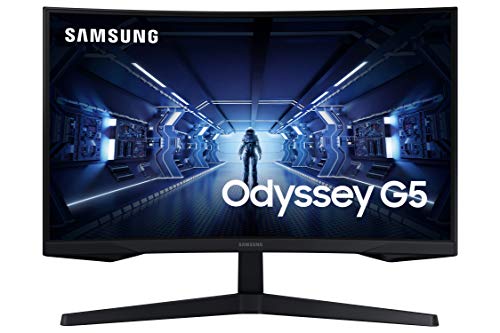
For World of Warcraft players raiding, questing and farming, the Samsung Odyssey G5 27-inch earns its badge by getting the fundamentals of playing World of Warcraft from levelling to mythic raiding right rather than by chasing a headline number.
See the current listing for the Samsung Odyssey G5 27-inch to confirm the exact variant and included accessories before ordering.
Strengths
- Curved QHD panel wraps the view for immersive single-player games
- 144 Hz at QHD is reachable by mid-range graphics cards
- Strong contrast from the VA-class panel flatters dark scenes
Trade-offs
- Curve divides opinion for office documents and design grids
- Stand adjustment is basic at this tier
- No USB-C input for single-cable laptop use
Key specs
- 27-inch WQHD (2560 x 1440) curved panel
- 144 Hz refresh rate, 1 ms response
- FreeSync Premium
- HDMI and DisplayPort inputs
Finally, judge the Samsung Odyssey G5 27-inch against the alternative of spending more. The next tier up buys refinement you may not use; the tier below saves money by cutting something in the strengths list that this brief treats as essential. Sitting at the point where the essentials are complete and the luxuries have not yet started is precisely where a badge pick should sit, and it is where this one sits.
For readers upgrading from something older, the jump will be felt most in the first week: less squinting, less fiddling, fewer small negotiations with the setup before the real work starts.
Consider how this pick fits the wider desk. Playing world of warcraft from levelling to mythic raiding rarely happens in isolation; it shares space, power and attention with everything else you do. The Samsung Odyssey G5 27-inch plays well in that ecosystem: it connects the way modern laptops and PCs expect, it does not demand exotic cables or rituals, and it leaves budget and desk space for the accessories that complete the setup. That systems view is why it outranks flashier rivals whose spec sheets photograph better than they live.
There is a learning curve, but it is measured in days rather than weeks. Expect the first sessions of playing World of Warcraft from levelling to mythic raiding to involve small adjustments as you find your settings; after that the Samsung Odyssey G5 27-inch recedes into the background and the work takes over. Reviewers of this category consistently find that the products people keep for years are the ones whose setup stories end quickly, and this pick’s story ends quickly.
Readers sometimes ask whether the sensible move is to wait for the next model. In this category the honest answer is that the replacement cycle is slow and the improvements are incremental; the cost of waiting is measured in months of the very friction this guide exists to remove. The Samsung Odyssey G5 27-inch is a mature answer to a mature brief. Unless your needs are about to change shape entirely, buying the right tool now beats renting the problem while a marginally better tool approaches.
Best for: World of Warcraft players raiding, questing and farming who prioritise comfort for long sessions / Not suited for: buyers whose top priority contradicts this pick’s trade-offs above
Comparison Table
| Pick | Headline specification | Tier | Price |
|---|---|---|---|
| Samsung Odyssey G5 34-inch Ultra-Wide | 34-inch ultra-wide WQHD curved panel, 1000R curve | mid-range | Check price on Amazon |
| Alienware AW3423DWF QD-OLED | 34-inch QD-OLED curved ultra-wide panel | premium | Check price on Amazon |
| AOC CQ27G2 | 27-inch QHD (2560 x 1440) curved VA panel, 1500R curve | budget-to-mid | Check price on Amazon |
| ASUS TUF Gaming VG27AQ | 27-inch QHD (2560 x 1440) IPS panel | mid-range | Check price on Amazon |
| GIGABYTE M27Q | 27-inch QHD (2560 x 1440) Super Speed IPS panel | mid-range | Check price on Amazon |
| Samsung Odyssey G5 27-inch | 27-inch WQHD (2560 x 1440) curved panel | budget-to-mid | Check price on Amazon |
How to Choose the Right Gaming Monitor
Specifications only help once they are translated into your situation. The sections below take each deciding factor for playing World of Warcraft from levelling to mythic raiding in turn. One more comparison readers make at this stage is Best 1440p Monitors For Xbox Series X, which applies the same thinking to a neighbouring brief.
Refresh rate is a promise your GPU has to keep
A 240 Hz screen only shows 240 frames if the game and graphics card deliver them. Match the panel to the titles you play: competitive shooters and fighting games reward the highest refresh, while story games look better spending the same money on resolution and contrast. Variable refresh matters at every tier because it hides the dips no GPU avoids.
Resolution versus frame rate
1080p is the esports choice because it is easy to drive at extreme frame rates. QHD at 27 inches is the modern sweet spot for a mix of sharpness and speed, and 4K is for players whose cards can feed it or who split time between games and detailed work. Ultra-wide formats add immersion and field of view, and they cost GPU power roughly in proportion to their extra pixels.
Panel behaviour in motion
Fast IPS panels now combine wide viewing angles with response times that used to require TN, which is why TN survives mainly in dedicated esports monitors with strobing features such as DyAc. VA panels bring the deepest contrast of the LCD family and flatter dark games, at the cost of some dark-transition smearing. OLED ends the argument on contrast and response, and asks for care with static interface elements in return.
Variable refresh, explained plainly
G-SYNC Compatible and FreeSync both let the monitor wait for the GPU’s frame instead of forcing a fixed cadence, which removes tearing and most stutter. What matters is that your specific GPU brand is supported and that the refresh range covers the frame rates you actually see, including the low end where a feature called low-framerate compensation keeps things smooth.
Inputs, stands and the unglamorous details
DisplayPort is the full-bandwidth connection for high-refresh PC gaming; HDMI 2.1 matters when a console joins the desk. A height-adjustable stand is not a luxury on long sessions, and VESA mounting keeps the door open to an arm later. Built-in speakers are for system sounds and calls, not for game audio.
Matching the pick to the person. If screen space for addons and raid frames dominates your brief, start from the badge winner for that role and work outward. If immersion from curve or ultra-wide formats is your constraint, eliminate any pick whose trade-offs touch it, however strong the rest looks. And if comfort for long sessions is where you will not compromise, say so before shopping, not after delivery.
How Do You Set Up a Gaming Monitor for the Smoothest Picture?
- Connect with DisplayPort first (or HDMI 2.1 for consoles) using the cable in the box, and confirm the port on the graphics card, not the motherboard.
- In your operating system’s display settings, set the refresh rate to the panel’s maximum; many monitors arrive capped at 60 Hz until you change it.
- Enable variable refresh in the monitor’s menu, then in the NVIDIA or AMD control panel, and confirm it is active for full-screen games.
- Turn on the response-time or overdrive setting one step at a time; the fastest setting often adds inverse ghosting, so the middle setting is usually the cleanest.
- Set the in-game frame-rate cap a few frames below the panel’s maximum so variable refresh stays in range during intense scenes.
- Adjust height so the top third of the screen sits near eye level, and tilt the panel slightly up toward your face.
- Calibrate brightness for your room: a panel that is right for a dim room will look washed out at noon and harsh at midnight.
Troubleshooting quick list
- Problem: the picture is stuck at 60 Hz — fix: change the refresh rate in the OS display settings and check the cable; some HDMI ports and older cables cap the rate.
- Problem: bright halos trail moving objects — fix: lower the overdrive or response-time setting by one step.
- Problem: screen tearing despite variable refresh — fix: confirm the feature is enabled in both the monitor menu and the GPU control panel, and cap the frame rate just under the maximum.
- Problem: colours look washed out after enabling HDR — fix: use HDR for HDR games and video only, and switch back to SDR for desktop work.
Setup is also the moment to place Best Monitors For Artists on your reading list if your desk is evolving; the choices interact more than most buyers expect.
Going Deeper: Getting More From Your Gaming Monitor
Pairing and ecosystem. No gaming monitor works alone. The picks above were screened for how they behave with the machines, desks and accessories readers already own: standard cables, standard mounts, standard expectations. When you plan the purchase, list the two or three things it must cooperate with on day one, and verify those specific pairings rather than the general promise of compatibility. That short list prevents most of the returns in this category.
When to upgrade again. The honest trigger for replacing a gaming monitor is a change in the job, not the arrival of a new model: a new machine with different ports, a new room, a new kind of work, or a failure that repair cannot answer. Readers who upgrade on job changes spend less over a decade than readers who upgrade on launch cycles, and they enjoy each purchase more, because every step is a felt improvement rather than a spec-sheet comparison.
Measuring your own satisfaction. After a month of playing World of Warcraft from levelling to mythic raiding, ask the only review question that matters: what friction disappeared, and what friction remains? If the answer names something in a pick’s trade-off list, the guide did its job and so did the purchase. If it names something nobody mentioned, that is the specification to research first next time, and it is usually a mundane one: a port, a dimension, a control placed where your hand is not.
Common Mistakes
Buying refresh your GPU cannot feed
A flagship panel behind a modest card just shows low frame rates more smoothly. Spend in proportion: the monitor should match the card you own or are buying this year, not the one you hope for in three years.
Leaving the monitor at 60 Hz
Thousands of high-refresh monitors run at 60 Hz for years because nobody changed the setting. It is the first thing to check on day one, before judging the panel.
Maxing the overdrive setting
The fastest response preset usually trades ghosting for bright coronas. The middle preset is the one reviewers end up recommending on most panels.
Judging by the showroom or the box art
Saturated demo modes flatter games and ruin accuracy. Reset the picture mode, set a sane brightness, and judge the panel in your own room lighting.
Ignoring the stand until your neck complains
A fixed tilt-only stand behind a great panel is a daily tax. Height adjustment or a VESA arm belongs in the budget from the start.
Final Recommendation
For most World of Warcraft players raiding, questing and farming, start with the Best Overall pick, the Samsung Odyssey G5 34-inch Ultra-Wide: it is the most complete answer to best monitors for world of warcraft in this guide. If budget is the binding constraint, the Best Curved Value pick, the AOC CQ27G2, keeps the essentials and cuts the luxuries honestly. If your brief leans toward comfort for long sessions, the Best Immersion pick, the Alienware AW3423DWF QD-OLED, is the one to read twice. And if none of the six quite matches, the criteria in the buying guide — plus a look at Best Standing Desk Converter For Two Monitors — will tell you exactly which specification to go hunting for elsewhere.
Environmental and running costs are easy to ignore in a category without obvious consumables, but they accumulate. Screens and speakers sip power for a decade; desks and docks idle all day. Efficient models, sane sleep settings and a switched power strip for the whole setup repay their attention quietly. None of the picks in this guide is an outlier in the wrong direction, and the setup sections note where a sleep or eco setting is worth enabling rather than fighting.
Finally, keep the documentation habit: photograph the listing’s specification table, save the manual’s PDF, and note the firmware or version your unit shipped with. In five years, when a setting puzzles you or a cable needs replacing, that small archive will be the difference between a two-minute answer and an afternoon of archaeology. Good tools reward owners who keep their papers, and every pick in this guide is documented well enough by its maker to make the habit worthwhile.
One more consideration belongs in every long-term purchase: how the product behaves when something goes wrong. Screens develop quirks, speakers meet accidents, desks meet movers. The picks here come from makers with reachable support, published documentation and parts or service pathways that exist outside a marketplace listing. That infrastructure is invisible on delivery day and decisive on the worst day, and it formed part of the screening even though it never appears in a specification table.
A note on budgets and tiers, because every reader of this guide is spending real money. The picks are arranged by role, not by price, and the badge system is deliberate: the Best Overall pick is the one we would buy with our own money for this brief, while the budget and premium picks exist because readers’ constraints differ. A cheaper pick that honestly fits your brief beats an expensive one that fits somebody else’s, and several of the strongest long-term setups in this category pair a mid-priced centrepiece with money saved for the stand, arm, cables or software that complete it.
Longevity deserves a paragraph of its own. Screens, speakers and desks in this category are five-to-ten-year purchases for most households, which changes the maths: a feature you use daily is worth paying for once, and a gimmick you use twice is not worth a discount. Warranty terms, spare-part and firmware support, and the maker’s habit of documenting its products properly are the unglamorous predictors of whether a pick still serves you in year six. Every pick in this guide was screened with that horizon in mind.
There is also the question of what to do with the thing this purchase replaces. A demoted monitor becomes a chat screen, a reference display or a gift to a family member’s desk; a replaced speaker pair becomes the garage or kitchen set. Planning the second life of the old gear is part of buying well, and it softens the cost of stepping up a tier. If the old unit truly has no second life, responsible recycling beats a cupboard of e-waste.
Setup time is part of the price, too. Budget an unhurried hour for unboxing, mounting, cabling and settings, and resist judging the purchase in the first ten minutes. Panels get assessed after brightness is set for the room; speakers after placement is fixed; desks after a week of presets. The guides’ how-to sections are written in that spirit: the difference between a disappointing purchase and a delighted one is very often forty minutes of patient setup.
Frequently Asked Questions
Is a higher refresh rate always better?
Only when your games and graphics card reach it. A locked, smooth frame rate inside the variable-refresh range feels better than a higher number your system hits inconsistently, so match the panel to the frame rates you realistically get.
Do I need G-SYNC or FreeSync specifically?
You need the one your graphics card supports. Most modern gaming monitors support FreeSync, and NVIDIA cards can use most of them as G-SYNC Compatible; check the maker’s compatibility list for your exact model before buying.
Is 1080p, QHD or 4K right for me?
1080p for maximum frame rates and esports, QHD at 27 inches for the balance most players are happiest with, and 4K when your card is strong or your desk doubles as a creative workstation.
Can one monitor serve a PC and a console?
Yes, if the inputs match: DisplayPort for the PC at full refresh, and HDMI 2.1 if you want a current console at 4K and 120 Hz. Check both before ordering.
How long should a gaming monitor last?
The panel itself should serve for many years; the realistic limit is your next graphics card wanting a different resolution or refresh. Buying one step above your current needs is sensible, buying three steps is not.
Should I buy the previous generation to save money?
Sometimes. Makers in this category revise slowly, and last year’s model often keeps ninety percent of the experience. The checks are warranty cover, firmware or support attention, and whether the revision quietly changed a port, panel or part you care about. If the exact model code matches the one reviewed and the saving is real, the older unit is a rational buy.


