Where to buy
Check the latest price, availability and delivery on Amazon. Orders are placed on Amazon. We may earn a commission from qualifying purchases.
- Best modem router Wi-Fi: ARRIS SURFboard G36 — Check on Amazon
- NETGEAR Nighthawk CAX30 (AX2700 Modem Router) — Check on Amazon
- TP-Link Deco X55 (3-Pack, AX3000) — Check on Amazon
- TP-Link Deco XE75 (2-Pack, AXE5400) — Check on Amazon
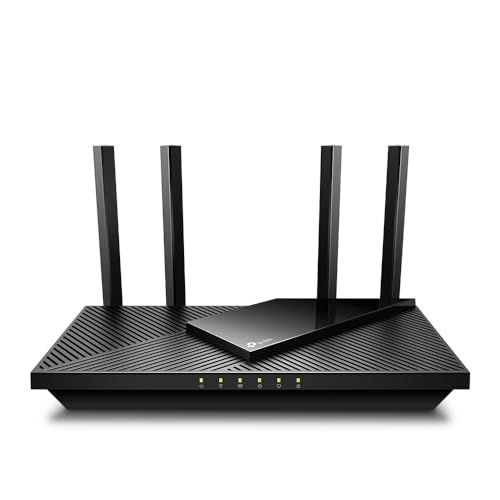
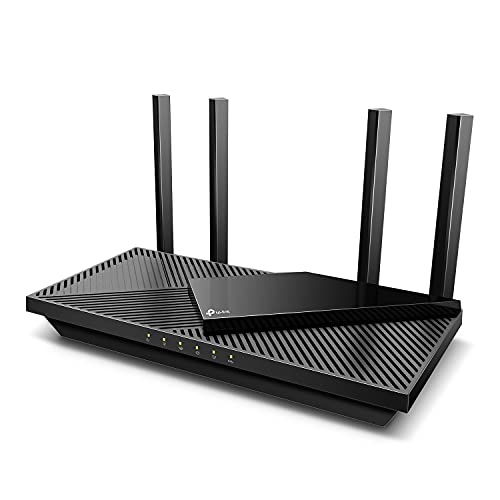
- ASUS RT-AX86U Pro (AX5700) — Check on Amazon
- GL.iNet GL-MT6000 Flint 2 — Check on Amazon
Read the full guide ↓
Disclosure: As an Amazon Associate, ilcastellomenu.com earns from qualifying purchases. Links to Amazon on this page are affiliate links; they cost you nothing extra. Listing details such as price and availability change often, so check the current Amazon listing before you buy.
Searching for the best routers for gigablast means you already know the router is no longer a background appliance — it is the piece of equipment every call, stream, game and smart bulb in the house depends on. This guide takes that search literally: every pick below was chosen for your Cox Gigablast connection, judged on verified manufacturer and retailer specifications, and labeled in plain language — standalone router or modem router, dual-band or tri-band, included security or subscription security — so the box that arrives matches the job you actually described. Where the keyword’s promise cannot be met truthfully, the guide says so and shows the closest honest answer instead.
The six picks below span the shapes this search legitimately takes: ARRIS SURFboard G36 leads the list for the reason its buyer label states, and the rest cover the neighboring needs — more coverage, faster wired ports, deeper controls, simpler management — that readers comparing best routers for gigablast usually discover they have. Read the detailed reviews for the fit, the comparison table for the specifications, and the essays for the parts of router ownership that specification sheets leave out: placement, queues, firmware and the five-year cost of ‘free’ features that are not free.
In this guide
Quick Picks
Short on time, or comparing several options at once? Each row below names a buyer type and the router that suits it, with a link to the listing.
| Buyer type | Pick | Why it stands out | Link |
|---|---|---|---|
| Best modem router Wi-Fi | ARRIS SURFboard G36 | AX3000 Wi-Fi 6 and a 2.5G port in a cable modem router | Check on Amazon |
| Best cable modem router combo | NETGEAR Nighthawk CAX30 (AX2700 Modem Router) | DOCSIS 3.1 modem and Wi-Fi 6 router in a single box | Check on Amazon |
| Best mesh value for big homes | TP-Link Deco X55 (3-Pack, AX3000) | Three-node mesh rated up to about 6,500 sq ft | Check on Amazon |
| Best mesh for large homes | TP-Link Deco XE75 (2-Pack, AXE5400) | Two-node 6E mesh rated up to about 5,500 sq ft | Check on Amazon |
| Best for gamers who tweak | ASUS RT-AX86U Pro (AX5700) | 2.5G port, gaming controls and security with no subscription | Check on Amazon |
| Best for VPN and OpenWrt | GL.iNet GL-MT6000 Flint 2 | OpenWrt-based firmware and fast whole-home WireGuard | Check on Amazon |
How These Picks Were Chosen
The first filter was fit for the job in the keyword: a router had to genuinely serve your Cox Gigablast connection, not merely be a good router in the abstract. The second filter was honesty of positioning — entry routers are presented as entry routers, mesh systems as mesh systems, and modem routers only where a cable connection makes them relevant. The third filter was longevity: firmware that is still updated, security that is still maintained, and ports that will not embarrass the router when your internet plan changes.
Coverage figures get the same treatment. A maker’s square-foot figure assumes open space and friendly walls; your home has brick, tile, mirrors and a router tucked where the installer left it. This guide treats coverage numbers as relative rankings between models, and the essays below deal with the placement and mesh decisions that move real coverage more than any single specification does.
One filter sat on top of all of that for this article: the your Cox Gigablast connection test. Picks that could not answer it — in coverage, in port speed, in firmware features or in honest price-tier positioning — were left out however strong their specifications looked on paper, because a router that fights your household’s actual pattern loses to a lesser router that fits it, every single week. Check the current price on Amazon before you buy, as listing prices in this category change often and a router’s position against any budget line moves with them.
The 6 Best Routers for Gigablast
ARRIS SURFboard G36
Who it suits: Cable households that prefer the SURFboard line’s straightforward setup and want a 2.5G wired port in their modem router.
ARRIS’s SURFboard name has been on cable modems longer than most brands have existed, and the G36 is its modern two-in-one: a DOCSIS 3.1 cable modem paired with a dual-band Wi-Fi 6 router rated AX3000 — a step up in wireless class from many modem routers — approved for Comcast Xfinity, Cox and Spectrum, with the standard instruction to verify your specific plan on the provider’s approved list before buying. ARRIS positions the G36 for cable plans up to the 1.2 Gbps class, and unusually for a combo unit it includes a 2.5G Ethernet port, so a wired PC or a downstream switch can move faster than gigabit inside the house even though the cable plan itself is gigabit-class.
Setup runs through the SURFboard Central app, which walks activation with the major providers and keeps day-to-day management — guest network, parental controls, checking connected devices — in one place. The G36’s coverage suits apartments and mid-size homes; sprawling houses should plan on its Wi-Fi being the starting point rather than the whole answer. The combo caveats from this guide apply in full: cable service only, and modem plus router lifecycles are welded together. Within those lines, the G36 is the modem router for buyers who want the wireless side taken seriously rather than treated as an afterthought bolted to a modem.
- AX3000 Wi-Fi 6 — stronger wireless than most modem routers
- 2.5G Ethernet port for fast wired devices and switches
- Approved across Xfinity, Cox and Spectrum (plan check required)
Honest limitation: Cable only, and the all-in-one design couples your modem and router upgrades into one purchase.
Choose it if you are a cable customer who wants one box but refuses to accept weak Wi-Fi as the price of combining. Skip it if your service is fiber or DSL, or your home is large enough to need a mesh system as the main network.
NETGEAR Nighthawk CAX30 (AX2700 Modem Router)
Who it suits: Cable internet households on Xfinity, Spectrum or Cox that want one box instead of a rented modem plus a separate router.
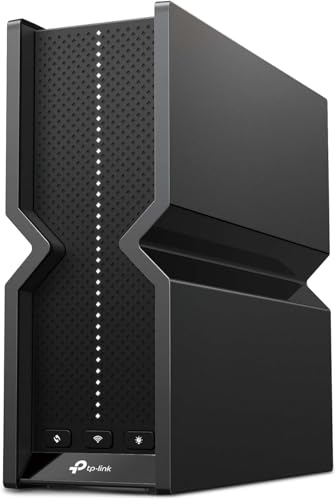
The CAX30 exists to kill a monthly rental fee and a shelf of boxes at the same time. Inside one Nighthawk tower sits a DOCSIS 3.1 cable modem — the current standard for gigabit-class cable plans — and a dual-band Wi-Fi 6 router rated AX2700, with four gigabit Ethernet ports for wired devices. NETGEAR lists compatibility with Xfinity, Spectrum and Cox, the three cable giants whose approved-device lists this class of product lives on; as with every modem purchase, you confirm your exact plan against the provider’s list before ordering, because approval is plan-specific. When it matches, activation is a provider app or phone call, and the rental line item disappears from the bill.
As a router, the CAX30 covers a typical apartment or mid-size home, handles streaming and gaming traffic with Wi-Fi 6 efficiency, and offers NETGEAR Armor security as an add-on service. The combination format carries the usual honest trade-offs, and this guide will not hide them: modem and router age together, so a future DOCSIS or Wi-Fi leap means replacing both, and if the unit fails, both functions are down at once. Cable-only is the other boundary — the CAX30 cannot serve fiber, DSL or satellite connections at all. For a cable household that values one box, one power supply and no rental fee, those trades are usually worth it; for everyone else, a separate modem and router keeps the upgrade paths independent.
- Modem and router in one — ends the cable modem rental fee
- DOCSIS 3.1 supports gigabit-class cable plans
- Wi-Fi 6 with four wired ports covers a typical home
Honest limitation: Cable internet only, and the combined format means modem and router must be upgraded together.
Choose it if you rent a modem from Xfinity, Spectrum or Cox and your plan appears on this model’s approved list. Skip it if you have fiber, DSL or satellite service — a modem router for cable cannot connect to those networks at all.
TP-Link Deco X55 (3-Pack, AX3000)
Who it suits: Big households that want three-node mesh coverage and huge device capacity at a mid-tier cost per room.
The Deco X55 is the value play in whole-home mesh: three Wi-Fi 6 units, rated by TP-Link to cover up to about 6,500 square feet as a set and to keep roughly 150 devices connected, speaking to each other as one network with one name and one password. Dual-band AX3000 capacity per unit is plenty for streaming, calls and gaming in the rooms families actually use, and because each unit has three gigabit Ethernet ports, the system supports wired Ethernet backhaul — plug units into house wiring where it exists and the mesh stops spending wireless capacity on its own traffic, the single biggest real-world upgrade a mesh can get.
The X55 trades away the 6 GHz band its XE75 sibling carries, and that trade defines its buyer: households whose devices are Wi-Fi 6 and older, whose internet plan is gigabit or below, and whose problem is purely geography — too many rooms, too many walls, one router in the wrong corner. The Deco app keeps management simple, HomeShield adds security and parental controls, and extra units can join later. Placement still matters (nodes need a decent signal between them unless wired), and power users get fewer knobs than enthusiast routers provide. Judged on cost per covered room, though, the X55 is the hardest pick in this guide to argue with.
- Three nodes cover large homes for a mid-tier outlay
- Ethernet backhaul support unlocks full wireless capacity
- High device capacity suits smart homes with many gadgets
Honest limitation: No 6 GHz band, so Wi-Fi 6E/7 devices connect at Wi-Fi 6 speeds and wireless backhaul shares the 5 GHz band.
Choose it if your home is big, your devices are many, and your budget prefers coverage breadth over cutting-edge bands. Skip it if you have Wi-Fi 6E or 7 devices you want on a 6 GHz band, or a small home one router already covers well.
TP-Link Deco XE75 (2-Pack, AXE5400)
Who it suits: Larger and multi-story homes that need seamless whole-home coverage with a 6 GHz band for backhaul and modern devices.
The Deco XE75 answers the question single routers cannot: what about the far bedroom, the upstairs office, the basement TV? Two mesh units rated to cover up to about 5,500 square feet between them (maker figure, in open conditions) create one network with one name, and devices roam between units without the drops and sticky connections of an extender setup. Because the XE75 is Wi-Fi 6E, its 6 GHz band does double duty — serving modern devices directly and giving the mesh a fast, uncongested lane to pass traffic between units — while AI-driven mesh features steer connections as you move through the house. Each unit carries three gigabit Ethernet ports, so a TV or console near a satellite can still be wired.
Living with Deco is app-first: setup, parental controls, guest access and HomeShield security all live in the Deco app, and adding a third unit later is a few taps. That simplicity is the system’s personality — advanced users will find fewer manual controls than an ASUS or OpenWrt router offers, and the gigabit ports cap wired backhaul at gigabit speed. Neither point dents the XE75’s core promise, which is coverage you stop thinking about: the dead zone becomes a room with Wi-Fi, the video call survives the walk upstairs, and the network name never changes. For large, multi-story or awkwardly built homes, this is the shape of the correct answer.
- True mesh coverage rated up to about 5,500 sq ft for the pair
- 6 GHz band improves both device connections and mesh backhaul
- Simple app management with HomeShield controls
Honest limitation: Gigabit ports only, and app-led management offers less manual control than enthusiast routers.
Choose it if dead zones and multi-story coverage are your actual problem, and you want one seamless network instead of workarounds. Skip it if you live in a compact apartment — a single router covers it for less money and with more advanced controls.
ASUS RT-AX86U Pro (AX5700)
Who it suits: Gamers and power users who want deep controls, subscription-free security and AiMesh expansion in a proven dual-band design.
The RT-AX86U Pro is the enthusiast’s dual-band router: an AX5700 Wi-Fi 6 design (the 5700 figure is its combined class figure) driven by a 2.0 GHz quad-core processor, with a 2.5G port that can serve as WAN or LAN, a dedicated gaming port that prioritizes whatever is plugged into it, and ASUS’s unusually deep firmware underneath. That firmware is the real product here. You get granular QoS, port forwarding that behaves the way gamers expect, VPN server and client support including VPN Fusion-style split routing on this class of ASUS firmware, and AiProtection Pro security powered by Trend Micro with no subscription fee — a line item most rivals charge for every year.
ASUS also plays the long game on coverage: the RT-AX86U Pro is AiMesh compatible, so when a second ASUS router joins the house it becomes a node in one seamless network instead of a competing box, and older ASUS routers you may already own can often serve as nodes. Mobile Game Mode prioritizes phone gaming through the ASUS app, and RangeBoost Plus is ASUS’s name for its antenna and radio tuning aimed at reach. The trade-offs are generational: there is no 6 GHz band, so Wi-Fi 6E and 7 devices connect at Wi-Fi 6 speeds, and the interface rewards users willing to learn it. For a wired-first gaming household on gigabit-class internet, few dual-band routers are as complete.
- AiProtection Pro security with no subscription
- 2.5G port, gaming port and deep, honest firmware controls
- AiMesh lets it anchor or join an ASUS mesh later
Honest limitation: No 6 GHz band, and the rich interface has a learning curve for first-time router owners.
Choose it if you want gaming-grade controls, free lifetime security updates and a router that can grow into an AiMesh system. Skip it if you specifically want the 6 GHz band today, or you prefer a set-and-forget app-only experience with no advanced menus.
GL.iNet GL-MT6000 Flint 2
Who it suits: VPN and OpenWrt users who want open firmware, fast WireGuard performance and dual 2.5G ports without flagship pricing.
The Flint 2 is the router the tinkerers in this guide have been waiting for someone to build properly. It is a dual-band Wi-Fi 6 router in the AX6000 class whose firmware is based on OpenWrt, the open-source router platform — which means the software story is transparency, configurability and community knowledge rather than a locked app. VPN performance is the headline: the Flint 2 runs OpenVPN and WireGuard as both client and server, and its hardware is chosen to push VPN traffic at speeds that make whole-home VPN routing practical instead of theoretical. If your plan is to route the entire house through a VPN provider, or to reach your home network securely from anywhere, this is the pick engineered for exactly that.
The hardware keeps pace with the software: two 2.5G ports and four gigabit LAN ports give fiber households and NAS owners real wired headroom, and GL.iNet rates the design for long-range coverage across a busy home. AdGuard Home integration, encrypted DNS options and per-device VPN policies (send the TV through the VPN, leave the work laptop direct) are the daily-use features owners actually write home about. The honest trade: OpenWrt-based power comes with OpenWrt-based responsibility — the interface exposes more than a consumer app does, and buyers who want the router to make every decision for them should look at the mesh picks. For everyone else, the Flint 2 is the most capability per shelf-inch in this guide.
- OpenWrt-based firmware with deep, documented control
- Fast WireGuard/OpenVPN client and server for whole-home VPN
- Dual 2.5G ports plus four gigabit LAN at a mid tier
Honest limitation: The powerful interface asks more of the owner than app-led rivals, and there is no 6 GHz band.
Choose it if you run a VPN at router level, want OpenWrt flexibility, or need per-device routing policies a locked app cannot offer. Skip it if you want a router you never have to think about — the automatic mesh systems are built for that relationship.
Comparison Table
| Product | Type | Key specifications | Link |
|---|---|---|---|
| ARRIS SURFboard G36 | Modem router combo | DOCSIS 3.1 cable modem + Wi-Fi 6 router · AX3000 dual-band · approved for Comcast Xfinity, Cox and Spectrum (check your plan) · max cable speeds up to 1.2 Gbps class · 2.5G Ethernet port among its wired ports | Check on Amazon |
| NETGEAR Nighthawk CAX30 (AX2700 Modem Router) | Modem router combo | DOCSIS 3.1 cable modem + Wi-Fi 6 router in one · AX2700 (up to 2.7 Gbps class) · approved for Xfinity, Spectrum and Cox gigabit-class plans (check your plan) · 4 gigabit Ethernet ports · NETGEAR Armor available | Check on Amazon |
| TP-Link Deco X55 (3-Pack, AX3000) | Mesh system | Wi-Fi 6 dual-band mesh AX3000 · 3-pack covers up to about 6,500 sq ft (maker figure) · supports up to about 150 devices (maker figure) · 3 gigabit ports per unit · Ethernet backhaul supported · HomeShield | Check on Amazon |
| TP-Link Deco XE75 (2-Pack, AXE5400) | Mesh system | Wi-Fi 6E tri-band mesh AXE5400 with 6 GHz band · 2-pack covers up to about 5,500 sq ft (maker figure) · AI-driven mesh roaming · 3 gigabit ports per unit · HomeShield · works with any ISP modem/ONT | Check on Amazon |
| ASUS RT-AX86U Pro (AX5700) | Standalone router | Wi-Fi 6 dual-band AX5700 (up to 5700 Mbps class) · 2.0 GHz quad-core CPU · 2.5G port plus gaming port · AiMesh compatible · AiProtection Pro (subscription-free) · VPN support · mobile game mode and port forwarding | Check on Amazon |
| GL.iNet GL-MT6000 Flint 2 | Standalone router | Wi-Fi 6 dual-band AX6000 · 2 x 2.5G ports + 4 x gigabit LAN · OpenWrt-based firmware · OpenVPN and WireGuard client and server · long-range design · suited to fiber modems/ONTs | Check on Amazon |
A note on prices and listings in this category: routers are promotion-driven products whose bundles and pack sizes change across the year, so this guide prints no product prices and sends you to the live listing for the current figure — a printed price would be wrong more often than right. When you check a listing, confirm the full model code and pack size (mesh systems especially are sold in several pack counts under near-identical names), and confirm whether the box includes the cables and power supplies the review describes.
Getting the Most From Any Router You Buy
The first week with a new router decides the next five years. Update the firmware before anything else — several picks here do it automatically once enabled — then set a strong admin password that is not the Wi-Fi password, turn on automatic updates, and name your networks deliberately: one main network, a guest network for visitors and smart gadgets, and the 2.4 GHz band kept available for the long-range, low-speed devices that prefer it. These ten minutes of setup prevent most of the problems owners later blame on hardware.
Placement is the second free upgrade. Routers belong out in the open, roughly central, raised off the floor, away from thick masonry, large metal appliances and the back of the TV. In a two-story home, a router near the stairwell often covers both floors better than one centered on a single floor. If your internet entry point strands the router in a corner — a common cable-install legacy — a longer Ethernet run or a mesh system fixes what no antenna specification can.
Finally, keep the relationship maintained: reboot occasionally if the maker recommends it, glance at the connected-device list every few months for strangers, and replace the router when its maker stops shipping security updates, even if the Wi-Fi still feels fast. A router is a security appliance that also moves data; treating its software lifespan as the real lifespan is the mark of an owner who has read guides like this one to the end.
What Streaming Actually Asks of a Router
A 4K stream needs roughly 25 Mbps delivered without interruption — a modest number that misleads people into underbuying, because the real demand is simultaneity: two TVs streaming, a doorbell uploading, phones syncing photos and a game downloading in the background, all through walls that eat signal. Routers earn their keep for streaming through capacity management (OFDMA and MU-MIMO on Wi-Fi 6 and beyond), band steering that keeps TVs on the fast band, and coverage that reaches the room with the sofa rather than the room with the modem.
Placement is the cheapest streaming upgrade that exists. A router at floor level behind a TV stand loses a surprising share of its range to furniture and the TV itself; the same router on a shelf, near the center of the home, often fixes the bedroom TV without a single new purchase. If placement cannot move — the cable or fiber entry point decides for many homes — that is precisely the case mesh systems were invented for, and why the mesh picks in this guide keep appearing in streaming searches.
Wiring the main TV or streaming box, where the layout allows, remains the connoisseur’s move: it removes the biggest single consumer of Wi-Fi capacity from the air entirely, leaving the wireless bands for everything that truly moves around the house. Several picks here carry three or four LAN ports for exactly that purpose. Combine one wired TV, a sensibly placed router and Wi-Fi 6 capacity, and the buffering wheel becomes a memory rather than a nightly guest.
The Upgrade Path: What to Replace and When
Routers rarely die; they fall behind in three separate ways, and knowing which one is biting you prevents the wrong purchase. Radio generations move first — a Wi-Fi 5 router behind Wi-Fi 7 phones is a bottleneck made of compatibility. Security support ends second — when updates stop, the router’s safe life is over regardless of speed. Capacity saturates third — a house that adds forty smart devices in two years can outgrow a processor that once felt fast. The symptom tells you the cure: new devices feeling slow points at radios, an end-of-support notice points at replacement on security grounds alone, and whole-house slowdowns at busy hours point at capacity.
The economical pattern is to buy one generation ahead of your newest device and one tier above your current device count, then keep the router until its updates end. Mesh compatibility (AiMesh, EasyMesh, Deco, eero) stretches the pattern further, because yesterday’s main router can become tomorrow’s node. Several picks in this guide were chosen with exactly that second life in mind — a consideration that never appears on a specification sheet and matters enormously by year three.
Rebooting, Resets and Other Small Rituals
Routers are small computers, and they appreciate the rituals computers appreciate. An occasional reboot clears memory states that accumulate over months; several picks here can schedule one automatically in the small hours. A factory reset is the bigger ritual — it erases every setting and returns the router to its box-fresh state — and it is the correct remedy for a router behaving strangely after an update, provided you note your settings first or export a configuration backup where the firmware allows. Neither ritual should be weekly theatre: a healthy router runs for months untouched, and one that needs constant rebooting is telling you it is undersized for the house, overheating in its hiding place, or approaching the end of its supported life.
A Short Word on Antennas and Beamforming
External antennas are not decoration and internal ones are not a downgrade — what matters is how the router steers energy toward your devices, a technique called beamforming that every Wi-Fi 6-and-later pick in this guide supports. Beamforming lets the router learn where a device sits and focus the signal there, which is worth real range in ordinary rooms. Antenna position still helps at the margins: vertical antennas serve same-floor coverage, a slight tilt can help across floors, and antennas folded flat against a wall for tidiness are antennas working at a discount. Internal-antenna designs like the mesh units and towers in this guide arrange their elements in fixed, tested patterns — one more reason to place the unit in the open rather than in a cabinet, where any antenna design is wasted.
The Two-Network Household Pattern
Many experienced households end up running their router as two deliberate networks: a main network for phones, laptops and consoles, and a second network — the guest network or a dedicated IoT SSID — for cameras, bulbs, plugs and visitors. The pattern buys security (a compromised smart bulb cannot see your laptop), simplicity (the guest password can change without re-pairing forty devices) and control (the kids’ devices can live on the network with the schedule). Most picks in this guide support the pattern natively through their guest and IoT network features; setting it up during the first week, rather than retrofitting it in year two, is the difference between a ten-minute job and a weekend project.
Setup Day: The Order That Prevents Problems
Set up a new router in this order and most ownership complaints never happen. First, connect it and let it update its firmware before you change a single setting — several picks in this guide check automatically once the feature is enabled. Second, set the administrator password, and make it different from the Wi-Fi password. Third, name your networks and set Wi-Fi security to WPA3 where offered, with WPA2 compatibility for older devices. Fourth, turn on the guest network and move smart bulbs, plugs and visitors onto it. Fifth, walk the house with your phone and note the weak rooms before you declare victory — that walk tells you whether placement, not hardware, needs the next adjustment. Owners who do these five things in the first hour rarely meet the problems that fill support forums.
When the Problem Is Not the Router
A disciplined owner checks three things before blaming a new router for old disappointments. First, the plan: run a wired speed test directly from the modem or ONT — if the wire does not deliver the plan speed, no router can, and the provider owns the problem. Second, the device: an aging laptop with a Wi-Fi 4 adapter will crawl behind the finest Wi-Fi 7 router, because every connection runs at the slower end’s standard. Third, the neighborhood: in dense apartment buildings the 2.4 GHz band may be unusable at peak hours regardless of hardware, and the fix is moving devices to 5 or 6 GHz rather than buying a stronger 2.4 GHz shout. Naming the true bottleneck first is what separates an upgrade from an expensive coincidence.
How to Choose Routers for Gigablast
- Match the WAN port to your plan — and your next plan. A gigabit WAN port caps any faster connection at the router’s front door. If your plan is 300 Mbps today but fiber upgrades are rolling down your street, a 2.5G WAN port (carried by several picks here) is cheap insurance; if your plan is stable and modest, gigabit ports serve perfectly and the money belongs in coverage instead.
- Count bands by the devices you own. Dual-band Wi-Fi 6 is the honest baseline. A 6 GHz band (Wi-Fi 6E or 7) only earns its cost when your phones, laptops or VR headset can use it — check your newest devices first. Tri-band mesh uses its extra band for backhaul, which is a different and equally valid reason to pay for it.
- Decide single router versus mesh by floor plan, not hope. One router honestly covers most apartments and compact single-story homes. Long floor plans, multiple floors, brick or concrete construction, or a router stranded in a corner all argue for mesh. No antenna specification repeals wall physics.
- Treat security as a subscription question. Ask whether intrusion protection and advanced parental controls are included for the life of the router or sold yearly, and price the answer over five years. ASUS includes its AiProtection; NETGEAR, TP-Link and eero each split free and paid tiers differently — the reviews name each pick’s model.
- Check VPN support in the firmware, not the marketing. If a VPN matters, confirm the router runs a client (for provider VPNs) or a server (for reaching home) — ideally WireGuard for speed — and whether per-device policies let some gadgets bypass the tunnel. Logos on a box are not a specification.
- Wire what does not move. TVs, consoles, desktop PCs and streaming boxes near the router should use Ethernet whenever possible. Every wired device frees wireless capacity for everything else, and port count — two on some mesh units, four or five on the standalone picks — becomes a real buying criterion.
- Plan for the modem question separately. Cable households choose between a modem router combo and separate boxes; fiber households need only a router behind the provider’s ONT; DSL and satellite households usually keep the provider gateway and add a router behind it. Buying the wrong shape wastes the entire purchase, so settle this before comparing Wi-Fi classes.
- Read speed classes as sums, not speeds. AX1800, AX3000 and BE9300 figures add every band’s theoretical maximum together. Compare the per-band split instead — especially the 5 GHz or 6 GHz figure — and remember your internet plan caps everything anyway.
- Buy the update policy as much as the hardware. A router should receive security updates for years. Favor makers with automatic updates and a track record of supporting older models, and plan to retire a router when its updates end, even if it still feels fast.
- Leave room to grow. Mesh compatibility (AiMesh, EasyMesh, Deco, eero) turns today’s single router into tomorrow’s system instead of tomorrow’s e-waste. If there is any chance the home grows — a move, an extension, a garden office — that compatibility is worth more than a small speed-class advantage.
Common Mistakes
- Buying a cable modem router for fiber, DSL or satellite service — a DOCSIS modem cannot connect to those networks at all. Check the connection type before the Wi-Fi class.
- Paying for Wi-Fi 7 or 6E radios when every device in the house is Wi-Fi 5 or 6, then wondering why nothing feels faster. The band only helps devices that can use it.
- Hiding the router in a cupboard, behind the TV or on the floor, then blaming the model for weak coverage in the far rooms.
- Judging routers by the combined speed class on the box — a sum no single device ever receives — instead of per-band figures and port speeds.
- Forgetting the rental math on cable: a purchased modem router can retire a monthly equipment fee, but only if the exact model and plan appear on the provider’s approved list.
- Running the default admin password, or leaving automatic firmware updates off, on the one device that guards the whole house.
- Expecting any router to fix a slow internet plan. A router distributes the connection you buy; it cannot create bandwidth the provider is not delivering.
- Stacking a new router behind the provider gateway without addressing double NAT — gamers and remote-access users feel it first as failed port forwarding and stubborn NAT types.
- Buying a single powerful router for a large multi-story home when the honest answer was always two or three mesh nodes placed well.
- Ignoring subscription costs when comparing security and parental-control features across brands — five years of fees can exceed the price difference between the routers.
Final Recommendation
- Best modem router Wi-Fi: ARRIS SURFboard G36.
- Best cable modem router combo: NETGEAR Nighthawk CAX30 (AX2700 Modem Router).
- Best mesh value for big homes: TP-Link Deco X55 (3-Pack, AX3000).
- Best mesh for large homes: TP-Link Deco XE75 (2-Pack, AXE5400).
- Best for gamers who tweak: ASUS RT-AX86U Pro (AX5700).
- Best for VPN and OpenWrt: GL.iNet GL-MT6000 Flint 2.
Our top two for readers searching best routers for gigablast are the ARRIS SURFboard G36, for the buyer this article was written for, and the NETGEAR Nighthawk CAX30 (AX2700 Modem Router), for the household whose priorities run the other way. Between them they cover the two shapes this search usually takes: maximum fit for the stated job, and maximum headroom for the job your household is growing into. Readers weighing a neighboring question should also see Best Wireless Routers For Home and Best Routers Under $150 — the right router is the one whose strengths match your home’s actual failure mode, so measure your rooms, count your devices, check your plan speed, and check the live price before you order.
Frequently Asked Questions
Will a modem router definitely work with my cable plan?
Only if the exact model appears on your provider’s approved-device list for your speed tier — approval is specific, not general. NETGEAR and ARRIS publish compatibility for Xfinity, Spectrum and Cox plans, and the safe routine is: find your plan on the provider’s list, confirm the model, then buy. Activation itself is usually a provider app flow or a short call.
How much does owning my modem save?
It removes the monthly equipment rental line from your cable bill entirely; the exact figure varies by provider and plan, which is why this guide prints no number — check your current bill for the rental line and multiply by the years you expect to keep the unit. For most cable households the modem router pays for itself well inside its service life.
Is a combo or separate modem and router better?
Separate boxes upgrade independently and isolate failures; a combo is simpler, cheaper as a single purchase and uses one power outlet and one shelf spot. Performance at the same class is comparable. Choose the combo for simplicity and rental savings, separates for maximum flexibility and the widest router choice.
Will any of these routers work with my internet provider?
Almost certainly yes, with one distinction: standalone routers work with any provider because they connect by Ethernet to the provider’s modem, ONT or gateway. Modem routers are the exception — a DOCSIS cable model only works on cable networks (and only on the plans its maker lists as approved), and it cannot serve fiber or DSL lines at all. If your provider supplied a combined gateway, a new router usually connects behind it, ideally with the gateway set to bridge or passthrough mode.
How long should a router last?
Plan on four to six years, set less by hardware failure than by software: when a maker stops shipping security updates, the router’s safe life is over even if its Wi-Fi still feels quick. Wi-Fi generations also move — a router bought today in the Wi-Fi 6E or 7 class will serve new devices well for years, while an older Wi-Fi 5 box increasingly becomes the slowest link for new phones and laptops.
Do I need to replace my modem too?
Only cable households face that question directly. If you rent a cable modem, a modem router combo or a separate purchased modem can retire the fee — check the provider’s approved list for your plan first. Fiber customers use the provider’s ONT and need no modem; DSL and satellite customers generally keep the provider’s gateway and add a router behind it.