Where to buy
Check the latest price, availability and delivery on Amazon. Orders are placed on Amazon. We may earn a commission from qualifying purchases.
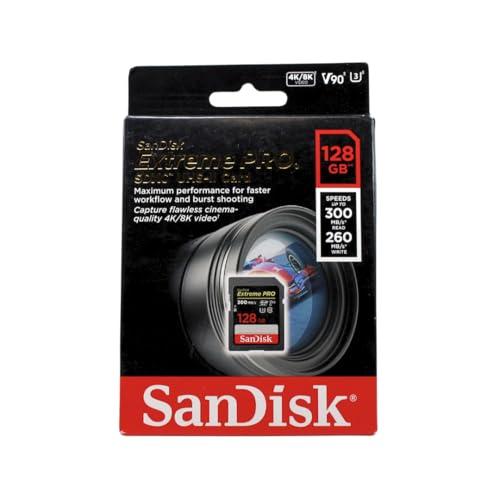
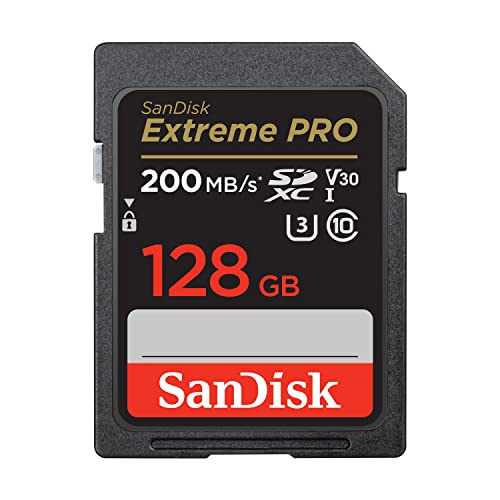
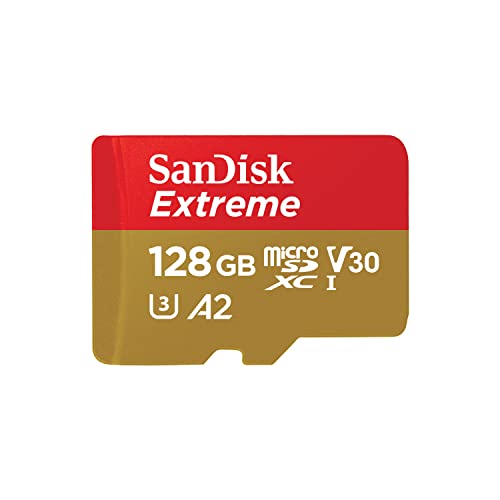
- Best all-rounder: SanDisk Extreme microSDXC UHS-I Card (128GB, SDSQXAA-128G-GN6MA) — Check on Amazon
- Samsung EVO Select microSDXC Card (256GB, MB-ME256KA/AM)
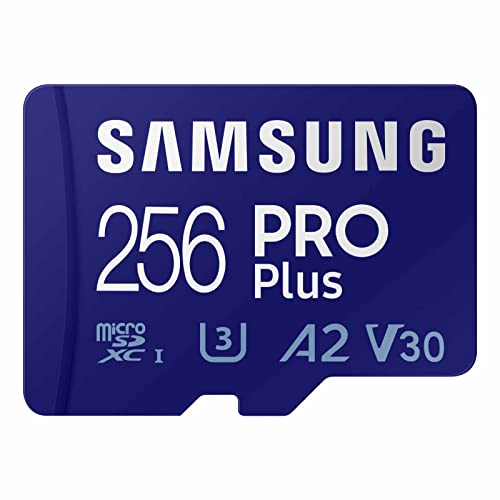
- Samsung PRO Plus microSDXC Card (256GB, MB-MD256SA/AM) — Check on Amazon
- SanDisk Ultra microSDXC UHS-I Card (128GB, SDSQUAR-128G-GN6MA) — Check on Amazon
See 2 more options
- SanDisk High Endurance microSDXC Card (128GB, SDSQQNR-128G-GN6IA) — Check on Amazon
- Kingston Canvas Go! Plus microSDXC Card (A2, V30) — Full U3/V30/A2 rating set from Kingston’s action-camera line; listed here without a purchase link because we could not verify a current listing for it during research — see its review below.
Read the full guide ↓
Disclosure: As an Amazon Associate, ilcastellomenu.com earns from qualifying purchases. Links to Amazon on this page are affiliate links; they cost you nothing extra. Listing details such as price and availability change often, so check the current Amazon listing before you buy.
Searching for the best sd cards for raspberry pi means you are really asking a narrower question than the shelf suggests: which card’s guarantees match what Raspberry Pi actually does with its media? A Raspberry Pi boots its entire operating system from a microSD card — the card is the Pi’s system disk, not removable storage — which makes this the most card-sensitive device in the whole category. This guide answers with six picks whose ratings were verified against manufacturer and retailer specification records — and it labels plainly the picks we could not verify a listing for, rather than linking you to a guess.
Pi performance is random-access performance: the A1 rating is the minimum worth buying and A2 is better where the board and OS use it, while endurance matters for Pis that log data or run servers around the clock, because the OS writes constantly. 32GB is the practical floor for a desktop Pi install, 64GB gives breathing room for projects and data, and capacity beyond that matters only for media-server and retro-gaming builds. Every pick below is judged against those facts first and its packet claims second, because in this category the difference between a card that disappears into the device for years and a card that ruins a day is never the brand on the label — it is whether the certified floor of the card covers the sustained appetite of the device.
Two promises govern everything below. First, no pick is here because of its brand: each earned its place against Raspberry Pi’s stated requirements, and each review shows that working. Second, where the honest answer is that a cheaper or simpler card does the whole job for this device, the guide says so at the top rather than burying it — you will find the value pick named as plainly as the flagship, with the exact duty it should and should not be given.
In this guide
Quick Picks
Short on time, or comparing several options at once? Each row below names a buyer type and the card that suits it, with a link to the listing where we verified one.
| Buyer type | Pick | Why it stands out | Link |
|---|---|---|---|
| Best all-rounder | SanDisk Extreme microSDXC UHS-I Card (128GB, SDSQXAA-128G-GN6MA) | V30 recording, A2 app performance and up to 190MB/s reads in one balanced card | Check on Amazon |
| Best value with full ratings | Samsung EVO Select microSDXC Card (256GB, MB-ME256KA/AM) | Keeps U3, V30 and A2 at a mainstream tier, with a 10-year limited warranty | — |
| Best sustained writes | Samsung PRO Plus microSDXC Card (256GB, MB-MD256SA/AM) | Up to 130MB/s write speed with the full U3/V30/A2 rating set | Check on Amazon |
| Best budget storage | SanDisk Ultra microSDXC UHS-I Card (128GB, SDSQUAR-128G-GN6MA) | 128GB of reputable A1 storage for media, photos and documents | Check on Amazon |
| Best for loop recording | SanDisk High Endurance microSDXC Card (128GB, SDSQQNR-128G-GN6IA) | Rated up to 10,000 hours of recording at 128GB, built for continuous overwriting | Check on Amazon |
| Alternative-brand all-rounder | Kingston Canvas Go! Plus microSDXC Card (A2, V30) | Full U3/V30/A2 rating set from Kingston’s action-camera line | See review below |
How These Picks Were Chosen
The device’s requirements were applied as a filter before any brand was considered: pi performance is random-access performance: the A1 rating is the minimum worth buying and A2 is better where the board and OS use it, while endurance matters for Pis that log data or run servers around the clock, because the OS writes constantly. Cards whose certification did not cover that requirement were excluded or demoted to clearly-labeled light-duty roles, and cards were then ranked on the strength and honesty of their published specifications — certified speed classes first, endurance ratings where the device records continuously, and peak speeds last, because peak speeds describe offloading rather than recording.
We did not use these cards ourselves. We read manufacturer specification pages and Amazon and retailer listing records, cross-checked the numbers that matter — interface, speed classes, app-performance class, endurance ratings and capacities — and favored cards whose makers publish full specifications over those that hide behind marketing words. Every ASIN in this guide was verified against a listing record during research, and every specification printed in the reviews traces to a source recorded in the article’s source notes. Where a card is recommended by reputation and specification but its listing could not be verified, it appears as a prose-only pick with no purchase link, labeled as such.
One filter sat on top of all of that for this article: the Raspberry Pi test. A card earns its place here only if it fits the way this device is actually used — its slot, its recording or loading demands, its capacity ceiling and its owner’s real routine. A technically faster card that the device cannot exploit, or a cheaper card whose floor sits below the device’s appetite, both fail that test, and both kinds of failure are named in the reviews rather than smoothed over.
The 6 Best SD Cards for Raspberry Pi
SanDisk Extreme microSDXC UHS-I Card (128GB, SDSQXAA-128G-GN6MA)
Who it suits: The majority of owners, whose device asks for exactly the U3/V30/A2 combination this card certifies — it is the default recommendation when no special requirement dominates.
The SanDisk Extreme microSDXC is the card most of the devices in this category were effectively designed around: a UHS-I microSDXC with U3 and V30 video ratings and an A2 app-performance rating, with read speeds quoted up to 190MB/s when paired with a reader that supports SanDisk’s QuickFlow technology. That combination — a genuine 30MB/s minimum sustained write floor from the V30 mark, plus A2 random-access performance — is exactly the profile that action cameras, drones, handheld consoles and Android phones all ask for in their support documentation, which is why this card appears on so many manufacturers’ own tested-media lists.
In daily use the Extreme’s strength is balance rather than a single headline number. The V30 floor means a camera or drone writing a continuous 4K stream never outruns the card, the A2 rating means a phone or handheld loading game assets from the card does not stutter over thousands of small files, and the 190MB/s read ceiling means a day of footage comes off the card quickly when you use a QuickFlow-capable reader — with an ordinary UHS-I reader you will see speeds closer to the UHS-I bus limit, which is a property of the reader, not a failure of the card. It ships with a full-size SD adapter, so the same card can move between a microSD device and a laptop or camera with an SD slot.
Judge this card against Raspberry Pi’s actual demands and it lines up cleanly. Pi performance is random-access performance: the A1 rating is the minimum worth buying and A2 is better where the board and OS use it. The specifications that carry that verdict are microSDXC card with UHS-I, U3. Where owners go wrong with this class of card is not speed but matching: they buy a headline number instead of a guarantee. The guarantee here is printed in the class marks, and for this device those marks are the ones that matter — expect the device to simply keep up, session after session, rather than surprises.
- V30 and U3 certification covers 4K video recording in cameras, drones and action cameras.
- A2 app performance suits phones, tablets and handheld consoles that run apps and games from the card.
- Read speeds up to 190MB/s with a QuickFlow-capable reader make offloads fast.
Honest limitation: The headline read speed needs SanDisk’s QuickFlow reader technology; in a standard UHS-I reader or device it behaves like a fast UHS-I card, not a 190MB/s one.
Choose it if you want the rating set that matches this device’s requirements with headroom to spare, from a line with a long track record in exactly this job. Skip it if your device cannot use this card’s strengths — a slower host or a lighter workload is served as well by a lower tier in this guide, and the saving is real.
Samsung EVO Select microSDXC Card (256GB, MB-ME256KA/AM)
Who it suits: Value-conscious owners who refuse to give up the ratings that matter and would rather spend the saving on a second card or more capacity.
The EVO Select is Samsung’s mainstream microSDXC line and the value anchor of this pool: it keeps the ratings that matter — U3, V30 and A2 — and gives up mainly the PRO Plus’s peak write speed, quoting read speeds up to 130MB/s. For the majority of real devices that is no sacrifice at all, because most hosts are limited by their own UHS-I bus and by the V30 sustained floor rather than by a card’s maximum write figure. A Switch loading games, a phone storing photos and apps, a drone recording 4K at standard bitrates — all of them ask for exactly what this card certifies.
Samsung backs the EVO Select with a 10-year limited warranty and the same family of protections as its pricier cards — water, temperature, X-ray, magnet, drop and wear resistance — which makes it an easy card to buy in pairs: one in the device, one as the spare in the case. It is sold as an Amazon-exclusive sibling of Samsung’s EVO Plus line with equivalent ratings, and it includes the SD adapter. If your device records unusually high bitrates or you copy hundreds of gigabytes weekly, the PRO Plus earns its premium; for everything else, this is the sensible default.
In Raspberry Pi specifically, what decides satisfaction is whether the card’s guarantees cover Raspberry Pi’s sustained demands, and this card was certified for exactly that class of work. The card’s microSDXC card with UHS-I, U3 profile is why: sustained performance is a property of the certification, not of the brand, and this rating set lines up with what the device asks of its media. It also inherits the practical virtues of its line — it is sold in the capacities this device actually uses, it is stocked by reputable sellers who turn stock over quickly, and it behaves identically across a matched pair if your setup uses two cards.
- Keeps the full U3/V30/A2 rating set at a mainstream tier.
- 10-year limited warranty and Samsung’s full protection stack.
- 256GB capacity fits large game libraries and long recording days.
Honest limitation: Peak write speed is a step below the PRO Plus, which shows in very long continuous writes and bulk copies rather than in normal recording.
Choose it if this is the card whose guarantees line up with the way you actually use the device, not the way the marketing imagines it. Skip it if you need a different guarantee than this card’s — a higher video class, an endurance rating, or a different form factor — in which case the matching pick above it in this guide is the honest buy.
Samsung PRO Plus microSDXC Card (256GB, MB-MD256SA/AM)
Who it suits: Anyone whose device writes long and hard — 4K recording sessions, big game installs, bulk file copies — and wants the strongest sustained-write claim in this microSD pool.
Samsung’s PRO Plus microSDXC pairs the full U3, V30 and A2 rating set with the strongest sustained-write claim in this microSD pool: up to 130MB/s write alongside up to 180MB/s read at this 256GB capacity, achieved on a plain UHS-I interface without proprietary reader tricks for the write side. Samsung aims the card squarely at the same trio of jobs — Android phones, action cameras and DJI drones — and the specification supports the aim: a V30 floor for 4K streams, A2 random performance for apps and game assets, and enough write pace that long recordings and big file copies do not taper.
Samsung also builds its reputation in this category on its protection stack — the card is rated against water, temperature extremes, X-rays, magnets, drops and wear — and on making its own flash memory in-house, which is why its cards are a common recommendation for devices that live outdoors or in a hot car. The 256GB capacity at this listing is the sweet spot for a drone or action camera that records 4K all day: hours of footage with room to spare, without paying for capacity a single battery cycle can never fill.
For Raspberry Pi, the fit question is precise. Pi performance is random-access performance: the A1 rating is the minimum worth buying and A2 is better where the board and OS use it. This card’s certification — microSDXC card with UHS-I, U3 — meets the requirement with room to spare. In practice that means buffer clears, writes and saves all happen at the speed the device was designed for, not the speed a marginal card imposes, and the card stops being a variable you think about: it either keeps up silently for years, or it was the wrong card and announces itself in the first week. This one is the former, provided the job you give it matches the rating on its label.
- Write speeds up to 130MB/s — the strongest in this microSD pool — suit high-bitrate 4K and long transfers.
- Full U3/V30/A2 rating set covers recording, apps and gaming in one card.
- Samsung’s multi-proof protection design suits outdoor and in-vehicle use.
Honest limitation: The 180MB/s read figure is a ceiling reached under Samsung’s test conditions with a suitable reader; in-device speeds are set by the host’s UHS-I bus.
Choose it if you would rather buy the card once, correctly, than discover the cheap card’s limits in the middle of the work it was bought for. Skip it if the device in question is a light-duty one — a spare, a child’s, a media-only slot — where this card’s headroom would never be exercised.
SanDisk Ultra microSDXC UHS-I Card (128GB, SDSQUAR-128G-GN6MA)
Who it suits: Owners expanding storage for media and files on a device whose own limits sit below this card’s — and who are not asking it to record 4K or loop-record.
The SanDisk Ultra is the budget classic of the microSD world, and this guide includes it with its limits stated plainly: it is a Class 10, U1, A1 card with read speeds up to 100MB/s, and it carries no V30 rating — its sustained-write floor is the U1 minimum of 10MB/s. That profile is honestly sufficient for a defined set of jobs: storing photos, music and documents on a phone, expanding a tablet or Chromebook, holding a game library on older or less demanding handhelds, and recording Full HD video. It is not the card for 4K recording, high-bitrate action cameras or dash cams, and this guide never recommends it for those.
Where the Ultra earns its place is cost per gigabyte and ubiquity. It is the card to buy when the device itself is the bottleneck — a phone whose slot and processor cannot use A2 performance, a media player, a child’s tablet — and when the data on it is replaceable or backed up elsewhere. Its A1 rating still gives it a defined minimum random performance for app loading, a step above unrated budget cards. Buy it for storage expansion, not for recording duty, and it does exactly what its label promises.
Judge this card against Raspberry Pi’s actual demands and it lines up cleanly. Pi performance is random-access performance: the A1 rating is the minimum worth buying and A2 is better where the board and OS use it. The specifications that carry that verdict are microSDXC card with UHS-I, Class 10. Where owners go wrong with this class of card is not speed but matching: they buy a headline number instead of a guarantee. The guarantee here is printed in the class marks, and for this device those marks are the ones that matter — expect the device to simply keep up, session after session, rather than surprises. Read its limitation below before buying: this is the one card in the guide whose ratings deliberately sit a tier lower, and it is recommended only for the lighter duties named in its review.
- Lowest-cost way in this pool to add 128GB of reputable storage.
- A1 rating gives defined app-loading performance for phones and tablets.
- Read speeds up to 100MB/s are fine for media playback and photo libraries.
Honest limitation: No V30 or U3 rating — the U1 sustained floor is not enough for reliable 4K recording, high-bitrate action cameras or loop-recording dash cams.
Choose it if you want the rating set that matches this device’s requirements with headroom to spare, from a line with a long track record in exactly this job. Skip it if your device cannot use this card’s strengths — a slower host or a lighter workload is served as well by a lower tier in this guide, and the saving is real.
SanDisk High Endurance microSDXC Card (128GB, SDSQQNR-128G-GN6IA)
Who it suits: Owners whose device records whenever it has power, and who need a card engineered for write cycles rather than peak speed.
The High Endurance is built for the one job that destroys ordinary cards: writing video continuously, forever. A dash cam or security camera overwrites its card in a loop, and that write cycling — not speed — is what wears flash memory out. SanDisk rates this 128GB card for up to 10,000 hours of recording, and pairs that endurance with U3 and V30 certification so it can sustain Full HD and 4K streams while it does so. Read speeds up to 100MB/s and write speeds up to 40MB/s are modest next to the performance cards in this pool, and deliberately so: the engineering budget went into write-cycle lifespan.
It is also built for where loop-recording devices live — a windshield in summer sun and winter frost, a camera housing outdoors — with temperature, water, shock and X-ray proofing in the listing. If your device records only when you press a button, this card’s talents are wasted and a faster card serves you better. If your device records whenever it has power, this is the category of card its manual is asking for when it says ‘high endurance’, and using a standard card instead is the most common cause of the corrupted-footage failure owners blame on the camera.
In Raspberry Pi specifically, what decides satisfaction is whether the card’s guarantees cover Raspberry Pi’s sustained demands, and this card was certified for exactly that class of work. The card’s microSDXC card with UHS-I, U3 profile is why: sustained performance is a property of the certification, not of the brand, and this rating set lines up with what the device asks of its media. It also inherits the practical virtues of its line — it is sold in the capacities this device actually uses, it is stocked by reputable sellers who turn stock over quickly, and it behaves identically across a matched pair if your setup uses two cards. Its endurance rating — up to 10,000 hours of Full HD recording at this capacity — is the specification that decides its service life in a continuously recording device, and it is the reason this card exists.
- Rated for up to 10,000 hours of loop recording at 128GB — built for write cycling.
- U3/V30 certification sustain Full HD and 4K streams while endurance does its work.
- Temperature, water, shock and X-ray proofing for windshield and outdoor duty.
Honest limitation: Peak speeds are modest — up to 100MB/s read and 40MB/s write — so it is the wrong pick for fast offloads or high-bitrate burst work.
Choose it if this is the card whose guarantees line up with the way you actually use the device, not the way the marketing imagines it. Skip it if you need a different guarantee than this card’s — a higher video class, an endurance rating, or a different form factor — in which case the matching pick above it in this guide is the honest buy.
Kingston Canvas Go! Plus microSDXC Card (A2, V30)
Who it suits: Owners who want the complete rating set from an established independent memory maker, often at a friendlier tier than the flagship brands.
Kingston’s Canvas Go! Plus is the action-camera and drone entry in Kingston’s microSD range: UHS-I with U3, V30 and A2 certification — the same certification set as the linked performance cards in this guide — positioned for 4K action footage and app-heavy Android use. Kingston is one of the longest-established independent memory makers, and its Canvas line is the standard alternative-brand choice when a buyer wants the full rating set without paying the two big brands’ flagship prices.
It is a legitimate member of the shortlist for any microSD use in this category, from GoPro-style cameras to handheld consoles. We list it without a purchase link because a current listing identifier was not corroborated during this research pass; buy it by its exact Canvas Go! Plus name — Kingston also sells the slower Canvas Select Plus line, whose lower ratings make it a different card for recording purposes.
For Raspberry Pi, the fit question is precise. Pi performance is random-access performance: the A1 rating is the minimum worth buying and A2 is better where the board and OS use it. This card’s certification — microSDXC card with UHS-I, U3 — meets the requirement with room to spare. In practice that means game and app assets stream from the card without the stutters that betray a weak random-access rating, and the card stops being a variable you think about: it either keeps up silently for years, or it was the wrong card and announces itself in the first week. This one is the former, provided the job you give it matches the rating on its label.
- Full U3/V30/A2 rating set for recording and apps.
- Established memory maker with a long track record.
- Often the value alternative to the flagship brands.
Honest limitation: Easy to confuse with the slower Canvas Select Plus line — the Go! Plus name must be exact.
Choose it if you would rather buy the card once, correctly, than discover the cheap card’s limits in the middle of the work it was bought for. Skip it if the device in question is a light-duty one — a spare, a child’s, a media-only slot — where this card’s headroom would never be exercised.
Listed without a purchase link: we could not verify a current Amazon listing identifier for this product during research, so it is recommended by name and specification only — buy it by its exact name from a reputable retailer.
Comparison Table
| Product | Form | Key specifications | Link |
|---|---|---|---|
| SanDisk Extreme microSDXC UHS-I Card (128GB, SDSQXAA-128G-GN6MA) | microSD | microSDXC · UHS-I · U3 · V30 · A2 · read up to 190MB/s · SD adapter included | Check on Amazon |
| Samsung EVO Select microSDXC Card (256GB, MB-ME256KA/AM) | microSD | microSDXC · UHS-I · U3 · V30 · A2 · read up to 130MB/s · SD adapter included · 10-year limited warranty | — |
| Samsung PRO Plus microSDXC Card (256GB, MB-MD256SA/AM) | microSD | microSDXC · UHS-I · U3 · V30 · A2 · read up to 180MB/s · write up to 130MB/s · SD adapter included | Check on Amazon |
| SanDisk Ultra microSDXC UHS-I Card (128GB, SDSQUAR-128G-GN6MA) | microSD | microSDXC · UHS-I · Class 10 · U1 · A1 · read up to 100MB/s · SD adapter included | Check on Amazon |
| SanDisk High Endurance microSDXC Card (128GB, SDSQQNR-128G-GN6IA) | microSD | microSDXC · UHS-I · U3 · V30 · read up to 100MB/s · write up to 40MB/s · rated up to 10,000 hours of recording at 128GB · SD adapter included | Check on Amazon |
| Kingston Canvas Go! Plus microSDXC Card (A2, V30) | microSD | microSDXC · UHS-I · U3 · V30 · A2 · aimed at action cameras and drones | See review below |
Reading the Speed Classes Without the Marketing
Every card in this guide carries a small alphabet of marks, and three of them do all the real work. The video speed class — V30, V60, V90 — is a guaranteed minimum sustained write speed in megabytes per second, certified under the SD Association’s testing: it is the only number on the packet that promises what a card will do on its worst day, full and warm, rather than its best. The UHS speed class (U1, U3) is the older version of the same idea, and the application performance class (A1, A2) certifies random read and write operations — the small, scattered accesses that decide how an app, a game or an operating system feels when it lives on the card.
The interface mark — UHS-I or UHS-II — sets the bus ceiling: UHS-I tops out around 104MB/s in standard devices, while UHS-II’s second row of contacts roughly triples the available bandwidth for hosts that have the matching slot. Peak read and write figures printed largest on the packaging are laboratory ceilings measured on empty cards with the maker’s own reader; they describe offload speed, not recording reliability. Buy in this order: the video class your device’s demanding mode requires, the A class if the device runs software from the card, the interface your slot supports, and only then the headline numbers.
Buying Cards Safely: Sellers, Capacities and First Tests
Three habits separate card buyers who lose data from those who do not. First, the seller matters more than the saving: counterfeit and remarked cards concentrate in marketplace listings from unknown sellers at implausible prices, while manufacturer stores and major retailers police their supply. Second, capacity is chosen on the listing page itself — the reviews in this guide name a representative capacity for each card, and most listings offer the same card in several sizes; pick the size your device and workload call for, and re-check the rating marks after changing size, because a few lines rate their smallest capacities lower. Third, test on arrival: fill the card completely with real files, read them back, and only then put it into service.
Prices in this category are deliberately absent from this guide, because they change with the flash market and with promotions faster than any article can track — check the live listing for the current figure. What does not change is the value order: a genuine card one tier down outperforms a counterfeit flagship in every way that matters, and a card bought from a reputable seller carries a warranty that a grey-market bargain quietly does not.
Capacity Discipline: How Working Owners Manage Cards
Experienced owners in every device category in this guide converge on the same system: smaller cards, swapped more often, backed up sooner. A card that holds a whole trip also loses a whole trip; a card that holds one session loses at most one session, and the swap is a natural moment to check that the device is healthy and the footage is good. This is why so many recommendations here land on 128GB even where 512GB exists — not because large cards are unreliable, but because workflow, not silicon, is what protects irreplaceable data.
The second half of the system is labeling and rotation. Cards that look identical get distinguished — a marker dot, a numbered case — so a formatted card is never confused with a full one in the field, and pairs bought together are retired together. None of this costs anything but attention, and it is worth more than any single specification in this guide: the fastest card ever made cannot recover a day that existed only on one piece of flash. Readers comparing adjacent uses should also see Best Sd Cards For Video Recording, which applies the same class-matching method to its own device.
How to Choose
- Start with the slot, not the shelf. Confirm the physical format your device takes — full-size SD or microSD — and its maximum supported capacity, from the manual or the maker’s support page. A card that does not fit the slot or exceeds the device’s supported size is not a bargain at any speed.
- Read the requirement in the device’s own table. Camera and drone makers publish the exact speed class each recording mode needs. That table outranks every review, including this one: buy the class it names for the modes you actually use.
- Do the bitrate arithmetic. Divide a recording mode’s bitrate in megabits by eight to get its appetite in megabytes per second, then choose a video class with headroom above it — V30 above roughly 200Mb/s modes, V60 beyond, V90 for the highest internal modes.
- Match the A rating to software duty. If the device runs apps, games or an operating system from the card, A1 is the floor and A2 is the better experience. If the card only stores media, the A rating is irrelevant and should not drive the price you pay.
- Buy endurance for loop recording, speed for sessions. A device that overwrites continuously needs an endurance-rated card before it needs a fast one; a device that records when you press a button needs the opposite priority. Confusing the two is the most expensive mistake in this category.
- Size capacity from your session, not your ambition. Work out how much a day, a flight, a drive or a shoot actually produces, then buy the card that holds that unit — plus a spare — instead of one card that holds everything you will ever shoot.
- Prefer two cards to one larger card. Two 128GB cards beat one 256GB card for almost every real workflow: one can fail, fill or be offloading while the other works, and dual-slot devices need pairs by design.
- Buy from sellers who police their supply. Choose the manufacturer’s store or a major retailer, check the full model name on the listing, and test any new card with a full write-and-verify before trusting it.
- Format in the device, every time. Let the camera, console or recorder format its own card. It prevents the filesystem mismatches behind many card errors and takes ten seconds.
Common Mistakes
- Buying by headline read speed for a recording job — the packet’s biggest number describes offloads, while the video class describes the guarantee your recording actually lives on.
- Putting a standard card in a loop-recording device. Dash cams and security cameras destroy ordinary flash by overwriting; endurance-rated cards exist precisely for this and cost little more.
- Trusting a too-cheap high-capacity card from an unknown seller. Fake-capacity cards are the category’s endemic fraud and they fail only after your data passes the real silicon.
- Using a microSD card in an adapter as a permanent full-size SD substitute in a demanding camera. Adapters add a contact interface and are a classic source of intermittent errors; buy the native format for critical work.
- Formatting a card on a computer for a device that expects to format it itself — then blaming the card for the resulting errors and missing folders.
- Filling one giant card with an entire trip or job before backing up anything. Capacity is not a backup strategy; swap and offload in sessions.
- Ignoring the device’s stated maximum capacity. Older and simpler devices — trail cameras, recorders, legacy consoles — refuse or mishandle cards larger than their specification, however good the card is.
- Mixing an old, error-prone card into a dual-slot backup setup. Redundancy with a suspect card is redundancy in name only; pairs should be bought and retired together.
Final Recommendation
- Best all-rounder: SanDisk Extreme microSDXC UHS-I Card (128GB, SDSQXAA-128G-GN6MA).
- Best value with full ratings: Samsung EVO Select microSDXC Card (256GB, MB-ME256KA/AM).
- Best sustained writes: Samsung PRO Plus microSDXC Card (256GB, MB-MD256SA/AM).
- Best budget storage: SanDisk Ultra microSDXC UHS-I Card (128GB, SDSQUAR-128G-GN6MA).
- Best for loop recording: SanDisk High Endurance microSDXC Card (128GB, SDSQQNR-128G-GN6IA).
- Alternative-brand all-rounder: Kingston Canvas Go! Plus microSDXC Card (A2, V30).
Our top two for Raspberry Pi are the SanDisk Extreme microSDXC UHS-I Card (128GB, SDSQXAA-128G-GN6MA), for the buyer this article was written for, and the Samsung EVO Select microSDXC Card (256GB, MB-ME256KA/AM), for the owner whose priorities run the other way — maximum guarantee versus maximum value. Between them they cover the two shapes this search usually takes. Readers weighing a neighboring device should also see Best Sd Cards For Mavic Air 2 and Best Sd Cards For Canon 90d, which apply the same verified-spec method to their own requirements.
Whichever pick you choose, run the closing checklist: confirm the form factor and capacity ceiling for Raspberry Pi, confirm the rating marks on the listing match the review, buy from a seller who polices their supply, and test the card fully before it carries anything that matters. In this category, that ten minutes of discipline is the whole difference between storage you forget about for years and storage you remember for the worst reason.
Frequently Asked Questions
What size card should I buy for Raspberry Pi?
Size from the workload, using the arithmetic in this guide: 32GB is the practical floor for a desktop Pi install, 64GB gives breathing room for projects and data, and capacity beyond that matters only for media-server and retro-gaming builds. Whatever size you choose, this guide’s working rule applies — one card per session unit, plus a spare, beats one card sized for everything, because the swap is also your backup moment.
Does a faster card make Raspberry Pi perform better?
Up to the device’s own ceiling, and not beyond it. A card slower than the requirement causes real harm — stopped recordings, shortened bursts, slow-card warnings — but once the card’s guarantees cover the device’s demands, extra speed shows only in file offloads through a fast reader. The interface matters too: the interface here is UHS-I, so a UHS-II card would work but run at UHS-I speed — the best UHS-I card is the performance ceiling.
What do V30, V60 and V90 actually guarantee?
They guarantee minimum sustained write speed — 30, 60 and 90 megabytes per second respectively — under the SD Association’s certification testing, including on a card that is full and fragmented. That worst-case promise, not the peak speed on the packet, is what recording modes are specified against, and it is why device makers name a V class rather than a brand in their manuals.
Can I use a microSD card in a full-size SD slot with an adapter?
Mechanically yes — most microSD cards in this guide include the adapter — and for light duty it works well. For critical recording this guide recommends the native full-size format: the adapter adds a second set of contacts that can wear, collect dust and introduce intermittent errors, and some device makers exclude adapter use from their tested-media lists for exactly that reason.
Why does my device say the card is slow or throw a card error?
Work through the causes in order: the card’s class may be below the mode you selected (check the recording table); the card may be formatted for another device (reformat it in this one, after backing up); the card may be nearly full and fragmented (offload and format); or the card may be failing or counterfeit (test it fully on a computer). A card that still errors after a device format and a full test has told you its answer — replace it.
How long does a memory card last?
It depends on the writing it does. A card holding photos or a game library, written rarely, can serve for many years; a card being overwritten continuously lives on an endurance budget, which is why loop-recording cards publish hour ratings and why this guide matches endurance cards to those devices. Heat, rough handling and being run permanently at 100% full all shorten any card’s life.