Where to buy
Check the latest price, availability and delivery on Amazon. Orders are placed on Amazon. We may earn a commission from qualifying purchases.
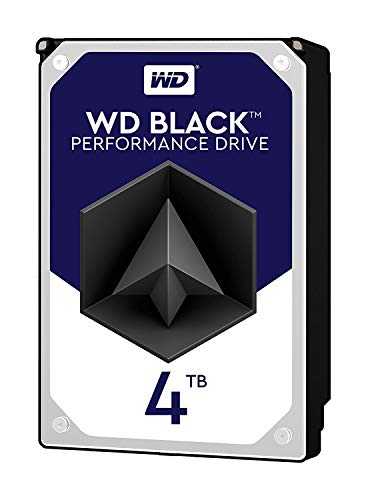
- Best performance internal: WD Black 4TB Performance Internal Hard Drive (WD4005FZBX) — Check on Amazon
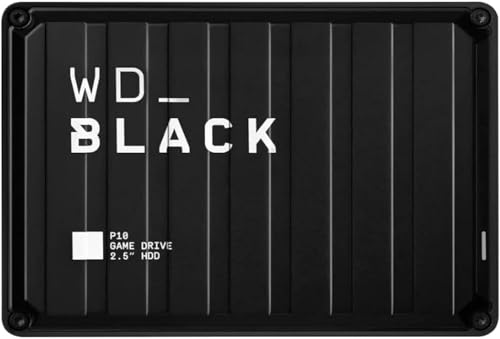
- Best for game libraries: WD_BLACK 5TB P10 Game Drive (WDBA3A0050BBK-WESN) — Check on Amazon
- Best mainstream internal: Seagate BarraCuda 2TB Internal Hard Drive, 3.5-inch (ST2000DM008) — Check on Amazon
- Best internal console/laptop upgrade: Seagate FireCuda 2TB Solid State Hybrid Drive, 2.5-inch (ST2000LX001) — Check on Amazon
- Best speed reference (SSD): Samsung T7 Portable SSD (prose-only reference) — prose-only reference in this guide (no verified listing link; see the review below for how to judge it)
- Best full-featured portable: WD 5TB My Passport Portable External Hard Drive (WDBPKJ0050BBK-WESN) — Check on Amazon
Read the full guide ↓
Disclosure: As an Amazon Associate, ilcastellomenu.com earns from qualifying purchases. Links to Amazon on this page are affiliate links; they cost you nothing extra. Listing details such as price and availability change often, so check the current Amazon listing before you buy.
Searching for the best ssd hard drives for gaming means you have a specific job in mind, and this guide treats that job — not a generic storage ranking — as the thing being bought. The six picks below were chosen for the ‘ssd hard drives for gaming’ brief specifically: each one is matched to a real role inside it, labelled with the buyer it suits, and judged on the specifications its maker publishes and our research verified. Where the brief contains a trap — a console rule, a formatting catch, a category that no longer exists — this guide names the trap in plain language rather than selling you past it.
PC gaming storage has an honest hierarchy this guide will not blur: SSDs run modern games best and some now require them, while hard drives remain the right home for the library, the backlog and everything not being played this week. ‘SSD hard drive’ keywords are answered with that distinction stated, not exploited. Every linked pick below carries an Amazon listing our research corroborated against manufacturer or retailer specification records; picks we could not verify that way are named prose-only, with the reasoning shown, because an honest guide’s links should be exactly as trustworthy as its words. Prices are never printed here — they move too often to print responsibly — so linked picks say check price on Amazon, and prose-only picks are positioned by tier in words instead.
In this guide
Quick Picks
Short on time, or comparing several options at once? Each row below names a buyer type and the option that suits it, with a link to the listing where one is verified.
| Buyer type | Pick | Why it stands out | Link |
|---|---|---|---|
| Best performance internal | WD Black 4TB Performance Internal Hard Drive (WD4005FZBX) | 256MB cache and performance tuning — the strongest mainstream mechanical desktop formula | Check on Amazon |
| Best for game libraries | WD_BLACK 5TB P10 Game Drive (WDBA3A0050BBK-WESN) | 5TB of game-first storage in a portable, console-friendly enclosure | Check on Amazon |
| Best mainstream internal | Seagate BarraCuda 2TB Internal Hard Drive, 3.5-inch (ST2000DM008) | 7200 RPM and a 256MB cache make it the liveliest mainstream desktop HDD formula | Check on Amazon |
| Best internal console/laptop upgrade | Seagate FireCuda 2TB Solid State Hybrid Drive, 2.5-inch (ST2000LX001) | The only internal 2.5-inch format here that accelerates repeated loads with a learned flash cache | Check on Amazon |
| Best speed reference (SSD) | Samsung T7 Portable SSD (prose-only reference) | Several times faster than any mechanical portable for active work | Prose-only reference |
| Best full-featured portable | WD 5TB My Passport Portable External Hard Drive (WDBPKJ0050BBK-WESN) | 5TB is the largest mainstream portable HDD capacity — one drive can be the whole household archive | Check on Amazon |
How These Picks Were Chosen
The brief was applied as a filter before any product was admired: for best ssd hard drives for gaming, a pick had to fit the stated use honestly — the right form factor, the right interface, the right duty class — before its capacity or brand counted for anything. Products that failed the brief’s real constraints were excluded however popular they are, and products whose premises the brief gets wrong are discussed as corrections, not picks. Check the current price on Amazon before you buy, as listing prices change often and a product’s position in its tier moves with them.
We did not use these products ourselves. We read manufacturer specification pages and Amazon listings, cross-checked the numbers that matter — capacity, interface, form factor, rotational speed or recording technology where relevant, cache, warranty and included accessories — and favoured products whose makers publish full specifications over those that hide behind marketing words. Every ASIN in this guide was verified against a live listing record during research, and every specification printed in the reviews traces to a manufacturer or retailer source recorded in the article’s source notes. Where a category has faded or a premise has expired, the article says so and shows its working.
The 6 Best SSD Hard Drives For Gaming
WD Black 4TB Performance Internal Hard Drive (WD4005FZBX)
Who it suits: Gamers and creators who want the strongest mechanical desktop drive WD makes: more cache, performance tuning and a longer warranty outlook than mainstream drives.
The WD Black line is Western Digital’s answer to a fair question: if a desktop must have a spinning drive, what does the best version of that drive look like? The answer here is a 4TB, 7200 RPM platter paired with a full 256MB of DRAM cache — double the mainstream formula — and firmware tuned for sustained desktop performance rather than power saving. WD positions the Black family for gamers, digital artists, video editors and photographers, and the positioning is credible: this is the drive for a game library you actually play from, or a photo archive you actually browse, inside a tower.
Two ownership details separate it from the BarraCuda class. First, the cache and tuning make a genuine difference to the mixed, bursty workload of a working desktop — many small reads among large ones — even though no HDD escapes mechanical seek physics. Second, the Black family historically carries WD’s longest HDD warranty tier, which signals how the maker itself rates the drive’s intended service life; check the current listing for the exact term before buying. It costs more per terabyte than mainstream drives, and the honest buyer question is whether the drive will be a working volume (buy the Black) or a cold archive (save the difference and buy capacity).
- 256MB cache and performance tuning — the strongest mainstream mechanical desktop formula
- 4TB is a generous single-drive game library or creative archive
- Built and positioned for working volumes, not just cold storage
Honest limitation: A premium per terabyte over mainstream desktop drives, and still mechanical: an SSD remains far faster for active game installs.
Choose it if your internal HDD will be a working drive — games played from it, media edited against it — not just an archive. Skip it if the drive will mostly sit full and idle; mainstream capacity is the smarter spend there.
WD_BLACK 5TB P10 Game Drive (WDBA3A0050BBK-WESN)
Who it suits: Console and PC gamers who need a library drive: room for a whole collection, built and badged for game storage rather than office backup.
The P10 exists because game installs outgrew console storage years ago. Five terabytes swallows a serious library — the maker’s own framing talks in terms of well over a hundred games depending on size — and the drive is built for the life game storage actually lives: plugged into a console permanently, or carried between a desk PC and a living-room console with the library intact. The enclosure is tougher-feeling than office portables, all black angles and WD_BLACK branding, and the listed transfer ceiling of up to 130MB/s is the honest top end of what its platter can stream.
The compatibility conversation needs precision, and this guide gives it in every console article below: on PlayStation 5 and Xbox Series X|S, external USB drives store current-generation games but cannot play them — those titles must live on internal or officially expanded storage — while PlayStation 4 and Xbox One games play directly from a drive like this. On PS4, Xbox One and PC, the P10 is a play-from drive in the full sense. That makes it most valuable exactly where most libraries actually are: last-generation collections, backlogs, and PC game folders that do not need SSD speed to be enjoyable.
- 5TB of game-first storage in a portable, console-friendly enclosure
- Listed for PlayStation, Xbox, PC and Mac, so one library drive can follow you across platforms
- Rugged styling and build intended for permanent console duty or regular travel
Honest limitation: It is still a mechanical drive: PS5 and Xbox Series X|S games can be stored on it but must be moved to internal storage to play, and load times are HDD load times.
Choose it if your problem is library size, not load speed — a backlog that no longer fits the console. Skip it if you only play current-generation titles and expect to launch them from external storage; no USB HDD can do that.
Seagate BarraCuda 2TB Internal Hard Drive, 3.5-inch (ST2000DM008)
Who it suits: Desktop builders who need honest internal bulk storage — a second drive for games, media and backups inside a PC tower.
The BarraCuda is the default internal hard drive of the desktop world: a 3.5-inch, 7200 RPM, SATA drive with a 256MB cache, sold in enormous numbers for the unglamorous job of being a PC’s big second volume. That job description matters. In a modern build the BarraCuda is not where Windows or your most-played game should live — solid-state storage owns the boot drive role — it is where the other two terabytes live: the game backlog, the video folder, the local backup target, the downloads directory that never gets cleaned.
At 7200 RPM it is quicker across the platter than the 5400 RPM class drives in NAS and portable products, which makes it the right default for a desktop that will actually read and write it all day. It is a CMR-era mainstream desktop design from Seagate’s long-running family, it installs with two cables and four screws, and every operating system already knows what to do with it. One caution belongs in every internal-drive article: desktop drives are rated for desktop duty — powered-on hours at a desk, not years of 24/7 vibration in a multi-bay NAS — and the NAS articles in this category point you to Red Plus and IronWolf drives for that different job.
- 7200 RPM and a 256MB cache make it the liveliest mainstream desktop HDD formula
- The standard 3.5-inch SATA format fits virtually every tower case and older desktop
- Ideal economics for a bulk second volume beside an SSD boot drive
Honest limitation: Not rated for 24/7 NAS or RAID duty, and no mechanical drive matches an SSD for boot and load responsiveness.
Choose it if you are adding bulk storage inside a desktop PC and want the mainstream, proven option. Skip it if you are populating a NAS or building RAID — choose a NAS-rated drive from this guide instead.
Seagate FireCuda 2TB Solid State Hybrid Drive, 2.5-inch (ST2000LX001)
Who it suits: PS4 and laptop owners replacing an internal 2.5-inch drive who want HDD capacity with a flash cache that learns their most-used data.
The FireCuda SSHD is the most interesting drive in this guide because it is two storage technologies negotiating. Underneath, it is a 2TB 2.5-inch mechanical drive in the slim format a PlayStation 4 or a laptop bay accepts. On top sits 8GB of NAND flash that the drive’s firmware fills, over time, with the data you request most — boot files, a favourite game’s core assets — so repeated tasks accelerate toward solid-state feel while one-off bulk data runs at platter speed. Seagate built this line for exactly the console-and-laptop upgrade moment, and for years it was the default PS4 internal upgrade recommendation for good reason.
The honesty notes matter. The flash cache learns, which means the first run of anything is a hard-drive run; the benefit appears on the second, third and tenth launch. The 2TB capacity is the ceiling of this slim hybrid format, and the drive’s mechanical heart carries mechanical risks — it should be backed up like any HDD. Availability also deserves a mention: this is an older product line, listings come and go, and a healthy listing from a reputable seller matters more than squeezing the last few percent of value. Where it is in stock at a sane position in the market, it remains the most characterful internal upgrade a PS4 or an ageing laptop can get.
- The only internal 2.5-inch format here that accelerates repeated loads with a learned flash cache
- 2TB doubles or quadruples a stock PS4 or laptop drive in the same physical bay
- SATA 6Gb/s interface drops into PS4, PS4 Slim, PS4 Pro and standard laptop bays
Honest limitation: Cache benefits need repetition to appear, the line is older so listings vary, and it is still mechanical — back it up.
Choose it if you are opening a PS4 or laptop to replace its internal drive and want capacity plus a learning speed boost. Skip it if you want guaranteed SSD speed on every load — that is a solid-state drive’s job, at solid-state capacity economics.
Samsung T7 Portable SSD (prose-only reference)
Who it suits: Buyers whose real need is speed — active editing, game launches — rather than capacity per purchase.
Every hard-drive guide owes its readers this signpost: if the work is active — editing video from the drive, launching current games, shuttling project files daily — a portable SSD does it at several times a mechanical drive’s speed, silently, with no platter to protect from bumps. The T7 family is the market’s reference point for that class. It is named here without a link because this guide’s research pass verified hard-drive listings, and it will not guess at an SSD listing’s identity.
The trade is capacity economics: solid-state storage costs several times more per terabyte than the spinning drives in this guide, which is why the rational setup so many readers land on is both — an SSD for the active set, an HDD from this guide for the archive behind it. Read the SSD mentions in these articles as routing advice, not as a pick with a price attached.
- Several times faster than any mechanical portable for active work
- No moving parts — silent and far more drop-tolerant
- Tiny pocket format
Honest limitation: Far higher cost per terabyte than HDDs, and named here prose-only — check the current listing carefully before buying.
Choose it if speed on active files is the actual requirement. Skip it if your need is bulk capacity — the HDDs in this guide deliver it for a fraction per terabyte.
WD 5TB My Passport Portable External Hard Drive (WDBPKJ0050BBK-WESN)
Who it suits: Buyers who want the fullest feature set in a portable HDD: the largest common portable capacity, real hardware encryption and proper backup software.
The My Passport is what the Elements deliberately is not. Where the Elements is a bare volume, the Passport wraps 5TB of storage in a proper ownership experience: WD’s backup software with the ransomware-defense positioning the listing describes, password protection backed by 256-bit AES hardware encryption, and a three-year limited warranty that outlasts the budget portables by a year. The 5TB capacity is the ceiling of the mainstream 2.5-inch portable class, and it changes what a portable drive is for — at 5TB it stops being an overflow drive and becomes the archive itself, holding a household’s photos, videos and backups in one pocketable object.
That capacity comes with a physical note: 5TB portables are a little thicker and heavier than their 2TB siblings — the listing puts this one at about 4.22 by 2.95 by 0.75 inches and 7.4 ounces — because more platters live inside. Speeds remain mechanical portable speeds; the encryption, notably, does not slow copies in any way you will feel, because it happens in hardware. The honest trade is complexity: the password system means a forgotten password is a locked drive with no back door, which is exactly what encryption should mean, and exactly why the setup screens deserve your full attention for five minutes.
- 5TB is the largest mainstream portable HDD capacity — one drive can be the whole household archive
- 256-bit AES hardware encryption with password protection, rare among mechanical portables
- Bundled backup software and a longer three-year warranty as listed
Honest limitation: A forgotten password means a permanently locked drive by design, and the thicker 5TB enclosure is less pocketable than 2TB models.
Choose it if you want one portable drive to be the archive, with encryption and backup software included rather than improvised. Skip it if you prefer a bare volume with no software layer, or your data is small enough that 2TB is generous.
Comparison Table
| Product | Type | Key specifications | Link |
|---|---|---|---|
| WD Black 4TB Performance Internal Hard Drive (WD4005FZBX) | Internal HDD, 3.5-inch SATA | 4TB · SATA 6Gb/s · 7200 RPM · 256MB cache · 3.5-inch · performance-class desktop HDD | Check on Amazon |
| WD_BLACK 5TB P10 Game Drive (WDBA3A0050BBK-WESN) | Portable external HDD for gaming, 2.5-inch | 5TB · USB 3.2 Gen 1 · speeds up to 130MB/s as listed · PlayStation, Xbox, PC and Mac compatible as listed · rugged game-drive enclosure | Check on Amazon |
| Seagate BarraCuda 2TB Internal Hard Drive, 3.5-inch (ST2000DM008) | Internal HDD, 3.5-inch SATA | 2TB · SATA 6Gb/s · 7200 RPM · 256MB cache · 3.5-inch desktop form factor | Check on Amazon |
| Seagate FireCuda 2TB Solid State Hybrid Drive, 2.5-inch (ST2000LX001) | Internal SSHD, 2.5-inch SATA | 2TB · SATA 6Gb/s · 2.5-inch 7mm-class · 8GB NAND flash cache · 128MB cache as listed · hybrid SSHD | Check on Amazon |
| Samsung T7 Portable SSD (prose-only reference) | Portable SSD | Solid-state · USB 3.2 Gen 2 · pocket format · capacity varies by listing | Prose-only reference |
| WD 5TB My Passport Portable External Hard Drive (WDBPKJ0050BBK-WESN) | Portable external HDD, 2.5-inch | 5TB · USB 3.2 Gen 1 / USB 3.0 · 256-bit AES hardware encryption · password protection · backup software with ransomware defense as listed · 3-year limited warranty as listed | Check on Amazon |
Games Are Big, SSDs Are Fast, Hard Drives Are Huge: The PC Gaming Compromise
Modern game installs have outgrown every storage plan made before them, and the PC gaming articles in this category start from the compromise the whole hobby has adopted: a fast SSD holds the current rotation — the games being played now, especially current-generation titles whose engines stream assets at solid-state speed and in some cases list an SSD as a requirement — while a capacious hard drive holds the library: the backlog, the older titles, the mods archive and the games that will rotate back in. The hard drive’s transfer speed is irrelevant to a game that is not running; its capacity is the entire point.
Inside the case, that library drive is a 3.5-inch internal like the WD Black or BarraCuda in this guide — always attached, no desk clutter, bought once and forgotten. Outside the case, the P10 portable plays the same role for gamers who move between machines or share a library with a console. What these articles refuse to do is promise that a hard drive will load a modern game like an SSD: load times and asset streaming are mechanical physics, and the honest guide says the HDD is where games wait, beautifully and cheaply, for their turn on the fast drive.
A Note on Prices and Listings in This Category
Storage is one of the most promotion-driven categories sold online: the same drive moves between list price and sale price across the year, capacities of the same family are listed separately, and marketplace sellers come and go around the maker’s own listing. That is why this guide prints no product prices and sends you to the live listing for the current number — a printed price would be wrong more often than right, and a wrong price helps no one. When you check a listing, confirm the full model code (the letters and numbers after the family name decide capacity, recording technology and warranty), confirm the drive is sold new by a seller you trust, and confirm what the box includes — cable, adapter, software — because bundles vary by listing even for the same drive.
The 2.5-Inch Ceiling and Other Physical Truths of Portable Storage
Portable hard drives share a physical secret: the 2.5-inch platter format tops out at capacities the desktop format passed years ago, which is why the largest portables in this guide sit at 5TB while desktop drives run to several times that. Platter density, platter count and enclosure thickness set the ceiling, and the thicker body of a 5TB portable beside its 2TB sibling is that physics made visible. Buyers choosing between them are really choosing between pocketability and capacity, and both choices are respectable.
The same physics explains portable drives’ other shared traits: they sip power because their platters are small, they dislike drops because their heads park close to delicate surfaces, and their speeds cluster together because the format, not the brand, sets the pace. Understanding the format turns marketing back into engineering — and engineering, unlike marketing, can be compared honestly across every pick in this guide.
Organising a Drive Library So Future-You Says Thank You
Drives multiply, and an unlabelled multiplication is a future archaeology project. The owners who retrieve files effortlessly in five years run a boring system: every drive labelled on its spine or enclosure with a name, a date and a one-line description of contents; a simple index — a note, a spreadsheet, anything searchable — recording what lives where; and a naming convention for folders that sorts by year and project rather than by the mood of the day the folder was made.
This is not fussiness; it is the difference between storage and a pile. A backup you cannot search is a rumour, and an archive without an index is a very expensive paperweight with a USB port. The drives in this guide provide the terabytes — the labelling, dating and indexing are the cheap human layer that makes the terabytes worth owning, and the day to start it is the day the drive arrives, while you still remember what you copied onto it.
Power Users’ Habits: Spin-Down, Spares and Cold Storage
Experienced drive owners share three habits worth copying. They let drives spin down when idle rather than forcing constant rotation — modern power management exists because bearings and motors wear by the hour, and a backup drive that sleeps between jobs outlives one that performs for an empty room. They keep a spare: one empty drive, still in its wrapper, sized to rescue the largest volume they own, because the time to buy a rescue drive is before the failure, not during it.
And they practise cold storage properly: important drives stored disconnected, in a cool dry place, in anti-static protection, labelled — and spun up once or twice a year to keep mechanisms free and to verify the data still reads. A drive treated this way is an archive medium measured in decades of careful habit; the same drive left spinning in a hot cupboard is a countdown. The hardware in this guide is capable of either fate, and the habits decide which.
When to Retire a Drive Before It Retires Your Data
Every drive in this guide will one day be retired, and the craft is choosing the day yourself. The signals form a ladder: a SMART warning or a growing reallocated-sector count means copy everything off this week; new clicking, scraping or spin-up retries mean copy the most precious files first, today, in case the drive is living its final hours; a drive that vanishes from the system intermittently is already telling you its electronics are failing, and no cable swap that ‘fixes’ it changes the diagnosis.
Retirement itself has a protocol the erasure articles in this category detail: sanitise before the drive leaves your hands — overwrite, firmware erase, or destruction for the drives that cannot be wiped. What retiring owners should never do is the two commonest endings: the drawer of unwiped drives that becomes a data breach waiting for a house move, and the ‘one last job’ that a dying drive is given because it still spins. Drives end; data should not end with them.
Drive Speeds in Plain Language: What the Numbers on the Box Predict
Storage marketing loves numbers that sound comparable but are not: an interface speed is the width of the road, not the speed of the car, and a USB generation several times faster than any platter changes nothing about how fast a hard drive actually copies. What predicts a hard drive’s real pace is its mechanics — platter density, rotational speed and whether the file is one large stream or ten thousand small ones. Large sequential copies are every drive’s best case; small-file work is every drive’s confession.
This is why the reviews in this guide describe behaviour instead of quoting laboratory peaks: steady on archives, unhurried on small files, silent about miracles. A buyer who understands that interface numbers describe the cable and mechanical numbers describe the drive will never be disappointed by a hard drive again — and will know exactly which jobs to hand to solid-state storage instead, without needing a benchmark chart to tell them.
The Desk Test: Living With Your Storage for a Year
Specifications describe a drive’s first day; ownership is decided by its three-hundredth. The desk test this guide applies asks what the drive demands of your space and habits across a year: a desktop external claims a power socket and a permanent footprint, and repays it by never needing to be found, plugged in or thought about. A portable claims nothing and is therefore always somewhere else when the backup should run — unless its owner has the discipline of a ritual, same day, same drawer, same cable.
Neither shape fails the test inherently; owners fail it by buying the shape their habits cannot support. The traveller with a desktop drive leaves it behind; the homebody with a portable loses it in a bag. Match the drive to the life that will actually be lived around it — the articles in this category keep returning to this test because it predicts satisfaction more reliably than any specification either of us can quote.
Data Recovery: What It Is, What It Costs, and Why It Is Not a Plan
When a drive dies with the only copy of something precious on it, data recovery becomes the most emotional purchase in computing. The honest outline: professional labs open drives in clean environments, image failing platters with specialised hardware, and charge for the attempt and the outcome at levels that dwarf the drive’s original cost — sometimes modestly, sometimes spectacularly, depending on the failure. Services bundled with some drives in this guide soften exactly this moment, which is why the archive and backup articles weight them.
But recovery is a lottery ticket held by people who already lost, not a strategy. Its success is never guaranteed, its timeline is weeks, and its bill arrives regardless. Every article in this category is, beneath its keyword, an attempt to keep you out of that laboratory: two copies, on two devices, with one somewhere else. The arithmetic costs a second drive; the alternative costs whatever the lab says it costs.
Reading a Storage Listing Like an Engineer
A drive listing is a legal document wearing a costume, and the engineer’s way of reading one takes ninety seconds. Find the full model code and search the maker’s datasheet for it — the datasheet, not the listing, states recording technology, workload rating and warranty without adjectives. Check which capacity in the family the listing actually sells, because family photographs show siblings. Read the warranty term and the seller’s identity as one fact: a long warranty from a vanishing seller is a short warranty.
Finally, treat superlatives as noise and absences as signal. A NAS drive whose listing never mentions CMR, a hub whose adapter wattage is nowhere stated, a safe whose certification is described but never numbered — each silence is the specification the seller hopes you will not need. The guides in this category were built by reading listings this way, and the habit, once learned, protects every technology purchase after this one.
One System, Many Copies: How the Pieces in This Guide Fit Together
Read across this whole category and a single architecture keeps assembling itself: a fast place for active work, a capacious place for the library, a dedicated place for the backup, and a protected place — a case, a safe, another building — for the copy that survives the worst day. The drives, hubs, cases and safes in these articles are components of that architecture, and they were chosen to compose: the portable that travels in the case, the desktop drive that lives in the safe’s shadow as the backup target, the hub that powers the shelf without starving it.
No single purchase completes the system, and that is the point. Storage bought as a system fails one component at a time, gracefully, with copies standing behind it; storage bought as a single heroic drive fails all at once. Start wherever your keyword brought you — most readers start with the drive — and then walk the architecture: where is the second copy, what protects it, what powers it, and what happens on the worst day. Answer those four questions and you own a system, not a gadget.
The Capacity Question: How Much Storage Do You Actually Need?
Capacity planning is where hard-drive purchases succeed or fail quietly. The method that works is inventory, not intuition: add up what you store now — system backups, photos, video, games, media — then double it, because libraries grow into their containers and a drive bought at exactly today’s size is a drive replaced next year. Game libraries and video archives deserve the harshest arithmetic, growing by tens or hundreds of gigabytes per title or project; photo libraries grow slower but live forever, which argues for archive-grade headroom instead.
There is a second, subtler capacity rule: a drive should not live nearly full. Filesystems fragment, backup histories shorten, and the day you need to restore or reorganise is the day free space becomes the tool you forgot to buy. Owners who keep a third of every drive in reserve find their storage boring in the best way — it simply never becomes the emergency. Boring is the goal of every purchase in this guide.
Noise, Heat and Power: The Ownership Specs Nobody Lists First
A hard drive is a small mechanical ecosystem, and living with one is a sensory experience the spec sheet understates. Spindle speeds set the tone — literally: 7200 RPM drives carry a faint whine and click audibly on seeks, 5400-class drives murmur, and a multi-drive NAS composes these into a room’s background hum that placement — a cupboard, a utility shelf, another room — usually solves. Desktop externals add a power adapter to the furniture plan; portables vanish into bags and drawers, which is half their appeal.
Heat is the quieter concern. Drives in open air or ventilated enclosures live their full rated lives; drives stacked hot in sealed cupboards age early, and large counts of desktop externals deserve the same airflow thinking as a small server. None of this should frighten a buyer — it should inform placement. Put the drive where air moves, where its sound is welcome or absent, and where its cable reaches without strain, and the mechanical century-old technology inside will repay the courtesy with years of unremarkable service.
Warranties, Rescue Services and What They Really Promise
Drive warranties are worth reading as engineering signals rather than marketing garnish. A mainstream portable’s shorter term, a My Passport’s longer one, a NAS drive’s three years with workload ratings attached — each term is the maker pricing its own confidence in the mechanism’s intended duty. Rescue and data-recovery services, offered on several Seagate lines in this guide, are the other ownership instrument: not a promise your data survives, but a professional attempt, in a lab, when a drive dies with something irreplaceable on it.
Neither instrument replaces a backup, and this guide’s refrain applies with full force here: the warranty replaces the drive, not the data. What the longer-warranty, recovery-backed drives genuinely buy is a maker’s confidence matched to heavier duty — which is why the NAS and archive articles weight them, and why a backup drive’s warranty matters more than a scratch drive’s. Buy the term that matches the data’s importance, register the drive while it is healthy, and keep the receipt where future-you can find it.
SMART, Backups of Backups, and Knowing a Drive Is Dying
Hard drives usually announce their deaths in advance, in a telemetry language called SMART that every operating system and drive utility can read. Reallocated sectors, pending sectors, rising error counts — these are the drive telling you its surface is failing in slow motion, and the correct response is always the same sequence: copy the data off now, in priority order, while copying is still easy; replace the drive; and let the old one retire or be wiped without a second thought. Owners who check SMART on a schedule — NAS systems do it automatically and email the results — almost never lose data to a drive that ‘died without warning’.
That discipline completes the philosophy running through this whole category: drives are consumables with excellent manners, announcing their limits in specifications and their failures in telemetry, and the owner’s job is simply to listen and to keep copies. Every article in this guide, whatever its keyword, is ultimately about arranging your storage so that any single drive’s worst day is a shopping trip rather than a bereavement.
How to Choose
Choosing well for best ssd hard drives for gaming is mostly a matter of answering the brief’s own questions in the right order — constraints first, capacity second, brand last. These are the checks that decide satisfaction, in the order this guide applies them:
- Put the games you are actively playing on solid-state storage; buy the hard drive for the library’s size.
- Check each big title’s stated storage requirements — SSD-required games are no longer rare.
- Size the library drive for the collection you are actually building toward, not this month’s installs.
- Price the whole setup: cables, adapters, a case or a second copy may belong in the same purchase as the drive itself.
- Check the interface against your machine before anything else — USB generation for externals, SATA for internals — and keep the cable the drive ships with.
- Read the warranty term as the maker’s own duty rating, and match it to how hard the drive will work.
- Prefer CMR recording wherever RAID or NAS duty is anywhere in the drive’s future.
- Plan where the drive will live — desk, bag, enclosure, console shelf — and let that placement veto unsuitable shapes.
Common Mistakes
- Buying a hard drive as the sole home for SSD-required modern games and blaming the drive for the result.
- Paying SSD prices for archive capacity the library does not need — or HDD prices for speed it cannot give.
- Deleting and re-downloading games weekly instead of shelving them on a library drive.
- Assuming a bigger number on the box — RPM, interface generation, cache — automatically means a better drive for your actual job.
- Leaving a new drive in a drawer ‘for later’ while the old, failing drive keeps working unbacked-up.
- Ejecting nothing, ever: pulling USB drives mid-write is how filesystems earn their corruption.
- Storing drives in heat, damp or dust and expecting rated lifetimes to apply anyway.
Final Recommendation
- Best performance internal: WD Black 4TB Performance Internal Hard Drive (WD4005FZBX).
- Best for game libraries: WD_BLACK 5TB P10 Game Drive (WDBA3A0050BBK-WESN).
- Best mainstream internal: Seagate BarraCuda 2TB Internal Hard Drive, 3.5-inch (ST2000DM008).
- Best internal console/laptop upgrade: Seagate FireCuda 2TB Solid State Hybrid Drive, 2.5-inch (ST2000LX001).
- Best speed reference (SSD): Samsung T7 Portable SSD (prose-only reference).
- Best full-featured portable: WD 5TB My Passport Portable External Hard Drive (WDBPKJ0050BBK-WESN).
Our top two for this brief are the WD Black 4TB Performance Internal Hard Drive (WD4005FZBX), for the buyer this article was written for, and the WD_BLACK 5TB P10 Game Drive (WDBA3A0050BBK-WESN), for the household whose priorities run the other way. Between them they cover the two shapes this search usually takes: the maximum version of the thing itself, and the maximum value from the simpler version of it. Readers weighing a neighbouring brief should also see Best Hard Drives For Ps3 and Best Company For Hard Drives, and anyone still deciding what shape of storage they need can start with Best Hard Drives For Ps4 Slim. Check the live price before you order, measure the space the drive must live in, and buy the pick whose honest limitation you can live with — that last test has never failed a buyer in this category.
Frequently Asked Questions
Do modern PC games need an SSD?
Some now list an SSD as a minimum or recommended requirement, and open-world titles built around fast asset streaming genuinely run better from one. Many games — especially older and less demanding ones — still run acceptably from a hard drive. The standard solution is both: SSD for current titles, a large hard drive from this guide for the library behind them.
Is a hybrid SSHD a good gaming compromise?
It is a real one, within limits. The FireCuda SSHD’s flash cache learns your most-played games and menus and accelerates their repeated loads, while its 2TB of platter holds far more than an SSD at similar cost. First loads remain hard-drive loads; the benefit grows with repetition, which suits a main game played daily.
Internal or external for a PC game library?
Internal if the PC is a tower with a free bay — always attached, tidy, and the fastest a hard drive can be. External if you use a laptop, share the library with a console, or want the library portable between machines. The capacity logic is identical either way.
What should I do with an old hard drive I am retiring?
First, copy anything needed and verify the copy. Then sanitise the drive: a full overwrite or the maker’s Secure Erase for a drive being sold, donated or recycled — the erasure-software articles in this category cover the tools — or physical destruction for a failed drive or sensitive data. A drive that leaves your hands unwiped takes its data with it.
How do I know if a hard drive is failing?
Warning signs include clicking or grinding sounds the drive did not used to make, files that corrupt or vanish, copies that stall or crawl, and SMART telemetry showing reallocated or pending sectors. Any one of these means copy the data off immediately, most important files first — a failing drive’s remaining life should be spent surrendering its data, not doing new work.