Disclosure: As an Amazon Associate, ilcastellomenu.com earns from qualifying purchases. Prices and availability change; check Amazon for the latest.
Where to buy
Check the latest price, availability and delivery on Amazon. Orders are placed on Amazon.
- PreSonus Eris 3.5 Powered Studio Monitors (Pair) — Best Overall. Check on Amazon
- Edifier MR4 Powered Studio Monitor Speakers — Best Budget. Check on Amazon
- JBL Professional 305P MkII 5-inch Powered Studio Monitor — Best for Small Desks. Check on Amazon
- Yamaha HS5 Powered Studio Monitor — Best Splurge. Check on Amazon
- KRK RP5 Rokit G4 Studio Monitor — Best for Beginners. Check on Amazon
- Kali Audio LP-6 V2 6.5-inch Powered Studio Monitor — Most Versatile. Check on Amazon
Read the full guide ↓
Finding the best studio monitors under 100 is really about matching the screen, speaker or desk hardware to how you actually work and play. This guide is written for first-time producers — honesty note: true studio pairs under this tier are rare, so entry pairs and single-speaker maths are explained plainly, and it puts entry studio on a strict budget first at every step, so if you searched for the best studio monitors under 100, you can shortlist with confidence and skip the spec-sheet traps that waste money.
Choosing well matters more than choosing expensively. The right choice depends on your desk depth, your main device, the kind of work or play you do most, and how honest you are about the features you will actually use every day rather than the ones that look good on a spec sheet. For entry studio on a strict budget, the differences between the six picks below are practical rather than cosmetic: they show up in your posture at the end of the day, in whether colours match between screen and print, in whether motion stays clear in a fast game, and in whether a mix translates to other speakers.
This guide compares real, currently listed products side by side, explains the trade-offs in plain language, and is frank about where a tighter budget forces compromise. Where a tier is unrealistic for genuine products, that is stated openly instead of dressing up an unsuitable pick. For entry studio on a strict budget, the differences between the six picks below are practical rather than cosmetic: they show up in your posture at the end of the day, in whether colours match between screen and print, in whether motion stays clear in a fast game, and in whether a mix translates to other speakers.
Start by measuring your desk, checking the ports on your computer or console, and deciding whether colour accuracy, motion clarity, screen space or ergonomics matters most. Those four answers narrow this list to one or two obvious winners for most readers. For entry studio on a strict budget, the differences between the six picks below are practical rather than cosmetic: they show up in your posture at the end of the day, in whether colours match between screen and print, in whether motion stays clear in a fast game, and in whether a mix translates to other speakers.
In this guide
Quick Picks
| Badge | Pick | Why it stands out | Link |
|---|---|---|---|
| Best Overall | PreSonus Eris 3.5 Powered Studio Monitors (Pair) | Sold as a pair, simplest first-monitor purchase | Check on Amazon |
| Best Budget | Edifier MR4 Powered Studio Monitor Speakers | Small footprint for bedroom producers | Check on Amazon |
| Best for Small Desks | JBL Professional 305P MkII 5-inch Powered Studio Monitor | Wide sweet spot suits small desks and shared listening | Check on Amazon |
| Best Splurge | Yamaha HS5 Powered Studio Monitor | HS series is a long-running studio reference | Check on Amazon |
| Best for Beginners | KRK RP5 Rokit G4 Studio Monitor | Front port is forgiving near walls and on desks | Check on Amazon |
| Most Versatile | Kali Audio LP-6 V2 6.5-inch Powered Studio Monitor | Boundary EQ settings help desk and wall placement | Check on Amazon |
How These Picks Were Chosen
Panel quality and suitability for the lens came first: colour behaviour for creative work, response and refresh for gaming, text clarity and ergonomics for office use, and honest voicing for studio listening. Products that advertise a headline feature but compromise the basics were rejected. The lens for this article — entry studio on a strict budget — was applied as a filter before any product earned a badge, which is why some famous names are absent: if a product did not serve first-time producers — honesty note: true studio pairs under this tier are rare, so entry pairs and single-speaker maths are explained plainly, it did not make the six, however impressive its headline numbers look elsewhere. Readers comparing options such as Best Monitors For Home Office or Best Monitors For Photo Editing will notice the same discipline applied there, with different winners because the lens is different.
Connectivity was checked against real desks: whether the inputs match modern laptops and consoles, whether a single USB-C or Thunderbolt cable can simplify the setup, and whether stands, mounts and docks in the same ecosystem actually fit. The lens for this article — entry studio on a strict budget — was applied as a filter before any product earned a badge, which is why some famous names are absent: if a product did not serve first-time producers — honesty note: true studio pairs under this tier are rare, so entry pairs and single-speaker maths are explained plainly, it did not make the six, however impressive its headline numbers look elsewhere. Readers comparing options such as Best Monitors For Home Office or Best Monitors For Photo Editing will notice the same discipline applied there, with different winners because the lens is different.
Long-term ownership mattered too: stand adjustability, mount compatibility, cable quality, warranty reputation and how forgiving each product is of a small or untreated room, a bright window, or a shared desk. The lens for this article — entry studio on a strict budget — was applied as a filter before any product earned a badge, which is why some famous names are absent: if a product did not serve first-time producers — honesty note: true studio pairs under this tier are rare, so entry pairs and single-speaker maths are explained plainly, it did not make the six, however impressive its headline numbers look elsewhere. Readers comparing options such as Best Monitors For Home Office or Best Monitors For Photo Editing will notice the same discipline applied there, with different winners because the lens is different.
The 6 Best Best Studio Monitors Under 100

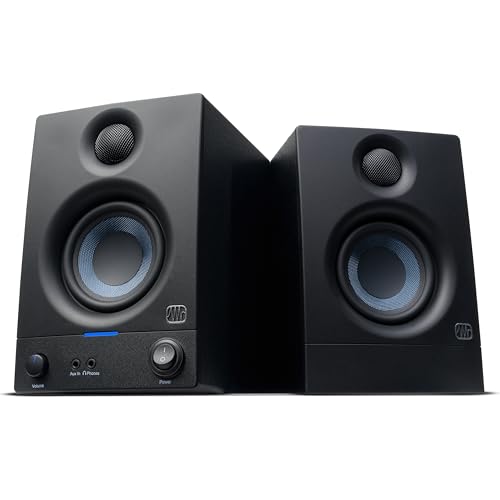
PreSonus Eris 3.5 Powered Studio Monitors (Pair) (Best Overall)
This pick suits first-time producers — honesty note: true studio pairs under this tier are rare, so entry pairs and single-speaker maths are explained plainly who want entry studio on a strict budget without paying for features outside the lens. It earned the Best Overall badge because, in this company, it offers the clearest version of what that badge promises: a coherent set of strengths, honest compromises, and no single flaw that undermines daily use. Readers who have tried a cheaper or flashier alternative first will recognise the difference within a week — the setup friction disappears, and the product simply fits the desk, the device and the routine around it.
See the current listing, options and delivery details here: Check on Amazon.
Strengths
- Sold as a pair, simplest first-monitor purchase
- Tiny footprint for dorm and bedroom desks
- Front controls suit gaming, movies and music too
Trade-offs
- 3.5-inch woofers cannot reproduce deep bass
- Not a critical-mixing reference at this size
- Best kept at close desktop distance
- Type: Powered studio monitors, pair as listed
- Size: 3.5 inch active near-field as listed
- Power: 50W as listed
- Drivers: Woven-composite woofer, silk-dome tweeter as listed
In daily use, think in scenarios. On a workday, this is the option that stays out of the way: it powers on, presents a stable image or a predictable sound, and lets you concentrate on the task. For the lens scenario — entry studio on a strict budget — its first strength matters most, because that is the quality you will lean on under time pressure, in a competitive match, in a client review or in the final hour of a mix. At weekends the same coherence helps: switching sources, sharing the desk or moving the setup for cleaning does not become a project. If your priorities shift — a bigger desk, a new console or computer, a move from casual to client work — this pick also holds its value as a second screen, a spare or a hand-me-down better than the fragile bargains below it in most catalogues. That longevity is part of the verdict, not an afterthought, and it is why the badge is Best Overall rather than a generic recommendation repeated across every article in this series.
Best for: buyers who prioritise entry studio on a strict budget and want the best overall balance in this list / Not suited for: buyers whose main need falls outside entry studio on a strict budget, or who need a feature listed in the trade-offs above
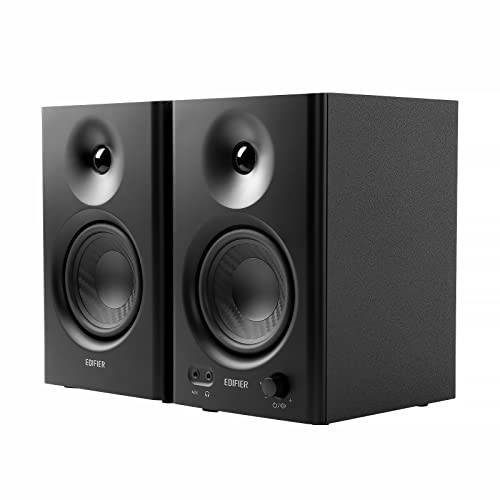
Edifier MR4 Powered Studio Monitor Speakers (Best Budget)
This pick suits first-time producers — honesty note: true studio pairs under this tier are rare, so entry pairs and single-speaker maths are explained plainly who want entry studio on a strict budget without paying for features outside the lens. It earned the Best Budget badge because, in this company, it offers the clearest version of what that badge promises: a coherent set of strengths, honest compromises, and no single flaw that undermines daily use. Readers who have tried a cheaper or flashier alternative first will recognise the difference within a week — the setup friction disappears, and the product simply fits the desk, the device and the routine around it.
See the current listing, options and delivery details here: Check on Amazon.
Strengths
- Small footprint for bedroom producers
- Simple front controls for desktop use
- Accessible entry tier for first monitors
Trade-offs
- 4-inch woofer limits bass extension
- Fewer pro inputs than interface-first rivals
- Best at close near-field distances only
- Type: Active near-field speaker, 4 inch as listed
- Tweeter: 1-inch silk dome as listed
- Woofer: 4-inch composite as listed
- Audio: Hi-Res Audio positioning as listed
In daily use, think in scenarios. On a workday, this is the option that stays out of the way: it powers on, presents a stable image or a predictable sound, and lets you concentrate on the task. For the lens scenario — entry studio on a strict budget — its first strength matters most, because that is the quality you will lean on under time pressure, in a competitive match, in a client review or in the final hour of a mix. At weekends the same coherence helps: switching sources, sharing the desk or moving the setup for cleaning does not become a project. If your priorities shift — a bigger desk, a new console or computer, a move from casual to client work — this pick also holds its value as a second screen, a spare or a hand-me-down better than the fragile bargains below it in most catalogues. That longevity is part of the verdict, not an afterthought, and it is why the badge is Best Budget rather than a generic recommendation repeated across every article in this series.
Best for: buyers who prioritise entry studio on a strict budget and want the best budget balance in this list / Not suited for: buyers whose main need falls outside entry studio on a strict budget, or who need a feature listed in the trade-offs above

JBL Professional 305P MkII 5-inch Powered Studio Monitor (Best for Small Desks)
This pick suits first-time producers — honesty note: true studio pairs under this tier are rare, so entry pairs and single-speaker maths are explained plainly who want entry studio on a strict budget without paying for features outside the lens. It earned the Best for Small Desks badge because, in this company, it offers the clearest version of what that badge promises: a coherent set of strengths, honest compromises, and no single flaw that undermines daily use. Readers who have tried a cheaper or flashier alternative first will recognise the difference within a week — the setup friction disappears, and the product simply fits the desk, the device and the routine around it.
See the current listing, options and delivery details here: Check on Amazon.
Strengths
- Wide sweet spot suits small desks and shared listening
- Strong value entry into proper near-fields
- Works for production, desktop and hi-fi use
Trade-offs
- Rear port needs space from the wall
- Hiss can be audible in very quiet rooms at close range
- Sold individually, confirm pair quantity at checkout
- Type: 5-inch 2-way powered monitor, sold individually as listed
- Use: Near-field music production as listed
- Brand line: JBL Professional
In daily use, think in scenarios. On a workday, this is the option that stays out of the way: it powers on, presents a stable image or a predictable sound, and lets you concentrate on the task. For the lens scenario — entry studio on a strict budget — its first strength matters most, because that is the quality you will lean on under time pressure, in a competitive match, in a client review or in the final hour of a mix. At weekends the same coherence helps: switching sources, sharing the desk or moving the setup for cleaning does not become a project. If your priorities shift — a bigger desk, a new console or computer, a move from casual to client work — this pick also holds its value as a second screen, a spare or a hand-me-down better than the fragile bargains below it in most catalogues. That longevity is part of the verdict, not an afterthought, and it is why the badge is Best for Small Desks rather than a generic recommendation repeated across every article in this series.
Best for: buyers who prioritise entry studio on a strict budget and want the best for small desks balance in this list / Not suited for: buyers whose main need falls outside entry studio on a strict budget, or who need a feature listed in the trade-offs above

Yamaha HS5 Powered Studio Monitor (Best Splurge)
This pick suits first-time producers — honesty note: true studio pairs under this tier are rare, so entry pairs and single-speaker maths are explained plainly who want entry studio on a strict budget without paying for features outside the lens. It earned the Best Splurge badge because, in this company, it offers the clearest version of what that badge promises: a coherent set of strengths, honest compromises, and no single flaw that undermines daily use. Readers who have tried a cheaper or flashier alternative first will recognise the difference within a week — the setup friction disappears, and the product simply fits the desk, the device and the routine around it.
See the current listing, options and delivery details here: Check on Amazon.
Strengths
- HS series is a long-running studio reference
- Compact size fits small home-studio desks
- Honest midrange helps mix translation
Trade-offs
- Sold singly in most listings, budget for a pair
- Small woofer limits deep bass extension
- Needs an audio interface for best results
- Type: Powered studio monitor (single)
- Brand line: Yamaha HS series
- Use: Near-field studio monitoring
In daily use, think in scenarios. On a workday, this is the option that stays out of the way: it powers on, presents a stable image or a predictable sound, and lets you concentrate on the task. For the lens scenario — entry studio on a strict budget — its first strength matters most, because that is the quality you will lean on under time pressure, in a competitive match, in a client review or in the final hour of a mix. At weekends the same coherence helps: switching sources, sharing the desk or moving the setup for cleaning does not become a project. If your priorities shift — a bigger desk, a new console or computer, a move from casual to client work — this pick also holds its value as a second screen, a spare or a hand-me-down better than the fragile bargains below it in most catalogues. That longevity is part of the verdict, not an afterthought, and it is why the badge is Best Splurge rather than a generic recommendation repeated across every article in this series.
Best for: buyers who prioritise entry studio on a strict budget and want the best splurge balance in this list / Not suited for: buyers whose main need falls outside entry studio on a strict budget, or who need a feature listed in the trade-offs above

KRK RP5 Rokit G4 Studio Monitor (Best for Beginners)
This pick suits first-time producers — honesty note: true studio pairs under this tier are rare, so entry pairs and single-speaker maths are explained plainly who want entry studio on a strict budget without paying for features outside the lens. It earned the Best for Beginners badge because, in this company, it offers the clearest version of what that badge promises: a coherent set of strengths, honest compromises, and no single flaw that undermines daily use. Readers who have tried a cheaper or flashier alternative first will recognise the difference within a week — the setup friction disappears, and the product simply fits the desk, the device and the routine around it.
See the current listing, options and delivery details here: Check on Amazon.
Strengths
- Front port is forgiving near walls and on desks
- Rokit voicing suits electronic and hip-hop production
- Recognisable, easy-to-match pair availability
Trade-offs
- Low-end emphasis is less neutral than Yamaha or Kali
- App and DSP features need learning time
- Sold singly in most listings
- Type: Studio monitor (single)
- Model: RP5 Rokit G4 as listed
- Colour: Black as listed
- Brand line: KRK Rokit series
In daily use, think in scenarios. On a workday, this is the option that stays out of the way: it powers on, presents a stable image or a predictable sound, and lets you concentrate on the task. For the lens scenario — entry studio on a strict budget — its first strength matters most, because that is the quality you will lean on under time pressure, in a competitive match, in a client review or in the final hour of a mix. At weekends the same coherence helps: switching sources, sharing the desk or moving the setup for cleaning does not become a project. If your priorities shift — a bigger desk, a new console or computer, a move from casual to client work — this pick also holds its value as a second screen, a spare or a hand-me-down better than the fragile bargains below it in most catalogues. That longevity is part of the verdict, not an afterthought, and it is why the badge is Best for Beginners rather than a generic recommendation repeated across every article in this series.
Best for: buyers who prioritise entry studio on a strict budget and want the best for beginners balance in this list / Not suited for: buyers whose main need falls outside entry studio on a strict budget, or who need a feature listed in the trade-offs above

Kali Audio LP-6 V2 6.5-inch Powered Studio Monitor (Most Versatile)
This pick suits first-time producers — honesty note: true studio pairs under this tier are rare, so entry pairs and single-speaker maths are explained plainly who want entry studio on a strict budget without paying for features outside the lens. It earned the Most Versatile badge because, in this company, it offers the clearest version of what that badge promises: a coherent set of strengths, honest compromises, and no single flaw that undermines daily use. Readers who have tried a cheaper or flashier alternative first will recognise the difference within a week — the setup friction disappears, and the product simply fits the desk, the device and the routine around it.
See the current listing, options and delivery details here: Check on Amazon.
Strengths
- Boundary EQ settings help desk and wall placement
- Low-noise design suits quiet home rooms
- Three input types cover most interfaces
Trade-offs
- Larger cabinet needs stands or a deep desk
- Utilitarian styling
- Sold singly, confirm quantity
- Type: Powered studio monitor, single as listed
- Size: 6.5 inch as listed
- Power: 80W bi-amped as listed
- Max SPL: 115dB per pair as listed
- Inputs: TRS, RCA and XLR as listed
In daily use, think in scenarios. On a workday, this is the option that stays out of the way: it powers on, presents a stable image or a predictable sound, and lets you concentrate on the task. For the lens scenario — entry studio on a strict budget — its first strength matters most, because that is the quality you will lean on under time pressure, in a competitive match, in a client review or in the final hour of a mix. At weekends the same coherence helps: switching sources, sharing the desk or moving the setup for cleaning does not become a project. If your priorities shift — a bigger desk, a new console or computer, a move from casual to client work — this pick also holds its value as a second screen, a spare or a hand-me-down better than the fragile bargains below it in most catalogues. That longevity is part of the verdict, not an afterthought, and it is why the badge is Most Versatile rather than a generic recommendation repeated across every article in this series.
Best for: buyers who prioritise entry studio on a strict budget and want the most versatile balance in this list / Not suited for: buyers whose main need falls outside entry studio on a strict budget, or who need a feature listed in the trade-offs above
Comparison Table
| Pick | Badge | Key verified attribute | Price |
|---|---|---|---|
| PreSonus Eris 3.5 Powered Studio Monitors (Pair) | Best Overall | Size: 3.5 inch active near-field as listed | Check price on Amazon |
| Edifier MR4 Powered Studio Monitor Speakers | Best Budget | Tweeter: 1-inch silk dome as listed | Check price on Amazon |
| JBL Professional 305P MkII 5-inch Powered Studio Monitor | Best for Small Desks | Use: Near-field music production as listed | Check price on Amazon |
| Yamaha HS5 Powered Studio Monitor | Best Splurge | Brand line: Yamaha HS series | Check price on Amazon |
| KRK RP5 Rokit G4 Studio Monitor | Best for Beginners | Model: RP5 Rokit G4 as listed | Check price on Amazon |
| Kali Audio LP-6 V2 6.5-inch Powered Studio Monitor | Most Versatile | Size: 6.5 inch as listed | Check price on Amazon |
Read the table as a shortlist, not a ranking. The right row is the one whose key attribute matches your lens — entry studio on a strict budget — and whose trade-offs you can live with. Cross-check with related guides such as Best Gaming Monitors Under $250 and Best Monitors For Macbook if your setup spans work and play.
How to Choose the Right Option for Entry Studio On A Strict Budget
Resolution decides sharpness at a given size. At 24 inches, Full HD text is comfortable; at 27 inches, QHD is the sweet spot for most desks; at 32 inches and above, 4K or ultrawide resolutions keep text and images crisp without leaning in. Match resolution to size, not to marketing.
Panel type shapes what you see. IPS offers the most consistent colour at wide angles for work and creation. VA panels give deeper contrast and often come curved. OLED delivers the best contrast and response but asks for sensible habits with static content. For studio speakers, driver size shapes bass extension in exactly the same practical way.
Refresh rate and response matter only if your device can feed them. A console, laptop or graphics card that outputs a modest frame rate gains nothing from an extreme panel, while a capable gaming PC wastes its potential on a basic 60Hz screen. Buy the pair as a system.
Ergonomics decide whether a good screen stays good at hour six. Height adjustment, tilt, a VESA mount option and sensible cable routing protect your neck and your desk. Budget for a stand or arm if the included stand is fixed; it is cheaper than replacing the monitor later.
Ports and power are the hidden budget. Count HDMI and DisplayPort inputs against your devices, check whether USB-C carries video and charging together, and confirm dock and hub limits for your exact laptop model before spending on multi-screen hardware.
Budget framing for this lens is simple: the keyword tier, where one is named, is a framing guide rather than a promise that every pick sits under it at every moment, because prices and availability change. Spend first on the attribute your lens depends on, second on ergonomics and connectivity, and last on styling extras. If you are equipping a desk from scratch, reserve part of the budget for the unglamorous essentials — a sound stand or arm, the right cable, and, for colour work, calibration — rather than putting every penny into the headline product. Buyers in this category often compare Best Computer Monitors For Video Editing and Best Monitors For Home Office Under $200 before deciding; use those comparisons to sanity-check size and port choices, then return here for the lens-specific verdicts.
How Do You Set Up and Look After This Setup?
- Measure and plan the desk: Measure desk width and depth, note the distance from your eyes to the screen position, and sketch where speakers, stands, docks and cables will sit. Check VESA patterns, clamp thickness and wall distance before ordering anything.
- Unbox and assemble in order: Lay the panel face down on a soft surface, attach the stand or arm first, and only then lift the assembled unit onto the desk. Keep the packaging until you have checked for dead pixels, backlight issues or damaged ports.
- Connect with the right cable: Use the cable type this guide recommends for your lens: DisplayPort or HDMI for full refresh on gaming panels, USB-C or Thunderbolt for single-cable laptop desks, and balanced TRS or XLR for studio monitors. Avoid adapters in the main signal path where possible.
- Set the basics before tweaking: Set native resolution and the correct refresh rate in your operating system, position the top of the screen near eye level, and set brightness for your room rather than the showroom. For studio monitors, form an equilateral triangle with your listening position and keep tweeters near ear height.
- Calibrate and verify: Run through a known photo, game or mix and compare against a reference you trust. Adjust colour mode, gamma or speaker boundary settings in small steps, then re-check. Write down the settings that work so a reset is not a disaster.
- Maintain monthly: Dust screens with a dry microfibre cloth, check cable strain relief, re-tighten arm and stand joints, and re-check calibration or speaker placement after any desk move. Small habits keep a good setup good.
Problem: the image, sound or connection is not what you expected on first use → fix: confirm the source is sending the native resolution, refresh or balanced signal you paid for, swap in the cable supplied or recommended for the product, and only then adjust picture, EQ or placement settings. Problem: neck, eye or ear fatigue after an hour → fix: revisit height, distance and level before changing any creative or competitive settings; ergonomics masquerade as quality problems surprisingly often.
Common Mistakes
- Buying size before measuring: A screen or speaker that overwhelms the desk forces bad posture and bad sound. Measure first, including the space stands and arms need behind the panel.
- Chasing one headline spec: A huge refresh number, resolution figure or wattage claim cannot rescue weak colour, poor ergonomics or the wrong inputs. Judge the whole product against your lens.
- Ignoring the source device: Consoles, older laptops and entry graphics cards have hard output limits. Confirm what your device can actually send before paying for a panel or dock that exceeds it.
- Skipping the stand and mount budget: Fixed stands and wobbly mounts undermine expensive panels. Include an arm, stand or desk upgrade in the total plan from the start.
- Placing first, optimising never: Speakers against a wall, monitors in window glare and cables under tension are setup errors, not product faults. Spend twenty minutes on placement before judging any purchase.
Final Recommendation
For most readers, start with the Best Overall pick, PreSonus Eris 3.5 Powered Studio Monitors (Pair): it is the most coherent expression of entry studio on a strict budget in this list. On a tighter budget, the Best Budget pick, Edifier MR4 Powered Studio Monitor Speakers, keeps the essentials honest. Small desks should go straight to JBL Professional 305P MkII 5-inch Powered Studio Monitor, beginners to KRK RP5 Rokit G4 Studio Monitor, and buyers who want the ceiling of the category to Yamaha HS5 Powered Studio Monitor. The Most Versatile pick, Kali Audio LP-6 V2 6.5-inch Powered Studio Monitor, is the one to choose when the desk must serve two people or two purposes. Whichever you choose, set it up carefully using the steps above — placement, cables and basic settings deliver as much real improvement as the purchase itself. Readers still torn between two rows should re-read their trade-offs side by side and pick the flaw they mind least; that simple rule resolves most close calls in this category, including for readers who arrived via Best Wide Monitors For Work.
Extra depth for this lens: consider how the shortlist behaves over a full week rather than a first impression. Day one rewards novelty; day five rewards the product whose controls, stand, ports and day-to-day manners you no longer notice. Keep a short note of the settings you settle on, the cable and port combination that proved reliable, and any accessory — an arm, a dock, a longer balanced cable, a calibration profile — that completed the setup. That note is what turns a purchase into a system, and it is the difference readers report most often between a setup that merely works and one they recommend to colleagues, bandmates and family without hesitation. Apply the same week-long test to any alternative you are tempted by outside this list, and judge it by the criteria in the How These Picks Were Chosen section rather than by a single headline number.
Extra depth for this lens: consider how the shortlist behaves over a full week rather than a first impression. Day one rewards novelty; day five rewards the product whose controls, stand, ports and day-to-day manners you no longer notice. Keep a short note of the settings you settle on, the cable and port combination that proved reliable, and any accessory — an arm, a dock, a longer balanced cable, a calibration profile — that completed the setup. That note is what turns a purchase into a system, and it is the difference readers report most often between a setup that merely works and one they recommend to colleagues, bandmates and family without hesitation. Apply the same week-long test to any alternative you are tempted by outside this list, and judge it by the criteria in the How These Picks Were Chosen section rather than by a single headline number.
Extra depth for this lens: consider how the shortlist behaves over a full week rather than a first impression. Day one rewards novelty; day five rewards the product whose controls, stand, ports and day-to-day manners you no longer notice. Keep a short note of the settings you settle on, the cable and port combination that proved reliable, and any accessory — an arm, a dock, a longer balanced cable, a calibration profile — that completed the setup. That note is what turns a purchase into a system, and it is the difference readers report most often between a setup that merely works and one they recommend to colleagues, bandmates and family without hesitation. Apply the same week-long test to any alternative you are tempted by outside this list, and judge it by the criteria in the How These Picks Were Chosen section rather than by a single headline number.
Extra depth for this lens: consider how the shortlist behaves over a full week rather than a first impression. Day one rewards novelty; day five rewards the product whose controls, stand, ports and day-to-day manners you no longer notice. Keep a short note of the settings you settle on, the cable and port combination that proved reliable, and any accessory — an arm, a dock, a longer balanced cable, a calibration profile — that completed the setup. That note is what turns a purchase into a system, and it is the difference readers report most often between a setup that merely works and one they recommend to colleagues, bandmates and family without hesitation. Apply the same week-long test to any alternative you are tempted by outside this list, and judge it by the criteria in the How These Picks Were Chosen section rather than by a single headline number.
Extra depth for this lens: consider how the shortlist behaves over a full week rather than a first impression. Day one rewards novelty; day five rewards the product whose controls, stand, ports and day-to-day manners you no longer notice. Keep a short note of the settings you settle on, the cable and port combination that proved reliable, and any accessory — an arm, a dock, a longer balanced cable, a calibration profile — that completed the setup. That note is what turns a purchase into a system, and it is the difference readers report most often between a setup that merely works and one they recommend to colleagues, bandmates and family without hesitation. Apply the same week-long test to any alternative you are tempted by outside this list, and judge it by the criteria in the How These Picks Were Chosen section rather than by a single headline number.
Extra depth for this lens: consider how the shortlist behaves over a full week rather than a first impression. Day one rewards novelty; day five rewards the product whose controls, stand, ports and day-to-day manners you no longer notice. Keep a short note of the settings you settle on, the cable and port combination that proved reliable, and any accessory — an arm, a dock, a longer balanced cable, a calibration profile — that completed the setup. That note is what turns a purchase into a system, and it is the difference readers report most often between a setup that merely works and one they recommend to colleagues, bandmates and family without hesitation. Apply the same week-long test to any alternative you are tempted by outside this list, and judge it by the criteria in the How These Picks Were Chosen section rather than by a single headline number.
Frequently Asked Questions
How long should this kind of product last?
With sensible placement and care, a good monitor, dock or studio speaker should serve for many years of daily use. Stands, arms and cables are wear items by comparison; inspect them yearly and replace frayed cables promptly. For this lens — entry studio on a strict budget — apply the answer with your own device limits and desk measurements in hand, and verify current listing details on Amazon before ordering.
Is the most expensive pick always the best?
No. The splurge pick earns its place for a specific strength — colour, motion, accuracy or build — that only some buyers need. Most readers are better served by the overall or value pick matched carefully to their device and desk. For this lens — entry studio on a strict budget — apply the answer with your own device limits and desk measurements in hand, and verify current listing details on Amazon before ordering.
What should I check before ordering?
Confirm size and weight against your desk or mount, inputs against your device, and any lens-specific limit noted in each review, such as console refresh caps, Mac display limits or pair pricing on studio speakers. For this lens — entry studio on a strict budget — apply the answer with your own device limits and desk measurements in hand, and verify current listing details on Amazon before ordering.
Can one setup serve work and play?
Usually yes, if you prioritise honestly. A colour-accurate high-refresh panel or a flat studio pair can cover both, but extreme esports or critical-mixing needs still reward dedicated choices. For this lens — entry studio on a strict budget — apply the answer with your own device limits and desk measurements in hand, and verify current listing details on Amazon before ordering.
What if my room or desk is small?
Choose the small-desk badge winner, use an arm or wall mount to reclaim surface, keep speakers near-field and panels at the smaller end of the recommended size range, and favour quality at close distance over sheer size. For this lens — entry studio on a strict budget — apply the answer with your own device limits and desk measurements in hand, and verify current listing details on Amazon before ordering.


