Disclosure: As an Amazon Associate, ilcastellomenu.com earns from qualifying purchases. Links on this page are affiliate links; they cost you nothing extra. Prices and availability change often, so check the current Amazon listing before you buy.
Reading cable raceway reviews side by side teaches you quickly that this category rewards fit over fame: these cable raceway reviews therefore judge each name on the route it suits, the lid you will open for years, the fittings in the box and the fixing your wall allows. A raceway is not a gadget with a spec sheet to win; it is a small piece of household infrastructure, and the right question is never which brand is best in the abstract. The right question is which kit disappears into your room, on your wall, carrying your cables, and stays painless every time your setup changes.
Key Takeaways
- Across all cable raceway reviews, fit for the route beats brand reputation every time.
- Count the fittings in the box as carefully as the channel lengths; corners decide the finished look.
- Adhesive kits are fast but can pull paint on removal; screw-mounted runs are the renter-safe, permanent option.
- Leave the channel underfilled, keep adapters out of it, and keep the run reachable for changes.
- Use a ramped floor cord cover for floor crossings — never a wall raceway underfoot.
Best for: buyers comparing kits for a defined TV, desk or gaming run. Not suited for: anyone hoping a channel can hide new mains wiring or replace an electrician.
In this guide
What These Cable Raceway Reviews Are Comparing
Every tidy raceway run starts before anything touches the wall, with a honest look at the route the cables actually need to travel. Walk the room and trace the path from the equipment to the outlet or the desk with your eyes, noting every corner, doorway, skirting board and piece of furniture the run has to pass. Most disappointing installations were planned from a chair, using an imagined straight line that the real room never offers. A few minutes spent crouching down, opening cabinet doors and checking what sits behind the television will reveal the awkward bend or the short final stretch that changes which kit you should buy and how much of it you need.
Judge a raceway kit the way you would judge any small piece of household infrastructure: by how completely it disappears. The best kit is the one you stop seeing, whose lid you can open without tools or temper, whose fittings match the turns your walls actually make, and whose finish takes paint like it was always part of the room. Brand reputation, the completeness of the fitting assortment and the quality of the closing mechanism are worth more than a few extra lengths of channel you will never use. A short kit that fits your route exactly beats a long kit that leaves you improvising at every corner and short at the one place it matters.
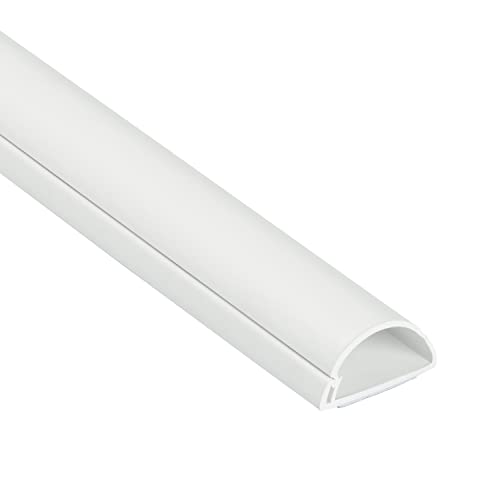
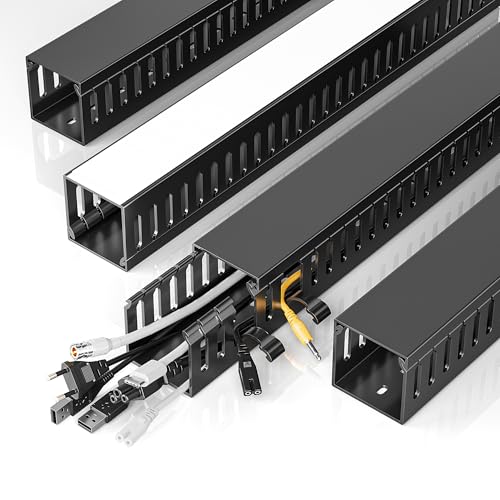
Profile shape is a small decision with an outsized effect on how the finished run looks. A flat, low channel hugs the wall and suits skirting-level runs where discretion matters. A rounder, D-shaped profile tends to look softer on an open wall and often gives cables a kinder bend inside. A larger square profile swallows a serious bundle behind a media unit where nobody will ever admire it. None of these is universally best; each is best somewhere. Stand in the room, look at the wall the run will cross, and choose the shape your eye will forgive at that height, in that light, for the years the run will be there.
Cable Raceway Reviews: The Kits Worth Shortlisting
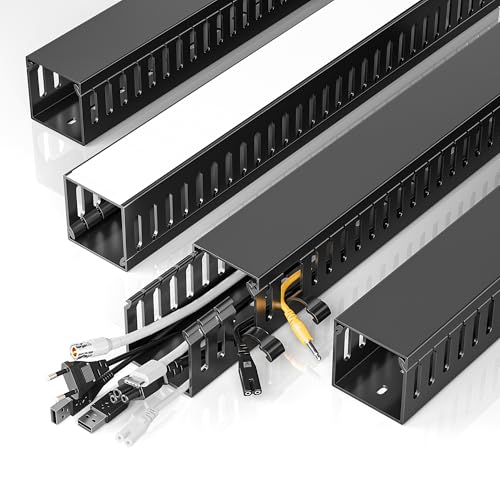
YECAYE Cable Raceway
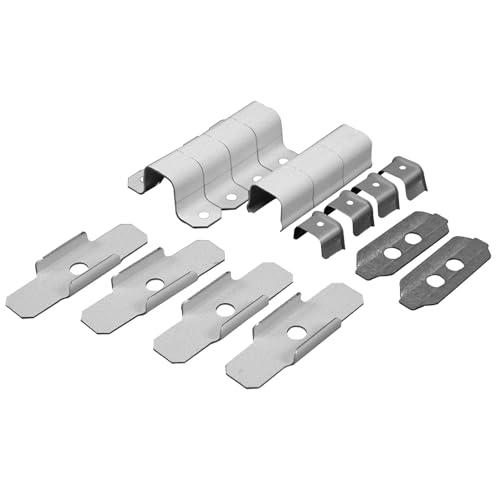
YECAYE appears in this category as a kit-focused name, the kind of bundled offering that aims to give a first-time installer everything for a television or desk run in one box. In prose terms — and this mention is unverified and prose-only — that kit completeness is the whole argument: channel, corners and connectors together, chosen so a beginner is not left mid-installation missing an elbow. The honest caution with any bundle is to count what is actually included against the route you measured, and to decide in advance how you feel about adhesive fixing, because most quick kits lean on it heavily.
Best for: first-time installers who want one box for one defined run. Not suited for: complex multi-room routes, or renters who have not weighed the adhesive-and-paint question first.

Delamu Cable Raceway
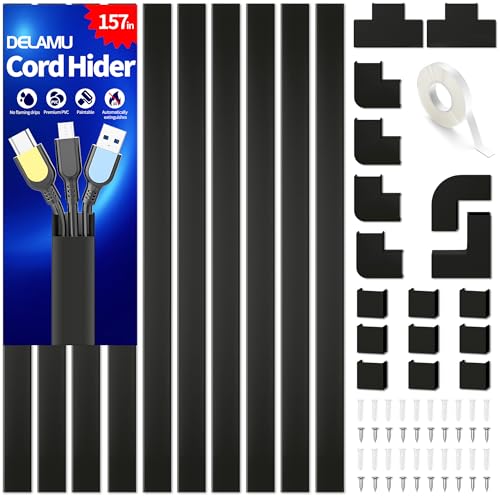
Delamu is another name encountered in bundled raceway kits for home entertainment and desk setups, presented here as an unverified prose-only candidate. The prose-level case for this style of kit is convenience and a coordinated look: matching channel and fittings in one finish, sized for the familiar job of dropping cables from a wall-mounted screen or tidying the wall behind a desk. Judge it, as with every kit in this roundup, on the fitting count for your route, the lid style your habits need and the mounting method your walls allow — not on the tidiness of the photograph on the listing.
Best for: straightforward TV and desk runs from a single coordinated kit. Not suited for: buyers needing unusual fittings or a very long run, who should price a system of separate parts instead.

Stageek Cable Raceway
Stageek shows up in cable management conversations around desks and entertainment setups, and its raceway offerings sit in the same practical, kit-led territory as several names here. This is an unverified, prose-only mention: shortlist it if a current listing matches your measured route and includes the corners your walls demand, and pass it by without regret if it does not. That unglamorous advice is genuinely the right way to shop this category, because the differences that matter — lid access, fitting assortment, mounting options — are all visible in a careful listing read, while the differences that do not matter fill the marketing copy.
Best for: desk and entertainment runs where the kit contents match your route exactly. Not suited for: anyone shopping by brand loyalty in a category where fit beats badge.

ZhiYo Cable Raceway
ZhiYo is a name many buyers meet through its cable management range, and its raceway kits belong to the accessible, bundle-led end of the market. As an unverified prose-only candidate here, its role in your shortlist is simple: a candidate to check when you want a complete, modest run — a single television drop, a desk back-edge, a nursery corner made safe — without assembling a system part by part. Read the included fittings against your sketch, confirm how the lid opens, and decide about adhesive versus screws before the box arrives, not with the channel already in your hands.
Best for: single, well-defined runs and buyers new to the category. Not suited for: elaborate multi-branch installations that outgrow a starter kit.
How Each Style Performs in Real Rooms
Television Drops
The wall-mounted television is the classic raceway job, and it shows both the best and the worst of the format. Done well, the channel drops straight from behind the screen to the skirting in one clean vertical line, painted to match the wall, carrying the HDMI and aerial leads invisibly enough that guests stop noticing it within minutes. Done badly, it wanders, sags between fixings and stops short, leaving the last stretch of cable dangling exactly where your eye lands. The difference is rarely the brand on the box. It is the straightness of the route, the honesty of the measurement and whether the channel was fixed at sensible intervals along its length.
Most paintable raceway takes ordinary household paint well, and a painted run is the difference between a channel that looks installed and one that looks applied. Paint after installation for the cleanest line against the wall, with the lid closed and the edges masked where the channel meets the skirting or a corner fitting. A light sanding is not usually needed on new plastic, but a clean, dust-free surface is. If you may repaint the room later, remember the channel will need painting again with it, and a screw-mounted run can simply come down for the day, which is one more quiet argument for screws on permanent installations.
Desk and Office Runs
At a desk, a raceway solves a different problem: the horizontal sprawl. Monitor leads, a laptop dock cable, speaker wires and charging leads all want to travel along the back edge of the desk or the wall behind it, and a channel turns that tangle into one calm line. Combine it with an under-desk tray for the power strip and adapters, and the desk gains the floating, clean look people chase in setup photographs. Keep the raceway accessible rather than buried behind the desk where you cannot open it, because desk cables change constantly and a channel you cannot reach is a channel you will eventually abandon.
In a home office the argument for raceway is partly professional. A tidy background on video calls, a desk that can be cleaned without lifting a nest of leads, and cables that stay where they were put all make the working day feel less improvised. Raceway also protects cables from the two great office hazards: chair casters and vacuum cleaners. A lead crossing the floor to a printer or a shredder will be rolled over and tugged until it fails, while the same lead in a channel along the skirting arrives intact. Route once, route along the wall, and stop paying the tax of small daily annoyances.
Gaming and Router Corners
Gaming setups generate cables faster than almost any other corner of the home: multiple monitors, a console or two, a headset stand with its own lead, bias lighting, a capture device, external drives. A raceway along the wall behind the desk keeps the signal cables ordered and separated from the power hardware in the tray below, which makes troubleshooting calmer — when a display drops, you can trace one lead through an open channel instead of excavating a knot. Label both ends of each cable before it goes in. Future you, swapping a monitor at midnight before a tournament or a work deadline, will be quietly grateful.
The corner where the router lives deserves its own plan, because it is where the most cables converge in most homes: power for the router and any mesh units, Ethernet to the television or the office, perhaps a network switch with its own adapter and a fan of patch leads. A short raceway run can carry the wall-crossing part of that bundle tidily, while a ventilated box or a small shelf handles the hardware itself. Keep the router’s own ventilation clear, keep its adapters out of the closed channel, and resist the urge to hide the unit itself inside anything. Signal and airflow both suffer in cupboards, however tidy they look.
Strengths and Trade-Offs Across the Category
Strengths
- Every decent kit turns a visible tangle into one ordered, reachable line.
- Paintable finishes let a run blend into the room instead of advertising itself.
- Fittings make corners look deliberate and protect cables from sharp bends.
Trade-offs
- Kit contents vary wildly; the box photograph is not a fittings inventory.
- Adhesive convenience today can become a paint repair on removal day.
- Slim profiles fill up fast in multi-device setups and punish late additions.
The same handful of mistakes accounts for nearly every disappointing raceway installation. Measuring once and cutting hopefully. Choosing adhesive for a wall whose paint was already suspect. Packing the channel until the lid strains. Forgetting the corner fittings and discovering the omission with the base already stuck down. Running the channel across a floor because it was there. And the quietest mistake of all: installing the run before deciding where the furniture finally lives, so the perfect channel serves a layout the room kept for one weekend. Every one of these is avoidable with an hour of planning, which is the cheapest component in the whole project.
Safety Boundaries Every Review Should State
Be completely clear about what a surface raceway is for. It is a tidy cover and guide for low-voltage and signal cables — HDMI leads, Ethernet cables, USB cables, speaker wire, aerial coax and the low-voltage output leads from plug-in power adapters — and for covering appliance cords in the way a cord cover does. It is not a substitute for code-compliant in-wall electrical work, it is not a way to extend a mains circuit, and it must never be used to splice, join or bury mains wiring inside a plastic channel. New sockets, new circuits and anything involving the fixed wiring of the building belong to a licensed electrician, full stop.
That safety boundary shapes real decisions at a desk or a television. Routing the television’s own factory power cord, uncut and unmodified, along a channel to an existing socket is the ordinary cord-cover use these products are sold for. Cutting that cord, joining it to another cable inside the raceway, or running a hidden extension to create a socket where none exists is a different thing entirely, and it is not a job for a plastic channel and optimism. If the honest problem is that the socket is in the wrong place, the honest solutions are a properly rated extension lead used visibly and safely, a rearranged room, or an electrician moving the socket.
Heat deserves a mention alongside space. Power adapters and bricks give off warmth in normal use, and trapping several of them inside a closed, crowded channel with no air around them is poor practice. Keep adapters out of the raceway where you can, or in a ventilated cable management box designed to hold them, and let the raceway itself carry the slim leads rather than the hot hardware. If a channel ever feels warm to the touch along its run, treat that as information: open it, thin the contents out and find the adapters a better home. Tidy should never mean sealed, stuffed and hot.
Overpacking is the most common way people ruin an otherwise good installation. A channel stuffed to its limit bulges, the lid refuses to sit flush, and every cable inside is bent harder and pressed tighter than it should be. Pinched cables age badly: insulation gets stressed at the same points, connectors take strain they were not designed for, and a cable that needs replacing becomes a wrestling match because nothing inside the channel can move. Leave working room. A run that looks slightly underfilled on installation day is the run you will still be pleased with two years later, when you swap a console or add a streaming box and the lid opens without a fight.
Who Each Style Suits, and Who Should Skip It
Renters should read that adhesive warning twice and decide with clear eyes. If your lease is strict about wall damage, or the paint in your flat is already flaking, a screw-mounted channel is the safer choice even though it leaves small holes, because small filled holes are a predictable repair while torn paint across a long run is not. Another honest option is to accept the risk knowingly on one short, hidden run behind furniture, where any mark will stay out of sight. What you should not do is believe any claim that strong mounting tape always removes cleanly. Sometimes it does. Sometimes it really does not, and the deposit conversation goes accordingly.
Screw mounting is the slower, stronger answer, and for some runs it is simply the right one. Long horizontal runs carrying several cables, channels mounted overhead, and any run in a garage or workshop where heat and dust weaken adhesive all behave better when the base is fixed mechanically. Screws also make the channel removable and reusable, because you can take the base down, repaint behind it and put it back without destroying anything. The trade-off is the drilling itself, the need to find a sound fixing in plasterboard or masonry, and the small holes left behind. For a permanent media wall or a home office you expect to keep for years, that trade usually favours screws.
Rooms differ, and raceway should be chosen with the room in mind. Kitchens and bathrooms bring humidity and grease that test adhesive and argue for mechanical fixing and easy-clean surfaces. Garages and workshops bring dust, knocks and temperature swings, and reward a tougher profile fixed with screws. A nursery wants lids that stay shut and runs kept out of reach. A living room wants paintability and discretion above all. The product category is simple, but the right answer is always local: the same kit that is perfect behind a television can be the wrong answer above a workbench, and pretending otherwise is how good products get unfair reviews.
Setup and Care Notes From the Whole Category
Measure the route properly, following the wall rather than cutting across the room in your head, and then measure it again. Raceway is sold in kits and in individual lengths, and the difference between a run that finishes neatly and one that stops a hand’s breadth short of the outlet is usually a measurement taken in a hurry. Add a little slack for corners and for the gentle curves cables prefer, because a channel packed drum-tight is miserable to close and worse to reopen. Write the measurements down room by room if you are doing more than one run, and keep the list with the kit so you are not guessing again at the cutting stage.
Cutting channel to length is straightforward work that rewards a slow hand. Mark the line in pencil on the base, support the piece fully so it cannot flex or crack, and cut with a fine-toothed saw using light strokes rather than force. Plastic raceway can chip or wander if you rush, and a ragged end hides poorly even under a fitting. Tidy the cut edge gently so the lid slides and seats as the maker intended. Cut the base and the lid separately, test-fit both before any adhesive touches the wall, and remember the oldest rule in the workshop: the piece you cut twice because the first cut was hasty is the piece that ends up too short.
The lid design matters more in daily life than most listings suggest. A hinged or flexible lid that opens along its length makes adding a cable a one-minute job, while a stiff snap-on cover that fights you at every clip teaches you to dread touching the installation at all. Think about how often your setup changes. A gaming desk that gains a new peripheral every few months, or a television wall where consoles rotate, wants easy access above almost everything else. A fit-and-forget run behind a sideboard can accept a firmer lid. Match the opening style to your habits, not to the photograph on the box.
A finished raceway still needs occasional attention, and happily it asks for very little. Dust settles on the top edge of horizontal runs, so wipe them when you dust the skirting and the picture frames; a channel that is cleaned with the room stops looking like an addition and starts looking like part of the architecture. Once in a while, open longer runs and check that nothing inside has shifted, chafed or been joined by an unplanned extra cable pushed in during a hurry. Five calm minutes of inspection a couple of times a year is the entire maintenance contract, and it is a large part of why people stay pleased with these systems.
Final Verdict
Taken together, these reviews land in a consistent place: buy the kit that matches your measured route, your stiffest cable and your wall, from whichever name supplies it with the fittings you need. Keep the channel underfilled, keep adapters in a ventilated tray or box instead, and treat the adhesive-versus-screw decision as the long-term choice it really is. A raceway chosen that way will not win any awards, and that is the point — the best cable management is the kind nobody in the room ever notices.
More Practical Detail Before You Decide
Running a channel just above the skirting board is the quiet achiever of raceway routes. Down at floor level the eye rarely lingers, the run can travel the full length of a wall without crossing a single visual feature, and furniture naturally hides long stretches of it. Some profiles are shaped to sit against the skirting and look almost like part of the trim, especially once painted. The cautions are practical: keep the channel clear of door swings, watch for pipes and cables already hidden in that part of the wall before drilling, and leave access at the points where cables rise to the desk or the television.
More Practical Detail Before You Decide
Leave deliberate slack at both ends of a run. Equipment moves: televisions get angled, monitors get raised, desks get pulled out for cleaning, and a cable with no spare length turns every small adjustment into a tug on a connector. A gentle service loop of spare cable, kept inside a wider section of channel, a fitting or a nearby cable box, absorbs that movement gracefully. Slack is not untidiness when it is planned and hidden; it is the difference between a system that accommodates real life and one that punishes it. The same loop makes future changes easy, because you can pull length through instead of re-routing the whole run.
More Practical Detail Before You Decide
Corners and junctions are where a raceway system earns its keep or falls apart visually. Purpose-made elbow, tee and end-cap fittings give a run clean, deliberate lines and protect cables from being forced around a sharp internal bend. Mitering channel ends with a saw can work in skilled hands, but a slightly imperfect cut shows forever at eye level, and the gap it leaves collects dust. When you compare kits, count the fittings in the box as carefully as the channel lengths. A generous kit with the right elbows for your route will look better than a longer kit that leaves you improvising at every turn the wall makes.
More Practical Detail Before You Decide
Think about access points the way an electrician thinks about junction boxes: the system works because you can get into it at the places that matter. Where a cable joins or leaves the run — at the desk, behind the television, beside the router — the channel should open easily and the fitting should not be trapped behind immovable furniture. If the heaviest bookcase in the house sits exactly over the one elbow you need to open, every future change becomes a furniture-moving expedition. A route that is five percent less pretty but fully reachable will serve you better for years than a hidden route you cannot service.
More Practical Detail Before You Decide
Homes with pets or small children get an extra benefit from raceway that rarely appears in marketing: cables disappear from reach. A lead dangling behind a television is an invitation to a toddler and a chew toy to a bored puppy, and both stories end with a damaged cable at best. A closed channel at skirting level removes the temptation and the hazard together, provided the lid seats firmly and the run is fixed at close enough intervals that determined small hands cannot flex it open. Check the run occasionally for exactly that reason, and treat any lid that no longer clicks shut as a small repair worth doing the same day.
More Practical Detail Before You Decide
Adhesive backing is the reason most people choose a raceway kit, and it deserves an honest description. The foam tape on the back of many channels grips painted drywall firmly and makes installation fast, quiet and free of drill holes, which is exactly what a quick weekend tidy-up calls for. That grip is also the catch. When the day comes to remove the channel, the tape can pull paint, and occasionally a skim of plaster, away with it, leaving a repair job behind. Heat from a hairdryer, patience and a slow peel reduce the damage, but they do not guarantee a clean release on every paint finish, especially older or poorly bonded paint.
Field Notes From Real Installations
Light changes how a run reads, and it is worth checking yours at more than one time of day. A channel that vanishes in flat morning light can cast a long, accusing shadow under evening lamps, especially on a pale wall and especially if one section sits slightly proud where the adhesive bed was uneven. Check the run with the room’s real lighting before you paint, press or re-fix any section that stands off the wall, and remember that a painted finish hides colour differences but not geometry. Straightness and flushness are the whole aesthetic; everything else is a detail the eye forgives.
Document the installation while it is open, because memory is the least reliable component in the system. A phone photograph of each open run, showing which cables lie inside and where the slack loops live, plus a note of the fixing method and the date, takes two minutes and answers questions that will otherwise be archaeology: which lead is the aerial, where does the spare length hide, did this section get screws or tape? Store the photos with the spare fittings list. When a cable fails in two years, that small archive turns a wall-opening investigation into a five-minute, targeted fix.
Think about cost in tiers rather than in totals, because this category rewards spending in the right places. The entry tier is a single short kit for one defined run — a television drop or a desk edge — and it is a perfectly respectable place to start. The mid tier adds the fittings assortment, a larger profile and the fixings for a permanent, painted installation. The premium tier is really about systems: consistent profiles across several rooms, generous spares and the flexibility to extend later. Notice what is absent from every tier: any need to spend on length you will not use, or on features your route will never touch.
Test the finished run like a sceptic before you call it done. Switch every connected device on, wiggle nothing, and simply use the setup normally for an evening: watch the television, play the game, join the call. Intermittent faults caused by a pinched or over-bent cable rarely appear in the first five minutes; they appear when a connector warms up, a desk moves or a chair nudges the run. If a picture drops or a network link flickers, open the channel at the nearest corner first and look for the tight bend or the cable sitting proud under the lid, because that is where the fault will be hiding.
A height-adjustable desk adds one special demand: movement. The section of cable that travels between the moving desktop and the fixed wall or floor must flex every time the desk rises, and a raceway should never be asked to absorb that flex. End the channel at a fixed point, let a generous, deliberate loop of cable handle the travel, and support that loop so it hangs in a smooth curve rather than kinking at the same spot daily. Managed this way, the raceway does the static ninety percent of the job beautifully, and the moving ten percent gets the freedom it needs instead of a slow, invisible failure inside a connector.
Keep what is left over. Every raceway project ends with offcuts, a spare elbow, two end caps and a short length of channel, and the beginner’s instinct is to tidy them into the bin. Resist it. Bag the spares, label the bag with the room and the system name, and store it with the household tools. The next change — a console added, a monitor swapped, a run extended to a new desk position — will need exactly the fitting you were about to throw away, and matching an existing profile months later is far harder than it sounds, because ranges are revised and finishes drift between production runs.
Printers, scanners and other occasional-use devices make a neat test of a raceway route. They often sit across the room from the desk, they are used in bursts, and their cables tempt people into the classic floor-crossing shortcut. A skirting-level channel carries that run properly: along the wall, up at the furniture, with the device end left accessible so the printer can be pulled out for paper jams and cartridge changes without tugging its lead out of the channel. Leave the service slack at the device end, not the desk end, because the device is the thing that moves, usually at the least convenient moment of the working week.
Rooms change with the year more than we admit: a fan appears in summer, a heater in winter, lights and decorations in December, a different chair when guests stay. A raceway system installed with headroom absorbs these guests gracefully, because one more slim lead can join the channel for a season and leave again without disturbing the permanent residents. That is a quiet argument for sizing up at installation and for keeping one access point genuinely reachable rather than buried behind the heaviest furniture. Infrastructure that copes with December without a draped extension lead has earned its place on the wall.
If you install raceway in more than one room, consistency quietly pays. Using the same profile family across the home means spare fittings fit everywhere, a leftover length from the office can finish the bedroom run, and your eye reads the channels as one deliberate system rather than a series of unrelated fixes. It also means your hard-won knowledge transfers: you already know how this lid opens, how this adhesive behaves on your paint, and how this elbow wants to be fitted. None of that requires brand loyalty for its own sake; it is simply the economics and ergonomics of a small household standard, chosen once and reused.
Speaker cable deserves its own sentence in any raceway plan, because it is both the easiest cable to route and the easiest to forget. It is slim, flexible and forgiving, so it happily shares a channel with other low-voltage leads on the way to a rear speaker or a soundbar. What it dislikes is being trapped under a lid that is already straining against stiffer cables, where months of pressure can mark its insulation. Route speaker wire early while the channel is empty, settle it flat at the bottom of the bundle, and let the stiffer leads lie above it rather than the other way around.
Mesh Wi-Fi units and network switches have multiplied the small cable runs in modern homes, and raceway handles their geography well. A node on a hallway shelf, a switch inside a media unit and the Ethernet backhaul between them all create short, visible hops that look messy precisely because each one is small. Channelling those hops along the skirting, with the hardware itself left open to the air on its shelf, tidies the picture without suffocating anything that needs ventilation. Keep the nodes themselves out of boxes and cupboards; the raceway’s job is the journey between devices, never a hiding place for the devices themselves.
A final pattern emerges when you read across every kit in this category: owners rarely regret buying the larger profile, the fuller fittings assortment or the screw fixings, and they frequently regret the opposite of each. That asymmetry is the most useful sentence in any roundup of this kind, because it tells you where the risk actually lives. The risk is not in choosing the second-best brand; it is in choosing a system sized for the setup you have today, fixed for the wall you wish you had, and short of the one elbow your route needed. Buy against those three risks and the brand decision becomes the small one it should always have been.
There is also a small, underrated pleasure in a finished run that no listing can sell you: the room becomes easier to clean, easier to rearrange and easier to explain to anyone else who lives there. Cables stop migrating. The vacuum stops snagging. A new device joins the setup in minutes instead of triggering an archaeological dig behind the furniture. Those are modest benefits, and they arrive quietly, but they are the reason a product as simple as a lidded plastic channel inspires genuinely loyal owners. Tidy, in the end, is not a look. It is the absence of a hundred small frictions, and a well-chosen, well-fitted raceway removes more of them per hour of installation than almost anything else you can do to a room.
Checking a Cable Raceway Listing Against Reality: Variant, Contents and First Use
A fair test repeats the same task at least twice, once while you are paying attention and once while you work normally, because concentration can hide clumsy design. Keep a short note of what worked, what annoyed you and what you adjusted, because that note is more useful than memory when you later replace or add another cable raceway. Revisit the decision after the novelty fades: the right cable raceway should feel almost boring in use, doing its job without negotiation every single time. Measure the place where a cable raceway will actually live, including the clearance you need to reach cables, doors, trays, vents or controls without moving everything else first.
As a concrete listing check, take the YECAYE Cable Raceway and the Delamu Cable Raceway named earlier in this article and confirm, line by line, that each variant offered matches the size, connection and contents described for it here. Check that nothing you place on, under or beside the cable raceway blocks airflow, movement, visibility or access that the design quietly depends on. Look closely at seams, edges, hinges, threads or contact points when the cable raceway arrives, because build quality is easiest to judge before everyday wear hides the evidence. Allow a short settling period for your own habits to adapt, but set a firm date to decide, well inside the return window, whether this cable raceway has earned its place. Judge the controls by whether you can use them without looking down or stopping your task, because that is how they will be used for most of their life.
Keep the area underneath and behind the cable raceway reachable for cleaning, since the spots you cannot reach become the spots where dust and lost small parts collect. If you work in more than one place, decide whether this cable raceway stays fixed in one spot or travels, and judge its size, weight and setup time accordingly. Notice how the cable raceway behaves when you are tired or in a hurry, since products that demand perfect technique tend to fail exactly when you have least patience. Leave a little headroom in every direction that matters, whether that means physical space, connection capacity, adjustment range or simply time to do a task properly.
Think about the longest session you realistically run, not the average one, since heat, noise, clutter and small annoyances all grow more noticeable over time. Treat any accessory bundled in the box as a starting point, and check whether it suits your setup before assuming the maker has solved that part for you. When you check a single cable raceway closely, work from the outside in: condition and finish first, then controls and connections, then behaviour during a real task from start to finish. Separate the features you will use in the first month from the ones that only sound reassuring, and let the first group carry far more weight in the decision. If two options look identical on paper, choose the one whose controls, layout or handling you understood fastest, since clarity in daily use beats a longer feature list you never touch.
Run one deliberately awkward task early on, the kind you usually avoid, and see whether this cable raceway handles your edge cases or only your easiest work. Make one change at a time during the first days, so that when something improves or gets worse you know which change caused it. Give a new cable raceway a fair trial in the position it was bought for before improvising workarounds, since many early complaints disappear once placement is corrected.
Avoid forcing a connector, bracket or moving part that resists you, because resistance is usually information about alignment or fit rather than an invitation to push harder. Compare what the listing promised with what the box actually contained, item by item, and treat any mismatch as a reason to pause before the return window closes. When you compare notes with other owners, match their comments to setups like yours, because advice from a very different room, workload or routine can mislead. Think about the next purchase this one commits you to, whether that is matching accessories, consumables, a bigger surface or a different connection, and count that commitment honestly. Take a quick photo of the working setup before you change anything, so cable routes, positions and settings can be restored exactly if the new arrangement disappoints.
Start this final check away from the listings, with the space, the equipment and the routine you already have written down in plain terms. Clean and inspect the area around a cable raceway on a simple schedule, since dust, loose fasteners and tangled leads cause many problems that get blamed on the product itself.
Frequently Asked Questions
What do cable raceway reviews usually get wrong?
Most cable raceway reviews judge a kit on the day of installation, when almost every channel looks tidy, instead of six months later when the lid has been opened a dozen times and one adhesive section has met a warm afternoon. The honest tests are whether the lid still closes easily, whether corners still look deliberate, and whether adding a cable was painless. Reviews also tend to understate the paint question for adhesive kits. Read any review — including this one — for those long-term behaviours rather than for first-day photographs, and check the current listing for the exact fittings included.
Which cable raceway is best for a wall-mounted TV?
The best choice is the kit whose profile fits your cable bundle with room to spare, whose fittings match the turns between the screen and the skirting, and whose finish can be painted to match the wall. For most television drops that means a discreet profile, a straight vertical route and a fixing method you trust on that wall. Brand matters less than fit, because the same channel that looks architectural on one wall wanders and sags on another when it is undersized or under-fixed. Measure the drop, count the cables including the stiffest HDMI lead, and buy for that bundle.
Are expensive cable raceways worth it over basic kits?
Sometimes, and the difference shows in the lid, the fittings and the finish rather than in the channel itself. A kit whose lid opens along its length without tools, whose elbows actually match the profile, and whose plastic takes paint cleanly will serve a changing setup better for years. A basic kit can be entirely adequate for a short, fit-and-forget run behind furniture. What is never worth paying for is extra channel length you will not use while the fittings your route needs are missing. Spend on the parts of the system you will touch and see every day.
Can cable raceways be used in a rented home?
Yes, with the mounting decision made honestly. Adhesive kits are tempting because they avoid holes, but strong tape can pull paint on removal, and a long torn strip of paint is a worse deposit conversation than a few small screw holes that fill in minutes. Many renters do best with screw mounting on a permanent-feeling run, or with a short adhesive run hidden behind furniture where a mark would never show. Check your lease, test any adhesive on a hidden patch, and never let a listing promise you a guaranteed clean removal — no tape can honestly promise that on every wall.
How many cables fit in one cable raceway?
There is no universal number, because cables differ so much in thickness and stiffness: several slim USB and speaker leads occupy the space of one stiff HDMI cable. Judge by behaviour instead of count. Every cable should lie without being pinched, the bundle should not need force to settle, and the lid should close easily along the entire run with room left for one more lead. If closing the lid is a two-handed wrestling match at any point, the channel is full in the only sense that matters, whatever the arithmetic says. Size up or split the run.
Do cable raceways work for gaming setups?
They work very well for the signal side of a gaming setup: monitor leads, console HDMI cables, Ethernet and headset leads travelling along the wall behind the desk become one ordered line that is easy to trace when something stops working. Pair the raceway with an under-desk tray for the power strip and adapters, because that hardware does not belong inside a closed wall channel. Label both ends of every lead before it goes in, leave slack for monitor adjustments, and keep the channel reachable rather than trapped behind the desk, because gaming setups change more often than almost any other run in the home.
Related Guides and Next Steps
Keep exploring the cluster and the wider cable management guides on this site: