Disclosure: As an Amazon Associate, ilcastellomenu.com earns from qualifying purchases. Links on this page are affiliate links; they cost you nothing extra. Prices and availability change often, so check the current Amazon listing before you buy.
Asking is an hdmi switch worth it is really asking whether a small, unglamorous box can remove a daily irritation so completely that you stop remembering life before it. The short answer: worth it if your sources outnumber your screen’s inputs, your ports are hard to reach, or your household shares one display among several devices — in those homes the switch pays for itself in removed friction within weeks. Not worth it if you run a single source, if a receiver already hubs your stack, or if your actual wish is one picture on several screens, which is a splitter’s job and a different purchase entirely. The rest of this article earns that verdict properly: what you actually get, what it really costs beyond money, who it pays off for, who should skip it, and the checklist that settles the question for your own home.
Key Takeaways
- An HDMI switch lets several sources share one display input, chosen by button, remote or automatically — many sources in, one screen, one source shown at a time.
- Its value is friction removed nightly, not features admired once: no cable swapping, no exiled devices, no port wear on the expensive screen.
- The real costs are an installation hour, a little shelf and power, and a first week of teaching the system your devices’ manners.
- It pays off fastest for multi-console households, shared televisions, wall-mounted screens and single-monitor desks.
- It cannot show one source on several screens, merge pictures, or improve a weak source — value judgements must be made against what it actually does.
- Buy one input more than you own today; the spare port is where most of the long-term value hides.
In this guide
What You Actually Get
Strip away the marketing and a switch delivers four concrete things. The first is permanent connection: every source you own lives plugged in, all the time, ending the rotation of whichever device currently loses the port contest and sleeps in a drawer. The second is instant selection: changing sources becomes a button press or, with automation, a non-event — the screen follows whoever powered a device on. The third is protection: the display’s own HDMI ports, awkward and expensive to repair, stop absorbing the wear of daily swaps, and the traffic moves to a small replaceable box. The fourth is order: sources cluster around the switch and a single cable run reaches the screen, which turns the back of the entertainment unit from an archaeological site into a system with a map.
What you get, in other words, is not a picture improvement, a sound upgrade or a new capability. It is the removal of a recurring chore and its replacement with nothing — an absence where an annoyance used to live. That kind of value is easy to underrate in a shop, because there is nothing to demonstrate, and easy to overrate in the first week, when every effortless changeover feels like a small magic trick. Its true measure arrives at month three, when the household has forgotten the old ritual entirely and a visiting friend, crouching behind your television to plug something in at their own home, reminds you what you no longer do.
There is also a quieter delivery worth naming: optionality. A switch with a spare input is a standing invitation to the next device — the console generation that turns over, the work laptop that arrives, the retro machine rescued from a cupboard. Each future addition becomes a thirty-second plug-in instead of an installation project or a port negotiation. Households rarely list optionality among the things they bought, and consistently list it among the things they were glad of.
The Real Costs Beyond Money
The purchase price of a switch is the least interesting of its costs, and this article is forbidden from quoting figures anyway — so consider the currencies that actually matter. The first is the installation hour: placing the box, connecting sources one at a time, labelling inputs, visiting each source’s settings, running a power-cycle test. It is a single hour, paid once, and skipping it is how households convert a good purchase into a grumbly one. The second currency is space and power: a small shelf footprint, one more supply in the strip, and a modest congregation of cables that must be dressed once, kindly, or they will arrange themselves unkindly forever.
The third currency is the learning curve — not yours, necessarily, but the household’s. A shared system must be taught: which input is whose, what the one-sentence instruction is, where the remote lives. Automation shrinks this cost dramatically, which is why shared households should weight it so heavily. The fourth currency is diagnostic complexity: forever after, when something in the chain misbehaves, there is one more suspect to eliminate — though this cluster’s standing diagnosis (wait, toggle, reseat, swap the cable, test the source directly) keeps that cost measured in minutes, and the culprit is usually a cable anyway. Set against a nightly friction removed for years, these are small, mostly one-time costs. Set against a household with no friction to remove, they are pure overhead — which is why the worth-it question can never be answered in the abstract, only against a specific stack.
Who It Pays Off For
The Multi-Console Household
This is the switch’s home turf and its fastest payback. Consoles accumulate across generations and players; a television’s inputs do not. The household that currently rotates machines — or worse, keeps one in a cupboard — gets every machine back, permanently, for the price of a small box and an hour. If children or several adults share the screen, automation multiplies the payoff by removing the teaching burden almost entirely.
The Wall-Mounted Screen Owner
When the display hangs on a wall, every input change by hand is a small risk and every extra cable run is a visible compromise. A switch collapses the sources into one run to the screen and moves all the plugging to furniture level. For this owner the switch is worth it even when the television technically has enough inputs, because the value is not capacity — it is never having to reach behind a mounted screen again.
The Single-Monitor Desk Worker
A work laptop by day and a personal machine or console by night, sharing one good monitor, is a switch-shaped problem at desk scale. The payoff is measured in two-second changeovers instead of cable crawls under the desk, repeated every working day. Desk owners should buy the button-controlled, documented end of the category and will find the worth-it question answers itself within the first week.
The Collector
For the household whose sources are a collection — consoles across decades, players, a media server — the switch is not an accessory but the shelf’s organising principle. Capacity with headroom, external power and labels turn a pile of beloved machines into a system where everything is playable. Collectors underbuy switches more than any other audience and regret it on the most predictable schedule: the day the next machine comes home.
Who Should Skip It
The Single-Source Household
If one device feeds your screen and the arrangement satisfies you, a switch is a solution touring for a problem. It would add a handshake, a power draw, a box and a remote, and remove nothing, because there is nothing to remove. Skip it with this article’s full support, and let the question reopen itself naturally on the day a second source arrives — that day, and not before, is when the arithmetic flips.
The Receiver Household
If an AV receiver already sits at the centre of your system with spare inputs, it is already doing the switch’s job among its other duties, and a standalone switch duplicates it. The exception is a secondary room the receiver does not serve — a bedroom television, a desk — where the question should be asked again on that room’s own terms.
The Two-Screen Dreamer
If the wish is the same picture on the television and another screen at once — a match in two rooms, a console on TV and monitor together — a switch is not a disappointing version of the right product; it is the wrong product, facing the other way. The splitter cluster answers that wish. Recognising the direction of your own desire is the cheapest step in this entire article, and the one that saves the most returns.
The Strengths and Trade-Offs of Owning One
Strengths
- Every source permanently connected to your best screen; the drawer of exiled devices empties.
- Changeovers shrink to a button press — or vanish entirely behind well-mannered automation.
- The expensive display’s ports are protected from years of swapping wear.
- One tidy cable run to the screen, and a stack that can be mapped, labelled and troubleshot.
- Small, silent, cool and account-free: no app, no subscription, no updates, no network.
- A spare input converts every future device into a thirty-second addition.
Trade-Offs
- One more handshake in the chain, with the occasional renegotiation pause or settings visit that implies.
- Strictly one source on the screen at a time — the product’s shape, not a setting.
- CEC one-remote tricks may relay imperfectly, depending on the combination of equipment.
- Automation can be bullied by a source that never truly sleeps, until arrangement and settings tame it.
- An installation hour and a written input map are part of the true price.
- It does nothing for a weak source, an old display’s picture, or a room’s sound — it routes, it does not improve.
Alternatives to Consider
Three alternatives deserve a fair hearing before the switch takes your money. The first is doing nothing, with discipline: if your sources are two and your blocks of use are long and predictable, a single shared cable swapped by hand remains a rational, free system — its costs are port wear and patience, and some households genuinely pay them happily. The second is the receiver-as-hub path: if serious sound is in your near future, the receiver you are already dreaming of will switch your sources as part of a larger upgrade, and buying a switch now may duplicate a purchase already on your horizon. The third is the display upgrade: if the screen itself is due for replacement, its successor’s input count may retire the question — though this cluster notes, drily, that new televisions are not notably more generous with ports than old ones, and many a new-screen owner has bought a switch within the month.
And the mirror alternative, once more, with feeling: the splitter. If any part of your deliberation involves a second screen showing the same thing, stop, read the splitter side of this cluster, and let the two devices compete for your money on the correct field — direction.
The Designs Worth Your Money, by Situation

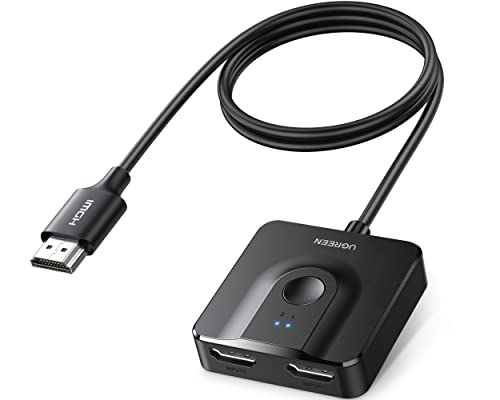
UGREEN HDMI Switch — Worth It for the Typical Living Room
The balanced all-rounder is where the worth-it answer is easiest: a typical stack, a shared screen, a remote and automation with an override, and build quality that makes the installation a one-time event. Best for: most households asking this article’s question. Not suited for: collector-scale counts.

Kinivo HDMI Switch — Worth It for Households That Share
The automation-first design’s value is measured in teaching nobody anything. If your screen serves several people of several technical levels, this is the family whose worth compounds fastest. Best for: family televisions. Not suited for: a desk, where a button is worth more than a butler.

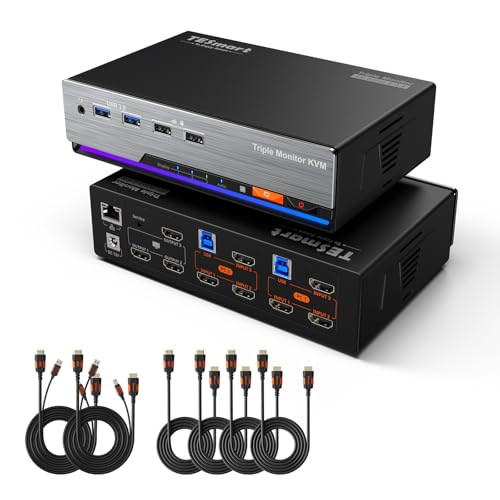
TESmart HDMI Switch — Worth It for Growing Collections
The capacity family’s worth is future-shaped: it is the purchase a collector makes once instead of twice. If your source count has a growth trend, the headroom is the value. Best for: media cupboards and shelves that are still acquiring machines. Not suited for: settled, small stacks.

Zettaguard HDMI Switch — Worth It for the Second Room
The value design makes the worth-it question trivial in the rooms it serves: every essential feature, honestly delivered, for a secondary television or a first experiment with the category. Best for: bedroom and spare-room sets. Not suited for: the demanding edge of runs and formats.
How to Get the Most Value If You Buy
Value in this category is extracted at installation, not at checkout. Buy the spare input. Place the box where its control method works and its cables hang slack. Connect sources one at a time and label them in the household’s language. Spend one evening on arrangement: the everyday source where thumbs land first, the insomniac device where automation treats it as home, the eager waker’s settings tamed. Write the map down. Then run the power-cycle ritual once, calmly, so the system’s recovery behaviour is a known fact rather than a storm-night discovery. Households that do these things report the category’s signature outcome — forgetting the product exists — and forgetting, here, is the entire return on investment.
The Arithmetic of Friction: Counting What the Switch Removes
Worth-it questions deserve arithmetic, so here is the honest version, counted in the only units this product deals in. Take a household that changes sources twice a day — a modest figure for a shared screen. By hand, each change costs a journey behind the television, a negotiation with cables by touch, and a small probability of disturbing something else in the nest. Call it two minutes of mild unpleasantness, which across a year is a full day of evenings spent crouching. With a switch, each change costs seconds and no posture at all. That is the entire ledger, and it is why frequency dominates every other variable in this article: the household that swaps twice a day is buying back a day a year, while the household that swaps twice a month is buying back an hour — and both are being offered the same box at the same shelf. Neither is wrong; they are simply purchasing different quantities of relief, and the worth-it answer follows the quantity with complete obedience.
There is a second column to the arithmetic that rarely gets counted: the failures avoided. Every manual swap is a small lottery of port wear, cable strain and disturbed connections, played nightly. Most tickets win nothing worse than a loose plug discovered mid-film, but the jackpot — a damaged port on the display itself — converts years of savings into one repair conversation. A switch retires the household from that lottery. Actuarial value is unglamorous, and it is also how a striking number of owners, interviewed a year later, explain why they would buy the box again without hesitation.
Three Households, Three Verdicts
The Household That Bought It for the Wrong Reason and Kept It Anyway
They bought the switch because a sale made it cheap, installed it in an afternoon, and discovered within a week that the benefit they had not shopped for — the games console from the previous generation, back from its drawer and played again — was the one they valued most. The lesson generalises: a switch’s worth often hides in the devices it resurrects, and households consistently underestimate how much of their stack is exiled at any given moment. Count your drawers before you decide you do not need one.
The Household That Waited a Year Too Long
They knew the question, asked it monthly, and answered it with “the TV has a free port if we move things”. A year of moving things followed — a year of the streaming stick living behind the soundbar’s port, of a laptop presentation performed from a kneeling position, of one console’s cable quietly fraying at the bend where it was levered weekly. When the switch finally arrived, its installation took forty minutes and its verdict took one evening. Their report is the one this article hears most: the product was never expensive; the delay was.
The Household That Correctly Said No
One streaming device, one screen, a household that watches together and changes nothing. They read articles like this one, ran the checklist, counted zero exiled devices and zero dreaded ports, and spent their money on a film night instead. Their verdict deserves its place here because it proves the checklist works in both directions: a worth-it framework that cannot say no is not a framework but a sales pitch. If your household is this one, close the tab with our respect — and know that the day a console, a work laptop or a second machine arrives, the question reopens itself and the answer will likely change.
What “Worth It” Looks Like After a Year
Ask owners at the one-year mark and their answers have a distinctive shape: they struggle to praise the switch because they have stopped perceiving it. The changeovers are unremarkable. The previous console gets played. The spare input, in most homes, is no longer spare — something arrived, exactly as predicted, and moved in without a project. The remote lives in its home. The map, taped under the box, has been consulted twice, both times successfully, both times at an hour when success mattered. This is the mature form of worth in infrastructure purchases: not delight, which fades, but the permanent absence of a category of small defeats. Households evaluating the purchase in advance should calibrate their expectations to that shape. You are not buying a thrill. You are buying the last time you ever crouch behind the television with a cable in your hand and a film paused on the screen — and for the right stack, that is worth a great deal more than the box costs.
The year’s perspective also settles the category’s recurring anxieties. The extra handshake, feared in advance, turns out to be an occasional few-second pause that the household stops noticing within a month. The CEC quirks, where they existed, were settled in the first week’s settings and have not been thought of since. The automation’s one argument with the sleepless streaming box is now household folklore with a known ending — the override, or the arrangement that prevents it. None of the feared costs compound; all of the hoped-for benefits do. That asymmetry — costs that shrink, benefits that accumulate — is the deepest reason the worth-it verdict in this category tilts positive for matched households, and it cannot be seen from the shop shelf, which is why articles like this one exist.
Worth It for Someone Else: The Accessibility Case
One household’s worth calculation deserves its own section because it is so often the real one: the home where the switch is bought not for the buyer’s convenience but for someone else’s independence. A parent whose hands no longer manage cables behind a television. A partner who loves films and games and should never need a technician — or a family member — to reach them. A child whose console time should not require an adult’s expedition. In these homes the switch, and especially its automation, is not a gadget purchase at all; it is the difference between entertainment that is independently accessible and entertainment that is mediated. Priced against that difference, the worth-it question answers itself in a sentence, and the buying advice simplifies to its kindest form: choose the design whose behaviour is most predictable on the worst day, set it up once with care, label it in large, plain language, and let someone you love press power and watch their thing appear.
The Opportunity Cost, Examined Honestly
Every purchase is also the purchases it prevents, so a rigorous worth-it article must ask what else the same modest sum and the same installation hour could buy for the same room. The honest rivals are few. Better cables alone do not create inputs. A universal remote polishes control of the devices you have but cannot connect the exiled one. A streaming device upgrade improves one source while the port problem stands untouched. A soundbar transforms the room’s audio — a genuinely rival joy — and leaves the nightly crouch exactly as it was. Measured against its actual rivals for the same money, the switch’s claim is distinctive: it is the only purchase on the list that changes the structure of the system rather than the quality of one component. Households whose pain is structural — too many sources, one screen — will find no substitute on the rival list. Households whose pain is a dull picture or thin sound should absolutely buy the rival instead, because the switch will not touch their pain at all. Worth, once again, is a matching exercise.
When the Answer Changes: Five Triggers to Revisit the Question
A “not worth it” verdict is a snapshot, and this article closes its analysis with the events that should reopen it. The first trigger is a new source — the obvious one — especially a console, which tends to arrive with its own ecosystem of reasons to stay connected. The second is a new display, paradoxically: households assume a new screen retires the question, then discover its ports are no more generous and considerably less reachable once mounted. The third is a household change — a partner moving in with their own machines, a child reaching gaming age, a parent moving in with theirs — because stacks merge faster than televisions multiply. The fourth is a room change: the screen goes on the wall, the furniture rearranges, the ports that were merely awkward become genuinely inaccessible. The fifth is the first failure: the evening a port, strained by a year of swaps, stops holding a cable properly, and the household learns the price of the lottery it had been playing. Any one of these converts this article from a curiosity into a shopping list. Until one arrives, the no-buyers have this cluster’s respect — and its prediction, offered warmly, that they will be back.
The Trial You Can Run Before Spending Anything
Households still undecided can settle the question empirically, free, in one week — and this article recommends the experiment warmly because its results are unambiguous. For seven days, keep a tally on the television itself: a mark for every cable swap, every crouch behind the set, every occasion a device was wanted and not used because connecting it was too much trouble, every time someone asked someone else to “put the other thing on”. At the week’s end, read the tally as the switch’s job description. A page of marks is a purchase order written by your own household. A blank page is a no, delivered by evidence rather than opinion, and worth just as much. In between lies the honest grey zone, where the deciding question is the spare input’s: is a device coming that will fill this page next season? Run the trial and the worth-it question stops being an argument about a product and becomes a measurement of a home — which is what it should have been from the start.
A Word About Buying It as a Gift
Switches occupy a curious niche in the gift economy: unglamorous to unwrap, disproportionately thanked by February. If you are considering one for someone else’s stack, the worth-it analysis inverts in one helpful way — the giver can see the recipient’s friction more clearly than the recipient can, because the recipient has normalised it. The crouching, the exiled console, the presentation performed from the floor: from the visitor’s chair, these are obviously a problem with a small known cure. Give the box with its installation offered as part of the gift, because the hour of setup is where the value is unlocked and where a recipient left alone with cables may stall. Include the label-making and the map. A switch given that way is not really an electronics gift at all; it is the gift of never thinking about the back of the television again, delivered in a box too small to suggest its own usefulness.
The Regret Audit: What Owners Wish They Had Done Differently
The most instructive evidence in any worth-it enquiry is not satisfaction but regret, so this article closes its case with the regrets owners actually report — none of which, tellingly, is “buying the switch”. The first regret is size: buying exactly today’s input count and meeting the new console with a full box. The second is placement: installing the box where its remote could not see or its button could not be reached, and living with the workaround instead of moving it in the first week. The third is cables: strangling a good switch with the drawer of elderly leads and spending a month misdiagnosing the result. The fourth is silence: never labelling the inputs, so the system’s knowledge lived in one person’s head and every absence became a phone call. Notice the shape of that list. Every regret is about how the purchase was executed, none is about whether it should have happened — and that asymmetry, gathered across the category’s owners, is the strongest single piece of evidence this article can offer. The worth-it risk in this category is not buying. It is buying carelessly.
So, Is It Worth It? The Verdict With Its Working Shown
Assemble the article’s evidence. The product removes a specific, countable friction and nothing else; its costs are an hour, a shelf corner and a week of calibration, paid once; its benefits are paid back nightly, in the currency the friction was charged in. It pays off fastest where sources are many, users are several, ports are unreachable and changeovers are frequent — and the more of those four a household holds, the more lopsided the verdict becomes. It fails to pay only where the friction does not exist: the single-source home, the receiver-hubbed system, and the two-screen dream that belongs to a different product entirely. Between those poles sits the undecided household, for whom this article built a tally experiment that costs nothing and answers everything. That is the complete working. For the majority of readers who arrived here — and people do not search this question for a stack that works perfectly — the answer is yes: worth it, bought once, bought with a spare input, and installed like you mean it.
One More Lens: Worth It per Year of Service
Spread the decision across the product’s realistic lifespan and the case sharpens further. A switch has no battery to fade, no software to abandon, no account to close; a well-bought one serves until the room itself is rebuilt, which in most homes means years of nightly duty. Divide even a mid-range purchase across those years and the nightly cost of the removed friction becomes trivially small — while the rival outcomes, the worn port and the exiled console, do not shrink with time at all. Longevity is the quiet multiplier in every infrastructure purchase, and this category’s products are unusually long-lived because they are unusually simple. Buy the version your future stack needs, and time itself becomes the strongest argument in this article.
Time, friction and fit — run the question through those three lenses and it stops being a matter of opinion. If the tally page fills, if the ports are a journey, if the next device is already imaginable, the box is worth it in the only sense that ever mattered: your evenings get measurably, permanently easier, and the product that did it asks for nothing in return but a shelf corner and a label.
The Counterfactual Shelf: Your Stack, Imagined Without One
One final test, the counterfactual: picture your exact stack one year from now, with no switch bought. The new device you can already imagine has arrived — where does it live? If the honest picture shows it plugged into the port the streaming box used to occupy, with the streaming box demoted to a drawer, the counterfactual has voted. Picture the wall-mounted screen with its third long cable added by optimism and secured by hope. Picture the port that has absorbed another year of nightly swaps. Now picture the same year with the box bought this week: every device resident, one run to the screen, a spare input already consumed by the newcomer it was bought for, and a household that has forgotten this article existed. The distance between those two pictures is the product’s worth, drawn rather than argued — and it is visible, in most multi-source homes, from wherever you are sitting.
If the two pictures differ, you have your answer, and it did not come from us — it came from your own shelf, honestly imagined. That is how every worth-it question in this cluster is designed to end: not with a verdict handed down, but with a household able to see its own next year clearly enough to choose.
And If the Answer Is Yes: The Smallest Sensible Next Step
Deciding the question is the hard part; acting on it should be deliberately small. Do not begin by ordering. Begin with the audit this cluster repeats like a refrain: count the sources on paper, name the next one, sketch the sound path, measure the real cable routes around the furniture. That ten-minute exercise converts a verdict into a specification — this many inputs, this control style, this power choice, this brand family — and it is the difference between the owners in the regret audit and the owners in the forgetting club. Then buy once, install by the ritual, and let the first week of calibration happen on purpose. The worth-it question, answered and acted on that way, does not reopen. It retires.
Yes, then — for the household this article describes, which is most households that go looking for it. Worth it in the first week as relief, worth it in the first year as infrastructure, and worth it in the fifth year as the small, silent reason a stack of machines from different decades still behaves like one system that somebody designed on purpose.
The Household Meeting: Getting Everyone’s Answer Before You Buy
One procedure improves worth-it decisions in shared homes more than any other in this article, and it costs an evening’s conversation: ask the household. Not “should we get a switch?” — a question about a box nobody can picture — but the tally questions in disguise. Who has a device they cannot use on the big screen? Who dreads the back of the television? What would you watch or play if connecting it took ten seconds? The answers surface the exiled devices, the feared ports and the suppressed wishes that a single shopper, however observant, consistently undercounts — because friction borne by other people is invisible from your own chair. Households that hold this meeting buy the right size the first time, with the spare input sized by everyone’s future rather than one person’s. And households whose meeting produces a unanimous shrug have received the other valuable verdict, delivered by the only jury whose opinion matters: not worth it, here, yet.
Hold the meeting, run the tally, trust the count. The worth-it question is one of the few in consumer electronics that a household can answer about itself with complete certainty before spending anything — and that certainty, one way or the other, is the real product this article has been selling.
The Answer, Given One Final Stress Test
Stress-test the yes with the hardest honest question: if the switch vanished from a matched household’s stack tonight, how long before it was replaced? The owners this article has learned from answer in days, not months — usually by the second evening of crouching, exiling and explaining. A product whose absence is felt that quickly, and whose presence is not felt at all, has passed the only worth-it test that cannot be gamed by marketing. If your household’s honest answer to the same question is a shrug, believe the shrug. If it is a wince, believe that instead, and buy the box.
Days, not months. Remember the wince test when the tally and the checklist disagree — the body usually files its report before the spreadsheet does.
Believe the wince, and the checklist below will merely formalise what your household already knows.
Is an HDMI Switch Worth It? The One-Paragraph Answer
Yes, if your sources crowd one screen, your ports are a journey, your household shares, or your next device is already imaginable — because the box removes a nightly friction permanently for a one-time hour of setup. No, if none of that is true. The rest of this article was the working; this paragraph is the answer it earns.
The Decision Checklist
Answer honestly; the verdict assembles itself. Do your sources outnumber your display’s usable inputs, or will they within a year? Are the display’s ports awkward, high, wall-blocked or otherwise a place you dread reaching? Does more than one person use the screen? Is at least one device currently exiled — unplugged, drawered, or borrowed away — for want of a port? Would a spare input make a device you already want straightforward to add? Is your sound layout simple enough to sketch — sources, screen, soundbar — on one line? Six questions; four or more yes answers mean the switch is worth it for your home, and the only remaining decisions are the buying guide’s: count, control, power, brand. Mostly no answers mean skip it in good conscience. And if the question that brought you here was really about a second screen, the checklist has done you a different favour: it has pointed you at the splitter shelf, where your money will actually buy the thing you want.
Who Gets Their Money’s Worth and Who Should Skip It
When waiting is the right answer
Sometimes the correct verdict is not no, but not yet. If your space, routine or budget is about to change — a move, a new job pattern, a renovation — the hdmi switch that suits today’s setup may be wrong for next season’s. Waiting costs nothing and buys information: you learn whether the need survives the change. The exception is when the need is already costing you weekly in time or frustration; then waiting is itself the expensive option, and the analysis earlier in this piece applies with full force. Distinguish a stable recurring need from a temporary itch before deciding.
The one-question shortcut
If the full analysis still leaves you undecided, ask the question that cuts through it: if this hdmi switch disappeared from your home after a month of use, would you replace it immediately, eventually, or not at all? People answer honestly when the purchase is framed as a loss. Immediate replacers should buy with confidence and choose the better model; eventual replacers should buy modestly; the not-at-all group has its answer too. In a household where the gear gets used hard on weekends and barely touched midweek, that instinct, checked against the use-frequency count, settles the worth-it question more reliably than any feature comparison.
Count the uses, honestly
The worth-it question for a hdmi switch is mostly a frequency question. Estimate how many times a month the product would genuinely be used in your routine — not the enthusiastic first fortnight, but month four, when the novelty has worn off. In a household where the gear gets used hard on weekends and barely touched midweek, a hdmi switch used weekly almost always justifies itself through saved time, avoided workarounds or better results, while the same product used twice a year is usually an expensive storage obligation. If your honest count is low, borrowing, hiring or using a service is the mathematically sound answer, and there is no shame in it.
The workaround you are already paying for
Most people considering a hdmi switch are already solving the problem somehow — with a slower method, a borrowed tool, a workaround that costs time or produces worse results. Price that workaround in attention and frustration, not just money: how often does it interrupt you, and what does the interruption cost the rest of your day? A purchase is worth it when it retires a recurring annoyance, not when it merely upgrades a process that was already painless. If your current workaround barely bothers you, the honest verdict for you is probably to skip the purchase.
Lifespan changes the whole calculation
A hdmi switch that serves for many years spreads its cost across thousands of uses; one that wears out, dates quickly or loses its supporting ecosystem does not. Judge lifespan by construction, consumable availability and how actively the maker still supports the line, rather than by optimism. This is where the picks discussed earlier differ most meaningfully for value: the model with the longer realistic service life can be the better value even when it is not the cheapest route in, because the cost per year of service is what your household actually pays.
The resale and hand-me-down exit
Value calculations usually assume you keep a hdmi switch forever, but a healthy second-hand market changes the risk. Products in the Monitors category that hold their appeal tend to resell or hand down easily, which means a wrong decision is recoverable rather than total. That exit value argues for buying the respected model over the obscure bargain: if your circumstances change, the known hdmi switch finds a new home quickly. An ultra-cheap alternative with no following is the one that becomes pure sunk cost in a cupboard.
Keep the notes with the product’s paperwork; they become the baseline every later adjustment is judged against.
Write the conclusion of that check down before you order, so the decision survives contact with a tempting listing.
That single habit separates owners who stay pleased with their choice from owners who quietly start shopping again within a season.
Treat it as part of the purchase itself, not as homework to do after the box arrives.
None of this requires expertise — only the willingness to check your own routine before trusting a generic recommendation.
Frequently Asked Questions
Is an HDMI switch worth it for gaming?
For a gaming household, usually yes — gaming is the use case that accumulates sources fastest, between current and previous console generations, a PC and handheld docks. A switch passes the selected signal through without a processing stage, so its worth question is about matching, not speed: choose a design whose stated support covers the most demanding combination your console and display actually share, keep cables short and sound, and the box disappears from play while ending the port rotation between machines.
How long does an HDMI switch take to pay for itself?
Not in money — in evenings. The switch’s return is a chore deleted: every changeover that used to involve a crouch, a torch and a prayer becomes a button press. Households that change sources daily feel the payback within the first fortnight; households that change monthly take longer to feel it, which is exactly why frequency of swapping belongs in the worth-it calculation. Count your own changeovers honestly for a week before buying, and you will know your payback period to the day.
Is a switch worth it if my TV already has enough inputs?
Sometimes — the value shifts from capacity to convenience and protection. If the ports are reachable and your household is fluent in the television’s input menu, the honest answer may be no. If the screen is wall-mounted, the ports are a expedition, several people share the set, or devices rotate through it often, a switch still earns its place by moving all the traffic to a reachable, replaceable box and giving the room one simple control story. Judge it against your friction, not your port count.
What if I buy one and it is not worth it?
This category has the softest landing of any in the stack. A switch that disappoints in the main room almost always finds work in a second one — a bedroom television, a desk monitor, a relative’s stack — because the need it serves is everywhere and the box is small, durable and undemanding. Before exiling it, though, run this cluster’s diagnosis: most “not worth it” verdicts in the first week trace to a cable, an arrangement or a setting, and are reversible in an hour. Judge the configured system, not the first handshake.
Is an automatic switch worth the extra over a manual one?
It depends entirely on who operates the system and from where. For a shared living-room screen, automation is the feature that converts a gadget into infrastructure — the television follows the household, and nobody learns anything. For a single user at a desk, the manual button is faster than any automation and the extra buys nothing. The middle path most households end up loving is an automatic design with a decisive manual override: the system decides on ordinary evenings, and the human decides on the exceptions.
Will a switch be worth it for my next TV too?
Very likely, because the forces that create the need are not shrinking: sources multiply, and new displays are not notably generous with inputs. A switch bought with headroom — an input spare, format support matched with room to grow, a control style that travels between rooms — routinely serves two displays in sequence, and its small size and lack of accounts or software mean nothing about it expires. Of all the components in a modern stack, it is among the safest to buy well once.