Where to buy
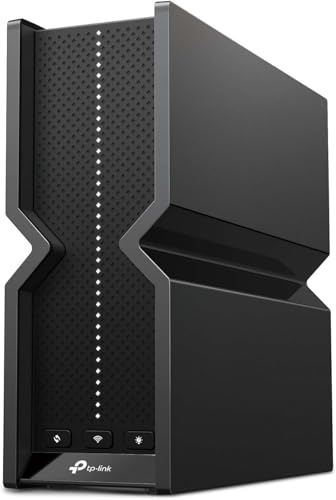
These are the three picks from our wifi 7 router black friday deals shortlist we would check first. Check the latest price, availability and delivery on Amazon. Orders are placed on Amazon, and prices during Black Friday Week can change by the hour, so the figure on the live listing is the one that counts. We may earn a commission from qualifying purchases.
- Best overall: TP-Link Archer BE550 Tri-Band BE9300 WiFi 7 Router
- Best budget: TP-Link Archer BE230 Dual-Band BE3600 WiFi 7 Router
- Best for multi-gig homes: ASUS RT-BE88U WiFi 7 Router with Dual 10G Ports
Disclosure: As an Amazon Associate, ilcastellomenu.com earns from qualifying purchases. Links to Amazon on this page are affiliate links; they cost you nothing extra. Listing details such as price and availability change often — during this event they can change several times a day — so check the current Amazon listing before you buy.
WiFi 7 Router Black Friday Deals: The Upgrades Worth Your Money
Amazon Black Friday Week runs from November 19 to November 30, 2026. Black Friday itself is November 27, and Cyber Monday closes the event on November 30. Routers are one of the smartest categories in the whole sale, because a router is infrastructure: it is the one box every phone, laptop, console, television and smart bulb in your home depends on, and it is usually bought years late, after the old one has been quietly strangling a fast internet plan. These wifi 7 router black friday deals are the six we would actually spend money on: a tri-band all-rounder with full 2.5G ports, a dual-band budget pick that undercuts most WiFi 6 routers, a wired multi-gig specialist from ASUS, a three-node mesh kit for houses with dead zones, a 19 Gbps flagship with dual 10G ports, and a premium mesh system built for 10 Gbps internet plans.
Every price in this guide was checked against Amazon’s own catalogue data on November 20, 2026, and every price is written as a dated sighting: “seen at $149.99 on November 20, 2026” means exactly that, no more. Router prices move hourly during Black Friday Week. A deal can be one figure at breakfast and another by dinner, and a lightning deal can expire while it sits in your cart. Where the catalogue also returned a list price for the same router, we show the percentage that pair of numbers represents; where no list price came back, we print no percentage at all, because an invented discount is worse than none. Always check the live price on the listing before you buy.
One decision matters more than any single discount here, and it is the band decision, because it shapes everything the router can do for the next five years. WiFi 7’s headline features — the 6 GHz band, 320 MHz channels, Multi-Link Operation (MLO) and 4K-QAM — only fully arrive on tri-band hardware. A dual-band WiFi 7 router still gets MLO across 2.4 and 5 GHz, wider effective throughput and better latency handling than WiFi 6, and at the budget end that trade is often the right one. But if your home already owns WiFi 6E or WiFi 7 phones and laptops, the 6 GHz band is where the clean, uncongested airtime lives, and the tri-band picks below are the ones that use it. The second decision is ports: a router whose WAN and LAN ports are all 2.5 Gbps or faster can actually deliver a multi-gig internet plan to wired devices, while a gigabit-port router quietly caps a 2 Gbps fibre plan at half speed. Every review below states the port layout plainly, because it is the specification most often buried and most often regretted.
It also helps to read a router deal the way a network engineer would. The headline number — BE9300, BE19000 — is a theoretical sum across all bands that no single device will ever see; what matters in practice is the speed of the band your devices actually use, the number of streams, and whether the router’s processor and ports can keep up. Coverage claims are measured in open, favourable conditions, so treat square-foot figures as a comparison tool between models rather than a promise about your walls. With those two cautions in mind, the six picks below were chosen because their verified prices buy real, specifiable capability — not because their boxes carry the biggest number.
In this guide
Quick Picks
Short on time? These are the six deals, the buyer each one suits, and the price we verified on November 20, 2026. Every price is a dated sighting — check the live price before you buy.
| Best for | Deal | Spotted price | Link |
|---|---|---|---|
| Best overall | TP-Link Archer BE550 Tri-Band BE9300 WiFi 7 Router | seen at $149.99 on November 20, 2026 (list $249.99) | Check on Amazon |
| Best budget | TP-Link Archer BE230 Dual-Band BE3600 WiFi 7 Router | seen at $74.99 on November 20, 2026 (list $119.99) | Check on Amazon |
| Best for multi-gig homes | ASUS RT-BE88U WiFi 7 Router with Dual 10G Ports | seen at $289.99 on November 20, 2026 (list $349.99) | Check on Amazon |
| Best mesh system | TP-Link Deco BE25 Dual-Band BE5000 WiFi 7 Mesh System (3-Pack) | seen at $249.99 on November 20, 2026 (list $299.99) | Check on Amazon |
| Best flagship | TP-Link Archer BE800 Tri-Band BE19000 WiFi 7 Router | seen at $309.99 on November 20, 2026 (list $499.99) | Check on Amazon |
| Best premium mesh | TP-Link Deco 7 Pro BE67 Tri-Band BE14000 WiFi 7 Mesh System (3-Pack) | seen at $449.99 on November 20, 2026 (list $499.99) | Check on Amazon |
How These Deals Were Chosen
We verified every pick in this guide the slow way: by searching Amazon’s own catalogue data for the exact brand and model, matching the returned listing title word for word against the router we intended to recommend, and recording the price and list price the catalogue returned on November 20, 2026. That process sounds basic, but it eliminates the two failure modes that fill most Black Friday roundups — links that land on a different model than the headline promises, and “deals” whose prices were copied from a roundup of a roundup until nobody knows which year they belong to. Router ranges are especially treacherous here: TP-Link alone sells several Archer models whose names differ by a single digit while their band counts, port speeds and prices differ enormously, and a renewed listing can sit beside the new one at a similar price. If a search did not return a listing we could match with confidence, the router did not get a link, however good it looked.
A deal then had to clear three further bars. First, the product had to be a current, genuine WiFi 7 router or mesh system from its maker’s present range — no marketplace lookalikes trading on a famous name, no previous-generation WiFi 6 hardware wearing a Black Friday banner, and no renewed units presented as new. Second, the hardware had to be honest at the price: the port speeds, band structure and stream counts stated in the review had to come from the verified listing, not from a sibling model’s page. Third, the price had to be a price worth printing. A token few dollars off a router that sits at that figure all year is not a deal, so we favoured listings where the verified price sat meaningfully below the list price returned alongside it — in four of the six cases here, by more than a third.
We also weighted what the discount buys in practice. A percentage off a router with gigabit-only ports is worth less to a household on a 2 Gbps fibre plan than the same percentage off one with 2.5G or 10G ports throughout, which is why port layouts appear in every review and why the ASUS pick’s dual 10G ports earn it a slot despite a shallower discount. Where a figure in a review comes from the maker’s own specifications — band speeds, coverage, port counts — it is presented as the maker’s figure, not as an independent test result. And where two near-identical models sit a few dollars apart, we chose the one whose specification we could verify completely rather than the one with the bigger headline.
The Six Deals, In Detail

1. TP-Link Archer BE550 Tri-Band BE9300 WiFi 7 Router — Best Overall
Badge: Best Overall. If one specification defines the sensible WiFi 7 upgrade, it is this one: tri-band, with a real 6 GHz radio, 2.5 Gbps ports everywhere, and a price that undercuts the WiFi 6E routers it replaces. The Archer BE550 is a 6-stream BE9300 design per the verified listing — the class figure is the sum across its 6 GHz, 5 GHz and 2.4 GHz bands — with six internal antennas, coverage rated by the maker for up to 2,000 sq. ft., and the detail that matters most at this price: every port, WAN and LAN alike, runs at 2.5 Gbps, so a multi-gig internet plan is never strangled by a gigabit socket. WiFi 7’s signature features are present, including Multi-Link Operation, and the router expands later via EasyMesh if a dead zone appears, supports VPN connections, and is managed through TP-Link’s Tether app. It is the complete package at the joint-deepest verified percentage in this guide, which is what the best-overall slot is for.
Spec snapshot: Tri-band WiFi 7 BE9300, 6 streams; 6 GHz band included; full 2.5G ports (WAN and LAN); 6 internal antennas; maker-rated coverage up to 2,000 sq. ft.; EasyMesh expansion; VPN support; HomeShield security suite.
Who it suits: Households upgrading from WiFi 5 or early WiFi 6 who want the one purchase that ends the upgrade cycle for years — especially anyone on a 1–2.5 Gbps internet plan whose current router’s gigabit ports are silently capping it.
Deal details: Seen at $149.99 on November 20, 2026, against a $249.99 list price returned by the same catalogue check — 40% below list on the verified figures. Tri-band WiFi 7 with all-2.5G ports launched in a distinctly higher price tier; at this figure the BE550 costs what dual-band WiFi 6 routers cost, while out-specifying them on every axis. Check the live price before you buy, and check your modem or ONT: the router needs a separate modem for most cable and DSL services.
Strengths
- Tri-band with a real 6 GHz radio: the full WiFi 7 experience, not the cut-down version.
- Every port runs at 2.5 Gbps — multi-gig plans reach wired devices intact.
- EasyMesh expansion means a dead zone later is a small add-on, not a new system.
Trade-offs
- No 10G port — homes with 5 Gbps or faster plans, or a 10G NAS, should look at picks three and five.
- Internal antennas and a plain enclosure: it is built to be tucked away, not displayed.
- HomeShield’s advanced features sit behind a subscription tier; the free tier covers the basics.
Verdict — Best for: most households making the WiFi 7 jump this year. Not suited for: 10G home networks or buyers who need USB storage sharing. Check on Amazon · See the Archer BE550 listing · View full specs and the live price

2. TP-Link Archer BE230 Dual-Band BE3600 WiFi 7 Router — Best Budget
Badge: Best Budget. Every guide needs the pick that proves the floor has risen, and this is it: a genuine WiFi 7 router, with Multi-Link Operation, a quad-core processor and 2.5 Gbps ports, at the lowest verified price here. The Archer BE230 is a dual-band BE3600 design per the verified listing — 4 streams across 2.4 and 5 GHz — with two 2.5G ports and three gigabit ports, a USB 3.0 port that many routers at twice the price omit, four external antennas, and a 2.0 GHz quad-core CPU. What it gives up against pick one is the 6 GHz band; what it keeps is everything else that makes WiFi 7 feel different in daily use — MLO’s ability to send data across both bands at once for lower latency, 4K-QAM’s denser modulation on the 5 GHz band, and far better handling of crowded airtime than any WiFi 6 router at this price. For apartments and smaller homes, that is the correct trade.
Spec snapshot: Dual-band WiFi 7 BE3600, 4 streams; 2× 2.5G ports + 3× 1G ports; USB 3.0; 2.0 GHz quad-core CPU; 4 antennas; MLO, VPN, EasyMesh, HomeShield, Private IoT network support.
Who it suits: Apartments, smaller homes, first-router buyers and anyone replacing a failing WiFi 5 or WiFi 6 box on a strict budget — plus households whose devices are mostly WiFi 6 or older, which cannot use a 6 GHz band yet anyway.
Deal details: Seen at $74.99 on November 20, 2026, against a $119.99 list price returned by the same catalogue check — 38% below list on the verified figures. The honest framing is not the percentage but the specification it buys: a current-generation WiFi 7 router with multi-gig ports at a figure that used to mean a basic WiFi 6 model on a good day. Check the live price before you buy; budget routers are among the most volatile listings of the event.
Strengths
- Real WiFi 7 — MLO and 4K-QAM included — at the guide’s lowest price.
- Two 2.5G ports and USB 3.0: port generosity unheard of in this tier a year ago.
- Quad-core processor keeps VPN and QoS features from becoming bottlenecks.
Trade-offs
- No 6 GHz band — WiFi 6E/7 devices miss the cleanest airtime; pick one fixes that.
- Dual-band design shares 5 GHz between clients and any EasyMesh backhaul.
- Coverage suits apartments and smaller homes; large or multi-storey houses need mesh (pick four).
Verdict — Best for: budget WiFi 7 upgrades and smaller homes. Not suited for: large houses, or homes full of 6 GHz devices. Check on Amazon · See the Archer BE230 listing · View budget specs and the live price

3. ASUS RT-BE88U WiFi 7 Router — Best for Multi-Gig Homes
Badge: Best for Multi-Gig Homes. Most routers are wireless devices with some ports attached. The RT-BE88U is the opposite: a wired networking hub that also does WiFi 7 very well. Per the verified listing it carries two 10G ports — one of them an SFP+ combo for fibre modules — plus four 2.5G ports and four gigabit ports, ten Ethernet sockets in total, behind a dual-band WiFi 7 radio rated up to 7.2 Gbps. That port field is the argument: a 10G NAS, a multi-gig internet feed, a wired desktop, a switch uplink and a games console can all run at full speed simultaneously, which no other pick here can claim. ASUS adds its AiMesh expansion, VPN support, and — a genuine differentiator — network security and parental controls with no subscription attached, where several rivals charge a yearly fee for the same features.
Spec snapshot: Dual-band WiFi 7, up to 7.2 Gbps class; 2× 10G ports (incl. SFP+ combo), 4× 2.5G ports, 4× 1G ports; AiMesh compatible; subscription-free network security and parental controls; VPN support.
Who it suits: Homes with a NAS, a home server, a wired office or a multi-gig fibre plan — anyone whose bottleneck is copper, not air — and buyers who dislike subscription security suites on principle.
Deal details: Seen at $289.99 on November 20, 2026, against a $349.99 list price returned by the same catalogue check — 17% below list on the verified figures, the shallowest percentage among the standalone routers here. We include it anyway because the comparison that matters is against other dual-10G routers, where this figure is aggressive, and because ten fast ports have a value no percentage captures: this is the one pick that will not need replacing when your internet plan doubles. Check the live price before you buy, and note it is dual-band — the trade for the port field is the missing 6 GHz radio.
Strengths
- Ten Ethernet ports including dual 10G: the wired backbone pick of the guide.
- Security and parental controls with no subscription — a real saving over rival suites.
- AiMesh lets it become the hub of a mesh later rather than being replaced by one.
Trade-offs
- Dual-band: no 6 GHz radio, so WiFi 7’s cleanest band is absent (picks one and five have it).
- Premium price against pick one if your home is wireless-only.
- Large, workmanlike enclosure built for a shelf in a study, not a living-room display.
Verdict — Best for: wired-heavy homes, NAS owners and multi-gig fibre plans. Not suited for: buyers whose priority is 6 GHz wireless speed. Check on Amazon · See the RT-BE88U listing · View port specs and the live price

4. TP-Link Deco BE25 Dual-Band BE5000 WiFi 7 Mesh System (3-Pack) — Best Mesh System
Badge: Best Mesh System. Some homes do not have a router problem; they have a geography problem. Thick walls, long floorplans and upstairs bedrooms defeat any single box, however many antennas it wears, and the honest fix is several radios working as one network. The Deco BE25 3-pack is that fix at a sensible price: a dual-band WiFi 7 BE5000 system per the verified listing, 4 streams with a combined class speed of 5 Gbps, 240 MHz channels on the 5 GHz band, and maker-rated coverage up to 6,600 sq. ft. across the three units. Each unit carries two 2.5G ports, so satellites can use wired backhaul where you have Ethernet — the single biggest real-world mesh upgrade — and the system layers on MLO, AI-driven roaming that moves devices between units under one network name, VPN support and HomeShield security. Setup runs through the Deco app and is genuinely a ten-minute job.
Spec snapshot: Dual-band WiFi 7 BE5000 mesh, 3 units; 4 streams, 5 Gbps class; 240 MHz channels; maker-rated coverage up to 6,600 sq. ft.; 2× 2.5G ports per unit; wired backhaul support; MLO, AI-Roaming, VPN, HomeShield.
Who it suits: Larger, multi-storey or awkwardly shaped homes with dead zones; families who want one network name and automatic roaming instead of extender juggling; and anyone whose router must live where the internet enters, not where coverage is needed.
Deal details: Seen at $249.99 on November 20, 2026, against a $299.99 list price returned by the same catalogue check — 17% below list on the verified figures. Mesh systems discount less flamboyantly than single routers, and a three-node WiFi 7 kit at this figure undercuts most tri-band WiFi 6E kits while covering more area. Check the live price before you buy, and count your rooms honestly: the 2-pack suits flats and small houses, while this 3-pack is the one for family homes.
Strengths
- Three nodes end dead zones that no single router — at any price — can fix.
- 2.5G ports on every unit allow wired backhaul, the fastest mesh configuration.
- One network name with AI roaming: devices follow you around the house seamlessly.
Trade-offs
- Dual-band: backhaul shares the 5 GHz band with clients unless you wire the satellites.
- No 6 GHz band — pick six is the mesh upgrade for 6 GHz households.
- App-led management; tinkerers who want deep web-admin controls may prefer the Archer line.
Verdict — Best for: family homes with dead zones and multi-storey layouts. Not suited for: small flats (overkill) or 6 GHz-first households. Check on Amazon · See the Deco BE25 listing · View coverage specs and the live price

5. TP-Link Archer BE800 Tri-Band BE19000 WiFi 7 Router — Best Flagship
Badge: Best Flagship. At the top of the range, the question stops being “is it fast enough?” and becomes “is there anything it cannot do?” The Archer BE800’s verified specification is TP-Link’s maximal answer: tri-band BE19000 with 12 streams, two 10G ports and four 2.5G ports, eight high-performance antennas, 320 MHz channels on the 6 GHz band, and an LED screen on the front that shows status and information at a glance. This is the router for the home that treats networking as a hobby and a utility at once — the one that feeds a 10G switch, a NAS, several wired workstations and a houseful of WiFi 7 devices simultaneously, with VPN client and server support running remote access without per-device software. It is also, not coincidentally, the deepest flagship discount in the guide.
Spec snapshot: Tri-band WiFi 7 BE19000, 12 streams; 320 MHz channels; 2× 10G ports + 4× 2.5G ports; 8 high-performance antennas; LED display; EasyMesh; VPN client and server; HomeShield; Private IoT network.
Who it suits: Enthusiasts, streamers, home-lab builders and large busy households on multi-gig plans — anyone who has ever hit a router’s limit and sworn not to again.
Deal details: Seen at $309.99 on November 20, 2026, against a $499.99 list price returned by the same catalogue check — 38% below list on the verified figures. Flagships carry flagship launch prices, and a cut of this depth on the current top of TP-Link’s consumer range is the strongest flagship value story in the guide. Check the live price before you buy, and be honest about need: everything pick one does, this does faster and wider — whether your home can tell the difference is the real question.
Strengths
- The complete specification: tri-band 12 streams, dual 10G, 320 MHz channels.
- 38% below list — flagship hardware at a mid-range sale price.
- VPN client and server, EasyMesh and an IoT network: the feature list has no gaps.
Trade-offs
- Large and heavy — it needs a proper shelf, not a corner of a TV stand.
- Most homes will never use half its capacity; pick one serves them identically in practice.
- LED screen is a flourish, not a necessity — you are paying partly for theatre.
Verdict — Best for: enthusiasts and multi-gig households buying once for the long term. Not suited for: ordinary homes, where pick one delivers the same daily experience for half the money. Check on Amazon · See the Archer BE800 listing · View flagship specs and the live price

6. TP-Link Deco 7 Pro BE67 Tri-Band BE14000 WiFi 7 Mesh System (3-Pack) — Best Premium Mesh
Badge: Best Premium Mesh. If pick four is the mesh for most houses, this is the mesh for the house that has everything — including a 10 Gbps internet plan. The Deco 7 Pro BE67 is a tri-band BE14000 system per the verified listing: 8 streams delivering up to 8,647 Mbps on the 6 GHz band, 4,324 Mbps on 5 GHz and 688 Mbps on 2.4 GHz, with 320 MHz channels, MLO and 4K-QAM throughout, and maker-rated coverage up to 8,100 sq. ft. for over 200 devices. Each of the three units carries a 10 Gbps port alongside 2.5G and gigabit ports plus USB 3.0, which enables the configuration lesser mesh systems cannot offer: a full 10G wired backhaul between nodes, so the wireless hop between floors costs nothing. AI-Roaming keeps one network name across the whole property, and the Deco app keeps management at the same ten-minute standard as its smaller sibling.
Spec snapshot: Tri-band WiFi 7 BE14000 mesh, 3 units; 8 streams (up to 8,647 Mbps on 6 GHz); 320 MHz channels; maker-rated coverage up to 8,100 sq. ft., 200+ devices; per unit: 10G + 2.5G + 1G WAN/LAN ports, USB 3.0; 10G wired backhaul; AI-Roaming, MLO, HomeShield.
Who it suits: Large properties, homes with 5–10 Gbps fibre, and households dense with WiFi 7 devices — plus anyone wiring a new build who wants the backhaul as fast as the access points.
Deal details: Seen at $449.99 on November 20, 2026, against a $499.99 list price returned by the same catalogue check — 10% below list on the verified figures, the shallowest percentage in this guide. We include it anyway because the comparison that matters is against other tri-band WiFi 7 mesh systems with 10G ports, a small class where this figure is competitive, and because for the right house it replaces both a mesh system and a future upgrade. Check the live price before you buy, and confirm your internet plan justifies it: on a 1 Gbps plan, pick four delivers the same experience for far less.
Strengths
- Tri-band with a full-speed 6 GHz radio in every node — no dual-band compromises.
- 10G port per unit enables true 10G wired backhaul between floors.
- Coverage and device capacity (8,100 sq. ft., 200+ devices) end the upgrade question.
Trade-offs
- The guide’s highest price — justifiable only for large homes or multi-gig plans.
- Shallowest discount here (10% below list): you are buying capability, not a bargain.
- Three premium nodes still need sensible placement; concrete-heavy homes may want wired backhaul runs.
Verdict — Best for: large homes and multi-gig fibre households wanting mesh without compromise. Not suited for: gigabit-or-slower internet plans, where pick four matches it in practice. Check on Amazon · See the Deco 7 Pro BE67 listing · View premium mesh specs and the live price
Deals We Left Out, and Why
A guide is defined as much by what it excludes. Our catalogue checks surfaced plenty of other router listings on November 20, 2026, and several tempting ones did not make the cut. The renewed versions of popular models are the clearest example: a renewed Archer BE550 appeared in our checks at a lower figure than the new unit, and renewed can be a sensible buy — but a router is the one device that holds your network’s keys, passwords and configuration, and for the security-critical box in the house we recommend new hardware with a full warranty and a clean configuration history. The WiFi 6 and 6E bargains were passed over on generational arithmetic: several are excellent routers, and their sale prices undercut everything here, but buying a new previous-generation router in the year WiFi 7 hardware reaches these prices locks in a standard your next phones and laptops will outgrow. Finally, several listings carried prices identical to the figures those same routers wear outside the event. A Black Friday banner on an everyday price is marketing, not a deal, and this guide exists to tell the two apart.
Comparison Table
| Pick | Bands / class | Fastest ports | Seen Nov 20, 2026 | Watch out for |
|---|---|---|---|---|
| TP-Link Archer BE550 | Tri-band BE9300 | 2.5G throughout | $149.99 (list $249.99) | No 10G port |
| TP-Link Archer BE230 | Dual-band BE3600 | 2× 2.5G | $74.99 (list $119.99) | No 6 GHz band |
| ASUS RT-BE88U | Dual-band, 7.2 Gbps class | 2× 10G, 4× 2.5G | $289.99 (list $349.99) | No 6 GHz band |
| TP-Link Deco BE25 (3-Pack) | Dual-band BE5000 mesh | 2× 2.5G per unit | $249.99 (list $299.99) | Shared wireless backhaul unless wired |
| TP-Link Archer BE800 | Tri-band BE19000 | 2× 10G, 4× 2.5G | $309.99 (list $499.99) | Large; more than most homes need |
| TP-Link Deco 7 Pro BE67 (3-Pack) | Tri-band BE14000 mesh | 10G per unit | $449.99 (list $499.99) | Needs a multi-gig plan to shine |
WiFi 7, Explained Plainly: Bands, Streams and MLO
Three ideas decide how a router feels, and they are worth one clear pass. Bands are the lanes: 2.4 GHz travels far and penetrates walls but is slow and crowded; 5 GHz is the workhorse — fast, with moderate range; 6 GHz, opened with WiFi 6E and fully exploited by WiFi 7, is the express lane — the fastest and cleanest spectrum, at shorter range, reserved for newer devices. Streams are how many simultaneous data flows a radio can carry; more streams mean more capacity for a houseful of devices, which is why the class numbers climb from BE3600 to BE19000 as stream counts rise. And Multi-Link Operation, WiFi 7’s signature trick, lets a single device use two bands at once — sending across 5 and 6 GHz together — which cuts latency and keeps a connection alive through interference that would stall an older router.
The practical rules follow from those three. Match the router to the internet plan you actually pay for: a 300 Mbps plan gains nothing from 10G ports, while a 2 Gbps plan is halved by gigabit ports. Match the bands to your devices: a home with no WiFi 6E or WiFi 7 phones and laptops yet can take the dual-band budget pick now and lose nothing today. And match the shape to the building: one powerful router serves a flat or a compact house; a long, thick-walled or multi-storey home needs mesh, and no antenna count changes that physics. Finally, remember the modem: most cable and DSL services need a separate modem or an ONT, and the router connects to it — check what your provider supplied before assuming the new box replaces everything.
How to Choose the Right WiFi 7 Router Deal for Your Home
Start with your internet plan, honestly. Find the speed on your bill. Under 500 Mbps, pick two is already generous and pick one is future-proofing. At 1–2.5 Gbps, pick one’s all-2.5G port field is the correct tool. Above 2.5 Gbps — or with a NAS you access locally at full speed — picks three, five and six are the ones whose ports will not cap you.
Decide the shape of your home. One box or several? If every room is within a couple of walls of a central spot, a standalone router (picks one, two, three or five) is simpler and faster per dollar. If the router must live in a corner where the line enters and bedrooms sit three walls away, mesh (picks four or six) is not an upsell — it is the only architecture that works.
Count your 6 GHz devices. Recent flagship phones, current laptops and the newest consoles can use the 6 GHz band. If your home has several, tri-band picks (one, five, six) give them clean airtime today. If it has none, dual-band picks (two, three, four) lose nothing now — and by the time your devices catch up, your usage will tell you which upgrade matters.
Three example shopping lists. For a flat on a gigabit plan: pick two, done — put the savings toward the devices that use it. For a family house on a 1–2 Gbps plan: pick one if the layout is compact, pick four if it is not. For a wired home office with a NAS: pick three as the hub, and add AiMesh nodes later only if a dead zone proves itself. And for the new-build or the enthusiast: pick five for a single mighty box, or pick six if the property is large enough to need the coverage.
How to Check a Router Deal Is Real — and Set It Up Right
Compare the sale price with the router’s own history. The most useful habit in this event is checking what a router sold for before the banners went up. Free price-history trackers keep years of Amazon data for most listings; thirty seconds there tells you whether a discount is a genuine event low or a list price nobody has paid since spring. Every pick in this guide was verified against live catalogue data on November 20, 2026 — do the same check on anything else you add to the cart.
Read the model number letter by letter. Router ranges are among the worst offenders in all of tech for near-identical model codes: one digit can change the band count, halve the port speeds or swap a new unit for a renewed one. The model code is the product: check it, then check the port speeds and band structure on the listing, before you pay — especially on marketplace listings during big events.
Check the price at checkout, not just on the page. Prices move hourly during Black Friday Week, and the price in the cart is the price you pay. If a figure jumps between the deal page and checkout, back out and re-check the listing — either the deal ended, or a marketplace seller’s offer has replaced the one you chose. Confirm the seller and the exact model suffix are still what you selected.
Set it up like you mean it. When the router arrives: place it centrally and elevated, not in a cabinet; update its firmware before connecting anything else; set a fresh admin password and a strong WiFi password; keep the same network name and password as the old router if you want every smart bulb and camera to reconnect without a fight; and enable automatic firmware updates so the box patches itself. Ten minutes of setup discipline is the difference between the network you bought and the network you think you bought.
Placement, Backhaul and Settings: Getting the Speed You Paid For
The most common disappointment with a new router is not faulty hardware — it is a fast box placed where physics defeats it. WiFi signals weaken through every wall and are absorbed by metal, water and masonry; a router in a corner cupboard behind a television starts every connection with a handicap. Put the router near the centre of the home, at shelf height, in the open. For mesh systems, place satellites roughly halfway between the main unit and the dead zone — close enough to hear the main unit clearly, far enough to extend coverage — and if your home has Ethernet runs, wire the satellites: wired backhaul turns a mesh from good to indistinguishable from a single giant router.
Two settings complete the ritual. First, leave band steering on: modern routers present one network name and place each device on its best band automatically, which is what MLO-capable WiFi 7 hardware is designed around. Second, create the separate IoT network these routers offer and put bulbs, plugs and cameras on it; it keeps cheap devices off your main network, simplifies passwords, and costs nothing in daily use. Combined with central placement and updated firmware, those steps turn a specification sheet into the experience you paid for.
Common Mistakes
Buying class numbers instead of ports. A BE19000 badge cannot fix gigabit ports capping a 2 Gbps plan. Read the port field first; it is the specification that decides what wired devices actually receive.
Expecting one router to defeat architecture. Thick walls and long floorplans beat antennas every time. If your home has dead zones today, a stronger single box will disappoint — mesh exists for exactly your floorplan.
Forgetting the modem. Most routers are not modems. Cable and DSL homes need the provider’s modem or a separate one in front of the new router; check before the box arrives, not during setup.
Paying for 6 GHz with no devices that use it. The band is wonderful — for WiFi 6E and WiFi 7 clients. A household of older devices gains nothing from it today; the dual-band picks exist for you.
Waiting for Black Friday itself. The event runs November 19–30, and the early days carry full stock at full discount. Waiting for November 27 out of tradition mostly buys sold-out listings and marketplace markups. If the price is at its low today, today is the day.
Final Recommendation
If you buy one router this Black Friday Week, make it the TP-Link Archer BE550, seen at $149.99 on November 20, 2026: 40% below its verified list price, with the tri-band, all-2.5G specification that suits more homes than any other. Strict budgets should take the Archer BE230 at a seen $74.99 and enjoy genuine WiFi 7 for the price of an old WiFi 6 box. Wired households and NAS owners should take the ASUS RT-BE88U at a seen $289.99 and never think about ports again; homes with dead zones should take the Deco BE25 3-pack at a seen $249.99, or the Deco 7 Pro BE67 at a seen $449.99 where the property and the plan justify it; and enthusiasts should take the Archer BE800 at a seen $309.99 while the flagship discount lasts. If your setup work continues at the desk, our roundup of Mechanical Keyboard Black Friday Deals Mechanicalkeyboardblackfridaydeals is the natural next read — and check the live price before you buy, because during this event the listing is the only price that is real.
Frequently Asked Questions
When do router deals run on Amazon in 2026?
Amazon Black Friday Week runs November 19–30, 2026, with Black Friday on November 27 and Cyber Monday on November 30. Router deals appear throughout the window rather than all at once, and popular models can sell through early — the prices in this guide were verified on November 20, 2026.
Are the prices in this guide guaranteed?
No. Every price here is a dated sighting verified against Amazon catalogue data on November 20, 2026, and prices move hourly during the event. Treat a sighting as evidence of what the deal has cost, then check the live price on the listing before you buy.
Is WiFi 7 worth it over WiFi 6?
For most homes, yes at these prices. WiFi 7 adds Multi-Link Operation for lower latency and more resilient connections, 4K-QAM for faster links at close range, and — on tri-band models — full use of the 6 GHz band with 320 MHz channels. The gain is largest for households with WiFi 6E or WiFi 7 devices and fast internet plans; a home of older devices on a slow plan will feel a smaller difference, which is why the budget dual-band pick exists.
Do I need a new modem as well?
Usually not. These routers connect to your existing modem or fibre ONT by Ethernet. You only need a new modem if your provider’s supplied unit is failing or you are changing service type. What you do need is a WAN port fast enough for your plan — which is why port speeds are stated in every review here.
Router or mesh system — which should I buy?
Buy a single router for flats and compact homes where one central box can see every room through at most a couple of walls. Buy mesh for long, multi-storey or thick-walled homes, or wherever your current setup already has dead zones. Picks four and six are mesh; the rest are single routers, two of which can later grow into mesh systems via EasyMesh or AiMesh.
Should I wait for Cyber Monday instead?
Cyber Monday (November 30, 2026) usually repeats some Black Friday pricing and adds a few fresh offers, but stock is the risk: models that sell out during Black Friday Week do not reliably come back for Monday. If a price matches the level you were waiting for now, buying now is the safer play.
Related Guides
- Mechanical Keyboard Black Friday Deals Mechanicalkeyboardblackfridaydeals
- Black Friday Monitor Deals 2026 Blackfridaymonitordeals2026
- 4k Monitor Black Friday Deals 4kmonitorblackfridaydeals
- Best Black Friday Printer Deals 2026 Bestblackfridayprinterdeals2026
- Ultrawide Monitor Black Friday Deals Ultrawidemonitorblackfridaydeals