Disclosure: As an Amazon Associate, ilcastellomenu.com earns from qualifying purchases. Links on this page are affiliate links; they cost you nothing extra. Prices and availability change often, so check the current Amazon listing before you buy.
This is a macro keypad worth it guide is written for desk users who repeat the same commands all day and want an honest, practical answer about what a small programmable pad can and cannot do. No hype, no borrowed conclusions, and no shortcut around the learning curve: just how these devices behave in real work, which details actually matter, and how to decide with your own routine as the evidence.
Key Takeaways
Key takeaways:
- A macro keypad pays off through repetition, not novelty, so your own list of repeated actions is the best buying guide.
- Software and layers matter more than raw key count; on device storage and an editor you trust beat a long feature list.
- Build a layout in passes, a handful of actions at a time, and the pad becomes automatic within a few weeks.
- Download configuration software and firmware only from official maker or project sources.
- Comfort gains are qualitative: good placement helps, but a pad is not a substitute for a properly set up desk.
In this guide
Is a Macro Keypad Worth It? The Short Answer
Worth it if your week contains hundreds of repeated commands in editing, data, coding, creative or streaming work, and you will spend the first weeks building the habit. Not worth it if your work changes daily, your shortcuts already feel easy, or the pad would be bought for a hobby you have not started yet. Everything below exists to help you place yourself honestly in one of those two groups.
Creative drawing and CAD work sit in between. A pad under the non drawing hand can carry undo, redo, tool swaps, zoom and modifier holds while the pen or mouse stays where it is. In CAD, view changes, snap toggles and common constraints are natural macro material. The common thread across all of these jobs is repetition with variation: the same family of actions, repeated often, in an order the user already knows by heart.
What You Actually Get
Creative drawing and CAD work sit in between. A pad under the non drawing hand can carry undo, redo, tool swaps, zoom and modifier holds while the pen or mouse stays where it is. In CAD, view changes, snap toggles and common constraints are natural macro material. The common thread across all of these jobs is repetition with variation: the same family of actions, repeated often, in an order the user already knows by heart.
Streaming and content work reward immediacy. Scene changes, mute toggles, clip markers and chat actions need to happen without looking away from the camera or the game, and a dedicated pad with labelled or memorised keys is easier to hit blind than a chord on a full keyboard. This is also where layered layouts help, because a streaming layer and an editing layer can share the same physical keys without conflict.
Profile sharing sounds like a bonus and can become a trap. Community layouts are a useful starting point, but importing a stranger layout wholesale means learning someone else habits instead of building your own. Borrow ideas, not whole maps. Your own layout, built from your own repeated actions, will always be faster for you than a polished layout designed around a workflow you do not have.
The Real Costs Beyond Money
The most common mistake is programming everything on day one. A pad filled in a single enthusiastic evening becomes a memory test nobody passes, and the user quietly returns to the keyboard while the pad gathers dust. Build in passes instead: a handful of actions first, used until they are automatic, then the next handful. The slow route feels less impressive and is dramatically more likely to still be in use a month later.
Key feel shapes whether a pad survives on a desk. Mechanical switches give a clear actuation point and can be swapped on hot swappable models, which suits users who like to tune feel per row. Membrane and low profile designs are quieter and slimmer, which suits shared offices and travel bags. There is no universal winner; there is only the feel you will still enjoy pressing hundreds of times in an afternoon, in the room you actually work in, at the volume your household or colleagues can accept.
Check compatibility with your own software, not software in general. A pad that is perfect in one editing suite may need workarounds in the application you actually use, and operating system differences matter too, especially for media keys and vendor utilities. Read the maker official support pages for your operating system and your main applications before buying, and favour sellers with a clear returns route while you test whether the pad fits your workflow.
Who It Pays Off For
The clearest wins show up in repetitive work. A video editor who scrubs, cuts, marks and exports all day can put those repeated commands under one hand and stop travelling back to scattered keyboard shortcuts. A photo editor can map brush size, undo, layer actions and export presets in the same way. In a spreadsheet, a macro keypad earns its space when it carries paste values, insert row, format painter style actions and navigation jumps that would otherwise need two hands and a modifier held down.
Coding is a quieter but real use case. Boilerplate snippets, test commands, build steps, git actions and window management can all live on a small pad beside the main keyboard, which matters most when the main board is a compact layout without a function row. The pad does not make anyone a better programmer, but it removes dozens of small frictions a day, and small frictions are exactly what add up across a long session at a desk.
Who Should Skip It
Ignoring the learning aids is another quiet failure. Blank keycaps look clean and teach nothing. Labels, printed layout cards beside the monitor, or a simple note file with the current map all shorten the awkward first fortnight. There is no prize for memorising a layout the hard way, and the users who stick with a new pad are usually the ones who made the early weeks as easy as possible for themselves.
Buying for a workflow you wish you had is the most expensive mistake of all. A pad bought for video editing you never do, or streaming you keep postponing, is a paperweight with switches. Be honest about the work on your desk this month. If the repeated actions are there, a pad will help. If they are not, the honest purchase is no purchase, and the money is better kept for the tool your real routine actually calls for.
Strengths and Trade-Offs of Owning One
Strengths:
- Repeated actions become single, consistent key presses.
- The layout is yours, shaped around your applications and habits.
- The device is small, durable and cheap to keep once bought.
Trade-offs:
- Weeks of learning before the value fully arrives.
- Ongoing layout maintenance as your software and jobs change.
- A real risk of drawer storage if the workflow was imagined rather than real.
Software decides more of the experience than the hardware does. Open standards such as QMK and VIA are popular because the layout lives on the device itself, changes can be made in a visual editor, and the pad keeps working when it moves between computers. Only ever download VIA, QMK tools, vendor configuration apps and firmware from the official website of the maker or the official project pages, never from file sharing mirrors or links in random forum posts, because configuration software runs with real privileges on your machine.
Alternatives to Consider
Before deciding, compare the pad against doing nothing, against a programmable number pad hybrid, and against putting the same money into your main keyboard. The representative designs below are prose-only in this draft.

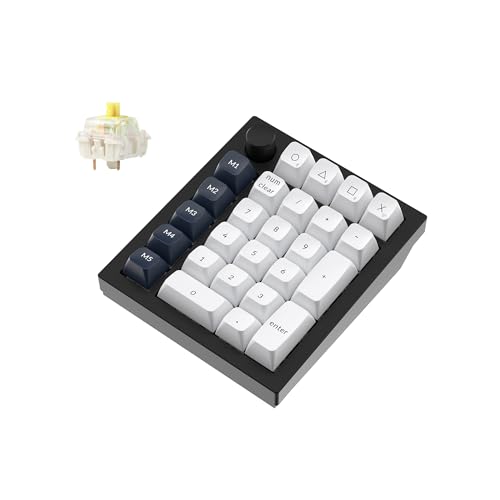
Keychron Q0 Plus
The Keychron Q0 Plus is a QMK and VIA friendly pad from a keyboard maker known for custom boards, aimed at desk users who also want a number row. Treat it as a prose-only recommendation in this draft: check the current listing for the present configuration, included accessories and regional availability before deciding, because bundles and revisions change over time. What matters in use is how its configuration route fits your habits, how its keys feel across a long session, and whether its size leaves your desk arranged the way you like to work.
Best for: users whose workflow matches that description and who will take the time to build a layout in passes. Not suited for: buyers who want a device that needs no setup at all, or whose main applications cannot accept the shortcuts they plan to map. Strengths in this class are consistency, a clear actuation feel and a layout that stays put once learned; the trade-off is always the learning period and one more device to place well on the desk.

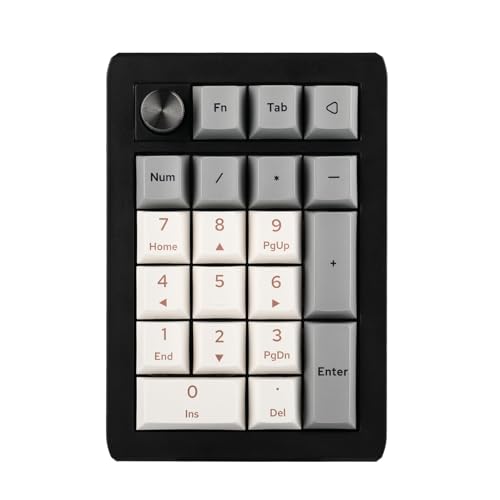
Epomaker EK21
The Epomaker EK21 is a VIA ready number pad style unit from a budget friendly custom keyboard brand, aimed at mixed number and macro use. Treat it as a prose-only recommendation in this draft: check the current listing for the present configuration, included accessories and regional availability before deciding, because bundles and revisions change over time. What matters in use is how its configuration route fits your habits, how its keys feel across a long session, and whether its size leaves your desk arranged the way you like to work.
Best for: users whose workflow matches that description and who will take the time to build a layout in passes. Not suited for: buyers who want a device that needs no setup at all, or whose main applications cannot accept the shortcuts they plan to map. Strengths in this class are consistency, a clear actuation feel and a layout that stays put once learned; the trade-off is always the learning period and one more device to place well on the desk.
Razer Tartarus Pro
The Razer Tartarus Pro is a one handed gaming keypad with an thumb cluster and game focused software, aimed at players rather than office users. Treat it as a prose-only recommendation in this draft: check the current listing for the present configuration, included accessories and regional availability before deciding, because bundles and revisions change over time. What matters in use is how its configuration route fits your habits, how its keys feel across a long session, and whether its size leaves your desk arranged the way you like to work.
Best for: users whose workflow matches that description and who will take the time to build a layout in passes. Not suited for: buyers who want a device that needs no setup at all, or whose main applications cannot accept the shortcuts they plan to map. Strengths in this class are consistency, a clear actuation feel and a layout that stays put once learned; the trade-off is always the learning period and one more device to place well on the desk.
Connection choice is a lifestyle choice. A wired pad never needs charging, never drops out mid task and suits a fixed desk. A wireless pad suits a clean desk, a laptop that moves rooms, or a living room setup, at the cost of battery habits and the occasional reconnection pause. Neither is a quality signal. Match the connection to the desk the pad will actually live on, not the desk in the product photography.
How to Get the Most Value If You Buy
Software decides more of the experience than the hardware does. Open standards such as QMK and VIA are popular because the layout lives on the device itself, changes can be made in a visual editor, and the pad keeps working when it moves between computers. Only ever download VIA, QMK tools, vendor configuration apps and firmware from the official website of the maker or the official project pages, never from file sharing mirrors or links in random forum posts, because configuration software runs with real privileges on your machine.
Position matters as much as programming. Most people do best with the pad on the non dominant side, angled slightly, close enough that the hand falls onto it without reaching. Reaching is the silent problem with add on devices: a pad placed too far left or pushed behind the keyboard gets used for a week and then ignored. Treat the first days as a placement experiment, move the pad in small steps, and settle only when your hand finds it without your eyes leading the way.
The Decision Checklist
Answer honestly: Do I repeat the same commands daily. Can I name ten actions for the base layer right now. Will I still use this software in a year. Do I have a sensible place for the pad within easy reach. Am I willing to feel slower for two weeks. If most answers are yes, the value case is strong; if most are no, keep the money and revisit when your routine changes.
Connection choice is a lifestyle choice. A wired pad never needs charging, never drops out mid task and suits a fixed desk. A wireless pad suits a clean desk, a laptop that moves rooms, or a living room setup, at the cost of battery habits and the occasional reconnection pause. Neither is a quality signal. Match the connection to the desk the pad will actually live on, not the desk in the product photography.
Field Notes: Living With the Pad Day to Day
Streaming and content work reward immediacy. Scene changes, mute toggles, clip markers and chat actions need to happen without looking away from the camera or the game, and a dedicated pad with labelled or memorised keys is easier to hit blind than a chord on a full keyboard. This is also where layered layouts help, because a streaming layer and an editing layer can share the same physical keys without conflict.
Wrist posture deserves a plain word. Keep the wrist neutral and floating or lightly supported rather than planted and bent, keep the pad at roughly keyboard height, and avoid stacking it on top of other gear to gain a novelty angle. Small pads invite sloppy placement because they fit anywhere, and anywhere includes positions that feel fine for ten minutes and tiring after two hours. Comfort over a full working day is the only test that counts.
Connection choice is a lifestyle choice. A wired pad never needs charging, never drops out mid task and suits a fixed desk. A wireless pad suits a clean desk, a laptop that moves rooms, or a living room setup, at the cost of battery habits and the occasional reconnection pause. Neither is a quality signal. Match the connection to the desk the pad will actually live on, not the desk in the product photography.
The clearest wins show up in repetitive work. A video editor who scrubs, cuts, marks and exports all day can put those repeated commands under one hand and stop travelling back to scattered keyboard shortcuts. A photo editor can map brush size, undo, layer actions and export presets in the same way. In a spreadsheet, a macro keypad earns its space when it carries paste values, insert row, format painter style actions and navigation jumps that would otherwise need two hands and a modifier held down.
Comfort here is a qualitative judgement, not a medical one. A macro keypad can reduce awkward chord stretches for some users because one key replaces a wide two hand combination, and it can let the shoulders stay in a more natural position when the main keyboard can sit centred. It is not a treatment for pain and it does not fix a badly set up desk. Chair height, screen position, breaks and variation still do the heavy lifting, and anyone with persistent discomfort should get proper advice rather than buying accessories as a remedy.
Vendor software takes the opposite trade. A gaming brand utility or a creative suite companion app can offer per application profiles that switch automatically, pressure sensitive behaviour, and integrations a generic editor cannot match. The cost is an account prompt here, a background service there, and a layout that may not travel to a second machine. Neither route is automatically better; the right question is whether you value portability and permanence, or automatic profiles and deeper app integration.
Build quality shows in boring places. A pad that flexes, slides or rattles will annoy you long after its feature list stops impressing you. Weight helps stability, rubber feet help grip, and a detachable cable helps both tidiness and repair. Keycaps that can be replaced or labelled help learning, because a new layout is far easier to adopt when the keys can carry a reminder of what they do during the first weeks.
Key feel shapes whether a pad survives on a desk. Mechanical switches give a clear actuation point and can be swapped on hot swappable models, which suits users who like to tune feel per row. Membrane and low profile designs are quieter and slimmer, which suits shared offices and travel bags. There is no universal winner; there is only the feel you will still enjoy pressing hundreds of times in an afternoon, in the room you actually work in, at the volume your household or colleagues can accept.
Buying for a workflow you wish you had is the most expensive mistake of all. A pad bought for video editing you never do, or streaming you keep postponing, is a paperweight with switches. Be honest about the work on your desk this month. If the repeated actions are there, a pad will help. If they are not, the honest purchase is no purchase, and the money is better kept for the tool your real routine actually calls for.
Check compatibility with your own software, not software in general. A pad that is perfect in one editing suite may need workarounds in the application you actually use, and operating system differences matter too, especially for media keys and vendor utilities. Read the maker official support pages for your operating system and your main applications before buying, and favour sellers with a clear returns route while you test whether the pad fits your workflow.
Creative drawing and CAD work sit in between. A pad under the non drawing hand can carry undo, redo, tool swaps, zoom and modifier holds while the pen or mouse stays where it is. In CAD, view changes, snap toggles and common constraints are natural macro material. The common thread across all of these jobs is repetition with variation: the same family of actions, repeated often, in an order the user already knows by heart.
The most common mistake is programming everything on day one. A pad filled in a single enthusiastic evening becomes a memory test nobody passes, and the user quietly returns to the keyboard while the pad gathers dust. Build in passes instead: a handful of actions first, used until they are automatic, then the next handful. The slow route feels less impressive and is dramatically more likely to still be in use a month later.
Software decides more of the experience than the hardware does. Open standards such as QMK and VIA are popular because the layout lives on the device itself, changes can be made in a visual editor, and the pad keeps working when it moves between computers. Only ever download VIA, QMK tools, vendor configuration apps and firmware from the official website of the maker or the official project pages, never from file sharing mirrors or links in random forum posts, because configuration software runs with real privileges on your machine.
The clearest wins show up in repetitive work. A video editor who scrubs, cuts, marks and exports all day can put those repeated commands under one hand and stop travelling back to scattered keyboard shortcuts. A photo editor can map brush size, undo, layer actions and export presets in the same way. In a spreadsheet, a macro keypad earns its space when it carries paste values, insert row, format painter style actions and navigation jumps that would otherwise need two hands and a modifier held down.
Key feel shapes whether a pad survives on a desk. Mechanical switches give a clear actuation point and can be swapped on hot swappable models, which suits users who like to tune feel per row. Membrane and low profile designs are quieter and slimmer, which suits shared offices and travel bags. There is no universal winner; there is only the feel you will still enjoy pressing hundreds of times in an afternoon, in the room you actually work in, at the volume your household or colleagues can accept.
Vendor software takes the opposite trade. A gaming brand utility or a creative suite companion app can offer per application profiles that switch automatically, pressure sensitive behaviour, and integrations a generic editor cannot match. The cost is an account prompt here, a background service there, and a layout that may not travel to a second machine. Neither route is automatically better; the right question is whether you value portability and permanence, or automatic profiles and deeper app integration.
Build quality shows in boring places. A pad that flexes, slides or rattles will annoy you long after its feature list stops impressing you. Weight helps stability, rubber feet help grip, and a detachable cable helps both tidiness and repair. Keycaps that can be replaced or labelled help learning, because a new layout is far easier to adopt when the keys can carry a reminder of what they do during the first weeks.
Wrist posture deserves a plain word. Keep the wrist neutral and floating or lightly supported rather than planted and bent, keep the pad at roughly keyboard height, and avoid stacking it on top of other gear to gain a novelty angle. Small pads invite sloppy placement because they fit anywhere, and anywhere includes positions that feel fine for ten minutes and tiring after two hours. Comfort over a full working day is the only test that counts.
The most common mistake is programming everything on day one. A pad filled in a single enthusiastic evening becomes a memory test nobody passes, and the user quietly returns to the keyboard while the pad gathers dust. Build in passes instead: a handful of actions first, used until they are automatic, then the next handful. The slow route feels less impressive and is dramatically more likely to still be in use a month later.
Check compatibility with your own software, not software in general. A pad that is perfect in one editing suite may need workarounds in the application you actually use, and operating system differences matter too, especially for media keys and vendor utilities. Read the maker official support pages for your operating system and your main applications before buying, and favour sellers with a clear returns route while you test whether the pad fits your workflow.
Creative drawing and CAD work sit in between. A pad under the non drawing hand can carry undo, redo, tool swaps, zoom and modifier holds while the pen or mouse stays where it is. In CAD, view changes, snap toggles and common constraints are natural macro material. The common thread across all of these jobs is repetition with variation: the same family of actions, repeated often, in an order the user already knows by heart.
A second mistake is duplicating the keyboard instead of complementing it. If a shortcut is already easy, close and automatic on your main board, moving it to a pad adds travel rather than removing it. The pad earns its place with actions that are awkward, distant, two handed, or sequence based. Audit your layout for tourists: keys that are pressed rarely and could return to the keyboard without any loss.
Software decides more of the experience than the hardware does. Open standards such as QMK and VIA are popular because the layout lives on the device itself, changes can be made in a visual editor, and the pad keeps working when it moves between computers. Only ever download VIA, QMK tools, vendor configuration apps and firmware from the official website of the maker or the official project pages, never from file sharing mirrors or links in random forum posts, because configuration software runs with real privileges on your machine.
The clearest wins show up in repetitive work. A video editor who scrubs, cuts, marks and exports all day can put those repeated commands under one hand and stop travelling back to scattered keyboard shortcuts. A photo editor can map brush size, undo, layer actions and export presets in the same way. In a spreadsheet, a macro keypad earns its space when it carries paste values, insert row, format painter style actions and navigation jumps that would otherwise need two hands and a modifier held down.
Wrist posture deserves a plain word. Keep the wrist neutral and floating or lightly supported rather than planted and bent, keep the pad at roughly keyboard height, and avoid stacking it on top of other gear to gain a novelty angle. Small pads invite sloppy placement because they fit anywhere, and anywhere includes positions that feel fine for ten minutes and tiring after two hours. Comfort over a full working day is the only test that counts.
Vendor software takes the opposite trade. A gaming brand utility or a creative suite companion app can offer per application profiles that switch automatically, pressure sensitive behaviour, and integrations a generic editor cannot match. The cost is an account prompt here, a background service there, and a layout that may not travel to a second machine. Neither route is automatically better; the right question is whether you value portability and permanence, or automatic profiles and deeper app integration.
Build quality shows in boring places. A pad that flexes, slides or rattles will annoy you long after its feature list stops impressing you. Weight helps stability, rubber feet help grip, and a detachable cable helps both tidiness and repair. Keycaps that can be replaced or labelled help learning, because a new layout is far easier to adopt when the keys can carry a reminder of what they do during the first weeks.
Position matters as much as programming. Most people do best with the pad on the non dominant side, angled slightly, close enough that the hand falls onto it without reaching. Reaching is the silent problem with add on devices: a pad placed too far left or pushed behind the keyboard gets used for a week and then ignored. Treat the first days as a placement experiment, move the pad in small steps, and settle only when your hand finds it without your eyes leading the way.
A second mistake is duplicating the keyboard instead of complementing it. If a shortcut is already easy, close and automatic on your main board, moving it to a pad adds travel rather than removing it. The pad earns its place with actions that are awkward, distant, two handed, or sequence based. Audit your layout for tourists: keys that are pressed rarely and could return to the keyboard without any loss.
Check compatibility with your own software, not software in general. A pad that is perfect in one editing suite may need workarounds in the application you actually use, and operating system differences matter too, especially for media keys and vendor utilities. Read the maker official support pages for your operating system and your main applications before buying, and favour sellers with a clear returns route while you test whether the pad fits your workflow.
Creative drawing and CAD work sit in between. A pad under the non drawing hand can carry undo, redo, tool swaps, zoom and modifier holds while the pen or mouse stays where it is. In CAD, view changes, snap toggles and common constraints are natural macro material. The common thread across all of these jobs is repetition with variation: the same family of actions, repeated often, in an order the user already knows by heart.
Ignoring the learning aids is another quiet failure. Blank keycaps look clean and teach nothing. Labels, printed layout cards beside the monitor, or a simple note file with the current map all shorten the awkward first fortnight. There is no prize for memorising a layout the hard way, and the users who stick with a new pad are usually the ones who made the early weeks as easy as possible for themselves.
Software decides more of the experience than the hardware does. Open standards such as QMK and VIA are popular because the layout lives on the device itself, changes can be made in a visual editor, and the pad keeps working when it moves between computers. Only ever download VIA, QMK tools, vendor configuration apps and firmware from the official website of the maker or the official project pages, never from file sharing mirrors or links in random forum posts, because configuration software runs with real privileges on your machine.
The clearest wins show up in repetitive work. A video editor who scrubs, cuts, marks and exports all day can put those repeated commands under one hand and stop travelling back to scattered keyboard shortcuts. A photo editor can map brush size, undo, layer actions and export presets in the same way. In a spreadsheet, a macro keypad earns its space when it carries paste values, insert row, format painter style actions and navigation jumps that would otherwise need two hands and a modifier held down.
Position matters as much as programming. Most people do best with the pad on the non dominant side, angled slightly, close enough that the hand falls onto it without reaching. Reaching is the silent problem with add on devices: a pad placed too far left or pushed behind the keyboard gets used for a week and then ignored. Treat the first days as a placement experiment, move the pad in small steps, and settle only when your hand finds it without your eyes leading the way.
Vendor software takes the opposite trade. A gaming brand utility or a creative suite companion app can offer per application profiles that switch automatically, pressure sensitive behaviour, and integrations a generic editor cannot match. The cost is an account prompt here, a background service there, and a layout that may not travel to a second machine. Neither route is automatically better; the right question is whether you value portability and permanence, or automatic profiles and deeper app integration.
Build quality shows in boring places. A pad that flexes, slides or rattles will annoy you long after its feature list stops impressing you. Weight helps stability, rubber feet help grip, and a detachable cable helps both tidiness and repair. Keycaps that can be replaced or labelled help learning, because a new layout is far easier to adopt when the keys can carry a reminder of what they do during the first weeks.
Comfort here is a qualitative judgement, not a medical one. A macro keypad can reduce awkward chord stretches for some users because one key replaces a wide two hand combination, and it can let the shoulders stay in a more natural position when the main keyboard can sit centred. It is not a treatment for pain and it does not fix a badly set up desk. Chair height, screen position, breaks and variation still do the heavy lifting, and anyone with persistent discomfort should get proper advice rather than buying accessories as a remedy.
Ignoring the learning aids is another quiet failure. Blank keycaps look clean and teach nothing. Labels, printed layout cards beside the monitor, or a simple note file with the current map all shorten the awkward first fortnight. There is no prize for memorising a layout the hard way, and the users who stick with a new pad are usually the ones who made the early weeks as easy as possible for themselves.
Check compatibility with your own software, not software in general. A pad that is perfect in one editing suite may need workarounds in the application you actually use, and operating system differences matter too, especially for media keys and vendor utilities. Read the maker official support pages for your operating system and your main applications before buying, and favour sellers with a clear returns route while you test whether the pad fits your workflow.
Creative drawing and CAD work sit in between. A pad under the non drawing hand can carry undo, redo, tool swaps, zoom and modifier holds while the pen or mouse stays where it is. In CAD, view changes, snap toggles and common constraints are natural macro material. The common thread across all of these jobs is repetition with variation: the same family of actions, repeated often, in an order the user already knows by heart.
Buying for a workflow you wish you had is the most expensive mistake of all. A pad bought for video editing you never do, or streaming you keep postponing, is a paperweight with switches. Be honest about the work on your desk this month. If the repeated actions are there, a pad will help. If they are not, the honest purchase is no purchase, and the money is better kept for the tool your real routine actually calls for.
Software decides more of the experience than the hardware does. Open standards such as QMK and VIA are popular because the layout lives on the device itself, changes can be made in a visual editor, and the pad keeps working when it moves between computers. Only ever download VIA, QMK tools, vendor configuration apps and firmware from the official website of the maker or the official project pages, never from file sharing mirrors or links in random forum posts, because configuration software runs with real privileges on your machine.
The clearest wins show up in repetitive work. A video editor who scrubs, cuts, marks and exports all day can put those repeated commands under one hand and stop travelling back to scattered keyboard shortcuts. A photo editor can map brush size, undo, layer actions and export presets in the same way. In a spreadsheet, a macro keypad earns its space when it carries paste values, insert row, format painter style actions and navigation jumps that would otherwise need two hands and a modifier held down.
Comfort here is a qualitative judgement, not a medical one. A macro keypad can reduce awkward chord stretches for some users because one key replaces a wide two hand combination, and it can let the shoulders stay in a more natural position when the main keyboard can sit centred. It is not a treatment for pain and it does not fix a badly set up desk. Chair height, screen position, breaks and variation still do the heavy lifting, and anyone with persistent discomfort should get proper advice rather than buying accessories as a remedy.
Is the Payoff Real? Testing Whether a Macro Keypad Earns Its Place
A macro keypad is worth it when it removes a recurring frustration completely, and much harder to justify when it only makes an occasional minor annoyance slightly smaller. Keep the instructions somewhere you can find them months later, since the setting or step you skip today is often the one a future problem sends you hunting for. Ask what you would do on the day this macro keypad stops working as expected, and whether you could swap, reset, clean or return it without dismantling half your setup. Prefer a setup you can explain to another person in a minute, because simple arrangements are easier to troubleshoot, share and repeat than fragile clever ones.
As a concrete listing check, take the Keychron Q0 Plus and the Epomaker EK21 named earlier in this article and confirm, line by line, that each variant offered matches the size, connection and contents described for it here. If you work in more than one place, decide whether this macro keypad stays fixed in one spot or travels, and judge its size, weight and setup time accordingly. Start this final check away from the listings, with the space, the equipment and the routine you already have written down in plain terms. When you compare notes with other owners, match their comments to setups like yours, because advice from a very different room, workload or routine can mislead. The value question for a macro keypad is answered by your calendar more than by any feature list: count how often the problem it solves actually interrupts your week.
Notice how the macro keypad behaves when you are tired or in a hurry, since products that demand perfect technique tend to fail exactly when you have least patience. Plan where the cables or materials connected to this macro keypad will run when the room is tidy, not just while you are testing on an empty surface. If the macro keypad will be shared, agree on one home position and one simple reset routine, so each person does not undo the previous person’s adjustments. If two options look identical on paper, choose the one whose controls, layout or handling you understood fastest, since clarity in daily use beats a longer feature list you never touch.
Keep liquids, loose papers and anything that sheds dust or fibres at a sensible distance, unless the macro keypad was clearly designed to work right beside them. Check that nothing you place on, under or beside the macro keypad blocks airflow, movement, visibility or access that the design quietly depends on. Compare it honestly with the workaround you use now, describing that workaround in the same detail, because vague dissatisfaction makes almost any purchase look worthwhile. Think about the next purchase this one commits you to, whether that is matching accessories, consumables, a bigger surface or a different connection, and count that commitment honestly. Think about the longest session you realistically run, not the average one, since heat, noise, clutter and small annoyances all grow more noticeable over time.
Test in the order you actually work: power on, connect, adjust, run a real task, then tidy up, rather than judging the macro keypad on a single impressive first impression. Recheck the return window and the condition requirements before you discard any packaging, especially for a macro keypad whose fit only becomes clear after several real sessions. Revisit the decision after the novelty fades: the right macro keypad should feel almost boring in use, doing its job without negotiation every single time.
Allow a short settling period for your own habits to adapt, but set a firm date to decide, well inside the return window, whether this macro keypad has earned its place. Add up the hidden costs of ownership in time and attention, including setup, cleaning, storage and the accessories you will inevitably want, before deciding it earns its keep.
Frequently Asked Questions
Do I need special software to use a macro keypad?
Some configuration route is always involved, whether that is an open editor such as VIA, a firmware based setup, or the maker own application. Download any configuration tool or firmware only from the official website of the maker or the official project pages. Once a layout is stored on the device itself, many pads then work on another computer with no software installed at all, which is one of the practical advantages of on device storage.
Will a macro keypad work with my main applications?
In most cases yes, because a macro keypad presents itself as a standard keyboard and sends ordinary keystrokes, shortcuts and text. Problems appear with a small number of games and secure applications that restrict automated input, and with vendor specific features that need the maker software running. Test your most important application during the returns window, with the exact macros you plan to rely on, rather than assuming compatibility from a feature list.
How long does it take to learn a macro layout?
Expect the first week to feel slower, the second week to feel mixed, and the layout to start paying back from roughly the third week if you built it in passes and kept the most used actions on the base layer. Labelling keys or keeping a layout card nearby shortens the awkward stage considerably. Users who program everything on day one usually take far longer, because they are memorising a system instead of growing one.
Is a macro keypad better than keyboard shortcuts?
It is better for the specific actions that are awkward, distant or repeated hundreds of times, and worse for actions that are already easy and automatic on your main keyboard. The two work together: the keyboard keeps the comfortable shortcuts, the pad takes the painful and the sequential ones. Judged that way, a macro keypad is a complement to good shortcut habits, not a replacement for learning them.
Can a macro keypad help with comfort at my desk?
It can help some users avoid wide, awkward chord stretches and let the main keyboard sit in a more centred position, which many people find more comfortable across a long day. Those are qualitative comfort points, not medical claims, and a pad does not correct chair height, screen position or a lack of breaks. Anyone with persistent pain or numbness should seek proper professional advice instead of relying on accessories.
What is the difference between a macro keypad and a numpad?
A numpad is optimised for entering numbers and calculator style work, with a fixed familiar layout. A macro keypad is optimised for programmable actions, layers and shortcuts, and may or may not include number keys at all. Some devices blur the line by offering a number layout that is also fully programmable. If your day is figures, choose the number layout first; if your day is repeated commands, choose programmability first.