Disclosure: As an Amazon Associate, ilcastellomenu.com earns from qualifying purchases. Links on this page are affiliate links; they cost you nothing extra. Prices and availability change often, so check the current Amazon listing before you buy.
This cable raceway review starts with the only verdict that matters for most rooms: a cable raceway is a simple product that succeeds or fails on planning, not on novelty. In the first hundred words of any honest cable raceway review, the essentials are the same — the channel must fit the route, the lid must open without a fight, the fixing must suit the wall, and the cables inside must be the low-voltage and signal leads the format exists for. Get those four things right and the result looks almost architectural. Get one wrong and you own a plastic strip that sags, strains or tears paint, reminding you of the mistake every time you cross the room.
Key Takeaways
- A cable raceway tidies low-voltage and signal cables along walls and skirting; it is not a substitute for in-wall electrical work.
- Adhesive fixing is fast but can pull paint on removal; screw mounting is slower, stronger and kinder to future decorating.
- Never overpack: the lid should close easily, with room left for the next cable you will inevitably add.
- Fittings — elbows, tees and end caps — decide how professional the finished run looks at every corner.
- Floor crossings need a proper ramped floor cord cover, never a wall channel laid underfoot.
Best for: television walls, desks and gaming setups with cables travelling along a wall. Not suited for: creating new outlets, hiding spliced mains wiring, or crossing a floor.
In this guide
What a Cable Raceway Is and Where It Fits
Every tidy raceway run starts before anything touches the wall, with a honest look at the route the cables actually need to travel. Walk the room and trace the path from the equipment to the outlet or the desk with your eyes, noting every corner, doorway, skirting board and piece of furniture the run has to pass. Most disappointing installations were planned from a chair, using an imagined straight line that the real room never offers. A few minutes spent crouching down, opening cabinet doors and checking what sits behind the television will reveal the awkward bend or the short final stretch that changes which kit you should buy and how much of it you need.
Be completely clear about what a surface raceway is for. It is a tidy cover and guide for low-voltage and signal cables — HDMI leads, Ethernet cables, USB cables, speaker wire, aerial coax and the low-voltage output leads from plug-in power adapters — and for covering appliance cords in the way a cord cover does. It is not a substitute for code-compliant in-wall electrical work, it is not a way to extend a mains circuit, and it must never be used to splice, join or bury mains wiring inside a plastic channel. New sockets, new circuits and anything involving the fixed wiring of the building belong to a licensed electrician, full stop.
Not all cables behave the same inside a channel. HDMI leads are stiff and dislike tight bends, Ethernet cable is forgiving but should not be kinked or crushed, USB charging leads are slim and easy, and speaker wire is the easiest of all to route. Plan the channel around the least flexible cable in the bundle, because that cable sets the bend radius at every corner. Where a stiff lead must turn, use the fitting and give it room rather than persuading it with force. A cable that was forced into place on day one has a way of announcing itself months later as an intermittent fault nobody can reproduce on demand.
Cable Raceway Review: Design, Build and Everyday Setup
The lid design matters more in daily life than most listings suggest. A hinged or flexible lid that opens along its length makes adding a cable a one-minute job, while a stiff snap-on cover that fights you at every clip teaches you to dread touching the installation at all. Think about how often your setup changes. A gaming desk that gains a new peripheral every few months, or a television wall where consoles rotate, wants easy access above almost everything else. A fit-and-forget run behind a sideboard can accept a firmer lid. Match the opening style to your habits, not to the photograph on the box.
Profile shape is a small decision with an outsized effect on how the finished run looks. A flat, low channel hugs the wall and suits skirting-level runs where discretion matters. A rounder, D-shaped profile tends to look softer on an open wall and often gives cables a kinder bend inside. A larger square profile swallows a serious bundle behind a media unit where nobody will ever admire it. None of these is universally best; each is best somewhere. Stand in the room, look at the wall the run will cross, and choose the shape your eye will forgive at that height, in that light, for the years the run will be there.
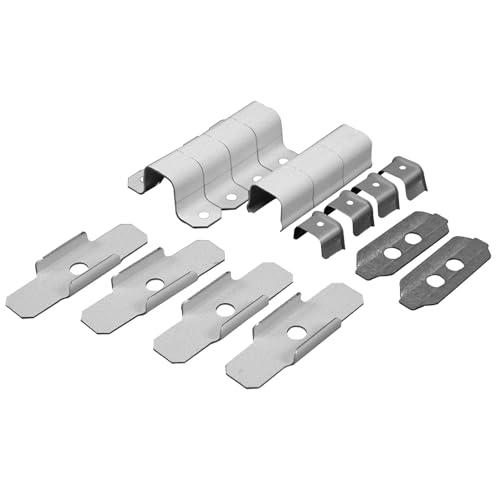
Corners and junctions are where a raceway system earns its keep or falls apart visually. Purpose-made elbow, tee and end-cap fittings give a run clean, deliberate lines and protect cables from being forced around a sharp internal bend. Mitering channel ends with a saw can work in skilled hands, but a slightly imperfect cut shows forever at eye level, and the gap it leaves collects dust. When you compare kits, count the fittings in the box as carefully as the channel lengths. A generous kit with the right elbows for your route will look better than a longer kit that leaves you improvising at every turn the wall makes.
The Main Contenders in This Cable Raceway Review
D-Line Cable Raceway
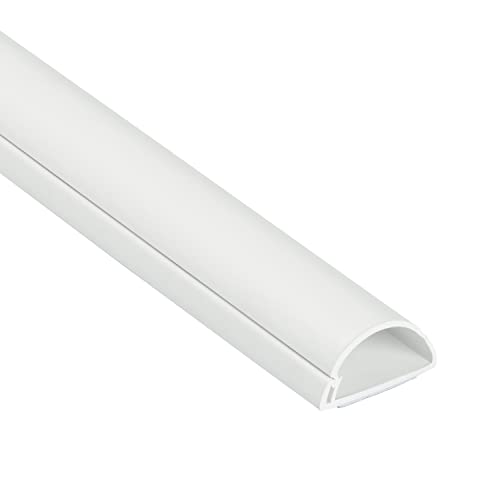
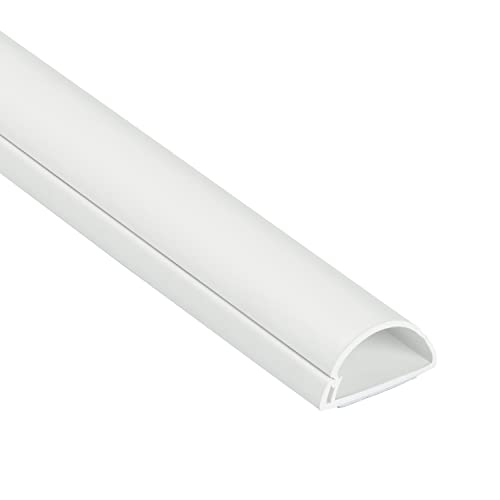
The D-Line name is the one many people meet first in this category, and its appeal is easy to understand in prose terms: a rounded, furniture-friendly profile that looks less industrial than a plain rectangular channel, in kits aimed squarely at television and home-office tidying. As a prose-only mention here — this pick is unverified, so treat it as a starting point for your own listing check — it suits a buyer who cares how the run looks on an open living-room wall and who wants the fittings assortment to do the thinking at corners. It is less obviously the pick for a workshop or a very large bundle, where a plainer, bigger profile earns its keep.
Best for: visible living-room and TV runs where appearance matters. Not suited for: anyone expecting a verified recommendation here, or a heavy multi-cable trunk run that needs a larger plain profile.

Legrand Wiremold Cable Raceway
Legrand’s Wiremold line carries the heritage of a brand long associated with surface wiring products, and in prose terms its raceway offerings lean practical: profiles and fittings intended to look deliberate and architectural rather than decorative. Mentioned here as an unverified, prose-only candidate, it is a sensible name to shortlist for a permanent installation — the sort of run you intend to paint, forget and rely on for years, quite possibly screw-mounted. Check the current listing carefully for exactly which fittings are included, because with a system like this the elbows and tees matter as much as the channel itself.
Best for: permanent, painted-in runs and buyers who think in systems of fittings. Not suited for: a renter wanting the lightest possible commitment, or anyone unwilling to verify the exact kit contents before ordering.
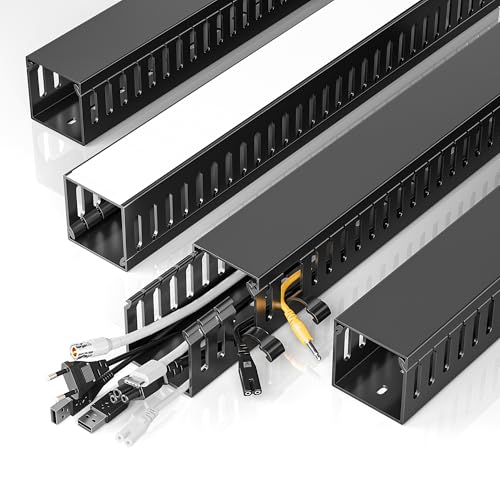
YECAYE Cable Raceway
YECAYE appears in this category as a kit-focused name, the kind of bundled offering that aims to give a first-time installer everything for a television or desk run in one box. In prose terms — and this mention is unverified and prose-only — that kit completeness is the whole argument: channel, corners and connectors together, chosen so a beginner is not left mid-installation missing an elbow. The honest caution with any bundle is to count what is actually included against the route you measured, and to decide in advance how you feel about adhesive fixing, because most quick kits lean on it heavily.
Best for: first-time installers who want one box for one defined run. Not suited for: complex multi-room routes, or renters who have not weighed the adhesive-and-paint question first.

Delamu Cable Raceway
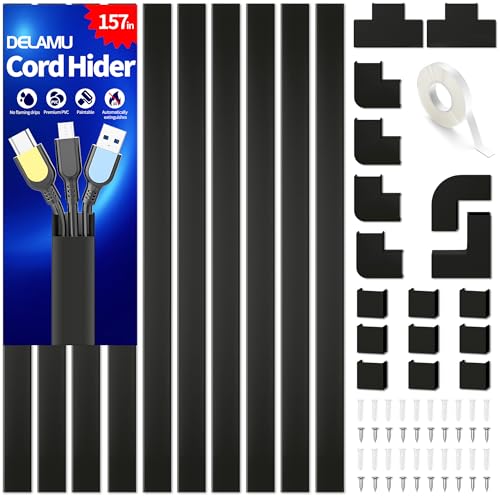
Delamu is another name encountered in bundled raceway kits for home entertainment and desk setups, presented here as an unverified prose-only candidate. The prose-level case for this style of kit is convenience and a coordinated look: matching channel and fittings in one finish, sized for the familiar job of dropping cables from a wall-mounted screen or tidying the wall behind a desk. Judge it, as with every kit in this roundup, on the fitting count for your route, the lid style your habits need and the mounting method your walls allow — not on the tidiness of the photograph on the listing.
Best for: straightforward TV and desk runs from a single coordinated kit. Not suited for: buyers needing unusual fittings or a very long run, who should price a system of separate parts instead.
Performance in Real Use
On a Television Wall
The wall-mounted television is the classic raceway job, and it shows both the best and the worst of the format. Done well, the channel drops straight from behind the screen to the skirting in one clean vertical line, painted to match the wall, carrying the HDMI and aerial leads invisibly enough that guests stop noticing it within minutes. Done badly, it wanders, sags between fixings and stops short, leaving the last stretch of cable dangling exactly where your eye lands. The difference is rarely the brand on the box. It is the straightness of the route, the honesty of the measurement and whether the channel was fixed at sensible intervals along its length.
Soundbars and media players add a fiddly middle chapter to a television installation: short leads between screen, bar and sources, each a different length, none of them long enough to reach the skirting gracefully on their own. A raceway run handles the vertical drop, but plan the short horizontal connections too, using the bar’s own shadow and the back of the media unit to hide the slack loops. This is where a photograph of the finished back-of-television arrangement, taken before the screen goes back on the wall, pays for itself the first time anything needs swapping in the dark behind a large, expensive panel.
Behind a Desk
At a desk, a raceway solves a different problem: the horizontal sprawl. Monitor leads, a laptop dock cable, speaker wires and charging leads all want to travel along the back edge of the desk or the wall behind it, and a channel turns that tangle into one calm line. Combine it with an under-desk tray for the power strip and adapters, and the desk gains the floating, clean look people chase in setup photographs. Keep the raceway accessible rather than buried behind the desk where you cannot open it, because desk cables change constantly and a channel you cannot reach is a channel you will eventually abandon.
In a home office the argument for raceway is partly professional. A tidy background on video calls, a desk that can be cleaned without lifting a nest of leads, and cables that stay where they were put all make the working day feel less improvised. Raceway also protects cables from the two great office hazards: chair casters and vacuum cleaners. A lead crossing the floor to a printer or a shredder will be rolled over and tugged until it fails, while the same lead in a channel along the skirting arrives intact. Route once, route along the wall, and stop paying the tax of small daily annoyances.
In a Gaming Setup
Gaming setups generate cables faster than almost any other corner of the home: multiple monitors, a console or two, a headset stand with its own lead, bias lighting, a capture device, external drives. A raceway along the wall behind the desk keeps the signal cables ordered and separated from the power hardware in the tray below, which makes troubleshooting calmer — when a display drops, you can trace one lead through an open channel instead of excavating a knot. Label both ends of each cable before it goes in. Future you, swapping a monitor at midnight before a tournament or a work deadline, will be quietly grateful.
The corner where the router lives deserves its own plan, because it is where the most cables converge in most homes: power for the router and any mesh units, Ethernet to the television or the office, perhaps a network switch with its own adapter and a fan of patch leads. A short raceway run can carry the wall-crossing part of that bundle tidily, while a ventilated box or a small shelf handles the hardware itself. Keep the router’s own ventilation clear, keep its adapters out of the closed channel, and resist the urge to hide the unit itself inside anything. Signal and airflow both suffer in cupboards, however tidy they look.
Strengths and Trade-Offs
Strengths
- Turns a dangling bundle into one calm, deliberate line along the wall.
- Stays accessible: the lid opens, so cables can be added, traced or replaced.
- Protects cables from casters, feet, pets and the vacuum cleaner.
Trade-offs
- Adhesive versions can pull paint on removal, which renters must weigh honestly.
- A visible product: even painted, a run on an open wall is a line you will see.
- Capacity is finite, and an undersized profile punishes every future upgrade.
Judge a raceway kit the way you would judge any small piece of household infrastructure: by how completely it disappears. The best kit is the one you stop seeing, whose lid you can open without tools or temper, whose fittings match the turns your walls actually make, and whose finish takes paint like it was always part of the room. Brand reputation, the completeness of the fitting assortment and the quality of the closing mechanism are worth more than a few extra lengths of channel you will never use. A short kit that fits your route exactly beats a long kit that leaves you improvising at every corner and short at the one place it matters.
How It Compares With the Alternatives
Raceway is one tool in a wider cable management kit, and honest advice admits the others exist. Under-desk trays hold power strips and adapters better than any wall channel. Cable management boxes hide a bulky cluster on the floor or a shelf. Spiral wrap and hook-and-loop ties bundle cables that travel together inside furniture. Braided sleeving suits the short visible hop between a desk and a PC tower. The installations that look genuinely professional usually combine two or three of these, each doing the job it is shaped for, rather than forcing one product to solve every problem from the socket to the screen.
One misuse needs calling out plainly: wall raceway is not a floor solution. A slim wall channel laid across a walkway is itself a trip hazard, it is not built to be stood on, and its lid will crack or pop underfoot. Where a cable genuinely must cross the floor, use a proper floor cord cover with a low, ramped profile designed for foot traffic, and treat even that as a compromise — the best floor crossing is the one you eliminate by moving furniture, using a nearer socket or rerouting along the wall. Raceway belongs on walls, skirting and the backs of furniture, where feet never go.
Who Should Buy It and Who Should Skip It
Renters should read that adhesive warning twice and decide with clear eyes. If your lease is strict about wall damage, or the paint in your flat is already flaking, a screw-mounted channel is the safer choice even though it leaves small holes, because small filled holes are a predictable repair while torn paint across a long run is not. Another honest option is to accept the risk knowingly on one short, hidden run behind furniture, where any mark will stay out of sight. What you should not do is believe any claim that strong mounting tape always removes cleanly. Sometimes it does. Sometimes it really does not, and the deposit conversation goes accordingly.
Rooms differ, and raceway should be chosen with the room in mind. Kitchens and bathrooms bring humidity and grease that test adhesive and argue for mechanical fixing and easy-clean surfaces. Garages and workshops bring dust, knocks and temperature swings, and reward a tougher profile fixed with screws. A nursery wants lids that stay shut and runs kept out of reach. A living room wants paintability and discretion above all. The product category is simple, but the right answer is always local: the same kit that is perfect behind a television can be the wrong answer above a workbench, and pretending otherwise is how good products get unfair reviews.
Before you buy, run this checklist: measure the route twice, count the corners, list every cable that will travel inside, decide adhesive versus screws with the removal story in mind, and confirm the kit includes the fittings your route needs. If any answer is still vague, the planning is not finished, and an hour spent finishing it is worth more than any premium profile.
Setup, Care and Maintenance Essentials
Measure the route properly, following the wall rather than cutting across the room in your head, and then measure it again. Raceway is sold in kits and in individual lengths, and the difference between a run that finishes neatly and one that stops a hand’s breadth short of the outlet is usually a measurement taken in a hurry. Add a little slack for corners and for the gentle curves cables prefer, because a channel packed drum-tight is miserable to close and worse to reopen. Write the measurements down room by room if you are doing more than one run, and keep the list with the kit so you are not guessing again at the cutting stage.
Cutting channel to length is straightforward work that rewards a slow hand. Mark the line in pencil on the base, support the piece fully so it cannot flex or crack, and cut with a fine-toothed saw using light strokes rather than force. Plastic raceway can chip or wander if you rush, and a ragged end hides poorly even under a fitting. Tidy the cut edge gently so the lid slides and seats as the maker intended. Cut the base and the lid separately, test-fit both before any adhesive touches the wall, and remember the oldest rule in the workshop: the piece you cut twice because the first cut was hasty is the piece that ends up too short.
Long horizontal runs reveal weak fixing quickly. A channel held only at its ends will bow almost imperceptibly at first and then, one warm afternoon, the adhesive in the middle will let go and the run will smile at you from the wall. Fix at sensible, regular intervals, press adhesive runs firmly along their whole length during installation rather than at a few heroic points, and give overhead or ceiling-adjacent runs screws without debating it. Gravity is patient and it always collects. The same applies inside the channel: a heavy bundle needs the support of a properly sized profile, not a slim one straining at its lid.
A finished raceway still needs occasional attention, and happily it asks for very little. Dust settles on the top edge of horizontal runs, so wipe them when you dust the skirting and the picture frames; a channel that is cleaned with the room stops looking like an addition and starts looking like part of the architecture. Once in a while, open longer runs and check that nothing inside has shifted, chafed or been joined by an unplanned extra cable pushed in during a hurry. Five calm minutes of inspection a couple of times a year is the entire maintenance contract, and it is a large part of why people stay pleased with these systems.
Plan the removal story before you install, not after. If there is any chance the run comes down — a rental ending, a room being repainted, a television moving walls — choose the mounting method whose exit you can live with. Adhesive comes away best with warmth, a slow steady peel and a plastic scraper, working along the run rather than levering at one heroic point. Residue usually yields to patience and a suitable remover tested on a hidden patch first. Screw holes fill in minutes. Torn paint takes filling, sanding and repainting. None of this is a reason to avoid raceway; all of it is a reason to pick the fixing that matches your situation honestly.
Final Verdict
A cable raceway earns a strong recommendation for the job it is actually designed to do: guiding signal and low-voltage cables along a wall so a room looks deliberate instead of improvised. Choose the profile for the stiffest cable in the bundle, fix it by the method your walls and your tenancy allow, leave room inside for change, and keep mains work where it belongs — with an electrician. Do that, and this modest strip of channel becomes one of the highest-value tidy-ups in the home, precisely because you will stop noticing it entirely.
More Practical Detail Before You Decide
Running a channel just above the skirting board is the quiet achiever of raceway routes. Down at floor level the eye rarely lingers, the run can travel the full length of a wall without crossing a single visual feature, and furniture naturally hides long stretches of it. Some profiles are shaped to sit against the skirting and look almost like part of the trim, especially once painted. The cautions are practical: keep the channel clear of door swings, watch for pipes and cables already hidden in that part of the wall before drilling, and leave access at the points where cables rise to the desk or the television.
More Practical Detail Before You Decide
Leave deliberate slack at both ends of a run. Equipment moves: televisions get angled, monitors get raised, desks get pulled out for cleaning, and a cable with no spare length turns every small adjustment into a tug on a connector. A gentle service loop of spare cable, kept inside a wider section of channel, a fitting or a nearby cable box, absorbs that movement gracefully. Slack is not untidiness when it is planned and hidden; it is the difference between a system that accommodates real life and one that punishes it. The same loop makes future changes easy, because you can pull length through instead of re-routing the whole run.
More Practical Detail Before You Decide
Labelling sounds like overkill for a home installation until the first time you need it. A small tag at each end of every cable — this one is the second monitor, that one is the console, the other one is the lamp adapter — turns a channel full of identical black leads into a system you can actually maintain. Do it while the cables are in your hands during installation, when identity is obvious, rather than later when every lead looks the same. Combined with a photograph of the open channel taken before the lid goes on, labelling gives you a map of your own setup that costs minutes and saves real frustration.
More Practical Detail Before You Decide
Homes with pets or small children get an extra benefit from raceway that rarely appears in marketing: cables disappear from reach. A lead dangling behind a television is an invitation to a toddler and a chew toy to a bored puppy, and both stories end with a damaged cable at best. A closed channel at skirting level removes the temptation and the hazard together, provided the lid seats firmly and the run is fixed at close enough intervals that determined small hands cannot flex it open. Check the run occasionally for exactly that reason, and treat any lid that no longer clicks shut as a small repair worth doing the same day.
More Practical Detail Before You Decide
Think about access points the way an electrician thinks about junction boxes: the system works because you can get into it at the places that matter. Where a cable joins or leaves the run — at the desk, behind the television, beside the router — the channel should open easily and the fitting should not be trapped behind immovable furniture. If the heaviest bookcase in the house sits exactly over the one elbow you need to open, every future change becomes a furniture-moving expedition. A route that is five percent less pretty but fully reachable will serve you better for years than a hidden route you cannot service.
More Practical Detail Before You Decide
Buy and install for the setup you will have, not only the one on the floor today. A slightly larger profile than today strictly needs, a route that passes the place a second monitor or a games console would plausibly go, and fittings that let a branch be added later all cost almost nothing at installation time and save a full re-route later. Home technology churns: streaming boxes arrive, consoles are replaced, a work laptop joins the desk. A raceway system that absorbs change gracefully is the one still earning its place in five years, while the exactly-sized, exactly-routed installation gets torn out at the first upgrade.
Field Notes From Real Installations
Test the finished run like a sceptic before you call it done. Switch every connected device on, wiggle nothing, and simply use the setup normally for an evening: watch the television, play the game, join the call. Intermittent faults caused by a pinched or over-bent cable rarely appear in the first five minutes; they appear when a connector warms up, a desk moves or a chair nudges the run. If a picture drops or a network link flickers, open the channel at the nearest corner first and look for the tight bend or the cable sitting proud under the lid, because that is where the fault will be hiding.
A height-adjustable desk adds one special demand: movement. The section of cable that travels between the moving desktop and the fixed wall or floor must flex every time the desk rises, and a raceway should never be asked to absorb that flex. End the channel at a fixed point, let a generous, deliberate loop of cable handle the travel, and support that loop so it hangs in a smooth curve rather than kinking at the same spot daily. Managed this way, the raceway does the static ninety percent of the job beautifully, and the moving ten percent gets the freedom it needs instead of a slow, invisible failure inside a connector.
Keep what is left over. Every raceway project ends with offcuts, a spare elbow, two end caps and a short length of channel, and the beginner’s instinct is to tidy them into the bin. Resist it. Bag the spares, label the bag with the room and the system name, and store it with the household tools. The next change — a console added, a monitor swapped, a run extended to a new desk position — will need exactly the fitting you were about to throw away, and matching an existing profile months later is far harder than it sounds, because ranges are revised and finishes drift between production runs.
Printers, scanners and other occasional-use devices make a neat test of a raceway route. They often sit across the room from the desk, they are used in bursts, and their cables tempt people into the classic floor-crossing shortcut. A skirting-level channel carries that run properly: along the wall, up at the furniture, with the device end left accessible so the printer can be pulled out for paper jams and cartridge changes without tugging its lead out of the channel. Leave the service slack at the device end, not the desk end, because the device is the thing that moves, usually at the least convenient moment of the working week.
Rooms change with the year more than we admit: a fan appears in summer, a heater in winter, lights and decorations in December, a different chair when guests stay. A raceway system installed with headroom absorbs these guests gracefully, because one more slim lead can join the channel for a season and leave again without disturbing the permanent residents. That is a quiet argument for sizing up at installation and for keeping one access point genuinely reachable rather than buried behind the heaviest furniture. Infrastructure that copes with December without a draped extension lead has earned its place on the wall.
If you install raceway in more than one room, consistency quietly pays. Using the same profile family across the home means spare fittings fit everywhere, a leftover length from the office can finish the bedroom run, and your eye reads the channels as one deliberate system rather than a series of unrelated fixes. It also means your hard-won knowledge transfers: you already know how this lid opens, how this adhesive behaves on your paint, and how this elbow wants to be fitted. None of that requires brand loyalty for its own sake; it is simply the economics and ergonomics of a small household standard, chosen once and reused.
Speaker cable deserves its own sentence in any raceway plan, because it is both the easiest cable to route and the easiest to forget. It is slim, flexible and forgiving, so it happily shares a channel with other low-voltage leads on the way to a rear speaker or a soundbar. What it dislikes is being trapped under a lid that is already straining against stiffer cables, where months of pressure can mark its insulation. Route speaker wire early while the channel is empty, settle it flat at the bottom of the bundle, and let the stiffer leads lie above it rather than the other way around.
Mesh Wi-Fi units and network switches have multiplied the small cable runs in modern homes, and raceway handles their geography well. A node on a hallway shelf, a switch inside a media unit and the Ethernet backhaul between them all create short, visible hops that look messy precisely because each one is small. Channelling those hops along the skirting, with the hardware itself left open to the air on its shelf, tidies the picture without suffocating anything that needs ventilation. Keep the nodes themselves out of boxes and cupboards; the raceway’s job is the journey between devices, never a hiding place for the devices themselves.
Sometimes the correct answer to a full channel is a second channel, and there is no shame in it. Two modest parallel runs — signal cables in one, the rest in the other, or the television bundle separated from the desk bundle — are easier to open, easier to trace and kinder to every cable inside than one heroic trunking straining at its lid. Parallel runs also let you open the channel that changes often without disturbing the one that never does. Judge the wall honestly: a pair of slim, calm lines often looks better than a single deep profile, especially once both are painted to match.
Consider the people who did not install the run. A partner, a housemate, a cleaner or a grandparent will meet your cable management as a finished fact, and a good installation explains itself to them: the lid opens where a hand expects it to, nothing needs force, and no cable dangles where a vacuum cleaner will find it. If a well-meaning helper cannot add a phone charger lead without a briefing, the system is too precious. The installations that survive in shared homes are the forgiving ones — reachable, underfilled and obvious — and designing for the second user is a mark of a genuinely finished job.
One last judgement from long-term use: the raceway you want is the one whose lid you have opened ten times without thinking about it. First-day appearance fades as a criterion within a month, but access, capacity and a fixing that has not crept or sagged are judged every single week. That is why this review keeps returning to the unglamorous virtues — headroom inside the profile, fittings that match the wall, a mounting method chosen for the removal day as much as for the installation day. A channel that scores well on those three will still be earning quiet praise years after a prettier but fussier rival would have been torn out.
There is also a small, underrated pleasure in a finished run that no listing can sell you: the room becomes easier to clean, easier to rearrange and easier to explain to anyone else who lives there. Cables stop migrating. The vacuum stops snagging. A new device joins the setup in minutes instead of triggering an archaeological dig behind the furniture. Those are modest benefits, and they arrive quietly, but they are the reason a product as simple as a lidded plastic channel inspires genuinely loyal owners. Tidy, in the end, is not a look. It is the absence of a hundred small frictions, and a well-chosen, well-fitted raceway removes more of them per hour of installation than almost anything else you can do to a room.
What a Careful First Week With a Cable Raceway Reveals
Judge the controls by whether you can use them without looking down or stopping your task, because that is how they will be used for most of their life. Revisit the decision after the novelty fades: the right cable raceway should feel almost boring in use, doing its job without negotiation every single time. Avoid forcing a connector, bracket or moving part that resists you, because resistance is usually information about alignment or fit rather than an invitation to push harder. Think about the longest session you realistically run, not the average one, since heat, noise, clutter and small annoyances all grow more noticeable over time.
As a concrete listing check, take the D-Line Cable Raceway and the Legrand Wiremold Cable Raceway named earlier in this article and confirm, line by line, that each variant offered matches the size, connection and contents described for it here. A calm final test is to walk away mid-task, come back later, and see whether the setup still makes sense at a glance without reconstructing what you were doing. Ask whether the benefit you want survives your least favourite conditions, such as low light, a crowded desk, a warm room or a rushed start to the day. If the cable raceway will be shared, agree on one home position and one simple reset routine, so each person does not undo the previous person’s adjustments. The strongest sign in a hands-on check is consistency: the same input should produce the same result on the first attempt and on the twentieth.
Separate the features you will use in the first month from the ones that only sound reassuring, and let the first group carry far more weight in the decision. Write the exact model name and variant from the packaging into your notes, so replacement parts, accessories and support conversations start from certainty rather than guesswork. Recheck the return window and the condition requirements before you discard any packaging, especially for a cable raceway whose fit only becomes clear after several real sessions. Plan where the cables or materials connected to this cable raceway will run when the room is tidy, not just while you are testing on an empty surface.
If you work in more than one place, decide whether this cable raceway stays fixed in one spot or travels, and judge its size, weight and setup time accordingly. Look for the failure you would notice first if you chose badly: a port you cannot reach, a part that will not fit, a control you cannot see, or a routine that becomes slower instead of easier. A fair test repeats the same task at least twice, once while you are paying attention and once while you work normally, because concentration can hide clumsy design. When something behaves oddly, return to the basics first: power, connection, position, cleanliness and the last setting you changed, in that order, before assuming a fault. Check the underside, back or hidden face of the cable raceway as part of your inspection, because labels, vents, switches and fasteners often live where first impressions never look.
Make one change at a time during the first days, so that when something improves or gets worse you know which change caused it. Check the connection points you rely on every day, and note which ones are already occupied, shared or awkward to reach once furniture is back in place. Write down the oldest and the newest device you expect this cable raceway to work alongside, because compatibility problems usually appear at the edges of a setup rather than in the middle of it.
Think about storage for the accessories this cable raceway brings with it, so spare parts and tools end up in one known place instead of scattered across drawers. Compare what the listing promised with what the box actually contained, item by item, and treat any mismatch as a reason to pause before the return window closes. Clean and inspect the area around a cable raceway on a simple schedule, since dust, loose fasteners and tangled leads cause many problems that get blamed on the product itself. Test in the order you actually work: power on, connect, adjust, run a real task, then tidy up, rather than judging the cable raceway on a single impressive first impression. Allow a short settling period for your own habits to adapt, but set a firm date to decide, well inside the return window, whether this cable raceway has earned its place.
Frequently Asked Questions
What is a cable raceway actually for?
A cable raceway is a surface-mounted channel with a removable lid that guides and hides low-voltage and signal cables — HDMI, Ethernet, USB, speaker wire and similar leads — along a wall, skirting board or the back of furniture. It tidies runs that would otherwise dangle or sprawl, protects cables from feet, casters and vacuum cleaners, and keeps them reachable because the lid opens. It is a covering and organising system, not a way to extend fixed electrical wiring, and new sockets or circuits remain a job for a licensed electrician.
Will adhesive raceway damage my paint when I remove it?
It can, and you should plan on that possibility rather than be surprised by it. Strong mounting tape often comes away cleanly from sound, modern paint, especially when warmed and peeled slowly, but it can pull older or poorly bonded paint with it. If the wall is rented, freshly decorated or already flaking, choose a screw-mounted channel and accept small, easily filled holes instead. If you do use adhesive, keep the run somewhere a small mark would not matter, and test a short hidden section first if you are unsure about the finish.
Can I run a power cord inside a cable raceway?
An uncut factory power cord can be covered by a raceway or cord cover on its way to an existing socket, which is the ordinary use these products are sold for. What you must never do is cut, splice, join or extend mains wiring inside the channel, or use a raceway to create a hidden new outlet. A surface raceway is not a substitute for code-compliant in-wall electrical work. If the real problem is a socket in the wrong place, rearrange the room, use a suitable extension lead visibly and safely, or hire an electrician.
How full can I pack a cable raceway?
Less full than you think. The lid should close easily along the whole run without force, every cable should sit without being pinched or sharply bent, and you should still be able to slide a cable in or out when something changes. A channel that needs pressure to close is overpacked: lids bow, cables chafe at the same points and future changes become a fight. Move up a profile size or split the run into two channels. Leave power adapters and bricks outside the raceway, in a ventilated box or tray, rather than trapping their warmth inside.
Is a cable raceway better than a cable management tray or box?
They solve different parts of the same problem, and most good installations use more than one. A raceway guides cables along a wall or skirting over distance. An under-desk tray holds a power strip and adapters beneath the desk. A cable management box hides a cluster of hardware on the floor or a shelf. If your mess travels along a wall, choose the raceway; if it pools under the desk, choose the tray; if a hot tangle of adapters is the eyesore, choose the ventilated box. Forcing one product to do all three jobs is how tidy projects disappoint.
Can I paint a cable raceway to match my wall?
Most paintable profiles accept ordinary household paint well, and painting is what makes a run look installed rather than stuck on. Paint after fitting, with the lid closed and nearby trim masked, on a clean and dust-free surface. Remember that a future room repaint includes the channel, which is painless either way, but a screw-mounted run can simply come down for decorating day and go back up after. If matching the wall exactly matters to you, check that the specific kit you are considering is described as paintable before you order it.
Related Guides and Next Steps
Keep exploring the cluster and the wider cable management guides on this site: