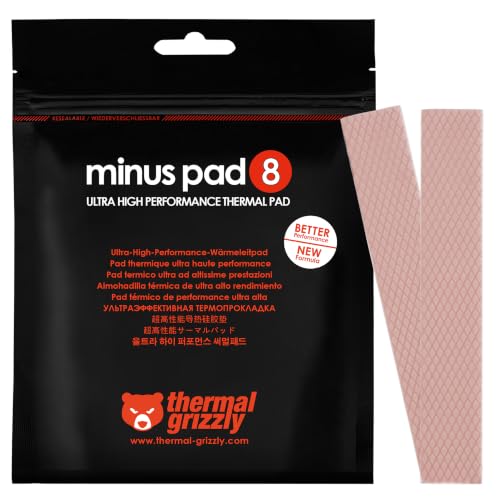
Disclosure: As an Amazon Associate, ilcastellomenu.com earns from qualifying purchases. Links on this page are affiliate links; they cost you nothing extra. Prices and availability change often, so check the current Amazon listing before you buy.
Key Takeaways
Learning how to choose a thermal pad is mostly learning what not to improvise. The deciding criteria, in order, are: the exact thickness your hardware was designed around, the softness your surfaces need, a reputable range that stocks every thickness on your list, and enough material to survive your own learning curve. Conductivity figures, packet drama and other people’s card models all rank below those four, and the first of them outranks the rest combined. Get thickness right and almost any reputable pad will serve you; get it wrong and no pad on earth can save the job.
The short answer for the impatient: measure the pads you are replacing, zone by zone, before you order; buy firm sheets for flat, precise fields and soft sheets for uneven ones; add a stackable spare for odd gaps; and keep the whole purchase inside established ranges whose consistency you can trust. The steps below turn that paragraph into a process you can follow with a card in pieces in front of you, including the mistakes that catch out first-timers and three worked examples that show the reasoning on real-shaped jobs. The shopping companion is our thermal pad buying guide.
- Step zero is measurement: no choosing begins until the original thicknesses are known or documented for your exact model.
- Softness follows surfaces: flat and precise means firm; uneven and varied means soft; in-between gaps mean stackable.
- Range beats brand: the maker that stocks all your thicknesses in one order beats a favourite that stocks most of them.
- Buy the spare: one extra sheet of the memory thickness is the cheapest insurance in the whole job.
In this guide
What You Need to Know Before Comparing
A thermal pad fills a designed gap between a component and its heatsink, conducting heat across a space that air would insulate. The components involved are the quiet ones: graphics memory chips, voltage regulators, chipsets, drive controllers and the power stages in laptops and consoles. Each sits at its own height, under a shared plate machined flat, so the pad’s compressibility is what allows one flat plate to cool a whole field of slightly uneven parts. Understanding that picture explains every choosing rule that follows: thickness is the gap’s measurement, softness is the tolerance for unevenness, and conductivity is merely the material’s efficiency once contact exists. Contact first, efficiency second, always.
Pads are also consumables, which shapes choosing more than most guides admit. The silicone carrier dries and hardens over years of heat cycles, so you are choosing not only today’s fit but the pace of tomorrow’s decline. Established ranges have known ageing behaviour; unknown sheets are a wager. And pads are not paste: paste serves flat interfaces that meet closely, like a processor die, while pads serve real gaps. A chooser who keeps those three facts in view, gap, ageing and role, will find the steps below almost obvious, which is exactly what a good process should feel like. The deep assessments of individual ranges live in our thermal pad reviews.
One more piece of groundwork: know your warranty position before you choose anything. Some makers allow cooler removal for maintenance; others treat an opened card as grounds to refuse service. If your hardware is covered and running within its designed temperatures, the correct choice this year may be no pad at all, with the job scheduled for when coverage ends. Choosing well includes choosing when, and the full balance of the decision is in thermal pad pros and cons.
How to Choose a Thermal Pad in 7 Steps
Step 1: Identify Every Zone and Its Job
List the places pads live in your hardware before pricing a single sheet. On a graphics card that is typically the memory field, the regulator rows and often the backplate; on a laptop, memory and power stages under a shared plate; on a drive or board, a single controller. Each zone is a separate choosing problem with its own thickness and softness needs, and collapsing them into one line on a shopping list is the first error. Photograph or sketch the layout if the hardware is already open, and if it is not, find a documented teardown of your exact model so the zones are known before the first screw turns.
Step 2: Measure the Original Thickness in Each Zone
This is the step the whole guide exists to protect. As each original pad comes off, measure its thickness and record which zone it served, before it goes anywhere near a bin. Pads compress in service, so measure an uncompressed edge where you can and cross-check against documented figures for your exact model and revision when they exist. If the originals are missing or destroyed, documented teardowns of the identical model are the fallback, and similar models are not a fallback at all: designers vary gaps between products that look alike. A chooser with measured numbers is shopping; a chooser without them is gambling, and the stakes are a card that runs worse than before.
Step 3: Match Softness to Your Surfaces
With thicknesses known, choose firmness zone by zone. Flat, well-machined fields with consistent component heights take firm pads, which hold their stated thickness exactly and handle easily. Uneven fields, pressed backplates and varied component heights take soft pads, which settle into the irregularities and keep every point in contact. Mixed cards take both, and there is no prize for brand consistency across zones. Judge your surfaces honestly: a card that has lived hot, or a backplate that is decorative metal rather than machined plate, argues for softness in that zone even if the memory field takes the firmest sheet in the drawer.
Step 4: Choose a Range That Stocks Your Whole List
Now, and only now, brands enter the decision. Write your list of thicknesses and softnesses, then find the range, or pair of ranges, that covers all of it in one order. The premium firm ranges cover the mainstream card lists completely; the soft specialists cover the conformity problems; the stackable ranges cover the gaps nobody else stocks. A favourite brand that lacks one of your thicknesses is not your brand for this job. Availability is a specification, and treating it as one prevents the mid-teardown stall that turns a satisfying afternoon into a week of waiting with a card in pieces.
Step 5: Read Conductivity Figures Correctly, Which Is Barely
Every packet prints a conductivity figure, measured under that maker’s own conditions, and the figures cannot be compared across brands the way shoppers instinctively compare them. Use them, at most, to order products inside one maker’s range. Between brands, let range coverage, handling reports and ageing track record decide, because contact quality and correct thickness will dominate your actual temperatures by a wide margin. A chooser who spends the conductivity budget on a caliper and a spare sheet has understood this step perfectly.
Step 6: Size the Sheets and Buy the Spare
Estimate the area each zone needs, then buy up a size, because cutting wastes edges, first attempts miscut, and a piece dropped adhesive-side down on a workbench is a piece retired. One spare sheet of the memory-field thickness is the specific insurance this guide insists on, since that zone uses the most material and matters most. Keep offcuts afterwards, sealed and labelled by thickness and softness; the chooser who labels is the maintainer who, years later, opens the drawer and knows exactly what they own. Underbuying saves a little money against a real chance of a stalled job, which is the worst trade in the category.
Step 7: Plan the Service Around the Pads
The last choosing step is everything around the sheets: fresh paste for the processor core, since the cooler is off and paste ages alongside pads; cleaning alcohol and lint-free wipes for old residue; tweezers for placement; a caliper if your measurements deserve a better tool; and an unhurried block of time with the machine powered off and unplugged and basic static care observed. Choosing these alongside the pads sounds mundane and is, in practice, the difference between a job that flows and one that improvises. The fitting itself is walked through in how to install a thermal pad.
Gear for This Guide
Four ranges cover the decision tree above. Each is a real, established option described by role and tier, because the right choice is the one your zones and thicknesses point to.
Thermalright Odyssey — The Firm Default
Choose it when your list is mainstream thicknesses on a well-made card and you want one premium range to cover the whole job. Its firmness makes it the easiest premium material to learn on. Tier: premium. Best for: full card repads. Not suited for: very uneven backplates.
Gelid Solutions GP-Extreme — The Soft Specialist
Choose it when surfaces are uneven, heights vary, or a backplate must genuinely work as a heatsink. Handle gently and place, never drag. Tier: mid to premium. Best for: conformity problems. Not suited for: rushed handling.
Arctic TP-3 — The Odd-Gap Solver
Choose it when a measured thickness matches no single sheet, or as the workbench spare that rescues other jobs. Stack clean layers to the exact height. Tier: accessible. Best for: in-between gaps. Not suited for: jobs where an exact single sheet exists and purist simplicity is preferred.
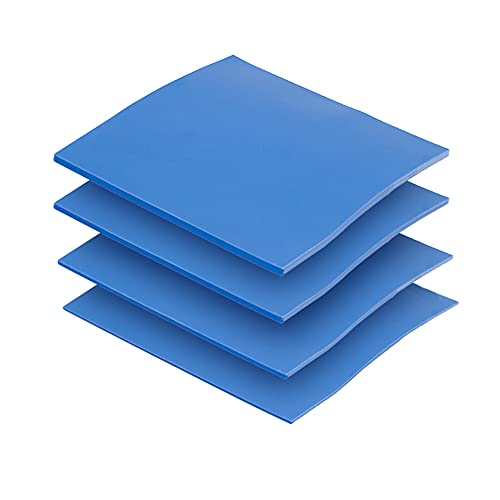
OwlTree — The Practice Sheet
Choose it to learn cutting and placement, and for low-heat duties on routers, boards and enclosures, before valuable hardware is opened. Tier: entry. Best for: rehearsal and small electronics. Not suited for: flagship card memory fields.
Common Mistakes
The mistakes in this category repeat so faithfully that they can be listed like a liturgy. Choosing by conductivity figure instead of by thickness list. Borrowing measurements from a similar model. Buying thicker in the belief that more material cools better, when it actually lifts the cold plate off the core. Buying one sheet for a card that uses three thicknesses. Stretching soft pads into place and thinning them unknowingly. Choosing mystery material for a flagship card while choosing premium material for a router, exactly backwards. And choosing at all before checking a warranty that the job might void. Every item on that list is a choosing error, made at a desk, which is good news: desk errors are the cheapest kind to fix, requiring only that you read the list before you shop rather than recognise it afterwards.
Pro Tips
Keep a pad ledger: a simple note, physical or digital, of every device you service, its zones, their measured thicknesses and what you fitted. It converts every future choice into a lookup. Photograph pad layouts before removal, because memory is the least reliable measuring instrument in the workshop. Test-fit firm pads dry before final assembly where the design allows, and check that screws start evenly. Buy the caliper before the second job, not the fifth. And when two trustworthy sources disagree about a thickness, believe the one describing your exact revision, then verify against your own removed original at the bench, because the original, measured carefully, outranks every document.
Worked Examples
Example One: The Three-Year-Old Gaming Card
A gaming card, out of warranty, shows memory temperatures far adrift of its core while the case is clean and the fans healthy. The diagnosis points at pads. The owner photographs the layout, measures three zones at three different thicknesses, and chooses a premium firm range that stocks all three, a soft sheet for the working backplate, fresh paste, and a spare of the memory thickness. The choice succeeds before a screw turns, because every subsequent step is execution. This is the textbook profile, and it is textbook precisely because the choosing followed the steps in order.
Example Two: The Slim Laptop That Roars
A slim laptop ramps its fans under light work. Inspection suggests a power-stage pad under the shared plate has dried. Clearances are tight and the plate must settle over many small parts, so the chooser prioritises a soft, established range in the exact thin sizes measured at teardown, accepting the handling care soft material demands. A firm premium sheet, however excellent on a desktop card, would be the wrong choice here, because the surfaces, not the brand rankings, write the specification. The example generalises: let the hardware’s geometry choose the softness, every time.
Example Three: The Drive Enclosure and the Odd Gap
A fast external drive throttles in its enclosure, and the gap between controller and case matches no sheet on the shelf. The chooser reaches for the stackable range, builds the height in clean layers, and closes the case on a drive that now holds its speed through long transfers. No premium flagship material was needed, and none would have solved the actual problem, which was geometry. The storage context for jobs like this sits in the best external SSDs for Mac and our guide to choosing an NVMe SSD heatsink, and the moral is the guide’s refrain: fit first, figures last.
Final Verdict
How to choose a thermal pad, reduced to its skeleton: know your zones, measure their thicknesses, match softness to surfaces, buy a reputable range that covers the list, ignore the headline figures, and order the spare. Followed in that order, choosing stops being the risky part of a repad and becomes what it should be, a quiet half-hour of preparation that makes the practical work almost anticlimactic. The anticlimax is the goal.
Choosing When Information Is Incomplete
Real choosing often happens with a gap in the record: a card whose originals crumbled, a laptop with no published teardown, a board bought bare. The process adapts rather than collapses. Start from any surviving original, however damaged, because even a fragment gives an edge to measure. Search for the maker’s service documentation before community sources, and community teardowns of the exact revision before anything else. Where two figures compete and neither can be verified, prefer the one attached to your exact model over the one attached to its sibling, and consider a stackable purchase, which lets the bench, not the document, settle the final height by building to the gap you can observe during a careful dry fit. What incomplete information never licenses is guessing a single firm sheet and committing; uncertainty is precisely the condition stackable and soft options exist for.
There is also a legitimate choice hidden in incomplete information: defer. If the hardware is running acceptably, coverage is live, and the thickness cannot be known, the correct purchase is no purchase, with a note to revisit when the card is next opened for another reason or when coverage lapses. Choosing well includes recognising the jobs that are not ready to be chosen for, and a chooser who can say not yet is safer than one who must always say something.
Reading a Product Listing Like an Engineer
A listing is a document, and it rewards an engineer’s reading. Extract, in order: the thicknesses offered and whether yours is among them; the sheet dimensions against your zone areas; the material family and any statement about softness or compressibility; what is in the packet, including backing and films; and only then the performance claims, which you file under weather rather than climate. Note what is absent. A listing silent on thickness tolerance, in a product that is a thickness, is making a statement. A maker who publishes a full range table, including the unglamorous sizes, is making the opposite one. Choosing is largely the art of believing the specifications and discounting the adjectives, practised until it becomes reflex.
The Budget Question, Answered in Tiers
Choosers ask what a repad should cost, and the honest answer is a shape rather than a figure. The shape is this: the majority belongs to the main field’s material, a meaningful share to the secondary zones and the spare, and a small, non-negotiable share to the service consumables that make the job complete, paste, cleaning supplies and, once in a workshop’s life, a caliper. Within that shape, tiers follow hardware value: premium where the card is valuable and the field is critical, mid where the job is general, entry where the duty is light or the purpose is learning. The shape matters more than the tier, because the classic budget failure is not overspending on the main sheet; it is deleting the spare, skipping the paste, and calling the saving thrift while the card sits open.
Choosing for Someone Else’s Hardware
Servicing a friend’s, a child’s or a customer’s machine adds a choosing duty the solo job lacks: conservatism. Choose the established range over the interesting one, the documented thickness over the inferred one, and the reversible step over the committed one, because the hardware’s owner did not volunteer for your experiments. Record everything you fit and hand the record over with the machine, since the next service may be years and technicians away. And settle the warranty conversation before the teardown, in plain terms, with the owner deciding. Choosing for others is the same craft with the stakes made explicit, and it is where the habits this guide teaches, measure, document, disclose, stop being tips and become ethics.
A Short History of Why Pads Exist at All
It helps a chooser to know why the category exists, because the history explains the specifications. Early electronics cooled single, prominent components with paste and pressure, and that sufficed while boards were sparse. As designs densified, memory multiplied around processors, power stages shrank and multiplied, and one machined plate was asked to cool a whole landscape of parts at slightly different heights. No rigid interface could serve that landscape, and paste could not bridge its valleys. The soft, filled sheet was the answer manufacturing reached for, and every property this guide tells you to choose by, thickness, softness, conformity, ageing, is a direct descendant of that landscape problem. You are not buying a commodity; you are buying the solution to a geometry problem, and choosing well means keeping the geometry in view.
The Chooser’s Checklist, Condensed
- Zones listed: every place a pad lives in this hardware, named before shopping begins.
- Thicknesses measured or documented for the exact model and revision, per zone.
- Softness matched per zone to the surfaces actually present.
- Range chosen because it stocks the whole list, not most of it.
- Figures read last and believed least; consistency and track record read first.
- Sheets sized with cutting waste and one spare of the critical thickness included.
- Paste, cleaning supplies, tweezers and unhurried time chosen alongside the pads.
- Warranty position checked and recorded before any teardown is planned.
Printed and pinned above a bench, that checklist is the condensed form of everything in this guide, and a chooser who runs it in order will make, at worst, interesting mistakes rather than the standard ones. The standard ones are all on it, which is the point: in a mature craft, most failure is not ignorance of the exotic but omission of the obvious, and a checklist is how obvious things get done every time rather than most times.
Choosing by Temperature Evidence
Before any choosing, the temperatures should be cross-examined, because they decide whether choosing is even the right activity. The signature of pad failure is specific: memory or regulator temperatures adrift while the core, on its separate paste interface, behaves; a gap that widens over months while case airflow and ambient conditions stay constant; behaviour that worsens in long sessions as heat soaks into a path that cannot carry it away. The signature of an airflow problem is different: everything hot together, improving when a case panel comes off. The signature of a dying fan or a dust-choked fin stack is different again, and visible to the eye. A chooser who reads those signatures correctly may end up choosing pads, fans or a cleaning afternoon, and all three outcomes are victories for the same reason: the intervention matched the fault.
This evidentiary step is also where the warranty question returns with its proper weight. Temperatures inside specification on a covered card are not a choosing problem at all; they are an instruction to close this guide and keep the baseline updated. Temperatures outside specification on a covered card are a conversation with the maker before they are a shopping list. Only the third case, out of specification and out of coverage, belongs wholly to this guide, and it is common enough, across the world’s ageing gaming hardware, to justify every word of it.
Thickness Tolerance: The Specification Inside the Specification
A subtler choosing criterion hides inside thickness itself: tolerance, the maker’s consistency around the stated dimension. Two sheets can share a nominal thickness and differ in how faithfully every square of them honours it, and on a memory field, where a dozen pieces share one plate with the core, that faithfulness is the difference between uniform contact and a field of small compromises. Tolerance is why the premium ranges exist, why a caliper earns its drawer space, and why a sheet that measures unevenly on arrival should be returned rather than fitted hopefully. When you choose a range, you are choosing a tolerance regime as surely as a thickness, and the chooser who understands that has understood the deepest reason the established names dominate this category.
When the Answer Is a Combination You Did Not Expect
Mature choosing sometimes lands on combinations that surprise the beginner: a firm premium sheet on the memory field, a soft sheet under the backplate, two stacked layers in one regulator corner where a past repair changed the landscape, and an entry sheet, deliberately, on the chipset that barely warms. Nothing in that basket is inconsistent, because each zone was chosen on its own evidence. The beginner’s instinct is to seek the one right product; the craft’s answer is that a card is a committee of thermal jobs, and committees are served member by member. Letting go of the single-answer instinct is the moment choosing a thermal pad stops being shopping and becomes engineering, at whatever scale your bench allows.
The Final Sanity Checks Before You Pay
Run the basket through four last questions. Does every zone on the list appear in the order, at its measured thickness and chosen softness? Is the critical zone’s spare present? Are the service companions, paste, cleaning, tweezers, in the same order rather than a future one? And does the whole purchase stay inside ranges you could defend, by name and track record, to the owner of the hardware, including when the owner is you in three years, reading your own notes? Four yeses and the choosing is done, and done in the only sense this category recognises: the bench work that follows is execution, and the temperatures afterwards are a verification, not a surprise.
Choosing Pads for Reference and Founders-Style Cards
Cards built to a reference layout are the chooser’s friend, because their pad maps are the most documented artefacts in the category: teardowns multiply, revisions are tracked, and the thicknesses can be cross-checked across independent sources before a screw turns. Partner cards with custom boards demand the fuller process, since a familiar name can cover several layouts and the map for one is a trap for another. The choosing rule is unglamorous: the more custom the board, the more the bench measurement outranks the document, until on a truly obscure card the document disappears entirely and the removed originals, measured one by one, are the whole of the law. Choosers should budget their confidence accordingly, and let it show in the basket: obscure cards earn the stackable spare automatically.
How Climate and Usage Pattern Enter the Choice
Two owners of identical cards can correctly choose differently, because climate and usage are specifications too. A card in a hot room, run for long sessions, ages its pads on the fast schedule and works them at the top of their range; its owner should weight longevity and choose the best-ageing material the budget allows. A card in a cool room, used lightly, may keep its factory pads in specification for many years, and its owner’s correct choice, for now, is a baseline and a diary note. Neither owner made an error, and a choosing guide that gives them the same basket has failed them both. State your conditions when you ask for advice, and discount advice that never asks for them.
The Vocabulary of a Listing, Translated
Listings speak a dialect, and a chooser benefits from a phrasebook. High performance, unaccompanied by conditions, means the maker measured something, somewhere, once. Premium, unaccompanied by a range table, means the packet costs more. Universal means the sheet is a rectangle, as all sheets are, and says nothing about your card. The phrases worth trusting are the boring ones: a stated thickness with a tolerance, a stated sheet size, a material family named plainly, a range that lists the odd sizes alongside the popular ones. Fluency in this dialect is a choosing skill like any other, and it transfers to every thermal product you will ever buy, because the dialect, sadly, is universal even where the pads are not.
Armed with the phrasebook, the steps and the checklist, a chooser is as prepared as this guide can make them, and the remaining teacher is the bench itself. Expect the first list to take longer to write than the third; expect the caliper to feel awkward before it feels essential; expect the satisfaction, when the temperatures confirm the choices, to be out of proportion to the modesty of the materials involved. That disproportion is the category’s oldest secret, and it is why people who learn to choose these unglamorous sheets well tend to keep their hardware, and their standards, for a very long time.
Choosing as a Habit, Not an Event
The readers who get the most from this guide will not follow it once; they will let it harden into habit, because hardware-keeping is a repeated game and choosing is its most repeated move. The habit form of the guide is short enough to hold in the head at a shop page: zones, thicknesses, softness, range, spare, companions, coverage. Seven words, each standing for a step the long form above justifies. Run them in order and the purchase makes itself; skip one and the guide can name, from its mistakes section, the afternoon you are likely to have. Habits are how expertise survives distraction, tiredness and the tenth repetition, and a chooser who builds this one joins the quiet class of owners whose machines age slowly and explicably, one correct small decision at a time.
There is a last choosing decision the guide should name, because it is the one that makes all the others possible: the decision to keep records. Every thickness you measure and file is a choice your future self does not have to remake under worse conditions, with crumbled originals and a discontinued model. The ledger is the chooser’s compound interest. Start it with this purchase, however humble the hardware, and the guide’s promise compounds with it: each subsequent choice faster, safer and cheaper than the last, until choosing a thermal pad feels like what, in the end, it should be, a small, calm, ordinary competence in the life of someone who keeps their machines well.
The Guide’s Answer, Restated for the Skimmer
For the reader who arrived with a card already open and a shop tab waiting, the whole guide compresses to this. Measure every pad you remove and write the thicknesses down before anything is binned. Buy firm sheets for flat fields, soft for uneven ones, stackable for gaps nobody stocks, all inside established ranges, in the exact thicknesses measured, with one spare of the memory size. Add paste and cleaning supplies to the same order. Ignore the biggest number on every packet. Check the warranty before the teardown, not after. That paragraph, followed exactly, is a complete choosing method; everything above it exists to explain why it works, to warn where it breaks, and to make its follower the kind of chooser who no longer needs it written down.
Choosing the Teacher as Well as the Pad
A final, slightly sideways piece of choosing advice: choose your sources with the same care as your sheets. The teardown you trust, the map you copy, the reviewer you believe are all, functionally, components of the installation, because their errors become your temperatures. Prefer sources that show their measurements, name their revisions and admit their uncertainties, in this category and in every other the hobby offers. A chooser is only ever as good as the information they chose to stand on, and the meta-choice, whose word to take, quietly governs all the object-level ones. This guide has tried to earn that trust the way it recommends earning results: by measuring first, claiming second, and leaving the verification in the reader’s hands.
Before the guide closes, a word about confidence, because choosing generates it in two kinds. The first kind comes from rankings and reassurance, feels wonderful at the shop page, and evaporates at the bench when the card’s third zone turns out to want a thickness nobody mentioned. The second kind comes from the process itself: a list written from measurements, a basket that answers it line by line, a spare for the zone that matters, a record filed for the future. That confidence survives contact with the hardware, because it was built out of the hardware. Choose in the way that manufactures the second kind, and the choosing, which began as the anxious part of the job, becomes the calm part, the part you would happily do again for the next machine, and the one after that.
That calm, repeated across a household of ageing machines, is the guide’s real product. The pads are almost incidental, which is perhaps the most useful thing a choosing guide can admit at its end.
The guide should also acknowledge its own limit, because a chooser who knows it will choose better. No written process can see your card. The revisions that share a name, the factory that changed a pad mid-production, the past repair that altered a zone: these live in the hardware and announce themselves only at the bench, to the person holding the caliper. That is why the steps keep returning authority to the measurement and the photograph, and why the documents, this one included, are ranked as advisors rather than oracles. Choose with the guide, verify against the hardware, and when the two disagree, believe the hardware and update the guide’s local copy, your notebook, accordingly. The notebook, annotated that way, becomes the best choosing document you own.
It will also become, in time, the document you lend. Every craft survives by that lending, and the thermal pad, humble as it is, has a craft around it worth surviving.
So the choosing ends where it began, with the original pads and the respect they are owed. They are the hardware’s own testimony about its design, written in the only units that matter, and every step in this guide exists to make sure that testimony is taken down accurately before it is discarded. Take it down, shop from it, fit from it, file it. A chooser who does those four things has not merely selected a thermal pad; they have practised the small, complete discipline by which all good maintenance is done, and the pad, the card and the years ahead will each, in their own way, acknowledge it.
And spare a thought, at the very end, for the elegance of the problem itself. A landscape of hot, uneven, hard-working components; a flat plate of cool metal; and between them, asked to reconcile the two, a soft sheet whose entire virtue is that it gives way in exactly the right measure. Choosing that sheet well is a small act of engineering sympathy, an agreement to meet the hardware on its own terms. Do it in that spirit and the steps in this guide stop feeling like rules. They feel like what they are: the shape respect takes when it is measured in millimetres and recorded in a notebook.
Choose, then, the way the hardware itself was designed: dimension first, material second, brand last, record always. It is not the fastest way to fill a shopping basket. It is the way that fills it once, correctly, and lets the machine get on with the years the purchase was meant to buy. In a category built on gaps, that is the closest thing to a perfect fit a chooser can make.
None of this requires talent, which is the guide’s most encouraging finding. It requires a caliper, a notebook, a list and the willingness to let them outrank a headline. Those are acquirable in a single afternoon, and they appreciate, in the only currency this category trades in, every time a machine in your care runs a little longer at the temperatures it was born to. Choose once, choose by measurement, and the choosing is done for years.
The sheet is soft, the standard is exact, and the method above is how the two are reconciled, one measured zone at a time, by anyone willing to slow down at the desk so the bench can be calm.
Measure first, choose second, and the hardware will confirm the order was right.
A Careful Work-Through: Getting a Thermal Pad Set Up and Settled
Before the first real attempt, do one slow practice run that you are willing to undo, which lets you learn the sequence without pressure and spot missing tools early. When you compare notes with other owners, match their comments to setups like yours, because advice from a very different room, workload or routine can mislead. Keep a short note of what worked, what annoyed you and what you adjusted, because that note is more useful than memory when you later replace or add another thermal pad. Revisit the decision after the novelty fades: the right thermal pad should feel almost boring in use, doing its job without negotiation every single time.
As a concrete listing check, take the Thermalright Odyssey Thermal Pad and the Gelid Solutions GP-Extreme Thermal Pad named earlier in this article and confirm, line by line, that each variant offered matches the size, connection and contents described for it here. Prefer a setup you can explain to another person in a minute, because simple arrangements are easier to troubleshoot, share and repeat than fragile clever ones. Check the connection points you rely on every day, and note which ones are already occupied, shared or awkward to reach once furniture is back in place. Notice how the thermal pad behaves when you are tired or in a hurry, since products that demand perfect technique tend to fail exactly when you have least patience. If a step produces an unexpected result, stop and return to the last point where everything behaved as expected, rather than layering new adjustments on top of confusion.
A calm final test is to walk away mid-task, come back later, and see whether the setup still makes sense at a glance without reconstructing what you were doing. Look closely at seams, edges, hinges, threads or contact points when the thermal pad arrives, because build quality is easiest to judge before everyday wear hides the evidence. Test in the order you actually work: power on, connect, adjust, run a real task, then tidy up, rather than judging the thermal pad on a single impressive first impression. Look for the failure you would notice first if you chose badly: a port you cannot reach, a part that will not fit, a control you cannot see, or a routine that becomes slower instead of easier.
Make one change at a time during the first days, so that when something improves or gets worse you know which change caused it. If two options look identical on paper, choose the one whose controls, layout or handling you understood fastest, since clarity in daily use beats a longer feature list you never touch. Take a short break between setup and first proper use to look at the result with fresh eyes, checking alignment, access and cable routes one final time. Keep the area underneath and behind the thermal pad reachable for cleaning, since the spots you cannot reach become the spots where dust and lost small parts collect. If you work in more than one place, decide whether this thermal pad stays fixed in one spot or travels, and judge its size, weight and setup time accordingly.
Think about storage for the accessories this thermal pad brings with it, so spare parts and tools end up in one known place instead of scattered across drawers. Run one deliberately awkward task early on, the kind you usually avoid, and see whether this thermal pad handles your edge cases or only your easiest work. Write the exact model name and variant from the packaging into your notes, so replacement parts, accessories and support conversations start from certainty rather than guesswork.
When a specification is stated in unfamiliar terms, translate it into your own routine: how long, how often, how far, how loud in practice, before letting it sway you. Work through the process in a calm order, preparing the space and the parts first, so each step starts from a tidy position rather than from the leftovers of the previous one. Take a quick photo of the working setup before you change anything, so cable routes, positions and settings can be restored exactly if the new arrangement disappoints. Clean and inspect the area around a thermal pad on a simple schedule, since dust, loose fasteners and tangled leads cause many problems that get blamed on the product itself. Keep the instructions somewhere you can find them months later, since the setting or step you skip today is often the one a future problem sends you hunting for.
Avoid forcing a connector, bracket or moving part that resists you, because resistance is usually information about alignment or fit rather than an invitation to push harder. Decide in advance what good enough looks like for your use, so a minor cosmetic flaw does not distract you from performance that genuinely meets the brief. Leave a little headroom in every direction that matters, whether that means physical space, connection capacity, adjustment range or simply time to do a task properly.
Frequently Asked Questions
What is the most important factor when choosing a thermal pad?
Thickness, by a distance that embarrasses the other factors. The pad must match the gap the hardware was designed around: too thick lifts heatsinks away from other components and can strain the board, too thin leaves an insulating air gap, and both can leave the device worse than its worn original pads. Measure the originals zone by zone, or use documented figures for your exact model and revision, before any brand comparison begins. Every other choice in this guide is refinement; this one is the foundation.
Should I choose a soft or a firm thermal pad?
Let your surfaces decide. Firm pads suit flat, precise, well-machined fields with consistent component heights, where they hold their stated thickness exactly and handle easily during fitting. Soft pads suit uneven fields, varied component heights, pressed backplates and shared laptop plates, where conformity matters more than precision. Many real jobs choose both, firm on the main field and soft where the surfaces misbehave. The error is choosing by preference or brand loyalty instead of by the geometry in front of you.
Can I trust the conductivity rating on the packet?
Only as rough orientation, and only within one maker’s own range. Makers measure conductivity under different pressures, thicknesses and methods, so a higher printed figure from one brand does not reliably beat a lower figure from another in your hardware. Real temperatures are dominated by correct thickness, full contact and material consistency over years of ageing. Choose on range coverage, handling and track record, and spend the attention other shoppers give to figures on measuring your originals instead.
What if my hardware needs a thickness nobody sells?
Use a stackable pad, built up in clean, aligned layers until the combined height matches the measured gap. This is a legitimate, widely used solution for older cards, odd revisions and mixed layouts, not a compromise to apologise for. Keep each layer dust-free, seat each fully before adding the next, and record the build in your notes for the next service. What you should not do is substitute the nearest single thickness and hope; near enough, in this category, is the failure mode the guide exists to prevent.
How do I choose pads for a laptop versus a desktop card?
The process is identical and the emphases differ. Laptops use thinner pads, tighter clearances and shared plates over many small components, so softness, exact thin sizes and established ageing behaviour matter most, and handling care is at a premium. Desktop cards offer roomier work, documented layouts and distinct zones, where firm premium sheets shine. In both cases: measure the originals, check the warranty position before opening anything, and let the surfaces choose the softness rather than importing habits from the other form factor.
Is it worth paying for a premium range?
On the main field of a valuable graphics card, yes: the premium buys thickness consistency, clean handling and materials with a known record of ageing slowly, which are the properties your temperatures will actually depend on. On low-heat duties, practice cuts and workbench spares, entry and mid tiers are the proportionate choice and the premium buys nothing measurable. Choose the tier per zone and per job rather than per ideology, and the spending lands where it earns.
Related Guides
Pair this with our thermal pad review, the best NVMe SSDs for gaming, and the best external SSDs for 4K video editing.