Disclosure: As an Amazon Associate, ilcastellomenu.com earns from qualifying purchases. Links on this page are affiliate links; they cost you nothing extra. Prices and availability change often, so check the current Amazon listing before you buy.
Knowing how to clean desk mat surfaces properly is the difference between a desk centrepiece that ages gracefully for years and one that fades, curls, and starts smelling faintly of every coffee it ever met. This guide explains how to clean desk mat materials of every common kind — cloth, leather, felt, and PVC — with methods matched to each, because the single biggest mistake owners make is cleaning a delicate material with a method meant for an indestructible one. Work gently, test quietly, let things dry fully, and your mat will come back to the desk looking like the purchase you were proud of.
Key Takeaways: Identify your mat’s material before any water touches it. Cloth mats tolerate a gentle hand wash with mild soap. Leather wants a barely damp cloth and conditioner, never a soak. Felt wants the least water of all — surface methods and patience. PVC and vinyl wipe clean easily but hate harsh solvents. Every material shares three rules: mild cleaners only, no harsh solvents or abrasive scrubbing, and complete air drying away from direct heat before the mat returns to work.
The whole routine, for most mats, takes a quarter of an hour of actual effort plus drying time you spend doing anything else. Nothing here needs specialist products. What it needs is the material knowledge in the next section, because a desk mat is not one product — it is four different products wearing the same shape.
What You Need
Required: a mild soap or gentle detergent — the plain kind, without bleach, solvents, or aggressive degreasers; two soft cloths or microfibre towels, one for washing and one for drying; a basin or sink large enough for your mat if it is a washable cloth one; lukewarm water; and a clean towel for blotting. A soft brush, the kind sold for clothes or suede, helps lift surface dust from felt and cloth before any washing begins.
Optional, by material: a leather conditioner for leather mats, used sparingly after cleaning; a lint roller for felt and cloth surface upkeep between washes; a spray bottle for applying lightly soiled water to mats that should never be soaked; and a flat, ventilated place to dry the mat — a clean table, a drying rack, or a spare chair back. Notice what is not on either list: bleach, solvent cleaners, stiff scouring pads, and the washing machine’s hot cycle. Harsh solvents are the recurring villain of this guide, because they attack the coatings, dyes, and adhesives that hold a mat’s layers together, and the damage they do is permanent.
Before gathering anything, identify your material with certainty. Cloth mats feel like dense fabric, often with stitched edges and a rubber base. Leather mats are smooth, cooler to the touch, and often have a suede-like underside. Felt mats are soft, matte, and slightly fuzzy, with no rubber smell. PVC and vinyl mats are smooth, slightly glossy, and wipe-mark free. If a care label survives on the underside, it outranks every general guide including this one — makers know their own coatings, and their instructions win any disagreement.
In this guide
Safety and Before You Start
Desk mats are not dangerous, but they are easy to ruin, and the safety section of a cleaning guide is really about protecting the mat and the desk beneath it. Clear the desk completely first: keyboard, mouse, monitor stand, papers, and every drink. Cleaning around objects guarantees drips in exactly the wrong places and leaves a tide mark of grime where the objects sat. Move electronics well away from the washing area, and keep water work at the sink, not at the desk.
Test your cleaning solution on a hidden corner before committing to the whole surface. The underside edge or a corner that lives beneath the keyboard is ideal. Apply, wait a few minutes, blot, and check for colour transfer onto your cloth, fading, or a surface that feels sticky or stripped. Dyes and coatings vary between makers more than materials do, and this two-minute test is the entire difference between a guide’s general advice and your specific mat’s reality.
Respect water as an ingredient, not a default. Cloth mats can be immersed; leather and felt cannot, and treating them as if they can produces warping, stiffness, and watermarks that no second cleaning will remove. Respect heat the same way: never dry a mat with a hairdryer on hot, never drape it over a radiator, and never leave it baking in direct sun to hurry things along. Heat and harsh sun crack coatings, curl edges, and fade colours. Room-temperature air and patience dry every material in this guide safely, and patience, here, is a genuine technique rather than a platitude.
Finally, photograph the mat on the desk before you begin if it carries a layout you like — keyboard position, wrist rest, the works. A clean mat has a way of returning to the desk in a slightly wrong place, and the photograph restores your arrangement in seconds. It also gives you an honest before-and-after, which is more motivating for future upkeep than any schedule.
How to Clean Desk Mat Surfaces, Step by Step
Step 1: Clear the Desk and Shake Off the Loose Dirt
Remove everything from the mat and take the mat itself somewhere it can be shaken — outdoors, over a bin, or at an open window. A firm shake dislodges the surprising quantity of crumbs, dust, hair, and grit that daily life deposits, and removing that loose layer first matters more than it sounds: grit left in place during washing becomes an abrasive paste that your cloth drags across the surface, scratching coatings and grinding dirt deeper into fibres. Follow the shake with a dry pass — a soft brush for felt and cloth, a dry microfibre cloth for leather and PVC — working from the centre outward so debris leaves the mat instead of relocating to its edges.
The common mistake at this step is impatience: straight into soapy water with a mat still carrying its grit. The wash then cleans the dirt in rather than off, and the owner concludes the mat is permanently stained when it is actually permanently scratched. Two dry minutes prevent that verdict entirely.
Step 2: Identify the Material and Choose Its Method
Confirm the material one final time and commit to its method, because the steps diverge here. Cloth goes to Step 3 for a full gentle wash. Leather goes to Step 4 for a damp-cloth clean and conditioning. Felt goes to Step 5 for surface methods with minimal moisture. PVC and vinyl go to Step 6 for a straightforward wipe-down. If your mat combines materials — a leather top with a felt underside is a common pairing — clean it by the rules of its most delicate layer, which in that pairing means leather rules on top and felt-level water caution overall.
Owners of printed or illuminated mats should pause here. Prints sit on cloth surfaces and tolerate the gentle cloth method, but aggressive scrubbing lifts them, so printed areas get cloth-only treatment with no brush. Illuminated mats with electronic edges should never be immersed regardless of their surface material; wipe them by the PVC method, keep water away from the electronic trim and its connector, and let the electronics rule override the fabric rule every time.
Step 3: Hand Wash a Cloth Mat Gently
Fill a basin or sink with lukewarm water and a small amount of mild soap, worked into a light lather. Submerge the cloth mat fully and let it soak briefly so the water can loosen what daily use has pressed into the weave. Then wash by hand: press and smooth the surface with your palms or a soft cloth, working in sections, paying unhurried attention to the zones under the mouse and wrists where skin oils concentrate. For a stubborn spot, let the soapy water sit on it and return with gentle circular motions rather than force; time dissolves what scrubbing would damage.
Rinse in clean lukewarm water until the water runs clear and no soap slickness remains between your fingers, because dried soap residue attracts dirt and makes the mat re-soil faster than before it was washed — the cruellest outcome in cleaning. Avoid wringing a cloth mat with a rubber base; twisting stresses the bond between fabric and base. Instead, press the water out flat between your palms, then roll the mat in a clean towel and press again to draw out the bulk of the moisture before drying.
Step 4: Clean a Leather Mat With a Barely Damp Cloth
Leather’s method is restraint itself. Dampen a soft cloth in lukewarm water with the faintest touch of mild soap, then wring it until it is barely damp — if the cloth drips, it is too wet, full stop. Wipe the surface in smooth, overlapping passes, following one direction, and re-dampen the cloth as it dries rather than re-wetting the mat. Dirt lifts onto the cloth; rinse the cloth, not the leather. Follow immediately with a second cloth, dampened with clean water only, to remove soap traces, and then a dry cloth to take the surface back to matte.
When the mat is fully dry, apply a small amount of leather conditioner with a clean cloth, worked thinly and evenly, and buff off the excess. Conditioning replaces the oils that cleaning and daily use gradually remove, and it is what keeps leather supple instead of papery over the years. Skip conditioning on suede-finished or unfinished leathers unless the maker advises it, and never substitute oils from the kitchen cupboard, which darken unevenly and can turn rancid. A leather mat cleaned this way, a few times a year, genuinely improves with age — the only material in this guide of which that is true.
Step 5: Refresh a Felt Mat With Surface Methods
Felt is compressed fibre, and water is its enemy in quantity: soaking swells the fibres, distorts the mat’s flat shape, and leaves tide lines that announce the mistake forever. Work dry first, thoroughly — a lint roller across the whole surface, then a soft brush in one direction to lift what the roller missed. Most felt mats, most of the time, need nothing more than this, and owners who adopt it as a weekly minute-long ritual rarely face a deeper clean at all.
For marks that dry methods cannot lift, use a cloth dampened — again, barely — with water and a whisper of mild soap, and blot the mark rather than rubbing it. Blotting lifts; rubbing spreads and pills the surface. Work from the outside of the mark inward so the stain’s frontier never expands, blot with a clean damp cloth to clear soap, and press the spot between dry towels afterwards. Then let the mat dry flat and fully before anything returns to it, because felt that goes back into service damp will pick up a musty note that is far harder to remove than the original mark.
Step 6: Wipe Down a PVC or Vinyl Mat
PVC and vinyl are the forgiving materials: smooth, non-porous, and content with a simple wipe. Use a soft cloth with lukewarm water and mild soap, wipe the whole surface in sections, and follow with a clean damp cloth to remove soap film, which otherwise dries to a faint haze that owners mistake for wear. For sticky residues — the ghosts of adhesive notes and spilled drinks — patience and repeated gentle wiping with the soapy cloth will lift nearly everything without help from anything stronger.
The one firm prohibition for this material is harsh solvents, which cloud, soften, and eventually crack PVC surfaces, turning the most durable mat in this guide into the most damaged one. Keep solvent-based cleaners, strong alcohol solutions, and abrasive pads away from it entirely. Within that single rule, a PVC mat is close to immortal: wipe it weekly, wash it when it needs it, and it will outlast several keyboards.
Step 7: Dry Flat, Fully, and Away From Heat
Every material converges on this step. Lay the mat flat — on a clean towel over a table, or on a drying rack that supports its whole area — in ordinary room air with reasonable ventilation. Do not hang a heavy wet cloth mat by one edge, which stretches it; do not drape any mat over a radiator or chair back near a heater; do not return it to the desk early because the surface feels dry while the base is still damp. A rubber base that goes back onto a desk while damp can mark finishes and grow a smell that cleaning caused rather than cured.
Judge dryness by the underside and the edges, which dry last, and by weight: a mat that still feels heavier than you remember is still holding water. When in doubt, give it more time. Overnight is a comfortable allowance for a washed cloth mat, and no schedule in this guide is improved by haste at this step. Only when the mat is dry through and through does it go back to work.
Step 8: Return the Mat and Reset the Desk
Lay the mat back using your Step 1 photograph, settle it flat, and smooth any edge that wants to curl by weighting it briefly with a heavy book at the corner — a gentle persuasion, left for an hour, that most mats accept permanently. Replace equipment in order, checking as you go that mouse movement feels right across the whole surface; a clean cloth mat sometimes glides differently for a day while its fibres settle, which is normal and temporary. Step back and enjoy the rarest sight in any workspace: a desk that looks deliberately arranged, because for once, it is.
Material Deep Dive: Why Each Mat Fails Differently
Understanding what each material actually is explains every rule in the steps above, and owners who understand the why rarely need to re-read the how. A cloth desk mat is a woven textile bonded to a rubber base, and its two layers age by different clocks: the weave traps dirt mechanically, which washing reverses, while the bond between weave and base is the fragile part, weakened by heat, twisting, and harsh chemicals. Clean the weave as boldly as the bond allows — which is to say, gently — and a cloth mat serves for years with nothing worse than gradual softening of its print.
Leather is skin, with a finished surface that behaves like a very thin, very elegant paint. Water in small amounts sits on that finish harmlessly; water in quantity finds seams and edges, soaks the body beneath, and dries into stiffness and tide marks. Solvents do worse, dissolving the finish itself. Everything in the leather method — the barely damp cloth, the immediate dry pass, the conditioner — follows from that picture. Treat the finish as the product and the body as its foundation, and leather care stops being folklore and becomes obvious.
Felt is the honest material of the four: nothing but fibres pressed into fellowship, with no coating to protect and no weave to hide in. That openness is its beauty and its vulnerability. Dirt sits on felt rather than in it at first, which is why dry methods work so well, but liquid carries dirt inward and spreads it among the fibres, which is why wet methods must be surgical. PVC, by contrast, is a sealed industrial surface wearing a desk costume: nothing enters it, nothing stains it deeply, and only chemistry — solvents that attack the material itself — can truly harm it. Four materials, four failure stories, and one guide that simply refuses to confuse them.
A Stain-by-Stain Field Guide
Coffee and tea are the desk’s daily weather. On PVC, wipe and forget. On cloth, blot promptly, then let the full wash handle what remains; coffee left to dry into the weave between washes becomes the faint map every long-owned mat eventually wears. On leather, blot immediately and follow the damp-cloth method the same day, because tannin given a week becomes a resident. On felt, blot from the edges inward and accept that speed matters more than thoroughness — a coffee ring addressed in its first minute is a rumour; addressed next week, it is a feature.
Skin oils are the slow stain nobody notices happening. The zones under your wrists and mouse hand darken gradually as oils transfer, and the cure is rhythm rather than rescue: those zones are why the weekly dry pass exists, and why the cloth wash pays them special attention. Food grease responds to the mild soap’s patience on cloth and PVC; on leather, the damp cloth and time, repeated, beat any single aggressive attempt. Dust film — the grey veil on a mat near a busy road or an open window — is pure dry-method territory, and a mat that gets its weekly minute will never need it washed for dust alone.
Adhesive residue from notes and tape yields to persistence: soften with a warm damp cloth, lift with a fingernail’s patience on PVC, and work in small circles with the soapy cloth elsewhere. What it never requires is the solvent that a frustrated owner eventually reaches for, which trades a small sticky patch for a large damaged one. The field guide’s moral repeats the whole article’s: on desk mats, the gentle method applied twice beats the strong method applied once, every single time.
Three Worked Examples: Real Mats, Real Messes
The gamer’s cloth mat after a year of daily play. Darkened in the mouse zone, faintly sweet-smelling from energy drinks, edges carrying a grey tide of dust. The routine runs exactly as written: a vigorous outdoor shake that produces a small embarrassing cloud, the hidden-corner test passing, a lukewarm soak with mild soap, palm-washing that lingers on the mouse zone until the rinse water clears, a towel roll instead of a wring, and a flat overnight dry judged by the underside in the morning. It returns to the desk visibly brighter, gliding evenly, smelling of nothing. The owner’s actual discovery is not the method — it is that the mat was never worn out, only dirty, and a replacement budget quietly becomes a game budget instead.
The executive’s leather mat with a coffee ring. The ring is a week old, which on leather means the damp-cloth method gets one honest attempt before expectations are managed. Blotting has already happened in the moment; now the barely damp cloth works the ring in overlapping passes, the clean-water cloth follows, and the dry buff reveals a ring faded by most of its darkness. Conditioning then does quiet cosmetic work, evening the surface’s sheen so the remaining ghost reads as patina rather than damage. The lesson the example teaches is leather’s central bargain: it records your desk life more honestly than any other material, and in exchange it asks to be cleaned promptly and conditioned occasionally, after which the record looks like character.
The studio’s pale felt mat with a pen incident. A leaking pen leaves a dark constellation near the mat’s centre. Dry methods first, thoroughly, because felt rewards them; then surgical blotting with the barely damp cloth, outside-in, lifting a surprising amount before the ink’s deeper fraction declares itself permanent. The owner stops there, correctly. The remaining mark fades over the following weeks of ordinary use and dry upkeep into a soft shadow that visitors read as texture. The alternative history — solvents, scrubbing, a stripped pale crater — is the cautionary tale this guide exists to prevent, and the mat’s survival with a beauty spot is the method working exactly as designed.
The Drying Step Deserves Its Own Section
More mats are ruined by drying than by washing, which is why this guide returns to it. Water leaves a mat by evaporation from its surfaces, and the base and edges — the parts touching the table, the parts folded inward — evaporate last. An owner who judges by the top surface alone will return a mat whose hidden half is still damp, and that trapped moisture does the damage later attributed to the wash: odour, desk-finish marks, and on cloth mats a slow mildew note that no surface cleaning reaches. Flat drying on a towel, with the mat turned once midway if the material allows, evens the process; moving air shortens it honestly; heat only appears to.
Heat deserves its reputation here. Radiators and hot air do not merely speed evaporation — they set polymers, shrink fibres unevenly, and bake soap residue into the weave if rinsing was imperfect. Sunlight adds fading to the bill and does it selectively, lightening whichever edge faced the window into a permanent two-tone. The patient alternative costs nothing: a table, a towel, a day of ordinary air. Build the drying time into your plan by cleaning the mat when the desk can spare it — before a weekend, before a trip — and patience stops feeling like a sacrifice at all.
Troubleshooting and Common Mistakes
The mat still smells after washing. Usually it dried too slowly or went back into service damp. Re-air it flat in a ventilated room for a full day; for cloth mats, a second gentle wash with thorough rinsing and faster, better-ventilated drying solves it. Colours faded. Suspect the cleaner before the water: anything beyond mild soap — and especially anything solvent-based or bleach-bearing — strips dyes, and sun-drying finishes the job. Fading is not reversible, which is why the hidden-corner test exists. Edges curl. Dry the mat flat with gentle weight on the curling edge, and store it flat or rolled loosely with the top surface outward, never folded.
The surface feels sticky. That is cleaner residue, almost always: soap left behind by insufficient rinsing on cloth, or conditioner applied too thickly on leather. Re-rinse cloth with plain water and re-dry; buff leather with a clean dry cloth until the tackiness leaves. A stain survived. Repeat the material’s gentle method once more with longer soaking or blotting time before concluding anything; the honest limit is that some dyes — pen ink on pale felt is the classic — set permanently, and accepting a faint ghost is wiser than escalating to the harsh chemicals that would take the mat’s surface with the stain.
The mistake underneath nearly every entry here is escalation: stronger chemicals, hotter water, harder scrubbing. Mats fail from kindness deficits, not cleaning deficits. When a gentle method underwhelms, repeat the gentle method — do not replace it with a violent one.
Gear for This Guide
The mats below are the reference points for this guide’s material advice, presented in prose only while verification is pending. Choose replacements by material first, using the care rules above as your ownership forecast.
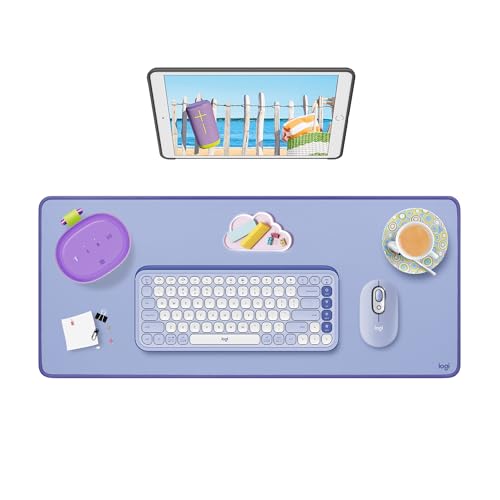
Logitech Desk Mat Studio Series
A cloth-surface mat with a rubber base: the Step 3 hand wash applies in full. Mid-tier, widely sized for keyboard-and-mouse layouts, and a sensible default for owners who want washable practicality.
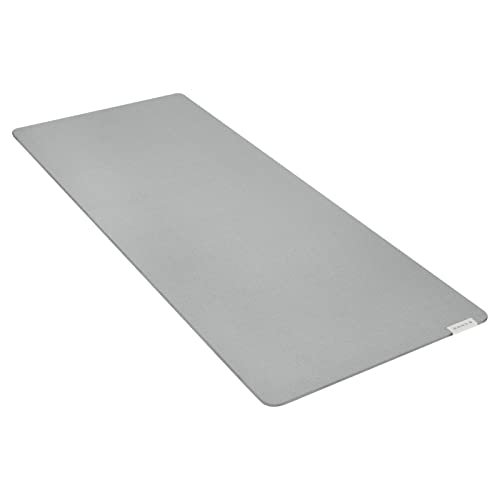
Razer Pro Glide Desk Mat
A smooth cloth mat aimed at fast mouse movement: same cloth method, with extra gentleness on its surface texture — soft cloth only, no brush on the glide face. Mid-tier for players who live on their mats daily.

SteelSeries QcK Desk Mat
The classic gaming cloth mat in desk size: fully washable by Step 3, with stitched-edge versions tolerating the routine especially well. Entry-to-mid tier and the easiest ownership in this list.
Grovemade Desk Mat
The premium natural-material option, in leather and felt-leaning finishes depending on the model: clean it by Steps 4 and 5, never by immersion. Premium tier for owners who treat the desk itself as furniture. Wider desk context lives in desks for pc setups and cable management options for desks.
When to Stop Cleaning and Start Replacing
An honest cleaning guide should name its own limits. Replace a mat when its rubber base crumbles or turns permanently tacky, because that degradation lives in the material itself and no surface routine reaches it. Replace it when a cloth surface has worn smooth and shiny in the mouse zone to the point that tracking suffers, when leather has cracked through its finish in the wrist area, or when an odour survives a proper wash and a genuinely thorough dry — that smell is the base retiring, not dirt lingering. Everything short of that list is cleaning territory, and this guide’s experience is that owners replace mats a full cycle earlier than they need to, mistaking accumulated grime for accumulated age.
When replacement day does come, let the old mat audition its successor’s material. If the cloth mat died of your coffee habit, PVC’s wipe-clean indifference may suit your actual life better than your aesthetic intentions do. If the leather mat thrived for years and merely met one spill too many, its replacement in kind will thrive too, now guarded by a coaster. The gear section above lists the reference points by material precisely so this decision — the only genuinely expensive one in the article — is made with the care evidence in front of you rather than from a product photograph.
Pro Tips for People Who Live on Their Desks
Keep a lint roller in the desk drawer and make its use a closing ritual on Friday; sixty seconds weekly is the entire difference between mats that need washing quarterly and mats that need it monthly. Keep drinks on a coaster that lives on the desk, not on the mat, because the mat’s job is to be a surface for work, not for beverages. If your work involves food, consider a sacrificial small mat or tray for the eating zone and let the desk mat stay a clean field — zoning beats cleaning as a strategy every time it is available.
Photograph your clean desk when you finish this routine, not for vanity but for calibration: three months from now, that photograph tells you honestly how far the mat has drifted and whether the rhythm needs tightening. And when you buy any new mat, spend its first evening reading its care label and writing the material and method on a note kept with your household documents. Future you, holding a damp cloth and a doubt, will find that note the way a traveller finds a map — with disproportionate gratitude for a very small effort.
Desk Mats in Shared and Professional Spaces
Shared desks add one variable this guide has so far ignored: other people’s habits. A mat in a hot-desking office or a family workspace meets more hands, more drinks, and more mysterious marks than any private mat, and its cleaning rhythm should shorten accordingly — the weekly dry pass becomes twice weekly, and the full clean arrives whenever the mat changes primary user, as a courtesy as much as a hygiene measure. Material choice matters more here too: PVC and washable cloth forgive a crowd, while leather and pale felt record a crowd, and recording a crowd is rarely the aesthetic a shared space wants.
Professional presentation is the other quiet argument for this whole routine. A desk mat occupies the visual centre of every video call framed over a desk, every photograph of a workspace, and every visitor’s first impression of how its owner works. A clean mat signals the same thing a clean desk always has — not tidiness as a personality, but maintenance as a habit — and it does so at the exact spot where the eye lands. Fifteen minutes a few times a year is a remarkably cheap price for that signal, which is perhaps the most practical sentence in this entire guide.
There is also a comfort dividend that cleaning guides rarely mention. A freshly cleaned cloth mat feels different under the wrists — softer, more even, faintly cooler — and a leather mat properly conditioned has a smoothness that hands register without the brain naming it. Desks are where knowledge workers spend their waking lives, and the surfaces at the centre of those desks are touched more hours per day than almost any object they own. Keeping the most-touched object in your working life genuinely pleasant to touch is not housekeeping vanity; it is ergonomics by another name.
Maintenance and Keeping It Looking New
Deep cleaning is the exception; rhythm is the rule. A weekly dry pass — shake, brush, or lint-roll, matched to material — removes the grit before it grinds in, and a coaster habit removes most stains before they happen. Rotate the mat occasionally if your layout allows, so wear spreads instead of concentrating under the mouse hand. Store spares flat or loosely rolled, never folded, in a dry place out of direct sun.
Match the rhythm to the material. Cloth earns a full wash whenever it looks tired, typically a few times a year for daily users. Leather earns its damp wipe and conditioning on a similar cadence, and rewards it by looking better annually. Felt lives on dry upkeep with rare, surgical blotting. PVC asks only for wipes and laughs at schedules. The same housekeeping instinct serves the rest of the desk: how to clean a printer covers the other dust magnet in the room, how to clean computer monitors and screens covers the glass, and the workspace inside the case is served by how to set up a pc fan controller.
A Short History of Your Mat’s Enemies, and a Closing Word
Stand back far enough and a desk mat’s life story is simple: it is attacked by grit from below the hand, oils from the hand itself, drinks from beside the hand, and sunlight from the window the desk faces. Every method in this guide maps to one of those four. Shaking and brushing answer grit. Washing and wiping answer oils. Prompt blotting and coasters answer drinks. Sensible placement and heat-free drying answer the sun. An owner who sees the pattern no longer needs to memorise procedures, because the right response to any new mark can be reasoned out from which enemy caused it — and reasoning, unlike memorising, survives contact with a material or a stain this guide never mentioned.
That is the real deliverable here, as it is in every good maintenance guide: not eight steps for one mat, but a way of seeing the object clearly enough that the steps become obvious. Your desk mat asks very little of you — a dry minute most weeks, a gentle clean a few times a year, protection from the chemicals and heat that genuinely harm it — and in exchange it gives you a workspace that looks considered, feels pleasant, and photographs like the desk of someone who has their life in order. Clean it by its material, dry it with patience, and it will keep that promise for years.
One final encouragement, aimed at the owner whose mat has not been cleaned since the day it was unrolled: begin anyway, and begin with the dry steps. The shake and the brush alone will improve the mat visibly in two minutes, and visible improvement is the fuel that carries people through the wash and the drying patience that follow. Perfection is not on offer — a well-used mat keeps a little of its history, and should — but the distance between a neglected mat and a cared-for one is a single unhurried session, and it closes the moment you start. Your desk, your wrists, and every video call you join this month will notice the difference before you consciously do.
And if the session converts you — as it converts most people who do it properly once — write the rhythm down where you keep the rest of your household’s quiet machinery: the filter changes, the battery swaps, the seasonal checks. Desk mats join that list gracefully, asking for less than almost anything else on it. A clean mat is a small thing. A desk that is reliably, habitually cared for is not a small thing at all, and it is built entirely out of small things done on rhythm, of which this guide has now given you one more.
Consider, too, what a clean mat does for the equipment that lives on it. Keyboards gather less grit at their feet, mouse feet glide on the surface they were designed for instead of on a film of yesterday’s dust, and the small scratches that accumulate on the undersides of everything are slowed to a fraction of their neglected rate. Cleaning the mat is therefore not one chore but a subsidy to every other object on the desk — the cheapest maintenance in the room, quietly protecting the most expensive ones, which is as good a closing argument as any guide in this series gets to make.
Start this week, while the method is fresh: one shake, one dry pass, and a decision about when the full clean will happen. The mat will not become perfect, and it does not need to. It needs to become cared for — and cared for, in this small corner of your working life, turns out to be a state you can reach in a single afternoon and keep for the price of a minute a week.
When It Does Not Go to Plan: Troubleshooting and Recovery Steps
Document your working settings
The moment a desk mat job goes exactly right, write down the settings, materials and steps that produced it — on paper, in a note on your phone, anywhere you will actually find it again. Memory rewrites these details within weeks, and the next difficult job will have you guessing at a recipe you once knew. A personal settings log is the single highest-value habit in the whole Gaming Desks category: it turns one success into a repeatable process and turns troubleshooting into comparison against a known-good baseline instead of guesswork.
Know when the problem is not technique
Some failures are the product telling you something: a part at the end of its life, a consumable past its best, or a task beyond the model’s design limits. If the same failure survives correct setup, fresh consumables and careful settings, stop refining your technique and inspect the hardware, or check whether the job needs a heavier-duty desk mat than the one you own. Recognising that boundary is a skill in itself. Persisting with technique fixes for a hardware problem is how an afternoon disappears, and how a basically sound product earns an unfair reputation.
Teach the second user
In a desk or bench that doubles as a workspace for two completely different hobbies, you may not be the only person who operates the desk mat, and a technique that lives only in your head is a fragile one. Once your process is stable, walk the other user through it once, then let them run it while you watch for the step where your instructions were ambiguous. Their mistakes are diagnostic gold: they show exactly which step depends on tacit knowledge you have not written down. Fix the written version, not just the user, and the whole household’s results become as consistent as your own.
Diagnose before you adjust
When a desk mat task goes wrong, the temptation is to change three things at once and hope. Resist it. Work through the likely causes in order of probability — setup, materials or media, settings, then the hardware itself — and change one variable at a time, noting what each change does. In a desk or bench that doubles as a workspace for two completely different hobbies, most failures trace back to the first two categories, which are free to fix. This ordered approach feels slower for ten minutes and saves hours across the life of the product, because you build a personal map of cause and effect instead of a pile of superstitions.
The recovery sequence for a job gone wrong
Mid-task failures with a desk mat follow a pattern worth memorising: stop safely, preserve whatever state you can, identify the earliest point where things diverged, and restart from the step before that point rather than from the beginning. Rushing a restart from zero wastes materials and often repeats the same error at the same step. If the failure damaged a consumable or a wear part, replace it before retrying; a compromised part makes the next attempt fail in a new, confusing way that sends your troubleshooting in the wrong direction entirely.
Small calibrations, repeated on schedule
Most desk mat techniques drift gradually rather than failing suddenly, which means small scheduled checks beat occasional heroic fixes. Pick the two or three quick checks relevant to your setup — alignment, cleanliness, tightness, levels, or whatever your model’s manual names — and attach them to a rhythm you already keep, such as the start of the month or the end of a big job. In a desk or bench that doubles as a workspace for two completely different hobbies, a two-minute check on schedule prevents the slow decline that owners often misread as the product wearing out, when it is really just an adjustment that was never made.
If a candidate fails this check, strike it from the list without regret and let the remaining options compete on merit.
Your future self, mid-task on a busy day, is the person this check is really for.
Keep the notes with the product’s paperwork; they become the baseline every later adjustment is judged against.
Write the conclusion of that check down before you order, so the decision survives contact with a tempting listing.
That single habit separates owners who stay pleased with their choice from owners who quietly start shopping again within a season.
Treat it as part of the purchase itself, not as homework to do after the box arrives.
None of this requires expertise — only the willingness to check your own routine before trusting a generic recommendation.
Frequently Asked Questions
Can I put my desk mat in the washing machine?
Some cloth mats survive a gentle cold machine cycle, and some makers say so explicitly — their word governs. As a default, though, hand washing is the safer recommendation in this guide: machine agitation stresses stitched edges, twists rubber bases, and can delaminate the layers of mats that were never designed for it. Leather, felt, and illuminated mats should never be machine washed under any circumstances. When the label is silent and the mat matters to you, the sink is the machine.
How often should I clean my desk mat?
By rhythm rather than calendar. Dry upkeep weekly takes a minute and prevents most deep cleans. A full wash or material-appropriate clean a few times a year suits most daily users, sooner whenever spills, visible grime in the mouse zone, or any smell announces itself. Owners who eat at the desk should expect the shorter end of every interval in this guide, and should adopt the coaster as a lifestyle rather than an accessory.
What cleaner is safe for every desk mat material?
A small amount of mild soap in lukewarm water is the closest thing to a universal answer, applied at the wetness level each material tolerates — immersion for cloth, a barely damp cloth for leather and felt, a normal wipe for PVC. The universal prohibitions matter more than the universal cleaner: no bleach, no harsh solvents, no abrasive pads, on any material, ever. When a product’s label warns against something specific, the label wins over this guide.
Why does my mat curl at the edges after washing?
Curling usually comes from drying, not washing: a mat dried hanging, folded over a rail, or near heat sets its layers at slightly different rates and the edges remember the insult. Dry flat, with a heavy book resting on a stubborn corner for an hour, and most curls relax. Prevent the sequel by storing the mat flat or rolled loosely with the top side out, and by keeping it out of the sunny spot on the desk where one edge bakes daily.
Can I remove pen ink from a desk mat?
Sometimes, partially, and the material decides your odds. On PVC, ink often wipes away with patient soapy attention because the surface is non-porous. On cloth, blot — never rub — with your mild solution and accept that soaking time does more than pressure. On felt and pale leather, ink commonly sets permanently, and the honest advice is to stop at gentle methods rather than escalate to solvents that will remove the surface along with the stain. A faint ghost is a story; a stripped patch is damage.
How do I stop my desk mat from smelling?
Smell is almost always moisture history: a mat put back damp, stored damp, or lived on by spills never fully cleaned. The cure is a proper material-appropriate clean, complete rinsing for cloth, and then the most thorough flat air-dry of its life, in moving air, judged by the underside rather than the top. Prevention is drier habits — coasters, prompt blotting of spills, and never rolling a mat for storage until it is dry through. A mat that still smells after all that has usually absorbed odour into a degrading rubber base, which is the one verdict in this guide that points at replacement.
Related Reading
Continue with how to set up a pc fan controller, our pc fan controller review, pc fan controller reviews compared, how to install a pc case fan, and the best desks for professionals.