ilcastellomenu.com is reader-supported. When you buy through links on our site, we may earn an affiliate commission.
Where to Buy
Photographing artwork is the most quietly technical job in photography. The subject does not move, the light can be arranged, and yet the standard is absolute: the file must be the artwork — its colours true, its geometry square, its surface honest, its finest mark resolved — because the photograph will stand in for the piece in portfolios, catalogues, print reproduction, and sales rooms the original will never enter. If you are choosing the best cameras for artwork capture, you are choosing by a different spec sheet than the rest of photography: colour fidelity before speed, lens evenness before autofocus heroics, resolution in service of reproduction sizes, and tethering and workflow manners that suit a copy stand rather than a mountain.
The discipline has a name — capture — and its practitioners, in galleries, studios, and publishing houses, share a ritual this guide will teach as it recommends: the work squared to the sensor, lit evenly from both sides at forty-five degrees, white-balanced from a reference rather than a hope, exposed for the surface rather than the room, and checked at full magnification for the corners where lenses confess. A capture camera is judged by how completely it serves that ritual. The six below divide the work by scale and setting: the studio system for the painter’s archive, the high-resolution body for print reproduction, the gallery-floor camera for works that cannot travel, and the honest compacts for the documentation that feeds everything else.
Two virtues recur through the picks and deserve naming at the start. The first is tethered shooting — the camera wired to a computer, the frame reviewed large the instant it is taken — because capture is a discipline of verification, and the screen on the camera’s back is too small to verify with. The second is a lens ecosystem with true macro and flat-field options, since the lens that renders a canvas’s corners as honestly as its centre is a specialist instrument, and not every mount’s catalogue treats it as one. We weighted both, alongside the colour science that decides whether the ultramarine survives.
An honesty note to close the introduction: capture technique will defeat equipment every time it is neglected. A modest camera in the full ritual outperforms a flagship waved at a painting under ceiling lights, and this guide’s structure — ritual first, cameras second — is deliberate. Learn the ritual and any pick here will serve; the picks differ in how far their fidelity can be pushed when the work deserves it.
Reading the six reviews: each pick is interrogated on capture’s own charges — colour honesty, corner honesty, tethering manners, and behaviour in the ritual — before its general photographic virtues are heard. A camera can be a magnificent instrument and a mediocre capture tool, and this guide has marked accordingly: autofocus fame counts for nothing here, while a lens bench with flat-field options counts for a great deal. If your work is flat and still, read from the Sony and Fujifilm down; if it moves or cannot travel, start with the Panasonic and the gallery-floor Canon; if it is daily and documentary, the little Sony’s paragraph is your home.
Key Takeaways
- Colour truth is the capture specification: white balance from a reference, RAW files, and honest colour science beat every other metric.
- Geometry is the second discipline — camera centred, square, and level, or the file lies about the work’s proportions.
- Resolution should be bought for reproduction size: portfolio and web need less than print and archive demand.
- Tethering turns capture into verification; judge studio cameras by how gracefully they work wired.
- The Sony Alpha 7 IV is the best all-round capture body; the Fujifilm X-T5 resolves the most detail per pound and per gram.
In this guide
Quick Picks
| Pick | Badge | Why it earns its place |
|---|---|---|
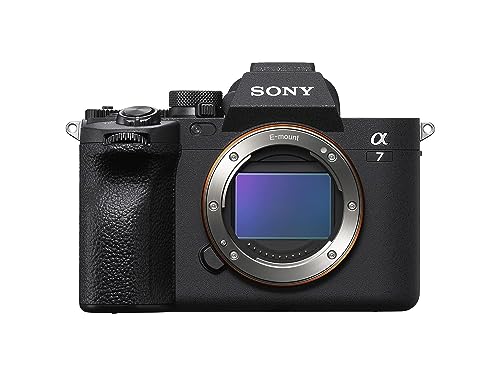
| Sony Alpha 7 IV | Best All-Round Capture Body | Balanced resolution, faithful colour, mature tethering, and the deepest flat-field lens bench for studio copy work. |
| Fujifilm X-T5 | Best Detail per Size | Forty megapixels in a small body, with colour that painters trust and resolution that funds print reproduction. |
| Canon EOS R6 Mark II | Best for Gallery Floors | Clean high-ISO files and stabilisation for works that cannot leave the wall — capture where the art lives. |
| Panasonic LUMIX S5II | Best for Art in Motion | Stabilised full-frame video and stills for installations, walk-through documentation, and process archives. |
| Canon EOS R10 | Best Value Capture Kit | Honest colour and a sharp kit path at a price that leaves budget for the lights and stand that matter as much. |
| Sony RX100 VII | Best Pocket Documenter | One-inch files and a versatile zoom for condition records, studio visits, and the archive’s everyday frames. |
One absence, confessed in the same spirit as the ritual’s priority: the medium-format capture backs and technical systems of the great institutions are outside this guide’s pool, and the six here were chosen as the strongest capture instruments a working artist, a small gallery, or an independent photographer can actually own and run. Within that honest border, nothing was compromised — the colour, geometry, and workflow standards applied are the institutions’ own, and the files these bodies produce, in the full ritual, are fit for the purposes this guide names them for.
How We Chose These Picks
We assessed the candidates at the copy stand, not the racetrack. Colour came first — the honesty of each system’s rendering, the quality of its RAW files under correction, and the availability of a disciplined white-balance workflow. Resolution was judged against reproduction reality: what portfolio, catalogue, and print sizes actually consume. Lens ecosystems were read for flat-field and macro options, because capture sharpness is a corner-to-corner property and kit zooms confess at the edges. Tethering and studio workflow — wired reliability, live view on a real monitor, remote release — separated the studio instruments from the tourists. And for the gallery-floor picks, high-ISO cleanliness and stabilisation stood in for the tripod the venue forbids.
What Does the Capture Ritual Actually Involve?
Set the work vertical and the camera on a tripod or copy stand, centred on the piece’s middle, sensor plane parallel to the surface — the grid overlay and electronic level on these bodies are the ritual’s instruments, and a tape measure settles what eyes argue about. Light from both sides at about forty-five degrees, matched in power and distance, so the surface is lit evenly enough that a grey card reads the same in every corner; check that evenness with the card before the artwork is entrusted to it. Kill ambient light, whose colour will fight the lamps’. Focus on the surface’s most detailed passage, stop the lens to its even, sharp middle apertures, and use the lowest native ISO with a remote or timed release, because at capture distances a fingertip’s vibration is a softness no resolution can repay.
Then verify like a professional: the frame at full magnification, corners first; the colour reference target included in one frame of every session; the histogram read for the surface’s actual tones rather than the room’s. Photograph a ruler or the work’s stated dimensions into the record. Name the files by the archive’s system before the card leaves the camera. None of this is glamorous, and all of it is the difference between a photograph of a painting and a capture of one — a distinction that print deadlines, insurance valuations, and posterity all enforce without sentiment.
How Much Resolution Does Artwork Capture Really Need?
Work backward from the largest honest use. A portfolio page, a website, a catalogue at the work’s own size — these are served handsomely by the mid-twenty-megapixel class, which is most of this list, because the artwork’s own detail, not the sensor, is usually the ceiling. Print reproduction at larger-than-life sizes, archival capture for institutions, and the cropping that detail studies demand are where the high-resolution picks earn their place — the X-T5’s forty megapixels and the A7 IV’s thirty-three buy reproduction headroom that cannot be added later. The discipline’s elders add a sterner note: resolution spent on a poorly lit, unsquared capture is counterfeit currency. Buy the ritual first, the lights second, and the megapixels third, and the order will never embarrass you.
One more resolution truth belongs to textiles, works on paper, and anything with fine repetitive structure: patterns can alias against a sensor’s grid into moiré, the rainbow shimmer that ruins a fabric’s record. Distance, a slight angle change, and stopping down are the field cures; the honest cure is testing on the actual piece before the session that counts. Capture photographers test the way pilots check — because the work, like the weather, is always slightly different from the forecast.

Sony Alpha 7 IV — Best All-Round Capture Body
The A7 IV sits at capture’s centre of gravity. Its resolution funds reproduction and detail cropping without the file sizes that slow a studio’s day; its colour is faithful and corrects gracefully, which is the capture photographer’s definition of good colour; and its tethering is the mature, boring kind — wired to the studio computer, live view on the big screen, frames landing in the archive as they are made. Around it, the E-mount offers the deepest bench of macro and flat-field-capable glass in this guide, at prices from the sensible to the serious, so the lens half of the capture equation is never the constraint.
The body’s studio manners complete the case: dual slots for the session that cannot be reshot, a finder and screen that serve the squaring ritual, and in-body stabilisation for the gallery-floor days when the stand stays home. It is not the cheapest capture body here, nor the highest-resolution; it is the one whose every property is pointed at the work, which is why working capture photographers reach for this class of Sony more than any other single body.
Trade-offs are the professional constants: full-frame lenses accumulate cost, the menus reward one configuration evening, and ultimate resolution seekers will look at the Fujifilm’s count with envy. For capture as a practice — archive, catalogue, portfolio, print — the A7 IV is the recommendation this guide defends first.
- Sensor: full-frame CMOS, about 33 megapixels
- Mount: Sony E — deepest macro and flat-field bench
- Workflow: mature tethering and studio live view
- Colour: faithful, corrects gracefully in RAW
- Cards: dual slots for unrepeatable sessions
Strengths
- Every property pointed at capture work
- Lens bench that never becomes the constraint
- Tethering that makes verification routine
Trade-offs
- Full-frame lens costs accumulate
- Resolution trails the Fujifilm’s count
- Menus reward a setup evening
Best for: studio capture, archives, and catalogue work. Not suited for: the tightest budgets or pure pocket documentation.

Fujifilm X-T5 — Best Detail per Size
The X-T5 makes the resolution argument in its purest form: forty megapixels — the count print reproduction asks for — in a body smaller than several lower-resolution rivals, wearing dials that suit the copy stand’s deliberate pace. Painters have a particular trust in Fujifilm’s colour, born of the film simulations’ respect for pigment, and for capture the simulations matter less than the RAW files’ behaviour under correction, which is excellent: hues hold their relationships as exposure and white balance are tuned, which is precisely what a capture file is for.
The X-mount’s contribution is a set of sharp, even primes and a macro option that render a canvas’s corners with the honesty the ritual demands, in a kit that travels to the artist’s studio rather than insisting the art travel to yours. In-body stabilisation covers the location work; the tilting screen serves the stand’s awkward heights.
Its limits are the format’s edges: the deepest archival work may eventually want a larger sensor’s dynamic range, tethering is competent rather than the Sony’s home turf, and the longest capture sessions will notice the smaller body’s battery sooner. For the artist or photographer whose capture must travel and whose prints run large, the X-T5 is the most resolution an honest budget can carry.
- Sensor: APS-C X-Trans CMOS, about 40 megapixels
- Mount: Fujifilm X — sharp, even primes and macro
- Colour: pigment-respecting rendering, strong RAW behaviour
- Controls: dials for the deliberate copy pace
- Size: high resolution in a travel body
Strengths
- Print-reproduction resolution without full-frame bulk
- Colour that painters specifically trust
- Travels to the artwork instead of summoning it
Trade-offs
- Tethering is capable, not class-leading
- Ultimate dynamic range trails full frame
- Battery life on long sessions wants spares
Best for: travelling capture and large-print reproduction. Not suited for: tethered studio production lines.

Canon EOS R6 Mark II — Best for Gallery Floors
Much real capture happens where the art lives and cannot be moved: the gallery wall, the collector’s hall, the church’s altarpiece. There the ritual adapts — tripods forbidden or impractical, light mixed and unchangeable, time rationed by opening hours — and the camera must bring the studio’s fidelity to the location’s terms. The R6 Mark II is that camera: high-ISO files clean enough to keep colours honest in dim rooms, in-body stabilisation that turns a braced stance into a copy stand’s substitute, and dynamic range that holds the window-lit canvas and its shadowed neighbour in one frame.
Canon’s colour is the other half of the case — a rendering of pigment and skin that galleries and artists have trusted for decades, with RAW files that correct predictably when the room’s mixed light has had its say. The RF bench offers the wide and standard glass location work demands, and the body’s professional reliability features suit sessions that cannot be repeated because the exhibition closes on Sunday.
Its resolution is the moderate figure, which pure reproduction maximalists will note; and in the studio, wired to a stand, the Sony’s ecosystem argues back. But for capture where the art is — the larger half of the real world’s work — the R6 Mark II is the professional’s travelling instrument in this guide.
- Sensor: full-frame CMOS, about 24 megapixels
- Low light: clean files for dim, mixed interiors
- Stabilisation: in-body, for tripod-free locations
- Colour: the gallery-trusted Canon rendering
- Mount: Canon RF wide and standard bench
Strengths
- Fidelity where the art lives, not just in studios
- Stabilisation that substitutes for forbidden tripods
- Colour with decades of professional trust
Trade-offs
- Moderate resolution for the largest reproductions
- Studio tethering story trails the Sony
- Full-frame system cost applies
Best for: galleries, collectors, and location capture. Not suited for: maximum-resolution studio reproduction.

Panasonic LUMIX S5II — Best for Art in Motion
Installations move, processes unfold, and the modern archive increasingly includes the artwork’s behaviour as well as its face. The S5II is the capture pick for that reality: a full-frame stills body of professional honesty whose video is a headline rather than a footnote, stabilised to a standard that makes the slow installation walk-through a one-person job, and colour-consistent enough that the film and the stills of the same piece can sit in one catalogue without arguing. Artists documenting process — the pour, the carve, the kiln’s opening — will find it the most complete witness here.
For flat capture it remains a serious instrument: the L-mount’s lenses arrive from several makers, phase-detection autofocus behaves in the studio, and the body’s weather sealing suits the locations art chooses. Its stills resolution is the moderate full-frame figure, adequate for portfolio and catalogue, short of the reproduction maximalists’ brief.
The trade is specialisation: a pure copy-stand practice will spend its money better on the Sony or Fujifilm and their benches, and the L-mount’s flat-field shelf is younger than its rivals’. For the archive that moves — installation, performance documentation, the artist’s process library — the S5II is the capture camera this guide sends.
- Sensor: full-frame CMOS, about 24 megapixels
- Video: headline-quality for installation records
- Stabilisation: class-leading, for walk-throughs
- Mount: L-mount, multi-maker lenses
- Colour: consistent across stills and motion
Strengths
- The archive’s moving half, done properly
- Stabilised walk-throughs without a crew
- Honest stills capture when the piece holds still
Trade-offs
- Moderate stills resolution for reproduction
- Flat-field lens shelf is the youngest here
- Video strength is wasted on pure copy work
Best for: installation, process, and mixed-media archives. Not suited for: pure flat-capture studios.

Canon EOS R10 — Best Value Capture Kit
Capture’s open secret is that the ritual outperforms the equipment, and the R10 is the body that lets a budget honour that truth: honest Canon colour, a sensor whose resolution covers portfolio and catalogue with room to spare, and a price that leaves real money for the capture kit’s other half — the matched lights, the stand, the grey card and colour reference, the backdrop that makes a spare room a studio. An R10 in the full ritual will out-capture a flagship under ceiling lights every working day of the year, and this guide would rather sell that sentence than any camera.
The RF system gives the value a future: the kit zoom serves the apprenticeship, and the mount’s macro and prime options wait at sane prices for the day the work demands corner-perfect glass. The body’s vari-angle screen serves the stand, its autofocus the studio’s occasional living subjects, and its colour the whole point of the exercise.
Its limits are the value tier’s: tethering is basic beside the Sony’s production manners, the sensor’s range is a step behind the full-frame picks in the hardest mixed light, and resolution caps the largest reproductions. For the artist building a first real capture practice — which is most of the people this keyword serves — the R10 plus the ritual is the wisest money in the guide.
- Sensor: APS-C CMOS, about 24 megapixels
- Colour: honest Canon rendering for pigment
- Mount: Canon RF — macro path at sane prices
- Screen: vari-angle for copy-stand work
- Economy: leaves budget for lights and stand
Strengths
- Capture fidelity where the budget actually lives
- Colour that needs no apology
- A system future at student and studio prices
Trade-offs
- Tethering is basic beside the flagship picks
- Range trails full frame in mixed light
- Resolution caps the largest print work
Best for: first capture practices and artist-run archives. Not suited for: institutional reproduction at maximum scale.

Sony RX100 VII — Best Pocket Documenter
Not every capture is a master frame. Condition reports, studio-visit records, the quick honest photograph of a piece before it is crated, the reference detail a restorer needs by email — this everyday documentation is the archive’s connective tissue, and the RX100 VII is its ideal instrument: a one-inch sensor with files far beyond phone honesty, a zoom that frames a canvas or closes on a signature without a lens change, and a pocketable body that is present in the studio, the gallery, and the framer’s workshop because it asks nothing.
Its colour is respectable, its lens even enough for documentation at its sensible apertures, and its speed of operation suits the hundred small records a working archive accumulates monthly. Conservators and registrars — the profession’s quiet documenters — have always kept a camera of exactly this class in the drawer, and this is the current form of that drawer camera.
The limits define the role: no tethering ceremony, no reproduction resolution, a fixed lens whose corners are documented rather than celebrated. It will not make the catalogue’s plates. It will make the records that protect the work, prove its condition, and fill the archive’s daily pages — and on the day the masterpiece is damaged in transit, its honest little frames will be the most valuable photographs in the building.
- Sensor: 1-inch stacked CMOS, about 20 megapixels
- Lens: fixed 24–200mm equivalent zoom
- Role: condition records and daily documentation
- Speed: instant readiness, no setup
- Form: pocketable, present everywhere
Strengths
- The archive’s everyday frames, honestly made
- Zoom range for whole works and signatures alike
- Present in every room the work passes through
Trade-offs
- No reproduction-class resolution or tethering
- Fixed lens corners are adequate, not exemplary
- Small sensor in the dimmest galleries
Best for: condition reports, registrars, and daily records. Not suited for: catalogue plates or print reproduction.
How Do You Capture Three-Dimensional and Textured Work?
Sculpture, ceramics, textiles, and impasto painting all break flat capture’s first rule — there is no single true plane — and replace it with an older one: the photograph must let a viewer reconstruct the object honestly. Light for form: one principal source, directional enough to model the volume, filled gently so the shadows keep their information, because a sculpture lit flat is a sculpture flattened twice. Shoot the establishing circuit at the viewer’s eye height, then the details where the making lives — the join, the glaze break, the brushwork’s ridge catching the raking light you angled for exactly that purpose. Raking light, low across a surface, is texture’s portraitist, and capture photographers keep it as a separate, labelled pass in the session: the flat record for the catalogue, the raked record for the truth about the surface.
Textiles and works on paper add their disciplines: evenness above all, moiré watched for at full magnification, and supports that keep the piece flat without stressing it — a conservator’s advice outranks a photographer’s convenience for anything fragile or valuable. The cameras divide this work by their virtues already described: resolution for the detail passes, stabilisation and high-ISO grace for the location pieces, and the little Sony for the condition frames that bracket every handling. Three-dimensional capture is where the photographer’s judgement is most visible in the file, which is why the professionals’ archives include their lighting notes alongside the frames.
What Does a Proper Capture Session’s Workflow Look Like, Start to Finish?
It begins before the artwork is touched: the space darkened, the lights placed and matched, the grey card reading evenly, the camera squared on a test target and its corners verified. The work is installed — by gloved hands, on the wall or easel it will be shot from — and the session frames are made in a fixed order: the reference target, the full piece, the details in a planned sequence, the scale and label information, and the back or underside where the archive requires it. Tethered review happens continuously, not at the end, because the session’s whole economy depends on catching the glare, the tilt, or the soft corner while correction costs a minute rather than a rebooking.
Afterward, the unglamorous half that decides the archive’s value: files renamed by the system, masters backed up twice before the card is cleared, the colour correction applied from the session’s reference rather than by eye, and the record — dimensions, medium, condition notes, lighting arrangement — filed with the frames. A capture practice is a small institution, and its paperwork is not bureaucracy but memory. The cameras in this guide were chosen to slot into that institution without friction; the institution itself is the photographer’s to build, and it is worth more than any single body in it.
How Should Artists and Photographers Divide the Work?
Honestly, by skill: the artist owns the work’s truth — which view is canonical, which detail matters, what the colour must answer to — and the photographer owns the file’s truth, the geometry, light, and colour process that deliver it. The best capture sessions are collaborations with that border respected, the artist present at the tethered screen for the master frames, the photographer unhurried in the ritual. Artists who shoot their own work — the majority this keyword serves — should borrow the border internally: make the capture decisions as the photographer, then judge the screen as the artist, in that order, because reversing them produces beautiful light on the wrong view. The cameras here serve either arrangement; the discipline of the two chairs is the session’s real equipment.
The Capture Six, Side by Side
| Camera | Format | Resolution class | Tethering | Best capture job | Choose it if… |
|---|---|---|---|---|---|
| Sony Alpha 7 IV | Full frame | High | Mature | Studio archive and catalogue | capture is your practice |
| Fujifilm X-T5 | APS-C | Highest here | Capable | Print reproduction, travelling | prints run large |
| Canon EOS R6 Mark II | Full frame | Moderate | Good | Gallery-floor capture | the art cannot come to you |
| Panasonic LUMIX S5II | Full frame | Moderate | Good | Installation and process | the archive moves |
| Canon EOS R10 | APS-C | Moderate | Basic | First capture practice | budget must fund the ritual too |
| Sony RX100 VII | 1-inch | Modest | None | Condition and daily records | documentation is a daily habit |
The table’s honest message: capture quality is a chain — light, geometry, colour, lens, sensor — and each row is a different strongest link. Studios should buy the chain’s completeness (Sony, Fujifilm), locations its resilience (Canon full-frame), and everyone the ritual, which no row sells and every row assumes.
How Do You Light Artwork Without Lying About It?
Evenly, identically, and from the sides. Two matched sources at forty-five degrees, equidistant, their overlap tested on a grey card until the card reads evenly corner to corner — that is the whole architecture, and every refinement is commentary. Diffuse the sources for matte work so the surface’s own texture is the only texture; go bare and more directional, cautiously, when the work’s impasto or relief is itself the subject, and say so in the record. Cross-polarisation — polarising film on the lights and a polariser on the lens, rotated to cancel reflections — is the professional’s answer to varnish and glazing glare, and it costs light and a little colour saturation that the RAW workflow repays; learn it when glossy work becomes your regular subject, not before.
What never belongs in capture light: the room’s ceiling fixtures, a window’s unilateral wash (unless the work is sculpture being modelled deliberately), and any mixture of colour temperatures, which no white balance can fully forgive because different parts of the piece were lit by different suns. The cameras here all report colour faithfully; the lighting decides whether there is a single truth to report.
What Mistakes Ruin Artwork Captures Most Often?
The unsquared camera leads, as it leads every capture post-mortem: two degrees of tilt become a trapezoid that no crop fully forgives, because the far edge’s detail was spent at an angle. Second is the single ceiling light’s portrait — a hot centre, dying corners, and a colour gradient across the piece that the artist will see even if the photographer cannot. Third is auto white balance trusted on a colourful painting, which neutralises the very hues it should report; the grey card exists because cameras, left alone, will correct a Rothko toward beige. Fourth is the glossy piece shot head-on with the photographer’s own reflection negotiating for space in the varnish. And fifth is the unlabelled archive — a thousand honest frames named by a card’s counter, their subjects unfindable by spring. The ritual in this guide is simply these five failures, answered in advance.
What About Capturing Work for Online Sales and Social Channels?
The marketplace has its own capture dialect, and it is worth speaking deliberately. Buyers online judge colour and condition from your files with no other evidence, so the online set needs the master’s honesty plus the context the catalogue omits: the work in a room at believable scale, the surface in raking light that proves its texture, the edges and back that prove its making and condition. Shoot the set in the master session, from the same squared, evenly lit arrangement, and let the platform’s crops be made from files that can afford them — which is another quiet argument for the higher-resolution picks when online sales are the work’s livelihood. Consistency across a whole shop’s listings is the amateur’s tell and the professional’s signature: one light, one background, one colour process, so that a buyer’s eye learns to trust the screen. Trust, in online art sales, is a capture quality before it is a business one.
How Do You Know When to Call a Specialist Instead?
When the stakes outgrow the ritual’s home version: the museum commission with contractual colour tolerances, the artwork whose value makes its insurance record a legal document, the piece too large, fragile, or glazed to move to your lights. Specialists bring copy stands the size of furniture, lighting measured rather than arranged, and colour pipelines certified rather than careful — and hiring them for the handful of works that warrant it is professionalism, not defeat. The rest of the archive — the great majority of any practice’s pieces — belongs to the ritual and the cameras in this guide, competently run. Knowing the border is part of the craft; this guide has tried to draw it where the professionals draw it, at the point where the file stops being a record and becomes an instrument of record.
How Should a Capture Kit Be Budgeted Across Camera, Lights, and Stand?
In thirds, roughly, and the camera is not the largest third for long. The lights — a matched, dimmable pair with stands and diffusion — are the session’s foundation and the purchase whose quality appears in every frame forever. The support — tripod or copy stand, head that levels precisely, the measuring and reference smallwares — is the geometry’s guarantor. The camera and lens are the third that gets the attention, and this guide’s value pick exists to keep the thirds honest: an R10 with proper lights will build a better archive than an A7 IV under a ceiling bulb, a sentence the whole article has been arranging. Buy in the order the failures occur — light first if your current frames are uneven, geometry second if they lean, resolution last when the prints demand it — and let each purchase be the answer to a named failure in your own files. That discipline, more than any body in this list, is what a capture practice is made of.
What Is the Checkerboard Test, and Why Do Capture Photographers Swear By It?
Before a new lens, a new stand position, or a new room is trusted, the elders photograph a flat, detailed, unforgiving target — a printed checkerboard, a page of fine text, a resolution chart — filling the frame, in the session’s full ritual. The corners report the lens’s honesty, the geometry reports the squaring, the evenness reports the lights, and the whole apparatus either passes as a system or confesses which third of the budget needs attention. It takes ten minutes and it converts every future failure from a mystery into a comparison: the target’s last good frame is the baseline, and any session can be audited against it. Run it when anything changes. The cameras here all pass handsomely with the right glass in front of them; the test exists to prove that the glass, the stand, and the lights in your room are the right ones, which no review can know.
A Last Word on Why Capture Matters Beyond the Portfolio
Artworks are mortal in ways their makers prefer not to rehearse: they fade, they are damaged in transit, they are sold into rooms the artist will never enter, and occasionally they are lost entirely. The capture archive is the work’s second life and sometimes its only surviving one, which is why institutions treat capture as conservation and why the humble condition frame — the little Sony’s parish — can matter more, in the long run, than the catalogue’s plate. The artist or photographer building a capture practice with any camera in this guide is doing quiet, permanent work: giving the art a faithful witness. Choose the witness carefully, run the ritual faithfully, and the files will still be telling the truth when everyone who made them has stopped explaining.
What Does a Good Day’s Capture Log Include?
More than the frames. Date and session, the works by title and inventory number, the lighting arrangement in a sentence and a sketch, the lens and its aperture, the reference target’s frame number, and any anomaly — the varnish that fought, the corner that would not sit flat, the colour the artist corrected you on at the screen. Future sessions will thank present ones for every line, because capture is cumulative: the second photographing of a piece, years later, should be able to stand beside the first and be compared honestly, and only the log makes that comparison a measurement rather than an impression. Keep the log where the archive lives. It is the archive’s conscience, and like the grey card, it costs almost nothing and testifies to everything.
How Does Capture Change for Works on Paper, Photographs, and Prints?
Gently, and in the direction of more care. Works on paper are the flattest subjects and the least forgiving of uneven light, because the paper’s own tone is part of the work and any gradient across it reads as a stain the artist never made. Photographs as subjects add a surface problem — their gloss negotiates with every light in the room — and a colour problem of the second order, one rendering being judged through another. Prints, especially editions, add a consistency obligation: the tenth impression’s file should match the first’s, which is the session log’s and the reference target’s whole purpose. The cameras divide these duties as before — resolution for the detail, range for the tones, the ritual for everything — and the practitioner who masters paper first will find canvas forgiving ever after, because paper never lets a sloppy session hide.
A Short Word on Rights and Reproduction Ethics
Capture creates the most reproducible form of an artwork, and with it a responsibility the equipment cannot carry: the file’s use must honour the artist’s rights in the work — the terms agreed for the portfolio, the catalogue, the sale, and nothing beyond them without new agreement. Photographers who capture others’ work should settle usage in writing as routinely as they set white balance from the card; artists capturing their own should keep the masters’ custody as carefully as the work’s. It is a short paragraph in a long technical guide, deliberately placed where the practice becomes professional, because in capture the ethics and the technique mature together or not at all.
Final Recommendation
Build the practice on the Sony Alpha 7 IV if capture is your work: its balance of resolution, colour, tethering, and lens bench is the professional centre of this list. Choose the Fujifilm X-T5 when reproduction size rules and the kit must travel, the Canon EOS R6 Mark II when the art cannot leave its wall, and the Panasonic LUMIX S5II when the archive must move. Start on the Canon EOS R10 without a moment’s shame if the budget must also buy the lights — it should — and keep the RX100 VII in the drawer for the records that save the work’s history. Above all, learn the ritual before the first important piece is in front of the lens: in capture, the photographer is the variable, and the cameras are merely honest.
Related guides
Frequently Asked Questions
Do I need a macro lens for photographing paintings?
For full-frame capture of flat work, a true macro is not mandatory — what you need is a lens that is sharp and even corner to corner at capture distances, a property macros are designed for and good standard primes often share. Judge by the corners in a test frame of a detailed piece, not by the lens’s category. Where macro becomes essential is detail work — signatures, craquelure, textile structure — and small works shot close, where ordinary lenses are operating outside their comfort.
How do I get the colours exactly right?
Exactly is a process, not a setting: even and consistent lighting, a colour reference target photographed in the session’s light, white balance set from that reference rather than from the camera’s opinion, RAW capture, and a calibrated monitor for the correction. Each step removes one interpreter between the pigment and the file. The cameras here all support the process fully; the reference target and the calibration are the photographer’s small, decisive purchases.
Can I photograph artwork behind glass?
Yes, with the reflection discipline: light from the sides at angles that bounce away from the lens, the room behind the camera kept dark and unlit, the camera squared so its own reflection hides in its own shadow, and cross-polarisation for the stubborn cases. Shoot before glazing whenever the framer cooperates — it remains the professional’s preference — and where glass is permanent, as in museums, work the angles patiently and let the stabilised picks earn their place.
What resolution do I need to sell prints of my artwork?
Enough for the largest print at a viewing distance that forgives — in practice, the mid-twenty-megapixel class covers prints at the work’s own size and moderately beyond for most media, while larger-than-life reproduction is the high-resolution picks’ territory. Test with one real print before committing a series: paper reveals the truth about a capture chain faster than any screen, and a single honest test print is the cheapest education in this entire discipline.
Should I shoot tethered or to a card?
Tethered, whenever the setting allows, because capture is verification and the big screen is where verification happens — geometry, focus, glare, and colour are all judged properly at monitor size, in the moment when reshooting costs nothing. Card capture is for locations and speed. The Sony and the other studio picks make tethering a posture rather than a project; the habit, once formed, is never willingly abandoned.
How should I store and name capture files?
By the archive’s logic, not the camera’s: artist, title, year, and view or detail, in a folder per work, with the session’s reference frames kept alongside the masters. Keep the RAW as the master and export for each use. Two copies in two places, one off the premises. It sounds like administration because it is — and in ten years it will be the difference between an oeuvre and a hard drive.
Why do my captures look sharp in the centre and soft at the edges?
Three suspects, in order: the camera is not perfectly parallel to the work, so one edge is simply farther from the focus plane than the other — re-square with the tape measure and the grid before blaming glass. The lens is being used too wide open, where most lenses reserve their softness for the corners — stop down to the middle apertures the ritual prescribes. Or the lens itself is a generalist zoom at its weakest setting, in which case the checkerboard test will convict it and a prime or macro from the same mount is the sentence. Diagnose in that order; the first two cures are free.
Do I need to calibrate my monitor for capture work?
For any capture whose colour will be judged by others — portfolios, catalogues, sales — yes, eventually, and sooner than feels necessary. An uncalibrated screen makes your careful colour process a rumour: you correct toward a display nobody else owns. Hardware calibration is a modest, one-time-ish purchase that the whole workflow then stands on. Until it arrives, at least set the screen to a known, neutral state and proof one print, because paper remains the court of final appeal.
How do I photograph very large artworks that exceed my lens’s coverage?
By distance first — a longer lens from farther away flattens the geometry problem and keeps the sensor parallel more forgivingly — and by stitching second: overlapping frames from a camera moved parallel to the work, merged in software, a standard professional technique for oversize pieces that demands disciplined overlap and identical exposure throughout. Practise the stitch on an unimportant piece before the commission; the seams forgive nothing, and the ritual’s even light is what makes them invisible when the technique is right.
Is a phone ever acceptable for artwork capture?
For the record’s rough drafts — the studio note, the quick condition check, the reference for a conversation — yes, and pretending otherwise helps no one. For the archive’s masters, no: the phone’s lens geometry, its flamboyant colour processing, and its small files all argue against it in exactly the places capture is judged. The RX100 VII in this guide exists as the honest minimum for serious records — the smallest camera whose files a registrar can sign. Below that line, call the photograph a note, and label it as one in the archive.
What white balance should I use for capture?
The one your reference gives you, set in the session’s own light and then left alone for the whole session — consistency across the set is worth more than any single frame’s theoretical perfection, because the correction will be applied from the reference target uniformly. Never auto, which re-judges every frame against the artwork’s own colours and quietly rewrites each piece differently. If you remember one setting from this entire guide, make it that: white balance is a decision, taken once, from a card, per session.
How often should I re-photograph an artwork?
When its state changes — after restoration, after damage, before and after any loan or transit — and otherwise rarely, because every handling is a small risk the work should not pay for the archive’s vanity. The condition record exists precisely to make re-photography an event-driven decision rather than a habit. Keep the masters immutable between events, and the archive stays a history rather than a pile of versions nobody can order.
What is the best first capture session to practise on?
A forgiving one: a matte, mid-sized work of your own, in no hurry, with the full ritual run slowly and the checkerboard test first. Practise the order — lights, square, reference, masters, details, log — until it is a posture, because the session that counts will bring its own surprises and should not have to bring the procedure’s as well. Every professional in this discipline has a first piece they captured three times. Be grateful yours can be a rehearsal rather than a commission.
Related Guides
Continue with our guide to the best cameras for art students, our roundup of the best cameras for architecture photography, and our picks of the best cameras for aspiring photographers.


