Disclosure: As an Amazon Associate, ilcastellomenu.com earns from qualifying purchases. Links on this page are affiliate links; they cost you nothing extra. Prices and availability change often, so check the current Amazon listing before you buy.
This external gpu enclosure buying guide exists because an external gpu enclosure is the easiest upgrade in computing to buy wrong. The boxes look similar, the cards all promise speed, and the one detail that decides everything — whether your specific laptop can use one at all — hides in a specification page most shoppers never open. Work through this external GPU enclosure buying guide in order: compatibility first, then the card, then the box, then the desk around it. That sequence, more than any single model recommendation, is what separates a satisfying purchase from an expensive ornament.
Key Takeaways
- Best for: one-laptop owners whose heavy games or creative work always happen at the same desk.
- Not suited for: anyone whose laptop lacks the right high-speed port, or who needs full power on the move.
- The honesty point: a card in an enclosure runs below the same card in a desktop — plan around an external monitor to get the most from it.
- The compatibility rule: verify laptop port, enclosure and card against maker documentation before any money moves.
- The ownership shape: arrive at the desk, connect one cable, work at full strength, disconnect properly, leave with a light laptop.
In this guide
What an External GPU Enclosure Does and the Main Types
Full-Size Enclosures for Standard Desktop Cards
There is also a longevity argument that deserves a fair hearing. A good enclosure can outlive the card first fitted in it and, in many households, outlive the laptop it first served. When the card starts to feel slow, you replace the card, not the computer. When the laptop is replaced, a compatible new machine can take over the same desk setup. That rolling upgrade path spreads cost across years instead of concentrating it in one painful purchase, and it is one of the strongest reasons enthusiasts stay with the format despite its compromises.
An external GPU enclosure is, at its core, an empty home for a desktop graphics card. Inside the box sit a slot for the card, a power supply sized for graphics work, cooling, and a connection that carries the card’s work back to your laptop over a single cable. The laptop stays thin, light and portable for the train, the lecture hall or the client meeting, and then, back at your desk, it borrows the muscle of a desktop card for games, rendering, video timelines and other work that integrated graphics handle slowly or not at all.
Compact Enclosures for Smaller Desks
The idea appeals because laptops force a compromise that desktops do not. A laptop’s graphics are chosen on the day you buy the machine and, in almost every modern thin machine, they can never be changed afterwards. An enclosure breaks that lock-in in one specific way: the card inside the box can be swapped, sold on or carried forward, even though the laptop itself stays exactly as it was. That separation between the portable computer and the upgradeable graphics is the whole point of the category, and everything else in this guide follows from it.
Physical fit is the supply’s twin constraint. Cards differ in length, in height, and in thickness measured by the slots they occupy, and enclosures differ in the room they offer. A card that fits on paper can still foul a side panel, strain its power cables against the lid, or sit so close to a vent that its cooling suffers. Read the enclosure’s stated card clearance, compare it with the card maker’s stated dimensions rather than a retailer’s rounded summary, and leave breathing room. Graphics cards are not books; a tight shelf is not a virtue.
Hub-Style Enclosures That Double as Docks
Operating system support is the second compatibility gate, and it is not symmetrical. Windows laptops with the right port have historically offered the broadest path for external graphics, including a wide choice of cards. Mac support is a different story and must be stated plainly: macOS support for external graphics has always been limited to specific hardware generations, specific connection types and a restricted set of graphics cards, and newer Mac laptops built on Apple’s own silicon do not use external graphics enclosures at all. Mac owners must verify their exact machine, system version and card choice with particular care, or skip the category entirely.
While you are checking ports, count the rest of your desk. An enclosure occupies one precious high-capability port for as long as it is connected. If your laptop has only one such port, everything else — monitors, drives, network, charging — must flow through the enclosure’s own connections, a dock, or the laptop’s remaining lesser ports. Some enclosures help here by passing through charging and offering extra connections; others are deliberately single-purpose. Map your whole desk on paper first, because discovering a port shortage after the card is fitted is a special kind of frustration.
External GPU Enclosure Buying Guide: Top Picks at a Glance
Best Overall thinking favours a roomy, well-supported full-size box; Best Budget thinking favours matching a modest box honestly to a modest card; Best for Small Desks favours the compact entries; Best for Docking favours the hub-style entry. All picks here are prose-only, in qualitative tiers.
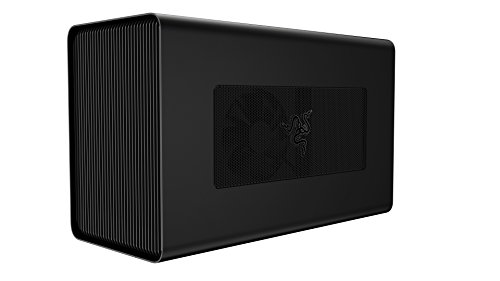
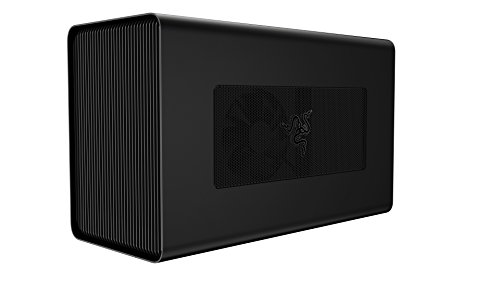
Razer Core X
The Razer Core X is a widely available full-size enclosure from a gaming brand many laptop owners already know, positioned in the mid tier of this category, with a straightforward layout that suits a first external graphics setup and a desktop card you may already own.
Best for: buyers whose shortlist already values what the Razer Core X emphasises, and whose laptop, card and desk have all passed the compatibility checks in this guide. Not suited for: buyers expecting any enclosure to erase the category’s overhead, or anyone fitting a card the maker does not list as suitable for the box. Treat it, like every pick here, as a prose-only recommendation in a mid or premium tier — check the current Amazon listing before you buy, and confirm fit, card support and port requirements on the maker’s own page first.
Strengths in daily use come from the unglamorous things: a layout that makes fitting a card calm rather than fiddly, cooling that does not fight the card’s own fans, and support documentation that answers real questions. Trade-offs are equally unglamorous: desk space surrendered, fan noise under sustained load, and the discipline of connecting and disconnecting properly. Judge this model on those lived details, gathered from the maker’s documentation and owner discussion of the specific revision, rather than on launch-day enthusiasm.

Sonnet eGFX Breakaway Box
The Sonnet eGFX Breakaway Box is an enclosure from a maker with a long history in professional expansion hardware, positioned in the mid-to-premium tier, often considered by creative users who want a tidy desk unit from a company that also supports studios and production teams.
Best for: buyers whose shortlist already values what the Sonnet eGFX Breakaway Box emphasises, and whose laptop, card and desk have all passed the compatibility checks in this guide. Not suited for: buyers expecting any enclosure to erase the category’s overhead, or anyone fitting a card the maker does not list as suitable for the box. Treat it, like every pick here, as a prose-only recommendation in a mid or premium tier — check the current Amazon listing before you buy, and confirm fit, card support and port requirements on the maker’s own page first.
Strengths in daily use come from the unglamorous things: a layout that makes fitting a card calm rather than fiddly, cooling that does not fight the card’s own fans, and support documentation that answers real questions. Trade-offs are equally unglamorous: desk space surrendered, fan noise under sustained load, and the discipline of connecting and disconnecting properly. Judge this model on those lived details, gathered from the maker’s documentation and owner discussion of the specific revision, rather than on launch-day enthusiasm.
AKiTiO Node Titan
The AKiTiO Node Titan is an enclosure from a Thunderbolt specialist, positioned in the mid tier, known among enthusiasts for a practical, serviceable design that treats the enclosure as working hardware rather than desk decoration.
Best for: buyers whose shortlist already values what the AKiTiO Node Titan emphasises, and whose laptop, card and desk have all passed the compatibility checks in this guide. Not suited for: buyers expecting any enclosure to erase the category’s overhead, or anyone fitting a card the maker does not list as suitable for the box. Treat it, like every pick here, as a prose-only recommendation in a mid or premium tier — check the current Amazon listing before you buy, and confirm fit, card support and port requirements on the maker’s own page first.
Strengths in daily use come from the unglamorous things: a layout that makes fitting a card calm rather than fiddly, cooling that does not fight the card’s own fans, and support documentation that answers real questions. Trade-offs are equally unglamorous: desk space surrendered, fan noise under sustained load, and the discipline of connecting and disconnecting properly. Judge this model on those lived details, gathered from the maker’s documentation and owner discussion of the specific revision, rather than on launch-day enthusiasm.
PowerColor Mini Pro
The PowerColor Mini Pro is a compact enclosure from a graphics-card maker, positioned as a smaller-footprint option for desks where space is genuinely tight, trading the roominess of a full-size box for a unit that is easier to place and to move.
Best for: buyers whose shortlist already values what the PowerColor Mini Pro emphasises, and whose laptop, card and desk have all passed the compatibility checks in this guide. Not suited for: buyers expecting any enclosure to erase the category’s overhead, or anyone fitting a card the maker does not list as suitable for the box. Treat it, like every pick here, as a prose-only recommendation in a mid or premium tier — check the current Amazon listing before you buy, and confirm fit, card support and port requirements on the maker’s own page first.
Strengths in daily use come from the unglamorous things: a layout that makes fitting a card calm rather than fiddly, cooling that does not fight the card’s own fans, and support documentation that answers real questions. Trade-offs are equally unglamorous: desk space surrendered, fan noise under sustained load, and the discipline of connecting and disconnecting properly. Judge this model on those lived details, gathered from the maker’s documentation and owner discussion of the specific revision, rather than on launch-day enthusiasm.
Mantiz Saturn Pro
The Mantiz Saturn Pro is an enclosure that adds hub-style thinking to the basic formula, positioned in the mid-to-premium tier, aimed at users who want the graphics box to double as part of their docking arrangement rather than sit apart from it.
Best for: buyers whose shortlist already values what the Mantiz Saturn Pro emphasises, and whose laptop, card and desk have all passed the compatibility checks in this guide. Not suited for: buyers expecting any enclosure to erase the category’s overhead, or anyone fitting a card the maker does not list as suitable for the box. Treat it, like every pick here, as a prose-only recommendation in a mid or premium tier — check the current Amazon listing before you buy, and confirm fit, card support and port requirements on the maker’s own page first.
Strengths in daily use come from the unglamorous things: a layout that makes fitting a card calm rather than fiddly, cooling that does not fight the card’s own fans, and support documentation that answers real questions. Trade-offs are equally unglamorous: desk space surrendered, fan noise under sustained load, and the discipline of connecting and disconnecting properly. Judge this model on those lived details, gathered from the maker’s documentation and owner discussion of the specific revision, rather than on launch-day enthusiasm.
Cooler Master MasterCase EG200
The Cooler Master MasterCase EG200 is an enclosure from a long-established case and cooling maker, positioned in the mid tier, bringing a case-builder sensibility to layout, airflow thinking and the everyday business of opening a box and fitting a card.
Best for: buyers whose shortlist already values what the Cooler Master MasterCase EG200 emphasises, and whose laptop, card and desk have all passed the compatibility checks in this guide. Not suited for: buyers expecting any enclosure to erase the category’s overhead, or anyone fitting a card the maker does not list as suitable for the box. Treat it, like every pick here, as a prose-only recommendation in a mid or premium tier — check the current Amazon listing before you buy, and confirm fit, card support and port requirements on the maker’s own page first.
Strengths in daily use come from the unglamorous things: a layout that makes fitting a card calm rather than fiddly, cooling that does not fight the card’s own fans, and support documentation that answers real questions. Trade-offs are equally unglamorous: desk space surrendered, fan noise under sustained load, and the discipline of connecting and disconnecting properly. Judge this model on those lived details, gathered from the maker’s documentation and owner discussion of the specific revision, rather than on launch-day enthusiasm.
Does Your Laptop Qualify at All?
So the first job, before falling for any enclosure or card, is detective work on your own machine. Read the laptop maker’s specification page for your exact model and year, not a sibling model that merely looks the same. Look in the manual for the port description in full. Check the enclosure maker’s compatibility notes as a second source. If the trail is ambiguous, ask the laptop maker directly and keep the answer. A five-minute check at this stage is worth more than any review, because an enclosure connected to the wrong port is not a slower setup; it is no setup at all.
Finally, remember that compatibility is a chain, and the chain includes the card. An enclosure may suit your laptop perfectly while the specific desktop card you fancy is too long, too thick, too power-hungry or simply not supported by your operating system. Check all three links — laptop port, enclosure, card — against maker documentation before money moves. Owners who do this homework almost always describe setup as boring, and boring is the highest praise a first evening with new hardware can earn. Owners who skip it feature in the cautionary tales everyone else reads.
While you are checking ports, count the rest of your desk. An enclosure occupies one precious high-capability port for as long as it is connected. If your laptop has only one such port, everything else — monitors, drives, network, charging — must flow through the enclosure’s own connections, a dock, or the laptop’s remaining lesser ports. Some enclosures help here by passing through charging and offering extra connections; others are deliberately single-purpose. Map your whole desk on paper first, because discovering a port shortage after the card is fitted is a special kind of frustration.
How Much Graphics Card Do You Actually Need?
Your laptop’s processor plays a supporting role that is easy to forget. The enclosure adds graphics power; it does nothing for a processor that is already the bottleneck in your games or your exports. An older or strongly power-limited laptop chip can hold back a powerful external card, leaving you paying for capability the rest of the system cannot feed. Before blaming or praising an enclosure, know which part of your current machine actually runs out of breath first in the work you care about, because the box only fixes one of the two.
Where the frames are displayed matters as much as how they are made. Sending the finished picture back along the same cable to the laptop’s own built-in screen costs extra capacity on that shared road, and performance suffers accordingly. Routing the picture from the card straight out to an external monitor gives the card a clear, direct path for its output and is the arrangement experienced users recommend. If your plan involves gaming on the laptop’s internal display, temper your expectations more than if your plan centres on a proper desk monitor.
Resale and reuse soften the long view further. Desktop cards have an active second life in other people’s machines, and a mainstream enclosure from a known maker is easy to pass on when your circumstances change. Compare that with a gaming laptop, whose graphics age inside a sealed chassis and drag the whole machine’s value down with them. None of this guarantees a bargain — premium enclosures and flagship cards are serious money by any measure — but the modular path wastes less of what you bought when the future arrives, and that is a real, bankable kind of value.
Professional buyers should sanity-check card class against their software, starting with graphics cards for AutoCAD if design work is the reason for the purchase.
How Much Power Supply and Space Headroom Should You Demand?
Cooling follows from fit and power together. A card working hard turns electricity into heat inside a comparatively small box, and that heat needs a planned escape route. Look for sensible venting, a layout that does not ask fans to fight each other, and space around the enclosure on your own desk — a box shoved against a wall or buried under papers will run hotter and louder than the same box given air. Where you place the enclosure is part of its cooling system, whether the manual puts it that way or not.
Makers publish which classes of card each enclosure is built to host, and those guidance notes deserve respect rather than optimism. If your long-term plan involves stepping up to a much stronger card later, choose an enclosure whose supply and physical space leave that door open today. If your plan is a sensible mid-range card held for years, a supply matched comfortably to that class is entirely sufficient, and paying for vast unused headroom buys little. The mistake is mismatch in either direction, and the dangerous direction is always the underpowered one.
Physical fit is the supply’s twin constraint. Cards differ in length, in height, and in thickness measured by the slots they occupy, and enclosures differ in the room they offer. A card that fits on paper can still foul a side panel, strain its power cables against the lid, or sit so close to a vent that its cooling suffers. Read the enclosure’s stated card clearance, compare it with the card maker’s stated dimensions rather than a retailer’s rounded summary, and leave breathing room. Graphics cards are not books; a tight shelf is not a virtue.
Internal Screen or External Monitor?
Drivers and software add their own small tax and their own occasional drama. The operating system must juggle two graphics systems, decide which applications use which, and hand work across cleanly. Modern systems handle this far better than early adopters endured, and for most mainstream applications the experience is now routine. Still, the odd older title, niche professional tool or freshly updated driver can behave unexpectedly, and patience plus a willingness to check the maker’s support pages are part of ownership. This is enthusiast hardware with a friendly face, not an appliance.
None of this makes the category a bad buy; it makes it a buy to make with open eyes. The fair comparison for most shoppers is not enclosure versus desktop, because the desktop was never really on their table. The fair comparison is enclosure versus the integrated graphics they already struggle with, versus a games console that cannot run their creative software, or versus a second computer they do not want. Against those real alternatives, a well-matched enclosure delivers a transformation in capability, even while a benchmark chart against a desktop would call the same result a loss.
How to Prioritise by Use Case
The Gamer with One Laptop
Where the sums turn favourable is time and consolidation. One machine means one set of applications, licences, files and habits. The card can be sold and replaced as needs grow, softening the next upgrade. A student finishing a degree, a renter with one desk, a professional whose employer issues a thin laptop they cannot change — for these owners the enclosure is not a luxury toy but the only available door to serious graphics, and a door you can walk through is worth more than a cheaper door that does not exist in your building.
The Video Editor or Designer
The idea appeals because laptops force a compromise that desktops do not. A laptop’s graphics are chosen on the day you buy the machine and, in almost every modern thin machine, they can never be changed afterwards. An enclosure breaks that lock-in in one specific way: the card inside the box can be swapped, sold on or carried forward, even though the laptop itself stays exactly as it was. That separation between the portable computer and the upgradeable graphics is the whole point of the category, and everything else in this guide follows from it.
The Student or Renter with One Desk
Value in this category is never just the enclosure’s ticket. The true cost of admission is enclosure plus desktop card, plus very possibly a monitor if you do not already own one worth using, plus the small change of cables and desk rearrangement. Set against that full figure, the honest rivals are a gaming laptop with stronger built-in graphics, a compact desktop as a second machine, or continuing to lower settings and wait. Any verdict that prices only the empty box is flattering the category, and this guide refuses to do that arithmetic on your behalf.
First Setup and Care Essentials
First boot is a moment for observation, not impatience. Give the system time to recognise new hardware, watch for the card appearing in the system’s device listings, and let driver installation finish completely before launching a game to celebrate. Then verify the setup is actually doing its job: check that your demanding application reports using the external card, not the laptop’s integrated graphics, because systems sometimes need an explicit preference set per application. That one setting, quietly wrong, explains many disappointed first impressions that had nothing to do with the hardware at all.
Build a small routine for connecting and disconnecting. Use the operating system’s safe-eject or graphics-disconnect process where one is offered rather than simply pulling the cable mid-session, close GPU-heavy applications before undocking, and let the laptop settle before you close its lid and go. Owners who treat the single cable as magically hot-swappable in all circumstances eventually meet a crash that teaches the routine the hard way. The enclosure makes a laptop feel modular, but it still appreciates being treated as machinery rather than magic.
Heat management is a placement habit as much as a maintenance task. Give the enclosure clearance on the sides its vents use, keep it out of direct sun and away from radiators, and resist the tidiness instinct that hides humming hardware inside closed cupboards. A box that cannot breathe runs its fans harder, makes more noise, ages its components faster and can throttle the very performance you bought it for. The cheapest performance upgrade in this entire category is simply moving the enclosure to a spot with honest airflow.
Mistakes to Avoid
So the first job, before falling for any enclosure or card, is detective work on your own machine. Read the laptop maker’s specification page for your exact model and year, not a sibling model that merely looks the same. Look in the manual for the port description in full. Check the enclosure maker’s compatibility notes as a second source. If the trail is ambiguous, ask the laptop maker directly and keep the answer. A five-minute check at this stage is worth more than any review, because an enclosure connected to the wrong port is not a slower setup; it is no setup at all.
Operating system support is the second compatibility gate, and it is not symmetrical. Windows laptops with the right port have historically offered the broadest path for external graphics, including a wide choice of cards. Mac support is a different story and must be stated plainly: macOS support for external graphics has always been limited to specific hardware generations, specific connection types and a restricted set of graphics cards, and newer Mac laptops built on Apple’s own silicon do not use external graphics enclosures at all. Mac owners must verify their exact machine, system version and card choice with particular care, or skip the category entirely.
First boot is a moment for observation, not impatience. Give the system time to recognise new hardware, watch for the card appearing in the system’s device listings, and let driver installation finish completely before launching a game to celebrate. Then verify the setup is actually doing its job: check that your demanding application reports using the external card, not the laptop’s integrated graphics, because systems sometimes need an explicit preference set per application. That one setting, quietly wrong, explains many disappointed first impressions that had nothing to do with the hardware at all.
Final Recommendation
Buy the chain, not the box. Confirm the laptop port, choose the card your work actually needs, then select the enclosure whose space, power supply and maker support flatter that card with room to grow. Add an external monitor if the budget stretches, use the supplied cable, and install drivers in the maker’s order with the enclosure connected. Follow that sequence and this category’s famous pitfalls mostly belong to other people.
One check saves more returns than any benchmark chart: open your laptop maker’s support page and confirm what the port beside your charging socket actually carries. Some machines wear the right-shaped connector while wiring it for data only, and others share its bandwidth with the internal display connection. The enclosure cannot fix a port that was never given the lanes it needs, so five minutes with the manual and the specifications table is worth more than a weekend of forum threads.
Frequently Asked Questions
Should I play on the laptop screen or an external monitor?
An external monitor connected to the card itself is the stronger arrangement. Sending finished frames back along the same cable to the laptop’s built-in display consumes capacity on a shared path and costs performance, while a monitor fed directly by the card gives the card a clear route for its output. Many owners start on the internal screen for convenience and move to a desk monitor once they see the difference. If a monitor is in your future anyway, buying it alongside the enclosure is money spent where the format rewards it most.
Does an external GPU enclosure work with a Mac?
Only in limited circumstances, and many Mac owners should skip the category. macOS support for external graphics has always been restricted to particular machine generations, connection types and a narrow set of graphics cards, and Mac laptops built on Apple’s own silicon do not use external graphics enclosures. If you own an older Intel-based Mac, verify your exact machine, system version and intended card against Apple’s and the enclosure maker’s current documentation. If you own a newer Mac, put the budget toward the machine and display instead.
Can I upgrade the graphics card inside the enclosure later?
Yes — that upgrade path is one of the format’s best arguments. The card is a standard desktop card held in a standard way, so when it ages you can replace the card alone, provided the new card physically fits the enclosure, suits its power supply and connectors, and is supported by your operating system. This is exactly why choosing an enclosure with sensible space and power headroom matters on day one. The laptop stays sealed and unchanged, but its graphics can grow up more than once across its life.
Is it safe to unplug the enclosure whenever I want?
Treat disconnection as a small procedure rather than a tug. Close applications that are using the external card, use the operating system’s safe disconnect or eject process where one is offered, and let the laptop settle before closing the lid. Pulling the cable mid-session can crash the application, the driver or occasionally the system, and repeated rough handling helps nothing. Owners who build the calm routine — arrive, connect, work, disconnect properly — report the format feels appliance-like; owners who yank cables collect the horror stories.
Will an external GPU enclosure make my laptop as fast as a desktop?
No, and any source promising that is misleading you. The same desktop card performs below its desktop-installed level when it works through an enclosure, because the connection between laptop and box is a narrower path than a desktop’s internal one. The gain over integrated graphics is still dramatic for games and creative work, which is the comparison that matters for most buyers. Use an external monitor fed directly by the card, keep expectations qualitative rather than chasing a rival’s benchmark chart, and the improvement will feel like the transformation owners describe.
How do I know whether my laptop has the right port?
Check the exact model and year on the laptop maker’s own specification pages, and read the port description in full rather than trusting the port’s shape. Ports that look identical can offer very different capabilities, and only some provide the connection an enclosure requires. Cross-check the enclosure maker’s compatibility notes, use the supplied cable, and if any source is ambiguous, ask the laptop maker directly before buying. This five-minute check prevents the single most expensive mistake in the category: an enclosure that can never work with your machine at all.
Related Reading
external gpu enclosure reviews
external gpu enclosure pros and cons
is an external gpu enclosure worth it
how to choose an external gpu enclosure
how to set up external gpu enclosure
best graphics cards for AutoCAD
best graphics cards for DaVinci Resolve
One More Consideration Before You Decide
Ongoing care is light but not zero. Dust is the main enemy: an enclosure breathes desk air through its vents, and a card’s heatsink slowly collects the room. Every few months, power down, unplug, open the box as the maker intends and clear dust with care, keeping fans from spinning wildly under blasts of air. Check that cables still seat firmly, that vents remain unobstructed by the slow creep of desk clutter, and that nothing has been stacked on top of a box that was designed to breathe through its lid.
Heat management is a placement habit as much as a maintenance task. Give the enclosure clearance on the sides its vents use, keep it out of direct sun and away from radiators, and resist the tidiness instinct that hides humming hardware inside closed cupboards. A box that cannot breathe runs its fans harder, makes more noise, ages its components faster and can throttle the very performance you bought it for. The cheapest performance upgrade in this entire category is simply moving the enclosure to a spot with honest airflow.
Where the sums turn favourable is time and consolidation. One machine means one set of applications, licences, files and habits. The card can be sold and replaced as needs grow, softening the next upgrade. A student finishing a degree, a renter with one desk, a professional whose employer issues a thin laptop they cannot change — for these owners the enclosure is not a luxury toy but the only available door to serious graphics, and a door you can walk through is worth more than a cheaper door that does not exist in your building.
Value in this category is never just the enclosure’s ticket. The true cost of admission is enclosure plus desktop card, plus very possibly a monitor if you do not already own one worth using, plus the small change of cables and desk rearrangement. Set against that full figure, the honest rivals are a gaming laptop with stronger built-in graphics, a compact desktop as a second machine, or continuing to lower settings and wait. Any verdict that prices only the empty box is flattering the category, and this guide refuses to do that arithmetic on your behalf.
Set expectations about noise and presence early. A desktop card under load has fans, and an enclosure puts those fans on your desk rather than under it. Makers work hard on airflow and acoustic tuning, and a well-chosen pairing can be civilised, but a hard gaming session or a long render will make itself heard in a quiet room. Headphones solve it for many people; a closed door solves it for others. What will not solve it is pretending the box is silent, so plan placement, cable length and room layout with honest ears from the start.
It helps to picture the enclosure as a dock with one very ambitious job. Ordinary docks spread a laptop’s connection across monitors, drives and peripherals. An enclosure does some of that in certain models, but its defining task is far heavier: it hosts a power-hungry desktop card and shuttles rendered frames between that card and the laptop quickly enough that games and creative applications feel responsive. That is a much harder job than passing through a keyboard signal, which is why compatibility, cabling and setup order matter so much more here than with ordinary desk accessories.
One More Consideration Before You Decide
Software care mirrors hardware care. Keep graphics drivers on a sane cadence — current enough to support your newest work, not so bleeding-edge that you volunteer as a tester on a deadline. Read the enclosure maker’s notes when a major operating system update lands. Keep a note of the driver version that worked beautifully, so a bad update can be rolled back to a known-good state rather than to a guess. Stability you have documented beats novelty you have not, every working week of the year.
Ongoing care is light but not zero. Dust is the main enemy: an enclosure breathes desk air through its vents, and a card’s heatsink slowly collects the room. Every few months, power down, unplug, open the box as the maker intends and clear dust with care, keeping fans from spinning wildly under blasts of air. Check that cables still seat firmly, that vents remain unobstructed by the slow creep of desk clutter, and that nothing has been stacked on top of a box that was designed to breathe through its lid.
The value case collapses in a few recognisable situations. If your laptop lacks the right port, there is no case at all. If you mostly play on the move, the box stays home while you travel. If your processor is weak, the card waits on it. If a desktop would fit your life perfectly well, the desktop gives the same card more performance for similar money. Naming these collapses is not pessimism; it is how the owners who love this format were separated, before purchase, from the owners who returned it within the month.
Where the sums turn favourable is time and consolidation. One machine means one set of applications, licences, files and habits. The card can be sold and replaced as needs grow, softening the next upgrade. A student finishing a degree, a renter with one desk, a professional whose employer issues a thin laptop they cannot change — for these owners the enclosure is not a luxury toy but the only available door to serious graphics, and a door you can walk through is worth more than a cheaper door that does not exist in your building.
Set expectations about noise and presence early. A desktop card under load has fans, and an enclosure puts those fans on your desk rather than under it. Makers work hard on airflow and acoustic tuning, and a well-chosen pairing can be civilised, but a hard gaming session or a long render will make itself heard in a quiet room. Headphones solve it for many people; a closed door solves it for others. What will not solve it is pretending the box is silent, so plan placement, cable length and room layout with honest ears from the start.
The idea appeals because laptops force a compromise that desktops do not. A laptop’s graphics are chosen on the day you buy the machine and, in almost every modern thin machine, they can never be changed afterwards. An enclosure breaks that lock-in in one specific way: the card inside the box can be swapped, sold on or carried forward, even though the laptop itself stays exactly as it was. That separation between the portable computer and the upgradeable graphics is the whole point of the category, and everything else in this guide follows from it.
One More Consideration Before You Decide
Heat management is a placement habit as much as a maintenance task. Give the enclosure clearance on the sides its vents use, keep it out of direct sun and away from radiators, and resist the tidiness instinct that hides humming hardware inside closed cupboards. A box that cannot breathe runs its fans harder, makes more noise, ages its components faster and can throttle the very performance you bought it for. The cheapest performance upgrade in this entire category is simply moving the enclosure to a spot with honest airflow.
Software care mirrors hardware care. Keep graphics drivers on a sane cadence — current enough to support your newest work, not so bleeding-edge that you volunteer as a tester on a deadline. Read the enclosure maker’s notes when a major operating system update lands. Keep a note of the driver version that worked beautifully, so a bad update can be rolled back to a known-good state rather than to a guess. Stability you have documented beats novelty you have not, every working week of the year.
Where the sums turn favourable is time and consolidation. One machine means one set of applications, licences, files and habits. The card can be sold and replaced as needs grow, softening the next upgrade. A student finishing a degree, a renter with one desk, a professional whose employer issues a thin laptop they cannot change — for these owners the enclosure is not a luxury toy but the only available door to serious graphics, and a door you can walk through is worth more than a cheaper door that does not exist in your building.
The value case collapses in a few recognisable situations. If your laptop lacks the right port, there is no case at all. If you mostly play on the move, the box stays home while you travel. If your processor is weak, the card waits on it. If a desktop would fit your life perfectly well, the desktop gives the same card more performance for similar money. Naming these collapses is not pessimism; it is how the owners who love this format were separated, before purchase, from the owners who returned it within the month.
An external GPU enclosure is, at its core, an empty home for a desktop graphics card. Inside the box sit a slot for the card, a power supply sized for graphics work, cooling, and a connection that carries the card’s work back to your laptop over a single cable. The laptop stays thin, light and portable for the train, the lecture hall or the client meeting, and then, back at your desk, it borrows the muscle of a desktop card for games, rendering, video timelines and other work that integrated graphics handle slowly or not at all.
There is also a longevity argument that deserves a fair hearing. A good enclosure can outlive the card first fitted in it and, in many households, outlive the laptop it first served. When the card starts to feel slow, you replace the card, not the computer. When the laptop is replaced, a compatible new machine can take over the same desk setup. That rolling upgrade path spreads cost across years instead of concentrating it in one painful purchase, and it is one of the strongest reasons enthusiasts stay with the format despite its compromises.