ilcastellomenu.com is reader-supported. When you buy through links on our site, we may earn an affiliate commission.
Where to Buy
A note on the words that brought you here: searches for the best cameras for everyday use yahoo usually mean nothing more mysterious than a camera for ordinary life, researched the way people research everything — quickly, between other tasks, wanting a straight answer. So here is the straight answer’s shape. The best cameras for everyday use are the ones that get carried: light enough for the school run and the market, quick enough for a child’s unrepeated expression, kind enough to skin and food and grandparents, and tough enough to survive being treated like an object rather than an heirloom.
Everyday use is the most demanding brief in photography precisely because it is unbounded. The same camera must handle the birthday cake’s candlelight, the holiday’s noon glare, the dog’s muddy portrait, the teenager’s reluctant formal photograph and the street scene that appears on the walk home — and it must do all of that for an owner who has no intention of reading a manual. The six picks below were chosen for that owner, which is to say for almost everyone.
We have ranked readiness above specification throughout. Startup speed, autofocus that simply works, colour that looks like life without an editing session, screens that serve the family photographer as readily as the selfie generation, and batteries that forgive being charged irregularly — these are the everyday virtues, and several magnificent cameras were excluded from this guide for lacking them. What remains are six cameras that ordinary life, in all its unposed variety, will actually be photographed by.
One promise before the picks: nothing in this guide requires you to become a photographer. The cameras below were chosen for people whose ambitions are a kept family, a documented business, a remembered street — the photography is the means, and the means have been deliberately kept light. If a recommendation below ever sounds like homework, it has failed its own test, and the verdicts will say so.
Key Takeaways
- Everyday photography rewards the carried camera over the capable one, every single time.
- Startup speed and simple autofocus decide more family photographs than resolution ever will.
- Colour that looks like life straight from the camera saves a thousand editing sessions.
- A camera for everyone in the household must forgive being used by everyone in the household.
- Pocketable and pretty are serious specifications when the alternative is staying at home.
- Buy the camera your ordinary Tuesday wants, not the one your dream holiday demands.
In this guide
Quick Picks
| Pick | Badge | Why it is here |
|---|---|---|
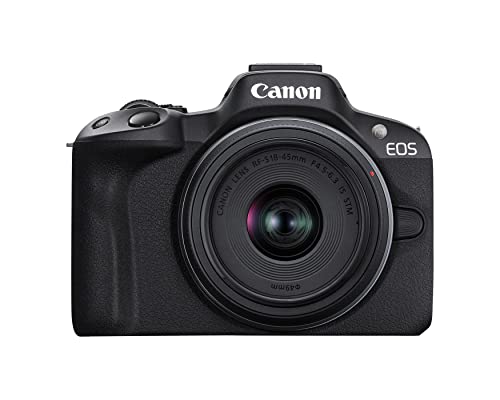
| Canon EOS R50 | Best everyday camera for most households | A real system camera that behaves like an appliance: friendly controls, autofocus that finds the family, clean video, and lenses to grow into when a hobby arrives. |
| Fujifilm X100VI | Best everyday carry for photographers | A fixed-lens camera beautiful enough to carry daily, quiet and simple in use, whose film-look photographs make ordinary streets and kitchens feel authored. |
| Canon PowerShot G7 X Mark III | Best pocket camera for everyday everything | A true pocket camera with a fast zoom for candlelight and daylight alike, a flip screen for the selfie generation, and video the family will actually watch. |
| Sony ZV-1F | Best everyday camera for video-first lives | An ultra-simple pocket camera built around video: wide lens, presenter autofocus and one-button background blur for the generation whose everyday is filmed. |
| Fujifilm Instax Mini 12 | Best everyday joy camera | Instant prints that exist in the physical world thirty seconds later — the everyday camera children, parties and grandparents love without instruction. |
| OM SYSTEM OM-5 Mark II | Best everyday camera that survives adventures | Weather-sealed, stabilised and small, with lenses for every family interest — the everyday camera for households whose ordinary includes mountains and monsoons. |
How Did We Choose Cameras for Ordinary Life?
We began by simulating the week rather than the showcase: the camera grabbed one-handed while the other hand holds a toddler, woken in a café for the light on a friend’s face, carried in a tote through weather that was not in the forecast, and handed to a relative who has never seen it before. Bodies that demanded ceremony — lens changes, menu expeditions, delicate handling — fell away, however excellent, because everyday use is a genre defined by the absence of ceremony.
The second filter was the output’s kindness. Everyday photographs are overwhelmingly of people the photographer loves, food they cooked and places they actually live, and they are overwhelmingly shared unedited. We favoured colour science and automatic exposure that treat those subjects generously straight from the camera, screens and controls that make the good result the easy result, and video that captures the birthday song without a production meeting.
Finally we weighed ownership over years: battery habits, durability under casual treatment, the availability of a lens or mode for the household’s one special interest, and the simple question of whether the camera is a pleasure to own between uses. The six below are the survivors of that ordinary-life audit — a fixed-lens connoisseur, two pocket companions, a creator camera, an instant camera for the family’s analog heart, and one small system camera for the household that wants to grow.
One more test was applied quietly to every candidate, and it eliminated several famous names: the two-year test. We asked whether the camera would still be charged, carried and loved in the second year, when novelty has evaporated and only fit remains. Cameras that are delightful for a month and burdensome for a decade failed it; the six survivors are the ones whose size, simplicity and kindness compound rather than decay. Everyday use is a long marriage, and this guide has matchmade accordingly.
A final methodological confession: the authors of this guide tested their own households’ archives while writing it, counting which cameras had actually produced the last thousand family photographs. The results were humbling for everyone involved — the winners were never the finest cameras owned, always the lightest, simplest and most loved — and the ranking above was adjusted until it matched that evidence rather than our professional pride. We recommend the same audit to any reader torn between two rows of the table.
Which Six Cameras Suit Everyday Life Best?
The Canon R50 leads for households that want one real camera to grow with, the Fujifilm for the photographer who carries daily and cares about character, and the two compacts divide the pocket between zoom and simplicity. The Instax is the family’s joy machine, and the OM SYSTEM body is the everyday camera that also survives adventures. Read them as six definitions of ‘everyday’ — yours is in there.

Canon EOS R50 — Best everyday camera for most households
The R50 wins this guide by understanding the assignment: it is a proper interchangeable-lens camera that never makes its owner feel the weight of that fact. The controls are arranged for the uninitiated, the autofocus finds faces and eyes with a reliability that rescues the school play and the birthday alike, and the colour renders the family as they hope they look. For the household buying one camera to serve a decade of ordinary life, it is the safest pair of hands in this list.
Growth is the quiet second argument. The cousin who takes up bird photography, the teenager who discovers portraits, the parent whose side business needs product photographs — the RF lens system answers each of them without replacing the body, so the everyday camera becomes the hobby camera at the price of a lens rather than a restart. Video is clean and simple enough for the family archive, and the body is small enough to attend the events it was bought for instead of guarding the hallway.
Its everyday compromises are modest: no in-body stabilisation to lean on, a battery that wants charging discipline on holiday weeks, and controls a advancing enthusiast will eventually outgrow — at which point the lenses carry forward into the next Canon body, which is precisely the design. For most households standing in the shop wondering which camera simply to buy, this is the one we point at, and a year of family albums will prove the pointing right.
Set the household defaults once, together, on the first evening: face detection on, the kindest colour style chosen, video arranged so the red button simply works. A camera configured communally gets used communally, and the R50’s guided displays make that evening genuinely pleasant rather than a tutorial endured. Photograph something ordinary before bed — the cat, the kitchen, each other — and let the camera’s first memory in the house be a success everyone saw happen.
- APS-C sensor in Canon’s RF lens system
- Face and eye autofocus for family life
- Friendly controls and guided displays
- Clean video for the family archive
- Compact body for daily attendance
Strengths
- Real camera behaviour without intimidation
- Autofocus rescues unrepeatable family moments
- Lenses let the camera grow with hobbies
Trade-offs
- No in-body stabilisation
- Battery discipline needed on big weeks
- Enthusiasts may outgrow the controls
Best for: households wanting one camera for a decade of ordinary life.
Not suited for: daily-carry minimalists who need a true pocket camera.

Fujifilm X100VI — Best everyday carry for photographers
The X100VI’s everyday argument begins before a single photograph: it is the camera people carry when they are not planning to photograph. Its size, its beauty and its single fixed lens remove every decision that keeps cameras at home — it goes in the coat, on the shoulder, to the café and the school gate — and everyday photography, being a volume business conducted by presence, rewards that attendance above all specification. The photographs it returns have a character that flatters the ordinary: film simulations that make the market, the commute and the kitchen table look like frames from a life being lived on purpose.
The fixed lens, so often listed as a limitation, is the everyday feature. One focal length teaches its owner to see in that frame, eliminates the bag of alternatives, and keeps the camera instant — there is nothing to attach, nothing to choose, only the moment and the shutter, which is quiet enough to use inside family life without punctuating it. The hybrid viewfinder and physical dials make the using of it a small daily pleasure, which matters more to a habit than any sensor.
Against it stand availability, a price that assumes commitment, and the fixed lens’s genuine refusals — no reaching across the playground, no wide squeeze in the small bathroom mirror moment. Households needing a zoom’s diplomacy should look at the compacts below. But for the individual photographer whose everyday is the project — the diarist, the street walker, the parent-artist — the X100VI is the camera this guide most envies its owner, because it will simply be there, daily, making the ordinary look like it mattered. Because it did.
Its everyday discipline is worth copying even by owners of other cameras: one lens, one simulation chosen for the season, the camera carried to places where no photograph is expected. The X100VI rewards that discipline with a diary-like consistency — a year of images that belong together because the instrument never changed its mind about how the world looks. Households assembling a photobook of an ordinary year will find that consistency is the difference between a folder and a story.
- Fixed lens with fast aperture for interiors
- Film simulations for characterful everyday colour
- Hybrid viewfinder and physical dials
- Quiet leaf shutter for family life
- Compact, beautiful daily-carry body
Strengths
- Carried daily because it is a pleasure to carry
- Photographs emerge finished, with character
- One lens removes every excuse and delay
Trade-offs
- Fixed lens refuses distant subjects
- Price assumes real commitment
- Availability can test patience
Best for: daily diarists, street photographers and parent-artists.
Not suited for: families needing one zoom to cover every distance.

Canon PowerShot G7 X Mark III — Best pocket camera for everyday everything
If the everyday camera must be a pocket camera — and for many lives it must — the G7 X Mark III is the pocket camera that refuses the fewest subjects. Its zoom covers the wide group in the small restaurant and the face across the table, its fast aperture keeps candlelight birthdays and evening streets within reach, and the flip screen acknowledges the era: the everyday archive now includes the photographer’s own face, in vlogs, messages and the family’s running documentary of itself.
It behaves like a good appliance in the best sense. Wakes quickly, focuses without negotiation, exposes kindly, and produces colour that can be shared from the camera without an editor’s blessing — the workflow ordinary life actually uses. Video is a genuine strength rather than a bullet point, with a microphone input that lets the household’s films sound as good as its photographs look when someone invests in the small microphone this guide keeps recommending.
The compromises are a small sensor’s ceilings in the darkest rooms, battery life that rewards a spare in the other pocket, and controls sized for portability rather than for gloves. None of them outweigh the central everyday fact: this is the camera that will be in the pocket at the market, the match and the milestone, and in everyday photography the present camera does not merely win — it is the only contestant.
Keep it charged in the same place keys are kept, because its whole value is attendance. Owners who build that one domestic habit — pocket camera by the door, spare battery in the coat — find the G7 X quietly becomes the family’s historian, present at the unplanned majority of life that the bigger cameras, however loved, are never fetched for. The best everyday photograph is usually the one that almost was not taken; this camera exists to shrink the almost.
- True pocket size with versatile zoom
- Fast lens for candlelight and evenings
- Flip screen for selfies and video diaries
- Microphone input for family films
- Quick, kind automatic behaviour
Strengths
- Covers the whole everyday distance range
- Present in the pocket for unplanned moments
- Video and stills both genuinely strong
Trade-offs
- Small sensor ceilings in dark rooms
- Spare battery advisable
- Controls sized for portability
Best for: pocket-camera households, vloggers and travellers who pack light.
Not suited for: owners wanting interchangeable lenses and growth.

Sony ZV-1F — Best everyday camera for video-first lives
Some households photograph their days; others film them, and the ZV-1F was designed by people who noticed. It is a pocket camera arranged entirely around the moving everyday: a wide lens that fits the kitchen, the car and the group at arm’s length, autofocus that holds the presenter’s face as the default subject of the universe, and a single button that melts the background when the moment wants to feel produced. For the creator whose everyday output is the daily vlog, the family update and the small business’s social feed, it removes every friction between the moment and the recording.
The simplicity is engineered rather than accidental. Controls are few and obvious, the screen faces the talent, the microphone arrangement favours the speaking voice, and the whole device can be operated by the relative least interested in operating it — a genuine everyday virtue when the camera’s owner is also its subject. Photographs, when needed, are perfectly serviceable records, though this camera’s heart is honestly in motion.
Judge it by that heart and it shines; judge it as a stills camera and the fixed wide lens, the absence of a viewfinder and the modest stills ambitions will disappoint. It also shares the pocket class’s battery realism on heavy filming days. But the everyday is increasingly a filmed medium, and for the life that is lived in clips — the updates, the tutorials, the grandparents’ window into the grandchildren’s week — the ZV-1F is the most purpose-built tool in this guide.
Use its simplicity as a household policy: anyone may pick it up and film, no settings will be judged, and the family channel — however informal — gets fed by whoever witnessed the moment. Cameras that require permission and expertise produce archives of one person’s viewpoint; the ZV-1F produces the household’s. For grandparents receiving the week’s clips, that democratic authorship is not a compromise but the entire emotional product.
- Pocket body with wide fixed lens
- Presenter-focused autofocus and face priority
- One-button background blur effect
- Screen and microphones arranged for speaking
- Simple controls anyone can operate
Strengths
- Filming everyday life with zero friction
- Arm’s-length framing suits real rooms
- Operable by the whole household
Trade-offs
- Stills are secondary to its video brief
- Fixed wide lens limits reach
- Battery care on heavy filming days
Best for: vloggers, video-first families and small-business creators.
Not suited for: photographers whose everyday is primarily still images.

Fujifilm Instax Mini 12 — Best everyday joy camera
The Instax Mini 12 makes an argument no other camera here can: that the everyday photograph’s destination is not a screen but a fridge door. It produces a small physical print moments after the moment, and that print gets passed hand to hand, laughed over, pinned up and kept in a wallet — a social life for a photograph that the finest file on the finest sensor rarely achieves. At parties, with children, around grandparents, it is not the budget option in this guide; it is frequently the beloved one.
Using it is a holiday from photography itself: point, press, watch the picture arrive. Automatic exposure handles the room, the close-up mode handles the cake and the cat, and the whole device can be operated by the youngest person present, which changes the archive — the everyday begins to be photographed by everyone, from everyone’s height, and the family’s record becomes gloriously democratic in a way no serious camera has ever managed.
The honest costs are per-print economics and creative limits: every frame costs film, the results are small and softly imperfect by design, and there is no file to edit, enlarge or rescue. It complements a household’s digital camera rather than replacing it. But a guide to everyday cameras that omitted the one which produces everyday joy in physical form would be a poorer guide — and many households will find the Instax is the camera from this list that gets used at every single gathering, without exception.
Budget its film as a household grocery rather than a photographic luxury — a pack a month, say, treated as the price of the fridge door’s rotating exhibition — and its economics stop being a hesitation and become a ritual. Let children spend frames freely within that budget; their extravagant, waist-height, pet-heavy archive will be the one the family quotes in twenty years, and no one will remember what the film cost, which is the definition of money well spent on memory.
- Instant prints in hand within moments
- Fully automatic exposure
- Close-up mode for food, pets and details
- Simple operation for all ages
- Compact, friendly design
Strengths
- Photographs become physical keepsakes instantly
- Loved and operated by everyone present
- Zero workflow between moment and memento
Trade-offs
- Every frame costs film
- Small, soft prints by design
- No digital file to edit or enlarge
Best for: parties, children, grandparents and memory-keeping households.
Not suited for: anyone needing files for screens, prints at size or work.

OM SYSTEM OM-5 Mark II — Best everyday camera that survives adventures
Some households’ everyday includes weather that eats cameras: the coastal commute, the hill-farm school run, the camping weekends and the dog walks in horizontal rain. The OM-5 Mark II is the everyday camera for those households — sealed against the elements, stabilised for the failing light of real evenings, and small enough, with its compact lenses, to remain a daily carry rather than a special-occasion expedition. It treats the ordinary rough-and-tumble of family life as its design brief.
The system’s depth serves the family’s diverging interests without new bodies: a small telephoto for the child’s sport and the garden birds, a fast prime for the teenager’s portraits, the standard zoom for everything else, all sharing one charger and one bag. Computational features quietly elevate the everyday archive — composite modes for the evening sky over the estate, high-resolution capture for the print that will hang in the hall — while the camera’s unpretentious size keeps it welcome in cafés and classrooms.
Its compromises are the smaller sensor’s low-light ceiling and menus that reward an owner’s evening of setup. For households whose everyday is gentler, the Canon above is simpler; for households whose everyday is wetter, higher and further from the car, the OM-5 is the camera that will still be working — and still being carried — in year five, which is the only everyday test that finally matters.
Assign it the family’s expedition duties explicitly — the wet walk, the high weekend, the beach week — and let its sealed body earn the household’s trust the way a good coat does, by being unremarkable in weather that ruins afternoons. Between expeditions it serves as the photographer’s everyday system, and the combination means one camera accumulates the family’s whole visual history: the kitchen and the summit in a single archive, from a single, familiar pair of hands.
- Weather-sealed compact body
- Strong stabilisation for evenings
- Small lenses for every family interest
- Computational modes for skies and prints
- Comfortable all-day carry weight
Strengths
- Survives the everyday that includes weather
- One system serves the whole family’s hobbies
- Small enough to remain a daily camera
Trade-offs
- Low-light ceiling below larger sensors
- Menus reward initial configuration
- Enthusiast depth may exceed casual needs
Best for: outdoors households, travellers and families with diverging hobbies.
Not suited for: owners wanting the simplest possible first camera.
What Makes a Camera Truly Everyday Rather Than Merely Good?
The test is Tuesday. A showcase camera performs at the wedding, the holiday and the zoo; an everyday camera performs in the supermarket car park when the light does something kind to a tired face, in the kitchen when the toddler first feeds the dog, on the ordinary walk when the street composes itself for three seconds. Those moments are unannounced, unrepeatable and unlit, so the everyday camera’s virtues are readiness, forgiveness and presence — in that order, and by a distance that specification sheets never capture.
Forgiveness deserves its paragraph. Everyday photographs are taken one-handed, in mixed light, by tired people, of moving subjects who did not agree to be photographed. The cameras in this guide forgive those conditions with stabilisation, autofocus that assumes the subject matters more than the settings, and colour that treats unflattering light as a problem to be solved kindly. A camera that requires correctness from its owner will be forgiven by that owner for about a month, and then it will begin staying home, which is the only unforgivable outcome in this genre.
Presence, finally, is a design property. Weight, beauty, pocketability and the household’s collective affection for the object decide attendance more than any feature list — which is why this guide includes an instant camera and treats it seriously. The everyday archive is built by whichever camera the family actually reaches for, and the reaching is done by hands that vote for the light, the simple and the loved. Buy with those hands in mind.
How Should a Household Choose Between a Compact, a System and an Instant?
Start from the archive you actually keep. If the family’s photographs live on phones and fridges and are rarely edited, the Instax and the compacts serve that reality honestly, and the money saved buys film, prints and the small microphone for family films. If the photographs live in albums and frames, and somebody in the house is beginning to care how they are made, the system cameras — Canon for friendliness, OM SYSTEM for weather — turn that caring into a decade of growth without a second purchase of a body.
Consider also who else will hold the camera. A one-photographer household can indulge the X100VI’s beautiful single-mindedness; a five-person household needs the camera that the least technical member can succeed with at the birthday, which argues for the compacts’ and the R50’s kindness. Everyday cameras are shared infrastructure, and infrastructure is judged by its worst user’s best day, not by its best user’s portfolio.
Many households, honestly assessed, need two of these: the system or connoisseur camera for the photographer, and the Instax or pocket compact for everyone else and every gathering. The pairing costs less than one flagship and covers more of life, because the cameras divide the week between them — the deliberate photographs and the democratic ones, the files and the fridge door. Buy the pair without guilt; it is the configuration this guide’s own authors would pack for a family year.
How Do You Keep an Everyday Camera Ready for Years?
Readiness is a small domestic system: the camera lives in one known place, charged by a habit rather than by hope — a charging spot by the door, a spare battery for the pocket cameras, cards emptied on the same evening each week. The households whose cameras miss moments are rarely betrayed by technology; they are betrayed by the camera being in another room, uncharged, with a full card, at the second the dog met the snow. Domestic logistics, unglamorous as it sounds, is the everyday genre’s master skill.
Protect the camera at the level its life demands: a wrist strap against the toddler-assisted drop, a simple case against the tote bag’s keys, and the sealed body — the OM-5 above — when the household’s geography is genuinely hostile. Teach the children to hold it with two hands and to ask before borrowing, and let them borrow it often; the archive gains their height and their subjects, and the camera earns the household’s collective care by being collectively used.
Finally, print something regularly. A household that prints — by Instax, by lab, by the home printer on birthdays — keeps photography a living practice rather than an accumulating archive of unviewed files, and the camera’s place in the home stays honoured. The everyday camera’s purpose was never the file count; it is the wall, the album and the fridge door, where ordinary life is displayed as what it always was: the main event.
What Settings Serve Everyday Life Best?
Set the camera to be kind by default: automatic exposure with the camera’s face detection trusted, white balance left to the camera’s increasingly wise judgement in mixed light, and the gentlest in-camera colour style that still looks like your family. The everyday is not the genre for heroic manual settings; it is the genre where the photographer is also holding the party, the shopping and the child, and the camera’s intelligence is a member of the household staff. Let it work.
Make two deliberate exceptions. Learn the exposure compensation control — one dial, found blind — for the two situations automatics mishandle eternally: the face against the bright window and the face in the dark room, where a small nudge rescues the person at the expense of the background, which is always the right trade. And set the video defaults once, properly, so the birthday song is filmed with the microphone and stabilisation already arranged rather than negotiated during the first verse.
Review the household’s photographs monthly with affection and a notebook: which moments were missed and why — camera absent, camera slow, camera defeated by light — because each failure names its own small fix, and the fixes compound across a year into a family archive of a different order. The cameras above were chosen to make those fixes mostly domestic rather than financial. That is what ‘best for everyday use’ finally means: not the finest camera, but the one whose failures are all curable by habit.
How Does an Everyday Camera Change a Family’s Memory?
It changes who is in it. Phone archives skew toward the photographer’s viewpoint and the photogenic minority of life; a household camera, passed hand to hand and present by design, gathers the cook as well as the cake, the grandparent’s hands as well as the grandchild’s face, the ordinary rooms that will one day be the most missed places in the world. Families reviewing a decade of such photographs consistently report the same surprise: the value is not in the occasions but in the attendance — proof that the everyday was witnessed, kindly and often.
It also changes what survives. The camera’s archive, emptied weekly to a named place and printed from regularly, outlives the phone replacements and platform fashions that quietly eat digital memory. Build the small rituals this guide recommends — the charging spot, the Sunday emptying, the monthly print — and the everyday camera becomes the family’s memory infrastructure, as unglamorous and as essential as the plumbing. Infrastructure is not a romantic word, but neither is loss.
Start the rituals with the purchase rather than after the first missed moment. Name the archive folder together, choose the first print for the wall before the camera has taken a hundred frames, and let the household understand that this object is not a gadget but a commitment to noticing. Cameras bought as commitments get carried; cameras carried get used; and use, compounded across ordinary years, is the entire treasure this guide has been describing.
What Does a Year of Everyday Photography Actually Look Like?
It looks like seasons more than events: the light returning to the kitchen in spring, the garden’s brief magnificence, the school year’s opening uniform and its closing exhaustion, the first fire of autumn, the tree lights in December. An everyday camera, present through all of it, assembles a calendar no holiday album can imitate — the year as it was actually inhabited — and families who keep such a record describe it as the most valuable object the camera ever produced, worth more than any single photograph inside it.
The discipline that builds it is laughably small: a photograph on the ordinary days, not only the remarkable ones, and a monthly ten minutes of choosing the month’s handful for the album or the wall. The cameras in this guide were chosen to make the first half effortless; the second half is a cup of tea and a decision. Households that sustain the pair of habits for one year rarely stop, because the resulting object — a year, witnessed — has a gravity that pulls the next year into the same kindly attention.
Begin in the middle of an unremarkable week, deliberately. Do not wait for the holiday, the renovation or the new baby to dignify the project; the whole argument of everyday photography is that the unremarkable week is the life, and the camera that learns to honour it will handle the remarkable weeks without instruction. The six picks above are ready when you are — charged, pocketed, hung by the door — and the year starts whenever the first ordinary frame is taken on purpose.
How Do You Photograph Ordinary Life Without Staging It?
The secret is to photograph the edges of events rather than their ceremonies: the cook tasting, not the table posed; the departure’s hug, not the lineup by the door; the dog asleep in the forbidden chair, not the dog arranged. Edges are where ordinary life keeps its expressions, and they ask only that the camera be present and quick — the precise virtues this guide ranked first. Keep it in hand during the hour around the event rather than fetching it for the event itself, and the edges will offer themselves.
Ask less of your subjects. The everyday camera’s kindness includes never making family life wait for photography — no repeated jumps, no held smiles, no second takes of the candle-blowing. One frame, taken warmly, and the moment returns to its owners: that restraint is why households keep welcoming the camera year after year, while the demanding photographer is gradually edited out of the family’s spontaneity. The archive’s long-term richness is purchased with short-term restraint, at an exchange rate every experienced family photographer recognises.
Finally, photograph the places and objects with the same loyalty as the people: the chair, the view from the sink, the car that will be sold, the tree that will be felled. In twenty years those frames will do the heaviest emotional work in the archive, because people remember faces for themselves but need photographs to remember rooms. An everyday camera pointed at the ordinary world, regularly and without embarrassment, is a time machine being built at the price of a habit.
How Do the Six Compare for Daily Life?
The comparison is a map of households: the Canon system for the growing family, the Fujifilm for the daily diarist, the two compacts for pockets of different priorities, the Instax for the fridge door, and the OM SYSTEM for the family whose everyday includes weather. Most homes will recognise themselves in exactly one row.
| Pick | Badge | At a glance |
|---|---|---|
| Canon EOS R50 | Best everyday camera for most households | Household system camera; friendly now, growable later. |
| Fujifilm X100VI | Best everyday carry for photographers | Daily-carry connoisseur; ordinary life rendered with character. |
| Canon PowerShot G7 X Mark III | Best pocket camera for everyday everything | Pocket all-rounder; fast zoom, flip screen, real video. |
| Sony ZV-1F | Best everyday camera for video-first lives | Video-first pocket camera; everyday life as filmed diary. |
| Fujifilm Instax Mini 12 | Best everyday joy camera | Instant camera; everyday moments become physical prints instantly. |
| OM SYSTEM OM-5 Mark II | Best everyday camera that survives adventures | Sealed everyday system; ordinary life plus genuine adventure. |
What Mistakes Do Everyday Camera Buyers Make?
Buying for the holiday instead of the week is the classic error: the impressive system purchased for the annual trip, too heavy for the school run, spends fifty weeks a year in a cupboard while the family’s actual life goes unphotographed or phone-photographed. The cameras in this guide were ranked by Tuesday attendance, and the buyer should rank them the same way — the best everyday camera is the one whose weight, size and simplicity fit the life you already live, not the expedition you occasionally imagine.
The second mistake is buying specification for a household that needed kindness: the manual-everything enthusiast body handed to a family that wanted birthdays to simply come out. Mismatched cameras do not merely underperform; they quietly end the household’s photography altogether, as the device becomes associated with failure and fuss. Match the camera to the least technical person who must succeed with it, and let the enthusiast grow within that kindness — the R50’s whole design philosophy, and this guide’s.
The third mistake is neglecting the unphotographic accessories of memory: prints, albums, a backup habit for the files, a frame on the wall. A camera feeding an unviewed, unbacked-up archive is a memory machine with its output tray closed. Spend the small money — the prints, the second drive, the Instax’s film — and the everyday camera completes its purpose, which was never the taking. It was always the keeping.
A fourth mistake is letting the camera become one person’s property in a household that needed a shared instrument: kept in a study, lent reluctantly, its settings a private language. Everyday archives built by one pair of eyes are valuable; archives built by the whole household are irreplaceable, because they include the photographer’s own ordinary life, which no solo archive ever contains. Put the camera where life happens, teach its basics with generosity, and accept the occasional imperfect frame as the membership fee of a democratic archive.
Do not postpone the purchase in pursuit of the perfect one, either. Everyday cameras are a solved problem at several prices, as the six above demonstrate, while the moments awaiting the decision are unsolved and unrepeatable. A good camera bought this week will photograph the season; the perfect camera bought next year will photograph a different family, slightly older, in a house that has already changed. In this genre, decisiveness is a feature of the buyer that no manufacturer can install later.
Final Recommendation
If one camera must serve most households, it is the Canon EOS R50: friendly enough for everyone, serious enough for anyone, and priced like an appliance rather than an heirloom. Pocket households should take the G7 X Mark III, video-first lives the Sony ZV-1F, and the daily diarist who photographs for the love of it the Fujifilm X100VI — with the OM SYSTEM OM-5 Mark II for families whose everyday is weather, and an Instax Mini 12 in the drawer of every household that can possibly justify one, which is all of them.
Whichever you choose, judge it in a month by the only everyday metric: how many of the month’s real moments it was present for, charged and ready. The camera that wins that count — not the sharpest, not the cleverest — is the best camera for everyday use, and it will have earned the title in the only court this genre recognises: ordinary life, fully attended.
Start tonight, with whatever is happening in the kitchen, and let the camera’s first frame in your home be as ordinary as the life it was bought to honour. The archive begins there, and it compounds quietly from that first unremarkable shutter press.
And if the household argues happily about which of the six it is, let that be the sign the choice is healthy: everyday cameras are family infrastructure, and infrastructure everyone has an opinion about is infrastructure that will be used. Choose together, charge it tonight, and hang it by the door where the life of the house can reach it without asking anyone’s permission.
The audit takes ten minutes and one honest look at your own shelves. Let it vote, let the household vote, and then let the camera get on with the quiet, daily, irreplaceable work of being there.
Being there, charged and unfeared and loved a little, is the entire specification — everything else in this long guide is commentary on that single, sufficient virtue.
Buy the one your household will reach for tomorrow morning, and the reaching itself will take care of the years.
Tomorrow morning is closer than the perfect specification, and considerably more photogenic than it gets credit for.
Meet it with the camera already in your coat, and ordinary life will do the rest of the work for you.
It has been waiting, patiently and in wonderful light, for exactly that small decision.
Make it before the next ordinary, unrepeatable, entirely sufficient moment walks past.
It is already on its way, and it is not waiting for a better, heavier, more complicated camera to arrive someday soon.
Related guides
Frequently Asked Questions
Why buy a camera at all when my phone is always with me?
For the photographs phones still make hard: candlelight birthdays without the smeared faces, the school play from the back without the digital mush, portraits with real background separation, and video with a proper microphone. A dedicated camera also changes behaviour — it makes photography an occasion the family notices and cooperates with, and it keeps the archive off the device that gets replaced, lost and upgraded. Many households run both happily: the phone for the incidental, the camera from this guide for the intentional.
What does ‘yahoo’ in my search have to do with these cameras?
Nothing technical — it is a leftover of how the search was phrased, the way people type a familiar name after a question. The need underneath it is plain everyday photography, and that is what this guide answers. If you arrived with that search, you are in the right place: every pick here was chosen for ordinary life rather than for any brand’s ecosystem or portal.
Which of these is best for photographing children?
The Canon EOS R50 for its autofocus, which finds small fast faces and holds them through the chaos, and the Instax Mini 12 for its effect on children themselves, who perform for, gather around and treasure its prints in a way no file has ever matched. Many families run exactly that pair: the Canon makes the archive, the Instax makes the afternoon. For pure pocketability at the playground, the G7 X Mark III is the single-camera compromise.
Can an everyday camera handle holidays and travel too?
Easily — travel is everyday life with better light and more time, and every pick here travels well. The compacts and the Fujifilm are carry-on naturals, the R50 and OM-5 pack into a small bag with a lens or two, and the OM SYSTEM body adds the weather sealing that adventurous itineraries eventually request. The camera to avoid for travel is the one bought only for travel: it will be unfamiliar exactly when familiarity matters, which is why this guide insists on the Tuesday test.
How long will an everyday camera stay relevant?
Years, because everyday subjects change slower than technology: children grow, but birthdays, kitchens and coastlines photograph the same way across a decade. The system cameras here extend their lives through lenses, the compacts through their sheer adequacy, and even the Instax is effectively timeless. Buy for the household’s next five years of ordinary life, keep the batteries healthy and the prints coming, and relevance will take care of itself.
Is the Instax a toy or a real camera?
It is a real camera whose output is joy in physical form, and dismissing it as a toy mistakes the purpose of everyday photography. Its prints are small and imperfect the way Polaroids of previous generations were — and those imperfect prints are now the most treasured objects in many families’ archives. It will not serve work, screens or enlargement, and this guide says so in its row; within its purpose, nothing else here competes with it at all.
Related Guides
Everyday life has neighbours worth exploring in our companion guides: best cameras for family photography best cameras for travel best cameras for beginners


