ilcastellomenu.com is reader-supported. When you buy through links on our site, we may earn an affiliate commission.
Where to Buy
Night photographers should price all six on Amazon, where the bundles with a fast prime lens are the ones worth comparing first. The best cameras for night pictures are not simply cameras that tolerate darkness — almost everything sold now tolerates it. They are cameras that make the dark legible: shadow detail that survives, highlights that do not explode into white holes, colours that stay true under sodium lamps and LED signs, and stabilisation or sensor craft that lets a photographer work at the hour when the city empties and the light turns strange and honest. This guide is about photographs taken after dark for their own sake — streets, skies, harbours, faces in window light — not about security footage, which is a different art with different tools.
Night photography divides into two crafts that beginners often confuse. The first is gathering scarce light fast: high ISO, wide apertures, short exposures, the camera as a net for photons. The second is gathering light slowly: a tripod, a long exposure, traffic becoming rivers of red and white, water turning to glass. A great night camera serves both crafts — clean files at sensitivities that would have been fantasy a decade ago, and the long-exposure manners (a good screen, a timer, a remote option, honest live preview) that make slow work pleasurable rather than fiddly.
One more distinction before the picks, because it decides real purchases: the night you can reach. A photographer with dark skies within a short drive will use a tripod camera’s slow virtues weekly; a city photographer whose night is the walk home from work needs the fast, handheld virtues and will use the tripod twice a year. Both are night photographers. They should not buy the same camera, and the picks below are labelled by the nights they serve rather than ranked by a single ladder.
Sensor size is the night photographer’s first real decision, and this guide does not pretend otherwise. Full-frame sensors hold the advantage when the light is thinnest — their files stay cleaner deeper into the night — which is why three of the six picks are full-frame. But the two APS-C picks and the little Sony compact earn their places honestly: modern sensors and stabilisation have narrowed the gap to the width of most real nights, and the smaller cameras get carried into more of those nights. A camera’s night quality is partly its sensor and partly its attendance record.
Company is the night’s quiet variable. Night photography looks solitary from outside and is quietly social in practice — the friend who holds the torch, the stranger who points out the reflection you missed, the city’s night workers whose portraits become the archive. The camera you choose will mediate those encounters: a discreet body starts conversations, a tripod establishes a small, legible camp that passers-by respect. Buy with your actual nights in mind — walked alone, walked with friends, or planted in one place until the sky finishes — because each pattern flatters a different pick below.
Lenses will get their own section, but the headline belongs here: at night, the lens is half the camera. A fast prime — a lens with a wide maximum aperture — transforms every body in this guide, gathering four, eight times the light of a kit zoom. Budget for one as part of the camera, the way you would budget for the tripod. The bodies below were chosen partly for the affordable fast glass their systems offer.
Key Takeaways
- Night stills reward sensor size and fast lenses in roughly equal measure — budget for a fast prime with whichever body you choose.
- The Sony Alpha 7 IV is the low-light benchmark here: clean high-ISO files and autofocus that works in near-darkness.
- The Canon EOS R6 Mark II matches it closely, with stabilisation that extends handheld night walks.
- The Panasonic LUMIX S5II adds the best long-exposure and video-after-dark toolkit.
- The Fujifilm X-T5 proves APS-C can own the night for most real scenes, with colour worth staying out for.
- The Nikon Z50 II and Sony RX100 VII are the carry-everywhere night options for smaller budgets and pockets.
In this guide
Quick Picks
| Camera | Badge | Why it owns the dark |
|---|---|---|
| Sony Alpha 7 IV | Best in low light | Full-frame files that stay clean at high ISO, with autofocus that finds subjects in gloom. |
| Canon EOS R6 Mark II | Best handheld at night | Powerful stabilisation and Canon colour for night walks without a tripod. |
| Panasonic LUMIX S5II | Best for long exposures | Full-frame night quality plus live-view tools that make slow shutter work a pleasure. |
| Fujifilm X-T5 | Best APS-C night camera | High resolution, stabilisation, and film-like colour for city nights and printed work. |
| Nikon Z50 II | Best value night starter | Strong sensor and subject detection at a price that leaves room for the fast prime. |
| Sony RX100 VII | Best pocket night camera | A bright zoom and fast focus in a coat pocket — the night camera that is simply there. |
How We Chose These Picks
We judged night cameras by their files at the sensitivities night actually demands. Any camera looks clean at base ISO on a tripod; the examination begins at the settings a photographer uses on a wet street at 11 p.m. — high ISO, wide aperture, a shutter speed chosen to freeze a passer-by. Picks were favoured whose noise, when it comes, arrives as fine grain rather than coloured blotching, and whose shadows can be lifted in editing without falling into bands and mush.
Autofocus in darkness was the second examination, and it eliminated several famous names. Night subjects do not stand under studio lights: a friend across a café table, a fox at the garden’s edge, a busker under one lamp. Cameras whose focus hunts, pulses, or gives up below a certain gloom failed, however fine their sensors. The survivors focus in light the eye itself finds difficult — and confirm focus honestly rather than lying green and delivering blur.
Stabilisation and long-exposure manners formed the third test. In-body stabilisation that buys real stops turns a night walk into a handheld shoot; a screen that shows the exposure building, a self-timer that avoids tripod shake, and bulb modes that behave are the slow craft’s equivalent. We weighted both, because night photographers migrate between the crafts as the evening deepens — fast and loose early, slow and deliberate after midnight.
We also read the cameras’ screens and viewfinders in the dark, literally: a display that cannot dim becomes a torch that ruins the photographer’s night vision and announces them to the street; a viewfinder with an honest exposure simulation becomes the night’s best composing tool. Several picks here offer night-friendly display modes, and the guide’s enthusiasm for the class as a whole owes something to how far these small mercies have come.
Finally, system economics after dark: the price of each mount’s fast primes. A body is only as good at night as the lens the owner can afford to put on it, and systems whose fast glass starts at student prices — Sony E, Canon RF, L-mount, Fujifilm X, Nikon Z all qualify in different degrees — were scored as complete night cameras rather than promising torsos.
What Actually Makes a Photograph Good at Night?
Start with what the night offers that the day cannot: contrast with intent. Daylight flattens its subjects under a general illumination; the night stages them, one lamp at a time, like a theatre that has dismissed half its lighting crew. The photographer who learns to see those stages — the pool of light at the café door, the lit stairwell, the bus window’s glow — stops hunting for subjects and starts waiting at stages, which is the working method behind most of the night photographs in this guide’s reference pile.
Restraint, mostly. The night beginner’s instinct is to make the dark look like day — maximum ISO, shadows lifted to grey, every corner illuminated. The photographs that endure do the opposite: they let the dark be dark, expose for the lit subject, and allow the unlit world to fall into black that gives the light its meaning. Every camera here supports that discipline with honest exposure preview and highlight warnings; the photographer’s part is trusting black as a colour rather than a failure.
Composition simplifies after dark, and that is a gift to beginners: the night edits the scene for you, deleting the clutter daylight insists on and leaving pools of light, silhouettes, and reflections. The photographer’s compositional job shrinks to placement — where the lit subject sits against the dark, where the reflection completes its symmetry. Cameras with clear, dimmable previews serve this placement beautifully, because the frame you see is close to the frame the darkness intends.
The second virtue is choosing the hour. The richest night photographs are often made in the blue margin just after sunset, when the sky still holds colour and the lamps have come on — the two lights in balance for perhaps twenty minutes. Cameras earn their keep in that window with dynamic range, holding sky and streetlamp in one frame, and with colour that does not turn the blue hour into soup. Later, the true night rewards the tripod crafts: star fields, light trails, the harbour’s reflections given time to compose themselves.
A word about white balance, the night’s quiet saboteur. Mixed light — the blue dusk, the orange lamp, the green fluorescent of the late shop — cannot all be neutral at once, and the photographer who chases neutrality frame by frame goes mad politely. Choose the light that owns the subject’s face or the scene’s heart, let the others be coloured, and the photograph gains the night’s actual atmosphere. The cameras here all offer the manual control to make that choice stick; auto white balance, left alone, will keep changing its mind mid-evening.
Third, sharpness at night is a shutter discipline before it is a lens quality. The photographer’s own movement, the subject’s breath, the tripod’s tremor in wind — these write more blur into night files than any sensor writes noise. Stabilisation, timers, and the humility to raise ISO for a freezing shutter speed are the unglamorous techniques behind every crisp night photograph you have ever admired, and the picks below were chosen to make those techniques easy to practise.
Which of the Best Cameras for Night Pictures Suits Your Darkness?

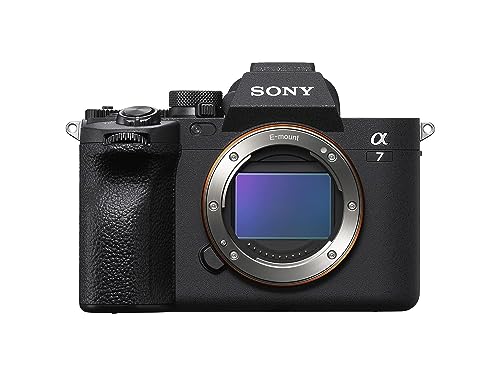
Sony Alpha 7 IV — Best in low light
The Alpha 7 IV is the camera against which night files are judged in this class. Its full-frame sensor produces images at high sensitivities that stay composed — noise fine and film-like, colours faithful, shadows that open up in editing like a door rather than crumbling like a wall. A street portrait at the edge of a lamp’s reach, a musician in a cellar bar, a harbour at the last of the light: the Sony’s files give the photographer something to work with in every case, which is the whole definition of a night camera.
Its autofocus is the other half of the legend. The camera finds eyes in light where the photographer is squinting, and holds them through movement — the night walker’s decisive advantage, because focusing manually on a moving subject in the dark is a skill measured in years. Real-time tracking turns the night portrait from a negotiation into a walk: photographer and subject stroll, the camera keeps the eye, the shutter takes what the moment offers.
Sony’s E mount completes the night argument with the deepest fast-lens catalogue in photography — affordable primes from Sony and a dozen third parties, at focal lengths for street, portrait, and sky. A night photographer can build an entire low-light kit inside this system at almost any budget, which is why so many of them have.
The body’s manners are professional without being cold: a fine viewfinder, controls that fall to hand, and video that shares the sensor’s night talent for those who film after dark as well. Its compromises are size and price against the APS-C picks, and a menu system that rewards an evening’s study. For the photographer whose subject is the night itself, it is the reference instrument in this guide.
- Sensor: full-frame, 33 megapixels
- Low light: clean files at high ISO, strong shadow recovery
- Autofocus: eye detection rated for very low light
- Stabilisation: in-body, five-axis
- System: Sony E — the deepest fast-prime catalogue
Strengths
- High-ISO files that edit like daylight ones
- Focus that works where the eye struggles
- Fast lenses available at every budget
Trade-offs
- Full-frame size and price above the APS-C picks
- Menus reward study before the first night out
- Kit zoom is slow — the fast prime is a real cost
Astro photographers should note its partnership with fast wide primes: the sensor’s clean shadows and the mount’s lens bench make Milky Way work a matter of dark skies and clear heads. Paired with a tracked mount later, the same body grows into deep-sky work — the night photographer’s version of a camera that never needs replacing, only re-tasking.
Wedding and event photographers moonlighting in this guide should know its dual card slots and dependable files make it the working professional’s night body as readily as the enthusiast’s — the camera crosses over without changing its character. A night camera that can earn is a different budget conversation from one that merely spends, and the Sony has that conversation in its favour.
Best for: night-first photographers wanting the benchmark. Not suited for: pocket carriers or buyers avoiding a lens budget.

Canon EOS R6 Mark II — Best handheld at night
The R6 Mark II is the night walker’s Canon: a full-frame sensor with low-light files to stand beside the Sony’s, wrapped around stabilisation so effective that the handheld night photograph — no tripod, no wall, no held breath — becomes its home genre. Coordinated stabilisation with Canon’s lenses steadies shutter speeds that read like misprints, and the practical consequence is freedom: the whole city at night, walked and photographed at strolling pace, at sensitivities a stop or two lower than rivals need.
Canon’s colour is the other half of its night charm. Skin under mixed city light — the neon, the sodium, the LED — is where lesser cameras turn faces green or waxy; Canon’s rendering keeps people looking like people, which is why night portraitists forgive this camera almost anything. Its autofocus matches that mercy with subject detection that finds eyes and animals in the gloom and holds them with a tenacity that feels collaborative.
The body is built for long evenings: a comfortable grip, controls operable by thumb-memory, and a viewfinder that shows the night exposure honestly before the shutter. Bursts are fast enough for the street’s sudden theatre, and the files — slightly fewer megapixels than the Sony’s — trade a little cropping room for low-light cleanliness that many night workers prefer on reflection.
Choose it over the Sony when your nights are walked rather than tripod-mounted, and when Canon’s lens path — including its beloved fast primes — is the shelf you want to build. Choose the Sony for the deepest lens catalogue and a touch more resolution. Between these two, night photographers are arguing about virtues, not flaws.
- Sensor: full-frame, 24.2 megapixels
- Stabilisation: in-body, class-leading with RF lenses
- Colour: Canon rendering, kind to skin under city light
- Autofocus: people and animal detection in low light
- System: Canon RF fast primes and zooms
Strengths
- Handheld night shooting at improbable shutter speeds
- Faces stay human under mixed night lighting
- Ergonomics for long evenings on foot
Trade-offs
- Fewer megapixels for heavy cropping
- Full-frame lenses keep the kit budget honest
- Video heat limits on the longest takes
Rain is this camera’s accomplice: sealed well enough for the drizzle that turns pavements into mirrors, it lets its owner keep walking when lesser kits retreat to cafés. The classic night-city photograph — reflections doubling every lamp — is usually taken in exactly that weather, by the photographer whose camera did not ask to go home.
Its pre-capture and burst tools give the street photographer a safety net for the decisive gesture — the laugh, the leap onto the last bus — that the night usually keeps. Used sparingly, they rescue the frame the evening was for; used constantly, they fill cards with the moments before moments. The Canon rewards the photographer who learns which evenings deserve which setting.
Best for: handheld night walkers and night portraitists. Not suited for: photographers who crop deeply or print mural-scale.

Panasonic LUMIX S5II — Best for long exposures
The S5II is the deliberate night photographer’s instrument — the one for tripods, harbours, and skies. Its full-frame sensor matches the class standard for clean high-ISO stills, and then the camera adds the slow craft’s finest toolkit: a live view that shows long exposures composing themselves, stabilisation that steadies both handheld frames and video walks, and an autofocus system — transformed in this generation — that finally gives Panasonic’s night files the focusing confidence to match.
Long-exposure workers will appreciate the details others skip: the screen’s night-friendly brightness, the way the camera handles bulb timings, and high-resolution modes for the landscape-at-midnight print. Star photographers find a willing partner — the sensor’s clean shadows and the L-mount’s fast wide lenses make Milky Way sessions a matter of weather and patience rather than equipment anxiety.
Video after dark is its second profession. The S5II films the night with the same sensor generosity, stabilised well enough for walking shots through lit streets, and with recording stamina that outlasts a concert. Organisations and creators who photograph the night and film it in the same evening will find this the most complete single instrument in the guide.
Its costs are the full-frame usuals — size, lens prices — plus a stills burst pace a notch behind the Canon. For the tripod-and-patience school, those are the right trades. The S5II does not chase the night’s fastest moments; it composes the night’s longest ones, and composes them beautifully.
- Sensor: full-frame, 24.2 megapixels
- Long exposure: live composite-style preview tools
- Stabilisation: in-body, excellent for stills and video
- Video: strong night filming with long stamina
- System: L-mount lenses from several makers
Strengths
- Slow-shutter toolkit the other picks envy
- Full-frame night files for stills and film alike
- Stabilisation that serves both crafts
Trade-offs
- Burst pace trails the Canon for action
- Full-frame kit weight on long nights
- Autofocus, while much improved, is not the Sony’s
Harbour towns and river cities are its parish: the long-exposure smoothing of water, the patience for the ferry’s lights to draw their line, the exposure previewed as it builds rather than guessed. Photographers who plan a night around one composition — rather than harvesting twenty — will find this camera’s temperament matches their own like a metronome matches a pianist.
Time-lapse workers inherit its virtues whole: the night sky over a harbour, compressed into twenty seconds of flowing light, is this camera’s home cinema. Its interval tools and its stamina make it the set-and-supervise choice, freeing the photographer to watch the night with their eyes while the camera watches it with its sensor — a division of labour the genre’s veterans recommend warmly.
Best for: tripod workers, sky shooters, and night filmmakers. Not suited for: fast street action as the primary genre.

Fujifilm X-T5 — Best APS-C night camera
The X-T5 is the standing refutation of the claim that night belongs to full-frame. Its high-resolution APS-C sensor, paired with strong in-body stabilisation and Fujifilm’s fast primes, produces night files of genuine print quality — cityscapes with texture in every lit window, portraits under lamps with colour that needs no apology. Most real nights are not as dark as sensor charts fear, and in those nights the Fujifilm is not the compromise choice; it is simply a great night camera that happens to be smaller.
Colour is its signature after dark. Fujifilm’s film simulations render night cities with a palette photographers describe as cinematic without the word embarrassing them — sodium oranges held in check, blues kept deep, skin kept warm. Night photographers who shoot to finish in-camera, rather than in an editor, will find this camera speaks their language fluently.
The traditional dials serve the slow craft beautifully: shutter and exposure compensation under the fingers, settable by feel on a dark hillside, with a tilting screen for the tripod’s low angles. Its subject-detection autofocus now handles people and animals respectably, though the full-frame trio above still focus more surely in the deepest gloom.
Buy it when the night is urban, printed, and deliberate — and when the smaller system’s lighter fast lenses appeal for the walk between locations. Its high-ISO ceiling is real but honest, and it sits a stop or so above where most night photography actually lives.
- Sensor: APS-C, 40.2 megapixels
- Stabilisation: in-body image stabilisation
- Colour: film simulations tuned for night cities
- Controls: traditional dials, usable by feel
- System: Fujifilm X fast primes, compact and affordable
Strengths
- Print-worthy night detail from a smaller system
- Night colour that finishes in-camera
- Dials suit tripod and hillside work
Trade-offs
- Deepest-dark focus trails the full-frame trio
- High-ISO ceiling below the biggest sensors
- Large files demand generous cards
Street photographers add a practical note: the X-T5’s size and retro discretion draw less attention in night crowds than a full-frame body with a large lens, and its silent shutter keeps the candid contract intact. In the night economy, being unnoticed is a technical specification, and this camera scores on it like a rangefinder.
Black-and-white night work is its secret garden: the high resolution holds the grain structure beautifully, and Fujifilm’s monochrome renderings turn sodium-lit streets into silver. Photographers whose night is a noir film still rather than a colour documentary will find this camera pre-tuned to their eye in a way the others require editing to reach.
Best for: urban night photographers who print. Not suited for: the very darkest handheld work without fast primes.

Nikon Z50 II — Best value night starter
The Z50 II is how a photographer on a mortal budget buys into the night properly: a strong APS-C sensor, Nikon’s subject-detection autofocus, and — decisively — money left over for the fast prime that makes the whole enterprise sing. Paired with a bright standard prime, this camera photographs cafés, streets, and family evenings with a quality that embarrasses far more expensive kit zooms, which is the first lesson of night photography taught by arithmetic.
Its low-light manners are grown-up: noise that behaves like grain, colours that hold under lamps, and focus that finds eyes in the gloom of a living room or a pub garden. The bright viewfinder helps compose in the dark more than beginners expect — the night scene, amplified, becomes legible before the shutter rather than after it.
Nikon’s Z lenses give the night kit its growth path: the affordable primes first, then the wider fast glass for skies and interiors as the hobby deepens. The body’s dials and grip suit long evenings, and its sealing shrugs at the drizzle that so often improves night streets — wet pavements are the night photographer’s mirror, and this camera will stand in the rain that makes them.
It concedes in-body stabilisation to the Fujifilm and the full-framers, so handheld slow shutters lean on lens stabilisation and technique. For the price of admission — and the prime it leaves affordable — that is the correct concession, and the Z50 II is this guide’s recommendation to every night beginner who asks where the value lives.
- Sensor: APS-C, 20.9 megapixels
- Autofocus: subject detection, people and animals
- Viewfinder: bright electronic, helpful in darkness
- Stabilisation: in-lens (no in-body unit)
- System: Nikon Z, affordable fast primes
Strengths
- Night quality that leaves budget for the fast prime
- Grain-like noise and honest night colour
- Viewfinder composition in the dark
Trade-offs
- No in-body stabilisation
- APS-C ceiling in the very deepest dark
- Video is capable rather than class-leading
Family nights are its quiet triumph: the school concert’s last row, the bonfire, the birthday candles in a darkened kitchen. These are the night photographs people actually frame, and they live at exactly the light levels where this camera and a fast prime are indistinguishable in result from bodies costing twice as much. Value, in night photography, is measured at the candle, not the chart.
Students of the night on term-time budgets should hear the system argument once more: body plus fast prime plus a secondhand longer lens, assembled patiently inside Nikon’s Z mount, costs less than one full-frame body alone — and photographs more nights, because the kit is finished rather than aspirational. The Z50 II is the centre of the most completable night kit in this guide.
Best for: night beginners building a fast-prime kit on a budget. Not suited for: handheld slow-shutter work without stabilised lenses.

Sony RX100 VII — Best pocket night camera
Every night photographer’s archive contains a category the big cameras cannot enter: the unplanned night. The dinner that became a walk along the lit river, the rooftop nobody expected, the snowfall on the way home. The RX100 VII is the camera present for those, riding in a coat pocket with a one-inch sensor and a zoom whose bright wide end gathers honest night light. Its files will not match the full-framers — and they exist, which the full-framers’ files, on those nights, do not.
Within its class it is remarkable: autofocus with eye detection that works in restaurant gloom, a pop-up viewfinder for composing against bright signage, and stabilisation enough for the lamp-lit portrait at arm’s length. The zoom’s telephoto end dims, as all such zooms do, so night work lives at the wide end — which is where night street photography lives anyway.
Treat it as the night camera of opportunity and it never disappoints: concerts where big cameras are barred, evenings when carrying a kit would change the evening, travels where the night photography is garnish rather than purpose. Its files print respectably at social sizes and sing on screens, which is where unplanned nights are mostly shared.
The cautions are a pocket camera’s: no sealing for the rain that beautifies streets, a small battery, and a sensor ceiling that the deepest dark will find. Owners accept these the way they accept a pocketknife’s limits — the tool that is present outperforms the tool that is perfect, nightly.
- Sensor: 1-inch type, 20.1 megapixels
- Lens: built-in zoom, brightest at the wide end
- Autofocus: eye detection that works in gloom
- Viewfinder: pop-up electronic
- Body: coat-pocket size, no weather sealing
Strengths
- Present on the unplanned nights others miss
- Eye focus and viewfinder in a pocket format
- Admitted where interchangeable cameras are not
Trade-offs
- Sensor ceiling in the deepest darkness
- Zoom dims toward the telephoto end
- No sealing for wet night streets
One more of its parishes: the night train, the sleeper ferry, the red-eye’s window seat. Travel’s in-between hours produce a photography of lamps, reflections, and sleeping cities that dedicated night kits never see, because their owners are asleep in the hotel the kit is charging in. The pocket camera rides along, and so does the night.
Parents have a use for it the brochures never mention: the sleeping-household hours. The school-play rehearsal in a dim hall, the newborn at 3 a.m. lit by a landing light, the teenager’s gig in a pub’s back room — family life keeps night hours too, and the camera that is downstairs, charged, in a pocket, is the one that keeps them.
Best for: opportunistic night photography and travel. Not suited for: dedicated astro or print-first night work.
How Do You Actually Shoot After Dark? A Field Routine
Safety and sense belong in a night routine, stated once and plainly: tell someone your territory, keep to lit and peopled ground when alone, and let the photograph go when a place feels wrong — no frame in this guide’s genre is worth a bad encounter. The night’s regulars develop a street sense as part of the craft, and the photographers who shoot the city for decades are the ones who cultivated it early.
Begin before dark. Scout the location in daylight or at dusk, note where the lamps fall and where the crowds thin, and set the camera while your fingers are warm and the light is kind: high-ISO ceiling chosen, focus mode set to track eyes or a single point as the subject demands, stabilisation on for the walk and off for the tripod. Night punishes menu-diving; preparation is the tax paid in advance.
Choose the evening’s territory with the same care as its timing. Water doubles every light it touches; old stone holds the day’s last warmth in its colour; markets and stations provide the human weather. A single rich location, worked patiently as the light changes, yields a stronger set than a tour of five — the night rewards the photographer who stays for the second act, when the crowds leave and the scene simplifies into light and geometry.
Work the blue hour first, handheld, while the sky still holds colour — the fastest, richest frames of the night usually live in those twenty minutes. As the true dark settles, slow down with it: brace against walls, borrow railings, let the shutter breathe. When the tripod comes out, the night’s second act begins — water, traffic, and sky given the long exposures that turn a scene into a composition. Photographers who structure the evening that way come home with both crafts in one card.
Dress and provision for the craft, because cold photographers make short nights: gloves that leave the fingertips free, a head torch with a red mode that preserves both your night vision and your subjects’ mood, and a thermos with the status of equipment. The photographs improve in direct proportion to the photographer’s comfort, a law no sensor roadmap will ever repeal.
End with the discipline of review: check focus at full magnification on the camera’s screen before leaving a scene, because the night lies kindly on small previews. One verified sharp frame is worth a folder of maybes, and the walk back is long when the photograph stayed behind, blurred, at the harbour. Build the check into the ritual — shoot, zoom, confirm, move on — and the night’s yield rises quietly, outing after outing, in the way that separates the photographers who print from the photographers who hope.
Which Night Genre Is Yours — Street, Sky, or Portrait?
Before the genres, a note on seasons, because the night photographer’s calendar is inverted: winter is the high season. Darkness arrives at an hour a working person can use, the air clears, and the city’s lights double in wet streets. Summer’s nights are short and late, better for the sky than the street. Buyers choosing a camera in spring should know they are equipping themselves for an autumn harvest — and that the photographers who start in the light months, learning their camera’s dark manners on summer’s brief nights, are ready when the long evenings return.
Street photography after dark is a hunting art: fast primes, high ISO, subjects caught in pools of lamplight between darkness. It rewards the cameras with the surest dark autofocus and the fastest handling — the Sony and Canon full-framers first, the Fujifilm as the discreet alternative. The street’s ethic travels with its technique: photograph the public night as it is, and let people be people rather than props in your noir.
The sky is the opposite temperament: one composition, long preparation, exposures measured in minutes of total patience. It rewards sensor cleanliness, wide fast glass, and live long-exposure tools — the Panasonic’s parish, with the Sony close behind. Sky work also rewards geography more than gear: an hour’s drive from the city’s glow improves every camera in this guide more than any upgrade could, which is the night’s most democratic truth.
Portraits at night split the difference: a subject, a lamp, a background of bokeh and city colour. They reward fast lenses most of all, then colour rendering, then focus on eyes in gloom — Canon and Sony territory, with the Fujifilm’s simulations as the stylist’s choice. The portraitist’s essential skill is placement: the subject turned toward the light that exists, the background chosen for its lights rather than its objects.
A fourth genre deserves its paragraph because beginners find it by accident and stay for years: the night landscape of home — the garden under frost and moonlight, the street in fog, the window from the street in snow. It asks nothing exotic of a camera beyond the virtues already listed, and it has the shortest commute in photography. Several of this guide’s most-loved reader photographs were taken within fifty metres of the photographer’s own front door, which suggests the genre rewards attention more than travel.
Most night photographers eventually practise all three, which is why this guide’s top picks are all-rounders rather than specialists. But the first year goes better when one genre leads — buy the lens for that genre first, and let the others borrow it until their turn in the budget comes.
How Do the Six Night Cameras Compare?
| Camera | Sensor | Stabilisation | Night focus | Best night genre |
|---|---|---|---|---|
| Sony Alpha 7 IV | Full-frame | In-body | Excellent in near-dark | All-round night benchmark |
| Canon EOS R6 Mark II | Full-frame | In-body, strongest handheld | Excellent | Handheld night walks |
| Panasonic LUMIX S5II | Full-frame | In-body | Very good | Long exposures, night film |
| Fujifilm X-T5 | APS-C, high-res | In-body | Good | Urban nights, prints |
| Nikon Z50 II | APS-C | In-lens | Good | Budget fast-prime nights |
| Sony RX100 VII | 1-inch | In-lens | Good for its size | Unplanned nights |
What Mistakes Ruin Night Photographs?
A mistake of temperament precedes the technical ones: expecting the first night to succeed. Night photography has the steepest first-evening curve in the craft — the light is scarce, the settings unfamiliar, the city indifferent. Photographers who treat the first three outings as tuition, and review them for lessons rather than keepers, arrive at competence by the fourth. The cameras here shorten that curve; none of them abolish it, and the guide respects you too much to pretend otherwise.
The first is fighting the dark: maximum ISO, shadows dragged up, a night made to look like a grey afternoon. Expose for the light, let the dark fall, and the photograph keeps its soul. The second is the kit-zoom trap — attempting night work through a slow lens and blaming the sensor for the resulting noise and blur. The fast prime is not an accessory in this genre; it is the admission ticket, and every system here sells one at a fair price.
There is also the flash mistake, worth a sentence because beginners reach for it instinctively: the built-in flash at night produces the lit-deer look — a white subject pasted on a black void — and destroys exactly the atmosphere the photographer went out for. Every camera here can disable it permanently, and night photographers should, on the first evening, as a small ceremony of intent. The light that exists is the subject; the flash is an interruption.
Third, tripod carelessness: a tripod extended on a windy bridge, a shutter pressed by hand, a photographer who never uses the timer. Long exposures magnify every tremor into a soft file that looks like a lens fault. Use the timer or a remote, weight the tripod, shield the wind, and check the first frame at full zoom before shooting the series.
There is a fifth, and it is pure logistics: arriving with the battery the afternoon used up. Night sessions are long, cold shortens batteries further, and the Milky Way does not wait for a recharge. The two-battery rule — one in the camera, one warm in an inside pocket — is the cheapest insurance in this entire guide, and the night photographers who mock it in October respect it by January.
Fourth, forgetting that night has people in it. The empty-city aesthetic is a choice, not a default; the night’s life — the busker, the cleaner, the last train’s passengers — is its subject as much as its architecture. Photograph people with the same consent and courtesy as daylight, and let the city’s inhabitants star in its nocturne.
Final Recommendation
Choose by the night you actually inhabit. The Sony Alpha 7 IV is the benchmark for the photographer who wants the deepest dark handled without drama, and its lens library is the night’s richest. The Canon EOS R6 Mark II is the walker’s equal-first choice, its stabilisation turning whole evenings handheld. The Panasonic LUMIX S5II serves the tripod and the film. Below them, the Fujifilm X-T5 prints the urban night beautifully, the Nikon Z50 II is the value door into the genre — with a fast prime, always — and the little RX100 VII guarantees that some camera, at least, is with you when the night turns photogenic without an appointment. Buy the body, buy the prime, and go out at dusk. The night is the last free studio — no bookings, no permits for its light, a city re-lit nightly for whoever stays up. The photographers whose work you admire after dark are not the ones with the rarest sensors; they are the ones who were still out at midnight, warm enough, with a charged battery and a camera they trusted. This guide’s whole purpose is to put you in that company. Start this week, in whatever weather the season offers, with whichever of these cameras your budget blesses — the night is not waiting for the perfect kit, and neither, on the evidence of every archive we admire, should you. The first evening out will teach your hands what this page could only describe.
Related guides
- Best Compact Cameras for Low Light and Movies: Night Stills and Evening Filming That Stay Clean
- Best CCTV Cameras for Night Vision: Infrared Reach, Colour After Dark and Honest Footage
- Best Cameras for Taking Night Shots: 6 Picks for Handheld Low-Light Photography
Frequently Asked Questions
Do I really need full-frame for night photography?
Need is too strong a word. Full-frame buys roughly a stop of extra cleanliness in the deepest dark and shallower depth of field — real advantages for the darkest handheld work and for astro. But the APS-C picks here, behind fast primes, satisfy most real nights completely, and the best night photographers in any city include plenty shooting smaller sensors with faster glass and better hours. The honest sequence for a beginner is lens first, hours second, sensor size third — because the first two are where the photographs are, and the third is where the arguments are.
Which lens should a night beginner buy first?
A fast prime near your natural seeing — a standard or moderately wide focal length with the widest aperture your budget reaches. It will gather several times the light of a kit zoom, teach depth of field in one evening, and stay in the kit forever. Buy it before a second zoom, before a bigger bag, before almost anything. And when it arrives, spend the first evening at its widest aperture only — the night will teach you what that aperture is for faster than any tutorial, because every frame will show you the light you have been missing.
How do I photograph the stars with these cameras?
Tripod, fast wide lens, manual focus magnified on a bright star, and exposures in the tens of seconds at high ISO — the full-frame trio make it easiest, the Fujifilm and Nikon manage honourably, and dark skies matter more than any of it. The S5II’s live tools and the OM-style composite tricks elsewhere in our guides turn the first session from luck into method.
Why do my night photos look noisy even at moderate ISO?
Usually because the shadows are doing the work: underexposed files lifted in editing amplify noise exactly where the eye looks for it. Expose a touch brighter than feels safe, protect the highlights with the camera’s warnings, and let the dark stay dark in the edit. Noise lives in raised shadows, not in honest darkness. The companion error is judging noise at full magnification on a bright monitor at midnight — view the file at the size it will be printed or shared, in a dim room, and half the “noise problem” evaporates before any slider moves.
Is a tripod essential for night pictures?
For the slow craft — trails, water, stars — yes, effectively. For the walking night, modern stabilisation has genuinely retired it on the Canon and its peers. Most night photographers own one and carry it selectively: the blue hour and the streets on foot, the harbour and the sky on legs. Let the evening’s plan, not a rule, decide. When you do buy one, buy it for height and stability rather than lightness alone — a tripod that trembles in harbour wind is a slow shutter’s saboteur, and the night will find its weakness in the first long exposure.
What settings should I start with on my first night out?
Aperture as wide as your lens allows, shutter fast enough to freeze your subject — a starting point around 1/125 for people on foot — and ISO set to auto with a ceiling you have chosen in daylight, so the camera’s ambition stays inside the files you find acceptable. Shoot, review at full magnification, adjust one variable. That loop, repeated for an evening, teaches more than any preset, and every camera in this guide makes the loop quick to run.
How do I keep colours true under street lights?
Shoot RAW when the light is mixed, set white balance by the dominant light rather than auto when one source rules, and accept that some nights are honestly orange. The Fujifilm’s simulations and Canon’s rendering both start from pleasing places; the editor’s white-balance eyedropper on a neutral coat or pavement finishes the job. Perfect neutrality is less important than faces looking alive. When in doubt, warm the file a fraction — the night reads colder on a screen than it felt on the street, and a small correction returns the photograph to the temperature of memory.
Related Guides
For the moving version of the night, read our guide to cameras for nightclub and stage photography. For watchfulness rather than art after dark, see our night-time security camera roundup, and for the skies specifically, our beginner astrophotography camera guide. Whichever direction your nights take you, keep one small ritual from this guide: the last frame of every outing, taken of the way home. It builds, month by month, an accidental diary of your own streets after dark — and it is usually the set of photographs you end up loving most. The night, photographed patiently and often, stops being the absence of the day and becomes a country of its own — these six cameras are simply the best current visas.


