ilcastellomenu.com is reader-supported. When you buy through links on our site, we may earn an affiliate commission.
Where to Buy
The word in the search is ‘photograghing’ — and if the spelling is imperfect, the intention behind it is the most honourable in all of photography: I want to take real pictures, properly, with a real camera. The best cameras for photographing — for the craft itself, unqualified by genre — are the ones that teach the craft while delivering it: cameras whose files reward attention, whose controls explain themselves, and whose limits are the honest kind a photographer grows through rather than the artificial kind a marketing department imposed. This guide is for the beginner and the returner who want the general-purpose answer, chosen well, once.
Photography as a general craft has a shape worth describing before any product is named. It is mostly light, partly timing, and entirely seeing — and a camera serves it in that order. The beginner’s first year is not limited by resolution or frame rates; it is limited by how often the camera is in hand when the light does something interesting, and by how clearly the camera’s feedback teaches the relationship between a setting and its result. Every pick below was judged as a teacher as much as a tool.
The six span the honest range of starting points: two friendly system cameras that grow for years, two compacts that remove every excuse, a fixed-lens classic that teaches by constraint, and a pocket camera that guarantees the practice happens daily. They are labelled by temperament rather than ranked by worth, because the right first camera is the one whose character matches its owner’s — the tinkerer, the traveller, the minimalist, the impatient.
One promise before the picks: this guide will not sell you the flagship. The cameras that photograph best for a learner are mid-priced, forgiving, and rich in the two features that actually compound — a good lens path and controls that invite experiment. Money saved at the body is money spent on the second lens, the tripod, the photobook, and the train ticket to somewhere worth photographing, which is where photography actually happens.
Key Takeaways
- For photographing as a craft, the best camera is a teacher: honest controls, forgiving files, a lens path to grow into.
- Beginners feel competent fastest on the Canon EOS R50 — guided menus and colour that encourages a beginner daily.
- The Nikon Z50 II is the value system camera for the learner who wants a viewfinder and a future.
- The Fujifilm X100VI teaches by beautiful constraint: one lens, endless seeing.
- A camera carried daily beats a better camera carried monthly — presence is the first photographic skill.
In this guide
Quick Picks
| Camera | Badge | Who it serves best |
|---|---|---|
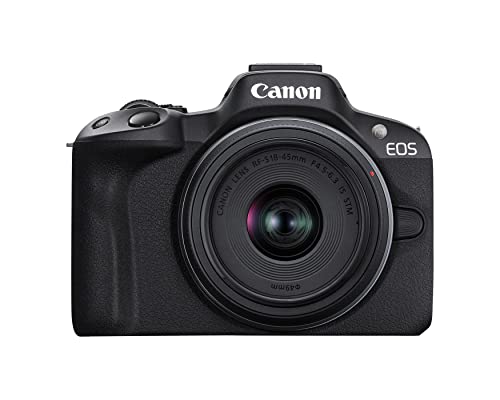
| Canon EOS R50 | Best first system camera | Guided, forgiving, and colourful — the camera that makes beginners feel competent by week one. |
| Nikon Z50 II | Best value system camera | A serious APS-C body with a bright viewfinder and a lens shelf to grow up on. |
| Sony ZV-E10 II | Best for photo and video | The hybrid starter: strong stills, creator-grade video, and a vast affordable lens bench. |
| Fujifilm X-T5 | Best for the serious learner | Traditional dials and print-worthy files — the camera as a photography course. |
| Fujifilm X100VI | Best fixed-lens teacher | One lens, film-like colour, and the discipline of composing with your feet. |
| Sony RX100 VII | Best pocket practice | A real camera in a coat pocket — the daily-practice machine for busy lives. |
How We Chose These Picks
We judged these cameras as a first photography teacher would be judged: on the clarity of their feedback. A learner turns a dial and must be able to see — in the viewfinder, on the screen, in the file that evening — what the dial did. Cameras whose exposure simulation is honest, whose controls are placed where a hand learns them, and whose automatic modes explain rather than merely decide, ranked above cameras of greater specification and lesser pedagogy. Photography is learned in the loop between action and result; these picks keep the loop short and truthful.
Files were examined for forgiveness, the beginner’s truest need. Early photographs are underexposed, overexposed, and white-balanced by hope, and the cameras whose raw files rescue a stop of error without falling apart — whose colour stays pleasant while the learner’s technique catches up — produce the encouraging early archive on which a lifelong practice is built. Discouragement is the leading cause of abandoned cameras, and file forgiveness is its antidote.
We weighted the lens path as the purchase’s real content. A first body is a two-year decision; a lens system is a twenty-year one. Each pick’s mount was audited for the affordable primes and zooms a learner actually buys next — the fast standard lens that teaches depth of field, the portrait length, the wide for interiors and land — and for the second-hand market that makes growing affordable.
Finally, carry: size, weight, and the desire the object itself inspires. A camera that delights its owner gets carried; a camera that merely functions gets shelved by March. The picks include the pocket and fixed-lens options precisely because the best photographic education is daily, and daily requires an instrument that fits a life rather than interrupting it.
What Actually Makes a Photograph Good?
Light, before everything: not its quantity but its direction and character. The beginner photographs subjects; the photographer photographs light falling on subjects, and the conversion between those two people is the entire first year. A good starter camera accelerates it by showing exposure honestly — what will be bright, what will fall dark — so the learner starts choosing light deliberately: the window’s side-light for the portrait, the low sun for the landscape, the shade’s softness for the flower. Every pick here previews that choice truthfully, which is why they teach faster than their specifications suggest.
Timing is the second virtue, and it is mostly patience wearing a disguise. The expression after the pose, the street’s brief alignment, the bird’s decision — photographs live in fractions that reward the photographer who waits with the camera ready rather than the one who arrives with it. Autofocus that can be trusted, a shutter that answers instantly, a camera that wakes fast: these unglamorous manners are timing’s equipment, and they are all over this guide’s picks for exactly that reason.
Composition is the third, and the most teachable: the frame’s edges are the photographer’s first decision and strongest tool. What is excluded gives the included its meaning. Cameras help here more than beginners expect — a clear viewfinder or screen, guides that can be switched on, a lens whose view matches the photographer’s natural seeing — and the fixed-lens pick in this guide exists because constraint teaches composition faster than choice ever has.
And underneath all three sits the unglamorous truth: photographs improve in proportion to photographs taken, reviewed honestly, and taken again. The camera’s final virtue is therefore motivational — it must make its owner want to practise, forgive the failures in its files, and be present for the repetitions. Judged by that standard, the best camera for photographing is the one its owner is holding in month six, still curious. The picks that follow are the ones our reading says will be.
What Does the Second Year of Photography Ask For?
The second year asks for a subject. The first year’s happy omnivorousness — everything photographed, nothing pursued — gives way to the discovery that depth beats coverage: the project, the series, the place or person returned to until the photographs start saying something a single frame cannot. The camera bought in year one reveals its wisdom here, because the project will ask things of it — a lens, a stamina, a discretion — and the picks in this guide were chosen to answer a second year’s questions without a replacement.
It asks for printing at scale and in sequence: the set on the wall that must agree with itself, the book whose order is an argument. Editing — the selection and sequencing of one’s own work — emerges in year two as the craft’s second half, and photographers are routinely surprised that it is the half they enjoy more. The camera’s contribution is an archive organised enough to edit, which is a habit of naming and backing up that year one either built or bequeathed as a debt.
It asks for other photographers. The solitary learner’s progress plateaus where the community’s begins — the club, the class, the walking companion whose eye corrects yours over coffee. Year two’s best accessory is a person, and the cameras that travel well socially (the discreet, the pocketable, the unpretentious) serve the apprenticeship better than the flagship that stays home for fear of the café.
Technique’s frontier moves in year two from exposure to intention: not ‘can I record this’ but ‘why this, framed so, at this hour’. The equipment questions quieten correspondingly — the second lens arrives as an answer to a named need, the tripod as a response to a named failure — and the photographer’s spending slows as their seeing accelerates. That inversion is the surest sign the practice has taken.
There is a characteristic year-two crisis worth naming so it cannot ambush: the work looks worse for a while, because the eye has outrun the hands. The photographer now sees the photographs they intend and produces the ones they can, and the gap is discouraging precisely because it is progress. Every teacher in the craft recognises the season and prescribes the same medicine: keep photographing the one thing, keep printing monthly, and let the hands catch up, as they reliably do by the season’s end.
The year closes with a portfolio — twelve frames, say, that the photographer would sign. It will embarrass them by year four, which is its function: a marker of how far the eye has travelled, taken with a camera that was, in the end, exactly what this guide promised — a teacher that delivered its student to the point of no longer needing to be taught by it.
Which of the Best Cameras for Photographing Fits the Photographer in You?

Canon EOS R50 — Best first system camera
The R50 is the camera we’d hand a beginner we liked. Its guided menus teach in plain language while they assist, its colour — especially people, especially in ordinary light — comes out of the camera looking like the day felt, and its autofocus quietly handles the technical chore (find the eye, hold it) that used to consume a beginner’s first year. The result is the most valuable early experience in photography: competence, felt early, which is the fuel of practice.
As a system it grows honestly: Canon’s RF shelf holds the fast prime that will teach depth of field, the wider and longer zooms for the interests that declare themselves, and a path upward that never orphans the learner’s lenses. Buy it with the kit zoom, photograph everything for six months, and let the archive — not the catalogue — tell you which lens is next.
The R50’s guided interface deserves a pedagogical defence, because purists sneer at training wheels on principle: a menu that explains what aperture does, at the moment the beginner is choosing it, is not a crutch but a tutor with perfect timing. Photographers do not learn from manuals read in January; they learn from answers given at the scene, in June, with the light waiting. Guidance delivered at the point of decision is the oldest teaching technology there is.
- Sensor: APS-C, forgiving files
- Menus: guided, plain-language teaching
- Autofocus: eye detection that just works
- Colour: Canon’s people-pleasing rendering
- System: Canon RF — clear growth path
Strengths
- Beginners feel competent by week one
- Colour that encourages daily practice
- A system that grows without waste
Trade-offs
- No in-body stabilisation
- Kit zoom is a beginning, not a destination
- Video is good rather than class-leading
Its finest teaching feature is invisible: the pictures look good early, so the beginner shows them, and showing photographs — to family, to friends, to the internet’s kinder corners — is what turns practice into identity. A camera whose first month produces pride has done the hardest work in photography education before any lesson on aperture begins.
Set one dial free at a time. The R50’s guidance makes a curriculum of it naturally: a month of aperture, a month of shutter, a winter of light. Learners who rush to full manual in week one learn anxiety; learners who expand one control at a time learn photography.
Best for: first-time system camera buyers wanting encouragement. Not suited for: photographers needing in-body stabilisation

Nikon Z50 II — Best value system camera
The Z50 II is the value pick with a photographer’s soul: a bright viewfinder that teaches composition against glare and distraction, Nikon’s subject detection for the family and the dog, and files with the dynamic honesty that lets a learner rescue the evening’s mistakes in editing and learn from them. It costs less than its talents suggest, and the saving belongs — as this guide keeps preaching — to the fast prime that completes the education.
Nikon’s Z lenses give it the long future: the affordable primes first, the serious glass as the practice deepens, and a body whose ergonomics suit long days of learning. For the beginner who already knows they are serious — the returner, the student, the teenager with a portfolio in mind — this is the most photography per unit of money in the guide.
The Z50 II’s dynamic range has a teaching consequence: the beginner who shoots raw and discovers the evening’s rescue — the sky recovered, the shadows opened — learns that exposure is a negotiation rather than a verdict, and starts bracketing their intentions deliberately. Files that forgive teach experimentation; files that punish teach only caution, and caution is a poor first language for an art.
- Sensor: APS-C, strong dynamic range
- Viewfinder: bright electronic, glare-proof
- Autofocus: people and animal detection
- Stabilisation: in-lens
- System: Nikon Z — affordable primes await
Strengths
- The most craft per unit of money
- Viewfinder teaches real composition
- Files forgive a learner’s errors
Trade-offs
- No in-body stabilisation
- Video capable rather than leading
- Kit zoom starts the journey modestly
The viewfinder deserves its paragraph for learners: composing through it — the world framed, the distractions excluded, the exposure simulated — is the classical photographic posture, and it teaches seeing faster than any screen because it removes everything that is not the photograph. Beginners who learn through a finder develop the editor’s eye in the taking, which is the whole game.
Budget the prime with the body if you possibly can. The Z50 II behind a fast standard lens is not a starter kit; it is a photographer’s instrument that happens to be affordable, and the difference shows in the first evening’s portraits.
Best for: serious learners and returners on a value budget. Not suited for: video-first creators

Sony ZV-E10 II — Best for photo and video
Many modern beginners mean both crafts when they say photographing — the still for the wall, the video for the channel — and the ZV-E10 II is the starter that refuses to make them choose. Its stills are fully serious, its video is creator-grade with autofocus that handles products and presenters, and Sony’s E-mount offers the deepest bench of affordable lenses in photography, which matters enormously when the second lens must be bought on a learner’s budget.
Its manner is screen-first and video-fluent, which suits the generation learning photography through filming and arriving at stills with a cinematographer’s eye for light and sequence. Traditionalists will miss a viewfinder; hybrids will not, because their composition lives on the screen where their audience lives too.
The ZV-E10 II’s hybrid nature quietly reforms the old stills-versus-video tribalism in a learner: a generation arriving through filming brings sequence, duration, and sound into photography’s house, and their stills are visibly cinematic — composed in widescreen habits, lit like scenes. The camera that serves both crafts without a border crossing is the right instrument for that generation’s eye, and its stills deserve more respect than traditionalists initially grant them.
- Sensor: APS-C — stills and video both strong
- Lenses: Sony E — the deepest affordable bench
- Screen: vari-angle, presenter-ready
- Autofocus: face, subject, product showcase
- Best at: hybrid learners and creators
Strengths
- Both crafts, one honest price
- Lens bargains everywhere in its mount
- Creator manners throughout
Trade-offs
- No viewfinder for the classical posture
- No in-body stabilisation
- Menus reward an evening’s study
Its stills are the sleeper virtue: beginners buy it for video and discover, six months in, that they have become photographers — the files were too good, the primes too affordable, the practice too enjoyable for the stills to remain the supporting act. A camera that smuggles a photographer into a filmmaker is a fine educational instrument.
Start with the kit zoom and the fast prime bought used; the E-mount’s second-hand market is the largest in mirrorless, and a learner’s whole first shelf can be assembled there for the price of one new lens bought carelessly.
Best for: hybrid learners, creators becoming photographers. Not suited for: viewfinder traditionalists

Fujifilm X-T5 — Best for the serious learner
The X-T5 is the camera as a course of study: shutter speed, aperture, and exposure compensation on physical dials where the fingers learn them, a high-resolution sensor that rewards care with prints of real presence, and Fujifilm’s colour — the film simulations that let a learner finish photographs in the camera and develop taste alongside technique. For the beginner who wants to learn photography as a craft with a history, no camera in this guide teaches with more authority.
Its stabilisation and subject detection keep it modern beneath the retro surface, and its lens shelf — small, excellent primes above all — suits the deliberate photographer it creates. It is the most expensive teacher here, and for the student who will actually do the homework, it is the one whose lessons compound longest.
The X-T5’s resolution teaches a discipline of its own: forty megapixels show a beginner exactly where their technique stands — the handshake in the dusk frame, the focus a centimetre behind the eye — with a clarity smaller files politely conceal. Feedback that honest is bracing and accelerative in equal measure; the student who can bear it improves at a rate their comfort would never have permitted.
- Sensor: APS-C, 40.2 megapixels
- Controls: physical dials for the core settings
- Colour: film simulations, in-camera finishing
- Stabilisation: in-body
- System: Fujifilm X — prime-rich shelf
Strengths
- The craft taught tactilely, daily
- Prints that reward careful work
- Colour that builds taste
Trade-offs
- A serious price for a first camera
- Large files demand cards and storage
- Dials reward study — not instant ease
The dials’ pedagogy is worth one more paragraph: a setting you can see and touch while the camera is off becomes a setting you understand. X-T5 owners learn exposure as a physical intuition — the hand knows where the shutter lives — and that intuition transfers to every camera they will ever hold. It is the difference between knowing photography and knowing a menu.
Its parish is the deliberate photograph: the landscape waited for, the portrait composed, the street corner inhabited until the picture arrives. Learners whose temperament is patience will find this camera a kindred instrument; the impatient should take the Canon’s encouragement first and meet the Fujifilm in year two.
Best for: serious, patient learners wanting the full craft. Not suited for: beginners wanting instant ease above all

Fujifilm X100VI — Best fixed-lens teacher
The X100VI removes every decision except the photographic ones. One lens, of a focal length close to natural seeing; a hybrid viewfinder that offers the world optical or electronic; colour that emulates the films the craft grew up on; and a body so discreet and pleasurable that it gets carried into the life where photographs actually live. Beginners who learn on it learn composition, timing, and light — the whole curriculum — because there is nothing else to learn on it, and that is its genius.
Its limits are famous and real: no zoom, no lens changes, a price inflated by its own desirability. Its graduates are equally famous: photographers whose eye was formed by the constraint and who describe the camera the way musicians describe a first serious instrument. For the learner whose life is full and whose photography must fit inside it — the walk, the family, the city — it may be not the compromise choice but the correct one.
The X100VI’s hybrid viewfinder is a philosophy lesson built into hardware: the optical view shows the world with the frame floating in it — photography as selection from life — while the electronic view shows the photograph itself, exposure and all. Learners who alternate between them absorb, bodily, the craft’s central tension between seeing the scene and seeing the picture, and most develop a preference that becomes a signature.
- Lens: fixed, natural-seeing focal length
- Viewfinder: hybrid optical and electronic
- Colour: film simulations
- Body: compact, discreet, leaf-shutter quiet
- Best at: daily carry, street, family, travel
Strengths
- Constraint teaches seeing fastest
- Carried daily without negotiation
- Photographs with a signature voice
Trade-offs
- One focal length, forever
- No system growth — it is the whole kit
- Scarce and premium-priced
Its quietness is a social instrument: the leaf shutter’s near-silence and the camera’s unthreatening face let a beginner photograph people — family, strangers, ceremonies — without becoming the room’s event. Portraiture and street work both begin in that permission, and no specification sheet lists it, which is why this guide insists on naming it.
Buy it only if its constraint sounds like relief rather than deprivation. That reaction, honestly examined in the shop, predicts the ownership better than any review — including this one.
Best for: minimalists and daily-carry learners. Not suited for: zoom-dependent subjects or lens collectors

Sony RX100 VII — Best pocket practice
The RX100 VII exists for the truest sentence in photography education: the practice you do beats the practice you intend. It is a real camera — one-inch sensor, a versatile zoom, eye-detect autofocus, a pop-up viewfinder — in a coat pocket, which means the daily walk, the lunch hour, and the commute all become photographic opportunities with a proper instrument rather than a phone’s approximation. For the busy beginner, it may be the only camera that accumulates the repetitions the craft demands.
Its files reward the practice honestly, its zoom covers the beginner’s exploring range from wide to portrait to distant detail, and its ceiling — low light, shallow depth effects — is high enough that the first year’s learning never touches it. When its owner eventually wants the system camera, they will buy it as a photographer, knowing exactly which photographs they take and which lens they need. That knowledge is the RX100’s diploma.
The RX100 VII’s speed — its readout, its bursts, its focus acquisition — gives the beginner a taste of decisive-moment photography that slow cameras postpone for years: the child’s expression, the dog’s leap, the street’s alignment, caught rather than missed. Early successes in timing teach the patience for all the others; a camera that can catch the moment teaches its owner to wait for the next one.
- Sensor: 1-inch type, fast and capable
- Lens: built-in zoom, wide to telephoto
- Autofocus: eye detection, tracking
- Viewfinder: pop-up electronic
- Body: coat-pocket, always present
Strengths
- Daily practice, guaranteed by size
- Real photographic quality and control
- Teaches its owner what they photograph
Trade-offs
- Sensor ceiling in deep low light
- No lens changes, ever
- Small battery for long days
Its parish is the unplanned photograph — the light in the stairwell, the heron on the canal at lunch, the child’s expression across the café — which is to say, the majority of a real photographic life. Archives built by pocket cameras have a spontaneity that planned photography cannot counterfeit, and beginners underestimate how much of their best early work will be unplanned.
Treat its smallness as the feature and protect it accordingly: a wrist strap, a pocket of its own, a battery habit. The camera that is always there must also always be ready, or the parish closes.
Best for: busy beginners and daily-practice learners. Not suited for: low-light specialists wanting system depth
How Do You Actually Learn Photography in the First Year?
Photograph one thing properly. The year’s curriculum that works is embarrassingly simple: choose a subject the light visits daily — a window, a tree, a street corner, a face — and photograph it whenever it changes, for a season. The repetition teaches light’s grammar faster than any variety of subjects, because everything else is held constant and only the photography varies. Every master in the craft’s history has a version of this exercise; the cameras in this guide are all, in their dialects, fluent in it.
Expand one control at a time. A month where aperture is yours and the camera handles the rest; a month for shutter; a month where ISO stops being automatic and starts being a decision. The guided picks here are built for exactly this staircase, and the dial-led Fujifilm makes it tactile. Learners who seize all the controls at once learn to fear them; learners who adopt them in sequence learn photography.
Review like an editor, weekly, at full size. Keep the failures in a folder of their own and interrogate them kindly: what did I intend, what did the camera do, what will I change? The gap between intention and result is the syllabus, written personally. Delete nothing in the first year — the archive of errors is the tuition receipts, and comparing month six against month one is the encouragement that carries learners into year two.
Print something every month. A photograph on paper is finished in a way a screen file never is, and the discipline of choosing — this one, this size, this wall — teaches editing, sequence, and self-knowledge. The cameras here all print beautifully at domestic sizes; the printer, or the lab’s envelope, is the first year’s final accessory and its recurring graduation ceremony.
Which Photographic Temperament Is Yours?
The tinkerer wants to understand the machine as well as the picture: dials, systems, a lens shelf to explore. The X-T5 feeds them for years; the Z50 II feeds them on a budget. Their risk is gear as a substitute for photographs, and their cure is the monthly print, which only pictures can satisfy.
The storyteller photographs people and days — family, friends, the life being lived — and needs encouragement, colour, and speed: the R50’s kindness, the X100VI’s discretion, the RX100’s presence. Their craft grows through access and trust, and their camera must never make them the room’s spectacle.
The traveller photographs places and light, carrying the practice across geography: the RX100 VII in the pocket, the ZV-E10 II in the day bag, the X100VI for the slow trip. Their specification is weight and forgiveness, and their archive is measured in countries and dawns.
The student intends a future — a course, a portfolio, perhaps a profession — and needs the system that will not need replacing when the future arrives: the Z50 II’s value, the R50’s path, the X-T5’s authority. Their camera is capital equipment for an education, and it should be bought like it.
Second-hand markets deserve a beginner’s paragraph of respect: photography’s long history means the used shelf is deep, honest, and priced by people who upgraded for reasons that may not apply to a learner. A previous-generation body from a reputable dealer, with the savings spent on lenses and journeys, is a strategy many of this guide’s photographers followed — the picks above are the current answers, but the discipline of buying the photograph rather than the novelty is older than any of them.
Care is the unglamorous covenant of ownership: a cloth, a blower, a dry place to live, a strap that is always on. Cameras die of neglect in drawers and of gravity in hands, rarely of use. The beginner who builds the small rituals in month one owns a camera that will serve a decade; the one who treats it as a phone with delusions will be shopping again by spring, poorer in money and in photographs.
Share the work, early and bravely. The audience — family first, then the club, then the indifferent internet — is the practice’s mirror and its fuel, and photographs hidden for fear of judgement improve at a fraction of the rate of photographs shown. Choose the kind corners first, by all means; but show them. Every photographer in this guide’s reading can name the comment, often from a stranger, that carried them through a doubtful season.
And learn the craft’s history in passing — the photographers whose books sit in the library, the movements that invented the genres you are stumbling into. A beginner who knows what the masters did with lesser cameras is inoculated against gear anxiety for life, because the evidence is on every page: the photograph was never the camera’s doing. It was the seeing, and the seeing is yours to train, starting with whichever of these six honest instruments your hand reaches for.
The first photograph worth framing is usually a surprise — not the expedition’s trophy but an ordinary frame from an ordinary day that suddenly shows the beginner what they actually see like. Keep it. Print it large, live with it, and let it argue with every subsequent month of practice. A photographer’s style is not chosen from a menu; it is recognised, retrospectively, in frames like that one, and the camera that was in hand for it becomes, in the owner’s private mythology, the camera that started everything. Any of the six above would be honoured by the role.
There is a final economy to state plainly, because beginners deserve the arithmetic: the total cost of becoming a photographer is the camera, one good lens beyond the kit, the prints, and the travel to one place that matters — in roughly that order of importance and roughly the reverse order of what shops will try to sell. Budgets arranged in the photographs’ order produce photographers; budgets arranged in the shops’ order produce collectors, who are welcome in the craft’s family but should join it knowingly.
Go out this week, then, with the camera charged and one subject chosen, and take the hundred frames that teach the first lesson. The light is already doing its half of the work. It has been waiting, with professional patience, for the photographer to arrive.
And when the first season closes, do the smallest and most serious thing in this entire guide: choose twelve frames, print them, and put them in a row where you live. That row is the year’s verdict and the next year’s invitation, and no camera advertisement ever made a promise it cannot keep better than that row keeps its own.
The row will change as you do — that is its purpose and its pleasure. Frames will be promoted and retired like the members of a team the photographer manages with increasing ruthlessness and increasing love, until one day the row is recognisable to a stranger as a person’s way of seeing. That day, the question that opened this guide — which camera for photographing — will seem as quaint as asking which pen for writing. The answer was always the hand, the eye, and the hours. The camera was the kind companion that made the hours possible.
Until that day, the discipline is daily and the rewards are front-loaded: the first month alone will teach your eyes to find pictures in places you have walked through for years without seeing them. That alone — the world re-enchanted by attention — is worth the price of any camera in this guide, and it is available from the first outing, at any age, in any weather, starting now.
Start now, then — not when the flagship is affordable or the course is booked, but this week, with the honest camera and the ordinary street. Photography’s entire history is beginners who started with what they had and discovered, frame by frame, that what they had was enough to begin the only journey in the craft that matters: the one from looking to seeing.
The journey’s first step is a shutter press, and it is available in the next ten seconds, in the light you are already standing in.
Press it kindly, review it honestly, and press it again — the whole of photography, in one sentence, with the rest of this guide as its footnote.
The footnote, admittedly, runs to several thousand words — because choosing the companion well matters, and because the craft deserves an honest map at its entrance. But the map is not the territory, and the territory is outside, in the light, waiting with its usual generosity for the next beginner to arrive with a charged battery and an open eye.
Arrive, then. The light has kept your place, the street has kept its stories, and the camera in your hand — whichever of these six honest instruments it is — has kept its charge. Everything photography requires is present except the photographer, and that vacancy is the one this guide was written to fill.
Fill it this week, and let the first print — crooked, imperfect, unmistakably yours — take its place on the wall as the founding document of everything after.
The founding document will not be your best photograph. It will be your most important one, because every photograph after it — the season’s, the year’s, the life’s — descends from the decision it records: to begin.
Begin, then — the word the whole guide has been walking toward, through specifications and systems and the long honourable history of people learning to see by holding a box up to the light.
The box is ready. The light is ready. The only remaining question in photography is the one it asks every beginner, kindly, every morning: are you coming out to play?
Answer yes, with the camera in hand and the door already open, and the craft will take the question from there — one frame, one lesson, one season at a time.
That is the whole syllabus, and it fits in a coat pocket beside the camera. Everything else — the lenses, the light, the long apprenticeship of the eye — arrives in its season, to the photographer who showed up for the first one.
Show up, then. The season is already in session, and it takes latecomers with the grace it has shown every beginner since the first box was pointed at the first garden.
The garden, as it happens, is where most of photography’s history was made — by amateurs, in ordinary light, with the camera they could afford. You are in the best of company. Take the picture.
Take it, print it, and take the next one better. The sequence is the school, the school is the joy, and the joy — ask any photographer with a wall of seasons behind them — is the entire point.
The point, and the practice, and the picture — in that order, every day, for as long as the light keeps its side of the bargain. It always has.
So the last word of the guide belongs to the light itself, which has been co-authoring every photograph ever taken and asks only to be noticed, framed, and thanked in the taking.
Notice it today, in the next hour, with whichever of these cameras your hand and heart have chosen — and let the first frame be whatever the light is doing to the nearest ordinary thing. Ordinary things, noticed properly, are what photography is made of.
How Do the Six Photographing Cameras Compare?
| Camera | Type | Teaching style | Growth path | Best learner |
|---|---|---|---|---|
| Canon EOS R50 | Mirrorless system | Guided encouragement | Canon RF lenses | First-timers |
| Nikon Z50 II | Mirrorless system | Viewfinder craft | Nikon Z lenses | Serious value learners |
| Sony ZV-E10 II | Mirrorless hybrid | Screen-first hybrid | Sony E lenses, vast | Photo-video creators |
| Fujifilm X-T5 | Mirrorless system | Dial-led craft | Fujifilm X lenses | Patient craft students |
| Fujifilm X100VI | Fixed-lens compact | Constraint and voice | None — complete | Minimalist daily carriers |
| Sony RX100 VII | Pocket compact | Daily practice | None — complete | Busy beginners |
What Mistakes End First Cameras?
Buying the flagship first. The professional body is heavier, dearer, more complex, and — the fatal part — less forgiving of the beginner’s errors in its rendering and its expectations. Learners quit flagship cameras at rates the industry politely ignores. The mid-priced picks here exist because encouragement is a technical specification, and it outranks every other in year one.
Collecting lenses instead of photographs. The second lens bought before the first is understood teaches nothing except shopping. The discipline is archival: let six months of pictures testify to what the kit cannot do — the portraits that want a faster lens, the interiors that want width — and buy exactly that testimony’s answer. A lens bought on evidence transforms a practice; a lens bought on speculation decorates a shelf.
Shooting only on occasions. Photography is a daily craft wearing an occasional disguise, and the camera reserved for holidays and birthdays never accumulates the repetitions that build an eye. The pocket and carry picks in this guide are the structural answer; the photographer’s answer is the camera on the hook by the door, next to the keys, treated as an item of clothing.
Judging files at full magnification in a dark mood. The beginner’s pixel-peeping — noise at full size, sharpness measured in crops no viewer will ever see — has ended more practices than bad cameras ever have. Judge the photograph at the size it will live: the print, the page, the screen it was made for. At those sizes, every camera in this guide is magnificent, and the beginner is free to worry about light instead, which is where the photographs are.
Comparing the beginning to other people’s middles. The learner’s archive judged against a professional’s portfolio is a rigged trial. The only honest comparison is the one the monthly print enforces: your work against your work, season over season, visibly improving. Cameras do not make photographers. Comparisons with oneself, kept kindly and regularly, do.
Final Recommendation
Start where your temperament lives. Most beginners should start with the Canon EOS R50 — encouraged daily, forgiven constantly, grown with easily — or the Nikon Z50 II if a viewfinder and value lead the heart. Hybrid creators belong on the Sony ZV-E10 II; patient craft students on the Fujifilm X-T5; minimalists on the X100VI’s beautiful constraint; and the busy, whose practice must fit a pocket, on the Sony RX100 VII. Buy the body, photograph one thing for a season, expand one control at a time, and print every month. Photography is not a purchase; it is a practice that a good purchase makes possible. These six make it possible — the rest, gloriously, is up to you and the light.
Related guides
- Best Digital Cameras for Real Estate Agents: Honest Wide Angles, Bracketing and Same-Day Listings
- Best Cameras for Taking Pictures of Women: 6 Portrait Picks Built on Consent, Eye AF and Honest Skin Tones
Frequently Asked Questions
What is the best camera for a complete beginner in photography?
For most, the Canon EOS R50: its guidance teaches while it assists, its colour rewards early effort, and its system grows without waste. Beginners who know they want the classical craft should look at the Nikon Z50 II’s viewfinder value or the Fujifilm X-T5’s dials; beginners whose lives allow only a pocket should take the RX100 VII and practise daily. The common thread is forgiveness — of files, of controls, of budget — because year one runs on encouragement.
Do I need a ‘real’ camera, or is my phone enough?
A phone is a superb camera and a complete photographic education in composition and timing — many photographers in this guide’s reading still use one daily. A dedicated camera adds what phones structurally cannot: interchangeable lenses and the depth they create, honest controls that teach exposure as a physical skill, files that forgive and print at size, and the ritual separation of photographing from everything else a phone does. Buy one when you want those things by name; you will know the month it happens.
How much should a first camera cost?
Enough to be forgiving and growable; not so much that its price becomes a pressure or its loss a catastrophe. The picks here cluster in photography’s honest middle for a reason: below it, files and controls start discouraging the learner; above it, money buys professional speed and sealing that a first year cannot use. Spend the difference on the fast prime, the tripod, the prints, and the journeys — the line items that actually appear in photographs.
Should my first camera have a zoom lens or a fixed prime?
The kit zoom is the sensible default: it lets the beginner discover which focal lengths their eye prefers, and that discovery is the first year’s market research. A fixed prime — whether the X100VI’s built-in or a fast standard bought for a system camera — is the great teacher of the second phase, when its constraint sharpens composition and its speed opens the evenings. Many photographers in this guide’s reading own both stories in that order, and recommend the order as strongly as the equipment.
What settings should a beginner use first?
Aperture priority with auto ISO, one focus point or eye detection trusted, and the exposure compensation dial as your creative instrument. That combination hands the camera the arithmetic while keeping the photography — depth, brightness, timing — in your hands, which is the correct division of labour for the first months. Add shutter priority for motion subjects, and manual when a scene’s light lies to the meter. The staircase is the curriculum; climb it one step a month.
How long before my photographs get good?
Noticeably better in a season of regular practice; recognisably yours within a year or two. The variables that predict the speed are not talent or equipment but repetitions and review: photographs taken weekly, examined honestly, and followed by more photographs. Every camera in this guide is capable of carrying a beginner to ‘good’ — the archive will show the progress plainly, print by print, which is why this guide keeps prescribing the monthly print as the practice’s heartbeat.
Related Guides
New photographers usually continue with the guides that match their first declared interest: our guide to cameras for outdoor pictures and landscapes our beginner portrait camera roundup for people pictures our guide to cameras for night pictures after dark


