ilcastellomenu.com is reader-supported. When you buy through links on our site, we may earn an affiliate commission.
Where to Buy
A camera for the outside of a house has to live where the weather lives. The best cameras for house outside are therefore chosen first by where they can honestly stand: some positions are fully exposed to rain and frost, some sit under a porch roof or inside a garage, and confusing the two is how cameras die in their first winter. This guide keeps the boundary bright — outdoor-rated cameras for exposed walls, indoor cameras only for covered positions — and says so at every pick, because a drowned camera protects nothing.
Where to buy and how many depends on the house’s geography of risk. Most homes have three questions to answer: who is at the front approach, what happens in the back garden, and did the delivery arrive safely. A camera per question is the usual shape of a good system, with the driveway and the front door earning the strongest coverage and the garden earning the widest. The six picks below map onto those questions as a small architecture rather than a contest.
Power decides more outdoor installations than image quality does. Battery cameras go anywhere a ladder reaches but ask for a charging rhythm; wired cameras forget power forever but must live near a socket or a cable route. Solar assistance, where a camera supports it, turns a sunny wall into a self-maintaining post. Each pick below states its power character plainly, because the best position for a camera is useless if feeding it is impractical.
Night is the outside camera’s examination, as it is for every security role. The visitor who matters — the prowler, the fox, the neighbour’s cat with ambitions — arrives after dark, and the camera must identify rather than merely detect. Infrared reach, colour night vision, motion lights, and alert speed were all weighed with the midnight test in mind: could you describe who that was, to someone who needed to know?
Finally, outdoor cameras look outward, which makes them neighbours’ business too. The closing sections cover the courtesies and rules of aiming a camera at a shared world — privacy masking, signage, and the conversation worth having before the ladder comes out. A house watched well is a house whose watching nobody resents, and that is a design goal, not an afterthought.
Key Takeaways
- Exposed positions need outdoor-rated cameras; indoor models belong under cover only.
- Plan one camera per question: approach, garden, and deliveries cover most houses.
- Power practicality decides positions as much as image quality does.
- Night identification — faces and clothing, not just motion — is the real specification.
- Pan-and-tilt suits one wide area; fixed pairs suit two specific ones.
- Privacy masking and a word with the neighbours are part of a good installation.
In this guide
Quick Picks
| Pick | Badge | Why it is here |
|---|---|---|
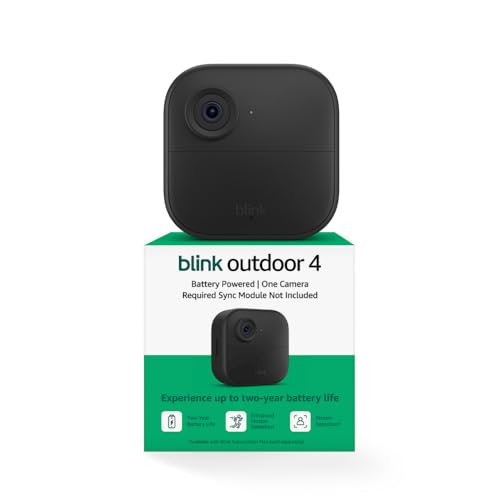
| Blink Outdoor 4 | Best battery camera for exposed positions | A wire-free, weatherproof camera with long battery life for the front wall, the gate post, and the garden fence. |
| REOLINK Argus PT Ultra | Best pan-and-tilt camera for wide outdoor areas | A battery pan-and-tilt camera that sweeps a whole garden or yard, with solar options for sunny walls. |
| Wyze Cam v4 | Best value wired camera for covered and semi-exposed spots | Sharp, inexpensive HD with colour night vision for eaves, carports, and the second angle every house wants. |
| TP-Link Tapo C210 | Best covered-porch pan-and-tilt camera | An indoor pan-and-tilt for the covered porch and garage — labelled honestly as a sheltered-position camera. |
| Ring Indoor Cam (2nd Gen) | Best simple camera for garage and covered entry | A plug-in indoor camera with a privacy shutter for the garage and the covered side entry — sheltered roles only. |
| Arlo Essential Indoor Pan Tilt | Best indoor pan-tilt for large covered spaces | A pan-and-tilt indoor camera for the big garage, workshop, or covered terrace — sheltered positions, wide sweeps. |
How Did We Choose Cameras for the Outside of a House?
Placement honesty governed everything. Each candidate was assigned the most exposed position it could genuinely serve — open wall, eaves, porch ceiling, garage interior — based on its design class, and no camera was promoted beyond its rating for the sake of a tidier list. The three indoor picks are here because covered porches and garages are real outside-the-house positions; they are labelled as such every time they appear.
Identification at night was the second test. We imagined the figure at the gate at midnight and asked what the footage would actually prove: a presence, a description, or an identity. Cameras were ranked by how far up that ladder their night vision, resolution, and lighting support climb, with colour information valued because ‘a person in a red coat’ is evidence and ‘a shape’ is not.
Power and maintenance formed the third test. A camera that needs its battery changed monthly from a tall ladder will quietly stop being maintained by February; one that sips power, sips sunlight, or never needs feeding will still be watching in its third year. Alert reliability and app sanity counted too — an outside system that cries wolf trains its owner to ignore the one alert that matters.
Coverage geometry closed the judging. Fixed cameras watch one place completely; pan-and-tilt cameras watch everywhere in turn and nowhere continuously. Both philosophies have honest uses, and the picks were chosen to let a household mix them deliberately rather than discover the difference after the incident.

Blink Outdoor 4 — Best battery camera for exposed positions
The Blink Outdoor 4 is the exposed position’s default answer. It is weatherproof, entirely wire-free, and famously frugal with its batteries, which means it can be mounted where the watching matters — the gate post, the gable, the fence line — rather than where a cable happens to reach. For most houses, the best camera position and the most practical one finally coincide, and that coincidence is this camera’s whole genius.
Its footage serves the identification ladder honestly: clear daytime detail, infrared night vision that renders a visitor describable, and motion alerts that arrive while the event is still at the door. The system expands gracefully — one camera this season, a second for the garden when the budget turns — and the app keeps a multi-camera house comprehensible rather than overwhelming.
Battery power is a rhythm, not a flaw: expect to refresh the cells on a long cycle and to think about Wi-Fi reach at the far fence. Video is recorded in clips rather than a continuous river, which suits event-watching and frustrates minute-by-minute review. For the exposed positions of an ordinary house, no camera here asks less and covers more.
- Rating: weatherproof for fully exposed outdoor positions
- Power: long-life batteries — no wiring at all
- Night vision: infrared for after-dark identification
- Alerts: motion notifications to the app
- System: expands camera by camera across the house
Strengths
- Mounts anywhere a ladder reaches
- Battery life measured in seasons, not weeks
- Day and night footage identifies visitors
Trade-offs
- Clip-based recording, not continuous
- Fence-line positions need strong Wi-Fi
- Batteries are a rhythm to maintain
Best for: front approaches, gates, and gardens needing wire-free exposed coverage.
Not suited for: continuous recording or Wi-Fi dead zones.

REOLINK Argus PT Ultra — Best pan-and-tilt camera for wide outdoor areas
Some outside spaces are too wide for a fixed stare: the long garden, the yard wrapping two sides of the house, the smallholding’s approach. The Argus PT Ultra answers with a motorised pan-and-tilt head on a battery body — one camera sweeping the whole territory, following motion across it, and returning to its guard position afterwards. Mounted high on a corner, it sees around the building’s bend that defeats every fixed camera ever made.
Its detail holds up when the head turns toward a distant gate, and colour night vision keeps descriptions useful after dark. Solar panel support suits the sunny wall perfectly: fit the panel once and the charging rhythm that battery cameras usually impose largely disappears, which is why this pick anchors so many rural and suburban wide-area installs.
A sweeping camera is, at any instant, looking one way — the honest trade of the philosophy. Pair it with a fixed Blink on the door and the system has both a stare and a sweep. Wi-Fi reach and a thoughtful guard-position setting decide its real-world worth. For the wide outside, it is the most capable single camera in this guide.
- Rating: outdoor body for exposed positions
- Movement: motorised pan-and-tilt with motion following
- Power: battery with solar panel support
- Night vision: colour night viewing for descriptions
- View: high detail for distant gates and corners
Strengths
- One camera sweeps a whole garden or yard
- Solar support ends the charging rhythm
- Follows motion across its territory
Trade-offs
- Looks one way at a time by design
- Needs strong Wi-Fi at its post
- Higher and more visible than a fixed camera
Best for: wide gardens, yards, and corner positions needing sweeping coverage.
Not suited for: the only camera on a door that needs a constant stare.

Wyze Cam v4 — Best value wired camera for covered and semi-exposed spots
The Wyze Cam v4 is how a house affords its second and third angles. Its HD picture is the sharpest value in this guide, its colour night vision describes clothing and vehicles properly, and its wired power means it never sleeps through an event for want of a charge. Under eaves, in a carport, or on a sheltered wall, it delivers coverage that cameras several times its cost struggle to shame.
Its placement boundary deserves precision: this is a camera for sheltered outdoor positions — under cover, out of direct weather — rather than a post in open rain. Treated with that respect, it is a tireless witness: deliveries confirmed, the drive kept honest, the side gate watched. Local recording keeps footage in the house, and the price invites the pair of angles that single-camera houses always end up wishing they had.
The app and ecosystem ask for a little patience, and a wired camera’s position is negotiated with its cable. Those are small prices for the sharpest pound-for-pound outside coverage here. Houses building a system on a budget should start with a Blink at the exposed post and Wyze cameras under every eave that matters.
- Rating: sheltered outdoor positions under eaves and carports
- Power: wired — always awake, no charging
- Night vision: colour night viewing for descriptions
- Recording: local card options keep footage at home
- Value: sharpest HD per pound in this guide
Strengths
- Excellent detail day and night for its class
- Wired power never misses for a flat battery
- Affordable enough for second and third angles
Trade-offs
- Needs shelter from direct weather
- Position follows the cable route
- App experience is functional rather than polished
Best for: eaves, carports, and side gates needing wired, detailed coverage.
Not suited for: fully exposed posts in open rain.

TP-Link Tapo C210 — Best covered-porch pan-and-tilt camera
Read this pick’s boundary first, because the guide insists on it: the Tapo C210 is an indoor camera, and its outside-the-house role exists only where a roof makes ‘outside’ a technicality — the covered porch, the enclosed carport, the garage. In those sheltered positions it is superb: a pan-and-tilt view that sweeps the porch and the parcel shelf, night vision for the evening delivery, and two-way talk for the courier conversation through the door.
Porches are where modern houses receive their goods, and a porch camera earns its keep weekly: the parcel confirmed, the caller identified, the pram and the bicycles kept in view. The C210’s motion tracking follows a visitor across the porch rather than losing them at the frame’s edge, and its price makes it the easiest addition in this guide — the camera a household buys to try the idea of coverage and keeps because the idea works.
It must never be promoted to an exposed wall. Rain on its housing is not a risk it was built for, and this guide would rather lose the sale than the reader’s camera. Kept under its roof, fed by its cable, it is the porch’s perfect tenant: watchful, articulate, and cheap to feed.
- Rating: indoor camera — covered porch and garage positions only
- Movement: pan-and-tilt with motion tracking
- Audio: two-way talk for callers and couriers
- Night vision: infrared for evening deliveries
- Power: wired, continuous operation
Strengths
- Sweeps a whole covered porch from one mount
- Two-way talk handles couriers and callers
- Excellent value for a sheltered position
Trade-offs
- Not weatherproof — never an exposed position
- Wired power limits placement to socket reach
- Pan-and-tilt watches one direction at a time
Best for: covered porches, enclosed carports, and garages.
Not suited for: any position the rain can reach.
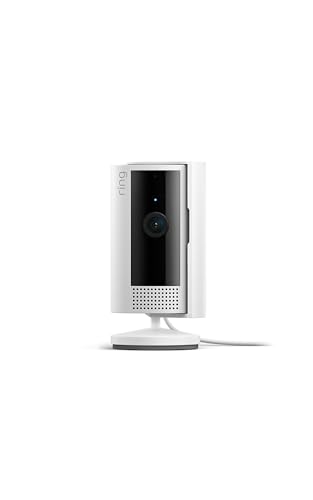
Ring Indoor Cam (2nd Gen) — Best simple camera for garage and covered entry
The Ring Indoor Cam’s outside role is the garage and the covered entry, and within that shelter it offers the simplest ownership in this guide: plug it in, place it, and the Ring ecosystem — alerts, review, and the doorbell’s extended family — handles the rest. The physical privacy shutter is its distinguishing grace: a cover that clicks shut over the lens when the family is working in the garage and wants the watching to stop, visibly and mechanically.
Garages hold more value and more vulnerability than their doors suggest — tools, bikes, the freezer, the internal door to the house. A camera there watches the assets and the approach together, and its night vision covers the hours when garages are visited uninvited. For households already in Ring’s world through a doorbell, this is the natural second citizen.
The boundary, again, is absolute: indoor means indoor, and this camera’s outside service is legitimate only under cover. Subscription features shape its full value, which households should weigh with open eyes. Sheltered, powered, and shuttered when the family is home, it is the garage’s most civilised watcher.
- Rating: indoor camera — garage and covered entries only
- Privacy: physical shutter that closes over the lens
- Power: plug-in, always on
- Ecosystem: Ring app, alerts, and doorbell family
- Night vision: infrared for unlit garages
Strengths
- Privacy shutter ends watching visibly and mechanically
- Simplest setup in the guide
- Natural partner to a Ring doorbell household
Trade-offs
- Indoor only — cover is a condition, not a suggestion
- Full features lean on the subscription
- Fixed view — placement must be right first time
Best for: garages and covered side entries in Ring households.
Not suited for: exposed walls, gates, or gardens.

Arlo Essential Indoor Pan Tilt — Best indoor pan-tilt for large covered spaces
The last pick scales the covered-space idea up: a pan-and-tilt indoor camera for the large garage, the workshop, or the covered terrace where a fixed view cannot reach the corners. Its sweep covers workbenches, vehicle bays, and the terrace’s doors in one installation, with the Arlo app’s polished alerts and review making the coverage easy to live with. For outbuildings with roofs — which is most of them — it is the wide-angle answer.
Arlo’s ecosystem suits households standardising on one app for door, garden, and garage, and the camera’s automated privacy orientation — turning to face the wall when the family is home, on the models and settings that support it — shows the same manners as the Ring’s shutter in electronic form. Night vision covers the workshop’s unlit hours, when its contents are most interesting to the wrong visitor.
Its boundary completes this guide’s refrain: the word Indoor is in its name and in its nature. Mount it under the workshop roof, the carport’s ceiling, the terrace’s beams — never on the open wall. Respected, it is the covered estate’s best sweeper; promoted beyond its rating, it becomes next winter’s cautionary tale, and this guide exists to keep readers out of cautionary tales.
- Rating: indoor camera — large covered spaces only
- Movement: pan-and-tilt sweep for workshops and terraces
- Ecosystem: Arlo app with polished alerts
- Privacy: automated lens-away orientation options
- Night vision: infrared for unlit outbuildings
Strengths
- Sweeps large covered spaces from one mount
- Polished app and alert experience
- Privacy manners suit family outbuildings
Trade-offs
- Strictly indoor — roofs only
- Sweep means one direction at a time
- Ecosystem value grows with other Arlo devices
Best for: large garages, workshops, and covered terraces.
Not suited for: any exposed outdoor position whatsoever.
How Do You Plan Coverage for a Whole House?
Walk the boundary at night with a torch and a sceptic’s eyes. Start at the street: where would you approach, where would you pause, where does the light fail? Those pauses are camera positions. The front approach earns the first camera because every visitor — welcome, commercial, or otherwise — uses it. The back garden earns the second because it is where a house is most private and least observed. Deliveries earn the third because modern life signs for its packages at the porch and argues about them later.
Overlap the views at the seams. A camera that watches the gate and a camera that watches the door should share a few metres of ground, so a figure cannot vanish between frames and reappear as a stranger. Height is a compromise to make consciously: high enough to defeat casual tampering and see over cars, low enough that faces are faces rather than the tops of heads. The classic error is the camera mounted for the installer’s ladder comfort, watching hats forever.
Test before you fix. Hold each camera at its intended position on a temporary mount for a week, review the night footage, and count how many visitors you could actually describe. Positions improve dramatically in that week — a metre left, a tilt down, the porch light’s glare escaped. The drill is cheap before the screws and expensive after them, which is the entire argument for patience in installation.
How Do You Watch Outward Without Watching the Neighbours?
An outside camera’s view almost always includes other people’s lives: the pavement, the opposite drive, the neighbour’s garden corner. Good systems treat that as a design constraint. Use privacy masking — every ecosystem here offers it — to blank the neighbour’s windows and garden from recording, aim cameras at your own ground wherever the job allows, and tell the neighbours what you have installed before they discover it. A camera explained over the fence is security; a camera discovered is a grievance with a lens.
The law varies by place, but the courtesy is universal: record your property and its approaches, keep footage for a sensible period rather than forever, and share it beyond the household only when there is a reason a reasonable person would accept. Signage — a small notice that recording is in use — deters more effectively than the camera does and answers the fairness question before it is asked.
Remember the camera’s double nature. The same view that catches a prowler catches the neighbour’s child retrieving a ball, the courier being kind, the fox at dawn. Households that review their footage with a little generosity — and delete with a little discipline — end up with security their street appreciates rather than resents, which is the only kind that lasts.
Which Positions Around a House Matter Most?
The front approach is the house’s public face and its first question. A camera there should frame the pause points — the gate, the step, the parcel shelf — tightly enough for identification, with the street’s comings and goings as context rather than content. This is the Blink Outdoor 4’s natural post, or the REOLINK’s corner if the approach bends. Everything else in a system is, in a sense, commentary on this position’s evidence.
The back garden is the privacy position: the place where the household is least observed and therefore where an unwelcome visit is most likely to be attempted and least likely to be witnessed. Coverage there can be wider and less forensic — the sweeping REOLINK or a second Blink — because its job is detection and deterrence across a territory rather than identification at a point. A light that answers motion does half this camera’s work before it records a frame.
The side approach is the forgotten position, and burglars’ folklore is built on it: the passage between houses, the gate nobody uses, the window behind the bins. One value camera — the Wyze under its eave — closes the gap for less than the cost of the incident it exists to prevent. Walk your own house as a stranger, as the planning section insists, and the side passage will nominate itself.
How Do Power Choices Shape an Outside System?
Battery freedom is real freedom: the Blink at the gate post and the REOLINK on the corner exist because no cable could follow them there. Its price is a rhythm — batteries refreshed on a cycle, sooner in cold weather, with the app reporting levels to those who read it. Households honest about their maintenance temperament choose battery happily; households who know themselves choose wired wherever a cable can possibly reach, and solar where the sun offers to keep the rhythm for them.
Wired permanence is the Wyze and the sheltered picks’ quiet virtue: a camera that has never once been flat, recording through the month the family forgot it existed. Its price is geography — the position negotiates with the socket — and a little installation labour up front. In practice, mature systems mix the philosophies without ideology: wired where power lives, battery where it does not, solar on the sunny wall, and the app holding the whole parish together.
Cold is the power variable nobody budgets for. Batteries of every chemistry give less in winter, exactly when nights are longest and coverage matters most. A system designed in June should be audited in January: battery levels checked against the cold, solar angles re-read for the low sun, and the charging rhythm tightened before the season’s most interesting night finds a camera asleep.
How Should Outside Cameras Handle Night?
Night footage divides into detection and identification, and the honest system knows which of its cameras does which. The garden sweeper detects: something crossed the lawn, at this time, in that direction. The approach camera identifies: this person, this coat, this face at the gate. Both are valuable; confusing them is how households end up with beautiful wide footage of an unrecognisable event and a sincere belief that they have security.
Light is the night system’s cheapest upgrade. A modest lamp at the pause point — porch, gate, parcel shelf — lifts every camera in this guide a class: colour replaces monochrome inference, faces gain modelling, and the visitor is deterred by the implication of being seen clearly. Motion-activated light plus a mid-tier camera outperforms a flagship in darkness, which is the outside system’s best-kept budget secret.
Infrared has its own etiquette of failure: spiders build across lenses and bloom into white monsters, rain becomes a light show, and reflective surfaces bounce the illumination back as fog. The maintenance rhythm — a cloth on the lens monthly, webs swept, angles checked after storms — is part of night performance, and the households with the clearest midnight footage are the ones who treat their cameras as instruments to be kept, not appliances to be forgotten.
How Do Outside Cameras Work with Doorbells and Lights?
The modern outside system is an ensemble, and its members cover each other’s blind spots by design. The doorbell camera owns the doorstep conversation; the approach camera owns the journey to it; the light owns the deterrence and the colour. Households in the Ring ecosystem will feel the ensemble logic most smoothly, but the principle is brand-blind: events should trigger context — the doorbell’s ring calling up the approach camera’s last minute — rather than isolated clips in separate apps arguing about the same evening.
Lights deserve promotion from accessory to cast member. A motion light at the garden’s dark corner changes the REOLINK’s footage from infrared inference to colour description, and changes the visitor’s calculation before any footage exists. Smart lights that answer the cameras’ detections close the loop: the system sees, the light declares, the visitor decides — in that order, most incidents end at the second step.
Keep the ensemble comprehensible. Every added device is a battery, a subscription decision, and an alert stream; a system whose notifications the household has muted in self-defence protects nothing. Add cameras by the planning section’s questions, stop when the questions are answered, and let the system’s silence on an ordinary night be the sign it is sized correctly.
How Should Footage Be Kept, and for How Long?
Retention is a judgement disguised as a setting. Keep footage long enough to discover the incident you did not notice — a fortnight covers most households’ discovery lag for the garden’s mysteries and the delivery disputes — and let the ordinary overwrite itself without ceremony. Indefinite retention hoards the neighbours’ lives alongside your own security, multiplies cost, and turns a protective system into an archive nobody asked for. The courtesies section of this guide and the settings page are the same conversation.
Local recording, which the Wyze offers, keeps the footage’s home inside the house — a privacy architecture some households prefer on principle. Cloud recording keeps it safe from the incident that takes the camera itself. Neither is morally compulsory; both are honestly described, and the choice should be made as a choice, with the household understanding where its pictures sleep.
When an incident matters, export the clip properly at once: the original file, the neighbouring cameras’ angles, and a note of the times while memory is fresh. Systems overwrite on their rhythms regardless of significance, and the evidence that survives is the evidence somebody saved on the day. The rest of the year, let the system forget — forgetting, in a watching machine, is a feature with a settings page.
What Changes Across the Seasons Outside?
Summer fills the frame with growth: the hedge that was a backdrop in April is an obstruction by July, spiders colonise the infrared, and the sun’s angle moves the glare from one camera to another like a slow spotlight. The seasonal walk — checking each view, trimming the hedge’s ambition, cleaning the lenses — takes twenty minutes and is the difference between a system and a memory of one. Put it in the calendar with the gutters and the boiler service, where it belongs.
Winter tests power and nerve: batteries fade, nights lengthen to fill most of the day, and the weather aims itself at every seal and mount. Storms re-aim lightweight cameras by degrees; check the views after the big nights. The houses whose systems survive winter as witnesses are the ones whose owners treat the cameras as part of the building’s maintenance, not as gadgets exempt from it.
Spring and autumn are the planning seasons: the new position argued for by winter’s evidence, the extra angle the summer’s growth demanded. Outside systems mature like gardens, by annual adjustment, and the household that walks its boundary twice a year with the app in hand will always know what its witnesses see — which is, in the end, the only definition of coverage that matters.
How Do You Cover a Corner House or a Long Plot?
Corner houses have two public faces and should budget for both: the approach each street presents is a separate question deserving its own witness. The REOLINK’s corner mount, sweeping both frontages from the building’s angle, is the economical answer where the plot allows one post to see around the bend; where it does not, two fixed cameras — a Blink on each face — give the corner the stare-and-stare coverage that a single sweep cannot.
Long plots argue for layers rather than reach: the gate camera identifies at the boundary, the mid-plot camera tracks the journey, the door camera confirms the arrival. Zooming one camera across forty metres produces footage of a distant stranger; layering three modest cameras produces a story with a face in it. The Wyze’s value exists to make layering affordable, and long-plot households should spend on layers before resolution.
How Do You Deter Rather Than Merely Record?
Recording is the system’s memory; deterrence is its voice, and the voice speaks before any incident: the visible camera at the approach, the small sign that recording is in use, the light that answers movement with attention. Most unwelcome visits are decided at the gate, in seconds, by a visitor reading the house’s alertness — and a house that announces its watching, honestly and without theatre, sends most of them to read a different house.
Keep the deterrence truthful. Dummy cameras are a debt collected by the first real incident, and exaggerated claims — the sign promising what the system cannot do — train the household as much as the visitor. The picks in this guide, visibly installed and genuinely maintained, deter by competence: the prowler’s calculus respects a working system, and a working system is the one whose batteries, views, and alerts were checked this season.
How Do You Maintain an Outside System Across a Year?
Four small services, one per season. Spring: clean every lens, sweep the infrared of its spiders, and check the views against the new growth. Summer: audit the batteries and the solar angles, and confirm the night footage still identifies at the pause points. Autumn: re-aim what the storms have argued with, clear the gutters’ drip lines from the cameras’ weather, and test every alert end to end. Winter: tighten the power rhythm, check the mounts after the big winds, and review one midnight clip per camera as evidence the witnesses are awake.
Keep the service log with the house’s other maintenance, because that is what it is. A system maintained like a boiler behaves like a boiler — unglamorous, continuous, and there on the one night it is needed. The households whose cameras fail at the crucial moment are rarely unlucky; they are unserviced, which is a different and more preventable condition.
How Do Deliveries and Visitors Use Your System?
Design the delivery moment as a small ceremony the system performs well: the approach camera sees the van, the porch camera — the Tapo under its roof — confirms the parcel’s landing and offers the courier a voice if needed, and the alert tells the household which shelf of the porch to check. When the ceremony works, the weekly argument about whether something arrived simply stops occurring, which most households count as the system’s first dividend.
Visitors read the system as the house’s manners. A camera that lets the host greet a guest by name from the kitchen, a doorbell conversation that works, a light that welcomes rather than interrogates — these make the watching feel like hospitality. Aim the system at the household’s convenience as much as its security, and it will be maintained with the enthusiasm conveniences receive and security systems rarely do.
What Should Renters and Listed Buildings Do Differently?
Renters install without wounds: battery cameras on removable mounts, positions negotiated with the landlord in writing, and nothing drilled that a deposit would mourn. The Blink’s wire-free manners make it the renter’s natural sentry, and the whole system can move house in an afternoon — a genuine virtue in a life stage defined by moving. Keep the landlord inside the conversation and the system becomes an improvement everyone agreed to.
Listed and character buildings add the conservation question: fixings into historic fabric need permission and usually a reversible method, and cameras should sit discreetly against the building’s lines. The compact picks serve here by size, and the covered positions — porch, outbuilding, garage — often carry the coverage so the façade carries none. A house with a past deserves watching that respects it, and the planning walk in this guide, done with the building’s character in mind, finds the positions that do both jobs.
How Do You Test an Outside System Before Trusting It?
Stage the incidents you bought it for. Walk the approach at midnight in your darkest coat and see what the footage can actually prove. Leave a parcel at the shelf and check the alert’s timing against your memory of the doorbell. Have a friend unknown to the system cross the garden while you watch the app, and time the sweep camera’s arrival. A system that has passed rehearsals can be trusted on the night; a system that has only been installed is a hypothesis with a lens.
Write down what the rehearsals taught — the blind metre at the fence, the glare at dawn, the battery’s real rhythm — and fix the cheap items at once. Every outside system in every street has these small confessions; the difference between the houses is whether the owners went looking for them in peacetime. Rehearse in the season you install, and re-rehearse when the seasons change the light and the leaves.
How Do You Expand a System Without Making It Complicated?
One question at a time, answered completely. The household that adds the garden camera because the garden was the named gap, positions it by the planning walk, and lives with it for a season learns its system deeply. The household that installs six cameras in a weekend owns a notification storm and a shallow understanding of each view — coverage in the spreadsheet sense, blindness in the practical one.
Keep the app’s map of the house honest as you grow: names that describe positions, alerts tuned per camera rather than globally, and the retention set once for the whole parish. Expansion done this way compounds knowledge instead of complexity, and the system at year three — sentry, sweeper, eaves, and porch, each understood — is worth more than a larger system nobody has rehearsed.
How Do You Handle Footage of an Actual Incident?
Stay calm and preserve before you review. Export the relevant clips from every camera that saw a piece of the event, with the original files kept unedited, and write the timeline while it is fresh — times, directions, descriptions — because memory edits itself within days. Share with the authorities through the channels they ask for, and keep your own copies untouched; the clip you trimmed for convenience is worth less than the original you almost overwrote.
Afterwards, let the incident teach the system rather than merely star in it. Where did the figure vanish? Which view arrived too late? The planning walk, repeated with evidence in hand, is how outside systems grow wise — and a household that rehearses, preserves, and adjusts will find each year’s coverage more honest than the last.
A Final Thought on Trust
An outside system succeeds when three parties trust it: the household, which must believe its alerts; the neighbours, who must believe its manners; and the visitor at the gate, who must believe it is awake. Every choice in this guide — honest classifications, tested positions, masked views, maintained batteries — is a deposit in one of those three accounts. Keep them funded, and the cameras will do the quiet work they were bought for, season after season, without ever becoming the story themselves.
How Do the Six House-Outside Cameras Compare?
Read the rating column before any other. The table is divided by the guide’s central rule: exposed positions in the top rows, sheltered positions below. A camera compared across that line is being compared unfairly — to its own destruction, usually in November.
| Pick | Role | What to know |
|---|---|---|
| Blink Outdoor 4 | The exposed sentry | The default camera for any open-air position. |
| REOLINK Argus PT Ultra | The sweeping watcher | Coverage by movement — pair it with a fixed stare. |
| Wyze Cam v4 | The value witness | The second angle every house wishes it had. |
| TP-Link Tapo C210 | The porch tenant | Superb under a roof; forbidden beyond it. |
| Ring Indoor Cam (2nd Gen) | The garage guardian | Civilised, shuttered, and strictly under cover. |
| Arlo Essential Indoor Pan Tilt | The covered sweeper | Wide coverage, provided the roof comes first. |
Most houses end with a mixed system: an exposed sentry at the approach, a sweeper on the garden, value cameras under the eaves, and a porch or garage tenant. Bought in that order, each addition closes a named gap rather than duplicating a view.
How Do You Install an Outside Camera Properly?
Installation is a morning’s work that decides years of footage. The sequence below assumes the positions were tested first, as the planning section insists.
Prove the Wi-Fi before the drill
Stand at the exact position with the camera powered temporarily and stream its night view. A position with a weak signal produces a camera that misses events while buffering — the most frustrating failure in home security, and entirely preventable in ten minutes.
Mount for faces, not for convenience
Set the height so a visitor’s face fills a useful part of the frame at the natural pause point — the gate, the step, the parcel shelf. Check with a volunteer at midnight, not with the installer’s optimism at noon.
Angle against the light’s traps
Avoid aiming into the sunrise, the street lamp, or the porch light’s glare. A few degrees of tilt decides whether night footage shows a face or a halo with a person behind it.
Weatherproof the details
Drip loops in cables, connectors sheltered, hatches checked twice, and battery cameras seated firmly enough that a storm cannot re-aim them at the sky. Installations fail at their smallest points, in the worst weather, on the most interesting night.
Walk the system as a stranger
Approach the house by every route, at day and at night, and review the footage as evidence. Where the stranger vanishes or becomes unrecognisable, the system — not the stranger — needs adjusting.
Finish with the courtesies: masks set for the neighbours’ windows, signage placed, retention chosen. A properly installed outside system is equal parts optics, weatherproofing, and manners.
What Mistakes Do Homeowners Make with Outside Cameras?
Mounting an indoor camera in the rain
The classic, and the reason this guide repeats its boundary at every sheltered pick. Indoor cameras under open sky die slowly and then suddenly, usually during the storm that also brought the incident. Roofs are the condition; there are no exceptions worth testing.
Aiming for the view instead of the visitor
A beautiful wide shot of the whole garden identifies nobody. Cameras are witnesses, not landscape artists: frame the pause points tightly enough that a face at the gate is evidence, and let the sweep cameras handle the scenery.
Forgetting the power rhythm
Battery cameras bought in enthusiasm and abandoned by February — uncharged, unwatched, unmissed until the night they were needed. Choose wired or solar where maintenance is unlikely, and diary the battery rhythm where it is not.
Recording the neighbours by default
Unmasked views of next door’s garden create friction that outlasts any incident the camera might catch. Mask generously, aim honestly, and have the conversation — security that angers the street protects the house poorly.
Installing everything at maximum height
Cameras near the gutters record the tops of heads in magnificent detail. Faces live lower. Mount for the identification you actually need, and accept the ladder work as part of the craft.
Final Recommendation
Start the system with the exposed approach: the Blink Outdoor 4 for wire-free freedom or the REOLINK Argus PT Ultra where the ground is wide. Add the Wyze Cam v4 under the eaves for the sharpest value in the guide, and the covered positions will suggest themselves — porch, garage, workshop — to the Tapo, Ring, and Arlo picks, each safely under its roof.
Keep the boundary bright in your own planning. Outdoor-rated cameras earn the weather; indoor cameras earn the shelter, and the guide has labelled every pick so the ladder work is done once, correctly. A system installed on honest classifications is still watching in its third winter, which is when outside cameras prove what they were for.
Plan the coverage by questions, test the positions before drilling, mask the neighbours’ lives out of the record, and walk your own approaches at midnight to see what your witnesses see. A house covered that way is not merely watched. It is understood — by the people who live in it, which was the point all along.
Frequently Asked Questions
Can I use an indoor camera outside if it is under the eaves?
Under a genuine roof — a porch ceiling, a deep eave, a garage — yes, and this guide assigns exactly those roles to its indoor picks. Under a shallow trim or a hopeful overhang that rain still reaches, no. If weather can touch it in a storm, it needs an outdoor rating.
How many cameras does a house need?
Most houses are honestly covered by three: the front approach, the back garden, and the delivery point. Larger or corner properties add the side approach. Buy for named questions rather than a number — a fourth camera duplicating a view adds cost, not coverage.
Battery or wired for outside positions?
Battery for reach — gates, fences, and posts far from sockets — with a charging rhythm you will actually keep. Wired for permanence at eaves and porches near power. Solar assistance suits sunny walls and quietly solves the rhythm problem for compatible cameras.
Do outside cameras need light to work at night?
Infrared cameras see without visible light but record in monochrome; colour night vision uses ambient light — a porch lamp or street light — to keep descriptions colourful. A small light at the pause point improves every camera in this guide more than an upgrade would.
Should I tell my neighbours about the cameras?
Yes — before installation if possible, with the masking shown and the aim explained. Most neighbours respond to being consulted with support, and many ask for the same coverage themselves. The conversation is cheaper than the grievance, every time.
Related Guides
Complete the picture with our guides to gated entrances, security cameras, and smart-home watching: Best Cameras for Gated Entrance Best Bang for Buck Security Cameras Best Cameras for Smart Home


