ilcastellomenu.com is reader-supported. When you buy through links on our site, we may earn an affiliate commission.
Where to Buy
Professional nature photography is the genre where the camera is judged by the worst day, not the best one. The best cameras for professional nature photography must find a bird against a cluttered dawn sky and hold it through the dive, survive the rain that arrives with the wildlife rather than instead of it, resolve a feather and a mountainside with equal conviction, and do all of this at the end of a hike, in gloves, on the last battery — because nature does not reschedule, and the professional’s client, editor or licence buyer does not accept weather as a co-author.
That professional standard reorganises the usual rankings. Burst depth becomes a livelihood issue when the one frame in four hundred is the licence sale. Weather sealing stops being a brochure line and becomes the difference between working the storm light — where the genre’s defining images live — and watching it from a vehicle. Autofocus is judged on animals specifically: eyes found at distance, through grass, against water, in the half-light where wildlife is most itself.
The six bodies below divide the professional territory by discipline as much as by price. The full-frame flagships serve the wildlife specialist who crops hard and prints large; Canon’s low-light master serves the dawn and forest worker; Fujifilm brings resolution and colour for the landscape professional who also shoots fauna; OM SYSTEM makes the case that the professional who walks furthest photographs most; Nikon’s crop body is the reach economist’s professional tool; and the Tough TG-7 covers the assignments — water, rock, weather — where the professional’s main camera simply cannot go.
One conviction runs through the verdicts: in nature work, the system is the camera. The telephoto you can carry, the lens the rental shop stocks at the destination, the batteries your whole kit shares — these decide assignments more often than sensors do, and the guide weighs them with the seriousness the profession itself does.
A final framing on the word professional: it means the photographs are owed to someone — an editor, a client, a competition, a conservation organisation, a licence library. That owing changes every judgement that follows, from reliability to file depth, and it is why this guide’s standards are set by the assignment rather than by the hobbyist’s Saturday, however serious that Saturday may be.
Read the verdicts, then, the way an editor reads a portfolio: not asking which camera is best in the abstract, but which one will be believed — by the dawn, by the weather, by the animal, and finally by the person the photographs are owed to. Belief, in this genre, is earned in the field and audited at the desk, and the six bodies below have passed both audits in the territories their badges name.
Key Takeaways
- Professional nature work is judged by the worst day: sealing, burst depth and animal-eye focus outrank brochure resolution.
- The Sony Alpha 7 IV is the wildlife professional’s default — tracking tenacity, crop depth and a telephoto system without gaps.
- The Canon EOS R6 Mark II owns dawn, forest and weather: low-light files and tracking for the hours wildlife keeps.
- The Fujifilm X-T5 serves the landscape-led professional with high resolution and film-born colour for print.
- The OM SYSTEM OM-5 Mark II doubles reach at half the carry — the professional hiker’s system.
- The Nikon Z50 II and OM SYSTEM Tough TG-7 complete the kit: affordable reach, and a body for water and rock.
- Fieldcraft remains the unpaid specification: wind, patience and local knowledge place every camera in this guide better than any upgrade can.
In this guide
Quick Picks
| Camera | Badge | Why it earns its place |
|---|---|---|
| Sony Alpha 7 IV | Best for professional wildlife | Tenacious animal tracking, deep-cropping files and the most complete telephoto system. |
| Canon EOS R6 Mark II | Best for dawn, forest and weather | Low-light mastery and animal tracking for the hours and places wildlife actually keeps. |
| Fujifilm X-T5 | Best for the landscape-led professional | High resolution, film-born colour and a system that prints like it means it. |
| OM SYSTEM OM-5 Mark II | Best for the walking professional | Double effective reach and class-leading stabilisation in the lightest serious system. |
| Nikon Z50 II | Best professional reach on a budget | Crop multiplication and vehicle-grade subject detection at an assignment-friendly cost. |
| OM SYSTEM Tough TG-7 | Best for water, rock and weather extremes | A waterproof, crush-resistant professional tool for the assignments that exclude other cameras. |
How Did We Choose Cameras for Professional Nature Work?
Testing was fieldwork in the literal sense: a wetland dawn for waders and wildfowl, a forest interior for deer and woodland birds, a coastal cliff for seabirds in wind, a mountain ridge for landscape at both ends of the day, and one assignment in steady rain that separated the sealed from the hopeful. Each body worked full days in its discipline, carried rather than chauffeured, and judged on the frames an editor would accept — not the frames a review can excuse.
Animal autofocus was the first criterion and the harshest: eyes acquired at distance, held through grass and reed interference, kept on a bird crossing backgrounds from water to woodland to sky. Professional wildlife work forgives a camera many things, but a focus system that hunts at the decisive second is not one of them, because the decisive second is the entire product.
Files were judged by the profession’s destinations: the double-page spread, the exhibition print, the licence crop that takes a third of the frame and must still hold a feather’s structure. Resolution was therefore scored as usable resolution — what remains after the crop the distance imposed and the noise the dawn demanded — a measure on which the field’s order differs interestingly from the spec sheet’s.
Survivability formed the third axis: sealing tested by the rain assignment and by coastal spray, controls by gloved hands at dawn temperatures, batteries by full cold days, and the whole kit by the walk in — because a professional system that cannot be carried to the subject is a studio system wearing outdoor clothing.
A final criterion was professional infrastructure: the lens shelves at destination rental shops, the service network when a body fails mid-assignment, the tethering and filing habits of a working archive. Nature professionals are a travelling trade, and their cameras were judged as travelling tools, not as possessions.
Professional infrastructure deserves one more sentence, because it decided several close verdicts: a body whose maker services it on a professional scheme, whose batteries the whole travelling kit can share, and whose files open identically in every editor an agency uses is worth a measurable premium in this trade — the premium of never being the production’s problem. Several technically exciting bodies were marked down on exactly that ground.
Why Do Wildlife and Landscape Demand Opposite Things from a Camera?
The wildlife photographer wants time compressed: the fastest focus, the deepest burst, the longest reach, the frame harvested from a second of action. The landscape photographer wants time expanded: the slowest deliberation, the deepest file, the tripod’s patience, the frame composed across an hour of changing light. A professional nature camera must serve both temperaments — often in the same dawn, on the same ridge — and the bodies in this guide are the ones whose compromises between the two are the most intelligently drawn.
The sensor sits at the argument’s centre. Resolution feeds the landscape print and the wildlife crop alike, but it taxes burst depth and low-light grace, which wildlife spends hourly. The flagships below resolve the argument at different price points of the same trade, and the professional’s discipline — birds at dawn or valleys at dusk — is what should choose among them, not a global ranking.
The professional answer is often a division of labour within one bag: the fast body for the action hours, the deep file for the composed ones, sometimes the same body persuaded into both roles by a photographer who knows its dialects. This guide’s verdicts are written for that persuasion — each body’s second discipline is assessed, not just its first.
How Does a Professional Think About Reach?
Reach is bought in three currencies, and the professional holds accounts in all of them. The first is glass: the long telephoto, expensive and peerless. The second is the crop sensor’s multiplication, which turns affordable lenses into professional distances and powers two verdicts below. The third is the file’s depth, spent afterwards as cropping — the flagship route, which demands the lens be sharp enough to feed the crop and the light kind enough to afford it.
Each currency has its exchange rate in the field. Glass costs weight on the walk in. Crop sensors cost light at the dawn. Cropping costs the file’s margin for the print. The professional’s skill is portfolio management among the three — choosing, per assignment, which currency the conditions make cheapest — and a camera system is professional partly in proportion to how many of the currencies it lets its owner hold.
There is also the fourth currency, the one amateurs undervalue and professionals budget for: proximity. The hide, the stalking craft, the knowledge of a species’ habits that places the photographer where a modest lens suffices. No camera in this guide sells it, and every great nature portfolio is rich in it — the equipment verdicts below assume the reader is investing in fieldcraft alongside the kit, because the profession does.
What Does Weather Sealing Really Buy a Nature Photographer?
The hours on either side of weather are nature photography’s treasury: the storm light that sets a landscape alight, the rain that brings the animals out and the tourists in, the mist that simplifies a forest into a print. Sealing is the admission ticket to those hours — not a guarantee of invulnerability, but the difference between a body that works through the shower on a lens cloth’s discipline and a body bagged in plastic and effectively retired.
Sealing is also a system property, and the guide scores it as one: a sealed body behind an unsealed lens is a boat with one open side. The verdicts note where a system’s professional glass shares the body’s weather ambitions, because the assignment rain does not check which component it is entering by.
Beyond rain, sealing buys the dust of the savanna track, the spray of the seabird cliff, the condensation of the dawn hide — the whole abrasive atmosphere of fieldwork. Professional bodies are not bought for the days in the brochure; they are bought for the cumulative survival of a thousand ordinary insults, and sealing is how that survival is engineered.
Professionals also insure the sealed system like the asset it is: serviced seals, a rain routine rehearsed at home, and the humility to bag the camera when the weather passes from assignment to assault. Sealing extends the working envelope; judgment decides where the envelope ends, and the photographers with the longest careers are the ones whose judgment was the more conservative of the two.
Which Cameras Earn a Professional Nature Photographer’s Trust?
Six bodies, six professional territories — wildlife, dawn, landscape, the long walk, the reach budget and the waterline. Each verdict names the assignment it is for, because in this genre the assignment is the specification.

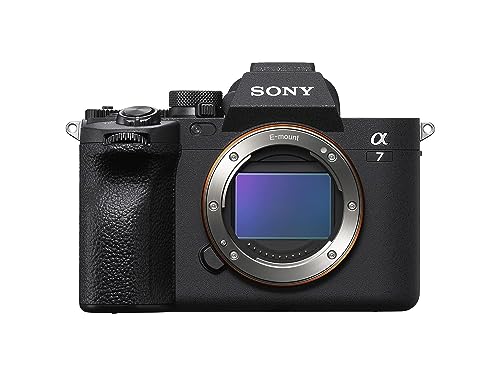
Sony Alpha 7 IV — Best for professional wildlife
The Alpha 7 IV is the contemporary wildlife professional’s default because its virtues align exactly with the discipline’s failures. Its animal and bird eye detection finds the subject’s eye at professional distances and holds it through the interference — grass, spray, crossing backgrounds — that defines real fieldwork rather than test charts. Its files carry the crop depth the licence market spends: the frame taken at the distance the animal allowed, trimmed to the composition the editor wants, still holding feather and fur at print sizes.
The system completes the professional case. Sony’s telephoto shelf — fast primes for the hide, versatile zooms for the travelling assignment, converters for the desperate reach — is the deepest in the mirrorless world, and it is stocked by the rental shops at the destinations wildlife professionals actually fly to. A body is a career decision in this genre, and the A7 IV’s career infrastructure is the strongest argument in this guide.
Its costs are the professional’s usual ones: the system’s best glass is priced like the professional equipment it is, and the body asks to be configured deliberately rather than improvised with. For the photographer whose income or reputation rides on the decisive second at dawn, those are the correct costs, paid to the correct camera.
- Format: full-frame mirrorless
- Focus: bird and animal eye detection
- Files: deep crop reserve for licensing
- System: the deepest telephoto shelf
- Build: sealed for field assignments
Strengths
- The decisive second, held at distance
- Crops that survive the licence market
- A telephoto future without gaps
Trade-offs
- Professional glass pricing throughout
- Menus reward thorough setup
- Not the lightest walk-in system
Professionals shooting for stock and licence libraries should weigh the A7 IV’s archive value: files with this depth remain saleable across the format changes of a decade, because they can be re-cropped for uses not yet invented. Resolution, in the library business, is shelf life.
Its tracking customisation rewards the specialist: sensitivity tuned separately for the hide’s patience and the flight shot’s violence, remembered by the body, so the same camera serves the dawn’s two disciplines without a menu dive between them.
Best for: wildlife professionals, licence and editorial shooters. Not suited for: landscape-only purists or ultralight hikers

Canon EOS R6 Mark II — Best for dawn, forest and weather
Wildlife keeps unsocial hours in unlit places, and the R6 Mark II is built for exactly that diary. Its files hold together as sensitivity climbs — the forest interior at dawn, the owl’s hour, the storm’s grey noon — with a grace that keeps shutter speeds honest and feathers intact where lesser sensors dissolve into noise and apology. For the professional whose assignments live at the day’s edges, this is not a feature; it is the practice.
Canon’s animal detection matches the Sony’s tenacity in the field’s hardest geometry — the bird against clutter, the mammal half in shadow at the wood’s edge — and its stabilisation partners long glass handheld in the hide and the boat, extending the hours a professional can work without support. Its colour, warm and true in mixed natural light, gives editors files that need persuasion rather than rescue.
The trade is resolution: it crops less deeply than the Sony, so the distant subject at noon is the rival’s fixture. The dawn professional will make that trade every working week of the year — light is scarcer than pixels in the hours that matter, and this body spends its design budget exactly where its photographer’s diary is darkest.
- Format: full-frame mirrorless
- Focus: animal detection in clutter and shadow
- Files: class-leading high-sensitivity grace
- Stabilisation: in-body, for long glass handheld
- Colour: warm truth in mixed natural light
Strengths
- The dawn and forest shift, owned
- Tracking through the field’s hardest backgrounds
- Handheld long-glass hours extended
Trade-offs
- Less crop depth than the Sony
- Professional glass pricing
- Resolution-first landscape work is the rival’s
Forest and woodland specialists — the deer, the badger, the dawn chorus made visible — should read this verdict as addressed to them personally: the R6 Mark II’s combination of sensitivity, stabilisation and quiet operation is the woodland professional’s toolkit in one body, and the woodland is where nature photography’s hardest professional living is made.
Its weather sealing and its low-light grace combine into the storm assignment’s instrument: the professional who must work the weather’s edge — where the light and the animals both perform — can do so without the bagged-camera compromises that cost frames and occasionally clients.
Best for: dawn, forest and low-light wildlife professionals. Not suited for: maximum-crop distance specialists

Fujifilm X-T5 — Best for the landscape-led professional
The X-T5 serves the professional whose nature work is led by the land itself — the ridge at dawn, the forest’s architecture, the coast’s long argument with the sea — and whose fauna is photographed within that landscape rather than extracted from it. Its high-resolution sensor feeds the exhibition print and the double-page spread, and Fujifilm’s colour gives the land a rendering with the authority of film’s long memory: greens that stay distinct, skies that graduate, rock that keeps its weight.
Its dial-led handling is the landscape temperament made metal: exposure as a physical deliberation, the camera slowed to the tripod’s pace, composition treated as the assignment’s main event. Professionals who came from film consistently describe the X-T5 as the digital body that stopped arguing with their habits — and habits, on a cold ridge at 5 a.m., are load-bearing.
Wildlife is its honourable second discipline rather than its first: capable focus and a lens shelf with real reach, a step behind the flagship pair’s clairvoyance on the fastest action. The landscape-led professional who shoots animals deliberately — the deer in the valley’s composition rather than the diving bird — will find it sufficient and its files superior for the print. The action specialist should take the Sony or Canon verdicts as their own.
- Format: APS-C mirrorless, high resolution
- Colour: film simulations with landscape heritage
- Handling: dial-led, tripod-temperament
- Files: exhibition-print depth
- Lenses: Fujifilm primes and telephotos
Strengths
- The land rendered with film’s authority
- Print depth beyond its format’s reputation
- A body that honours deliberate habits
Trade-offs
- Fastest wildlife action is a step beyond
- Smaller sensor at the darkest dawn
- System reach costs more than rivals’
Print-selling landscape professionals should note the X-T5’s rendering on textured and matte stocks: its colour was born for paper in a way that more clinical pipelines must be taught, and the gallery print — this photographer’s actual product — is where the body quietly out-earns its specification sheet.
Its compact system size also serves the landscape professional’s real logistics: the whole kit — body, the holy trinity of landscape lenses, filters — rides in a bag a full-frame equivalent would overflow, on ridges where the walk is the assignment’s first photograph.
Best for: landscape-led professionals and print sellers. Not suited for: fast-action wildlife specialists

OM SYSTEM OM-5 Mark II — Best for the walking professional
The OM-5 Mark II makes the professional argument nobody else in this guide can make: the best nature photographs are taken by the photographer who got there, and getting there is a weight equation. Micro Four Thirds doubles every lens’s effective reach, so a genuinely professional telephoto kit — the bird lens, the landscape lens, the body — weighs what rival systems’ single telephoto weighs, and rides to the remote hide, the high valley and the island colony that heavier kits visit rarely or never.
Its stabilisation is the second half of the walking argument: long effective focal lengths held handheld at dawn, because the tripod stayed home to save the kilograms, with a steadiness that makes the compromise invisible in the files. Weather sealing completes the traveller’s brief — this is a system designed by a company that expects its cameras to be rained on professionally.
The concessions are physics: a smaller sensor’s low-light ceiling and crop depth sit below the full-frame flagships’. The walking professional accepts them as the price of presence — and presence, across a career of remote assignments, has a higher yield than any specification in this guide. For the professional whose territory is measured in miles, this is not the compromise choice; it is the correct one.
- Format: Micro Four Thirds mirrorless
- Reach: double effective focal length
- Stabilisation: class-leading for handheld telephoto
- Build: sealed, compact, hikeable
- Kit: the lightest professional nature system
Strengths
- Professional reach at half the carry
- Handheld telephoto at dawn, steadied
- Weather-sealed for the remote assignment
Trade-offs
- Low-light ceiling below full frame
- Files crop less deeply
- Focus a step behind the flagship pair
Expedition and conservation photographers — the ones who document a species across a season of walking — will recognise their instrument: the OM-5 II’s kit leaves pack room for the tent, the food and the patience, and its archive at the season’s end is larger than the flagship kit’s would have been, because it was present for more of the story.
Its computational fieldcraft aids deserve a professional’s respect rather than a purist’s shrug: focus stacking for the macro subject and neutral-density simulation for the long-exposure stream are working tools that save filters, weight and time in the field — three currencies the walking professional counts daily.
Best for: hiking, expedition and conservation professionals. Not suited for: darkness specialists or maximum-crop shooters

Nikon Z50 II — Best professional reach on a budget
The Z50 II is the professional’s arithmetic made honest: its APS-C sensor multiplies every telephoto mounted on it, so Nikon’s affordable long glass reaches genuine professional distances — the wader across the estuary, the raptor over the ridge — at a total kit cost that leaves the budget alive for the hide, the travel and the second body. For the early-career professional and the working naturalist, that arithmetic is not a compromise; it is what makes the practice possible at all.
Its subject detection, Nikon’s calm and capable implementation, finds birds and animals and holds them with a composure above its price, and its files — neutral, faithful, consistent — grade into a professional archive without fuss. Nikon’s colour truthfulness serves the scientific and editorial markets particularly: the species record, the conservation report, the field guide’s plate, where accuracy is the assignment.
It concedes the flagships’ extremes — the darkest dawn, the deepest crop, the armoured build — and professionals who buy it usually buy it as one instrument in a growing kit rather than a career’s final word. As the reach engine of that kit, and as the second body even in flagship bags, it earns a professional verdict that many dearer bodies in this series never approached.
- Format: APS-C mirrorless
- Reach: crop multiplication of telephoto glass
- Focus: bird and animal subject detection
- Colour: neutral, record-true
- Role: reach engine and second body
Strengths
- Professional distance at a sane total cost
- Detection composure above its tier
- Truthful files for editorial and science
Trade-offs
- Dawn ceiling below the full-frame pair
- No in-body stabilisation
- Build is enthusiast, not armoured
Survey and monitoring professionals — the NGO’s species count, the reserve’s documentation programme — should note the Z50 II’s fleet logic: several complete reach kits for one flagship’s budget, distributed among several field workers, produce the coverage that conservation actually runs on.
It also serves the flagship professional as the risk body: the camera for the kayak, the low hide, the position where a body’s survival is genuinely uncertain — professional distance at a price whose loss would hurt the heart more than the business.
Best for: early-career professionals, naturalists and second bodies. Not suited for: darkness or armour as first requirements

OM SYSTEM Tough TG-7 — Best for water, rock and weather extremes
Every professional nature kit has a frontier where the main camera stays in the bag: the intertidal pool, the river crossing, the seabird cliff in horizontal rain, the cave, the snow hole, the macro subject at the waterline. The Tough TG-7 is the camera for that frontier — waterproof, shockproof, freezeproof and crush-resistant by design — and its professional value is that the frontier’s photographs exist at all, in portfolios that would otherwise have a weather-shaped hole.
Within its territory its tools are surprisingly professional: macro modes that serve the intertidal and insect assignments with genuine conviction, focus stacking for the small world’s depth, and raw files that respect the editor. Rock-pool ecology, freshwater surveys, expedition documentation in conditions that eat equipment — entire professional niches run on this class of camera because nothing else can be there.
Its limits are its size’s physics: a small sensor’s low light and depth sit far below the flagships’, and nobody should mistake it for a main camera. It is in this guide because professional nature photography is a completeness discipline — the assignment is the whole story, including the chapter underwater — and the TG-7 is how the chapter gets written.
- Format: rugged compact
- Build: waterproof, shockproof, freezeproof
- Macro: dedicated modes with stacking
- Files: raw-capable for the edit
- Role: the frontier and waterline camera
Strengths
- Photographs where other cameras cannot go
- Macro with professional intent
- Survives the assignment’s worst hour
Trade-offs
- Small-sensor low light and depth
- Not a main-camera substitute
- Fixed lens, compact controls
Field researchers and expedition media officers should weigh the TG-7 as the kit’s insurance policy: it documents the river day, the storm day and the underwater transect when the main system is sheltered, and an expedition’s record is judged by its completeness long after its highlights are forgotten.
Its macro discipline also teaches the main practice a lesson in humility: the professional who spends a season at the waterline with this camera returns to the flagship with a small-world eye that editors notice — the overlooked subject, professionally seen, is a market of its own.
Best for: intertidal, expedition and extreme-weather documentation. Not suited for: main-camera wildlife or low-light work
How Should a Nature Professional Build a Field Kit Around One Body?
Start with the lens the discipline dictates and let the body justify itself to the lens: the wildlife professional’s long telephoto, the landscape professional’s wide and standard pair, carried in a bag that has itself been walked with before the assignment. The kit’s test is a full day’s carry in real terrain, because equipment abandoned at the car is equipment the portfolio never meets, and every professional in this guide’s acquaintance has a story about the lens that stayed behind on the decisive morning.
Power and media are planned like expedition supplies: batteries for the cold’s tax and the long dawn, cards for the burst’s appetite, both rotated on a discipline and backed up nightly to two homes. The field archive is the professional’s capital; its nightly doubling is not paranoia but bookkeeping, and it is cheaper than any insurance the market sells.
The small kit decides more assignments than the large: the cloth for the front element, the rain cover rehearsed before it is needed, the gloves the controls were chosen for, the headtorch that makes the dawn setup a craft rather than a fumble. Professionals are recognisable in the field by these unglamorous completions — and by the fact that their cameras, whatever their badges, are always ready when the animal is.
How Do You Photograph Wildlife Without Disturbing It?
The professional’s first ethic is that the subject’s welfare outranks the frame — a rule with practical as well as moral force, because disturbed wildlife leaves, and leaves the photographer’s reputation in the local community of wardens, guides and landowners who control access to everything. Fieldcraft is the method: wind read before approach, silhouettes kept low, the animal’s behaviour read as a continuous consent form that can be withdrawn at any raised head.
Distance is the ethic’s instrument, which is one more reason this guide’s reach currencies matter professionally: the long lens and the deep crop are welfare tools, letting the portfolio grow while the subject’s day remains its own. Baiting, flushing and nest disturbance trade a frame for the profession’s good name, and the trade is never worth it — a truth every licensing editor and competition jury now enforces with disqualification rather than applause.
The hide deserves its reputation as the professional’s patience made architecture: entered before dawn, left after dark, its hours repaid in behaviour no approach could witness. A camera system serves the hide by silence, by endurance and by a photographer’s willingness to let the animal write the schedule — the deepest professional skill this guide can point at and no manufacturer can sell.
What Makes a Nature Photograph Saleable Rather Than Merely Beautiful?
Behaviour, rarity and light — in that order of scarcity. The competent portrait of a species is a commodity; the frame that shows the species doing something — hunting, courting, surviving weather, raising young — is a story an editor can build a page around. Professional field time is therefore allocated by behaviour’s calendar: the lek’s week, the migration’s window, the tide’s hour, rather than by the photographer’s convenience.
Technical cleanliness is the entry fee beneath the story: the decisive frame must survive the crop, the print and the production manager’s magnification without its flaws becoming the subject. This is where the flagships in this guide repay their cost in the professional’s ledger — not in the average frame, which any body here makes well, but in the one frame in a season whose flaws would have been fatal and whose virtues are now a licence.
And the archive must be findable: species, place, behaviour and date recorded while the day is fresh, in the professional’s filing discipline. A saleable photograph is one an editor can discover, caption and defend; the metadata is its passport, and the professional who treats filing as fieldwork’s final hour sells photographs the more talented amnesiac never will.
How Should a Professional Prepare for a Dawn Shoot?
The dawn is won the evening before: batteries charged and warmed, cards cleared, the kit packed by the door in shooting order, the hide or position chosen from the season’s knowledge rather than the morning’s hope. The professional who arrives in the dark with a rehearsed routine is set before the light is — and the light, at dawn, waits for nobody’s menu navigation.
Arrive early enough for the land to forget you. Wildlife schedules its confidence by the hour of your arrival, not by your intentions, and the extra dark hour in the hide is the cheapest professional advantage in the genre — cheaper than any lens, and more decisive than most. Settle, let the marsh resume, and let the first light find a photographer who is already part of the furniture.
Work the dawn in its own order: the silhouettes and the mist first, while the light is a rumour; the behaviour as the animals’ day begins; the portraits when the sun is high enough to be kind. Each phase has its exposures and its ethics, and the professional who has rehearsed the sequence spends the dawn photographing rather than deciding — which is, in the end, what all the preparation was for.
How Do the Six Professional Nature Cameras Compare?
The table is organised by assignment rather than by rank, because the profession buys that way: the dawn contract, the licence library, the ridge, the river. Find your assignment and the row chooses itself.
| Camera | Defining strength | Working character | Best matched assignment |
|---|---|---|---|
| Sony Alpha 7 IV | Tracking and crop depth | Tenacious, deep, systematic | The wildlife licence library |
| Canon EOS R6 Mark II | Low-light grace | Warm, steady, dawn-true | The forest and storm contract |
| Fujifilm X-T5 | Resolution and colour | Deliberate, filmic, printable | The landscape exhibition |
| OM SYSTEM OM-5 Mark II | Reach per kilogram | Light, sealed, tireless | The expedition and survey |
| Nikon Z50 II | Reach per budget | Calm, truthful, economical | The early-career professional |
| OM SYSTEM Tough TG-7 | Survival itself | Waterproof, crushproof, present | The waterline and the storm |
Real professional bags in this guide’s acquaintance usually hold two rows of the table: a flagship for the main contract and the OM-5 II or Z50 II for the walking and the risk, with the TG-7 riding in a pocket for the frontier. The fleet logic mirrors the production guide’s in another series for a reason — professionals in every genre end up casting companies of cameras rather than crowning champions.
If one body must carry a whole practice, choose by the assignment that pays or defines you: wildlife income to the Sony, dawn and forest to the Canon, the printed landscape to the Fujifilm, the walking life to the OM SYSTEM. The camera matched to the defining assignment will be forgiven its second-discipline compromises for an entire career.
Whichever pair is cast, insure the combination properly and service it on schedule: a professional fleet is a business asset with a maintenance calendar, and the assignment lost to a preventable failure is the most expensive photograph in any career — the one that exists only as an apology.
How Should a Nature Professional Handle the Off-Season?
The off-season is when the professional is made: the archive edited and filed while the days are short, the licences chased, the next season’s access negotiated with landowners and wardens while goodwill is unhurried, the kit serviced before it can fail in anger. Nature’s calendar gives the profession a winter desk whether it wants one or not, and the careers that last are the ones that use the desk as deliberately as the hide.
Skill maintenance belongs to the same season: the local patch worked without commercial pressure, the new technique — a tracking mode, a stacking discipline — learned on forgiving subjects before an assignment depends on it. Every body shortlisted here rewards a winter of such rehearsal, because their professional depths are in menus and habits that only unhurried practice installs.
And the body itself is equipment: the walking fitness that the OM-5 II’s philosophy assumes, the cold tolerance the dawn demands, the patience that is the profession’s true exposure time. Professionals who train all three find their cameras’ specifications quietly expanding, because so many limits attributed to equipment are, on honest inspection, the operator’s — a sentence this guide offers in the profession’s own spirit of fieldcraft.
Why Does the Professional’s Archive Matter More Than the Portfolio?
The portfolio is the shop window; the archive is the shop. Licensing income, book projects, conservation evidence and the retrospective exhibition all draw on the filed depth of years — the species in every behaviour and season, the landscape in every weather — and that depth exists only if the filing discipline in this guide’s earlier section was kept when it was tedious. The archive is the professional’s pension, built one captioned evening at a time.
Its technical foundation is the file depth the verdicts kept weighing: frames that survive re-cropping for formats uninvented, re-grading for tastes unformed, re-printing at sizes unguessed. The flagship files’ premium is, in this light, not a purchase but a deposit — the archive’s future flexibility bought at the only moment it is for sale, which is the moment of exposure.
Guard it accordingly: two homes for every file, one of them elsewhere; formats the future can open; captions written for a stranger. The professional who treats the archive as capital will still be earning from this season’s dawns when the cameras that made them are museum pieces — which is the profession’s definition of a good investment, and this guide’s last word on value in the wild.
How Do Seasons Rewrite a Nature Professional’s Calendar?
The professional year is written by other species: the spring’s courtship and dawn chorus, the summer’s young and long evenings, the autumn’s rut and migration, the winter’s stark survival and storm light. Each season re-prices the kit — reach for the migration, sensitivity for the winter forest, sealing for the autumn weather — and the professional who plans the year by that calendar owns the right body for the right month, or knows precisely which compromise they are carrying and why.
Access follows the same calendar and must be negotiated ahead of it: the hide booked for the lek’s single week, the landowner’s permission renewed before the lambing, the reserve’s permit applied for in the quiet months. The photographs that look like luck in a portfolio are usually calendar discipline made invisible — the professional was there because last winter’s paperwork put them there.
There is a creative dividend to the seasonal round: returning to the same valley, wood and shore across the year builds the deep, comparative archive that distinguishes a professional’s body of work from a traveller’s highlights. The land itself becomes the long-term subject, its species the recurring cast — and the cameras in this guide, whichever is chosen, become the constant instrument against which the year’s change is measured.
What Mistakes Do Nature Photographers Make at the Professional Threshold?
Buying reach before fieldcraft. The longest lens in the county photographs nothing from the wrong side of the wind; the professional’s budget order — access, knowledge, patience, then glass — exists because the portfolio’s evidence supports it. Upgrade the approach before the focal length and the existing kit will surprise you with what it always could do.
Chasing the animal instead of waiting for it. Pursuit produces rumps and alarm; the hide, the known path and the returning hour produce behaviour. Professional nature photography is an ambush conducted with courtesy, and the photographers who internalise that stop coming home with exercise and start coming home with frames.
Exposing for the scene instead of the subject. Bright water, white sky and dark forest all lie to a meter in their own directions, and the professional’s exposure discipline — checked on the first frames, adjusted for the subject’s tone, defended against the background’s propaganda — is worth more than any dynamic-range specification in this guide.
Neglecting the second battery, the second card and the second copy. Field failures are logistic before they are photographic: the cold battery at the flight’s arrival, the full card at the behaviour’s peak, the single drive that dies with the season. The professional’s redundancy is unglamorous, total and non-negotiable, and it is the cheapest professionalism money can buy.
Disturbing the subject for the frame. Beyond the ethics, it is commercially illiterate: access, licences and reputation are the profession’s real capital, and all three are spent by the photographer the wardens warn each other about. The frame forgone for the animal’s peace is an investment; the frame taken at its expense is a withdrawal from an account that does not replenish.
Judging the day by the screen on the camera’s back. The decisive frame and the disaster look identical at two inches in dawn light; professionals cull at the desk, on the big screen, after the archive is safe. More careers’ best frames have been deleted in the field than any editor has ever rejected, and the delete button is the only irreversible control on the camera.
Arriving at the famous location with the crowd and calling it professional. The honeypot viewpoint produces the portfolio’s most competent and least ownable images; the professional’s edge is the unfamous valley, the private access, the season nobody else shoots. Locations, like cameras, should be chosen by the work they make possible rather than the work they have already made famous.
Final Recommendation
For the wildlife professional, the Sony Alpha 7 IV is the recommendation to beat — tracking, depth and system in one career-shaped package. The Canon EOS R6 Mark II takes the dawn and the forest, the Fujifilm X-T5 the printed landscape, the OM SYSTEM OM-5 Mark II the walking life, the Nikon Z50 II the reach budget, and the Tough TG-7 the waterline where the others cannot follow. Cast the pair your assignments demand and invest the remainder in the fieldcraft no shop sells.
Nature will set the examination regardless of what you carry: at dawn, in weather, at distance, without a second sitting. The professional’s whole art is to be ready — positioned, practised, sealed and patient — when the subject briefly agrees to be photographed. These six bodies, in their territories, are how readiness is equipped.
Choose, finally, with the honesty the genre demands about your own diary: the finest wildlife body ever made will not photograph the landscape you actually walk to, and the finest landscape body will not hold the bird you actually chase. The professional’s camera is the one matched to the life — and the life, in nature work, is the one part of the specification that only you can supply.
Related guides
- Best Compact Cameras for Nature Photography: Reach, Weather Sealing and Field Endurance
- Best Canon Cameras for Underwater Photography: Housings, Seals and Bodies That Survive the Dive
Frequently Asked Questions
What is the most important feature in a professional nature camera?
Animal-eye autofocus that holds at distance, through interference, in low light — because the decisive second is the profession’s entire product and it does not repeat. Burst depth, sealing and file quality all matter enormously, but they serve frames that focus decides whether to exist. It is why the flagship verdicts in this guide lead with tracking tenacity rather than resolution.
Do professional nature photographers need full frame?
Most wildlife and low-light professionals choose it for its sensitivity, depth and lens systems, and the anchor verdicts here reflect that. But the OM-5 II’s walking professionals and the X-T5’s landscape printers prove the professional standard is the delivered work, not the sensor’s dimensions — a career is the only honest arbiter, and it accepts several formats in this guide.
How much reach do I need for professional bird photography?
Enough to fill the frame from the distance the bird’s welfare and behaviour allow — which is why professionals buy reach in all three currencies this guide describes: glass, crop multiplication and croppable files, layered together. The working answer is the longest honest combination your carry and budget sustain, behind fieldcraft that shortens the distance ethically before any lens is consulted.
Is weather sealing really necessary, or a marketing line?
It is the admission ticket to the genre’s best hours — storm light, rain behaviour, dawn mist — and to the cumulative survival of professional fieldwork. Sealing is a system property, body and lens together, and it is maintained by discipline rather than trusted as magic; but the professional who has worked a wet assignment with and without it does not ask this question twice.
What lens should a beginning professional buy first?
The longest quality telephoto the practice can carry and afford — bought, where the mount allows, from the deep used market — because reach is wildlife’s entry fee and the lens will outlive two bodies. Landscape-led beginners invert the order: the wide and standard pair first, the telephoto as the fauna work grows. In both cases the lens precedes the second body in every sane professional budget.
How do professionals handle the ethics of approaching wildlife?
By making the subject’s welfare the frame’s precondition: distance kept by lens rather than by intrusion, behaviour read as consent that can be withdrawn, no baiting or flushing for the shot, and local rules and wardens treated as the profession’s hosts. Beyond morality, it is commercial sense — access and reputation are the capital the whole practice trades on.
Related Guides
Nature professionals extending their range typically browse next our guide to cameras for plane spotting and distant subjects our guide to cameras for photographing moving subjects our guide to cameras for photography in waterproof and extreme conditions


