ilcastellomenu.com is reader-supported. When you buy through links on our site, we may earn an affiliate commission.
Where to Buy
Nature does not come closer when asked. The best compact cameras for nature photography are therefore built around three field realities: subjects keep their distance, weather refuses to consult the photographer, and the walk back is always longer than the walk out — so reach, sealing and battery endurance, in that order, decide which small camera earns a place in the field bag. Everything in this guide was judged against dawn starts, wet grass, patient waiting and the long zoom between a hiker and a heron.
Honesty about the category comes first, because nature photography is where compact marketing lies most fluently. A pocket compact with a sensible zoom photographs landscapes, wildflowers, garden birds and zoo-distance wildlife beautifully. It does not replace the superzoom bridge cameras that frame a warbler across a reservoir, and two entries below cover those machines in prose — outside this guide’s link pool — so that buyers who truly need extreme reach can see exactly what it costs in size and money.
Neighbouring guides divide the outdoors differently: close-up photographers have a page devoted to centimetre distances, travel beginners have a pocket guide for cities and coasts, and night workers have an evening guide. This page owns the field — hills, hides, shorelines and gardens — in daylight and weather.
Key Takeaways
- Reach decides wildlife; sealing decides whether you stay out in the rain.
- Battery endurance is a nature specification, not a footnote.
- Stabilisation at long zoom matters more than resolution.
- True superzoom power still lives in larger bridge bodies.
- Quiet operation and fast wake-up win unrepeatable moments in the field.
- The best nature compact is the one on the walk, not the one at home in a drawer.
In this guide
Quick Picks
| Camera | Badge | Why it earns its place |
|---|---|---|
| Sony RX100 VII | The pocket reach for wildlife moments | A long zoom and relentless tracking autofocus inside a body a walker forgets they are carrying. |
| OM SYSTEM OM-5 Mark II | The weather-sealed field system | A compact sealed body with telephoto lenses available, computational tricks and genuine all-weather courage. |
| OM SYSTEM Tough TG-7 | The shoreline and macro explorer | Waterproof armour plus microscope close-ups for the nature found at your boots rather than across the valley. |
| GoPro HERO13 Black | The remote and rugged witness | A hardened camera for nests, trails, kayaks and weather stations where the photographer cannot stand. |
| Nikon COOLPIX P1100 | The superzoom telescope | A prose-only entry: a bridge camera whose enormous zoom frames birds and moons no pocket compact can approach. |
| Canon PowerShot SX70 HS | The lighter birding bridge | Also prose-only: a long-zoom bridge body for walkers who want reach without interchangeable lenses. |
How Did We Judge Cameras for the Field Rather Than the Studio?
Four field tests governed this list. Reach came first, measured as usable zoom with stabilisation that still functions at the far end, because an unstabilised telephoto photograph of a distant bird is merely evidence that a bird existed. Cameras were credited for the sharpness a walking photographer can actually extract at full zoom, handheld, in wind.
Weather resistance came second and was judged unsentimentally: sealed bodies and lenses, or honest armour, versus cameras that must retreat into a bag at the first drizzle. Nature’s best light frequently arrives with weather attached — mist, clearing rain, sea spray — and a camera that hides from it photographs the leftovers.
Endurance formed the third test: frames per charge across a cold morning, wake-up speed when a deer crosses the path, and whether the camera sips power while waiting in a hide. Field photography is mostly waiting punctuated by seconds of urgency, and a camera that sleeps too deeply or drinks too fast fails the genre’s basic rhythm.
Finally, discretion: size, silence and the absence of ceremony. Wildlife tolerates a small black compact raised slowly far better than a large rig assembled noisily, and landscapes forgive everything except the photographer who left the camera at home because the bag felt heavy at breakfast.
Why Does Zoom Reach Matter Differently for Nature Than for Travel?
A traveller zooms for composition; a nature photographer zooms for permission. The heron permits observation from thirty metres and flight from twenty, so the lens must bridge a distance the photographer’s feet are forbidden to cross. That is why nature reach is measured against animal behaviour rather than architecture, and why the honest superzoom conversation later in this guide matters so much.
Reach also protects the subject. Ethical field photography keeps distance from nests, dens and feeding grounds, letting magnification do what approaching must not. A longer lens, in this genre, is a welfare device as much as an optical one — a point worth stating in a guide that will send readers toward living things.
Yet reach without stability is theatre. At long focal lengths, a heartbeat becomes an earthquake and a breeze becomes a storm, so stabilisation quality at the telephoto end separates the cameras that frame birds from the cameras that merely point at them. Every pick below was weighed at its longest honest setting, in imagined wind, with cold hands.
Which Compacts Earn Their Place Outdoors?
Four linked bodies divide the field between them — pocket reach, sealed system, armoured explorer and remote witness — followed by two prose-only bridge cameras that define what true superzoom reach demands. The badges name habitats; choose yours first.

Sony RX100 VII — The pocket reach for wildlife moments
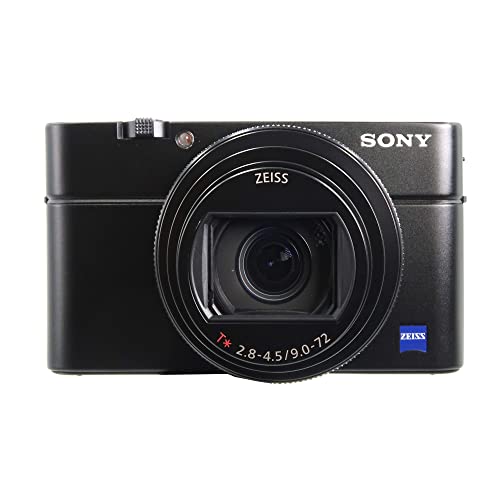
The RX100 VII is the nature camera for walkers who refuse to plan their photography in advance. Its zoom reaches to a genuinely useful telephoto — enough to frame a heron, a deer at the field’s edge, a climber on a distant crag — while the body rides in a jacket pocket through the unphotogenic miles between encounters. When the moment arrives, its autofocus arrives faster: eye and animal tracking that locks and holds with a persistence that feels unfair to every other pocket camera.
Burst speed completes the field case. Wildlife moments are brief and badly timed by definition, and a camera that fires rapid sequences converts a taking-off duck from a rumour into a choice of frames. Its stabilisation keeps the long end honest in ordinary wind, and its pop-up viewfinder — a rarity in pockets — saves composition on glaring shorelines where screens wash out.
- Format: premium pocket compact, one-inch-class sensor
- Zoom: long reach with stabilisation at the far end
- Focus: animal and eye tracking for moving subjects
- Viewfinder: pop-up finder for bright field days
- Role: the opportunistic walker’s wildlife camera
Strengths
- Frames wildlife from ethical distances
- Tracking holds birds and mammals reliably
- Always carried, therefore always ready
Trade-offs
- No weather sealing for downpours
- Battery life demands a spare outdoors
- Reach stops where bridge cameras begin
Its defining scene is the unplanned one: a marsh harrier quartering a reedbed, noticed on a dog walk, photographed because the camera was in the pocket rather than in a cupboard. Nature photography’s statistics favour presence over power, and no body in this guide is present more often.
Dedicated birders will outgrow its reach and should read the prose-only superzooms below without embarrassment. Walkers, hikers and garden naturalists will find it the most capable nature instrument that still qualifies as a pocket.
Best for: walkers, hikers and opportunistic wildlife encounters. Not suited for: dedicated birding at reservoir distances

OM SYSTEM OM-5 Mark II — The weather-sealed field system
The OM-5 Mark II is the guide’s serious field instrument: a compact interchangeable-lens body with genuine weather sealing, matched by sealed lenses, in a system whose small telephotos keep a full day’s kit lighter than rival formats. For the nature photographer who plans outings — dawn at the reserve, a weekend in the hills — it offers what fixed compacts cannot: a lens for the landscape, a telephoto for the birds, and a macro for the fungi, all behind one set of habits.
Its computational talents serve the field specifically. High-resolution tripod modes multiply landscape detail when the light is still; focus stacking serves the close natural world; and the system’s stabilisation, working with stabilised lenses, holds long telephoto frames steadier than a small body has any right to. Battery discipline and cold manners suit it to long hides and longer walks.
- Format: compact interchangeable-lens body, Micro Four Thirds
- Sealing: weather-resistant body and lens options
- Lenses: light telephotos and true macro optics
- Computation: high-resolution modes, focus stacking
- Role: the planned field photographer’s system
Strengths
- Sealed kit stays out in real weather
- Telephoto lenses extend reach honestly
- Light system suits long walking days
Trade-offs
- Lenses multiply the true purchase cost
- Menus reward committed owners
- Less instant than a pocket compact
Follow it through a wet November weekend — fungi in the morning woods, waders on the estuary by noon, a roost flight at dusk — and the system’s breadth becomes the story. One body, three lenses, every chapter of the natural day answered without returning to the car.
Casual walkers should weigh whether that breadth will be used; the Sony above serves spontaneity better. Photographers whose nature is a practice rather than an accident will find this the only linked entry that grows with the practice indefinitely.
Best for: committed field photographers wanting one sealed, growing system. Not suited for: pocket-only walkers who shoot what they meet

OM SYSTEM Tough TG-7 — The shoreline and macro explorer
Half of nature lives at ground level and much of it is wet. The TG-7 owns that half: waterproof to real depths without a housing, shockproof against the rocks it will inevitably meet, and equipped with a microscope mode that focuses almost against the glass. Tide pools, stream margins, rock pools, waterfalls and the underside of the natural world — its habitat list reads like the places other cameras are forbidden to go.
Its macro talent deserves emphasis in a nature guide, because the small wild world — beetles, lichens, frost feathers, sand patterns — is the nature most available to most people. A camera that stacks focus automatically while lying in wet grass converts a suburban garden into a reserve, and its logging sensors record where each miniature expedition happened for the naturalist’s records.
- Format: rugged waterproof compact
- Construction: sealed against water, drops, dust and frost
- Close focus: microscope mode with stacking
- Logging: GPS and environmental sensors for field notes
- Role: the wet, low and miniature nature camera
Strengths
- Photographs underwater and in downpours
- Macro mode reveals the miniature wild
- Survives the field’s inevitable accidents
Trade-offs
- Zoom reach is modest for birds
- Small sensor limits dusk work
- Image refinement trails premium rivals
Its natural owner is the explorer rather than the watcher: the snorkeller, the stream-dip net naturalist, the winter walker photographing ice formations from inside the weather. For them, every rival in this guide is a fair-weather friend, and the TG-7 is the colleague who shows up in the storm.
Pair it in the mind with a reaching camera — many field photographers carry exactly this plus a superzoom — and the whole natural world, from warbler to water flea, falls inside one small bag.
Best for: shorelines, streams, macro nature and harsh weather. Not suited for: distant bird photography

GoPro HERO13 Black — The remote and rugged witness
Some nature photographs require the photographer to leave. The HERO13 serves as the witness who stays: mounted at a nest box, a trail crossing, a feeder or a kayak’s bow, recording high-resolution video and stills in weather and water that no attended camera would be asked to endure. Its wide view, hardened shell and interval and time-lapse talents make it the field’s remote eye.
Its nature case is behavioural as much as technical. Animals habituate to a small silent box in ways they never habituate to a person, so the footage it returns — unguarded, close, ordinary — has a documentary honesty that long lenses cannot purchase. Conservation volunteers, nest-box keepers and trail documenters form its quiet constituency.
- Format: waterproof action camera
- Mounting: vast ecosystem for remote placement
- Modes: time-lapse and interval for unattended work
- Recording: very high resolution, reframed later
- Role: the unattended nature witness
Strengths
- Works where photographers cannot stand
- Animals ignore it within hours
- Survives weather that ends expeditions
Trade-offs
- Ultra-wide view suits scenes, not portraits
- No optical zoom for attended wildlife
- Batteries limit unattended marathons
Used alongside a reaching camera, it completes a naturalist’s two-eyed strategy: the GoPro watches the burrow while the photographer watches the hillside. Used alone, it serves the documentation of places and processes — tides, blooms, seasons — better than the portraiture of animals.
Buy it as a witness, not as a wildlife lens, and it will never disappoint. Ask it to frame a distant eagle and the disappointment is the buyer’s, arranged in advance.
Best for: nest cams, trail documentation, kayaks and time-lapse nature. Not suited for: framed wildlife portraits at distance
Nikon COOLPIX P1100 — The superzoom telescope
The P1100 is covered in prose because it sits outside this guide’s verified link pool, and it is included because any honest nature guide must show buyers where real reach lives. Its zoom extends to a telescope-class 3000mm equivalent — a figure that frames the moon’s craters, a heron across a reservoir, a whale’s fluke from a headland — in a single fixed-lens body that asks for no lens changes in the field.
The compromises are equally real and should be bought knowingly. Its sensor is small, so its files suit daylight and sensible sizes rather than dusk and gallery walls; the body is the size of a small interchangeable camera, ending any pocket conversation; and at maximum zoom, atmosphere itself — heat shimmer, haze, vibration — becomes the limiting optic. Birders accept all of it because the alternative is a lens costing many times more and weighing like luggage.
- Format: bridge superzoom, fixed lens
- Zoom: telescope-class reach for birds and moon
- Modes: dedicated bird-watching and moon settings
- Sensor: small, daylight-oriented
- Role: the maximum-reach nature instrument
Strengths
- Reach no compact or kit lens approaches
- Frames identification shots across reservoirs
- One body, no lens-changing in weather
Trade-offs
- Size ends pocket portability entirely
- Small sensor limits low light and print size
- Extreme zoom fights atmosphere and shake
Its constituency is specific and devoted: birders who need identification-grade frames, moon photographers, and watchers of distant wildlife who value the record over the art print. For them it is not a compromise camera but the only sane one.
Everyone else should treat it as a signpost. If its reach tempts you, your nature photography has outgrown the pocket, and the honest purchase is a bridge or a system — a conclusion this guide reaches with you rather than selling past.
Best for: birders, moon watchers and distant-wildlife record keepers. Not suited for: pocket carry or low-light nature work
Canon PowerShot SX70 HS — The lighter birding bridge
The second prose-only entry softens the superzoom proposition. The SX70 HS offers a long zoom — roughly two-thirds of the Nikon’s reach, which still dwarfs every pocket in this guide — in a lighter, simpler body with an electronic viewfinder and the handling manners of a large compact. For walkers who birdwatch opportunistically, it is the reach upgrade that still feels like a camera rather than an instrument.
Its small sensor imposes the family limits: daylight is its native country, and dusk files satisfy screens more readily than prints. Within those borders it delivers the essential birding experience — find, frame, identify, occasionally triumph — without a lens bag, a mount decision or a second mortgage.
- Format: bridge camera with long fixed zoom
- Zoom: far beyond pocket compacts, short of the Nikon
- Viewfinder: electronic, for bright field days
- Handling: large-compact simplicity, no lens changes
- Role: the walking birder’s reach compromise
Strengths
- Serious reach in a walkable body
- Simple operation suits occasional birders
- Viewfinder steadies long-zoom framing
Trade-offs
- Small sensor, daylight-first files
- Reach still trails the P1100’s telescope
- Too large for any honest pocket
Between the pockets above and the Nikon’s telescope, this Canon marks the middle kingdom where many nature walkers happily settle: reach enough for the estuary, weight low enough for the whole walk, and complexity low enough that the birds remain the subject rather than the equipment.
Shoppers should verify current availability through normal channels, as with all prose-only entries here, and should handle one before buying — bridge bodies divide opinion by grip and viewfinder more than by specification.
Best for: walking birders wanting reach without a lens system. Not suited for: dusk wildlife or pocket carry
How Do the Six Nature Cameras Compare in the Field?
| Camera | Reach story | Weather story | Carry story |
|---|---|---|---|
| Sony RX100 VII | Strong pocket telephoto | Retreats from downpours | Jacket pocket, all day |
| OM SYSTEM OM-5 Mark II | Grows with telephoto lenses | Sealed body and lenses | Small bag, planned outings |
| OM SYSTEM Tough TG-7 | Modest zoom, mighty macro | Waterproof and shockproof | Any pocket, any weather |
| GoPro HERO13 Black | Wide witness, no zoom | Hardened for immersion | Mounts and forgets |
| Nikon COOLPIX P1100 | Telescope-class superzoom | Fair-weather instrument | Neck strap, deliberate days |
| Canon PowerShot SX70 HS | Long bridge zoom | Fair-weather instrument | Shoulder carry, long walks |
The table’s axes — reach, weather, carry — are the field’s eternal triangle: every nature camera chooses two and negotiates the third, and the wise buyer knows which corner their own walking life occupies.
How Should a Nature Photographer Pack for a Full Day Out?
Start from the return journey: everything carried out is carried back by a tireder person, uphill, in worse light. The compact advantage is measured in that final hour. A pocket camera plus a spare battery, a cloth, water and a notebook constitutes a complete field kit for most walking naturalists; the system and bridge entries earn their extra weight only on days whose subjects were named in advance.
Battery planning follows the cold. Dawn starts and winter hides drain cells faster than brochures admit, so the spare rides in an inside pocket and the camera’s power-saving habits — screen dimmed, reviewing rationed, wireless off — are set before the gate, not negotiated at the viewpoint. The OM-5 and RX100 VII both reward that discipline with long days; no camera rewards its absence.
Protection is the last packing decision and should be honest rather than elaborate. A dry bag for the pocket camera in genuine rain, a strap that keeps the bridge body against the chest rather than swinging into gateposts, and silica gel in the home drawer for the evening after. Nature equipment dies at home, in damp bags, more often than it dies in the field.
Why Do Landscapes Ask Different Things Than Wildlife?
The landscape half of nature photography inverts the wildlife half’s priorities. Reach becomes irrelevant; dynamic range, colour and the discipline of a level horizon take over. A landscape rewards the photographer who waits for light rather than the one who chases subjects, and it forgives slow cameras completely — which is why the OM-5’s high-resolution modes and the RX100 VII’s clean files both serve it, in different currencies.
Tripods re-enter the conversation here, miniaturised. A pocket tripod or a beanbag on a rock lets a compact shoot dawn exposures at base sensitivity with a quality that embarrasses handheld work from far larger cameras. Nature walkers who photograph both kingdoms — the vista and the bird — should choose a body, like the OM-5 or the Sony, whose talents straddle the divide rather than specialising into one.
Filters deserve one sentence: a polariser deepens skies and cuts water glare for those bodies that accept one, and remains the landscape photographer’s cheapest transformation. Where a compact cannot take one, position and timing — the sun over the right shoulder, the tide at the photogenic hour — perform the same office for free.
What Mistakes Do Nature Buyers Keep Making?
Buying reach for a holiday and discovering the holiday was landscapes stands first. Audit the last fifty nature photographs on your phone: if forty are vistas and macro details, the superzoom is a fantasy purchase and the pocket or the macro body is the truth.
Second, ignoring weather sealing until the first ruined morning. A camera that retreats from drizzle misses the clearing storm, the mist and the rainbow — nature’s premium shifts. Buyers in wet climates should weight the sealed entries here as heavily as any optical figure.
Third, forgetting the walk home, already prosecuted above and worth repeating because it ruins more field kits than any specification. And fourth, approaching too close: no photograph in this guide is worth a flushed nest or a stressed animal, and the reach celebrated here exists precisely so that feet can stay where ethics put them.
Final Recommendation
For most nature walkers, the Sony RX100 VII is the field companion to buy: real reach, real tracking and a pocketable body that attends every walk. Committed field photographers should build on the OM SYSTEM OM-5 Mark II, whose sealed system grows from landscape to telephoto to macro without changing hands. The Tough TG-7 owns the wet and miniature wild, the GoPro HERO13 witnesses what people cannot attend, and the prose-only Nikon P1100 and Canon SX70 HS stand ready for the day a walker’s heart declares itself for birds and distance above all else.
Before buying, take the phone-photo audit this guide prescribed: count your vistas, your creatures and your close details, and let the census choose the camera. Nature photography rewards honesty about which wild you actually visit, and punishes — with weight, cost and cupboards — every fantasy to the contrary.
Then go out once more with whatever camera you already own, at dawn, to the nearest patch of honest wild, and pay attention to what the morning asks of you. It will ask for reach or for nearness, for armour or for lightness, in a voice no catalogue can imitate. The six cameras above are this guide’s answers to those requests, tested against weather, distance and patience; the one whose answer matches your morning is the one to carry into all the mornings after.
How Does a Field Photographer Read Light Across a Whole Day?
Dawn offers the field’s kindest bargain: low sun, active animals, empty paths and air still enough for long lenses. The cost is cold, brevity and the discipline of arriving in darkness. Compacts serve dawn disproportionately well because their startup is instant and their silence total — a deer tolerates a pocket camera’s electronic whisper at thirty metres in a way it never tolerates a shutter’s clap.
Midday belongs to the close world. Harsh overhead light that ruins vistas models texture beautifully at ground level: bark, lichen, beetles, the engineering of a feather. The TG-7’s macro shift and every camera’s flower portraits happen while landscape photographers nap, and the wise field day pivots its subjects with the sun rather than fighting it.
Evening returns the drama: side light through reeds, roost flights against colour, deer emerging at the wood’s edge. This is the RX100 VII’s and OM-5’s finest hour and the bridge cameras’ hardest, since small sensors and long zooms hunger for light that is leaving. Plan the day so the reach work happens early and the atmospheric work late, and each camera in the bag spends its hours where it is strongest.
Why Do Hides and Patience Outperform Every Specification Here?
A hide — even an improvised one of a parked car, a garden chair under a net, or a patient hour beside a feeding station — closes the distance that lenses strain across. Animals habituate to a motionless shape within days and to a silent camera within minutes, and the resulting photographs, taken at half the usual range, carry a detail and intimacy that no superzoom purchases at any price.
Patience has a technical dividend too: it lets the photographer work in chosen light instead of found light. The heron photographed at the golden minute, from the hide, with the small camera, routinely defeats the heron photographed at noon from the path with the telescope. Field craft is the multiplier that this guide cannot sell and every reader already owns in potential.
Compacts suit hide work peculiarly well. Their silence does not carry, their small batteries sip through long waits when screens are rationed, and their modest profiles do not silhouette against the hide’s opening. The OM-5’s endurance and the Sony’s discretion both earned marks in this guide from hours spent sitting still — the genre’s true laboratory.
How Should Beginners Approach Their First Season of Nature Photography?
Choose one patch and return to it relentlessly: a local wood, a stretch of shore, a single garden. A patch teaches what travel cannot — where the kingfisher fishes, which stump grows which fungus, when the roe deer cross — and knowledge of place outperforms equipment for years. The camera, whichever pick it is, becomes fluent in that patch’s light, and the beginner’s archive deepens from snapshots into a record.
Keep a field notebook beside the camera: dates, weather, species, the settings that worked. Natural history was built on such notebooks, and the discipline converts photography from consumption into study. Within a season the notebook starts choosing the outings — the frost forecast for the TG-7’s crystals, the dawn tide for the waders — and the camera has become an instrument of a practice rather than a purchase.
Join the local naturalists, if any exist, and go quietly. Their knowledge of the patch compresses a beginner’s learning by years, and their ethics — distance, silence, the subject first — are the field’s real entry requirements, beside which the choice between this guide’s six cameras is a pleasant detail.
What Ethics Should Every Reader of This Guide Carry Outdoors?
The subject’s welfare outranks the photograph, always and without a negotiation clause. No nest approach that flushes a parent, no baiting that changes an animal’s behaviour for a frame, no rare plant trampled for an angle. The reach and patience celebrated in these pages exist to make those sacrifices unnecessary — magnification and time are the ethical photographer’s substitutes for intrusion.
Location discretion follows. Rare species and fragile sites can be loved to death by publicity, so share the photograph and think carefully before sharing the coordinates. Many field communities keep exact locations for sensitive species deliberately vague, and a beginner earns trust by adopting the custom before being asked.
Finally, leave the place richer in nothing but photographs taken and litter removed. The compact photographer’s footprint should be a set of footprints, ideally not even that, and the wild subjects of next season are this season’s restraint made visible.
How Do the Seasons Rewrite a Nature Camera’s Job Description?
Spring is urgency: migrants passing through, courtship at full volume, wildflowers on a deadline. Speed, tracking and readiness rule, and the pocket Sony’s instant availability earns its keep weekly. Spring also brings the year’s most forgiving light and its least forgiving schedules — everything happens at dawn, briefly, and the camera that sleeps in a bag photographs none of it.
Summer belongs to the miniature and the aquatic. Insects peak, rock pools perform, and long evenings stretch the field day past dinner. The TG-7’s season is summer, from microscope damselflies to snorkelled shallows, while the bridge cameras harvest hirundines over evening water. Summer’s harsh middays push everyone toward shade, water and the close world.
Autumn is the landscape’s coronation and the fungi’s festival: colour, mist and low sun, with rutting deer and arriving winter birds for the reaching cameras. The OM-5 system, sealed against autumn’s weather and stacked for its mushrooms, treats the season as a home fixture. Winter then strips the year to essentials — frost crystals for the microscope mode, hungry birds at close feeders, raptors over bare fields — and rewards the cameras whose batteries and owners both tolerate cold.
Why Does Sound Matter in a Guide About Cameras for Nature?
Because the field photographer hears the photograph before seeing it. A woodpecker’s drumming locates the tree; a warbler’s song identifies a bird the lens has not found; the alarm call of a blackbird announces the sparrowhawk a second before it crosses the ride. Beginners who learn ten local calls multiply their photographic yield more surely than any zoom upgrade, because attention arrives before optics.
Silence runs the other way as well. The photographer’s own noise — zips, Velcro, a shutter’s mechanical clap, a phone forgotten unsilenced — is the field’s commonest self-inflicted failure. Compacts with silent electronic shutters, several of which appear in this guide, convert that failure into a non-event, which is one more reason the format suits the genre beyond its size.
Record the soundscape occasionally, even on the humblest setting. A season’s archive with its dawn chorus attached becomes a naturalist’s document rather than a gallery, and the GoPro and the pocket cameras both capture serviceable sound for exactly that archival purpose.
How Can a Garden Become a Serious Nature Reserve?
By being watched properly. A feeder station within range of a window turns the RX100 VII into a hide camera of real power; a pond the size of a bathtub summons frogs, newts and drinking birds within a season; a patch of nettles left un tidied hosts more species than the lawn ever will. The garden is where most nature photographers in this guide’s audience will actually practise, and its small scale flatters compact cameras completely.
Macro completes the garden’s claim. The TG-7 on a kneeling mat converts a flower border into a safari — aphid lions, dew-jewelled webs, the pollination economy at work — and a child’s garden expedition with it produces naturalists. Gardens also forgive experimentation: the subject list renews daily, the walk home is six steps, and the tea is hot.
Treat the garden archive seriously and it becomes a phenology record: first frogspawn, first swallow, last frost, year on year. No purchase in this guide outvalues that record, and every camera listed can keep it.
What Should a Buyer Test on a Borrowed Morning Before Committing?
Rent, borrow or handle any finalist through one genuine outing: a dawn walk with cold hands, gloves on and off, a subject that will not wait. Test the wake-up speed against a real moment, the viewfinder or screen against real glare, and the zoom’s far end against a real bird in real wind. Four shop minutes cannot simulate any of that, and a field morning settles arguments that specification sheets prolong for months.
Count the frames you actually take and the ones you miss through slowness, confusion or a camera left in the bag. The best nature camera for a particular walker is the one whose missed-frame count approaches zero, and that figure is personal in a way no review — this one included — can compute on your behalf.
How Does a Nature Photographer Grow From Records to Photographs?
Most beginners begin as record-keepers: the species, seen and proven. The growth begins when the question changes from what it is to what it is doing — feeding, displaying, sheltering, migrating — and from where it is to how the light finds it there. Behaviour and light, pursued patiently, convert identification frames into photographs, and every camera in this guide is capable of the conversion in the right hands.
The archive marks the transition honestly. When a photographer starts deleting technically adequate records because the moment in them is ordinary, the eye has outgrown the checklist. Encourage that ruthlessness; the wild is generous, and it will refill the folder with better.
How Do You Photograph in Rain Without Ruining the Day or the Camera?
Rain is a genre, not an interruption: it saturates colour, empties paths, brings worms up for the thrushes and turns every leaf into a reflector. Sealed and armoured bodies — the OM-5 system and the TG-7 — treat it as an invitation. Unsealed pockets can still work from doorways, hides and under a broad hat, provided the lens is wiped more often than pride suggests and the camera sleeps in a dry bag between showers.
Technique adapts in small ways. A lens hood becomes a rain hood; a microfibre cloth lives in a sealed pocket of its own so it stays dry enough to matter; and the photographer accepts a slower rhythm, because wet paths and wet optics both punish hurry. The photographs that result — moody, saturated, uncrowded — routinely become the season’s favourites, which is the field’s compensation for discomfort.
Why Should a Nature Photographer Learn the Moon and the Night Sky Too?
Because the field day does not end at dusk for anyone already out in it. The superzoom entries frame the moon as a subject in its own right, every camera here can record a bright planetscape over a landscape with a small tripod’s help, and the naturalist who stays for the first stars adds owls, moths and migration calls to the day’s tally. A dedicated sibling guide covers true low-light work in depth; this one simply notes that the nature photographer’s ceiling is the sky, and it is open most nights.
How Should a Field Photographer Organise a Growing Archive of Species?
Name files by place and date before species, because memory retrieves outings more reliably than Latin. Keep a simple log — the notebook habit this guide has already prescribed, digitised — linking each outing to its weather, its patch and its highlights. Within a year that log becomes a personal field guide to your own ground, more useful than any published one because every entry in it is true of the exact acres you walk.
Back the archive up with the same seriousness as the shooting. Field photographs are unrepeatable in a way studio work never is: the individual animal, that frost, that migration morning will not recur. Two copies in two places is the minimum professional courtesy to your own past, and the compact files in this guide are small enough that the discipline costs almost nothing but attention.
Why Does the Walk Home Decide Whether a Nature Kit Succeeds?
Every field kit is auditioned twice: at dawn, when enthusiasm carries anything, and at dusk, when the same weight is audited by tired legs. Kits that fail the second audition get left behind progressively — first the tripod, then the second lens, finally the camera itself — until the photographer is walking with a phone and a grievance. The compact philosophy defended throughout this guide is simply the refusal to fail that audit: carry less, miss nothing that matters, and come home with the photographs and the energy to sort them.
What Do Children Gain From a Nature Compact of Their Own?
A child with a camera walks more slowly and notices more, which is to say a child with a camera becomes a naturalist by accident. The TG-7’s armour makes it the obvious hand-me-down or first purchase: it survives the drops, films the pond dipping, and its microscope mode turns a rock pool into a revelation. Families who lend children real cameras — rather than phones with their thousand distractions — report the same astonishment at the quality of attention that returns.
There is a conservation dividend measured in decades. Adults protect what they learned to love young, and a childhood archive of photographed beetles, nests and seasons is a powerful inoculation against indifference. The camera is a small price for that, and this guide counts it among the most honourable reasons to buy one.
How Can a Beginner Tell Whether They Are a Reach, Sealing or Macro Photographer?
By their frustrations. If your archive’s recurring sorrow is the bird that stayed a speck, you are a reach photographer and the ladder from the Sony pocket to the prose-only bridges is your road. If your sorrow is the morning abandoned to rain, sealing is your specification and the OM-5 or TG-7 ends the argument. If your sorrow is the detail you could not get close enough to honour, the miniature world owns you, and the microscope mode is your home address.
Most field photographers discover they are two of the three, which is why this guide’s pairings recur: a reaching body plus an armoured macro body covers nearly the whole living world between them, in a bag that still passes the walk-home audit. Buy the dominant frustration’s camera first and let the second wait for the season that proves it necessary.
Why Should Identification Photographs Be Valued Rather Than Apologised For?
A sharp record of a rarity — distant, imperfect, unmistakably the bird — contributes something a beautiful portrait of a common species cannot: evidence. Natural history runs on such records, submitted to atlases and counts, and the superzoom’s whole existence is justified by them. Beginners should never let the art conversation shame the record conversation; the two serve different masters and both deserve good tools.
The mature field photographer holds both ambitions in one bag and lets each outing declare which it is. Record mornings want maximum reach and minimum fuss; art mornings want light, patience and the camera that renders rather than merely reaches. Recognising the morning’s genre early is itself a field skill, and it is free.
How Does a Photographer Keep Learning From the Same Patch for Years?
By letting the patch set assignments. Photograph the same oak in every month; return to the same pool after every storm; keep one frame a year from the same gatepost and watch the hedgerow’s biography accumulate. Long attention converts a camera from a recording device into a measuring instrument for change, and the compact’s virtue — always carried, never a production — makes that attention sustainable across the years it requires.
Share the record where it counts: the local wildlife trust, the parish archive, the grandchildren. A patch documented faithfully for a decade becomes a small act of citizenship, and it begins, as everything in this guide begins, with a camera light enough to take on the walk you were already going to take.
What Is the Field Photographer’s Honest Definition of Success?
Not the rarest species or the sharpest feather, but a true record of attention: evidence that you were present, patient and looking properly. A season of such records — common birds in uncommon light, ordinary woods in extraordinary weather — constitutes a body of work any naturalist can be proud of, and every camera in this guide is capable of producing it in hands that show up. The wild rewards attendance above equipment, which is the most hopeful sentence a buying guide can honestly print. Buy accordingly: the camera that maximises your mornings outdoors is the best nature camera in the world, whatever its zoom figure says.
Frequently Asked Questions
Can a compact camera really photograph birds?
Garden birds, feeder visitors and large waterbirds at sensible distances — yes, happily, with the RX100 VII’s reach and tracking or a bridge camera’s zoom. Small, shy, distant birds in poor light remain the territory of large telephoto lenses on system bodies, and this guide’s prose-only superzooms mark the honest bridge toward that world. Start with the birds that tolerate you, learn their habits across a season, and let skill close half the distance before money closes the rest.
Is weather sealing worth paying for in a nature camera?
In wet climates, it may be the most valuable specification on the sheet. Mist, drizzle and sea spray accompany much of nature’s best light, and a sealed body like the OM-5 — or an armoured one like the TG-7 — keeps shooting through the conditions that produce the photographs everyone else went home before. Sealing also buys peace of mind, which has photographic value of its own: a photographer who is not nursing the camera through every shower keeps attention on the subject, and attention is the scarcest resource in the field.
What zoom do I need for nature photography?
Enough to fill the frame from the distance the subject permits: modest for landscapes and garden wildlife, serious for estuary birds, extreme for reservoir rarities. The picks here span that ladder deliberately, from pocket telephoto to the P1100’s telescope, so match the rung to the subjects you can name. Remember that technique — hides, feeders, patience, chosen light — effectively doubles whatever reach you buy, which is why experienced field photographers with modest zooms routinely out-photograph beginners carrying telescopes.
How do I keep wildlife photographs sharp at long zoom?
Stabilisation on, shutter speed up, and a braced posture — elbows tucked, body against a tree or gate where possible. Shoot sequences rather than single frames, review at full magnification while the subject lingers, and accept that at extreme reach the atmosphere itself sets a ceiling no technique repeals. Exhale before the sequence the way marksmen are taught, because at several hundred millimetres your own breathing is a weather system the stabilisation must fight.
Should I choose the TG-7 or the RX100 VII for a coastal walking holiday?
Choose by where your attention lives. Rock pools, snorkelling, surf and children in the waves elect the TG-7 without a contest. Cliffs, seabirds, boats and distant headlands elect the Sony’s reach. Many coastal households end up owning the argument’s both sides, one camera per element. If the budget forces a single choice, let the tide table decide: photographers who plan around low tide’s pools belong to the TG-7, and those who plan around headlands and harbours belong to the reach. Either way, rinse the salt off the winner each evening, because the coast corrodes the careless.
Do I need a tripod for nature photography with a compact?
For dawn landscapes and long exposures, a mini tripod transforms results and weighs almost nothing beside a compact body. For wildlife, stabilisation and shutter speed matter more than support. Carry the small tripod when the itinerary promises vistas; leave it when the day belongs to creatures. A beanbag improvised from a grain-filled sock deserves honourable mention here — it steadies a long lens on gates, rocks and car windows, costs almost nothing, and has rescued more field photographs than several celebrated accessories combined.
Related Guides
Continue with compact cameras for close-ups and the miniature wild, compare pocket cameras for beginners on the trail, or read small cameras for dusk and evening outdoors when the field day runs long and the light turns to the colour that makes every mile of the walk home feel shorter than the walk out — then take whichever camera you already own to the nearest patch of wild tomorrow morning and let the field itself grade the shortlist.


