ilcastellomenu.com is reader-supported. When you buy through links on our site, we may earn an affiliate commission.
Where to Buy
Organisational buyers will find all six on Amazon, where multiples, spare batteries, and cards can be ordered in a single basket. The best cameras for NGO photography are not chosen the way hobby cameras are. A small organisation’s camera documents a well being drilled, a classroom opening, a harvest cooperative’s first delivery — photographs that end up in grant reports, donor letters, and the community’s own archive. The camera must survive a motorbike ride in the rains, work all day where the power cuts at noon, and take pictures that treat the people in them as partners rather than material. This guide is written from those requirements outward.
Field reality edits every specification. Dust is a season, not an accident. The person carrying the camera is often a field officer with eleven other jobs, not a photographer, and the training budget is an afternoon. Files must move from a village with one bar of signal to a head office that needs them by Friday. A camera for this work is therefore judged on unglamorous things: battery discipline, card discipline, controls a non-specialist can learn in a day, and a repair story that does not involve another continent.
Ethics is the other half of the specification, and this guide treats it as such. NGO photography has a troubled visual history — the extractive image, the subject who never saw the photograph, the story simplified into pity. The right camera cannot fix an organisation’s ethics, but it can support better ones: a quiet shutter for dignity in sensitive moments, a flip screen that lets a subject see and approve their portrait on the spot, files that stay in the organisation’s hands. Several picks below were chosen partly for how they behave in the human encounter, not only in the landscape.
There is a temptation, in well-funded moments, to buy the cameras of a professional documentary unit and assume the photographs will follow. They do not, because the constraint in NGO photography is rarely the sensor — it is access, trust, language, and the officer’s other eleven jobs. The organisations whose archives impress funders are the ones whose cameras were ordinary, present, and pointed by people the community knew. Buy for presence and trust first; the sensor wars can be safely ignored by this entire sector.
Finally, money — stated plainly, because NGO money is other people’s donations. The guide favours systems whose lenses and batteries a small team can afford to duplicate, because a programme with two working cameras documents twice as much life as a programme with one precious camera and a locked cupboard. Every pick below can anchor a small team’s kit; the differences are in emphasis — reach, toughness, discretion, video — and the guide maps each to the work it suits.
Key Takeaways
- Field cameras are judged on batteries, dust, and learnability — not on flagship specifications.
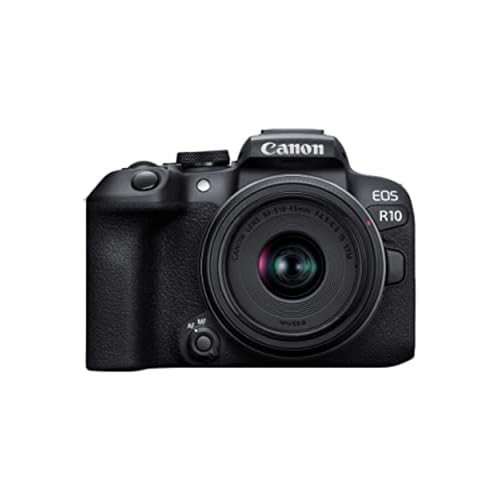
- The Canon EOS R10 is the best all-round team camera: fast, weather-tolerant, and easy for field officers to learn.
- The OM SYSTEM Tough TG-7 is the camera for water projects, boats, and sites where cameras get dropped.
- The Sony RX100 VII is the discreet option for sensitive contexts where a big camera changes the room.
- The Panasonic LUMIX S5II is the video-report flagship for organisations whose funding depends on film.
- Consent, subject review, and local file ownership matter as much as the camera — process first, gear second.
In this guide
Quick Picks
| Camera | Badge | Why an NGO team would choose it |
|---|---|---|
| Canon EOS R10 | Best team all-rounder | Fast focus, friendly menus, and Canon service reach — the camera a field officer learns in a day. |
| Nikon Z50 II | Best for programme documentation | Subject detection and a bright viewfinder for events, agriculture, and wildlife-adjacent project work. |
| OM SYSTEM Tough TG-7 | Best for harsh sites | Waterproof and drop-proof, with macro modes for water quality, crops, and craft documentation. |
| Sony RX100 VII | Most discreet | A pocket camera with real reach for clinics, classrooms, and contexts where discretion is respect. |
| Panasonic LUMIX S5II | Best for video reports | Full-frame low-light strength and serious video tools for donor films and field reporting. |
| Canon EOS R50 | Best for training new staff | Guided menus that teach as they go — the camera for teams where the photographer rotates. |
How We Chose These Picks
We wrote the selection criteria with a programme manager looking over our shoulder. First: can a competent non-photographer produce usable pictures with this camera after one afternoon of training? That single test eliminated bodies with hostile menus and rewarded guided interfaces, reliable automatic modes, and autofocus that finds faces without being asked. In NGO work the camera’s user changes with staff rotations; the camera must be the constant.
Before those audits, a prior question was settled by the sector’s experience rather than by preference: interchangeable-lens cameras anchor four of the six slots because programmes outlive projects, and a body that can change its lens can change its job — ceremony this year, agriculture next, community tourism after that. The two fixed-lens picks earned their places by being irreplaceable at their specific work, not by variety for its own sake.
Second: the logistics audit. How many batteries does a three-day field trip need, and what do spares cost? Does the camera charge over USB from the same power bank as the phones? Are memory cards cheap, standard, and available in a regional capital? Does the lens system include a workhorse zoom the organisation can afford twice — once for the camera, once for the day the first is dropped? Picks that failed the logistics audit were cut regardless of image quality.
Third: environmental honesty. Published sealing claims were read sceptically and weighted toward designs with field reputations — and one pick, the TG-7, was included precisely because it does not ask to be believed: it is built to be submerged, frozen, and dropped, which is a different category of promise. Dust, the field’s true enemy, argued for fewer lens changes and against delicate extending mechanisms where possible.
We also priced the whole kit, not the body — a discipline this sector cannot skip. A camera whose spare battery costs a day’s field allowance, or whose lenses begin at a programme officer’s monthly salary, fails the real-world test even when its body price looks fair. The totals below the line — batteries, cards, case, the second lens the archive will eventually demand — were compared across all six systems, and they moved at least one ranking.
Fourth: the human audit. Does the camera offer a silent shutter for ceremonies, clinics, and grief? A screen the subject can see? Video good enough that a community’s own voice can carry a report, rather than a narrator’s? These are not soft criteria in this sector; they are the difference between documentation that empowers and documentation that extracts, and they are weighted accordingly below.
What Does Ethical NGO Photography Require of a Camera?
Start with the photograph’s destination, because subjects deserve to know it and because it changes what a good camera must do. A picture bound for a community noticeboard can be warm and immediate; a picture bound for an international campaign will be seen by audiences the subject cannot imagine, and the consent conversation — and the camera’s discretion — must stretch accordingly. Programmes that decide destinations before the shutter, rather than after, make fewer apologies and better photographs.
Consent is a process, not a signature, and the camera participates in it. A flip screen that shows a mother her portrait — and lets her ask for a retake or a deletion — turns photography from something done to a community into something done with it. Several picks here were chosen with that moment in mind. The camera that can be reviewed together, on the spot, is an ethical instrument in a way a viewfinder-only body is not.
Language is a camera requirement nobody lists: the officer holding the camera should be able to explain it — and the consent request — in the language of the room. Where the photographer is an outsider working through a translator, the camera’s screen becomes the shared language: show the frame, gesture the approval, wait for the nod. Programmes should budget the translator’s time at photographic moments as carefully as at interviews; the picture taken without understanding is the one that returns as a complaint.
Discretion is the second requirement. In a clinic waiting room, a women’s savings group, or a place of worship, a large camera with a long lens announces itself and changes behaviour; people perform, withdraw, or object — all reasonable responses to being documented. The pocketable RX100 VII exists in this guide for those rooms. Its smallness is not a compromise accepted for portability; it is a deliberate ethical feature, and experienced field photographers plan their kit around which rooms need which presence.
Third, the file’s journey home matters. Photographs of identifiable people — especially children — should live on the organisation’s own storage, under its safeguarding policy, not scattered across personal phones and indefinite clouds. Cameras that write to cheap, removable cards support a clean chain of custody: card out at day’s end, files onto the office drive, card wiped. That boring workflow is safeguarding in practice, and the guide’s picks all support it without exotic accessories.
Representation deserves its own direct sentence: photograph people as agents in their own story — working, deciding, teaching, laughing — rather than as recipients arranged beneath a logo. The camera supports this in small ways: a lens length that lets a subject be framed in their context rather than isolated from it, colours that render every skin tone with respect, and a photographer close enough to know names. Reviewers of NGO imagery can tell, at a glance, which organisations understood this; their photographs have subjects, the others have illustrations.
None of this makes a camera purchase a substitute for policy. Organisations still need consent forms people actually understand, a rule about children that is stricter than the law’s minimum, and the discipline to not take the photograph when the answer is no. The camera’s job is narrower: to never be the reason a good process fails — too loud, too slow, too conspicuous, too complicated for the officer holding it at the decisive, human moment.
Which of the Best Cameras for NGO Photography Fits Your Programme?

Canon EOS R10 — Best team all-rounder
The R10 is the camera we would issue to a field team of six with one training afternoon and a year of documentation ahead. Canon’s menus are the most learnable in the business, the autofocus finds eyes on people and animals without supervision, and the burst speed handles the moments programme work is made of — the ribbon cutting, the football match at the new school, the market day that proves the cooperative is thriving. It produces report-ready photographs from the hands of a competent officer who thinks of themselves as anything but a photographer.
Logistics favour it strongly. Batteries are affordable enough to issue in pairs, the body charges into a workflow any office can sustain, and Canon’s service network reaches more regional cities than any rival’s — a fact that matters the first time a shutter needs attention three hundred kilometres from the capital. The RF system’s kit zoom covers ceremonies to sports days, and its affordable telephoto extends the same camera to agriculture and conservation-adjacent work without a second body.
For video, it records clean, attractive footage for social updates and short report inserts, with the same face-tracking keeping a speaking beneficiary centred and sharp. An organisation’s communications officer can cut its clips into a donor update the same evening, on a laptop, without a colourist — the files are kind straight from the card.
Its field limits are honest ones: sealing is modest, so the dust-season rule — lens changes inside the vehicle, camera in a dry bag between sites — applies with discipline; and there is no in-body stabilisation, so video walk-and-talks want the stabilised kit lens and a steady hand. Neither limit disqualifies it. For the broad middle of NGO documentation, this is the benchmark the other picks are variations on.
- Sensor: APS-C, 24.2 megapixels
- Autofocus: people and animal eye detection, fast bursts
- Video: 4K for reports and social updates
- Logistics: affordable spare batteries, wide service network
- System: Canon RF lenses, affordable kit and telephoto
Strengths
- Learnable in an afternoon by non-photographers
- Fast enough for ceremonies, sport, and wildlife edges
- Service and spares reach suits regional programmes
Trade-offs
- Weather sealing is modest — dust discipline required
- No in-body stabilisation for video
- One card slot — backup habits must be procedural
One deployment pattern deserves copying: several programmes issue the R10 with a simple laminated card in the case — the five settings that cover ninety percent of programme shots, in the local language. The card, not the manual, is what a busy officer reads at a ceremony, and it converts the camera’s friendliness into institutional memory that survives staff changes.
Weather at ceremonies deserves one more sentence: the R10’s modest sealing handles the ordinary drizzle of an outdoor opening without drama, provided the lens is wiped and the body dries that evening. Programmes in true rain seasons should budget the TG-7 as the wet-day camera and keep the Canons for the merely grey days — a rota that costs little and ends the anxiety entirely.
Best for: multi-purpose field teams and rotating staff photographers. Not suited for: programmes working daily in rain or heavy dust without protection habits.

Nikon Z50 II — Best for programme documentation
The Z50 II suits the programme whose documentation leans toward land and animals: agriculture extensions, livestock projects, conservation partnerships, community tourism. Its subject-detection autofocus — with a dedicated bird mode and reliable animal eye focus — handles the subjects that defeat simpler cameras, and its bright viewfinder earns its keep under equatorial sun, where screens wash out and officers squint. A camera that can be composed with at noon in a cassava field is a camera that gets used at noon in a cassava field.
Nikon’s build and controls give it the feel of a tool issued for years rather than a gadget bought for a project cycle. Dials fall under the thumb, the grip suits long days, and the body’s sealing tolerates the dust and drizzle of field seasons with ordinary care. Its colours, particularly in landscape and agricultural scenes, render greens with a depth that makes programme photography look like the place actually felt — no small thing when a report must carry a distant donor to a hillside they will never visit.
The Z system’s economics work for organisations: the kit zooms are strong, the telephoto options are priced within a programme’s equipment line, and the crop sensor’s extra reach stretches every lens further — a genuine budget multiplier when the subjects are birds, livestock at distance, or a ceremony photographed unobtrusively from the back.
Concessions mirror its strengths: no in-body stabilisation, a video feature set a notch behind the Panasonic flagship, and a guided-teaching layer thinner than Canon’s for absolute beginners. Programmes with a designated communications officer — rather than a rotating cast — will get the most from it, because its virtues reward a user who learns it properly once.
- Sensor: APS-C, 20.9 megapixels
- Autofocus: subject detection including birds and animals
- Viewfinder: bright electronic, strong in harsh sun
- Stabilisation: in-lens (no in-body unit)
- System: Nikon Z lenses, reach-friendly crop
Strengths
- Animal and bird focus for agriculture and conservation work
- Viewfinder that works under brutal midday light
- Build and controls suited to years of issue
Trade-offs
- Less guided help for rotating beginners
- No in-body stabilisation
- Video tools trail the S5II for film-led programmes
Community tourism programmes find a second use for it: the same body that documents the project can train local guides to photograph their own landscape and wildlife for the visitor economy. Nikon’s colours flatter scenery immediately, which encourages trainees — early success is a training material no curriculum can fake, and it keeps the camera earning long after the report is filed.
Its battery discipline suits long field days: a pair of batteries covers a full schedule of site visits with the viewfinder doing the composing, and the camera sips rather than gulps when officers review sparingly. Programmes running dawn-to-dusk agricultural surveys — the longest days in the sector — report the Nikon finishing the day with charge to spare more often than its rivals.
Best for: agriculture, environment, and event documentation with a regular user. Not suited for: teams needing maximum beginner guidance or film-first output.

OM SYSTEM Tough TG-7 — Best for harsh sites
Some programme sites are simply where cameras go to die: the water project with its pumps and trenches, the fisheries landing at dawn, the mountain school reached by a river crossing. The TG-7 is the only camera in this guide that treats those places as its office. It is waterproof to real depths — it can document the inside of the new well’s pump housing and the reef the community is protecting — and it survives drops onto concrete, freezing nights, and the dust of a laterite road in an open vehicle.
Its macro modes open a documentation genre other cameras need accessories for: seed quality, crop disease, water-test results, the weave of the cooperative’s textiles, the craftsmanship in a trainee’s hands. Field officers consistently report that these close frames — evidence, at reading distance — are the photographs programme managers ask for most and ordinary cameras deliver worst. The TG-7’s microscope-style focusing makes them a button press.
Operation is glove- and wet-hand-friendly, the screen is readable in site light, and the whole unit is small enough to live in a field jacket rather than a camera bag — which means it is present at the unplanned moments: the first water from the borehole, the child’s expression at the tap. Presence, again, is the specification that decides what gets documented.
Its limits are a small sensor’s limits: dusk and indoor light stretch it, distant subjects stay distant, and nobody will mistake its files for the full-frame Panasonic’s. Issue it as the site’s second camera or the harsh-environment primary, and those limits never bind. Issue it as the only camera for an annual report’s photography and they will. Programmes buy it by the pair for a reason.
- Sensor: compact 12-megapixel, back-illuminated
- Body: waterproof, drop-proof, freeze-proof, dustproof
- Macro: microscope modes for close documentation
- Extras: field sensors log position and conditions
- Operation: glove-friendly, jacket-pocket size
Strengths
- Survives water, drops, dust, and freezing sites
- Macro documentation no other pick matches unaided
- Always present — no bag, no ceremony
Trade-offs
- Small sensor limits low light and large prints
- No telephoto reach for distant subjects
- Files trail the bigger cameras for flagship reports
Its GPS and field-sensor logging deserve a safeguarding note: location data attached to photographs of vulnerable people can itself be sensitive. Programmes should decide — deliberately, in policy — when logging stays on (infrastructure, environment) and when it is switched off (portraits, clinics, homes). The feature is a gift to engineers and a risk to subjects, and the same switch serves both truths.
River and coastal programmes add one more use: the before-and-after pair. The TG-7 can be fixed to the same viewpoint month after month — a gauge post, a mangrove transect, an eroding bank — because no weather cancels its attendance. Environmental monitoring lives on exactly such unglamorous consistency, and a camera that never misses a month is a dataset, not a gadget.
Best for: water, fisheries, construction, and harsh-site documentation. Not suited for: low-light ceremonies or distant wildlife as the sole camera.

Sony RX100 VII — Most discreet
The RX100 VII is the camera for the rooms where photography must ask permission with its posture. In a health clinic, a counselling session, a classroom of shy adolescents, or a community meeting where an outsider’s big camera would end the conversation, this pocket-sized Sony documents without declaring itself. Its lens reaches from wide room views to a respectful telephoto, so the officer can work from the edge of the gathering rather than its centre — a spatial courtesy subjects notice and reward with natural behaviour.
Quality is not the sacrifice it once was in compacts. The one-inch sensor produces files that hold up in reports and on screens, the autofocus tracks eyes for people and animals with flagship manners, and the pop-up viewfinder rescues composition in harsh daylight. A communications officer can carry it unnoticed all day and return with the annual report’s most human photographs — precisely because nobody arranged their faces for it.
Its video is equally serviceable for short testimonial clips, with a microphone input that accepts a small external mic for interviews — the single upgrade that most improves field video, and one this little body unusually provides. A beneficiary’s own words, recorded clearly at a respectful distance, are worth a page of narration.
The cautions are fragility and appetite: no weather sealing, a small battery that wants a spare in the pocket, and a price that buys capability rather than toughness. It is a specialist’s instrument for sensitive work, issued to the officer who understands why it exists — not the camera to hand out at the construction site, where the TG-7 is waiting.
- Sensor: 1-inch type, 20.1 megapixels
- Lens: built-in zoom, wide to real telephoto
- Autofocus: eye detection for people and animals
- Audio: microphone input for interview clips
- Body: pocket-sized, no weather sealing
Strengths
- Discretion that changes what rooms allow
- Real reach and focus quality from a pocket
- Microphone input elevates testimonial video
Trade-offs
- No sealing — harsh sites belong to the TG-7
- Small battery needs spares on long days
- Premium price for a compact body
A practical habit from officers who use it: keep the camera in a plain cloth pouch, not a branded camera bag. The whole point of the instrument is that it does not look like an assignment, and its luggage should not betray it at the door of the room it was bought to be discreet in.
Its silent electronic shutter completes the discretion: in a counselling room or a place of worship, the absence of a shutter’s clack is the difference between documentation and interruption. Officers should learn the one caveat — fast movement under some artificial light can band on electronic shutters — and prefer the mechanical option for action. For the still, respectful work this camera exists for, silence is its native tongue.
Best for: clinics, classrooms, and sensitive community contexts. Not suited for: construction sites, rain seasons, or rough handling.

Panasonic LUMIX S5II — Best for video reports
When an organisation’s funding materially depends on film — the donor documentary, the campaign video, the field report that must move a boardroom — the S5II is the camera this guide sends. Its full-frame sensor gathers light the smaller cameras cannot, so the evening interview in a home lit by one bulb keeps its dignity and its detail. Its video tools are professional in the ways that matter in the field: reliable autofocus that no longer hunts, stabilisation that forgives walking shots, and recording stamina for long testimonies without overheating drama.
The stills side is equally serious — the same sensor produces the flagship photographs for print reports, with a dynamic range that holds a bright doorway and a shaded interior in one honest frame. For an organisation that can afford one premium body, the S5II consolidates the annual report and the documentary into a single instrument, and its L-mount lenses include affordable options alongside the professional glass.
Field practicality was clearly considered: the body is sealed, the controls are glove-aware, and the fan-assisted design keeps long recordings alive in hot climates — a specification written by someone who has filmed at noon in the tropics. Battery life is respectable, and USB powering covers the interview day from a power bank.
The honest costs are size, price, and the training curve: this is a professional’s camera, wasted on a rotating cast and heavy for all-day carrying between villages. Issue it to the communications lead, protect it like the asset it is, and pair it with one of the tougher or friendlier picks for the team’s daily work. As the flagship of a two-camera programme, it has no rival on this page.
- Sensor: full-frame, 24.2 megapixels
- Video: professional tools, strong stabilisation, long takes
- Low light: best in this guide for interiors and evenings
- Sealing: weather-resistant, heat-aware design
- System: L-mount lenses across several brands
Strengths
- Donor-film quality for video and flagship stills
- Low-light dignity for homes and evening work
- Recording stamina in hot field conditions
Trade-offs
- Largest and most expensive pick here
- Demands a trained, designated operator
- Overkill — and overweight — for routine documentation
Budget officers should hear the counter-argument plainly: one S5II costs roughly a small fleet of the friendlier picks, and for a programme whose photography is routine documentation, the fleet documents more life. The flagship earns its price only when film and flagship stills are genuinely load-bearing in the funding model — a question to answer in the strategy meeting, not at the checkout.
Its stills at community events carry a recognisable signature: faces lit by a single window or bulb stay clean where smaller sensors smear, so the evening celebration and the early-morning departure are documentable in their real light. Donor materials built from such frames have an honesty that staged midday photography cannot imitate, and experienced communications leads plan their shooting days around exactly those hours.
Best for: communications leads making films and flagship reports. Not suited for: rotating staff use or ultra-light field kits.

Canon EOS R50 — Best for training new staff
The R50’s role in an NGO kit is educational infrastructure. Its guided interface — settings explained as outcomes, in plain language, with pictures — means a new field officer in their first week produces usable documentation while learning what the controls do. Organisations with high staff turnover, volunteer rotations, or community photographers being trained from the villages themselves will feel this camera’s value in the first month: the training is built into the tool.
That friendliness does not cap its output. The sensor and autofocus are the R10’s close kin — eye detection that keeps portraits honest, colours that flatter every skin tone under every light, and video with the same tracking for community updates. A programme can standardise on Canon’s RF system, R50s for the field teams and an R10 for the communications officer, and share lenses, batteries, and training across the whole kit — a systems decision that simplifies procurement for years.
The flip screen earns specific mention for community photography training: a subject can watch their portrait being made, review it, and direct the retake. Programmes that train local photographers — rather than importing them — describe that screen as the moment photography stops being something the organisation does and becomes something the community owns.
Its limits are the R10’s, softened by price: modest sealing, no in-body stabilisation, hobbyist burst depth. For training-led teams those are the right compromises, because the binding constraint in such programmes is never the camera’s ceiling — it is the number of confident hands available to hold one. The R50 manufactures confident hands.
- Sensor: APS-C, 24.2 megapixels
- Interface: guided teaching menus, plain language
- Autofocus: eye detection for people and animals
- Screen: fully articulating, subject can review portraits
- System: Canon RF, shared with the R10
Strengths
- Trains rotating staff and community photographers
- Shares lenses and batteries with the R10
- Flip screen supports consent and subject review
Trade-offs
- Modest sealing — dust discipline still applies
- No in-body stabilisation
- Burst depth is hobbyist-grade for ceremonies
There is a dignity argument for the R50 that goes beyond training: community members photographed by a neighbour with a friendly camera behave differently from community members photographed by a visiting professional with a flagship. Programmes building local photography capacity are not merely saving money — they are changing who holds the means of representation, and this is the camera that change most often starts with.
Cost per confident photographer is the metric that finally sells this camera to finance officers: body, kit lens, two batteries, and a training afternoon produce a documenter whose work needs no rescue. Multiplied across a programme’s sites, the R50 fleet routinely out-documents the single flagship strategy at half the spend — the arithmetic this whole guide keeps returning to, because the sector’s scarcest resource is not image quality but coverage.
Best for: training-led teams and community photography programmes. Not suited for: flagship film work or the harshest sites.
How Should a Small NGO Build Its Camera Kit and Workflow?
Start the planning with a map, not a catalogue: list the programme’s actual sites, rooms, and seasons, and note against each the light, the dust, the distance, and the sensitivity. That one page — the real geography of the work — will choose between this guide’s picks more reliably than any specification comparison, and it will still be true when the next budget cycle asks what to add.
Buy in this order: one all-rounder body with its kit zoom, two batteries per body, cards in pairs, a dry bag, and a hard case for vehicle travel. Add the second camera — tough or discreet, by your programme’s rooms — before adding any second lens, because a second viewpoint documents more than a second focal length. Lenses come third, bought against the archive’s evidence, exactly as the hobbyist guidance in our other guides insists; organisations are as prone to gear-first thinking as individuals, and donors fund outcomes, not shelves.
Captioning is part of the workflow and part of the ethics: every photograph that leaves the field should carry names spelled as their owners spell them, places named as their residents name them, and a sentence of context written by someone who was there. Uncaptioned photographs decay into stock imagery within a year; captioned ones remain evidence and honour. Build the caption habit into the offload ritual, while memory is fresh and the officer is present.
The workflow deserves the same budget of attention. Cards are labelled by site and date; files are offloaded the evening of every field day, to two places; consent records travel with the folders they belong to; and one named person owns the archive. None of this requires software more exotic than folders and discipline. Programmes lose photographs to chaos, not to camera failure — the workflow is the real archive, and the camera is merely its intake.
Insurance and replacement deserve a line in the plan, because field cameras live dangerously by design. Where insurance is unavailable or unaffordable, the honest substitute is redundancy: the second body, the duplicated kit zoom, the spare bought while the model is current. A programme that cannot replace its only camera within a month does not own a camera — it is borrowing one from luck.
Finally, train with the actual kit, on an actual site, before the documentation matters. An afternoon spent photographing the office, the garden, and each other — with the consent conversation practised out loud — will surface every workflow crack while the stakes are a deleted practice file rather than a funder’s deadline.
What Should a Field Photography Training Afternoon Cover?
Before hour one, a ten-minute prologue that programmes skip at their cost: the safeguarding briefing. Who may not be photographed, which places are off-limits, what happens to the files, and who answers the phone if a subject objects later. Cameras amplify whatever culture they are issued into; the prologue is where the culture is stated while everyone is still in the room and the coffee is still warm.
Hour one is the camera itself: power, cards, the three controls that matter, and the discipline of the lens cloth. Teach on the actual issued kit, with the actual batteries the programme owns, and end the hour with every trainee able to format a card, swap a battery in the dark, and find yesterday’s photographs. Fluency with logistics precedes any talk of composition, because the field punishes the other order.
Hour two is the encounter: how to ask, how to show the screen, how to accept a refusal with grace and a better offer — perhaps a photograph of the person’s hands at their work, or of the place rather than the face. Practise the consent conversation aloud, in the language it will actually happen in, including the sentence that explains where the pictures may appear. Trainees consistently say this hour, not the technical one, is what they use every day.
Hour three is light and story: the window, the shade, the background check, and the idea of a sequence — the wide shot that places the story, the working shot that shows it, the portrait that honours it, the detail that proves it. Four frames that any report can be built from. Trainees shoot the office and the garden in those four frames before the afternoon ends, and critique them together, kindly and specifically.
Repeat the afternoon in miniature whenever a new officer joins — a buddy system in which last season’s trainee teaches this season’s, which programmes find cements both the skills and the culture better than any external trainer. Documentation quality in the field is a tradition before it is a technique, and traditions are transmitted person to person, camera in hand.
The afternoon closes with the workflow, performed once for real: cards labelled, files offloaded twice, consent notes filed, batteries on charge, camera cleaned and cased by its named owner. Programmes that run this single afternoon report that their documentation improves more in a month than a camera upgrade ever delivered — which is, in the end, the thesis of this entire guide.
How Do the Six NGO Cameras Compare?
| Camera | Role | Toughness | Learnability | Video strength |
|---|---|---|---|---|
| Canon EOS R10 | Team all-rounder | Modest sealing | High | Strong |
| Nikon Z50 II | Programme documentation | Good sealing | Moderate | Good |
| OM SYSTEM Tough TG-7 | Harsh sites | Waterproof, drop-proof | High | Basic |
| Sony RX100 VII | Discreet contexts | None | High | Strong for clips |
| Panasonic LUMIX S5II | Video flagship | Sealed | Professional | Best here |
| Canon EOS R50 | Training | Modest sealing | Highest | Strong |
What Mistakes Do Organisations Make With Field Photography?
A mistake of procurement comes first in too many programmes: buying at headquarters, from a catalogue, without the field team in the room. The officers who will carry the camera know the sites, the vehicles, the light, and their own hands; a camera chosen without them arrives as an imposition and is carried like one. Include the carriers in the choice — even a shortlist trial with two candidate bodies — and the issued camera starts its life as the team’s own decision.
The commonest is buying one excellent camera and locking it away “for important occasions,” while the year’s actual life goes undocumented or is captured on a cracked phone. A camera’s value is realised in the field, in ordinary weeks. Issue it, insure it if you can, and accept wear as the receipt of work done. The second mistake is its twin: no named owner. Equipment that belongs to everyone is charged by no one, and its battery is always empty at the ceremony.
There is a subtler failure of nerve: photographing the infrastructure and skipping the people, because people are complicated — consent, dignity, time. The result is an archive of empty classrooms and unpeopled wells that persuades nobody and honours nobody. Infrastructure matters as evidence, but programmes exist for people, and a camera strategy too timid to photograph them, carefully and consensually, has mistaken caution for ethics.
Third, photographing only success. Donors increasingly distrust the brochure of smiling outcomes, and communities certainly do. Document the dry well and the repaired one, the failed crop and the adapted one — honestly, with consent, and with the subjects’ own account attached. Cameras that record process, not just openings, produce the reports that survive scrutiny.
There is also the archive that nobody can find: photographs scattered across personal laptops, departing staff accounts, and a drive labelled “final FINAL.” A programme’s visual memory is an asset with safeguarding duties attached; treat its organisation as seriously as its finances, with a named custodian and a structure a successor can inherit. The camera purchase is the easy part of memory — the filing is the memory.
Fourth, neglecting the subjects’ copies. A community that never sees its photographs will eventually stop offering them. Print a set for the village noticeboard, send the portraits back through the field officer, close the loop. It is cheap, it is right, and it is — though this should not be the reason — the surest guarantee of a welcome at the next visit. Programmes that return photographs also receive something in exchange that no budget buys: subjects who suggest the next photograph themselves, because they have learned the camera is partly theirs. That suggestion, when it comes, is the sound of the whole system working — camera, consent, and community in their proper order, which is the only specification this sector ultimately answers to.
Final Recommendation
For most small organisations, start with the Canon EOS R10 as the team’s all-rounder and the OM SYSTEM Tough TG-7 as its indestructible second — that pair covers ceremonies, sites, water, and weather between them. Add the Canon EOS R50 where training and turnover dominate, the Sony RX100 VII where discretion is a safeguarding issue, the Nikon Z50 II for land-and-animal programmes, and the Panasonic LUMIX S5II when film carries the funding. Whatever the budget, spend the same care on consent, workflow, and returning photographs to their subjects as on the cameras themselves — the organisations whose documentation endures are the ones communities would invite back. Choose the camera your team will actually carry, train the hands that will hold it, and let the archive grow the way trust does: steadily, honestly, and in both directions. Years from now, nobody will ask which sensor documented the programme — they will ask whether the people in the photographs were treated as its authors or its illustrations, and the camera you choose today is one small part of that answer.
Frequently Asked Questions
How many cameras does a small NGO actually need?
Two working bodies cover most small programmes: an all-rounder for events and portraits, and a specialist second — tough for harsh sites or compact for sensitive ones. A third body adds less than the batteries, cards, and training that make the first two reliable. Scale cameras with field teams, not with ambition. And count the cameras you already have honestly: a programme with two bodies in a cupboard and none in the field owns zero cameras for documentation purposes, whatever the asset register says.
What is the most important accessory for field photography?
Spare batteries, bought with the camera, in pairs — followed closely by a dry bag and labelled cards. Field days fail on power and chaos far more often than on optics. A modest lens on a charged camera documents the day; a flagship lens on a dead one documents nothing.
What if our budget only stretches to one camera?
Buy the all-rounder — the Canon EOS R10, or the R50 if the team is greener — with two batteries and paired cards, and spend the remainder on the training afternoon and a hard case rather than a second lens. One well-run camera with a disciplined workflow documents a programme honourably. Add the specialist second body in the next budget cycle, chosen by the first year’s evidence about which rooms and sites actually demanded it.
How should we handle consent for photographs?
Explain, in the local language and plain terms, what the photograph is for, where it may appear, and that refusal costs the person nothing — then honour the answer, including a later change of mind where feasible. Record consent with the files, apply stricter rules for children under your safeguarding policy, and use the camera’s screen to show subjects their images whenever possible. Process first; the camera merely supports it.
Can field officers use automatic mode?
Yes, and they should, unapologetically. Modern automatic modes with face detection produce report-ready images in most programme light, and an officer’s attention belongs on the people and the process, not the dials. Train the few manual skills that matter — holding steady, watching backgrounds, recognising bad light — and let the camera carry the arithmetic. The photographs that shame programmes are almost never exposure failures; they are presence failures, consent failures, and empty-battery failures, none of which a mode dial causes.
How do we get photos from remote sites to head office?
Shoot to card, offload to a laptop or drive at the first reliable stop, and send compressed selections over whatever connection exists while full files travel with the next vehicle or sync. Every pick here supports that card-based chain without proprietary docks. The rule that protects the archive is duplication before travel: no unique file should ever ride in only one bag. Agree the naming convention before the first trip — site, date, photographer’s initials — because a thousand files named by six different habits is an archive that has already begun to forget itself.
Is video worth it for a small organisation?
Short, honest video — a beneficiary explaining the new water point in their own words — outperforms polished production for most donor communication now, and every pick here except the TG-7 shoots it well. Invest first in a small microphone and the habit of recording testimony with consent; the camera upgrade can follow when film demonstrably carries funding. Keep clips short, subtitled where they will travel, and honest about what they show — a community’s unscripted minute is worth a production company’s day.
Related Guides
For the personal side of the craft, see our guide to cameras for new photographers in their first year and our nature and field camera roundup. Teams filming their first reports should read our beginner filmmaking camera guide next. And before the next field season, revisit this guide’s shortest sentence, which programmes would do well to pin inside the camera case: the best photograph is the one the subject would be glad exists. Programmes that buy on that principle, and brief on it, and review on it, find that the cameras take care of themselves — because a team that knows why it is photographing rarely chooses, or uses, the wrong tool for long.


