ilcastellomenu.com is reader-supported. When you buy through links on our site, we may earn an affiliate commission.
Where to Buy
Buy from sellers with painless returns and, where the child is the photographer, let them handle the finalists if you can — a camera that fits a twelve-year-old’s hands and patience is a specification no review can check for you. Amazon stocks everything below. If you are choosing the best cameras for 12 year olds, start by discarding the idea that there is one: twelve contains multitudes. There is the social child who wants prints for friends, the feral child who needs waterproofing, the sporting child who films tricks, the artistic child quietly outgrowing a phone, and the presenter child building a channel. This guide is organised by those children, not by sensor size.
A note for the adults paying: at this age, the best camera is the one that is genuinely the child’s own — carried without negotiation, used without supervision anxiety, and cheap enough, in money or in worry, that experimentation is allowed. A precious camera kept in a parent’s cupboard teaches nothing. Every pick below was judged partly on that ownership test: could a twelve-year-old simply live with this camera?
Safety and simplicity run through the choices. None of these cameras requires an account to function as a camera, all produce their results immediately enough to hold a young attention span, and each has a clear answer to the only question that matters at twelve: what will you make with it this weekend?
Wrap the accessories with the camera, not after it: the film, the pouch, the card, the mount. A camera presented as a complete working kit starts its life on the first morning; a camera awaiting its essentials starts it in a queue, and queues are where young enthusiasms go to cool.
Timing a gift purchase around the child’s calendar helps more than timing it around sales: a camera given at the start of a holiday, a season or a school project starts working immediately, while the same camera given into a busy term can wait weeks for its first real outing. Give it when the life it documents is about to be interesting.
Key Takeaways
- Match the camera to the child’s actual hobby — prints, sport, nature, art or presenting.
- Ownership matters: the camera must be the child’s to carry, risk and master.
- Instant film teaches deliberation because every frame costs something.
- Ruggedness is a feature at twelve, not an extra — judge your child’s chaos honestly.
- A step-up compact beats a system camera for most tweens; systems can wait for thirteen or fourteen.
In this guide
Quick Picks
| Camera | Badge | Why it earns its place |
|---|---|---|
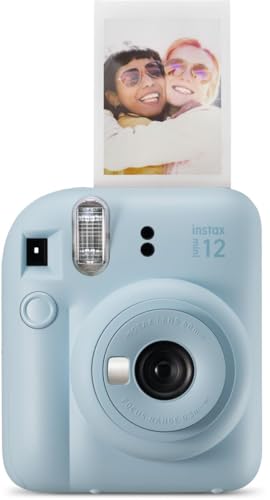
| Fujifilm Instax Mini 12 | Best instant camera for a twelve-year-old | Point, shoot, print: the social camera that turns photographs into objects friends trade. |
| Polaroid Go Generation 2 | Best tiny instant camera | The smallest Polaroid: pocket-sized instant photography with a nostalgic square-ish charm. |
| OM SYSTEM Tough TG-7 | Best indestructible camera for adventurers | Waterproof, drop-proof and freeze-proof: the camera for the child whose hobbies are wet and vertical. |
| AKASO Brave 7 LE | Best action camera for sporty kids | A complete action kit for bikes, boards and pools — the camera that films their world at speed. |
| Canon PowerShot G7 X Mark III | Best step-up camera for a serious young photographer | A real photographer’s compact for the twelve-year-old who has outgrown toys and phones. |
| Sony ZV-1F | Best camera for a young creator | Face-priority filming and product mode for the twelve-year-old with a channel in mind. |
How Did We Choose Cameras for Twelve-Year-Olds?
We interviewed the age, in effect: what do twelve-year-olds photograph? Friends, pets, tricks, collections, nature finds, food, themselves. Cameras were scored on how directly they serve those subjects in the first weekend, because a young photographer’s second month depends entirely on the first weekend’s rewards. Learning curves were treated as costs, and instant or automatic success as the interest that keeps a child investing attention.
Durability and loss-anxiety were scored as parental features. A camera whose destruction would ruin a month fails the ownership test however fine its images; the picks below range from the frankly expendable to the frankly indestructible, with the step-up options flagged honestly as trust objects for careful children.
Finally, we valued cameras that grow a skill — composition through prints, deliberation through film costs, exposure through real controls, storytelling through video — over cameras that merely entertain for a month. A first camera is a teacher whether it intends to be or not; these six teach things worth learning.
We also applied the sleepover test, which is more scientific than it sounds: could this camera be lent, dropped, rained on, operated by a friend and returned with the friendship and the photographs intact? The picks that passed did so for different reasons — cheapness, toughness, simplicity — but all passed, because a twelve-year-old’s camera lives a social life before it lives a technical one.
Price honesty mattered throughout: several of these cameras are gifts whose true cost includes a year of film, cards or mounts, and the guide scored the year’s cost, not the birthday’s. Families budgeting for the whole arc will find the instant picks and the step-up picks closer in total than their tickets suggest — which is precisely why the child’s hobby, not the ticket, should decide.
Which Cameras Suit Which Kind of Twelve-Year-Old?
Find your child in the badges first. The right camera is the one whose first weekend sounds like their actual life.
One more lens for reading the picks: ask not which camera is best, but which camera’s failure mode your family can live with. The instant cameras fail by costing film; the action camera fails by taking ordinary stills; the rugged camera fails by costing money; the step-up cameras fail by needing care. Every camera fails somehow — choose the failure that sounds like a fair price for the joy on offer.

Fujifilm Instax Mini 12 — Best instant camera for a twelve-year-old
Twelve is the age when photography stops being about pictures and starts being about people, and the Instax Mini 12 understands its user perfectly. There is almost nothing to learn: point, press, and a small physical print develops in the hand while friends gather round — a social ritual no phone screen replicates. The camera’s automatic exposure handles the learning curve that loses young photographers, so the first pack of film produces successes instead of a lesson in disappointment.
The prints themselves are the curriculum. A twelve-year-old with an Instax learns composition socially: which moments friends ask to keep, which prints get pinned up, which get traded. The small credit-card-sized photographs become currency in bedrooms and school bags, and the camera that makes currency gets carried — to parties, trips, matches — which is where a young photographer’s eye is actually trained.
Parents should budget with eyes open: film is a continuing cost, priced per shot in a way that usefully teaches deliberation. Many families find that cost structure a feature — the camera that makes each frame cost something produces a child who thinks before pressing, a habit digital abundance rarely teaches. As a first camera that is genuinely the child’s own, nothing in this guide competes.
The selfie mirror and close-up mode quietly cover the two photographs this age takes most: the group selfie and the beloved object held close. Cameras succeed by serving actual behaviour rather than ideal behaviour, and this one is a small masterclass in that humility.
Film discipline produces an unexpected family benefit: the child starts curating. Ten frames a pack means the tenth frame is chosen, and watching a twelve-year-old deliberate over the last shot of a pack is watching photographic judgement being born in real time.
Grandparents are its second user base: a print handed over on the spot is the one photograph format every generation understands identically. Cameras that bridge generations at family gatherings earn their keep in a single afternoon.
Its colours flatter its subjects with the soft, bright look that defines the format’s appeal — skin looks kind, parties look golden, and nobody needs a filter. A camera whose default output is joy has understood its market completely.
It is also the rare camera whose results improve parties merely by existing: people pose for it, gather for it, and keep its prints. Hosts of twelve-year-olds learn to budget film the way they budget cake — as a social necessity.
- Format: instant film, credit-card-sized prints
- Exposure: fully automatic, selfie mirror and close-up mode
- Power: AA batteries, simple and replaceable
- Body: rounded, grippable, several colours
- Running cost: film packs are the ongoing expense
Strengths
- Zero learning curve, instant reward
- Prints become social objects and gifts
- Per-shot cost teaches deliberation
Trade-offs
- Film costs accumulate with enthusiasm
- No digital copy unless scanned
- Image quality is charming, not exact
Best for: social twelve-year-olds who want prints to keep, trade and decorate with.
Not suited for: young photographers who mainly want to edit, zoom or film video.

Polaroid Go Generation 2 — Best tiny instant camera
The Polaroid Go is the instant camera shrunk to the size of a large bar of soap, and at twelve, size is destiny: this is the camera that fits the small bag, the big pocket, the bike ride. Its prints are miniature versions of the classic Polaroid frame, which gives them a toy-like preciousness — they end up taped inside lockers, tucked into phone cases and pinned in constellations above desks.
Operation is nearly as simple as the Instax’s, with a couple of creative extras — a double-exposure mode and a selfie mirror — that reward the experimentally minded child. Its rechargeable battery suits households tired of buying cells, though it also means the camera must be remembered and charged like a phone, a habit twelve-year-olds are, admittedly, already trained in.
Choose between this and the Instax by print and ecosystem: Polaroid’s little frames have the vintage aura and the smaller physical presence, while Instax film is typically easier to find and gentler on pocket money per shot. Either way, the child gets the essential instant gift — photography as an object-making, friend-gathering act — in the most portable form available.
Its size changes custody: because it lives in the pocket, it attends the den, the bus and the beach hut — the unposed territories where childhood actually happens and parents’ cameras never go. The archive it builds is the insider’s archive, and families treasure those most.
The double-exposure mode is a gateway to photographic play: ghosts, layered portraits, the friend doubled. Play is not the opposite of learning at twelve; it is the mechanism of it, and a camera with a play mode built in respects its user.
Its rechargeable battery makes it the sleepover camera — no drawer of cells to raid, just a cable and a morning’s charge. Logistics that match a child’s existing device habits are logistics that actually happen.
The little prints start collections — a wall of tiny frames is this generation’s photo album, assembled by hand. Watching a child curate that wall is watching taste form in public.
Its strap-and-pocket portability suits the museum, the market and the train window — the observational territories where a quiet child with a camera collects the world at their own pace.
- Format: miniature instant film, classic frame style
- Body: the smallest in its class, pocketable
- Features: double exposure and selfie mirror
- Power: rechargeable internal battery
- Extras: wrist strap and simple controls
Strengths
- Genuinely pocket-sized instant camera
- Creative double-exposure mode
- Prints have collectible charm
Trade-offs
- Prints are very small
- Film costs more per photograph
- Rechargeable battery needs remembering
Best for: style-conscious tweens who want instant prints in the smallest possible camera.
Not suited for: high-volume shooters whose film budget matters most.

OM SYSTEM Tough TG-7 — Best indestructible camera for adventurers
Some twelve-year-olds do not need a camera protected from their lives; they need a camera that can join them. The Tough TG-7 is built to professional expedition standards — waterproof well beyond pool depth, resistant to drops, crush and frost — which makes it the only camera in this guide a parent can hand over at a kayak launch, a ski lift or a rock pool without a background hum of anxiety. It is not a toy that resembles a camera; it is a serious instrument that happens to be unkillable.
Its secret educational weapon is macro. The TG-7’s microscope modes photograph the near world — insects, crystals, pond life, the texture of a leaf — at magnifications that turn a garden into a safari. More young naturalists have been made by this camera’s close-up modes than by any textbook, because it puts genuine discovery in a child’s pocket at the exact age curiosity peaks.
As a family purchase it also moonlights: parents borrow it for snorkelling holidays and building sites, and its resale value reflects its professional niche. The costs are a premium price for a child’s camera and image quality that, while good, is compact-class in ordinary light. Buy it for the adventurous child and it is not expensive at all; it is the only camera that will still be working, and still fascinating, at fifteen.
Its field sensors and GPS log where discoveries happened, which turns a season of finds into a map a young naturalist can revisit and extend. Data habits formed at twelve, in service of wonder, are the scientific method wearing a friendly face.
Underwater, it changes a child’s relationship with familiar water: the pool, the rock pool and the lake become territories with inhabitants. Parents consistently report the camera being borrowed back for exactly this revelation, which settles the value question in most households.
School field trips are its natural habitat: the one camera teachers do not confiscate out of protective anxiety, because there is nothing fragile to protect. It returns with the evidence while other cameras stayed in bags.
Its microscope mode redeems rainy days: the windowsill, the garden pot and the rockery become expeditions. A camera that abolishes bad-weather boredom is a household utility, not a luxury.
Fishing, fossil-hunting and pond-dipping share a requirement — hands that are wet, muddy and busy — and its glove-friendly controls respect all three. Tools that respect the activity get invited back.
- Durability: waterproof, drop-proof, crush and freeze resistant
- Lens: bright zoom with extreme macro modes
- Video: capable, including underwater scenes
- Features: GPS and field sensors on board
- Body: compact, glove-friendly controls
Strengths
- Survives the childhoods other cameras fear
- Microscope modes ignite natural curiosity
- Parents will borrow it for holidays
Trade-offs
- Premium price for a young person’s camera
- Ordinary-light quality is compact class
- Menus have professional depth to explore
Best for: adventurous, outdoorsy twelve-year-olds — swimmers, climbers, skiers, young naturalists.
Not suited for: gentle indoor hobbyists who would never use its toughness.

AKASO Brave 7 LE — Best action camera for sporty kids
For the twelve-year-old whose life is measured in laps, ramps and rides, photography means video, and the Brave 7 LE is the attainable way to film it properly. The kit arrives with the waterproof housing and mounts that action filming actually requires, so the camera can go on the helmet, the handlebars and the pool floor in its first weekend — no accessory queue between the child and the footage.
The front screen matters more than adults expect: young creators film themselves constantly, and being able to frame a trick or a piece to camera without a helper turns solo practice into solo production. Stabilisation smooths the footage enough to be watchable by grandparents, which is the true distribution network of childhood achievement.
Stills are snapshots rather than a photography education, and the camera will not teach exposure the way the system cameras below can. But as the record of a sporting childhood — the first descent, the landed trick, the underwater silliness — it produces the archive the family will actually rewatch, at a price where a loss, while sad, is not a household event.
Mounting the camera is half the fun and most of the engineering education: angles, vibration, safety tethers and the physics of a good shot are learned by doing, at an age when doing is the native language. The footage is the by-product; the competence is the product.
Its price performs a parental kindness: it converts the action camera from a precious object into sports equipment, with sports equipment’s honest relationship to damage. Children film braver and better when the camera is not the most fragile thing in the rucksack.
Winter sports are where its glove-hostile touchscreen matters least and its mounts matter most — set it at the lift, forget it, and let the day film itself. Forgetting the camera is the action genre’s highest state.
Team sports benefit from its sideline diplomacy: small, silent and unthreatening, it films the match from the fence without the self-consciousness a big camera induces in young athletes.
Its timelapse and slow-motion modes smuggle physics into play: clouds race, jumps hang, and a child starts asking why — the most valuable question any camera can provoke.
- Video: 4K with electronic stabilisation
- Screens: front and rear for self-framing
- Waterproofing: with supplied housing
- Kit: mounts and spare battery commonly included
- Mounting: standard action accessory fit
Strengths
- Complete kit films from day one
- Front screen for solo creators
- Price forgives an adventurous life
Trade-offs
- Stills are snapshot class
- Small screen menus for small fingers
- Battery life suits sessions, not days
Best for: sporty, filming-first twelve-year-olds — riders, swimmers, skaters and skiers.
Not suited for: children whose interest is still photography and prints.

Canon PowerShot G7 X Mark III — Best step-up camera for a serious young photographer
Some twelve-year-olds are already photographers in waiting: they compose deliberately, they notice light, they have opinions about their phone’s processing. For that child, a toy camera is an insult and a system camera may be a burden; the G7 X Mark III is the precise middle — a real instrument with manual controls, a bright zoom and a sensor that rewards skill, in a body that fits a school bag’s front pocket.
It teaches properly. The control dial invites the first deliberate aperture decisions; the tilting screen serves the vlogging and self-documentation this generation treats as native; and its files hold up to editing, so the young photographer who discovers software finds the camera keeps pace. Many adult photographers began on exactly this class of machine, and its deep used market makes it attainable as a gift with genuine pedigree.
The cautions are care and cost: it is not waterproof, not drop-proof, and valuable enough that losing it would sting. That, too, can be part of the gift’s meaning — the first possession whose care is the child’s own responsibility. For the right twelve-year-old, that trust is worth as much as the optics.
Its presence in a school bag has started many photography-club conversations: it looks like intent. For a child whose identity is quietly becoming ‘the one who photographs’, carrying a real instrument is a social signal that supports the habit it signals.
The used market makes birthdays negotiable: a clean example plus a fast card and a pouch is a complete, serious gift at a family price, with the depth of a decade’s community knowledge behind every question the young owner will google.
Its lens ring gives a young photographer the tactile pleasure of a real instrument — the small mechanical joy that converts users into devotees. Devotion, at twelve, is just practice that feels like play.
Its video diaries age gracefully — clean files, honest colour — so the twelve-year-old’s record of being twelve remains watchable at twenty. Archives are gifts to future selves, and this camera wraps them well.
School art departments recognise it as the real thing, which matters when a child’s photographs start entering exhibitions and portfolios. Credibility with teachers is a quiet accelerant for a young artist.
- Sensor: 1-inch class, bright built-in zoom
- Controls: manual modes with a lens ring
- Screen: tilts for vlogging and low angles
- Video: strong for diaries and projects
- Market: deep used availability
Strengths
- Real photographic controls to grow into
- Image quality far beyond phones
- Teaches editing-ready file craft
Trade-offs
- Not rugged or waterproof
- Valuable enough to demand care
- Fixed lens, no system growth
Best for: artistically serious twelve-year-olds ready for a real camera of their own.
Not suited for: rough-and-tumble users or underwater adventurers.

Sony ZV-1F — Best camera for a young creator
A generation of twelve-year-olds experiences cameras primarily as the thing that films them, and the ZV-1F is the kindest possible instrument for that experience. Its face-priority focus and exposure mean a young presenter can think about what they are saying; its product-showcase mode snaps focus to the drawing, the model, the bake or the build held up to the lens — the grammar of every hobby channel a child actually watches and wants to join.
The fixed wide lens suits bedroom studios and kitchen-table studios, the fully flipping screen lets the presenter see themselves, and the built-in microphone with its windscreen produces speech that grandparents can follow. Parents moderating a child’s first steps into publishing will also appreciate that the camera’s simplicity keeps the focus on the content and the craft rather than on gear acquisition.
Its limits mirror its focus: still photography is competent rather than educational, and there is no zoom for the school play from the back row. But for the child whose ambition is a channel — cooking, crafting, gaming commentary, book reviews — it removes every technical excuse between them and their first fifty videos, which is where young creators are actually made.
Its product mode serves the show-and-tell grammar of childhood itself — the drawing, the fossil, the finished build — which is why young creators take to it without instruction. Tools that match a user’s existing rituals get adopted; this one’s rituals are native.
For shy presenters it has a particular mercy: because focus and exposure are handled, the only task is talking, and talking to a lens is a skill that improves purely with repetitions the camera makes painless. Confidence compounds quietly, video by video.
Book clubs, baking channels and build logs share one requirement — a face and an object, both in focus, in a small room — and this camera was essentially designed by that requirement. Young hobbyists feel understood by it.
For children who teach — the friend who shows everyone the card trick, the knot, the chord — it is a small television station for generosity. Skills shared are skills doubled, and this camera shares them beautifully.
Its windscreened microphone respects the garden and the beach — the outdoor chapters of a young presenter’s life — where lesser built-in microphones surrender to the weather.
- Lens: fixed wide for arm’s-length filming
- Autofocus: face and eye priority, product showcase
- Screen: fully articulating
- Audio: directional built-in microphone
- Role: presenter-first video camera
Strengths
- Filming yourself requires no assistance
- Product mode suits hobby channels
- Publishable results without editing suites
Trade-offs
- Stills are secondary
- No zoom for distant stages
- Battery suits sessions
Best for: young presenters and hobby-channel creators filming themselves indoors.
Not suited for: children focused on still photography, wildlife or sport.
How Do the Six Compare Side by Side?
The six at a glance. Notice that they barely compete — at twelve, the hobby chooses the camera more than the budget does.
If two rows both fit your child, choose by the weekend: the camera whose first Saturday — the match, the pool, the party, the nature reserve — is already on the family calendar. Immediacy is the tiebreaker that young enthusiasms respect.
| Camera | Type | Standout strength | Watch out for |
|---|---|---|---|
| Fujifilm Instax Mini 12 | Instant film camera | Instant prints and simplicity | Film is a running cost |
| Polaroid Go Generation 2 | Instant film camera, miniature | Size and character | Tiny prints, film costs more per shot |
| OM SYSTEM Tough TG-7 | Rugged compact | Survival and macro wonder | Premium price among kids’ picks |
| AKASO Brave 7 LE | Action camera kit | Video of sports and stunts | Stills are secondary |
| Canon PowerShot G7 X Mark III | Compact with 1-inch sensor | Real controls and image quality | Needs care — not rugged |
| Sony ZV-1F | Fixed-lens vlogging compact | Filming yourself, simply | Stills are a sideline |
What Should Parents Think About Before Buying a Camera for a Tween?
Running costs first, because they ambush. Instant cameras shift the expense into film, which a keen child can consume at a rate that needs a household agreement — a pack a month, say, with extras earned. Digital cameras shift it into accessories and storage, which are smaller and rarer. Neither is wrong; surprise is wrong. Agree the film or accessory budget when the camera is given, and the gift stays joyful.
Publishing deserves a calm family conversation for the video-capable picks. A camera that films for a channel is also a door to an audience, and twelve is the right age to walk through it with rules agreed in daylight: what may be posted, where, with whose review, and how comments are handled. The cameras here work perfectly well as private, offline instruments too — a channel is an option the family controls, not a feature that controls the family.
Consider the child’s hands and patience literally. Small controls defeat big hands-in-training; heavy cameras get left behind; complicated menus convert photographers into former photographers. Where possible, the handling test — five minutes in a shop — predicts a year of use better than any specification, and it costs nothing but the trip.
Finally, think about what the camera teaches about care. For many children this is among the first valuable objects that is wholly theirs. A simple ritual — the camera lives in its pouch, the pouch lives in one place, the card gets emptied on Sundays — builds the stewardship that later, more expensive hobbies will assume. The photograph album is the visible product; the habits are the real one.
Second-hand is a family’s friend at this age, with one caution. Used step-up compacts and action cameras circulate abundantly and honestly; used instant cameras are so simple that condition is easy to judge. The caution is batteries and chargers — confirm both are included and healthy, because a bargain camera waiting a week for a charger is a birthday postponed, and twelve-year-olds experience postponement at geological scale.
Think ahead one gift cycle. The camera chosen now creates the obvious next gifts — film and an album for the instant shooter, a mount and a case for the action filmmaker, a tripod and a photo book for the emerging artist. A first camera that anchors a small, sensible gift economy around a child’s real hobby is worth more than its specification, because it keeps the hobby funded and celebrated all year.
One last parental consideration: insure your own calm by choosing the returns-friendly seller and keeping the receipt somewhere findable. Children change their minds with the seasons, hobbies pivot, and a camera that can be exchanged in January for the instrument February demands is a gift with a safety valve — for the family’s budget and the child’s enthusiasm alike.
How Can a Twelve-Year-Old Get Better at Photography Fast?
Start with the one-subject week: photograph the same subject — the dog, a friend, a favourite tree — every day, and keep only the best frame each day. The constraint teaches the two skills everything else stands on: looking longer, and choosing honestly. By the week’s end the young photographer owns seven photographs they can defend, which is a portfolio, and portfolios create photographers.
Learn the two free upgrades: get closer, and watch the light. Most young photographs improve more from three steps forward than from any setting, and most disappointments are light disappointments — the face in shadow, the subject against a blazing window. A week of deliberately photographing near windows and in open shade teaches more than a month of menus.
Finish photographs. Print the instant ones and pin them; send the digital ones to the family chat; make the tiny album. Photography that is never shown stops being photography and becomes storage, and children — like adults — improve at the speed of their audience’s responses. Keep the audience kind and the improvement rapid.
Add the gift of an audience ritual: a Sunday showing, a print for the fridge, a film premiered to grandparents. Rituals convert solitary practice into family culture, and family culture is what carries a young photographer through the month when novelty fades and only habit remains. Habit, at twelve as at forty, is where all the good photographs live.
Teach the background glance early, because it is the difference between a snapshot and a photograph at any age: before pressing, one look at the corners — the bin, the photobomber, the clutter — and one step sideways to fix it. Twelve-year-olds learn it in a week when it is framed as a game, and it will serve every camera they ever own, including the professional ones some of them are heading for.
And let them photograph the ordinary relentlessly: breakfasts, bus stops, the dog’s expressions, the light in the hallway. Adults chase occasions; children with cameras document a world, and the world they document is vanishing at the speed of growth. The ordinary frames are the ones the family will weep over in twenty years, which no one believes at twelve and everyone believes at forty.
Why Do Instant Prints Matter So Much at This Age?
Because twelve is the last age at which a photograph can still be a thing rather than a file. The instant print is held, traded, pinned, lost, found and treasured with a physicality that digital natives rarely experience elsewhere, and it teaches the oldest photographic lesson in its purest form: a photograph is an object you make for someone. Children who learn that lesson with prints carry it into every later medium.
There is also the matter of audience. A phone photograph disappears into a feed engineered to forget it; an instant print on a bedroom wall is looked at daily for a year. Young photographers calibrate their taste by what survives on walls — their own and their friends’ — and that slow, physical curation builds judgement that infinite digital storage actively prevents. Scarcity, again, is a teacher disguised as a limitation.
None of this argues against digital cameras for tweens; the action, rugged and step-up picks in this guide are digital for excellent reasons. It argues for respecting what instant film uniquely gives a twelve-year-old: deliberation, objects, and an audience of friends rather than an algorithm. For the social child, those are not features of the camera. They are the childhood the camera is for.
The print also solves the archive problem that quietly afflicts digital childhoods. Photographs on phones die with phones, accounts and passwords; the shoebox of instant prints is readable by any eye, forever, with no charger. Families a decade on consistently report that the instant prints are the surviving record of these years — the digital files scattered across dead devices, the prints still on the fridge’s successor. Imperfect, physical and permanent beats perfect, digital and lost.
How Should Families Handle the First Camera Rules?
Keep them few, physical and agreed in advance. The camera lives in its pouch; the pouch lives in one place; other people’s faces are photographed with permission; anything published passes a parent’s eyes first. Four rules a twelve-year-old can recite are worth forty that exist in a parent’s head, because the point is not control — it is the child’s own stewardship, practised on an object that matters to them.
Let consequences be natural and small. A film pack spent carelessly is a week without film, not a lecture; a camera left at a friend’s house is retrieved by its owner, not rescued by a parent. First cameras are among the safest places in a child’s life to learn that care and consequence are connected, precisely because the stakes are real but survivable.
And join in, briefly, then withdraw. Ask to see the week’s best print; request one photograph for the family wall; borrow the rugged camera for the holiday swim. Then hand it back and let the archive become theirs. The families whose children are still photographing at fifteen are, consistently, the ones who treated the first camera as the child’s property rather than the family’s equipment.
One rule families often miss deserves inclusion: photographs of other children carry responsibilities that scale with sharing. A print given to its subject is a gift; the same image posted is a publication. Teaching that distinction at twelve, with a camera in hand and a concrete image on the table, lands better than any abstract internet-safety talk — another quiet way a first camera educates beyond photography.
What Does a First Camera Teach Besides Photography?
Attention, first of all. A child with a camera walks differently — slower at the interesting corners, alert to light on walls and animals in hedges — because the camera converts the world from background into material. Parents notice it within a month: the same walk to school becomes a scouting expedition. That retrained attention outlasts any particular camera and improves subjects from art to biology to simple happiness.
It teaches selection and story. Choosing the ten prints for the wall, ordering the album, deciding which clip opens the holiday film — these are editorial acts, and a twelve-year-old who performs them is learning narrative in its most practical form. It teaches generosity too: the print given away, the friend’s goal filmed from the best angle, the grandparent’s portrait made carefully. Cameras at this age are social instruments, and the society they create is mostly kind.
Finally, it teaches the dignity of a finished thing. So much of a modern childhood is streamed, swiped and ephemeral; a print, an album, a saved film is made, completed and kept. Children who finish things become adults who finish things, and a first camera — humble as it looks on the birthday table — is one of the cheapest finishing schools ever devised.
There is a confidence dividend, too, that parents report with surprise: the child with the camera has a role at every gathering, a reason to approach people, and a product to show afterwards. For the shy twelve-year-old especially, the camera is a social passport — an instrument that converts watching from the edge into participating with a purpose. Families have bought cameras for worse reasons than that and been repaid beyond the photographs.
When Is a Twelve-Year-Old Ready for a System Camera Instead?
When the evidence says so, in three specific forms. First, frustration with a named limit — the compact that cannot reach the birds, the instant camera that cannot do evenings — expressed repeatedly and photographically, not as a general wish for more. Second, a body of finished work: prints on walls, albums made, films completed, proving the hobby is a practice rather than a season. Third, care demonstrated over time — the current camera returned to its pouch, its card emptied, its battery charged — because a system camera multiplies both cost and consequence.
When those three converge, the step is natural and the guides for beginner systems elsewhere in this series take over. Until they converge, the cameras in this guide are not holding a child back; they are building the photographer who will deserve the system, and building is not a delay. It is the entire process, happening at exactly the right speed.
Parents should also know the reverse signal is normal: many children photograph intensely for two years and then migrate to music, code or climbing, leaving a complete and lovely archive behind. That is not a failed purchase. That is a childhood, documented — which was the point all along.
Notice, too, that readiness is rarely about age in months. Two twelve-year-olds can be three years apart in carefulness, and the honest appraisal of the individual child — by the adults who watch them lose and find things weekly — outranks every generalisation in this guide, including this one.
What Mistakes Do Families Make Buying a First Camera?
Buying the parent’s camera is the first: the serious system body chosen because an adult respects it, which the child experiences as heavy, frightening and borrowed. Second is the opposite insult — the toy camera with toy results for a child whose eye has already outgrown it; twelve-year-olds detect condescension instantly and abandon the gift accordingly. The picks in this guide deliberately occupy the honest middle: real cameras, at child scale.
Third, families forget the consumables and the carrying: the instant camera with one film pack, the action camera with no mount for the child’s actual sport, the good camera with no pouch. The first weekend decides the camera’s fate, and the first weekend runs on accessories. Buy the camera as a working kit for the child’s real hobby, or expect it to become shelf decoration by half-term.
Fourth: policing the results instead of the process. The blurred, tilted, thumb-obscured frames of a first season are not failures to correct but tuition being paid. Comment on the choosing, the carrying and the finishing — the behaviours that compound — and let the frames themselves improve at the speed of practice, which they reliably do when adults resist art-directing a child’s eye.
Fifth: comparing the child’s camera with a sibling’s or a friend’s, specification by specification, in the child’s hearing. Every pick in this guide serves a different child; comparisons teach only that gifts are rankings. Praise the archive, fund the film, and let each camera be the best one for the life it was chosen to join.
Final Recommendation
For most twelve-year-olds, the Instax Mini 12 is the joyful default — instant, social, unbreakable in spirit. The Polaroid Go serves the pocket-sized stylist; the Tough TG-7 serves the adventurer and the young naturalist; the AKASO serves the sporting filmmaker; the Canon G7 X serves the emerging artist; and the Sony ZV-1F serves the presenter. Choose the child first and the camera second, complete the kit, agree the film budget, and then — the hard part for parents — hand it over completely. It is their camera now, and that is exactly why it will work.
And when the first prints are pinned and the first clips are shown, resist reviewing the gift by its specifications. Review it in six months, by the archive: the wall, the album, the saved films. That archive — funny, imperfect, irreplaceable — is what you actually bought.
Twelve does not last, and neither does the world it sees. The right camera simply makes sure some of it is kept.
Related guides
- Best Cameras for Doing Movies: 6 Picks for Your First Real Films
- Best Cameras for 9 Year Olds: Durable, Simple Cameras a Third-Grader Can Own Outright
Frequently Asked Questions
Is an instant camera or a digital camera better for a twelve-year-old?
It depends on the child’s social world. Instant cameras win when photographs are for friends, walls and trading — the physical print is the product. Digital cameras win when the child films, edits, shoots in volume or pursues a hobby like nature or sport where hundreds of frames cost nothing. Many families find the instant camera is the better first gift and the digital the better second, a year later.
How much should a first camera for a tween cost?
Enough to be a real camera with real results, not so much that its loss or damage becomes a family event. The picks here span that honest range deliberately. A useful test: if the child dropped it in a lake, would the story be funny by Christmas? Buy the camera whose answer is yes — or buy the waterproof one, which is the same answer in product form.
Are cameras safer than phones for a twelve-year-old?
In one specific way, yes: a dedicated camera is an offline instrument. It makes photographs without accounts, feeds or messaging attached, which many families value at this age. The video-capable picks can feed a channel if the family chooses that path, but the choice remains the family’s, made deliberately — which is the healthiest possible arrangement at twelve.
Can a twelve-year-old handle a camera with manual controls?
Many can, and the ones with artistic leanings thrive on them — twelve is an age of formidable learning speed when motivation is personal. The Canon G7 X in this guide is the test case: its automatic modes carry the beginner while its dials wait for curiosity. The mistake is forcing manual controls on a child who wants prints for friends; the equal and opposite mistake is denying them to a child who is asking how exposure works.
What is the best camera for a child who loves animals and nature?
The OM SYSTEM Tough TG-7, and it is not close: waterproof for pond and shore work, tough for field accidents, and possessed of macro modes that reveal an invisible world in every garden. Young naturalists need discovery more than resolution, and this camera is a discovery machine that survives being one.
Should the camera be a surprise, or should the child choose?
Involve the child in the final choice between two or three finalists whenever possible. Ownership begins at selection: a camera a twelve-year-old helped choose is carried more, cared for better and defended against siblings with greater conviction. Keep the shortlist within budget and let the child’s hands and hobby cast the deciding vote — adults curate the options, children should own the outcome.
What accessories should come with a first camera gift?
The ones that make the first weekend work: film or a fast memory card in quantity, the pouch or case, a spare battery where relevant, and the mount or strap the child’s hobby requires. Add an album for instant prints — it converts loose photographs into a kept archive from day one. Skip the elaborate kits of filters and gadgets; at twelve, completeness beats sophistication every time.
Related Guides
Keep exploring with best action cameras for preteens best cameras for 150 dollars best cameras and software for beginner photography.


