ilcastellomenu.com is reader-supported. When you buy through links on our site, we may earn an affiliate commission.
Where to Buy
Nine is a specific age, and cameras for it should be chosen specifically. If you are looking for the best cameras for 9 year olds, picture the actual user: hands that are still growing, a grip that fails at the exact moment the dog does something wonderful, an attention span that rewards instant results and punishes menu-diving, and a creative confidence that is either fed or quietly extinguished by whether the camera feels like theirs. This guide is written for that child — not for a small adult, and not for the twelve-year-old down the corridor whose guide already exists on this site.
The ownership test dominates everything below. A nine-year-old’s camera must survive being dropped on a path, left in a school bag, lent to a friend and retrieved from under a car seat — and it must be inexpensive enough, in money or in adult anxiety, that nobody hovers. Cameras that make adults nervous make children careful in the worst way: hesitant, supervised, and eventually uninterested. Every pick here can be handed over with the words ‘it’s yours, go’ — which is the only sentence that ever started a photography habit.
Instant gratification is not a flaw at nine; it is the curriculum. The two instant cameras on this list teach composition and deliberation through prints a child can hold, trade and stick on a wall. The rugged and action picks teach observation through survival — the camera goes where the child goes, into the pool’s edge and the bike ride’s middle. The two step-up compacts are for the nine-year-old who has already shown the itch: the one photographing everything on a borrowed phone and asking why the background will not blur.
Parents, a word on the gift arithmetic: wrap the consumables with the camera. Film for the instant cameras, a card and a case for the digitals, the mount for the action camera. A camera that works completely on the first morning becomes a companion; a camera waiting for its essentials becomes a chore with a lens. And buy for the child in front of you, not the photographer you hope to manufacture — the best camera for a nine-year-old is the one matched to the obsession they already have.
Finally, privacy and simplicity were selection criteria, not afterthoughts. None of these cameras requires an account to be a camera, none demands a phone to function, and each produces its results in a form a nine-year-old can enjoy without an adult’s editing suite. Screens stay modest, controls stay obvious, and the path from pressing the button to seeing the picture stays short enough for a child’s patience — which is to say, honest.
A note on siblings and fairness, because parents ask: a camera given to a nine-year-old becomes family legislation. Whatever you choose will be wanted by a younger sibling in eighteen months and envied by an older one immediately. The picks here were partly chosen for surviving that politics — the instant cameras produce prints siblings can share rather than fight over, and the rugged picks can descend the family in working order. Buy once, hand down happily: it is part of their value.
Key Takeaways
- At nine, durability and ownership matter more than image quality — the camera must be truly the child’s.
- Instant prints teach deliberation: every frame costs film, so children learn to look first.
- Rugged and waterproof designs match where nine-year-olds actually go.
- Wrap the film, card or mount with the gift — a complete kit on morning one becomes a habit.
- No pick here needs an account or a phone to work as a camera.
In this guide
Quick Picks
| Camera | Badge | Why it earns its place |
|---|---|---|
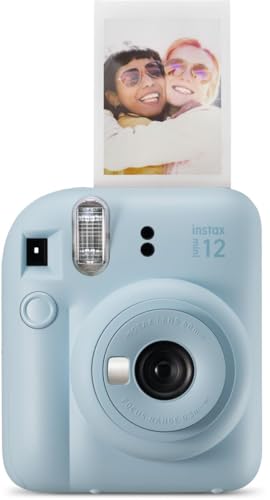
| Fujifilm Instax Mini 12 | Best instant camera for a nine-year-old | Point, shoot, print — a photo in the hand in minutes, with automatic everything. |
| Polaroid Go Generation 2 | Best tiny instant camera for pockets and trips | The smallest instant camera going — it rides in a coat pocket to everywhere a nine-year-old goes. |
| OM SYSTEM Tough TG-7 | Best rugged camera for adventurous nine-year-olds | Waterproof, drop-proof and crush-resistant — with macro magic for bugs, shells and treasures. |
| AKASO Brave 7 LE | Best action camera for sporty nine-year-olds | Films the bike ride, the swim and the skate park from the middle of the action — cheaply enough to risk. |
| Sony ZV-1F | Best step-up for the nine-year-old presenter | For the child already filming shows for the family: wide lens, face tracking, one-button polish. |
| Canon PowerShot G7 X Mark III | Best step-up compact for a keen young photographer | Real optics and real controls in a pocket body — for the nine-year-old already asking why. |
How Did We Choose Cameras for Nine-Year-Olds Specifically?
We started with the drop test as a philosophy: each candidate had to survive, shrug off, or be cheap enough to risk the ordinary violence of nine-year-old life. That single filter reorders the camera market completely — delicate system cameras vanish, and in their place stand instant cameras built like toys but working like cameras, a waterproof rugged compact, and an action camera designed to be crashed. What survived is not a compromise list; it is the correct list for the age.
Second, we judged the result loop: how quickly and satisfyingly does a press of the button become something the child can see, hold or show? Instant prints win this outright, which is why two instant cameras anchor the list. Digital picks were required to have bright, simple screens and playback a child can navigate alone. Any camera whose pleasures route through a parent’s laptop was marked down — at nine, the feedback loop is the teacher, and it must be immediate.
Third, we separated the two kinds of nine-year-old buyer honestly: the majority, for whom a camera is a toy-shaped tool of exploration, and the minority already showing a photographer’s itch, who merit a step-up compact with real optics. The list serves both without confusing them — the badges say which child each camera is for, and the final recommendation will not let a keen beginner’s parent overspend, or an explorer’s parent under-deliver.
We also considered the adult workload each camera creates, because a gift that generates chores generates resentment. Instant cameras ask for film buying; the digitals ask for occasional card-emptying; the action camera asks for app supervision. All are modest, and the text names each plainly. What we excluded were cameras demanding accounts, subscriptions, firmware rituals or fragile accessories — at nine, the adults in the house are supporting cast, and the equipment should respect their time too.
Which Are the Best Cameras for 9 Year Olds in Real Family Life?
Ordered roughly from youngest-at-heart to most grown-up: instant joy first, then survival, then the step-up instruments for the child already asking photographer’s questions.

Fujifilm Instax Mini 12 — Best instant camera for a nine-year-old
The Instax Mini 12 is the camera most nine-year-olds would choose for themselves, and for once the child’s instinct is the expert one. It is rounded, light and unintimidating; its exposure is automatic, so the child’s whole job is choosing the moment; and ninety seconds later a real print develops in their palm — a photograph as an object, tradable at school, stickable on a wall, giftable to a grandparent. That physical result loop teaches more photography in a month than a digital camera’s three hundredth forgotten file teaches in a year.
The deliberation lesson is built into the economics: film costs, so the child learns to look before pressing — to walk closer, to wait for the expression, to spend the frame on something that matters. Parents sometimes flinch at the per-print cost; reframe it as tuition, and modest tuition at that, for the core skill of all photography. The camera’s close-up mode handles the flowers, pets and treasures nine-year-olds actually photograph, and its selfie mirror ends the era of decapitated self-portraits.
Set expectations kindly: prints are small and their look is soft and nostalgic rather than sharp, indoor shots want the flash the camera will sensibly fire itself, and film budgeting becomes a family conversation — agree a pack rhythm rather than rationing frame by frame. As a first camera that is wholly the child’s own, nothing in this guide is more likely to be loved, used and remembered.
Grandparents deserve a mention in the Instax’s case: it is the rare child’s camera that produces gifts for them automatically. A print in an envelope outperforms a dozen promised phone photos, and children who discover they can make presents with their camera use it with a purpose that extends the hobby’s life considerably. Families spread across distances will find the little prints doing emotional work no file manages — budget a few extra packs for the post, and consider it the camera’s postage budget.
One classroom note: teachers generally welcome the Instax in a way they welcome no screen, because its product is paper, its process is visible chemistry, and a class print wall builds itself across a term. Children who bring prints for a project — the seasons changing on one tree, the class pet’s week — are doing documentary work in its oldest form. A camera that schools tolerate is a camera that gets used in more of a child’s world, and use is the whole game.
- Format: instant camera, prints develop in the hand
- Exposure: fully automatic, with close-up mode
- Handling: lightweight, rounded, one-dial simplicity
- Power: standard batteries, easy for families
Strengths
- Prints make photography physical and social
- Automatic exposure — child just chooses moments
- Film cost teaches looking before shooting
Trade-offs
- Film is a running cost to budget
- Prints are small and softly detailed
- No digital file to keep or share
Best for: most nine-year-olds as a first camera: social, creative children who will love prints for friends and walls.
Not suited for: children who want video, zoom or a screen full of pictures to review.

Polaroid Go Generation 2 — Best tiny instant camera for pockets and trips
The Polaroid Go’s argument is size, and at nine size is destiny: a camera small enough for a coat pocket or a small bag is a camera that attends the zoo trip, the sleepover and the walk to the park, while a bigger camera attends the shelf. This second generation keeps the original’s miniature charm and improves the exposure and flash behaviour, producing its little square-ish prints with more reliability in the mixed light where children actually shoot. It feels like a toy and behaves like a camera, which is the precise formula for the age.
Those small prints have a culture of their own — they fit in wallets, lunchboxes and the backs of phone cases, and children trade them like cards. The camera’s double-exposure and selfie features give an experimental child genuine creative levers without a single menu, and its rechargeable battery removes the battery-buying errand from parents’ lives. For a child whose photography is really about friends and occasions, the Go’s portability makes it the most-used camera in this guide.
Its film is its own smaller format, so prints are tinier than the Instax’s and the per-print economics deserve the same family conversation — agree the rhythm, then let the child spend frames freely within it. Low light remains instant film’s frontier everywhere. But as the camera a nine-year-old actually carries, the Go Gen 2 has no rival here: the best camera, as the saying goes, and at nine it is truer than ever.
The Go’s smallness also makes it the sleepover and school-trip diplomat of this list: it draws a crowd, produces a print the crowd can watch developing, and fits back into a pocket before it can become a burden or a breakage. Teachers and trip leaders tolerate it in a way they tolerate no screen, because its output is paper and its process is visible. For the socially driven child, that acceptability in the wild is worth more than any specification in this guide.
The Go’s prints have one more social property worth naming: they are small enough to be given away without ceremony — pressed into a friend’s hand, left in a locker, tucked into a birthday card. Generosity is a photographic habit too, and a camera whose output is cheap in spirit (whatever its film costs in fact) teaches a child that photographs are for other people. That lesson, learned at nine, is visible in photographers for the rest of their lives.
- Format: instant camera, miniature prints
- Size: pocketable — the smallest pick here
- Features: double exposure, selfie mirror, self-timer
- Power: rechargeable via USB
Strengths
- Goes everywhere because it fits anywhere
- Creative modes without menus
- Rechargeable — no battery errands
Trade-offs
- Smallest prints of the instant picks
- Its film format is its own ecosystem
- Low light still challenges instant film
Best for: social nine-year-olds and travellers — the child whose camera must fit the pocket to exist at all.
Not suited for: children wanting larger prints, or families wanting one film stock across cameras.

OM SYSTEM Tough TG-7 — Best rugged camera for adventurous nine-year-olds
The TG-7 is the camera for the nine-year-old whose life happens at the waterline: it is waterproof for pool and snorkel adventures, built to survive drops onto hard ground, resistant to being crushed in the geology of a school bag, and operable with cold or wet fingers. Where other cameras need a parent saying ‘careful’, this one says ‘go’. For the outdoors child — the pond-dipper, the rock-pooler, the skier, the beachcomber — it converts adult anxiety into permission, and permission is where childhood photography lives.
Its secret weapon for this age is macro: the TG-7 focuses astonishingly close, with modes that turn a beetle, a snowflake or a shell’s spiral into a frame-filling expedition. Nine is the great age of collecting and examining, and a camera that photographs the collection at life size and beyond becomes a scientific instrument the child actually uses. Underwater modes handle the pool’s blue cast automatically, and the GPS and sensor logging will delight the young naturalist recording where each treasure was found.
It is a real camera with real menus, so an adult should spend one session setting it to its friendly automatic modes before handing it over; after that it is genuinely child-operable. The screen does not flip and video is a supporting feature rather than its headline. But for durability married to genuine photographic capability, the TG-7 stands alone in this guide — the camera that survives childhood and documents it at the same time.
Young scientists get a further TG-7 gift: its sensor logging records the conditions and location of each discovery, so a summer’s rock-pooling becomes a mappable dataset — photographs with data attached, the beginning of real field biology habits. A child who returns to the same pool across a season with this camera is doing longitudinal study while believing they are playing. Few educational toys disguise themselves this completely, and none of the others fit in a wetsuit’s pocket.
Winter is the TG-7’s second season of glory: freeze resistance means the sledging and skating footage happens without the battery-and-condensation drama that sidelines ordinary cameras, and its macro mode turns frost patterns and snowflakes into the young naturalist’s winter collection. A camera for all four seasons is a camera used four times as much — arithmetic parents should apply when its price is compared with fair-weather rivals.
- Format: rugged compact, waterproof and shockproof
- Macro: extreme close-focus microscope modes
- Build: crush-resistant, freeze-resistant, sealed
- Extras: GPS and field sensors for young explorers
Strengths
- Survives drops, water and school bags
- Macro modes thrill collectors and naturalists
- Underwater colour handled automatically
Trade-offs
- Menus need an adult’s one-time setup
- Screen is fixed, video is secondary
- Overkill for a purely indoor child
Best for: outdoorsy, adventurous nine-year-olds — swimmers, hikers, collectors and bug-hunters.
Not suited for: gentle indoor children who would rather have instant prints or video.

AKASO Brave 7 LE — Best action camera for sporty nine-year-olds
Some nine-year-olds do not want to photograph the action; they are the action. The Brave 7 LE mounts to a helmet, a handlebar or a chest strap and films the ride from inside it, with stabilisation smoothing the result into something watchable and a waterproof build that treats rain, puddles and pool filming as normal operations. Its front screen lets a young presenter frame themselves for the post-ride commentary, and its price position means a parent can say yes to experiments that a flagship action camera’s cost would veto.
That permission economics is the pick’s core. Action filming at nine is a festival of crashes, drops and near-misses; a camera whose loss would be a bad afternoon rather than a bad month keeps the festival going. The footage is honest daylight action footage — wide, stable, colourful — and the accessory world of mounts lets the same camera serve the bike in spring, the snorkel in summer and the sled in winter. Few gifts in this guide will be used harder.
Calibrate the family filmmaker: low light softens its footage, its stills are snapshots rather than photographs, and reviewing and sharing clips routes through an app an adult will supervise. It is a sports instrument, not a photography teacher. For the child whose imagination runs on wheels and water, though, it is the camera that films their actual life instead of asking them to stand still for a different one.
Clubs and teams are the Brave’s second habitat: a coach or a parent can mount it to capture the whole squad’s training from the inside, and its price means the inevitable goalpost collision is a story rather than a loss. Children also learn from watching their own movement played back — the action camera as mirror is a coaching tool that swimming and skating families in particular swear by. Its value compounds in exactly the environments that would end a dearer camera.
The Brave also serves the family’s historian cheaply: mounted at a reunion’s garden games or strapped (with permission and padding) to the family dog, it gathers the footage nobody thought to film. Novelty angles from a cheap, riskable camera are a genre of family film in themselves, and the genre’s entry price here is the lowest in this guide. Not every pick must teach; some must simply be present and unafraid.
- Format: action camera, waterproof with housing options
- Stabilisation: electronic, for mounted filming
- Screens: front screen for self-framing
- Mounts: wide accessory ecosystem available
Strengths
- Films sport from inside the action
- Cheap enough to risk real adventures
- Front screen for young presenters
Trade-offs
- Low-light footage is modest
- Stills are an afterthought
- App needed for full sharing workflow
Best for: sporty nine-year-olds — riders, swimmers and skaters who want to film what they do.
Not suited for: children interested in photography itself, portraits or prints.

Sony ZV-1F — Best step-up for the nine-year-old presenter
Every class has one: the nine-year-old running a pretend cooking show, a toy-review channel in the living room, a dance channel with an audience of relatives. The ZV-1F is that child’s camera. Its wide fixed lens frames a presenter at arm’s length or across a small desk, its autofocus tracks a face while its owner performs, its background-defocus button produces the polished look children recognise from the creators they watch, and its product mode focuses on whatever is held up to the lens — the exact grammar of the videos this child is already making on borrowed devices.
Giving that child a real tool matters: a camera of their own legitimises the project, keeps the family phone out of the workflow, and produces footage good enough that the relatives’ audience feels the step up. The camera is simple enough for a nine-year-old to run alone — record button, flip screen, automatic polish — while its microphone options let a parent add a simple external mic later if the show becomes serious. It is also small enough to travel to grandparents, where its audience lives.
It is a specialist, and its specialism should be confirmed before purchase: the lens does not zoom, stills photography is competent but not its purpose, and a child whose interest is pictures rather than presenting will be better served by the G7 X below. But for the born presenter, no other pick speaks their language this fluently — it is the camera that treats a nine-year-old’s show as a real production.
For the presenting child, one practical ritual multiplies the ZV-1F’s value: a fixed filming corner. A small tripod that lives set up, a background that stays tidy, light from the same window — with the stage permanent, the child films on impulse rather than by appointment, and output multiplies. The camera’s simplicity makes the ritual sustainable at nine. Parents who build the corner are, in effect, giving a television studio the size of a bookshelf, and children use it like professionals: constantly.
A practical note for the presenting child’s parents: the ZV-1F’s simplicity makes it the one camera here a grandparent can be taught over a video call, so the child’s show can be filmed from the audience’s side when the family gathers. Intergenerational operability is a real feature in family equipment, and it is the ZV-1F’s quiet superpower — a camera the whole family can run is a camera that never misses the moment for want of its owner.
- Format: compact, fixed wide lens, one-inch type sensor
- Focus: face tracking and product showcase mode
- Screen: vari-angle for self-filming
- Audio: directional built-in microphone, external options
Strengths
- Speaks the language of young presenters
- One-button background polish
- Simple enough to run entirely alone
Trade-offs
- No zoom and no lens changes
- Stills are secondary to video
- Specialist — wrong for photo-first children
Best for: nine-year-old presenters, reviewers and performers filming their own shows.
Not suited for: photography-first children, or anyone wanting zoom reach.

Canon PowerShot G7 X Mark III — Best step-up compact for a keen young photographer
This pick is for the minority, and the text will not pretend otherwise: the nine-year-old who photographs everything on a family phone, who asks why the background blurs in some pictures, who composes deliberately and deletes ruthlessly. That child has outgrown toy cameras before owning one, and the G7 X Mark III is the honest answer — a pocket compact with a fast zoom lens, a one-inch-type sensor, real dials and image quality that stands comparison with grown-up cameras, because it is one.
In a keen child’s hands its virtues compound: the bright lens makes the low-light and depth lessons of real photography available, the zoom teaches framing by focal length rather than by walking alone, and the controls reward the curiosity that defines this child. It also films very capably, with a flip-up screen and microphone input, so a photography-first child with presenting sidelines is covered by one instrument. It is the only pick here a parent might borrow, which families should treat as a feature and a negotiation.
The cautions are the obvious ones: it is the most delicate and most valuable-feeling camera in this guide, so it suits the child whose care can be trusted — you know if yours is that child — and its menus reward an adult-guided first setup. Its autofocus is a generation behind the newest. None of that dims its role: when a nine-year-old is ready for a real camera, this is the real camera that still fits their pocket and their life.
The keen child with the G7 X deserves one piece of adult restraint: do not grade their work against your phone’s computational polish. This camera’s honest files teach real photography precisely because they show what light and optics did, unassisted. Praise the seeing, not the rendering. Children raised on honest files develop judgment that phone photography never asks for — which is the entire educational case for this pick, and it only works if the adults let the honesty stand.
The keen child should be told one thing about the G7 X plainly: it is a camera adults respect, and photography communities will treat its files seriously. For a nine-year-old entering a camera club’s junior section or a school competition, that legitimacy matters socially as much as optically. Equipment that admits a child to a grown-up conversation is doing developmental work beyond its specifications, and this is the only pick here that fully does it.
- Format: premium compact, fast zoom, one-inch type sensor
- Controls: dials and lens ring for real photography
- Video: 4K with flip-up screen and mic input
- Carry: jacket-pocket size
Strengths
- Genuine photographic quality and optics
- Teaches real controls and technique
- Excellent video as a second craft
Trade-offs
- Needs a careful child — it is not rugged
- Adult help worthwhile for first setup
- Battery life wants a spare on big days
Best for: the keen nine-year-old photographer who has outgrown toy cameras in spirit already.
Not suited for: rough-and-tumble children, or buyers wanting prints or action mounting.
What Should Parents Check Before Buying a Camera for a Nine-Year-Old?
Match the camera to the obsession that already exists. The print-lover, the pond-dipper, the rider, the presenter and the young photographer are different children wearing the same age, and each pick in this guide exists because one of those children does. The most expensive mistake in this category is buying for an imagined child — the camera chosen to create an interest rather than serve one usually creates a shelf ornament. Watch what your nine-year-old already does with a borrowed phone for a fortnight; that footage is the buying guide.
Check the hand fit in person if you possibly can. Nine-year-old hands vary enormously, and a camera whose grip, button reach and weight suit your child will be carried, while one that does not will be left. Weight matters more than specifications at this age: a camera under the threshold of notice gets used on walks and trips, and one above it gets negotiated. If buying unseen, favour the lighter picks and sellers with painless returns.
Agree the consumables rhythm before the camera arrives. Instant film, in particular, is a running cost that can sour a gift if it becomes a source of friction — decide the family rhythm (a pack a month, packs for occasions, pocket-money packs for extras) and say it warmly and clearly on day one. Children accept budgets they understand; what they cannot handle is a camera whose every use feels like spending someone’s money under supervision.
Finally, set the sharing rules early and kindly: what may be photographed, what may be shown to friends, what never leaves the family. Nine-year-olds with cameras are learning the ethics of images along with the craft, and a short, calm conversation at the start — the camera is yours, people’s feelings about being photographed matter — prevents the small incidents that make adults confiscate cameras and children abandon them.
Second-hand deserves a kind word in this category: previous-generation instant and rugged cameras circulate in good order, and a tested used example can put a better camera in a child’s hands for the same money — with the bonus that a pre-owned camera arrives with its preciousness already spent, making the hand-over easier for everyone. Buy used from sellers who test and accept returns, check the battery and screen together with your child, and let them choose the strap or case that makes it theirs.
Hand-me-down planning is the last parental check: if this camera is likely to descend to a sibling, favour the picks whose value survives descent — the rugged TG-7 shrugs off a second childhood entirely, and the instant cameras simply change owners with a fresh film pack. Knowing the camera’s second life in advance also softens the first purchase: you are not buying for one child’s season but for a family’s decade, which reframes several prices in this guide kindly.
One more check, on the child’s reading of the gift: present the camera as a tool, not a treasure. The wrapping matters less than the sentence that accompanies it — ‘this is yours, take it everywhere’ outperforms ‘this was expensive, be careful’ in every outcome that matters, including, paradoxically, the camera’s survival, because trusted children handle their own property with a pride that supervised children never develop. The picks here were chosen to make that sentence easy for a parent to say and mean.
How Does a Nine-Year-Old Get Better Photos in the First Month?
Start with the one rule that improves children’s photography more than all others: get closer. Nine-year-olds photograph from where they happen to be standing, which is usually too far away; the game of ‘fill the frame’ — take three steps nearer, then one more — transforms their pictures in a weekend. With the instant cameras it has a second virtue: closer subjects mean fewer wasted frames, so the film budget and the photography improve together, which parents may mention once and then never again.
Teach light with a window. Photograph the same toy or the same sibling beside a window at different times of day and compare: the soft morning version will beat the ceiling-light version so obviously that the lesson lands without a lecture. From there, ‘find the good light first, then put your subject in it’ becomes the child’s own discovery. Every pick in this guide rewards that habit, and it is the whole of photographic lighting education at nine, honestly delivered.
Give projects, not instructions. A photo alphabet (something beginning with each letter), a bug census with the TG-7’s macro, a print exhibition on the fridge with the Instax, a filmed lap of the bike route with the AKASO — projects give the camera a job between occasions, and jobs are what turn a gift into a practice. Rotate them monthly, display the results where visitors see them, and let the child’s eye educate itself on its own archive.
Review together, briefly and kindly, and let the child curate. Once a week, look at what they made, ask which three they would keep and why, and print or save those. The curating conversation — not correction, not settings — is where taste forms. Children who choose their own best work develop judgment; children whose work is only corrected develop caution. At nine, judgment is the entire goal, and the camera is just the excuse.
Add one gentle technical game when the child is ready: the same subject three ways. Photograph the dog near, far and from down at the dog’s own height; print or display the three and let the child pick the winner and say why. That single exercise contains composition, viewpoint and editing judgment in embryo, and children who play it a few times start moving their feet before they shoot — the moment a camera owner becomes a photographer, at any age.
Photograph the family’s ordinary week once, deliberately: breakfast, the school run, the dog’s nap, the bath-time fleet. Children instinctively aim cameras at occasions, and occasions are the archive’s smallest part; the ordinary week, photographed by the person living it at knee height, becomes the most treasured record the family owns. Suggest it once, as a project with a silly name, and then let the nine-year-old’s eye show you your own life — parents report this exercise as the moment the gift justified itself.
Let the child teach someone else — a younger cousin, a grandparent, a friend — how their camera works, sometime in the first month. Teaching is the fastest consolidator of any skill, and a nine-year-old explaining the print, the macro mode or the record button stands visibly taller inside their own hobby. It also spreads the photography: households where the child teaches end up with more photographers, and the camera that started it all becomes a family institution rather than a phase.
How Do the Six Cameras for Nine-Year-Olds Compare for Parents?
| Camera | Badge | Format / type | Standout trait | Watch out for |
|---|---|---|---|---|
| Fujifilm Instax Mini 12 | Best instant camera for a nine-year-old | Format: instant camera, prints develop in the hand | Prints make photography physical and social | Film is a running cost to budget |
| Polaroid Go Generation 2 | Best tiny instant camera for pockets and trips | Format: instant camera, miniature prints | Goes everywhere because it fits anywhere | Smallest prints of the instant picks |
| OM SYSTEM Tough TG-7 | Best rugged camera for adventurous nine-year-olds | Format: rugged compact, waterproof and shockproof | Survives drops, water and school bags | Menus need an adult’s one-time setup |
| AKASO Brave 7 LE | Best action camera for sporty nine-year-olds | Format: action camera, waterproof with housing options | Films sport from inside the action | Low-light footage is modest |
| Sony ZV-1F | Best step-up for the nine-year-old presenter | Format: compact, fixed wide lens, one-inch type sensor | Speaks the language of young presenters | No zoom and no lens changes |
| Canon PowerShot G7 X Mark III | Best step-up compact for a keen young photographer | Format: premium compact, fast zoom, one-inch type sensor | Genuine photographic quality and optics | Needs a careful child — it is not rugged |
Instant versus digital is the comparison that structures this list, and it is really about what a photograph is for at nine. Instant prints are objects — social, physical, finite — and their finiteness teaches looking. Digital files are abundant and reviewable, teaching experimentation and, with the step-up compacts, technique. Neither is the junior medium; they are different curriculums, and many families will run an instant camera now and a digital step-up in a year or two, in whichever order the child’s nature suggests.
The rugged and action picks stand apart as permission cameras: their image quality is the least of their virtues and their survivability the most. Judge them against the child’s geography — water, wheels, woods — rather than against the compacts’ optics. A TG-7 photograph of a rock pool, taken by a child standing in it, is worth a shelf of technically finer photographs of the same pool taken from the path by an adult saying careful.
What Mistakes Do Parents Make Buying Cameras for This Age?
Buying the camera they themselves want is the first: the beautiful system camera that makes a parent nervous, gets rationed, supervised and finally shelved ‘until you’re older’ — by which time the interest it was meant to feed has starved. The picks here are deliberately hand-over-able. If a camera’s price makes you hover, it is the wrong camera for a nine-year-old whatever its reviews say, and the honest fix is stepping down this list, not tightening supervision.
The second mistake is the toy-camera trap at the other extreme: novelty cameras with toy lenses and miserable images that insult a nine-year-old’s eye — children compare their results with phone photos and draw the correct conclusion that their camera is fake. Every pick here makes genuinely good images or prints by real standards. A child deserves a real instrument scaled to their life, not a pretend one scaled to an adult’s idea of childhood.
The third is forgetting the ecosystem of the gift: no film for the instant camera, no card for the digital, no mount for the action camera, no case for any of them. The camera that cannot work on the first morning starts its life as a disappointment with a lens. Total the working gift, wrap it complete, and let the first day be photography rather than errands.
A fourth parental mistake is narrating the cost at the moment of use — the sharp intake of breath as the instant film fires, the reminder of the price as the camera swings by its strap. Children hear budgets as anxiety, and anxiety is contagious in exactly the wrong direction. Set the consumables rhythm once, warmly, as the guide suggests, and then let the camera be used in peace. The prints and clips that result are the return; hovering is a tax on it.
Final Recommendation
For most nine-year-olds, start with joy and prints: the Instax Mini 12 for the classic instant experience, the Polaroid Go if pockets and portability rule the child’s life. For the adventurer, the TG-7; for the rider and filmer of feats, the Brave 7 LE. And for the two specialists — the born presenter and the born photographer — the ZV-1F and the G7 X Mark III respectively, bought with clear eyes about which child you actually have.
Whichever arrives, hand it over completely. The camera that is truly theirs — carried, risked, mastered and occasionally dropped — will teach them to see. That is the whole purchase, and at nine it is one of the best bargains in growing up.
One last encouragement for the gift-givers: write the date and the child’s name inside the camera’s box lid, and take one photograph of the child holding the camera on the first day — with your phone, since theirs is busy being unwrapped. Years from now, that picture and the shoebox of prints or the folder of clips will be the family archive’s favourite stratum. Cameras for nine-year-olds are memory machines in both directions, and the first memory they make should be of being trusted with one.
Years from now, nobody will remember which model you chose from this list; the child will remember that the camera was theirs, that it went everywhere, and that the adults trusted them with a real instrument for seeing. Choose the pick that matches the child in front of you, hand it over with both hands and no hovering, and then enjoy the strangest privilege in parenting: being shown your own world, at knee height, in prints and clips, by the person who lives in it most honestly.
Frequently Asked Questions
Is nine old enough for a real camera?
Yes — nine is arguably the ideal age to start, old enough for care and intention, young enough for fearlessness. The key is matching the instrument to the child, as this guide’s picks do: rugged or inexpensive enough to be genuinely theirs, simple enough to operate alone, and real enough to respect their eye. Children given real cameras at nine routinely produce startlingly good work within months, because nobody has yet told them photography is difficult.
Instant or digital for a first camera at this age?
Instant for most: the physical print, the deliberation film teaches, and the social life of prints among friends suit nine particularly well. Digital suits the child who shoots in volume — the naturalist documenting everything, the sports filmer — and the keen beginner ready for a step-up compact. Many families do instant first and digital later; the order matters less than matching the medium to the child’s current obsession.
How do I keep film costs sensible with an instant camera?
Agree a rhythm in advance — a regular pack allowance plus occasion packs — and frame it as the camera’s fuel rather than a restriction. Teach the get-closer habit, which reduces wasted frames naturally. Most families find the cost settles quickly once the novelty weeks pass, and many judge the deliberation the film buys to be worth every frame: children shoot instant film like it matters, because it does.
Should the camera connect to a phone or the internet?
Not for this age, and none of these picks requires it. A camera that works entirely on its own keeps the hobby physical and the parent’s supervision simple; sharing can route through a parent’s device deliberately when it happens. Connectivity becomes a reasonable conversation at eleven or twelve. At nine, the camera’s job is seeing, and it does that job better offline.
What if my child loses interest after a month?
Then the camera waits — interest at nine moves in seasons, and cameras are patient. Projects revive it: a holiday, a new pet, a school topic, a print exhibition. Avoid making the camera a source of guilt about its cost; that converts a dormant hobby into a resented one. Many photographers’ origin stories include a camera that slept for a year before the obsession ignited — buy hand-over-able, and let time work.
Can these cameras be used for school projects?
Happily — teachers generally welcome photo-documented projects, and the picks divide by task: the TG-7 for nature and science documentation, the instant cameras for displays and journals that benefit from physical prints, the G7 X for the ambitious project, the action camera for sports and process films. Check the school’s own rules on cameras and images of other children, and let the child do the photographing — that is rather the point.
How can you teach a nine-year-old to look after their camera?
Turn care into routine rather than lectures. Agree one home for the camera, perhaps a particular shelf or pouch by the front door, so putting it away becomes automatic instead of a search through sofa cushions. Show your child how the wrist loop goes on before the camera leaves their hands anywhere near water, climbing frames or the edge of a table, and practise the two-handed grip together indoors first.
A simple ownership ritual helps enormously: after each outing, the young photographer wipes fingerprints from the lens with the cloth kept in the case, checks how many pictures were taken, and chooses a favourite to show the family. Charging, or swapping batteries, can be a shared Sunday job done alongside an adult. Children who feel trusted with small responsibilities like these generally treat the camera as prized equipment rather than another disposable toy.
Agree ground rules about photographing other people as part of that same conversation. Asking permission before taking a close portrait, never snapping someone who has said no, and showing pictures to friends before sharing them anywhere are habits best learned alongside focusing and framing. Parents might review new images together weekly, praising thoughtful compositions, deleting obvious accidents, and backing up keepers so an early portfolio survives even if the camera itself is eventually dropped, lost or outgrown.
Related Guides
Keep exploring with our guide to the best cameras for 12 year olds and our roundup of instant cameras for kids and families and our explainer on the best age for kids to have cameras.


