ilcastellomenu.com is reader-supported. When you buy through links on our site, we may earn an affiliate commission.
Where to Buy
Every musician who has filmed a performance knows the betrayal: the room sounded glorious, the recording sounds like it was made inside a biscuit tin at the bottom of a stairwell. The best cameras for recording music are chosen by a rule that surprises photographers — the picture is the easy half. Music is an audio event with a visual accompaniment, and a camera earns its place in this guide by how seriously it treats sound: whether it accepts a proper microphone or a feed from the desk, whether its levels can be set by hand and trusted, whether its own handling and fan noises stay out of the quiet passages, and whether it keeps recording, unheated and unbothered, from the first tuning note to the encore.
The visual half has its own cruelties. Stages are lit for the audience’s eyes, which means they are dim, coloured and contrasty in ways cameras resent: a singer spotlit against a black curtain, a string quartet under warm practicals, a school orchestra beneath the hall’s fluorescent compromise. Hands move faster than autofocus expects — a violinist’s bow, a drummer’s sticks, a pianist’s right hand in the cadenza — and the performance runs long, in one unbroken take, because music does not pause for a card change. The camera for music must be a long-distance, low-light, fast-handed instrument that also knows how to listen.
Six cameras passed our tests, and they divide the musical world honestly. Two mirrorless bodies with serious audio paths anchor the concert and the recital. A creator body serves the teacher, the busking channel and the rehearsal archive. A gimbal camera walks the procession, the studio tour and the behind-the-scenes film. An action camera survives the drum kit’s blast zone and the outdoor festival. And a pocketable compact makes the practice-room recording a daily habit rather than a production. What none of them does — what no camera does — is replace the microphone. Read the audio sections of this guide as the main text and the cameras as its illustrations, and you will buy correctly.
Key Takeaways
- Recording music is an audio discipline: the camera’s microphone path matters more than its sensor.
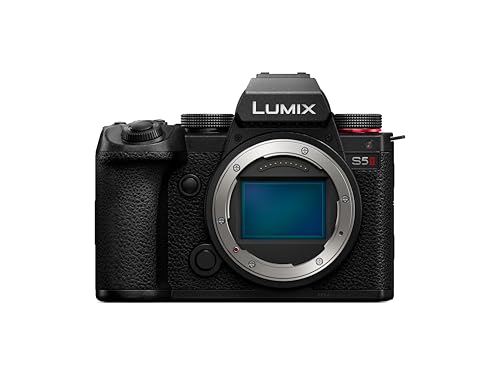
- The Panasonic LUMIX S5II is the concert professional’s pick — long-take reliability and a serious audio interface.
- The Sony Alpha 7 IV owns the dim recital hall: low light, fast hands, dependable tracking.
- The Sony ZV-E10 II is the music teacher’s and creator’s all-rounder.
- The DJI Osmo Pocket 3 films the moving musical story — processions, studios, rehearsals.
- The GoPro HERO13 Black survives the kit, the pit and the weather; the Sony ZV-1F makes practice recording effortless.
In this guide
Quick Picks
| Camera | Badge | Why it earns its place |
|---|---|---|
| Panasonic LUMIX S5II | Best for concerts and long performances | Cooling, dual cards and pro audio options for the full-length recording that cannot fail. |
| Sony Alpha 7 IV | Best for recitals and dim halls | Low-light video and subject tracking that follow hands and faces through the performance. |
| Sony ZV-E10 II | Best for teachers and music creators | Creator-simple, with autofocus and audio options sized for lessons and channels. |
| DJI Osmo Pocket 3 | Best for moving musical stories | Gimbal-smooth filming for processions, studio tours and rehearsal diaries. |
| GoPro HERO13 Black | Best for loud, wet and dangerous places | Mounts on the kit, the rail and the stage edge, and survives the performance. |
| Sony ZV-1F | Best for practice rooms | A pocket compact that makes recording every rehearsal a one-button habit. |
How Did We Choose Cameras for Recording Music?
We recorded the way musicians actually need recording: a full-length recital without a break, a band rehearsal in a live room, a lesson, a choir in a church acoustic, and a drummer who had been told to play as if the neighbours were out. The first test was audio architecture. Does the camera take an external microphone or a desk feed through a proper input, with manual levels and a way to monitor? Does it offer the audio accessories — shoe-mounted digital microphones, XLR adapters in its ecosystem — that let a recording grow from the camera’s own mics to a real sound setup without changing cameras? Cameras that treated audio as a spec-sheet line fell early.
The second test was endurance with manners: continuous recording across a concert’s full length, thermal behaviour under stage warmth, and silence — the camera’s own operational noises, its fan, its autofocus motors through the lens, judged against a quiet passage recorded at close range. The third was the visual musician’s test: autofocus on hands and faces in stage light, exposure composure when the lighting desk gets theatrical, and colour that keeps a wooden instrument looking like wood rather than furniture polish. The survivors are cameras a musician can build a recording practice on, at six levels of ambition.
Why Does the Microphone Matter More Than the Camera?
Because the ear forgives nothing. A viewer will watch a slightly soft frame of a great performance with pleasure; a listener abandons a distorted, echoing recording of the same performance in nine seconds. The physics are unforgiving: a camera’s built-in microphones sit where the camera sits — at the back of the hall, beside the coughing, inside the room’s reverberation — while the music happens somewhere else entirely. Every metre of distance trades clarity for room, and a concert hall’s beautiful acoustic, designed to blend sound for the seated ear, blends it to soup for a distant microphone.
The hierarchy of cures is fixed and worth memorising. Best is a feed from the venue’s desk or a pair of microphones placed where a listener would pay to sit — close to the ensemble, above the audience’s noise floor. Next is a good microphone on or near the camera, chosen for music’s dynamic range. Last, and only for rehearsals and lessons, the camera’s own microphones. Our ranking of the picks below follows that hierarchy exactly — how far up it each camera lets you climb: the professional bodies accept desk feeds and XLR ecosystems natively in spirit; the creator bodies take shoe and plug microphones gracefully; the small cameras make their peace with proximity — get them close, and their honesty improves out of all proportion.
Levels are the second half of the sermon. Music’s dynamic range — the whisper of a harmonic, the full band’s chorus — exceeds every other subject’s, and automatic gain, left alone, will pump and breathe audibly, ducking the loud passages and hissing up the quiet ones. Manual levels, set at the loudest moment of the rehearsal with headroom to spare, are the single most valuable skill in music recording. Every pick below allows them in some form; the setup section turns that permission into a ritual.
Which Cameras Record Music Best?

Panasonic LUMIX S5II — Best for concerts and long performances
A concert is a marathon run in evening dress, and the S5II is the camera built to finish it. Its active cooling removes the thermal ceiling that hangs over every long mirrorless recording — the summer festival set, the full-length symphony, the opera’s second act in a warm hall. Its dual card slots write the unrepeatable with an instant backup. And its audio architecture, through Panasonic’s XLR adapter ecosystem, accepts the desk feed or the microphone pair with proper preamps, manual control and monitoring — the point where a camera stops being a camera with sound and becomes a recording system that also sees.
The image keeps the same professional promises. Full-frame low-light composure for the candlelit recital and the club’s gloom; phase-detect autofocus that holds the soloist through the performance’s movement; monitoring tools that let the operator prove exposure rather than trust it, which matters when the lighting desk decides the third act is a thunderstorm. For the venue, the conservatoire, the production company recording performances as a service, this is the body the work standardises on.
Its demands are the professional’s usual ones: an operator who sets it up deliberately, lenses and microphones budgeted as part of the system, and size that belongs on a tripod at the back or a position in the wings rather than in a coat pocket. A musician who needs the practice room recorded should read down the list; a musician whose performances are the product should start here and stop shopping.
- Role: concert and performance recording system
- Cooling: active, for full-length takes
- Audio: XLR adapter path, desk feeds, monitoring
- Storage: dual slots with simultaneous backup
- Image: full-frame low-light composure
Strengths
- The full performance, recorded entire, with backup
- Audio treated as a first-class citizen
- Stage light handled without drama
Trade-offs
- A system to buy, not a gadget
- Wants a deliberate operator
- Oversized for lessons and practice rooms
Its definitive setup is the house position: tripod at the sound desk, the desk’s own feed in one channel and a room microphone pair in the other, levels set at the loudest rehearsal passage, and a saved configuration named for the venue. Concert recording rewards the crew that has done it fifty times identically; the S5II is the camera that makes identical possible.
Best for: venues, ensembles, conservatoires, anyone recording performances professionally. Not suited for: casual practice capture or musicians who need to operate it while performing

Sony Alpha 7 IV — Best for recitals and dim halls
The recital is the S5II’s marathon distilled into intimacy: one performer, one instrument, a hall lit like a memory. The A7 IV owns this room. Its low-light video keeps the shadows around the pianist clean rather than crawling; its autofocus — face and eye detection that understands a performer leaning into the phrase — holds the soloist through movement that would send lesser systems hunting across the music stand; and its stills, from the same position between pieces, give the programme its photographs without a second body disturbing the evening.
Its audio path is the grown-up one: a proper input for the microphone pair or the hall’s feed, headphone monitoring for the operator who checks levels during the tuning, and Sony’s digital audio shoe for the microphone upgrades that keep cables out of the performance space. The colour science flatters wood and skin under warm hall lighting, which is to say it flatters the entire visible content of a recital.
Plan around two disciplines. Long, warm, full-length recordings should be rehearsed at your exact settings — this body’s stamina is a property of its configuration, and the professional proves it before the audience arrives. And the single operator’s ritual matters: levels at the loudest passage, exposure locked against the lighting desk’s ambitions, focus mode chosen for a performer rather than a product. Set up with that care, the A7 IV records recitals the way the audience remembers them, which is the only review that counts.
- Role: recital and chamber recording
- Low light: clean shadows in dim halls
- Autofocus: performer tracking through phrases
- Audio: input, monitoring, digital shoe options
- Also: programme stills from the same body
Strengths
- The dim hall rendered with dignity
- Focus that follows the music’s movement
- One body for the recording and the photographs
Trade-offs
- Full-length hot recordings need a settings rehearsal
- Single-operator discipline required
- The lens it deserves is an investment
Place it where the audience’s best seat would be if the best seat had a tripod: centre, just behind the last row’s sightline, high enough to see the hands. Recital recording is an act of listening with a camera, and the A7 IV is the most attentive listener in this guide.
Best for: soloists, chamber ensembles, schools of music, recital archives. Not suited for: unattended operation, or musicians recording themselves mid-performance without help

Sony ZV-E10 II — Best for teachers and music creators
The music teacher’s recording life is a mosaic: the lesson’s demonstration filmed for the student to take home, the practice diary, the examination piece recorded under the rules, the channel video that pays for the strings. The ZV-E10 II is built for exactly that mosaic. Its autofocus keeps the demonstrating hands and the explaining face in effortless focus; its microphone options — the directional built-in array, the input for a proper instrument microphone, the shoe for digital upgrades — cover the lesson’s audio honestly; and its creator-simple operation means the camera never becomes the lesson’s subject.
Its image flatters the teaching room: oversampled clarity that keeps fingering legible — the detail students actually pause on — and colour that survives the practice room’s mixed light. On USB power it records the full teaching day; on a small tripod it lives on the piano or the shelf, ready in the time it takes to sit down. For the ensemble’s social channel and the choir’s rehearsal archive, the same virtues apply at group scale.
Its edges are the class’s: no in-body stabilisation, so it sits rather than walks; a single card slot, so the examination recording gets offloaded the same evening as a matter of professional hygiene; low light that is good rather than recital-hall great. Within the teaching world those are footnotes. This is the camera a generation of music teachers will build their recorded practice on, and it earns that future honestly.
- Role: lessons, practice diaries, music channels
- Autofocus: hands and faces held effortlessly
- Audio: directional array, mic input, shoe upgrades
- Image: fingering-legible oversampled clarity
- Power: USB for the teaching day
Strengths
- The lesson filmed without interrupting it
- Audio options that grow with the teacher
- Always-ready size and simplicity
Trade-offs
- Tripod-bound; no in-body stabilisation
- Single card slot needs same-day offload
- Dim halls are a step beyond its best
Give it a permanent place in the teaching room — the shelf position, the saved settings, the microphone already plugged in — and recording becomes a habit rather than an event. Habits are how practice archives get built, and practice archives are how students improve between lessons.
Best for: music teachers, students recording examinations, ensemble channels, rehearsal archives. Not suited for: full-length concert production or handheld performance filming

DJI Osmo Pocket 3 — Best for moving musical stories
Not all music recording faces the stage. The procession that opens the festival, the choir’s walk to the venue, the studio session filmed as a diary, the luthier’s workshop visit, the band’s day told as a film — these musical stories move, and the Pocket 3 is their camera. Its gimbal turns a walking shot into a dolly shot; its tracking holds the singer through the rehearsal room’s choreography; its rotating screen serves the musician-vlogger’s pieces to camera between the music. Its wireless microphone pairing is the decisive feature here: the moving musician’s voice, and the instrument’s detail at conversation distance, stay at constant quality while the camera roams.
Its low-light poise, remarkable for its size, respects the rehearsal room and the evening session as they are. Its footage intercuts gracefully with the bigger bodies’ — a production can hold the S5II’s concert master and the Pocket 3’s diary of the same day in one film without a visible seam of quality. For the ensemble’s content life — the socials, the tour diary, the crowdfunding film — it is frequently the only camera that gets used, because it is the only one that is there.
It is not the concert master camera: a fixed wide position at the back of a hall is a waste of its gifts, and its internal audio at hall distance is the biscuit tin this guide opened by deploring. Pair it with its wireless microphone for the stories it tells, keep it moving, and let the tripod bodies hold the performances. Division of labour is not a compromise; it is the production.
- Role: processions, diaries, studio and rehearsal stories
- Stabilisation: three-axis mechanical gimbal
- Audio: wireless microphone pairing
- Tracking: holds the moving musician
- Size: present at every musical occasion
Strengths
- Musical life filmed as it happens
- The moving voice at constant quality
- Intercuts with the big bodies’ footage
Trade-offs
- Not a hall master camera
- Internal audio at distance is not for performances
- Fixed lens framing
Its finest musical use might be the rehearsal diary kept honestly across a season: the same gimbal, the same wireless microphone, the ensemble’s progress from first read to performance. Musicians buy it for the concert film and treasure it for that diary, because improvement, watched back, is the best teacher after the teacher.
Best for: music vlogging, rehearsal diaries, processions, studio stories, ensemble content. Not suited for: the fixed concert master shot or distant hall audio

GoPro HERO13 Black — Best for loud, wet and dangerous places
Every ensemble has a seat where cameras fear to sit: inside the drum kit’s blast radius, on the brass section’s music stand, at the stage edge in the rain at the outdoor festival, clamped to the organ case above the pipes. The HERO13 is the camera that takes those seats. Sealed, stabilised and small enough to mount where the music is made rather than where it is heard, it records the performance from inside the ensemble — the drummer’s hands from the kit’s own perspective, the conductor’s view of the choir, the marching band’s road rushing beneath the ranks.
Its audio, close to the source, escapes the biscuit tin by the simple expedient of proximity: at a metre from the instrument, even an action camera’s microphones hear the music before the room can ruin it, and its wind and handling protection suits the outdoor set. Its endurance at sensible settings covers the festival day, and its files’ gyro data lets the edit calm the marching footage further. As the second, third and fourth camera of a performance production — the angles no operator could stand in — it has no substitute in this guide.
The limits are constitutional: the ultra-wide view distorts the ensemble’s geometry at close range if framed carelessly, the audio is proximity-dependent and no match for a real microphone at distance, and it is nobody’s master camera for a recital. Deployed as the insider it is, it gives music films their most alive footage — the performance as the performers experience it, which no seat in the house can offer.
- Role: insider angles — kit, stand, stage edge, march
- Build: sealed against weather and festival
- Stabilisation: benchmark, with gyro data
- Audio: proximity is its strategy
- Mounts: anywhere, including on instruments’ furniture
Strengths
- The performance from inside the ensemble
- Survives volume, weather and vibration
- The multi-camera production’s secret weapon
Trade-offs
- Wide view needs framing care
- Audio only honest at close range
- Not a master camera for formal performance
Ask the performers before mounting on their territory, and tether everything: a camera in the kit is a guest in someone’s workplace, and the drummer’s consent and a safety line are both non-negotiable. Granted those, the HERO13’s footage is the difference between a recording of a concert and a film about playing one.
Best for: insider angles, outdoor sets, marching and movement, multi-camera productions. Not suited for: the single master recording of a formal performance

Sony ZV-1F — Best for practice rooms
The most valuable music recording is the one that happens daily, and daily is a design brief the ZV-1F answers completely. It lives in the practice room or the instrument case’s luggage, wakes in a second, frames wide enough to hold the player and the instrument from the shelf across the room, and records a session with a single press — no menus, no lens decisions, no production. The practice archive it builds, unglamorous and complete, is the recording by which students and teachers actually measure progress, and it exists only if the friction is zero. Here, the friction is zero.
Its fixed wide lens and deep focus suit the practice geometry: everything from the music stand to the player’s posture is in frame and in focus, which is what a teacher reviewing posture and position wants. Its audio at practice distance — a room, not a hall — is honest enough for its purpose: the phrase’s shape, the intonation’s story, the rhythm’s truth. Its files are small, its habits are instant, and its price class means the school can own several, one per practice room, which is the deployment where it quietly transforms a department.
It will not record the concert, and pretending otherwise would insult both the camera and the concert: the hall’s distance, the stage’s light and the performance’s audio all belong to the bodies above. The ZV-1F is the diary, not the portrait. But musicians are made in diaries — in the thousand unrecorded hours this camera finally records — and its place in this guide is earned on every one of them.
- Role: daily practice and lesson capture
- Lens: fixed wide, deep focus for player and instrument
- Operation: one press, no production
- Audio: honest at room distance
- Deployment: one per practice room
Strengths
- Recording as a daily habit, not an event
- Posture and fingering in one fixed frame
- Cheap enough to equip every practice room
Trade-offs
- No concert or hall role
- Fixed lens, no reach
- Audio is room-scale honest only
Set the shelf position once, with the frame holding the player, the stand and the instrument’s full length, and then never move it: the practice archive’s value is comparability across months, and a camera that never changes its mind makes progress visible in a way no single brilliant recording can.
Best for: practice rooms, daily student diaries, lesson capture in schools. Not suited for: performances, halls, or any recording the public will judge
How Do Different Instruments Change What the Camera Must Do?
The piano is the recording’s examination in dynamics: a single instrument spanning the whisper of a harmonic to a chord that moves the room’s air, with the player’s hands travelling four feet of keyboard as the music’s geography. It wants the camera at the keyboard’s side, high enough to see both hands, the microphone closer to the strings than modesty suggests, and levels set by the loudest chord of the programme — which the pianist, asked politely, will play for you in the rehearsal exactly once. The violin family inverts the problem: small movements at high speed, a sound that lives in the bow’s contact point, and a player whose face is half-hidden by the instrument — autofocus that understands faces at angles, and a frame that honours the bow’s full travel.
The voice is the autofocus’s easiest subject and the level-setter’s hardest: a singer’s dynamic range arrives without warning, rides on breath, and carries the words the audience came for, so the microphone belongs nearer the singer than any other single source in the room and the headroom belongs to the high note in the final chorus. Brass and drums are the endurance test — sheer acoustic power that distorts careless inputs and vibrates careless mounts — which is why the HERO13’s insider seat at the kit comes with a tether and a level check at the drummer’s true full volume, not the soundcheck’s diplomacy. The guitar and its plucked cousins ask for closeness in both senses: the camera near enough to see the fingering students will study, the microphone near enough to hear the nail’s attack that defines the instrument’s voice. One rule survives every instrument: record the rehearsal’s loudest and fastest passage, and judge the whole setup by those ten seconds.
What About Streaming a Performance Live?
The streamed concert adds one tyrant to the recording’s discipline: the network, which compresses what it carries and forgives nothing. The camera virtues shift accordingly — a clean output feed matters as much as the internal file, exposure and levels must be even more conservative because the platform’s compression exaggerates every excess, and the master recording in the camera becomes the archive that redeems the stream’s compromises. The bodies in this guide with clean feeds and dual-purpose design — record internally, send externally — are the streamer’s correct tools, and the S5II’s broadcast furniture explains its top ranking for venues whose audience is half in the room and half in other countries.
Two streaming disciplines deserve their sentences. Sound first, again: the streamed audience hears only the feed, so the desk mix or the microphone pair is not an enhancement but the entire product, and a soundcheck watched from a phone in the car park is worth a day of specifications. And rights: performing music live to an online audience engages licences that vary by repertoire and territory, and the ensemble’s administrator, not its camera operator, owns that question — ask it before the season, not before the encore.
How Should an Ensemble Build Its Recording Archive?
An ensemble’s archive is its memory and, increasingly, its audition reel, its funding evidence and its history. Build it like a library from the first recording: every performance filed by date, venue and programme, with the soloists named in the folder’s title rather than in someone’s recollection; the master files kept at the quality they were recorded, with the streaming and sharing copies derived from them rather than replacing them; two copies on different media from the night itself, because the week after the concert is when cards are borrowed and history is accidentally formatted.
Consistency compounds the archive’s value. The same house position, the same audio discipline, the same naming, season after season — the S5II section’s sermon applied to a whole institution — turns a pile of recordings into a comparable record of the ensemble’s life, in which a funder, a historian or the ensemble’s own conductor can hear the years pass. That is the deepest reason to standardise on one system from this guide and operate it identically: archives are built by rituals, and rituals are built by choosing once, well.
How Do the Six Music Cameras Compare?
| Camera | Musical habitat | Audio path | Endurance | Signature strength |
|---|---|---|---|---|
| Panasonic LUMIX S5II | Concert hall, venue | XLR ecosystem, desk feeds | Full-length, cooled | Professional completeness |
| Sony Alpha 7 IV | Recital hall | Input, monitoring, shoe | Full-length, rehearsed | Dim-hall grace |
| Sony ZV-E10 II | Teaching room | Array, input, shoe | Teaching day on USB | Lesson simplicity |
| DJI Osmo Pocket 3 | Everywhere music moves | Wireless microphone pairing | Session-length | The moving story |
| GoPro HERO13 Black | Inside the ensemble | Proximity | Festival day | Insider angles |
| Sony ZV-1F | Practice room | Built-in, room distance | Always ready | The daily habit |
One row deserves a caution against misreading: the practice camera at the table’s foot is not the concert camera’s poor relation. Judged by hours of music actually improved, the daily mirror in the practice room may be the most consequential recording device a musician ever owns — the table ranks habitats, not worth.
The audio path column is the ranking in disguise. Cameras climb this guide’s order exactly as far as their sound can climb — from the practice room’s honest built-ins to the concert system’s desk-fed professionalism — and your own recording should climb the same ladder in the same order.
How Should You Set Up to Record a Performance?
Arrive at the rehearsal, not the performance, because every decision that matters must be made while mistakes are still free. Place the camera where the best listener sits — centre, elevated just enough to see hands and faces over the front rows — and lock the tripod there. Place the sound where the sound is decided: the desk feed if the venue mixes, a microphone pair at the conductor’s shoulder height facing the ensemble if it does not, and the camera’s own microphones never, for anything the public will hear. Set the levels against the loudest passage the rehearsal offers, then ask the ensemble for the truly loud passage — there is always one more — and set them again with headroom.
Lock the camera’s manners for the duration: manual exposure against the stage as lit, white balance fixed to the lighting’s dominant temperature, focus mode chosen for performers and then left to work. Record the rehearsal’s last item entire and listen to it on headphones in the hall, because the hall is where its faults are audible. Then write the settings on the card that lives with the tripod, so the next performance — perhaps recorded by a different volunteer — begins from knowledge rather than archaeology.
On the night, the ritual shrinks to its essentials: fresh cards, formatted in camera; power beyond argument; record started before the house lights fall, because the tuning and the hush are part of the performance’s truth and because a camera already running cannot miss the downbeat. Stop nothing, touch nothing, until the applause ends. The best performance recordings are made by operators who did almost nothing, extremely well prepared.
What About Recording Yourself — the Solo Practice and the Audition Tape?
The audition tape is its own genre with its own law: the panel wants the truth, unedited, in one take, framed as the rules specify — usually the whole player, the whole instrument, nothing cropped that could hide a cut. The cameras for it are the honest ones in this guide: the ZV-E10 II or the R50-class body on a tripod at the room’s honest distance, a microphone placed for the instrument rather than the room, levels set from the loudest excerpt, and a full test take watched entire before the real one. Audition panels can hear a room’s lies; record in the best acoustic you can borrow, and let the playing be the only special effect.
The solo practice recording obeys the opposite aesthetic: it is a mirror, not a portrait. Fixed camera, same frame daily, no production values beyond audibility — the ZV-1F’s entire philosophy. Its purpose is comparison across time, and its discipline is consistency: same position, same settings, same first five minutes of scales, so that March’s recording can be laid honestly against October’s. Musicians who keep that mirror rarely need to be told they are improving, and teachers who receive it weekly teach the student in front of them rather than the one they remember.
What Does the Camera Operator Actually Do During the Performance?
Mostly, nothing — and doing nothing, correctly, is a skill. The prepared operator’s performance-night duties fit on an index card: confirm the tally and the levels as the house settles; watch the meters through the first loud passage and then trust the rehearsal; glance at the frame at each movement break for the slow disasters — the drifting tripod, the stand light that died, the soloist who has moved chairs; and keep hands off every control that was locked for a reason. The operator who adjusts mid-performance is usually repairing a rehearsal that never happened, audibly, in the recording’s quietest passage, where a button’s click and a focus hunt will live forever.
The exception is the produced recording — the multi-camera concert with a director — where the main operator’s stillness is what the other cameras move against. Even there, the grammar is restraint: the master holds, the insiders roam, and the edit finds its rhythm in the contrast. Music’s own pacing is the director; the cameras that respect it produce recordings that age well, and the ones that fight it produce recordings that date like last year’s television. Sit still, listen like the audience, and let the performance be the event. That is the whole job, and it takes a season to learn to do it without fidgeting.
What Mistakes Ruin Music Recordings?
Automatic gain leads the catalogue, pumping the quiet passages up into hiss and sitting on the choruses like a hand on the volume knob — the sound of a camera recording music without being told how loud music gets. Behind it comes the distant single microphone, whether the camera’s own or a good one placed with the camera at the back, dissolving the ensemble into the room. Third is the level set at the spoken rehearsal and destroyed by the first fortissimo: distortion is forever, and it always arrives at the performance’s best moment, because that is what loudest means.
One more audio failure hides in plain sight: the stereo image nobody checked. A microphone pair crossed, a desk feed arriving in one channel only, a cable that sums the room to mono — the recording plays, the levels look alive, and the ensemble’s width, the choir’s spread, the piano’s geography have quietly vanished. Headphones at the rehearsal catch it in seconds; speakers in the edit reveal it to everyone. Music is the one subject where the sound’s shape is content, and the operator who monitors in stereo, on closed headphones, in the room, is the only guarantee that the shape survives.
The visual mistakes keep pace. Autofocus left in a product mode, admiring the music stand’s edge while the soloist softens. Exposure chasing the lighting desk’s effects, breathing in time with the show. The camera placed for the photograph rather than the film — too low, too wide, the conductor’s back as the evening’s protagonist. And the operational sin beneath them all: no full-length test, so the card, the heat or the battery delivers its surprise at minute seventy of a ninety-minute masterpiece. Music forgives a modest camera. It does not forgive an unprepared one.
How Do You Film a Rehearsal Without Ruining It?
The rehearsal is where the ensemble’s real work happens, and a camera crew wandering it with production manners will be tolerated exactly once. The rehearsal recording’s ethic is invisibility: one camera, placed before the players arrive, started before the first note and stopped after the last, with the conductor’s single agreement covering the whole session. Its purpose is diagnostic — the balance the conductor cannot hear from the podium, the entry the section keeps missing, the tempo’s drift across the movement — and its quality bar is set by that purpose: clear enough to judge, close enough to learn from, and never so elaborate that the rehearsal becomes a shoot. The ZV-E10 II and the Pocket 3 divide this duty by temperament: the fixed honest witness, and the diary that walks the breaks and the sectional work.
One rehearsal ritual repays its awkwardness: the playback break, ten minutes in which the ensemble watches one passage together. It feels exposing the first time and becomes, by the third, the rehearsal’s most efficient teaching tool — because musicians correct in one viewing what a conductor’s words circle for a month. The camera that enables that ritual, cheaply and without ceremony, has earned its place in the room more completely than any concert film could.
How Should a Small Venue or School of Music Start?
With one camera, one microphone position and one ritual, scaled to the room where the most music happens. For most schools of music that is the teaching-and-recital room: the ZV-E10 II or the A7 IV on its marked tripod position, a microphone pair at the listening point feeding it directly, levels and settings on the laminated card, and a rota of two trained people rather than a department of one expert. Record everything in that room for a term — lessons by request, every recital, the masterclass — and let the archive’s existence make the argument for the second room’s kit. Institutions that begin this way end the year with a working system and a waiting list; institutions that begin with a five-camera tender end it with a procurement story.
The starter’s discipline is the professional’s, miniaturised: rehearse the loud passage, monitor on headphones, offload the same evening, name the files by date and performer. None of it requires the flagship. All of it transfers intact when the flagship arrives, which is why the order of purchases in this guide — sound, ritual, then camera ambition — is not a budget compromise but the actual professional sequence, practised by every venue whose recordings are worth hearing.
Final Recommendation
A last encouragement, from the back of many halls: the audience for a music recording is the most forgiving in all of filming about everything except the sound. Give them the music as it was — placed microphones, honest levels, an unbroken take — and they will forgive the frame its modesty forever. Give them a beautiful picture of a distorted, distant performance and no sensor ever made will save the evening. Record the sound like it is the product, because for everyone who was not there, it is.
Climb the ladder in order. Begin where your music actually lives: the practice room’s daily mirror if you are a student — the Sony ZV-1F, fixed and faithful; the teaching room’s all-rounder if you teach — the Sony ZV-E10 II, with a real microphone as the first upgrade. Ensembles and recitalists should build on the Sony Alpha 7 IV for the dim hall’s grace, and venues and professionals on the Panasonic LUMIX S5II, whose audio architecture and endurance make it a recording system rather than a camera. Keep the DJI Osmo Pocket 3 for the musical stories that move and the GoPro HERO13 Black for the seats inside the ensemble — and whatever body you choose, spend the next money on the microphone and the rehearsal ritual, because in music recording the camera is the witness, but the sound is the testimony.
Frequently Asked Questions
Can a camera’s built-in microphones ever be enough for music?
At close range in a small room — the practice session, the lesson, the rehearsal diary — yes, honestly enough for their purpose. At hall distance for a performance the public will hear, no: distance and reverberation defeat every built-in microphone ever made. The cure is placement, not price — a modest microphone near the music outperforms a flagship camera’s built-ins at the back of the hall.
How do I stop loud passages distorting?
Set levels manually against the loudest passage of the rehearsal, with clear headroom below the maximum, and disable automatic gain for the performance. If the loudest moment has not happened yet in rehearsal, assume the performance holds a louder one — it usually does — and leave margin for it. Distortion recorded is distortion forever; quiet recordings can be raised in the edit, clipped ones cannot be repaired.
Where should the camera sit for an ensemble?
Where the best listener sits: centred, elevated enough to see over the front rows to the players’ hands and faces, far enough to hold the ensemble’s width without a fisheye’s apology. The conductor’s shoulder is the classic audio position; the camera usually lives a little further back and higher, with the sound arriving by cable from its own, closer home.
Do I need two cameras for a concert?
Not to begin with. One well-placed master with proper sound outperforms two cameras with the hall’s echo, every time. Add the second — the insider action camera, the soloist’s closer view — when the master’s ritual is boringly reliable and the production genuinely has somewhere to cut to. Sound first, master second, angles third: the order is the whole secret.
What frame rate and settings suit music?
The regional standard rate for ordinary performance, with a shutter that keeps motion natural; higher rates only where slow motion of technique — the bow, the stick work — is the point of the recording. Lock exposure and white balance for the stage as lit, because the lighting desk will change the show and the camera must not chase it.
How do I record a choir in a church acoustic?
With respect for the acoustic as a member of the ensemble. Microphones closer to the choir than instinct suggests — the building adds its bloom regardless — the camera at the back with a long view, levels set against the full-choir climax, and a rehearsal recording listened to in the building itself. Church acoustics flatter the present and betray the distant microphone, so bring the sound’s home forward and let the picture take the distant seat.
How far from the ensemble should the camera be?
As close as the frame’s honesty allows — near enough that faces and hands carry expression, far enough that the ensemble’s width fits without distortion and the audience’s heads leave the bottom of the frame. In most halls that is the back of the stalls or the front of the balcony with a modest telephoto reach. The microphone, remember, lives by different geography entirely: it goes where the listening is best, and the cable reconciles the two positions.
Can I record a gig with just a phone?
As a memory and a social clip, yes — phones are respectable witnesses at close range in decent light. As the performance’s record, the phone inherits every problem this guide opened with: distant built-in audio, automatic levels, a lens that cannot hold the stage’s contrast. Musicians who care about the gig’s archive graduate to a camera with a real audio path and keep the phone for the dressing-room diary, where it is genuinely excellent.
What is the best single upgrade after the camera?
The microphone, placed properly — before any lens, light or second camera. A desk feed where one exists, a microphone pair at the listening position where it does not, and the manual-level skill to run either. Every musician who has made the upgrade describes the same experience: the recordings they already owned, from the camera they already had, suddenly sound like the performances they remembered.
Is a camcorder better than a mirrorless camera for concerts?
The traditional camcorder’s virtues — endless recording, a zoom that never hunts for its breath, audio inputs on the professional models — are real, and for a single fixed house position they remain a sane choice. The mirrorless bodies in this guide answer with larger sensors for the dim hall, interchangeable lenses for the long throw, and stills from the same body. Choose by which shortage your venue feels: endurance and simplicity, or light and reach. Either way, the microphone decision outranks the body decision.
How do I sync a separate audio recorder with the camera in the edit?
With a clap, a slate or any sharp transient both devices hear at the take’s head — the same discipline the film world has used for a century — and with a drift check at the tail of long takes, because two free-running clocks wander apart slowly and a forty-minute concert can end noticeably out of step. Align on the head transient, verify against a tail transient, and stretch or nudge once if the drift shows. The habit costs ten seconds per take and is the difference between a recording whose sound sits inside the picture and one that merely accompanies it.
How do I record a school concert where parents will film anyway?
By being the recording they wish they had: one official camera, properly placed and properly fed, with the file shared to families afterward under the school’s policies. Announce it kindly — the official recording exists, phones down, enjoy your child’s performance with your own eyes — and the hall gets quieter, the sightlines get clearer, and the archive gets the definitive version. Consent and safeguarding rules govern the sharing, and the school’s office, not the camera operator, sets them.
Related Guides
Musicians building a recording practice usually continue into our guide to cameras for recording church services our guide to cameras for recording video for YouTube our guide to cameras for filming concerts


