ilcastellomenu.com is reader-supported. When you buy through links on our site, we may earn an affiliate commission.
Where to Buy
The best cameras for a music video are chosen for the most forgiving shoot in the world and the least: forgiving because the song covers a multitude of sins, because nobody lip-syncs to a tripod chart, because chaos reads as energy. Least forgiving because the take is the song — three or four unrepeatable minutes in which the light changes, the performer peaks exactly once, and a camera that overheats, hunts focus or dies at the bridge has not made an error, it has made the video. If you are choosing the best cameras for a music video, choose for that pressure.
Stage light is the first examiner. Music venues and video sets share a palette of violence: saturated colour washes, strobes, haze that eats contrast, backlight that turns performers into silhouettes mid-phrase. Cameras divide sharply here — on highlight roll-off, on colour that survives a red wash without turning skin to plastic, on autofocus that holds a singer’s eye through haze rather than wandering to the drum kit. The picks below were ranked on stage behaviour first and spec sheets second, because the song does not care about your spec sheet.
The second examiner is workflow. Music videos are cut hard — dozens of angles, speeds and takes conformed to one track — so a camera’s value includes how its footage grades against the A-camera’s, how its files behave in the edit, and whether it can be the second or third angle without a colourist’s ransom. Several picks here earn their place as much for their behaviour in a multi-camera ecosystem as for their solo brilliance, and the badges say which role each plays: hero, workhorse, second angle, or the pocket camera that steals the shot nobody planned.
Budget honesty, finally: a music video’s look is bought mostly with light, location and the performer’s commitment, in that order. The cameras here span from a pocket gimbal to full-frame heroes so the money left over can go where it shows. Buy the body that leaves the lighting package funded — a mid-tier pick under real light will humiliate a flagship under a venue’s house rig, and your audience will never know a camera was involved at all.
One more reality of the format belongs up front: the music video is the last reliably viral art form, which means it is shot for screens from cinema to watch-face, often in the same master. Cameras that capture clean, flexible footage — reframing headroom, vertical extraction, colour that survives compression — serve the song’s actual life after the premiere. The picks were chosen with that afterlife in mind, because a video’s first weekend on a phone in a bus queue is now its opening night.
Key Takeaways
- Music video cameras are judged under stage light: highlight roll-off, saturated colour, haze-proof autofocus.
- The take lasts the whole song — recording stamina and battery behaviour are creative features here.
- Multi-camera grading match matters: second angles must cut against the hero camera without a fight.
- Light and location outrank bodies in the final look — leave budget for the lighting package.
- Slow motion at the chorus and speed-ramping are core grammar; frame-rate flexibility is a real criterion.
In this guide
Quick Picks
| Camera | Badge | Why it earns its place |
|---|---|---|
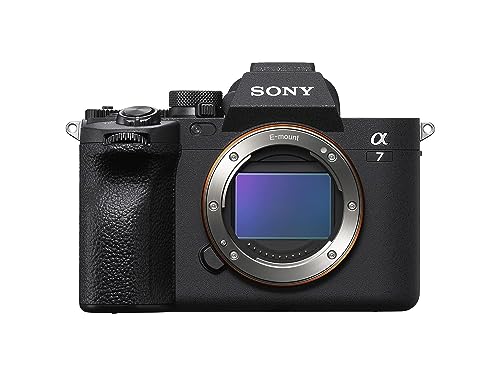
| Sony Alpha 7 IV | Best hero camera for most music videos | Eye autofocus through haze, full-frame low-light depth, and lenses for every music-video cliché done well. |
| Panasonic LUMIX S5II | Best for live takes and long performances | Fan cooling for whole-set recordings, filmmaker colour, and open gate for vertical cutdowns. |
| Canon EOS R6 Mark II | Best for energetic performance and movement | Subject tracking that follows dancers, pleasing skin under stage colour, and hybrid stills for artwork. |
| Fujifilm X-T5 | Best for a baked-in vintage or film look | Film simulations give the video its grade on the day — lo-fi, nostalgic and indie aesthetics included. |
| Sony ZV-E10 II | Best for solo artists filming themselves | The bedroom-pop and DIY video camera: face tracking, product mode for gear shots, tiny footprint. |
| DJI Osmo Pocket 3 | Best pocket camera for impossible angles | Gimbal glide for walk-throughs, crowd dives and the angle that makes the edit — from a coat pocket. |
How Did We Choose Cameras for Music Video Work?
We imagined the worst four minutes in music videography and graded against them: a dim stage, a red wash, a performer who moves like weather, haze thick enough to chew autofocus, and a director who wants the whole song in one take, then again at half speed for the chorus. Cameras that kept faces, held colour and finished the song survived; cameras that needed the conditions to improve did not, however beautiful their daylight reels.
Second, we weighted ecosystem and grading diplomacy. Music videos are edited fast and often by the person who shot them, so footage that arrives with a pleasing look — or grades toward one quickly — beats footage with theoretical latitude and a hostile starting point. Lens choice mattered the same way: music video’s grammar of wide distortion, fast-prime glow and telephoto compression requires a mount whose character lenses a small production can actually hire or own.
Third, we insisted on role coverage: a hero for the main performance, a stamina pick for long live takes, a colour pick for narrative sections, a creator pick for the solo artist filming themselves, and the pocket camera for the impossible angle. A list of six interchangeable heroes would fail the reader whose actual shoot — like every real shoot — is a company of cameras with different jobs.
We also auditioned each camera’s behaviour with practical lights — the bulbs, strips and windows a real location offers — because music videos are lit by what exists as often as by what is hired. Sensors and colour pipelines differ in how kindly they treat mixed, cheap, coloured practicals, and the difference is visible in every frame of a small production. The picks here are the ones whose footage forgave the lighting reality of the genre rather than demanding its replacement.
Which Are the Best Cameras for a Music Video Shoot?
Each pick is cast, not just listed: its role in the company, the moment in the song it exists for, and the weakness the director must plan around.

Sony Alpha 7 IV — Best hero camera for most music videos
Cast the A7 IV as your hero and the shoot gets simpler: its eye autofocus finds the singer’s face through haze and movement and stays there with a loyalty that lets the operator think about framing instead of focus, while the full-frame sensor holds stage blacks clean and lets a fast prime turn a rehearsal room into a cathedral of shallow focus. For the standard modern music video — performance plus narrative inserts, shot by a small crew in a day — it is the camera that removes the most variables from the equation.
The E-mount lens bench is its co-star. Music video grammar runs on specific glass: the ultra-wide that bends a corridor around a rapper, the fast standard prime that glows under practicals, the portrait telephoto that compresses a stage into a wall of light. Sony’s ecosystem holds all of them at every budget, with focusing behaviour quiet enough for the intimate acoustic take. Footage grades willingly, cuts against Sony cinema bodies when the production grows, and the stills side covers the single artwork and press shots in the same session.
Plan around its known edges: the highest frame rates crop the sensor, which changes your wide-lens maths for the slow-motion chorus, and long takes in a hot venue deserve the heat respect due to any full-frame hybrid — rehearse the full song at your settings before the day. Neither point unseats it. For most directors reading this, the A7 IV is the camera the rest of the company should be chosen to match.
Acoustic and stripped-back videos deserve a specific A7 IV note: its low-light cleanliness lets a single practical lamp carry a performance without the image dissolving into noise, and its eye autofocus works at apertures wide enough to make that lamp’s glow a halo rather than a light source. The intimate one-take — singer, guitar, one bulb, one room — is a genre unto itself on modern platforms, and this is its most reliable camera at a working musician’s reach.
Interview and documentary inserts — the artist telling the song’s story between performances — are an A7 IV home fixture: its audio monitoring, eye focus and colour make the talking segments feel like the same film as the performance rather than a cheaper programme interrupting it. Videos increasingly live or die on those connective minutes, and a hero camera that shoots them natively saves a second setup entirely.
- Format: full-frame mirrorless, Sony E mount
- Focus: real-time eye autofocus for performers
- Audio: mic input and headphone monitoring
- Role: hero A-camera for performance and narrative
Strengths
- Autofocus holds faces through haze and motion
- Deepest lens bench for music-video grammar
- Clean stage blacks and low-light depth
Trade-offs
- Top frame rates use a crop
- Hot-venue long takes need heat planning
- Menus reward pre-shoot setup time
Best for: directors and artists shooting performance-led videos with a small crew and real lighting.
Not suited for: one-person guerrilla shoots where the Pocket 3’s invisibility matters more than depth.

Panasonic LUMIX S5II — Best for live takes and long performances
Some music videos are not cut from takes; they are performances — the live session, the one-take wonder, the acoustic set filmed as it happened. The S5II is that video’s camera. Its cooling fan removes the thermal ceiling that makes other bodies a gamble across a forty-minute set, its colour keeps skin honest under the mixed practicals of a real room, and its stabilisation lets an operator drift around a performer handheld for a whole song without the footage turning to soup.
The open-gate recording is a music-era feature hiding in a spec list: shoot the full sensor once and extract the landscape master, the vertical cutdown for socials and the square for feeds from the same performance. Labels and artists live on those cutdowns, and a camera that captures them in one pass rather than three shoots is a budget line disguised as a sensor mode. Its flat profiles give the grade real room when the video’s look is built in post rather than in camera.
Its compromises are the familiar ones from our other coverage — a younger lens bench, autofocus that trails the very best on chaotic movement — but a live performance is not chaotic movement; it is sustained, predictable intensity, and that is precisely the workload this body was engineered around. If your videos are events rather than constructions, start the shortlist here.
For tour content — the daily film of a working band — the S5II’s stamina compounds: the same body that shoots the show shoots the soundcheck interview, the bus piece and the venue walk-through, on one lens mount and one battery family, without a thermal rest in a schedule that has none. Touring videographers consolidate around exactly that dependability, and the open-gate cutdowns feed the social accounts that modern tours run on between shows.
Choir and ensemble videos are an S5II speciality worth naming: many faces, long takes, mixed light from windows and practicals, and a director who cannot call cut because the take is the hymn. Its stamina, colour and stabilisation were practically specified by that brief. Ensemble directors should weight it accordingly — the camera that forgets nothing and interrupts nothing is the ensemble’s best member.
- Format: full-frame mirrorless, L mount
- Cooling: fan for uninterrupted long takes
- Recording: open-gate for multi-format delivery
- Stabilisation: strong in-body for handheld performance filming
Strengths
- Whole sets without thermal anxiety
- Open gate feeds every platform from one take
- Filmmaker colour for graded looks
Trade-offs
- Lens bench younger than Sony or Canon
- Autofocus not the class best for chaos
- Utilitarian handling feel
Best for: live sessions, one-take performances and artists needing vertical cutdowns from the same shoot.
Not suited for: multi-camera directors standardising on another mount’s glass.

Canon EOS R6 Mark II — Best for energetic performance and movement
When the video is movement — dancers, a frontperson who covers the stage like a midfielder, a crowd that is part of the choreography — the R6 Mark II earns the call. Its subject-detection autofocus was built for bodies in unpredictable motion and it shows: focus stays glued through spins, dips and crossings that shake lesser systems loose, while Canon’s in-body stabilisation cooperates with RF lenses to keep handheld tracking shots composed rather than merely sharp.
Canon’s colour under stage light is the second argument, and singers’ skin tones are its evidence: where saturated washes turn other systems’ faces waxy or magenta, Canon’s rendering tends to keep the person visible inside the colour — a mercy every editor who has graded a club shoot will recognise. The RF fast primes behind it are the music video’s glow lenses par excellence, and the body’s stills speed covers the live-gig photography and single artwork in the same call sheet.
Heat is the managed variable on long, hot, high-quality takes — test the full set at your settings in summer conditions before a paid day, as with any hybrid — and RF glass is a premium family to buy into. For movement-led videos and hybrid shooter-directors, those are acceptable terms for the most athletic autofocus-and-colour combination in this guide.
Slow-motion choreography is the R6 Mark II’s showcase assignment: dancers tracked through spins at high frame rates, with Canon colour keeping costumes and skin distinct under stage washes, produce the chorus-lift footage editors build videos around. If your genre lives on movement slowed to sculpture — dance, martial arts performance, athletic artistry — weight this pick above its already high station; it was, in effect, designed during a dance rehearsal.
Festival coverage teams choose the R6 Mark II for a logistical reason: one body crosses between the stills pit and the film position without a bag change, so a two-person team covers a festival’s photography and its films with matched colour. In the economics of small media teams, that crossover is not a convenience — it is the staffing model, and Canon built it, perhaps accidentally, into this body.
- Format: full-frame mirrorless, Canon RF mount
- Focus: deep-learning subject detection for movers
- Colour: skin tones that survive stage washes
- Role: movement-led performance and hybrid stills
Strengths
- Tracking that follows dancers and frontpeople
- Skin stays human under saturated light
- Stills performance covers artwork and press
Trade-offs
- Verify long hot takes for your venue
- RF lenses are premium priced
- Card slots use differing formats
Best for: movement-led videos, dance features and hybrid directors who also shoot the stills.
Not suited for: long static live sets where the Panasonic’s cooling leads.

Fujifilm X-T5 — Best for a baked-in vintage or film look
A whole continent of music video aesthetics — the indie band in a borrowed hall, the folk singer in a field, the lo-fi project that wants to look like a memory — is better served by a look captured than a look applied. The X-T5’s film simulations are that captured look: colour science drawn from actual film stocks, available in its 4K recording, so the video leaves the shoot already wearing its grade. For artists whose identity is a palette, that is not a shortcut; it is the sound of the record, visible.
The camera around the colour suits the same productions: tactile dials that a small crew can set by touch between songs, a mature shelf of characterful X-mount primes, in-body stabilisation for the handheld narrative sections, and stills quality that handles the EP artwork in the same afternoon. Its footage has a texture directors describe as forgiving — skin, cheap locations and mixed light all come out kinder than clinical systems render them — and cheap locations are where music videos live.
Its limits are the standing Fujifilm ones: autofocus that asks more of the operator with erratic subjects, an APS-C ceiling in the darkest venues, and a lens system that stays in its format. Indie, folk, retro and narrative-led directors will find those trades buy the most distinctive footage per hour in this guide; high-gloss pop productions should take the Sony or Canon routes instead.
The X-T5 also owns a particular production economy: its in-camera look collapses the grade for fast-turnaround videos — the live-session series, the weekly cover, the tour diary — where the schedule has no colourist in it. Artists building a visual identity across many small videos, rather than one large one, will find this body’s consistency across months of uploads is a brand asset no post-production preset quite replicates, because it begins in the sensor rather than in the software.
Wedding-band and function videos — the polished live promo a working band sells itself with — suit the X-T5’s economy: beautiful colour without a grade, compact kit in a corner of the stage, and stills for the band’s artwork between sets. Working musicians buying one camera for the business of music, rather than the art of it, will find this body’s manners unusually aligned with their actual week.
- Format: APS-C mirrorless, Fujifilm X mount
- Colour: film simulations recorded in camera
- Controls: dedicated dials for exposure settings
- Stabilisation: in-body, for handheld narrative work
Strengths
- Finished vintage looks without a colourist
- Forgiving rendering of cheap locations
- Characterful compact primes available
Trade-offs
- Autofocus trails the movement specialists
- Darkest venues favour full frame
- APS-C system for life
Best for: indie, folk, retro and narrative-led videos where the look is the identity.
Not suited for: high-gloss pop or dance productions needing the fastest tracking.

Sony ZV-E10 II — Best for solo artists filming themselves
The defining music video of the platform era is shot by the artist, in their room, between shifts — and the ZV-E10 II is that video’s native camera. Face and eye tracking hold the performer while they play to the lens, the flip screen frames the shot from in front of it, the product mode snaps focus to the instrument or the merch held up mid-video, and the whole rig fits on a shelf when the room must become a bedroom again. No other pick understands this production’s constraints — one person, no crew, no forgiveness for friction — as completely.
Its image quality is a generation beyond the phone it replaces: APS-C depth for the intimate close-up, low-light manners for the single-lamp aesthetic, and E-mount’s lens bench — including the fast wides that make small rooms look cinematic — as the channel’s ambitions grow. Footage cuts acceptably against bigger Sony bodies, so the DIY artist can graduate to a crew without orphaning their archive’s look.
The boundaries are its creator design’s: no viewfinder, no in-body stabilisation (a small gimbal or a tripod is the answer), and high-rate modes with the usual caveats. For the solo artist those are footnotes. This is the pick that gets a video made this weekend rather than planned for a year — and in music, the made video beats the planned one every single time.
Bedroom producers should note the ZV-E10 II’s audio kindness specifically: a proper microphone input transforms the demo-quality vocal take into the video’s actual sound when the video is the recording — the live-loop and one-take-cover formats live or die on exactly this. Pair it with a modest interface-friendly microphone and the room becomes a studio whose output needs no apology, which is the entire economic miracle of the platform era in one sentence.
Looping and live-layering artists — the one-person bands who build songs in real time — film themselves with the ZV-E10 II for a specific reason: its autofocus and framing tolerate a performer whose attention is entirely inside the music, checking nothing, for the length of a build. A camera that can be forgotten by the person in front of it is the solo performer’s truest instrument, and this one forgets beautifully.
- Format: APS-C mirrorless, Sony E mount
- Design: creator-first, vari-angle screen
- Focus: face/eye tracking plus product showcase
- Audio: microphone input for real vocal takes
Strengths
- Built for one-person music production
- Room-friendlier depth than any phone
- Lens bench grows with the artist
Trade-offs
- No in-body stabilisation
- No viewfinder
- Menu-led handling for manual work
Best for: solo artists, bedroom producers and DIY directors filming themselves performing.
Not suited for: crew shoots where a hero body and operator are already hired.

DJI Osmo Pocket 3 — Best pocket camera for impossible angles
Every music video has one shot the big cameras cannot get: the glide through the crowd to the stage, the walk backwards ahead of the singer down the corridor, the spin around the drummer mid-fill. The Pocket 3 exists for those shots. Its gimbal produces movement with a polish that handheld mirrorless work cannot imitate, its one-inch-type sensor holds up in venue light far beyond phone dignity, and its size lets it pass through a crowd like a rumour — present everywhere, noticed nowhere.
As a B-camera it is disproportionately valuable: cut its glide shots against the hero body’s statics and the production value leaps by more than its cost, because movement is the cheapest-looking expensive thing in music video. Its wireless microphone pairing covers the acoustic corridor take; its rotating screen covers the vertical social cutdown natively. Directors who carry one describe the same phenomenon — the pocket camera’s shots keep winning the edit’s best moments.
It will not replace a hero body: the lens is fixed, the look is its own, and nobody lights a narrative scene around it. Treat it as the company’s special forces — deployed for the shots that decide whether the video feels alive — and it may be the highest-value line in the whole production budget.
The Pocket 3 has quietly become the tour-documentary standard for a reason beyond its glide: it is the camera a band will actually hand to each other. Its simplicity means the drummer films the soundcheck, the singer films the crowd from the stage, and the resulting diary has an intimacy no hired operator achieves. In music, access is production value, and no camera in this guide buys more access per gram.
Aftermovie makers — the festival’s two-minute memory — run Pocket 3s through crowds for the faces, the hands, the joy at arm’s length, cutting its glide against stage heroes for scale. Its inconspicuousness is the access pass: crowds perform for big rigs and relax for this. In the economy of authentic moments, small is not a compromise; it is the entire strategy.
- Format: pocket gimbal camera, fixed lens
- Sensor: one-inch type for venue light
- Screen: rotating for vertical cutdowns
- Audio: wireless microphone ecosystem
Strengths
- Gimbal movement no handheld body matches
- Invisible in crowds and tight spaces
- Superb B-camera value in the edit
Trade-offs
- Fixed lens and fixed look
- Not a narrative lighting camera
- Internal battery for long days
Best for: directors wanting movement shots, B-roll and crowd work without a gimbal rig.
Not suited for: anyone needing it to be the only camera on a narrative shoot.
What Makes Footage Cut Together in a Music Video Edit?
Colour agreement is the first law: cameras from different makers render the same red wash as different events, and the edit exposes it mercilessly. The professional defences are boring and total — shoot a colour reference at each lighting setup, match white balance manually across bodies, prefer cameras from one ecosystem for the performance coverage, and let odd cameras (the Pocket, a borrowed body) take the stylised inserts where difference reads as intent. Music videos forgive a stylised angle anything; they forgive the hero coverage nothing.
Sync is the second law, and it is a shoot-day discipline: a clap, a flash frame or a visible cue at the head of every take, the playback track played loud enough for every camera’s microphone to hear, and file organisation that keeps takes labelled by song position. Multi-camera music edits are won or lost on this clerical work. The cameras here all record usable reference audio for sync; using it religiously is the operator’s half of the bargain.
Frame-rate planning is the third law: decide before the shoot which sections play at speed, which slow down, and which ramp — because the chorus at half speed must be recorded at the higher rate, in the take, with the performer playing to a sped-up track if the lip-sync must survive the slowdown. That last trick separates amateur slow motion from the professional kind, and it is decided in pre-production, not discovered in the edit. Your camera’s rate flexibility matters only when the plan exists to use it.
Finally, exposure for the grade: stage highlights — the follow spot, the LED wall — will clip in any camera if you let them, and clipped colour does not grade, it amputates. Expose so the performer’s face holds and let the fixtures burn as fixtures should, or pull everything down a touch and lift in post if your camera’s files allow it. The picks above were chosen partly for how gracefully they hold a face inside a violent lighting plot; the exposure discipline remains yours.
Lenses close the guide, with music video’s specific grammar: the wide that exaggerates a room and a gesture for energy, the fast standard that turns a face and a practical bulb into a poster, the longer prime that isolates the singer from a chaotic stage. Within each system here those three exist at prices a video budget can reach, new or hired. Rent the exotic fourth lens for the one shot that needs it; own the grammar, hire the vocabulary’s extremes.
Vertical delivery deserves the guide’s closing paragraph, because for many artists the vertical cut is now the primary release and the landscape master the archive. Plan it on the day rather than in the edit: protect the centre of the frame when composing, keep the singer’s movement inside the vertical safe area for the hero takes, and let the Pocket or a dedicated body take true vertical coverage of the choruses. Songs are discovered in portrait now; shoot like you know it.
Choreography between camera and performer is the guide’s last craft note: agree the marks — where the singer will be for the chorus, which camera owns the close-up, when the wide may drift — in rehearsal, and mark them on the floor without embarrassment. Music videos look spontaneous in proportion to how thoroughly their spontaneity was scheduled, and the cameras here, however gifted their autofocus, cannot invent a plan the production skipped. Tape is cheaper than takes.
One more edit-room reality should shape the shoot: music videos are increasingly delivered in several lengths and crops at once — the full film, the sixty-second cut, the fifteen-second hook — and footage shot with headroom (clean edges, protected centres, a few seconds of handle before and after every section) conforms to all of them gracefully. Shoot the song as if its future shapes are already in the room, because for any song with an audience, they are.
How Do You Shoot a One-Day Music Video Without Losing the Song?
Pre-production is the shoot: a shot list ordered by lighting setup rather than by song order, a playback system loud enough to perform to, and the day’s schedule built around the performer’s energy curve — the full-voice, full-commitment takes belong in the first two-thirds of the day. Decide the hero sections (the choruses, the bridge) and guarantee them coverage first; verses and inserts can be gathered around the edges, but a video that misses its chorus has missed its reason to exist.
Light for faces and let the venue be the venue: one good key light that travels with the performer beats a roomful of fixtures fighting the house rig. Gel your light to argue with the stage colour rather than surrender to it, keep haze between the light and the background rather than in the performer’s eyes, and run the full-song test at your recording settings — heat, battery, card and autofocus — before the performer is in costume and the meter of goodwill starts running.
Direct the camera company like a band: hero on the performer, second angle on the detail (hands, kit, crowd), pocket camera on the move, and nobody improvising coverage of the same thing. Between takes, check the three silent killers — a fogged lens from haze and heat, a battery quietly at its end, a card filling faster than the schedule assumed. Music video days fail logistically far more often than they fail artistically, and the checks take ninety seconds.
Wrap with the edit in the room: before anyone leaves, confirm the hero takes exist and play — actually play them, on a screen, with the track. Back up the cards before the celebration, label by song section while memory is fresh, and note the takes the performer loved while their judgment is still warm. The video is not finished, but it is safe, and in a one-day format safe is the threshold between a production and an anecdote.
Sound-check the camera department as the band sound-checks: a full take at performance volume and lighting, reviewed on a real screen with real speakers or headphones, before the first counted take. Playback bleed, autofocus behaviour under the actual strobes, the key light’s true colour — all announce themselves in that rehearsal take to anyone who watches it. Directors who skip it are not saving time; they are borrowing it from the edit, at interest.
Keep a setlist for the camera department as the band keeps one for the stage: which camera leads each song, which sections are slow motion, where the battery and card changes fall between songs rather than inside them. A one-day video is a concert given by the crew, and concerts run on setlists. Tape it to the monitor, follow it, and let the day’s improvisation happen inside a structure that guarantees the song survives.
Keep the day’s morale as deliberately as its media: music videos run on a performer’s confidence, and the camera department sets its temperature — playback loud and immediate, compliments specific and true, problems solved quietly off the performer’s eyeline. The best take of the day almost always happens inside a room that feels like it is working. Directors who understand that shoot less coverage and use more of it, which is the closest thing the format has to a secret.
What Divides the Six Music Video Picks on a Real Shoot Day?
| Camera | Badge | Format / type | Standout trait | Watch out for |
|---|---|---|---|---|
| Sony Alpha 7 IV | Best hero camera for most music videos | Format: full-frame mirrorless, Sony E mount | Autofocus holds faces through haze and motion | Top frame rates use a crop |
| Panasonic LUMIX S5II | Best for live takes and long performances | Format: full-frame mirrorless, L mount | Whole sets without thermal anxiety | Lens bench younger than Sony or Canon |
| Canon EOS R6 Mark II | Best for energetic performance and movement | Format: full-frame mirrorless, Canon RF mount | Tracking that follows dancers and frontpeople | Verify long hot takes for your venue |
| Fujifilm X-T5 | Best for a baked-in vintage or film look | Format: APS-C mirrorless, Fujifilm X mount | Finished vintage looks without a colourist | Autofocus trails the movement specialists |
| Sony ZV-E10 II | Best for solo artists filming themselves | Format: APS-C mirrorless, Sony E mount | Built for one-person music production | No in-body stabilisation |
| DJI Osmo Pocket 3 | Best pocket camera for impossible angles | Format: pocket gimbal camera, fixed lens | Gimbal movement no handheld body matches | Fixed lens and fixed look |
The company divides by role more honestly than by quality. Heroes (Sony, Canon) carry the performance with autofocus and colour; the stamina pick (Panasonic) carries duration; the colour pick (Fujifilm) carries identity; the creator pick carries the solo artist; the pocket camera carries movement. A production that understands its own shape buys one hero well and supports it cheaply, rather than buying two heroes and lighting neither — the comparison that matters is against your call sheet, not against the other rows.
It also divides by ecosystem gravity: Sony’s bench is the deepest for music-video glass, Canon’s colour is the kindest to skin under washes, Panasonic’s is the filmmaker’s toolkit, Fujifilm’s is the character shelf. Directors with existing glass should let it vote; directors starting empty should choose by the look of the videos they intend to steal from, because they will be shooting through that system’s rendering for years.
What Mistakes Sink First Music Videos?
Under-lighting is the founding sin: the venue’s house rig looks dramatic to the eye and records as mud, because cameras need more light than audiences do and stage colour is designed for atmosphere, not exposure. Bring the key light, gel it, and let the house rig be background. First videos almost never fail because the camera was inadequate; they fail because the camera was asked to photograph a lighting plot designed for people drinking, not for sensors working.
The second sin is coverage chaos — five angles of the verses, none of the chorus; the whole band in wide, no close-up of the singer’s face in the song’s biggest moment. The shot list ordered by importance, with hero sections guaranteed first, is the entire cure. Energy in the edit comes from having the right shot, not the most shots, and the right shot is decided before the playback starts.
The third is neglecting playback and sync discipline: quiet playback the performer cannot act to, no sync cues, files in a heap. The performance flattens, the edit becomes archaeology, and the video’s budget of goodwill is spent in the cutting room. Loud playback, a clap per take, labelled cards — the clerical virtues again, deciding an art form’s outcome as they so often do.
A fourth sin is shooting the rehearsal better than the show: crews relax into the counted takes, performers peak while the B-camera is changing a battery, and the day’s best four minutes exist only in memory. Treat every full run as a take — cameras rolling, sync clapped, cards with room — from the first rehearsal onward. Music does not distinguish between your rehearsals and your takes, and neither, in the end, does the audience.
Final Recommendation
Cast by production shape: the all-round hero is the A7 IV; movement and dance belong to the R6 Mark II; live and long-form to the S5II; identity and vintage to the X-T5; the solo artist to the ZV-E10 II; and every production, whatever its hero, is improved by the Pocket 3 in a coat pocket. Choose the hero for your song’s demands, then spend what remains on light — the audience will see the light and credit the camera, which is exactly how it should be.
Then shoot the test song before the real one: one full take, at your settings, in your venue’s worst light. Music video cameras are chosen in rehearsals, not in reviews — this guide narrows the field to six honest candidates, and your rehearsal picks the winner.
A last word on money’s order of operations for a first video: camera from this list, one fast prime, one real light, and the best playback speaker the budget allows — in that order, and stop there. That kit, in disciplined hands, has made videos that launched careers. Everything beyond it is refinement; everything before it is the song, filmed properly, which is the whole assignment.
If the budget stretches to exactly one upgrade after the camera, make it the fast prime for your mount, and if it stretches to two, make the second a light. That order — glass, then light, then everything else — has built more careers than any body choice in this guide, because it follows the image’s actual chain of causes. The song deserves that chain unbroken; give it the camera, the lens and the light, in that order, and press record.
And when the video is done, keep the company together: the hero, its prime and its pocket companion are a house style in hardware, and consistency across a run of videos is how artists and directors get recognised. Resist the urge to rebuild the kit for every song. The cameras here were chosen to be kept — master yours across a body of work, and let the work, not the equipment, be what changes.
Related guides
- Best Cameras for Best Lighting: 6 Cameras That Handle Light Better Than the Rest
- Best Cameras for Babies: 6 Nursery Cameras for Watching Over and Photographing Your Little One
Frequently Asked Questions
What frame rate should a music video be shot at?
Standard rates for the performance’s body, so movement and lip-sync feel natural, with higher rates reserved for the sections designed to slow down — the chorus lift, the hair-whip, the crowd surge. Slow-motion sections meant to keep lip-sync are performed to a sped-up playback track and conformed in the edit. Plan the rates in pre-production per section; the cameras here all offer the flexibility, but the plan is what makes it cinema rather than effect.
Can one camera shoot a whole music video?
Yes — most great videos are substantially one camera, one lens and one idea, executed with discipline. A single hero body from this list, a fast prime, a real key light and a shot list will out-produce a chaotic multi-camera day. Additional angles add scale, not quality; add them when the concept needs them, and let the Pocket 3 be the usual first addition because its movement buys the most scale per unit of money and crew.
How do I stop stage lights ruining skin tones?
Expose for the face, white-balance deliberately for the dominant light rather than letting auto balance chase every colour change, and add your own key light gelled to keep skin in a believable family while the background goes wild. In the grade, protect skin first and let fixtures clip as they will. The Canon and Sony picks here are notably kind to skin under washes, but the discipline matters more than the badge.
Do I need to record the audio on the camera?
You need reference audio on every camera for sync — the playback track, audible enough for the editor (or sync software) to align takes — and you need it loud on set for the performer. The finished audio is the studio track, laid under the aligned picture. Cameras with proper microphone inputs take a feed or a room mic for a cleaner reference; whatever the method, never shoot a take with no audible playback on any recording, because that take cannot be synced except by prayer.
Is a gimbal necessary for music video movement?
Only for sustained travelling movement. In-body stabilisation on the mirrorless picks handles handheld energy — the pushed-in chorus, the circling verse — with a rawness that often suits music better than glide. The gimbal look is for deliberate smoothness: walk-throughs, reveals, one-take journeys. The Pocket 3 delivers that look without a rig or a rigging hour, which is why it is this guide’s movement recommendation for small crews.
What lens matters most for a first music video?
A fast standard prime, because music videos live in dim rooms and shallow focus, and the prime buys both light and look at the lowest price in any system here. Add the wide for energy and the portrait length for compression as the second and third lenses. Directors consistently report their first prime taught them more about their camera than the body did — buy it early, shoot the test song on it, and let it set the video’s visual accent.
Rehearse once, film honestly, and let the song — which was always the senior partner in the production — have the final cut.
Always.
Keep the crew small, the playback loud and the takes honest, and the song will do the rest — it was always better at this than any of us.
How do you keep audio and picture in sync across a full music video shoot?
Start every take with a visible and audible marker. A clap in front of the lens, a slate, or even a sharp drum hit gives the editor a single unmistakable point where sound and image can be lined up, no matter how many cameras were rolling. Play the track through a speaker loud enough for microphones on each body to capture a scratch recording, because that rough audio is what editing software uses to align clips automatically before the pristine studio version replaces it.
Discipline during the day prevents painful evenings later. Keep one master playback device rather than letting different phones drift through slightly different file versions, announce take numbers out loud, and shoot the complete song each time when performances allow, since full passes align far more easily than fragments. Watch clock drift on very long takes too: consumer recorders and cameras measure time slightly differently, so a performance lasting several minutes can slip noticeably by its final chorus even when the start matched perfectly. Re-syncing at a later clap, or cutting away briefly to another angle, hides that correction gracefully. Label cards and audio files identically the moment a take ends.
Playback consistency is another detail professionals guard carefully. Use the final mixed track for every performance pass, not an early demo with a different tempo or arrangement, because even tiny timing differences make intercutting angles feel subtly wrong. Musicians should hear the same introduction count each time, ideally with a couple of seconds of silence before the opening note so nobody misses an entrance. If filming somewhere noisy, a loudspeaker positioned close to the performers beats a distant powerful one, giving clear timing cues without deafening the neighbourhood or bleeding excessive echo into scratch microphones. Drummers can wear one earbud feeding a click where choreography demands precision across many repetitions. Finally, shoot one uninterrupted wide pass purely as insurance; editors lean on that safety angle whenever lip movements in closer views refuse to line up convincingly with the lyric.
Related Guides
Keep exploring with our guide to cameras for 4K videography and our roundup of the best cameras for vlogging and our explainer on cameras for streaming and live performance.


