ilcastellomenu.com is reader-supported. When you buy through links on our site, we may earn an affiliate commission.
Where to Buy
Filming a concert is the hardest easy-looking job in video. The light is designed to dazzle an audience, not to expose a sensor: it strobes, saturates, plunges to black and then detonates into white, sometimes inside a single chorus. The best cameras for filming concerts are the ones that survive that assault gracefully — holding skin tones under magenta washes, keeping focus on a singer who will not stand still, and recording for two hours without a thermal complaint while the bass rearranges your internal organs.
This guide serves three kinds of concert filmer. There is the fan with permission, shooting a local band’s set for their channel. There is the venue or label shooter producing the official live video. And there is the touring documentarian building a film around a band. All three share the same enemies — darkness, distance, duration and house rules — and the six picks below are ranked by how completely they disarm those enemies at different scales of show.
A word about permission, because it shapes the gear: filming concerts is a negotiated activity. Some venues ban interchangeable-lens cameras at the door; some artists allow three songs from the pit and no more; some bar shows welcome any lens that does not block a view. The right camera is partly the one the room allows you to carry, which is why this list deliberately spans conspicuous cinema-capable bodies and one or two that read as a fan’s point-and-shoot. Read your venue’s policy before you read any review, including this one.
Audio is the shadow half of concert filming, and it is planned here alongside the pictures. A camera’s built-in microphones will capture the room — the crowd, the PA’s roar, the atmosphere — but rarely a mix you would publish. Every pick below was chosen partly for how gracefully it accepts help: an external recorder’s feed, a board feed when the engineer offers one, or at minimum a microphone that tames the worst of the volume. Picture gets the click; sound decides whether anyone watches past the first song.
Finally, stamina. A concert is not a three-minute clip; it is ninety minutes to three hours of continuous demand, in heat, in a crowd, often handheld. Recording endurance, heat behaviour, battery strategy and sheer carry comfort are therefore ranked as first-class virtues in the picks below — because the best concert footage of the night is usually in the encore, and only the prepared are still rolling when it happens.
One more framing before the rankings: concert filming rewards preparation disproportionately. The shooter who visited the room in daylight, begged a set list, set custom modes at soundcheck and placed a recorder with the engineer will out-film a better camera carried by someone improvising — and it will not be close. Read this guide as a preparation list as much as a shopping list, and the body you choose will arrive at the gig already half victorious.
Keep one honest expectation in view while you read: no camera films a concert by itself. The bodies below are ranked, but the ranking assumes the shooter brings the preparation the later sections describe — the policy check, the sound plan, the exposure discipline, the encore battery. With those in place, the differences between these six are real but survivable; without them, the differences are irrelevant, because the night will defeat any body ever made. Choose well, then prepare better.
Key Takeaways
- Stage light is the opponent: prioritise low-light grace and highlight manners over resolution.
- Check the venue’s camera policy before choosing — the allowed camera beats the best camera.
- Plan audio separately: board feed, external recorder, or a mic that survives volume.
- Endurance is a feature — the encore is where the footage lives, so battery and heat matter.
- Fast, honest autofocus matters more as singers move and light collapses.
- Shoot the room as well as the stage: crowd and context make concert films feel alive.
- Prepare like a stagehand: set list, positions and battery order decided before doors.
In this guide
Quick Picks
| Pick | Badge | Why it is here |
|---|---|---|
| Sony Alpha 7 IV | Best all-round concert body | Focus that keeps working in club darkness, and files that survive the grade. |
| Canon EOS R6 Mark II | Best colour under stage washes | Skin tones that stay human under magenta and red — the concert grade’s hardest job. |
| Panasonic LUMIX S5II | Best stabilised long-set body | Handheld through a whole headline set — stabilisation that replaces the tripod the pit forbids. |
| Sony ZV-E10 II | Best creator-tier gig camera | Small, fast-focusing and fan-plausible — the camera that gets into club shows. |
| GoPro HERO13 Black | Best stage-edge and drum-cam angle | The second angle: clamped to a mic stand, a kit or a monitor wedge, rolling all night. |
| Canon PowerShot G7 X Mark III | Best door-policy diplomat | A genuine compact that films far above its size where pro bodies are turned away. |
How Did We Choose Cameras for Filming Concerts?
Our first test was darkness with movement in it — the defining concert condition. A camera can be superb in a dim studio and hopeless at a gig if its autofocus gives up when the light drops or its footage dissolves into noise the moment a guitarist crosses the stage. We favoured bodies whose focus systems keep working at club light levels and whose high-sensitivity footage stays coherent rather than pretty: at a concert, grain you can grade beats smearing you cannot.
Second came highlight behaviour. LED stage rigs produce saturated reds and blues that clip channels brutally, and follow spots blow faces to white. We weighted log profiles and gentle highlight roll-off heavily, because the concert filmer’s grade is mostly rescue work — recovering a singer’s face from a red wash — and some files rescue far better than others.
Third, endurance and access. We checked recording limits, heat reputations and battery strategies against a realistic headline set, and we deliberately included bodies at several levels of conspicuousness, from full-frame rigs a pit pass welcomes to a compact that a strict door policy waves through. A concert camera that cannot enter the building has a specification of zero.
What we did not weight: stills burst rates, studio tethering, and resolutions beyond what live delivery uses. Concert films live on streaming platforms and venue screens; they are won on exposure discipline, focus honesty and sound — the virtues this ranking actually measures.
We also asked working concert shooters a ruder question: which camera would you lend to a stranger filming your own band? The answers clustered hard around reliability under abuse — bodies whose focus, files and batteries had never embarrassed anyone in public. That lending test eliminated several technically exciting cameras and confirmed all six picks here, because a concert is a public place to fail, and these are the bodies that do not.
Which Six Cameras Survive the Stage?
The ranking runs from the arena-grade anchor down to the door-policy diplomat. Every pick has filmed real shows in the hands of working shooters; they differ in how much light they need, how visible they are, and how much of the night they can cover before support gear becomes mandatory.

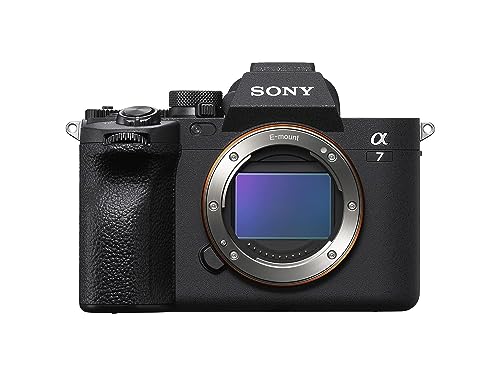
Sony Alpha 7 IV — Best all-round concert body
The Alpha 7 IV takes the headline slot because concerts punish exactly the weaknesses it does not have. Its autofocus keeps finding faces as light collapses to a single follow spot; its full-frame sensor holds together at the sensitivities club work demands; and its log files give the grade the raw material to pull a singer’s skin back out of a lighting designer’s red enthusiasm. For the shooter filming an official live video, this is the body that makes the fewest excuses across a whole evening.
- Full-frame mirrorless body on the Sony E-mount system
- Real-time eye autofocus rated for low-light work
- Log profiles for rescuing saturated stage colour
- Dual card slots for long-set media safety
Its second-act virtue is stamina with support. A full headline set, shot in segments with sensible battery swaps, is comfortably within its habits, and the E-mount’s enormous lens pool includes the fast primes and constant-aperture zooms that concert work runs on — glass that can be rented in any touring city when a lens dies on the road. Crews filming multi-camera shows standardise on bodies like this for a reason: every editor, rental house and second shooter already speaks its language.
In the pit specifically, the camera’s manners matter. Three songs is not long, and the Alpha 7 IV’s speed — instant focus, confident exposure tools, custom modes recalled in a button press — converts those nine or ten minutes into coverage instead of fumbling. Set one custom mode for full-stage wash, one for the follow-spot solo, one for the blackout between songs, and the camera becomes as rehearsed as the band. That preparation dividend is why professionals reach for it when the pass around their neck says three songs and no excuses. One practical concert habit seals its value: programme the custom modes before doors, because the pit allows no setup time once the house lights die.
Strengths
- Autofocus that keeps working as stage light collapses
- Log files with real rescue room for saturated colour
- Lens ecosystem that supports touring and rental anywhere
Trade-offs
- Rolling shutter asks for restraint on whip pans to the drummer
- Menus need prep so custom modes carry the show’s looks
- Body alone is not discreet — door policies may prefer smaller picks
Best for: official live-video shooters and pit photographers crossing into film.
Not suited for: strict no-pro-camera venues where a compact is the only way in.

Canon EOS R6 Mark II — Best colour under stage washes
Ask concert editors what ruins footage and they rarely say noise; they say colour. A magenta wash that turns the singer into a waxwork, a red flood that deletes her face entirely — these are the failures that end up on the cutting-room floor. The R6 Mark II’s colour, in log and even more in its standard profiles, keeps skin recognisably skin under abuse that defeats lesser pipelines. For the filmer delivering a live video on a deadline, that mercy is worth more than any resolution figure.
- Full-frame mirrorless body on the Canon RF mount
- Subject-detection autofocus that holds moving performers
- Canon log alongside forgiving default colour
- Comfortable grip for long handheld sets
The Canon also suits the handheld reality of concert work. Much gig filming is done from the crowd, the balcony or the side of the stage, braced against a barrier, for longer than shoulders enjoy. The body’s ergonomics and stabilisation cooperation make those positions sustainable across a set, and its autofocus tracks a singer weaving through mic stands and monitor wedges without the hunting that betrays amateur footage instantly.
There is a deliverable argument too. Many concert films are turned around fast — a highlight reel for the band’s channels by morning, a full song by the weekend. Footage that arrives nearly right shortens that night considerably. Shooters who have graded their way out of one red wash too many will understand why this body, rather than a technically deeper file, is the one they pack when the edit suite is a laptop in a tour van and the deadline is breakfast. Its colour mercy extends to mixed bills — different designers, different washes, one consistent skin language across the whole night’s card.
Strengths
- The most forgiving skin tones on this list under stage washes
- Autofocus that tracks performers through cluttered stages
- Fast-turnaround footage that needs little rescue grading
Trade-offs
- Video toolset is less specialised than the S5II’s cinema kit
- Fast pans need care to avoid skew on verticals
- RF fast glass is excellent but not cheap
Best for: shooters delivering live videos quickly for bands and venues.
Not suited for: graders who build every look from raw-like files in post.

Panasonic LUMIX S5II — Best stabilised long-set body
Tripods are banned in most pits and useless in most crowds, so concert filming is handheld filming — for ninety minutes. That is the S5II’s home turf. Its stabilisation is the steadiest on this list, turning barrier-braced, shoulder-aching handheld work into footage that looks intentionally fluid rather than endured. Combined with video-first tools like waveform monitoring — invaluable when stage light lies to every auto-exposure system ever built — it is the most set-ready body here for a lone shooter covering a whole show.
- Full-frame mirrorless body on the L-mount system
- Strong in-body stabilisation for handheld filming
- Waveform and log tools for exposure discipline
- Active cooling approach suited to long recordings
Exposure discipline is the concert filmer’s core skill, and this camera teaches and supports it. When the rig strobes, auto-exposure hunts; the S5II’s monitoring tools let you set exposure for the singer’s lit face and hold it through the lighting designer’s weather. Its log files then carry that discipline into the grade. Shooters who film entire tours on one body tend to choose exactly this combination of steadiness, monitoring and file quality.
Heat and duration complete the case. Long sets in warm rooms are where lesser bodies quietly stop, throttle or warn; the Panasonic’s design takes continuous recording seriously, which at a concert translates to still rolling during the encore — the part of the night the audience will actually share. Pair it with a fast standard zoom and a pocketful of batteries and you have a one-person concert unit that has genuinely filmed headline sets, not just survived them. Between-song moments are its hidden stage: the tuning, the water, the glance at the set list — it stays ready and steady through all of them.
Strengths
- Best handheld steadiness here for tripod-free venues
- Monitoring tools that enforce exposure discipline in strobing light
- Built for long continuous takes in warm rooms
Trade-offs
- Autofocus is capable but a step behind Sony and Canon here
- L-mount fast glass pool is smaller than E or RF
- Less discreet than the compact picks for strict doors
Best for: solo shooters filming entire sets handheld from pit or crowd.
Not suited for: venues whose door policy excludes interchangeable-lens bodies.

Sony ZV-E10 II — Best creator-tier gig camera
Most concerts in the world happen in rooms of three hundred people, filmed by someone the band knows, under a door policy that waves through small cameras and interrogates big ones. The ZV-E10 II is built for that world. It is compact enough to be unremarkable, its autofocus is genuinely excellent for a singer crossing a small stage, and its footage — especially with one fast prime — is far beyond what its size suggests to a doorman.
- APS-C mirrorless body on the Sony E-mount system
- Fast, confident subject autofocus
- Compact body that reads as a fan’s camera
- Microphone input for an external audio upgrade
The creator features translate surprisingly well to gigs. The product-showcase gimmicks matter less than the basics done right: a clear tally of what is in focus, easy exposure compensation under changing washes, and a microphone input that lets a small external mic or a recorder feed lift the audio from souvenir to publishable. For the filmer building a local scene’s video presence — the person every band in town calls — this is the realistic workhorse.
Its limits are honest ones: APS-C low-light footage is grainier than the full-frame picks, and long sets need a battery plan. But consider the exchange — this is the camera that is actually in the room, at the club shows where music scenes are born, filming the sets that matter to the people in them. The best concert camera is the one at the concert, and no body on this list attends more concerts than this one. Club shooters should treat its crop as a lens multiplier and plan glass accordingly; the reach dividend is real at the back of small rooms.
Strengths
- Small enough to pass door policies that stop bigger rigs
- Autofocus well beyond its price and size class
- Easy audio upgrades via its microphone input
Trade-offs
- Low-light footage grainier than the full-frame picks
- Battery strategy needed for full headline sets
- No viewfinder, which some stage shooters rely on
Best for: club-level filming, scene documentarians and band insiders.
Not suited for: arena productions needing full-frame files for large screens.

GoPro HERO13 Black — Best stage-edge and drum-cam angle
Every great concert film has angles no human held: the drummer’s hands from inside the kit, the keyboard player’s fingers, the view from the singer’s monitor wedge looking back at the crowd. The HERO13 is how those angles happen. Clamped, taped or magnet-mounted where a venue permits, it rolls unattended through the set, stabilised against the stage’s vibration, catching the cutaways that make an edit feel like a production rather than a recording.
- Rugged action camera with wide and specialist lens mods
- HyperSmooth stabilisation for vibrating mounts
- Compact enough to clamp almost anywhere on stage
- Voice and remote control options for unattended angles
Used as a primary camera it has real limits — a fixed wide view, modest low-light grace — but as the second or third angle in a concert kit it is close to irreplaceable, and it is priced like an accessory rather than a camera. Drummers’ endorsements aside, its footage also serves the social cut: vertical crops for the band’s channels come straight from its sensor’s flexible framing, which is where concert films now find most of their audience.
Practical discipline makes or breaks the angle-cam approach. Heat and battery govern placement: a HERO on a lighting truss lives a harder life than one on a mic stand, and swapping between songs is an art form in itself. Experienced concert shooters run these cameras like stagehands — placed in soundcheck, checked at the interval, harvested at the encore — and the footage repays the choreography every single time the edit cuts to the kit as the fill lands. Label its cards by set, not by date — at 2 a.m. in the edit, ‘second set, from drums’ is worth more than any timestamp.
Strengths
- Angles impossible for any operated camera
- Stabilisation that shrugs off stage vibration
- Cheap enough to deploy in pairs for multi-angle coverage
Trade-offs
- Low-light quality is the weakest of the six picks
- Fixed wide perspective cannot cover a stage alone
- Needs a mounting and battery routine for full sets
Best for: second angles, drum and keys cams, and social-first concert edits.
Not suited for: shooters needing one camera to cover a whole show solo.

Canon PowerShot G7 X Mark III — Best door-policy diplomat
Some of the best-documented tours in history were filmed on cameras that looked like holiday snaps, because those were the cameras allowed inside. The G7 X Mark III is that camera’s modern heir: a true compact with a fast lens, respectable video and — rare in its class — a microphone input. Where the door policy says no professional cameras, this is the most filming you can carry through the door in a coat pocket, and it is not close.
- Premium compact with a fast built-in zoom lens
- 4K video in a pocketable, unremarkable body
- Built-in ND filter for bright stage washes
- Microphone input unusual in its class
From a fan’s position it performs small miracles. The fast lens gathers club light a phone would drown in; the built-in ND tames the follow spot; the zoom reaches the stage from the balcony without a lens change that a strict venue would never have allowed anyway. Its footage will not match the full-frame picks, but it will exist — sharp, watchable, syncable — which is more than the turned-away flagship can say.
It also serves as the discreet second body for permitted shooters: the camera that films the crowd, the queue, the dressing-room corridor, the acoustic song from the back of the room where a big rig would draw every eye. Concert films are made of atmosphere as much as performance, and atmosphere is usually filmed by the smallest camera in the building. Keep one charged in a jacket pocket and whole scenes become available that the main rig could never politely capture. Its microphone input also accepts a recorder’s line feed, turning the pocket compact into a synced one-device concert unit.
Strengths
- Enters venues that exclude every other pick here
- Fast lens and ND filter handle stage light swings
- Microphone input lifts fan-position audio to publishable
Trade-offs
- Small sensor shows its limits in the darkest clubs
- No interchangeable lenses — the zoom is the whole story
- Battery life is measured in songs, so carry spares
Best for: fans with filming ambitions, tour documentarians and discreet B-roll.
Not suited for: official productions where full-size bodies are expected and allowed.
What Light Does a Stage Actually Give a Camera?
A lighting designer works for the room, not the recording. Their palette — deep blues that sensors barely see, reds that clip a channel instantly, whites that arrive like a camera flash and leave as fast — is chosen for eyes that adapt continuously and forgive everything. Cameras do neither, which is why concert filming begins with exposure set manually for the performer’s face at its brightest moment and defended thereafter. Every pick above supports that discipline; the discipline itself is non-negotiable, whichever body you carry.
Haze is the unsung collaborator. The beams that make a stage look cinematic exist because haze gives light something to occupy, and footage shot in a hazed room gains depth no grade can fake. If you have any relationship with the production, ask about haze before you ask about anything else — and if you are filming a band you know, a small hazer in a rehearsal room will teach you more about your camera’s stage behaviour in one evening than a month of specification reading.
Finally, respect the blackout. Songs end in darkness by design, and audiences read those beats emotionally. Footage that fights the black — boosting gain until the dark turns to porridge — betrays the show. Let the blacks be black, hold the exposure, and trust that the next lighting cue will reward your patience. Restraint is a filming skill, and concerts grade it harshly.
How Should You Record Sound at a Concert You Are Filming?
Start with the hierarchy every concert filmer learns, usually the hard way: a board feed is best, a well-placed external recorder is good, a camera-mounted microphone is acceptable, and the camera’s built-ins are a souvenir. The board feed requires diplomacy — arrive at soundcheck, be brief, bring your own cables and adapters, and accept no gracefully. Engineers protect their mix; the filmer who respects that gets the feed on the second visit if not the first.
Without a feed, placement is everything. A recorder near the mixing desk sits where the show is balanced to sound best — the engineer mixes for that spot — while a camera microphone at the barrier hears mostly the nearest stack and the crowd’s loudest neighbour. Many working shooters therefore run both: desk recorder for the music, camera audio for the room, blended in the edit to taste. Every pick above can carry at least the camera half of that plan, and the mirrorless bodies accept the recorder’s output directly for simpler sync.
Whatever the plan, record a clap or use the show’s own transients — the first snare hit — as your sync reference, and let every device roll continuously rather than starting and stopping per song. Continuous files sync once and stay synced; a folder of clips is a weekend of alignment work. Concert filming is generous to the organised and merciless to everyone else, and nowhere more than in the audio folder.
What Are the Rules — Written and Unwritten — of Filming Concerts?
The written rules are the venue’s camera policy, the artist’s photo policy and, at festivals, the media accreditation terms. They are not fine print; they decide what you may carry, where you may stand and how much of the show you may keep. Read them before the gig, follow them visibly, and remember that the three-songs rule exists so the pit can serve many outlets — outstaying it is theft from the shooters behind you and the fastest route to a banned name.
The unwritten rules protect the audience’s night. Do not hold a camera above your head for a whole set; do not let a bright screen burn into your neighbours’ sightlines — dim it, tape it, angle it down; do not become the person the room remembers instead of the band. The filmer’s paradox is that the best concert footage is shot by someone the concert barely noticed, and the picks above include small, quiet options precisely because invisibility is a professional skill here.
And credit the ecosystem: tag the band, share with the venue, send the drummer the drum-cam clip. Concert filming runs on goodwill more than any other kind of video work, and goodwill compounds — today’s favour is next tour’s pit pass. The camera gets you into the room once; behaviour gets you invited back.
How Do You Film a Whole Set Without Falling Apart?
Plan the set like an endurance event, because it is one. Batteries rotate in a fixed order, cards are swapped at the interval or not at all, and water is a production supply. Decide your positions in advance — pit for the opening, a raised side position for the middle, the desk or balcony for the wides — and move between songs, never during them. A set list, begged from the merch desk or the engineer, is the filmer’s shooting script: it tells you when the ballad needs the close lens and when the closer needs you already at the wide position.
Shoot for the edit you can actually make. A single-camera concert film lives on variety smuggled into continuity: the wide that establishes, the close that feels, the crowd that proves it mattered, the hands that show the craft. Rotate those intentions deliberately through the set rather than filming ninety minutes of the same medium shot — the most common and least forgivable concert-film failure. The cameras here all change framing fast enough; the discipline to do it is the operator’s.
Protect the encore above all. It is the emotional summit, the part audiences film on their phones and the part your footage must beat. Arrive at it with a fresh battery, a card with room, and a position already chosen. More concert films are lost to a full card in the encore than to any technical failing, and every one of those losses was preventable at the interval for the price of sixty seconds of organisation.
Which Lens Choices Matter Most Under Stage Light?
Speed first: at concert light levels, aperture is exposure, and the fast primes and constant-aperture zooms are not indulgences but the difference between filming and guessing. A fast standard zoom covers most stages from most pits; a fast prime in the portrait range owns the ballads and the acoustic break. The full-frame picks above exist partly to make those lenses behave as their designers intended in the dark.
Reach second: from a balcony or a desk position, the stage is far away and getting farther, and a moderate telephoto converts a souvenir wide into actual coverage. APS-C bodies like the ZV-E10 II quietly help here, their crop turning sensible lenses into longer ones. Match the lens plan to your permitted position — there is no virtue in a fast wide lens at the back of an arena, and none in a long telephoto in a club pit.
And one discipline above both: whatever you bring, commit. Lens changes in a dark, loud, crowded pit are how sensors get dusty, moments get missed and expensive glass meets concrete. Two bodies with a lens each, or one body with one zoom, beat a bag of possibilities for almost every concert ever filmed. The six picks were chosen as bodies that make a one-or-two-lens plan feel like abundance rather than compromise.
How Do You Film the Crowd Without Becoming the Story?
The crowd is half the concert and the harder half to film well, because filming people enjoying themselves can stop them doing it. Work from the edges: the barrier’s end, the balcony rail, the sound desk’s island. Shoot over shoulders rather than into faces, catch hands and silhouettes against the stage light, and let the wide lens of a HERO or the discreet compact do close crowd work that a big rig would poison. The audience’s joy reads best when it does not know it is being read.
Consent at concerts is contextual and mostly social: a room that expects filming tolerates a visible camera used briefly and lowered often, and resents a lens parked in one face for a whole song. Move, vary, and never film the person who has signalled no — there is always another face, and the film does not need that one. These manners are not decoration; venues invite back the shooters whose presence the crowd never complained about.
Technically, crowd footage wants the opposite settings from stage footage: wider, steadier, exposed for the room’s glow rather than a face. The custom-mode discipline from the pick sections applies doubly here — one mode for the stage’s blaze, one for the room’s murmur — because the cut between them is where concert films breathe. Practise the switch at soundcheck until it is a thumb movement, not a menu expedition.
What Changes When You Film Festivals Rather Than Single Shows?
Festivals multiply everything: stages, weather, dust, distance and the number of sets worth filming per day. The camera plan becomes a logistics plan — batteries charging in the media tent, cards rotating through a labelled wallet, a body chosen for the walk between stages as much as for any single set. The lighter picks in this list, the ZV-E10 II and the compacts, quietly become festival heroes, because a camera carried for ten hours is a different instrument from one carried for ninety minutes.
Weather writes its own policy. Rain at an outdoor stage separates the prepared from the hopeful: a rain cover, a lens cloth that lives in a dry pocket, and a body whose controls work with wet hands. None of the picks here is a fair-weather toy, but the action camera is the only one that treats a downpour as a filming opportunity, which is why festival kits so often include one as the storm insurance angle.
Festival filming is also an editing triage: you cannot film everything, so film like a correspondent — the headliner’s full set, the discovery act’s best three songs, the crowd’s weather, the site’s golden hour. The cameras matter less than the choosing, and the choosing is the job. Arrive with a plan, abandon it gracefully when the day produces a better one, and keep the encore rule: fresh battery, empty card, chosen position, for whichever set becomes the story.
How Should a Beginner Film a First Concert Without Ruining It?
Choose a small show, a band you can talk to, and the simplest kit on this list — the ZV-E10 II with one fast lens, or the G7 X if the room is strict. Arrive early, introduce yourself, ask where you may stand, and set one exposure for the stage and leave it there. Film whole songs rather than fragments; a complete performance of one song is worth twenty shaky verses, and it is what bands can actually use.
Give yourself permission to watch some of the show with your eyes. The beginner’s panic — recording everything, experiencing nothing — produces archives nobody opens. Film the songs you planned, lower the camera for the rest, and let the night be a night. Paradoxically, the footage improves: a relaxed shooter holds steadier, chooses better and notices the moment the room ignites, which is the clip the whole exercise exists to catch.
Afterwards, do the unglamorous half: back up before bed, sync the audio while the show is fresh in memory, and send the band something within days, not months. That delivery — fast, credited, generous — is how a beginner becomes a scene’s regular shooter, and regular shooters get the access that makes every future film better. The camera started it; the follow-through is the career.
How Do You Turn Concert Footage Into a Film People Finish?
The edit is where concert filming is won retroactively. Open on energy, not chronology: the moment the room ignites, wherever in the night it happened, then earn the right to slow down. Cut on musical events — the downbeat, the snare fill, the singer’s breath — rather than on camera convenience, and the multi-angle illusion appears even from a single body, because the viewer’s ear convinces their eye that the cut was motivated. Sound leads; pictures follow; that is the whole grammar of the concert film.
Resist grading the life out of it. Stage colour was chosen by a designer and felt by a room; your job is to rescue faces and protect highlights, not to neutralise the show into a corporate video. The log files from the top picks exist for that rescue work — pull skin back to human, let the washes stay gloriously themselves, and the film will feel like the night felt, which is the only fidelity the audience is owed.
Finish for where it will live. The full film for the archive and the venue screen; the single song for the band’s channel; the vertical minute for the feeds. Shoot with those crops in mind — headroom for the vertical, a clean wide for the archive — and the same night’s work serves every window. Concert films die in obscurity more often than in bad quality, and the shooter who plans the windows is the one whose footage is still being watched when the tour posters fade.
How Do the Six Compare for Concert Work?
Think of the table as a tour roster. The Alpha 7 IV headlines, the Canon handles colour, the Panasonic works the long sets, the ZV-E10 II owns the clubs, the GoPro takes the impossible angles and the G7 X walks through doors the others cannot. A complete concert kit is often two of these in combination — a headline body plus an angle or a diplomat — and the combinations matter more than any individual ranking.
| Pick | Badge | Where it earns its place |
|---|---|---|
| Sony Alpha 7 IV | Best all-round concert body | The headline pick: focus in darkness, rescue-friendly files, endurance for a full set. |
| Canon EOS R6 Mark II | Best colour under stage washes | The skin-tone saviour: faces stay human under washes that turn other files to plastic. |
| Panasonic LUMIX S5II | Best stabilised long-set body | The long-set handheld pick: stabilisation and video tools for pit and crowd positions. |
| Sony ZV-E10 II | Best creator-tier gig camera | The club diplomat: small enough for doors, capable enough for publishable sets. |
| GoPro HERO13 Black | Best stage-edge and drum-cam angle | The angle machine: drums, keys and stage-edge coverage no operator could hold. |
| Canon PowerShot G7 X Mark III | Best door-policy diplomat | The way in: real footage from venues that ban interchangeable-lens cameras. |
What Mistakes Ruin Concert Footage?
Trusting auto-exposure under a lighting rig is the founding error. The camera sees the strobe, panics, and the singer’s face breathes in and out of visibility like a lighthouse. Set exposure manually for the lit face, lock it, and let the background do what it wants — the audience watches the performer, not the backdrop. Every concert filmer has one ruined show in their archive that taught them this; the lucky ones ruined a support band’s set, not the headline act’s.
Filming the whole night on the camera’s built-in microphones is the second classic. The result sounds like the show heard from inside a coat, and no plugin resurrects it. Even the cheapest external recorder, placed with the engineer, transforms the deliverable. Budget for sound before the second lens — at a concert, audio is not an accessory to the footage; to most viewers, it is the footage.
Ignoring the door policy until the door is the third. Shooters lose gigs, deposits and reputations arguing with security about a camera the venue’s website clearly prohibited. Check the policy, choose from this list accordingly, and if the answer is the G7 X, embrace it — the compact that films the show beats the flagship that films the argument at the entrance, every time.
A fourth mistake is shooting only the stage. The queue in the rain, the support band’s three fans singing every word, the singer’s face when the crowd takes the chorus — that is the film. Concerts are communal events and their videos should prove it. Keep one eye, and occasionally one camera, on the room.
A fifth mistake is arriving without a relationship to the room. The shooter who knows the engineer’s name, the door staff’s policy and the band’s manager’s face films a different concert from the stranger with a pass. Introduce yourself early, be easy to place and easier to forget, and the room will start solving your problems before you know you have them — a feed appears, a position opens, a warning arrives before the confetti cannons fire into your lens.
Final Recommendation
For the official shooter with a pass and a deadline, the Sony Alpha 7 IV is the headline recommendation — focus, files and ecosystem all built for the pit. The Canon EOS R6 Mark II runs it close wherever skin tones under washes decide the grade, and the Panasonic S5II is the solo long-set specialist. Below the barrier line, the ZV-E10 II owns the clubs, the HERO13 owns the impossible angles, and the G7 X Mark III owns every room the others cannot enter. Between them they cover every filming position a concert offers, from the pit rail to the back of a strict club, and every budget a working shooter or a determined fan can honestly assemble.
Whichever you carry: check the policy, plan the sound, expose for the face, and save your best battery for the encore. Do those four things on any body in this list and you will come home with a concert film. Ignore them on a flagship and you will come home with an anecdote. The show itself will happily do the rest.
Above all, remember what the footage is for. A concert film is a room full of people agreeing, for two hours, to feel the same thing at the same time — the rarest footage in ordinary life. Any camera on this list can hold that agreement up to the light. Choose yours, learn its manners, and go and stand where the music is.
Frequently Asked Questions
Can I film a concert on a phone instead of these cameras?
A phone films the souvenir version — fine for memories, fragile for publication. The moment light drops, washes saturate or you need real audio, the cameras here pull away: faster lenses, honest focus, external sound. Many shooters still carry a phone for the vertical social cut, as a complement rather than a substitute. Treat the phone as the third camera, not the first, and its footage will find its place in the edit.
Why is my concert footage always too dark or blown out in turns?
Because auto-exposure is chasing the lighting design. The rig swings the room’s brightness by design, and the meter follows it off a cliff. Set exposure manually for the performer’s lit face, accept dark backgrounds, and use the monitoring tools on bodies like the S5II to hold that line through the show. If your body offers exposure tools like zebras or a waveform, the S5II’s approach, use them — they are the concert filmer’s honest witnesses.
What is the three-songs rule and how do I film within it?
Many artists allow accredited shooters the first three songs from the pit, then clear the area. Film it like a trailer for the show: establish wide, get the singer close, grab the band’s interactions and the crowd over your shoulder. Preparation — custom modes set in advance — is what converts three songs into coverage. Rehearse the three songs at a support slot first if you can; the pit is no place to learn your own camera.
How do I get a soundboard feed for my filming?
Ask the engineer at soundcheck, briefly and with your own recorder, cables and adapters in hand. Offer the finished video to the band and venue. Accept a refusal gracefully — the desk recorder near the mix position is the standard fallback and sounds far better than any camera position. Even a refused request, handled well, usually earns the desk-position tip that saves the audio anyway.
Which of these is best for filming my own band’s gigs?
The ZV-E10 II, handed to a trusted friend with a fast prime and a simple brief, covers most club gigs beautifully. If a member films from the stage itself, add the HERO13 on the kit or the keys — the band’s own angles are the ones no outside shooter can get. Brief the friend on three things only: hold steady, stay on the singer, never stop mid-song.
Are these cameras allowed at arena shows?
Arena policies usually restrict interchangeable-lens cameras to accredited media. As a ticket holder, the compact G7 X Mark III is the realistic carry; as accredited media, the full-frame picks are standard pit equipment. Always confirm the specific venue and artist policy before travelling. Policies change per artist even in the same venue, so the check is per-show, not per-building.
Related Guides
Keep exploring with our film makers camera guide and the event videography camera roundup and our cameras for a music video guide — each guide applies the same verified-pool, no-invented-specs approach to a neighbouring question.


