ilcastellomenu.com is reader-supported. When you buy through links on our site, we may earn an affiliate commission.
Where to Buy
A travel photograph waits for its audience; a travel vlog has an appointment with one. The best cameras for travel blogging and vlogging are judged by a publishing rhythm as much as by image quality: can one person, alone in a strange city with the light leaving, frame a piece to camera, capture the market’s noise without drowning their own voice, keep the walking shot smooth, and have the episode edited and posted before the night bus? This guide ranks creator cameras for that working reality — flip screens, microphones, stabilisation and fast workflows first, with stills quality honoured as the blog’s other half rather than its headline.
The distinction from a neighbouring guide matters, so let it be plain: our travel and backpacking article ranks cameras as stills instruments for walkers, where the photograph is the product. Here the product is a published story with a face in it. A body can top one list and trail the other without contradiction, because a vlogging camera is really a small television studio that must survive being carried like luggage and operated like a conversation.
Audio is this guide’s open secret, so it gets the second paragraph instead of the last. Audiences forgive a soft frame; they abandon a video whose voice is buried under market noise, wind and room echo within a minute. Microphone inputs, wind protection, and cameras that monitor and tame their own sound were weighted as heavily as sensors, because on the road the creator is also the sound department, and there is no second take for the fisherman’s perfect quote.
The six picks divide by creator species: two pocket studios for the solo vlogger, a gimbal camera for the walking narrator, two mirrorless bodies for creators whose blogs carry serious stills and client work, and an action camera for the journeys too wet, dusty or vertical for the rest. All six picks carry Amazon links in the Quick Picks table and beside their detailed reviews.
Key Takeaways
- Sony’s ZV-E10 II is the solo creator’s default, a flip-screen studio that grows with its channel.
- Sony’s ZV-1F is the simplest honest start, a pocket camera that removes every excuse to delay episode one.
- DJI’s Osmo Pocket 3 makes walking narration look like a crew filmed it.
- Canon’s PowerShot G7 X Mark III serves the blogger whose stills feed carries equal weight.
- Nikon’s Z30 grows a travel channel toward client work without changing its owner’s habits.
- Insta360’s Ace Pro 2 vlogs through the weather and water the other studios must hide from.
In this guide
Quick Picks
| Camera | Badge | Why it earns its place |
|---|---|---|
| Sony ZV-E10 II | Best solo studio | Interchangeable lenses, a creator’s screen and autofocus that minds the face for you. |
| Sony ZV-1F | Best first episode | One pocketable camera, one wide lens, zero setup between idea and recording. |
| DJI Osmo Pocket 3 | Best walking narration | Gimbal smoothness and face tracking while the creator simply walks and talks. |
| Canon PowerShot G7 X Mark III | Best blogger’s compact | Beautiful stills and capable video in the coat pocket of a writing-first creator. |
| Nikon Z30 | Best growth body | A channel’s first mirrorless, ready for lenses, microphones and commissions. |
| Insta360 Ace Pro 2 | Best in wild weather | Flip-screen vlogging that survives rain, spray and the journey’s rough days. |
How Did We Judge Cameras for People Who Publish the Journey?
The solo test came first: everything ranked here must be operable by one person who is simultaneously the presenter, the crew and the audience’s only friend in the video. Flip screens that frame a face at arm’s length, autofocus that holds eyes while the presenter thinks about sentences, product-showcase and background-defocus kindnesses for the hostel-desk segments — these are not gimmicks in this genre; they are the difference between a sustainable daily practice and a channel that dies of its own production values in week three.
Sound was judged as a working system. A microphone input earned more than any resolution figure, because the road’s best microphone is the one clipped near the mouth, not the one built into a wind-blasted body. Bodies were credited for honest built-in microphones for the run-and-gun moments, for headphone or app monitoring where it exists, and for the small mercies — wind muffs in the box, audio levels visible while recording — that separate a creator tool from a camera that merely also records video.
Stabilisation and heat formed the third test, because travel vlogging is long-form by nature. Walking shots must not seasicken the audience; a walking-tour segment, a market exploration, a train-window monologue can each run far longer than a holiday clip, so recording endurance, thermal composure and batteries that swap in seconds were weighed like professional virtues — because to the audience’s patience, they are.
Finally, the workflow home: how fast does a day become an episode? Wireless transfer that a phone can actually use, vertical framing help for the short-form versions, in-camera looks that shorten the edit, and file sizes that a hostel connection can upload overnight. The best creator camera is not the one with the finest file; it is the one whose file is published, and every ranking below carries that bias openly.
Why Does Sound Decide Whether a Travel Channel Lives?
Because the audience’s loyalty is to a voice, not to a view. Scenery is infinite and free; the creator’s narration — the jokes, the knowledge, the company — is the channel’s only un-copyable asset, and it arrives through the microphone or not at all. Viewers describe the experience honestly when they leave: they rarely say the picture was soft; they say they could not hear, the wind hurt, the room sounded like a bucket. Sound failure is experienced as the creator not caring, and audiences forgive almost anything before they forgive that.
The road is an acoustic enemy of a specific kind: not loud, exactly, but layered — traffic under wind under market cries under the presenter’s voice, all arriving at a microphone that cannot tell the layers apart. The defences are proximity and direction: a small microphone near the mouth, whether a wireless clip or a compact directional on the camera, lifts the voice out of the layers more completely than any editing rescue. Wind protection is the second defence and the cheapest; the furry muff that looks ridiculous in the mirror is the difference between a cliff-top piece to camera that sings and one that roars.
Creators learn this hierarchy in the usual order — after the first ruined interview, the first unusable summit piece, the first comment that says it kindly. This guide simply moves the lesson earlier: choose the camera that accepts a real microphone, carry the wind protection always, and monitor levels whenever the segment matters. The pictures were already good enough; the voice is the channel.
What Are the Best Cameras for Travel Blogging and Vlogging?
Two pocket studios, a walking gimbal, a blogger’s compact, a growth mirrorless and a weatherproof narrator.

Sony ZV-E10 II — Best solo studio
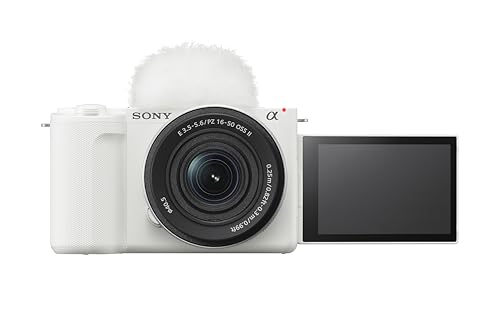
Sony built this line by watching solo creators work, and the ZV-E10 II shows the homework. The vari-angle screen frames the presenter properly at arm’s length, the autofocus minds eyes and faces with a reliability that frees the brain for sentences, and the creator touches — a background defocus mode, product presentation that snaps focus to a held-up ticket or dish, directional in-body microphones that respect the voice in front over the street behind — are the daily tools of the trade rather than brochure garnish. Around that creator core sits a real mirrorless body: interchangeable E-mount lenses, so the channel’s look can grow from the kit zoom to a fast prime for evenings and a wide for interiors, without the creator changing cameras or habits.
Travel manners match the brief. The body is small enough for a day bag’s top, batteries swap in seconds at a market stall, and the stills it takes for the blog’s written half are genuinely good rather than apologetic — the same sensor class that serves the photographs serves the thumbnails, which in this economy are a video’s first impression and worth real quality. A microphone input accepts the wireless clip that the sound section demands, and the whole rig assembles on a mini tripod into a hostel-desk studio in under a minute.
The honest tolls: no in-body stabilisation, so walking shots lean on the lens and the creator’s technique or a small gimbal; and no viewfinder, a creed its audience already holds. Heat and endurance for long walking segments are managed with the battery rhythm every solo creator learns. None of this dents its position: for the one-person travel channel that intends to become a living, this is the default recommendation, the body its owner will still be using when the subscribers arrive.
- Format: APS-C mirrorless, E mount
- Screen: vari-angle for arm’s-length framing
- Sound: microphone input plus directional in-body array
- Focus: eye priority that minds the presenter
- Growth: E-mount lenses for every future look
Strengths
- Creator tools that shorten every production day
- Stills strong enough for the blog and the thumbnail
- A system the channel grows into, not out of
Trade-offs
- Walking shots need technique or a small gimbal
- No viewfinder for traditional stills habits
- Long segments ask for a battery rhythm
The night-train episode is its emblem: filmed at a fold-down table in a moving carriage, presenter lit by the reading lamp, face held in focus while the landscape strobes past the window — then edited on the same table and posted from a station platform. A studio that fits in a day bag made that episode; this is that studio.
Best for: solo travel channels building toward a living. Not suited for: viewfinder traditionalists or stabilisation-free walking tours

Sony ZV-1F — Best first episode
Most travel channels die before episode one, killed not by quality but by ceremony — the research, the rig, the settings, the fear. The ZV-1F exists to abolish the ceremony. It is a pocket camera with one wide fixed lens chosen for arm’s-length faces and the world behind them, a screen that flips to the presenter, a defocus button for the café segment, and a microphone array tuned for the voice in front. You point it at your face in a new city and talk; the camera has pre-forgiven every technical anxiety, and the episode exists, which is the only episode-one requirement that matters.
The wide lens deserves its defence, because beginners misread it as a limitation. At arm’s length it frames the presenter and a generous slice of the place — the harbour, the old town gate, the train window — which is the travel vlog’s establishing grammar in a single shot. Product and food close-ups are handled by stepping closer, a choreography the fixed lens teaches in a day. Stills are honest snapshots for the blog’s social feed, which is precisely the duty a first channel actually has.
Growth is the honest border: no lens to change when the evenings demand a faster one, no microphone input on this simplest of bodies, so the wireless future belongs to its bigger sibling above. Battery life is a pocket camera’s, answered by the USB bank every traveller already carries. None of this matters at episode one, or ten. It matters at the happy moment the channel outgrows its first camera — and a camera that gets a creator to that moment has done a complete job, not a partial one.
Buy it to begin, publish the imperfect episodes, and let the audience’s arrival — not the internet’s opinion — schedule the upgrade.
- Format: fixed-lens vlogging compact
- Lens: wide, made for faces at arm’s length
- Screen: flip design for self-framing anywhere
- Sound: in-body array tuned for the presenter’s voice
- Carry: any pocket, charged from any bank
Strengths
- Episode one happens today, not after research
- Arm’s-length framing includes the place itself
- Small enough to film where big rigs feel rude
Trade-offs
- No lens growth and no microphone input
- Stills serve the feed, not the gallery
- Battery life is a pocket camera’s promise
Its finest review is a channel’s own archive: episode one, filmed on this in a rainy port town, technically humble and completely alive — and episodes fifty later, the audience still cites it as the one that made them stay. Beginnings have a quality that equipment cannot buy back, and this camera’s whole design protects it.
Best for: new travel creators and writing-first bloggers adding video. Not suited for: established channels needing lenses, inputs and endurance

DJI Osmo Pocket 3 — Best walking narration
Watch a walking tour filmed on a conventional camera and then on the Pocket 3, and the difference is not subtle: it is the difference between a boat and a train. The little gimbal holds the horizon like a promise while the creator walks, climbs, turns into alleys and gestures at architecture, and the face-tracking keeps the narrator composed in the frame through all of it. For the travel genre’s signature shot — the presenter moving through a place, narrating it alive — no other body in this guide produces broadcast calm from a device that returns to a jacket pocket when the segment ends.
The rotating screen is a small revolution in solo ergonomics: vertical for the short-form version, horizontal for the episode, low for the food stall, high for the crowd — one wrist movement, no rig rebuild. The sensor, generous for the device’s size, keeps market interiors and evening streets handsome, and DJI’s wireless microphone pairing answers the sound section’s demands with a clip-on that makes cliff-top and market pieces to camera genuinely usable.
Stills are a souvenir function beside the mirrorless picks, battery is built in and therefore a rhythm to manage on long walking days, and the gimbal is a mechanism that prefers a case to a tumble in the day bag. Creators treat it accordingly — as the movement specialist in a two-device life, or as the only camera for channels whose grammar is motion. In either life it is the device audiences subconsciously credit with professionalism, because smoothness reads as budget even when it cost a pocket.
Its travel-specific joy is spontaneity: the unplanned procession, the sudden viewpoint, the guide’s story told while walking — captured at a quality that needs no apology, by a camera that was simply there.
- Format: gimbal camera, pocket-sized
- Movement: mechanical stabilisation for walking shots
- Screen: rotating for vertical and horizontal work
- Sound: wireless microphone pairing for narration
- Tracking: face kept composed while moving
Strengths
- Walking narration with broadcast steadiness
- Vertical shorts and episodes from one device
- Deployed from a pocket in seconds
Trade-offs
- Built-in battery sets the day’s filming budget
- Stills are souvenirs beside the mirrorless bodies
- Gimbal prefers its case to the day bag’s tumble
A medina at opening time shows the trick entire: the creator walking backward before a local guide, both in frame, the stalls waking around them, the footage steady as a dolly that the medina would never have permitted. That shot, repeated across a channel’s cities, becomes a signature — and signatures are what audiences subscribe to.
Best for: walking tours, city narration and motion-led channels. Not suited for: stills-led blogs or battery-forgetful long days

Canon PowerShot G7 X Mark III — Best blogger’s compact
The travel blogger — the writer, whose site carries essays and photographs and whose video is the growing second language — has a different centre of gravity from the vlogger, and this Canon has served that species for a generation of models. In a coat-pocket body it carries a one-inch sensor and a versatile zoom that produce stills with genuine beauty: the harbour at dawn for the essay’s header, the dish for the review, the companion for the memoir. Its video is capable, clean and increasingly creator-aware — vertical support, streaming friendliness, a microphone input that this class long denied its owners — making it the compact that lets a writing-first creator add film without adopting a second personality.
Canon’s colour is the quiet argument. Skin in café light, food under restaurant lamps, the old town’s terracotta at noon — the files arrive with a warmth that suits travel writing’s register, and the blog’s photographs and the channel’s frames share one visual accent because one camera made both. The tilting screen handles the overhead table shot and the low street frame; the body disappears into a day bag and, just as importantly, into a café’s etiquette, where a big rig announces a production and this announces a traveller with a camera.
Autofocus for video trails the Sony creator line’s obsession, the screen tilts rather than fully articulating for front-facing framing, and long recording sessions ask the battery courtesy all compacts demand. The blogger’s rhythm — write in the morning, film the market in the afternoon, photograph the evening — fits inside those limits comfortably, which is why this model line keeps being re-bought by the same writers at each generation.
For the creator whose words come first and whose audience asks for more of everything else, it remains the pocket’s most literate camera.
- Format: premium one-inch compact
- Zoom: versatile range for essays and episodes
- Sound: microphone input for serious segments
- Files: warm Canon colour across stills and film
- Carry: coat pocket, café-discreet
Strengths
- Stills beautiful enough to headline the essay
- One accent across the blog and the channel
- Discreet in restaurants and quiet venues
Trade-offs
- Front framing uses a tilt, not a full flip
- Video focus trails the creator specialists
- Long sessions need battery courtesy
The essay test defines it: a piece about a fishing port, published with six photographs and one four-minute film, every visual made by the camera in the writer’s coat. Readers wrote in about the light. Nobody wrote in about the equipment, which is the highest compliment a blogger’s camera can earn.
Best for: writing-first travel bloggers adding serious video. Not suited for: daily vloggers needing flip screens and face obsession

Nikon Z30 — Best growth body
The Z30 is the considered step: the body a travel creator buys when the channel has an audience, the blog has clients, and the pocket camera’s ceiling has been met twice in one trip. Nikon’s small mirrorless brings interchangeable Z lenses, a microphone input with proper audio manners, long and thermally calm recording for the walking tour and the interview, and stills that satisfy the written half’s growing ambitions — all in a body that still rides at the top of a day bag and behaves like a friend rather than a production.
Its creator design is quieter than Sony’s and, for some, better mannered: the flip screen, the tally light that ends the is-it-recording anxiety, controls that a photographer crossing over from stills will find honest. Nikon’s colour flatters the presenter’s face in the mixed light of trains and markets, and the Z lens shelf — a wide for the gorges and interiors, a fast prime for the evenings, a longer zoom for the coast — lets the channel’s look be built deliberately, one commission at a time.
No viewfinder and no in-body stabilisation mark its borders; walking shots lean on lens stabilisation and the creator’s practised glide, and stills purists composing in bright alpine light will miss an eye-level finder. Weather sealing is absent, so the rain cover is part of the kit list. Within those borders it is the most grown-up small body here — the one whose owner stops apologising for the equipment in client meetings.
Channels that adopt it tend to keep it through the professional threshold, adding lenses and audio before ever replacing the body, which is the surest sign a growth purchase was sized correctly.
- Format: APS-C mirrorless, Z mount
- Screen: flip design with a recording tally light
- Sound: microphone input and honest audio controls
- Recording: calm endurance for tours and interviews
- Growth: Z lenses bought per commission
Strengths
- Professional manners at a traveller’s size
- Long segments recorded without thermal drama
- Faces flattered in trains, markets and cafés
Trade-offs
- No viewfinder for bright-light stills work
- Walking steadiness leans on lens and technique
- Rain cover is mandatory extra kit
The commissioned episode is its proving ground: a tourism board’s village, one creator, one small Nikon, delivered film and stills that ran for a season. The client never asked what it was shot on. Growth bodies are bought for exactly that silence.
Best for: established travel channels stepping toward client work. Not suited for: pocket-only minimalists or viewfinder devotees

Insta360 Ace Pro 2 — Best in wild weather
Every other camera in this guide has a weather clause. The Ace Pro 2 is the vlogging camera for the journeys that ignore clauses: the sailing leg, the waterfall hike, the desert crossing, the festival in the rain. An action camera’s armour with a creator’s flip screen, it frames the presenter from a chest mount, a handlebar or a soaked hand, keeps faces handsome in mixed light thanks to a sensor large for its class, and treats spray, dust and drops as production conditions rather than emergencies.
The flip screen is the transformation. Action cameras historically filmed the world and guessed at the presenter; this one composes the presenter properly — the piece to camera on the pitching deck, the reaction at the summit cairn, the market commentary with the stalls arranged behind — while its stabilisation irons the platform’s motion underneath. Audio from the body is willing, wireless microphone pairing serves the serious segments, and the footage’s low-light polish extends the filming day into the blue hour when travel stories do their best work.
It remains an action camera in perspective — the wide view is the genre’s grammar, not a portraitist’s — and its battery and accessory world, while growing, trails the market’s oldest action ecosystem. Stills are diary-grade. None of that matters on the days it was chosen for, because on those days the other five bodies in this guide are in a dry bag, and a channel is built on the days that actually get published.
Adventure-travel creators have quietly reorganised around exactly this logic: the mirrorless for the towns, the Ace Pro for the elements, the audience unable to tell where one insurance policy ends and the other begins.
- Format: action camera with flip screen
- Survival: waterproof armour for decks and trails
- Stabilisation: platforms and weather smoothed
- Sound: wireless pairing for serious pieces
- Light: evening polish rare in the action class
Strengths
- Presenter framed properly in any weather
- The rough days get published, not postponed
- Evening footage holds the channel’s standard
Trade-offs
- Wide action perspective is the only grammar
- Accessory world still maturing beside the oldest rival
- Stills serve the diary, not the essay
The sailing episode is its citation: three days of Atlantic weather, every other camera aboard sealed away by the second, and the channel’s most-watched film of the year delivered by the little armoured body on the stern rail. Weather is not the enemy of a travel channel; absence is, and this camera abolishes absence.
Best for: adventure, sailing, festival and weather-led travel channels. Not suited for: portrait-led, stills-first or studio-style creators
How Do the Six Creator Cameras Divide a Publishing Week?
| Camera | Format | Creator strength | Signature episode |
|---|---|---|---|
| Sony ZV-E10 II | APS-C mirrorless | The complete solo studio | The night-train episode |
| Sony ZV-1F | Vlogging compact | Beginning without ceremony | Episode one in the rainy port |
| DJI Osmo Pocket 3 | Gimbal camera | Walking narration’s calm | The medina at opening time |
| Canon PowerShot G7 X Mark III | Premium compact | Stills and story together | The fishing-port essay and film |
| Nikon Z30 | APS-C mirrorless | Growth toward commissions | The tourism board’s village |
| Insta360 Ace Pro 2 | Action camera | Publishing through weather | The Atlantic crossing |
Sort the week by its days rather than by specifications: the walking day, the writing day, the rough-weather day, the client day and the day the channel simply must begin. Each body above owns one of those days outright, and most working creators end up owning two rows of the table.
How Should a Solo Creator Film a Walking Tour Without a Crew?
Choreograph the walk before performing it. Scout the route at the hour you will film, note where the light flatters and where the traffic noise murders narration, and divide the tour into segments with planned stops — the corner where the story turns, the doorway for the history, the café for the reflection — because a walking tour is not one continuous take but a chain of small, composed pieces pretending to be one. The gimbal and stabilised bodies above forgive the walking; only planning forgives the wandering.
Voice technique carries the rest. Narrate in short, complete sentences with pauses the edit can breathe in; record the room tone and street tone of each location for a few seconds before speaking, because editors patch gaps with it and audiences hear its absence as a jump; and re-record the day’s single most important line at the hotel, in quiet, as insurance. Presenters sound spontaneous on published channels because their spontaneity was produced, and the production is a habit, not a budget.
Respect the filmed city while you work. Keep doorways and pavements passable, ask the stallholder before the close-up, and learn the local rules about filming in stations, houses of worship and markets — which range from a smile to a permit to a genuine prohibition. The creator who asks becomes a guest with a camera; the one who assumes becomes a story the market tells the next creator, and doors close in sequence.
What Mistakes Stop Travel Channels Growing?
Perfectionism at the start outranks every technical failure. The channel that publishes nothing while researching the perfect camera has chosen the only guaranteed failure mode, because audiences are built by episodes, not by equipment. Second is the opposite sin at month three: publishing the journey raw and unedited at exhausting length, mistaking the creator’s memories for the audience’s interest. The craft lives between — real places, honestly filmed, edited with respect for a stranger’s evening.
Sound neglect, covered earlier, is the third and most mechanical killer. Fourth is inconsistency disguised as freedom: episodes at random intervals, lengths and topics teach the audience and the platform alike that nothing here can be relied on, and both quietly leave. A modest promise kept — one episode a week, the short most days — compounds like interest; the cameras above were chosen partly for how little friction they put between a tired traveller and that promise.
The last mistake is filming the trip instead of the story. A journey is a sequence of places; a story is a sequence of questions — will the pass be open, is the rumour about the night train true, what does the last ferry family think of the island changing? Creators who travel with a question return with episodes strangers finish. The camera’s job is to serve the question, and every body in this guide, honestly used, is good enough to do exactly that.
How Do You Build a Posting Workflow That Survives the Road?
Decide the pipeline at home, with the actual devices, and rehearse it on a weekend trip before the long one depends on it. The working pattern most solo creators converge on is unglamorous: film the day in segments, copy the cards to the phone or a small drive at the evening table, assemble the rough order while the day is still memorable, and finish the edit in the journey’s natural pauses — the long train, the rain afternoon, the rest day — rather than in a heroic all-night session that costs tomorrow’s filming. Templates for titles, descriptions and the blog’s companion post are written once and reused without shame; originality belongs in the episodes, not in the metadata.
Uploads obey the road’s geography. Hostel connections at midnight, café uploads with lunch, the overnight train’s surprising generosity — the creator who knows the week’s connection map publishes on schedule, and the one who assumes hotel internet discovers the assumption at deadline. Keep one episode in reserve at all times, the publishing equivalent of the spare battery, because the road will eventually take a day the schedule cannot spare.
Back the work up like the photographs it accompanies: the episode’s project and the raw segments in two places before the cards are cleared, the published files archived with the blog’s stills. A channel is a body of work with a business attached; treat its archive with the same nightly discipline the backpacking guide demanded for photographs, and the two archives will grow old together.
Why Do Thumbnails and Stills Decide a Video’s Fate?
Because the audience meets the still first. On every platform the episode exists, before it is watched, as a small photograph with words on it — and the click that begins every view is a photographic decision. Creators who treat the thumbnail as an afterthought, a grabbed frame with a tired face, are asking their best filming to audition in its worst clothes. The mirrorless and compact picks above earn part of their ranking here: a deliberately shot thumbnail still — face lit, place legible, one clear emotion — outperforms a frame grab with a reliability that feels unfair until you remember that publishing is a visual medium at every layer.
Shoot the thumbnail during the day, not after it. Thirty seconds at the location, presenter positioned against the story’s most legible background, a few expressions taken like insurance — that small ritual, repeated at every significant stop, gives the evening’s edit a choice of first impressions. The blog’s stills obey the same economy: the essay’s header photograph is its thumbnail in another dress, and one camera serving both crafts keeps the channel and the site visually related, which audiences register as professionalism without ever naming it.
Words on the image obey a discipline of their own: few, large, honest. The thumbnail that promises the episode’s real question gets the click that finishes the episode; the one that promises a lie gets the click that leaves at forty seconds and teaches the platform to stop offering. In travel especially, where the places are genuinely astonishing, honesty is not a constraint on the packaging. It is the packaging.
How Should a Creator Choose Between a Channel Camera and a Blog Camera?
Ask which audience pays the rent — in attention first, and eventually in money. If the channel is the publication and the blog its archive, the creator bodies lead: flip screens, face tracking, microphone inputs, and stills that serve. If the site is the publication — essays, photographs, the long read — and video is the growing supplement, the blogger’s compact logic leads, and the G7 X’s stills-first balance is the honest centre of the kit. Most travel creators live in the braid of both, which is why the two-device answer recurs in this guide: a pocket or gimbal camera for the moving days, a stills-capable body for the writing days, shared batteries and cards where the systems allow.
Budget follows the same honesty. Spend first on the microphone the main camera accepts, because sound is the channel’s retention; second on the stabilisation the walking shots need; third on the lens that gives the evenings their look. Resolution beyond the platform’s delivery is the last place money earns anything in this genre, and the creators who internalise that order produce better-looking channels on smaller budgets than the ones who buy the brochure’s order.
Whichever centre you choose, choose it for the publishing rhythm you can keep for a year. A channel is a promise repeated until it becomes a habit in strangers’ lives, and the camera that keeps the promise light — in the bag, at the table, on the cliff path — is the professional choice at any price. The six above are simply the lightest promises currently on sale.
Final Recommendation
Build the solo channel on the Sony ZV-E10 II, begin it today on the Sony ZV-1F, and let the DJI Osmo Pocket 3 carry every walking mile. Keep the Canon PowerShot G7 X Mark III for the writing-first life, grow into the Nikon Z30 when clients arrive, and let the Insta360 Ace Pro 2 publish the days the weather tries to cancel. In every kit: a real microphone, wind protection always, one episode in reserve — and a camera small enough that the promise to publish survives the journey that makes it worth keeping.
Frequently Asked Questions
Do I need a separate microphone for travel vlogging?
For any segment where your voice carries the story, yes — a small wireless clip or a compact directional microphone lifts narration out of wind and market noise in a way no built-in array fully can. The mirrorless picks above all accept one; carry the wind muff as permanently as the lens cap.
Should I film vertical or horizontal on the road?
Both, deliberately. The episode is horizontal; the shorts that feed it are vertical. The Pocket 3’s rotating screen and the creator bodies’ vertical aids exist so one location can serve both formats in minutes — plan the vertical version at the stop, not in the edit.
How is this different from a stills travel camera?
Priority. A stills travel camera is judged on the photograph; a vlogging camera is judged on the published episode — screen, sound, stabilisation and workflow home. Our backpacking guide ranks the stills instruments; this one ranks the studios, and a body can honourably lead either list without leading both.
Can one camera run both a blog and a channel?
Yes — the ZV-E10 II, Z30 and G7 X Mark III were all ranked for that double life. The compromise is real but mild: dedicated stills bodies edge them on viewfinders and sealing, dedicated pocket studios on size. For most travel creators the single-camera braid is the sustainable one.
How long can these cameras record in the heat?
Long, honest segments are within all six picks’ abilities, with the mirrorless bodies and the Pocket 3 the most composed across a full walking tour. Shade, battery rhythm and segment-based filming — the workflow this guide teaches — keep heat a footnote rather than a headline.
How Do You Film in Places Where Cameras Make People Nervous?
Every travel creator eventually walks a camera into a place that reads it as an accusation: the market where vendors fear the tax inspector’s cousin, the neighbourhood where tourists have behaved badly with lenses before, the station where an official’s authority is performed for cameras. The working answer is social before it is technical. Shrink the production until it looks like what it honestly is — one traveller, one small camera from this guide’s pocketable end, no tripod forest, no crew choreography — and spend before you film: the tea bought, the conversation had, the permission asked of the person whose stall or street it is. A creator who is a customer first and a camera second is granted frames that a parachuting production never sees, and the audience can feel the difference without knowing its name.
Know the genuine prohibitions and honour them without negotiation: houses of worship during prayer, military and border infrastructure, children without their adults, anywhere a posted rule or an official’s clear word says no. The episode is never worth the channel’s reputation in a place it hopes to revisit, and travel creators are repeat visitors by profession — the market that welcomed you in spring is the sequel your audience requests in autumn. Film the welcome, credit the place, send the link to the guesthouse that hosted the shoot, and the nervous places become, one relationship at a time, the channel’s home ground.
What Does a Year of Travel Publishing Actually Look Like?
It looks less like a highlight reel and more like a practice. The creators still standing after a year share a recognisable shape of life: filming days and publishing days kept in separate columns, a reserve episode always in the drawer, a kit small enough that no day is ever cancelled for equipment, and a sound habit — microphone on, muff on, levels glanced at — that has become as automatic as the lens cap coming off. Their early episodes embarrass them in the specific ways this guide predicted, and they leave those episodes public, because audiences trust a visible education more than a suspiciously perfect archive. Growth, when it comes, arrives as a change of questions rather than of cameras: from what happened today to what this place is arguing about, from the itinerary to the people whose lives the itinerary crosses.
The money, when it comes, follows the same maturity: the tourism board that watched a season of reliable episodes, the guesthouse chain that wants the village film, the audience whose memberships pay for the slow winter route. None of it is purchased by a camera, and all of it is made possible by the unglamorous virtues the six bodies above were ranked on — being present, being intelligible, being published on the promised day, in the weather that actually happened. A travel channel is a small promise repeated across a year of geography. Choose the camera that makes the promise lightest to keep, and then keep it; the geography will do the rest, one episode at a time, until the archive is a life you can rewatch and the audience is a room full of people who feel, correctly, that they travelled with you.
How Do You Interview Strangers on Camera Without Ruining the Moment?
The travel interview is the channel’s richest material and its easiest to destroy, usually by arriving like a production. The working method is a conversation that happens to be filmed. Talk first, with the camera visibly off and put down if the setting prefers it; let the person — the ferryman, the baker, the last lighthouse keeper — decide whether the talk becomes a recording, and accept a refusal as a complete and friendly answer. When filming begins, keep the rig small enough to forget: the pocket bodies and flip-screen mirrorless picks in this guide exist partly for this social camouflage, because a person talks to a traveller holding a little camera and performs for a crew holding a big one, and the audience can tell the difference in the first sentence.
Questions should be few, open and genuinely the creator’s own curiosity, because performed curiosity interviews as badly as it reads. Listen on camera the way you would off it; the follow-up question nobody scripted is where interviews live. Sound discipline matters most here of all the guide’s settings — the wireless clip offered politely, the wind muff on, the levels checked in the first exchange rather than discovered in the edit — because a stranger’s best sentence is unrepeatable by definition. Close by showing the person the footage’s best moment on the screen and leaving a way for the finished episode to reach them. Channels are built out of such courtesies compounding across a map, until harbours and markets begin, half-joking, to expect you.
How Do You Keep a Channel Honest When Brands Come Calling?
Success brings a new production problem that no camera solves: the offered freebie, the sponsored detour, the hotel that would love a review. A travel channel’s only durable asset is the audience’s belief that the journey is real, and that belief is spent, visibly, every time an episode bends around a sponsor’s itinerary. The working rules veterans converge on are plain. Disclose plainly and early, in the episode rather than under it. Accept only what the journey would have chosen anyway, and say on camera when a place disappointed, especially a hosted one — the single honest negative review, delivered fairly, buys more trust than a year of enthusiasm. Keep the kit’s story clean as well: the cameras in this guide were recommended the way a creator should recommend anything, because they served the work, and a channel that reviews gear should hold itself to the disclosure standard printed at the top of this article.
The deeper protection is structural. A channel funded by several small loyalties — audience memberships, the occasional commission, the blog’s own income — can afford honesty that a channel funded by one sponsor cannot, and the audience can smell the difference across a season. Build the braid early, while the amounts are small and the habits are cheap to form. The journey stays the client; everyone else is a guest in it, and the creators who remember that order are the ones still travelling, still filming and still believed when the decade turns.
What Should Episode Fifty Teach the Creator of Episode One?
Mostly, that the equipment anxiety was the least of it. By episode fifty the surviving creator owns a camera from this guide’s shortlist — usually the second one, bought with the first one’s lessons — and a set of habits worth more than the upgrade: the microphone checked before the view, the route scouted before the narration, the reserve episode in the drawer, the audience answered in the comments of the town they suggested. The gear questions that consumed the beginning have dissolved into the work, which is where they always belonged. If episode one could be sent one message, veterans agree on its content: publish the imperfect film, carry the small camera, protect the voice, and let the journey — not the catalogue — set the syllabus. The six bodies above are simply the ones that make that syllabus easiest to follow from a standing start, in real weather, on real roads, with an audience that rewards nothing so reliably as a creator who keeps showing up, intelligible and on time, with another true story from the road.
What Is the Simplest Test Before You Commit?
Publish three episodes with the candidate before the long journey depends on it: one walking, one seated, one in weather or noise. The walking episode will grade its stabilisation more honestly than any review, the seated one its screen, sound and face manners, and the hard one its character when the day stops cooperating. Watch all three as a stranger would — on a phone, in a noisy room, with the captions off — and ask the only question that matters: did the voice survive, and did the place come with it? A camera that passes those three small films will pass a season of them. A camera that fails at home, where failure is free, was never going to be rescued by a more beautiful country.
Related Guides
Continue with our guide to cameras for travel and backpacking, our notes on microphones for travel videos, and our walkthrough for filming walking tours solo.


