ilcastellomenu.com is reader-supported. When you buy through links on our site, we may earn an affiliate commission.
Where to Buy
Anyone hunting for the best cameras for vlogging canon powershot affordable has usually already decided two things: the camera should say Canon, and it should slip into a jacket pocket rather than demand a bag. That loyalty is understandable — PowerShot compacts taught a generation of travellers that good video need not involve interchangeable lenses or a manual the size of a novel. But honesty must arrive before the shopping list, so here it is in the first screenful: among the verified listings this guide is allowed to link, exactly one current PowerShot qualifies as a genuine vlogging recommendation, the G7 X Mark III. The other PowerShot names below are discussed in prose only, without purchase links, because we could not verify a correct listing for them — and two further picks are openly labelled alternatives from rival makers for readers whose Canon loyalty bends when the evidence asks it to.
That structure may look unusual, yet it serves the keyword better than a padded list pretending six linked PowerShots exist. PowerShot is a broad family stretching from pocketable ELPH models to enthusiast G-series machines, and only part of that family was ever designed with a vlogger’s microphone socket, flip screen and face-first autofocus in mind. This article separates the true vlogging PowerShot from its travel-zoom cousins, explains what each prose-only model would offer if you find one through a reputable retailer, and keeps the whole conversation inside an affordable frame — enthusiast compact money, not mirrorless flagship money.
Read the alternatives section with an open mind even if you arrived as a Canon devotee. Brand loyalty is a fine servant when it reflects real habits — familiar menus, batteries already owned, colours you love — and a poor master when it hides the fact that a rival compact was quite literally designed around the exact job you are hiring for. We will make the Canon case at full strength first, because it deserves it, then let the alternatives argue for themselves.
Key Takeaways
- Only one PowerShot earns a verified purchase link here: the G7 X Mark III, the family’s genuine vlogging flagship.
- Other PowerShot models appear as prose-only guidance because no correct listing could be verified for them.
- Travel-zoom PowerShots serve holiday filming better than face-to-camera presenting.
- Canon’s colour and menu familiarity remain real reasons to stay loyal.
- Sony’s ZV-1F and RX100 VII are the honest alternatives if Canon stock or features disappoint.
- The DJI Osmo Pocket 3 answers the pocketable wish with a gimbal no PowerShot can match.
In this guide
Quick Picks
| Camera | Badge | Why it earns its place |
|---|---|---|
| Canon PowerShot G7 X Mark III | The one true vlogging PowerShot | Mic input, flip screen and Canon colour in a pocket body. |
| Canon PowerShot SX740 HS | Travel-zoom cousin, prose-only | Long zoom for holiday vlogging, weaker for desk presenting. |
| Canon PowerShot V10 | Canon vlogging experiment, prose-only | A pocket vlog concept that suits casual vertical creators. |
| Sony ZV-1F | Alternative: simplest start | Fixed wide lens and creator shortcuts, no lens spending. |
| Sony RX100 VII | Alternative: premium pocket zoom | Zoom range and polish for travellers leaving Canon. |
| DJI Osmo Pocket 3 | Alternative: gimbal in a pocket | Stabilised walking footage no compact can imitate. |
How Did We Handle a One-Brand Request Honestly?
Brand-specific searches create a temptation we refuse: inventing depth where a range has narrowed. Canon’s current PowerShot catalogue, viewed through vlogging spectacles, is genuinely top-heavy — one model built for creators, several built for travellers, and a long tail of simpler cameras whose video features predate the vlogging era’s expectations. Rather than disguise that shape, we graded every candidate against the same three vlogger’s questions. Can a solo presenter see themselves while filming? Can an external microphone rescue the audio when a room turns echoey? Does autofocus treat a face as the main character or as one object among many?
Only the G7 X Mark III answered all three with a confident yes, which is precisely why it stands alone with a link. The SX740 HS answered the framing question partially and the audio question not at all, earning a prose discussion aimed at holiday filmmakers whose vlogging leans toward scenery. The V10, Canon’s small vlogging experiment, answered the spirit of the brief while remaining a niche device we could not verify a listing for, so it too is guidance rather than a buy button. Everything else in the family failed at least two questions and was excluded rather than padded in.
The alternatives were admitted under a strict rule: each must beat the PowerShot line at something a vlogger demonstrably cares about, not merely exist as filler. One removes lens decisions entirely, one out-zooms and out-polishes the Canon at a higher tier, and one stabilises walking footage in a way no compact’s electronic tricks can follow. If none of those advantages moves you, the honest conclusion of this guide is a single-camera shortlist — and a shortlist of one, arrived at truthfully, beats a list of six assembled by pretending.
Why Has the PowerShot Name Meant So Much to Vloggers?
Rewind a decade and the vlogging boom ran on PowerShot hardware. The G7 X line became the default recommendation of early creator culture because it understood the assignment before the assignment had a name: a bright lens for indoor light, a screen that flipped up for self-framing, colours that flattered skin without a colourist, and a body that vanished into a coat until the moment arrived. Friend groups passed one around at events; daily vloggers wore out its flip hinge the way guitarists wear out frets. That heritage is not nostalgia to be mocked — it is evidence that Canon once read this market better than anyone.
The honest complication is that the market moved while the badge stood still. Rival makers built entire creator divisions, mirrorless prices slid toward compact territory, and phones absorbed the casual end of the audience PowerShot once owned outright. Canon’s own mirrorless R series now courts the same buyers with larger sensors and lens mounts. The PowerShot that remains recommendable for vlogging survives because it kept the original virtues — pocket size, bright lens, friendly colour — while adding the microphone input and streaming-friendly touches the modern job demands.
Which Canon PowerShot and Alternative Cameras Should You Consider?
One linked Canon, two prose-only Canon relations, and three alternatives admitted on merit — each labelled so you always know which kind of recommendation you are reading.

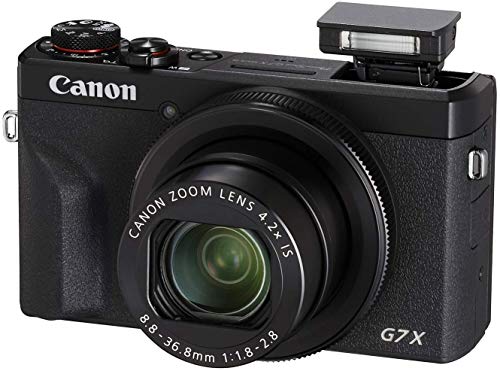
Canon PowerShot G7 X Mark III — The one true vlogging PowerShot
Everything the keyword promises converges in this single body. The G7 X Mark III keeps the family’s beloved formula — a genuinely pocketable shape, a bright zoom that behaves indoors, Canon’s flattering way with faces — and adds the two features that separate a vlogging camera from a holiday camera: a microphone input and a screen that flips up so a presenter can compose, check focus and watch the recording indicator without an assistant. It also speaks the modern creator’s second language, offering straightforward live-streaming and vertical-video awareness that earlier generations of the line never imagined needing.
Daily life with it explains its decade-long reputation better than specifications do. It wakes quickly, focuses on a face with minimal hunting, and produces footage whose colour most owners publish unedited because editing time is the scarcest resource in a weekly channel. Held at arm’s length its weight stays polite through a market walk; set on a mini tripod it becomes a desk camera for reviews and tutorials; slipped back into a pocket it leaves both hands free for the life the vlog is supposedly about. Few tools at any tier balance those three postures so evenly.
The caveats are known quantities rather than surprises. Its autofocus, while willing, lacks the eerie subject-locking confidence of the newest mirrorless systems, and in dim venues it can breathe briefly before settling — a flaw viewers forgive in a chatty vlog and notice in a cinematic one. Battery life suits an outing’s worth of segments rather than an all-day festival, so a second cell is the traditional owner’s first accessory. Neither point dents the central verdict: if the words Canon and PowerShot are non-negotiable and the budget is enthusiast-compact rather than flagship, this is not merely the best choice; it is, on current verified evidence, the only one.
- Format: enthusiast compact, 1-inch class sensor
- Vlogger essentials: microphone input, flip-up screen
- Colour: Canon’s face-friendly rendering, minimal editing
- Streaming: built for direct live and vertical workflows
- Carry: true jacket-pocket dimensions
Strengths
- The complete PowerShot vlogging package
- Footage most owners publish ungraded
- Pocketable without accessory sprawl
Trade-offs
- Autofocus a step behind newest mirrorless
- Second battery becomes a habit
- Low-light focus can hesitate briefly
Its characteristic scene unfolds at a night market overseas: steam, neon, a presenter weaving between stalls with the camera held high in one hand, narrating over crowd noise through a small plugged-in microphone. The footage comes home warm-coloured and watchable, the camera goes back into the same pocket the passport lives in, and no bag ever entered the story. That pocket-to-published pipeline, refined over three generations, is what Canon loyalists are actually buying — and on this evidence, rightly.
Desk creators get a quieter version of the same satisfaction. Perched above a monitor, the flip screen tilted toward its owner, the G7 X Mark III records a product review with the calm of a camera that has done this ten thousand times in other people’s studios. Familiarity is a feature: the menus you learned on an older Canon are here, the colour your audience recognises is here, and the upgrade feels like coming home rather than moving house.
Best for: Canon loyalists wanting the definitive pocket vlogging PowerShot. Not suited for: all-day single-battery events or creators needing mirrorless-grade subject tracking
Canon PowerShot SX740 HS — Travel-zoom cousin, prose-only
This pick carries no purchase link, and the reason is procedural rather than dismissive: we could not verify a correct current listing for it, so it appears as informed guidance for readers who may encounter it through other reputable retailers or the used market. What it offers a vlogger is a very specific bargain — a long-reaching zoom in a compact body, aimed squarely at holiday storytelling where the subject is a distant stage, a safari animal or a child’s face across a school hall, and the presenter appears mainly as narrator rather than on-camera host.
Judged as a travel camera that also vlogs, its logic holds together. The zoom swallows distances a G7 X owner must walk to cover, the body remains holiday-bag friendly, and its video serves bright outdoor days perfectly happily. Families whose channel is essentially a beautifully kept holiday diary — grandparents subscribed, cousins commenting — may find its priorities match theirs more closely than a presenter-first machine would. Canon’s familiar menus and colour keep the footage feeling of a piece with the rest of this page’s recommendations.
Judged as a presenting camera, the compromises queue up quickly. Its screen arrangement and audio provision were not designed around a solo host checking framing and plugging in a microphone; indoor light challenges its smaller sensor sooner; and the whole design speaks the language of sightseeing rather than studio habits. A creator whose episodes are eighty percent face-to-camera should read this entry as a signpost pointing back to the G7 X Mark III above, not as an equal alternative wearing a longer lens.
- Format: compact travel zoom
- Home turf: holidays, events, distant subjects
- Presenter tools: limited compared with G7 X line
- Availability note: discussed without a verified link
- Audience fit: family travel diaries
Strengths
- Zoom reach the G-series cannot match
- Holiday-friendly size and simplicity
- Canon colour and menus throughout
Trade-offs
- Not built around solo presenting
- Indoor video strains sooner
- No verified listing to link here
Imagine it at a school sports day, zoomed across the field to a small sprinter who happens to be the channel’s youngest subscriber and chief subject. The footage is joyful, the distance conquered, the grandparents delighted. That is this camera’s honest kingdom — the far end of the field, the distant stage, the balcony view — and within that kingdom a vlogger focused on places and people-at-a-distance may never feel its presenter-side limits at all.
Used-market hunters should inspect any example carefully: check the zoom extends smoothly, the screen hinge feels firm, and the battery health matches the seller’s optimism. A well-kept SX740 HS at a gentle used price can be a family’s second camera for years, which is a respectable destiny for a machine this guide refuses to oversell as something it is not.
Best for: travel-diary vloggers filming distant subjects in good light. Not suited for: desk presenting, microphone workflows or low-light indoor channels
Canon PowerShot V10 — Canon vlogging experiment, prose-only
Canon aimed the V10 directly at casual creators, and its absence of a link here follows the same rule as its cousin above: no verified listing, no buy button, no exceptions for good intentions. What remains worth discussing is the concept — a tiny, upright vlogging device with a built-in stand, a wide view for group selfies and an interface designed for people who find ordinary cameras faintly intimidating. As a statement of where Canon thinks entry vlogging might go, it is genuinely interesting; as a purchase, it suits a narrower reader than its marketing suggests.
The appeal concentrates on spontaneity. A device that stands on a café table by itself, frames a wide circle of friends and starts recording with minimal ceremony removes the three frictions that kill casual vlogs: setup, framing anxiety and the feeling of performing for a machine. Short-form creators filming vertical-first content around food, travel moments and friend-group chaos are its natural parish, and its pocket footprint undercuts even the G7 X’s.
Its limits are the other side of that simplicity. Fixed-everything design means the look of your footage is chosen for you; growing creators will feel the walls within months. Audio and low-light performance serve bright, close, cheerful filming and strain beyond it. Treat the V10 as a delightful sketch of an idea — worth knowing about, worth handling if a retailer stocks it, but not the Canon this guide would steer a committed channel toward while the G7 X Mark III exists.
- Format: ultra-compact vlogging concept
- Signature trick: built-in stand for table filming
- View: wide, group-selfie friendly
- Audience fit: casual vertical-first creators
- Availability note: guidance only, no verified link
Strengths
- Zero-setup table filming
- Frames a whole friend group easily
- Less intimidating than any real camera
Trade-offs
- Fixed design caps creative growth
- Dim rooms stretch it quickly
- Niche appeal beside the G7 X
Its natural footage is a birthday table filmed from the cake’s point of view: candles, faces leaning in, laughter arriving in waves, the device itself forgotten within seconds — which is exactly what its designers hoped. Casual creators value that invisibility highly, and if your channel’s entire promise is unfiltered moments with friends, the concept deserves the respectful hearing this prose section gives it.
Everyone else should file it under promising experiments. Canon may iterate the idea into something essential; today it remains the interesting relative you are glad to see at gatherings, while the G7 X does the family’s serious work. Guidance pages earn trust by making such distinctions calmly, and this one is made in that spirit.
Best for: casual vertical creators filming friends in bright places. Not suited for: growing channels, desk tutorials or dim-venue regulars

Sony ZV-1F — Alternative: simplest start
Here the guide steps outside the Canon badge, openly, because this Sony answers the keyword’s affordable half better than any PowerShot except the G7 X answers its Canon half. The ZV-1F fixes its wide lens permanently to the body, which sounds like a limitation until a beginner realises it also fixes the budget: no lens research, no lens purchases, no lens guilt. Its creator shortcuts — quick background softening, product-showcase focusing habits — read like features copied from a vlogger’s diary, and its price tier undercuts the enthusiast Canon while keeping a proper microphone path open.
Side by side with the G7 X Mark III, the trade is legible. Canon gives you a zoom, a view of distant subjects and that beloved colour science; Sony gives you a wider, simpler, cheaper start and controls tuned even more single-mindedly to presenting. A creator filming mostly at arm’s length indoors — hauls, reviews, story-times, study vlogs — will rarely touch the zoom they surrendered, while a traveller will miss it within the first afternoon. The keyword cannot decide this for you; your last twenty phone videos can, because they reveal which distance you actually film at.
Long-term, the ZV-1F behaves like a good first instrument: it teaches framing, exposure instincts and presenting rhythm, then retires into second-camera or sibling duty when ambition outgrows its fixed view. Nothing about it pretends to be a system, and that honesty is refreshing beside compacts that imitate system cameras without the mount to back the performance. If the Canon badge is a preference rather than a principle, start here and spend the saving on the microphone your audio has been begging for.
- Format: fixed-lens creator compact
- Budget logic: undercuts enthusiast tier, lens-free forever
- Home turf: arm’s-length indoor presenting
- Shortcuts: background and product modes
- Exit path: becomes the household’s second camera
Strengths
- The gentlest learning curve in this article
- Savings fund a proper microphone
- Wide view suits small rooms perfectly
Trade-offs
- No zoom for travel storytelling
- Fixed lens caps long-term growth
- Not a Canon, for readers who care
Watch a study-tuber film a desk tour with one and the appeal crystallises: the wide lens swallows the whole workspace from a shelf above, her face stays framed when she leans in to show a notebook, and the episode is edited before her tea cools. No moment in that workflow asked for Canon colour or a zoom ring. Workflows, not badges, should pick cameras — a sentence this entire page exists to make easier to act on.
Price-tier honesty completes its case. Because it sits below the G7 X’s tier, a buyer choosing Sony keeps meaningful money inside an affordable budget for lighting and sound, the two upgrades audiences perceive most. A slightly humbler camera with a good microphone defeats a prouder camera with hollow audio in every viewer-retention graph ever drawn, and first channels live or die by those graphs.
Best for: beginners filming indoors at arm’s length on the tightest sensible budget. Not suited for: travel zoom needs or committed Canon-only buyers

Sony RX100 VII — Alternative: premium pocket zoom
If the G7 X Mark III is the PowerShot ideal, the RX100 VII is what that ideal becomes with the budget ceiling lifted and a rival badge fitted. It keeps the pocket-compact faith — small body, retractable zoom, screen that flips for presenting — then adds the polish of Sony’s flagship thinking: autofocus with a reputation for near-telepathic subject lock, a zoom range stretching from wide establishing shots to genuinely distant detail, and a microphone input that respects the vlogger’s first commandment about sound. It is the alternative for the reader who typed Canon out of habit, then realised the habit was really about size.
Travel vloggers feel its advantages hourly. One moment frames a cathedral square; the next, without changing lenses or position, isolates the gargoyle the narration mentions. That elasticity lets a solo creator shoot like a small crew, gathering cutaways and details that make edits feel produced rather than merely recorded. Its stills pedigree matters too: channels whose thumbnails and companion blog photographs carry real weight get a serious photographic tool inside the same pocket, not a video device grudgingly snapping frames.
The invoice for all this is tier, plainly stated. The RX100 VII lives above the affordable line this keyword draws, and buying it while starving the rest of a kit would repeat the classic mistake in reverse — a magnificent camera recording echoey audio under a bare bulb. Its menus also reward study more than the Canon’s friendlier pages do. Choose it when the budget genuinely stretches and the travel-heavy workflow genuinely demands it; otherwise let it stand as proof that the G7 X’s formula, at its lower tier, remains a small miracle of positioning.
- Format: premium pocket compact with zoom
- Autofocus: flagship-grade subject tracking
- Range: wide scenes to distant details, one lens
- Audio: microphone input included
- Tier note: above this keyword’s affordable line
Strengths
- The most capable pocket vlogging compact here
- Zoom elasticity replaces a second camera
- Serious stills for thumbnails and blogs
Trade-offs
- Price tier breaks the affordable brief
- Menus demand more study than Canon’s
- Overkill for desk-only channels
Its defining footage comes from a solo rail journey: window landscapes, station details zoomed from a bench, a whispered piece to camera on a quiet platform, all from a jacket pocket that also held the ticket. The episode’s production value puzzles viewers who assume a crew; the truth is a compact operating at the top of its form. Readers whose vlogs are journeys should weigh that evidence heavily before defaulting to any badge.
There is also a longevity argument that softens the tier shock. Owners keep RX100-series cameras for many years because very little about them becomes obsolete for vlogging purposes, and resale values stay civilised when upgrade day finally arrives. Cost per year, rather than cost per purchase, is the fairest lens for this pick — through that lens it looks less like extravagance and more like a long lease on excellence.
Best for: travel vloggers whose budget stretches to the premium pocket tier. Not suited for: strict affordable budgets or desk-bound presenters

DJI Osmo Pocket 3 — Alternative: gimbal in a pocket
The third alternative abandons the compact-camera shape entirely, because the problem it solves — walking footage that does not slosh like soup — is one no PowerShot mechanism addresses. The Pocket 3 mounts its camera on a miniature motorised gimbal, so strides, stairs and cobbles are absorbed mechanically while the presenter keeps talking. Its rotating screen flips between horizontal episodes and vertical shorts with a physical twist, and its face tracking follows a moving host through a crowd with a patience no wrist can imitate. For vloggers whose stories happen in motion, it is not an alternative to the Canon; it is a different species answering a different prayer.
Desk duty, surprisingly, is its second talent. Set on a table, the gimbal becomes a tireless camera operator, keeping a presenter framed while they cook, craft or demonstrate with both hands committed to the task. Creators filming alone in kitchens report that this quiet tracking changes what they dare to attempt: recipes shot in one flowing take, workshop builds narrated while both hands hold the workpiece. The G7 X on a tripod frames a rectangle and hopes you stay inside it; the Pocket 3 follows you out of the rectangle entirely.
Its compromises mirror its magic. The small sensor trails the compacts after dark, the zoom is essentially your feet, and the built-in battery makes a power bank part of any long day’s kit. Presenters who love the ritual of a camera — dials, heft, a lens to cradle — may find it almost suspiciously effortless. But readers whose keyword journey began with pocketable and affordable will recognise the deeper kinship: like the original PowerShot promise, this device disappears into a pocket and reappears exactly when life becomes filmable.
- Format: gimbal camera with rotating screen
- Signature strength: mechanical stabilisation while walking
- Tracking: follows a presenter’s face hands-free
- Formats: horizontal and vertical natively
- Carry: smaller than any compact here
Strengths
- Walking footage no compact can equal
- A tabletop camera operator built in
- Vanishes into any pocket between scenes
Trade-offs
- Evenings challenge its small sensor
- Zoom means walking closer
- Built-in battery needs power planning
Picture a morning market in a foreign city, the presenter tasting her way from stall to stall while the Pocket 3 glides at chest height, face tracked, horizon level, stallholders waving into a lens steadier than any hand. The resulting episode feels professionally crewed. Cut to the same presenter at a rented apartment’s table that evening, the little gimbal following her hands as she reviews the day’s purchases — one device, both halves of the vlog, no bag ever opened.
Canon loyalists sometimes adopt it as a companion rather than a replacement, and the pairing is shrewd: the G7 X handles desks, interviews and low light, while the Pocket owns the streets between them. Two pockets, two specialties, and a channel whose footage suddenly varies like a programme with a budget. Loyalty, exercised intelligently, looks exactly like that.
Best for: walking, travel and hands-busy demonstration vlogs. Not suited for: dark venues, zoom-dependent storytelling or dial-and-heft traditionalists
How Do the Canon and Its Alternatives Compare?
| Camera | Link status | Defining strength | Watch out for |
|---|---|---|---|
| Canon PowerShot G7 X Mark III | Linked, verified | Complete vlogging PowerShot | Spare battery habit |
| Canon PowerShot SX740 HS | Prose-only | Long holiday zoom | Presenter tools are thin |
| Canon PowerShot V10 | Prose-only | Built-in stand spontaneity | Fixed design, niche fit |
| Sony ZV-1F | Linked alternative | Simplest affordable start | No zoom at all |
| Sony RX100 VII | Linked alternative | Premium pocket capability | Above affordable tier |
| DJI Osmo Pocket 3 | Linked alternative | Gimbal-stabilised motion | Small-sensor evenings |
The link-status column is this page’s honesty made visible. Two Canon relations are discussed because readers will meet them in shops and listings elsewhere, and sending you into those encounters informed is worth more than pretending they do not exist. One Canon carries a link because one Canon earned it under verification. Everything else follows from those two sentences.
What Should Canon Loyalists Check Before Buying Any PowerShot?
Start with the microphone question, because it eliminates most of the family tree instantly. If a PowerShot cannot accept an external microphone, its vlogging ceiling is set by room acoustics and wind, and no later accessory can raise it. Next, handle the screen: a presenter filming alone needs to see framing, focus and the recording light from in front of the lens, so any fixed or merely tilting arrangement must be judged against your actual filming posture, not a showroom’s. Finally, test the flip mechanism’s sturdiness in person if you can; hinges on creator cameras live harder lives than any other moving part.
Colour loyalty deserves a fair hearing in the checklist too. If your audience knows your footage by its warm Canon skin tones, switching brands changes your channel’s visual signature in ways subscribers notice subconsciously. That is a legitimate reason to pay the G7 X’s tier and skip the cheaper Sony — brand consistency across years of archive footage has real value. What is not legitimate is assuming every Canon shares that signature equally; the travel-zoom cousins render differently, and loyalty should attach to the specific look you love, not the badge in the abstract.
How Do You Film a Good Vlog on a Compact, Whatever the Badge?
Compacts reward creators who think like cinematographers on a budget of one. Lock the camera’s wandering instincts down: fix white balance for a scene so skin does not drift between cuts, tap to focus on your face and let lesser subjects soften, and keep the camera at eye level or slightly above, because pocket cameras placed on low tables film nostrils with documentary enthusiasm. Short segments beat heroic takes; a compact’s battery, your memory for lines and the audience’s patience all prefer a vlog assembled from confident ninety-second pieces.
Sound craft matters doubly at this tier, since compact microphones sit close to handling noise and zoom motors. Hold the camera by a small grip rather than its body, keep fingers away from microphone ports, and speak toward the lens at a consistent distance instead of wandering around the room’s echo. Outdoors, a simple wind muff over the microphone area transforms intelligibility on breezy days. These habits cost almost nothing and lift a PowerShot’s footage further than any in-camera setting buried three menus deep.
What Mistakes Do PowerShot Buyers Repeat Most Often?
Assuming the whole family vlogs is the founding error — the badge covers everything from children’s point-and-shoots to the G-series, and a famous name on the box guarantees nothing about microphone sockets or screens. Second is buying the travel zoom for a desk channel because the zoom number looked impressive in the shop; unused reach is dead weight in every episode filmed at arm’s length. Third is neglecting the spare battery and a fast card, the two small purchases that decide whether a filming day feels professional or improvised.
A fourth mistake is subtler: treating the alternatives as betrayals. Readers who cross-shop honestly and still choose Canon own their decision with a confidence that survives the comment section’s brand wars. Readers who never looked remain quietly haunted by every rival’s highlight reel. This page’s structure — Canon first, Canon honestly bounded, alternatives openly labelled — exists to give you the first kind of confidence, whichever badge ultimately goes home in your pocket.
Related guides
Frequently Asked Questions
Why is only one PowerShot linked in this guide?
Because verification, not enthusiasm, controls our links. The G7 X Mark III is the one current PowerShot whose vlogging credentials and listing we could confirm together. Other models are discussed in prose so you can judge them in shops or on the used market with full information, but we will not attach a purchase link we cannot stand behind.
Is the G7 X Mark III still worth it beside newer mirrorless cameras?
For pocket-first vlogging, yes: mirrorless systems win on sensors and lenses while losing on the very quality that defines this keyword — a camera that lives in a jacket and films in seconds. If your channel is desk-based and growing, Canon’s own R-series deserves comparison; if your channel happens in streets, markets and borrowed moments, the compact remains the sharper tool.
Can the SX740 HS work for a family holiday channel?
Genuinely well, provided the channel’s grammar is places and people filmed from a storyteller’s distance rather than a presenter’s arm’s length. Its zoom gathers the moments compact vlogging cameras miss entirely. Just buy it knowing its presenter-side compromises, ideally after handling one, and keep expectations indoors-shaped: bright days are its native climate.
What does the V10 do that the G7 X does not?
It stands on a table by itself and asks almost nothing of its owner — no tripod, no settings, no ceremony. That radical simplicity serves casual group filming beautifully. The G7 X answers with a zoom, a microphone input, stronger low-light manners and room to grow, which is why committed channels should choose it and casual creators may fairly prefer the experiment.
Which alternative should a Canon fan try first in a shop?
The Sony ZV-1F, because its contrast teaches the most per minute: same pocket philosophy, opposite lens philosophy. Ten minutes of handling tells you whether you film life at wide arm’s length or through a zoom’s reach. Travel storytellers should then handle the RX100 VII; walkers should ask to see the DJI Pocket 3 glide across the counter.
Do PowerShot cameras hold their value for resale?
The G-series historically fares better than most compacts, helped by exactly the creator demand this page documents. Keep the box, the cables and a scratch-free screen, and a G7 X Mark III should return a civilised share of its cost when mirrorless day eventually dawns — another quiet argument for buying the family’s flagship rather than its cousins.
Final Recommendation
If Canon and PowerShot are the brief, the answer is singular and strong: the G7 X Mark III, with a spare battery and a small microphone, remains the pocket vlogging camera its lineage promised. Buy the SX740 HS knowingly for travel-zoom storytelling, regard the V10 as a charming experiment for casual tables, and let the alternatives do their honest work — the ZV-1F for the simplest affordable start, the RX100 VII for premium pocket reach, the Pocket 3 for motion no compact survives. A list that tells you where its own links stop is a list you can build a channel on.
Whatever you choose, film something this week with the camera already in your life while the new one travels to you. Channels are built by published episodes, not by parcels, and the presenters who thrive on compact cameras share one trait that no badge confers: they treat the pocket-sized tool as a reason to film more often, in more places, with less fuss — which was the PowerShot idea all along.
How Does the G7 X Mark III Age Across a Channel’s First Three Years?
Year one is the honeymoon of competence: the Canon handles everything a new presenter attempts, and its limits stay theoretical. Year two introduces the stresses that separate durable tools from novelties — the flip screen cycling thousands of times, the lens retracting through dust and pocket lint, batteries rotating through hundreds of charges. Owners who treat the camera like a working instrument rather than a jewel report that it shrugs off this middle age gracefully, developing the small scars of a device that goes everywhere, which in vlogging terms is praise rather than damage.
Year three is when the fork appears. Some channels have grown into productions — a second presenter, a studio corner, sponsors asking for particular looks — and the G7 X retires honourably into travel and second-angle duty beside a mirrorless main camera. Others discover their format never needed more: the pocket camera still matches the show’s grammar perfectly, and upgrading would spend money to solve problems the audience never perceived. Both endings vindicate the purchase, because a camera that serves three full years at the centre of a creative habit has repaid its tier many times over in published work.
Maintenance stretches all three years. A blower for the lens barrel, a soft case inside the pocket or bag, firmware checked occasionally and a battery retired when its runtime visibly sags — this small liturgy keeps a compact feeling new far longer than neglectful owners believe possible. Canon’s service network, another unglamorous loyalty dividend, means a worn hinge or tired dial can be professionally revived in most regions instead of writing the camera off, extending the affordable story well past the point where lesser-supported rivals become e-waste.
What Accessories Actually Earn Their Money Beside a PowerShot?
The short list begins with a second battery, because compact filming days end exactly when the story gets good, and a spare in the pocket is the cheapest insurance in this entire article. A small tabletop tripod with a ball head follows, turning café tables and hotel desks into studios in under a minute. A compact microphone that plugs directly into the G7 X’s socket transforms echoey rooms, and a simple wind cover for it rescues outdoor narration from the crackle that makes viewers reach for the volume and then the exit.
Beyond those three, discipline should tighten. Cases multiply like rabbits in compact owners’ drawers; buy one good soft pouch and stop. Lens adapters and exotic mounts promise creativity while adding the bulk the PowerShot was bought to escape. Even spare cards deserve a ceiling: two fast, trustworthy cards rotated carefully beat a wallet of cheap ones whose failure you will meet at the worst possible moment, mid-interview, in another country, with the light going.
The most valuable accessory is not sold for cameras at all: a notebook or notes app where each filming day ends with three lines — what the camera did well, where it fought you, and what you will change tomorrow. Compact cameras reward owners who learn their specific habits, and that running diary converts vague dissatisfaction into precise, cheap fixes. Channels grow on such marginal gains compounded weekly, long after the excitement of the purchase itself has faded into routine.
How Do You Set Up a G7 X Mark III for Its First Week of Filming?
Begin by teaching the camera your face. Spend one unglamorous hour at your usual desk or kitchen spot, recording short tests at different distances, and learn where its autofocus feels happiest and how its screen’s brightness relates to the footage a computer later shows. Pocket cameras flatter owners who calibrate expectations early: you will discover the arm’s-length distance where your voice, face and background settle into balance, and that distance becomes your default staging for a hundred future episodes.
Next, simplify ruthlessly. Choose one video mode and stay in it for a month, because mode-hopping fragments your archive’s look and your learning alike. Set the camera to warn you plainly about recording status, arrange the flip screen’s angle so a glance confirms framing without breaking your train of thought, and rehearse the physical choreography — power, flip, frame, speak — until it takes five seconds and no attention. Fluency with a compact is measured in such seconds; audiences never see them, but presenters feel them in every relaxed performance.
Finally, design your carry. The G7 X’s whole philosophy collapses if it travels in a padded case at the bottom of a rucksack, so decide which pocket, pouch or belt loop is its permanent home and let muscle memory build around that decision. A camera that is always in the same place gets used in the unplanned moments — the unexpected parade, the friend’s surprise announcement — that often become a channel’s most loved footage. Accessibility is a specification, and Canon’s little flagship scores higher on it than cameras twice its price precisely because owners actually carry it.
When Should a PowerShot Owner Admit Mirrorless Is Calling?
The honest signals are specific, not atmospheric. When you repeatedly need a wider or longer view than the compact’s zoom offers and cropping has begun to soften your footage, the lens argument has arrived. When sponsors, clients or a growing production schedule demand interchangeable everything and a second body as backup, the system argument has arrived. When low-light venues become your channel’s home turf rather than its occasional adventure, the sensor argument has arrived. Any one of these, recurring across a season, justifies exploring Canon’s R-series with a clear conscience and a clear brief.
Equally honest are the signals that say stay. If your episodes still fit the pocket grammar — desks, streets, markets, faces at arm’s length — a mirrorless purchase buys weight before it buys quality. If filming happens in stolen moments between other obligations, the compact’s instant readiness protects the habit that built the channel. Many creators keep the G7 X as their daily instrument even after a mirrorless body joins for studio days, which tells you the two were never truly rivals; they are shifts in a working week, and the affordable genius of the PowerShot is that it never stops earning its shift.
What Does a PowerShot Kit Look Like Inside a Working Week?
Monday’s episode is a desk review filmed before work, the compact perched on its little tripod where the weekend left it, battery swapped in a motion now too practised to notice. Wednesday belongs to the street: the same camera rides in a coat through a lunchtime market visit, gathering the colour and crowd noise that make the channel feel alive rather than produced. Friday closes the week with a sit-down piece answering comments, the flip screen tilted up, a small microphone plugged in because the room’s echo finally lost its long argument with its owner.
Notice what never happens in that week: no lens changes, no sensor cleaning, no bag repacking, no evening lost to firmware archaeology. The PowerShot workflow’s economy is measured in decisions not taken, and for creators whose filming time is carved from jobs, commutes and family life, those saved decisions are the true feature list. A mirrorless system offers more ceilings; the compact offers fewer interruptions, and many channels are built far more from uninterrupted weeks than from ceilings.
Weekends reveal the second economy, which is social. The little Canon can be handed to a partner, a parent or a friend with thirty seconds of instruction — hold it here, watch the red light, keep me in the middle — and the footage comes back usable. Equipment that recruits helpers multiplies a solo creator’s angles and energy, while equipment that intimidates keeps its owner alone inside a single static frame. When viewers describe a channel as warm, they are often responding to exactly this: other humans, filmed willingly, by a camera nobody feared.
Keep a small ritual at the week’s end: copy the cards, charge everything, and glance at one frame from each episode to confirm the look stayed consistent. Ten minutes of housekeeping preserves the archive’s coherence across months, and coherence is what turns a pile of uploads into a body of work a new subscriber can binge with pleasure. The PowerShot, maintained this lightly, will still be performing the same trick years from now — being ready before the moment finishes happening.
One last encouragement for the loyalists who read this far while clutching an older PowerShot that still works: film one more episode with it before ordering anything. Note precisely where it frustrates you — the missing microphone socket, the screen that will not turn, the focus that wanders at dusk — and let that list, written from experience rather than envy, confirm whether the G7 X Mark III is truly your next camera. Upgrades chosen from evidence feel satisfying for years; upgrades chosen from restlessness need replacing by spring, and no household budget, however generous, enjoys funding the same lesson twice in one year.
Bring that same evidence habit to the shop counter, too: ask to hold the camera at full arm’s length for a full minute, flip its screen with your thumbnail rather than a fingernail, and listen to its own microphone in the store’s echo before believing any promise made on its behalf by a stranger on the internet, including the strangers who wrote this page for you today.
Then go home, sleep on the decision for one night, and buy in the morning only if the camera still feels like the answer to the list you wrote — patience at the counter is the final, cheapest accessory any vlogger ever acquires for their channel.
And spare a thought for the second-hand shelf while you decide, because PowerShot loyalty has a quiet financial afterlife there: well-kept G-series bodies circulate among creators for years, passing from a graduating vlogger to a beginner whose budget suddenly stretches to enthusiast quality. Buying used demands the usual inspections — hinge, lens barrel, battery honesty — but a family of cameras this long-lived rewards the patient hunter, and selling yours onward when mirrorless day arrives returns a friendlier share of the original outlay than most consumer electronics ever manage for their first, hopeful owners.
Related Guides
Readers weighing the Canon against the wider market should compare it with our broader roundup of affordable vlogging cameras across every brand, while presenters whose priority is self-framing alone will enjoy vlogging cameras ranked purely by their flip screens, and travellers can continue into pocket cameras for holiday filming.


