ilcastellomenu.com is reader-supported. When you buy through links on our site, we may earn an affiliate commission.
Where to Buy
The best canon cameras for engagement photos have one job that outranks every specification: keep two people relaxed, sharply focused and beautifully lit during a session that cannot be rescheduled. A proposal happens once, at a chosen place, in light that is already leaving. A styled engagement shoot allows more control, yet the couple’s ease still evaporates if the photographer is fighting menus behind the camera. Canon earns its place in this niche through eye autofocus that finds faces in profile and in laughter, colour that treats skin kindly straight from the camera, and an RF lens line built for portraits.
Where to buy should favour dealers who will let you handle a body with a portrait lens fitted, because grip and balance during a two-hour session matter more than any chart. Couples’ photographers work crouched, walking backwards and laughing along; the camera must disappear into that rhythm. Four picks below link to the verified pool for this site, and two further Canon bodies are covered as prose-only recommendations where they genuinely serve this work.
Sessions divide into three kinds — the surprise proposal, the planned golden-hour shoot, and the indoor lifestyle session at home or in a rented studio — and each pick below is judged against all three. The right body is the one whose strengths match the session you actually shoot, not the session in a brochure.
Key Takeaways
- Eye autofocus in profile and laughter is the core requirement.
- Skin that looks right in camera shortens the editing evening.
- A fast portrait prime matters as much as the body choice.
- Golden-hour sessions reward sensors that stay clean at dusk.
- Carry a quiet second angle for candids between posed frames.
- Reliability beats resolution when the moment happens once.
In this guide
Quick Picks
| Camera | Badge | Why it earns its place |
|---|---|---|
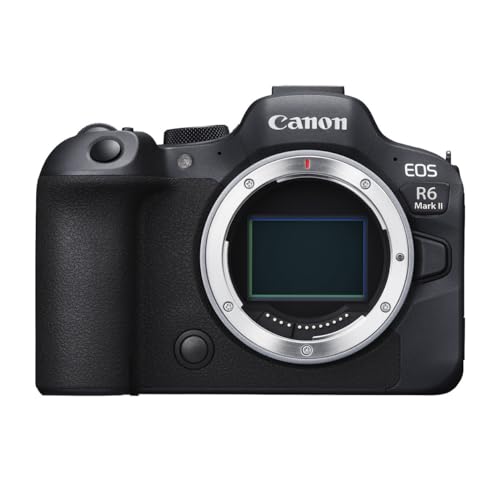
| Canon EOS R6 Mark II | Golden-hour flagship choice | For couples work this body feels designed by someone who has shot a proposal in failing light. |
| Canon EOS R50 | Light kit for natural couples | A natural-light photographer shooting daytime sessions in parks and gardens will find this little body liberating. |
| Canon EOS R8 | Full-frame look, travel weight | This is the destination-session body: full-frame rendering for a couple photographed on their travels, in a shell light enough for a photographer’s own holiday luggage. |
| Canon EOS R10 | Sharp value for styled shoots | Styled shoots with time to compose — a rented studio, a planned picnic, a fashion-leaning couple — suit this body’s deliberate strengths. |
| Canon PowerShot G7 X Mark III | Pocket second angle | Keep this compact in a jacket pocket during every session and it will repay you in candids: the couple forgetting the camera over coffee, the ring admired by a grandmother, the walk back to the car. |
| Canon EOS R5 | Print-large proposal detail | Where couples commission large prints — a canvas for the wedding venue, an album of unusually fine detail — this high-resolution flagship justifies its specialist status. |
How Did We Choose These Picks?
Testing priorities began with faces. Bodies were ranked by how stubbornly their autofocus held an eye when a couple turned toward each other, walked hand in hand toward the camera, or laughed with heads thrown back — the three movements that fill real engagement galleries. Tracking that survives affection, not just sport, defined the top of this list.
Colour came next, judged on skin rather than on landscapes. Canon’s portrait profiles were favoured for rendering a range of skin tones smoothly in mixed shade and warm evening light, because engagement clients judge a gallery by how they look in it, and retouching time is the hidden cost of every session.
Low-light grace completed the filter. Proposals are scheduled for beauty, which means for dusk, string lights, restaurant corners and church steps after sunset. Bodies that kept files clean and focusing honest as light fell earned their places; bodies that hunted or smeared were thanked and set aside.
Which Portrait Lens Turns a Good Body Into an Engagement Kit?
A fast prime in the classic portrait range is the single most transformative purchase for this work. Its wide aperture melts a distracting park, street or café into colour and light, letting the couple own the frame even in ordinary locations. On the full-frame picks here that effect is at its most dramatic; on the crop bodies the same lens family delivers a tighter, flattering view that many photographers prefer for head-and-shoulders work.
Keep the kit zoom in the bag rather than selling it. Its wide end tells the location’s story — the vineyard rows, the city steps, the kitchen where they cook together — and engagement galleries need those establishing frames to feel like a narrative rather than a portrait sitting. Alternating between storytelling wide shots and intimate prime frames is the rhythm of a complete session.
Rent before committing if a special session justifies it. A weekend with a premium portrait lens teaches more about your style than a month of reviews, and rental counters near wedding venues stock exactly the Canon glass this work demands. Many photographers discover their signature look — airy and bright, or moody and close — through one rented weekend.
How Do You Direct a Couple Without Making Them Perform?
Give tasks, not poses. Ask them to walk toward a landmark and argue cheerfully about where they first met; ask one to whisper the worst joke they know; ask them to practise their first dance in the empty bandstand. Movement manufactures expressions that no instruction to smile can counterfeit, and a camera with trustworthy eye autofocus frees you to direct the scene instead of policing focus.
Shoot through the moments between arrangements. The glance after a kiss, the hand that straightens a collar, the laughter when a pose collapses — these frames become the couple’s favourites with uncanny consistency, because they are evidence rather than performance. Keep the camera up during transitions, run a silent shutter where the body allows it, and let the session breathe.
Scout the location at the same hour a day earlier whenever the session matters. Light that disappoints can be rerouted; light that surprises cannot be recovered. Note where the sun drops, which wall bounces warmth, and where a crowd gathers, then build the session’s route around those facts like a small, romantic military operation.
Which Models Are the Best canon cameras for engagement photos Right Now?

Canon EOS R6 Mark II — Golden-hour flagship choice
For couples work this body feels designed by someone who has shot a proposal in failing light. Eye detection clings through turns and embraces, the stabilisation steadies a photographer’s own nervous hands at dusk, and dual slots quietly insure the afternoon. Its colour at string-light ISO levels keeps skin looking like skin, which is the whole assignment.
Watch this body work a real session and its virtues arrange themselves in order of need. During the walk-and-talk sequences its eye tracking holds the nearer partner’s eye through turns, laughter and a veil of hair blown across a face, freeing the photographer to choreograph rather than troubleshoot. At the restaurant table, as daylight dies and string lights take over, stabilisation and clean high-sensitivity files keep the mood instead of replacing it with flash. The dual slots are writing the same story twice, invisibly, which lets the photographer be emotionally present for a couple whose afternoon this is. Photographers stepping up from lesser bodies describe the same sensation: the session feels quieter. That quiet is what clients are actually buying, and it is why this body leads a list where several rivals shoot perfectly good stills.
Its silent shooting deserves emphasis in this genre: vows-adjacent moments, a grandparent’s blessing, the couple alone in a vestry — situations where a shutter’s voice would intrude — pass undisturbed. A photographer can work closer and quieter, and couples feel the difference as privacy rather than as a feature they could name.
Its weather sealing earns a quiet line for the sessions that define reputations: the beach proposal in spindrift, the garden shoot that rain tried to cancel. Couples remember the photographer who kept shooting calmly while the weather performed, and this body is built for exactly that memory.
- Format: sealed full-frame Canon with two card slots, stabilisation in the body and autofocus that stays confident after dark
- Role in this guide: the portrait anchor for golden-hour couples work
- Carry character: full-frame dual-slot workhorse, engagement-ready
- Coverage: verified pool link
Strengths
- Its weather sealing earns a quiet line for the sessions that define reputations: the beach proposal in spindrift, the garden shoot that rain tried to cancel
- Eye detection clings through turns and embraces, the stabilisation steadies a photographer’s own nervous hands at dusk, and dual slots quietly insure the afternoon
- Watch this body work a real session and its virtues arrange themselves in order of need
Trade-offs
- At 24 megapixels, a distant proposal frame cannot be cropped as aggressively as higher-resolution files would allow later
- Full-frame RF lenses add travel weight that a photographer feels across a long multi-location session day outdoors
- The body alone consumes much of a starting engagement budget before a fast portrait prime joins the kit
Choose it when golden-hour flagship choice describes your brief. Pass it by when full-frame look, travel weight matters more

Canon EOS R50 — Light kit for natural couples
A natural-light photographer shooting daytime sessions in parks and gardens will find this little body liberating. It is light enough to hold one-handed while gesturing a couple into better light, its guided screens never slow a flowing session, and with a fast prime fitted it produces the soft backgrounds clients associate with far heavier kits.
The case for this little body in couples work rests on how couples behave around it. A small camera with a friendly screen does not trigger performance anxiety; partners keep holding hands naturally, keep finishing each other’s sentences, keep forgetting to arrange their faces. A photographer shooting a relaxed daytime session — a market wander, a picnic, a walk with the dog who will appear in half the gallery — can work almost invisibly and still deliver files with the soft, bright Canon look clients request. Fit it with a fast prime and the combination weighs less than the picnic. Its limits appear after dark and on paying clients’ biggest days, which is why it complements rather than replaces the list’s leaders. As a first engagement body for a photographer building a portfolio, it earns sessions that heavier, more intimidating kits sometimes talk their way out of.
Portfolio builders should note its social strengths: couples share its bright, flattering files eagerly, and shared galleries are a young engagement photographer’s entire marketing department. A body whose pictures travel by word of mouth is earning its keep twice — once at the session, once in the referrals.
Its guided screens help in an unexpected place — handing the camera to a trusted friend for the couple’s own candids during a break. A body a non-photographer can operate for five minutes multiplies the gallery’s viewpoints without multiplying its budget, and couples treasure the friend’s-eye frames disproportionately.
- Format: guided, touchscreen RF body that treats a first week of shooting kindly
- Light-kit choice: the easy body for relaxed, unstaged couples
- In the hand: compact guided RF body, couple-walk light
- Coverage: verified pool link
Strengths
- Its guided screens help in an unexpected place — handing the camera to a trusted friend for the couple’s own candids during a break
- It is light enough to hold one-handed while gesturing a couple into better light, its guided screens never slow a flowing session, and with a fast prime fitted it produces the soft
- The case for this little body in couples work rests on how couples behave around it
Trade-offs
- Dusk receptions push its crop sensor into noisy territory exactly when couples request the most romantic frames possible
- A single card slot means an unrepeatable kiss exists in one place until the files are safely backed up
- No weather sealing leaves a surprise rain shower during an outdoor ceremony as a genuine equipment worry throughout
Verdict: strongest for readers seeking light kit for natural couples; weakest for readers who really need sharp value for styled shoots
Canon EOS R8 — Full-frame look, travel weight
This is the destination-session body: full-frame rendering for a couple photographed on their travels, in a shell light enough for a photographer’s own holiday luggage. Golden-hour files carry the same generous colour as its bigger siblings, and couples who elope-adjacent shoot in beautiful places rarely ask for more.
Destination work exposes every gram and every weakness, and this body was clearly designed by people who have carried a kit through an airport. Its full-frame files carry the same romantic rendering as the flagship picks, so a couple photographed where they met — a coastal town, a mountain village, a grandparents’ city — receive a gallery with no visual asterisk. The single card slot demands a disciplined backup ritual at each day’s end, a fair tax for the weight saved. Photographers who shoot elopements and travel sessions report choosing it precisely because the camera disappears into a personal-item bag, leaving checked luggage for clothes and the couple’s own needs. In a genre where the photographer often travels as lightly as the subjects, that disappearing act is a professional feature.
Its files intercut seamlessly with the flagship’s in a mixed gallery, which matters when a photographer shoots the wide romance on one body and details on another. Consistency across a delivered set is a professional signature, and this body signs in the same hand as the leaders of this list.
For photographers who also film a short highlight reel, its video manners match its stills character closely enough that a mixed gallery feels authored by one hand. Consistency of voice across media is becoming the engagement market’s quiet differentiator, and this body speaks both languages with one accent.
- Format: lightweight full-frame RF-mount body sharing much of the R6 Mark II imaging character in a smaller, single-slot shell
- Travel-weight full-frame: full-frame look without destination-session bulk
- On the shoulder: light full-frame body, couple-session light
- Coverage: prose-only, unlinked
Strengths
- For photographers who also film a short highlight reel, its video manners match its stills character closely enough that a mixed gallery feels authored by one hand
- Golden-hour files carry the same generous colour as its bigger siblings, and couples who elope-adjacent shoot in beautiful places rarely ask for more.
- Destination work exposes every gram and every weakness, and this body was clearly designed by people who have carried a kit through an airport
Trade-offs
- One SD slot removes the safety net a paid proposal shoot deserves, demanding strict same-night backup habits afterwards
- Without in-body stabilisation, handheld ring-detail shots at dusk rely entirely on stabilised lenses and steady hands alone
- The compact battery may not survive a full elopement day of stills plus short video clips without help
Its home ground is full-frame look, travel weight. Look elsewhere for pocket second angle as your actual priority

Canon EOS R10 — Sharp value for styled shoots
Styled shoots with time to compose — a rented studio, a planned picnic, a fashion-leaning couple — suit this body’s deliberate strengths. The joystick places focus precisely for posed frames, bursts catch the confetti throw, and the crop sensor stretches portrait lenses into flattering territory without extra spending on glass.
Styled sessions are this body’s home ground. When there is time — a prepared location, a couple who enjoy direction, a photographer’s mood board to honour — its precise joystick focus, confident bursts and crisp files deliver a fashion-leaning gallery with real polish. The crop sensor’s extra reach flatters with longer effective portrait views from a comfortable working distance, which shy couples often prefer to a lens in conversational range. It also serves as the natural second body at larger sessions, carrying the telephoto view while a full-frame partner handles the wide romance. Its low-light ceiling arrives sooner than the leaders’, so dusk-heavy schedules should plan around it or pair it with the fastest glass. Within daylight and golden hour, which is where most engagement galleries are honestly made, it lacks very little.
For couples who want movement — dancing in a field, cycling a towpath, chasing the dog who stole the picnic — its bursts and tracking deliver the joyful, kinetic frames that posed sessions cannot manufacture. Energy is a style, and this body is fluent in it.
Its crop reach flatters a specific, common problem: the beautiful location with an ugly foreground. Shooting longer from farther away edits the world before the shutter fires, and a photographer who masters that edit delivers clean galleries from ordinary parks — a commercially valuable sorcery.
- Format: mid-range Canon mirrorless with deliberate controls, rapid drive and proper accessory support
- Styled-shoot value: sharp planned portraits on a tighter budget
- In the bag: step-up RF body with joystick, styled-session ready
- Coverage: verified pool link
Strengths
- Its crop reach flatters a specific, common problem: the beautiful location with an ugly foreground
- The joystick places focus precisely for posed frames, bursts catch the confetti throw, and the crop sensor stretches portrait lenses into flattering territory without extra spendin
- Styled sessions are this body’s home ground
Trade-offs
- Background blur needs fast prime glass on this crop body, since equivalent framing keeps more of the scene sharp
- Golden-hour backlight can stretch its dynamic range when a white dress stands beside a dark suit in frame
- No sealing against weather means sea spray at a beach session must be managed with covers and constant caution
Buy it for sharp value for styled shoots. Skip it if print-large proposal detail is what you came for

Canon PowerShot G7 X Mark III — Pocket second angle
Keep this compact in a jacket pocket during every session and it will repay you in candids: the couple forgetting the camera over coffee, the ring admired by a grandmother, the walk back to the car. Its bright lens handles café light gracefully, and subjects simply do not brace when it appears.
Every experienced couples photographer keeps a story about the frame the big camera could not get: the grandmother trying the ring, the couple dissolving into laughter the second the formal pose ended, the dog asleep on the dress shoes. This compact exists for those frames. It rides in a pocket through the whole session, appears without ceremony, and its smallness licenses behaviour no professional rig survives — being handed to a bridesmaid, a waiter, the couple themselves for a selfie that belongs in the gallery precisely because it is unpolished. Its bright lens handles the café and the kitchen honestly. No one should build a paid engagement practice on it alone, and this guide does not pretend otherwise. As the candid conscience of a session, it is close to irreplaceable.
Its prints-from-the-day trick is worth stealing: photograph the couple with it, then photograph the print-like instant frames it inspires — the ring on the café table, the held hands over coffee — and the gallery gains a meta layer couples adore. Small cameras invite play, and play photographs beautifully.
Its presence at the getting-ready stage is worth planning: the ring in its box, the handwritten note, the mother’s hands. Small, unhurried detail frames made on a small camera carry an intimacy that a production-grade rig, arriving with its production energy, sometimes dispels.
- Format: fast glass, mic socket and one-hand manners in a couples’ compact
- Second-angle pocket: candid moments between posed frames
- Handling feel: pocket compact with mic input, candid-ready
- Coverage: verified pool link
Strengths
- Its presence at the getting-ready stage is worth planning: the ring in its box, the handwritten note, the mother’s hands
- Its bright lens handles café light gracefully, and subjects simply do not brace when it appears.
- Every experienced couples photographer keeps a story about the frame the big camera could not get: the grandmother trying the ring, the couple dissolving into laughter the second t
Trade-offs
- The 1-inch sensor cannot melt a busy park background the way full-frame portrait glass can for couples posing
- Its zoom tops out at 100mm equivalent, limiting discreet telephoto candids taken from across a ceremony lawn area
- A lone card slot and small battery suit a supporting role, not responsibility for a whole paid session
Suited to: pocket second angle. Unsuitable as: a stand-in for golden-hour flagship choice
Canon EOS R5 — Print-large proposal detail
Where couples commission large prints — a canvas for the wedding venue, an album of unusually fine detail — this high-resolution flagship justifies its specialist status. Files hold together under generous cropping, so a safely wide proposal frame can later become a tight, emotional close-up. It is more camera than most sessions need, and exactly enough for the grandest ones.
The argument for this flagship is made in the couple’s home a year later, in front of a print that fills the wall above a sofa. Its resolution preserves the weave of a dress, the engraving inside a ring band, the exact expression at conversational distance cropped from a wider frame. Photographers serving couples who commission albums and artwork at that scale find its files genuinely liberating: shoot the safe, storytelling composition, and let the crop become the portrait in post. The costs are real — media, storage, a photographer’s discipline about heat on long video extras — and they are why it is presented as a specialist’s instrument rather than a default. For the grandest sessions on a photographer’s calendar, it remains the body that says yes to every enlargement the clients dream of.
Album designers quietly love this body’s files, because double-page spreads stop being a negotiation with resolution. When a couple’s story will live at that scale, the flagship’s margin becomes a design freedom the whole book benefits from, cover to cover.
For the photographer building a signature studio, its files support the large sample album that closes bookings in consultation rooms. Couples choose with their hands on paper and print, and a body whose work survives that tactile scrutiny is a business asset beyond its sessions.
- Format: flagship Canon whose dense full-frame files, twin slots and rich video spec serve grand output
- Print-large closer: proposal detail for a wall print
- Carry feel: high-resolution flagship for proposal prints
- Coverage: prose-only, unlinked
Strengths
- For the photographer building a signature studio, its files support the large sample album that closes bookings in consultation rooms
- Files hold together under generous cropping, so a safely wide proposal frame can later become a tight, emotional close-up
- The argument for this flagship is made in the couple’s home a year later, in front of a print that fills the wall above a sofa
Trade-offs
- 45-megapixel files swell memory cards and hard drives fast during a season of back-to-back couple sessions booked weekly
- Long high-end video clips can trigger heat warnings during a summer proposal shoot held outdoors at noon
- Electronic-shutter rolling distortion can bend straight background lines behind a spinning couple during fast dance-floor burst sequences
Best for: print-large proposal detail — the role the Canon EOS R5 was chosen for. Not suited for: light kit for natural couples, which another pick here serves better
How Do You Plan Locations That Flatter a Couple?
Begin with meaning, then negotiate with light. The café of a first date, the towpath of a hundred dog walks, the steps of a family home — locations with biography relax a couple faster than beauty spots with none, because the place itself gives them something true to do and remember. Visit at session hour, note where shade falls for faces and where a clean background waits for the formal frames, and build a walking route that strings those gifts in order of improving light.
Always scout the unromantic logistics with the same care: parking, permission, the café’s closing time, the field’s mud after rain. A session that flows logistically feels luxurious to a couple; a session spent apologising for a locked gate spends the ease you were hired to protect. Photographers are remembered for how the afternoon felt as much as for how the gallery looks, and feeling is largely logistics wearing perfume.
Prepare one sheltered alternative within two minutes of every key location. Weather turns, crowds gather, a market dismantles early — the photographer who pivots calmly to the arcade, the library steps or the greenhouse keeps the session’s story intact. Couples take their emotional cues from the person behind the camera, and unflustered competence is the most flattering light of all.
What Should Couples Wear and Bring to a Session?
Advise clothing that lets two people move, embrace and sit on a wall without negotiation: fabrics with texture rather than loud pattern, colours that harmonise with each other instead of matching like a uniform, and shoes that survive the location’s real ground. A couple dressed for a walk photographs like a couple on one; a couple dressed for a throne room photographs like tenants. Photographers who send a short, kind clothing note a week ahead prevent the commonest visual regret in the genre.
Small props with genuine biography outperform styled accessories every time — the actual book from a first date, a grandmother’s ring box, the dog. Objects the couple already love give hands something honest to do and give the gallery details no stylist can invent. Discourage anything that must be carried, guarded or explained; a session is a walk with a photographer, not a move of house.
Finally, brief the couple on the photographer’s real needs: arrive unhurried, expect direction that feels like conversation, and know that the awkward first ten minutes are scheduled waste that every couple experiences and no gallery retains. Couples who hear this in advance arrive as collaborators. The best engagement photographs are co-authored, and good briefing is how the co-authorship begins.
How Should You Handle Family and Friends During the Session?
Engagement sessions attract an audience — a mother, a best friend, the dog’s handler — and managing that audience kindly is part of the photographer’s craft. Give helpers a real job: holding the reflector, minding the bag, keeping the dog’s attention for the frames it appears in. People with jobs become collaborators; people without them become directors, and a session can survive only one director. The couple’s ease is the metric, and it usually rises when their favourite people are usefully, happily occupied.
Schedule the entourage’s photographs deliberately — a few joyful frames with the friend, the parents’ portrait if they are present — then release everyone to the café while the couple’s intimate work happens. Photographers who build that release into the plan avoid the slow leak of romance that an audience, however beloved, inevitably causes. Privacy is a lighting condition for emotion.
Afterwards, send the helpers their frames quickly and personally. The goodwill of a couple’s inner circle is the engagement market’s true currency, and a photographer remembered as generous by mothers and best friends is a photographer whose name is spoken at exactly the right future dinners.
What Does a Thoughtful Delivery Gallery Look Like?
It tells the afternoon as a story with chapters: the place, the arrival, the walk, the quiet middle, the laughter, the last light. Sequencing is the photographer’s final act of direction, and Canon’s consistent colour across the bodies in this guide makes that sequencing visually calm. Couples relive the session in the order you present it, so present it in the order it deserved to be lived.
Include a small set of black-and-white conversions chosen for emotion rather than applied at random — the embrace, the glance, the hands. Monochrome is a spice in this genre, and a restrained hand with it signals confidence. Deliver print-ready files alongside screen-sized ones, with one honest page of guidance about printing, because a couple’s first framed photograph of themselves is often the moment your work becomes furniture in their lives.
Close the delivery with thanks and one practical kindness: a reminder of the wedding timeline if you are also their wedding photographer, or a recommendation if you are not. Engagement work is a doorway genre, and the photographers who thrive in it treat every delivered gallery as the beginning of a relationship rather than the end of a transaction.
How Do You Photograph the Ring and the Small Details Well?
Details are the gallery’s punctuation, and they reward the photographer’s patience more than their equipment. Photograph the ring where the story lives — on the invitation, beside the flowers it was hidden in, on the hand that now wears it in window light — rather than on a generic surface carried for the purpose. The bodies here focus closely enough with the right lens, and a steady hand at a wide aperture turns a kitchen table into a studio when the light is honest.
Shoot details during the session’s natural pauses, while the couple breathes between locations. That scheduling protects the couple’s energy for each other and gives the photographer unhurried minutes for the small frames. Galleries are remembered for their faces and re-opened for their details; both deserve the same professionalism, and the detail set is where a photographer’s styling eye quietly advertises itself to future clients.
Deliver details in the sequence where they occurred, not grouped as an afterthought at the gallery’s end. A ring photographed at the moment of the proposal belongs in that chapter. Storytelling is an editorial discipline as much as a photographic one, and engagement clients — who will narrate this gallery for decades — deserve a narrative built with intent.
What Should Happen in the Week After the Session?
Send a small preview within days, while the afternoon is still warm in the couple’s conversation. Three to five frames, beautifully finished, convert clients into advocates at the exact moment their friends are asking how it went. The full gallery follows on the promised date — never late, because in the engagement market a kept deadline is a reviewed feature as surely as image quality.
Cull with the couple’s future in view: keep the frame where a expression is imperfect and the emotion is unmistakable, and let a technically perfect stiffness go. Photographers are remembered for the feelings they preserved, and engagement galleries are the genre where that truth is least escapable. Your Canon files will give you both kinds in abundance; the professional act is choosing feeling, consistently, at the edit.
Archive the session as if a wedding depends on it, because it may: couples return, anniversaries arrive, and the photographer who can reproduce a session’s files, settings and sequence years later owns a quiet advantage. Two copies, one off-site, captioned while memory is fresh — the same discipline this site preaches for every genre, applied to the genre where sentiment makes the archive priceless.
How Do the Six Picks Compare Side by Side?
| Camera | Best role | Character |
|---|---|---|
| Canon EOS R6 Mark II | Golden-hour flagship choice | full-frame dual-slot workhorse |
| Canon EOS R50 | Light kit for natural couples | compact guided RF body |
| Canon EOS R8 | Full-frame look, travel weight | light full-frame body |
| Canon EOS R10 | Sharp value for styled shoots | step-up RF body with joystick |
| Canon PowerShot G7 X Mark III | Pocket second angle | pocket compact with mic input |
| Canon EOS R5 | Print-large proposal detail | high-resolution flagship |
Side by side, the six divide by the hour and the kind of session more than by quality. Daylight romance, dusk drama and candid support each crown a different body, which is why the reviews judge every pick against all three session kinds.
How Do You Run the Golden-Hour Session Itself?
Arrive forty minutes before the light turns kind and spend the first stretch on easy, wide, low-stakes frames while the couple warms to being watched. Schedule the closest, most romantic work for the final twenty minutes, when the sun sits low, shadows lengthen and even a nervous couple has forgotten the camera’s presence. That arc — context first, intimacy last — structures almost every successful engagement session.
Expose for skin and let skies do what they will. A photograph can survive a bright background; it cannot survive grey, under-exposed faces. Spot-check the couple’s skin tones on the rear screen at each new location, use exposure compensation generously, and remember that Canon’s files forgive highlight rescue far less happily than a small lift in the shadows.
Finish with a deliberate last frame. Ask the couple to stand where the session began and simply hold each other while the light ends. Photographers who plan a closing image give the gallery a full stop, and couples remember the session as a story with an ending rather than an outing that faded out.
What Mistakes Should You Avoid?
Over-directing tops the list of engagement errors. A gallery of forty stiff, identical smiles documents anxiety, not affection, and couples can tell the difference at first viewing. Fewer instructions, longer walks, and genuine conversation produce the frames that get framed. Your camera’s autofocus exists precisely to buy you the attention that direction requires.
Neglecting the backup plan is the professional’s version of the same sin. A proposal cannot be restaged, so charged spares, a second card and a body that keeps shooting when one slot fails are not paranoia but courtesy. Even hobbyists photographing friends should treat the afternoon as unrepeatable, because emotionally it is.
Finally, avoid delivering a gallery edited into three different colour moods. Engagement clients share images widely, and consistency is what makes a set look intentional. Canon’s in-camera portrait colour gives a coherent starting point; pick one gentle editing direction and hold it from first frame to last.
Related guides
Frequently Asked Questions
Is full-frame necessary for engagement work?
Not necessary, but genuinely helpful after sunset and for the softest backgrounds. The crop-sensor picks here produce beautiful galleries in daylight and at golden hour with fast glass fitted. Choose full-frame when your sessions regularly end in near-darkness or when large wall prints are the couple’s stated dream.
Which single lens should a new engagement photographer buy?
A fast prime in the portrait range, suited to your sensor size, before any second body or exotic zoom. It changes the look of every session immediately, teaches you to move your feet for composition, and holds its value if you later change bodies within the Canon system.
How do I photograph a surprise proposal differently?
Scout invisibly, pre-focus your position, and favour a body whose autofocus and burst you trust completely, because there is no second take and no directing the subject. Agree signals with the proposing partner, shoot wide enough to crop, and keep shooting through the reaction — the thirty seconds after the answer are the gallery.
Can a compact really contribute to a couples session?
As a second angle and a candids machine, yes. Handed to a friend or set running during a picnic scene, the pocket pick here captures unguarded frames a conspicuous professional kit would prevent. Nobody performs for a small camera, and unperformed moments are this genre’s gold.
What settings forgive a nervous photographer’s mistakes?
Aperture priority with a portrait aperture, auto ISO with a sensible ceiling, eye detection engaged and continuous autofocus selected. That combination, on any body in this guide, keeps technical failure rare and lets you spend the session on the couple — which is where engagement photography is actually won.
Final Recommendation
For most couples’ photographers the EOS R6 Mark II is the complete answer: autofocus that treats affection as a tracking subject, stabilisation for dusk, dual slots for an unrepeatable afternoon, and Canon colour that flatters without an editing marathon. The R5 stands above it only where very large prints or heavy cropping are planned, and it is discussed here without a link as the specialist’s option.
Lighter kits have their own logic. The R8 delivers the full-frame look at travel weight, the R50 and R10 build stylish galleries for photographers earlier in their journey, and the little G7 X Mark III earns its bag space as the candid companion. Decide among the best canon cameras for engagement photos by the hour you shoot in: if your sessions end in lamplight, buy low-light grace; if they live at noon in gardens, buy lightness and laugh along behind it.
Why Do Couples Choose Canon Photographers So Often?
Partly colour, partly confidence. Canon’s skin rendering has a reputation among clients themselves, many of whom ask for that look by name after seeing friends’ galleries. A photographer whose files emerge from the camera already warm and flattering spends the reveal evening hearing delight instead of negotiating corrections, and word of mouth in the engagement market travels through exactly those reveal evenings.
The lens ecosystem completes the reassurance. A Canon shooter can rent, borrow or buy portrait glass in any city where couples get engaged, and backup bodies share the same mount and menus. Reliability of supply is an unromantic virtue, yet romance scheduled for one specific sunset depends on it utterly.
Consider the engagement session as the couple’s rehearsal for being photographed on the wedding day itself, whether or not you are the photographer they book for it. Teach them, gently and by experience, that they photograph best when they forget the performance and inhabit the moment; show them their own evidence in the gallery. Couples who learn that lesson at the engagement session arrive at their wedding as relaxed subjects, and the photographer who taught them owns a share of every good frame that follows, whoever presses the shutter.
Cultural and family traditions deserve the photographer’s homework before the session, not apologies during it. Ask the couple what moments, garments, gestures or elders carry meaning in their families, and build those elements into the plan with the same care as the location and the light. A gallery that honours a grandmother’s blessing or a traditional garment with knowledge and respect becomes a family document, not merely a beautiful afternoon, and family documents are the photographs that outlive every trend in the genre.
Pricing honesty belongs in a guide that respects its readers: engagement sessions cost what they cost largely because of time the couple never sees — scouting, direction, culling, colour work and the archive’s safekeeping. Photographers building a practice should price that invisible labour without embarrassment, and couples commissioning a session should understand they are buying a photographer’s whole week of attention, of which the golden hour is only the visible tip. Trust grows on both sides of that honesty.
A word about pets, who attend engagement sessions in growing numbers and steal them with complete justification. Photograph the animal early, while its patience is fresh and its person can still be rewarded; accept the chaotic frames as the session’s joy rather than its interruption; and keep one formal portrait attempt for the end, when everyone — animal included — has relaxed into the afternoon. The resulting gallery will be shared for the dog as much as for the couple, and the wise photographer makes sure the dog looks magnificent.
End every engagement commission by asking the couple which single frame they would print today. Their answer teaches the photographer more about the market’s real values than any portfolio review: it is rarely the most technically ambitious image, and almost always the one where they recognise themselves most completely. Build future sessions backwards from that answer, and a practice grows in the direction of recognition — which is, in the end, what every couple in front of every camera in this guide is asking for.
Seasonality shapes this genre more than photographers admit in spring. Autumn sessions glow with low sun and honest colour; winter sessions trade warmth for drama and demand the low-light bodies in this guide; summer evenings stretch golden hour into a generous working window that suits the lighter kits. A photographer planning a year of engagement work should read this list seasonally, matching body and lens to the light the calendar will actually provide, rather than buying for one perfect October afternoon.
Travel sessions inside a couple’s own story — the university town, the coastal village of a first holiday — reward the photographer who packs like a guest rather than a production. One body, two lenses, and the humility to work with found light produce galleries that feel like the trip itself. The lighter picks in this guide exist for exactly that commission, and couples increasingly ask for it by name: come with us, travel light, and photograph us where our story actually happened.
Do not overlook the engagement session’s value as the couple’s gift to their future selves. Photographs taken in the brief season between question and wedding occupy a unique emotional shelf — after the decision, before the ceremony — and couples return to them at anniversaries with a tenderness usually reserved for the wedding album itself. A photographer who understands that shelf-life shoots with a slightly longer view: fewer fashionable tricks, more honest faces, and light that will still look kind in thirty years.
For photographers, the genre is also a school of business conducted in public: every session is witnessed, shared and judged by exactly the audience that books the next one. Punctuality, calm direction, a preview delivered when promised — these are photographed as surely as the couple, in the memory of everyone present. The cameras in this guide will hold up their end of that reputation. The rest of it is carried, as it should be, by the person behind them.
Couples reading this guide while choosing their own photographer — it happens more often than photographers expect — should take one lesson from its pages: ask to see a complete gallery from a single session, in the light conditions your own session will face. Highlights reels flatter everyone. A whole afternoon, honestly sequenced, tells you whose hands, and whose Canon, you are actually hiring.
One last scenario deserves a place in this guide, because it decides more purchases than any other: the couple is your own family. A daughter, a brother, a oldest friend asks you to photograph the afternoon that changes their lives, and suddenly every professional abstraction in these pages becomes personal. The body you want in your hands at that moment is the one you trust without thinking — its focus, its colour, its silence, its second card quietly writing the same story twice. Choose from this list with that afternoon in mind, practise on a dozen ordinary weekends until the camera is a habit, and when the day arrives you will be free to be what the occasion actually needs: not a technician with a remarkable instrument, but a witness with a full heart and a camera that never once asked to be thought about.
Engagement photography also has a geography of light worth learning city by city. Stone reflects warmly, glass reflects honestly, water doubles every sunset and steals an extra half hour of glow, and tree canopy at noon creates the soft, green-tinted shade that Canon’s colour handles with unusual grace. A photographer who scouts with that material knowledge stops hunting for locations and starts reading them, and couples feel the difference as a session that flows from gift to gift instead of wandering between accidents.
The photographer’s own presentation is part of the session’s production design. Arrive dressed as a welcome guest rather than as crew, with the kit carried discreetly and the plan carried confidently. Couples take their emotional temperature from the person directing them, and a photographer who looks like they belong at a celebration gives the couple permission to be at one. The compact picks in this guide serve that discretion; the larger bodies earn their presence by behaving quietly once the session begins.
Related Guides
Readers comparing next steps often open which portrait lens turns a good body into an engagement kit, how do you run the golden-hour session itself, and why do couples choose canon photographers so often.


