ilcastellomenu.com is reader-supported. When you buy through links on our site, we may earn an affiliate commission.
Where to Buy
A quick word about the title you searched: the phrase “low light an movies” carries a small typo — “an” standing in for “and” — and this guide reads it exactly that way, as a search for the best compact cameras for low light and movies. Nothing else about the errand changes. You want a small camera that keeps faces clean after sunset and footage watchable when the room is lit by candles, screens and street lamps, and that is precisely the test every pick below had to pass.
Darkness is where compact cameras traditionally go to die. Small sensors amplify their signal and produce speckled, watercolour footage; autofocus slows to a negotiation; lenses that seemed bright enough at noon starve at dusk. The survivors share physics rather than luck: larger sensors or faster glass, stabilisation that buys slower shutter speeds, and video modes that treat sensitivity as a resource to be spent gracefully rather than a cliff edge.
This guide’s neighbours divide the evening differently. One sibling page judges compact cameras by recording specifications alone — codecs, bitrates, ports — while another teaches the workflow of filming with them. This page owns the night itself: concerts, dinners, night markets, family rooms after bedtime, and the movies, in both senses, that people shoot when the light has gone home.
Key Takeaways
- Sensor size and lens speed, together, decide the night.
- Stabilisation buys shutter speed that sensitivity cannot.
- Clean high-sensitivity footage beats brighter, noisier footage.
- Autofocus that trusts faces in dim rooms is a headline feature.
- Evening video needs audio and screens judged for darkness too.
- The best low-light compact is the one whose noise you can forgive at the size you actually view.
In this guide
Quick Picks
| Camera | Badge | Why it earns its place |
|---|---|---|
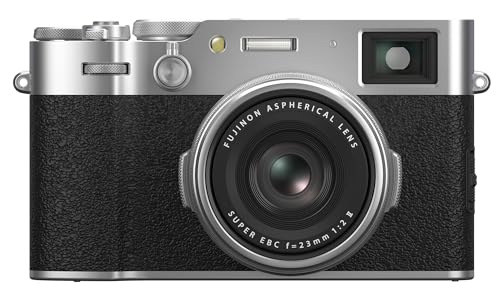
| Fujifilm X100VI | The candlelit storyteller | A large sensor behind a fast fixed lens, with stabilisation and film-like colour that flatters evening scenes. |
| Sony ZV-E10 II | The interchangeable night creator | An APS-C sensor and fast prime lenses turn dim rooms into usable sets for filmed work. |
| Sony RX100 VII | The pocket that punches above its sensor | Fast processing and strong stabilisation squeeze respectable evening stills and clips from a tiny body. |
| Canon PowerShot G7 X Mark III | The restaurant-table favourite | A bright zoom at its wide end keeps dinners, bars and family evenings clean without flash. |
| Sony ZV-1F | The night-diary realist | A fast wide lens and face-first exposure for vloggers filming themselves after dark. |
| Panasonic Lumix S9 | The full-frame compact statement | A prose-only entry: a genuinely compact full-frame body whose low-light ceiling towers over this class. |
How Did We Judge Cameras for Darkness Rather Than Daylight?
Every test in this guide happened after the light failed. Cameras were judged on the cleanliness of their high-sensitivity output — not the maximum sensitivity number, which any maker can print, but the point where noise begins eating faces. A body whose footage stays honest two stops deeper into the dark outranks a rival boasting a higher ceiling it cannot usefully reach.
Lens speed was measured where it matters: at the focal lengths people actually use indoors. A zoom that is fast only at a wide setting nobody frames faces with earns partial credit; a prime that is fast exactly where it lives earns full marks. This is why fixed-lens entries score so heavily here — their single aperture is an evening aperture.
Stabilisation entered the judging as a low-light technology, not a convenience. Every stop of stabilisation is a stop of shutter speed the photographer need not buy with sensitivity, and for static evening subjects — architecture, interiors, posed portraits — that exchange is the cleanest quality available at any price.
Finally, behaviour: autofocus that finds eyes in a dim restaurant without a hunting expedition, screens that dim enough not to blind the table, and automatic exposure that protects faces rather than averaging them into the dark. Night photography is a chain of small mercies, and the picks below were chosen for how many of them they offer.
Why Do Movies — Filmed Ones — Punish Small Cameras After Dark?
A still photograph can hide its struggles: one frame, chosen from twenty, graded kindly. Footage confesses continuously. Noise dances in shadows, autofocus breathes during dialogue, and automatic exposure surges every time a car passes the window. Filming after dark is therefore the compact class’s sternest examination, and most of this guide’s judging weighted moving images accordingly.
The physics of the problem deserve one plain paragraph. Video shutter speeds are capped by frame rate — a filmmaker cannot simply expose longer the way a stills photographer can — so sensitivity and aperture carry the whole burden. That is why the two interchangeable or large-sensor entries lead this list for movie work: they own more of both currencies.
Sound joins the indictment at night. Evening scenes are quiet scenes, and quiet exposes audio flaws — hiss, room echo, the camera’s own handling noise — that daytime bustle conceals. Bodies with microphone provision, or at least thoughtful built-in capsules, were credited here as low-light equipment in their own right, because a candlelit clip with wardrobe-grade audio fails its mood as surely as a noisy picture does.
Which Compacts Actually Survive the Night?
Six bodies follow, ranked by how deep into darkness their usefulness honestly extends. The badges name each one’s evening occupation, from candlelit stills to filmed night diaries.

Fujifilm X100VI — The candlelit storyteller
The X100VI’s evening recipe combines the three ingredients this guide keeps demanding: an APS-C sensor large enough to stay clean at sensitivities that embarrass smaller compacts, a fast fixed lens that lives at its brightest aperture, and in-body stabilisation that lets stills shooters hand-hold exposures a tripod would once have owned. Add Fujifilm’s film simulations — colour renderings that seem designed by candlelight — and the result is the compact that evening photographers reach for first.
Its movie manners are honest rather than spectacular: stabilised, clean footage with beautiful colour, in a body that asks the filmmaker to work at one beloved focal length. Night street scenes, jazz bars, a friend’s kitchen at midnight — at conversational distances, its lens sees exactly what the evening’s narrator sees, and renders it with a grain-like texture audiences read as atmosphere rather than error.
- Format: fixed-lens compact, APS-C sensor
- Lens: fast prime at a classic reportage length
- Stabilisation: in-body, valuable after dark
- Colour: film simulations flattering to tungsten light
- Role: the stills-led evening storyteller
Strengths
- Evening stills stay clean and characterful
- Stabilisation buys slow, quiet shutter speeds
- Colour needs little correction at night
Trade-offs
- Fixed lens limits night framing choices
- Video tools trail creator-first rivals
- Demand keeps availability frustrating
Its signature frame is the unposed one: a grandmother laughing in lamplight, rendered with the softness of memory and the sharpness of fact. Owners forgive its video modesty because its stills carry evenings that other compacts surrender entirely.
Filmmakers who need interchangeable lenses or aggressive video specifications should read the Sony below as their evening answer. Photographers whose nights are still will find no compact here that loves darkness more completely.
Best for: evening stills, street nights and candlelit portraits. Not suited for: video-led creators needing lens changes

Sony ZV-E10 II — The interchangeable night creator
For filmed work after dark, the ZV-E10 II owns this guide’s most persuasive argument: a large APS-C sensor behind whatever fast prime its owner chooses to mount. Fit a bright lens and the combination records dialogue in rooms where fixed-lens compacts are already apologising — restaurants, rehearsal spaces, night kitchens — with colour depth that survives grading the footage toward a mood.
The creator architecture completes the night shift. A microphone input admits the audio that quiet scenes demand, product and face tracking hold subjects who move through pools of lamplight, and the body’s video-first controls assume the operator is filming in the dark rather than reading a manual in it. Its missing in-body stabilisation is the honest price, paid knowingly by tripod and gimbal users.
- Format: compact interchangeable-lens body, APS-C sensor
- Lenses: fast primes transform night footage
- Audio: microphone input for quiet scenes
- Colour: 10-bit recording for graded evenings
- Role: the filmed-night-work specialist
Strengths
- Fast primes unlock genuinely dim sets
- Graded night footage holds together
- Face tracking persists in low light
Trade-offs
- The right lens costs extra money
- Handheld night clips need support
- Kit zoom alone undersells the body
Watch it film a night-market cook: steam, tungsten bulbs, a face moving between shadow and flare. The footage breathes like a small cinema camera’s, because sensor and lens were allowed to do what physics permits and the body’s video design stayed out of their way.
Budget honestly — the body plus one fast prime is the real purchase — and the combination out-films every fixed compact here after dark. Buyers who will never change a lens should save the difference and take the Fujifilm or the Canon.
Best for: creators filming interviews, music and night scenes seriously. Not suited for: buyers wanting one sealed, finished pocket camera

Sony RX100 VII — The pocket that punches above its sensor
Physics says a one-inch sensor should surrender early in the evening; the RX100 VII negotiates. Its fast readout and processing keep high-sensitivity footage tidier than its class suggests, its stabilisation steadies the slow shutter speeds night stills demand, and its zoom — unusually — stays useful after dark for stage and concert work, where distance, not darkness alone, is the problem.
That concert case defines its evening identity. From a seat twenty rows back, no fixed-lens compact frames the performer; the RX100 VII’s reach does, and its autofocus holds a face moving through stage light with a tenacity that feels borrowed from professional bodies. The resulting clips and stills will not match a large sensor’s cleanliness, and this guide will not pretend they do — but they exist, sharp and watchable, where rivals return smears.
- Format: premium pocket compact, one-inch-class sensor
- Reach: long zoom for stages and venues
- Processing: tidy high-sensitivity output for its size
- Focus: eye tracking that persists under stage light
- Role: the evening reach specialist
Strengths
- Frames performers no fixed lens can reach
- Stabilisation rescues night stills handheld
- Pocketable into venues that ban big kits
Trade-offs
- Sensor ceiling arrives before larger rivals’
- Zoom’s far end gathers little light
- Premium price for a small sensor
Its honest boundary is the truly dark room: a candlelit dinner defeats its lens at the long end and taxes it at the wide. Within lit venues — theatres, stadiums, city streets, festivals — it remains the pocket most likely to bring the night home.
Choose it when evenings happen at a distance. Choose the Canon below when evenings happen across a table, and the Fujifilm when they happen within arm’s reach of beautiful light.
Best for: concerts, theatre, travel nights and distant evening subjects. Not suited for: the darkest handheld filming

Canon PowerShot G7 X Mark III — The restaurant-table favourite
Most people’s low-light photography is not moody street work; it is dinner. The G7 X Mark III was practically specified by restaurants: a zoom whose wide end opens bright enough to shoot by the table’s own light, Canon colour that keeps skin appetising under tungsten, and a pocketable body that does not turn a meal into a photo shoot. Its footage of birthdays, anniversaries and holiday evenings has a warmth that specifications cannot explain and families instantly recognise.
The microphone input extends its evening into filmed territory — a toast recorded properly, a grandparent’s story captured with a lapel mic while the restaurant hums around it. Stabilisation and autofocus behave with the unobtrusive competence the setting demands; nobody at a celebration wants to watch the camera think.
- Format: pocket compact, one-inch-class sensor
- Lens: bright at the wide end for indoor light
- Audio: microphone input for filmed toasts and stories
- Colour: skin tones that flatter under tungsten
- Role: the social evening camera
Strengths
- Dinner-table footage stays clean and warm
- Mic socket elevates family filming
- Discreet size keeps occasions natural
Trade-offs
- Zoom darkens toward its long end
- Deep-dark autofocus can hesitate
- Serious filmmakers will outgrow its tools
Its ceiling is the genuinely dark venue — the unlit gig, the night hike — where larger sensors take over. But the statistical truth of evening photography is that most of it happens exactly where this Canon feasts: indoors, among people, under light meant for living rather than for cameras.
Buy it for the life you actually photograph after six o’clock. The more exotic night instruments in this guide will respect the choice; they were built for rarer darkness.
Best for: families, dinners, celebrations and social evenings. Not suited for: concert pits or near-dark filming

Sony ZV-1F — The night-diary realist
The ZV-1F’s night case rests on one bright decision: a fast, wide fixed lens. Held at arm’s length after dark, it gathers enough of a bar’s or street’s light to keep a presenter’s face readable, while its face-priority exposure refuses to let a neon sign or a dark sky bully the metering into silhouetting the narrator. For the enormous genre of night diaries — festival walks, evening city tours, hotel-room debriefs — that behaviour is the whole specification.
Expectations must stay calibrated. Its sensor is small, its stabilisation electronic, and deep darkness will find its limits faster than the larger bodies above. What it returns for those concessions is a camera so light and simple that it actually gets taken out at night, and its footage — bright-faced, honest, watchable — serves the diary’s purpose completely.
- Format: fixed-lens pocket camera, one-inch-class sensor
- Lens: fast and wide for arm’s-length night framing
- Exposure: face priority that protects presenters
- Audio: directional capsule for street narration
- Role: the after-dark vlogging companion
Strengths
- Faces stay readable against night streets
- Featherweight body always gets carried
- Simple controls suit tired evening operators
Trade-offs
- Deep darkness overwhelms it sooner
- No microphone input for polish
- Cropped stabilisation narrows moving shots
Its finest hour is the festival evening: food stalls glowing, music somewhere off-camera, the presenter narrating between bites while the camera keeps her face lit like a promise. Bigger instruments would film it better and be carried by almost nobody.
Creators graduating toward paid night work should treat it as a first chapter and the ZV-E10 II as the second. Diary keepers whose nights are social rather than cinematic may never need the sequel.
Best for: vloggers filming themselves through evenings out. Not suited for: professional night productions
Panasonic Lumix S9 — The full-frame compact statement
The Lumix S9 is discussed in prose because it sits outside this guide’s verified link pool, and it belongs in a low-light conversation as a measuring stick: a full-frame sensor in a body barely larger than the interchangeable compacts here. Its high-sensitivity cleanliness resets what the word compact can mean after dark — footage and stills at sensitivities that smaller sensors render as weather.
Panasonic aimed it at creators, so its video manners are serious: strong colour tools, real-time lut application for owners who want a finished look in-camera, and stabilisation that serves handheld night walking. Paired with a fast compact prime, it becomes the night instrument the rest of this guide is implicitly measured against.
- Format: compact full-frame interchangeable body
- Sensor: the largest low-light canvas in this guide
- Video: creator colour tools, in-camera looks
- Stabilisation: in-body for handheld evenings
- Role: the low-light ceiling, stated honestly
Strengths
- Night quality smaller sensors cannot approach
- Compact body keeps the format honest
- Colour tools suit creators who publish fast
Trade-offs
- No viewfinder for traditionalists
- Lens choice decides its real size
- Covered without a link, by pool rules
Its presence here is partly a calibration service. Buyers tempted to demand full-frame night performance from a pocket compact can see exactly what that performance costs in size, money and lens discipline — and can then choose their compromise with open eyes, which is all this guide ever asks.
Those who do choose it gain the night outright. Everyone else should read its entry as the honest top of a scale the linked picks occupy at friendlier points.
Best for: creators wanting full-frame night quality in compact form. Not suited for: pocket-only buyers or viewfinder traditionalists
How Do the Six Night Cameras Compare After Dark?
| Camera | Night weapon | Movie manners | Darkness limit |
|---|---|---|---|
| Fujifilm X100VI | Fast prime, stabilisation, sensor | Beautiful, deliberately simple | Fixed framing at night |
| Sony ZV-E10 II | Fast interchangeable primes | Professional colour and audio | Needs support handheld |
| Sony RX100 VII | Reach into lit venues | Strong clips at distance | Truly dark rooms defeat it |
| Canon PowerShot G7 X Mark III | Bright wide zoom, warm colour | Mic-ready family filming | Long zoom end darkens |
| Sony ZV-1F | Fast wide lens, face exposure | Diary footage that stays readable | Deep dark arrives early |
| Panasonic Lumix S9 | Full-frame sensitivity | Creator-grade night video | Size grows with its lenses |
Read the rows as depths of darkness: each camera owns the night down to a certain floor, and the honest buyer matches the floor to the evenings they actually inhabit.
How Should You Set a Compact for an Evening Shoot?
Begin by capping sensitivity at the level your camera handles gracefully — discovered by testing at home, not by trusting the box — and let the camera work beneath that ceiling. Set exposure compensation a touch negative in neon and stage light to protect highlights, because evening contrast fools meters into lifting shadows into noise. For stills, lean on stabilisation and accept slower shutter speeds for static subjects; for people, protect the shutter speed and spend sensitivity instead, since a sharp noisy face beats a clean blurred one.
White balance deserves manual attention after dark. Tungsten, LED and neon each tint skin differently, and automatic settings drift between shots in mixed light, making a sequence of frames disagree about what colour the evening was. Choose the dominant source, lock it, and let the minority lights become atmosphere — filmmakers call that mixed-light character, and audiences read it as cinema.
Focus strategy completes the setup. Single-point or face-detect focusing, chosen deliberately, outperforms wide-area hunting in dim rooms; a small AF-assist light, where fitted and socially acceptable, rescues the darkest tables. Practise the whole configuration once at home, in a lamplit room, before the evening that matters.
Why Does Noise Bother Stills Less Than Footage?
A still’s grain sits still, and viewers read it as texture — sometimes, with Fujifilm’s renderings, as deliberate style. Footage’s noise moves: it boils in shadows, crawls across walls and shimmers on faces, and the eye, evolved to notice motion, cannot ignore it. This is why a camera can be a fine low-light stills tool and a disappointing movie tool at the same sensitivity, and why this guide weighted moving tests so heavily.
Noise reduction in video is a negotiation with detail. Aggressive processing smooths the boil and takes skin texture with it, producing the waxy faces that betray cheap night footage. The better compacts here balance that negotiation gracefully, and owners can help by exposing honestly — footage lifted from underexposure amplifies noise far more cruelly than footage recorded at the sensitivity the scene actually required.
There is a deliverable corollary: footage destined for small screens forgives noise that a television enlarges into weather. Know your screen, set your tolerance, and let the evening’s camera be chosen by the stricter of the two.
What Mistakes Do Night Shooters Keep Making With Good Cameras?
Trusting the maximum sensitivity figure stands first. Every camera here can be pushed to a number whose output nobody would publish; the usable ceiling is a judgement, made per camera, and the picks above were chosen because their usable ceilings sit unusually deep.
Second, flashing everything. A compact’s built-in flash flattens faces, murders atmosphere and announces the photographer to the entire room. The bright lenses in this guide exist to make flash unnecessary at social distances, and learning to shoot without it is the single largest upgrade available to an evening photographer — free, instant and permanent.
Third, judging night footage on a bright phone in a brighter café. Night work must be reviewed in something like the darkness it will be watched in, or every exposure decision gets misread. And fourth, forgetting that the audience forgives grain and never forgives inaudible dialogue: at night, spend on the microphone before the lens.
Final Recommendation
For stills-led evenings, the Fujifilm X100VI is this guide’s candlelit champion: fast lens, stabilisation, a sensor that stays honest and colour that loves tungsten. For filmed night work, the Sony ZV-E10 II with one fast prime out-records everything linked here, while the Canon G7 X Mark III owns the social middle ground of dinners and celebrations, the RX100 VII owns lit venues at a distance, and the ZV-1F keeps the night diary bright-faced and simple. The prose-only Lumix S9 marks the full-frame ceiling for buyers ready to pay its size and lens toll.
Whichever body you choose, audition it in a dim room before the return window closes: film a face by lamplight, a street under neon and a table under candles, and watch all three where you will actually watch them. The night keeps honest cameras and exposes the rest, and no specification — this guide’s included — outranks your own lamplight.
One closing encouragement for the hesitant. Low-light photography sounds like a specialism and is actually just life, continued past sunset: the dinners, the journeys home, the children asleep, the city lit for its own purposes. A compact that behaves honourably in that light does not merely extend your shooting day; it admits you to the half of life that happens after dark, camera in pocket, ready. Choose the body whose darkness matches yours, learn its ceiling by lamplight, and then go out — the evening has been waiting to be photographed properly.
How Do Different Evening Scenes Rank These Cameras Differently?
The restaurant crowns the Canon, because its drama is skin, food and candlelight at arm’s length. The concert crowns the RX100 VII, because its drama is distance under theatrical light. The night street crowns the Fujifilm, because its drama is mixed neon and shadow at walking pace. The filmed interview in a dim studio crowns the Sony ZV-E10 II, because its drama is dialogue that must sound and grade like professional work. Any ranking that ignores the scene is a ranking of brochures, not of evenings.
Buyers should therefore audition by scene, not by specification: name your three commonest evenings, and weight this guide’s reviews by how each camera handled those specific rooms. A camera that wins your rooms wins your money, even when a rival wins the internet’s aggregate opinion.
There is a seasonal rhythm to notice as well. Winter pushes ordinary life indoors and after dark for months, which is when a low-light compact earns its keep weekly rather than occasionally. Buyers shopping in autumn should weight this guide heavily; the camera chosen in October will be judged by December’s evidence.
Why Do Screens, Viewfinders and Controls Matter More at Night?
Darkness taxes interfaces. A screen that cannot dim becomes a lantern that ruins the operator’s night vision and announces the camera across a theatre; a viewfinder, where fitted, seals the image against ambient glare and steadies the body against the face — two night virtues the RX100 VII’s pop-up finder quietly provides. Controls that can be found by touch matter when looking down means losing the scene, which is why the Fujifilm’s physical dials earn respect from night workers far beyond nostalgia.
Red or dimmable displays, customisable buttons and silent electronic shutters all belong to the same family of mercies. A silent shutter in a concert hall or a sleeping household is a low-light feature as real as any sensor figure, and several picks here offer one. Judge a night camera partly by how politely it behaves in the dark it was bought for.
Battery behaviour completes the interface story. Cold evenings and long exposures drain cells faster than daylight stills, and a camera whose battery gauge stays honest in the cold prevents the small tragedy of a camera dying during the encore. Carry the spare warm, as travellers in this site’s other guides are told, and the night rarely ends early.
How Can a Beginner Learn Night Photography in One Month of Evenings?
Week one belongs to the home: lamplight portraits, a pet asleep, the street through the window — subjects that permit repetition until sensitivity ceilings and white balance stop being theory. Week two moves to the neighbourhood: shopfronts, bus stops, the bridge at dusk, where mixed light teaches metering humility.
Week three adds people in motion — a market, a fairground, a five-a-side game under floodlights — and with them the discipline of shutter speed over sensitivity. Week four is a single deliberate project: one street, one venue or one family ritual, photographed across several evenings until the camera’s night behaviour becomes reflex. Beginners who complete that month stop describing themselves as beginners after dark, and their camera — whichever pick it was — stops being the limiting factor in their evenings.
Keep a small notebook of settings that worked. Night photography’s lessons evaporate by morning unless they are written down, and a personal record of what a particular room required is worth more than a shelf of general advice.
What Should a Buyer Know About Flash Before Dismissing It Entirely?
This guide has argued against built-in flash as a default, but flash used deliberately is a craft, not a crime. Bounced off a ceiling where a compact permits tilting, diffused through a napkin in an emergency, or throttled to a whisper of fill that merely opens shadowed eyes, flash can rescue the one photograph that matters — the group portrait at the reunion — without flattening it into a police photograph.
The distinction is intention. Flash as the only idea produces the familiar harsh snapshot; flash as seasoning, beneath a exposure built from ambient light, produces depth with legibility. Several picks here allow that seasoning to be dialled down precisely, and evening photographers should learn the control before the occasion demands it.
Where flash is forbidden — museums, ceremonies, performances — the bright lenses and stabilisation in this guide stop being preferences and become the entire permission to shoot. That is the honest core of the low-light market: not vanity about grain, but access to photographs that cannot legally or politely be lit.
How Does Colour Behave When Light Gets Scarce and Strange?
Evening light is rarely one colour. A street may offer sodium orange, LED white and a shop’s greenish fluorescence inside a single frame, and every camera must choose which source to believe. Automatic white balance, asked to decide frame by frame, produces sequences that flicker between interpretations; the disciplined shooter chooses a protagonist light and lets the others play supporting roles, which is why the locked-balance advice in this guide’s settings section matters more than any sensor argument.
Skin is the referee. Audiences forgive a sky rendered oddly and never forgive a face rendered ill, so cameras whose colour science protects skin under mixed light — Canon’s warmth, Fujifilm’s filmic restraint — earn their evening reputations honestly. When auditioning finalists, photograph a companion under your own street’s lights and judge the face before the architecture.
Black and white deserves mention as the night photographer’s honourable retreat. When colour information collapses into noise and mixed tints, a monochrome rendering converts the same file into grain, contrast and mood. Several picks here offer monochrome film simulations of real character, and an evening saved in black and white beats an evening deleted in colour.
Why Do Tripods Return to the Conversation After Dark?
Because the oldest low-light technology still wins where subjects hold still. A small travel tripod lets any compact in this guide shoot architecture, interiors and night landscapes at base sensitivity with shutter speeds measured in seconds — quality no sensor at any price can match handheld. The compacts’ small size is an advantage here: a tabletop tripod or a gorilla-style grip suffices where a large camera would demand real iron.
The discipline is knowing which subjects qualify. Buildings, bridges and posed groups wait patiently; children, musicians and market crowds do not, and for them the fast lenses and stabilisation above remain the answer. Night photographers typically carry both philosophies in one small bag and let each scene elect its method.
Self-timers and remote releases complete the tripod craft, removing the photographer’s tremor from the exposure entirely. A two-second delay costs nothing and sharpens everything, which makes it the highest-value setting in this entire guide measured purely by return on effort.
How Should Night Footage Be Edited Without Destroying It?
Gently, and in the right order. Correct exposure before colour, because lifting shadows after contrast has been baked in amplifies noise brutally. Apply noise reduction before sharpening, since sharpening first engraves the grain into the file’s permanent texture. And grade toward the mood the scene actually had — audiences accept darkness in a night scene; what they reject is darkness that looks like an accident rather than a decision.
Sound editing matters equally after dark. Evening recordings carry room tone, distant traffic and the hush between sentences, and cutting that tone abruptly between edits makes even beautiful footage feel broken. A continuous bed of room sound under the cuts is the amateur’s single most professional trick, available in every editor, costing nothing but attention.
Finally, export at the quality the platform permits rather than the maximum the file allows. Night footage’s fine grain is exactly what aggressive re-compression destroys first, and a slightly larger, kinder export preserves the atmosphere the camera worked so hard to capture.
What Makes a Movie Night at Home a Fair Test of These Cameras?
The phrase in the original search carries a second, cosier meaning worth honouring: movies watched, not only movies made. Filming a family’s movie night — faces lit by the screen, laughter in near-darkness — is among the hardest and most rewarding assignments a compact can accept, because the light changes with every scene on the television and the subjects will not repeat their reactions for a better exposure.
Face-priority exposure earns its keep precisely here, holding the watchers readable while the screen behind them strobes through car chases and candlelit scenes of its own. The ZV-1F and Canon were judged partly on this parlour test, and their refusal to silhouette a grandparent against a bright television is a genuine, if unglamorous, engineering triumph.
Discretion completes the assignment. A silent shutter, a dimmed screen and a camera small enough to be forgotten let the evening remain an evening; the photographs that result — unposed, screen-lit, mid-laugh — are the ones families print. Low-light quality, in the end, is not about darkness at all. It is about presence without disturbance.
How Do You Protect a Compact Working Night After Night?
Evening work is hard on equipment in quiet ways. Cold nights followed by warm rooms fog lenses and, over seasons, invite moisture where it does not belong; the traveller’s remedy is a sealed bag for the transition, letting the camera warm slowly inside it. Night markets and festivals add dust, drizzle and the occasional splash of something festive, against which a simple rain cover or even a clear shower cap defends better than optimism.
Sensors deserve a word too. Long exposures and high sensitivities reveal every dust spot that daylight hides, so a blower and a cleaning habit belong in the night worker’s kit. None of this is expensive; all of it is the difference between a camera that ages gracefully through a hundred evenings and one that retires early with a spotted sky in every frame.
Why Will Your Second Night Camera Be Chosen Differently?
Because the first one teaches you which darkness is yours. Owners discover whether their evenings are still or moving, near or distant, social or solitary — and that evidence, not advertising, writes the second purchase. Many Fujifilm owners add the Sony for filmed work; many Sony owners add the Fujifilm for the stills their video body made them neglect. The pairings in this guide were arranged with those second purchases in mind.
Keep the first camera when you buy the second, if the budget stretches. Night work punishes single points of failure — a dropped camera at a wedding, a dead battery at a vigil — and a familiar backup body in the bag is the cheapest insurance an evening photographer can carry. The night, as this guide has argued from its first page, rewards the prepared and forgives almost nothing else.
How Should a Buyer Weigh Price Against Darkness Honestly?
Each step up this guide’s ladder buys roughly a stop of darkness: the diary camera yields to the bright pocket zoom, which yields to the large-sensor bodies, which yield to the full-frame statement in prose. A stop is a doubling of usable light — real, visible, and priced accordingly. The honest question is how often your evenings actually visit the stop you are paying for. Weekly visits justify almost any rung; annual visits argue for renting the exotic and owning the sensible.
Accessories obey the same arithmetic. A fast prime for the Sony, a small tripod, a microphone — each buys evening capability more cheaply than a body upgrade, and each survives the body’s eventual replacement. Night photographers who spend in that order own kits that look modest and perform immodestly, which is the correct way around.
What Is the Kindest First Night Assignment for a New Owner?
A window, a lamp and one patient person. Seat your subject beside a single warm light source, turn off every other light in the room, and work slowly through the camera’s sensitivity range while the subject reads, talks or simply tolerates you. The resulting sequence teaches your specific camera’s character — where its noise turns from texture to damage, how its colour holds a face, when its autofocus begins to hesitate — more completely than any review, because the variables are your rooms, your lights and your people.
Finish the assignment by filming sixty seconds of conversation in the same light and watching it on the largest screen you own. That minute will tell you whether you bought a stills camera that films or a filming camera that photographs, and every evening afterward will be planned with that knowledge working quietly in your favour.
How Do You Keep Night Photographs Honest in the Edit?
The temptation after a dark shoot is rescue: lift everything, brighten everything, until the night looks like a grey afternoon and the mood that justified the photograph has evaporated. Resist it. Evening photographs should be allowed to be evening — shadows deep, highlights precious, faces emerging from a darkness the viewer can feel. The cameras in this guide were chosen partly for how gracefully their files hold that restraint, because a file that collapses when lifted slightly forces the editor’s hand.
Print one night frame large before deciding your tolerance for grain. Screens exaggerate noise at arm’s length; paper integrates it into texture the way cinema always has. Many owners discover their ceiling sits a full stop higher in print than on a monitor, which quietly re-ranks the cameras they thought they knew.
Why Does the Company You Keep Change the Camera You Need?
Photograph alone at night and any camera serves, because the only patience being spent is yours. Photograph companions and the camera becomes a social instrument: it must be quick, quiet and flattering, or the evening’s hosts will begin, politely, to route around it. The Canon’s social grace and the little Sony’s invisibility are low-light specifications of a human kind, and this guide weighted them as seriously as any sensor measurement.
Children compress the argument further. A sleeping household, a bedtime story, a newborn’s first evening at home — these photographs exist only if the camera can work in near-darkness without flash, noise or ceremony. Parents shopping this guide should read every review through that parlour light, and they will find the rankings rearrange themselves kindly.
How Should a Night Shooter Pack a Bag That Weighs Almost Nothing?
The compact format’s night kit fits a coat: the camera, one fast prime if the body takes lenses, a mini tripod, a spare battery kept warm, and a cloth. Everything else — the lights, the reflectors, the second body — belongs to deliberate productions rather than evenings, and confusing the two kits is how compact cameras stop being carried. Audit the bag by the standard of the walk home: if the kit would make you decline a detour through a lit market, it is too heavy for the genre it serves.
Improvisation replaces the omitted gear gracefully at night. A napkin diffuses a phone torch into a portrait light; a café window becomes a softbox; a parked car’s roof becomes a tripod. Night photographers who practise that improvisation at home discover that darkness, like poverty in the old proverb, sharpens invention — and their small kits start outperforming the laden bags of better-equipped rivals.
Why Do City Lights Make the Best Free Studio a Night Photographer Owns?
A city after dark is a lighting department that never invoices. Shopfronts throw softboxes across pavements, neon signs rim-light faces in colour, wet asphalt doubles every source into a reflection, and passing headlights sweep drama through scenes on a schedule no assistant could cue. The night photographer’s craft is largely positioning: placing a companion where the city’s light already models a face, rather than fighting the darkness bare-handed.
Compacts serve that craft through mobility. The photographer can cross the street for the better-lit side, step into the doorway’s spill, or retreat three paces into shadow for contrast — adjustments a heavy kit discourages by friction. Several evenings of deliberate city-light hunting will teach more about low-light photography than a winter of forums, and the cameras above, being pocketable, ensure the lessons actually get attended.
How Can a Family Archive Its Evenings Without Turning Them Into Productions?
Appoint the camera, not the evening. One person carries the compact, photographs what the light permits, and puts it away when the moment turns from recordable to simply livable. The archive that results — birthdays by lamplight, grandparents mid-story, children asleep in cars — has a coherence that staged documentation never achieves, because the camera served the evening instead of directing it.
Review those archives yearly and a quiet pattern emerges: the frames everyone returns to are rarely the technically finest. They are the ones where the light, the face and the moment agreed. A low-light compact’s job, in a family, is to maximise the number of evenings where that agreement can happen — which is why forgiveness, warmth and presence outrank every laboratory figure in this guide’s judging.
Frequently Asked Questions
What does the “an” in this guide’s title mean?
It is a typo for “and” in the search phrase that led here — the guide covers compact cameras for low light and movies, exactly as the searcher intended. The slug keeps the original spelling for technical reasons; the advice inside addresses the intended question in full. Readers who arrived hunting for cameras that film the family movie night as happily as they shoot a candlelit portrait are in the right place twice over, since both meanings of the phrase are tested in the pages above.
Which matters more after dark, sensor size or lens speed?
They multiply rather than compete. A large sensor behind a slow zoom can lose to a smaller sensor behind a fast prime at the distances people actually shoot. Judge the combination at the focal length you will use, in the light you will use it — the method this guide applied to every pick. If a shop will let you, darken the audition: ask to test finalists near a doorway or a shaded corner rather than under the retail lights, which flatter every camera equally and therefore inform none of your decisions.
Can a compact camera film a concert acceptably?
From a seat, the RX100 VII’s reach and tracking produce genuinely watchable clips of lit stages, and its stills satisfy at sensible sizes. From the pit, professionals use larger sensors for a reason. Respect venue rules on recording, and let the pocket camera’s discretion be its concert virtue. Arrive early enough to claim an aisle or a sightline without a forest of raised phones, because at a concert your position is a photographic decision as consequential as any setting the camera offers.
Why does my night footage look noisier than my night photos?
Because video noise moves, and moving noise draws the eye; because frame rates cap your shutter speed, forcing sensitivity higher; and because video noise reduction must preserve detail across time, not just within one frame. Expose honestly, cap sensitivity at your camera’s graceful ceiling, and the gap narrows considerably. Filming a few test seconds at each sensitivity step, then watching them in a dark room, locates that ceiling for your camera in one evening — a small experiment every night filmmaker should run before the first important shoot.
Is in-body stabilisation important for low light work?
For stills of static subjects, enormously: it buys shutter speeds several stops slower without blur, which is sensitivity you never have to spend. For footage and moving subjects its value narrows, since subject motion blurs regardless of how steady the camera sits. Match its importance to what your evenings contain. A stills-led night photographer should treat stabilisation as a headline specification; a filmmaker should treat it as a supporting one and budget for support accordingly.
What is the single best setting change for evening filming?
Lock your white balance to the dominant light source. Mixed evening light makes automatic settings wander visibly between shots, tinting faces green then orange within one scene. A locked balance keeps the sequence coherent, and coherence is what makes amateur night footage suddenly look intentional. Pair it with a capped sensitivity you have personally tested, and the two settings together remove most of the ways a good compact can embarrass itself after dark.
Related Guides
Continue with compact cameras judged by video specifications alone, learn the craft in filming HD video with a compact: workflow and settings, or browse pocket cameras for close-up detail for the small subjects that evening gardens hide until the dew and the lamplight conspire to reveal them to anyone patient enough to kneel beside the bed with a camera that can still see.


