ilcastellomenu.com is reader-supported. When you buy through links on our site, we may earn an affiliate commission.
Where to Buy
Water is the most honest testing laboratory a camera will ever meet, so the best compact cameras for underwater photography are ranked here by a single discipline: what their makers actually rate them to survive, stated plainly, with no borrowed courage. A camera rated for a 15-metre reef is a wonderful thing; pretending it belongs at 40 metres is how holidays end in a bowl of rice and denial. Every depth figure in this guide is the manufacturer’s own nominal rating for the bare camera, and wherever a pick needs a housing to go deeper, the text says so in the same breath.
The six cameras fall into three tribes. One is a true amphibious stills compact built for snorkellers and divers who compose photographs underwater. Four are action and 360 cameras whose waterproofing is genuine but whose photographic soul is video-first, wide-angle and close-range. One dedicated underwater stills system is covered in prose, because it sits outside the verified pool this page may link, and because serious divers deserve to know it exists. Choose by the depth you will honestly reach and the kind of image you honestly want.
Key Takeaways
- Trust only the maker’s stated depth rating, never forum folklore.
- The TG-7 is the one true underwater stills compact in this line-up.
- Action cameras are waterproof to 10–20 metres bare, deeper only in housings.
- Underwater light eats red first; close subjects beat zoomed ones.
- Rinse, seals and silica gel decide a camera’s second season.
- Snorkelling, freediving and scuba are three different shopping lists.
In this guide
Quick Picks
| Camera | Badge | Why it earns its place |
|---|---|---|
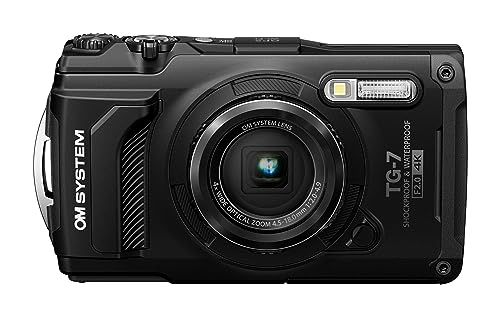
| OM SYSTEM Tough TG-7 | The real underwater photographer’s compact | Waterproof to 15 metres without any housing, with microscope modes and a lens that focuses close enough to fill frames with reef life. |
| DJI Osmo Action 5 Pro | The deepest bare rating here | Sealed to 20 metres with no case at all, strong low-light video and colour that holds up as the light turns blue. |
| GoPro HERO13 Black | The snorkeller’s default | Waterproof to 10 metres out of the box, swappable lenses and the deepest bench of mounts and filters in the business. |
| Insta360 X4 | The 360 reef storyteller | Shoots everything in every direction to 10 metres, so the turtle behind you makes the edit too. |
| AKASO Brave 7 LE | The budget housing-inclusive route | Splash-proof alone and rated to 40 metres inside its supplied waterproof case — the honest cheap way to scuba depths. |
| SeaLife Micro 3.0 | The dedicated diver’s prose-only system | A permanently sealed underwater camera rated to 60 metres, built for divers who never intend to open a housing door. |
How Did We Separate Genuine Ratings From Marketing Weather?
Each camera was logged with three numbers: the depth its maker guarantees for the bare body, the depth available with an official housing, and the nature of the seal — gasketed doors you must maintain versus a permanently sealed shell you cannot ruin by carelessness. Only the first number was allowed into headlines and badges. Housings were treated as what they are: legitimate tools that convert a snorkelling camera into a diving system, at the price of bulk, fogging risk and one more O-ring standing between the sea and your electronics.
Photographic intent was weighed just as strictly. Underwater stills photography rewards close focusing, controllable flash and raw files; underwater video rewards stabilisation and wide fields. Cameras were therefore never ranked on a single ladder — the TG-7 leads for stills, the action cameras lead for moving images, and pretending otherwise would mislead both tribes. A pick had to be excellent at its own job and honest about the other.
Finally, survivability beyond water was scored: shock resistance for boat decks, freeze tolerance for mountain lakes, and whether the manufacturer sells replacement doors, seals and desiccant as ordinary accessories. An underwater camera is a consumable ecosystem, and the brands that admit it earn the recommendation.
Why Does Water Destroy Colour, and What Can a Compact Do About It?
Sunlight entering water is filtered by the water itself, reds vanishing within the first few metres, oranges and yellows following, until the world below ten metres is painted in blue and green alone. No sensor setting fully reverses physics, which is why the first rule of underwater photography is distance: a subject one metre away is lit by water you can correct, while a subject six metres away is lit by a blue fog no white balance can rescue. This single fact should shape your shopping — close-focus ability matters more underwater than zoom reach, almost exactly reversing the priorities of land photography.
White balance tools help at snorkelling depths. Most cameras here offer an underwater mode or manual white balance that pours red back into the frame digitally, effective in the bright shallows where snorkellers live. Deeper, correction gives way to addition: video lights and strobes carry your own sunlight down with you, and several picks below accept the trays, arms and lights of that ecosystem. A red filter is the budget middle path for blue tropical water at moderate depths, restoring warmth optically before the sensor ever sees the scene.
Backscatter is the third enemy, and it is housekeeping rather than physics. Suspended particles lit by a camera-mounted light bounce brightness straight back into the lens as snow. Angling lights outward, shooting close, and choosing clearer water do more for image quality than any upgrade on this page — a humbling truth the buying guide below repeats, because beginners consistently spend on cameras what they should spend on technique and one good light.
Which Are the Best Compact Cameras for Underwater Photography by Depth?
Read the badges as depth promises. Fifteen and twenty metres bare covers serious snorkelling and shallow reef diving; ten metres bare covers snorkelling and surf; forty and sixty metres belong to housed or permanently sealed systems and to scuba itineraries. Match the promise to your actual logbook, not your ambitions.

OM SYSTEM Tough TG-7 — The real underwater photographer’s compact
The TG-7 is the only camera in this guide designed from the first sketch to take photographs underwater, and the difference shows in every decision. It is waterproof to 15 metres with no housing whatsoever — the deepest bare stills rating here — crushproof against boat-deck accidents, freezeproof for cold lakes, and built around a bright zoom lens that focuses down to a centimetre from the front element. That microscope ability is the underwater photographer’s superpower: fill the frame with a nudibranch, a shrimp, a single anemone, and the water column between lens and subject shrinks to almost nothing, taking the blue cast and backscatter with it.
Its underwater modes are a curriculum in themselves — dedicated settings for wide scenes, macro work and microscope subjects, with white balance tuned for depth rather than borrowed from a beach mode. Raw capture is available for divers who grade their files, the optional housing extends the system to 45 metres for scuba itineraries, and a mature accessory bench of lights, wide converters and grips means the camera grows with the photographer instead of being replaced by the hobby.
- Waterproofing: 15 metres bare, no housing required
- With housing: rated to 45 metres (optional PT-series case)
- Lens: bright zoom focusing to microscope distances
- Toughness: crushproof, freezeproof, dustproof body
- Role: the stills-first amphibious compact
Strengths
- Macro and microscope modes no action camera can imitate
- Deepest no-housing stills rating in this guide
- Accessory system built specifically for divers
Trade-offs
- Small sensor trails action rivals for video polish
- Scuba depths still require buying the housing
- Menus reward divers who read the manual once
Take it snorkelling over a reef flat and the working method becomes obvious within minutes: drift, spot something small, settle close, and let the lens do what phone housings and action cameras physically cannot — isolate a subject at intimate range with real optical quality. Photographers who return from trips with fifty publishable stills rather than four hours of video almost always made this choice, knowingly or not.
Its honest boundary is motion. As a video camera it is competent rather than thrilling, and divers whose memories move should read the DJI and GoPro entries with equal care. But the question on this page is photography, and for photography underwater, in a compact body, at a sane price of ownership, the TG-7 stands alone.
Best for: snorkellers and divers who compose still photographs and love macro subjects. Not suited for: video-first creators or divers unwilling to buy a housing for deep scuba

DJI Osmo Action 5 Pro — The deepest bare rating here
DJI sealed the Action 5 Pro to 20 metres without any case — the strongest bare rating in this guide — and paired that seal with the low-light video quality that depth demands. Its larger sensor gathers what light survives the descent, its colour science offers a profile that grades gracefully back toward warmth, and its pressure-aware behaviour (the camera knows how deep it is and can log it) treats diving as a first-class activity rather than a stunt the marketing department survived.
For freedivers and confident snorkellers, twenty metres bare is a liberation: no housing to fog, no case latches to double-check on a rocking boat, just a camera on a grip descending with you. Battery endurance, a chronic action-camera weakness, is notably strong here, which matters when the dive plan is measured in hours of surface intervals and repeated drops rather than single takes.
- Waterproofing: 20 metres bare, no case needed
- With case: official waterproof case extends to 60 metres
- Sensor: larger format for low-light depth work
- Extras: depth logging and strong battery endurance
- Role: the freediver’s and snorkeller’s video camera
Strengths
- Deepest case-free rating of any pick on this page
- Low-light footage stays usable as colour fades
- Front and rear screens help framing on selfie dives
Trade-offs
- Fixed wide lens is a video tool, not a stills portraitist
- Stills are serviceable frames, not a photographer’s system
- Deep scuba still means buying and maintaining the case
Its working portrait is a freediver on a reef wall: one breath, one descent, the camera recording the whole arc with exposure and colour behaving as the light dims, then the long kick back to the surface with the shot already banked. Snorkellers shooting turtle encounters from above get the same composure at safer depths, plus the confidence that an accidental duck under a wave is a non-event.
Choose it when your underwater life is moving images in the top twenty metres and your stills are souvenirs. Divers planning regular 30-metre wreck work should price the case into the purchase from day one and maintain it like the life-support-adjacent equipment it is.
Best for: freedivers, snorkellers and divers shooting video in the shallows-to-mid depths. Not suited for: macro stills photographers or housing-free deep scuba

GoPro HERO13 Black — The snorkeller’s default
The HERO13 Black is waterproof to 10 metres the moment it leaves the box, and around that simple promise GoPro has built the deepest support ecosystem in underwater imaging: red filters tuned by depth, macro and wide lens mods that swap without tools, floating grips, tray systems, and a rental shelf presence in every dive town on Earth. For a snorkeller, that ecosystem is the product — the camera is merely its current best terminal.
Interchangeable lens mods change the underwater conversation specifically. A macro modifier lets the fixed wide lens focus close enough to matter on small subjects; an ultra-wide mod restores the field of view that water’s refraction steals. Stabilisation smooths the surge and chop of surface snorkelling into watchable footage, and voice control — genuinely useful when both hands hold a tray in current — starts recording without a fumbled button.
- Waterproofing: 10 metres bare
- With housing: protective housing rated far deeper for scuba
- Lenses: swappable mods including macro and ultra-wide
- Control: voice commands for hands-busy moments
- Role: the ecosystem snorkelling and surf camera
Strengths
- Filters, lenses and mounts available everywhere divers travel
- Lens mods answer water’s refraction and macro problems
- Surf, kayak and boat abuse are its native habitat
Trade-offs
- Ten-metre bare ceiling excludes even modest freedives
- Small sensor stills trail the TG-7 for print ambitions
- Battery swaps at the surface demand dry, careful hands
Picture a family snorkelling trip done right: the GoPro on a floating handgrip, a red filter clicked on for the reef’s depth band, children surfacing with footage that looks like the brochure because the accessories quietly corrected the physics. That is the HERO13’s real achievement — it industrialises competence, letting beginners rent the judgement of a thousand dive photographers through the accessory catalogue.
Its ceiling is equally clear. Ten metres bare is a snorkelling and surf rating, full stop; the moment your itinerary says scuba, the housing purchase and its maintenance rituals join the kit list, and the DJI’s twenty bare metres start looking like the smarter money for the case-averse.
Best for: snorkellers, surfers and travelling families who value accessories and simplicity. Not suited for: housing-free diving below ten metres or stills-led photographers

Insta360 X4 — The 360 reef storyteller
The X4 reframes the underwater problem entirely: instead of aiming a camera in water that limits your visibility and your subjects’ patience, it records the whole sphere — reef ahead, turtle behind, your buddy’s reaction to the left — to 10 metres bare, and lets you choose the framing later, dry, at a desk. For snorkelling storytellers this reframing is a superpower, because underwater subjects rarely perform on the axis you predicted, and the shot you missed is usually the shot the X4 quietly captured anyway.
The honest costs arrive with the benefits. Two protruding lenses are the most scratch-vulnerable optics in this guide, and underwater they demand respect: the dedicated dive case, which extends the system to 50 metres, also corrects the stitching problems that bare lenses suffer in water, where refraction bends the seam between the two views. Experienced X4 divers treat the case as standard equipment below the surface chop, not as an optional extra, and budget accordingly.
- Waterproofing: 10 metres bare
- With dive case: rated to 50 metres, with corrected stitching
- Capture: full 360 video, reframed after the dive
- FlowState stabilisation for surge and fin-kick motion
- Role: the immersive storytelling camera
Strengths
- Never misses the subject that appeared behind you
- Reframing turns one dive into many different edits
- Invisible-selfie-stick shots look like drone footage
Trade-offs
- Bare lenses stitch imperfectly underwater; the case is near-mandatory
- Exposed domes scratch if handled like ordinary gear
- Editing 360 files is a real post-production commitment
Its signature scene is the snorkel safari: a whale shark passes, the group scatters, nobody’s aimed camera is pointing the right way — except the X4 on its stick, which returns home with the shark, the swimmers and the sun rays in one continuous sphere. Travel storytellers building immersive edits consider that insurance worth every editing hour it costs.
Photographers should note the stills story is thin; the X4 is a video instrument whose frames can be extracted in a pinch. Buy it for motion and immersion, handle its lenses like glass jewellery, and let the stills specialists elsewhere on this page carry the portfolio work.
Best for: snorkelling creators who edit immersive, reframed travel films. Not suited for: stills photographers or anyone careless with exposed optics

AKASO Brave 7 LE — The budget housing-inclusive route
The Brave 7 LE earns its place by telling the truth cheaply. The bare camera is weather-sealed against splashes and rain — emphatically not a diving camera on its own — but the box includes a waterproof housing rated to 40 metres, which converts it into a legitimate scuba-depth system for less money than the rivals’ accessory lists. In a guide that prizes honest ratings, a budget camera that ships its depth in a case and says so deserves respect rather than embarrassment.
Performance is a clear tier below the DJI and GoPro: stabilisation is competent rather than magical, low-light footage softens sooner as depth steals light, and the interface asks more patience. What you get for the compromise is a complete, dive-ready kit — camera, housing, mounts, spare battery thinking — that lets a newly certified diver document certification trips and first reefs without a flagship budget, then upgrade later with full knowledge of what the money buys.
- Waterproofing: splash-resistant bare (IPX7-class weather sealing)
- With supplied housing: rated to 40 metres
- Kit: housing and mounts included in the box
- Stabilisation: electronic, serviceable for reef pace
- Role: the entry ticket to scuba-depth footage
Strengths
- Dive-depth housing included rather than sold separately
- Complete starter kit for newly certified divers
- Cheap enough to risk on adventurous itineraries
Trade-offs
- Bare camera must never be submerged on its own promise
- Low-light and stabilisation trail the flagship rivals
- Accessory ecosystem is thinner than GoPro’s
Its ideal owner is a diver in their first season, logging reefs between ten and thirty metres, who wants footage for the logbook and the family chat rather than a channel. The housing ritual — inspect the O-ring, close, test — learned on an affordable camera is the same ritual that protects a flagship later, which makes the Brave a genuinely educational purchase.
Snorkellers who never intend to use a housing should not buy it for the bare camera’s sake; the DJI and GoPro above are sealed for exactly that life. The AKASO’s bargain only activates underwater, in its case, at depths its price has no right to reach — and there, it delivers.
Best for: budget-conscious new divers who will actually use the included housing. Not suited for: case-free snorkelling or low-light video perfectionists
SeaLife Micro 3.0 — The dedicated diver’s prose-only system
The Micro 3.0 appears without a link because it lives outside this guide’s verified pool, and it represents the philosophy opposite to every door and gasket above: it is permanently sealed, with no openings to flood, rated to 60 metres as it comes. Divers who have watched a housing fail — a hair on an O-ring, a latch half-closed — understand the appeal instantly. There is nothing to inspect because there is nothing to open; charging and file transfer happen through sealed contacts, and the camera simply cannot be flooded by user error.
As a photographic instrument it is a stills-led compact with a wide fixed lens, large controls designed for gloved hands, and underwater colour modes refined by a company that makes nothing else. SeaLife’s lighting ecosystem — trays and Sea Dragon lights — bolts straight on, acknowledging that at 60 metres the camera is the least of the system; the lights are the image.
- Waterproofing: permanently sealed, rated to 60 metres
- Doors: none — flooding by user error is designed out
- Controls: oversized, glove-friendly, piano-key style
- Lighting: native tray and light ecosystem
- Role: the wreck-and-depth diver’s stills system
Strengths
- Deepest rating here with zero housing ritual
- Controls a diver in thick gloves can actually work
- Purpose-built colour modes from a diving-only brand
Trade-offs
- Fixed wide lens limits subject variety
- Sealed battery means the camera’s day ends when it does
- A niche purchase with a specialist price
Its natural owner dives deep and often — wrecks, walls, cold water — and has already decided that stills are the point and reliability is the feature. For that diver, the absence of a housing ritual is not convenience; it is the removal of the single most common cause of underwater camera death, engineered away at the factory.
Occasional snorkellers should admire it and buy the TG-7 instead. The Micro’s virtues only compound with depth and frequency, and its price buys a great deal of snorkelling happiness elsewhere on this page.
Best for: committed scuba divers shooting stills at depth, often, in gloves. Not suited for: casual snorkellers or zoom-dependent composition
How Do the Six Underwater Cameras Compare Side by Side?
| Camera | Bare rating | Deepest option | Best at |
|---|---|---|---|
| OM SYSTEM Tough TG-7 | 15 m, no housing | 45 m with housing | Macro and composed stills |
| DJI Osmo Action 5 Pro | 20 m, no case | 60 m with case | Low-light video, freediving |
| GoPro HERO13 Black | 10 m, no housing | Deep housing available | Snorkelling ecosystems and surf |
| Insta360 X4 | 10 m, no case | 50 m with dive case | 360 storytelling |
| AKASO Brave 7 LE | Splash-proof only | 40 m with included housing | Budget scuba footage |
| SeaLife Micro 3.0 | 60 m, permanently sealed | 60 m as standard | Deep stills without rituals |
The bare-rating column is the one to memorise; the deepest-option column always involves a case, a ritual, or a permanently sealed design — three different prices for the same metres.
How Should You Care for a Camera That Lives in Salt Water?
Salt is patient and corrosive, and the ritual after every outing decides whether an underwater camera sees a second summer. Soak the closed camera in fresh water, work every button and dial while submerged to flush crystals from the mechanisms, then dry it fully before any door is opened — opening a damp camera invites the sea inside at the exact moment you feel safest. Divers learn this liturgy before their first boat trip ends; photographers should learn it before their first camera dies.
Seals deserve scheduled suspicion. Gaskets and O-rings get inspected under bright light for hair, sand and cracks, lubricated only with the maker-approved grease, and replaced on the manufacturer’s rhythm rather than your optimism. Silica gel packs inside housings fight the fog that warm hands and cold water conspire to create, and a housing should be closed empty and dunked in a rinse tank as a leak test before the camera ever goes inside it.
Storage finishes the discipline. Cameras live dry, doors unlatched so seals rest uncompressed, batteries out for long layups, and a small notebook — or a notes app — records which seal was changed when. None of this is glamorous, and all of it is the difference between a five-year camera and a one-season story.
What Settings Should a Beginner Dial In Before the First Snorkel?
Start with the underwater white balance or scene mode switched on before the camera gets wet; menus through a housing or with wet fingers are nobody’s friend. Choose the widest field of view for reef scenes and resist digital zoom entirely — water magnifies and softens, so your feet and fins are the zoom, closing distance until the subject fills the frame and the blue thins out.
For stills on the TG-7, begin in its underwater wide or macro modes according to subject size, and let the camera’s depth-tuned colour do its work. For video on the action cameras, lock exposure where the model allows it once you reach working depth, because auto exposure hunting between bright sand and dark reef is the beginner footage flaw no editor can remove. Short clips, shot steadily and close, will out-edit one long wandering take every single time.
Above all, rehearse on land. Know where the record button lives by touch, how the mode changes, and how the housing latches — with dry hands, at a table, until it is boring. Underwater competence is land competence, remembered calmly, and the photographers with the best first-trip footage are invariably the ones who did the boring rehearsal.
How Do You Choose Between a Housing System and a Sealed Camera?
The housed route buys versatility: one camera serves land and sea, upgrades arrive as new housings for new bodies, and flagship image quality goes to full scuba depth. Its price is a permanent ritual — inspection, testing, fog management — and a failure mode that is always, in the end, a human one. Divers who are methodical by temperament thrive in this system and resent nothing.
The sealed route buys certainty. A bare-rated camera like the TG-7 or the action models removes the ritual for the depths it covers, and a permanently sealed design like the SeaLife removes it at every depth, at the cost of fixed lenses and sealed batteries. Divers who know their own distractibility — who have flooded a torch, a computer, a phone pouch — should read that certainty as the most valuable specification on this page.
Frequency arbitrates the rest. A camera entering salt water twice a year should minimise rituals and maximise forgiveness; a camera diving weekly justifies the housed flagship and the discipline it demands. Be honest about which diver you are this year, not the one the brochure imagines, and the choice makes itself.
How Does Your Real Depth Decide Which Camera You Should Hold?
Depth honesty is the beginning of underwater buying wisdom, so audit your actual water life before admiring any rating. Surface snorkellers who duck-dive to four metres for a closer look at a turtle live entirely inside every bare rating in this guide, and should optimise for stills quality or video polish rather than depth bragging. Freedivers training to fifteen or twenty metres need the DJI’s bare rating or a housed system, because a 10-metre camera on a 15-metre line is a flood scheduled in advance.
New scuba divers should read their certification as a depth promise: entry-level qualifications centre on 18 metres, advanced training opens 30, and recreational limits reach 40. Against that ladder, the TG-7’s 15 bare metres cover training shallows and reef tops only — its housing is not an upsell but the second half of the product for certified divers — while the AKASO’s included 40-metre case and the SeaLife’s 60-metre sealed body map directly onto the recreational range. Matching the camera system to the certificate in your wallet is the least glamorous and most protective shopping step in this guide.
There is also the depth you will reach on your worst day, not your best: the dropped camera sinking past its rating while you watch, the surge that pushes a snorkeller deeper than planned, the dive computer’s alarm reminding a photographer that the subject was at 22 metres, not 15. Buy margin the way divers buy air — for the dive that goes wrong, because the camera that survives the accident is the one that was rated for it.
What Should You Add First: a Red Filter, a Torch or a Strobe?
The upgrade order depends on depth and subject, but a defensible default exists. In bright tropical shallows, the red filter is the first purchase: it costs little, weighs nothing, needs no batteries, and restores the warm spectrum that blue water steals between roughly five and fifteen metres. GoPro’s accessory ecosystem makes filter choice trivially easy, and snorkellers see the improvement in the first frame — skin returns, sand stops glowing cyan, the reef remembers it is colourful.
A video light is the second purchase and the first real transformation. Continuous light serves video and stills alike, works at any depth the camera survives, doubles as a focus aid in crevices and overhangs, and — held at arm’s length from the lens on a tray — angles the illumination so backscatter stops snowing through the frame. Divers shooting macro on the TG-7 feel this upgrade most: the microscope world is a shadowed world, and a small light is the difference between recording a nudibranch and recording its silhouette.
Strobes come third, for stills photographers who have felt continuous light’s limits: power for daylight-balanced exposures at depth, frozen motion, and colours that no filter can invent. They demand the most skill — position, angle and power all manual arts — and reward it with the professional underwater look. Buy in this order and each step funds the next with better photographs; buy the strobe first and it will mostly illuminate your particles at professional brightness.
How Do You Photograph People Underwater Without Spoiling Everything?
People are the hardest underwater subjects: they sink, they blow bubbles at the decisive moment, their masks hide the eyes that portraits live by, and their skin tones suffer worst from the blue filter of depth. The working method starts above water — agree the poses, the signals and the sequence on the boat, because direction underwater is charades performed while holding your breath. Freediving portraitists plan a shot in sentences: you swim there, I descend first, on my signal you exhale and sink slowly, eyes toward the light.
Composition favours the shallows and the surface line. A subject at two metres keeps their colours; a subject split by the surface — half in air, half in water — gives the split-level frame that defines holiday photography at its best, and every camera here can attempt it from a floating position. Shoot upward where possible so faces are lit by the bright surface rather than the dark below, and frame wide: underwater portraiture is environmental, the reef and the blue doing the storytelling around the swimmer.
Bubbles deserve their own etiquette. A scuba subject’s exhale will fill the frame above their head for two full seconds, so photographers time the shutter to the breathing rhythm — after the cloud clears, before the next begins — or compose below the bubble stream entirely. Snorkellers and freedivers avoid the problem and inherit another: limited time per descent. Short, planned, repeated attempts beat one long improvised one, for the subject’s comfort and the frame’s quality alike.
What Belongs in a Snorkelling Camera Bag Besides the Camera?
The bag that protects the hobby is mostly not camera gear. Defog for masks, because the photographer who cannot see cannot photograph; a lycra skin or rash guard, because an hour of floating photography sunburns backs through sunscreen’s best efforts; a dry bag that actually seals, tested at home, for the boat ride where spray reaches everything. Reef-safe sun protection belongs on the list with emphasis — the photographer’s covenant with the subject is that the reef should survive being photographed.
Camera support items follow: the floating handgrip that turns a dropped camera into a bobbing, findable one; a wrist lanyard as its backup; spare batteries and cards in a sealed pouch, because changing either on a wet boat is the flood-risk moment of the day and deserves dry hands, a towel and unhurried ritual. A microfibre cloth sealed in its own small bag stays clean for the lens port, and a packet of silica gel rides in the camera case against the humidity that fogs ports from inside.
Finally, the unglamorous duo that saves more photographs than any accessory: a small notebook habit for settings that worked at which depth, and the discipline to rinse everything the same evening. Salt dries into crystals that eat seals and zips overnight; the five-minute fresh-water soak on the day is the cheapest insurance in this entire guide, and the bag is where the buckets, cloths and gel that enable it should live permanently.
How Do You Plan a Boat Day Around a Camera?
Boat days are won the night before. Charge everything, format cards in the camera that will use them, set the underwater white balance and your preferred mode while the manual is still within reach, and assemble housings dry at a table — never for the first time on a moving deck with wet hands and an audience. Pack the camera last into its case so it surfaces first at the rinse station, and write the day’s depth plan beside the kit: which dives, which subjects, which camera configuration answers each. Photographers who plan on paper improvise beautifully; photographers who plan to improvise mostly rinse sand out of things.
On the boat, the camera has a station and the station has rules: one towel that stays dry, one pair of hands that stays dry to open doors and swap batteries, and a rinse bucket that the camera enters — closed — before any other handling. Salt spray on a boat reaches further than spray has any right to, so the camera lives in its case or the bucket between dives, not baking on a bench acquiring the salt crust that migrates into seals. Brief your buddy as camera crew: who holds the rig during entry, who receives it before you climb the ladder, because the two most dangerous moments of a camera’s day are the splash and the hand-up.
After the last dive, the order reverses with the same discipline: soak first, open later, download last. Files get copied the same evening while the day is still narratable, because the logbook note — depth, settings, what the light did at the cleaning station — is tomorrow’s competence being written down. A boat day run this way feels less like luck and more like seamanship, which is precisely what it is.
What Does Underwater Photography Cost After the Camera?
The camera is the subscription’s first payment. Housings for the stills route, trays and lights for everyone serious, filters, spare seals, desiccant, batteries that salt water retires early, and the occasional professional service all queue politely behind the purchase — and a wise buyer prices the first year of that queue before choosing the camera, because the cheapest body with the expensive ecosystem can out-cost the flagship whose accessories are few. The TG-7’s bargain, for instance, is real but partial: its housing and a light are the second instalment most owners eventually pay, and its total system cost should be compared as a system.
Travel adds its own line items. Dive boats charge by the trip, not by the photograph; courses that open deeper water cost more than most accessories; and the destinations where underwater photography becomes glorious — the warm, clear, protected waters — are rarely the cheap ones. None of this argues against the hobby, whose cost per hour of wonder compares kindly with most. It argues for sequencing: camera and competence first, in home waters, where the reef is local and the mistakes are free.
The cost nobody budgets is replacement, and it deserves a sentence of respect. Underwater cameras live mortal lives beside an element that wants them; even perfect rituals lose to a failed seal eventually. Photographers who treat the camera as a multi-season consumable — insured where possible, backed up before the once-a-year trip, its files archived nightly — survive that mortality with their portfolios intact. The sea always collects; planning is how you pay in money rather than in memories.
How Do You Photograph in Murky, Green Home Waters?
Not every underwater photographer inherits tropical blue. Temperate lakes, rivers and northern seas run green and particle-rich, and the techniques that flatter a reef betray you in a reservoir. The governing rule tightens: distance is even more poisonous, because green water scatters light faster than blue, so the working range shrinks to arm’s length and the macro end of the TG-7 stops being a speciality and becomes the whole method. Fill the frame or accept the fog — there is no third option in pea soup.
Colour strategy changes with the water. White balance tuned for blue tropics will fight green water and lose; use the camera’s manual white balance against a slate or your palm at working depth, or embrace the green as the honest palette of your home water and grade toward atmosphere rather than accuracy. Local divers’ portfolios prove the point: moody, green, close-range frames of pike, crayfish and flooded forests have a character no reef postcard can imitate, and the photographer who masters home water owns a genre instead of renting one.
What Is Split-Level Photography, and How Does a Beginner Try It?
The split-level frame — half above the surface, half below — is underwater photography’s signature image, and its difficulty is a single droplet. The waterline crosses the lens port, and the upper half fogs or beads while the lower half streams, so the craft is port management: a large dome helps, a licked or treated port sheds water, and the photographer shoots bursts at the surface hoping one frame in ten keeps both worlds clean. Beginners should expect that ratio and budget their patience, not their frustration.
Technique otherwise is friendly. Choose a subject that lives at the line — a snorkeller’s face, a turtle surfacing, reeds at a lake edge — shoot in calm water at the day’s bright hours, and hold the camera so the waterline crosses the frame’s middle with the horizon level, because a tilted split looks like an accident while a level one looks like a decision. Every camera in this guide can attempt it from a floating position; the action cameras’ small ports make the droplet problem worse and the TG-7’s flat port makes it manageable, which is the sort of unglamorous fact that decides real purchases.
How Do You Keep Yourself Safe While the Camera Distracts You?
A camera underwater is an attention thief, and the first safety rule is that the dive outranks the photograph, always, without negotiation. Photographers ascend when the plan says ascend, watch their air and their buddy with the same discipline as divers who carry nothing, and treat the camera as cargo the moment conditions argue. The history of the hobby is unambiguous on this point: incidents gather around photographers who followed a subject past a limit, so professionals build the refusal into the ritual — the shot is never the reason for the depth, the time or the exposure.
Snorkellers inherit the same law in lighter form: photograph at the surface more than you duck-dive, rest on flotation between attempts, and never let framing a turtle talk you further from the boat than your fitness owns. Currents deserve a sentence of their own, because a photographer drifting backward behind a viewfinder can travel a surprising distance from the group. Look up, orient, then look through the camera — in that order, every time, until it is reflex. The best underwater photograph is the one taken by someone who surfaces relaxed, with air in reserve and a buddy in sight.
How Do You Choose Between a Reef, a Wreck and a Lake for a First Season?
Choose the water you can reach monthly, because underwater skill is perishable and proximity is its preservative. A reef within driving distance, dived twelve times a year, will teach more than a famous wreck dived once — the reef’s seasons, residents and light become a curriculum, and the camera’s settings turn into reflexes against a familiar stage. First-season photographers should therefore rank sites by repeatability, not reputation, and let the exotic destinations arrive later as examinations they are ready to pass.
Each water type then teaches its own chapter whenever it is visited. Reefs teach colour, closeness and animal manners. Wrecks teach orientation, respect for overhead shadows and the drama of scale, best attempted with the lighting and training they demand rather than as a first season’s ambition. Lakes teach humility and macro patience in green, quiet water that forgives nothing and hides everything until you are close. A season that samples all three, weighted toward the nearest, produces the complete beginner this guide has been trying to equip.
What Mistakes Do New Underwater Photographers Keep Making?
Trusting a headline depth for a camera whose doors they have never inspected is the classic, and it ends cameras. Ratings assume perfect seals, correct closure and maintained gaskets; a single grain of sand demotes a 15-metre camera to a paperweight at two metres. Inspect, test empty housings, and treat every rating as a ceiling for a perfect day, never a promise for a careless one.
Shooting from too far away runs second. Beginners hover at a respectful distance and return with blue, hazy, particle-filled frames of subjects too small to identify, then blame the camera and shop for zoom — the precise opposite of the cure. Get close, get low, shoot upward toward the light when the subject allows, and let small subjects be large in the frame.
Finally, chasing wildlife. Chased animals flee, stir sediment and teach the whole reef to fear cameras, ruining the next hour for everyone. Patient photographers park themselves beside a cleaning station or a busy coral head and let the ocean’s traffic come to them. The best underwater images in any portfolio are almost always portraits of animals that forgot the camera existed.
Final Recommendation
For photography underwater, buy the OM SYSTEM Tough TG-7: fifteen metres bare, macro abilities nothing else here touches, and a diver’s accessory system when you are ready to go deeper in its housing. For moving images, the DJI Osmo Action 5 Pro’s 20-metre bare rating is the most liberating specification in this guide, with the GoPro HERO13 Black the snorkelling all-rounder and the Insta360 X4 the immersive storyteller. New divers on a budget should take the AKASO’s honest housing bargain, and deep, frequent divers should study the sealed SeaLife with real intent.
Whichever you choose, write its bare rating on a label inside your kit bag. The sea will test exactly that number and no other, and the photographers who respect it come home with pictures instead of stories about a camera they used to own.
Frequently Asked Questions
Can I take a 10-metre camera scuba diving if I stay shallow?
Only if your dive genuinely never exceeds the rating — and entry-level scuba routinely visits 12 to 18 metres, below a 10-metre camera’s bare limit. The correct answers are a housing rated for your depth or a camera whose bare rating covers your logbook, like the TG-7 at 15 metres or the DJI at 20. Depth discipline is equipment discipline.
Do I really need a housing for the TG-7?
Not for snorkelling, freediving or reef diving within 15 metres — that is precisely its charm. The housing enters the conversation for scuba itineraries beyond that depth, where it extends the system to 45 metres, and for divers who want the tray, arms and lights that housings carry more gracefully.
Why do my underwater photos look so blue?
Because water filters red light within metres, and your subject was lit by what remained. Move closer so less water sits between lens and subject, enable the underwater white balance, add a red filter in blue tropical water at moderate depth, or bring light with you. Distance is the cause nine times out of ten; technique, not shopping, is the cure.
Is a phone in a waterproof pouch a fair alternative?
For surface snorkelling snaps, pouches and cases can serve, but they surrender button control, fog readily, focus through plastic, and risk the device your whole trip depends on. A dedicated camera from this guide costs less than the phone it replaces in the risk column, and every pick here is built to be rinsed, dropped and taken back tomorrow.
How deep can the action cameras go for surfing and kayaking?
Surface sports live at zero metres with violent splashes, which every bare rating here laughs at — the GoPro and DJI were practically born on surfboards. The rating that matters for paddlers is not depth but retention: a floating grip or leash, because the commonest way to lose a camera in water sports is not flooding but simply letting go.
Related Guides
Continue with action cameras for snorkelling and surf trips, compare housings in compact cameras with the strongest waterproof ratings, or read caring for seals and housings after salt-water shoots before your first boat day.


