ilcastellomenu.com is reader-supported. When you buy through links on our site, we may earn an affiliate commission.
Where to Buy
There is a particular holiday moment that decides this entire category: you are waist-deep in warm, clear water, a turtle is doing something unhurried and wonderful three metres away, and the camera in your hand is either built for this — or it is a liability you are about to drown. If you are searching for the best cameras for underwater point and shoot photography, you want the first kind: a camera you point, shoot, and trust, in the sea, the pool and the rock pools, without a housing, a prayer or a degree in marine engineering.
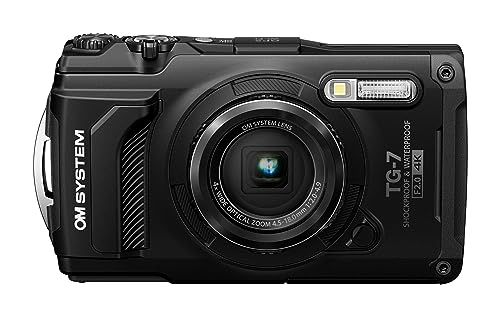
Honesty must lead this guide, because the category invites confusion. Among the cameras we could verify for this article, exactly one is a true underwater point-and-shoot compact in the classic sense: the OM SYSTEM Tough TG-7, a camera engineered from its seals outward to live in the water. The other picks are waterproof action cameras — a different species that has quietly taken over much of the underwater holiday market — included deliberately and labelled clearly, because for many snorkellers they are now the practical answer. What this guide will never do is pretend that an ordinary compact or mirrorless camera can swim. Most cameras in our wider pool cannot touch water at all, and we say so wherever it matters, because the sea charges full price for that misunderstanding.
Pack the camera where your hand finds it without looking, because the water’s best moments do not wait for a search through the beach bag’s archaeology.
Who is this for? The snorkelling holidaymaker, the family whose pool produces half their annual photographs, the kayaker, the rock-pool naturalist, the traveller who has watched a phone in a pouch fog up for the last time. The judging criteria are the water’s own: genuine waterproofing with a depth rating that matches your actual swimming, controls that work with wet hands and a mask on, image quality in the blue-green light the sea imposes, and the toughness to survive the boat ride, the beach bag and the drop onto the jetty that every holiday eventually includes.
Read the depth and care sections as carefully as the reviews. Underwater cameras fail by millimetres — a grain of sand in a seal, a battery door opened with wet hands — and the difference between a camera that lasts five summers and one that lasts until Thursday is mostly the owner’s habits, which this guide treats as part of the product.
Key Takeaways
- The OM SYSTEM Tough TG-7 is the only true waterproof point-and-shoot compact here — and the category’s benchmark.
- GoPro’s HERO13 Black and DJI’s Osmo Action 5 Pro are waterproof action cameras that now serve most snorkellers superbly.
- Insta360’s Ace Pro 2 brings strong low-light and colour to underwater video and stills.
- The AKASO Brave 7 LE needs its case for real depth — read its waterproofing terms before trusting them.
- Most ordinary compacts and mirrorless cameras are not waterproof at all; never let this guide’s pool blur that line.
- Seal care — rinse, inspect, dry — decides an underwater camera’s lifespan more than its specification does.
In this guide
Quick Picks
| Camera | Badge | Why it earns its place |
|---|---|---|
| OM SYSTEM Tough TG-7 | Best true underwater compact | Waterproof without a housing, microscope modes for rock pools, and stills-first photography. |
| GoPro HERO13 Black | Best for snorkelling video | Waterproof, stabilised and simple — the reef film your family will actually watch. |
| DJI Osmo Action 5 Pro | Best for long swims | Generous waterproofing, strong battery life and colour that flatters underwater scenes. |
| Insta360 Ace Pro 2 | Best for clarity and low light | A larger sensor’s clarity for caves, wrecks and shaded reefs, waterproof for real swims. |
| AKASO Brave 7 LE | Best budget splash camera | Honest holiday footage at a gentle price — with its case for anything beyond splashes. |
| Your Existing Compact in a Quality Housing | Best for keen photographers | A housed camera you already love, discussed honestly with its costs. Prose-only. |
How Did We Choose Cameras for the Water?
Waterproofing came first, and we read it the way insurers do: as a rated depth, under stated conditions, maintained by seals the owner must care for. A camera rated for real swimming and snorkelling depths without a housing outranks one that needs a case for the same work, because every case is another seal, another fogging risk and another thing to forget at the hotel. Splash resistance — the rating that protects against rain and poolside accidents — was never allowed to impersonate waterproofing anywhere in this guide; the distinction is stated at every pick it touches.
The second criterion was usability while actually wet. Underwater photography is performed with a mask fogging, fins working, one hand holding a rock against the current and the sun turning the screen to a mirror. Big record buttons, simple modes, screens that stay readable, and menus that were configured on the boat rather than in the reef decide what gets photographed. We favoured cameras whose underwater operation is a posture — point, shoot, surface, laugh — over cameras that import the land’s complexity into the water.
We also tested our shortlist against the holiday’s supporting cast: the mask that fogs, the child who borrows, the boat that has no shade, the grandmother who wants one button and no explanations. A camera that requires a calm desk and a dry manual to configure its underwater mode has failed the only usability test this category recognises. The picks below can all be readied on a moving boat by a person who has read their section of this guide once — which, in the end, is what point and shoot means when the pointing is done through a mask.
Third came the image in the sea’s own light. Water eats colour by depth — reds first, then oranges — until the unprepared photograph is a blue-green rumour of the reef. We weighed each camera’s underwater colour handling, its white-balance sense below the surface, and the honest limits of its sensor in shaded, deeper or murkier water. Finally, toughness in the round: the drops, sand, sunscreen and boat-deck knocks that constitute a beach holiday’s real testing programme.
What Does Waterproof Actually Mean on a Camera?
Less than the advertisements imply and more than the cynics claim — provided the owner reads the rating as a contract. A depth figure describes a new camera, with clean seals, in still fresh water, for a limited time; the sea adds salt, movement, pressure changes and sand, all of which spend the rating faster. This is why this guide recommends treating every depth figure as a ceiling to stay well under rather than a target to test, and why the care ritual — rinse in fresh water after salt, inspect seals before every swim, never open a door with wet or sandy hands — appears in these pages as often as any specification. The rating is the camera’s promise; the ritual is how you keep it redeemable.
The second vocabulary lesson is the difference between waterproof and water-resistant, a distinction measured in drowned cameras. Resistant means rain, splashes and the poolside — the camera survives weather, not immersion. Waterproof with a stated depth means immersion within that depth is a designed use. Action cameras in this guide are genuinely waterproof to useful snorkelling depths without their cases. The AKASO’s honest position — splash-proof bare, waterproof in its case — is stated at its pick, because a reader who learns the distinction there will never unlearn it at the cost of a camera.
And the third lesson is about the cameras not in this guide. The mirrorless bodies, premium compacts and creator cameras that fill our other articles are, with rare exceptions, not waterproof at all — a fact their weather-sealing language sometimes decorates. If it is not rated for immersion, it does not swim: not in a pouch you trust, not for one quick dip, not because a stranger on the internet did it. The sea is undefeated in these negotiations.
What Are the Best Cameras for Underwater Point and Shoot?
One true waterproof compact, four waterproof action cameras arranged by their strengths, and an honest word about housing the camera you already own.

OM SYSTEM Tough TG-7 — Best true underwater compact
The TG-7 is the last of a noble line and the definition of this article’s title: a compact camera built, seal by seal, to be a camera in the water rather than a camera surviving it. It swims to serious snorkelling and shallow diving depths with no housing at all, shrugs off drops, dust, cold and crushing forces that read like a dare, and — this is what separates it from every action camera below — it takes photographs like a photographer, with a real zoom lens, raw capture, and macro modes that have made it the rock-pool naturalist’s instrument of choice for years.
The microscope modes deserve their fame. At the water’s edge and below it, the living world is mostly small: the anemone’s tentacles, the hermit crab’s negotiation, the sea slug’s improbable colours. The TG-7 focuses at distances that feel like a magic trick and lights the subject with diffusers made for exactly this scale, producing images that change how its owners see a shoreline. Families buy it for the turtle and keep it for the tide pool; the second discovery is the deeper one.
Underwater colour and exposure are handled with a seriousness the action cameras approximate: dedicated underwater modes that understand the sea’s colour theft, a lens fast enough to keep sensitivities honest, and controls designed for gloved, wet, distracted operation. Its video is capable rather than headline, which states the camera’s priorities correctly — this is the stills photographer’s underwater instrument, in a market that has largely stopped building them.
Its costs are its niche’s costs. The sensor is small by the standards of the mirrorless age, so its low-light ceiling arrives sooner than a big camera’s would — in the bright shallows where it belongs, that ceiling is rarely met. It asks its owner to keep the seal ritual, as every honest waterproof camera does. And its price reflects a specialised tool rather than a toy. For the reader who came to this article wanting exactly what its title promises — point, shoot, underwater — the TG-7 is not merely the best answer here. It is close to the only one, and it is excellent.
- Format: waterproof rugged compact
- Waterproofing: housing-free to serious snorkel depths
- Specialty: microscope and macro modes
- Files: raw stills for real editing
- Watch role: the stills camera of the sea
Strengths
- A true camera, not an action cam compromise
- Macro work that reinvents the rock pool
- Toughness rated like a challenge accepted
Trade-offs
- Small sensor, earlier low-light ceiling
- Video capable rather than class-leading
- Seal care is part of the purchase
Its emblematic photograph is not the turtle — though it takes that photograph beautifully — but the portrait of a single anemone, shot from two centimetres in a pool the tide had just left, in which a whole class of schoolchildren later met the concept of a living jewel. Cameras that reveal the near world change naturalists; the TG-7 has been quietly manufacturing them for years.
Snorkellers value its other temperament: it floats no false promises about depth. Rated honestly, built honestly, and content in the shallows where the light and the life both concentrate, it matches the way reefs are actually enjoyed — near the surface, in the sun, where its small sensor is entirely at home.
Best for: stills-first snorkellers, naturalists and rock-pool explorers. Not suited for: deep diving or video-led creators

GoPro HERO13 Black — Best for snorkelling video
If the TG-7 is the sea’s photographer, the HERO13 is its filmmaker — and for most holidaymakers, the film is what the family actually gathers to watch. Waterproof without a case to depths beyond any snorkeller’s ambitions, stabilised so effectively that a finning swimmer’s footage plays like a slow drone move, and operable through one button and a voice, it has become the default underwater camera of the snorkelling world by the simplest route: it works, every swim, without being thought about.
The stabilisation deserves emphasis because water is a moving medium and the snorkeller is part of its motion. Surge, fin kicks, the bob at the surface between breaths — uncorrected, these make reef footage unwatchable in ninety seconds. The GoPro’s smoothing turns the same swim into the film the memory believes it was, and its wide view suits the reef’s scale: the turtle and its entourage, the coral head and its city of fish, the grandchild discovering all of it for the first time, mask huge in the foreground.
Colour underwater is its honest homework. Like every small-sensor camera it benefits from the diver’s oldest trick — get close, then closer — because water between lens and subject is what steals the reds, not depth alone. In the bright shallows it produces vivid, cheerful footage that needs no apology and little editing, and its accessory ecosystem — handles that float, filters for deeper colour correction, mounts for masks and boards — lets a keen snorkeller grow into the hobby without changing cameras.
Its limits are the action camera’s constitution: stills are a secondary talent beside the TG-7’s craft, the fixed wide view cannot reach the shy octopus under the far ledge, and battery life on a long boat day wants a spare in the dry bag. None of that argues with its assignment. For the snorkelling film — the holiday’s moving memory — it is the camera the water itself seems to have voted for.
- Format: waterproof action camera
- Waterproofing: housing-free for snorkelling
- Stabilisation: surge and fin-kick forgiven
- Role: the reef film and family memory
- Accessories: floats, filters and mounts galore
Strengths
- The swim films itself while you enjoy it
- Footage the family watches to the end
- An ecosystem for every growing ambition
Trade-offs
- Stills trail the true compact above
- One wide view of the reef
- Long boat days need spare batteries
Its signature footage is a single unbroken snorkel: over the coral head, down the sandy channel where the ray was sleeping, up into the sunlit shallows where the turtle grazes — three minutes that a family replays at Christmas with the peculiar silence of people re-entering warm water in winter. No stills camera in this guide can make that film; no other video camera makes it this easily.
It also serves the cautious beginner perfectly, because its toughness removes the fear tax from learning. The new snorkeller’s attention belongs on breathing, buoyancy and wonder; a camera that needs no housing check, no mode decision and no protection from its owner’s clumsiness leaves that attention where the reef deserves it.
Best for: snorkelling video, family reef films and water sports. Not suited for: macro stills or shy subjects at a distance

DJI Osmo Action 5 Pro — Best for long swims
The Osmo Action 5 Pro is the GoPro’s most serious rival, and it wins its place here on the two virtues long swimmers pray for: endurance and depth. Its waterproofing reaches further without a case than most snorkellers will ever descend, and its battery life stretches across the kind of boat day — three swims, a wreck, a long lunch at anchor — that leaves lesser cameras rationing their last percent by the second reef. For the traveller whose water time is measured in hours rather than dips, those two numbers are not specifications. They are the difference between a camera and a companion.
Its image brings a colour confidence that flatters the sea. DJI’s colour science has a warmth that suits sunlit shallows, its larger-feeling dynamic range holds the bright surface and the shaded coral in the same frame, and its low-light behaviour stretches the useful day into the golden late afternoon when the reef’s residents change shift. Snorkellers who film the same bay at dawn and dusk will find this the most forgiving of the action cameras to the light’s moods.
The handling follows the class’s best practice with its own refinements: screens front and back for the selfie-with-turtle genre, a mounting system that plays well with the accessories a swimmer already owns, and an interface that stays legible through a mask. It records its depth and data with a diver’s tidiness for those who log their swims, and its stills, while still an action camera’s stills, are honest souvenirs rather than afterthoughts.
Choose between it and the GoPro by ecosystem and endurance rather than by loyalty: the DJI for the long day and the deeper rating, the GoPro for the deeper accessory ocean and the incumbent’s ubiquity. Both judgements are respectable; what is not respectable is taking neither seriously and drowning a phone instead. In the water, this camera’s composure across a whole day of swims is its argument, and it is a strong one.
- Format: waterproof action camera
- Waterproofing: generous housing-free depth
- Battery: built for multi-swim boat days
- Colour: warmth that flatters sunlit shallows
- Role: the endurance snorkelling camera
Strengths
- Still filming at the third swim
- Depth rating with real headroom
- Colour and range that suit reef light
Trade-offs
- Accessory world smaller than the leader’s
- Stills remain an action camera’s
- Two screens to keep clean of salt
Its characteristic day is the outer-reef excursion: dawn swim over the drop-off, mid-morning at the wreck, the long drift after lunch with the current doing the travelling — one camera, one battery story, footage from all of it. Dive-boat crews recognise the type instantly: the passenger whose camera is still awake at the last site is the passenger who planned, or who bought this.
Kayakers and paddleboarders have adopted it for the same endurance reasons, with the bonus that its depth rating forgives the capsize completely. Equipment that treats a dunking as a non-event changes how freely its owner plays, and play, in the water, is where the photographs live.
Best for: long boat days, deeper snorkelling and endurance swimmers. Not suited for: macro photography or zoom reach

Insta360 Ace Pro 2 — Best for clarity and low light
The Ace Pro 2 entered the action camera conversation with a photographer’s priorities: a larger sensor than the class usually carries, optics with a pedigree, and processing aimed at clarity rather than mere brightness. Underwater, those priorities pay in the places the other action cameras soften — the shaded side of the coral head, the wreck’s interior gloom, the cave mouth where the light goes blue and thin. If your swims tend toward the shadowed and the atmospheric, this is the action camera whose footage keeps its detail when the sun stops helping.
Its clarity shows in the small print of a reef scene: the texture of coral, the pattern on the fish that identifies it in the book later, the legibility of the wreck’s name board. For the snorkeller who is also a naturalist — the one who comes home wanting to know what everything was — that resolution of detail is not vanity; it is the difference between a souvenir and a record. Its colour science, tuned with a photographer’s eye, also handles the sea’s blue-green cast with unusual grace at snorkelling depths.
The rest of the package respects the assignment: genuine waterproofing for real swims without a case, a flip screen that serves the vlogger-snorkeller filming pieces to camera at the surface, and stabilisation in the class’s modern standard. It feels, in the hand and on the screen, like the action camera a stills photographer would design — which is more or less what it is.
Its considerations are ecosystem youth and appetite: the accessory bench is growing rather than grown, and its clarity is partly processing, which the purist should examine in unedited files before committing. Battery life sits in the class’s normal band rather than at the DJI’s endurance end. None of that displaces it from its niche. In dim, detailed, atmospheric water, it is the action camera we would reach for — and niches, in this guide, are honoured assignments rather than consolation prizes.
- Format: waterproof action camera, larger sensor
- Clarity: detail for naturalists and records
- Low light: the shaded reef’s friend
- Screen: flip design for surface pieces
- Role: the quality-first snorkelling camera
Strengths
- Detail that survives identification books
- Composure in caves, wrecks and shade
- Colour with a photographer’s tuning
Trade-offs
- Accessory ecosystem still growing
- Endurance behind the DJI above
- Processing worth inspecting unedited
Its proving swim is the wreck at slack water: down the shot line into blue dimness, along the hull where the light falls in shafts, the camera holding the rivets, the encrustation, the moray’s unhurried inspection of the lens. Footage from that swim gets paused, enlarged, studied — the treatment reserved for records rather than souvenirs — and this body earns the treatment.
Snorkelling photographers crossing over from stills often start here, because its images reward the habits they already own: get close, mind the light, compose rather than spray. A camera that respects craft attracts craftspeople, and the underwater world has always belonged to them in the end.
Best for: shaded reefs, wrecks and detail-minded snorkellers. Not suited for: the longest boat days or macro work

AKASO Brave 7 LE — Best budget splash camera
The Brave 7 LE’s place in this guide comes with the clearest label of any pick: bare, it is a splash-and-rain camera for the poolside and the beach; in its waterproof case, it becomes a genuine underwater camera for snorkelling depths. That two-part truth, understood before purchase, makes it a perfectly honourable budget choice — the camera a family buys so the children can film the pool, the reef and each other without an adult’s heart rate joining the footage. Misunderstood, it becomes a drowned lesson, which is why this guide states its terms in the first paragraph rather than the fine print.
Within those terms, its virtues are real. The price changes behaviour in the water as it does everywhere: this is the camera handed to the nine-year-old, strapped to the paddleboard, taken into the rock pools without a risk assessment. Its footage in bright shallows is cheerful and entirely adequate for the family archive; its dual screens suit the selfie generation’s framing; and its case, used as designed, has carried it through a great many reefs in a great many careful hands.
The case discipline is the honest price. The housing must be inspected, sealed correctly and tested empty on the first swim of every trip — a two-minute ritual that is either a small tax or a deal-breaker depending on the family’s temperament. Fogging inside the case is the budget underwater photographer’s familiar companion, managed with inserts and shade. And the camera’s low-light and colour talents sit a clear tier below the GoPro and DJI above, in water as on land.
Judge it, then, as what it is: the gateway. For the price of a modest family meal out, it puts real underwater footage within reach of households for whom the premium action cameras are a stretch, and it teaches — case ritual and all — the habits that make its eventual successor last longer. Many an underwater photographer in this guide’s audience began exactly here, and remembers the little camera that first showed them the reef from inside.
- Format: budget action camera with case
- Waterproofing: splashes bare, snorkelling in case
- Role: the children’s and the gateway camera
- Screens: dual, for young framers
- Ritual: case tested empty every trip
Strengths
- Underwater footage at a family price
- The camera children may actually hold
- Teaches the case habits early
Trade-offs
- Immersion requires its case, always
- Colour and low light a tier below leaders
- Case fogging needs managing
Its finest footage, in most households, is the pool film: a summer compressed into cannonballs, underwater tea parties and the dog’s first swim, shot by the children themselves at angles no adult would have queued for. Archives are built from affection more than from specifications, and this camera generates affectionate footage at a rate its price makes miraculous.
It is also the correct second camera for a serious snorkeller’s family: the premium body films the reef, the AKASO films the family in the reef, and nobody’s holiday is spent guarding equipment. Underwater photography is a holiday first; the camera that protects the holiday protects the photography.
Best for: families, children and budget-first underwater footage. Not suited for: case-free immersion or dim water
Your Existing Compact in a Quality Housing — Best for keen photographers
This final pick has no link because it is not a product; it is a path, and for one kind of reader it is the right one. If you already own a capable compact or small mirrorless camera whose images you love, a quality underwater housing can take that exact camera snorkelling and diving with its full photographic craft intact — real controls, real zoom, real files. Dedicated housings exist for many popular models, and the results, in practised hands, are the finest in this article by a distance the action cameras cannot argue with.
Honesty about the path’s costs is this guide’s contribution. A serious housing can cost as much as the camera it protects, sometimes more; it adds bulk that turns a pocket camera into a piece of luggage; its ports, seals and buttons demand the most rigorous care ritual in this article; and it protects the camera only as well as its owner’s worst day of maintenance. The housing path is a commitment disguised as an accessory, and it should be bought with the same deliberation as a camera — which is precisely why it belongs in a guide that respects its readers.
Who should take it? The photographer whose compact is already an extension of their eye, who dives or snorkels seriously enough to amortise the cost across seasons, and who wants the reef in the same image quality as the rest of their portfolio. For that reader, the TG-7’s convenience is the compromise and the housing is the answer. For everyone else — the holiday snorkeller, the family, the occasional swimmer — the picks above exist to make this path unnecessary, and choosing them is not settling. It is matching the tool to the life.
One middle route deserves naming for completeness: some premium compacts have manufacturer housings at gentler prices, and the used market in housings is lively because models change. A reader set on this path should price the whole system — housing, ports for their lens, spares, the tray and lights the hobby will eventually suggest — before the first purchase, and let that total, honestly faced, make the decision.
- Format: your camera, dedicated housing
- Quality: the finest available in this guide
- Cost: housing can rival the camera
- Care: the strictest ritual here
- Role: the committed photographer’s path
Strengths
- Your camera’s full craft, underwater
- Image quality nothing else here touches
- A system that grows toward diving
Trade-offs
- Total cost surprises the unprepared
- Bulk that ends pocket convenience
- One maintenance lapse can be total
Its emblematic image is the competition entry: the split-level photograph, reef below and sunset above in one frame, shot by a photographer who has carried the same housed compact through five seasons of reefs. Images like that are why the path exists. They are also why it is a path and not a purchase — five seasons of care stand behind the single frame.
Dive clubs are its natural habitat, because the club supplies what the path demands: shared knowledge, borrowed spares, the elder who inspects a seal with the gravity of a pilot’s walkaround. A reader with such a community should ask its members before buying anything in this article; a reader without one should know the picks above were chosen for exactly their situation.
Best for: committed photographers who already love their camera. Not suited for: holiday convenience or casual budgets
How Do the Six Underwater Options Compare?
| Camera | Format | Waterproofing | Best use |
|---|---|---|---|
| OM SYSTEM Tough TG-7 | Rugged compact | Housing-free, serious depth | Stills and macro |
| GoPro HERO13 Black | Action camera | Housing-free, snorkel depths | Reef video |
| DJI Osmo Action 5 Pro | Action camera | Housing-free, generous depth | Long swim days |
| Insta360 Ace Pro 2 | Action camera | Housing-free, real swims | Shade and detail |
| AKASO Brave 7 LE | Budget action | Case required for immersion | Family and pool |
| Your Existing Compact in a Quality Housing | Housed camera | By housing specification | Serious photography |
One column deserves a second glance before any purchase: the camera’s stills character. Families consistently overbuy video and underbuy photographs, then discover at the album-making stage that the stills were the point all along. Weight that column accordingly.
Read the waterproofing column as the article in miniature: four cameras swim as they come, one swims in its case, one true compact swims as a camera among action cameras, and one path swims as far as its owner’s commitment. Choose the row whose terms you will actually honour, because the sea reads the terms, not the intentions.
How Do You Photograph Well Underwater?
By obeying the water’s three rules. Get close — water between the lens and the subject is the thief of colour and contrast, so the underwater photographer’s first skill is approach: slow, low, patient, letting the subject accept the camera’s presence until the distance closes to arm’s length. Shoot upward where you can, because a subject against the bright surface or the blue water reads as the sea feels, while a subject against the sand reads as a specimen. And mind the sun: the bright hours fill the shallows with the light every camera in this guide was born for, while depth and afternoon together tax them all.
Buoyancy is the unlisted specification. A photographer fighting to stay down takes photographs of the fight; a weighted, relaxed, properly trimmed snorkeller becomes part of the reef’s furniture and is rewarded with the close encounters the photographs need. Lessons, practice in the pool, respect for the wildlife’s space — these are photographic investments as real as any lens, and they compound across every camera you will ever own. The reef can tell the difference between a visitor and a disturbance, and it shows each a different sea.
What Changes When You Dive Deeper Than a Snorkel?
Everything the light does. Below snorkelling depths the sea’s colour theft accelerates until the world is blue, then green, then a monochrome the camera cannot argue with unaided — which is why divers add light rather than sensitivity, carrying the sun down with them in lamps and strobes. The cameras in this guide divide honestly at that frontier. The TG-7, with a housing available for those who go further, and the action cameras within their stated ratings serve the shallow and the sunlit superbly; the committed diver’s path runs through the housing pick, with ports, arms and lights assembled as a system. This article’s promise is kept by naming the frontier rather than blurring it: match the equipment to the depth you are trained for, and let no camera’s marketing volunteer you for deeper.
Pressure also rewrites the handling rules. Buttons replace touchscreens as depth makes capacitive glass unreliable, housings grow control linkages for every dial that matters, and the pre-dive seal check becomes the solemn ritual it deserves to be. Divers who maintain that ritual for decades bring cameras home from thousands of immersions; the sea’s statistics punish only the casual. A snorkeller reading this section for curiosity should take its central lesson back to the shallows intact: at any depth, the ritual is the waterproofing, and the rating is merely its potential.
How Should You Behave Around Marine Life With a Camera?
As a guest whose invitation is revocable. The photographs this guide dreams about — the turtle at arm’s length, the octopus accepting your presence, the shark unbothered on its patrol — are all portraits of animals that chose not to leave, and the photographer’s craft is largely the art of being choosable: slow approaches, no chasing, no touching, no feeding, no cornering, and a retreat the moment an animal’s behaviour says the audience is over. Besides the ethics, which are sufficient on their own, the practical reward is total: relaxed animals behave naturally, and natural behaviour is the entire difference between a record and a masterpiece.
The camera choices above quietly support that ethic. The TG-7’s macro modes work at distances that leave small creatures their dignity and their escape routes; the action cameras’ wide lenses reward the close, calm approach rather than the lunge; and every pick’s silence — no shutter clatter worth the name — keeps the photographer’s presence acoustic as well as visual. Reefs are not studios, and the photographers they welcome back are the ones who understood that before the first swim.
Which Camera Suits Which Kind of Swimmer?
Answer by holiday rather than by specification. The once-a-year snorkeller on a package reef trip is served best by the GoPro or the DJI — cameras that film the swim while its owner simply has it, that survive the beach bag, and that ask nothing in advance except a charge. The family with a pool and a tribe of children belongs to the AKASO and the TG-7 between them: one to be handed around, one to be treasured. The naturalist who returns to the same shore across seasons, notebook in hand, is the TG-7’s true owner, microscope modes and all. The diver in training should buy for the shallows now and the housing path later, in that order, letting skill set the equipment calendar.
The misfits are equally instructive. A flagship action camera bought for a single boat trip is a jewel worn once; a budget camera taken to a once-in-a-decade reef is a false economy measured in memories. The right size of purchase is the one whose cost per swim, across the holidays it will actually attend, feels faintly comic by the third summer. Every pick in this guide can achieve that arithmetic in the right life — the reader’s task is the honest autobiography of their swimming, and the table above will do the rest.
What Mistakes Do Underwater Beginners Make?
The fatal one is a seal opened carelessly: a battery door lifted with sandy hands, a hair across an O-ring, a housing closed on a grain of the beach it was bought to photograph — each admitting the sea in a teaspoon that totals a camera. The second is distance optimism, shooting the turtle from six metres and cropping a blue smudge at home. The third is backscatter blindness: the camera’s light or the sun catching every particle between lens and subject, snow in the tropics, cured by closeness and angle rather than by settings. Each mistake is a tuition payment; this guide’s purpose is to let you pay in reading instead.
The fourth mistake is category confusion, and it is the one this article was written against: assuming a camera is waterproof because its advertisement stood near water, because its owner on a forum said so, because it survived once. Ratings, read plainly, are the only authority. When in doubt, the camera stays on the boat — a rule whose occasional cost is a photograph and whose alternative cost is the camera.
How Do You Keep Screens, Seals and Sanity Intact on a Boat Day?
With a dry bag that functions as the camera’s shore base and a routine as fixed as the tides. Cameras live in the bag between swims — shaded, because a black action camera on a tropical deck cooks toward its thermal limits, and cushioned, because boats rearrange loose objects with enthusiasm. Rinse water is the bag’s second resident: a bottle of fresh water for the post-swim seal wash before salt dries into crystals that behave, in a seal, exactly like the sand they resemble. Batteries rotate through a labelled pocket so the dead and the living never hold a meeting, and the day’s cards are treated as the treasure they are, copied at the hotel before dinner rather than after the holiday.
Sunscreen deserves its dishonourable mention: it films lenses, attacks some rubbers and plastics, and turns grips treacherous, so the order of operations is cream first, hands washed, camera second — a sequence every boat crew learns by the second day. None of this is photography in the romantic sense. All of it is why some cameras come home from the reef with a decade of summers in them and others come home in a bag of rice, and the difference was never the depth rating.
What About Pools, Lakes and Rivers?
Fresh water is the gentler medium and the cameras’ second home. Pools forgive everything except chlorine’s long soak — rinse after, as with the sea — and they are where children learn the craft on the AKASO and families rehearse the seal ritual without consequences. Lakes and rivers add the honest complications of murk and current: visibility measured in arm-lengths, subjects that are mostly the near and the curious, and banks where a dropped camera is a lost camera unless it is tethered. The TG-7’s macro patience and the action cameras’ wide cheerfulness both translate well; what does not translate is the sea’s colour advice, because green-brown fresh water eats light differently and rewards closeness even more greedily.
Cold fresh water carries one more lesson the sea teaches more kindly: batteries fade faster in the cold, and a mountain-lake camera should start the day warm in an inside pocket. Small disciplines, again — this guide’s recurring thesis is that underwater photography is a handful of small disciplines wearing a camera as a badge.
Related guides
- Best Compact Film Cameras for Beginners: Instant Confidence, Automatic 35mm and One Manual Teacher
- Best Cameras for YouTube and Instagram: One Shoot, Two Frame Shapes
Frequently Asked Questions
Can I take my normal compact camera snorkelling in a pouch?
Pouches are a gamble this guide does not recommend for any camera you cannot afford to lose. Seals, fogging and touch-screen failure underwater are the usual outcomes. A rated waterproof camera costs less than the lesson.
How deep will a snorkeller actually go?
Most snorkelling photography happens in the first few metres, where the light and life are — comfortably inside the ratings of the housing-free picks here. Freedivers and scuba divers should match equipment to their real depths and training.
Why do my underwater photos look blue and washed out?
Water absorbs red light first, and distance multiplies the effect. Get closer to the subject, shoot in the bright shallows, and use the camera’s underwater white-balance mode; the colour returns with the proximity.
Do I need a red filter or a light?
At snorkelling depths in bright water, usually not — closeness does the work. Deeper, or in shade and wrecks, a filter or a small video light earns its place, and the action cameras’ accessory systems supply both.
How should I care for a waterproof camera after the sea?
Soak and rinse in fresh water with the doors closed, work the buttons during the rinse, dry fully before opening anything, and inspect seals for sand and hair before the next swim. Five unhurried minutes per swim is the whole premium on the insurance.
Is an action camera really a point-and-shoot camera?
In spirit and in use, yes — point, shoot, trust — though it is a video-first species rather than a stills compact. The TG-7 remains the true point-and-shoot of this guide; the action cameras are its practical modern rivals for most swimmers.
Final Recommendation
Match the camera to the swimmer you are. For the reader who wants the article’s title in its purest form — a real camera, waterproof as it stands, stills-first and macro-gifted — the OM SYSTEM Tough TG-7 stands alone, and it is superb. For the snorkelling film the family will watch for years, take the GoPro HERO13 Black; for the long boat day and deeper rating, the DJI Osmo Action 5 Pro; for shaded, detailed, atmospheric water, the Insta360 Ace Pro 2; for the family’s gateway at a gentle price, the AKASO Brave 7 LE with its case terms honoured. And if your heart belongs to a camera you already own, the housing path is real, costly and glorious. Whichever you choose, keep the ritual: rinse, inspect, dry, and never let an unrated camera learn to swim. The reef is waiting, and it photographs best for the prepared.
One practical purchase outranks every accessory in the manufacturers’ catalogues: a float strap, fitted before the first swim and worn without exception. Cameras in this guide are many virtues, but buoyant is not among them, and the reef’s floor holds a quiet museum of unstrapped good intentions. Ten seconds of strap discipline protects the whole investment — and the swimmer’s mood, which is the holiday’s actual currency.
A final encouragement for the first-time snorkeller reading this on the plane: the underwater world is more forgiving than its reputation. Float, breathe, let the camera hang ready, and take the photograph when the sea offers it rather than chasing the one it withholds. The pictures from a calm swimmer with a modest camera outshine the frantic harvest of a chaser with a flagship, every holiday, without exception.
How Long Will an Underwater Camera Last?
Years, if its owner treats seals as consumables rather than as architecture. The O-rings and gaskets that keep the sea out age, dry and take damage invisibly; manufacturers intend them to be inspected, cleaned, lightly maintained and eventually replaced, and the camera that receives that attention routinely outlives its owner’s phone by several generations. The camera that does not receives the sea’s audit without warning, usually in the second or third summer, usually on the best reef of the trip. Longevity in this category is therefore a diary habit: a note of the last seal check, a spare set of rings in the travel kit, a service when the doors begin to feel different under the thumb.
There is also a gentler arithmetic of survival. The cameras in this guide that get carried — pocketable, unprecious, quick — attend more swims per year than a housed flagship attends in five, and attendance is what a camera is for. Buy the instrument your life will actually immerse, maintain it like a small boat, and it will return the compliment by being present, awake and dry inside on the morning the whale shark crosses the bay — a morning that, by long tradition, never announces itself in advance.
Related Guides
Water lovers can continue with our notes on snorkelling photography technique for beginners, read caring for waterproof cameras and seals, or browse action cameras for kayaking and paddle sports.


