Where to buy
Check the latest price, availability and delivery on Amazon. Orders are placed on Amazon. We may earn a commission from qualifying purchases.
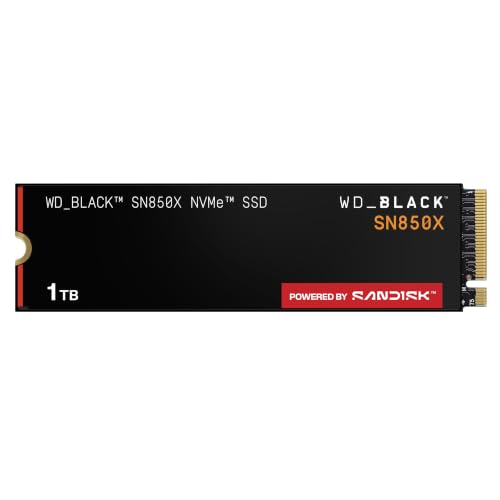
- Best overall for a modern PC: WD_BLACK SN850X NVMe SSD 1TB (WDS100T2X0E) — Check on Amazon
- Kingston KC3000 PCIe 4.0 NVMe M.2 SSD 1024GB (SKC3000S/1024G) — Check on Amazon
- WD_BLACK SN770 NVMe SSD 1TB (WDS100T3X0E) — Check on Amazon
- Crucial P3 Plus PCIe Gen4 NVMe SSD 1TB (CT1000P3PSSD8) — Check on Amazon
See 2 more Amazon options
- Samsung 970 EVO Plus SSD 1TB (MZ-V7S1T0B/AM) — Check on Amazon
- Samsung 870 EVO SATA III SSD 1TB (MZ-77E1T0B/AM) — Check on Amazon
Read the full guide ↓
Disclosure: As an Amazon Associate, ilcastellomenu.com earns from qualifying purchases. Links to Amazon on this page are affiliate links; they cost you nothing extra. Listing details such as price and availability change often, so check the current Amazon listing before you buy.
The best ssds for pc are not one drive but a matching exercise: the right interface for your motherboard, the right design for your workload, and the right capacity for the next several years of your digital life. This guide covers the full honest field — Gen4 flagships for new builds, mid-range Gen4 for mainstream machines, a Gen3 stalwart for older boards, and the two best SATA drives for the large installed base of PCs whose bays and budgets still speak SATA. Every pick is a verified listing with corroborated specifications, and each review states plainly which PC it belongs in and which it does not.
Two questions decide everything, and the guide is organised around them. First: what slots does your PC actually have? An M.2 NVMe slot of any generation transforms what you should buy, while a SATA-only machine has its own excellent answers and no business envying NVMe figures it cannot use. Second: what does your PC actually do all day? Booting, browsing and office work saturate none of these drives; game installs, video work, virtual machines and huge file copies separate them cleanly. Answer those two questions honestly and the shortlist below selects itself.
A note on generations for upgraders: Gen4 drives run happily in Gen3 slots at Gen3 speeds, and Gen3 drives remain the value answer for Gen3 boards. Buy for the machine in front of you unless a full platform upgrade is already scheduled — storage bought for a hypothetical future PC usually serves the present one worse and the future one no better, since the future will have its own listings.
In this guide
Quick Picks
Short on time, or comparing several options at once? Each row below names a buyer type and the drive that suits it, with a link to the listing where one is verified.
| Buyer type | Pick | Why it stands out | Link |
|---|---|---|---|
| Best overall for a modern PC | WD_BLACK SN850X NVMe SSD 1TB (WDS100T2X0E) | Flagship Gen4 speed and consistency for builds with an M.2 slot and real workloads | Check on Amazon |
| Best value flagship for PC builders | Kingston KC3000 PCIe 4.0 NVMe M.2 SSD 1024GB (SKC3000S/1024G) | Up to 7,000 MB/s reads, TLC consistency, and a slim profile for any M.2 slot | Check on Amazon |
| Best mainstream PC drive | WD_BLACK SN770 NVMe SSD 1TB (WDS100T3X0E) | Gen4 responsiveness at the price tier most PCs should spend | Check on Amazon |
| Best budget PC drive | Crucial P3 Plus PCIe Gen4 NVMe SSD 1TB (CT1000P3PSSD8) | Gen4 figures at the entry tier — the upgrade that revives ordinary PCs | Check on Amazon |
| Best for Gen3 PCs and enclosures | Samsung 970 EVO Plus SSD 1TB (MZ-V7S1T0B/AM) | The definitive Gen3 drive: 3,500/3,300 MB/s, TLC and DRAM, proven everywhere | Check on Amazon |
| Best SATA drive for older PCs | Samsung 870 EVO SATA III SSD 1TB (MZ-77E1T0B/AM) | The finest 2.5-inch SSD: full SATA speed for machines without an M.2 slot | Check on Amazon |
How These Picks Were Chosen
PC judging starts with interface truth: each pick is placed in the machines that can use it, at the speeds those machines allow. Within each interface class, sustained behaviour, DRAM, NAND type and software support decided the order — the specifications that predict how a drive feels in year three, not just week one.
We did not use these drives ourselves. We read manufacturer specification pages and listing records, cross-checked the numbers that matter — interface, form factor, sequential figures, endurance ratings where published, and cooling arrangements — and favoured drives whose makers publish full specifications over those that hide behind marketing words. Every ASIN in this guide was verified against a live listing record during research, and every specification printed in the reviews traces to a manufacturer or retailer source recorded in the article’s source notes. Where a maker’s headline stretches a definition — a USB mode a host cannot use, a speed a console cannot spend — the review says so in plain language and judges the drive on its architecture instead.
The 6 Best SSDs for PC
WD_BLACK SN850X NVMe SSD 1TB (WDS100T2X0E)
Who it suits: Best overall for a modern PC — flagship Gen4 speed and consistency for builds with an M.2 slot and real workloads.
The SN850X is Western Digital’s flagship Gen4 gaming drive, and the numbers explain the reputation: sequential reads up to 7,300 MB/s and writes up to 6,300 MB/s on a PCIe Gen4 x4 interface, in the standard M.2 2280 size that fits essentially every modern motherboard, laptop bay and console slot. It is the drive WD builds specifically for gaming loads, with firmware and a Game Mode aimed at keeping load behaviour consistent rather than chasing a single benchmark burst, and it has become the default recommendation in this class because it pairs that headline speed with a long, well-documented service record.
In daily use the SN850X’s strengths are the unglamorous ones. It sustains its performance through long installs and big file copies better than most DRAM-less rivals, its controller keeps temperatures manageable under a motherboard heatsink, and WD’s Dashboard software handles firmware updates and health checks in plain language. This bare version ships without a heatsink, which is exactly right for a PC build where the motherboard provides one — and exactly wrong for a bare-slot install, where the heatsink version below is the correct buy. Capacities run well beyond the 1TB size linked here, so the same drive scales from a boot drive to a full game library.
In a modern desktop or a capable laptop, the SN850X is the drive that ends deliberation: near-ceiling Gen4 figures, flagship consistency through installs and copies, and WD’s mature software watching over it. It suits the PC that does a bit of everything heavily — games, creative work, big archives — and it scales in capacity so the same answer serves a boot drive or a whole machine’s storage. Under a motherboard heatsink, in a build with airflow, it simply disappears into the machine’s competence.
- Near-ceiling Gen4 speeds: up to 7,300 MB/s reads and 6,300 MB/s writes.
- Consistent, gaming-tuned behaviour through long installs and copies.
- Standard M.2 2280 fit with mature WD Dashboard software support.
Honest limitation: This bare version has no heatsink — slots that require one (a PS5, a bare motherboard slot) need the heatsink version or a separate cooler.
Choose it if you are building or upgrading a Gen4 PC that works hard and should stay fast for years. Skip it if your PC only has a Gen3 slot and a mainstream workload — the SN770 or a Gen3 pick serves it for less.
Kingston KC3000 PCIe 4.0 NVMe M.2 SSD 1024GB (SKC3000S/1024G)
Who it suits: Best value flagship for PC builders — up to 7,000 MB/s reads, TLC consistency, and a slim profile for any M.2 slot.
Kingston’s KC3000 is the quiet achiever of the Gen4 flagships: up to 7,000 MB/s sequential reads from a drive that routinely undercuts the two big gaming brands while giving up very little in real-world behaviour. It uses a high-performance controller and TLC NAND in a standard M.2 2280 stick, with a low-profile graphene-aluminium heat spreader label rather than a full heatsink — enough for a ventilated desktop slot under a motherboard cover, not a substitute for a real heatsink where one is required.
For PC builders the KC3000’s appeal is balance. Boot times, game loads and large copies all land within a whisker of the class leaders, Kingston’s SSD Manager handles firmware and health, and the drive’s power behaviour suits laptops and small builds as well as desktops. What it does not do is pretend to console duty out of the box: a PS5 install needs a proper third-party heatsink fitted within Sony’s size limits, and buyers who want that job done at the factory should take the heatsink flagships in this guide instead.
The KC3000 is the PC builder’s arbitrage: flagship-class Gen4 behaviour at listings that leave budget for RAM or graphics, in a slim stick that fits laptops and small-form-factor builds as happily as towers. Its heat-spreader design assumes a motherboard heatsink or airflow, which describes most real builds. For a new PC whose owner wants one drive to do everything well — boot, games, work, archives — this is very often the smartest money in the storage line of the parts list.
- Up to 7,000 MB/s reads at a typically sharper price than the flagship pair.
- TLC NAND and a proven high-performance controller design.
- Slim heat-spreader label fits tight laptop and small-form-factor slots.
Honest limitation: No true heatsink — a PS5 or a hot, coverless slot needs a separate cooler bought and fitted by you.
Choose it if you want one do-everything Gen4 drive and value matters alongside speed. Skip it if your slot has no heatsink and no airflow, or your workload is sustained-write professional — step to a heatsink flagship.
WD_BLACK SN770 NVMe SSD 1TB (WDS100T3X0E)
Who it suits: Best mainstream PC drive — gen4 responsiveness at the price tier most PCs should spend.
The SN770 is WD’s mid-range Gen4 drive done right: up to 5,150 MB/s sequential reads, a DRAM-less design that leans on host memory buffer support, and real-world responsiveness that feels far closer to the flagships than its tier suggests. For game loads, application launches and everyday file work — the loads that are mostly reads and short bursts — the gap between this drive and one costing much more is measured in fractions of a second, which is why it has become the standard value recommendation in Gen4.
Its compromises live exactly where the price says they should. Sustained writes of very large files slow sooner than on the DRAM-equipped flagships, and 5,150 MB/s sits below the 5,500 MB/s figure Sony recommends for PS5 expansion, so console buyers should look at the heatsink flagships in this guide instead. In a PC or laptop, though, the SN770’s efficiency, single-sided-friendly design and WD Dashboard support make it the drive to beat for a mainstream build that wants Gen4 feel without flagship money.
Most PCs are mainstream machines, and the SN770 is their drive: Gen4 responsiveness for booting, applications and games, efficiency for laptops and quiet builds, and a tier that leaves the rest of the budget intact. Its DRAM-less design is a non-issue for everyday mixed work; only marathon copying reveals the flagship gap. If the average PC buyer followed one recommendation from this guide, it would be this class of drive, in this size, at this kind of listing.
- Up to 5,150 MB/s reads — Gen4 responsiveness at a mid-range tier.
- Efficient DRAM-less design suits laptops as well as desktops.
- WD_BLACK gaming line support and Dashboard software.
Honest limitation: Below Sony’s recommended 5,500 MB/s for PS5 use, and sustained writes trail the DRAM-equipped flagships on very long copies.
Choose it if your PC is a mainstream desktop or laptop and you want modern speed without flagship spend. Skip it if you move enormous files daily or run write-heavy professional work — the flagships above hold their pace longer.
Crucial P3 Plus PCIe Gen4 NVMe SSD 1TB (CT1000P3PSSD8)
Who it suits: Best budget PC drive — gen4 figures at the entry tier — the upgrade that revives ordinary PCs.
The P3 Plus is the budget Gen4 drive that made NVMe speed ordinary: up to 5,000 MB/s reads and 4,200 MB/s writes — figures that would have been flagship territory a generation ago — from a QLC NAND design built to hit a price first. For the jobs most PCs actually do all day (booting, launching, loading games, moving documents and photos), it feels decisively faster than any SATA drive and close enough to pricier NVMe drives that most owners would never clock the difference outside a benchmark.
Honesty about QLC is the whole review, though. QLC writes slow down more than TLC once the cache is exhausted on very long transfers, and endurance ratings on QLC drives are lower than TLC equivalents — so a drive that will spend its life recording video, plotting, or absorbing NAS cache writes deserves the TLC flagships instead. As a boot-and-games drive, a laptop upgrade, or the second drive in a build, the P3 Plus is exactly the right economy; Crucial’s Storage Executive software and Acronis cloning support round out an ownership story that punches above its tier.
The P3 Plus is the drive that brings the NVMe era to budget builds and older Gen4-capable machines: up to 5,000 MB/s reads, painless cloning support, and a listing tier that makes the SATA-versus-NVMe debate moot wherever a slot exists. Its QLC design is the honest trade — sustained writes and endurance sit below TLC drives — and for the office, school, family and light-gaming PCs it is aimed at, that trade is invisible in years of ordinary use.
- Up to 5,000/4,200 MB/s — real Gen4 speed at the budget tier.
- Backward compatible with Gen3 slots for older-system upgrades.
- Crucial software and cloning support included.
Honest limitation: QLC NAND: sustained writes and endurance trail TLC drives — not the pick for write-heavy professional duty.
Choose it if you are building or reviving a PC on a budget and have any M.2 NVMe slot at all. Skip it if the PC records, edits or writes heavily every day — QLC is the wrong tool for that job.
Samsung 970 EVO Plus SSD 1TB (MZ-V7S1T0B/AM)
Who it suits: Best for Gen3 PCs and enclosures — the definitive Gen3 drive: 3,500/3,300 MB/s, TLC and DRAM, proven everywhere.
The 970 EVO Plus is the definitive Gen3 drive: up to 3,500 MB/s reads and 3,300 MB/s writes — essentially the whole PCIe 3.0 x4 pipe — from Samsung V-NAND TLC with a proper DRAM cache, in a design that has been the safe answer for older motherboards, laptops and enclosures for years. On a Gen3 slot it gives up nothing; on a Gen4 slot it runs at Gen3 speeds and still feels fast in every everyday load, because most real work never touches the sequential ceiling either way.
Its modern roles are specific and honourable. It is the known-quantity upgrade for Gen3-era machines, a favourite inside USB and Thunderbolt enclosures where the interface is the bottleneck anyway, and the drive older-Mac tinkerers reach for because its behaviour in adapters and enclosures is documented to exhaustion. What it is not is a PS5 drive — Sony requires Gen4 — and buyers with a Gen4 slot and flagship money should spend it on a Gen4 drive. Within its generation, nothing here is a compromise.
Millions of good PCs have Gen3 slots, and the 970 EVO Plus remains their perfect upgrade: it saturates the Gen3 interface with TLC and DRAM, so nothing about the experience feels like a compromise, and its behaviour is documented across a decade of machines, laptops and enclosures. It is also the enclosure-builder’s favourite for the same reason. Buying Gen4 for a Gen3 board buys future-proofing only if the drive migrates later; buying this buys the best possible present for the machine you own.
- Saturates Gen3: up to 3,500/3,300 MB/s with TLC and DRAM.
- Enormous installed base — behaviour in enclosures and adapters is well documented.
- Samsung Magician support and a five-year-class warranty record.
Honest limitation: Gen3 interface: cannot meet PS5 requirements and leaves Gen4 slots underfed on sequential transfers.
Choose it if your PC has a Gen3 M.2 slot, or you are building a fast USB/Thunderbolt enclosure. Skip it if your board is Gen4 and staying yours for years — a Gen4 pick uses the slot you paid for.
Samsung 870 EVO SATA III SSD 1TB (MZ-77E1T0B/AM)
Who it suits: Best SATA drive for older PCs — the finest 2.5-inch SSD: full SATA speed for machines without an M.2 slot.
The 870 EVO is the best SATA SSD ever made, and it is not close. Samsung’s V-NAND and its own controller extract up to 560 MB/s reads and 530 MB/s writes — the practical ceiling of the SATA III interface — with the consistency, DRAM-equipped responsiveness and firmware maturity that made the EVO line the default upgrade for a decade of PCs, laptops and consoles with 2.5-inch bays. If a machine takes a 2.5-inch SATA drive, this is the drive against which every alternative is measured.
That role defines its modern shortlist: the internal swap for a PS4, the resurrection of an older laptop or desktop, the reliable SATA tier in a NAS, and the known-quantity drive for a USB enclosure build. SATA’s ceiling is the honest limitation — roughly a tenth of a flagship NVMe drive’s sequential speed — but in the machines that take this form factor, the comparison is against a spinning hard drive, and against that baseline the 870 EVO is transformative: silent, shock-proof, and fast enough that the rest of the old machine becomes the bottleneck.
A SATA-only PC is not a dead PC, and the 870 EVO is the proof: installed in place of a hard drive, it delivers the full SATA experience — up to 560/530 MB/s, DRAM-equipped responsiveness, total silence — and makes the rest of the machine the bottleneck for the first time in its life. For older desktops, laptops with 2.5-inch bays, and secondary storage in any build, it remains the benchmark SATA purchase, with the MX500 as its value rival wherever listings separate them.
- SATA-ceiling speeds: up to 560/530 MB/s with DRAM-equipped consistency.
- The most proven 2.5-inch SSD line in the business.
- Fits any 2.5-inch bay — laptops, PS4, older desktops, enclosures.
Honest limitation: SATA interface caps sequential speed far below NVMe — only buy it for a machine or bay that actually uses SATA.
Choose it if your PC takes a 2.5-inch SATA drive and deserves the best version of that upgrade. Skip it if your PC has an M.2 NVMe slot — every NVMe pick above is a larger upgrade for similar money.
Comparison Table
| Product | Type | Key specifications | Link |
|---|---|---|---|
| WD_BLACK SN850X NVMe SSD 1TB (WDS100T2X0E) | Internal NVMe, PCIe Gen4 x4, M.2 2280, no heatsink | PCIe Gen4 x4 · M.2 2280 · up to 7,300 MB/s read · up to 6,300 MB/s write · 1TB | Check on Amazon |
| Kingston KC3000 PCIe 4.0 NVMe M.2 SSD 1024GB (SKC3000S/1024G) | Internal NVMe, PCIe Gen4 x4, M.2 2280, no heatsink | PCIe Gen4 x4 · M.2 2280 · up to 7,000 MB/s read · 1024GB (1TB class) | Check on Amazon |
| WD_BLACK SN770 NVMe SSD 1TB (WDS100T3X0E) | Internal NVMe, PCIe Gen4 x4, M.2 2280, no heatsink | PCIe Gen4 x4 · M.2 2280 · up to 5,150 MB/s read · 1TB | Check on Amazon |
| Crucial P3 Plus PCIe Gen4 NVMe SSD 1TB (CT1000P3PSSD8) | Internal NVMe, PCIe Gen4 x4, M.2 2280, no heatsink | PCIe Gen4 x4 · M.2 2280 · up to 5,000 MB/s read · up to 4,200 MB/s write · QLC NAND · 1TB | Check on Amazon |
| Samsung 970 EVO Plus SSD 1TB (MZ-V7S1T0B/AM) | Internal NVMe, PCIe Gen3 x4, M.2 2280, no heatsink | PCIe Gen3 x4 · M.2 2280 · up to 3,500 MB/s read · up to 3,300 MB/s write · TLC V-NAND · DRAM-equipped · 1TB | Check on Amazon |
| Samsung 870 EVO SATA III SSD 1TB (MZ-77E1T0B/AM) | Internal SATA III, 2.5-inch 7mm | SATA III 6 Gb/s · 2.5-inch · up to 560 MB/s read · up to 530 MB/s write · 1TB | Check on Amazon |
Compare within interface classes, not across them: the NVMe rows and the SATA rows are answers to different motherboards, and their speed figures describe different worlds. The useful columns are type — which slot or bay the drive belongs in — and the design notes (NAND, DRAM, heatsink) that each full review expands into a verdict.
Reading Your PC Before You Read the Listings
The most common PC storage mistake is buying for a specification sheet instead of a motherboard. Open the question physically: does your machine have an M.2 slot, and if so, which generation and which key? A Gen4 slot takes everything in this guide at full speed. A Gen3 slot caps any drive at Gen3 figures — where the 970 EVO Plus already lives — and makes flagship Gen4 spend a donation to a benchmark. A machine with no M.2 slot is a SATA machine, and its excellent answer is a 2.5-inch drive, not an adapter experiment. Laptop owners add one more check: single-sided drives and slim profiles matter in thin bays, and every M.2 pick here is chosen with that fit in mind.
The second reading is of yourself. Storage workloads divide honestly into the light (booting, office, browsing, study — everything feels fast), the bursty (games, photo work, development — mid-range NVMe is the sweet spot) and the sustained (video, virtualisation, data work, constant large copies — flagship TLC with DRAM earns its money). Most buyers overestimate their tier by one, which is harmless at mid-range prices and wasteful at flagship ones. The guides in this series go deeper on the specialist cases: Best Ssds For Gaming for play-focused builds and Best Ssds For Video Editing for the sustained-write end of the spectrum.
Cloning, Fresh Installs and the First Week
An SSD upgrade succeeds or fails on migration day, and the tools have never been better: Samsung and Crucial bundle cloning software with these drives, and a USB enclosure or a spare slot turns the swap into a guided copy rather than a reinstall. Clone when the old system is healthy and you value your afternoon; install fresh when the old system is a mess you would otherwise carry into the new drive’s life. Either way, verify the boot order, confirm the new drive is the system disk, and only then wipe or repurpose the old drive — as a backup, a games disk or an enclosure build.
The first week has its own checklist. Enable the maker’s software and take any firmware update before you settle in. Confirm the drive negotiated the link speed your slot promises — a Gen4 drive idling at Gen3 in a Gen4 slot is usually a slot-sharing or settings issue worth the five minutes it takes to find. And keep the free-space discipline from day one: a system drive with breathing room stays fast, while one filled to the last gigabyte in week one spends its life disappointing you in ways that look like the drive’s fault and are not.
NVMe Generations Without the Hype
Three NVMe generations share the market, and the honest differences are narrower than the marketing suggests. Gen3 tops out near 3,500 MB/s — the 970 EVO Plus’s territory — and remains a thoroughly modern experience for booting, applications and most games, because those workloads rarely queue enough sequential data to notice anything above it. Gen4 doubles the ceiling and adds the consistency refinements of mature controllers; it is the current sweet spot, where every flagship and value pick in this guide lives. Gen5 doubles the ceiling again, at flagship-plus prices, with heat output that demands real cooling and workloads that mostly do not exist yet in consumer software.
The practical translation for a PC owner is refreshingly dull: match the drive generation to your slot generation, and spend any surplus on capacity or elsewhere in the machine. A Gen4 drive in a Gen3 slot is not broken — it is a Gen3 experience bought at a Gen4 price, defensible only if the drive will migrate to a Gen4 machine soon. A Gen5 drive in a Gen4 slot is the same sentence with larger numbers. The upgrade that transforms a PC is never from one NVMe generation to the next; it is from a hard drive, or from SATA, to any NVMe at all — after which the generations are refinement, and refinement should be priced as such.
The Second Life of Your Old Drive
An SSD upgrade creates a by-product most owners waste: a perfectly good old drive. Its second careers are worth planning, because they convert a purchase into a system. In a USB enclosure, the old drive becomes the migration tool for its own replacement, then a backup drive, a media shuttle or a bootable rescue disk — the enclosure costs little and the utility compounds for years. Inside the same PC, it becomes the archive tier: the place downloads, documents and yesterday’s games live, freeing the new drive to stay fast and uncluttered. Given away, it resurrects a relative’s laptop more completely than any other single part can.
The only wrong second life is the drawer — not because the drive is precious, but because data left on an unused drive is data quietly leaving your backup story. Whatever role the old drive takes, take one deliberate step with it: wipe it properly if it leaves your hands, or enrol it in the backup arrangement if it stays. Storage you can account for is storage you can trust, and the upgrade that prompts the accounting has then improved your whole system, not just its boot time.
Storage and the Shape of a PC’s Whole Life
A PC’s storage decisions echo longer than any other component’s, because storage is where the machine’s life accumulates: the photo library, the documents, the game installs, the projects — the parts that are not replaceable with a newer model. That is why this guide keeps returning to size and stewardship over speed: the drive that matters in year five is the one that was big enough in year one, from a maker whose software still recognises it, holding data that was backed up as a habit rather than rescued as an event. Benchmarks measure a drive’s first afternoon. Ownership is measured in the other direction.
It also explains the otherwise odd emotional register of good storage advice — its insistence on the boring. Keep a fifth free. Install the maker’s tool. Enrol the old drive as the backup. None of it photographs well, and all of it is the difference between a PC whose storage is infrastructure and one whose storage is a recurring weekend project. The drives in this guide are chosen to reward the boring: standard interfaces, published specifications, software that exists, and behaviour that stays consistent long after the review cycle has moved on to shinier ceilings nobody’s workload can reach.
If this page has a single sentence to leave with a PC builder, it is that storage is the component where ‘good enough, generously sized, properly kept’ beats ‘fastest available’ by the largest margin in the whole parts list — and it is not close. Spend the difference on the monitor you will look at, the chair you will sit in, or the backup drive that makes all of it safe. The PC will feel fast. More importantly, in five years it will still feel like yours.
Power Users’ Corner: RAID, Second Slots and Other Temptations
Experienced builders eventually ask about the exotic arrangements, and they deserve straight answers. Striping two NVMe drives in RAID makes benchmarks sing and everyday computing barely notice, while doubling the number of things that can fail — a trade this guide recommends against for system drives and shrugs at for scratch space. A second M.2 slot, by contrast, is almost always better spent on the two-tier layout described earlier: a fast system drive and a capacious second drive, each doing the job it is good at. The exotic option that does earn its place is the adapter card in a workstation with lanes to spare, adding slots the board never had — for archives and cache tiers, not for bragging rights.
The thread through all of it is that PC storage scales by roles, not by tricks. Slots, bays and adapters are just ways to give each role — system, work, archive, backup — its own honest hardware. A builder who thinks in roles can read any future catalogue calmly, because new products arrive as candidates for a role rather than as temptations. That calm, more than any generation jump, is what a mature storage setup feels like from the inside.
There is a final, unfashionable test that summarises the whole guide: imagine the drive’s fifth year. The system still boots in seconds, the library still fits, the maker’s software still recognises the drive and reports it healthy, and the owner has not thought about storage since the week it was installed. Every recommendation on this page was chosen to pass that imagined audit — because a PC’s storage is the one component whose success is measured in how completely it is forgotten.
And if the audit still leaves two drives standing, let the tie be broken by the oldest rule in this guide: buy the one whose maker you would rather telephone in year three. On paper the finalists are twins; in ownership, support is the specification that outlives all the others.
How to Choose Best SSDs for PC
PC storage rewards the buyer who answers two questions honestly — what slots the machine has, and what work it does. These checks turn the answers into the right purchase:
- Identify your slot before anything else. M.2 generation and keying decide the entire shortlist. Check the motherboard or laptop specification — not the age of the machine, which misleads in both directions.
- Buy the interface your PC has, at the speed it supports. Gen4 drive in a Gen4 slot, the great Gen3 drive in a Gen3 slot, the great SATA drive in a SATA bay. Adapters rarely beat buying the native answer.
- Size for three years, not three months. Operating systems, applications and games all grow. For most PCs 1TB is the comfortable present and the honest minimum for a machine meant to last.
- Match NAND and DRAM to your workload. Light use: anything here. Bursty use: mid-range NVMe. Sustained writes: flagship TLC with DRAM. The labels are in every review — use them.
- Plan the migration before the drive arrives. Cloning software is bundled with Samsung and Crucial picks; you will want an enclosure, a second slot or a backup image ready on the day.
- Leave a fifth of the drive empty. SSDs need free space to write well and to manage wear. A drive kept under about eighty percent full keeps its manners for years.
- Install the maker’s software with the drive. Firmware, health monitoring and cloning tools are part of what you bought. Five minutes at setup is the cheapest reliability in the build.
- Keep the old drive as the backup it wants to be. Yesterday’s system disk in a cheap enclosure is a bootable spare and a migration safety net — worth more than its resale value.
Common Mistakes
- Buying a Gen4 flagship for a Gen3 slot and paying for speed the board cannot deliver.
- Buying SATA for a machine with a free M.2 slot because the listing was familiar.
- Choosing 256GB or 500GB for a main PC drive in an era of hundred-gigabyte applications.
- Ignoring the laptop fit question — a heatsink or double-sided drive in a bay built for neither.
- Cloning a failing or malware-ridden system onto a new drive and blaming the drive for the old system’s behaviour.
- Filling the system drive completely and losing the write performance the upgrade was for.
- Skipping the firmware update and the maker’s health software at setup.
- Throwing away the old drive the same day — before the new install has survived its first week.
Final Recommendation
- Best overall for a modern PC: WD_BLACK SN850X NVMe SSD 1TB (WDS100T2X0E).
- Best value flagship for PC builders: Kingston KC3000 PCIe 4.0 NVMe M.2 SSD 1024GB (SKC3000S/1024G).
- Best mainstream PC drive: WD_BLACK SN770 NVMe SSD 1TB (WDS100T3X0E).
- Best budget PC drive: Crucial P3 Plus PCIe Gen4 NVMe SSD 1TB (CT1000P3PSSD8).
- Best for Gen3 PCs and enclosures: Samsung 970 EVO Plus SSD 1TB (MZ-V7S1T0B/AM).
- Best SATA drive for older PCs: Samsung 870 EVO SATA III SSD 1TB (MZ-77E1T0B/AM).
Our top two here are the WD_BLACK SN850X NVMe SSD 1TB (WDS100T2X0E), for the buyer this article was written for, and the Kingston KC3000 PCIe 4.0 NVMe M.2 SSD 1024GB (SKC3000S/1024G), for the household whose priorities run the other way. Between them they cover the two shapes this search usually takes: the complete answer bought once, and the value answer that leaves budget for everything else. Readers weighing a neighbouring question should also see Best Ssds For Gaming. Read your motherboard, read your workload, and the right drive is usually obvious — buy that one, in a size that lets you forget storage for years, and spend the savings where your PC can actually feel them.
Frequently Asked Questions
Will a Gen4 SSD work in a Gen3 slot?
Yes — Gen4 drives are backward compatible and run at Gen3 speeds in a Gen3 slot. Whether that is a good buy depends on your plans: for a machine you will keep, a great Gen3 drive like the 970 EVO Plus delivers the same real experience for less; for a drive that will migrate to a Gen4 build soon, buying Gen4 now makes sense.
How much faster is NVMe than SATA, honestly?
In sequential figures, roughly ten times at the flagship end. In everyday feel — booting, launching, general responsiveness — NVMe is clearly faster but not ten times faster, because those jobs are dominated by small reads where both interfaces do well. The honest summary: SATA SSD is the huge leap from a hard drive; NVMe is the refinement on top of it.
What size SSD should a PC have?
1TB is the comfortable standard for a main drive today. Light-use machines survive on 500GB with discipline; gamers, creators and anyone who hates storage management should start at 1TB and consider 2TB. Whatever the size, keep about a fifth free.
Do I need a heatsink on a PC SSD?
If your motherboard provides M.2 heatsinks or armour, use them and buy bare drives. In a slot with no heatsink and little airflow, a flagship under sustained load benefits from one — several picks here come with factory heatsinks, and simple aftermarket coolers exist. For light workloads it is rarely critical.
Should I clone my old drive or install Windows fresh?
Clone if your current system is healthy and your time matters — bundled tools from Samsung and Crucial make it straightforward. Install fresh if the old system is unstable, cluttered or compromised; a new drive is the natural moment for a clean start. Either way, back up first.
Can I add an SSD without replacing my current drive?
Usually, yes: a free M.2 slot or a spare SATA bay lets the new drive join as additional storage, and many owners install the fast drive for the system and games while the old drive becomes the archive. Just confirm the slot and bay situation before ordering.
How long will a modern SSD last in a PC?
Years beyond the machine’s own relevance, in ordinary use: consumer drives carry endurance ratings sized for far more writing than typical owners ever do, and the health software from the maker reports the share consumed. The realistic end of a PC SSD’s life is obsolescence or capacity, not wear — which is another reason to buy size generously.


