Where to buy
Check the latest price, availability and delivery on Amazon. Orders are placed on Amazon. We may earn a commission from qualifying purchases.
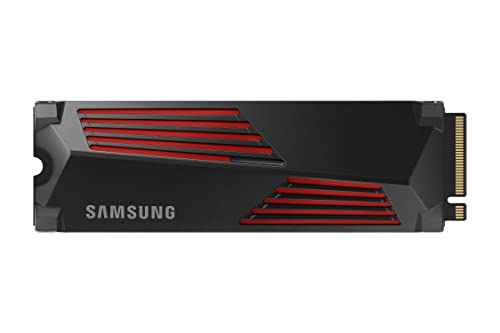
- Best editing workstation drive: Samsung 990 PRO with Heatsink SSD 1TB (MZ-V9P1T0CW) — Check on Amazon
- WD_BLACK SN850X NVMe SSD 1TB (WDS100T2X0E) — Check on Amazon
- Seagate FireCuda 530 SSD with Heatsink 1TB (ZP1000GM3A023) — Check on Amazon
- Kingston KC3000 PCIe 4.0 NVMe M.2 SSD 1024GB (SKC3000S/1024G) — Check on Amazon
See 2 more Amazon options
- SanDisk Extreme PRO Portable SSD 1TB (SDSSDE81-1T00-G25) — Check on Amazon
- Samsung T7 Shield Portable SSD 1TB (MU-PE1T0S/AM) — Check on Amazon
Read the full guide ↓
Disclosure: As an Amazon Associate, ilcastellomenu.com earns from qualifying purchases. Links to Amazon on this page are affiliate links; they cost you nothing extra. Listing details such as price and availability change often, so check the current Amazon listing before you buy.
The best ssds for video editing are decided by the least glamorous specification in storage: what a drive does in hour three of a render, not second three of a benchmark. Editing is sustained work — hundreds of gigabytes read while scrubbing, written while rendering, cached while effects compute — and it separates drives with real thermal design, DRAM and TLC NAND from drives built to sprint for a product photo. This guide ranks six drives for editing machines and editing travel kits on exactly those terms: flagship internal NVMe for the workstation, and the portables that survive a shoot day. Every linked pick is a verified listing with corroborated specifications.
The editing storage system has three tiers, and the picks map to them. The system and applications want a fast, consistent NVMe. The active project — the footage being cut right now — wants the fastest sustained storage you own, because scrubbing, multicam and effects previews are storage workloads wearing an editor’s clothes. The archive wants capacity and safety more than speed. A guide that sells one drive for all three tiers is lying by simplification; this one names each pick’s tier in its review, so a workstation build and a laptop travel kit can both be assembled from the same page honestly.
One promise kept throughout: no drive here is credited with figures we could not corroborate, and the QLC and DRAM-less designs that editing punishes are excluded from the internal picks entirely rather than recommended with an asterisk. Editing is where storage compromises send their invoices — in render times, in dropped frames on multicam, in a cache drive that fades mid-project. The picks below are the ones that do not send invoices.
In this guide
Quick Picks
Short on time, or comparing several options at once? Each row below names a buyer type and the drive that suits it, with a link to the listing where one is verified.
| Buyer type | Pick | Why it stands out | Link |
|---|---|---|---|
| Best editing workstation drive | Samsung 990 PRO with Heatsink SSD 1TB (MZ-V9P1T0CW) | Up to 7,450/6,900 MB/s with flagship sustained behaviour and the best software in the class | Check on Amazon |
| Best all-round editing drive | WD_BLACK SN850X NVMe SSD 1TB (WDS100T2X0E) | Flagship Gen4 consistency for projects, cache and system duty in one drive | Check on Amazon |
| Best for record-heavy and render-heavy duty | Seagate FireCuda 530 SSD with Heatsink 1TB (ZP1000GM3A023) | 1,275 TBW endurance and an EKWB heatsink: the drive for studios that write all day | Check on Amazon |
| Best value editing drive | Kingston KC3000 PCIe 4.0 NVMe M.2 SSD 1024GB (SKC3000S/1024G) | Up to 7,000 MB/s reads and TLC consistency at the builder’s favourite tier | Check on Amazon |
| Best portable for editing on location | SanDisk Extreme PRO Portable SSD 1TB (SDSSDE81-1T00-G25) | Up to 2,000 MB/s on 2×2 hosts, aluminium thermals for full-card offloads, IP65 for the field | Check on Amazon |
| Best portable for editing travel kits | Samsung T7 Shield Portable SSD 1TB (MU-PE1T0S/AM) | The rugged 1,050 MB/s-class standard: IP65, pocketable, and happy as a working drive | Check on Amazon |
How These Picks Were Chosen
Editing judging weighted sustained writes and thermal behaviour above everything: how a drive performs across a full project day, with caches hot and renders running. DRAM-equipped TLC designs only for internal picks; portables were judged on sustained-transfer thermals and build, because a shuttle drive that throttles at minute twenty is a shoot-day problem, not a statistic.
We did not use these drives ourselves. We read manufacturer specification pages and listing records, cross-checked the numbers that matter — interface, form factor, sequential figures, endurance ratings where published, and cooling arrangements — and favoured drives whose makers publish full specifications over those that hide behind marketing words. Every ASIN in this guide was verified against a live listing record during research, and every specification printed in the reviews traces to a manufacturer or retailer source recorded in the article’s source notes. Where a maker’s headline stretches a definition — a USB mode a host cannot use, a speed a console cannot spend — the review says so in plain language and judges the drive on its architecture instead.
The 6 Best SSDs for Video Editing
Samsung 990 PRO with Heatsink SSD 1TB (MZ-V9P1T0CW)
Who it suits: Best editing workstation drive — up to 7,450/6,900 MB/s with flagship sustained behaviour and the best software in the class.
Samsung’s 990 PRO is the fastest Gen4 drive in this guide on paper — up to 7,450 MB/s sequential reads and 6,900 MB/s writes, figures Samsung itself notes sit close to the practical ceiling of the PCIe 4.0 interface — and this heatsink version is the one built for consoles and tight slots, with an integrated heatsink the listing describes as designed for PlayStation 5 expansion. Under the speed sits Samsung’s own controller and V-NAND, a 600 TBW endurance rating at this 1TB size, and a five-year warranty, which together make it the specification-sheet answer for buyers who want the flagship and intend to keep it.
What the 990 PRO adds over cheaper Gen4 drives is consistency under mixed work: game installs, capture recording, big project files and everyday booting all draw on the same strengths, and Samsung Magician remains the most polished drive-management software in the consumer market for firmware, health and cloning. The heatsink version’s cooler is slim enough for the PS5 bay and for laptops and small-form-factor PCs that accept a low-profile drive, though — as with any fixed-heatsink drive — a desktop motherboard with its own tall M.2 armour may prefer the bare version of a drive instead.
The 990 PRO is the editing workstation’s default for reasons that compound: the fastest verified figures in this guide, Samsung’s controller consistency through long renders, and Magician’s health and firmware tooling watching a drive your deadlines depend on. As a project drive it scrubs and previews without becoming the bottleneck; as a system drive it simply vanishes. The heatsink version suits workstations whose boards lack armour and small-form-factor editing builds where airflow is scarce — measure a chunky motherboard cover before assuming the fit.
- Fastest verified figures here: up to 7,450 MB/s read, 6,900 MB/s write.
- Factory heatsink designed for PS5 expansion and tight slots.
- 600 TBW endurance rating and Samsung Magician software support.
Honest limitation: Flagship positioning means it rarely wins on value against the SN850X or KC3000 — you pay for the last few percent and the Samsung ecosystem.
Choose it if you are building or upgrading an editing workstation and want the flagship with the full software ecosystem. Skip it if your workload is light editing and export — the KC3000 delivers the same daily experience for less.
WD_BLACK SN850X NVMe SSD 1TB (WDS100T2X0E)
Who it suits: Best all-round editing drive — flagship Gen4 consistency for projects, cache and system duty in one drive.
The SN850X is Western Digital’s flagship Gen4 gaming drive, and the numbers explain the reputation: sequential reads up to 7,300 MB/s and writes up to 6,300 MB/s on a PCIe Gen4 x4 interface, in the standard M.2 2280 size that fits essentially every modern motherboard, laptop bay and console slot. It is the drive WD builds specifically for gaming loads, with firmware and a Game Mode aimed at keeping load behaviour consistent rather than chasing a single benchmark burst, and it has become the default recommendation in this class because it pairs that headline speed with a long, well-documented service record.
In daily use the SN850X’s strengths are the unglamorous ones. It sustains its performance through long installs and big file copies better than most DRAM-less rivals, its controller keeps temperatures manageable under a motherboard heatsink, and WD’s Dashboard software handles firmware updates and health checks in plain language. This bare version ships without a heatsink, which is exactly right for a PC build where the motherboard provides one — and exactly wrong for a bare-slot install, where the heatsink version below is the correct buy. Capacities run well beyond the 1TB size linked here, so the same drive scales from a boot drive to a full game library.
The SN850X’s editing case is its consistency: installs of enormous application suites, project loads, render writes and cache churn all land on a drive tuned to hold its behaviour under mixed load, which is a precise description of an editing machine’s day. Many workstations run it as the single drive — system, projects and cache together — and never meet its limits; larger operations split cache duty onto it and keep projects on a second. Either way it is the all-rounder against which editing storage value is measured.
- Near-ceiling Gen4 speeds: up to 7,300 MB/s reads and 6,300 MB/s writes.
- Consistent, gaming-tuned behaviour through long installs and copies.
- Standard M.2 2280 fit with mature WD Dashboard software support.
Honest limitation: This bare version has no heatsink — slots that require one (a PS5, a bare motherboard slot) need the heatsink version or a separate cooler.
Choose it if you want one flagship drive to carry a whole editing machine’s mixed workload. Skip it if you record or render truly marathon sessions daily — the FireCuda’s endurance rating is built for that life.
Seagate FireCuda 530 SSD with Heatsink 1TB (ZP1000GM3A023)
Who it suits: Best for record-heavy and render-heavy duty — 1,275 TBW endurance and an EKWB heatsink: the drive for studios that write all day.
The FireCuda 530 is the endurance specialist of the Gen4 flagships. Its headline speed — up to 7,300 MB/s — matches the class, but its 1,275 TBW endurance rating at 1TB is roughly double what most consumer flagships publish, and Seagate backs it with a 1.8-million-hour MTBF figure and included Rescue data-recovery services. The heatsink on this version is a low-profile aluminium design developed with EKWB, the water-cooling company, and Seagate sells this exact configuration as a PS5 internal SSD that meets the console’s performance and dimension requirements.
That combination — flagship speed, workstation-grade endurance, a console-ready heatsink — makes the FireCuda 530 the pick that keeps appearing across this category’s hardest briefs: PS5 expansion that will be written to for years, plotting and cache work that eats ordinary drives, and editing machines that record for hours. The trade-offs are equally clear: it is a premium drive, its heatsink is fixed (measure a desktop slot before assuming clearance), and its write figures, while strong, are not the story — the endurance rating is.
Editing at volume is a write workload: captures, renders, exports, versioned project files, proxies generated nightly. The FireCuda 530’s 1,275 TBW rating — about double the consumer flagship norm — is the specification that speaks fluent studio, and its EKWB-designed heatsink sustains pace through the long transfers that heat-soak lesser drives. Seagate’s Rescue services add a recovery safety net over footage that cannot be reshot. For a working studio’s busiest slot, this is the professional’s pick in the guide.
- 1,275 TBW endurance at 1TB — about double typical consumer flagships.
- EKWB-designed low-profile heatsink, sold as PS5-ready by Seagate.
- Rescue data-recovery services included alongside the warranty.
Honest limitation: Premium pricing for endurance many light users will never touch — a games-only library may never approach its TBW rating.
Choose it if your editing operation writes constantly — capture, renders, proxies — and wears drives out. Skip it if you edit occasionally and export rarely — the endurance premium buys you nothing you will use.
Kingston KC3000 PCIe 4.0 NVMe M.2 SSD 1024GB (SKC3000S/1024G)
Who it suits: Best value editing drive — up to 7,000 MB/s reads and TLC consistency at the builder’s favourite tier.
Kingston’s KC3000 is the quiet achiever of the Gen4 flagships: up to 7,000 MB/s sequential reads from a drive that routinely undercuts the two big gaming brands while giving up very little in real-world behaviour. It uses a high-performance controller and TLC NAND in a standard M.2 2280 stick, with a low-profile graphene-aluminium heat spreader label rather than a full heatsink — enough for a ventilated desktop slot under a motherboard cover, not a substitute for a real heatsink where one is required.
For PC builders the KC3000’s appeal is balance. Boot times, game loads and large copies all land within a whisker of the class leaders, Kingston’s SSD Manager handles firmware and health, and the drive’s power behaviour suits laptops and small builds as well as desktops. What it does not do is pretend to console duty out of the box: a PS5 install needs a proper third-party heatsink fitted within Sony’s size limits, and buyers who want that job done at the factory should take the heatsink flagships in this guide instead.
The KC3000 puts flagship-class editing behaviour into mid-budget workstations and editing laptops: TLC consistency for project work, 7,000 MB/s-class reads for loads and scrubs, and a slim profile for tight builds. It is the drive that lets a freelance editor’s machine feel like a studio’s, leaving budget for the monitor and the backup system that editing actually cannot live without. Its heat-spreader design wants a motherboard heatsink or airflow — standard in a workstation, worth confirming in a small build.
- Up to 7,000 MB/s reads at a typically sharper price than the flagship pair.
- TLC NAND and a proven high-performance controller design.
- Slim heat-spreader label fits tight laptop and small-form-factor slots.
Honest limitation: No true heatsink — a PS5 or a hot, coverless slot needs a separate cooler bought and fitted by you.
Choose it if you are building an editing machine on a real budget and refuse to compromise the project drive. Skip it if your case has no M.2 heatsink and no airflow to spare — a factory-heatsink pick above is the safer fit.
SanDisk Extreme PRO Portable SSD 1TB (SDSSDE81-1T00-G25)
Who it suits: Best portable for editing on location — up to 2,000 MB/s on 2×2 hosts, aluminium thermals for full-card offloads, IP65 for the field.
The Extreme PRO is the speed pick among portables: up to 2,000 MB/s reads and writes over USB 3.2 Gen 2×2, in a forged aluminium chassis with IP65 water and dust resistance and drop protection, from the brand professional photographers standardised on. On a host with a 20 Gb/s USB port it moves footage, game libraries and disk images at roughly double the rate of the 10 Gb/s class, and its metal body sheds the heat of those long transfers better than plastic rivals.
The asterisk is written on the interface, not the drive: USB 3.2 Gen 2×2 hosts are common on Windows desktops and rare elsewhere — Macs do not support 2×2 and fall back to 10 Gb/s speeds, and many laptops do the same. On the right host this is the fastest portable in this guide; on the wrong host it is a very well-built 10 Gb/s drive. Check your ports before paying for the headline, and the drive will do the rest.
On location, the Extreme PRO is the offload drive: its forged aluminium body sheds the heat of back-to-back card dumps, its IP65 rating shrugs off the weather a shoot day includes, and on a 2×2-capable laptop it offloads at up to 2,000 MB/s — half the waiting of the 10 Gb/s class at exactly the moment a crew is standing around. On hosts without 2×2 (including every Mac) it joins the standard class and remains a superbly built shuttle. Editors who travel with it stop scheduling their evenings around progress bars.
- Up to 2,000/2,000 MB/s on 20 Gb/s USB hosts — fastest portable class here.
- Forged aluminium chassis, IP65 rating, drop protection.
- Sustained-transfer thermals suit big footage and library moves.
Honest limitation: Full speed needs a USB 3.2 Gen 2×2 host; Macs and many laptops cap it at 10 Gb/s-class speeds.
Choose it if you offload footage on location and your laptop can feed a fast portable — or you want the best-built shuttle regardless. Skip it if your editing is desk-bound — the same money buys internal capacity that serves every project, not just travel days.
Samsung T7 Shield Portable SSD 1TB (MU-PE1T0S/AM)
Who it suits: Best portable for editing travel kits — the rugged 1,050 MB/s-class standard: IP65, pocketable, and happy as a working drive.
The T7 Shield is Samsung’s portable SSD in its working clothes: the T7 family’s up-to-1,050 MB/s USB 3.2 Gen2 performance wrapped in a ribbed rubber exterior with an IP65 dust-and-water-resistance rating and drop protection aimed at bags, desks and location work rather than a shelf. It is bus-powered over USB-C, pocketable, and compatible with the whole modern zoo — PC, Mac, Android, and games consoles for external game storage — which is why it keeps winning the ‘one portable drive’ argument.
Its honest ceiling is the interface: 10 Gb/s USB means roughly a gigabyte per second at best, and no portable drive in this class escapes that; machines with faster ports still talk to it at Gen2 speeds. Within that ceiling, the Shield’s sustained-write behaviour, thermal manners inside its rubber shell and Samsung’s portable-SSD software support make it the rugged default — the drive you throw in a camera bag, a console backpack or a laptop sleeve and stop thinking about.
The T7 Shield is the travel kit’s other half: not the fastest portable here on a 2×2 host, but the most trusted — the drive editors hand to runners, drop in camera bags and edit from directly in hotel rooms. Its sustained behaviour within the USB class is dependable, its rubber armour is genuinely protective, and its ubiquity means every collaborator’s machine already knows it. As a working project drive for laptop editing it is entirely credible; as a shuttle it is the industry default wearing Samsung’s badge.
- Up to 1,050 MB/s over USB-C with broad PC/Mac/console compatibility.
- IP65 rating and rugged rubber exterior for real travel duty.
- Bus-powered and pocketable — no brick, no fuss.
Honest limitation: USB 3.2 Gen2 caps real transfers near a gigabyte per second; 20 Gb/s drives are faster on hosts that support them.
Choose it if you want the travel-kit portable that every workflow already assumes, with ruggedness to match. Skip it if your location offloads are measured in terabytes against a waiting crew — the Extreme PRO on a 2×2 host halves that wait.
Comparison Table
| Product | Type | Key specifications | Link |
|---|---|---|---|
| Samsung 990 PRO with Heatsink SSD 1TB (MZ-V9P1T0CW) | Internal NVMe, PCIe Gen4 x4, M.2 2280, factory heatsink | PCIe Gen4 x4 · M.2 2280 · factory heatsink · up to 7,450 MB/s read · up to 6,900 MB/s write · 1TB · 600 TBW · 5-year warranty | Check on Amazon |
| WD_BLACK SN850X NVMe SSD 1TB (WDS100T2X0E) | Internal NVMe, PCIe Gen4 x4, M.2 2280, no heatsink | PCIe Gen4 x4 · M.2 2280 · up to 7,300 MB/s read · up to 6,300 MB/s write · 1TB | Check on Amazon |
| Seagate FireCuda 530 SSD with Heatsink 1TB (ZP1000GM3A023) | Internal NVMe, PCIe Gen4 x4 NVMe 1.4, M.2 2280, factory heatsink | PCIe Gen4 x4 NVMe 1.4 · M.2 2280 · EKWB-designed heatsink · up to 7,300 MB/s · 3D TLC NAND · 1,275 TBW · 1.8M hours MTBF · Rescue services | Check on Amazon |
| Kingston KC3000 PCIe 4.0 NVMe M.2 SSD 1024GB (SKC3000S/1024G) | Internal NVMe, PCIe Gen4 x4, M.2 2280, no heatsink | PCIe Gen4 x4 · M.2 2280 · up to 7,000 MB/s read · 1024GB (1TB class) | Check on Amazon |
| SanDisk Extreme PRO Portable SSD 1TB (SDSSDE81-1T00-G25) | External portable, USB 3.2 Gen 2×2 USB-C | USB 3.2 Gen 2×2 (20 Gb/s) · USB-C · up to 2,000 MB/s read · up to 2,000 MB/s write · IP65 rated · forged aluminium chassis · 1TB | Check on Amazon |
| Samsung T7 Shield Portable SSD 1TB (MU-PE1T0S/AM) | External portable, USB 3.2 Gen2 USB-C | USB 3.2 Gen2 (10 Gb/s) · USB-C · up to 1,050 MB/s · IP65 rated · rugged rubber exterior · 1TB | Check on Amazon |
For editing, read this table’s speed column as an entry ticket and its type column as the decision: internal flagships for the workstation tiers, portables for location and travel. The figures that separate these drives in practice — sustained writes, thermals, endurance — are the substance of each full review, because no single column can hold them honestly.
The Three-Tier Editing Storage System
Professional editing storage is a system, and naming its tiers prevents the classic error of buying one heroic drive and starving the rest. Tier one, the system drive, holds the OS and applications: it wants consistency and reliability more than peak figures, and any flagship here serves it for years. Tier two, the project drive, is where editing performance lives: active footage, caches, previews and renders all cycle through it at sustained rates, and it is the tier where DRAM, TLC and thermal design convert directly into scrub smoothness and export times. Tier three, the archive, wants capacity, redundancy and a backup discipline — speed is nearly irrelevant, and spending project-drive money there is the system’s most common waste.
Laptop editors compress the same system into a bag: internal storage as tier one, a fast portable as tier two, and the discipline to offload and back up at the hotel as tier three. The portables in this guide are chosen for that compression — sustained thermals for offloads, builds that survive travel, and behaviour that stays honest when a project is edited directly from them. Whichever shape your system takes, the budget rule is constant: fund tier two first, because that is the tier you feel every minute, then protect the whole system with the backup the essays below insist on. The general PC context for these drives is in Best Ssds For Pc, and the gaming overlap in Best Ssds For Gaming.
Sustained Writes, Heat and the Cache Problem
An editing drive’s enemy is not a fast rival; it is its own heat across a long job. Every SSD writes at full speed until its cache strategy and temperature say otherwise, and editing jobs are precisely long enough to reach that negotiation: a render that starts at full pace and finishes at a crawl is a thermal or cache event, not a mystery. Flagship TLC drives with DRAM negotiate longest and most gracefully, which is why they monopolise this guide’s internal picks; QLC and DRAM-less designs negotiate early, which is why they are absent from them. Heatsinks — motherboard armour or the factory coolers on two picks here — are not decoration in a workstation; they are what the third hour of the render is made of.
The cache problem deserves its own sentence because it eats beginners: editing applications write cache and preview files constantly, to wherever they are told, and a small or nearly full project drive absorbs that churn at its worst. Give the project drive headroom — a fifth free is the working rule — point caches at the fast tier deliberately rather than by default, and the drive you bought is the drive you experience in month six. Storage for editing is a system, a thermal design and a habit, in that order; the products above are the part of it that comes in a box.
Proxy Workflows and the Drives That Make Them Pleasant
Proxy editing — cutting with lightweight stand-ins for heavy camera originals — is where storage strategy becomes editing style, and the drives in this guide divide the workflow cleanly. The originals can live on capacious, slower storage because the timeline barely touches them; the proxies, caches and previews live on the project drive, where their small size and constant access play exactly to an NVMe flagship’s strengths. A well-arranged proxy workflow lets a modest machine cut enormous footage gracefully — and lets the laptop travel kit in this guide, internal storage plus a T7 Shield-class portable, do work that once required a workstation room.
The failure mode is arrangement, not hardware: proxies generated onto a nearly full drive, caches defaulted to a small system disk, originals shuttled on the same portable that is also the only copy. The fix is the three-tier discipline from this guide’s first essay, applied before the project starts rather than during the deadline. Editors who set the tiers once per production — and check the cache locations after every application update, because updates love resetting them — discover that most ‘my editing drive is slow’ stories were filing errors all along.
Backups for People Whose Footage Is Their Income
Every other guide in this series recommends backups; this one can be blunter, because editing is where storage failure sends invoices with dates on them. Client footage that exists on one drive exists provisionally. The professional pattern is boring and total: originals copied to two places before a card is ever formatted, the project drive inside the machine’s regular backup, and the archive tier holding finished work in at least two locations, one of them not in the building. The drives in this guide slot into that pattern — they are the fast tiers of it — but no drive in any guide is itself a backup, and a fast drive holding the only copy of a wedding is just a faster way to lose it.
The arithmetic editors actually use is worth stating: backup storage is the cheapest line in a production budget and the only one whose absence can end a business. Buy the project drive for speed, the archive for capacity, and the copies for survival — in that order of glamour, and in the reverse order of importance when anything goes wrong at 2 a.m. before a delivery.
Colour, Sound and the Other Tenants of the Project Drive
A project drive in a real studio is never only holding footage. It is sharing its bandwidth with the colour pipeline’s caches, the sound library’s samples, the graphics packages’ renders and the operating system’s own appetites — a tenancy that explains why editing storage sized and specced for ‘the video files’ alone disappoints by the second week of a production. The flagship drives in this guide earn their place partly on this hidden curriculum: their consistency is not a single-stream party trick but a tolerance for the mixed, simultaneous, unglamorous load of a whole creative machine doing five jobs while the editor scrubs.
The management habit that follows is zoning. Keep the project drive’s tenants deliberate: footage and its caches in the fast tier, sound and graphics libraries where they load well, exports routed so a render is not competing with the timeline it is rendering from. None of this requires more hardware than this guide lists; it requires treating the drive as a floor plan rather than a bucket. Editors who zone once per production stop meeting storage as a surprise mid-deadline — which is, in the end, the only review of a drive that a client ever hears about.
The Edit Bay’s Quiet Consumables
Studios run on consumables nobody photographs: media cards cycling through readers, drives filling with project generations, the cache SSD quietly spending its endurance on previews. Naming the project drive as a consumable-with-a-long-life — rather than a permanent fixture — changes how it is bought and watched. Its health readout joins the bay’s regular checks, its replacement is budgeted like the cards’, and its retirement, when the percentage says so, is a scheduled afternoon rather than a mid-delivery crisis. The flagship drives in this guide were chosen to make that interval long; the habit makes it safe.
The same realism applies to the portables: a shuttle drive that has survived two hundred location days has earned either a promotion to archive duty or an honourable retirement, not a third hundred. Editing is a profession of deadlines, and its storage wisdom is mostly this — nothing in the chain should be a surprise. Buy the drives that report themselves honestly, watch the reports, and the chain holds.
Keep that chain in mind at purchase time, because it reframes the flagship premium one final way: the cost of the drive is not compared against other drives, but against the cost of the day it saves — the render that finishes inside the deadline, the offload that does not hold the crew, the project that never meets its storage as an antagonist. Priced against a single saved day, the flagships in this guide are not expensive. Priced against a missed one, the bargains are not cheap. Editing storage is bought with the calendar, and the calendar is the harshest reviewer in the studio.
That calendar logic extends to the purchase order itself: buy the project drive before the camera upgrade, the backup before the lighting, the archive before the lens with the famous name. It is not the order a catalogue would choose, which is precisely why studios that survive have learned to choose it themselves.
Studios that internalise that ordering rarely meet storage as a crisis again, because the calendar was consulted before the crisis could schedule itself. It is the least technical sentence in this guide and the one its recommendations were built to make true.
How to Choose Best SSDs for Video Editing
Editing storage is a system purchase disguised as a drive purchase. These checks, in order, build the system:
- Build the three tiers deliberately. System, project and archive are different jobs. Fund the project tier first — it is the one you feel — and never let archive money masquerade as performance.
- Buy sustained behaviour, not launch figures. DRAM-equipped TLC flagships hold pace through renders and offloads. That endurance across an hour is the editing specification that matters.
- Cool the workstation’s drives. Motherboard heatsinks or factory-cooler variants, plus case airflow. The third hour of a render is a thermal event before it is anything else.
- Keep a fifth of the project drive free. Caches, previews and renders need working room. A nearly full project drive is a slow one, whatever its badge.
- Point the caches where you mean them. Set your editor’s cache and preview locations to the fast tier deliberately, and review them after every major application update.
- Choose portables by thermals and build. For location offloads, an aluminium body that sheds heat beats a headline figure. For travel kits, ruggedness is a specification.
- Back up like a professional. Footage that exists once does not exist for long. The 3-2-1 habit — three copies, two media, one elsewhere — is part of the storage budget, not an extra.
- Size project drives for the whole project. Footage, proxies, renders and exports of one production should fit together with headroom. Splitting a project across drives mid-edit is a tax you pay daily.
Common Mistakes
- Buying a QLC or DRAM-less drive as a project drive and meeting its cache limits mid-render.
- Judging an editing drive by a ten-second benchmark instead of its third-hour behaviour.
- Running a project drive at ninety-five percent full and blaming the drive for cache slowdowns.
- Leaving application caches on a small system drive by default while a fast project drive sits idle.
- Skipping heatsinks in a workstation that renders for hours in a warm room.
- Offloading a shoot day to a single portable and formatting the cards — one copy is none.
- Spending the backup budget on a faster drive and leaving the archive unprotected.
- Editing directly from a bargain portable with poor thermals and chasing the dropped frames through the timeline.
Final Recommendation
- Best editing workstation drive: Samsung 990 PRO with Heatsink SSD 1TB (MZ-V9P1T0CW).
- Best all-round editing drive: WD_BLACK SN850X NVMe SSD 1TB (WDS100T2X0E).
- Best for record-heavy and render-heavy duty: Seagate FireCuda 530 SSD with Heatsink 1TB (ZP1000GM3A023).
- Best value editing drive: Kingston KC3000 PCIe 4.0 NVMe M.2 SSD 1024GB (SKC3000S/1024G).
- Best portable for editing on location: SanDisk Extreme PRO Portable SSD 1TB (SDSSDE81-1T00-G25).
- Best portable for editing travel kits: Samsung T7 Shield Portable SSD 1TB (MU-PE1T0S/AM).
Our top two here are the Samsung 990 PRO with Heatsink SSD 1TB (MZ-V9P1T0CW), for the buyer this article was written for, and the WD_BLACK SN850X NVMe SSD 1TB (WDS100T2X0E), for the household whose priorities run the other way. Between them they cover the two shapes this search usually takes: the complete answer bought once, and the value answer that leaves budget for everything else. Readers weighing a neighbouring question should also see Best Ssds For Pc. Buy for the third hour, keep the project drive breathing, and back up like the footage matters — because in editing, storage is not where money is saved; it is where deadlines are kept.
Frequently Asked Questions
What matters most in an SSD for video editing?
Sustained performance: how the drive behaves across long reads and writes with heat built up. That is why this guide’s internal picks are all DRAM-equipped TLC flagships. Sequential launch figures matter least; endurance, thermals and consistency decide whether hour three of a render matches minute one.
How should I split storage in an editing PC?
Three tiers: a consistent NVMe for system and applications, your fastest drive for active projects and caches, and capacious, backed-up storage for the archive. One large flagship can cover the first two tiers in a smaller operation; the archive and its backup should never be an afterthought funded by leftovers.
Is QLC really that bad for editing?
For a project drive, it is the wrong tool: QLC’s sustained writes fall away exactly under the long render and ingest loads editing creates, and its endurance is lower under constant churn. QLC has honest uses in light-duty machines — several guides in this series recommend it there — but editing’s internal picks here are TLC throughout, deliberately.
Can I edit directly from a portable SSD?
Yes — creators do it daily, and the portables here are chosen for it. The USB class covers single-stream 4K and proxy workflows comfortably; demanding multicam timelines are where an internal project drive, or a Thunderbolt enclosure, earns its place. Match the drive to the timeline’s appetite.
How much capacity does an editing drive need?
Enough for the whole active production — footage, proxies, caches, renders and exports — plus a fifth of headroom. Editors size project drives in terabytes for this reason; splitting one project across drives mid-edit taxes every working day it touches.
Do I need a heatsink on an editing workstation’s SSD?
You need the cooling outcome, one way or another: motherboard M.2 armour, a factory-heatsink drive variant, or honest case airflow — and for sustained render work, one of the first two. Heat is the mechanism behind most ‘my fast drive got slow’ editing stories.
Should my cache and project files share one drive?
They can on a flagship with headroom — the picks here are chosen for exactly that mixed load — provided the drive keeps a fifth of its space free and the application’s cache locations are set deliberately. Larger operations split cache duty onto its own drive so renders and previews never compete with footage reads.


