Where to buy
Check the latest price, availability and delivery on Amazon. Orders are placed on Amazon. We may earn a commission from qualifying purchases.
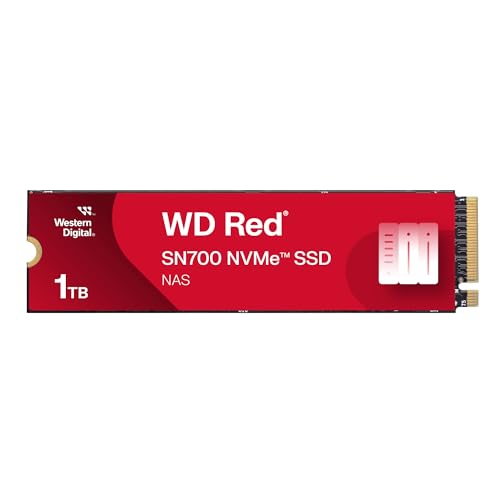
- Best NAS NVMe overall: WD Red SN700 NVMe SSD for NAS 1TB (WDS100T1R0C) — Check on Amazon
- WD Red SA500 NAS SATA SSD 1TB (WDS100T1R0A) — Check on Amazon
- Seagate FireCuda 530 SSD with Heatsink 1TB (ZP1000GM3A023) — Check on Amazon
- Samsung 870 EVO SATA III SSD 1TB (MZ-77E1T0B/AM) — Check on Amazon
See 2 more Amazon options
- Crucial MX500 1TB 3D NAND SATA 2.5-inch SSD (CT1000MX500SSD1) — Check on Amazon
- Seagate IronWolf 510 NAS NVMe SSD — listed without a link in this guide; see its review below for why
Read the full guide ↓
Disclosure: As an Amazon Associate, ilcastellomenu.com earns from qualifying purchases. Links to Amazon on this page are affiliate links; they cost you nothing extra. Listing details such as price and availability change often, so check the current Amazon listing before you buy.
The best ssds for nas are judged by a standard that would baffle a desktop buyer: not how fast a drive goes once, but how it behaves on day four hundred, at 3 a.m., under four users, in a warm cupboard, without ever being switched off. NAS storage is a 24/7 endurance discipline, and this guide ranks drives accordingly — purpose-built NAS SSDs with always-on ratings and NAS-tuned firmware first, then the desktop drives whose records justify a place in lighter NAS duty, each labelled with the role it can honestly fill. Every linked pick is a verified listing with corroborated specifications.
Two NAS SSD jobs exist, and confusing them is the classic purchase error. The first is the cache or tier job: NVMe drives (where the NAS has M.2 slots) absorbing the hot data — thumbnails, databases, virtual machines, the files everyone touches — so the hard-drive volume feels fast. The second is the all-flash volume job: SATA or NVMe drives holding whole datasets that must be instant and silent. A drive can be excellent at one job and a poor buy for the other, and endurance requirements differ wildly between a read-mostly cache and a write-heavy shared volume. The reviews below assign each pick its job in plain language.
A final piece of calibration: your network is the speed limit. A gigabit link moves about a tenth of what even a SATA SSD can serve; a 2.5-gigabit link, about a quarter. Gen4 sequential figures are therefore meaningless in most NAS contexts — which is why this guide’s top picks are Gen3 and SATA drives with NAS ratings, and why paying for desktop flagship speed in a NAS is the one spend this category reliably wastes.
In this guide
Quick Picks
Short on time, or comparing several options at once? Each row below names a buyer type and the drive that suits it, with a link to the listing where one is verified.
| Buyer type | Pick | Why it stands out | Link |
|---|---|---|---|
| Best NAS NVMe overall | WD Red SN700 NVMe SSD for NAS 1TB (WDS100T1R0C) | Purpose-built Gen3 NAS drive: 24/7 rating, NAS firmware, up to 3,430/3,000 MB/s | Check on Amazon |
| Best NAS SATA drive | WD Red SA500 NAS SATA SSD 1TB (WDS100T1R0A) | The Red line in 2.5-inch form: 24/7 NAS rating at full SATA speed | Check on Amazon |
| Best for write-heavy cache and VM duty | Seagate FireCuda 530 SSD with Heatsink 1TB (ZP1000GM3A023) | 1,275 TBW endurance behind flagship speed — the cache drive that shrugs off churn | Check on Amazon |
| Best desktop-drive alternative for light NAS duty | Samsung 870 EVO SATA III SSD 1TB (MZ-77E1T0B/AM) | The most proven SATA SSD made, for home NAS roles where its record speaks for itself | Check on Amazon |
| Best value SATA for a home NAS | Crucial MX500 1TB 3D NAND SATA 2.5-inch SSD (CT1000MX500SSD1) | Full SATA speed and a long record at the value tier, for budget all-flash builds | Check on Amazon |
| The Seagate-ecosystem NAS NVMe — listed without a link | Seagate IronWolf 510 NAS NVMe SSD | IronWolf health integration on supported NAS systems; the Red rival | See the full review below |
How These Picks Were Chosen
NAS judging weighted, in order: an explicit NAS or 24/7 rating, endurance positioning for always-on duty, health-reporting behaviour a NAS operating system can read, and only then speed — capped in relevance by the network links real NAS boxes use. Desktop drives were admitted only where their records suit light-duty NAS roles, and are labelled as such.
We did not use these drives ourselves. We read manufacturer specification pages and listing records, cross-checked the numbers that matter — interface, form factor, sequential figures, endurance ratings where published, and cooling arrangements — and favoured drives whose makers publish full specifications over those that hide behind marketing words. Every ASIN in this guide was verified against a live listing record during research, and every specification printed in the reviews traces to a manufacturer or retailer source recorded in the article’s source notes. Where a maker’s headline stretches a definition — a USB mode a host cannot use, a speed a console cannot spend — the review says so in plain language and judges the drive on its architecture instead.
The 6 Best SSDs for NAS
WD Red SN700 NVMe SSD for NAS 1TB (WDS100T1R0C)
Who it suits: Best NAS NVMe overall — purpose-built Gen3 NAS drive: 24/7 rating, NAS firmware, up to 3,430/3,000 MB/s.
The SN700 is what happens when a maker designs an NVMe drive for a NAS instead of adapting a desktop drive: a Gen3 x4 M.2 stick rated up to 3,430 MB/s reads and 3,000 MB/s writes, with firmware, endurance and thermal behaviour specified for always-on, multi-user NAS workloads — cache duty, virtualisation, collaborative editing — rather than benchmark bursts. Western Digital tests and lists it for compatibility with popular NAS systems, which matters in a category where a desktop drive can behave badly with a NAS vendor’s drive-health monitoring.
Gen3 speed is the deliberate trade. A NAS cache or volume tier behind a gigabit or even 2.5-gigabit network never sees Gen4 sequential numbers, so WD spent the budget on endurance and 24/7 manners instead — the things that actually kill drives in a NAS. In a desktop the SN700 would be a strange buy; in the Synology, QNAP and similar bays it was built for, it is the correct, boring, professional answer, and boring is the highest praise NAS hardware earns.
The SN700 is the correct default for a NAS M.2 slot: designed for the job rather than adapted to it, with firmware, endurance and thermal behaviour specified for always-on cache and volume duty, and compatibility testing against the popular NAS systems whose health dashboards will monitor it. Its Gen3 speeds are not a compromise in context — they exceed what the network can deliver several times over — and WD spent the difference on the things that matter in a cupboard that never sleeps. If your NAS has M.2 slots and you are buying once, this is the buy.
- Purpose-built for NAS: 24/7 rating, NAS-tuned firmware and endurance.
- Up to 3,430/3,000 MB/s — far beyond what NAS network links can feed.
- Vendor compatibility testing with popular NAS systems.
Honest limitation: Gen3 interface and NAS tuning make it poor value as a desktop or gaming drive — buy it for a NAS bay, not a PC slot.
Choose it if your NAS has M.2 slots and you want the purpose-built drive for cache or an all-flash tier. Skip it if you are shopping for a desktop — this drive’s NAS tuning and Gen3 interface make it poor desktop value.
WD Red SA500 NAS SATA SSD 1TB (WDS100T1R0A)
Who it suits: Best NAS SATA drive — the Red line in 2.5-inch form: 24/7 NAS rating at full SATA speed.
The SA500 is the SATA half of WD’s Red NAS SSD line: a 2.5-inch, 7mm SATA III drive rated up to 560 MB/s, built and warranted for always-on NAS duty rather than desktop use. Most NAS boxes on desks today still take 2.5-inch SATA drives in their bays, and this is the drive WD intends for them — as an all-flash volume for the files a household or small office touches constantly, or as the responsive tier in a mixed NAS, with endurance and firmware chosen for a drive that never sleeps.
Against a desktop SATA drive like the 870 EVO or MX500, the SA500’s difference is intent, not interface speed — all three saturate SATA. The Red’s case is its 24/7 NAS validation and its manners under a NAS operating system: health reporting the NAS understands, and behaviour tuned for multi-user access patterns. For a desktop or a PS4, the desktop drives are the better-value buy; for a NAS bay that will run for years, the purpose-built drive earns its tier.
Most NAS bays in the world are 2.5-inch SATA bays, and the SA500 is WD’s drive built precisely for them: an always-on NAS rating, Red-line firmware behaviour, and full SATA speed for an all-flash volume or a responsive tier in a mixed box. Against desktop SATA drives it asks a premium for intent — NAS validation and health manners — and in a drive that will run for years under a NAS operating system, that intent is the product. For a small all-flash NAS, a pair or a shelf of these is the professional answer.
- Purpose-built NAS SATA drive with 24/7 rating.
- Up to 560 MB/s — full SATA speed in the standard 2.5-inch/7mm fit.
- Red-line firmware and health behaviour tuned for NAS systems.
Honest limitation: NAS intent means a price premium over desktop SATA drives that perform identically in a PC or console.
Choose it if you are building an all-flash SATA NAS volume or tier and want NAS-rated drives in the bays. Skip it if the bay is in a desktop or a console — desktop SATA drives do that job for less, as their reviews state.
Seagate FireCuda 530 SSD with Heatsink 1TB (ZP1000GM3A023)
Who it suits: Best for write-heavy cache and VM duty — 1,275 TBW endurance behind flagship speed — the cache drive that shrugs off churn.
The FireCuda 530 is the endurance specialist of the Gen4 flagships. Its headline speed — up to 7,300 MB/s — matches the class, but its 1,275 TBW endurance rating at 1TB is roughly double what most consumer flagships publish, and Seagate backs it with a 1.8-million-hour MTBF figure and included Rescue data-recovery services. The heatsink on this version is a low-profile aluminium design developed with EKWB, the water-cooling company, and Seagate sells this exact configuration as a PS5 internal SSD that meets the console’s performance and dimension requirements.
That combination — flagship speed, workstation-grade endurance, a console-ready heatsink — makes the FireCuda 530 the pick that keeps appearing across this category’s hardest briefs: PS5 expansion that will be written to for years, plotting and cache work that eats ordinary drives, and editing machines that record for hours. The trade-offs are equally clear: it is a premium drive, its heatsink is fixed (measure a desktop slot before assuming clearance), and its write figures, while strong, are not the story — the endurance rating is.
Some NAS workloads are secretly write workloads: virtual machines, Docker fleets, download staging, databases and multi-user editing all hammer a cache or volume with writes that age ordinary drives. The FireCuda 530’s 1,275 TBW rating — double the consumer norm — is the specification for that life, and where a NAS exposes an M.2 slot to that kind of duty, this is the drive that will not be the annual replacement. Its heatsink assumes the NAS’s M.2 area can accommodate it, which most desktop-class NAS boxes can; check the slot before ordering.
- 1,275 TBW endurance at 1TB — about double typical consumer flagships.
- EKWB-designed low-profile heatsink, sold as PS5-ready by Seagate.
- Rescue data-recovery services included alongside the warranty.
Honest limitation: Premium pricing for endurance many light users will never touch — a games-only library may never approach its TBW rating.
Choose it if your NAS runs VMs, containers or write-heavy services and eats ordinary drives. Skip it if your NAS duty is read-mostly media and file serving — the SN700’s NAS tuning serves it better for less.
Samsung 870 EVO SATA III SSD 1TB (MZ-77E1T0B/AM)
Who it suits: Best desktop-drive alternative for light NAS duty — the most proven SATA SSD made, for home NAS roles where its record speaks for itself.
The 870 EVO is the best SATA SSD ever made, and it is not close. Samsung’s V-NAND and its own controller extract up to 560 MB/s reads and 530 MB/s writes — the practical ceiling of the SATA III interface — with the consistency, DRAM-equipped responsiveness and firmware maturity that made the EVO line the default upgrade for a decade of PCs, laptops and consoles with 2.5-inch bays. If a machine takes a 2.5-inch SATA drive, this is the drive against which every alternative is measured.
That role defines its modern shortlist: the internal swap for a PS4, the resurrection of an older laptop or desktop, the reliable SATA tier in a NAS, and the known-quantity drive for a USB enclosure build. SATA’s ceiling is the honest limitation — roughly a tenth of a flagship NVMe drive’s sequential speed — but in the machines that take this form factor, the comparison is against a spinning hard drive, and against that baseline the 870 EVO is transformative: silent, shock-proof, and fast enough that the rest of the old machine becomes the bottleneck.
Plenty of home NAS boxes run desktop SATA drives happily for years, and if one is going to, it should be this one: the 870 EVO’s consistency, DRAM manners and enormous installed base make it the least experimental desktop drive in existence. The honest label matters — it carries no NAS rating, and a business NAS under warranty scrutiny should run Red-line drives — but for a home media-and-files NAS, its record is a rational bet, especially when its listing dips below the SA500’s.
- SATA-ceiling speeds: up to 560/530 MB/s with DRAM-equipped consistency.
- The most proven 2.5-inch SSD line in the business.
- Fits any 2.5-inch bay — laptops, PS4, older desktops, enclosures.
Honest limitation: SATA interface caps sequential speed far below NVMe — only buy it for a machine or bay that actually uses SATA.
Choose it if yours is a home NAS with light duty and you value the 870 EVO’s record and listing. Skip it if the NAS is business-critical or warranty-sensitive — buy the NAS-rated SA500 instead.
Crucial MX500 1TB 3D NAND SATA 2.5-inch SSD (CT1000MX500SSD1)
Who it suits: Best value SATA for a home NAS — full SATA speed and a long record at the value tier, for budget all-flash builds.
The MX500 has been the value answer in SATA for years: up to 560 MB/s reads from a DRAM-equipped 3D NAND design that matches the interface’s ceiling and undercuts the 870 EVO’s usual pricing tier. Crucial builds in the ownership details that matter at this level — power-loss protection for data in flight, hardware encryption support, and the Acronis cloning software that makes a laptop or console drive swap a guided afternoon rather than a research project.
In practice the MX500 and the 870 EVO deliver the same experience to the machines that take them; the choice between them is about the day’s listings and your brand history, not about a performance gap you could feel. As a PS4 internal drive, an older-laptop resurrection, a NAS SATA tier or an enclosure build, it does the complete job with no asterisk — the asterisk belongs only to SATA itself, whose ceiling every drive in this form factor shares.
The MX500 is how a budget all-flash home NAS happens: several bays of full-speed SATA storage at the friendliest tier in this guide, with a design record that stretches back years. It shares the 870 EVO’s honest label — a desktop drive, not a NAS-rated one — and for a home box serving media, backups and family files, that is a reasonable economy openly made. Buy matched capacities, keep the NAS’s own backups honest, and the value story holds for years.
- Up to 560 MB/s — the full SATA experience at a value tier.
- DRAM-equipped design with power-loss protection.
- Acronis cloning software included for easy drive swaps.
Honest limitation: SATA ceiling applies, as with every 2.5-inch drive; Samsung’s rival is the more premium name if listings are ever equal.
Choose it if you are filling multiple bays on a budget for a home NAS and accept a desktop drive’s label. Skip it if you want NAS-rated endurance and firmware in the bays — the SA500 is the step up.
Seagate IronWolf 510 NAS NVMe SSD
Who it suits: The Seagate-ecosystem NAS NVMe — listed without a link — ironWolf health integration on supported NAS systems; the Red rival.
Seagate’s IronWolf 510 is the other purpose-built NAS NVMe line: a Gen3 M.2 drive specified for NAS cache and volume duty, with endurance positioning aimed at always-on multi-user work and Seagate’s IronWolf Health Management integration on supported NAS systems. On a Seagate-friendly NAS — or a Synology whose health dashboard speaks IronWolf — that integration is its distinguishing feature.
We keep it prose-only because we could not pin its US Amazon ASIN to this batch’s verification standard during research. As a buying proposition it stands or falls with the SN700 comparison: same Gen3 NAS brief, different health-management ecosystem. Choose by the NAS on your shelf and the listing in front of you, not by sequential figures neither drive’s network can use.
The IronWolf 510 is Seagate’s answer to the SN700 — a NAS-rated Gen3 NVMe line whose distinguishing feature is IronWolf Health Management on NAS systems that support it, giving the NAS unusually detailed sight of the drive’s condition. It is presented without a link because this pass could not pin its US Amazon ASIN to the batch standard; the drive itself is a legitimate NAS product. Seagate-ecosystem households, or a NAS whose dashboard speaks IronWolf, have a real reason to seek its listing out.
- Purpose-built NAS NVMe with health-management integration on supported systems.
- Endurance positioning for 24/7 cache duty.
- The Seagate-ecosystem alternative to WD Red.
Honest limitation: Listed prose-only here — no verified US Amazon ASIN pinned in this pass.
Choose it if your NAS supports IronWolf Health Management or your storage shelf is Seagate throughout. Skip it if you want to order from this page’s verified listings — the SN700 covers the same brief, linked above.
Comparison Table
| Product | Type | Key specifications | Link |
|---|---|---|---|
| WD Red SN700 NVMe SSD for NAS 1TB (WDS100T1R0C) | Internal NVMe, PCIe Gen3 x4, M.2 2280, NAS-rated | PCIe Gen3 x4 · M.2 2280 · up to 3,430 MB/s read · up to 3,000 MB/s write · 1TB · NAS-rated 24/7 design | Check on Amazon |
| WD Red SA500 NAS SATA SSD 1TB (WDS100T1R0A) | Internal SATA III, 2.5-inch 7mm, NAS-rated | SATA III 6 Gb/s · 2.5-inch/7mm · up to 560 MB/s read · 1TB · NAS-rated 24/7 design | Check on Amazon |
| Seagate FireCuda 530 SSD with Heatsink 1TB (ZP1000GM3A023) | Internal NVMe, PCIe Gen4 x4 NVMe 1.4, M.2 2280, factory heatsink | PCIe Gen4 x4 NVMe 1.4 · M.2 2280 · EKWB-designed heatsink · up to 7,300 MB/s · 3D TLC NAND · 1,275 TBW · 1.8M hours MTBF · Rescue services | Check on Amazon |
| Samsung 870 EVO SATA III SSD 1TB (MZ-77E1T0B/AM) | Internal SATA III, 2.5-inch 7mm | SATA III 6 Gb/s · 2.5-inch · up to 560 MB/s read · up to 530 MB/s write · 1TB | Check on Amazon |
| Crucial MX500 1TB 3D NAND SATA 2.5-inch SSD (CT1000MX500SSD1) | Internal SATA, 2.5-inch 7mm | SATA 6 Gb/s · 2.5-inch · up to 560 MB/s read · 3D NAND · 1TB | Check on Amazon |
| Seagate IronWolf 510 NAS NVMe SSD | Internal NVMe, PCIe Gen3, M.2 2280, NAS-rated — prose-only | PCIe Gen3 · M.2 2280 · NAS-rated endurance positioning | — |
Speed figures in this table are the drives’ own classes, printed for completeness — your network, not any row here, sets the speed your household experiences. The decision columns are type and intent: NAS-rated versus desktop drives, NVMe versus SATA bays, and the endurance positioning each full review states for its pick’s assigned job.
Cache, Tier or Volume: Placing SSDs Inside a NAS
A NAS gives an SSD three possible jobs, and the job description decides the drive. A read cache accelerates whatever the household touches most — it is read-mostly, forgiving of modest endurance, and the easiest win in NAS ownership. A write cache or a synchronised tier is the opposite: every write lands there first, endurance is consumed daily, and this is where underspecified drives go to die — the FireCuda 530’s rating exists for this desk. An all-flash volume is the third job: whole datasets living on SSDs for silence and instant response, where capacity cost dominates and SATA drives like the SA500 make the arithmetic work. Before buying anything, name the job in those words; half the NAS storage disappointments on earth are a read-cache drive purchased for a write-cache life.
Sizing follows the job. A cache should cover the working set — the files and blocks in daily rotation — not the whole archive; oversizing a cache buys nothing the network can deliver. An all-flash volume should be sized like any volume: the data, its growth, and headroom, in a RAID arrangement chosen for the failure you are actually protecting against. And keep the oldest NAS truth in view while shopping: RAID is not a backup. The SSD tier that makes a NAS feel miraculous does not replace the external copy that makes its data survivable — a point the buying guidance below repeats because the cupboard forgets it.
Why NAS Drives Are Rated Differently
A desktop drive’s life is bursty and mostly asleep; a NAS drive’s life is continuous and frequently multi-user. Makers therefore rate NAS lines on the axes that life stresses: endurance under constant small writes, behaviour when the drive is one of several in a RAID being rebuilt, thermal manners in a chassis with modest airflow, and health telemetry the NAS operating system can surface before a failure rather than after. Firmware differs too — NAS-tuned drives are built to report errors and recover in ways that keep a RAID controller calm, where a desktop drive pausing to retry a read can get itself evicted from an array it was perfectly capable of serving.
None of this makes desktop drives unusable in a home NAS — the two desktop picks in this guide are here because their records justify light duty — but it explains the Red and IronWolf premiums, and where they are worth paying: business data, write-heavy services, warranty-sensitive deployments, and any NAS whose failure would be an event rather than an anecdote. Match the rating to the consequence, and the category becomes simple. The wider storage picture — including the desktop context these drives are borrowed from — is covered in Best Ssds For Pc, and high-endurance thinking overlaps with Best Ssds For Chia Mining, the other write-heavy brief in this series.
All-Flash NAS: When It Is Worth It and When It Is Theatre
An all-flash NAS is a genuinely different appliance from a hard-drive NAS with a cache: silent, instant under every interaction, immune to the vibration and seek behaviour of spinning disks, and dramatically more expensive per terabyte. The households and studios it suits are recognisable — media is edited directly from the NAS, virtual machines live on it, the box sits in a room where people sleep or record, or the workload is thousands of small files whose enemy was never bandwidth but latency. For those users the premium is not theatre; it is the product, and SATA flash like the SA500 tier is how the arithmetic is made survivable.
For the more common household — media served to a television, files and backups, a photo library browsed at human pace — the honest architecture is the hybrid: hard drives for the archive’s bulk, an SSD tier or cache for everything the household actually touches, and the savings spent on the backup that protects both. The theatre is buying all-flash for a workload that cannot tell, while the backup goes unfunded. A NAS is a system, and its storage tiers should be funded in the order the household feels them: responsiveness first, capacity second, and protection — always — before either is declared finished.
Monitoring, Spares and the Long Game
A NAS is the only storage most households own that is expected to run for a decade, and SSDs inside one reward a decade owner’s habits. The first habit is reading the health telemetry the NAS-rated drives report: endurance consumed, temperature, and the NAS’s own drive-health verdicts, glanced at monthly, turn failures from surprises into appointments. The second habit is the shelf spare: for an array whose drives were bought together and age together, a matched spare bought with them is cheap insurance against the week a replacement listing has moved on. The third is firmware — NAS and drive alike — taken deliberately, read about before applied, and never all at once in a hurry.
None of this is the romance of the category, and all of it is the category. The drives in this guide were chosen for how they behave under exactly this stewardship: rated for the hours, fluent in the telemetry, consistent inside arrays. A NAS equipped and tended that way fades into the house’s infrastructure — which, for a box whose job is to hold a family’s digital life, is the highest available praise.
The First Month With SSDs in the NAS
A NAS storage upgrade announces itself in a sequence owners learn to recognise. The first day is indexing: the NAS, given fast storage, re-thumbnails photo libraries, re-indexes media and generally does the housekeeping it had been postponing, and the box may feel busy rather than fast. The first week is the interface: the NAS’s own applications, its photo and music front ends, and any containers it runs begin responding at the speed the drives always promised, and the household starts using the NAS for things it had quietly stopped asking of it. The first month is the verdict: the box disappears. Files open, backups complete inside their windows, the media server simply serves — and the upgrade’s success is measured by how completely it leaves your attention.
Two calibrations protect that happy arc. The first is thermal: a NAS cupboard that suited hard drives may run SSDs hotter under cache duty than expected, and the health dashboard — checked in week one, not year two — is where that story appears first. The second is expectation about transfers: the network still governs bulk movement, so the household that judges the upgrade by a single giant file copy will under-rate it, while the household that lives in the photo library and the applications will over-deliver testimonials. Judge a NAS upgrade by the month, not the stopwatch, and the drives in this guide were chosen to win exactly that judgement.
Power, Noise and the Household Bill
An all-SSD tier changes a NAS’s household physics in ways owners notice before they notice speed. Spinning drives are the NAS’s metronome — a low, constant presence in a quiet room — and a flash tier that absorbs the household’s daily touching lets the hard drives sleep more, click less and draw less, while the box’s most-used services answer instantly. In a studio flat or a home office, that silence is not a luxury feature; it is the difference between a NAS that lives where the people are and one exiled to a cupboard with worse airflow and longer cables.
The power story runs the same direction at household scale: SSDs sip where hard drives gulp, and a NAS is a 24/7 load, so the arithmetic compounds across years. None of this justifies flash for the cold archive — capacity economics still rule there — but it completes the case for the hybrid architecture this guide recommends: flash where the household touches, disks where it merely stores, and a meter that can tell the difference.
The first month has one more milestone worth expecting: the first time the NAS does something heavy — a full backup window, a library rescan, a container update storm — and nobody in the house notices. That non-event is the upgrade’s true deliverable. Hard-drive NAS boxes announce their work; a well-tiered flash-assisted one absorbs it. When the box under the stairs becomes as unremarkable as the router beside it, the storage has been bought correctly, and the drives in this guide were chosen to disappear in exactly that way.
A word, finally, about buying drives for a NAS in pairs and sets rather than singles, because the array changes the shopping unit. Drives bought together age together, report together and — when one eventually retires — leave behind siblings whose health figures tell you the whole cohort’s story. Staggering purchases across years scrambles that story and guarantees that every replacement is a research project. For a NAS, the set is the product: same model, same capacity, same day, plus the shelf spare that turns a future failure into a ten-minute swap. It is the least exciting sentence in this guide and possibly the most valuable one.
Buy the set, then, and let the array be the unit of thought from the first order onwards: matched drives, a matched spare, telemetry watched as a cohort, and replacements that are swaps rather than research projects. A NAS maintained at that standard does not merely store the household’s life; it demonstrates, year after year, that the life was worth storing carefully.
How to Choose Best SSDs for NAS
NAS storage is bought for years of unattended duty, so the checks are about ratings and roles rather than speed. In order:
- Name the job before the drive. Read cache, write cache/tier, or all-flash volume — the three jobs want different endurance, and the wrong match is the classic NAS storage failure.
- Buy the NAS rating when the data matters. Red and IronWolf lines cost more for firmware, endurance and telemetry a NAS can use. For business or irreplaceable data, that is the product.
- Ignore sequential speed past your network. Gigabit and 2.5-gigabit links cap what any drive can deliver to users. Spend on endurance and capacity, not Gen4 headlines.
- Check M.2 slot specifics on your NAS model. Slot count, supported lengths, whether slots are cache-only or volume-capable, and heatsink clearance — all are model-specific and all are in the manual.
- Match drives within an array. Same model, same capacity, bought together where possible. Mixed arrays inherit the smallest drive’s capacity and the strangest drive’s behaviour.
- Size a cache to the working set. Cover what the household touches daily. A cache sized to the archive is money parked where the network cannot spend it.
- Plan the backup the SSD does not provide. RAID survives a drive failure, not a deletion, a fire or a ransomware afternoon. The NAS still needs its own backup, SSD tier or not.
- Watch the health dashboard you paid for. NAS-rated drives report richly; check the NAS’s drive-health view monthly and let the telemetry earn its premium.
Common Mistakes
- Putting a desktop flagship in a NAS for its speed, which the network cannot deliver, while ignoring endurance.
- Using a read-cache-class drive as a write cache for VMs and containers.
- Mixing drive models and capacities inside one array and losing capacity to the smallest member.
- Assuming an M.2 slot in a NAS accepts any length or a tall heatsink — clearances are model-specific.
- Treating RAID as a backup and letting the SSD tier create false confidence.
- Filling an all-flash volume completely; SSDs and file systems both want headroom.
- Ignoring the NAS maker’s compatibility list, then meeting a drive the firmware handles badly.
- Buying one huge drive instead of an array arrangement matched to the failure you fear.
Final Recommendation
- Best NAS NVMe overall: WD Red SN700 NVMe SSD for NAS 1TB (WDS100T1R0C).
- Best NAS SATA drive: WD Red SA500 NAS SATA SSD 1TB (WDS100T1R0A).
- Best for write-heavy cache and VM duty: Seagate FireCuda 530 SSD with Heatsink 1TB (ZP1000GM3A023).
- Best desktop-drive alternative for light NAS duty: Samsung 870 EVO SATA III SSD 1TB (MZ-77E1T0B/AM).
- Best value SATA for a home NAS: Crucial MX500 1TB 3D NAND SATA 2.5-inch SSD (CT1000MX500SSD1).
- The Seagate-ecosystem NAS NVMe — listed without a link: Seagate IronWolf 510 NAS NVMe SSD.
Our top two here are the WD Red SN700 NVMe SSD for NAS 1TB (WDS100T1R0C), for the buyer this article was written for, and the WD Red SA500 NAS SATA SSD 1TB (WDS100T1R0A), for the household whose priorities run the other way. Between them they cover the two shapes this search usually takes: the complete answer bought once, and the value answer that leaves budget for everything else. Readers weighing a neighbouring question should also see Best Ssds For Pc. Name the job, respect the 24/7 rating, and let the network — not a benchmark — tell you how much speed to buy; a NAS equipped that way simply stops being a thing you think about, which is the entire point of one.
Frequently Asked Questions
Do I need special NAS-rated SSDs, or will desktop drives work?
Desktop drives work in many home NAS boxes, and this guide includes two with records that justify light duty. NAS-rated drives add firmware tuned for RAID behaviour, endurance specified for 24/7 multi-user work, and health telemetry the NAS can read. The more the data matters and the heavier the write load, the stronger the case for the rated drives.
Should my NAS SSD be NVMe or SATA?
Whichever your NAS actually supports for the job you have named. M.2 NVMe slots suit cache and fast tiers; 2.5-inch SATA bays suit all-flash volumes at sensible cost. Behind a gigabit or 2.5-gigabit network, neither interface’s ceiling is reachable by users — choose by slots, endurance and price.
How much endurance does a NAS cache drive need?
A read-mostly cache is gentle; almost any drive here survives it. A write cache, VM volume or container tier is the demanding case — that is where a high TBW rating like the FireCuda 530’s, or a NAS-rated drive’s specified endurance, stops being a luxury and becomes the purchase.
Can SSDs replace all the hard drives in my NAS?
Yes, and the result — silent, instant, shock-proof — is delightful, at a capacity cost several times higher per terabyte. Most households land on the hybrid: SSDs for the hot tier and system responsiveness, hard drives for the bulk archive, and a real backup over everything.
Will an SSD make my NAS faster over Wi-Fi?
It will make the NAS itself faster — indexing, thumbnails, app response, VM behaviour — but Wi-Fi and network links cap file-transfer speeds regardless of the drive. Expect a NAS that feels responsive everywhere and transfers at your network’s limit, not beyond it.
What RAID should an all-flash NAS volume use?
The one matched to your fear: mirroring for simple two-bay safety, parity arrangements for larger arrays where capacity efficiency matters. Whichever you choose, keep the discipline that RAID is availability, not backup — keep an external or off-site copy of what you cannot lose.
How long do SSDs last in a NAS?
In read-mostly and cache duty, years — the NAS-rated drives here are specified for continuous operation, and their health telemetry reports endurance consumed so replacement becomes a scheduled decision. Write-heavy tiers consume drives faster by design, which is why matching the drive’s endurance to the job, as this guide does, is the whole game.


