Where to buy
Check the latest price, availability and delivery on Amazon. Orders are placed on Amazon. We may earn a commission from qualifying purchases.
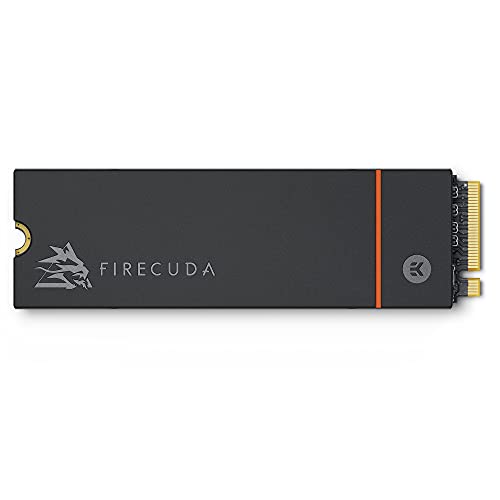
- Best consumer plotting drive: Seagate FireCuda 530 SSD with Heatsink 1TB (ZP1000GM3A023) — Check on Amazon
- Samsung 990 PRO with Heatsink SSD 1TB (MZ-V9P1T0CW) — Check on Amazon
- WD_BLACK SN850X NVMe SSD 1TB (WDS100T2X0E) — Check on Amazon
- Kingston KC3000 PCIe 4.0 NVMe M.2 SSD 1024GB (SKC3000S/1024G) — Check on Amazon
See 2 more Amazon options
- Sabrent Rocket 4 Plus NVMe SSD — listed without a link in this guide; see its review below for why
- Enterprise U.2 NVMe drives (data-centre class, via adapter) — listed without a link in this guide; see its review below for why
Read the full guide ↓
Disclosure: As an Amazon Associate, ilcastellomenu.com earns from qualifying purchases. Links to Amazon on this page are affiliate links; they cost you nothing extra. Listing details such as price and availability change often, so check the current Amazon listing before you buy.
The best ssds for chia mining are chosen by one specification that consumer marketing buries and this guide leads with: endurance, measured in terabytes written. Chia plotting — creating the proof-of-space files the network farms — is a temporary-file workload that writes relentlessly: each plot cycle churns through far more data than the finished plot occupies, and a plotting rig running around the clock consumes drive endurance the way a miner consumes electricity. Drives that are heroes everywhere else in this category die young here, and this guide says so in plain language, ranks the survivors by their published endurance, and tells you where the consumer category honestly ends.
The essential distinction is plotting versus farming. Farming — storing finished plots and answering network challenges — is gentle, read-mostly work that hard drives do superbly and cheaply; no SSD belongs in that job at SSD prices. Plotting is the SSD job: a temporary directory where plots are born, written and rewritten, before the finished files retire to farming hard drives. Every pick below is judged as plotting storage only, against the two numbers that decide its life: its rated TBW at the capacity you are buying, and how its sustained writes behave across days of continuous plotting rather than minutes of benchmarking.
Honesty about the field is this guide’s service. Only two picks carry endurance figures we verified during research to the standard this batch requires — the FireCuda 530’s exceptional 1,275 TBW and the 990 PRO’s 600 TBW at 1TB — and the rest are presented with their endurance explicitly marked as a figure to confirm on the exact listing and capacity, because TBW varies by capacity within the same drive family and a wrong assumption here is measured in dead drives. Where consumer drives stop being the answer, the guide says that too, and names the enterprise road.
In this guide
Quick Picks
Short on time, or comparing several options at once? Each row below names a buyer type and the drive that suits it, with a link to the listing where one is verified.
| Buyer type | Pick | Why it stands out | Link |
|---|---|---|---|
| Best consumer plotting drive | Seagate FireCuda 530 SSD with Heatsink 1TB (ZP1000GM3A023) | Verified 1,275 TBW at 1TB — roughly double the consumer flagship norm — with an EKWB heatsink | Check on Amazon |
| Best verified alternative | Samsung 990 PRO with Heatsink SSD 1TB (MZ-V9P1T0CW) | Verified 600 TBW at 1TB with flagship sustained behaviour and Samsung’s tooling | Check on Amazon |
| Strong flagship — confirm TBW for your capacity | WD_BLACK SN850X NVMe SSD 1TB (WDS100T2X0E) | Flagship sustained behaviour; check the exact capacity’s rated endurance on the listing before plotting | Check on Amazon |
| Value flagship — confirm TBW for your capacity | Kingston KC3000 PCIe 4.0 NVMe M.2 SSD 1024GB (SKC3000S/1024G) | Up to 7,000 MB/s-class performance at value listings; endurance to be confirmed per capacity | Check on Amazon |
| Enthusiast favourite — listed without a link | Sabrent Rocket 4 Plus NVMe SSD | A plotting-community fixture; compare its per-capacity endurance on the listing you find | See the full review below |
| The honest endgame for heavy plotting | Enterprise U.2 NVMe drives (data-centre class, via adapter) | Data-centre U.2 drives: endurance in a different league, via adapter, through enterprise channels | See the full review below |
How These Picks Were Chosen
Chia judging used one primary axis — published endurance (TBW) at the exact capacity — and one secondary: sustained-write behaviour under continuous load, since plotting never lets a drive rest or cool. Headline sequential speed was treated as nearly irrelevant beyond a competent floor. Drives whose endurance we could not verify in this pass carry that label in their reviews rather than an invented figure.
We did not use these drives ourselves. We read manufacturer specification pages and listing records, cross-checked the numbers that matter — interface, form factor, sequential figures, endurance ratings where published, and cooling arrangements — and favoured drives whose makers publish full specifications over those that hide behind marketing words. Every ASIN in this guide was verified against a live listing record during research, and every specification printed in the reviews traces to a manufacturer or retailer source recorded in the article’s source notes. Where a maker’s headline stretches a definition — a USB mode a host cannot use, a speed a console cannot spend — the review says so in plain language and judges the drive on its architecture instead.
The 6 Best SSDs for Chia Mining
Seagate FireCuda 530 SSD with Heatsink 1TB (ZP1000GM3A023)
Who it suits: Best consumer plotting drive — verified 1,275 TBW at 1TB — roughly double the consumer flagship norm — with an EKWB heatsink.
The FireCuda 530 is the endurance specialist of the Gen4 flagships. Its headline speed — up to 7,300 MB/s — matches the class, but its 1,275 TBW endurance rating at 1TB is roughly double what most consumer flagships publish, and Seagate backs it with a 1.8-million-hour MTBF figure and included Rescue data-recovery services. The heatsink on this version is a low-profile aluminium design developed with EKWB, the water-cooling company, and Seagate sells this exact configuration as a PS5 internal SSD that meets the console’s performance and dimension requirements.
That combination — flagship speed, workstation-grade endurance, a console-ready heatsink — makes the FireCuda 530 the pick that keeps appearing across this category’s hardest briefs: PS5 expansion that will be written to for years, plotting and cache work that eats ordinary drives, and editing machines that record for hours. The trade-offs are equally clear: it is a premium drive, its heatsink is fixed (measure a desktop slot before assuming clearance), and its write figures, while strong, are not the story — the endurance rating is.
The FireCuda 530 is the consumer plotting answer because its endurance is not a rumour: 1,275 TBW at the 1TB size, verified against its listing record, alongside a 1.8-million-hour MTBF and a heatsink designed for sustained work. Plotting is precisely the workload that figure describes — continuous writes, no idle recovery, heat as a constant — and Seagate’s drive is specified for it in a way no other consumer pick in this guide matches. If you are plotting on consumer hardware, this is the drive whose datasheet respects your workload.
- 1,275 TBW endurance at 1TB — about double typical consumer flagships.
- EKWB-designed low-profile heatsink, sold as PS5-ready by Seagate.
- Rescue data-recovery services included alongside the warranty.
Honest limitation: Premium pricing for endurance many light users will never touch — a games-only library may never approach its TBW rating.
Choose it if you plot seriously on consumer gear and want the highest verified endurance in the class. Skip it if you only farm finished plots — that is hard-drive work, and any SSD is wasted money there.
Samsung 990 PRO with Heatsink SSD 1TB (MZ-V9P1T0CW)
Who it suits: Best verified alternative — verified 600 TBW at 1TB with flagship sustained behaviour and Samsung’s tooling.
Samsung’s 990 PRO is the fastest Gen4 drive in this guide on paper — up to 7,450 MB/s sequential reads and 6,900 MB/s writes, figures Samsung itself notes sit close to the practical ceiling of the PCIe 4.0 interface — and this heatsink version is the one built for consoles and tight slots, with an integrated heatsink the listing describes as designed for PlayStation 5 expansion. Under the speed sits Samsung’s own controller and V-NAND, a 600 TBW endurance rating at this 1TB size, and a five-year warranty, which together make it the specification-sheet answer for buyers who want the flagship and intend to keep it.
What the 990 PRO adds over cheaper Gen4 drives is consistency under mixed work: game installs, capture recording, big project files and everyday booting all draw on the same strengths, and Samsung Magician remains the most polished drive-management software in the consumer market for firmware, health and cloning. The heatsink version’s cooler is slim enough for the PS5 bay and for laptops and small-form-factor PCs that accept a low-profile drive, though — as with any fixed-heatsink drive — a desktop motherboard with its own tall M.2 armour may prefer the bare version of a drive instead.
The 990 PRO brings a verified 600 TBW at 1TB — the standard flagship rating — with Samsung’s controller consistency and the best health-monitoring software in the consumer market, which matters when your management task is watching endurance burn and planning replacements before they fail. Its heatsink version suits plotting rigs whose boards lack cooling. Judged as a plotting drive it is exactly half a FireCuda by the verified numbers, and priced to be judged that way: a fine drive, bought with the replacement calendar in view.
- Fastest verified figures here: up to 7,450 MB/s read, 6,900 MB/s write.
- Factory heatsink designed for PS5 expansion and tight slots.
- 600 TBW endurance rating and Samsung Magician software support.
Honest limitation: Flagship positioning means it rarely wins on value against the SN850X or KC3000 — you pay for the last few percent and the Samsung ecosystem.
Choose it if you are already in Samsung’s ecosystem and accept the standard flagship endurance with eyes open. Skip it if endurance per purchase is your whole metric — the FireCuda above doubles it in this guide’s verified figures.
WD_BLACK SN850X NVMe SSD 1TB (WDS100T2X0E)
Who it suits: Strong flagship — confirm TBW for your capacity — flagship sustained behaviour; check the exact capacity’s rated endurance on the listing before plotting.
The SN850X is Western Digital’s flagship Gen4 gaming drive, and the numbers explain the reputation: sequential reads up to 7,300 MB/s and writes up to 6,300 MB/s on a PCIe Gen4 x4 interface, in the standard M.2 2280 size that fits essentially every modern motherboard, laptop bay and console slot. It is the drive WD builds specifically for gaming loads, with firmware and a Game Mode aimed at keeping load behaviour consistent rather than chasing a single benchmark burst, and it has become the default recommendation in this class because it pairs that headline speed with a long, well-documented service record.
In daily use the SN850X’s strengths are the unglamorous ones. It sustains its performance through long installs and big file copies better than most DRAM-less rivals, its controller keeps temperatures manageable under a motherboard heatsink, and WD’s Dashboard software handles firmware updates and health checks in plain language. This bare version ships without a heatsink, which is exactly right for a PC build where the motherboard provides one — and exactly wrong for a bare-slot install, where the heatsink version below is the correct buy. Capacities run well beyond the 1TB size linked here, so the same drive scales from a boot drive to a full game library.
The SN850X earns its place on sustained behaviour — plotting is a mixed, endless write load, and this drive’s consistency under that load is flagship class — but this guide will not print an endurance figure for it that this research pass did not verify. The rule for this pick, and the two below, is the rule for the whole category: read the TBW for the exact capacity on the listing or the maker’s datasheet before purchase, divide your plotting rate into it, and you have the drive’s service life in that job. Bought that way, the SN850X is a rational plotting drive; bought on headline speed alone, it is a gamble.
- Near-ceiling Gen4 speeds: up to 7,300 MB/s reads and 6,300 MB/s writes.
- Consistent, gaming-tuned behaviour through long installs and copies.
- Standard M.2 2280 fit with mature WD Dashboard software support.
Honest limitation: This bare version has no heatsink — slots that require one (a PS5, a bare motherboard slot) need the heatsink version or a separate cooler.
Choose it if you will verify the exact capacity’s TBW and do the service-life arithmetic before ordering. Skip it if you want the endurance figure settled by the guide — the two picks above carry verified numbers.
Kingston KC3000 PCIe 4.0 NVMe M.2 SSD 1024GB (SKC3000S/1024G)
Who it suits: Value flagship — confirm TBW for your capacity — up to 7,000 MB/s-class performance at value listings; endurance to be confirmed per capacity.
Kingston’s KC3000 is the quiet achiever of the Gen4 flagships: up to 7,000 MB/s sequential reads from a drive that routinely undercuts the two big gaming brands while giving up very little in real-world behaviour. It uses a high-performance controller and TLC NAND in a standard M.2 2280 stick, with a low-profile graphene-aluminium heat spreader label rather than a full heatsink — enough for a ventilated desktop slot under a motherboard cover, not a substitute for a real heatsink where one is required.
For PC builders the KC3000’s appeal is balance. Boot times, game loads and large copies all land within a whisker of the class leaders, Kingston’s SSD Manager handles firmware and health, and the drive’s power behaviour suits laptops and small builds as well as desktops. What it does not do is pretend to console duty out of the box: a PS5 install needs a proper third-party heatsink fitted within Sony’s size limits, and buyers who want that job done at the factory should take the heatsink flagships in this guide instead.
The KC3000 is the value route into flagship-class plotting behaviour: strong sustained performance at listings that leave budget for the farming hard drives that are the actual farm. The same discipline applies — its endurance at the capacity you choose must come from Kingston’s datasheet or the listing, not from this guide, because this pass verified its speed and model but not a TBW figure to print. Plotters who do that homework get a genuinely capable temporary drive for the money; the homework is not optional in this category.
- Up to 7,000 MB/s reads at a typically sharper price than the flagship pair.
- TLC NAND and a proven high-performance controller design.
- Slim heat-spreader label fits tight laptop and small-form-factor slots.
Honest limitation: No true heatsink — a PS5 or a hot, coverless slot needs a separate cooler bought and fitted by you.
Choose it if you are building a plotting rig to a budget and will confirm endurance from the maker’s datasheet. Skip it if you want verified endurance without homework — the FireCuda’s figure is printed and sourced above.
Sabrent Rocket 4 Plus NVMe SSD
Who it suits: Enthusiast favourite — listed without a link — a plotting-community fixture; compare its per-capacity endurance on the listing you find.
Sabrent’s Rocket 4 Plus is the enthusiast-channel Gen4 flagship: a TLC drive with a high-performance controller that has been a fixture of plotting, editing and high-end build lists since the Gen4 era began, sold in bare and heatsink forms and in large capacities. Its following comes from sustained-performance behaviour and the company’s presence in exactly the forums where write-heavy users compare notes.
We list it prose-only because this research pass did not pin its US Amazon ASIN to the batch standard. Shortlist it beside the KC3000 and FireCuda 530, compare the exact capacity’s published endurance figure on the listing in front of you, and let that number — not the sequential headline — settle write-heavy decisions.
The Rocket 4 Plus has been a plotting-community fixture since the Gen4 era began, which is why it appears — without a link, because this pass did not pin its US Amazon ASIN to the batch standard. Its community reputation rests on sustained behaviour and large capacities. Judge any listing you find by this category’s one rule: the published TBW at that capacity, divided by your plotting rate, is the purchase. Reputation is a reason to shortlist a drive in this guide, never a substitute for the arithmetic.
- Enthusiast-proven Gen4 flagship with strong sustained behaviour.
- Bare and heatsink forms, large capacities.
- A plotting and editing community fixture.
Honest limitation: Listed prose-only here — no verified US Amazon ASIN pinned in this pass.
Choose it if you already shop Sabrent’s channels and will judge the exact listing by its endurance figure. Skip it if you want to order from verified listings on this page — the FireCuda and 990 PRO carry the verified numbers.
Enterprise U.2 NVMe drives (data-centre class, via adapter)
Who it suits: The honest endgame for heavy plotting — data-centre U.2 drives: endurance in a different league, via adapter, through enterprise channels.
The honest endgame for truly write-heavy work is not a consumer drive at all: data-centre U.2 NVMe drives are built with endurance ratings that dwarf consumer TBW figures, power-loss protection as standard, and firmware written for sustained writes at full speed indefinitely. Fitted via a U.2-to-PCIe adapter card, they are how serious plotting and cache rigs stopped eating consumer drives — usually bought through enterprise channels rather than consumer listings.
We list the class prose-only: models, capacities and listings rotate through enterprise resellers, and no single consumer listing defines it. The buying rules are to purchase from a reputable enterprise seller, confirm the drive’s rated endurance and remaining life where the seller discloses it, and budget the adapter into the build. For a hobbyist this is overkill; for anyone who has worn out a consumer drive, it is the exit door.
Every heavy plotter eventually meets the arithmetic that ends the consumer era: at full-time plotting rates, even the best consumer TBW is a countdown measured in months. Enterprise U.2 NVMe drives exist in a different endurance league, with power-loss protection and sustained-write firmware as standard, and fitted via an adapter card they are how serious rigs stop consuming consumer drives. This is a class listing, not a product — bought from enterprise sellers, judged by rated endurance and disclosed remaining life — and for a hobbyist it is overkill. For anyone who has already worn out one consumer drive, it is the exit door, named honestly.
- Endurance class far beyond consumer TBW ratings.
- Power-loss protection and sustained-write firmware as standard.
- The permanent fix for rigs that keep wearing out consumer drives.
Honest limitation: Prose-only class listing — enterprise channels, adapter required, and no single consumer listing to check.
Choose it if you plot at a scale that has already consumed a consumer drive, or the arithmetic says it will. Skip it if your plotting is occasional — a FireCuda-class consumer drive outlasts a hobbyist’s patience by years.
Comparison Table
| Product | Type | Key specifications | Link |
|---|---|---|---|
| Seagate FireCuda 530 SSD with Heatsink 1TB (ZP1000GM3A023) | Internal NVMe, PCIe Gen4 x4 NVMe 1.4, M.2 2280, factory heatsink | PCIe Gen4 x4 NVMe 1.4 · M.2 2280 · EKWB-designed heatsink · up to 7,300 MB/s · 3D TLC NAND · 1,275 TBW · 1.8M hours MTBF · Rescue services | Check on Amazon |
| Samsung 990 PRO with Heatsink SSD 1TB (MZ-V9P1T0CW) | Internal NVMe, PCIe Gen4 x4, M.2 2280, factory heatsink | PCIe Gen4 x4 · M.2 2280 · factory heatsink · up to 7,450 MB/s read · up to 6,900 MB/s write · 1TB · 600 TBW · 5-year warranty | Check on Amazon |
| WD_BLACK SN850X NVMe SSD 1TB (WDS100T2X0E) | Internal NVMe, PCIe Gen4 x4, M.2 2280, no heatsink | PCIe Gen4 x4 · M.2 2280 · up to 7,300 MB/s read · up to 6,300 MB/s write · 1TB | Check on Amazon |
| Kingston KC3000 PCIe 4.0 NVMe M.2 SSD 1024GB (SKC3000S/1024G) | Internal NVMe, PCIe Gen4 x4, M.2 2280, no heatsink | PCIe Gen4 x4 · M.2 2280 · up to 7,000 MB/s read · 1024GB (1TB class) | Check on Amazon |
| Sabrent Rocket 4 Plus NVMe SSD | Internal NVMe, PCIe Gen4, M.2 2280 — prose-only | PCIe Gen4 · M.2 2280 · flagship-class Gen4 positioning | — |
| Enterprise U.2 NVMe drives (data-centre class, via adapter) | Enterprise NVMe, U.2 form factor — prose-only | U.2 NVMe · data-centre endurance class · requires U.2-to-PCIe or M.2 adapter | — |
This table’s most important column is the one it cannot fully print: endurance. Where a TBW figure was verified in this research — the FireCuda 530 and the 990 PRO — it appears in the specifications and the review. Where it was not, the review says so and sends you to the exact listing’s datasheet, because in this category an unverified endurance figure is worse than none.
Plotting Versus Farming: The Only Distinction That Matters
Chia’s storage story confuses newcomers because one network uses storage in two opposite ways. Farming is the steady state: finished plot files sit on drives, are read lightly when the network challenges them, and earn their keep by existing. That job wants capacity per money above all, runs happily on the largest hard drives you can power, and gains nothing from an SSD — every dollar of SSD in a farming role is a dollar spent on speed the protocol cannot use. Plotting is the factory floor: temporary files are created, sorted and rewritten in a continuous churn whose total writes dwarf the size of the finished plot, and that churn happens on the fastest, most enduring scratch storage you own before the plot retires to the farm.
Every purchasing error in this category is a confusion of those two jobs: SSDs bought to farm (wasted), hard drives bought to plot (glacial), and — the expensive one — consumer SSDs bought to plot without reading their endurance, then replaced on a schedule their owners never budgeted. This guide exists to prevent the third error. The workflow truth is simple: plot on endurance, farm on capacity, and let the finished plots flow from the first pool to the second. The endurance mindset transfers, incidentally, to any write-heavy cache work — the NAS guide in this series, Best Ssds For Nas, applies the same thinking in a friendlier setting.
The TBW Arithmetic Every Plotter Must Do
Terabytes written is a drive’s lifetime write budget, printed by the maker for each capacity — and the same family often carries very different budgets at different sizes, which is why this guide refuses to generalise figures it did not verify per model. The arithmetic is elementary and non-negotiable: estimate the terabytes your plotting writes per day (your plotter’s settings and plot size determine it, and plotting software reports it), divide the drive’s rated TBW by that daily figure, and the result is the drive’s expected service life in days of plotting. If the answer embarrasses the purchase price, the drive is the wrong drive at any speed.
Worked honestly with this guide’s verified figures, the shape of the category appears: the FireCuda 530’s 1,275 TBW at 1TB is roughly two flagship lifetimes in one purchase, which is why it leads; the 990 PRO’s 600 TBW is the standard flagship budget, respectable and finite. Beyond those verified numbers, treat every listing’s endurance claim as a datasheet question, use the maker’s health software to watch the percentage consumed, and plan replacements as scheduled maintenance rather than surprises. Plotting is an industrial process conducted at home; the operators who thrive at it keep industrial books.
Rig Design Around a Consumable Drive
A plotting rig is a small factory whose main consumable is its scratch drive, and designing around that fact — rather than discovering it — separates profitable farms from educational ones. The rig’s other components should be sized to feed the drive without worshipping it: enough CPU and memory that the plotter is rarely starved, enough cooling that the drive’s sustained pace is available in August, and a layout where the scratch drive is the easiest component in the machine to replace, because replacing it is scheduled maintenance, not an emergency. Finished plots should flow off the rig to farming hard drives on a rhythm, so the expensive fast tier never warehouses what cheap tiers hold better.
The operational habits follow from the same factory logic. Log the drive’s health percentage with the farm’s other numbers. Keep the replacement drive’s purchase in the budget before the current one is spent, not after. And when a scratch drive reaches the end of its rated life, retire it to gentle duty or retire it entirely with the respect due a component that did exactly the work it was rated for — the failure is never the drive’s; it belongs to any plan that asked a consumable to be permanent.
The Economics: Endurance as a Line Item
Chia farming’s spreadsheet has a storage line that newcomers consistently misprice: they count the farming drives, which are nearly permanent, and forget the plotting drives, which are fuel. Priced honestly, a plotting drive’s cost is its purchase divided by the plots its endurance will produce — a figure that can be computed before buying, from the TBW arithmetic in this guide, and compared across every pick on this page. By that measure the cheapest drive per plot is frequently not the cheapest drive on the shelf: a budget drive with a small endurance budget can cost more per plot than the FireCuda-class drive whose rating doubles it, and the enterprise tier exists because at scale the division keeps pointing the same way.
None of this requires enthusiasm for any particular coin price or harvest forecast — it requires only that the farm’s books describe its own machinery truthfully. Endurance is a line item. Drives are consumables. The operators still farming when fashions change are the ones whose spreadsheets admitted both facts from the first plot.
Heat, Noise and Neighbours: Running a Rig at Home
A plotting rig is an industrial process that happens to live in a domestic building, and its externalities deserve one honest section. Continuous plotting is continuous heat: a rig that runs a flagship drive at full churn in a closed room is a small heater with opinions, and both the drive’s throttling behaviour and the household’s comfort depend on the same airflow decisions. Serious home plotters end up thinking like small data centres — intake, exhaust, a room chosen for its tolerance — not because the hardware demands drama, but because sustained work at any scale is a thermal arrangement before it is anything else. The heatsink picks in this guide are the beginning of that arrangement, not its completion.
Noise and power tell the same story at household scale. Fans that are inaudible during a gaming session become a presence across a month of nights, and a rig’s electricity is a real line in the farm’s books alongside the consumable drives. None of this argues against home plotting; it argues for entering it as the operators in this guide’s essays do — with the arithmetic done, the consumables budgeted, and the rig placed like the small factory it is. Farms that respect their own physics tend to still be running when the fashion tourists have sold their drives.
When to Stop: The Hobbyist’s Boundary
Not every plotting question is about scale; some are about the boundary where a hobby stays a hobby. A single rig, a high-endurance consumer drive, plots made for the pleasure of the system and a farm that grows at human pace — that arrangement can run for years inside the FireCuda-class envelope this guide leads with, and it needs no enterprise detour and no industrial anxieties. The boundary announces itself in the arithmetic: when replacement drives start arriving on a schedule, when the rig’s heat and noise start negotiating with the household, the operation has become a small business and deserves business tools and business books.
There is no shame in either side of that line — only in refusing to see it. The hobbyist who plots within a consumer drive’s honest envelope is doing the thing correctly. The operator who crosses into volume and buys enterprise endurance is also doing it correctly. The failures this guide exists to prevent live exactly on the line: volume workloads run on hobby equipment, judged by hobby arithmetic, mourned as surprises. Do the division, know which side you are on, and the category becomes — like every category in this series, in the end — a matter of matching the tool to the truth.
That boundary discipline has a domestic corollary worth stating before the guide closes: communicate it. A rig that heats a room, hums through the night and consumes a drive a season is a household appliance with stakeholders, and the farms that run happily for years are the ones whose terms were agreed like any other utility. The technology in this category is unforgiving of vagueness in every direction — in datasheets, in arithmetic, and in the conversation about where the rig lives. Be precise in all three, and Chia’s storage stops being a cautionary tale and becomes what it is for its successful operators: a system that runs, measurably, exactly as designed.
Precision, finally, is a form of respect — for the hardware, which will do exactly what its datasheet promised and nothing it did not; for the household sharing the building with the rig; and for the operator’s own future self, who inherits every assumption made at purchase time. The drives in this guide reward that precision unusually directly: their most important number is printed, verifiable and decisive. Read it, divide by it, and build accordingly.
How to Choose Best SSDs for Chia Mining
Chia storage shopping is arithmetic before it is shopping. These checks, in order, keep a plotting rig honest:
- Plot on SSDs, farm on hard drives. Never confuse the two jobs. SSD money buys plotting endurance; farming wants the cheapest capacious hard drives you can run.
- Do the TBW arithmetic before buying. Rated endurance at the exact capacity, divided by your daily plotting writes, equals service life. If the number embarrasses the price, walk away.
- Verify endurance per capacity, from the datasheet. TBW changes with size inside one family. The figure for the size you are buying is the only figure that exists for you.
- Cool a plotting drive like you mean it. Continuous writes are continuous heat. Heatsinks and airflow are not optional in a rig that never idles.
- Watch health telemetry weekly. Maker software reports endurance consumed. A plotting drive is a consumable with a gauge — read the gauge and schedule its replacement.
- Keep the plotting drive dedicated. A temporary directory that shares a drive with your system and games serves neither master. Dedicate the scratch drive to the churn.
- Budget replacements as operating cost. Serious plotting consumes drives by design. The economics of your farm should carry that line item openly, as it carries electricity.
- Graduate to enterprise when the arithmetic says so. If consumer TBW keeps losing to your plotting rate, U.2 enterprise drives are the honest next step, not a bigger pile of consumer ones.
Common Mistakes
- Buying a plotting drive by sequential speed and discovering endurance after the first death.
- Assuming a drive family’s TBW from a different capacity’s figure.
- Farming on SSDs — paying flash prices for a job hard drives do identically.
- Plotting on the system drive and wearing out the machine’s heart as a scratch disk.
- Running a plotting rig without heatsinks or airflow and throttling the churn you paid for.
- Ignoring health telemetry until the drive fails mid-plot with no replacement on the shelf.
- Buying QLC budget drives for plotting because the capacity price looked kind — endurance is the price that matters here.
- Treating a worn-out plotting drive as a defective product rather than a consumed one.
Final Recommendation
- Best consumer plotting drive: Seagate FireCuda 530 SSD with Heatsink 1TB (ZP1000GM3A023).
- Best verified alternative: Samsung 990 PRO with Heatsink SSD 1TB (MZ-V9P1T0CW).
- Strong flagship — confirm TBW for your capacity: WD_BLACK SN850X NVMe SSD 1TB (WDS100T2X0E).
- Value flagship — confirm TBW for your capacity: Kingston KC3000 PCIe 4.0 NVMe M.2 SSD 1024GB (SKC3000S/1024G).
- Enthusiast favourite — listed without a link: Sabrent Rocket 4 Plus NVMe SSD.
- The honest endgame for heavy plotting: Enterprise U.2 NVMe drives (data-centre class, via adapter).
Our top two here are the Seagate FireCuda 530 SSD with Heatsink 1TB (ZP1000GM3A023), for the buyer this article was written for, and the Samsung 990 PRO with Heatsink SSD 1TB (MZ-V9P1T0CW), for the household whose priorities run the other way. Between them they cover the two shapes this search usually takes: the complete answer bought once, and the value answer that leaves budget for everything else. Readers weighing a neighbouring question should also see Best Ssds For Nas. Plot on endurance, farm on capacity, and do the division before you do the buying — in this category, the datasheet’s least-read number is the only one that decides whether a drive was a purchase or a rental.
Frequently Asked Questions
Why does Chia plotting destroy ordinary SSDs?
Plotting writes relentlessly: creating each plot churns temporary data many times the finished file’s size, continuously, with no idle recovery. Consumer SSDs carry a finite rated write budget (TBW) sized for bursty everyday use. Plotting spends that budget at industrial rates, so a drive that would last a decade in a PC can be consumed in a season of full-time plotting.
What TBW should I look for in a plotting drive?
The highest verified figure your budget reaches, at the exact capacity you are buying. In this guide’s verified research, the FireCuda 530’s 1,275 TBW at 1TB leads the consumer field and the 990 PRO’s 600 TBW at 1TB is the standard flagship rating. Whatever you buy, divide its TBW by your daily plotting writes to get its service life before you pay.
Can I farm Chia plots on an SSD?
You can, and it is a waste: farming is light, read-mostly work that hard drives perform identically at a fraction of the cost per terabyte. SSDs earn their place only in the plotting temporary directory. Farm on capacious hard drives; plot on endurance.
Does a faster SSD make plotting proportionally faster?
Only up to the point where the plotter becomes limited by CPU and memory — plotting is a whole-system workload. Past a competent NVMe floor, endurance and sustained-write consistency matter far more than peak sequential figures, which is why this guide ranks TBW first and speed barely at all.
How do I know when my plotting drive is wearing out?
The maker’s software (Samsung Magician, WD Dashboard and their peers) reports drive health and the share of rated life consumed. Check it on a schedule, treat a high consumed percentage as a replacement appointment, and keep the next drive’s purchase in the farm’s operating budget rather than its emergency fund.
Are enterprise drives worth it for a home plotter?
At hobby rates, no — a high-TBW consumer drive outlasts the hobby. At sustained, high-volume plotting, the arithmetic flips: enterprise U.2 drives carry endurance in a different league and stop the replacement cycle. Let your daily write rate and the TBW division make the decision, not enthusiasm.
Can I plot on my PC’s main SSD to save money?
You can, and it spends your main drive’s endurance on scratch work — the drive your system, games and work live on becomes a consumable with a countdown. A dedicated plotting drive, sized and rated for the churn, is the arrangement this guide’s picks assume; borrowing the system drive’s life is the most expensive saving in the category.


