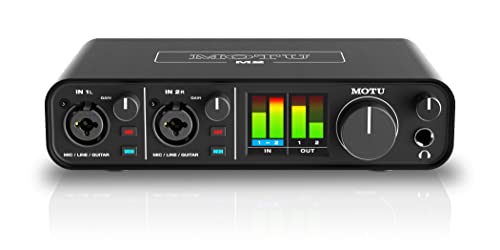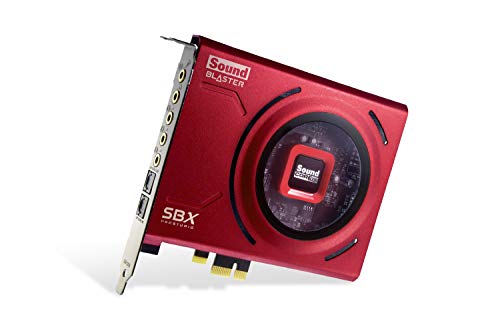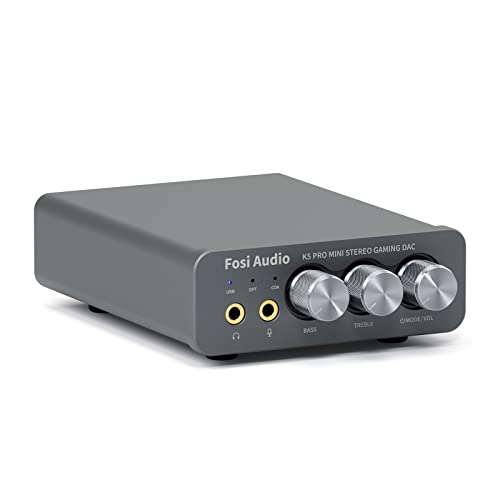
Sound card vs DAC is a comparison between two devices that overlap more than their fans admit. A DAC — digital-to-analogue converter — does one job: turn digital audio into an analogue signal, usually paired with a headphone amplifier. A sound card contains a DAC too, then adds inputs, surround processing, microphone paths, and software features around it. The question is never which converts ‘better’ in the abstract; it is whether you need the extras, or want a device that does less, superbly.
Short verdict: choose a DAC (or DAC-amp) for music-first listening, simplicity, and headphone-focused quality; choose a sound card for gaming features, microphones, surround, consoles, and streaming tools. Many setups eventually contain one of each at different desks. The criteria below separate the real differences from the tribal ones, and What does a Sound Card do explains the sound card’s full job description if you want the foundations first.
Disclosure: As an Amazon Associate, ilcastellomenu.com earns from qualifying purchases. Product details and availability can change; check the retailer listing before you buy.
Quick verdict: sound card vs DAC
A DAC-amp is a specialist: digital in, beautiful stereo out, a volume knob, and nothing else competing for the budget. A sound card is a generalist: the same conversion, plus an analogue-to-digital path for your microphone, multi-channel outputs, virtual surround, EQ and voice processing, and a software suite. Specialists win on focus; generalists win on coverage.
If your audio life is headphones plus music plus the occasional film, the specialist is tempting and often correct. If your audio life includes a microphone, a console, positional gaming audio, or speakers beyond stereo, the generalist earns its desk space. Most buyers know which life they lead; this comparison exists to stop them buying the other tribe’s device by accident.
In this guide
What each device actually does
Every digital listening chain needs conversion somewhere: phone, motherboard, sound card, and DAC all contain DAC chips. A standalone DAC’s claim is not uniqueness but dedication — a conversion and amplification stage designed for audio quality alone, fed by USB, optical, or coaxial from your computer, bypassing the motherboard’s compromised implementation. Optical input adds a bonus: complete electrical isolation from a noisy PC.
A sound card performs that same conversion and then keeps going: it digitises your microphone, mixes and processes game audio, synthesises virtual surround from multi-channel sources, and presents it all through a control suite. The recording path alone disqualifies a pure DAC for anyone who speaks into their computer — a DAC cannot hear you. That asymmetry settles many purchases by itself: no mic need, DAC possible; mic need, sound card (or an interface) required.
Hybrids blur the border deliberately: gaming DAC-amps like the external example in the gear section add microphone inputs, chat mixing, and surround processing until they are sound cards in all but name, while some sound cards market their DAC stage like hi-fi products. Judge devices by their actual input/output list, not their label.
Sound quality and amplification
For stereo music through headphones, a good DAC-amp and a good sound card both reach transparency — a level where the device adds nothing audible of its own — and differences shrink to amplifier character and power. The DAC world offers a deeper bench of high-end amplification for demanding headphones, plus features music listeners prize: balanced outputs, multiple digital inputs for several sources, and a big, precise volume knob as the entire interface.
Sound cards counter with processing that is quality of a different kind: virtual surround that genuinely improves game positioning, microphone EQ that improves every call, and game/chat mixing that changes daily convenience. Calling those ‘not sound quality’ is a category error made by people who only listen to music; for a gamer, positional accuracy is sound quality.
The amplifier match still governs both: either device must be rated for your headphones’ impedance and sensitivity, per the matching logic in How to Choose a Sound Card. A transparent DAC that cannot drive your headphones loses to a sound card that can, every time, on every recording.
Features: gaming, streaming, and surround
This is the sound card’s home turf. Virtual surround from multi-channel game audio, scout-style processing, voice clarity tools, streaming mixes, console compatibility, and programmable profiles are sound-card features; pure DACs offer none of them. If you play competitively or create content, this section may end the comparison — the device must do the job, and the job is features.
Surround speakers widen the gap further: sound cards provide discrete multi-channel analogue outputs and the configuration tools in How to Set Up a Sound Card; stereo DACs serve two channels beautifully and stop there. Home-theatre and multi-speaker users are sound-card (or AV receiver) customers by architecture.
The DAC’s feature list is shorter and proud of it: input switching between your sources, sometimes a remote, occasionally a display. For a desk where a PC, a console (via optical), and a streamer all feed one pair of headphones, that input switching is the feature — and a sound card tied to one PC cannot replicate it.
Simplicity, drivers, and daily life
DACs are famously low-maintenance: most are class-compliant, needing no driver, working identically on any OS, and surviving computer changes untouched. Their entire daily interface is a knob. For users burned by audio software before, that austerity is the product.
Sound cards ask more: drivers, control suites, updates, and settings that reward the configuration pass in the setup guide and punish neglect with defaults that waste the hardware. In exchange you get profiles, processing, and integration. Whether that trade delights or exhausts you is a personality question with no wrong answer — but answer it honestly, because an unconfigured sound card is a DAC with extra steps and worse ergonomics.
Portability splits the difference by size rather than kind: dongle DACs travel in a pocket; desktop DAC-amps and external sound cards both live on desks; internal sound cards live in one PC forever. Match the device’s mobility to your machines using the same logic as Internal vs External Sound Card.
Cost and upgrade paths
At entry level, sound cards deliver more functions per purchase; at the enthusiast level, DAC-amps deliver more specialised headphone performance. The upgrade paths differ philosophically: DAC owners upgrade in separates (a better amp later, keeping the DAC), while sound-card owners replace a single integrated unit. Separates reward hobbyists who enjoy the ladder; integration rewards everyone else.
Beware doubling: a sound card feeding a DAC-amp, or two processing layers stacked, usually buys complexity rather than quality. Pick the device that owns the conversion for each listening chain and let it work alone. The music-focused shortlists in Best Sound Cards for Music and the production lists in Best Sound Cards for Music Production show how the two tribes’ recommendations diverge in practice.
Who should choose which
Choose a DAC-amp if you listen to music on headphones, want driver-free simplicity, run demanding headphones that reward serious amplification, or feed several digital sources into one listening station. Choose a sound card if you game with positional audio, use a microphone seriously, run surround speakers, stream, or play on consoles. Choose the hybrid gaming DAC-amp if your list honestly contains both columns — that product category exists because yours is a common list.
Either way, verify the purchase with how-to-test-a-sound-card, level-matched against what you own today. The best device is the one whose benefit survives that test on your headphones, in your room, with your content.
The separates path: DAC now, amplifier later
DAC ownership invites a modular future: begin with a combined DAC-amp, and if demanding headphones arrive later, add a dedicated amplifier fed from the DAC’s line output, keeping the conversion you already trust. That ladder — each rung a single, audible responsibility — is the hi-fi tradition applied to a desk, and it suits buyers who enjoy optimising a chain over years.
Sound cards deliberately refuse the ladder: the unit is the chain, replaced whole when outgrown. For buyers who find separates fiddly, that refusal is the feature. Neither philosophy is more ‘serious’; they serve different relationships with equipment — cultivation versus appliance — and recognising your own relationship is worth more than any single product decision in this comparison.
Whichever path you choose, buy the first step for the headphones you own today, not the ones a forum convinced you to want. Chains built for imaginary transducers disappoint with real ones, and the upgrade ladder only works when each rung was honest.
Phones, dongles, and the portable DAC world
The DAC family’s portable end deserves its own paragraph because it solves a problem sound cards cannot approach: phones and thin laptops with weak or absent headphone outputs. A dongle DAC restores a quality wired output in a pocket-sized form, and for commuters and travellers it is the entire comparison — sound cards do not fit in a jacket.
Desktop buyers sometimes overlook that their listening is split between desk and everywhere else, and buy a magnificent desk chain while their daily listening — the commute, the walk — runs on a tired phone jack. Auditing where your listening hours actually happen can redirect the budget to the portable end with more effect on your life than any desk upgrade.
The two are not rivals in that audit; they are line items for different hours. Own the comparison honestly per context — desk, console, pocket — and the tribal question dissolves into three easy ones.
Living with each: a month in two diaries
The DAC owner’s month is uneventful by design: turn knob, hear music, done — the device’s entire personality is reliability and one perfect gesture. The sound card owner’s month is richer and busier: profiles switched for game night, microphone compliments on calls, a surround film on Friday, and one evening spent happily re-EQing after new headphones arrived. Neither diary is better; they are different relationships with the same sense, and choosing between them is choosing which month you want to live.
Notice that the sound card diary’s pleasures are activities, while the DAC diary’s pleasure is absence — of friction, software, and thought. Buyers who know whether they are activity people or absence people, in their audio lives specifically, will find this comparison suddenly easy, because the specifications were never the hard part.
The console and multi-source desk, revisited
One desk increasingly hosts a PC, a console, and a work laptop, and the device that serves all three inherits the desk. External sound cards with console support claim two of the three; DACs with multiple digital inputs claim all three for listening while surrendering the microphone to another solution. Map your sources before choosing, because the winning device is the one your sources can all reach — a truth so plain it is embarrassing how many purchases discover it afterward.
If the map shows one PC and headphones, both devices remain tied and the earlier criteria decide. If the map shows a small United Nations of sources, the comparison was over before it began — buy the hub your desk describes.
First, a correction of vocabulary that changes the whole comparison
The comparison is usually framed as two rival products, and the framing misleads from the first step, because a sound card contains a DAC. Every sound card performs digital-to-analogue conversion as one of its jobs, alongside amplification, inputs, and processing. The standalone DAC is the specialist that does the conversion job alone, and does it as the centre of its design rather than as one department among several. So the real comparison is not card versus DAC as species; it is generalist versus specialist, integration versus separation — and that reframing predicts everything else in this guide, from features to upgrade paths to who should buy which.
The reframing also dissolves a common confusion at the budget end: the inexpensive USB ‘sound adapters’ and the inexpensive standalone DACs are frequently the same silicon in different clothing, differentiated by their outputs, their controls, and their honesty about what they are. Judge any specific product by its measured behaviour and its connections, not by which word its box chose. The vocabulary matters because buyers pay premiums for words; the products underneath them are circuits, and circuits can be compared.
Scenario head-to-head: the music-first listener
Give both devices the same listener, the same headphones, and an evening of music, and the specialist’s case makes itself in the details a generalist rarely prioritises: conversion implemented without compromise or neighbours, a choice of digital inputs that lets the same DAC serve the computer, a streamer, a disc player, and a television, and an upgrade path where the amplifier can change around it as headphones come and go. The listener who owns several sources and one beloved pair of headphones is the DAC’s natural citizen, and for that listener the sound card’s extra departments — inputs for microphones they do not use, processing for games they do not play — are not features but ballast.
The sound card’s answer at the same desk is integration and price of admission: one purchase, one driver, everything the computer makes audible handled in one place, including the call that interrupts the album. The music-first listener who also lives on calls, or whose sources are the computer and only the computer, may find the generalist’s completeness worth more than the specialist’s refinement — especially since, past a competence threshold, conversion differences shrink below what the rest of the chain can reveal. The scenario’s honest verdict: sources and headphones decide. Count yours before letting either device’s advocates decide for you.
Scenario head-to-head: the gamer who streams
At the streaming desk the comparison tilts hard, and it is worth seeing why in detail. The streamer’s chain has two directions: game audio out to the headphones, and voice audio in from the microphone, processed, mixed, and sent to an audience. A standalone DAC serves the first direction and is silent on the second. The sound card serves both, and adds the streamer’s working tools — monitoring, microphone processing, the ability to hear the game and oneself in one place. A streamer who chooses a DAC for the listening side must still solve the input side separately, which is entirely feasible — a USB microphone or a separate interface — but the setup is now two devices with two control philosophies, and the integration tax is paid at every session’s setup.
None of that makes the DAC wrong for streamers; many run exactly that separated chain and prize its quality. It makes the comparison a workflow question rather than a fidelity question. If your sessions begin with one device switched on and everything working, integration is your value. If your sessions are built like a small studio, with each device chosen for its job, separation is your value and the DAC is its natural listening component. Know which session is yours — or which you honestly aspire to run weekly, rather than in an imagined future — and the comparison follows.
The separates philosophy: what you are really buying into
A standalone DAC is rarely a single purchase; it is the first move in a separates system, and the system’s philosophy should be bought knowingly. Separates promise that each function can be chosen, upgraded, and replaced on its own schedule: the DAC survives three amplifiers, the amplifier survives two DACs, and a failure anywhere costs one component rather than the whole chain. They deliver that promise at the price of connections, desk space, multiple power supplies, and a system whose gain staging and compatibility are the owner’s responsibility — the chain has no manufacturer, only an assembler, and the assembler is you.
Integrated devices make the opposite promise: one accountable maker, one driver, one box, matched internal stages, and a ceiling set at the factory. For owners whose audio ambitions are a destination — a setup that is finished — integration’s ceiling is not a limitation but a definition of done. For owners whose ambitions are a direction — a chain that will evolve with their headphones and their ears — separates are the only honest architecture. This is why the comparison so often feels ideological in forums: it is, at bottom, two theories of ownership arguing past each other, and both theories are right for their owners. Identify your theory before your product, and the product argument settles itself.
Inputs, again: the asymmetry that decides more purchases than fidelity
It is worth isolating the input asymmetry and staring at it, because in practice it decides this comparison more often than any audible difference. A DAC, as a category, has no microphone input, no instrument input, no recording path at all. A sound card, as a category, has some or all of them. The buyer whose life includes being recorded — calls that matter, content, music-making, voice chat in games played socially — needs an input story, and ‘the DAC plus something else’ is a two-device answer to a one-device question. The buyer whose life is purely listening needs no input story, and for them the sound card’s input department is cost without benefit.
State your input need as a sentence before shopping: ‘I am recorded weekly and it matters how I sound’, or ‘I listen; nobody records me.’ The sentence sorts the catalogue more efficiently than any specification. Buyers in the first group who still want separates should compare the sound card not against a DAC but against a DAC plus an input device, priced and desk-spaced as a pair — the honest comparison, and the one that keeps this guide’s accounting clean.
Digital connections and the multi-source desk
The DAC’s quiet superpower is input pluralism. Optical, coaxial, and USB digital inputs let one conversion stage serve a whole desk or a whole room: the PC, the television, a game console, a disc transport, a streamer. The sound card, by contrast, is the computer’s device; its world begins and ends at the machine it serves. A buyer whose listening is genuinely multi-source is not choosing between two computer accessories but between a computer accessory and a household component, and the DAC wins that buyer’s comparison on architecture before fidelity is even mentioned.
Consoles deserve their specific note, because they route many buyers here: a console’s audio can reach a DAC through the television’s or the console’s own digital output where provided, while a PC sound card simply has no door through which console audio can enter its world, short of capture arrangements that belong to streaming setups. If your headphones serve a console as much as a PC, that door’s existence is a deciding fact, not a detail. Map your sources — every device whose sound you want in your best headphones — and let the map draw the shortlist. It is the same inventory discipline as the transducer list in the buying guide, applied to the other end of the chain.
What neither device fixes: the honest boundary of both
Both devices share a boundary that their marketing politely omits: neither repairs the ends of the chain. A DAC will not make poor headphones detailed, a sound card will not make a bad microphone placement clear, and neither will remove noise that lives in the source or rescue a room that ruins speakers. They are middle components, and middle components polish what the ends provide. The buyer whose dissatisfaction actually lives at an end — the headphone that strains, the microphone across the room, the speakers in a bare box of a room — will spend on the middle and keep the dissatisfaction, now reproduced more faithfully.
This is why the selection guidance on this site keeps ordering the audit as transducers first, sources and inputs second, the middle last. It is also why the testing guidance insists on known recordings and honest comparisons: they are how a buyer discovers whether the middle is truly their bottleneck before paying to upgrade it. When it genuinely is — when the ends are good and the middle is noisy, weak, or feature-poor — both devices in this comparison are legitimate, excellent answers, and the choice between them can finally be made on the grounds this guide has laid out: integration against separation, inputs against sources, destination against direction.
The verdict in five buyer portraits
- The listener with several sources and one good headphone: the DAC, as the household’s conversion stage, with amplification matched to the headphone now and later.
- The gamer who talks: the sound card, because the microphone’s story and the game’s story live in one box and one panel.
- The musician or podcaster: neither word quite fits — your device is the recording-capable card or interface, chosen input-first, and the DAC question returns only if your listening outgrows it.
- The single-PC listener who wants it finished: the sound card or a DAC-plus-amplifier chosen as a fixed pair — either way, buy completeness and stop shopping.
- The evolving enthusiast: the DAC, as the first separate in a chain you intend to grow, bought with the amplifier question already thought through.
Portraits are compressions, and your life may blend two — in which case blend the answers consciously, usually as a sound card for the working chain and a DAC admitted later when a named listening need earns it. What the portraits share is the method: sources, inputs, headphones, and a theory of ownership, in that order. Run the method and the comparison’s winner is simply whichever device your own facts keep pointing at — which is what a verdict in a well-argued comparison should be. Readers still forming their facts will find the full audit in the sound card selection guide, which builds the brief this comparison assumes.
The amplifier question hiding inside this comparison
Compare the two devices carelessly and you smuggle in a third: amplification. A sound card includes a headphone amplifier stage as a matter of course. A standalone DAC, as a matter of definition, does not — it outputs a line-level signal intended for an amplifier downstream, and connecting demanding headphones to it directly, where a headphone socket exists at all on a combo unit, is a different product category wearing the DAC’s name. So the honest comparisons are two: sound card against DAC-plus-amplifier as systems, priced and desk-spaced as systems; or, where a DAC unit genuinely includes a serious headphone stage, device against device with that stage’s quality in evidence.
This matters because amplifier matching is where headphone satisfaction is actually decided — the demanding headphone on an inadequate stage is the classic disappointment in this whole corner of audio — and a comparison that treats amplification as a footnote will produce buyers who own an exquisite conversion stage feeding headphones it cannot drive. Name your headphone’s needs first, as the selection guide insists, and then ask of each system, whole: can it drive them, with headroom, at my listening level? The system that answers yes within your budget has won the round that matters most, whatever its internal architecture.
Clocking, jitter, and the vocabulary of conversion anxiety
DAC discussions attract a technical vocabulary — clocking, jitter, filtering — that buyers meet with a mixture of reverence and dread, so here is the proportionate version. These terms describe real phenomena in conversion, and they were genuine design battlegrounds in earlier generations of digital audio. In current, competently designed equipment, they have receded to magnitudes that measurements can find and listening, in controlled conditions, generally cannot — which is why the modern DAC market competes increasingly on inputs, build, and features rather than on conversion heroics. A buyer does not need to adjudicate jitter. A buyer needs to know that a competently measuring modern DAC, from either side of this comparison, has effectively solved the problem the vocabulary describes.
The exception that keeps the vocabulary alive is the genuinely poor implementation — the noisy bus-powered unit, the afterthought output on a device whose real job is elsewhere — and measurements expose those efficiently. Use the measurement world as the selection guide prescribes: as a screen that removes the incompetent, after which this comparison’s real criteria — sources, inputs, amplification, ownership theory — take over. Anxiety is not a criterion, and any seller who cultivates it in you is telling you how they intend to be chosen.
Phones, dongles, and the portable end of the DAC world
The DAC’s most successful modern form is the smallest: the dongle and the portable unit that give a phone or laptop a proper headphone output. Their existence reframes this comparison for a growing class of buyers whose primary computer is a phone and whose sound card options are nil. For them, the DAC is not the specialist alternative to a card; it is the only upgrade the platform admits, and its competition is the wireless headphone rather than any card. Judge portables by their own criteria — power draw against the phone’s battery, cable strain relief, the controls’ absence or presence — rather than by desktop standards, and the category rewards you.
Portables also make a fine second device in a card owner’s life: the card serves the desk, the dongle serves everywhere else, and the headphones — the component that actually matters most — travel between them unchanged. It is the hybrid pattern from the internal-external comparison, one level up the chain, and it follows the same rule: the second device must be earned by a real second situation, not bought to complete a set.
Resale, longevity, and the standards that protect a DAC
A DAC’s longevity rests on a pleasant fact: its inputs are among the most stable standards in consumer electronics. A USB, optical, or coaxial input bought today will be fed by devices for decades, because digital audio connections change at a geological pace compared with the computers around them. A sound card’s longevity rests on its maker’s driver support, a human institution with a human lifespan. Neither fact is decisive alone — plenty of cards are supported admirably for years — but over a ten-year horizon the DAC’s standards-based survival is the safer bet, and over a three-year horizon the difference rarely matters. Match the bet to your horizon.
Resale follows longevity faithfully. A DAC with standard inputs sells into a wide, patient market of listeners. A card sells into the narrower market of builders whose machines and operating systems it still fits. Buyers who rotate equipment should price that difference in at purchase; buyers who keep equipment until it dies should ignore resale entirely and let longevity argue only through the support question. Either way, the analysis is the same one this guide applies everywhere: decide what kind of owner you are first, because the devices’ virtues are owner-relative all the way down.
A listening test that can actually separate them, if anything can
If you intend to compare a card and a DAC by ear, borrow the testing guide’s discipline or do not bother: level-match the two chains carefully, because the louder will win your favour regardless of merit; switch quickly on the same passages; use the recordings you know cold, including the difficult one; and write verdicts at the moment of switching, naming the quality you preferred rather than declaring a winner in the abstract. Then accept the outcome whatever it is — including the very possible outcome that, level-matched, in your chain, through your headphones, you cannot reliably tell them apart. That outcome is not a failed test. It is the test succeeding at its real job, which is to tell you how much of your budget the difference between these devices deserves: in that case, none, and the money is free to go to the ends of the chain where differences are large.
Owners who run this test honestly tend to become calm buyers for life, in this category above all, because they have replaced a literature of other people’s certainties with a measurement of their own. The comparison in these pages can rank features, architectures, and ownership theories. Only your level-matched afternoon can rank the sound, and it outranks this guide wherever the two disagree.
The verdict for the reader who came here with a cart already open
If you arrived mid-purchase, torn between two specific products, here is the comparison at decision length. Count your sources: more than the PC points to the DAC. Count your inputs: any microphone that matters points to the card. Name your headphone and its demands, and check which system — remembering the DAC needs its amplifier counted — drives it properly. Ask which ownership theory is yours: finished destination, or evolving chain. Four counts, and in the overwhelming majority of real cases the answers lean the same way, because real lives are coherent: the multi-source listener rarely needs the microphone, the talking gamer rarely owns three sources. Where the counts genuinely split, the tiebreaker is the future you can describe most concretely — the console arriving at Christmas, the podcast starting in spring — over the future you merely imagine. Buy for the described future, keep the receipt and the return window sacred, and let the first week’s honest listening ratify what your four counts decided.
The television and the living room: where the DAC quietly wins households
One desk this comparison has underweighted is not a desk at all: the living room, where a television, a console, and perhaps a disc player gather around the household’s best headphones or its speaker system. A DAC with an optical input belongs in that room in a way no PC card can — fed by the television, serving films and games and music from every source the room contains, controlled by a remote-adjacent simplicity that household members who never touch the PC can still use. Sound cards are citizens of a single computer; DACs can be citizens of a home. If your best listening increasingly happens in the shared room rather than at the personal desk, that citizenship may be the comparison’s deciding fact, and it is worth walking into the living room, counting its sources, and letting the room vote before the desk’s habits decide by default.
Two budgets of attention: the set-and-forget listener and the chain builder
Every comparison in this guide has quietly been about attention as much as money, so let the last one say it outright. The sound card asks for an afternoon: install, set defaults, done, with its maker’s choices accepted as a package. The separates path asks for a practice: choosing stages, matching gains, following components across years, enjoying the choosing. Neither ask is unreasonable, and both are ruinous when mismatched — the chain builder bored rigid by the sealed box, the set-and-forget listener buried under a system that needs its owner weekly. Your history answers the question reliably: look at your other equipment and ask whether you have tended to finish your setups or to keep developing them. Buy the device that matches the owner you have demonstrably been, not the one you enjoy imagining, and this comparison — like the internal-external one before it — resolves from a debate about products into a description of a person, which is where all durable purchases actually begin.
A glossary for the DAC side of the aisle
- Line level: the standard signal strength a DAC outputs, intended for an amplifier — the reason a DAC alone is not a headphone solution for demanding models.
- Balanced output: a connection scheme using paired signals to reject noise, valuable over long runs and in some headphone systems; a feature to buy for a reason, not for its aura.
- Filters: the digital filter choices some DACs expose, shaping the conversion’s edge behaviour; audible differences, where they exist at all, are among the smallest in audio — experiment freely, expect modestly.
- Asynchronous USB: the mode in which the DAC, rather than the computer, governs the data’s timing — the standard, correct way modern USB audio is done, and a phrase whose presence on a box is expected rather than impressive.
- Preamp mode: a variable output setting that lets a DAC drive powered speakers or a power amplifier directly — genuinely useful in speaker systems, and the one DAC feature speaker owners should actively seek.
With those five terms, the DAC aisle’s vocabulary is yours, and its remaining mysteries are the healthy kind: differences of design and taste that your own level-matched listening, run by the method this guide gave you, is fully equipped to judge.
One final scenario: the gift, the inheritance, and the borrowed chain
A last, practical test of the two ownership theories: imagine the device leaving your hands. A sound card given to a relative comes with its machine context attached — it wants a slot, a driver, a setup session — and it serves a recipient who has those things. A DAC given to the same relative needs only a source and something to amplify into; it can serve a television, a laptop, a phone, in households whose technical confidence varies wildly. Devices that travel well between owners tend to be the ones built on stable standards and simple jobs, and the DAC’s whole design philosophy leans that way. None of this should steer a purchase meant purely for yourself — but audio equipment has a way of becoming household infrastructure and then family property, and the device that can be inherited gracefully has a quiet advantage that specifications never list. Buy for yourself first, by all means. Just know which of the two you are actually buying, in that longer sense as well.
Keep your four counts — sources, inputs, headphone, ownership theory — written with the receipt. They are the shortest complete record of why the device on your desk is the one it is, and they will answer, years from now, the question every audio owner eventually asks their past self.
Gear mentioned in this guide
The products below are examples referenced in this guide. They were verified through the Amazon Creators API product pool for this site; use them as concrete reference points for the features discussed, not as a ranked list.
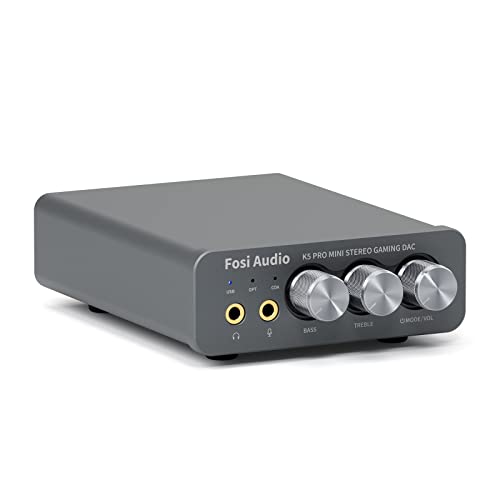
- Fosi Audio K5 Pro Gaming DAC Headphone Amp, HiFi Headphone Amplifier 1000mw — Check on Amazon
- Sound BlasterX G6 Hi-Res 130dB 32bit/384kHz Gaming DAC, External USB Sound Card with Xamp Headphone Amp, Dolby Digital, 7.1 Virtual Surround Sound, Sidetone/Speaker Control for PS4, Xbox One — Check on Amazon

Frequently asked questions
Is a DAC better than a sound card for music?
For pure stereo headphone listening, a DAC-amp dedicates its whole budget to that job and often offers stronger amplification options. A good sound card reaches the same transparency for most listeners; the DAC’s edge is specialisation, not magic.
Can I use a DAC for gaming?
Yes for listening — game audio plays beautifully through a DAC. What you give up is the sound card’s gaming layer: virtual surround processing, microphone input, and chat mixing. A separate mic solution plus a DAC is a valid gaming setup if you accept the split.
Does a DAC improve microphone quality?
No — a DAC is output-only and cannot record. If microphone quality matters, you need a sound card, an audio interface, or a USB microphone handling the input side of your setup.
Do I need both a DAC and a sound card?
Almost never in one chain. Stacking them adds cost and complexity without a quality mechanism. Some people own both for different desks or purposes, which is different from wiring them together.
What about USB dongle DACs for phones and laptops?
They are the portable end of the DAC family and a genuine upgrade over weak headphone jacks, especially for demanding earbuds and headphones. Desktop DAC-amps add power, inputs, and controls for stationary listening.
Which is better for movies?
Stereo headphone movie-watching suits either. Multi-channel speaker systems need a sound card or AV receiver for discrete outputs, and virtual-surround headphone processing for films is a sound-card feature.
Related Guides
Keep exploring with these guides and roundups from the same desk and audio cluster: