Disclosure: As an Amazon Associate, ilcastellomenu.com earns from qualifying purchases. Prices and availability change; check Amazon for the latest.
Where to buy
Shopping for the best internal sound cards for music? Check the latest price, availability and delivery on Amazon. Orders are placed on Amazon.
- Creative Sound BlasterX AE-5 Plus — specialist pick; check current options and pricing at reputable retailers.
- Creative Sound Blaster Z SE — Check on Amazon
- ASUS Xonar SE — Check on Amazon
- ASUS Xonar AE — specialist pick; check current options and pricing at reputable retailers.
- Creative Sound Blaster Audigy Fx V2 — Check on Amazon
- Fosi Audio K5 Pro — Check on Amazon
Read the full guide ↓
Finding the best internal sound cards for music means matching the hardware to one job: play music with a quiet background, honest imaging and enough power for real headphones and speakers. This guide is written for listeners whose PC is their main music system, and it ranks six options by how well they do that job in the real world — at a real desk, with real headphones, speakers and microphones — rather than by the length of their feature lists.
Internal cards keep a music PC self-contained: no desk box, no extra cables, and analogue outputs ready for powered speakers or an amplifier. The final pick is included honestly as the external alternative for readers whose case has no free slot — everything else here genuinely lives inside the PC, and the guide covers the GPU-noise reality of internal audio and how to minimise it.
Every pick below earns a distinct badge, carries honest trade-offs alongside its strengths, and is judged on verified specifications only. Where a product is discussed without an Amazon link, it is labelled prose-only and the reason is stated, because a shortlist you can trust is worth more than a longer one padded with guesses. If you are still deciding what a sound device can and cannot do for your setup, start with What Does A Sound Card Do and Sound Card Vs Onboard Audio before spending anything.
In this guide
Quick Picks
| Badge | Pick | Why it stands out | Link |
|---|---|---|---|
| Best Internal for Music | Creative Sound BlasterX AE-5 Plus | On paper it is the strongest internal playback card in this guide, with a SABRE32-class DAC and a 122 dB SNR rating aimed squarely at critical listeners. | Prose-only pick — see notes below |
| Best Internal All-Rounder | Creative Sound Blaster Z SE | ASIO support makes this one of the few gaming-bred internal cards that also behaves properly in a DAW, with low-latency monitoring for recording and production work. | Check on Amazon |
| Best Internal for 5.1 Music | ASUS Xonar SE | A true internal card keeps the desk completely clear and gives analogue 5.1 speaker systems a direct, tidy connection inside the PC. | Check on Amazon |
| Best Internal for 7.1 Music | ASUS Xonar AE | It is one of the few internal cards offering analogue 7.1, which suits desktop speaker systems that have outgrown 5.1 cards. | Prose-only pick — see notes below |
| Best Budget Internal for Music | Creative Sound Blaster Audigy Fx V2 | It is the sensible modern replacement for ageing onboard audio in a desktop: hi-res playback, discrete 5.1 for speakers and headset support in one slot. | Check on Amazon |
| Best External Alternative | Fosi Audio K5 Pro | Three digital inputs let one unit serve a PC, a console or TV over optical, and another source over coaxial, which is rare flexibility at its tier. | Check on Amazon |
How These Picks Were Chosen
The shortlist started from the wider market for this category and was cut by one test: does this product genuinely help someone play music with a quiet background, honest imaging and enough power for real headphones and speakers? Products that failed that test — however impressive their packaging — were rejected. Generic USB dongles with no meaningful advantage over onboard audio were rejected, as were discontinued internal cards whose drivers have been abandoned, and premium products whose price buys styling rather than capability relevant to this lens.
Surviving products were compared on the criteria that decide satisfaction for listeners whose PC is their main music system: the quality and honesty of their input and output stages, verified playback and recording specifications, driver and operating-system support, the physical controls a user touches daily, and how gracefully each device fits the desk it will live on. Specifications quoted in this guide come from manufacturer listings and reputable retailer specifications; where a figure could not be verified, it was left out rather than repeated from roundups. Readers comparing philosophies may also find Sound Card Vs Dac and Internal Vs External Sound Card useful before choosing a form factor.
Badges were assigned after the comparison, not before it: each badge names the buyer for whom that product is the correct answer, and the Final Recommendation restates those matches so you can buy by badge with confidence. Price was treated as tier framing only — this guide never prints a fixed price for a specific product, because prices change; use the Amazon links to see the current figure for any pick you are considering.
The 6 Best Internal Sound Cards For Music
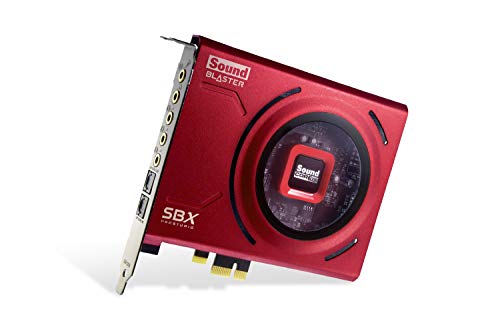
Creative Sound BlasterX AE-5 Plus (Best Internal for Music)
The Creative Sound BlasterX AE-5 Plus earns its badge — Best Internal for Music — because it approaches the job of helping you play music with a quiet background, honest imaging and enough power for real headphones and speakers with a clear sense of priorities. It is an internal pcie sound card (prose-only) from Creative, and in a category full of products trying to be everything at once, its focus is its strength: the features it has are the ones this lens actually rewards, implemented properly rather than listed hopefully.
In daily use, what owners of this class of device notice first is not a specification but an absence: the absence of hiss between tracks, of fumbling through menus for a control that should be a knob, of a microphone path that makes colleagues ask you to repeat yourself. That day-to-day polish is what separates a badge winner from a product that merely shares its headline numbers, and it is why this model sits in this position on the list rather than further down it. For readers still weighing the wider category, How To Choose A Sound Card walks through the same decision from first principles.
Strengths
- On paper it is the strongest internal playback card in this guide, with a SABRE32-class DAC and a 122 dB SNR rating aimed squarely at critical listeners.
- The Xamp bi-amp design drives each earcup separately, which suits high-impedance and planar headphones that ordinary cards leave sounding flat.
- Dolby Digital Live and DTS encoding let a PC feed a home-cinema receiver over optical with surround intact.
Trade-offs
- It is discussed prose-only here because a clean verified US listing was not confirmed in this pass; check availability carefully before planning a build around it.
- As an internal card it needs a desktop, a free PCIe slot and tolerance for RGB lighting inside the case.
- It remains a playback and gaming card; there is no studio microphone preamp for recording work.
- Form: internal PCIe gaming sound card and DAC
- DAC: SABRE32 ultra-class, up to 32-bit/384 kHz (manufacturer specification)
- Signal-to-noise ratio: up to 122 dB SNR (manufacturer specification)
- Headphone amp: Xamp discrete bi-amp, drives headphones up to 600 ohms
- Encoding: Dolby Digital Live and DTS encoding support
Consider how this pick behaves across a realistic week for listeners whose PC is their main music system. On the first day it has to install without drama and present itself correctly to the operating system and your main applications. By midweek it has to survive the unglamorous work — long sessions, device switching, a call dropped into the middle of focused listening — without clicks, dropouts or settings that wander. By the weekend it should have disappeared into the routine entirely, which is the highest compliment desktop audio can earn: you stop thinking about the sound device and start thinking about the sound.
It also has to coexist with the rest of a real setup. Desks accumulate hubs, chargers, monitors with their own audio ambitions and operating systems that love reassigning default devices after updates. A well-behaved device reappears where you left it, keeps its levels, and does not demand its companion software for basic dignity. Judged on that standard — competence sustained over months rather than fireworks on day one — the Creative Sound BlasterX AE-5 Plus justifies its badge, provided its trade-offs above genuinely do not touch your use case.
Best for: buyers who want internal for music and value the strengths listed above in everyday use / Not suited for: buyers whose needs match this pick’s trade-offs — a different badge winner in this guide will fit you better
Creative Sound Blaster Z SE (Best Internal All-Rounder)
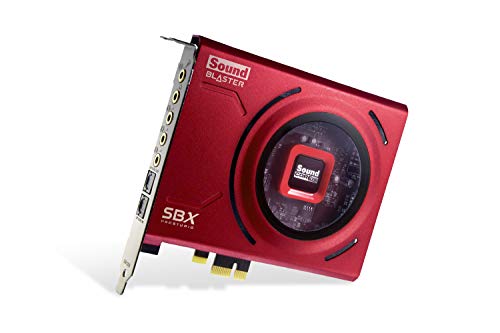
The Creative Sound Blaster Z SE earns its badge — Best Internal All-Rounder — because it approaches the job of helping you play music with a quiet background, honest imaging and enough power for real headphones and speakers with a clear sense of priorities. It is an internal pcie sound card / dac from Creative, and in a category full of products trying to be everything at once, its focus is its strength: the features it has are the ones this lens actually rewards, implemented properly rather than listed hopefully.
In daily use, what owners of this class of device notice first is not a specification but an absence: the absence of hiss between tracks, of fumbling through menus for a control that should be a knob, of a microphone path that makes colleagues ask you to repeat yourself. That day-to-day polish is what separates a badge winner from a product that merely shares its headline numbers, and it is why this model sits in this position on the list rather than further down it. For readers still weighing the wider category, How To Choose A Sound Card walks through the same decision from first principles.
Strengths
- ASIO support makes this one of the few gaming-bred internal cards that also behaves properly in a DAW, with low-latency monitoring for recording and production work.
- The headphone amplifier is rated for headphones up to 600 ohms, so high-impedance audiophile headphones are driven properly rather than merely made audible.
- Discrete 5.1 analogue output plus virtual 7.1 for headphones covers both speaker and headset gaming from a single slot.
Trade-offs
- It needs a desktop with a free PCI-e slot and will not suit laptops, consoles or compact mini-PCs.
- The software suite is Windows-centred; Mac and Linux users should choose a class-compliant USB option instead.
- Its microphone processing is aimed at gaming chat, so podcasters and singers will still get better results from a dedicated interface with a proper preamp.
- Form: internal PCI-e sound card and DAC
- Playback: 24-bit/192 kHz
- Signal-to-noise ratio: 116 dB SNR (manufacturer rating)
- Driver support: ASIO support listed
- Headphone amp: supports headphones up to 600 ohms
- Surround: discrete 5.1 and virtual 7.1, with Dolby Digital Live support
Consider how this pick behaves across a realistic week for listeners whose PC is their main music system. On the first day it has to install without drama and present itself correctly to the operating system and your main applications. By midweek it has to survive the unglamorous work — long sessions, device switching, a call dropped into the middle of focused listening — without clicks, dropouts or settings that wander. By the weekend it should have disappeared into the routine entirely, which is the highest compliment desktop audio can earn: you stop thinking about the sound device and start thinking about the sound.
It also has to coexist with the rest of a real setup. Desks accumulate hubs, chargers, monitors with their own audio ambitions and operating systems that love reassigning default devices after updates. A well-behaved device reappears where you left it, keeps its levels, and does not demand its companion software for basic dignity. Judged on that standard — competence sustained over months rather than fireworks on day one — the Creative Sound Blaster Z SE justifies its badge, provided its trade-offs above genuinely do not touch your use case.
Best for: buyers who want internal all-rounder and value the strengths listed above in everyday use / Not suited for: buyers whose needs match this pick’s trade-offs — a different badge winner in this guide will fit you better
ASUS Xonar SE (Best Internal for 5.1 Music)
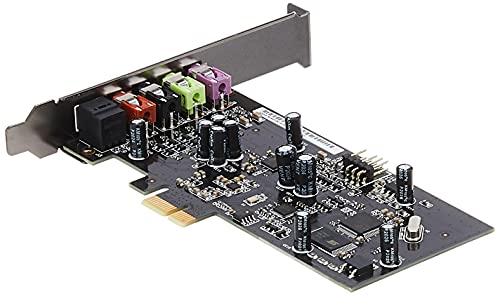
The ASUS Xonar SE earns its badge — Best Internal for 5.1 Music — because it approaches the job of helping you play music with a quiet background, honest imaging and enough power for real headphones and speakers with a clear sense of priorities. It is an internal pcie sound card from ASUS, and in a category full of products trying to be everything at once, its focus is its strength: the features it has are the ones this lens actually rewards, implemented properly rather than listed hopefully.
In daily use, what owners of this class of device notice first is not a specification but an absence: the absence of hiss between tracks, of fumbling through menus for a control that should be a knob, of a microphone path that makes colleagues ask you to repeat yourself. That day-to-day polish is what separates a badge winner from a product that merely shares its headline numbers, and it is why this model sits in this position on the list rather than further down it. For readers still weighing the wider category, How To Choose A Sound Card walks through the same decision from first principles.
Strengths
- A true internal card keeps the desk completely clear and gives analogue 5.1 speaker systems a direct, tidy connection inside the PC.
- The 116 dB SNR rating is a clear step up from typical onboard audio, which matters most on quiet music, film dialogue and late-night low-volume listening.
- Because it lives inside the case, there are no extra USB cables, no extra box to knock off the desk and nothing to unplug when the PC moves.
Trade-offs
- You need a free PCIe slot and a desktop case; laptop owners and mini-PC users cannot use it at all.
- Analogue 5.1 is its ceiling, so buyers planning a 7.1 speaker layout should look at a 7.1-capable alternative instead.
- Internal cards sit inside an electrically noisy case, so careful cable routing away from the graphics card is part of getting the best from it.
- Form: internal PCIe sound card
- Channels: 5.1 surround output
- Playback: 192 kHz/24-bit hi-res audio
- Signal-to-noise ratio: 116 dB SNR (manufacturer rating)
- Compatibility note: listed with Windows 10 compatibility
Consider how this pick behaves across a realistic week for listeners whose PC is their main music system. On the first day it has to install without drama and present itself correctly to the operating system and your main applications. By midweek it has to survive the unglamorous work — long sessions, device switching, a call dropped into the middle of focused listening — without clicks, dropouts or settings that wander. By the weekend it should have disappeared into the routine entirely, which is the highest compliment desktop audio can earn: you stop thinking about the sound device and start thinking about the sound.
It also has to coexist with the rest of a real setup. Desks accumulate hubs, chargers, monitors with their own audio ambitions and operating systems that love reassigning default devices after updates. A well-behaved device reappears where you left it, keeps its levels, and does not demand its companion software for basic dignity. Judged on that standard — competence sustained over months rather than fireworks on day one — the ASUS Xonar SE justifies its badge, provided its trade-offs above genuinely do not touch your use case.
Best for: buyers who want internal for 5.1 music and value the strengths listed above in everyday use / Not suited for: buyers whose needs match this pick’s trade-offs — a different badge winner in this guide will fit you better
ASUS Xonar AE (Best Internal for 7.1 Music)
The ASUS Xonar AE earns its badge — Best Internal for 7.1 Music — because it approaches the job of helping you play music with a quiet background, honest imaging and enough power for real headphones and speakers with a clear sense of priorities. It is an internal pcie sound card (prose-only) from ASUS, and in a category full of products trying to be everything at once, its focus is its strength: the features it has are the ones this lens actually rewards, implemented properly rather than listed hopefully.
In daily use, what owners of this class of device notice first is not a specification but an absence: the absence of hiss between tracks, of fumbling through menus for a control that should be a knob, of a microphone path that makes colleagues ask you to repeat yourself. That day-to-day polish is what separates a badge winner from a product that merely shares its headline numbers, and it is why this model sits in this position on the list rather than further down it. For readers still weighing the wider category, How To Choose A Sound Card walks through the same decision from first principles.
Strengths
- It is one of the few internal cards offering analogue 7.1, which suits desktop speaker systems that have outgrown 5.1 cards.
- ASUS’s hi-res positioning and 110 dB SNR make it a credible music-first internal option, not only a gaming card.
- Keeping everything inside the case preserves a clean desk and a single-box PC.
Trade-offs
- Discussed prose-only in this guide; verify current retail availability and driver support for your Windows version before buying.
- Internal placement means the card shares the case’s electrical environment, so results vary with build quality and GPU placement.
- No external controls: every adjustment happens in software.
- Form: internal PCIe gaming sound card
- Channels: 7.1 surround output
- Playback: 192 kHz/24-bit hi-res audio
- Signal-to-noise ratio: 110 dB SNR (manufacturer specification)
- Headphone amp: built-in amplifier (ASUS specification)
Consider how this pick behaves across a realistic week for listeners whose PC is their main music system. On the first day it has to install without drama and present itself correctly to the operating system and your main applications. By midweek it has to survive the unglamorous work — long sessions, device switching, a call dropped into the middle of focused listening — without clicks, dropouts or settings that wander. By the weekend it should have disappeared into the routine entirely, which is the highest compliment desktop audio can earn: you stop thinking about the sound device and start thinking about the sound.
It also has to coexist with the rest of a real setup. Desks accumulate hubs, chargers, monitors with their own audio ambitions and operating systems that love reassigning default devices after updates. A well-behaved device reappears where you left it, keeps its levels, and does not demand its companion software for basic dignity. Judged on that standard — competence sustained over months rather than fireworks on day one — the ASUS Xonar AE justifies its badge, provided its trade-offs above genuinely do not touch your use case.
Best for: buyers who want internal for 7.1 music and value the strengths listed above in everyday use / Not suited for: buyers whose needs match this pick’s trade-offs — a different badge winner in this guide will fit you better

Creative Sound Blaster Audigy Fx V2 (Best Budget Internal for Music)
The Creative Sound Blaster Audigy Fx V2 earns its badge — Best Budget Internal for Music — because it approaches the job of helping you play music with a quiet background, honest imaging and enough power for real headphones and speakers with a clear sense of priorities. It is an internal pci-e sound card from Creative, and in a category full of products trying to be everything at once, its focus is its strength: the features it has are the ones this lens actually rewards, implemented properly rather than listed hopefully.
In daily use, what owners of this class of device notice first is not a specification but an absence: the absence of hiss between tracks, of fumbling through menus for a control that should be a knob, of a microphone path that makes colleagues ask you to repeat yourself. That day-to-day polish is what separates a badge winner from a product that merely shares its headline numbers, and it is why this model sits in this position on the list rather than further down it. For readers still weighing the wider category, how to choose a sound card walks through the same decision from first principles.
Strengths
- It is the sensible modern replacement for ageing onboard audio in a desktop: hi-res playback, discrete 5.1 for speakers and headset support in one slot.
- Scout Mode and the SmartComms Kit cover the two things desktop users ask for most — clearer game cues and cleaner voice on calls — without external boxes.
- The upgradable design is a thoughtful touch in a category where most budget cards are entirely fixed at purchase.
Trade-offs
- It sits below the Z SE in refinement; buyers chasing the quietest background for critical listening should compare the higher-tier card carefully.
- A free PCI-e slot and a Windows desktop are required, so it is not an option for laptops or consoles.
- Microphone quality is call-grade rather than recording-grade; creators need an interface with a real preamp for published audio.
- Form: internal PCI-e sound card, upgradable design
- Playback: hi-res audio support (manufacturer positioning)
- Surround: 5.1 discrete and virtual surround
- Gaming feature: Scout Mode
- Voice features: SmartComms Kit for PC calls
Consider how this pick behaves across a realistic week for listeners whose PC is their main music system. On the first day it has to install without drama and present itself correctly to the operating system and your main applications. By midweek it has to survive the unglamorous work — long sessions, device switching, a call dropped into the middle of focused listening — without clicks, dropouts or settings that wander. By the weekend it should have disappeared into the routine entirely, which is the highest compliment desktop audio can earn: you stop thinking about the sound device and start thinking about the sound.
It also has to coexist with the rest of a real setup. Desks accumulate hubs, chargers, monitors with their own audio ambitions and operating systems that love reassigning default devices after updates. A well-behaved device reappears where you left it, keeps its levels, and does not demand its companion software for basic dignity. Judged on that standard — competence sustained over months rather than fireworks on day one — the Creative Sound Blaster Audigy Fx V2 justifies its badge, provided its trade-offs above genuinely do not touch your use case.
Best for: buyers who want budget internal for music and value the strengths listed above in everyday use / Not suited for: buyers whose needs match this pick’s trade-offs — a different badge winner in this guide will fit you better
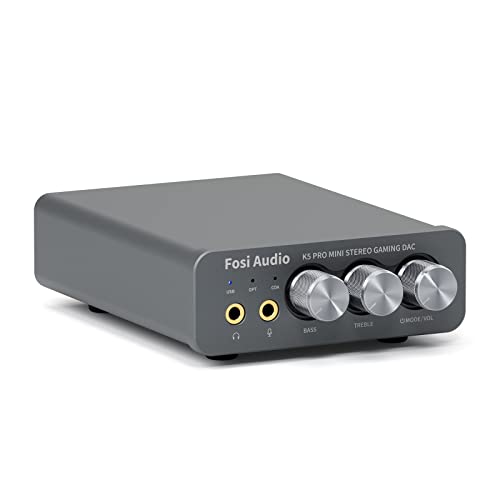
Fosi Audio K5 Pro (Best External Alternative)
The Fosi Audio K5 Pro earns its badge — Best External Alternative — because it approaches the job of helping you play music with a quiet background, honest imaging and enough power for real headphones and speakers with a clear sense of priorities. It is a desktop dac / headphone amp from Fosi, and in a category full of products trying to be everything at once, its focus is its strength: the features it has are the ones this lens actually rewards, implemented properly rather than listed hopefully.
In daily use, what owners of this class of device notice first is not a specification but an absence: the absence of hiss between tracks, of fumbling through menus for a control that should be a knob, of a microphone path that makes colleagues ask you to repeat yourself. That day-to-day polish is what separates a badge winner from a product that merely shares its headline numbers, and it is why this model sits in this position on the list rather than further down it. For readers still weighing the wider category, how to choose a sound card walks through the same decision from first principles.
Strengths
- Three digital inputs let one unit serve a PC, a console or TV over optical, and another source over coaxial, which is rare flexibility at its tier.
- Front bass and treble knobs are refreshingly direct: small tonal corrections happen by hand in a second, with no software and no EQ menus.
- The microphone input keeps a gaming headset fully connected through the same box that powers its headphones, simplifying a desk setup.
Trade-offs
- It has no surround processing and no analogue multi-channel speaker outputs, so home-cinema speaker ambitions need a different product.
- There is no balanced headphone output, which matters to owners of balanced-cabled audiophile headphones.
- It is a playback and headset device, not a recording interface: no instrument input, no XLR and no ASIO-focused design.
- Form: desktop gaming DAC and headphone amplifier
- Playback: 24-bit/192 kHz
- Inputs: USB-C, optical and coaxial digital inputs
- Outputs: RCA and 3.5 mm AUX
- Controls: microphone input plus bass and treble controls
- Headphone power: 1000 mW class output (manufacturer figure in listing title)
Consider how this pick behaves across a realistic week for listeners whose PC is their main music system. On the first day it has to install without drama and present itself correctly to the operating system and your main applications. By midweek it has to survive the unglamorous work — long sessions, device switching, a call dropped into the middle of focused listening — without clicks, dropouts or settings that wander. By the weekend it should have disappeared into the routine entirely, which is the highest compliment desktop audio can earn: you stop thinking about the sound device and start thinking about the sound.
It also has to coexist with the rest of a real setup. Desks accumulate hubs, chargers, monitors with their own audio ambitions and operating systems that love reassigning default devices after updates. A well-behaved device reappears where you left it, keeps its levels, and does not demand its companion software for basic dignity. Judged on that standard — competence sustained over months rather than fireworks on day one — the Fosi Audio K5 Pro justifies its badge, provided its trade-offs above genuinely do not touch your use case.
Best for: buyers who want external alternative and value the strengths listed above in everyday use / Not suited for: buyers whose needs match this pick’s trade-offs — a different badge winner in this guide will fit you better
Comparison Table
The table below compresses the verified essentials. Use it to eliminate picks on form factor and headline capability, then read the full review of the survivors — the trade-off lists are where the real differences live.
| Pick | Badge | Form | Headline specification | Price |
|---|---|---|---|---|
| Creative Sound BlasterX AE-5 Plus | Best Internal for Music | Internal PCIe sound card (prose-only) | DAC: SABRE32 ultra-class, up to 32-bit/384 kHz (manufacturer specification) | Check price on Amazon |
| Creative Sound Blaster Z SE | Best Internal All-Rounder | Internal PCIe sound card / DAC | Playback: 24-bit/192 kHz | Check price on Amazon |
| ASUS Xonar SE | Best Internal for 5.1 Music | Internal PCIe sound card | Channels: 5.1 surround output | Check price on Amazon |
| ASUS Xonar AE | Best Internal for 7.1 Music | Internal PCIe sound card (prose-only) | Channels: 7.1 surround output | Check price on Amazon |
| Creative Sound Blaster Audigy Fx V2 | Best Budget Internal for Music | Internal PCI-e sound card | Playback: hi-res audio support (manufacturer positioning) | Check price on Amazon |
| Fosi Audio K5 Pro | Best External Alternative | Desktop DAC / headphone amp | Playback: 24-bit/192 kHz | Check price on Amazon |
How to Choose the Right Sound Card
Start with the job, not the product. The single most reliable question in this category is brutally simple: what will you connect, and in which direction does the audio travel? Playback to headphones, playback to speakers, capture from a microphone, capture from a line-level source and two-way communication are different jobs that reward different hardware. A buyer who can state their job in one sentence — the sentence this guide opened with, to play music with a quiet background, honest imaging and enough power for real headphones and speakers — can eliminate two-thirds of the market immediately, including several products in this very shortlist that are excellent at other jobs.
Inputs decide recording; outputs decide playback. If anything must be captured, the input stage is the product: a microphone needs a preamp with clean gain, an instrument needs an appropriate high-impedance input, and a mixer, radio or phono stage needs a line input that will not be processed like a voice. If nothing must be captured, spend the same money on the output stage instead — conversion quality, a silent background and a headphone amplifier matched to your headphones’ impedance and sensitivity. Confusing these two budgets is the most expensive mistake in the category, and it is why best sound cards for recording and the playback guides in this series sometimes recommend entirely different hardware at the same tier.
Form factor is a lifestyle decision. Internal PCIe cards keep a desktop tidy and can offer analogue multi-channel outputs at keen tiers, but they live and die with one machine and sit inside an electrically busy case. External USB devices cost a little desk space and repay it with portability, desk-level controls and a life across several computers. Laptop owners, Mac owners and console players have no real choice — external is the only road — while a fixed desktop studio can honestly choose either. The comparison at internal vs external sound card explores the trade in more depth.
Read specifications like an engineer, not a collector. Signal-to-noise ratio and dynamic range describe how quiet the background can be; sample-rate ceilings describe compatibility, not quality; headphone ratings describe which loads the amplifier was designed for, while real output power describes how loudly and cleanly it can drive them. Prefer a modest set of verified figures from the manufacturer over a long list repeated across roundups, and treat any specification you cannot trace to a maker or reputable retailer as decoration.
Budget in tiers, and buy the capability, not the refinement. The budget tier fixes faults — dead jacks, hiss, unusable microphone inputs. The mid tier adds capabilities: real preamps, discrete surround, balanced outputs, serious headphone power. The upper tier refines: better converters, better metering, better build. Moving up for a capability your setup will use is money well spent; moving up for a refinement your headphones or speakers cannot reveal is not. Whichever tier you choose, check the current price on Amazon rather than trusting any figure printed in any guide, including the tier framing in this keyword itself.
How Do You Set Up a Sound Card for Music Listening?
Setup is where good hardware is either confirmed or squandered. Work through these steps in order the first time; afterwards, most of them collapse into a thirty-second routine you will barely notice.
- Connect the device, set it as the system output, and disable any leftover enhancements from a previous device so you start from an honest baseline.
- Match sample-rate settings to your library where your player supports exclusive or direct output; otherwise a fixed 48 kHz or 44.1 kHz system setting is perfectly respectable.
- Set headphone gain or impedance mode for the headphones you actually own, and establish a safe maximum volume before the first track, not during it.
- If feeding powered speakers or an amplifier, use the line output at a fixed healthy level and control volume downstream, which keeps the noise floor at its lowest.
- Turn off surround virtualisation and sound effects for music unless you actively prefer them; most recordings were mixed for plain stereo.
- Live with the setup for several familiar albums before judging — your reference tracks reveal more than any specification table.
Troubleshooting quick list
- Problem: no sound after installing → the OS or app is still using the old default device; set the new device in both places and restart the app.
- Problem: crackles or dropouts → a sample-rate mismatch or an overloaded USB hub; match rates everywhere and connect directly to the computer.
- Problem: hum that follows the graphics load → a ground/routing issue; re-route cables, change the USB port, and keep audio leads away from power supplies.
- Problem: microphone too quiet or distorted → gain is set at the wrong stage; set it at the device preamp first and keep software gain near neutral.
- Problem: device vanishes after sleep → a USB power-management quirk; try another port and disable selective suspend for that device where your OS allows.
When something still misbehaves after those checks, the guides at how to test a sound card and how to set up a sound card go deeper, and how to fix sound card not detected covers the specific case of a device the system refuses to see at all.
Common Mistakes
- Leaving virtual surround and ‘enhancements’ enabled for music, then judging the hardware for the processing’s colouration.
- Feeding powered speakers from a headphone output at maximum volume instead of a line output at a fixed level, stacking two volume controls and their noise.
- Assuming a higher sample-rate number means better sound and resampling a whole library, when the audible wins come from quiet backgrounds and proper gain.
- Underpowering demanding headphones and blaming the headphones. If maximum volume arrives with thin bass and strain, the amp is the limit.
- Comparing devices at unmatched volumes — the louder one almost always ‘wins’ a casual comparison, which is a hearing trick, not a result.
Volume discipline is a genuine feature. Establish a reference listening level for your desk — the level at which dialogue is natural and music has body without fatigue — and return to it when comparing settings or devices. Louder almost always sounds ‘better’ in a quick switch, which is why uncontrolled comparisons sell more gear than honest ones.
Ground loops are the gremlin of PC audio: a hum that appears only when everything is connected at once, often following the graphics card’s workload or the laptop charger’s state. External USB devices placed away from the case, sensible cable routing and, where needed, moving a power supply to a different outlet solve most cases. Internal cards benefit from a slot away from the graphics card and tidy power cabling.
Final Recommendation
Buy by badge and you will buy well: Creative Sound BlasterX AE-5 Plus is Best Internal for Music; Creative Sound Blaster Z SE is Best Internal All-Rounder; ASUS Xonar SE is Best Internal for 5.1 Music; ASUS Xonar AE is Best Internal for 7.1 Music; Creative Sound Blaster Audigy Fx V2 is Best Budget Internal for Music; Fosi Audio K5 Pro is Best External Alternative. If one sentence must carry the whole guide, it is this — match the device to the job of helping you play music with a quiet background, honest imaging and enough power for real headphones and speakers, verify the current price on Amazon, and let the trade-off lists, not the marketing, have the last word. Readers cross-shopping the wider category will find natural next steps in best sound cards for music production and best external sound cards for music production, which apply the same standards to neighbouring use cases.
Frequently Asked Questions
Will a sound card make my music sound better than onboard audio?
With decent headphones or speakers, usually yes: the audible wins are a quieter background, better low-volume clarity and proper headphone drive. With a phone-grade earbud, the difference shrinks — the transducer is the limit.
What matters more, the DAC or the headphone amp?
For demanding headphones, the amp: insufficient power audibly thins bass and caps volume. For line-out into an amplifier or powered speakers, the DAC and output stage carry the result. Good devices do both competently.
Do I need hi-res audio files to benefit?
No. A clean output stage improves ordinary streaming and CD-quality files too, because the gains are in noise, drive and clarity rather than in file specifications.
Should I use the headphone output or line output for powered speakers?
Line output, at a fixed level, with volume controlled at the speakers or amplifier. It avoids stacking two volume controls and keeps the noise floor lowest.
Are tone controls a weakness in a serious setup?
No — gentle bass and treble knobs are a pragmatic tool for real rooms and real recordings. The purist path is to leave them centred; the practical path is to enjoy them.