Disclosure: As an Amazon Associate, ilcastellomenu.com earns from qualifying purchases. Links on this page are affiliate links; they cost you nothing extra. Prices and availability change often, so check the current Amazon listing before you buy.
Where to buy: every pick below is sold through Amazon; use the Check price on Amazon link in each review, because processor prices move with promotions and stock. The best amd cpus for gaming is a happier argument than it used to be, because AMD’s gaming story now has a clear protagonist: cache. The company’s stacked-cache processors rewrote what a gaming CPU is, and its mainstream chips remain the value backbone of half the sensible builds on earth. This roundup reviews five verified processors across the whole decision space: the current stacked-cache flagship for players who want the fastest gaming silicon AMD sells, its predecessor, which remains the value way into the same technology, a modern eight-core all-rounder for mixed gaming and work, a six-core mainstream chip for balanced builds, and the elder statesman that still anchors budget builds on the previous platform. Each review weighs the chip against the others, because a processor is only ever best relative to a budget, a graphics card and a monitor. The thinking that connects them, cache above all, is laid out in how much CPU cache is enough for gaming, and the rival camp’s answer lives in the best Intel CPUs for gaming compared.
Best Amd Cpus For Gaming: How the Picks Were Chosen
The criteria were gaming-first and honest about the rest. Gaming performance was judged on the pattern the credible review literature agrees on: average frame rates and, more importantly, the low percentiles where cache and memory behaviour live. Platform cost was counted whole, processor, board and memory generation together, because a chip’s price is a down payment on its platform’s. Longevity was weighed through the socket’s future and the chip’s headroom against tomorrow’s graphics cards. Productivity was respected but not allowed to hijack a gaming list: where a chip’s cores serve work as well as play, the review says so and prices it. Cooling and power were treated as ownership costs, since a processor’s heat class decides the cooler budget, a subject priced in choosing a CPU cooler for RAM clearance and, for compact builds, choosing a CPU cooler for a small form factor build. No chip appears here on a benchmark screenshot alone; each had to earn its place as a machine someone should actually build.
In this guide
Quick Picks
| Buyer | Pick | One-line reason |
| Fastest gaming, cost secondary | AMD Ryzen 7 9800X3D | The stacked-cache flagship of the current generation |
| Stacked-cache value | AMD Ryzen 7 7800X3D | The technology that changed gaming CPUs, at the mature price |
| Gaming plus real work | AMD Ryzen 7 9700X | Modern eight-core all-rounder on the current platform |
| Balanced mainstream build | AMD Ryzen 5 9600X | Six fast cores for the broad middle of gaming |
| Budget build or older-platform upgrade | AMD Ryzen 5 5600X | The previous platform’s enduring value, cooler included |
The Processors, Reviewed
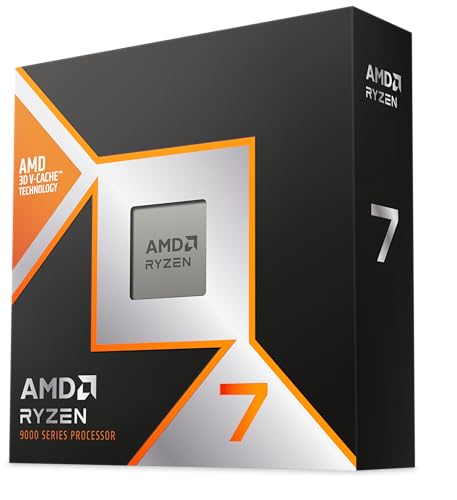
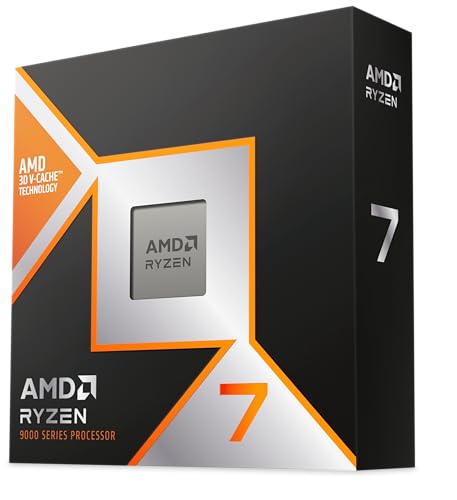
AMD Ryzen 7 9800X3D
Fastest gaming processor in this roundup
| Specification | Detail |
| Cores / threads | 8 cores, 16 threads (per API title) |
| Cache story | Stacked-cache X3D design of the current generation |
| Platform | Current AMD socket and DDR5 generation |
The 9800X3D is the present tense of AMD’s gaming argument: eight modern cores with the stacked cache that the X3D line exists to carry, in the generation that refined the arrangement’s thermals and clocks. In the cache-sensitive titles that decide gaming-CPU reviews, and in the one-percent lows that decide how a game feels, this is the chip the rest of the market is measured against, and it earns that position without needing the most cores or the highest clocks on the sheet, which is precisely the lesson of the cache era.
Buy it when the graphics card and monitor can expose a processor, a flagship or high-performance card and a fast display, because below that exposure the premium buys benchmarks rather than experience. Pair it with a cooler worthy of a flagship build and memory specified with the care the platform rewards, and verify the result with the method in checking CPU temperature ranges. For the gaming-first machine with no productivity axe to grind, this is the top of the AMD mountain and the end of the deliberation.
Strengths
- The gaming performance reference of its generation
- Stacked cache lifts lows as well as averages
- Current platform with an upgrade future
Trade-offs
- Premium price for eight cores
- Productivity buyers can spend the same money on more cores
- Needs a strong GPU and fast monitor to justify itself
Best for: gaming-first flagship builds. Not suited for: budget builds, or machines whose graphics card would hide it.

AMD Ryzen 7 7800X3D
The stacked-cache value champion
| Specification | Detail |
| Cores / threads | 8 cores, 16 threads (per API title) |
| Cache story | Stacked-cache X3D design |
| Platform | Current AMD socket and DDR5 generation |
The 7800X3D is the chip that proved the cache thesis to the whole market, and maturity has only improved its argument: its gaming performance remains within sight of the flagship’s in the titles that matter, its price has settled into the territory where value language applies, and its platform is the same current socket with the same future. For the buyer who wants the X3D experience without the flagship’s premium, this is not the consolation prize; it is the intelligent purchase, and in many build budgets it is the one that leaves money for the graphics card, where gaming machines usually need it more.
Its known characters should be bought knowingly: eight cores are a gaming specification, not a workstation one, and the stacked design’s clocks in heavily threaded work trail the non-stacked all-rounders. Inside a gaming machine’s job description, neither fact has ever mattered. This is the roundup’s easiest recommendation to defend in a budget meeting.
Strengths
- X3D gaming performance at the mature price
- Same current platform and future as the flagship
- Efficient enough for sane cooling budgets
Trade-offs
- Eight cores cap its workstation ambitions
- Flagship sibling exists for the cost-no-object buyer
- Cache advantage narrows in GPU-bound play
Best for: high-end gaming builds balancing the whole budget. Not suited for: heavy multitasking workstations.

AMD Ryzen 7 9700X
The modern all-rounder
| Specification | Detail |
| Cores / threads | 8 cores, 16 threads, unlocked (per API title) |
| Cache story | Conventional generous cache of its generation |
| Platform | Current AMD socket and DDR5 generation |
The 9700X is the answer for the machine that games at night and works all day: a modern eight-core processor with strong clocks, a conventional cache arrangement, and an efficiency character that suits real cases and real coolers. Its gaming performance sits a clear step below the stacked-cache pair in cache-bound titles and a clear step above the mainstream in everything, which is the correct shape for an all-rounder: nothing it does is the best in this roundup, and everything it does is good, including the threaded work the X3D chips concede.
Choose it when the build’s centre of gravity is genuinely mixed, editing, compiling, streaming alongside the gaming, or when the games you play are the kind that never read the cache headlines. Its unlocked multiplier and the platform’s maturity make it a tuner-friendly citizen, and its power behaviour flatters modest coolers, a kindness the SFF guide’s readers will appreciate.
Strengths
- Balanced excellence across gaming and work
- Strong clocks and modern efficiency
- Current platform, tuner-friendly
Trade-offs
- Concedes the cache-bound gaming crown to X3D
- Eight cores is the middle, not the summit, for work
- Less romantic than the stacked-cache story
Best for: mixed gaming-and-work machines. Not suited for: pure gaming builds chasing maximum frame rates.

AMD Ryzen 5 9600X
The balanced mainstream choice
| Specification | Detail |
| Cores / threads | 6 cores, 12 threads, unlocked (per API title) |
| Cache story | Mainstream cache of its generation |
| Platform | Current AMD socket and DDR5 generation |
The 9600X is the broad middle of gaming made into a processor: six fast modern cores, which is what the overwhelming majority of games actually use, on the current platform, at the price that lets the build’s money flow to the graphics card and the monitor, where mainstream gaming performance is truly decided. Its per-core speed is its argument; in the esports and mainstream titles its buyers play, it sits far closer to the flagships than its price suggests, because those games were never counting cores beyond six.
Buy it as the platform investment it is: the current socket’s future means this chip can be the first processor in a machine that later hosts an X3D flagship, a path no budget chip on a dead platform can offer. Its limits are the mainstream’s limits, threaded headroom for heavy simultaneous work, and they are stated here so they are chosen, not discovered.
Strengths
- Per-core speed that flatters mainstream gaming
- Current platform with a real upgrade path
- Leaves budget for the GPU, where it matters
Trade-offs
- Six cores cap heavy multitasking
- No stacked-cache magic for cache-bound titles
- Platform’s memory generation costs more than the old one
Best for: balanced gaming builds and platform-first budgets. Not suited for: streamers and creators running heavy loads beside the game.

AMD Ryzen 5 5600X
The budget and upgrade evergreen
| Specification | Detail |
| Cores / threads | 6 cores, 12 threads, unlocked (per API title) |
| Cooler | Wraith Stealth cooler included (per API title) |
| Platform | Previous-generation socket and DDR4 |
The 5600X refuses to retire, and the reasons are structural: it remains a genuinely good gaming processor, it drops into an enormous installed base of boards as an upgrade that can transform an old machine, its platform’s memory is the cheap kind, and this listing includes a cooler in the box, which in a budget build is a line item deleted. For a new build at the strictest budget, or for the owner of an ageing machine on its platform who wants its second life, it is still the correct first name to consider.
Its ceiling must be respected: the platform has no upgrade future beyond itself, and modern titles at high refresh will find its limits sooner than the current platform’s chips. Bought as value, with those facts on the table, it has made more gamers happy per unit of currency than almost any processor of its era, and it is not done. The integrated-graphics question, for owners who need a display path without a card, is handled in choosing a CPU with integrated graphics, and core-count context lives in CPU cores and threads explained.
Strengths
- Proven gaming performance at a budget price
- Huge installed base of compatible boards
- Boxed cooler included in this listing
Trade-offs
- Platform is at the end of its road
- Six cores of an older generation show their age at high refresh
- No future upgrade path on its socket
Best for: strict budgets and older-platform upgrades. Not suited for: new flagship builds or long-horizon platform investments.
Comparison Table and Final Recommendation
| Processor | Cores | Identity | Platform |
| Ryzen 7 9800X3D | 8 | Fastest gaming | Current |
| Ryzen 7 7800X3D | 8 | Stacked-cache value | Current |
| Ryzen 7 9700X | 8 | All-rounder | Current |
| Ryzen 5 9600X | 6 | Mainstream balance | Current |
| Ryzen 5 5600X | 6 | Budget evergreen | Previous |
The final recommendation follows the money’s centre of gravity. Pure gaming at the highest level: the 9800X3D, with the 7800X3D as the same idea bought intelligently. A machine that works as hard as it plays: the 9700X. A balanced new build: the 9600X and its platform future. A budget build or an old machine’s resurrection: the 5600X, evergreen and unembarrassed. In every case, pair the chip with the graphics card and monitor that expose it, because a gaming processor’s best is a property of the machine around it, and that, in the end, is what best means.
The Platform Argument: Why the Socket Is Half the Purchase
Every AMD recommendation in this roundup is secretly two recommendations, because the current platform’s socket has been the company’s long-term home and its promised future is part of what the money buys. A processor bought today on that socket enters a machine whose board and memory can host tomorrow’s generations, which converts the CPU from a terminal purchase into a first instalment. That is the deep reason the 9600X, a mainstream chip, can be recommended to a buyer who dreams of the flagship: the path between them is a processor swap, not a rebuild. The previous platform’s story is the mirror image and equally honourable: its boards and memory are inexpensive precisely because its road has ended, and the 5600X’s value is the value of a finished, discounted ecosystem bought with open eyes. Neither platform is the right answer in the abstract. The new platform is right for the machine with a future tense; the old one is right for the machine with a budget and a present tense, and confusing the two tenses is the most expensive mistake in processor shopping.
Cooling and Power: The Ownership Ledger Nobody Puts in the Review
AMD’s current gaming range has an ownership virtue that deserves a section of its own: its gaming flagships are not thermal divas. The stacked-cache chips deliver their performance inside power envelopes that good air coolers handle without liquid heroics, which lowers the whole build’s cost and noise, and the mainstream chips are cooler still. The all-rounder and the value chips ask even less. This matters to the roundup’s arithmetic because a processor’s true price includes the cooler it demands and the case discipline it imposes, and on that whole-cost basis the AMD list’s advantage over hungrier rivals widens beyond the sticker comparison. The discipline that remains is verification: any of these chips, installed, deserves a temperature baseline in its first week, and the SFF builders among their owners should read the low-profile guidance in this series before assuming a small case forgives a flagship’s heat. It mostly does, which is itself a headline the other camp cannot always print.
Memory Tuning and the Platform’s Sweet Spots
The current AMD platform has a well-documented relationship with its memory: there is a speed and latency region where its internal fabric and the memory controller move in step, and performance, gaming performance included, is best bought inside that region rather than at the memory market’s extremes. The practical guidance for buyers of any chip in this roundup is to choose a reputable kit in that sweet-spot region, in the two-module configuration the platform prefers, enable its profile in firmware, and stop there, because the money beyond the sweet spot buys benchmark decimals while the money inside it buys frame-time consistency. The previous platform has its own, cheaper version of the same lesson, and its kits are now inexpensive enough that the 5600X build should never be memory-starved. Neither platform rewards neglect: a single module, or memory left at its default slow profile, taxes every processor in this list by a margin larger than the gaps between several of them, which is why the memory line belongs in every processor budget meeting.
Head-to-Head: Where Each AMD Pick Beats the Intel Alternative
- 9800X3D against the Intel flagship class: in cache-bound gaming the AMD chip’s lows and averages lead, and its efficiency wins the ownership ledger; the Intel counter wins every threaded-workload row and the multitasking experience, so the verdict is written by the machine’s second job.
- 7800X3D against the Intel value centre: the AMD chip is the purer gaming instrument at a comparable whole-platform cost once boards are counted, while the Intel chip’s extra cores and memory flexibility argue for plural machines and upgraders with memory already owned.
- 9700X against its Intel opposite number: a fair fight decided by inches and prices on the day; the AMD chip’s platform future is its strongest card, the Intel chip’s core total is its own, and mixed-workload buyers should read both reviews with their own software in mind.
- 9600X against the Intel mainstream: per-core pace and platform against hybrid breadth; esports-leaning builders lean AMD, household machines that do everything lean Intel, and both are right.
- 5600X against the discounted Intel elders: the AMD chip’s platform is cheaper to complete and its upgrade-in-place story on existing boards is unmatched; where an Intel board is already owned, the argument reverses, which is the correct shape of a value debate.
Comparisons like these are why this series maintains both roundups with the same criteria and the same structure: so that a buyer can hold them side by side and watch the same questions receive two honest answers. The worst processor purchase is not the slower chip; it is the chip bought for a machine it does not match, and matching is a comparison before it is a conclusion.
Reading Gaming CPU Reviews Without Being Misled
Processor reviews are the easiest in the industry to misread, and three defences will keep a buyer of any chip in this list honest. The first is resolution discipline: gaming CPU differences live at 1080p and in CPU-bound scenes, while 4K tests mostly measure the graphics card and pronounce all processors equal, which is true there and useless for choosing. Read the tests run at the resolution below yours, where the processor is exposed, because that exposure is your machine’s future when the next graphics card arrives. The second is percentile literacy: averages hide the stutters that cache and memory behaviour create, so the one-percent lows are the figures that predict how a game feels, and any review that reports only averages has not reviewed the thing you are buying. The third is configuration honesty: memory speed, module count and firmware settings move these processors by margins comparable to the gaps between them, so a review whose test configuration resembles your planned build outranks a more famous review whose does not. Armed with those defences, the literature’s consensus on this list’s chips is stable enough to buy on, which is more than can be said for most categories in this hobby.
The Platform’s Memory Story: What These Processors Want From RAM
A processor roundup owes its readers the memory chapter, because these chips’ gaming performance is partly a property of the memory they are fed, and the platform has preferences worth stating plainly. The current socket’s controllers favour the mainstream DDR5 speeds in matched pairs, with the platform’s sweet spot, the speed at which the controller and the fabric run in their happiest ratio, being the value pick as well as the performance pick for most of these processors. Capacity interacts with this guide’s cache subject in an interesting way: the large on-chip reservoir reduces the frequency of memory journeys, but the journeys that remain, asset streaming chief among them, still price the memory’s speed, so the cache is not an excuse to buy careless RAM. The older socket’s DDR4 ecosystem inverts the economics, its memory so inexpensive that generous capacity costs little, which is part of the budget build’s charm. In both ecosystems the rule is the same: buy the platform’s known sweet spot in a matched pair, enable the rated profile, and verify stability, because a gaming processor’s review figures were all recorded on memory that did exactly that.
Reading This Roundup in a Year’s Time
Processor roundups age faster than any other article type in this series, and an honest one should teach its reader how to keep using it after its specifics have dated. The tier structure outlives the models: there will be a new cache flagship, a new value hero, a new older-socket bargain, and the questions this guide asked of each, lows in the heavy scenes, the platform’s remaining runway, the total build cost rather than the chip’s price, will identify them in their new clothes. The measurements to trust will also stay the same: frame-time data in demanding titles, recorded on current memory, by reviewers who publish their methods. And the verdict logic, spend on the processor when the graphics card is fed and the bottleneck is proven, survives every generation, because it was never about these chips. Keep the method, refresh the models, and this page’s usefulness renews itself each cycle, which is the most any roundup can honestly promise.
The Second-Hand and Open-Box Market for These Processors
Processors are the used market’s most honest citizens, and this roundup’s tiers have second lives worth mapping. A chip has no moving parts, no interface material of its own to age in the buyer’s hands, and a failure rate so low that the used market prices it near its performance rather than near its risk; the previous generation’s cache flagship, in particular, becomes the value hero of its second season, delivering most of its successor’s gaming character at a used price. The cautions are specific rather than general: inspect the pins or pads under good light, since handling is the used processor’s one real hazard; buy the exact model, verified by its markings, because the letter-suffix families invite honest mistakes and dishonest listings alike; and remember that the warranty does not always travel with the chip, pricing that absence honestly. For the older socket especially, the used market is the platform’s second wind, whole ecosystems of boards and memory priced for the taking, and the budget build assembled from them is not a compromise but a strategy with a long and honourable history.
What to Do the Week the Processor Arrives
Close with the commissioning week, because a processor’s first days set its biography. Before installation, the board’s firmware should be brought to the version that knows the chip properly, using the old processor or the board’s update facility, since a new chip on old firmware is the platform’s commonest false start. At installation, the mounting and interface discipline from the cooling guides applies in full. In the first session, the memory profile is enabled and verified, the temperatures are baselined at idle and in the standardised game, and the frame-time log in the owner’s heaviest title is recorded as the reference every future change will be judged against. Then, and only then, the tweaks, one at a time, measured against that baseline, with the factory configuration always one reset away. A processor commissioned this way will never be a mystery to its owner, and its review figures, checked against the log in the first week, either confirm the purchase or open the returns window while it is still a window. Diligence has a deadline; the first week is it.
The Roundup’s Method, Stated Once for the Record
A roundup that asks to be trusted should state its method in one place, and this one’s is simple enough to fit in a paragraph. The processors were weighed on frame-time behaviour in demanding games rather than on average frame rates alone, because the lows are what players feel. Platform cost was counted whole, board and memory included, because a chip’s price is a down payment rather than a total. Upgrade runway was priced as a real asset, since a socket’s remaining years are years of options. And every recommendation was checked against the bottleneck question, because a processor bought for a card-bound machine is a decoration regardless of its tier. Readers who apply the same four weights to next season’s models, using fresh measurements from reviewers who publish their methods, will reproduce this roundup’s logic on hardware this page has never seen. The models are the news; the method is the newspaper. Keep the newspaper.
The AMD Build as a Whole: A Closing Composition
End by composing the build around the processor, because the chip’s virtues are realised or wasted by its company. The memory at the platform’s sweet spot, in a matched pair, profile enabled and verified. The board with the power delivery and the firmware maturity the tier deserves, bought for its manual’s honesty as much as for its features. The cooler sized to the chip’s real behaviour in the case’s real climate, per the cooling guides. The graphics card chosen against the bottleneck evidence, so that processor and card arrive at the frame together. And the commissioning week’s baseline log, filed, so the composition’s performance is a fact rather than an impression. A build composed that way is more than the sum of its reviews, and its owner will feel the difference in the only place it matters, the frame times of the games that prompted the purchase, holding steady in the scenes where lesser compositions come apart. That steadiness is what this lineup, at its best, is actually selling.
The Roundup at the Counter: Questions That Fit the Moment of Purchase
The retail form of this roundup is a short set of questions, each answerable from documents and measurements rather than from the shelf’s theatre. Which of these processors holds its lows in my titles, by frame-time evidence rather than by averages. What does the whole platform cost, board and memory at the sweet spot included. How many years of runway does this socket honestly have, and what will its next citizen cost me when I take it. And is my machine actually waiting on its processor, by the log’s testimony, or am I buying a tier for a bottleneck I do not have. Four questions, five minutes, and the purchase is either the roundup’s logic applied or visibly an impulse wearing the roundup’s clothes. Sellers of honest processors welcome the questions, because their products’ measurements survive them. Carry the questions the way this series’ drills are carried, and the lineup, in this generation and every successor, will sort itself in your hands.
The Lineup’s Ecology: Boards, Memory and the Used Market as One System
A final systems view of the lineup, because a processor is never bought alone and its value is partly a property of the ecosystem around it. This platform’s ecology is unusually complete: boards at every honest price, a memory standard whose sweet spot is also its value point, a used market deep enough to supply whole builds, and a maker whose socket promises have historically been kept in public, which prices the runway as an asset rather than as a hope. The rival ecologies have their own strengths, and the sister roundup describes them fairly, but the buyer choosing between lineups is choosing between ecologies as much as between chips, and should say so in their own deliberation. The chip’s frame times will be measured and forgotten within a season; the ecology will be lived in for the platform’s whole tenancy, supplying its upgrades, its replacements and its second life. Buy the chip for the games. Buy the ecology for the years. This lineup, at its best tiers, lets a buyer do both in one transaction, which is the real content of its reputation among builders who keep their machines a long time.
The Lineup in the Household’s Second Machine
A word for the build this roundup’s tiers most often become in their second lives: the household’s second machine, assembled from the gaming rig’s retirements. The cache-rich processors age into that role beautifully, because the qualities that served the heavy titles, generous lows and platform longevity, serve the family machine’s mixed evenings just as well, and the older socket’s inexpensive boards and memory let the second machine be completed for the price of its case and storage. The handover deserves the series’ usual documentation: the chip’s exact model, the board’s firmware state, the memory’s profile, so the second household inherits a system rather than a puzzle. There is an economics here that new-part roundups rarely honour: a processor whose platform lets it serve twice, once at the flagship’s desk and once at the family’s, has a cost per year that its launch price never suggested. Buy the first life by the frame times, by all means. But let the second life vote too, because in most households it is the longer tenancy.
Enough Processor, Defined at Last
This roundup can end where its sister guide ended, with enough defined. Enough processor is the tier at which your card, in your titles, stops waiting, proven in the frame-time log, and this lineup is generous with the addresses where that point can be found: the cache flagship for the heavy heartland, the strong middle tiers for the mixed library, the older socket’s heroes for the budget that would rather spend on the card. Above the point, money buys other virtues, headroom, runway, the second life’s comfort, and those purchases are honourable when made in daylight. Below it, the frame times keep the accounts. The lineup will be replaced, as lineups are, and its successors will rearrange the tiers under new names; the definition will not need revision, because it was never about the models. Find the point by measurement, buy there, and let the difference fund the parts of the machine your evenings notice. The roundup’s last word is the series’ first principle, wearing a processor’s clothes: evidence, then money, in that order.
The Lineup’s Evidence Locker
The AMD build’s papers deserve their inventory, in the series’ closing manner. The processor’s exact model, verified against the maker’s specification rather than the listing’s shorthand. The board’s identity and the firmware version that constitutes the known-good state. The memory’s configuration, kit, profile and verified rate, since the platform’s performance is partly filed under the memory’s name. The commissioning week’s baseline, frame times in the heaviest title, temperatures at idle and load. And the upgrade note, the owner’s own sentence about what this socket’s runway is expected to deliver and when it might be taken. Five entries, and the build becomes a system that can be restored, argued with and handed on, rather than a mood that dissipates at the first update. Platforms live for years and are serviced by memory for weeks; the locker is how the years win. Keep it with the processor’s box, and let every future change to the machine begin, as this series always begins, with the evidence.
The Lineup’s Last Word: Lows Are the Honest Currency
This roundup can surrender its subject, at the end, to the single measurement it has trusted throughout. Average frame rates are the market’s advertising currency, inflated, flattering and spent on charts; the lows, the frame times in the heavy scenes where the simulation crowds and the memory journeys multiply, are the honest currency, the one the player’s hands are actually paid in. This lineup’s reputation, at its best tiers, was earned in the honest currency, by an architecture that keeps the work close and the lows high when the game is at its most demanding. The reader’s task, now and in every future generation, is to keep demanding payment in that currency: frame-time evidence, in real titles, on the whole platform’s cost, against the bottleneck’s testimony. Sellers who deal in the honest currency will always exist, and so will buyers who insist on it. Be the second, and lineups like this one will keep being built for you. The averages will take care of themselves; they always were the easy part.
The Roundup’s Final Reckoning: What a Tier Is Worth in Evenings
A roundup should end by converting its tiers into the currency they are actually purchased in, which is not frames but evenings. The flagship tier buys the evenings where the heavy title, at the settings the owner refuses to surrender, holds its frame times like a promise, and its price is justified exactly to the extent that those evenings are the owner’s real life rather than their aspirational one. The middle tiers buy the same evenings at a slight discount in the hardest scenes, and for most libraries the discount is invisible outside the log. The older socket buys evenings in the catalogue’s vast middle, at a price that leaves the card’s budget whole, and its evenings are numbered in the thousands. Priced that way, the tiers stop competing as specifications and start presenting themselves as different quantities of a single good, which is what they always were. The buyer’s final task is the honest census of their own evenings, titles, settings and years, against which every tier in this guide has a clear value and none has a mysterious one. Count the evenings. The processors will sort themselves, as they have been trying to do since the first chart.
Standing Orders for the Platform Household, AMD Edition
The household built on this platform deserves standing orders in their final form, agreed at the first build and kept across the socket’s whole tenancy. First, the memory is bought at the platform’s sweet spot, in a matched pair, and its profile is verified after any change, because the platform’s performance is partly filed under the memory’s name and its loss is silent. Second, the board’s firmware is treated as a performance component, updated deliberately with the known-good state recorded, and never on the eve of the machine’s important evenings. Third, the bottleneck evidence is refreshed before any tier is bought, five minutes of logging that outrank the launch season’s entire chart output. Fourth, the commissioning baseline is repeated after any platform change, so the machine’s biography remains a continuous document rather than a series of disconnected impressions. Fifth, the locker travels with the build at every handover, complete, including the upgrade note that records what the runway was expected to deliver. Five orders, and the platform’s considerable virtues are governed by a procedure light enough to survive its owner’s busiest years, which is the correct ratio between a machine’s sophistication and its household’s paperwork.
The Lineup’s Manifesto: Buy the Platform, Verify the Chip
End with the manifesto this roundup shares with its sister, in this platform’s dialect. A processor is a tenant; a platform is the house, and houses are bought for their structure, their neighbourhood and their remaining years, with the tenant’s virtues verified in the only laboratory that matters, the owner’s own games, logged. This lineup’s houses are good ones: honestly documented, generously supplied with boards and memory, and historically faithful to their sockets’ promises. Its tenants, at the tiers this guide has weighed, are excellent where the evidence says they are excellent, in the lows, in the heavy scenes, in the long evenings. The buyer’s craft is to hold both truths at once, to choose the house with the deliberation a decade deserves and the tenant with the scepticism a season requires, and to write both decisions in the locker where the next upgrade will consult them. Generations will renovate the houses and replace the tenants. The craft will not need renovating. Buy the platform. Verify the chip. File the evidence. The evenings will take care of themselves.
A Last Exercise: Three Builds From This Lineup
Close the roundup with the exercise that tests its whole teaching at once, the composing of three builds from its tiers. The first is the heavy-heartland build: the cache flagship on a board bought for its manual’s honesty, memory at the sweet spot in a matched pair, the card chosen against the bottleneck log rather than against the chart, commissioned in its first week with the lows recorded as the machine’s birth certificate. The second is the mixed household’s build: a strong middle tier with the platform’s runway deliberately purchased, because this machine will be upgraded in place at least once and its owner knows it, the savings spent on the parts the evenings notice nightly. The third is the older socket’s value build, assembled substantially from the used market’s honest stock, whose frame times per unit of money embarrass everything else in this paragraph and whose owner has read the handover sections closely enough to buy its citizens with their documents attached. Three builds, one method: lows over averages, platform whole, bottleneck first, verification in the first week. A reader who can compose a fourth, their own next one, without reopening the roundup owns the subject, and the lineup’s successors, under whatever names the next season gives them, will be sorted in minutes rather than in reviews. The tiers were the news. The method is the newspaper, and it is now delivered to the reader’s own address, permanently.
One More Lineup: The Reader’s Next Season, Read in Advance
A roundup should end by handing its method to the reader in advance, against a lineup that exists so far only as rumours and a launch date. When the next season’s processors are first charted, perform the method’s opening moves before the desire hardens into a cart: the present machine’s bottleneck log re-read, because the upgrade’s justification lives there and nowhere else; the library’s heartland restated, because the tiers will be priced against it; the platform’s whole cost sketched, board and memory included, because the chip’s price is a down payment. The exercise takes an evening with the present machine, which is fitting, since the present machine is the only honest adviser the next one will ever have. Read early, in writing. The season, when it lands, will find a household executing a document rather than chasing a launch, and the processors, sorted by evidence in minutes, can get on with the work they were built for, which was never to be argued about. It was to hold the lows, in the heavy scenes, while the household plays.
Frequently Asked Questions
Is the X3D cache really worth it for gaming?
In cache-sensitive games, which include many of the most played modern titles and nearly all the simulation and strategy catalogue, yes, measurably and sometimes dramatically, with the largest gains in the low percentiles that govern feel. In GPU-bound play at high resolutions the advantage shrinks toward the conventional chips. The cache explainer linked in this guide maps exactly where the technology pays.
How many cores do I need for gaming?
Six fast cores cover the present mainstream completely, and eight cover it with headroom for the background life of a real machine, streaming, voice, recording. Beyond eight, additional cores serve work, not frames, which is why this gaming list’s summit is an eight-core chip with a cache where its extra cores would be.
Should I buy the previous platform to save money?
If the budget is strict or the machine already exists on that platform, yes, gladly: the 5600X path is honest value. For a new machine with a multi-year horizon, the current platform’s upgrade path is worth its premium, because the processor is the component a gaming machine keeps longest.
What cooler do these processors need?
The mainstream and all-rounder chips are satisfied by good mainstream air coolers; the flagships deserve the better end of the air market or liquid, sized by their heat class and your case. Every pick here should be verified after installation with a temperature baseline, so the cooler you chose is the cooler the thermometer believes you chose.
Do these CPUs have integrated graphics?
Most current-platform AMD processors include basic integrated graphics suitable for display duty and troubleshooting, while the previous platform’s gaming chips generally do not, the 5600X among them. Check the exact model’s specification where the understudy matters to you, using the method in the integrated-graphics guide linked in this article.
AMD or Intel for gaming right now?
For pure gaming, AMD’s stacked-cache line holds the performance argument at the top, and this list reflects that. Intel’s best counters with core counts and mixed-workload strength, argued in the companion roundup. The honest decider is your machine’s whole job description, not a logo, and both lists were written to be read against each other.
The Bottom Line
AMD’s gaming range is a staircase with a clear top step: cache at the summit, value in the middle, an evergreen at the base. Choose the step your graphics card, monitor and budget describe, and the processor will stop being the argument and start being the foundation. That is all a best list can honestly promise, and this one promises it five times.