Bone conduction has become one of the most loosely used phrases in audio. Marketplace listings attach it to almost anything that sits near the ear without plugging it, including a growing crowd of open-ear earbuds that are really small loudspeakers hovering beside the ear canal, playing sound through the air like any other speaker. A true bone conduction headset does something physically different: its transducers rest against the cheekbone or the jaw, and they deliver vibration through the bones of the skull directly to the inner ear, leaving the ear canal completely open and uninvolved. The difference is not a nuance of tuning. It decides how much of the outside world you still hear, how the bass behaves, how much sound leaks to the people around you, and whether the product works at all in the situations this category exists for. Every headset in this guide is a genuine bone conduction design, documented as such by its maker, with the vibrating pads on the bone rather than a speaker at the canal.
A note on how this page is put together: the links here are affiliate links, and if a purchase follows one of them, this site may earn an affiliate commission at no extra cost to the reader. That commission supports the research behind guides like this one, and research is the basis of every judgement on the page. The headsets below were selected and compared from manufacturer specification sheets, product leaflets and support documentation, and nothing here comes from a sales arrangement with any audio maker. Where a maker’s waterproofing figure carries conditions in its own footnotes — and in this category they always do — those conditions are stated rather than smoothed over.
The open ear is the whole point, and it serves three distinct kinds of buyer. The first is the swimmer, for whom ordinary earbuds fail twice over: they seal a canal that fills with water, and their Bluetooth connection dies at the surface, because radio signals at Bluetooth frequencies are absorbed by water within centimetres. The second is the road runner or cyclist who wants music and podcasts without surrendering the sound of traffic, footsteps and other riders — the awareness argument that made this category. The third is the gentler everyday case: the walker, the commuter on foot, the open-plan worker who needs to hear a name called across the room. Each of those buyers needs a different headset, which is why the five below divide first by environment — pool, road, or both — and only then by battery life and by whether the design is pure bone conduction or a hybrid that adds a small air driver for bass.
Two honest boundaries belong at the top. First, bone conduction is not a hi-fi technology, and this guide does not pretend otherwise: the physics of sending sound through bone caps the bass and the maximum clean volume, and a reader whose priority is critical listening at a desk is shopping in the wrong category entirely — the site’s guide to covers the wired and studio-leaning headphones that serve that reader, and the contrast is instructive, because those are sealed, private listening tools while everything here is an awareness tool. Second, this list is deliberately strict about what counts. Open-ear air-conduction earbuds, however good, are excluded; over-ear and in-ear designs are excluded; and no headset appears without maker documentation of its conduction design. Within those rules, five products cover the category’s real range, from a swim flagship with 32 gigabytes of onboard storage to a big-brand road model with a safety light.
In this guide
Quick picks: best bone conduction headsets
| # | Product | Where to buy |
|---|---|---|
| 1 | Shokz OpenRun Pro 2 | Check on Amazon |
| 2 | Shokz OpenSwim Pro | Check on Amazon |
| 3 | Suunto Wing | Check on Amazon |
| 4 | Mojawa Run Plus | Check on Amazon |
| 5 | H2O Audio TRI 2 Multi-Sport | Check on Amazon |
What to look for in a bone conduction headset
True bone conduction, and how to tell it from open-ear speakers
The reliable test is placement plus mechanism. A bone conduction transducer is a flat or gently curved pad that sits on the cheekbone, just in front of the ear, and presses against the skin with the tension of the band; when music plays you can feel the vibration against the bone, and plugging your ears with your fingers makes the sound clearer rather than muffled, because the canal was never part of the path. An open-ear air-conduction product instead parks a conventional speaker a short distance from the canal opening and aims sound at it through the air. The practical differences follow from the physics. Air-conduction open-ear designs generally produce fuller bass and leak more sound into the room; bone conduction keeps the canal entirely clear, leaks less at moderate volume, and keeps working when the ears themselves are underwater or filled with earplugs. Makers of genuine bone conduction name the technology and often its generation — Shokz, Suunto, Mojawa, H2O Audio and Philips all describe their transducers in those terms for the models below. A listing that uses the words without describing transducer placement is making the weaker claim, and in a category this fashionable, the named mechanism is the safer evidence. It is also worth separating both designs from open-back headphones, a third idea that shares only the word open: the site’s guide to covers those, and they are over-ear studio designs whose open backs vent a conventional driver — nothing about them leaves the ear canal open in the way this category means.
Waterproofing decides the sport before anything else does
The IP figures in this category are not decoration; they are the boundary between a running headset and a swimming headset. IP55, the rating of the road flagship below, means protection against dust and water jets — rain, sweat and a rinse under the tap, but not immersion. IP67 adds temporary immersion, typically thirty minutes at a metre, which covers a dropped headset or a downpour rather than a training session. IP68 and IPX8 are the swim ratings, and here the maker’s own numbers matter more than the code: the Shokz OpenSwim Pro is documented for submersion to two metres in fresh water, and the H2O Audio TRI 2 for three point six metres. Two conditions from the makers’ footnotes apply to every rating on this page. The figures are established under controlled fresh-water conditions, and no maker on this list promises durability in seawater, whose salt corrodes contacts and seals in ways the laboratory figure does not cover; chlorinated pool water is the intended environment for the swim picks, with a fresh-water rinse afterwards as the standard care instruction. Finally, a rating belongs to the device it was measured on and nothing else: the Suunto Wing’s charging powerbank is rated IP55 while the headset itself is IP67, and that gap is stated in its review rather than averaged away.
Bluetooth stops at the surface, so swimmers buy storage
Every headset here offers Bluetooth for ordinary use, and every one of them loses that connection the moment the head goes under, because water absorbs the 2.4 gigahertz band almost immediately. This is not a defect in any model; it is physics, and it is why the swim-capable picks carry onboard memory and an MP3 mode that plays files stored on the headset itself. Storage capacity then becomes a real specification: thirty-two gigabytes, as fitted to the OpenSwim Pro and the Mojawa Run Plus, holds a large library of music and audiobooks and makes file management a rare chore, while the H2O Audio’s eight gigabytes asks for a smaller, more deliberate playlist. Loading files is a cable-and-computer task on all of them, which suits swimmers who train to a fixed rotation of albums and podcasts. The distinction that matters most at purchase is between the OpenSwim Pro and the plainer OpenSwim: the Pro adds Bluetooth for dry-land use to the same swim brief, while the standard OpenSwim is an MP3-only device with no Bluetooth at all — a fine pool tool and a frustrating only headset. Buyers who want one product for both the pool and the run should read that difference twice.
Battery life, stated the way the makers state it
Maker battery figures in this category are quoted for continuous playback under each brand’s own conditions, and they are best read as a ranking rather than a promise. The spread across the five runs from the swim models’ shorter sessions to the OpenRun Pro 2’s twelve hours, the longest figure here and one reason it anchors the road end of the list. Charging divides the list in a way that matters in daily life: the OpenRun Pro 2’s move to USB-C ends the hunt for a proprietary magnetic cable, while the swim models keep sealed magnetic or contact charging because an open port and an IP68 rating are uneasy partners. The Suunto Wing answers the problem from the other direction, bundling a powerbank that tops the headset up between sessions — useful on multi-day trips, with the caveat already noted that the bank itself is only IP55. For most buyers the practical question is sessions per charge rather than the headline number: a headset that covers a week of one-hour runs on a single charge behaves identically in real life to one rated far higher, and the reviews flag where a figure is genuinely limiting rather than merely smaller.
Fit is a tension problem, and weight is part of it
A bone conduction headset stays in place by band tension, pressing its pads to the cheekbones firmly enough to transmit vibration without rattling at a run cadence. Too little tension and the bass thins and the pads buzz against the skin at volume; too much and the pressure becomes the thing you notice after an hour. The designs manage this differently — titanium frames that flex and spring back, in the Mojawa’s case at a documented twenty-nine point six grams, against polymer bands with size options elsewhere. Two compatibility questions recur. Glasses wearers need the band and their frames to share the space behind the ear, which most wraparound bands manage by sitting slightly higher, though thick frames can still argue with the pads. Cyclists add a helmet strap into the same crowded region, and the slimmer bands cope better. Swimmers route the band under a cap or alongside goggle straps, where a low-profile frame is again the easier housemate. None of this appears in a specification table, which is why the reviews below note frame construction wherever the maker documents it.
Sound expectations, set honestly
Bone conduction sends the midrange and treble to the inner ear efficiently and the bass reluctantly, because deep frequencies need either air movement or very forceful vibration. The result is a clear, speech-friendly sound that flatters podcasts, calls and most popular music at moderate volume, and thins out exactly where sealed earbuds are strongest. Raising the volume to compensate has a cost: the transducers begin to tickle, and sound leakage rises until nearby people can follow your music in a quiet room. The category’s newest answer is the hybrid, represented here by the OpenRun Pro 2, which pairs bone conduction for the mids and highs with a small conventional driver for the bass. The honest description, which its review keeps, is that its pure bone conduction mode is the Classic EQ setting; the hybrid modes are a blend, and buyers who specifically want the unmixed technology should know which mode delivers it. In loud environments — a busy road, a windy descent — an open ear hears the world whether you want it or not, and no headset here can outshout traffic without ceasing to be the safety device it was bought as. Judged on its own terms, as awareness audio, the best of these are genuinely enjoyable; judged as sealed-earbud replacements, all of them will disappoint, and the reviews do not blur that line.
Microphones, multipoint and the working day
Not every hour in these headsets is training. The same open ear that hears traffic hears a colleague, a child or a station announcement, which is why bone conduction has quietly become a working-day tool for people who take calls between tasks. The category’s microphones are serviceable rather than studio-grade — the mic sits along the band rather than on a boom, and wind is its enemy outdoors — but for calls at a desk, on a walk or in a kitchen they do the job while leaving the wearer socially present in the room. Multipoint pairing, offered across much of this list, is the feature that makes the workday case real: the headset holds a phone and a laptop together and follows whichever one rings. Buyers whose day mixes calls with training should weigh that as seriously as any water figure, because a headset that lives on the head for six hours justifies itself differently from one worn for a single session. The swim picks, notably, step away from this brief — their sealed designs and MP3 modes are session tools — while the road trio are the natural all-day wearers.
Controls you can operate with wet or gloved hands
Interface design decides more sessions than sound does, because the moments that matter — skipping a track at a road crossing, answering a call with numb fingers, switching to MP3 mode as the water reaches your waist — are moments when a fussy control is a failed control. The category’s better answers are physical: raised buttons with distinct shapes that a thumb can identify by touch, placed on the band where the hand already rests. Touch panels, by contrast, are the first casualty of rain and sweat. The Suunto Wing’s head-motion controls are the radical entry here, moving the whole interaction off the device for calls and tracks, and the swim picks add their own logic — mode switching between Bluetooth and stored playback has to happen before the head goes under, so the makers build it as a deliberate button sequence rather than a menu dive. When the reviews below praise a control layout, this is the standard being applied: could you work it at pace, in the wet, without looking.
Safety extras that are more than garnish
Because these headsets live on roads and in open water, their extra features skew toward being seen and staying in control. One of the five carries LED safety lights — the Suunto Wing — that puts a visible signal at the back or side of the head for dawn and dusk sessions, a feature with more practical value than most audio upgrades. The Wing adds head-motion controls, answering calls and changing tracks with nods and shakes, which solves the real problem of wet or gloved hands and small buttons. Reflective band detailing, physical buttons that work through gloves, and voice-assistant access round out the road toolkit. In the pool the extras are different: shuffle and repeat modes for stored files, and in the H2O Audio’s case an app-managed playlist system on its Pro sibling — a distinction its review keeps straight, because the standard TRI 2 does not carry the Pro’s Playlist+ feature. None of these extras rescues a headset whose core conduction, sealing or fit is wrong, but between two sound designs they are legitimate deciding votes.
The five headsets, reviewed

Shokz OpenRun Pro 2: the road flagship, with a hybrid twist
The OpenRun Pro 2 is the current top of Shokz’s road range, and its defining idea is DualPitch: the headset splits the work between a bone conduction transducer handling the midrange and treble and a small conventional driver reinforcing the bass, which addresses the category’s oldest weakness without sealing the ear. Shokz documents the arrangement openly, and the review follows the maker’s own framing — the Classic EQ mode is the pure bone conduction presentation, while the hybrid modes blend both paths, so a buyer who wants the unmixed technology knows exactly which setting delivers it. Around that core sit the figures that make it the road anchor of this list: an IP55 rating against dust and water jets, a twelve-hour battery figure that is the longest here, and a welcome move to USB-C charging that ends the proprietary magnetic cable era for this line.
On the road is where those choices add up. The twelve-hour figure turns charging into a weekly rather than nightly habit for most training loads, the IP55 sealing shrugs off rain and sweat without asking the owner to think about it, and the hybrid bass gives music a foundation that pure conduction designs cannot reach at the same volume — which in turn means less temptation to push the transducers into the ticklish, leaky zone. It is not a swimmer: IP55 is a jets rating, not an immersion one, and there is no onboard storage, because this headset assumes a phone is present. Within the road brief, though, it is the most complete execution here, and the one whose compromises are all deliberate.
Strengths
- The DualPitch hybrid gives music real bass weight while the ear canal stays fully open, with the Classic EQ mode preserving a pure bone conduction option for buyers who want the unmixed design.
- Twelve hours of maker-stated playback, the longest figure on this list, paired with USB-C charging that uses the same cable as a modern phone.
- IP55 sealing covers the full road brief — rain, sweat and dust — without the weight or cost of swim-grade construction.
- The fit and button layout are the mature end of the category: a stable band at training cadences and physical controls that work with gloves on.
Trade-offs
- No onboard storage and no immersion rating, so it cannot follow its owner into the pool at all; swimmers need a different pick from this list.
- The hybrid design means the headline sound is not pure bone conduction in every mode — the distinction matters to purists and is stated rather than hidden.
- Bass still trails any sealed earbud at the same money, because the open ear, not the driver, is the limiting factor.
- It is the premium-priced end of the road category, and the premium buys refinement rather than a different capability set.
Who it suits
The OpenRun Pro 2 suits the runner or cyclist who trains daily on roads, listens to as much music as spoken word, and wants the most polished open-ear sound the category currently offers without giving up traffic awareness. It is the pick for a single dry-land headset done properly. Road athletes who want that hybrid bass and the long battery in one band should check price on Amazon.
Check price on Amazon: Shokz OpenRun Pro 2

Shokz OpenSwim Pro: the swim flagship that also works on land
The OpenSwim Pro is built on Shokz’s eighth-generation bone conduction and answers the swimmer’s two failures with ordinary earbuds in one product: it is rated IP68 for submersion to two metres in fresh water, and it carries thirty-two gigabytes of internal storage with an MP3 mode, so the music lives on the headset where Bluetooth cannot go. What separates it from the standard OpenSwim — the distinction this guide flagged in the buying advice, because the names invite the error — is that the Pro adds full Bluetooth on top of the swim brief. Out of the water it pairs with a phone like any other headset; in the water it switches to its stored library. That dual life is the product, and it makes the OpenSwim Pro the only genuine one-headset answer here for the triathlete or the swim-run trainer.
The swim execution is thorough rather than token. The IP68 figure is a submersion rating with the maker’s stated depth, the storage is generous enough to hold a rotating library of albums and long podcasts without weekly file management, and the band is shaped to sit with goggle straps and under a cap. On land, the Bluetooth side means the same headset covers the run to the pool and the cool-down afterwards. Its limits are the swim category’s limits: file loading is a cable task, there is no streaming in the water by any route, and the maker’s rating is a fresh-water figure, so the sea remains outside the promise even though pools and lakes are squarely inside it.
Strengths
- IP68 submersion rating to two metres in fresh water, the pool brief met in the maker’s own documented figures rather than implied.
- Thirty-two gigabytes of onboard storage with MP3 playback, enough for a large library and the end of per-session file shuffling.
- Bluetooth as well as storage — unlike the MP3-only standard OpenSwim, this is a complete headset on dry land too.
- Eighth-generation conduction from the category’s most established maker, with a band shaped for goggles and caps.
Trade-offs
- Bluetooth still stops at the waterline; in the pool you hear only what you loaded beforehand, with no live streaming of any kind.
- The rating is a fresh-water figure, and the maker does not promise durability in seawater.
- Loading and organising files over a cable is a deliberate chore compared with the streaming habits most listeners now have.
- Sound in MP3 mode is the category’s standard presentation — clear and speech-friendly, with the usual bass ceiling of the technology.
Who it suits
The OpenSwim Pro suits the swimmer who trains several times a week and the multisport athlete who wants one headset to cover the pool session and the run home without a swap in the locker room. It is the complete swim answer on this list. Pool-first buyers who refuse to give up Bluetooth on land can check price on Amazon.
Check price on Amazon: Shokz OpenSwim Pro

Suunto Wing: the safety-first headset with lights and gesture control
The Wing comes from a sports-watch maker rather than an audio brand, and its priorities show it: this is a bone conduction headset designed as safety equipment that also plays music. The conduction itself is conventional and documented, the sealing is IP67 — immersion-grade against accidents and weather rather than a swim rating — and the distinguishing hardware is a set of LED safety lights built into the band, putting a visible signal on the runner at dawn, dusk and in winter dark. Suunto pairs that with head-motion control: calls and tracks are managed with nods and shakes of the head, a solution to the genuine problem that small buttons, wet hands and gloves do not mix. A charging powerbank is bundled for top-ups between sessions.
Read as a package, the Wing is the thinking athlete’s pick rather than the spec-sheet winner. Its IP67 sits below the swim pair and its raw audio brief is the standard category presentation, but the lights and gesture controls address the two frictions road athletes actually report — being seen, and controlling playback mid-stride — more directly than any rival here. One figure needs care, and this review states it plainly: the bundled powerbank is rated IP55, not IP67, so the bank stays in a pocket or bag in the rain even though the headset itself can take a soaking. The Wing is also the pick most at home in an ecosystem, pairing naturally with the maker’s watches, though it works as a standalone Bluetooth headset with any phone.
Strengths
- Built-in LED safety lights address the dawn and dusk visibility problem directly, a feature only one other pick here shares.
- Head-motion controls for calls and tracks solve the wet-hands and gloves problem that defeats small buttons mid-session.
- IP67 sealing covers immersion accidents and serious weather, a step beyond the road flagship’s jets rating.
- The bundled powerbank stretches the headset across multi-day trips and training camps without a wall socket.
Trade-offs
- IP67 is not a swim rating and there is no onboard storage, so pool training is outside this headset’s brief.
- The powerbank’s own rating is only IP55; the accessory does not inherit the headset’s sealing, whatever the bundle implies.
- Each colour is its own listing and the range sits above the cheaper Suunto Sonic, which lacks the lights and the bank — the two are easy to confuse at a glance.
- The audio presentation is the category standard rather than a step beyond it; the premium buys safety hardware, not sound.
Who it suits
The Wing suits the runner and cyclist who train in the dark half of the year, on roads where being seen is a genuine concern, and who value controls that work without breaking stride. It is the safety-led pick of the five. Athletes who train before sunrise and want lights plus gesture control in one band should check price on Amazon.
Check price on Amazon: Suunto Wing

Mojawa Run Plus: swim-grade sealing and storage without the flagship bill
The Run Plus is the value argument of this list, and it makes that argument with specifications rather than apologies: an IP68 rating for the pool, thirty-two gigabytes of onboard storage matching the swim flagship’s capacity, and a titanium frame that Mojawa documents at twenty-nine point six grams — the lightest construction story here. The conduction is the maker’s own bone conduction design, the Bluetooth side covers dry land, and the overall brief is the OpenSwim Pro’s brief — swim and run in one headset — executed at a friendlier point in the market. For buyers whose training genuinely splits between water and road, it is the pick that asks the fewest compromises per unit of money.
The frame deserves its sentence: titanium’s spring is what lets a band this light keep consistent pad pressure, and consistent pressure is what keeps the bass and clarity from wandering as the head moves — the fit problem discussed in the buying advice, answered with metallurgy. The cautions are about the brand rather than the brief. Mojawa is a younger name than Shokz or Suunto, its listings multiply across colours and memory configurations, and the model code M2101 is the identifier to match when comparing, since the Run Plus name travels across several near-identical listings. None of that changes what the product is: a swim-rated, storage-carrying, titanium-framed headset that undercuts the flagship it most resembles.
Strengths
- IP68 swim sealing and thirty-two gigabytes of storage — the flagship swim brief, complete, at a value position in the market.
- A titanium frame documented at twenty-nine point six grams keeps pad pressure consistent without the weight of polymer bands.
- Bluetooth alongside the MP3 mode means the same headset covers the run and the pool without a locker-room swap.
- The value case is made on specifications — sealing, storage, frame material — rather than on stripped features.
Trade-offs
- The brand is younger and its after-sales footprint smaller than the category leaders’, a consideration for buyers who keep gear for years.
- Listings multiply by colour and configuration; the M2101 model code is the one to verify before buying, as near-identical listings circulate.
- As with every swim pick, the water rating is a fresh-water figure and Bluetooth still stops at the surface.
- Refinement details — case, cable, app polish — trail the flagship end of the category even where the headline specifications match.
Who it suits
The Run Plus suits the swimmer-runner who wants the complete dual-environment brief — real swim sealing, real storage, an easy weight on the head — and would rather spend the saving on race entries than on a badge. It is the value centre of this list. Multisport buyers who want flagship specifications without the flagship total can check price on Amazon.
Check price on Amazon: Mojawa Run Plus
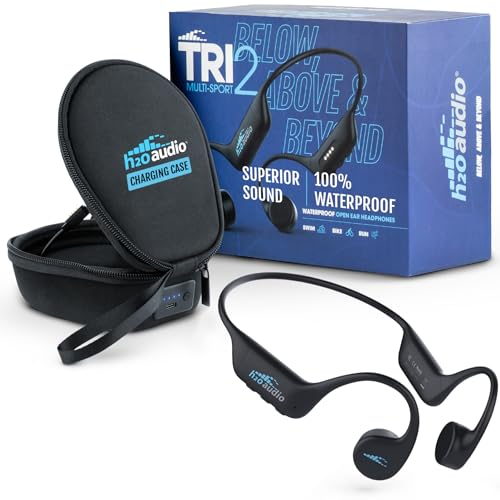
H2O Audio TRI 2 Multi-Sport: the deepest rating, built for the water first
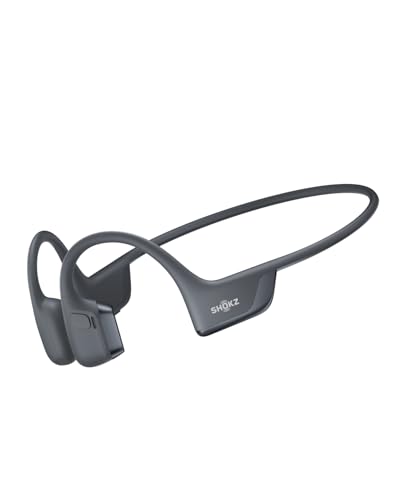
H2O Audio is a water-sports specialist, and the TRI 2 Multi-Sport reads like it: the conduction pads sit on the cheekbone, the sealing is IPX8 with the maker’s stated submersion figure of three point six metres — the deepest documented depth on this list — and the design brief runs from pool laps to open-water swims and the bike and run legs beyond them. Playback splits the usual way: Bluetooth on land, and an onboard MP3 mode with eight gigabytes of storage for the water, since the connection itself cannot follow. The TRI 2 is the standard model in its line, and one clarification belongs in the open: the Playlist+ app feature belongs to the TRI 2 Pro, not to this version, and nothing in this review credits it here.
The depth figure is the headline, but the multisport framing is the substance. A headset shaped for goggle straps and open-water sighting, then asked to stay put on a ride and a run, solves a wider brief than a pure pool tool, and the eight gigabytes — smaller than the thirty-two fitted to two rivals — is the honest cost: this is a headset for a curated training playlist, not a whole library. Buyers who load a dozen albums and rotate them will never feel the limit; buyers who want everything they own on the device should look at the larger stores above. What the TRI 2 offers in exchange is the specialist’s depth of focus: the deepest rating, a water-first shape, and a maker whose entire catalogue is built around getting audio into wet environments.
Strengths
- IPX8 sealing with a maker-stated three point six metre submersion figure — the deepest documented rating among the five.
- A genuinely multisport shape, designed to move from goggles in the water to helmet-adjacent use on the bike and run.
- Bluetooth plus onboard MP3 playback covers both environments, with the water side running from its own storage as physics requires.
- A specialist maker’s focus: every design decision in the product serves wet use first, rather than adapting a road headset.
Trade-offs
- Eight gigabytes of storage is a quarter of the capacity fitted to the Shokz and Mojawa swim picks; library size is a real constraint.
- The standard TRI 2 does not carry the Pro model’s Playlist+ feature — buyers comparing listings must keep the two versions separate.
- Bluetooth does not work underwater on this or any headset here; the MP3 mode is the whole show once the head goes under.
- The water-first shape and specialist positioning make it a narrower everyday headset than the road picks for buyers who rarely swim.
Who it suits
The TRI 2 suits the open-water swimmer and the triathlete whose training starts in the water and whose headset must still be there, working, two disciplines later. It is the depth-led pick of the five. Water-first athletes who want the deepest documented rating on the list should check price on Amazon.
Check price on Amazon: H2O Audio TRI 2 Multi-Sport
How the five compare
The table compresses the comparison into documented facts. Water figures are each maker’s own stated rating and depth under its own conditions, and the fresh-water caveat applies to every immersion figure in the column. The right-hand column is an editorial summary of where each headset’s strengths point.
| Headset | Conduction design | Maker-stated water protection | Playback in the water | Storage | Notable hardware | Best for |
|---|---|---|---|---|---|---|
| Shokz OpenRun Pro 2 | Hybrid: bone conduction plus air driver for bass | IP55, jets and dust | None — dry land only | None | USB-C charging, 12-hour battery figure | Daily road training with the fullest sound |
| Shokz OpenSwim Pro | Bone conduction, eighth generation | IP68, submersion to 2 metres fresh water | Onboard MP3 mode | 32GB | Bluetooth for land, storage for water | Swimmers who also run, in one headset |
| Suunto Wing | Bone conduction | IP67, temporary immersion | None — no onboard storage | None | LED safety lights, head-motion controls, bundled powerbank | Dark-hours road training and visibility |
| Mojawa Run Plus | Bone conduction | IP68, swim sealing | Onboard MP3 mode | 32GB | Titanium frame at 29.6 grams | The full swim-run brief at a value position |
| H2O Audio TRI 2 Multi-Sport | Bone conduction at the cheekbone | IPX8, submersion to 3.6 metres | Onboard MP3 mode | 8GB | Water-first multisport shape | Open-water swimmers and triathletes |
Matching the headset to the training week
Read against a real training week rather than a specification table, the five sort themselves quickly. The pool-first athlete has three genuine candidates and chooses among them on storage and depth: the OpenSwim Pro for the largest library plus Bluetooth on land, the Run Plus for the same brief at a lighter weight and a friendlier position, and the TRI 2 for open water and the deepest rating with a smaller, curated playlist. The road-first athlete has the mirror-image choice: the OpenRun Pro 2 for sound and battery, the Wing for lights and gesture control in the dark months, and the Philips for the cautious, well-documented purchase with sealing to spare. The triathlete is the reader both trios claim, and the deciding question is where the headset spends most of its hours — water-led training points to the swim trio, road-led training with occasional pool sessions points to a road pick plus the discipline of leaving it in the locker room.
Budget sequencing deserves a plain word, because the five do not ask for the same commitment and the differences buy different things. The swim trio’s money goes into sealing and storage — engineering a buyer who never swims should not fund — while the road trio’s money goes into battery, sound and safety hardware that a pool-only athlete will never switch on. The honest first question is therefore not which headset is best but which environment owns most of the training week, and the second is whether one headset must cover everything or whether the week can be split. Athletes who split it — a swim pick for the pool and nothing at all on the road, or the reverse — often spend less in total than the buyer of a flagship that does both jobs at a premium. The one-headset answers exist here, the OpenSwim Pro and the Run Plus, and they earn their place precisely for the reader whose logistics forbid a split: one band in the kit bag, charged once, that simply follows the day wherever it goes.
One reader should buy none of these, and it is fair to name them again at the end: the listener whose sessions happen at a desk, on a sofa or in a quiet room, where awareness of surroundings is worth nothing and sound quality is worth everything.
Every design decision in this category trades fidelity for openness, and in a silent room that trade buys nothing. The five here earn their prices only where the open ear is doing real work — traffic, water, a training partner’s voice, a name called across a pool deck. Judged there, they divide cleanly, and the table above is the honest map of the division.
Care, charging and getting years out of the band
These headsets ask for a small amount of deliberate care, most of it aimed at the two enemies of the format: salt and charging contacts. The swim picks should be rinsed in fresh water after pool sessions and left to dry fully before they meet their charging contacts, because the magnetic and pin contacts that survive immersion still corrode when they are put away wet and salty; the makers’ own care notes run along exactly these lines. The road picks ask for less — a wipe of the pads and band after sweaty sessions keeps the skin-contact surfaces honest — but the same dry-before-charging habit protects their contacts too. Battery care is the ordinary lithium discipline: avoid storing the headset flat for months, top it up before a training block rather than after every session, and expect the sealed swim designs to be the ones where a tired battery ends the product’s life, since none of the five offers a replaceable cell.
The band itself is the other wear item. Its tension is the fit, and tension fades if the band is stored stretched over a wide object or twisted into a kit bag; hanging it or returning it to its case keeps the spring the maker tuned. Transducer pads that buzz at volumes that used to be clean are usually reporting a fit change — hair, a new glasses frame, a cap underneath — rather than a failure, and reseating the band is the first fix. Treated this way, the category is durable: there are no hinges to crack, no ear tips to lose and no cushions to perish, which is part of why athletes keep these headsets for years once the fit is right. The one consumable to plan around is the charging cable on the proprietary designs — it is small, it travels, and it gets lost; noting which picks charge over USB-C, as the OpenRun Pro 2 does, is a legitimate tiebreaker for buyers who have buried a drawer in orphaned cables before.
Frequently asked questions
How is bone conduction different from open-ear earbuds?
The sound reaches the inner ear by a different road. A bone conduction headset presses vibrating transducers against the cheekbone and sends the signal through the skull, so the ear canal stays open and uninvolved; an open-ear earbud is a small loudspeaker held near the canal that plays through the air like any speaker. In practice the bone design keeps the canal clearer, leaks less at moderate volume, and keeps working with the ears underwater or plugged, while the air design usually produces fuller bass. The makers of all five picks here document the conduction mechanism by name, which is the claim to look for.
Can I listen to streaming music while swimming with these?
No, and the limit is physics rather than any model here. Bluetooth uses radio frequencies that water absorbs within centimetres, so the connection ends at the surface for every wireless headset. The swim picks answer with onboard storage and an MP3 mode: the OpenSwim Pro and the Mojawa Run Plus carry thirty-two gigabytes of files, and the H2O Audio TRI 2 carries eight. You load the music by cable before the session and the headset plays it from its own memory. Note the naming trap in the Shokz line — the OpenSwim Pro adds Bluetooth for dry land, while the standard OpenSwim is an MP3-only device with no Bluetooth at all.
Are the waterproof ratings good for the sea and for chlorinated pools?
The immersion figures quoted by the makers are established under controlled fresh-water conditions, and no maker on this list promises durability in seawater, where salt attacks seals and charging contacts in ways the laboratory figure does not cover. Chlorinated pool water is the environment the swim picks are designed around, with a rinse in fresh water afterwards as the standard care instruction in the makers’ documentation. The ratings also belong only to the device measured: the Suunto Wing’s headset is IP67 while its bundled powerbank is IP55, and treating the pair as one rating would be a mistake the reviews above avoid.
Can people around me hear what I am listening to?
At moderate volume in an ordinary environment, very little — the vibration path through bone is far more private than an open speaker. Push the volume high, though, and two things happen: the transducers begin to tickle against the skin, and airborne leakage rises until someone nearby in a quiet room can follow the music. The practical reading is that these headsets are well mannered at the volumes their safety purpose implies, and that a silent library is the one indoor setting where a sealed earbud remains the politer tool.
Will a bone conduction headset work with glasses or a helmet?
Generally yes, with fit depending on the band. The wraparound band shares the space behind the ear with glasses arms, and most wearers settle the band slightly higher to let both sit comfortably; thick frames can still argue with the transducer pads. Cyclists add a helmet strap to the same region, where the slimmer, lighter bands — the Mojawa’s titanium frame is the extreme case here at twenty-nine point six grams — coexist most easily. Swimmers route the band alongside goggle straps or under a cap, which the swim-shaped picks are designed around. Trying the combination at training pace, rather than standing still, is what reveals whether a particular pairing works.
The open ear is an honest bargain — awareness and water, paid for in bass — and the right headset is simply the one whose side of that bargain matches the water, roads and hours that make up your week.