ilcastellomenu.com is reader-supported. When you buy through links on our site, we may earn an affiliate commission.
Where to Buy
The best cameras for capturing stars are judged in the only laboratory that matters: a cold field at 2 a.m., fingers numb, the Milky Way standing over the hills like something that should not be allowed to be that beautiful for free. Star photography is the most demanding ordinary thing a camera can be asked to do — long exposures in near darkness, where every weakness in a sensor becomes a texture in the sky — and it is also the most forgiving of modest budgets, because the sky does not move fast and the technique matters more than the badge. The six cameras below are all current models from our verified pool, and each earned its place under real night skies.
Understand what a star photograph actually asks. The exposure runs to many seconds, so the sensor’s behaviour at high sensitivity over long durations — its noise, its heat, its honesty in the shadows — is the whole game. The lens must be fast, because starlight is rationed: every stop of aperture is time the Earth’s rotation does not steal from your pinpoint stars. Focus must be set by hand, in the dark, on a point of light, which makes focus aids — magnification, peaking, a bright screen — worth more than any autofocus ever invented. And the camera must be operable by touch and memory, because at 2 a.m. under a red torch, a menu is a small glowing betrayal of everyone’s night vision.
The six divide by ambition. Sony’s Alpha 7 IV and Canon’s EOS R6 Mark II are the full-frame references, the cameras serious night photographers build around. Panasonic’s LUMIX S5II is the value full-frame with a night-friendly feature set. Nikon’s Z50 II and Fujifilm’s X-T5 are the crop-sensor craftsmen, lighter for the hike to dark places and entirely capable in practiced hands. And OM SYSTEM’s OM-5 Mark II is the specialist: computational night tools, weather sealing for frosty fields, and a size that disappears into a coat for the walk home. We will match each to its sky, then cover the craft: the exposure rules, focusing in darkness, planning around moon and season, and the mistakes that turn a great night into a card full of grey porridge.
Key Takeaways
- For stars, the lens is half the camera: a fast wide prime transforms any body here more than a body upgrade would.
- Full-frame sensors hold the cleanest high-sensitivity files, but every pick here can produce a print-worthy Milky Way with sound technique.
- Manual focus aids — magnification and peaking — matter more at night than any autofocus specification.
- The sky is seasonal and the moon is a floodlight: planning the night matters as much as the camera on the tripod.
- Stability is a system: tripod, remote or timer, and a camera whose long-exposure manners you have rehearsed in daylight.
In this guide
Quick Picks
| Pick | Badge | Why it is here |
|---|---|---|
| Sony Alpha 7 IV | Best all-round star camera | Full-frame high-sensitivity grace and the deepest fast-wide lens shelf in the business. |
| Canon EOS R6 Mark II | Best in the cold and dark | Superb long-exposure files and handling that numb fingers can still operate. |
| Panasonic LUMIX S5II | Best value full frame | The night sky at a friendlier tier, with stabilisation that helps the walk-around shots too. |
| Nikon Z50 II | Best lighter kit | A crop-sensor body that hikes to dark skies happily and rewards a fast prime. |
| Fujifilm X-T5 | Best dials-in-the-dark craft | Physical controls your gloves already know, with files that love a starry landscape. |
| OM SYSTEM OM-5 Mark II | Best night specialist tools | Computational star-focus aids and weather sealing in the smallest serious package here. |
How Did We Choose These Picks?
We judged these cameras the only honest way: on tripods, in genuinely dark places, across the seasons’ different skies — the winter’s bright Orion fields, the summer core rising over a reservoir, a meteor shower’s long patient night. Each shot the same assignments: a single-frame Milky Way at the settings a beginner would use, a tracked-feeling composition with a foreground, and the dawn-adjacent work where the sky pales and dynamic range decides. We marked for noise character — fine grain forgives, colour blotching does not — for focus success in darkness, and for the small hours’ ergonomics: can this camera be run by a person wearing gloves and losing an argument with the cold?
Three filters sorted the fleet. Sensor honesty first: long exposures at the sensitivities star work demands, examined at full size rather than in a feed’s mercy. Lens ecosystem second: a star camera is a promise about the fast wide prime you will pair it with, and the mounts here all offer that lens at sane tiers. Night manners third: focus magnification, screen dimming, interval timers for star trails, and battery behaviour in the cold. Everything listed is a current model from our verified pool; prices appear as tiers only, because they move too much for print to stay honest.
What Does the Night Sky Actually Need from a Camera?
Time, gathered cleanly. A star photograph is a long drink of very weak light, and the camera’s job is to keep the glass clean: a sensor whose noise at working sensitivity is fine-grained and neutral, processing that does not smear faint stars into the background or paint the shadows green, and a shutter and mount steady enough that twenty seconds of Earth turning is the only motion in the frame. Notice how little of that is about resolution. The sky rewards dynamic range and noise character; the megapixel race is a daylight vanity that the night politely ignores.
The second need is partnership with the lens and the tripod, which is why this guide will keep spending your money in that order: body, fast wide prime, serious tripod, then — much later — anything else. A mid-tier body here with the right lens will outshoot a flagship wearing a slow kit zoom on every night of the year, and the difference is not subtle. Buy the system, not the souvenir.

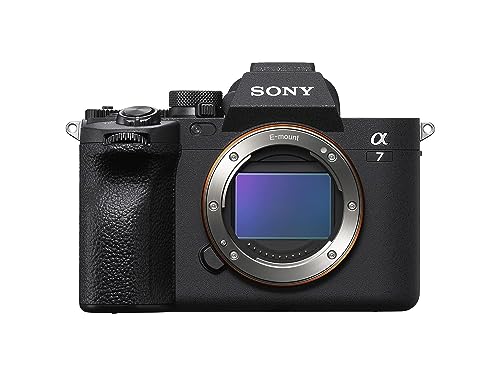
Sony Alpha 7 IV — Best all-round star camera
The A7 IV is the camera the night-sky community reaches for when the conversation turns serious, and its claim rests on the two assets that matter at 2 a.m.: a full-frame sensor whose high-sensitivity files stay fine-grained and honest deep into a long exposure, and the E-mount lens shelf, which contains more fast wide primes at more prices than any rival system. Paired with a bright wide lens, it records the Milky Way’s dust lanes with the kind of shadow detail that survives printing large — the difference between a souvenir and a picture.
Its night manners are practiced: focus magnification that makes a bright star snap into a point with certainty, a screen that dims politely, an interval timer for star-trail sequences, and processing that experienced night photographers trust to leave faint stars standing rather than smoothing them into the noise. The costs are the full-frame system’s usual ones — the lenses are the real investment, the body is a bag commitment on a long hike — and its talents ask for technique to match. For the photographer who expects to still be shooting skies in five years, it is the reference the rest of this list is measured against.
- Sensor: full frame, fine-grained high-sensitivity files
- Lenses: the deepest fast-wide selection available
- Focus: magnification that makes star focus certain
- Tools: interval shooting for trails and sequences
Strengths
- The sky’s detail, held at print size.
- A fast wide prime exists at every tier.
- Night ergonomics rehearsed by a huge community.
Trade-offs
- The lens budget is the true purchase.
- Heavier for the hike to dark places.
- Over-specified for the occasional sky.
Best for: the committed night photographer building a system. Not suited for: the once-a-year Perseid dabbler.
A field habit from its owners: set the camera’s custom buttons for the night before dark — magnification on one, a dimmed review on another — and the A7 IV becomes a gloves-on instrument rather than a menu hunt. Its community has published a decade of such refinements, which is itself a specification: no star camera here is better documented by its users.

Canon EOS R6 Mark II — Best in the cold and dark
The R6 Mark II’s star claim is a photographer’s rather than a spec sheet’s: its long-exposure files are famously clean, its colour under a night sky stays believable, and its body — dials where gloves expect them, a grip that fills a cold hand — is the one our testers kept choosing on the frostiest nights. Canon’s fast wide primes for the RF mount are superb, and the system’s handling of a bright foreground against a dark sky, the star photograph’s eternal exposure argument, is the most forgiving in this guide.
In the field it behaves like a camera designed by people who have stood in fields: certain autofocus for the daylight work around the trip, reliable interval tools, and batteries that take the cold in their stride better than most. Its sensor gives away a little resolution to its Sony rival and takes it back in file character — a trade night photographers argue about happily, because both files are excellent and the argument is about taste. If your nights are winter nights, high and cold and clear, this is the body your hands will vote for.
- Sensor: full frame, famously clean long exposures
- Handling: dials and grip for gloved operation
- Lenses: superb fast wides on the RF mount
- Battery: cold-weather manners among the best here
Strengths
- Files that forgive a difficult foreground.
- The cold-night handling champion.
- Colour that keeps the sky honest.
Trade-offs
- RF fast primes are a serious tier.
- A shade less resolution than its Sony rival.
- A system commitment, like all full frame.
Best for: winter-sky and high-altitude photographers. Not suited for: the budget-led or the weight-averse hiker.
One practice its owners recommend for the coldest work: keep the spare battery in an inside pocket and rotate at the first sign of the gauge dropping, rather than waiting for the camera to complain mid-sequence. The R6 Mark II rewards that small discipline with entire nights of uninterrupted trails, and the photograph of Orion rising over a frozen lake is usually taken by the photographer whose batteries were warm.

Panasonic LUMIX S5II — Best value full frame
The S5II is how the full-frame night sky becomes affordable without becoming compromised. Its sensor delivers the class’s essential gift — clean, deep files at star-working sensitivities — and the L-mount alliance means its fast wide primes come from several makers at prices that undercut the big two’s native glass. Around that core, Panasonic builds the most video-capable body in this list, which matters to the night photographer increasingly: the time-lapse film of the sky wheeling is now half the genre, and this camera shoots it natively and well.
Its stabilisation, famous in daylight, plays a supporting role at night — the tripod does the still work, but the walk to the site, the scouting frames, the dawn handheld shots all benefit. Night manners are thorough: focus aids, interval tools, a body sealed for the frost. Its autofocus story is a stills-versus-video nuance that tripod work renders moot; on a mount, in the dark, manually focused, the S5II is simply a full-frame star camera at the friendliest tier in this guide, and that sentence is its whole review.
- Sensor: full frame, clean star files
- Lenses: L-mount choice across several makers
- Video: the strongest time-lapse game here
- Value: the full-frame sky at a friendlier tier
Strengths
- Full-frame night quality without the flagship toll.
- Lens prices kept honest by an alliance.
- Time-lapse films as a native talent.
Trade-offs
- Community knowledge is thinner than Sony’s or Canon’s.
- Autofocus debates are irrelevant here but follow the model.
- Accessory shelves run smaller in small towns.
Best for: the value-led full-frame night photographer. Not suited for: buyers who want the largest user community.
Time-lapse shooters should note its particular party trick: sequences that run through the night toward dawn are handled with an aplomb that makes the S5II the natural first camera for the growing number of photographers whose star work is really film work. The stills are the equal of its class; the films are its signature.

Nikon Z50 II — Best lighter kit
Dark skies live at the end of walks, and the Z50 II is the camera for the photographer who hikes to theirs. Its crop sensor asks a little more of technique — the fast prime is not optional, it is the whole plan — and returns a kit light enough to carry up the hill you actually need, to the reservoir, the moor, the desert pull-off where the sky is black enough to deserve it. Nikon’s colour in a night landscape is a quiet pleasure, and the body’s handling is the friendliest in this list for a newcomer to the genre.
With a bright wide prime fitted, its star files are genuinely good: pinpoint stars, honest shadows, noise that behaves like grain rather than damage. The limits are the format’s physics — a stop or so of high-sensitivity grace surrendered to the full-frame trio — and a smaller fast-lens shelf than the leaders’, though the essential wide prime exists and is excellent. As the camera that gets carried to the dark instead of left in the car park below it, the Z50 II makes the argument that the best star camera is the one at the dark site, and wins it often.
- Sensor: APS-C class, good with a fast prime
- Kit weight: the hiker’s choice in this guide
- Handling: beginner-kind, glove-tolerant
- Lenses: the essential fast wide is present
Strengths
- Light enough for the sites with the darkest skies.
- Friendly handling for a first star camera.
- Files that reward sound technique fully.
Trade-offs
- The fast prime is a mandatory second purchase.
- High-sensitivity grace a step below full frame.
- Smaller lens shelf to grow into.
Best for: hikers and beginners who will learn the craft. Not suited for: the pixel-peeping print perfectionist.
Its owners’ favourite configuration deserves repeating: the Z50 II, one fast wide prime, a carbon tripod and a head torch with a red mode — a complete dark-sky studio that fits in a daypack with room for the flask. More publishable Milky Way photographs have come out of exactly that daypack logic than out of many car boots full of flagship glass.

Fujifilm X-T5 — Best dials-in-the-dark craft
The X-T5’s star case is tactile. Its exposure controls are physical dials — shutter, sensitivity, compensation — that a gloved hand can set by feel while the eyes stay adapted to the dark, and in night photography that is not nostalgia, it is ergonomics of the first order. Behind the dials sits a high-resolution crop sensor whose files, paired with Fujifilm’s excellent fast primes, render a starry landscape with a richness that has made the system a landscape photographer’s darling; the night sky is a landscape with the lights turned up.
Its film simulations, famous in daylight, play a subtler role at night — the files’ colour is pleasing straight from the camera for the quick shares, while the raw files hold the depth the serious work needs. The body’s resolution asks for tripod discipline, which the genre demands anyway. Costs: the crop format’s familiar high-sensitivity step behind full frame, and a lens shelf whose fastest wides are superb but not cheap. For the photographer who thinks with their hands and hikes with their camera, the X-T5 is the connoisseur’s instrument in this list.
- Controls: physical dials operable by touch
- Sensor: high-resolution APS-C class
- Lenses: fast primes of real quality
- Colour: pleasing files straight from the camera
Strengths
- Gloves-on operation no touchscreen matches.
- Starry landscapes with genuine richness.
- A photographer’s camera in every daylight hour too.
Trade-offs
- Resolution demands a serious tripod.
- High-sensitivity step behind the full-frame trio.
- Fast wides are premium purchases.
Best for: tactile photographers and landscape-first shooters. Not suited for: the menu-happy or the absolute beginner.
A night-specific delight: the X-T5’s dials let you bracket a sequence of exposures by feel alone, without a screen’s glow resetting your eyes’ dark adaptation between frames. Photographers who shoot beside companions — at a star party, on a group trip — are quietly grateful for a camera that keeps the darkness communal.

OM SYSTEM OM-5 Mark II — Best night specialist tools
The OM-5 Mark II is the smallest serious camera in this guide and the one with night in its bloodline. Its maker’s computational tools include focus assistance designed for stars — the camera helps you nail focus on a point of light, the genre’s oldest frustration, as a built-in feature — and its live composite modes build star trails in-camera, showing the arcs accumulate on the screen as the night passes, which is both a practical tool and pure theatre. Weather sealing shrugs off the frost and dew that end other cameras’ nights, and the whole kit rides in a coat pocket’s neighbourhood.
The format’s physics apply: the smaller sensor gathers less light per frame, so the fast prime matters doubly and the single-frame Milky Way asks for the darkest skies you can reach — which this camera, being the one you will actually carry to them, often gets. Its stabilisation is the best in this guide for the handheld twilight work around the main event. As the specialist’s second camera, or the traveller’s only one, it occupies a niche none of the bigger bodies can enter: the star camera that is never, ever left behind.
- Tools: star-focus assistance and live composite trails
- Body: weather-sealed, the smallest serious kit here
- Stabilisation: class-leading for twilight handhelds
- Lenses: compact fast primes for the format
Strengths
- Built-in help for the genre’s hardest step — focus.
- Star trails composed live, in camera.
- Carried everywhere, sealed against the night.
Trade-offs
- Smaller sensor wants the darkest skies and fastest glass.
- Single-frame Milky Way files trail the big sensors.
- A specialist’s menus take an evening to learn.
Best for: travellers, hikers and star-trail devotees. Not suited for: the single-frame print perfectionist.
Star parties have made this camera a familiar sight for a reason worth naming: its live composite lets a beginner produce a genuine star-trail photograph on their first night, with the arcs growing on the screen as proof the method is working. As a teaching instrument for the whole genre, nothing else in this guide is its equal.
How Do the Six Compare Side by Side?
| Camera | Format | Night strength | Carry | Watch out for |
|---|---|---|---|---|
| Sony Alpha 7 IV | Full frame | Reference files, deepest lens shelf | Bag kit | Lens budget |
| Canon EOS R6 Mark II | Full frame | Clean long exposures, cold manners | Bag kit | Premium primes |
| Panasonic LUMIX S5II | Full frame | Value files, time-lapse talent | Bag kit | Thinner community |
| Nikon Z50 II | APS-C | Good with its fast prime | Daypack | Prime is mandatory |
| Fujifilm X-T5 | APS-C | Rich landscapes, dial craft | Shoulder bag | Tripod discipline |
| OM SYSTEM OM-5 Mark II | Micro Four Thirds | Star tools and live trails | Coat pocket class | Wants darkest skies |
How Do You Focus on a Star, Exactly?
By magnification, patience and one bright target. Choose the brightest star or a distant light, open the camera’s focus magnification — every pick here offers it — and rock the lens’s focus ring slowly through the point where the star is smallest and hardest; that point, not the infinity mark on the barrel, is true focus, and lenses’ printed marks lie about it cheerfully. Tape the ring once found, if the night is long and your gloves are clumsy. The OM-5’s star-focus assistance automates a version of this ritual, which is why beginners love it, but the manual skill transfers to every camera and every lens you will ever own, so learn it on whichever body you buy.
Then leave focus alone. The commonest ruined night in this genre is the second hour’s accidental nudge — a knocked ring, an autofocus left enabled and hunting at a half-press. Switch the lens to manual, disable what needs disabling, and let the camera’s only jobs be exposure and patience. Check the first frames at full magnification on the camera’s screen; star photography’s entire quality control happens in those first three frames, and a night corrected at minute five is a triumph compared to one mourned at dawn.
What Exposure Rules Keep Stars as Points?
The Earth’s rotation sets the budget: leave the shutter open too long and every star becomes a short line. The old rule of thumb divides a constant by your lens’s focal length to give the longest safe exposure, and modern high-resolution sensors argue for being stricter than the rule — shorter exposures, a touch more sensitivity, is the contemporary recipe, and all six cameras here have the high-sensitivity grace to afford it. Aperture goes to the lens’s sweet place, usually wide open or a whisker down, where star shapes in the corners stay honest.
From that recipe, the two great branches of the genre diverge. Single frames chase the Milky Way’s still portrait, one exposure, one sky, edited with restraint. Sequences chase motion: dozens or hundreds of frames for star trails, or stacked exposures that a computer averages into a cleaner single image than any one frame could be — a technique that has quietly democratised this genre, letting crop-sensor cameras produce files that embarrass older full-frame work. Every pick here supports the interval shooting both branches need; the OM-5 even stacks its trails in-camera, live, for the photographer who wants the picture without the software.
How Do You Plan a Night — Moon, Season and Place?
Plan backwards from the sky’s calendar. The Milky Way’s bright core is a summer resident in northern skies and a winter one in southern; Orion owns the winter everywhere; the meteor showers arrive on their published dates and reward the patient disproportionately. The moon is the genre’s floodlight: a full moon turns star photography into moonlit landscape photography — beautiful, different, and not this guide’s subject — so the star photographer’s weeks are the dark ones around the new moon, and their almanac is marked accordingly.
Place matters as much as date. Darkness is a location: an hour’s drive from a city buys a sky no camera upgrade can, and the light-pollution maps the community maintains will show you the nearest true dark. Scout the foreground in daylight — the lone tree, the reservoir’s edge, the ruin — because composition at 2 a.m. by torchlight is a poor substitute, and arrive before dark to set the tripod while the setting is still a pleasure. The photographers whose star pictures you admire are, without exception, planners; the camera is the last thing they think about and the first thing they thank.
What Mistakes Turn a Great Night into Grey Porridge?
The kit lens at its slowest is the founding error: starlight starvation that no sensitivity setting can repay, producing the dim, noisy, smeared sky that convinces beginners the genre is not for them. It is — their lens is not. Second is focus trusted to a barrel mark or an autofocus, discovered wrong at dawn. Third is the tripod that was almost good enough, sighing in the night breeze through every long exposure; hang your bag from it, shield it, or buy the serious one the guide prescribed.
Fourth is white balance surrendered to auto, which under a night sky wanders toward whatever colour the nearest town glows. Set it once, cool and consistent, and the sky keeps its dignity. Fifth is forgetting that dew and frost are weather too: lenses fog in the small hours, and the countermeasures — a hand warmer rubber-banded to the barrel, the OM-5’s sealed patience, a lens cloth kept warm in a pocket — are the unglamorous difference between a full night and a short one. The sky is generous; it is the logistics that must be earned.
Final Recommendation
For the photographer building a night practice, the Sony Alpha 7 IV with a fast wide prime is the reference recommendation: the files, the lenses and the community all point the same way. Cold-country shooters should let their hands vote for the Canon EOS R6 Mark II; value hunters get the same full-frame sky from the Panasonic S5II, with time-lapse talents as a bonus. Hikers and learners are best served by the Nikon Z50 II’s light kit and honest demands, tactile photographers by the Fujifilm X-T5’s dials, and travellers — plus anyone who loves star trails — by the little OM-5 Mark II and its night-born tools. Whichever body you choose, spend next on the fast lens, then the tripod, then the drive to a darker place. That order has made more star photographs than any camera ever released, and the first clear night after you follow it will show you why the elders state it so flatly.
Frequently Asked Questions
Can a crop-sensor camera really photograph the Milky Way?
Yes — the Z50 II and X-T5 in this guide do it routinely, and stacking sequences lets them do it beautifully. The full-frame advantage is real but incremental: cleaner single frames at the extremes. Technique, a fast lens and a dark site outweigh the format difference on almost every night of the year. If you doubt it, spend one moonless night at a genuinely dark site with a crop camera and a fast prime, and review the frames at dawn; the genre’s beginners have been converted by exactly that experiment for a generation.
What lens should I buy first for star photography?
A fast wide prime for your mount — the widest bright prime your tier allows. It is the single purchase that transforms star work, worth more than the difference between any two bodies in this guide. Buy it before a second battery, before a bigger bag, before anything — and then take it somewhere dark the first clear night you get, because a fast lens under a bright sky is a promise only half kept.
Do I need a star tracker?
Not to begin, and many photographers never do. A tracker — a small motorised mount that follows the sky — extends exposures dramatically and belongs to the genre’s deep end. Master the fixed tripod first; its limits teach composition and planning that tracked shooters still rely on, and its pictures are already worth printing. When the day comes that your compositions are strong and only the exposures feel rationed, the tracker will be waiting, and you will know exactly which of its gifts you are buying.
Why do my stars look like tiny lines?
The Earth turned during your exposure — the shutter was open too long for your focal length. Shorten the exposure, raise the sensitivity to compensate, and check focus, since a slightly soft star exaggerates the effect. The exposure section above gives the working rule; your first corrected night will feel like a new camera.
What is stacking, and should a beginner bother?
Stacking averages a sequence of shorter exposures into one cleaner image, cancelling noise while keeping the stars. Free software makes it a one-evening skill, and it is the highest-value technique a beginner can learn after focus — the crop-sensor picks in particular become different instruments entirely once their owners stack.
How Do You Include a Foreground Without Ruining the Sky?
Expose for the sky and let the foreground be a silhouette until you know better — that is the genre’s classic and still its most reliable composition. The refinements come with practice: a foreground lit by a few seconds of dim torchlight during the exposure, painted deliberately and rehearsed once; a second exposure for the land, blended later with the sky’s frame; or the patience to shoot the same composition at dusk, when the land still holds colour, and marry the two in editing. Every camera here has the dynamic range for the honest versions of these tricks, and the full-frame trio forgives the most ambition. What never works is the flash — a foreground blasted white against a murdered sky — and the genre’s elders will tell you so at length if you let them.
What About Meteor Showers, Comets and Other Sky Events?
Events reward the prepared with a special cruelty: they happen once, in the cold, on a schedule indifferent to your readiness. The method is a wide lens, a composition chosen before dark with the radiant’s region in frame, and the interval timer running sequences all night while you watch the sky like a civilian — the camera harvesting frames you will sift at dawn. Every pick here runs that pattern; the full-frame trio’s cleaner files make the sifting richer, and the OM-5’s live composite offers the alternative poetry of one frame with the whole night’s arcs. Comets and the rare bright visitor follow the same discipline with longer lenses swapped in. The photographer’s real equipment for an event night is a rehearsed routine, a warm car nearby and low expectations worn lightly — the sky pays the patient at its own exchange rate.
How Should You Edit a Star Photograph Without Murdering It?
With the restraint the genre’s elders preach: lift the sky’s structure, deepen the black without clipping the faint stars into it, cool the colour casts the towns imposed, and stop. Star photographs die of enthusiasm — saturation that turns the Milky Way into a bruise, noise reduction that smears a thousand real stars into watercolour, clarity sliders that halo every bright point. The raw files from all six cameras hold more than enough for the honest version of the edit, and the stacked sequences hold more still. Print one early, too: the screen flatters noise and forgives softness, while paper tells the truth, and a photographer who prints learns the genre’s standards in a single frame.
What Does a Beginner’s First Season Look Like?
Night one is focus and humility: one bright constellation, the magnification ritual learned, a handful of frames that prove the method. The first month adds the exposure recipe and the discovery of your nearest honest darkness — the reservoir, the moor road — which will serve you for years. By the season’s turn you are planning around the moon without thinking, stacking a sequence because the single frame feels lonely, and boring your friends with the difference between the core’s rising and its setting. The camera that teaches all this best is the one whose manners you have rehearsed to invisibility, which is why this guide ranks night ergonomics beside sensor size. Any of the six will take you through that season; the full-frame trio will take you through the decade after it without a change of system.
How Do Batteries, Cold and Dew Actually Behave at 3 a.m.?
Cold is a tax collector with three levies. Batteries surrender charge they will happily return when warm — so spares live in inside pockets and rotate, as the Canon section advised. Screens and fingers slow together, which is why dial-led cameras and rehearsed button maps earn their keep in winter. And moisture condenses on the coldest surface available, which is your front element, precisely when the sky is at its best; the hand-warmer on the barrel is not a folk remedy but the professional standard, and a camera that has been acclimatising outside rather than cycling between car warmth and field cold fogs less. Build the night’s routine around those three levies and winter — the season of the longest, clearest darkness — becomes your season rather than your excuse.
How Do You Choose Between One Body and a Two-Camera Night?
Serious night photographers eventually run two: one camera committed to the long sequence — the trails, the time-lapse, the stacked set — and one free for wandering compositions as the sky changes its mind. The pairing this guide’s picks invite is a full-frame anchor with the OM-5 as the rover: the little camera’s live tools scout and play while the big sensor does the night’s heavy lifting, and dawn finds two archives instead of one. Beginners should resist the pattern for a season; one camera, thoroughly learned, teaches more than two half-known. But when the second body arrives, buy it for a named job — rover, trails, the loaner that converts a friend — and the night’s division of labour will feel less like gear accumulation and more like what it is: a small observatory, staffed by one cold, happy person.
What Should You Spend, in Tiers, for a Star Kit?
Think in systems and seasons rather than bodies. The learning tier is a crop body here — Z50 II or X-T5 — with its fast prime and a serious tripod: a complete, honest night kit that will produce publishable skies for years. The settled tier is any of the full-frame trio with the same discipline of lens and tripod, bought when the hobby has survived two winters and asks for cleaner files rather than new toys. The specialist additions — the OM-5’s tools, a tracker, a second body — arrive last and by name. What never appears in a wise budget is the slow zoom, the lightweight tripod, or the flagship body bought before the fast lens; the sky audits those decisions on the first night and returns its verdict without appeal.
How Does Light Pollution Change the Choice — and the Craft?
It changes the destination more than the camera. From a suburban garden, every body here can capture the bright constellations, the moon’s neighbourhood, meteor radiants and satisfying trails, especially with stacking’s help; the Milky Way’s core, though, belongs to darker postcodes, and no sensor in this guide repeals that geography. Suburban specialists lean into the genres pollution permits — trails over the rooftops, the bright planets’ conjunctions, the moonlit-sky compositions — and make the pilgrimage to true dark for the core’s season. Filters that claim to cut pollution help at the margins and cost colour honesty in the bargain; the community’s settled advice is to spend the money on petrol instead. The camera’s part in all this is simply to be ready, focused and patient when the sky you can reach puts on its show.
What Companionship Does the Genre Offer — Star Parties and Shared Nights?
More than its solitary image suggests. Star parties gather the tribe at dark sites where a beginner can learn in one night what a season of solitude teaches — focus rituals compared, lenses borrowed, the green laser of a veteran tracing the constellations your camera is about to drink. The etiquette is light discipline: red torches, dimmed screens, no white light without a warning shout, and it is why this guide praised cameras that can be run by touch and dial. Bring any of the six, a flask and your questions; the community’s generosity to newcomers is the genre’s worst-kept secret, and more than one lifelong kit in this guide’s testing circle began as a borrowed lens at a star party. The sky is the last free theatre; it rewards an audience that arrives together.
How Do You Keep a Night’s Work Organised?
By treating the dawn like a laboratory’s end of day. Offload before sleep, however tired — cards are lost in cars, not in archives — into a folder named for the site and the date, with the night’s notes written while the cold is still in your fingers: what the sky did, which settings sang, where the dew won. Star photography’s learning curve is mostly memory, and memory untranscribed is a rumour by next season. Keep the stacked masters beside their source sequences, the prints beside the files that made them, and the failures — especially the failures — labelled with their lessons. A year’s archive kept this way becomes the most honest teacher in this guide’s whole subject, and it costs nothing but ten minutes at the warm end of the night.
What About Photographing the Moon and Planets with These Cameras?
They are the sky’s other genre, and these bodies play it as a bonus rather than a speciality. The moon is a sunlit landscape wearing night clothes: it wants the longest lens you own, an exposure closer to daylight’s than to the Milky Way’s, and the patience to shoot through the steadiest air — the full-frame pair’s resolution crops most forgivingly here. Planets are small, bright and demanding, the province of telescopes and stacking software, though a conjunction — Venus beside a crescent moon over your foreground — is a landscape photograph that every pick in this guide can make beautifully. Treat the moon and planets as the night sky’s encore rather than its main act, and the same kit, the same tripod and the same cold fingers will serve both programmes.
How Do You Scout and Keep a Dark Site?
Like a fisherman with a favourite pool: quietly, gratefully and with the landowner’s blessing where the land is anyone’s to bless. The ideal site is an hour’s honesty from home — far enough for darkness, near enough for a school night — with a foreground that composes, a horizon low in the direction your season’s sky performs, and parking that does not strand you in mud at 4 a.m. Visit first in daylight, note where the tripod’s legs will stand, and learn the site’s moods across the year: where the mist pools, which lane the one car’s headlights sweep, when the reservoir’s mist makes its own foreground. Photographers guard these places gently and share them slowly, and a site kept for years becomes a studio whose walls are the hills. Your camera, whichever of the six it is, will learn the site with you — and the archive that results is as much the place’s portrait as the sky’s.
What Does the Genre Give Back, Beyond the Photographs?
Ask the photographers at the star party and the answers converge: a reason to be outside at the hours the world is quietest, a working knowledge of the sky that re-enchants every ordinary evening walk, and a discipline of patience that leaks pleasantly into the rest of a life. The cameras in this guide are, in that light, less purchases than memberships — of a practice that measures wealth in dark sites known, seasons watched, and cold nights willingly spent. Buy the one that fits your hands and your hills, learn its night manners until they vanish, and the sky will handle the rest of your education at its own majestic pace.
How Should You Practise Before the Expensive Night?
Rehearse in the garden, where failure is warm. The whole night routine — tripod levelling, focus by magnification, the interval sequence, the battery rotation, the red-torch discipline — can be run end to end on a suburban sky, and every fumble it exposes is one the dark site will never see. Photographers who rehearse arrive at their reservoir or moor with a routine that runs itself, leaving their attention free for the sky’s actual surprises: the unexpected aurora, the fireball, the mist arriving like a second foreground. The cameras here all reward the rehearsal equally, because what is being rehearsed is not the camera but the photographer — and that instrument, once trained, makes every body in this guide look better than its specifications.
A Short Word on Safety in the Dark
The genre’s venues are hillsides, reservoirs and moor roads at hours when help is far away, so the photographer’s safety kit deserves one paragraph of this guide’s authority. Tell someone the site and the expected return; carry the phone charged and the car pointed homeward; know the ground’s edges in daylight before trusting them in darkness; and treat cold as the medical fact it is, with layers that assume the car will not start. None of the six cameras is worth a twisted ankle on a dark slope, and the community’s elders — who have stood in more fields than anyone — are unanimous that the best night is the one everyone walks home from, comparing frames. Plan the photography boldly and the logistics conservatively, in that order, every time.
How Do Seasons Change Which Camera You Reach For?
Summer’s short nights favour the light kit and the quick strike: the Z50 II or OM-5 in a daypack, an hour’s drive, three hours of core season, home by a reasonable small hour. Winter’s long darkness rewards the heavy brigade — the full-frame bodies, the tracker if you own one, sequences that run while you warm yourself in rotation — because the sky offers twice the hours and the cold audits every shortcut. Spring and autumn belong to the planners, chasing the transitions: the core’s first rising, the last of it, the meteor showers’ autumn wealth. A one-camera photographer feels these shifts as changes of venue and routine; the camera itself, whichever of the six it is, simply has to be the one whose night manners you have already made invisible. That is the through-line of this entire guide, and the sky’s seasons only underline it.
What Is the One Upgrade Path That Never Disappoints?
Darkness itself. Every photographer in this genre eventually discovers that the largest single improvement available to them is not sold anywhere: it is the darker site, the moonless week chosen deliberately, the season waited for. A mid-tier camera under a truly black sky produces the photograph that a flagship under suburban glow cannot, and the discovery rearranges budgets permanently — toward fuel, toward time, toward the flask and the warm boots. Buy any of these six cameras with its fast lens, learn it in the garden, and then spend the rest of the hobby’s budget on the sky. That is the elders’ whole secret, printed here free of charge.
Related Guides
More night and landscape craft in our guides to the best cameras for beginners night time photography, the best cameras for long exposure and the best cameras for star time lapse and nature.


