ilcastellomenu.com is reader-supported. When you buy through links on our site, we may earn an affiliate commission.
Where to Buy
Nine is a particular age for a first serious camera. A girl of nine can read a menu, follow a recipe with help, and explain in detail why one photograph of the family dog is better than another — yet she will still drop things, leave bags unzipped on wet grass, and lend her favourite possessions to friends without a second thought. The best cameras for girls age 9 sit exactly in that gap between competence and chaos: capable enough to reward growing skill, forgiving enough to survive the school bag.
Where to buy matters here because the gift market is crowded with toy cameras dressed up as real ones. Many colourful boxes on the shelf hide sensors so poor that every picture looks like it was taken through fog, and a child who receives one learns the wrong lesson — that photography is disappointing. Every camera in this guide takes pictures a nine-year-old can be genuinely proud of, prints them, shares them, or keeps them sharp on a screen. Nothing here is a toy pretending to be a camera.
Think about what a nine-year-old actually photographs. It is her friends pulling faces at a sleepover, the cat asleep in a laundry basket, a cake she helped decorate, the view from the back seat on a family trip, and endless experiments with her own reflection. The cameras below were chosen for those subjects: faces at arm’s length, pets indoors, food on a kitchen table, and scenes she will want to show a grandparent the same afternoon.
There is also a social side to consider. At nine, photography becomes a shared language. Instant prints get traded like stickers, taped into notebooks, and pinned above desks. A camera that produces something physical has an advantage no specification sheet captures, which is why two instant cameras lead this list — while the digital models behind them serve the girl who already talks about making videos or saving up for a channel of her own.
Durability shaped the shortlist as much as image quality did. We looked for cameras that tolerate knocks, that have few fragile moving parts exposed, that a child can operate with cold or sticky fingers, and that do not punish a beginner with menus written for engineers. A camera abandoned in a drawer after two weeks helps nobody, so handling and fun were scored alongside sharpness.
Finally, a word about supervision and privacy. A nine-year-old’s camera will capture other children, and families reasonably want some say in where those pictures travel. Several picks here keep everything offline by design — prints and memory cards rather than cloud uploads — and the guide’s later sections explain simple household rules that keep photography joyful without turning it into a lecture.
Key Takeaways
- Instant prints suit most nine-year-olds best: the picture exists immediately and can be traded, taped up, or given away.
- A rugged waterproof compact is the safest choice for a child whose camera will live in a backpack.
- Simple digital compacts with a selfie screen bridge the gap between snapshots and first videos.
- Interchangeable-lens cameras belong on this list only for a child already asking how pictures work.
- Offline cameras keep parents in charge of sharing — nothing uploads itself anywhere.
- Budget for the consumables, not just the camera: film packs and spare cards are the real running cost.
In this guide
Quick Picks
| Pick | Badge | Why it is here |
|---|---|---|
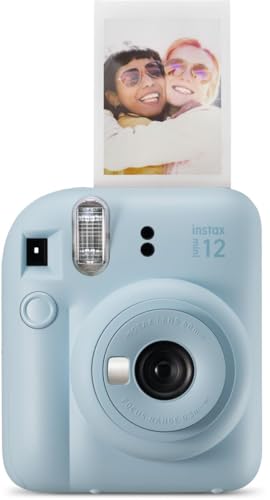
| Fujifilm Instax Mini 12 | Best first camera for most nine-year-olds | It prints credit-card-sized photos seconds after the shutter fires, with almost nothing for small hands to get wrong. |
| Polaroid Go Generation 2 | Smallest instant camera, easiest to carry everywhere | A pocket-sized instant camera that goes in a coat pocket, so it is present for the moments other cameras miss. |
| OM SYSTEM Tough TG-7 | Best rugged camera for the backpack and the beach | Waterproof, drop-resistant, and still a real camera with a proper zoom — built for the way children actually treat gear. |
| Sony ZV-1F | Best simple digital for first videos and vlogs | A fixed-lens camera with a flip screen and friendly video features, for the girl already filming everything. |
| Canon PowerShot G7 X Mark III | Best compact for sharp photos and room to grow | A pocketable compact with a larger sensor and tilting selfie screen — the keen photographer’s step up. |
| Canon EOS R50 | Best real system camera for a mentored young photographer | A genuine interchangeable-lens mirrorless camera with kind automatic modes — only for a child learning alongside an adult. |
How Did We Choose Cameras a Nine-Year-Old Will Actually Use?
We began by ruling out anything whose pictures would disappoint. A first camera teaches a child what photography feels like, and if the results are muddy she will conclude the hobby itself is dull. Each model here produces images that hold up on a tablet screen or a small print, because early pride is the engine that keeps a young photographer shooting.
Handling came next. Buttons had to be findable without looking, grips had to suit smaller hands, and the path from switching on to taking a picture had to be short. Nine-year-olds shoot in bursts of enthusiasm between other activities; a camera that needs a minute of setup misses the moment and, soon after, misses being carried at all.
We weighed failure modes honestly. Screens crack, lenses get fingerprints, and cameras meet pavements. Models with fixed lenses, sealed bodies, or cheap replaceable parts scored higher than delicate instruments, and the one true interchangeable-lens camera on the list is flagged clearly as a choice for a careful child with an adult nearby, not a general recommendation.
Running costs were treated as part of the product. Instant film is bought pack after pack, and a camera that seems inexpensive can become the dearest option by Christmas. The guide names which picks carry ongoing costs and which run happily on a memory card the family already owns, so the gift does not arrive with a hidden subscription to the film shelf.

Fujifilm Instax Mini 12 — Best first camera for most nine-year-olds
The Instax Mini 12 understands its audience better than any other camera here. You twist the lens to switch it on, point it, and press one large button; the camera measures the light, sets its own exposure, and pushes out a print that develops while a nine-year-old watches, usually with an audience gathered. That small ceremony — the whirr, the blank card, the image arriving — turns photography into an event her friends want to join, and it is why instant cameras so often become the most-used gift of a birthday.
Picture quality is modest by digital standards and that is beside the point. The prints are small, soft at the edges, and completely charming, and they go straight onto bedroom walls, into card slots in school bags, and inside birthday cards for grandparents. Because each frame costs film, children slow down and compose — an accidental lesson in looking carefully that unlimited digital shooting rarely teaches. The close-up mode, engaged by twisting the lens further, handles the cakes, crafts, and pet portraits that fill a nine-year-old’s archive.
Parents should go in clear-eyed about the film habit. Packs disappear quickly at parties, and the camera itself is only the beginning of the spending. Set the expectation early — perhaps a pack a month is hers to ration — and the Mini 12 teaches budgeting alongside photography. It has no screen, no Wi-Fi, and no account, so nothing she shoots can wander anywhere she did not physically hand it.
- Format: instant prints on Instax Mini film
- Operation: fully automatic exposure, twist-to-start lens
- Selfie help: small mirror beside the lens and close-up mode
- Power: AA batteries, easy to replace anywhere
- Sharing: physical prints only — nothing uploads
Strengths
- The print ritual makes photography social and immediate
- Almost impossible to operate incorrectly
- No screen, account, or upload path to supervise
Trade-offs
- Film packs are a continuing cost families must plan for
- Prints are small and soft compared with digital files
- No way to review or delete a picture before it prints
Best for: a sociable nine-year-old who will trade prints with friends and cover her wall with them.
Not suited for: a child who mainly wants video, or a family unwilling to keep buying film.

Polaroid Go Generation 2 — Smallest instant camera, easiest to carry everywhere
The Polaroid Go Generation 2 is the instant camera shrunk to the size of a chunky sandwich, and size changes behaviour. A camera that fits a coat pocket or a small cross-body bag travels to the park, the museum trip, and the cousin’s house, while a bulkier one stays home being admired. For a nine-year-old whose best subjects appear without warning — a rainbow over the playground, the dog wearing a hat — being present beats being perfect.
Its film is smaller than the Instax prints, which divides opinion. Some children adore the miniature scale and arrange the tiny frames in grids inside notebooks; others find them fiddly and prefer a bigger picture to colour around and annotate. The Go includes a selfie mirror and a double-exposure mode that older children in this age group quickly turn into ghost pictures and layered jokes, giving it a playful streak the simpler Instax does not chase.
Carrying costs mirror the Instax story: the camera is the ticket, the film is the journey. Polaroid Go film comes in smaller packs, which suits pocket-money pacing — a pack feels earnable — but works out dear per picture. Families choosing between the two instant options are really choosing a print size and a shape, and the honest advice is to let the child handle both ideas: big-enough prints for the wall, or tiny ones for the notebook.
- Format: instant prints on Polaroid Go film
- Size: pocketable body, the smallest instant option here
- Creative tools: double exposure and a selfie mirror
- Charging: rechargeable battery via USB
- Sharing: prints only, fully offline
Strengths
- Small enough to be carried daily rather than occasionally
- Double exposures invite experimentation and jokes
- Rechargeable battery removes the battery-buying chore
Trade-offs
- Prints are the smallest here and not to every taste
- Film costs more per picture than the Instax format
- Tiny controls suit small hands but frustrate some adults helping
Best for: the girl who wants her camera with her always and loves miniature things.
Not suited for: a child who wants big prints for the wall from day one.

OM SYSTEM Tough TG-7 — Best rugged camera for the backpack and the beach
Every family knows the sound of a camera meeting concrete. The Tough TG-7 was designed for that sound: it is waterproof for pool and sea dips, sealed against dust and sand, resistant to being crushed in an overstuffed bag, and rated to keep working after drops that would retire an ordinary compact. For a nine-year-old who hikes, swims, cycles, and builds dens, this is the camera that removes the adult hovering — she can be told to go and explore rather than to be careful.
It is not a toy wearing armour. The TG-7 has a real zoom lens, a bright aperture for its class, and macro modes that get startlingly close to beetles, frost patterns, and the inside of flowers — subjects children find before adults do. Its field-sensor system can log where pictures were taken, which turns a holiday into a mapped story she can retrace, and the images are proper digital files that print well at family-album sizes.
The compromises are comfort and simplicity. The body is chunky, the menus run deeper than a child needs, and an adult will likely set it up once — turning on the easy modes and the location log — before handing it over. Battery charging happens in-camera over USB, which is convenient on trips. Choose the TG-7 when the child’s life is outdoors and slightly chaotic, and when the family wants one camera to survive several years of it.
- Build: waterproof, dustproof, crush- and drop-resistant body
- Lens: zoom with strong close-up and microscope-style macro modes
- Logging: built-in sensors can record location and conditions
- Video: capable video including high-resolution options
- Power: rechargeable battery, USB charging
Strengths
- Survives drops, dunks, sand, and the bottom of a school bag
- Macro modes reward curiosity about small natural things
- Real image quality that will still please her at twelve
Trade-offs
- Chunkier and heavier than the instant cameras
- Menus need an adult’s one-time setup to stay friendly
- No prints without a separate printer step
Best for: an outdoorsy, energetic nine-year-old whose camera must survive swimming, hiking, and being dropped.
Not suited for: a child whose main wish is instant prints to swap at school.

Sony ZV-1F — Best simple digital for first videos and vlogs
Some nine-year-olds are not waiting to become creators; they are filming dance routines in the kitchen today, on a parent’s phone, and asking when the phone can be theirs. The ZV-1F is the graceful answer: a real camera with a wide fixed lens, a screen that flips forward so she can see herself, and autofocus that follows faces and eyes while she talks, dances, or demonstrates how to braid hair. Handing over a camera instead of a phone keeps the filming while removing the apps, messages, and browser that ride along with a handset.
The wide lens suits small rooms and arm’s-length filming, and a dedicated background-blur switch gives her the soft look she has seen in videos without any understanding of apertures. Still photographs are entirely respectable too, so it covers school-trip snapshots as well as video diaries. Everything records to a memory card, and a parent reviews the card — a natural, unforced checkpoint that families who have tried it tend to value highly.
It is the least drop-proof digital pick here, with a lens that extends and a screen on a hinge, so it suits a child who is past the throwing stage and can be trusted with a wrist strap. It also has no zoom to speak of, which frustrates wildlife ambitions at the zoo. For the bedroom broadcaster and the family-film maker, though, nothing else on this list speaks her language so fluently.
- Lens: fixed wide-angle, chosen for arm’s-length video
- Screen: fully articulating, faces the subject for self-recording
- Focus: face and eye autofocus for people and presenters
- Audio: built-in directional microphone with windscreen option
- Storage: memory card — files stay offline until a parent moves them
Strengths
- Flip screen and face tracking make self-filming easy
- A camera instead of a phone keeps filming separate from apps
- Background-blur switch delivers the creator look instantly
Trade-offs
- Fixed wide lens means no zooming into distant subjects
- Extending lens and hinged screen need reasonably careful hands
- Video-first design is wasted on a stills-only child
Best for: the nine-year-old already staging videos who needs her own camera instead of a family phone.
Not suited for: a rough-and-tumble child, or one who wants to zoom across a playing field.

Canon PowerShot G7 X Mark III — Best compact for sharp photos and room to grow
The G7 X Mark III is the camera for the nine-year-old who has started to notice light. She is the one photographing her breakfast because the window made it glow, and asking why the background melts away in portraits of her sister. Its larger-than-usual sensor and bright lens answer those instincts: cleaner pictures in indoor light, gentle background separation, and colours that look like the day actually felt. It slips into a jacket pocket, so quality does not cost her the spontaneity that makes children’s photography worth keeping.
A tilting touchscreen that flips up for selfies keeps it friendly, and the controls can stay fully automatic for months before she touches a dial. When curiosity arrives, the dials are real ones — aperture, exposure compensation — ready to be learned one at a time with a parent or a photography book from the library. Video is strong as well, including the option to stream or record vertical clips, so it does not strand a growing interest in filming.
It asks for a little more care than the TG-7 and a little more money than the instant pair, and its battery life is the sort that rewards a spare. The honest framing for families: this is the camera you buy once for the child who is visibly falling for photography, rather than the camera you test the interest with. If she is still at the stage of photographing her own feet for laughs, the Instax will teach her more per pound spent.
- Sensor: larger 1-inch class sensor for cleaner indoor pictures
- Lens: zoom with a bright maximum aperture
- Screen: tilts up for selfies, touch operation
- Video: high-resolution recording plus vertical video options
- Controls: full auto available, real dials when she is ready
Strengths
- Best still-image quality among the pocketable picks
- Grows with her — auto now, manual curiosity later
- Tilt screen keeps selfies and group shots easy
Trade-offs
- Needs more care than the rugged TG-7
- Battery life rewards carrying a charged spare
- Its quality is wasted if she only wants prints to trade
Best for: a nine-year-old showing real photographic instinct who will use one camera for years.
Not suited for: a first test of interest, or a child hard on her belongings.

Canon EOS R50 — Best real system camera for a mentored young photographer
The EOS R50 appears on this list with an asterisk the size of a dinner plate: it is a real camera system, and it belongs here solely for the nine-year-old who is learning photography with a committed adult — the parent, grandparent, or club leader who will shoot beside her, lend her a lens, and make reviewing pictures together a ritual. For that child, the R50 is a door into photography proper: interchangeable lenses, a viewfinder, and image quality that will not embarrass her work at any age.
Canon has made the R50 unusually welcoming for its class. Guided modes explain themselves in plain language, subject-detect autofocus finds people, animals, and vehicles without being asked, and the vari-angle screen supports both tripod lessons and joyful self-recording. With the standard kit zoom it behaves like a very capable compact; the difference is that its ceiling keeps rising as she does — a portrait lens next birthday, a telephoto when the football years arrive.
The cautions are practical. It is the largest and most delicate pick here, the most expensive to repair, and pointless without the mentoring that unlocks it — an R50 used on full auto forever is an oversized compact with a fragile mount. Insure it, strap it, and treat it as shared family equipment with her name on it. In the right household it is not an extravagant gift but an apprenticeship, and apprenticeships at nine have a way of becoming identities.
- Type: interchangeable-lens mirrorless camera
- Autofocus: subject detection for people, animals, and vehicles
- Screen: vari-angle touchscreen for lessons and self-recording
- Guidance: plain-language guided shooting modes
- Growth path: a full lens system as skills and interests develop
Strengths
- A real system she will never outgrow technically
- Autofocus and guided modes keep early results encouraging
- Shared shooting with a mentor becomes a family ritual
Trade-offs
- Biggest, most delicate, and costliest pick on the list
- Value depends entirely on an adult learning alongside her
- Interchangeable lenses invite future spending by design
Best for: a keen nine-year-old with a photography-loving adult who will mentor her weekly.
Not suited for: an unaccompanied gift, or any child whose interests change monthly.
What Should a Nine-Year-Old’s Camera Teach Her?
A first camera is a teacher whether families plan it that way or not. Instant cameras teach selection: when every frame costs film, a child looks before she presses, and the waiting print teaches patience in a medium built on delay. Rugged digitals teach exploration, because a camera that can go underwater and into the mud widens the territory a child considers photographable. Creator cameras teach presentation — framing herself, speaking to an imagined audience, reviewing her own performance. None of these lessons is superior; they are different subjects, and choosing a camera is quietly choosing a curriculum.
Notice, too, what the camera teaches about ownership. A nine-year-old with her own camera learns charging routines, the geography of a memory card, and the small grief of a missed shot because the battery died at the school play. Those micro-responsibilities are part of the gift’s value. Families can support them without hovering: a labelled pouch, a charging spot by the door, and a monthly ritual of choosing favourites together to print or file.
The least useful lesson is the one taught by a camera that is mostly a toy. When pictures come out foggy regardless of effort, a child learns that effort does not matter — the opposite of what photography offers. That is why this guide insists on real optics at every level, even when the camera is pink, tiny, or prints its pictures on the spot. Respect for the child’s eye is the whole argument.
How Do You Keep a Young Photographer’s Pictures Safe and Kind?
Begin with a simple household agreement, made while everyone is calm and the camera is still new. Pictures of other children stay on the card or the bedroom wall unless the child in the picture — and, for anything leaving the house, a parent — says otherwise. Faces of strangers at the park are fine as scenery and not fine as close-ups to share. These rules land better as the family’s photography etiquette than as restrictions, and nine-year-olds, who are fierce about fairness, usually enforce them on each other once the reasoning is explained.
The offline nature of every pick here is a deliberate safety feature. Nothing in this guide uploads automatically, needs an account in a child’s name, or pairs selfies with a social feed. The moment of sharing stays physical and visible: a print handed over, a card plugged into the family computer, a slideshow on the television. Parents keep a natural review point without spying, because the architecture of the camera makes review the normal way pictures travel.
Storage deserves one dull paragraph that will save real tears. Memory cards fail and small cameras get lost, so copy her pictures to the family archive monthly, inside the same routine as charging. Let her keep a favourites folder with her name on it. A nine-year-old who loses a whole summer of photographs to a corrupted card learns about backups the hard way; a nine-year-old whose parent quietly maintains one learns that her work was worth keeping — which is its own lesson.
Which Subjects Will She Photograph First, and Which Camera Suits Them?
Watch a nine-year-old during her first week with a camera and a curriculum reveals itself. Day one is faces — her own in the mirror, her best friend mid-laugh, her father instructed to look surprised. Day two is the pet, photographed from above, below, and once memorably from inside a cardboard box. By the weekend she has moved to evidence photography: the enormous spider, the double rainbow, the biscuit arrangement she considers art. Each of these subjects rewards a different strength, and matching camera to curriculum explains the shape of this list better than any specification table.
Faces at close range are where the instant cameras shine socially and the ZV-1F shines technically. A print of a friend’s grin, handed over before the sleepover ends, has a currency no file matches; meanwhile the Sony’s eye autofocus quietly guarantees that the video diary’s focus sits on her eyes rather than the bookshelf. Parents choosing between them are choosing between the photograph as gift and the photograph as broadcast, and both instincts are healthy at nine.
Animals reorder the rankings. The TG-7’s macro mode turns the garden into a safari — woodlice become armoured vehicles, frost on a leaf becomes landscape — while its waterproofing covers the pond-dipping expedition entirely. The G7 X Mark III answers with quality: the cat in window light rendered so cleanly that adults start borrowing the camera, which is its own kind of recommendation and its own kind of problem.
By month two, most young photographers develop a genre. One becomes the family documentarian, another shoots only tiny things, a third films everything and photographs nothing. The wise purchase survives the genre change: instant film feeds the documentarian and the gift-giver, the rugged compact feeds the naturalist, and the system camera — in its mentored corner — feeds whichever child starts asking why rather than what. Buy for the girl she is this term, but check the camera still suits the girl she might be next term.
How Should Adults Help Without Taking Over?
The adult’s job in a nine-year-old’s photography is infrastructure, not art direction. Charge the battery. Replace the film. Keep the memory card backed up. Then, hardest of all, look at the pictures she chooses to show you with genuine attention — ask which one she likes best and why, and accept answers like ‘because the dog looks like a king’ as the serious criticism they are. Children continue hobbies that give them an audience; they abandon hobbies that give them corrections.
Technique should arrive disguised as answers. When she complains that her friend is dark against the window, that is the moment for the lesson about light direction — delivered in one sentence, with a demonstration, and then dropped. When she asks why the background went soft in a portrait she loves, aperture can enter the conversation. A nine-year-old taught this way, at the speed of her own questions, absorbs in a year what a course would struggle to deliver in a term, because every lesson solves a problem she actually has.
Resist the editing temptation. Cropping her pictures ‘properly’ on the family computer, or filtering the prints she was proud of, teaches her that her eye is a draft of an adult’s. If she asks for help making one brighter for grandmother’s fridge, help gladly. Otherwise let the archive stand as hers: lopsided, overexposed in places, and unmistakably the world at four feet high — which is precisely its value, and precisely what everyone will want to look at in twenty years.
Finally, protect the hobby from the family’s other cameras. When the holiday comes, the adult with the big camera will be tempted to direct her shots, borrow her instant camera for the group photo, or compare her results with a phone’s computational polish. Don’t. Her camera’s job is her seeing. The phone can take the official record; hers takes the parallel one, and families who keep both discover the parallel record is the one that gets requested at weddings decades later.
What Does the First Year of Ownership Usually Look Like?
Month one is abundance: hundreds of frames, every meal documented, the camera sleeping beside the bed. This is not waste, whatever the film bill suggests; it is calibration, the period in which she learns what the camera sees versus what she saw. Expect the novelty dip around month two, when the camera stays home for a week and adults worry the gift has failed. It hasn’t. It is waiting for an event — and events, in a nine-year-old’s life, arrive constantly.
The school trip, the new puppy, the cousin’s visit, the first snow: each reactivates the camera with a purpose, and purposeful photography is where the growth hides. Her framing tightens because she wants the picture to explain something to someone who wasn’t there. This is also when the consumables conversation matures — she begins saving film for moments that deserve it, or filling a card and asking, unprompted, whether the pictures are safely copied. The practice is becoming hers.
By the end of the first year, families typically hold an archive no adult would have made: the year at child height, from inside the friendships and the games, including the backs of many heads and the tops of many cakes. Review it together on the anniversary of the gift. Let her choose the year’s ten best and print or file them as a set. A child who curates her own year has learned the final lesson a first camera can teach — that photography is not the taking, but the keeping.
How Do You Choose Between Two Cameras She Likes?
Let her handle the decision with real evidence. If the shortlist is the two instant cameras, print size is a question she can answer by holding both prints — children know instantly whether the tiny frame delights or disappoints them, and the answer is about her notebooks and her wall, not about specifications. If the contest is instant against digital, ask what she wants to do the moment after the picture: hand it to someone, or keep filming? The verb chooses the camera more reliably than any feature list.
Beware the adult tiebreaker of ‘better value’. A camera’s value at nine is measured in uses per month, and the cheaper camera abandoned in a drawer is the expensive one. The camera she asks to bring — to the party, the park, the grandparents’ — is the value, whatever its price, and her asking is data no review can supply. Watch which one she reaches for in the shop, and believe her hand.
If the decision is genuinely tied, choose the one whose failure mode the household tolerates better: the film bill or the charging cable, the delicate screen or the chunky body. Cameras fail into family life in their own ways, and the wise purchase pre-forgives the failure it has chosen. Then stop deliberating — a nine-year-old’s enthusiasm has a half-life, and the best camera is the one that arrives while the wanting is still warm.
What Accessories Actually Matter for a Child’s Camera?
The case is the first accessory and the only compulsory one: a padded pouch that fits the camera and nothing else, so it is used rather than admired. The wrist strap is the second, attached on day one and treated as part of the camera. For the instant cameras, a small album bought with the first film pack gives the prints a home before they colonise every surface — though a certain amount of colonisation is the point, and the bedroom wall should be negotiated rather than forbidden.
For the digital picks, a second memory card and a labelled card wallet prevent the small tragedy of the full card at the birthday party. A screen protector on the flip-screen models is cheap insurance bought in the currency of adult calm. Beyond that list, resist the accessory industry: children need film, batteries, and somewhere safe to put the camera down — the rest is merchandising wearing a lanyard.
The loveliest accessory is not purchasable: a place. A shelf spot that is hers, a hook by the door, a drawer in the family charging station with her name on it. Cameras with places get carried; cameras without them get lost in the geography of a house. Give the camera a home and it will return the favour by documenting yours.
How Does a First Camera Fit School and Friendships?
School rules vary and should be asked about rather than assumed: many schools welcome a camera on the trip and forbid it in the corridor, and a nine-year-old can carry that distinction proudly if it is explained as the school’s version of the family’s own picture etiquette. The camera that goes on the residential trip — the TG-7 for the activities, the Instax for the dormitory’s social economy — returns with the trip’s unofficial history, which teachers, in our experience, request copies of with suspicious regularity.
Friendships are where the instant cameras earn their legend status. A print given is a social act no screenshot replicates, and the child with the camera becomes the group’s historian — a role with status, responsibility, and the occasional diplomatic incident over an unflattering frame. The family etiquette from earlier in this guide travels with her: ask, offer the print to its subject first, and let people decline. Nine-year-olds enforce these norms on each other with a fairness adults could study.
Expect the camera to come home with stories attached: the print traded for a coveted sticker, the photograph of the teacher laughing, the group picture where everyone’s eyes are closed except the dog’s. Those stories are the hobby’s real curriculum — photography as a way of belonging. The camera was never only about pictures, and at nine, that is exactly as it should be.
What If She Wants to Make Videos for an Audience?
Start with the audience she already has: the family, shown the film on the television, applauding in the right places. The ZV-1F and the G7 X Mark III both film beautifully for that room, and the household review ritual from the setup section gives her the feedback every creator actually needs — real faces, real laughter, real requests for the next one. Public audiences can wait for older birthdays; the craft and the confidence are built in the living room first.
When the family does share further — to relatives, to a private circle — let the sharing be the adults’ act, done from the adults’ accounts, with the comments read by adults first. The camera choices in this guide support that architecture naturally, since nothing uploads itself. Her job is the filming. The distribution, for now, is a grown-up’s department, and keeping those jobs separate is how the filming stays fun.
How Long Should a First Camera Last?
Plan for the camera to be outgrown in taste before it is outworn in fact. The instant cameras often serve three or four years and then become the party camera of the teenage years, a second career few gifts achieve. The TG-7 simply continues, being nearly immortal. The system camera, in its mentored corner, is bought precisely because it does not need replacing — the lenses change as she does, and the body becomes the old friend of her photographic education.
Resist upgrading on the industry’s calendar. A nine-year-old’s photography improves through use, not equipment, and the second camera should be bought in answer to a named frustration — she wants to reach the birds, she wants to film the school play — rather than a birthday’s need for a headline present. Named frustrations make excellent gifts. Calendar upgrades make expensive drawers.
How Do the Six Cameras Compare Side by Side?
Read the table as a map of childhoods rather than a league table. The right camera is the one matched to how a particular girl spends her days — trading prints, filming routines, falling off bicycles, or shadowing a parent with a tripod.
| Pick | Role | What to know |
|---|---|---|
| Fujifilm Instax Mini 12 | The instant-print centrepiece | Choose it when the photograph as an object matters more than the file. |
| Polaroid Go Generation 2 | The pocket instant | Same instant joy as the Mini 12 in a smaller body with smaller prints. |
| OM SYSTEM Tough TG-7 | The indestructible explorer | The only pick here that treats a fall onto pavement as a non-event. |
| Sony ZV-1F | The first video camera | Pick it for filming herself; pick the TG-7 for filming adventures. |
| Canon PowerShot G7 X Mark III | The quality compact | The connoisseur’s choice: fewer gimmicks, better pictures. |
| Canon EOS R50 | The apprenticeship camera | Buy the mentorship, not the camera — the R50 is how it is delivered. |
If two rows still appeal, decide by failure mode. Which mistake would you rather live with: a film bill, a delicate screen, or a camera slightly beyond her current patience? Families who answer that question honestly rarely regret the purchase, because the camera’s daily behaviour — not its best photograph — is what a nine-year-old actually lives with.
How Do You Set Up a First Camera So It Gets Used?
The first evening decides a surprising amount. A camera that produces a small triumph within the hour becomes a companion; one that demands passwords, updates, and a manual becomes furniture. Set it up like this.
Charge it and load it before the wrapping paper
A gift that cannot be used until tomorrow morning starts with a sigh. Charge the battery, load the film or card, set the date, and take the first test picture yourself so any setup tantrum happens before the birthday, not during it.
Take the first photograph together
Make the debut picture a joint production — the family arranged badly on the sofa, the dog bribed with a treat. A child who shares her camera’s first success associates it with company, and company is what keeps the habit alive through the quiet weeks after the novelty fades.
Agree the carrying kit
A pouch, a wrist strap, and one rule about where the camera sleeps at night prevent most losses and nearly all damage. Keep the kit boring and always in the same place; nine-year-olds rise to routines that adults model consistently.
Schedule the first review
Put a date in the diary, a fortnight out, to look through her pictures together and choose three favourites. Anticipation of an audience sharpens a young photographer wonderfully, and the review becomes the moment to teach deleting, keeping, and telling the story of a day in pictures.
Plan the consumables openly
If the camera eats film, say how much film a month the household will fund and let her decide how to spend it. Scarcity she controls is a creative constraint; scarcity discovered at a party, mid-celebration, is just a disappointment with witnesses.
None of this requires photographic knowledge. It requires treating the camera as the start of a practice rather than the delivery of an object — and a nine-year-old, given a practice with an audience and a small budget of her own, will usually astonish the adults who set it up.
What Mistakes Do Families Make Buying a First Camera?
Buying a toy camera because it looks age-appropriate
Bright plastic and cartoon branding hide sensors that cannot make a good picture in a living room. The child blames her own eye, not the equipment, and quietly gives up. A real camera in a cheerful colour beats a toy in every way that matters.
Choosing for the parent’s nostalgia
Adults buy the camera they wish they had received — often a serious model whose menus defeat a nine-year-old within a week. Buy for the child in front of you: her patience, her subjects, her friends. The apprenticeship camera on this list is labelled with its conditions for exactly this reason.
Forgetting the cost after the box
Film, spare batteries, a case, and a second memory card are part of the purchase. Families surprised by running costs ration them resentfully, and the camera becomes a source of small arguments. Price the first year, not the first day.
Handing over a phone instead
A phone is a camera attached to the entire internet. Whatever its photographic merits, it changes the supervision question completely. Every pick in this guide exists so that the filming and photographing can happen without the messaging, feeds, and accounts arriving in the same parcel.
Making every outing a photo assignment
Well-meant adults turn the camera into homework: photograph the museum, document the walk, show grandmother everything. Children protect joy by abandoning instruments of obligation. Let most pictures be pointless. The practice survives on pointless pictures.
Final Recommendation
For most nine-year-old girls, start with the Fujifilm Instax Mini 12. It is joyful, social, nearly unbreakable in spirit, and it teaches looking before spending a frame — the oldest photographic skill there is. Add the household film agreement and it will be used weekly, which no specification can promise and this camera reliably delivers.
Choose the OM SYSTEM Tough TG-7 instead when her life is wet, muddy, and fast, and the Sony ZV-1F when she is already a performer who needs a camera of her own rather than borrowed phone time. The G7 X Mark III serves the emerging connoisseur, and the EOS R50 — with a mentor attached — opens the door to photography as a craft.
Whichever you choose, remember what is actually being given: not a device, but a way for a nine-year-old to say this mattered, look at this, remember this. Buy the camera that fits her days, set it up the night before, and then get out of the way of the pictures.
Frequently Asked Questions
Is nine too young for a real camera?
No — nine is close to ideal. Children this age have the fine motor control for real controls, the reading ability for simple menus, and the social world that makes photography meaningful. What they lack is care infrastructure, so choose forgiving hardware and supply the routines yourself.
Instant or digital for a first camera?
Instant suits most nine-year-olds because the reward is immediate and shareable, and the film cost naturally teaches selection. Digital suits the child who shoots in huge volume, loves video, or is outdoors enough to need the rugged option. The child’s habits, not the technology, should decide.
How much should we expect to spend on film?
Treat film as a monthly allowance rather than a surprise. One or two packs a month is a common rhythm that keeps the camera alive at parties and family events without funding a print an hour. Let her carry the rationing decision; it is a gentle, real budgeting exercise.
Can she share pictures with friends safely?
With these cameras, sharing is physical: prints handed over and cards reviewed at the family computer. Agree that pictures of other children do not leave the house without permission, and keep accounts and uploads out of the picture entirely until she is older. The hardware here makes that policy effortless to keep.
What if she loses interest after a month?
Interest in cameras at nine comes in waves tied to events — trips, parties, new siblings, new pets. Keep the camera charged and visible rather than stored away, and invite rather than assign. Many dormant cameras wake up at the next holiday; a camera sold in a clear-out never does.
Related Guides
Keep exploring first cameras, family video, and cameras that travel well in our companion guides: Best Cameras for 12 Year Olds Best Cameras for Young Children Best Cameras for Home Video


